BLADE Show management is proud to announce that it is the new owner of the International Custom Cutlery Exhibition. The 2021 International Custom Cutlery Exhibition (ICCE) will take place March 26-27 once again at the historic Fort Worth Stockyards in Fort Worth, Texas.
Tickets are slated to go on sale in November.
About ICCE
The successor to the old Knifemakers’ Guild Show, the ICCE first took place in Kansas City in September 2015 before moving to the new site in Fort Worth in March 2019.
The ICCE featured exhibitors exclusive to the Guild and the American Bladesmith Society (ABS) all under one roof in one show—the first time such an event had ever been tried. Although the event was a success, show coordinator Jerry Moen and officials of the Guild and the ABS wanted more. Meanwhile, BLADE Show management showed interest in running the event. It was time for a change in show leadership—and what better hands to place the reins of that leadership in than that of the BLADE Show team?
“The only way the ICCE can do what it needs to do is with the help of BLADE Show management,” Moen observed, adding that BLADE®Magazine is an invaluable tool to add to the mix, too.
Chimed in ABS Chairman Steve Dunn, “I think the change will be a good thing. I think BLADE Show management will be able to reach more people and generate a lot of new interest in the show.”
Looking Forward
According to BLADE Show officials, the first goal of the new arrangement is to keep the ICCE close to what it has been before. After that, the event will transition to resemble BLADE Show.
“We just don’t want to come in right out of the gate and change everything,” noted BLADE Show/ICCE director Alicia Newton.
As a result, don’t expect many changes at the 2021 ICCE. What you can expect, though, is an exciting venue with loads of potential.
Moen, who also is a voting member in the Guild and served on the Guild board of directors for six years, said BLADE Show officials fell in love with the Fort Worth venue at first sight.
Added Guild board member Gene Baskett, “It’s a great venue. There are many great places to eat.”
There are also many attractions for the whole family, music venues and much more.
Knife Awards
While the ABS will not present awards or do any testing for ABS master or journeyman smith stamps at ICCE—the ABS does most of that at the BLADE Show—the Guild will. It will continue to present honors for knives in the following show categories: Best Art; Best Bowie; Best Fighter; Best Dressed Fighter; Best Folder; Best Multi-Blade Folder; Best Collaboration; Best Hunter; Judges’ Choice; and Best Tactical Folder.
The Guild also will present the annual Red Watson Award, Nate Posner Award and Hank Rummel Award, the latter for best first-year probationary Guild member. It will also determine both its voting and probationary members at the show.
The ICCE, meanwhile, will present awards for knives in the following show categories: Best Forged Blade; Best Bowie; Best Art; Best of Show; Best Combat Knife; Best Folder; Best Hunter; Best Damascus; and Best Collaboration.
Moen said he will stay on as a show consultant. “I’m 71. I can’t do it justice [as coordinator] anymore. I don’t have the energy level to. But I’m going to stay because I know the show politics around here,” including having Fort Worth Mayor Betsy Price give the official show welcome as a special guest at the 2019 ICCE. “I will stick with it as long as I can, anything to make it work.
“I always thought a show in Texas would work. There’re cattle, oil—the money’s here.”
The knife community lost three dedicated contributors recently with the passing of knifemakers Michael Holtschulte, Bernard Sparks and Ralph Turnbull.
Ralph Turnbull
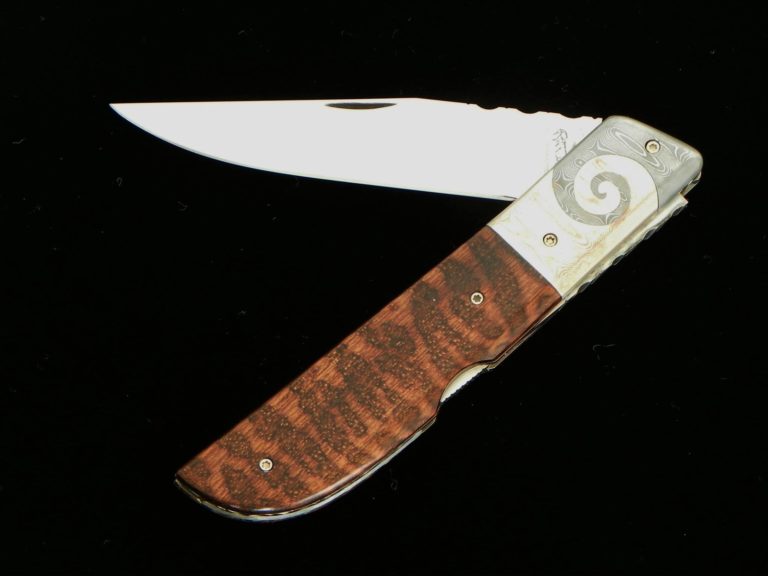
A full-time knifemaker for almost 50 years, Ralph specialized in knives in the latest materials, including mosaic damascus, tigerwood, white and black ebony and others. He made a wide range of models, including though not limited to folders, fixed blades and even butterfly knives.
We had just published a story on one of his folders written by J.T. Hill (J.T.’s No. 1 Knife Hero) in the July issue when we got word Ralph had passed on June 6—the anniversary of D-Day. He was 85.
The last time I saw Ralph Turnbull was at the inaugural International Custom Cutlery Exposition in 2015 in Kansas City. Mrs. Raenelle Turnbull was there with him, as usual, and Ralph was smiling and sassy as he almost always seemed to be. Though he was 81 he looked at least five years younger—he always did look younger than his age—and talked about how he had beaten just about everything old age had thrown his way.
He said he’d had bypasses, diabetes and one other malady that I can’t recall, and talked about how the doctor told him he’d lived through the biggest killers.
While Ralph recently succumbed to the inevitable fate that eventually awaits us all, his attitude toward life is one I will always envy. To paraphrase the old sports saying, it wasn’t that anything beat him—he simply ran out of time.
Bernard Sparks
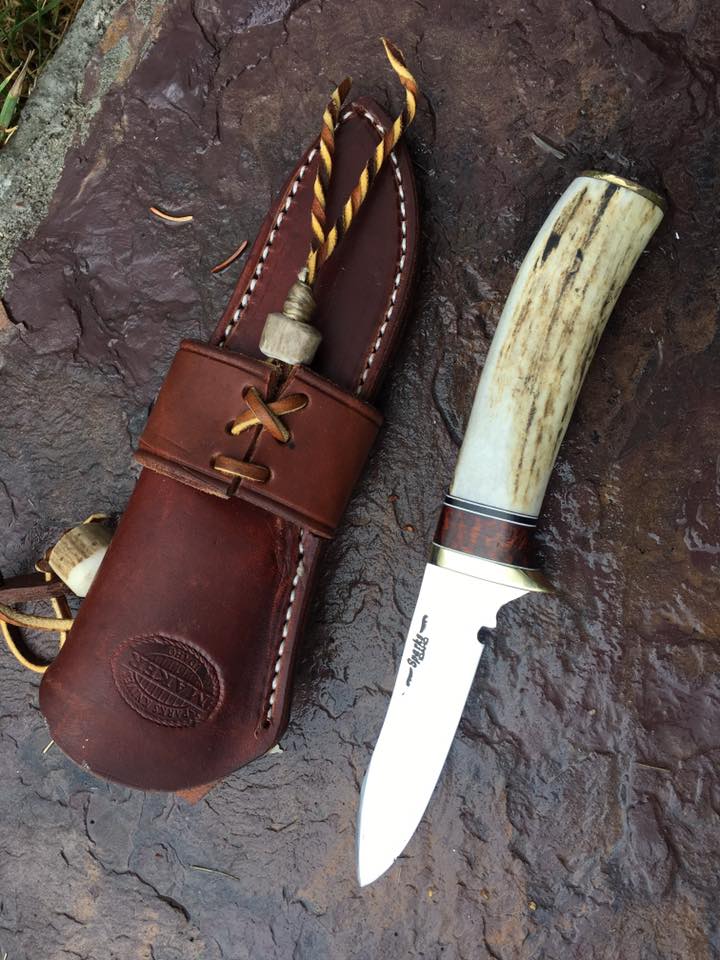
(Image via Bernard Sparks Facebook page)
Born in Dingle, Idaho, on the longest day of the year, June 21, 1931, Bernard Sparks began making knives part time in 1967.
According to Mrs. Vicki Sparks, Bernard was among 16 makers who met in 1969 to discuss forming The Knifemakers’ Guild. He served on the Guild’s board of directors for a time. His full-time job was as a teacher, which he retired from in 1996, at which point he turned to making knives full time until the spring of last year.
Over the decades, his obituary noted, he made several thousand knives. He was one of the first makers to use Vascowear, a high-speed tool steel, for blades. Bernard passed away on his birthday. He was 89.
BLADE field editor Ed Fowler remembers Bernard and Vicki, who survives her late husband.
“Bernard was one of the very early makers and a good one, totally honest, and made great knives,” Ed wrote. “They were high quality, well designed and each blade had a very practical geometry for its intended purpose. He and Vicki are a tribute to all that is good about our community.”
Michael Holtschulte
(Image via holtschultehandmadeknives.com)
Michael Holtschulte was born Nov. 17, 1956. He served three years as an Army combat engineer during the Vietnam War. He built knives for 28 years, making and selling over 12,000 of them over that span.
In a December 2013 BLADE® story that asked if a soldier had just one knife what it should be, Michael said he preferred a fixed blade with a 6-inch blade of 1095 or 5160 carbon steel.
“I would say that because a knife is a tool that becomes a multitool,” he reasoned. “One knife would have to do all the chores of self-defense, cutting, chopping and skinning game.”
He passed away May 10. He was 63.
I never had the pleasure of meeting Michael, though I did get to talk to him on the phone, and he was most professional. As his daughter Lisa wrote, he expired while forging a knife for a customer.
“My dad put his whole life into making knives and he passed getting to do what he loved,” she stated. “I remember how absolutely smitten he was that you guys did an article on him, and it was by far one of his proudest accomplishments.”
I’m sure I speak for the entire BLADE staff when I state we are humbled that we were able to inject a moment of pride into Michael’s short time on this earth.
This year’s two new inductees to the BLADE Magazine Cutlery Hall Of Fame® have a decidedly military connection: ABS master smith Joe Keeslar and knifemaker Jim Sornberger.
Both military veterans—Keeslar in the U.S. Marine Corps and Sornberger in the U.S. Army—were selected in a vote of the sitting members of the Cutlery Hall Of Fame after an extensive nomination and final ballot process.
The two new members are scheduled to be inducted at BLADE Show 2020, Aug. 7-9, at the Cobb Galleria Centre in Atlanta.
In order to qualify for the Cutlery Hall Of Fame, the inductee must have…
demonstrated extraordinary service to the knife industry;
displayed honesty, character and integrity;
advanced the industry by the creativity and originality of their works or contributions;
as ambassadors or outstanding contributors furthered the positive impact of the knife industry on the world at large; and
in summary, demonstrated a worthiness to be a member of such a prestigious group.
The number of votes each new inductee elicited from the sitting Hall-Of-Fame voters would seem to indicate they qualify on all fronts.
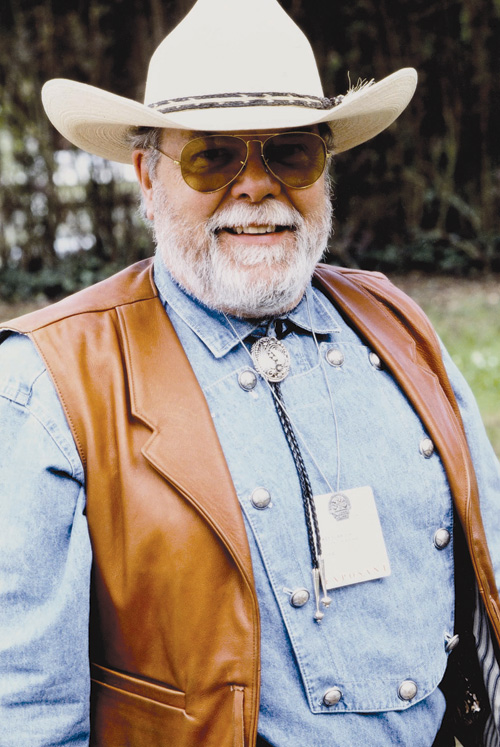
Joe Keeslar
Joe Keeslar
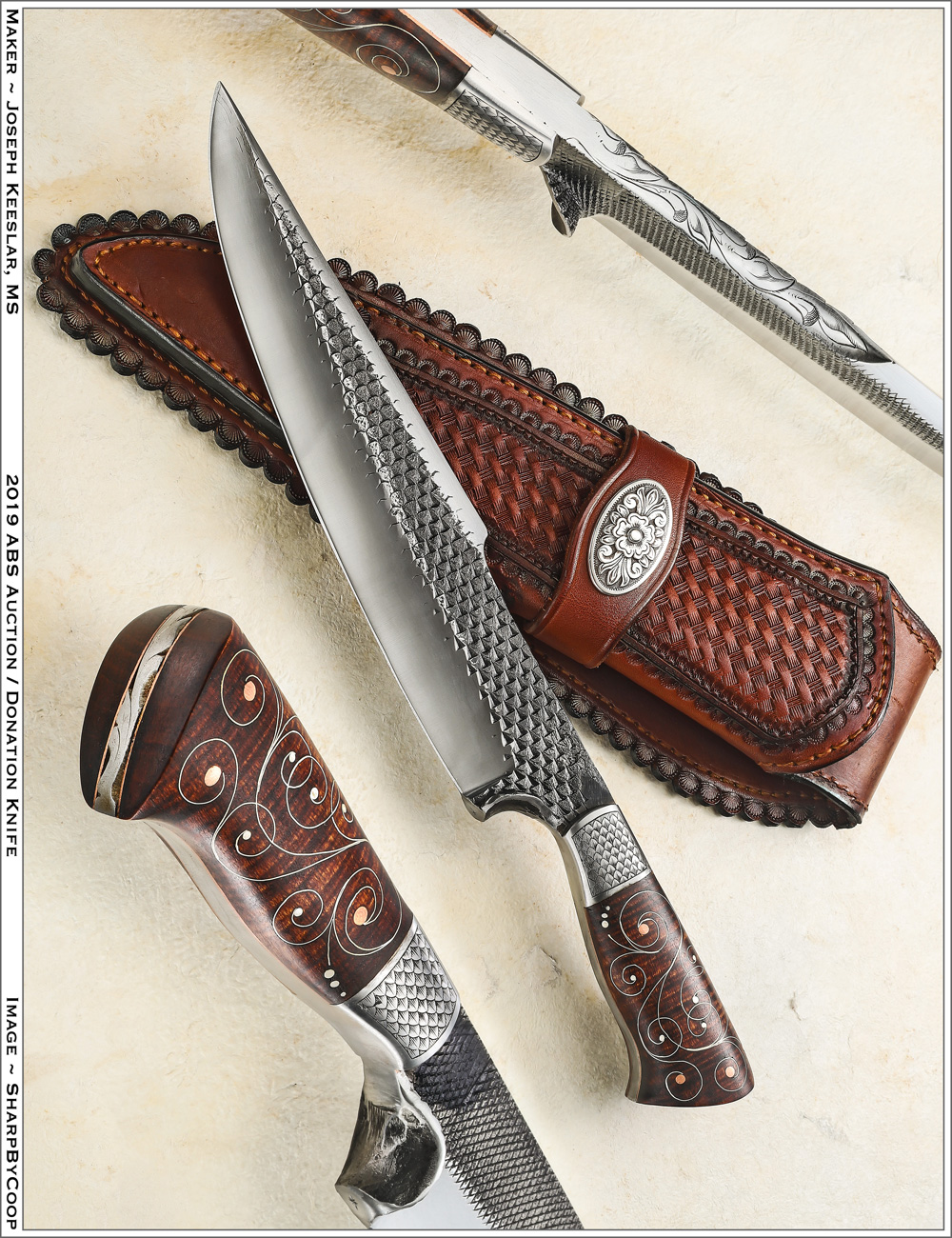
A resident of Almo, Kentucky, Joe has had an extensive, storied career in the American Bladesmith Society, earning his ABS master smith stamp in 1989. Known for his forged fixed blades, many in the brut de forge style, he also is noted for his beautiful handles with silver wire inlay and matching leather sheaths, the latter often adorned with conchos and other rich embellishments.
Joe joined the ABS board of directors in 1991, served as ABS president from 2003-07, and completed his second term as president in 2015. He has had a dramatic influence on bladesmithing in Europe, where he was chiefly responsible for the first modern hammer-in held in France. He is also a frequent demonstrator at the Thiers Knife Show, one of Europe’s largest knife shows, in Thiers, the knifemaking capital of France. He is the only American knifemaker to receive an honorary membership in the Confrerie du Couteau de Thiers, a French knifemaking organization.
Joe Keeslar (inset) is known for his gorgeous brut de forge fixed blades in silver wire inlay and sheaths to match. (SharpByCoop knife image)
As one nominator wrote, Joe is “the most effective maker in the USA to extend forged-blade activity in Europe,” and is the most active in spreading the ABS’s “high level of information.” He has taught knifemaking at the William F. Moran School Of Bladesmithing and at Haywood College, at hammer-ins in Alabama, Arkansas, North Carolina and Ohio, and at the first four renditions of BLADE University at the BLADE Show. He is author of the books Handles and Guards and Forging and Finishing the Brut de Forge Knife. He also is primarily responsible for the rapidly expanding ABS youth program, which holds an annual hammer-in at Smoky Mountain Knife Works.
According to another nominator, Joe “embodies the calm and consistent leadership, knifemaking skills, education and friendship that is so valuable to the entire world of knives.” According to another, “Joe has done more for the ABS than any person besides the late, great W.F. ‘Bill’ Moran.” Lastly, Keeslar was awarded the first annual Aldo and Edda Lorenzi Award at the 2015 BLADE Show for his many contributions as a mentor to bladesmiths worldwide.
Jim Sornberger
Jim Sornberger
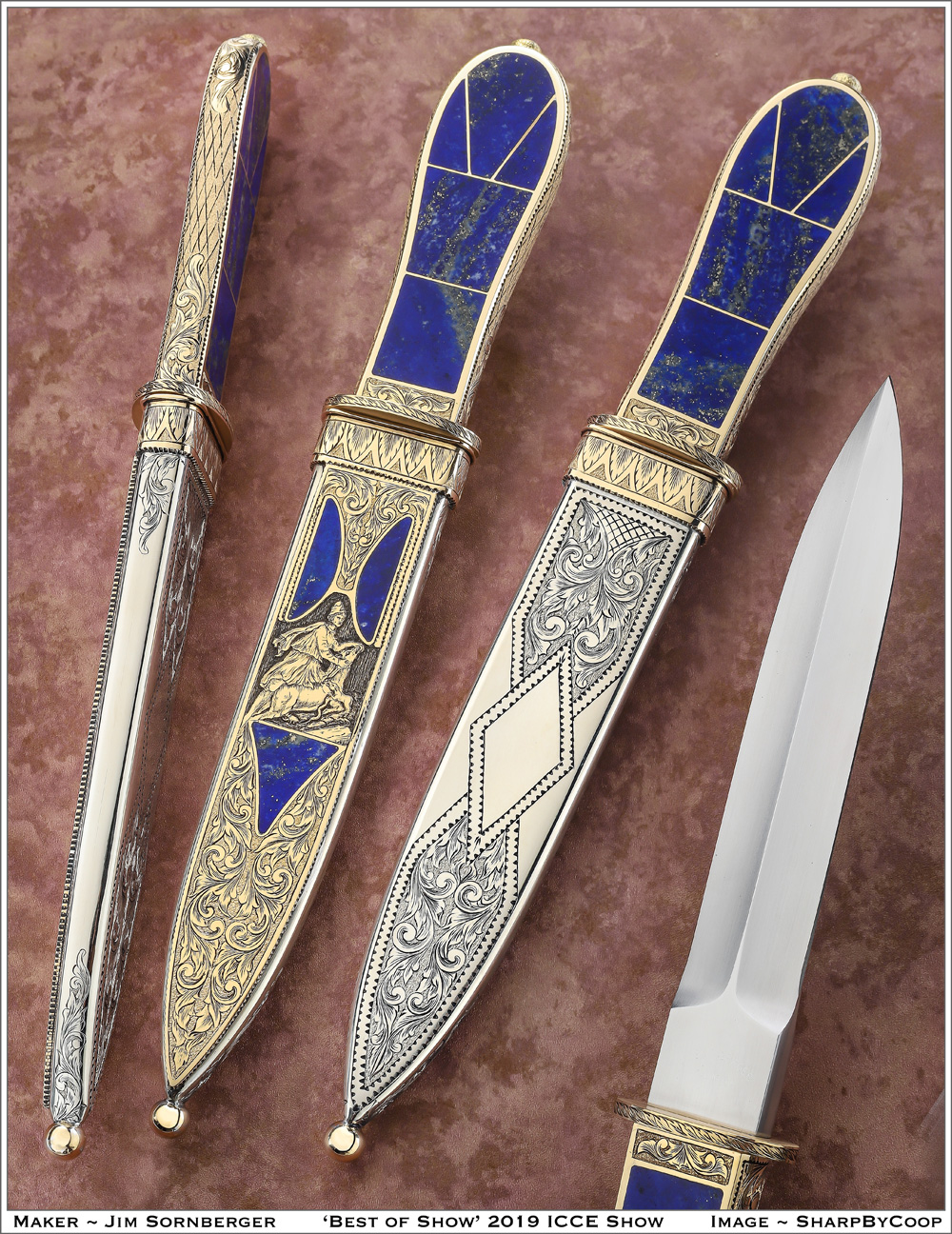
Calling Volcano, California, home, Jim is a veteran stock removal knifemaker known for his award-winning fixed blades and folders, among the former especially his ornate California-style dress bowies in exotic handle materials such as lapis lazuli and gold quartz.
According to a nominator, when Jim started building knives in 1970, there were only a handful of makers in northern California. As more people became interested in knives and Jim’s “knife family” grew, they experienced difficulty buying knifemaking supplies because no one on the West Coast sold them.
As a result, along with Bill Holt, Jim started H&S Supply in 1981. Cutlery Hall-Of-Famer Bob Loveless and Jim made sure H&S had the right-size steel for knifemaking, and when 154CM stainless steel became “unclean,” they helped bring in ATS-34 stainless so many West Coast makers would have it available. Jim and Bill helped support many of the makers who could barely make ends meet by selling them the steel on credit. In fact, Jim still has a bar of 154CM that Loveless gave him many years ago.
Jim Sornberger specializes in 19th-century-style dress bowies such as this San Francisco knife that won Best In Show at the 2019 ICCE. (SharpByCoop knife image)
Circa 1980, along with a few others, Jim sponsored and organized the Bay Area Knife Collectors Association (BAKCA) Show, which went on to become the most successful club show on the West Coast. Jim would generously give up his table space to help makers get started, including his good friend and outstanding knifemaker in his own right, Stan Fujisaka.
In later years, Jim helped bring interest to the California-style dress bowie in gold work and engraving. He shared most everything he learned with other makers, helping many to learn the craft. He writes articles for KNIFE Magazine and has written for BLADE®, and also helped write BAKCA’s by-laws. For a number of years he served on The Knifemakers’ Guild board of directors, including as vice president.
BLADE has learned the unfortunate news that Les de Asis, founder of Benchmade and a member of the BLADE Cutlery Hall of Fame, passed away on Friday, Feb. 21. The announcement came from official Benchmade social media channels.
It is with great sadness we share that Les de Asis passed away earlier today. No words can properly express the sadness of our loss. Benchmade has lost our founder, friend and visionary who built one of the greatest knife brands in the world. pic.twitter.com/dSU3VVYGBS
Les de Asis (right) with his son, Jon (left), at a Benchmade shop. (Benchmade photo)
In late 2018, Les turned the reins of Benchmade over to his son, Jon, as reported here. The company was a family affair from the very beginning. Les created Bali-Song®, Inc., in 1980, selling the now-iconic Model 68 butterfly knife. That evolved into Pacific Cutlery Corp. through 1987. Les started Benchmade a year later.
Under his guidance, Benchmade knives became some of the most ubiquitous in the world, supported by the popularity of the innovative AXIS® lock, Griptilian and much more.
Because of these achievements, Les was inducted into the BLADE Cutlery Hall of Fame in 2017. What follows is a portion of BLADE‘s write up from the event. Jon accepted the award on Les’s behalf.
Jon explained that his father visited his first custom gun and knife show in Glendale, California, in 1979 and met the craftsmen and marveled at the works they had made and offered for sale.
“I liked that they were independent and developed their skills by improving their products over time,” Jon related his father’s sentiments. “I also appreciated that they were independent and plied their skills in their home workshops.”
At the beginning of his career Les indicated he met pioneer knifemakers like Cutlery Hall-Of-Famer Bob Loveless, Barry Wood, Glen Hornby, Chuck Stapel and many more, talking knives and guns for hours at a time. Les visited their shops and learned how they worked, what their definition of quality was in regard to design, materials, fit and finish, walk and talk, and metallurgy.
“I have been constantly intrigued by all the personalities, processes, materials, artistry and innovation that are present in the custom knife world, and challenged in how to translate them into a unique, high-quality manufacturing environment able to serve an ever-growing customer base,” Jon shared his father’s words. “I confess, it wasn’t easy creating a world-class company, but the journey, one knife at a time, was worth the effort!”
BLADE extends its warmest wishes to Les’s family during this difficult time.
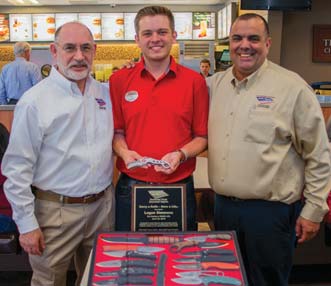
As a result of Logan’s actions, Knife Rights awarded him the Knife Rights’ Carry a Knife – Save a Life Award™.
“Logan Simmons’ action to save a young child’s life is a dramatic testimony to the value of always carrying a knife,” said Doug Ritter of Knife Rights. “You never know when your knife will be the difference between life and death; these situations cannot be foreseen, as Logan discovered.
“There are still places in America where the pocketknife Logan used would be illegal to carry. Knife Rights is committed to ensuring that law-abiding Americans can carry whatever knife they want to be prepared for whatever challenges they may have to meet without irrational restrictions that do nothing to stop criminal activity.”
The Carry a Knife – Save a Life Award honors an individual who uses his or her EDC knife to save a life, demonstrating the practical advantages to always carrying a knife in order to be prepared for situations when a knife is invaluable—up to and including saving lives.
In addition to an award plaque, Knife Rights’ knife industry friends donated over $5,000 in EDC knives for Logan, including one-hand-opening folders, autos and fixed blades, all legal for him to carry in Georgia. The donors each donated two knives, one for Logan to display and one to carry.
In addition, Logan was presented with a Knife Rights Life Membership, a certificate for him to be Knife Rights’ and BLADE® Magazine’s VIP guest at BLADE Show 2020, and a certificate from W.A. Surls Knives and Pop’s Knife Supply of Braselton, Georgia, for a two-day knifemaking experience where Logan will make a knife from scratch with supplies provided by Pop’s.
Logan’s mother, Teri Simmons, also was presented with a number of pocketknives, recognizing that mothers make a difference. Logan’s co-workers at Chick-Fil-A also were given pocketknives to carry.
Gravity knives are legal in New York due to New York Gov. Andrew Cuomo signing a bill in late May repealing the state’s gravity knife ban, but the win comes with several label warnings.
For instance, gravity knives—or any knife, for that matter—with blades 4 inches or longer remain illegal in New York City. Also, a recent state case has redefined switchblade to include assisted openers. Meanwhile, New York City Mayor Bill de Blasio, who strongly opposed the repeal of the gravity knife ban, reportedly said he would not stop the arrests and prosecutions of people who carry what are basically common folding knives.
Despite the ban’s repeal and the efforts of such common-sense knife organizations as Knife Rights and AKTI, the current New York state of mind remains as it has been for quite some time: one big anti-knife muddle.
After Nine Years, It’s Still Not Over
“After nine years of fighting, it is a relief to close the book on this extraordinary abuse of authority by a corrupt system that has terrorized over 70,000 honest, law-abiding people, disproportionately minorities, for simply carrying a common tool used daily in their lives,” Knife Rights Chairman Doug Ritter said.
As cited in Cuomo’s signing statement, it didn’t hurt that in another recent case a New York federal judge issued a very narrow ruling saying that NYC’s “wrist flick” test was unconstitutional, though in limited circumstances that did not substantially impact the ability of the city and DA to continue their arrests and prosecutions. Before the federal judge’s ruling, the wrist flick test had been used by the courts to determine whether a knife was a gravity knife.
If You Live In or Travel to New York…
Despite the repeal of the gravity knife ban, New York remains a minefield of knife restrictions. As a result, Knife Rights suggests that you never carry a knife in New York City with a blade 4 inches or longer, nor carry your knife clipped to your pocket.
If you plan to carry a pocket-clip folder there, Knife Rights suggests you remove the clip so you don’t inadvertently attach the knife to your pocket after use. Always ensure your knife is completely concealed at all times, including not “printing” on the outside of your clothing.
In addition, be extremely cautious about using a knife for any purpose in a public setting.
The Latest: “Undetectable Knives” Now Illegal In New York
As Knife Rights reported, Gov. Cuomo recently signed into law a ban on “undetectable knives.” What counts as “undetectable?”
From Knife Rights:
The definition of an “undetectable knife” is: “any knife or other instrument, which does not utilize materials that are detectable by a metal detector…that is capable of ready use as a stabbing or cutting weapon and was commercially manufactured to be used as a weapon” (emphasis ours).
This leaves plenty of room for the same kind of overreach that made the “gravity knife” ban such a disaster:
The new law is unlikely to accomplish anything worthwhile, but rather will give law enforcement and prosecutors another way to harass what will almost always be innocent victims of another poorly conceived and unnecessary knife ban.
Editor’s note: Ken Warner, the visionary behind and original editor of the acclaimed KNIVES annual book series, recently passed away. In tribute, BLADE is featuring this article from the August 2009 magazine issue about this titan of knives.
The turn of a phrase, the flow of the narrative, and simply getting the story straight are hallmarks of the writing craft. BLADE Magazine Cutlery Hall-Of-Famer® Ken Warner brought the ability to perform each of these, along with an unmatched eloquence, to the knife industry.
Universally, knife authorities acknowledge him as the individual who lifted custom knives out of the shadows. He helped to accomplish this with a straightforward, crisp, and clean writing style that captured the imagination of readers for nearly half a century.
A “True Poet” of the Knife Community
Warner edited and wrote much of the first Knives annual in 1981. The series went on to transform the knife industry. He continued editing the annuals until 2000. BLADE managing editor Joe Kertzman assumed the reins beginning with the 2001 edition.
“Ken Warner is the true poet of the knife community,” related BLADE field editor Ed Fowler. “While he did not write the most knife articles, what he did write was worth reading and serves as an eloquent inspiration for all who have thoughts to share. He had no axe to grind other than to share knowledge. As a fledgling knifemaker, I used to read his comments and soon learned that he knew well his subject matter.”
Though he is not currently writing—he instead stays busy offering a wide range of fixed blades and folders through his Ken Warner Knives knife company—there is always the possibility that Warner will return to print. Meanwhile, he says he is becoming computer savvy enough to run a knife forum on the internet and to continue his online blog (kenwarnerknives.blogspot.com). He also stays busy designing knives.
“I’m 80 years old,” he reflected, “and I have some things I want to say and there are some stories I can do that nobody else can do because I was there. I will get to that when I get to it.”
Forging a Path
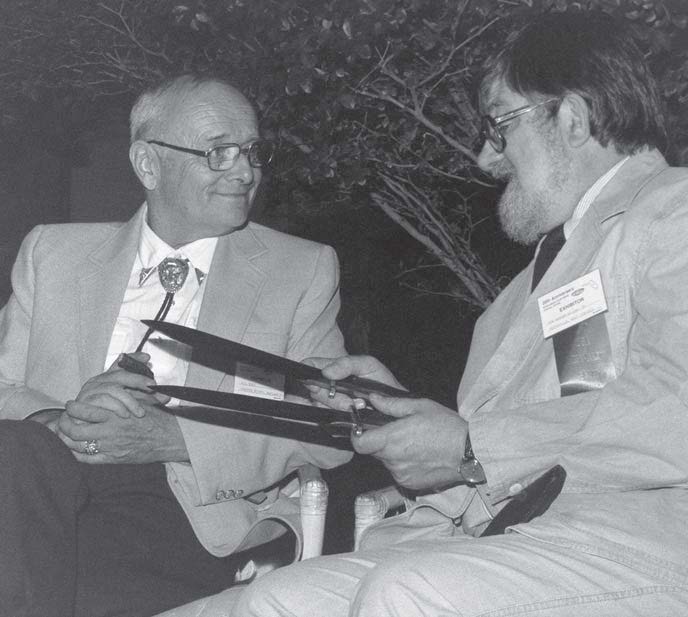
Blade Magazine Cutlery Hall-Of-Famers Bill Moran (left) and Ken Warner were good friends. According to Cutlery Hall-Of-Famer B.R. Hughes, Warner was the first to write about Moran and his knives in a national magazine. Here Moran and Warner visit and talk knives at an early 1980s Knifemakers’ Guild Show. (photo courtesy of B.R. Hughes)
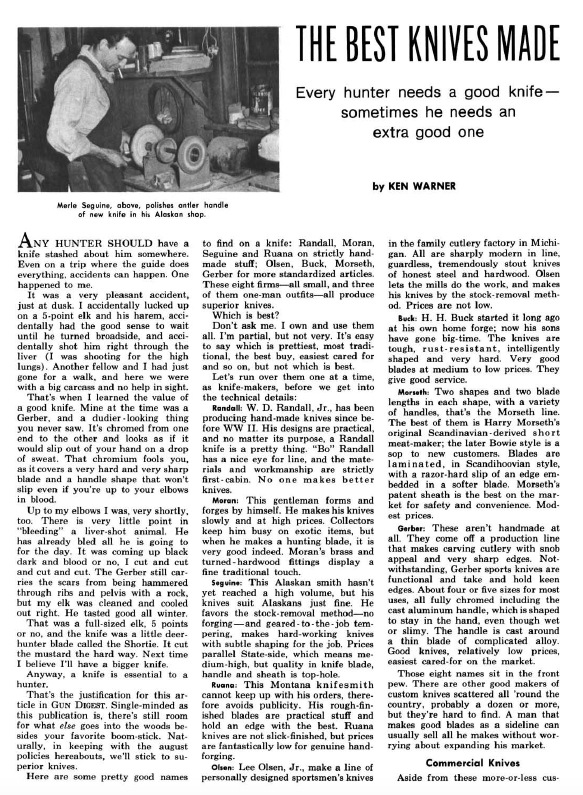
Literally, when custom knives began to gain national and international attention, Warner was there. In fact, he was the prime mover in publicizing the work of the knifemakers. As a writer for the popular annual Gun Digest, he started writing about knives in 1964. That first article, titled The Best Knives Made, has been reprinted numerous times.
Back then, though, it was a challenge just to get enough material to put a story together.
“I could hardly find any knifemakers,” Warner commented. “I found [Bill] Moran and [Bo] Randall, and Buck was small then and I wrote about them. However, a number of knifemakers and collectors have told me that the article got them started. Bob Loveless, for example, has told me that he was about to give up making knives because it wasn’t going any place. Then, he read the article and decided that somebody would understand. There was a time that I was actually giving away Loveless knives just to see what people thought of them. Butch and Rita Winter were pre-eminent collectors of handmade knives, and they told me I got them started.”
A Calling
Educating the general public about knives evolved into something of a mission for Warner. In 1976, he wrote The Practical Book Of Knives, a primer of information on the mechanics, components, function and terminology associated with knives. Through editorial contributions to a number of publications, he has managed to spread the word.
Along the way, he has gained a multitude of friends and admirers. One of the closest was with the legendary Cutlery Hall-Of-Famer, Bill Moran. BLADE field editor and Cutlery Hall-Of-Famer B.R. Hughes, co-author of the Moran biography, Master Of The Forge, credits Warner with his introduction to the great bladesmith.
A Man of Many Firsts
Ken Warner’s The Best Knives Made article in the Gun Digest 1966 book was a game-changing moment for what is now the modern knife industry.
“Ken was one of the first to write knowledgeably about handmade knives, and he’s important to me personally because he’s how I heard about Bill Moran,” Hughes remarked. “Ken used to live close to Moran’s shop and visited there often. He was the first to write about Moran in a national magazine. He mentioned Moran in the Gun Digest article in 1964, and that article did more to publicize handmade knives than everything written about them up to that time.”
Of course, Moran, Hughes, Don Hastings and Bill Bagwell went on to found the American Bladesmith Society in 1976 and the rest, as they say, is history.
Hughes said he remembers working at a magazine called Gunsport in the mid-1960s and Warner was the editor. Even then, Hughes knew Warner was something special.
“Ken’s writing was a cut above what I was used to seeing in a gun magazine,” Hughes continued. “I soon became shotgun editor of Gunsport, and no gun magazine of that day was going to publish a lot of knife articles, but Ken got a knife article in there from time to time.”
When Warner left Gunsport to publish his own magazine, Gunfacts, the idea of writing about knives had caught on.
Hughes said he recalls a memo circulating to ask if anyone else at Gunsport had an interest in or knowledge of handmade knives. Hughes raised his hand, contacted Cutlery Hall-Of-Famer A.G. Russell for a crash course in handmades, and took up writing about knives himself.
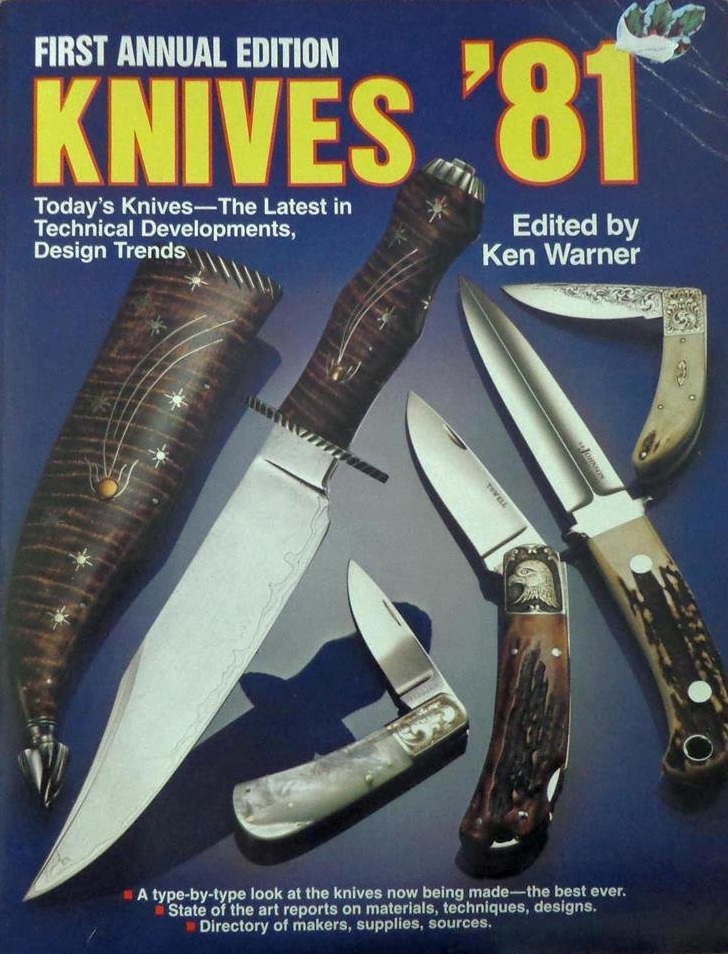
The Knives (KNIVES) Books
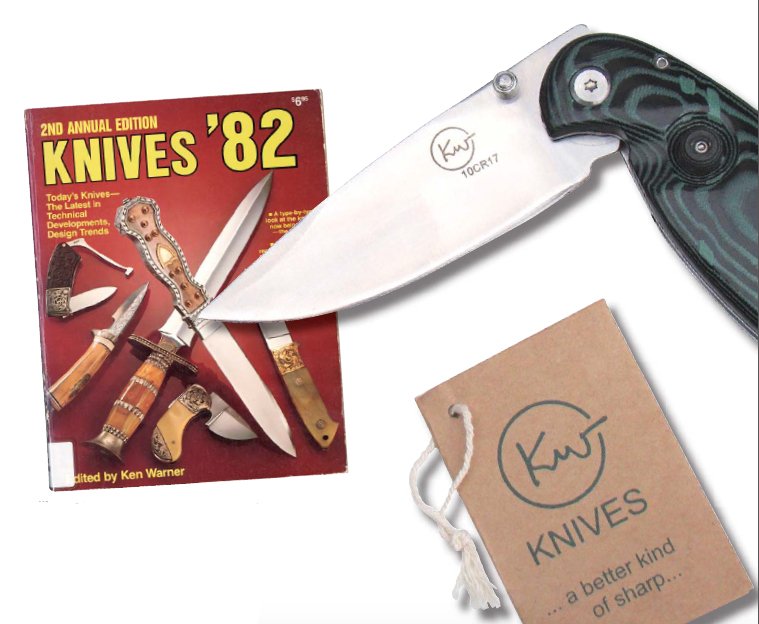
The cover of the knife book that started it all.
For many, Warner’s greatest single contribution to the knife industry was not that first article in Gun Digest, nor his continuing effort to publish knife stories in popular magazines. Rather, it was the publishing of the first Knives annual in 1981 that sparked what became an explosion of interest in handmade knives.
“The big thing with Ken is that he mainstreamed knife interest, and everybody credits him with that,” assessed Cutlery Hall-Of-Famer Bruce Voyles, with whom Warner co-authored the book Knives Digest in 1999. “That, in my opinion, was not his greatest contribution. That came when he got the Knives series started. For the first time you had a listing of not just a particular organization’s members but all knife people. You also had pictures. It was a snapshot of the state of the knife industry at the time, particularly handmades—and the industry was pretty disorganized at the time unless you were a member of the Knifemakers’ Guild.
“I think he gave tremendous publicity to people that had not gotten publicity,” Voyles continued. “Plus, there’s something that most people will not notice about him unless he has edited something they’ve written. He’s one of the most gifted editors I have ever known in any genre. He takes average stuff and makes it sound good, and makes good stuff sound fabulous while making it flow easily. The different thing about Ken’s writing and editing is that Ken made it readable. Most of the stuff before Ken was clumsy, and he made it interesting. He could make the phone book interesting. One of my favorite quotes was when his former wife said some years ago, ‘Ken has the most annoying habit of being right most of the time.’”
Recognition
Ken Warner inducts Bruce Voyles into the BLADE Magazine Cutlery Hall Of Fame at the 1993 BLADE Show Awards Banquet in Stone Mountain, Georgia. From left: George Herron, A.G. Russell, Buster Warenski, the inductee, Paul Tausig, Joe Mangiaracina, Warner, Houston Price and B.R. Hughes. All but Tausig and Mangiaracina are in the Cutlery Hall Of Fame. Along with Col. Rex Applegate, Hughes joined Voyles as an inductee that year.
Among the many happenings during his association with Warner, Voyles will never forget that it was Warner who organized Voyles’ induction into the Cutlery Hall of Fame at the awards banquet of the 1993 BLADE Show. It was Voyles’ 40th birthday, and Warner took the stage to announce—to Voyles’ surprise—that he was being inducted by acclamation of all living members of the hall at the time.
When Warner and A.G. Russell were inducted into the hall at the 1988 BLADE Show, each was invited to the banquet to provide the introduction speech for the other’s induction. Neither Russell nor Warner knew they were being honored themselves.
“Ken said at the time that as long as there was a BLADE Show, he would eat the BLADE Show’s rubber chicken,” Voyles grinned. “Then, the next year we presented Ken with a rubber chicken and taped a knife that he liked inside the chicken’s mouth.”
Warner is also a member of the ABS Hall Of Fame and counts the society’s prestigious Don Hastings Award among his many honors.
A Lasting Legacy
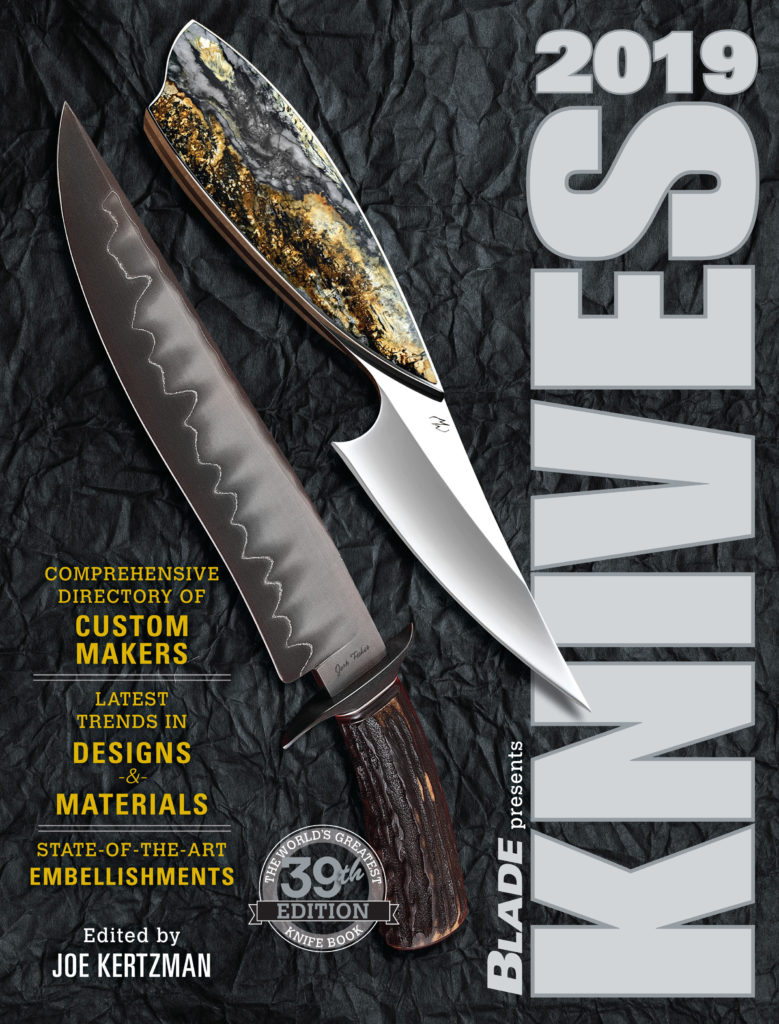
The most recent KNIVES annual book on shelves is KNIVES 2019.
Fowler said Warner was the right man for the successful development and promotion of what has become a virtually indispensable part of the knife industry, a book which will celebrate its 40th anniversary in 2020.
“Thanks to his knowledge, editorial ability, choice of writers and relevant topics, Ken started a legacy to the knife community that continues to this day,” Fowler noted. “Ken knew the difference between a hunter and an art knife, as well as the pretenders, and described each knife eloquently. Many of his one-sentence comments were worth hundreds of words. He inspired many makers through his comments on design, steels, handle materials, leatherwork and scrimshaw. Reading back through my collection of his books, I find many of his comments that I once glanced over were far from simple but offered great understanding and predictions of the future and well being of our community.”
A Renaissance Man
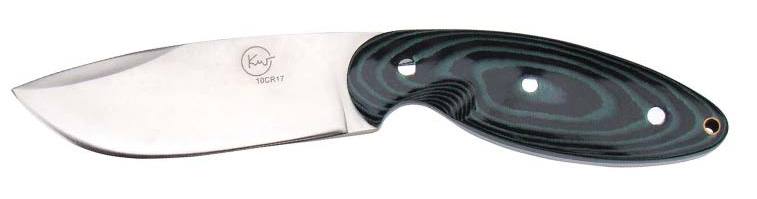
The Warner SGG is a knife of all work, with lots of belly and a good bit of sharp. The blade is 5 inches of 10CR17 and, of course, is convex ground all the way. The drop of the grip puts the edge where it is needed. (Warner photo and caption)
Warner, it turns out, is something of a renaissance man as well. Fowler related sharing a huge bowl of crab legs following the BLADE Show a few years back.
“We debated the styles of Steinbeck and Hemingway, as well as other great authors, what makes poetry great, and the responsibilities of authors,” Fowler recalled. “I learned that everything we write is an echo of our total experience. The more we read and the greater our personal experience, then the better we will be able to express our thoughts. There is no question in my mind that Ken Warner has been, is and continues to be one of the great, if not the finest, of icons of the community of knives.”
Perhaps the greatest test of a true “living legend” is that he has contributed to his lifelong interest, building something where little or nothing existed before, and assuring that his influence will last long after he and his contemporaries are gone.
In the case of Ken Warner and the knife industry, there is no better definition.