
Ban On “Gravity Knives” Repealed In New York State

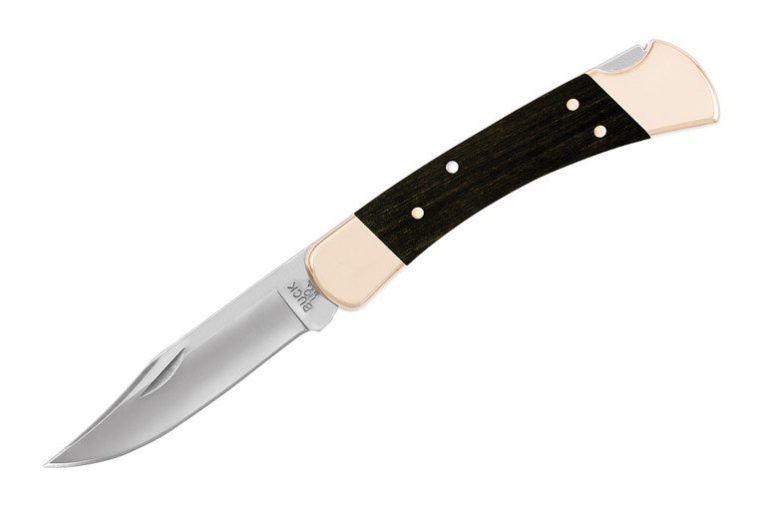
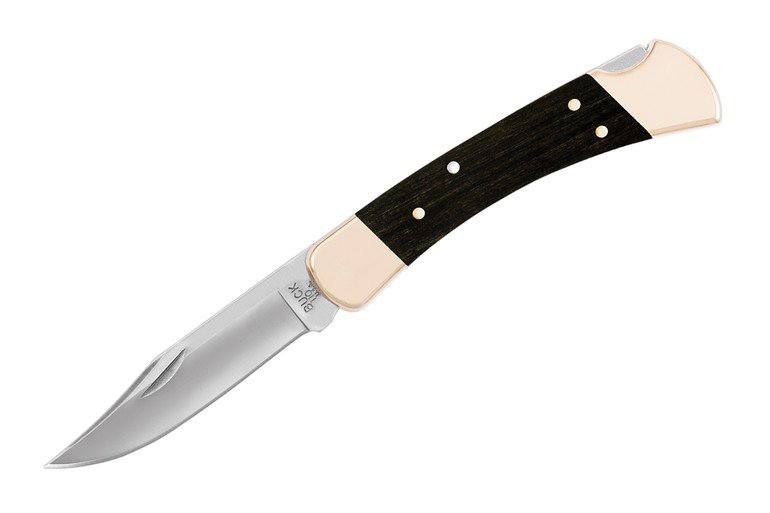
Buck 110 knife
The Buck 110 pictured here, one of the most common folding knives in the United States, could’ve counted as an illegal “gravity knife” under a now-repealed New York law. If the blade could open with a flick, as determined by a law enforcement officer, the possessor of the knife could be arrested and charged with a felony.

New York’s 60-year restriction on “gravity knives” is no more. Gov. Andrew Cuomo signed the repeal on May 30, ending a ban criticized for disproportionately impacting people of color and soundly rejected in federal court.

A Racist, Vague Law With Permanent Consequences

In general terms, the now-defunct restriction defined a gravity knife as one with a locking blade able to open with the flick of a wrist. As many in the knife community know, the difference between a folding knife that can and can’t open with a flick is minute. A stiff folding knife on Monday may loosen up by Friday with regular use.

However, up until last week, that small difference came with big consequences, including felony charges or prison time for the 4,000 people arrested each year in New York state. Even if those people, overwhelmingly from minority backgrounds, committed no other crime, possession of a gravity knife alone was grounds for arrest. Due to the vague wording of the law, what constituted a gravity knife was left to the discretion of the arresting law enforcement officers.
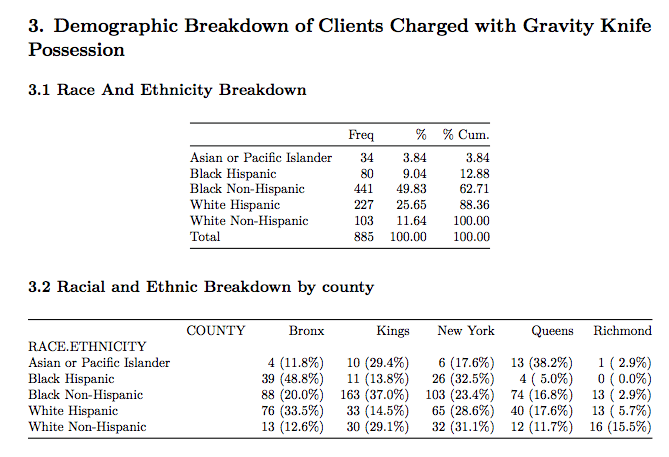
Impact of New York knife ban
A report issued by the Legal Aid Society in 2018 details the lopsided demographics of those charged under the gravity knife ban. Click the image to download the full report (PDF).

This absurdity caught the attention of both conservative-minded knife organizations and progressive criminal justice reform advocates, forming what may seem to be an unlikely coalition. However, this intersection of blades and sociology presents itself time and time again with knife law reform issues across the country

As such, major media outlets featured faces familiar to the world of knives in news packages, such as Doug Ritter of Knife Rights.

Reactions

News of Gov. Cuomo’s signature, tempered by the fact that that same governor vetoed the repeal twice before, came as a welcome development to those in the knife community and beyond.

“After nine years fighting, it is a relief to close the book on this extraordinary abuse of authority by a corrupt system that has terrorized over 70,000 honest, law-abiding people, disproportionately minorities, for simply carrying a common tool used daily in their lives. I am thrilled that we and our partners across the political spectrum in this fight have finally prevailed, but it is a sad commentary on the state of politics and justice in New York State, New York City and at the Second Circuit that it took this long and that tens of thousands of innocent folks had to suffer so much for so long,” Ritter said in a Knife Rights article posted May 30.

“A sincere thanks to the New York Legal Aid Society, Rep. Dan Quart, and Senator Diane Savino for not giving up on solving the inconsistency and ambiguity that the NY gravity knife law created. We began working with attorneys at the NY Legal Aid Society on draft language back in 2010 – never imaging success would take so long,” a statement on the website of the American Knife & Tool Institute (AKTI) read.

“For far too long, the NYPD exploited the gravity-knife ban to drive up arrest numbers at the expense of our clients,” Tina Luong, an attorney representing the Legal Aid Society, was quoted as saying in The New York Times.

BLADE reached out for comment from a number of organizations, and had yet to receive responses as of this writing.

NYC Mayor Expresses Opposition

Despite the repeal, some officials remain determined to enforce the restriction through some other mutation. New York City Mayor Bill de Blasio’s office expressed its opposition to the repeal, vowing to find “an alternative” method of restricting gravity knives. 

Trend Watch: The Coffee+EDC Knife Meme

A Caffeinated Take On An Old Question

“What knife are you carrying today?”

It’s a question familiar to knife enthusiasts for ages, and it recently took a step forward in the age of social media, especially on Twitter.

“What knife are you carrying today? And how do you take your coffee?”

As part of an online trend, or meme, knife enthusiasts are answering both with photos of their everyday carry (EDC) knives alongside a cup of morning coffee. While knife+beverage photos themselves aren’t new, this caffeinated version appears to have creeped onto the scene around March 2013. Here’s an early example from Instagram, posted on April 29, 2013:


View this post on Instagram


So, I finally gave in to peer pressure. My #knivesandcoffee pic this morning.

A post shared by Bruce Green (@brucekgreen) on

In 2018, Twitter accounts like @CoffeeNKnives, helped popularize the meme further. Early 2019 saw the meme gain new life as a way for knife enthusiasts to say “hello” in the morning.

Here are a few examples:

There are video versions as well:

It’s not limited to just Twitter. Instagram, where a lot of the knife community spends time, is no stranger to this meme: 

And if there is to be a meme, it must, at some point, eat itself. Hats off to this gem:

Why Is This Meme So Popular?

Internet memes are notoriously challenging to pin down, but there are a few factors that may contribute to this one’s popularity.

First, the timing is perfect. Preparing and drinking coffee coincides with getting ready for the day. Selecting an EDC for the day is also part of that routine. The pairing isn’t as random as it may seem. Coffee and knives are the perfect match.

Second, it gives knife enthusiasts a reason to engage with one another online. It’s not that the average knife nut is anti-social; it’s usually the opposite. But once a person becomes comfortable inside of a certain knife community, branching out isn’t always a top priority. These coffee+knife photos are a quick and easy way to connect with someone new.

Finally, many memes are successful because they plug into an existing piece of culture. This is a fresh spin on the age-old question of, “What knife are you carrying today?” The online crowd is already primed.

That’s not to discount the appeal of a knife photo itself. This community enjoys looking at pictures of knives online. It could be as simple as that.

How To Post A Photo

Want to post your own photo? There are only three simple rules:

  • The photo must contain a knife
  • The photo must also contain coffee
  • Use one or both of the hashtags #knivesandcoffee and/or #coffeeandknives
  • Bonus: tag BLADE magazine in your post

It’s All In Good Fun

BLADE hopes this isn’t a meme that dies down any time soon. Keep posting those photos! What knife are you carrying today? And how do you take your coffee? Let us know.


See More In The World’s Greatest Knife Book

Best books about knives

How Do Criminals Use Knives?

0

Knife crime statistics

Editor’s note: Knives are first and foremost tools that offer tremendous utility for making everyday life easier. However, a few unsavory elements of society misuse these tools for criminal purposes. Because of the frequency of the topic in conversations inside the knife community, BLADE is bringing you this glimpse at that type of behavior as a means to better inform our audience. Remember: the intent of the person using the knife is always more significant than the knife itself.

How Do Criminals Use Knives In Attacks?

An associate of mine, Travis Roesler of Fight Smart, recently studied more than 200 real attacks criminals made with knives that were caught on CCTV security cameras from around the world. Here’s we learned.

How Criminals Use Knives: The Percentages

Roesler came up with the following statistics:

  • As would be expected, around 90% of the criminals were right handed (which coincides with the percentage of the dominant hand of the populace).
  • The most common attack was a straight stab with the right hand accompanied by a collar or clothing grab with the left hand (40%)
  • The second most common attack was a non-augmented straight, right-handed stab (25%)
  • Straight stabs were used in 65% of the attacks
  • The third most common attack (24%) was an overhead stab, with the knife in a reverse, or “icepick” grip
  • The fourth most common attack was a downward diagonal slash from the right (10%)
  • Backhands came in at less than 2%
  • 55% of criminals wore sleeves

In other words, attackers simply do not behave the way that traditional training has suggested that they act. Because of this evidence, training to defend oneself against a knife attack is now within reach of the common person.

Learn More About The Law And Knives

What knives are illegal

Will the USA Pass China in Making Inexpensive Knives?

us china tariffs
How will tariffs on Chinese products affect the U.S. knife industry? (Pexels photo)

Some in the USA knife industry view tariffs on China-made products as an opportunity to reclaim the market for inexpensive knives. Are they correct?

Much has been written and reported on all fronts—pro and con—about the import tariffs instituted by the administration of President Donald Trump. At the recent BLADE Show West, Mike Vellekamp, head man of V Nives, predicted the tariffs are going to result in a “shift” in the factory knife market that will create a new “made-in-America force.”
Here’s how he sees it going down.

A “Made-in-America Force”

Knives tariffs
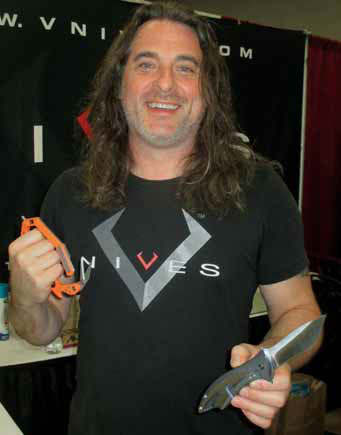
At BLADE Show West, Mike Vellekamp of V Nives holds two of his latest models: the C.R.A.B. (Cut-Rescue-Assist-Break), the BLADE Magazine 2018 Most Innovative Imported Design, in a new orange handle, and the company’s new Deplorable folder designed by Jerry Hossom. (BLADE photo)

Manufacturers in Asia, especially China, have been able to make better inexpensive knives than U.S. manufacturers for years now due in no small part to low labor, advertising and other costs. Largely as a result, Chinese manufacturers have dominated the market for “price-point” or inexpensive knives in America. However, as a result of the tariffs, Mike opined, in order to maintain profits the Chinese will be forced to make more-labor-intensive knives and charge more for them in the USA. The Chinese could continue to make knives in the same way they have been for export to America, but if they do their profits will decrease due to the tariffs.

And the likelihood of the Chinese opting to make less money, the argument goes, is basically nil.

Consequently, in Mike’s scenario U.S. manufacturers will start making price-point knives to fill the niche the Chinese manufacturers will be forced to abandon.

According to Mike, U.S. knife companies will be more able to make price-point knives and/or have them made domestically because they will not have to pass along to consumers the added costs of shipping and importing and getting the knives through U.S. Customs, among other things, that they do now by having their knives made off shore.
Of course, several things must happen in the domestic knife industry for Mike’s scenario to occur, but he indicated he sees those things happening.

“If someone wants to make something in America and compete, they can do so as long as they automate and capitalize on some of our technological resources,” he said. “This will encourage the market for U.S. manufacturing and create a lot more jobs in the process.

“It’s going to make more sense to make knives in the U.S., especially as metal-injection-molding technology takes off better and with some of the 3D printing stuff we’re doing,” he noted. “We’ve got the technology, we’ve already got all the materials, we’ve just got to get the interest. We need to have the confidence of both the consumer and the manufacturer so they’re working together to create a made-in-America force. That’s what we need to be again. We’ve always had that, we’ve always been the pioneers of basically all industry, and we need to have that confidence again and quit being just ‘buy and sell.’ We need to start making stuff again.”

Doubts

Two high-ranking industry officials I spoke to whose companies import knives from Asia expressed doubt that Mike’s scenario will happen. They said they don’t see American knife manufacturing reaching the point Mike foresees any time soon—maybe never—plus the fact that Chinese manufacturers are simply too good at making price-point knives, and will find a way to continue to maintain their dominance in that segment of the U.S. market.

Still, Mike said the new realities that will occur due to the tariffs appear to be bringing some American manufacturers around to his way of thinking.

“I think U.S. knife manufacturers are going to do just what I’m talking about,” he said. “I’m not positive and I won’t name names, but the ones I’ve talked to kind of agree with me that the U.S.-made knife needs to be the price-point type.”

Will that need turn into a real shift in the factory knife market? Stay tuned for further developments.

Knife Laws: Mammoth and Elephant Ivory Bans to Watch

0
Mammoth ivory handle knife
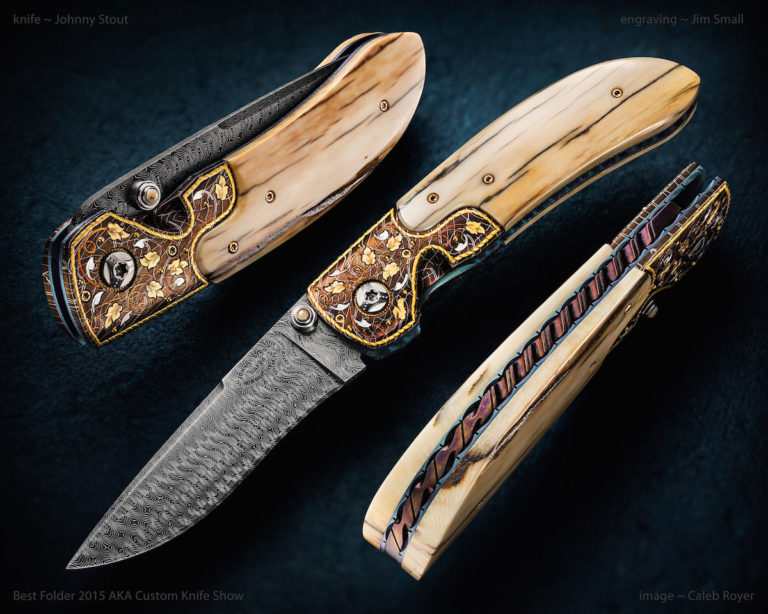
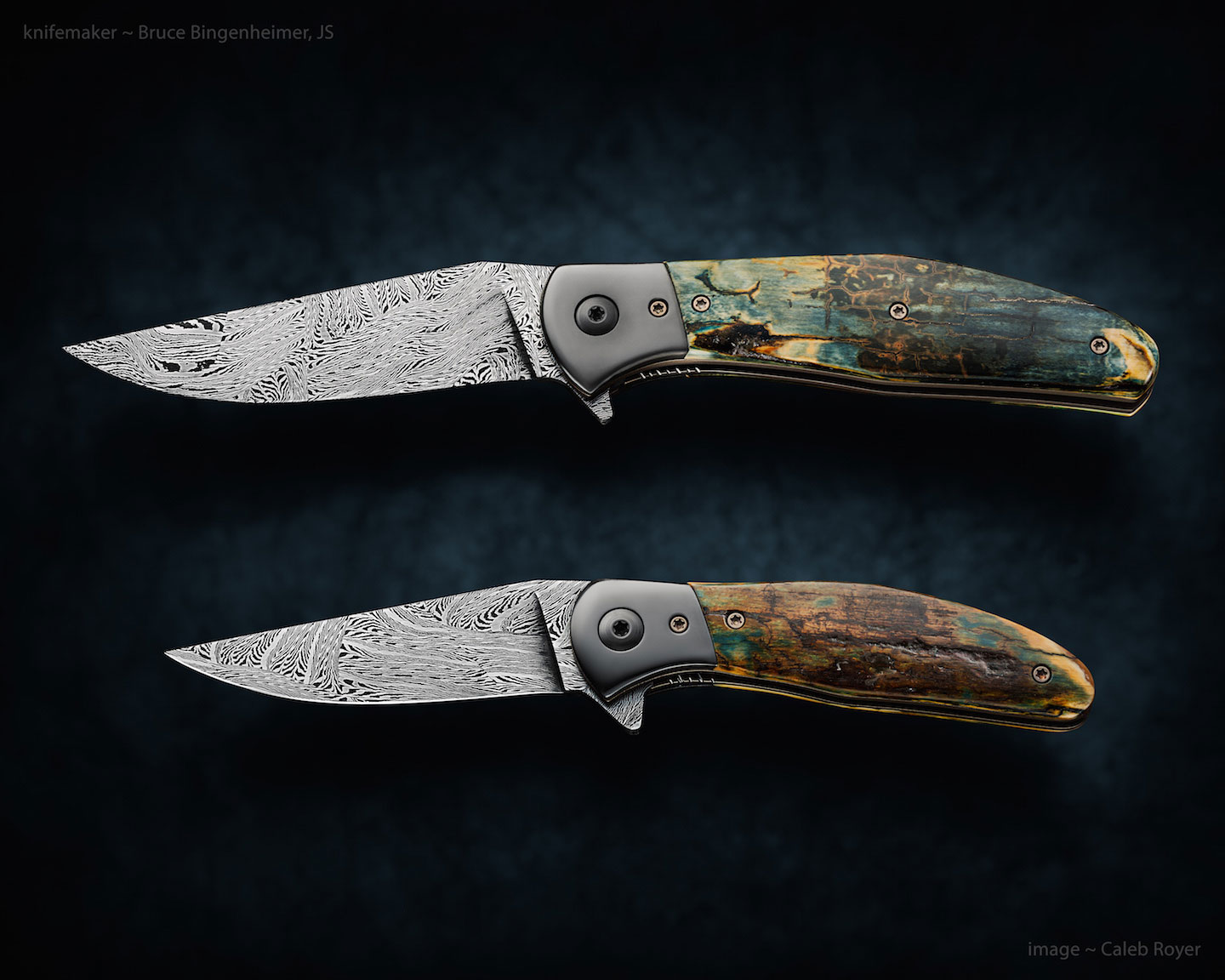
Bruce Bingenheimer’s BingaLor folders have handles of mammoth ivory. (Caleb Royer image)

New Mammoth and Elephant Ivory Bans

New laws in three states target mammoth ivory—ivory of an animal that has been extinct for several millennia—elephant ivory or both for bans, according to the Elephant Protection Association.

“Illinois and New Hampshire are the most recent states that will enact bans,” noted the association’s Sandra Brady. “This follows Nevada, which enacted their ban, including mammoth and fossil ivories, earlier in the year.”

The Illinois ban includes both elephant and mammoth ivory, while the New Hampshire ban is on elephant ivory only.

Brady said the latter two bans go into effect Jan. 1, 2019.

According to the latest lists BLADE® was able to obtain, states that ban the sale of mammoth ivory in addition to Nevada include California, Hawaii, New Jersey and New York. States with proposed legislation in process that would include banning mammoth ivory are Connecticut, Delaware, Massachusetts, Michigan, Rhode Island, Vermont and Washington.

There are probably more as well.

Specifics of the Bans

Mammoth ivory ban
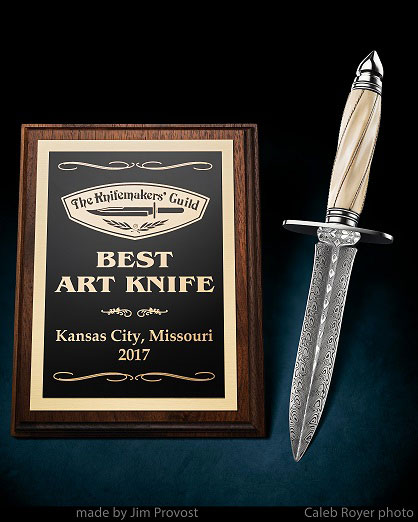
New laws in three states target mammoth ivory—ivory of an animal that has been extinct for several millennia—elephant ivory or both for bans. Jim Provost’s damascus dagger sports a handle of mammoth ivory fluted and inlaid with silver wire. Contact Provost at Dept. BL12, 1634 Lakeview Dr., Laurel, MS 39440 601-498-1143. (Caleb Royer)

Illinois HB4843 will ban “any tooth or tusk composed of ivory from any animal, including, but not limited to, an elephant, hippopotamus, mammoth, narwhal, walrus, or whale, or any piece thereof, whether raw ivory or worked ivory, or made into, or part of, an ivory product.”

New Hampshire SB 451 will ban elephant but not mammoth or walrus ivory.

Nevada SB 194 reads “a person shall not purchase, sell, offer for sale or possess with intent to sell any item that is, wholly or partially, made of an animal part or byproduct derived from a shark fin, a lion of the species Panthera leo or any species of elephant, rhinoceros, tiger, leopard, cheetah, jaguar, pangolin, sea turtle, ray, mammoth, narwhal, walrus or hippopotamus,” except as otherwise provided by state law.

Why Mammoth Ivory Bans?

Raffir fossil mammoth
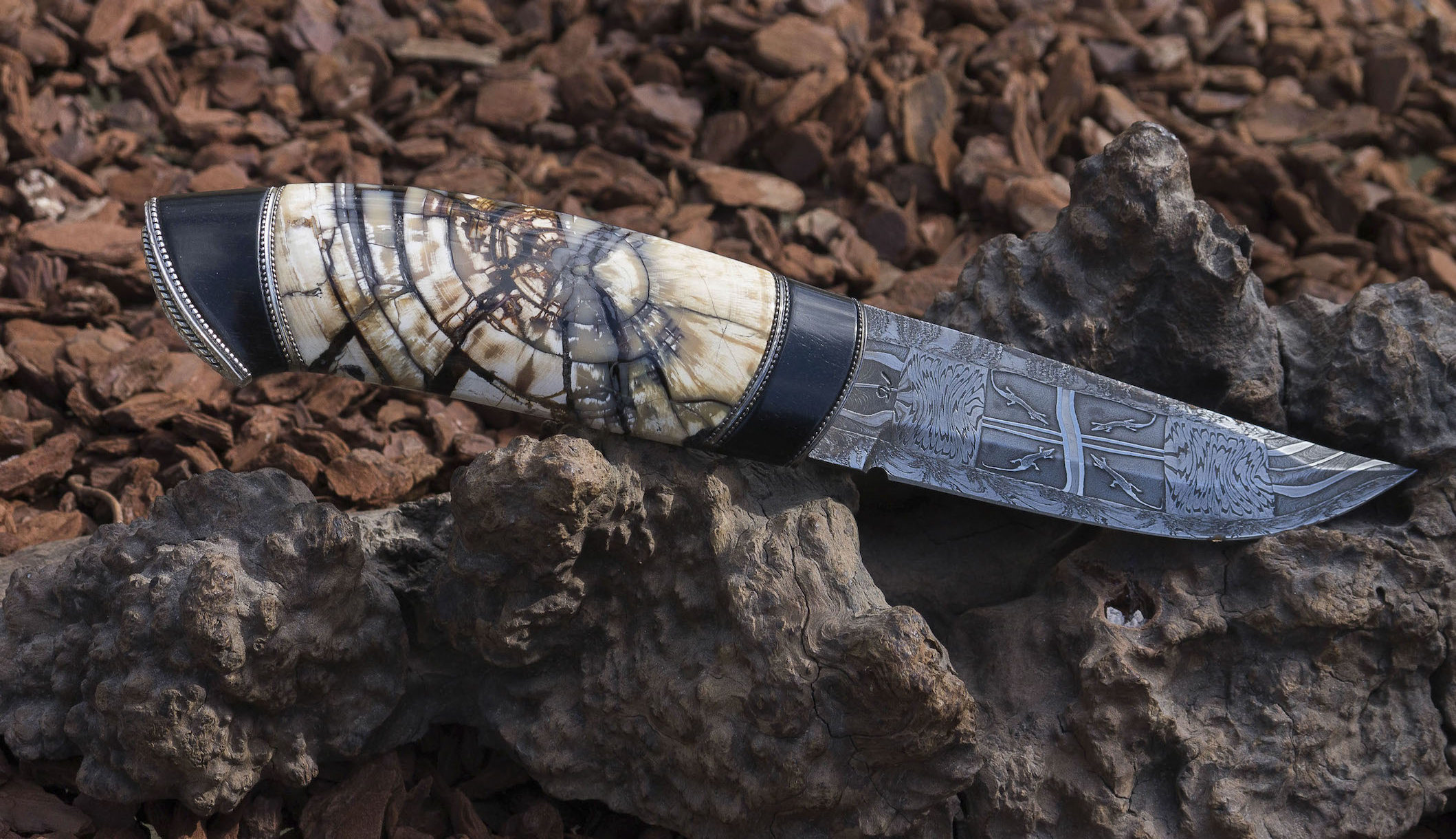
Raffir fossil mammoth ivory comprises the handle of Danish knifemaker Tommy Astrup’s mosaic damascus fixed blade.

Though bans on elephant ivory have many supporters, the bans adversely affect the local populations of Africans who depend on the legal trade in ivory for their economic well-being. Also, the elephant ivory ban is resulting in an overpopulation of elephants in some areas of Africa, an overpopulation that unduly taxes the environment at the expense of other wild animals.

As a result, as Brady noted, “Several bird species are hanging on by a thread or have disappeared altogether, and much of the habitat is being destroyed. We don’t know how bad the trickle-down effect will ultimately be, but you can be sure that it will not be good.”

Ironically, not only does banning elephant ivory impact both the pocketbooks and habitat of Africans, it also has resulted in the banning of the ivory of mammoth, a creature that has not walked the earth for 4,000 years. The reason is simple enough: money. The state governments cannot even afford to administer the fallout from their own wrongheaded bans on elephant ivory.

According to The Journal of Paleontological Sciences, smugglers have been marking shipments of elephant ivory as fossil or mammoth ivory to get them past U.S. Customs. While the differences between elephant and mammoth ivory have been recognized for some time—see this website for more on how to tell the differences—five state legislatures seem to have decided to save money and simply banned all ivory. New York and New Jersey were the first states to do so.

According to its mission statement, the Elephant Protection Association opposes such overbroad and harmful bans that undermine successful conservation programs, and raises funds for animal rights aligned groups only. For more information visit elephantprotection.org.

Wayne Goddard, Renowned Knifemaker and Writer, Passes Away

0
Wayne Goddard obituary
Wayne Goddard
Goddard’s classic guide for new knifemakers is still popular and remains in print.

Wayne Goddard, BLADE Magazine Cutlery Hall-Of-Fame® member, ABS master smith and long-time BLADE® Magazine field editor, has passed away.

Goddard was widely respected and loved throughout the knife industry for his undying mentorship to bladesmiths and knifemakers everywhere. He was a prolific writer, and his Question & Answer column in BLADE Magazine was regularly one of the magazine’s most popular features in reader surveys, with Wayne also being picked as the most popular BLADE writer in those same reader surveys. On at least one occasion he was referred to as “The BLADE Answer Man.” He also wrote a column on knife steels for BLADE.

Wayne Goddard's "The Wonder of Knifemaking" is a knifemaking library essential.
 

His books $50 Knife Shop and The Wonder of Knifemaking remain popular.

A long-time member of the Knifemakers’ Guild, he designed knives for Spyderco and taught bladesmithing at locations throughout the USA. His sharpening seminars at both the BLADE Show and BLADE Show West were among the best attended of each show’s seminars for many years.

There will be more here on his passing and in BLADE Magazine as details emerge. May he rest in peace.

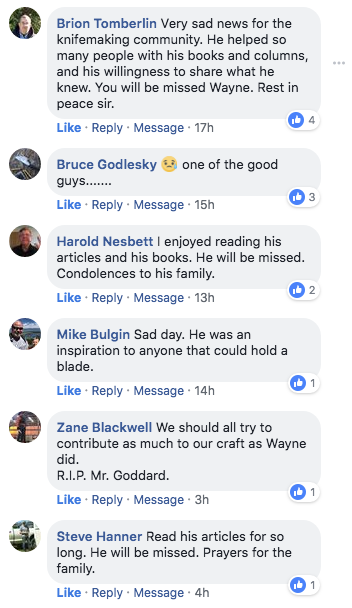
Knifemakers and Fans React

From BLADE‘s Facebook page:

Wayne Goddard knifemaker


Les de Asis Steps Aside at Benchmade; Son Jon Takes Reins

0
Benchmade de Asis
Jon deAsis is on left. Les de Asis is on right. (Benchmade photo)

Benchmade founder and BLADE Magazine Cutlery Hall of Fame® member, Les de Asis, is stepping down as head of day-to-day operations of the Oregon City-based knife company. His son, Jon, will step into that role, effective Nov. 5, 2018. It marks the first significant changing of the guard in the 31-year-old Benchmade, although Les will remain on in strategic positions as CEO and chairman.

The following release from Benchmade explains the transition in detail.


Knife-industry icon Les de Asis, founder of Benchmade, has announced he is handing responsibilities for daily operations and leadership to his son, Jon deAsis, who has been promoted to president of the family-owned business. Jon will oversee a team of nearly 400 employees in the Oregon City, OR, headquarters and manufacturing facility, which produces a range of premium knives for the hunting, tactical, enthusiast and outdoor recreation markets. Les de Asis will maintain his role as CEO and Chairman of the Board, guiding the company’s overall strategy and direction.

Jon de Asis
Jon de Asis at BLADE Show 2017, where his father, Les, was inducted into the Cutlery Hall of Fame. (Image via AKTI)

Jon deAsis grew up with the Benchmade brand, spending his life learning the family business and preparing himself through various roles within and outside of the company. Prior to taking on this new position, Jon spent three years as the vice president of operations at Benchmade, overseeing the brand’s production and rapid growth in Oregon City. During his tenure Benchmade continued to upgrade and strengthen its manufacturing and service capacity in order to provide the highest level of service to its customers.

“I am humbled and overjoyed to have Jon move into this role and feel that this is a great step forward for the organization,” said Les de Asis. “The company and family at Benchmade have been my life’s work since we opened our doors in 1987. Nothing means more to me than the passion, quality, commitment and energy each and every member of our team has dedicated to building the best knives in the world. I know that Jon is the right choice to help continue that drive well into the future and bring Benchmade to a new generation of customers.”

Benchmade has posted eight consecutive years of double-digit growth. The company operates out of a state-of-the-art facility with more than 144,000 square feet of manufacturing space producing products for professionals and enthusiasts alike. The company produces 60 product lines including popular items that have been on the market since the early 1990s.

“I couldn’t be more proud and excited to continue building on my father’s work. Benchmade is a shining example of how a U.S.-based manufacturing operation can continue to thrive by creating premium-quality, highly coveted products with a relentless focus on progress,” said Jon deAsis. “The talent we have assembled in Oregon City is second to none and I’m thrilled to be working with such a strong team in continuing to grow the business.”


Advertisement

Must Read Articles

Read this before you make a knife

Knifemaking 101 – Read This Before You Make a Knife

  by Wayne Goddard My experience has taught me that there's nothing like digging in and getting started. I've often said the hardest part of the...
how to forge damascus steel

How to Forge Damascus

Advertisement
Advertisement