Opening A Balisong Is One Of The Funnest Things You Can Do With A Knife. There Are Numerous Butterfly Knife Tricks You Can Learn To Up Your Game.
Opening most knives is either wholly forgettable or simply a fun way to fidget. Nail nicks, thumb studs, and opening holes like those on Spyderco blades are all common ways to open a knife that don’t leave much of a mark.
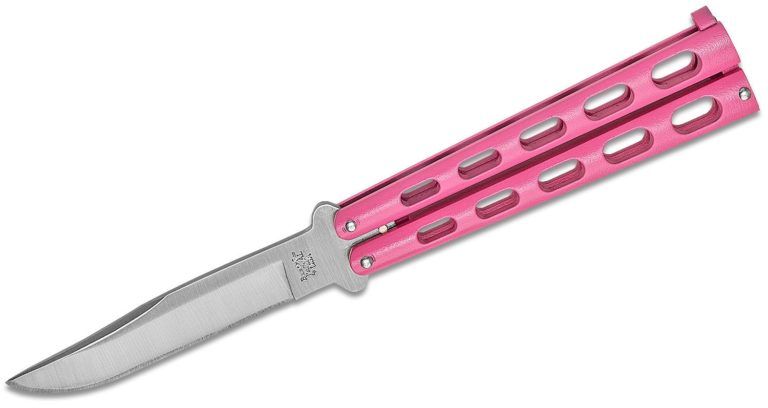
However, the butterfly knife stands alone. It’s so dynamic to open and manipulate that there are professional competitions showcasing new and exciting ways to make the knife dance in the hand. Once you know how to open and close the knife safely you’ll be able to build a skillset of more and more difficult, exciting butterfly knife tricks.
How Do I Open A Butterfly Knife
Before opening a butterfly knife it’s important to know which handle you’re holding. Every balisong has two handles: a safe handle and a bite handle. The safe handle is straightforward; holding this handle will protect your hand from the sharp edge of the blade.
The bite handle is one the side of the sharpened edge. Early on it’s incredibly important to keep your hand off of that handle lest you slice off a finger. More advanced tricks will have you switching handles, but you should only do that once you’ve mastered basic skills and can move the knife safely.
Luckily, there are many different types of trainer butterfly knives available to learn the moves safely without even having to worry about a sharp edge. These knives are made from steel, aluminum, and even plastic. We have a whole primer on finding the best trainer butterfly knife.
What Are The Different Butterfly Knife Tricks?
Just like other sports like skateboarding and figure skating, where tricks involve spins and flips, the names of balisong tricks all have fantastical names. From the more simply-named rollovers and aerials to the blender, the Van Gogh and the Neck Catch, and the Ladder Aerial to Reverse Chaplin, the names are as fun as the moves themselves.
And everything builds off basics. Once you can smoothly and confidently open the knife, you can learn rollovers (which involve rolling the knife around your thumb) and keep escalating until you’re throwing the knife in the air and catching it again in one smooth motion.
In the video below, professional knife flipper Corbin Lovins goes in-depth into all things balisong tricks from the basic to the complex. The young Hoosier won the balisong flipping tournament at Blade Show in 2019 and debuted his own line of Butterfly Knives, Strix, at the most recent Blade Show in Atlanta.
The New Endela Wharncliffe K390 From Spyderco Is The Newest In The Endela Line And Uses A Distinctive Blade Design And State-Of-The-Art Tool Steel To Stand Out.
When Spyderco releases new knives they’re always fun and push the boundaries of what an EDC can be. In the case of the new Endela Wharncliffe K390, there’s so much new about it that it stands out even in comparison to other knives from the company.
It all starts with the K390 MICROCLEAN blade steel. This all-new particle metallurgy tool steel was designed with wear resistance and compressive strength in mind. The straight-edged blade takes the steel and turns it into an exceptional folder that’s tough enough to handle all sorts of intense industrial applications. At 3.42 inches long, the blade is beefy enough to attack big tasks while compact enough for more intricate work.
The blade is married to an FRN handle, and the back lock keeps the whole thing solid and firm in your hand when deployed. The ambidextrous pocket clip allows for easy carry on either side of your body, in your purse, or in a travel pack.
Once again, Spyderco has knocked it out of the park with their newest addition to the Endela line.
Fast-Opening, Gravity Knives Are Banned In Many Places But Are Incredibly Versatile And Fun To Use.
When it comes to pocketknives there are all sorts of different ways to deploy the blade. Many knives can be opened with a thumb stud or a nail nick. Some open with a button press. And then there’s the gravity knife, which opens with the help of the force of gravity. The blade is in the handle and opens by moving a segment of the knife and allowing the blade to fall out.
These knives came to prominence in the 1950s and remain a popular, if controversial, style of EDC.
How Exactly Does A Gravity Knife Work?
The only way to deploy the blade is via gravity. This means that the simplest way to do that is by pointing the knife downward and pulling up on the handle although you can also deploy the blade by flicking it open like an assisted-opening folder. Of course, that could pose a safety issue if the knife is pointed toward you.
Neeves Knives has an excellent breakdown of the Reate EXO gravity knife, how it works, and what makes them so fun to use.
As you can see, the EXO is an incredibly smooth OTF gravity knife. The blade is made from Elmax super steel with a satin finish. The titanium handle with micarta scales provides a strong, resilient grip, and the Kydex sheath allows you to carry the knife safely.
In terms of contemporary gravity knives, the EXO could conceivably be called the gold standard.
Why Is The Gravity Knife So Controversial?
According to knife enthusiast Mike Crenshaw, switchblade and gravity knife laws date from the 1950s when lawmakers worked to link switchblades/automatics and gravity knives to criminals and minorities. “The lawmakers’ goal was to frighten the public and exploit that fear for political gain,” Mike wrote. Any knife that didn’t open with a nail nick and two hands “had” to be a weapon used only by “the wrong sort of person.” As Mike noted, “Any spring-loaded side-opening or OTF automatic and any gravity-opening side opener or OTF was exploited to that end. Any collector of these knives knows their history and their utility, in spite of the bans. Meanwhile, modern gravity knives are having a renaissance, whether those that slide out the front or swing out the side.” Also, modern designs and materials make the resulting knives smoother, stronger and more useful than ever before.
Fortunately, the laws against gravity knives are loosening. A New York state statute banning gravity knives was struck down by a federal district court in 2019, and many states from coast to coast explicitly allow the sale and carry of gravity knives. Despite the law being struck down at a state level, New York City still forbids the public transport of gravity knives.
Delaware is the lone state currently with an explicit ban on gravity knives. Maryland has an odd law where it is legal to own a gravity knife but illegal to both conceal carry and open carry the blade. It’s also illegal to conceal carry in North Dakota and West Virginia.
Types of Gravity Knives
Many of the top factory makers don’t invest in making gravity knives. That leaves smaller, independent companies in the space making interesting and stylish pieces. You’ve seen the Reate EXO in the video above, and it’s a beauty. Below is another fine example of a small maker making a high-end gravity knife.
Paragon Warlock
Paragon Warlock Cross Knife Mystic Blue Aluminum
This North Carolina-based maker Paragon Knives has created a whole line of gravity knives with the Warlock. The line is extensive. There have been 19 different versions of the Warlock, all in different colors, blade finishes, and blade grinds. Every version comes with a CPM-S30V blade that is four inches long with an aluminum handle.
Unlike the EXO from above, this knife is actually, if only technically, a button release. Rather than the button push rapidly deploying the blade out the front it separates the handle and allows the blade to swing out and open.
YouTuber Talon Sei has an excellent breakdown of how the knife opens and his thoughts on the piece. I even set it to start right where the review begins. It really is a beautiful knife no matter the color you choose.
Nothing Is More Terrifying Than Being Caught In The Woods Without The Tools Needed To Get Through The Night. At Least One Of These Tool Arrays Should Meet Your Short-Term Survival Needs.
Prepping and survival equipment came to the forefront of public attention about 15 years ago with the expansion of the popular zombie film and TV genre. In fact, it got to the point where there was at least a two-year industry-wide emphasis on zombie merchandise, guns, ammo, and equipment.
While that remains a fond memory for many, what it really served to do was appeal to the broader masses, and many people began thinking about just what they would do in a real, non-zombie emergency.
Since then, the world has experienced no shortage of natural disasters, from massive wildfires to coastal tsunamis, floods, volcanic eruptions, and more. The world is no safer a place now than it was before. However, in lieu of zombies and green goo, the public has taken a keen interest in survival and its tactics.
Shows like Alone, Survivorman, Life Below Zero, and others captured the interest of many, and bushcrafting, foraging and fieldcraft exploded in popularity. Suffice to say, there is no shortage of specialized equipment to better your odds in a bad place.
What Is A Survival Kit?
I break down survival items and kits into four categories: full kit, partial kit, last-ditch and, knife-only. I would classify our trio of review kits as last-ditch in that they contain a variety of small items not meant for extended use but rather as a single-day advantage. The items can save your life in a pinch but by nature of size and weight will likely not last in a long-term survival situation.
Examining the survival kit theory requires considering the context of just what a survival kit is. The category I identify as a full kit is exactly as it sounds: likely a backpack setup with excellent weight distribution. This includes weapons and ammunition, ideally a rifle or shotgun, or a modern bow. Like it or not, survival in a bad situation increases dramatically with the presence of a firearm.
When I go into the woods, I have a rifle and a handgun at minimum with 100 rounds for each, usually in magazines. For the non-American readers out there this amounts to around five boxes of rifle ammo and two of most handgun loads. Hunting use is the primary idea but signaling and self-defense from large predators are also valid uses. If you have the ability to own a gun, you absolutely should, even if that gun is an antique design or black powder cartridge.
A partial kit is what you need for a minor excursion, the type of kit you may put in your vehicle if you are far from home but not too far from civilization or a gas station. In the kit I would prioritize a single firearm, typically a pistol of .22 caliber up to .357 Magnum (99 percent of all game can be taken with these rounds), medical supplies, and equipment to take down saplings or branches, such as a folding saw or hatchet. Unlike a full kit, this is to get you through an area as opposed to intentionally staying in one. Clothing appropriate to the short-term environment would ideally already be on your person.
Having the materials to quickly build a fire is a must for any survival kit.
The last-ditch kits reviewed here are for if you have already screwed up, failed to bring a suitable weapon, or are fully out of ammunition or supplies. Baseline, when you break open one of these kits, you are already on your last legs as far as survival goes. The kits in this article are short-term, almost single-use in nature. All three come with materials enough to work on small pieces of wood and at least signal or start a fire.
Lastly, if you have a single knife good enough to spark with and know how to use it, I’d say that you stand a pretty good chance of survival. I say this because, unlike a last-ditch kit, a good, heavy-bladed knife can be used to move a surprising amount of material, often quite quickly.
A thick blade can easily take down small trees with minimal exertion, baton firewood, make kindling, spark, and be lashed to a shaft to use as a spear. In a pinch, you can use a knife to make a bow, though that takes skill and time. For fishing, it can make spears and clean your catch.
Picking The Right Survival Kit For You
Understanding the theory of use behind these levels of preparedness, as well as their limits, is crucial to making it through a situation into which you may or may not have intentionally entered. In looking at the review kits I am assuming that we have run out of all other equipment, say a kayak tipping over in the river after hitting an underwater tree on a hunting trip. You, being a forward thinker, slipped one of these kits into the dry bag you stowed in your kayak before you fell in.
You’re wet, you’ve lost your gun, and you don’t have the rest of your gear. You’re in normal temperate conditions, but nightfall will be cold. To make matters worse, your kayak has cracked and has taken on water.
Colonial Pocket Size Survival Kit
The Colonial Pocket Size Survival Kit is the only one of the test entries that is waterproofed, and the baggy can be used to keep tinder dry. Country of origin: USA. MSRP: $130.
At first glance, the Colonial Pocket Size Survival Kit looks like a Boy Scout put it together in his dad’s garage. The items are simply tossed into a thick baggy and are mostly off-the-shelf. The kit, however, is extremely well thought out and is almost entirely usable. It is the only one of the test entries that is waterproofed, and the baggy can be used to keep your tinder dry.
It consists of a signaling whistle; compass; waterproof matches; a military general-purpose pocketknife (containing a blade, can opener, screwdriver and pick); a survival blanket; aluminum foil; small candles; firestarter brick; fishing tackle; floss; adhesive bandages; gauze; and alcohol swabs.
Of note is that this kit did not come with a striker rod or visual signaling device. While not a disadvantage, the kit relies on matches as a source of fire making. I typically will always have matches on me if outdoors, but I try to use them as a last resort. In the present scenario, you would immediately begin gathering branches and medium kindling like grass or leaves, knowing you have dry matches and can immediately get warm and dry.
Building a shelter with this kit isn’t really going to happen, but at least you can build a fire fast and try to catch fish in the river. You get your fire going, get your socks and boots drying, and you luckily caught a fish with your tackle.
Using a flat river rock and aluminum foil, you wrap it up and fry your catch. You survive the night warm and dry and set out back to the guide camp the following morning, stopping to fish by hand as you go, expecting to cook your catch in the early evening. You must be mindful of your health and dehydration on the walk because you have no ability to make water safe to drink, though, knowing you’re close, you figure you’ll just take some medicinal drugs when you get home.
Fox Knives BlackFox Survival Kit
All packed in a sealed metal can, the Fox Knives BlackFox Survival Kit contains a fire starter and striker, compass, whistle, a wire saw, razor blade, bandages, and so much more. Country of origin: Italy. MSRP: Approximately $55.
Start over at the point of your crash, this time with the Fox Knives BlackFox Survival Kit. It contains a fire starter and striker, candle, compass, whistle, tackle, a tiny Swiss Army-style knife; safety pins, a wire saw, razor blade, sewing kit, wire, match carrier (but no matches, none came with the kit), bandages, repair tape, cotton balls, and a notepad and pencil. It is all packed in a sealed metal can.
You take a different approach to your night in the woods. You know you must get dry first, and this kit has a rod and striker. You set about gathering kindling and starting a decent fire to get warm and dry. You set about fishing as well and make a good catch. You have to cook it on a stick over the fire but had no issue gutting it with the razor blade. You use your wire saw to cut saplings to make a shelter. You end the night warm and dry in your shelter, and with a full belly.
In the morning, you use the repair tape on your kayak and harvest sap from the trees you took down to smear it on the outside of the craft for waterproofing. You paddle back to your basecamp and then return to the spot with your friends to retrieve your gear from the river. Because you knew you could paddle back, you didn’t risk drinking river water, so your hunt continues.
Lansky P.R.E.P Kit
The Lansky P.R.E.P. (Preparedness, Resource, Equipment Pack) Kit stores a survival blanket, multi-tool, flashlight, fire striker, and LifeStraw water filter among many other tools in a compact black nylon bag. Countries of origin: USA and “various others.” MSRP: $129.99.
In this scenario, you have the Lansky P.R.E.P. (Preparedness, Resource, Equipment Pack) Kit and its survival blanket, first-aid kit, tackle, a small multi-tool, flashlight, paracord bracelet, survival guide, fire striker with compass, collapsible water bottle, LifeStraw water filter, Lansky UTR7 Responder knife, and Blademedic sharpener. All are packed in a black nylon bag.
Upon dragging your kayak back to land, you need to make a fire. Your kit is waterlogged but the items inside are not damaged. You need to gather wood and kindling, and it takes some effort, but you get a fire going using the bracelet to start the initial burn.
Once warming up, you catch some fish and gut them with the knife. You build a rudimentary shelter using the knife to cut down small branches, and rest until morning. You’re hydrated thanks to the LifeStraw and thus won’t need to see a doctor when you get home.
However, you failed to check in with your friends, so they come looking for you in this scenario. You hear distant noises and get out your flashlight and signal them. Your friends arrive after dark and take you back to camp. They brought a retrieval magnet and you get your rifle and equipment back that night. You clean the firearm and test it in the morning, ready to resume your hunt.
Tempering Your Expectations
None of the review kits are going to assuredly get you out of trouble. They can, however, offer you a stay on the inevitable and get you to a point where you can signal for help or make it to a safe location. Survival isn’t a guarantee and the scenario changes dramatically if you were injured in the accident. These kits can be the difference between life and death, make no mistake about that. Having one on hand is cheap insurance if things take a turn for the worse.
The New Kizer Assassin Is A Smooth And Nimble EDC. This Is An Affordable, High-Quality Folder That Is Fun To Use.
The new Assassin folder from Kizer is a new EDC from the factory maker, and it’s an exciting knife. With a blade made from 154CM and a red micarta handle, the Assassin makes a visual splash the moment you lay your eyes on it.
The super smooth thumb stud makes opening a breeze, and the flipper/button lock keeps the steel rigid and secure when deployed. Carlos Elstner really did a heck of a job in designing this knife to make it fun.
The Assassin is simplicity done at a high level. There are no extra bells and whistles on this piece; it’s just a complete, well-made knife that you’ll be able to use for years. The fact that it’s so inexpensive is the cherry on top.
Sometimes A Simple Knife Is All You Need, And This New Folder From Gerber Looks Sharp And Is Sharp.
The new Affinity from Gerber is a straightforward, plain-edge folding EDC. That’s not a slight but a compliment. The piece comes in two colorways and both shine thanks to their construction and ease of use.
It starts with the aluminum version that has a 7CR blade and an easy-access frame lock. This allows the cutting edge to be exactly where you expect it and allows you to slice with confidence knowing the blade is secure.
The handle is highly-polished for a clean, modern look. The ergonomic design, along with the adjustable thumb stud, allows you to make the knife your own and have it feel perfect in your hand. The pocket clip allows for easy carry as it discretely tucks away.
Gerber Affinity – Copper
The other version is the copper. The copper features all the same features as the aluminum version with two key differences. The most obvious are the machined copper scales that give the blade a tough-looking exterior.
The other key difference is the in the blade; the copper has a blade made from D2 steel, which drives up the price although both are affordable folders.
Survival Knives Need To Be Versatile, Durable, And Strong. These 10 Blades Are Everything You Could Ask For When In A Sticky Situation
A survival knife is most often a heavy-duty fixed blade built to withstand hard use in multiple roles, generally in the wilderness. It must be able to whittle, carve, chop, slice, and maybe dig. It also holds down the regular duties of a knife and assists in all cutting chores. Additionally, if your back is up against a proverbial wall, it should have the chops to serve as a weapon.
Survival Knife Features
When looking for a quality survival knife there are four key things you need to look for: the quality of the steel, handle material, the robustness of the guard, and the caliber of the sheath.
Steel
As with all knives, it all starts with the blade steel. Carbon steel and stainless steel are both used with survival knives, both have their pros and cons.
Carbon steel requires a bit more diligence to maintain and keep from rusting but offers ease of in-field sharpening. Stainless steels are more resistant to the elements and, if you spend the money, the higher grades offer enhanced edge-holding capabilities.
Handle
Next, you want to look for a knife that has a comfortable handle. This is key, given you’ll use the knife for extended periods of time.
What you need to consider is:
How is the handle contoured?
Does it feel good in your hand?
Is it made of synthetic or natural handle materials?
Personally, I would stay away from leather because of its nature to soak up moisture. I would look to some sort of synthetic like G-10, micarta, or reinforced thermoplastic. These synthetic materials are dimensionally stable and are not affected by changes in temperature, humidity, and exposure to UV.
Guard
The guard keeps your hand in place by preventing any forward movement while the knife is in use. You might be able to wrap a finger around the guard to further choke up on the handle for extra control during cutting or whittling.
Given survival knives are tasked with a number of rough-and-tumble duties, it’s wise to consider an ample guard—at least for the sake of safety.
Sheaths
Not as sexy, sheaths are equally as important as the knife itself. Essentially, the accessory helps protect the knife when not in use, as well as provides a means of portability. Most attach to a belt or MOLLY field, in the case of a backpack.
Materials such as Kydex provide the best options. Why? The thermoplastic is light, form-fitted to the knife blade, and impervious to the elements. What more could you ask for?
You might also notice some sheaths are made of ballistic nylon with a hard plastic liner inside to prevent the knife from destroying the sheath. These are also a good alternative and are more cost-effective along with being fairly weather resistant.
Leather and other natural materials on the other hand, generally ware out quickly with active use. Worse yet, they retain moisture, which can be hell on a blade—especially a carbon-steel blade.
What To Avoid When Buying A Survival Knife
Yes, survival knives come with a host of features but there are some that are useless or worse. These three features aren’t worth the price.
Spine Serrations
Ugh … serrations on the blade spine. Admittedly, some like having serrations as a cutting option for certain materials. However, generally blade spine serrations offer limited use at best and are more of a hazard because of how close they are to your hand.
Honestly, if you need serrations, bring along a serrated folding knife like a Spyderco Delica or Endura. Problem solved.
Blade Holes
Alright, these serve no function at all, except they make the knife look cool. That might be alright for a collection novelty, but not a wise course when in the wilds.
Worst of all, the holes in the blade do nothing but weaken it. Stay away from them.
Odd Blade Designs
Like blade holes, they may look cool but rarely do they enhance the function of a survival knife. We’re striving for utility here, not unique looks.
Stick with the traditional blade styles—spear point, clip point, and drop point. These are proven and do the job perfectly.
10 Best Survival Knives
There are countless makers producing dozens of different survival knives. These 10 stand out from the pack for either their features, their toughness, or their price.
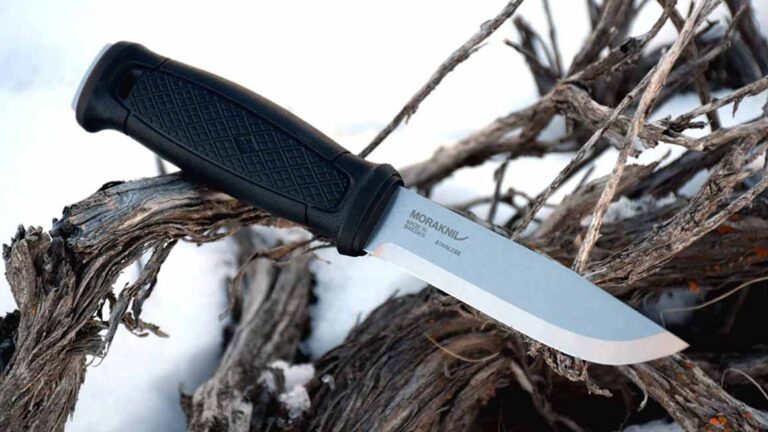
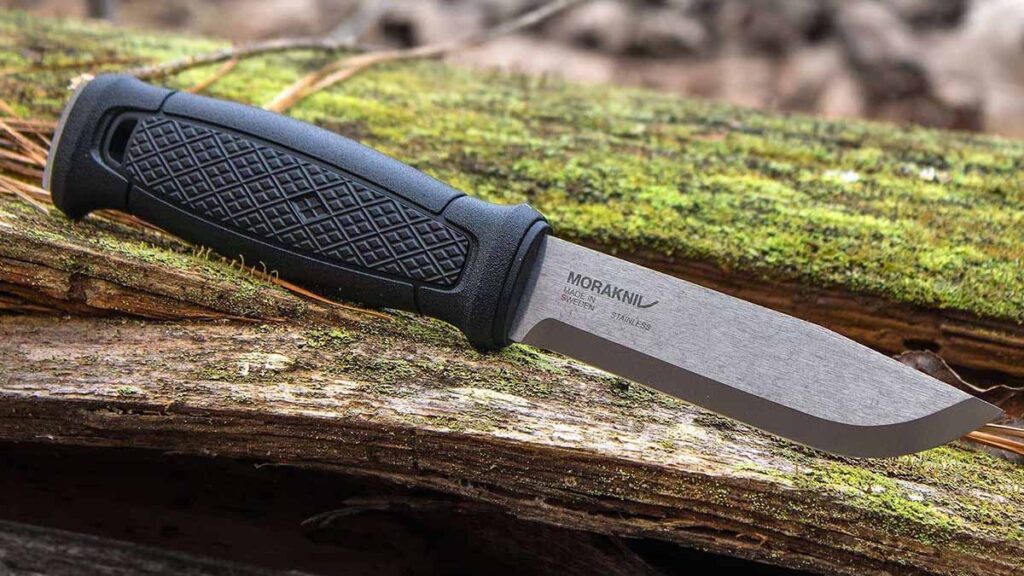
Mora Garberg
Mora is the king of value when it comes to inexpensive survival knives. Most come in at less than $50, but you are hardly compromising in quality.
I personally favor the Garberg, which has a 4.3-inch carbon-steel blade with a Scandi grind and a full tang through the handle.
The blade spine is at 90-degree, designed specifically for use with a ferrocerium fire starting rod. The dual-molded handle is made from weather-resistant polyamide. Its unique Multi-Mount sheath is included and fastens the Garberg to an ATV or snowmobile, as well as a belt.
It’s a tough too, so you are getting a lot of knife for your money. It’s made in Sweden and sold worldwide.
MSRP: $111.99
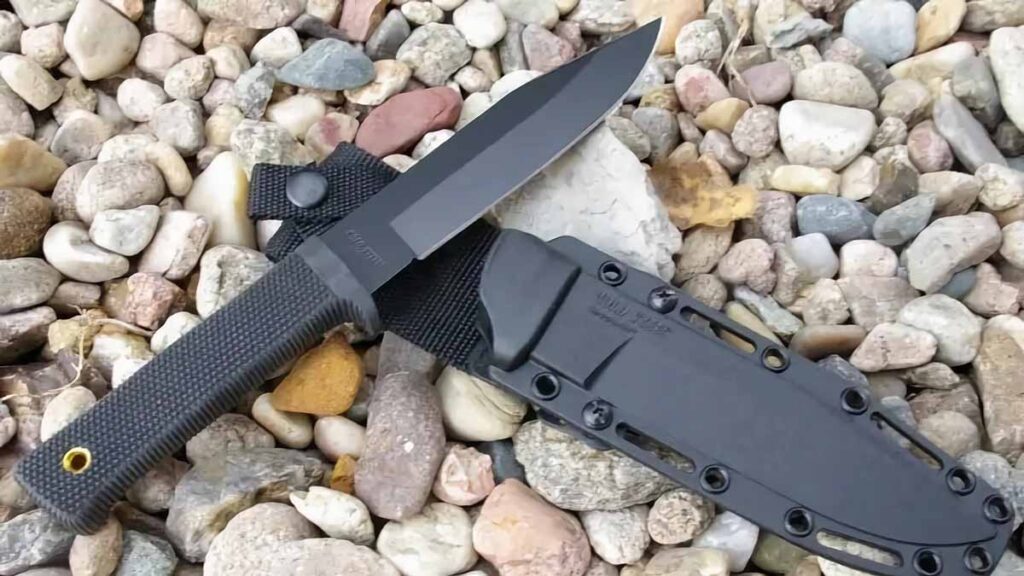
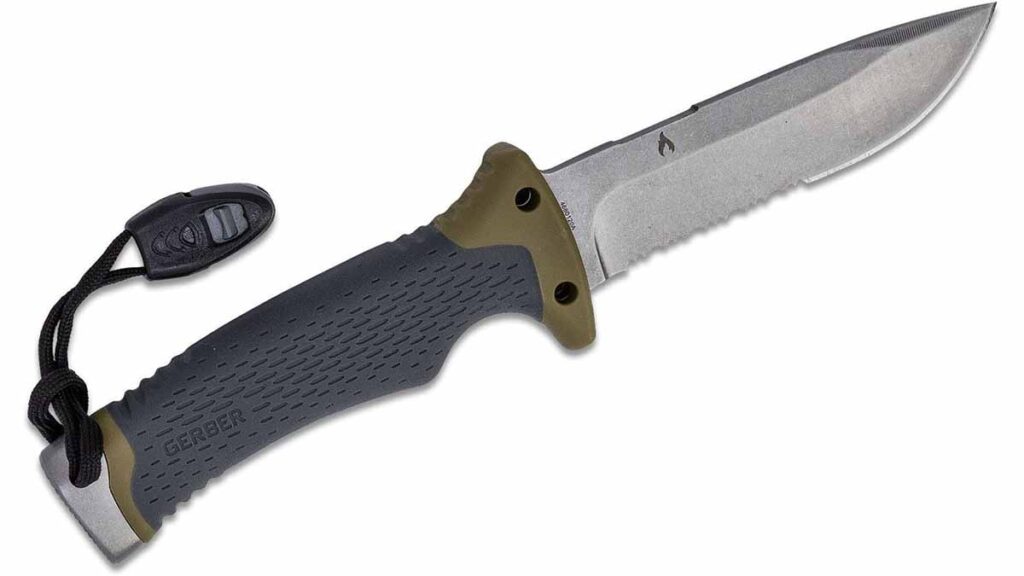
Cold Steel 49LCK-DTBK SRK Survival Rescue Knife
A long time classic of the Cold Steel product line, this knife is a proven, solid performer in the outdoors. Its 6-inch clip point blade is made of SK-5 carbon steel and attached to a textured desert tan Kray-Ex rubber-like handle that is textured for a great all-weather grip.
The blade has a black, epoxy-coat for low visibility and high weather resistance. And its single lower handle guard indexes to the grip.
The SRK is suitable as a hunting knife, survival knife, or even a fixed blade for military use. It’s a very handy design that excels at camp utility and food prep.
The stainless-steel blade provides ample resistance to the elements and holds an edge well. Its drop point design has plenty of belly for slicing and the partial run of serrations adds a bit more utility to the knife.
The handle material is rubber for an excellent non-slip grip. The large finger recess indexes your grip and allows for maximum user comfort. The butt cap of the handle is steel and can be used as a light-duty hammer when needed.
The hybrid nylon webbing and molded plastic sheath is durable and includes a fire starter and blade sharpener.
Superior handle ergonomics paired with a useful blade shape and partial serrations are what makes this one a winner.
MSRP: $62
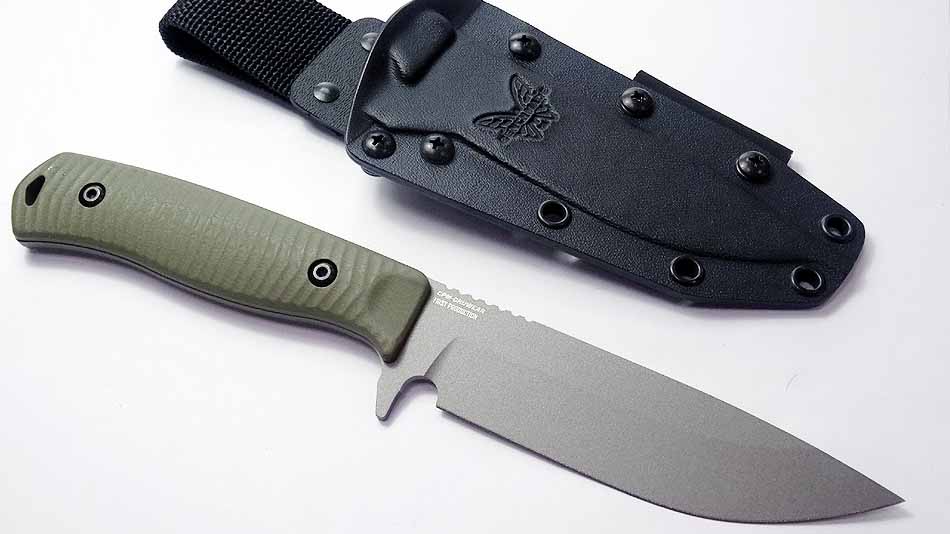
Benchmade Anonimus 539GY
This is Benchmade‘s new high-end fixed blade, with some excellent features. First and foremost, high-end CPM CRUWEAR tool steel, which provides ultimate wear resistance and edge retention.
The flat ground, 5-inch long drop point blade offers plenty of belly for effective slicing and cutting. Notches on the blade spine provide a secure non-slip grip for your thumb or index finger, and the single, lower guard keeps your hand in place.
The Anonimus is secured by a molded Boltaron belt sheath very similar to Kydex. The G-10 handle sports machined-in texturing for a non-slip grip.
MSRP: $290
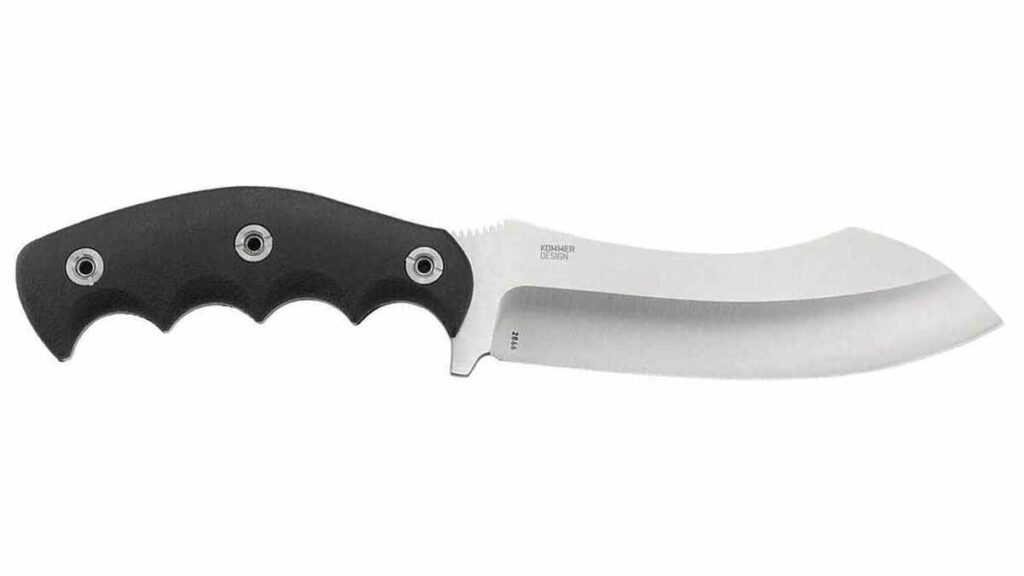
CRKT Catchall
Designed by custom knifemaker Russ Kommer, the Catchall by CRKT is on the heavy-duty side of things.
This broad chopper-style blade measures 5.5 inches in length and has a sheepsfoot-style blade. The blade is made from 8Cr13MoV stainless steel, which holds a decent edge and provides excellent corrosion resistance.
The ergonomic handle features finger grooves for a secure hold, and the handle material is rubberized glass-reinforced nylon. The Catchall might not be the type of knife for lighter cutting jobs but rather more intense tasks, such as chopping and baton work for splitting kindling for firewood.
The Catchall would be great paired with a lighter duty survival knife dedicated to finer chores. The sheath is a glass-reinforced nylon variation with ballistic nylon webbing belt loops. A single webbing strap with button snap holds the knife inside the sheath securely
MSRP: $79.99
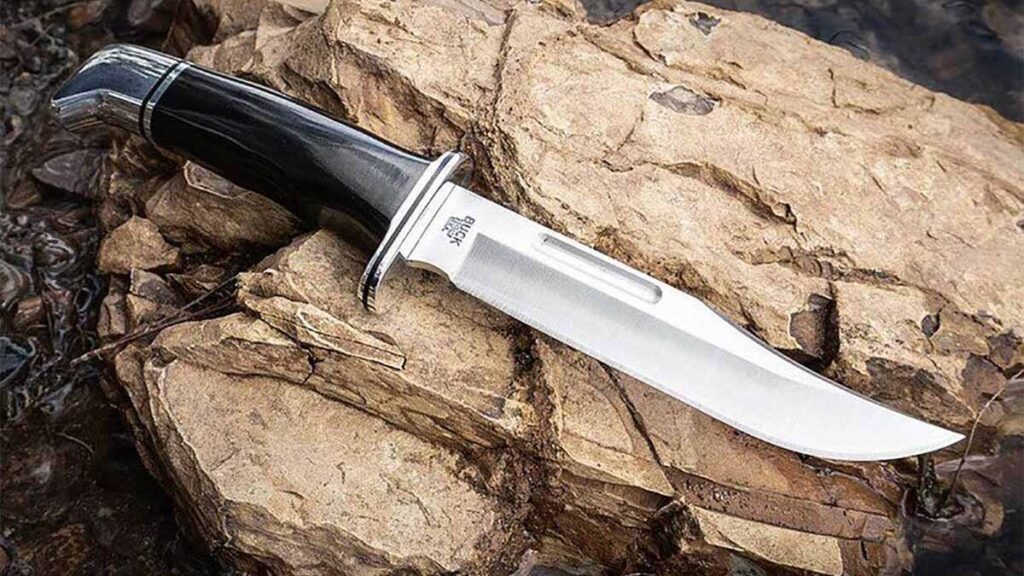
Buck Knives 119 Special
This is one of Buck‘s signature fixed blades. Sporting a 6-inch-long Bowie-style clip point blade made from 420HC stainless steel, the 119 Special has found its home in the outdoors with hunters and outdoorsmen alike.
The handle is a black phenolic resin, which is durable and highly weather resistant. And the knife comes with a black leather sheath. The handle butt cap and double guard are made from aluminum. The 119 Special is capable of handling both camp utility chores like whittling and baton work. The piece is also balanced enough to handle food prep.
MSRP: $96
Condor Knife and Tool Pack Golok
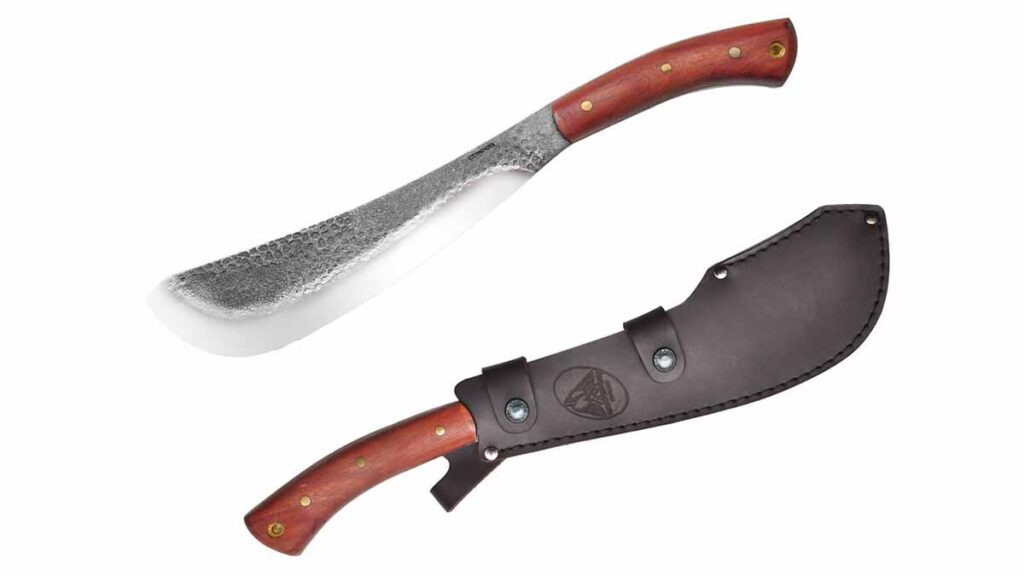
The Pack Golok from Condor Tool And Knife is a devastatingly effective chopping tool, with its 11-inch long, convex-ground 1075 carbon-steel blade attached to a rounded walnut wood handle that adds tons of user comfort and control.
The upswept blade profile adds forward weight to the balance, which is key to the performance of this knife. It can take down saplings with ease and slay its way through weedy growth like a machete. It also handles baton work like a champ.
The Pack Golok is much more than just a machete and more useful than one, and it comes with a leather sheath and swivel belt loop for portability.
MSRP: $101
White River Knives’ Firecraft FC3.5 Pro
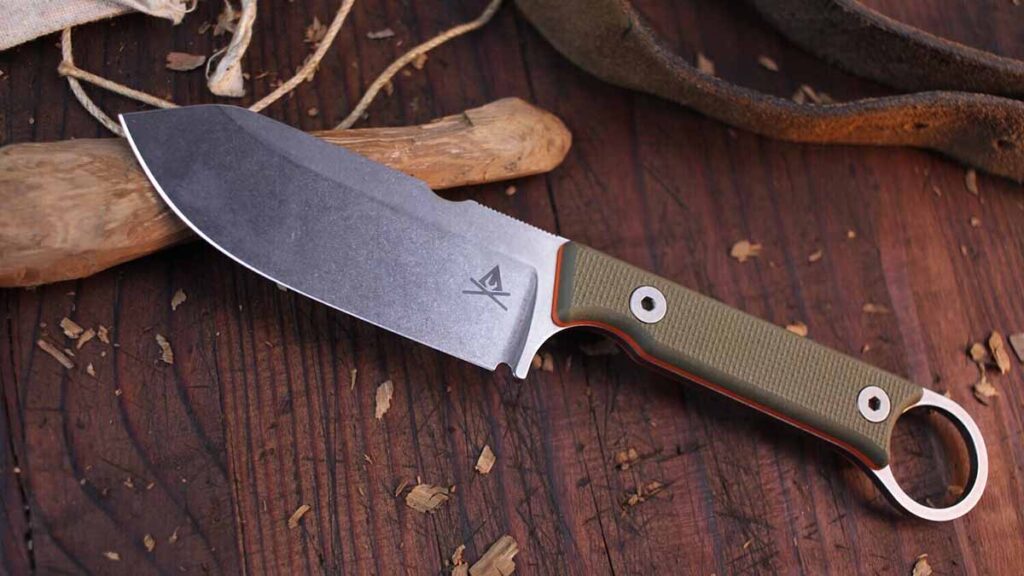
TheFirecraft FC3.5 Pro from White River Knives has a 3.5-inch-long spear point blade ground from high end CPM S35VN stainless steel. The handle is coarse-textured G-10 and comes in a choice of orange, black, or OD green.
Regardless of which handle color you choose, you are getting a no-nonsense fixed blade able to handle a wide variety of tasks at the campsite or out in the wilderness.
The notch in the blade spine allows for easy use with a ferrocerium fire starter rod. The wide blade can handle food prep chores and camp utility tasks. The finger ring allows you to dangle the knife from the pinky finger, keeping it close at hand, while retaining the ability to use your hand to grab or hold items.
The S35VN steel holds an edge well and is able to power through tough cutting. Each knife comes with a molded Kydex belt sheath.
MSRP: $160
RMJ Tactical Combat Africa
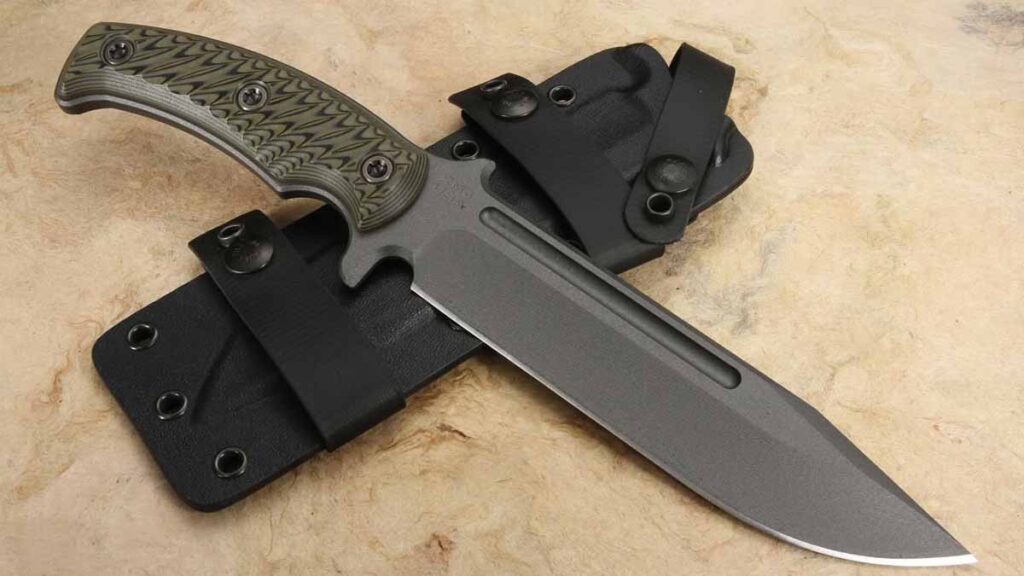
The RMJ Tactical Combat Africa is one serious piece of bladeware that can serve as a survival or military knife. It’s 7-inch-long blade is made from 80CRV2 tool steel. The .25-inch thick stock means this knife can withstand some serious use and some prying as well.
The clip point shape allows for optimal penetration, with some belly for slicing applications. The 3D machined G-10 handle has diagonal flutes, adding hand traction and channeling water away for a comfortable grip.
Furthermore, the lower hand guard and blade spine thumb ramp help to keep your hand safe from sliding forward. The knife is capable of chopping, prying, batoning, and slicing.
The knife is a bit on the steep side when it come to price. But in return you receive the superior engineering and craftsmanship for which RMJ Tactical is known.
MSRP: $395
TOPS Brakimo
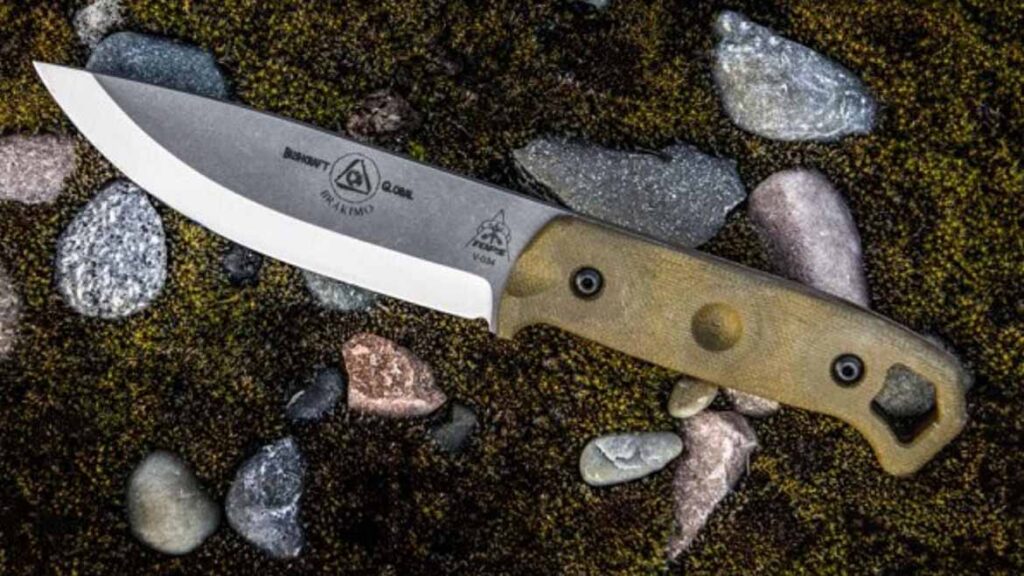
The TOPS Brakimo was designed by noted survival expert Joe Flowers, who owns and runs Bushcraft Global, a renowned survival school.
Flowers designed this knife to be a backup to a machete or a main camp knife. The 5.25-inch drop point blade is made from 1095 carbon steel. It is wide and sports a Scandi grind for optimal edge geometry for camp tasks. As a bonus, the carbon steel is easy to sharpen in the field.
The knife is rather weighty for its size at 9.4 ounces. The sculpted handle is made from OD green canvas micarta for a comfortable and nonslip grip. The handle’s downward turn at the butt allows you to choke up at the end of the handle during chopping. Each Brakimo comes with a molded Kydex belt sheath with large metal clip for easy belt attachment.