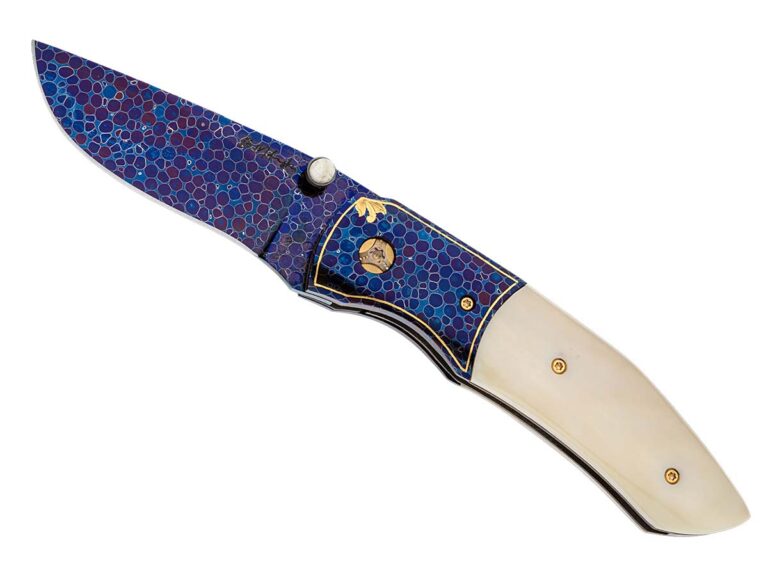
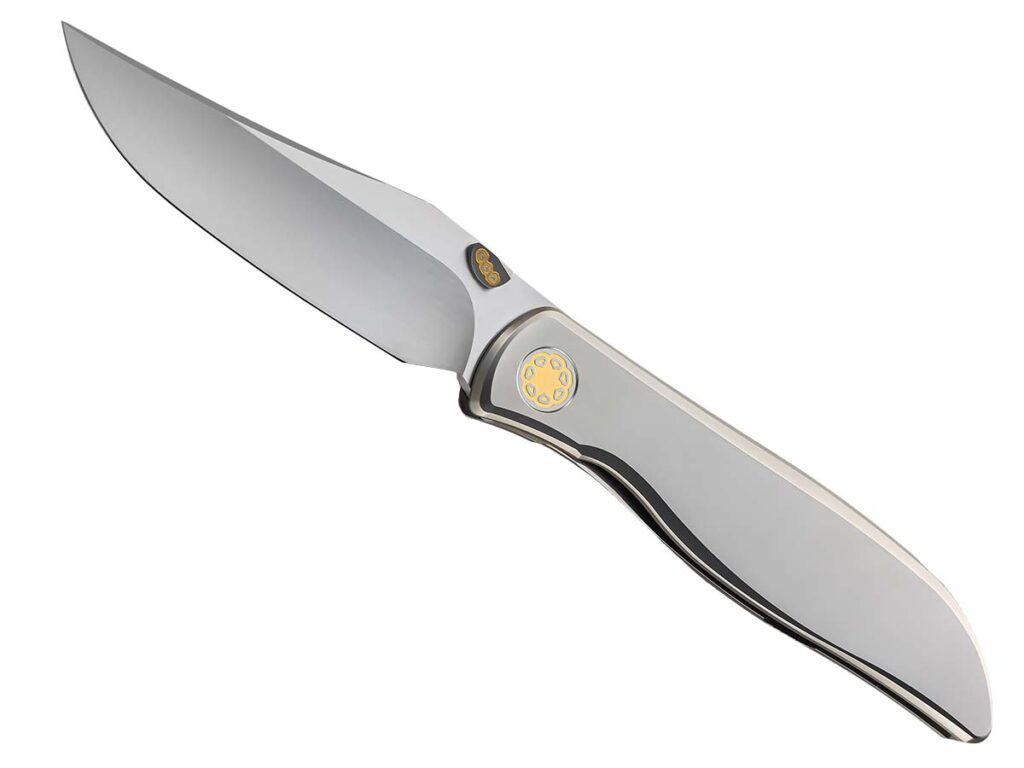
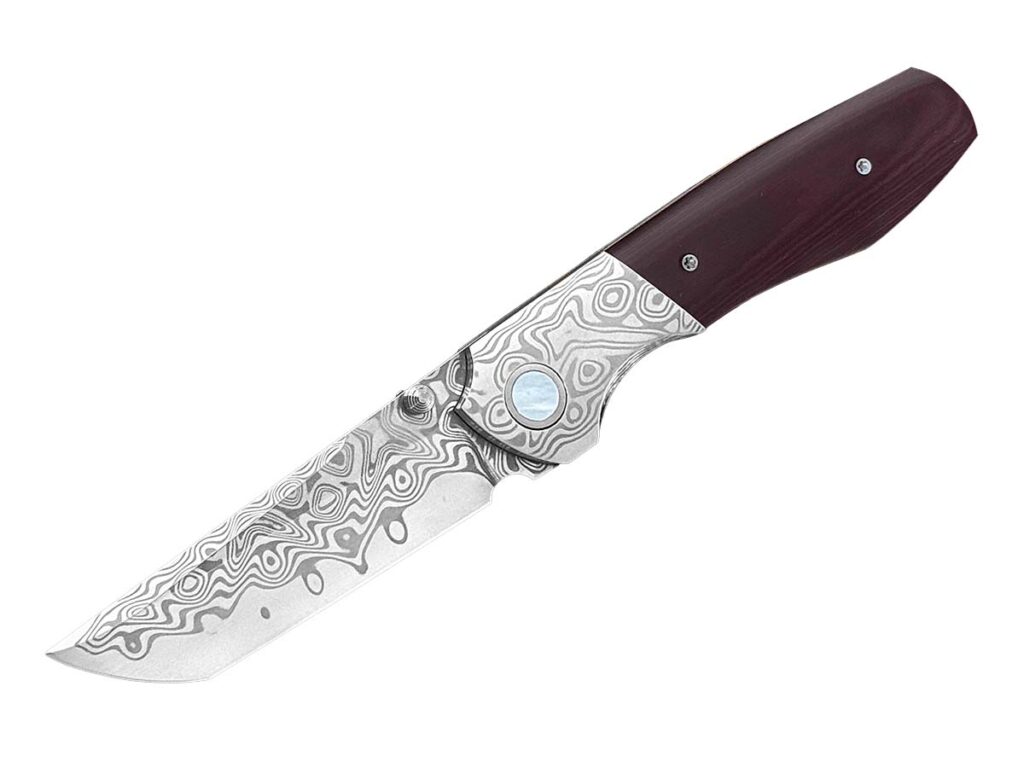
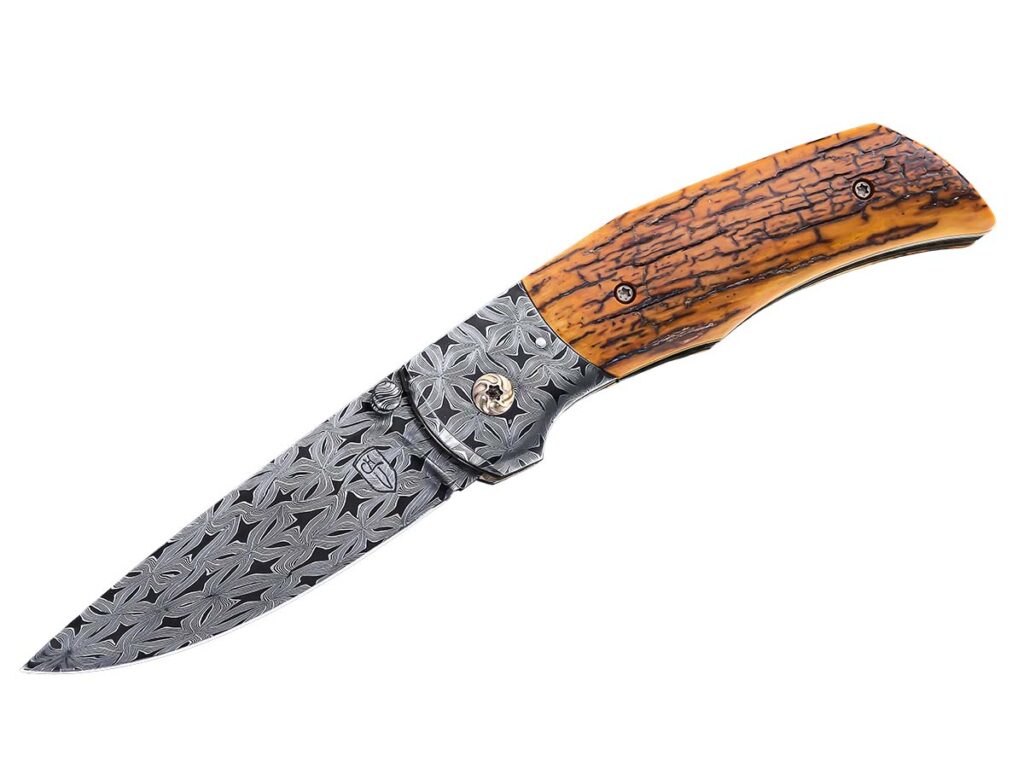
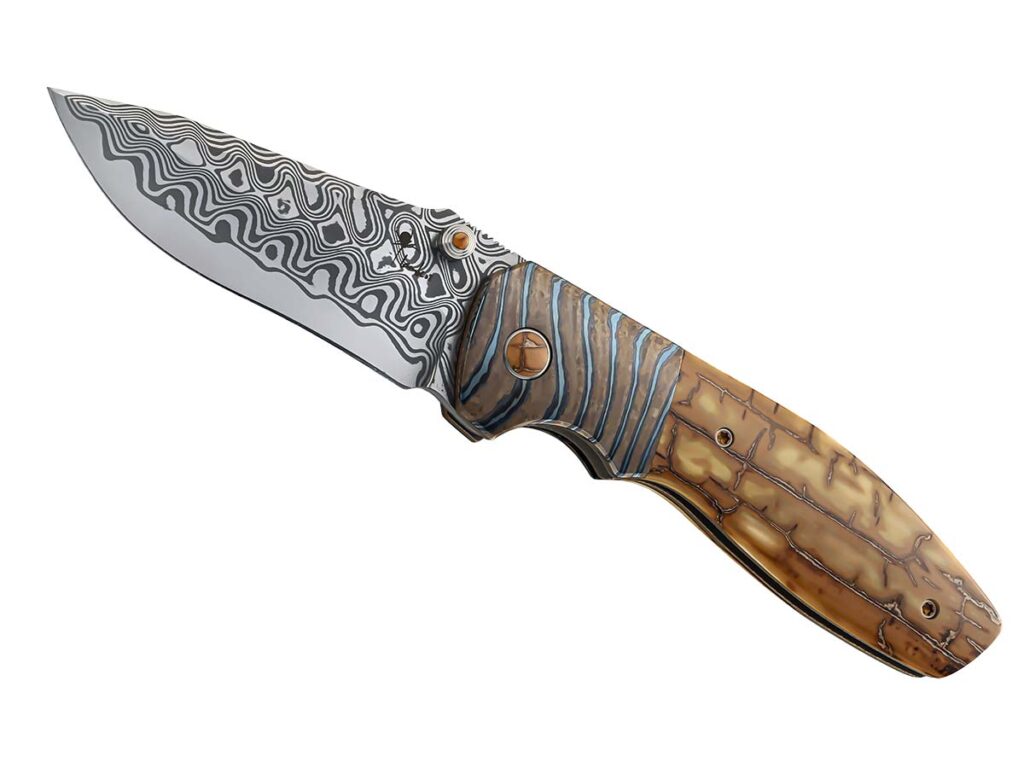
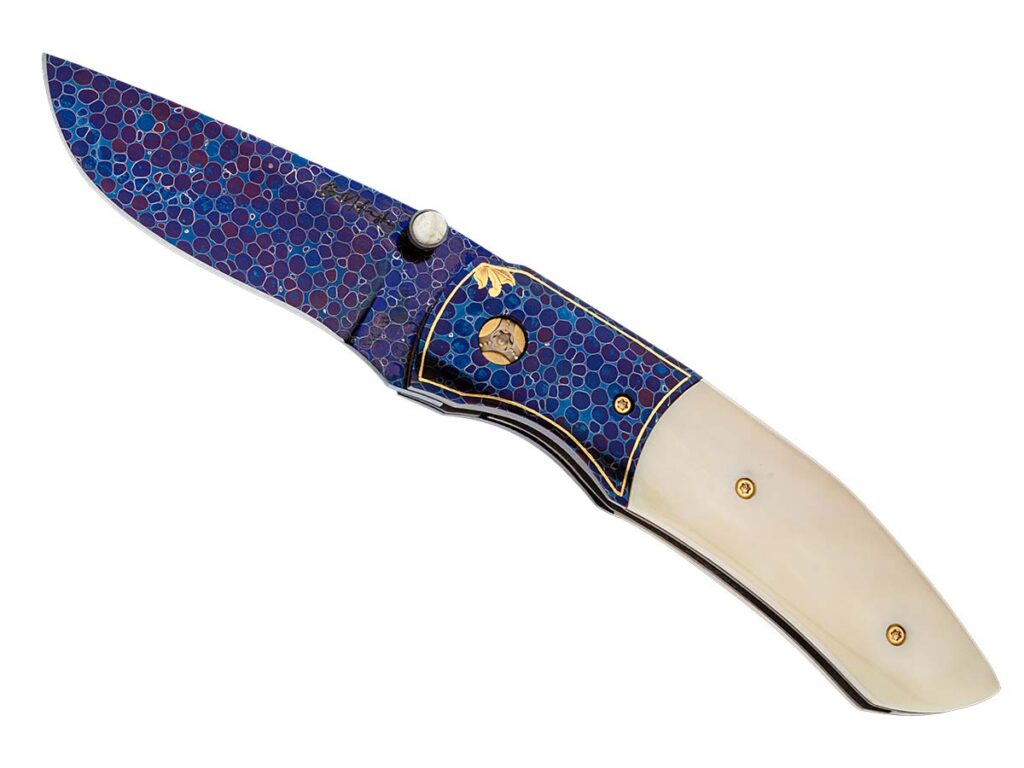
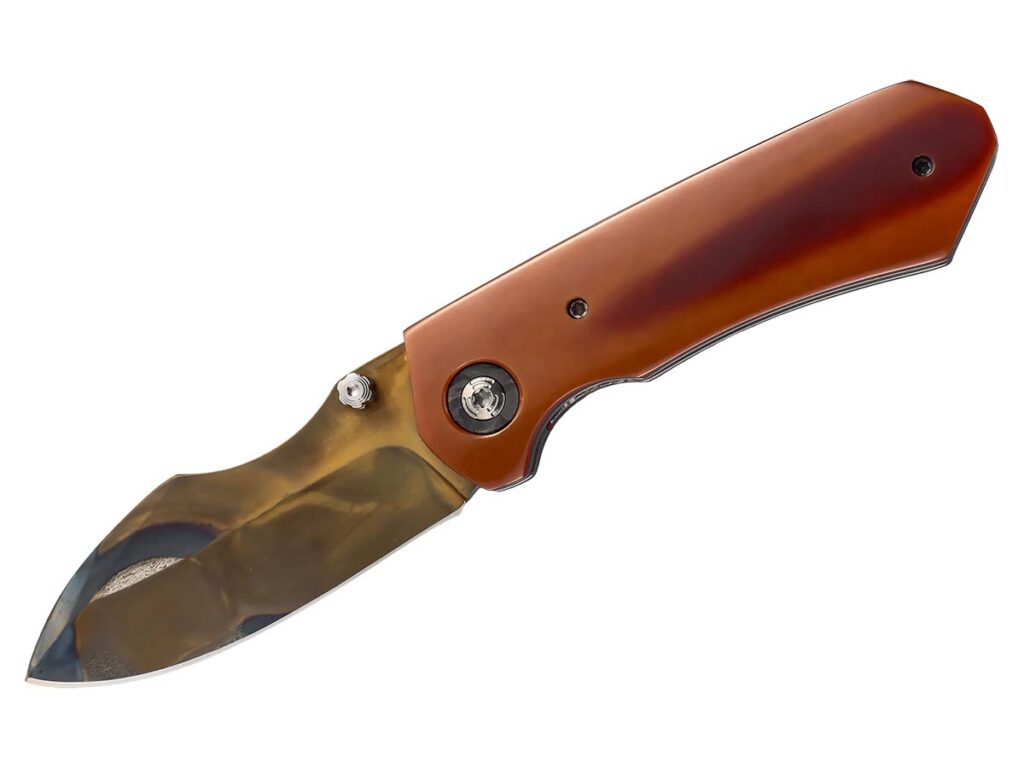
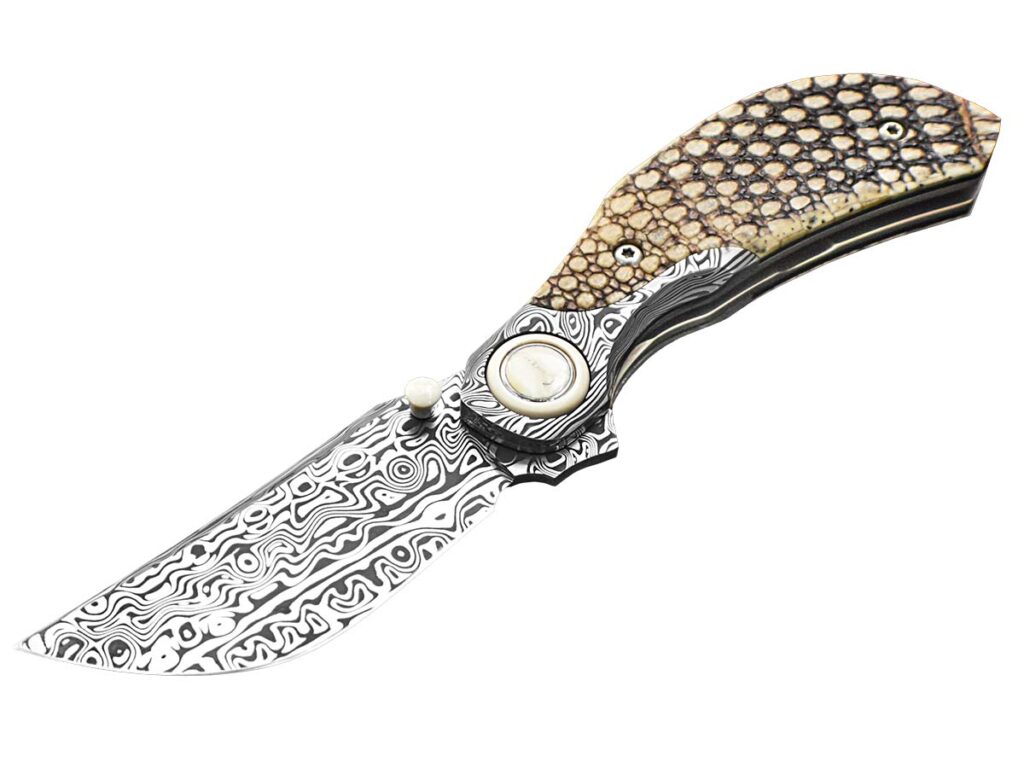
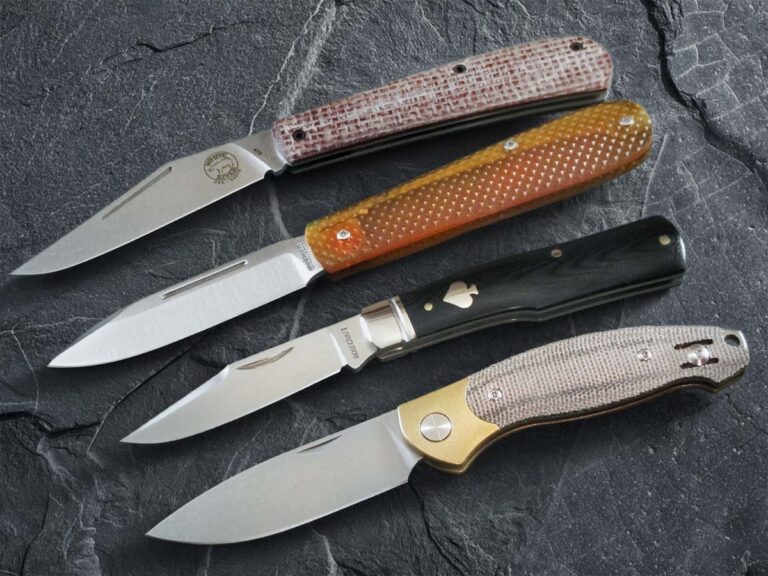
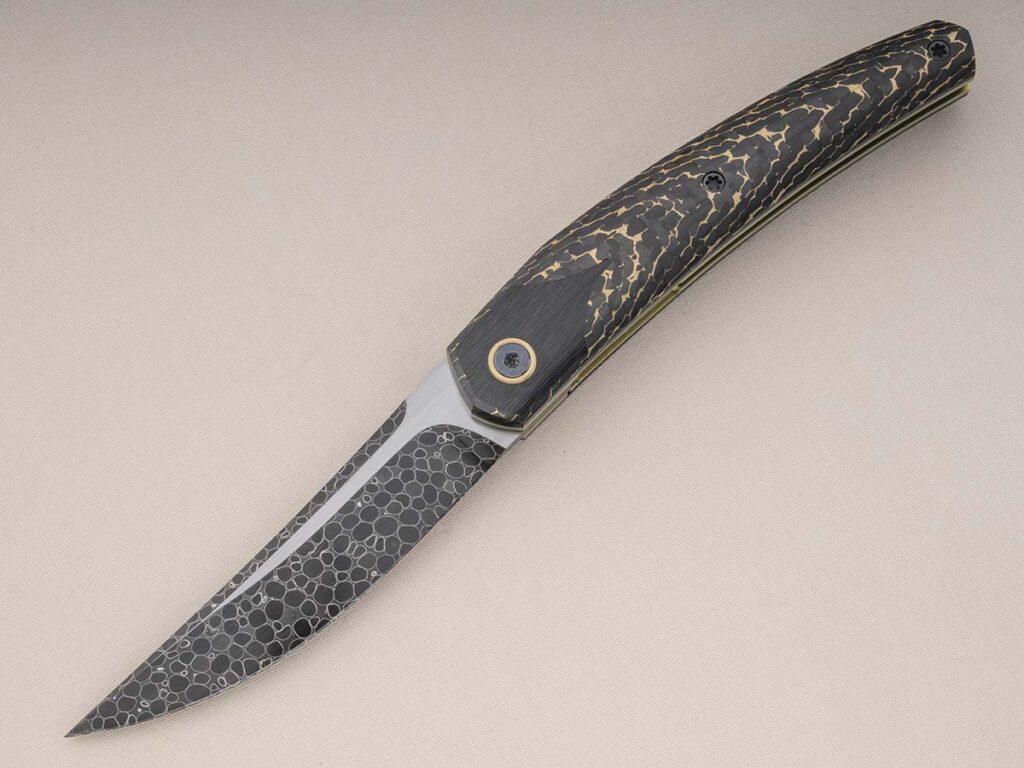
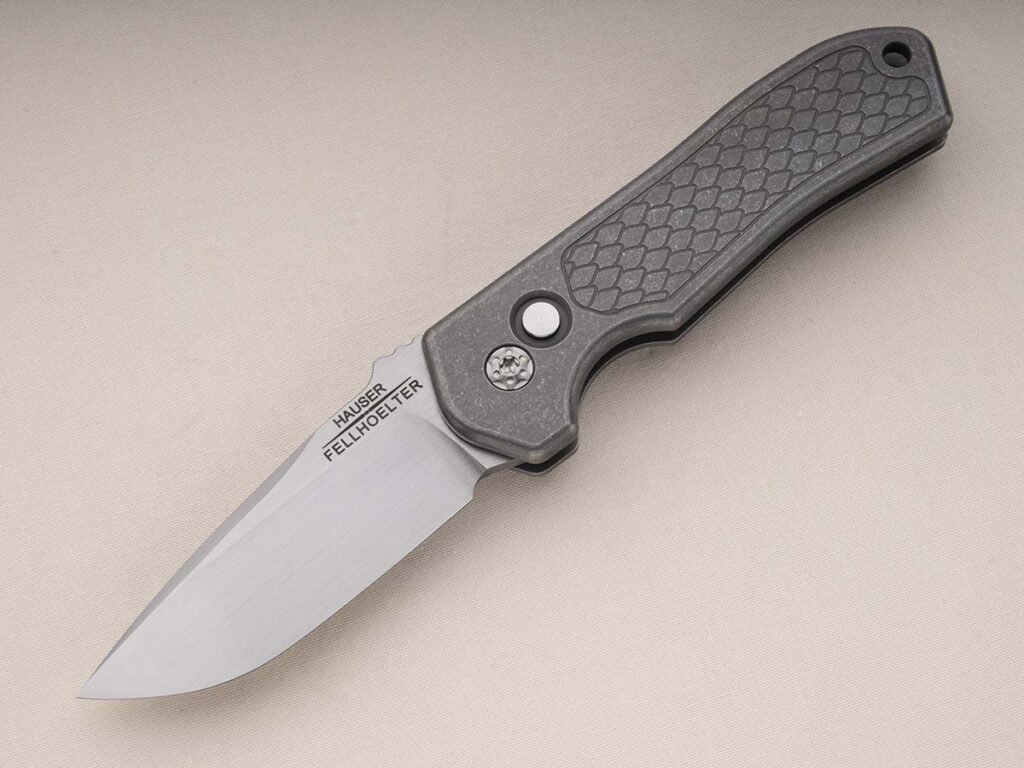
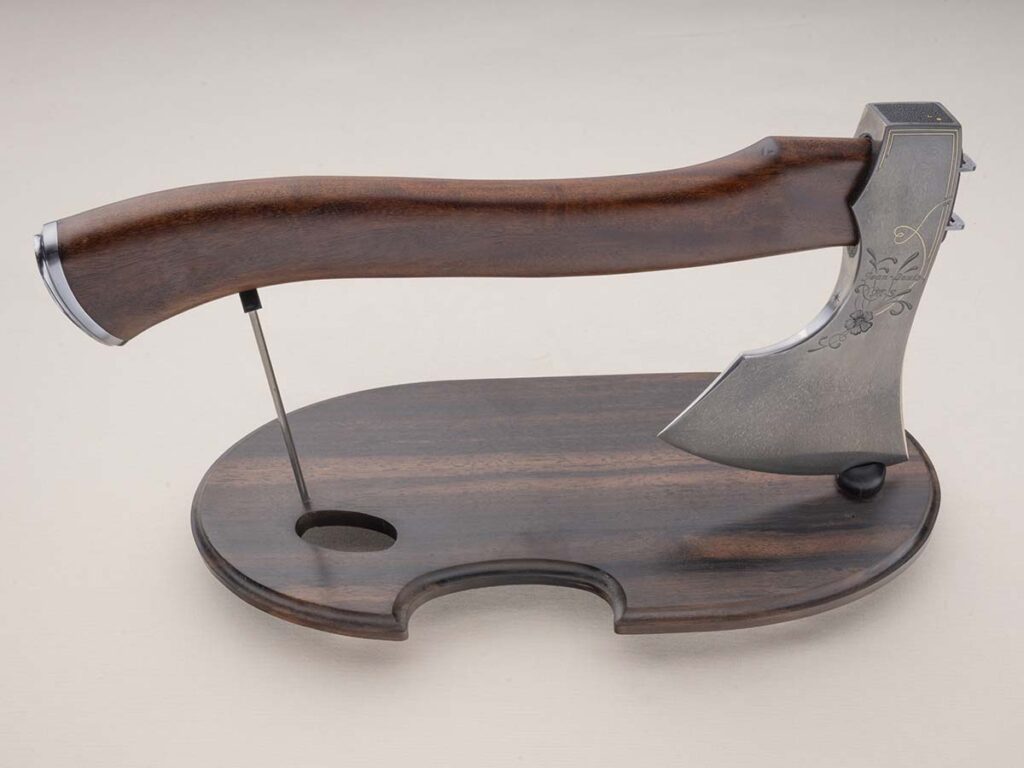
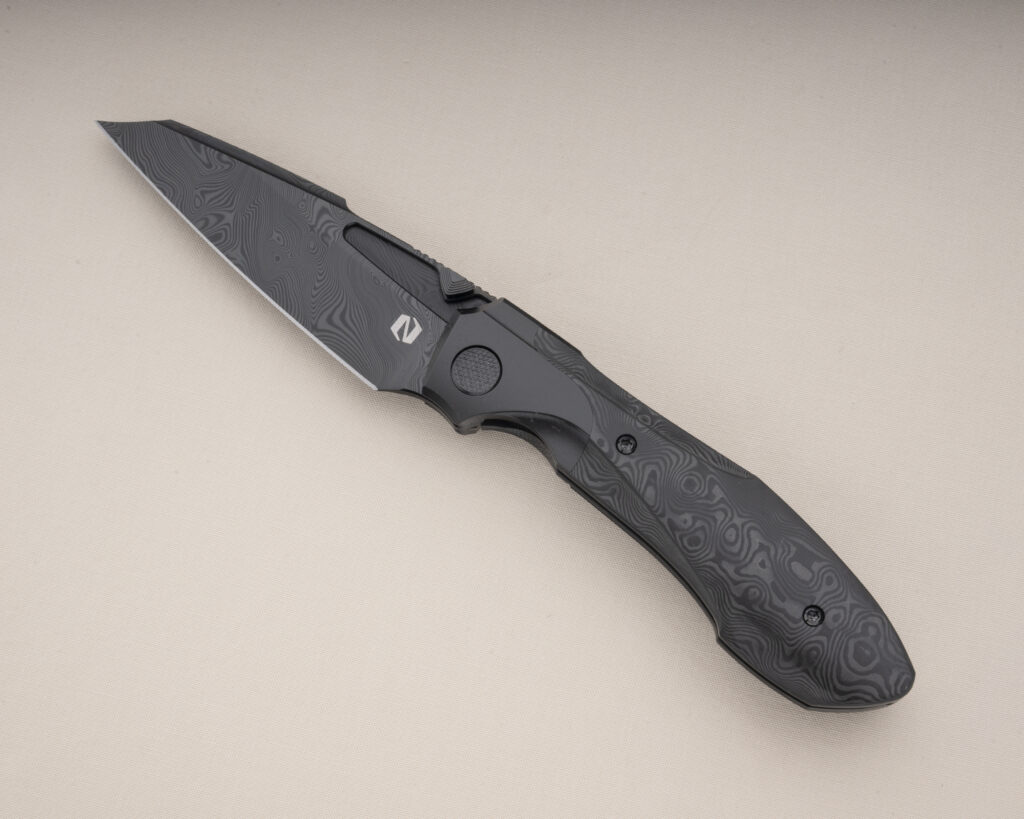
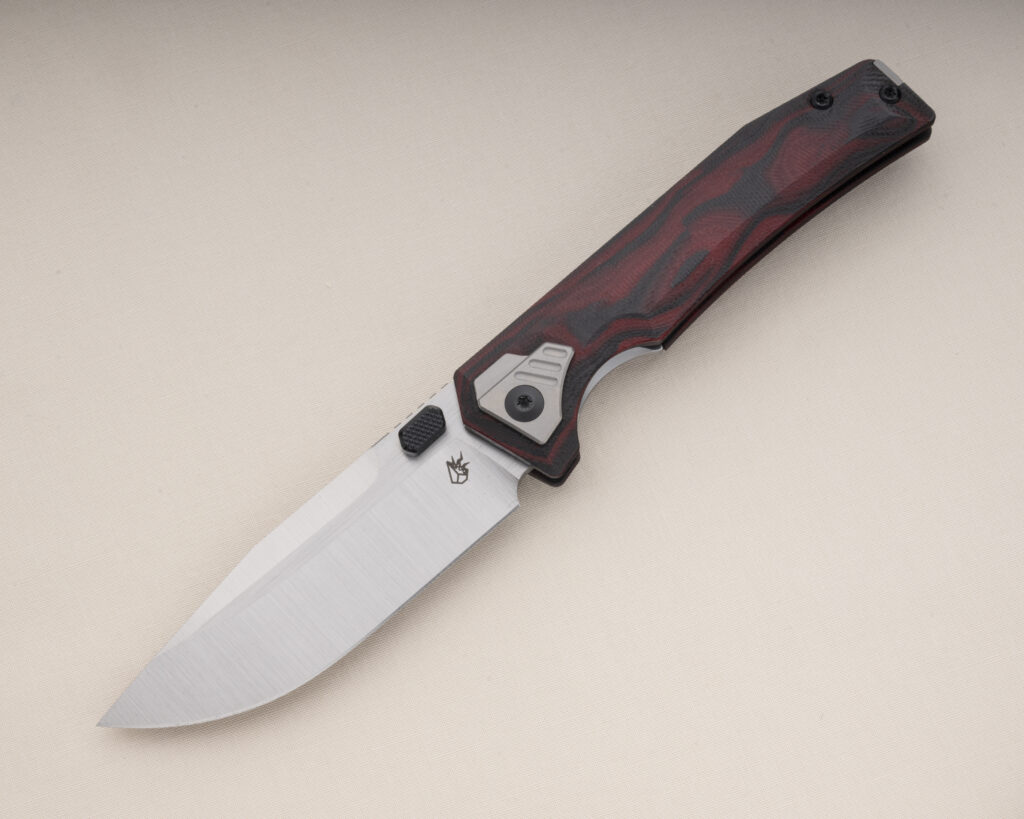
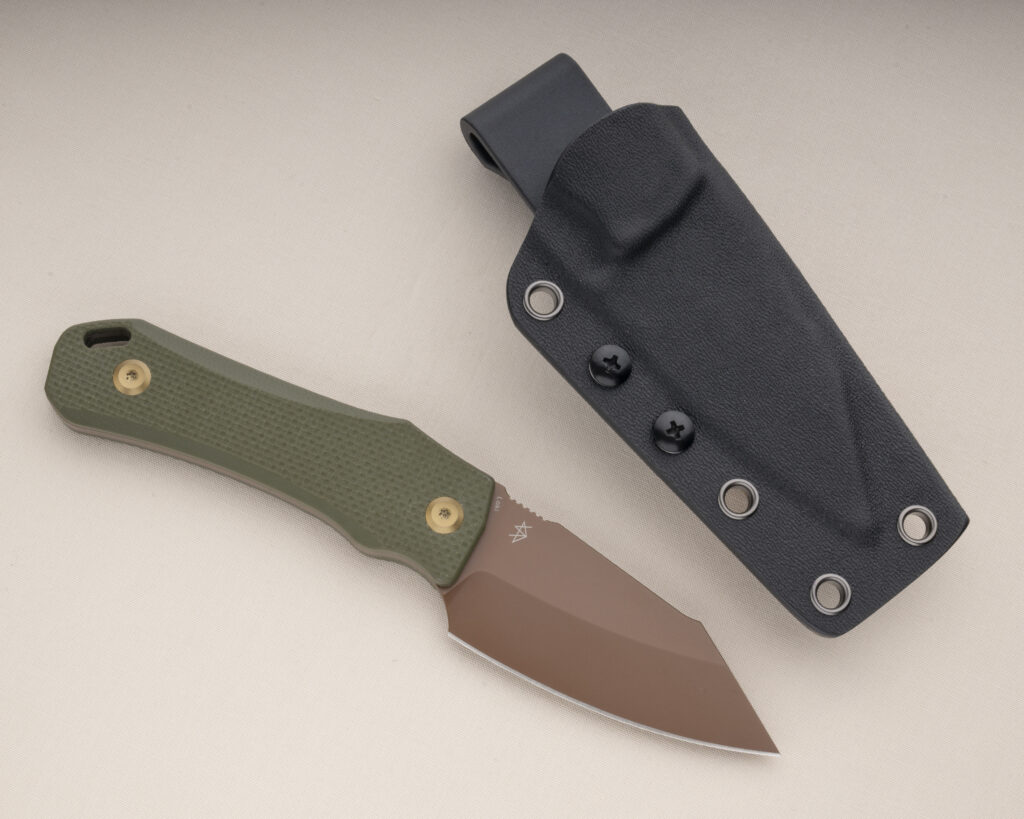
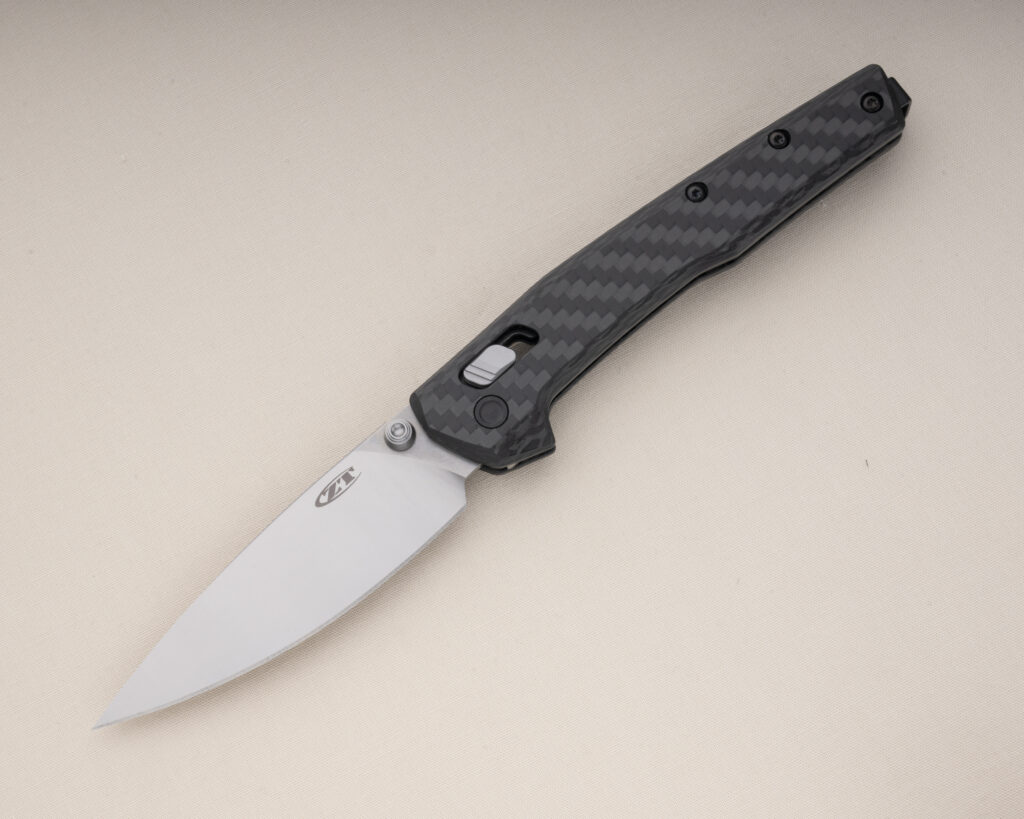
The thumb stud is reliable, time-tested and add dynamic dash to these customer folders.
Aside from the good ol’ nail nick, thumb studs are among the most enduring opening systems for folding knives. Why not? Typically ambidextrous, easy to manipulate and lightning fast, the reliable deployment feature has a lot going for it. Not to mention, on these custom knives, they add equal parts dash and traditional appeal.
Michael Raymond: Ziura folder
Forty-nine 24k gold inlays set into a 6-4 titanium frame elevate Michael Raymond’s Ziura folder. The swedge-ground Bohler M390 blade measures 3.53 inches with an 8.08-inch overall length. (SharpByCoop image)
David Beaver: Shogun Horizon Folder
Vintage red linen Micarta scales and a hollow-ground Damasteel Baldur on Damacore blade highlight David Beaver’s Shogun Horizon folder. Blade and overall lengths: 3.75 and 8.5 inches. The maker’s price for similar knife is $1,800. (Jocelyn Frasier image)
Cody Hofsommer: Mammoth Ivory Folder
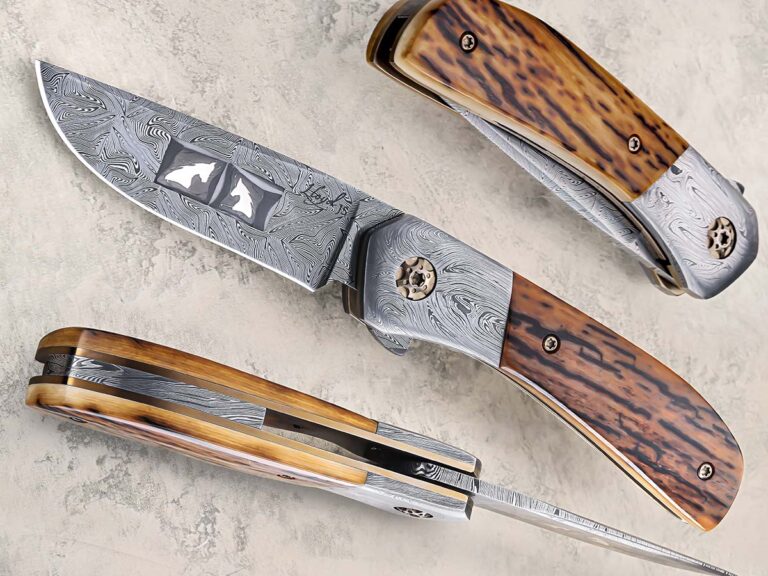
Mammoth ivory scales and mosaic damascus bolsters define a sole-authorship flat-ground folder by Cody Hofsommer. The 1080/15n20 mosaic Damascus blade measures 3.375 inches with an 8-inch overall length. (SharpByCoop image)
Kirby Lambert: Augustus Mini Folder
A hollow-ground Damacore blade and mammoth ivory scales distinguish the Augustus Mini folder by Kirby Lambert. Bolsters are titanium and 2IRC damascus. Blade and overall lengths: 3.25 and 8 inches. (SharpByCoop image)
Brian Milinski: Paratrooper Elegante Linerlock
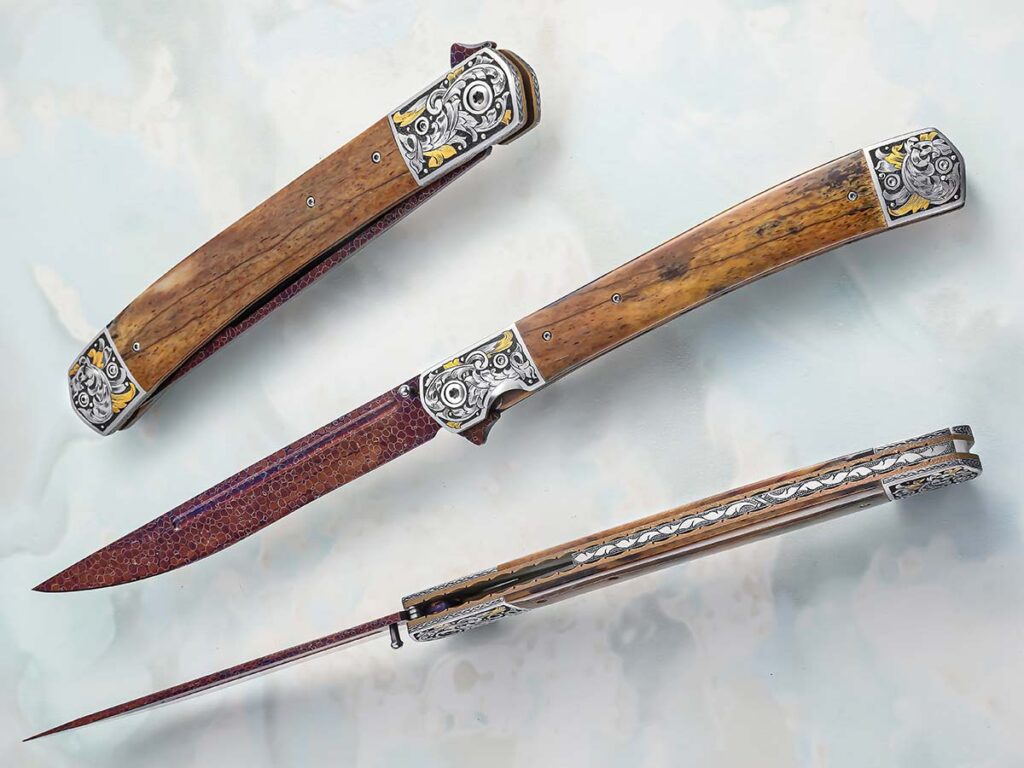
Nitre blued Rietveld damascus and fossilized walrus tusk scales characterize Brian Milinski’s Paratrooper Elegante linerlock. Joe Mason engraved and inlaid the matching bolsters. Blade and overall lengths: 3.25 and 7.75 inches. The maker’s price for a similar knife is $3,400. (Jocelyn Frasier image)
KC Gray: Titanium Folder
A 3.5-inch SM100 blade paired with vintage Micarta scales defines this 8-inch dress locking folder by Tucson maker KC Gray. The titanium frame includes marble carbon-fiber pivot collars and a black anodized clip. (SharpByCoop image)
Sean Alonzo: Ani
Sean Alonzo’s Ani 3.2 linerlock features armadillo carapace, warthog ivory, and a hollow-ground Yggdrasil Damasteel blade. Blade and overall lengths: 3.2 and 7.8 inches. Maker’s price for a similar knife $5,500. (Jocelyn Frasier image)
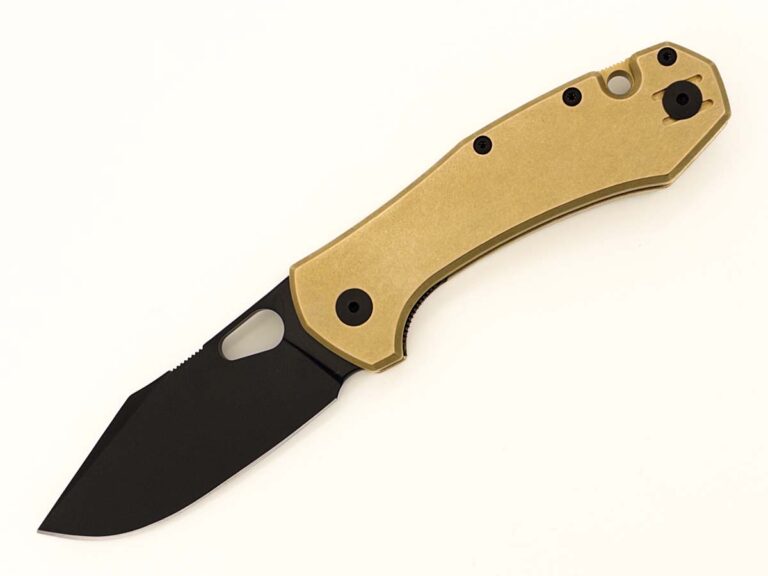
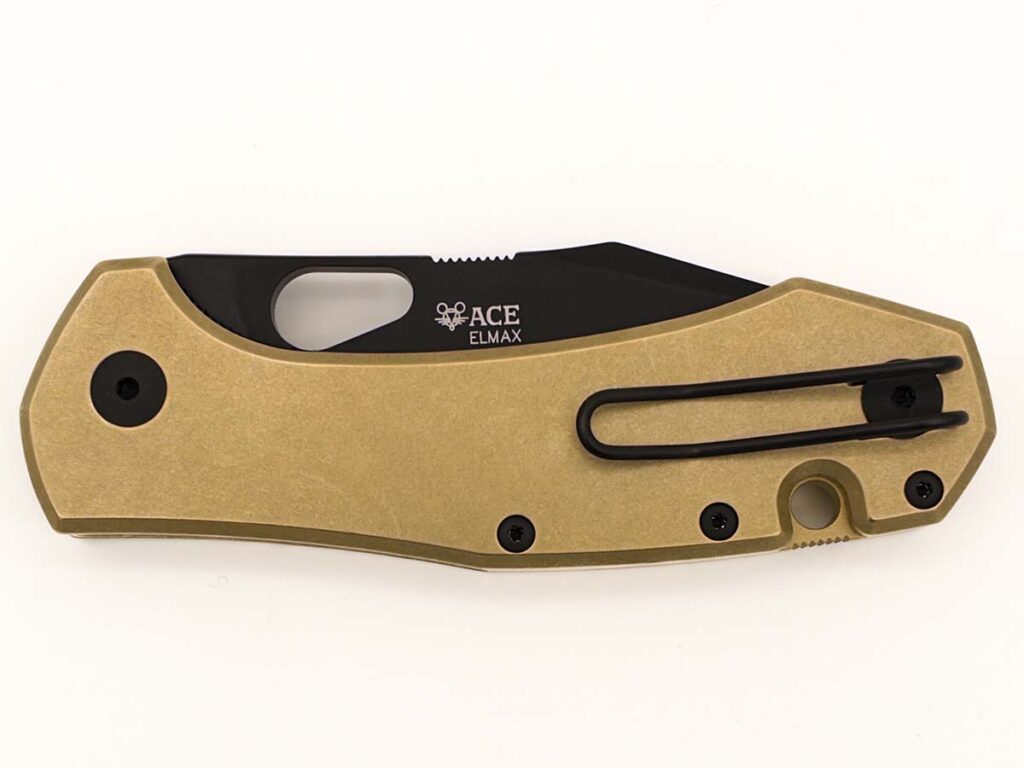
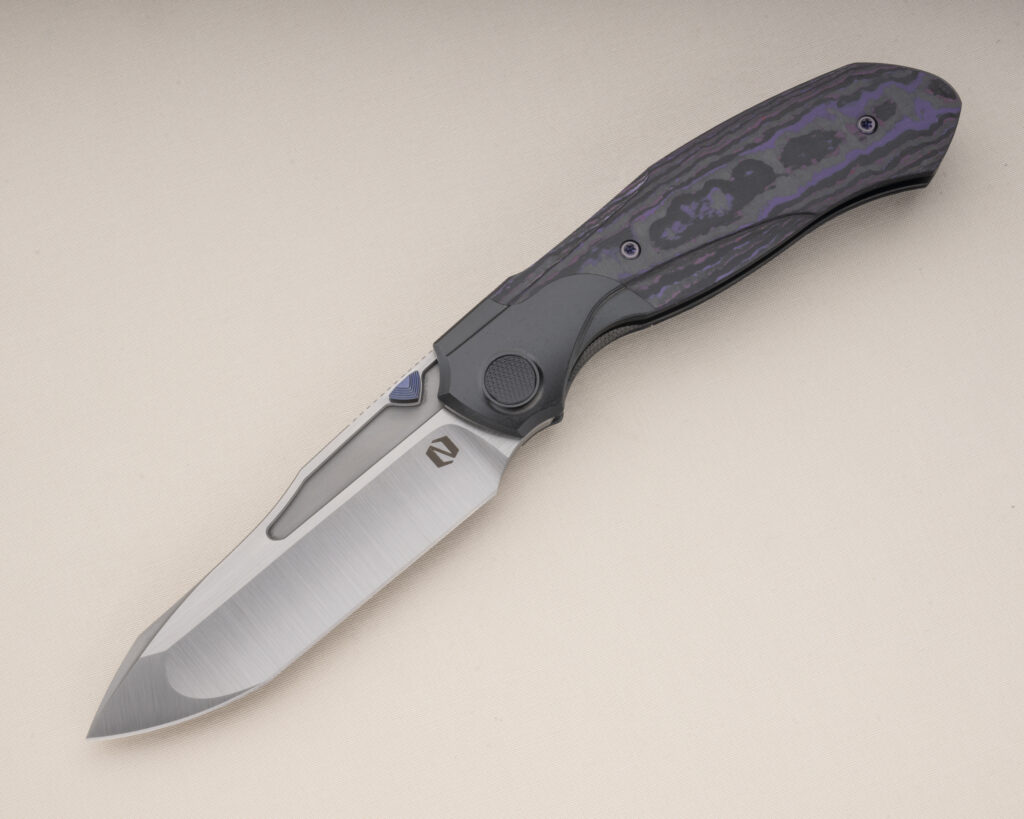
Explore the new GiantMouse ACE Atelier, with PVD-coated Elmax steel and a scale designed to develop a unique patina over time.
The GiantMouse ACE Atelier has always been defined by its surroundings. Named for the art-deco Atelier Bar located within the Grand Hotel in Nuremberg, Germany, the design was originally conceived as a more compact and refined sibling to the ACE Grand. While the initial versions of the Atelier emphasized lightweight carry and contoured ergonomics, this newest iteration moves in a different direction, prioritizing weight, tactile feedback and a sense of permanence.
The shift to solid brass scales transforms the character of the knife. By utilizing a flat, slab-sided profile, the Atelier gains a grounded presence that feels substantial in the hand. Brass is a material that rewards the user over time; it is not a static finish. Instead, the surface will naturally darken and develop a unique patina through regular carry, essentially recording the history of its use. This added heft provides a satisfying balance to the compact frame, offering the feel of a full-sized tool in a pocket-friendly footprint.
Performance remains at the forefront with a 2.875-inch blade crafted from PVD-coated Elmax steel. This premium alloy ensures excellent edge retention and toughness, while the dark coating provides a muted, low-profile contrast to the warm, evolving tones of the brass handle. It is a design for those who value restraint. Rather than relying on aggressive styling or unnecessary flourishes, the Flat Brass Atelier leans on the inherent quality of its materials and a clean silhouette to prove its worth as a daily companion.
These factory slip joint folders prove the design is alive and well.
Those of us who were around long before just about every folding knife had a lock of some sort have fond memories of slip joints. These non-locking folders are still around, but you need to make Google your friend and look—not just in the U.S., but overseas—to root them out. Surprisingly, there are good ones to be had; you just have to do a little digging to find the gems. We’ve done the homework on a nice selection of fresh slip joints for BLADE® readers and present them to you now in these glossy pages.
RoseCraft Savage Creek
The gunstock folder pattern has been around for well over a century and seems to be a rite of passage for most slip joint manufacturers. Up-and-coming RoseCraft Blades has done a nice job of producing many traditional folders, and its Savage Creek Gunstock slip joint is a solid addition to its catalog. This company’s version has a 3.625-inch black Micarta handle with polished steel bolsters and a nickel silver spade escutcheon. The blade is a 2.8-inch swedge-ground D2 steel clip point with a nail nick. The gunstock handle is nicely done with a tastefully curved rise on the inside curve of the handle. MSRP on the RoseCraft Gunstock is $60.
Rosecraft Blades makes an impressive knife for the price. Its gunstock is just a tad over the 3.5-inch standard of the industry and can easily fit in the pocket to handle everyday chores. I tested its blade by cutting some paracord and found its D2 very much to my liking. I also tested it by slicing some thin-skinned leather and was also impressed. This steel has been around for many years; though it’s not true stainless, it has enough chromium content that it rarely rusts. D2 steel is a reliable steel that still finds its way on a lot of custom knives.’
Savage Creek Specs Design: Gunstock Folder Overall Length: 6.4” Blade Style: Clip Point Blade Steel: D2 Blade Length: 2.8” Handle Material: Black Micarta Handle Length: 3.625” Special Features: Spade Shield Weight: 2.7 oz. Country of Manufacture: China Retail Price: $60
GiantMouse Ace Farley V2
The GiantMouse Ace Farley V2 Slip Joint is everything you’d expect in a finely made pocketknife and more. I tested the colorful green canvas Micarta version with a brass bolster, which added a little color to my carry. This version is 6.375 inches fully opened and closes to 3.625 inches—very much in the standard pocketknife realm. The main body of the dark green Micarta is topped by an elliptical-base, flat-finished guard and a simple, reversible pocket clip resides at the base. The 2.75-inch Elmax stainless steel blade is a fully ground drop point with a common curved nail nick. The total weight of the knife is a svelte 2.6 ounces. MSRP is on the knife is $156.
This is a less expensive version of the Ace Farley V2 I tested in an earlier issue of BLADE, but I like the brass and green Micarta combination versus the somewhat staid titanium/carbon-fiber version. And this one is less expensive. This folder is similar in length to the previous RoseCraft, but the handle has much more girth, which offers a plusher grip and a wider blade. I tested this version on a much thicker, quarter-inch synthetic cord and it cut through nicely. It’s amazing the difference a fuller, more comfortable handle makes when slicing through tough material.
Ace Farley V2 Green Micarta Specs Design: EDC Pocketknife Overall Length: 6.375” Blade Style: Drop Point Blade Steel: Elmax Blade Length: 2.75” Handle Material: Green Micarta, Brass bolster Handle Length: 3.625” Special Features: Slip joint action w/half stops Weight: 2.6 oz. Country of Manufacture: China Retail Price: $156
Giantmouse ACE Farley V2 Pocket Knife Drop Point ELMAX Stonewashed Blad
White River Knife & Tool entered the market in 2011 and has been a popular choice among fixed-blade users ever since. Finally, the company released its first folding knife—the Trailhead Trapper—and it was worth the wait. My first impression of the knife was that its ample 3.1-inch S35VN stainless steel blade is all business. The knife, designed for White River by Smith & Sons Knife Company, looks like it wants to cut! The brown 4.2-inch natural burlap Micarta handle features an excellent grip, with the burlap variety offering a slightly more substantial grip than the standard smooth Micarta. The weight is 2.5 ounces, and the $258 price tag is worth every penny.
An extra inch or more of handle and blade make huge difference on a folder. There’s more blade to cut with and more handle to grip and manipulate the knife. The White River Trailhead Trapper allowed me to extend the knife’s grip much better, and the longer blade was able to separate and remove whatever I cut more easily—in this case, sausage. With more room added to the equation, every task you tackle with a longer knife is easier.
Trailhead Trapper Specs Design: Classic Trapper Overall Length: 7.5” Blade Style: Clip Point Blade Length: 3.1” Blade Steel: S35VN Handle Material: Natural Burlap Micarta Handle Length: 4.2” Special Features: Half Stop Weight: 2.5 oz. Country of Manufacture: U.S.A. Retail Price: $259
White River Knives Trailhead Trapper Pocket Knife Clip Point CPM S35VN Blade Ri
We don’t get a lot of folding knives designed primarily for self-defense, so it’s good to see one enter the fray. The Böker Coffin Ultem is as purposeful as it is good-looking. The Coffin’s handle is a manageable 4.15 inches long, and you can clip it to the pocket or carry it loose in a pants pocket. The blade is 3.15 inches of premium MagnaCut stainless steel, so between that and the Ultem handle, there is no scrimping on Böker’s part. The Coffin opens the old-fashioned way, via a nail nick and a nice diagonal square texture. The length of the handle enhances the grip. This is a simple, well-made slip joint, especially for its MSRP of $285.
The designers at Böker wisely opted for a long, straight clip point blade for the Coffin to give the user more versatility outside of a pure defensive role. This adds to its usefulness in utility when cord or rope needs cutting and other roles such as meal prep in the field or on the go.
Coffin Ultem Specs Design: Self Defense Overall Length: 7.3” Blade Style: Spear Point Blade Length: 3.15” Blade Steel: MagnaCut Handle Material: Ultem Thermoplastic Handle Length: 4.15” Special Features: See-through Ultem Handle w/ Pocketclip Weight: 1.94 oz. Country of Manufacture: Solingen, Germany Retail Price: $230
Still Alive And Slippin’
Judging from our crop of slip joints, these simpler folders seem to be doing quite well in today’s cutlery market. Just the sheer variety of types and styles is impressive. Want traditional and hard-nosed? The White River Knife & Tool Trailhead Trapper and RoseCraft Blades Savage Creek Gunstock should whet your whistle. For outside the box and downright fancy, the Böker Coffin Ultem and GiantMouse V2 Green Micarta will whet it some more.
These are fat times for slip joint aficionados in the aftermarket as well. If your folder doesn’t come equipped with a pocket clip, there are plenty to be found in all sizes and types from aftermarket suppliers. Similarly, you can find leather and nylon belt sheaths for carrying your folder at the ready outside the pocket as well.
If for no other reason than simpler is better, with less to break and gum up your plans, I’ll leave you with this. A noted old-time knifemaker once left me with a piece of advice as to why he chooses to use a slip joint over any of the multitude of locks available for folding knives today. He simply said, “I know which side of the blade cuts.”
Aesthetically and mechanically challenging flipper designs that shine.
The flipper folder is one of those knife designs that continues to delight its makers and its owners with incredible vitality. Not only do the most recent flipper folders fill the traditional bill with great materials, mechanics and mesmerizing beauty, but they further garner high praise with an inherent level of energy.
Combining the attributes of excellence that set standards for custom knives with the sheer pleasure of smooth operation, the latest flipper folders hit the mark in quality and bring attention to their makers amid an ever-growing level of interest in the marketplace.
Scott Gallagher: Feather Damascus
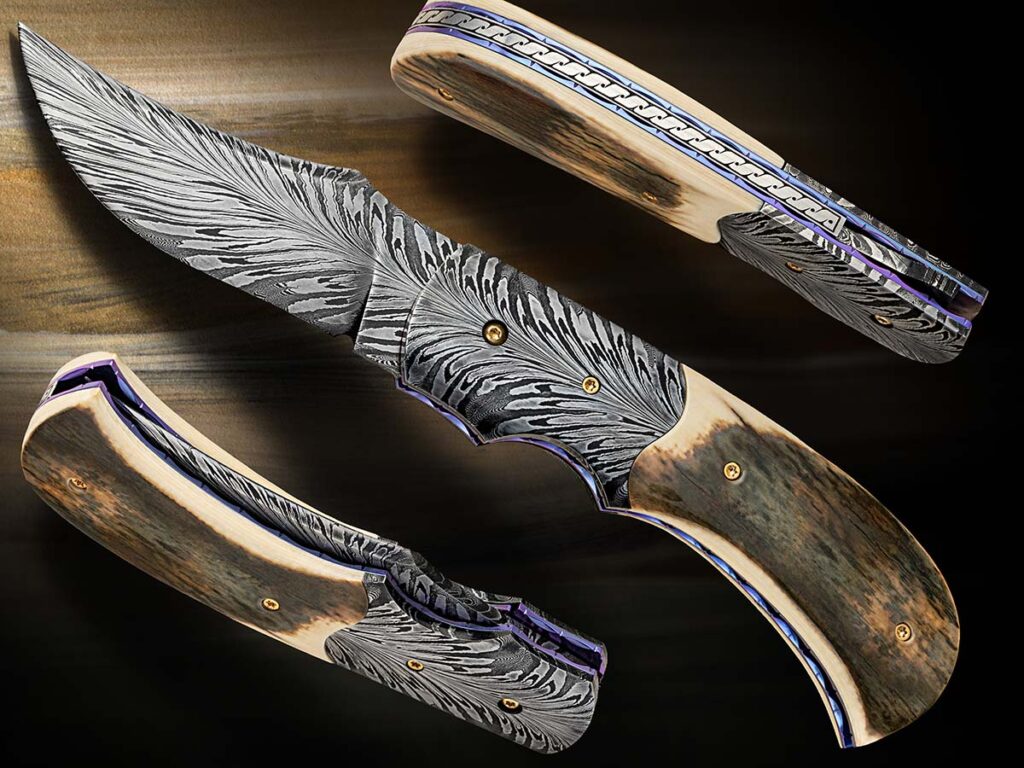
Scott Gallagher says he’s seen an upswing in the interest in flippers in recent years. It makes sense with works like his feather damascus flipper. The feather pattern defines both blade and bolster, and is complemented by a fossilized mammoth ivory handle. (Jocelyn Frasier image)
Scott Gallagher recently completed a beauty with a 3-inch feather damascus flat-ground blade complemented by a damascus bolster and fossil mammoth ivory handle. With an overall length of 7¼ inches, Scott’s flipper folder features an upswept curve for fantastic visuals and intricate filework along the spine.
“I am receiving more requests for flippers right now,” commented Scott. “They have become very popular. I think the reason why is because they’re fun to use, kind of like a widget—they’re functional, they can be embellished and they are easy to carry.”
The single attribute of fun helps set the flipper folder apart from other designs. Anything incorporating fun into the knife equation is sure to gain increased attention. Still, Scott makes his flipper folders with exacting specifications and attention to detail. “A quality flipper should have a blade steel that performs well—good fit, finish and symmetry,” he explained. “The blade should close in the center of the frame. It should be fast opening and close easily without a sticky lock.”
For Scott, achieving the proper mechanics involves a combination of precise construction with materials that work in concert with each other. “Making the flipper tab is a matter of incorporating it into the design of the knife in the design phase,” he related. “In the closed position, the tab has to sit higher than the frame so your index finger can access it. I use bearings on my flippers. They are ceramic and very fast. To avoid pinching the user’s hand, I use a small tab. It’s only exposed enough to open the blade. My flipper tab is hidden in the frame in the open position. I have finger grooves designed into the frame to avoid fingers slipping forward.”
Alan Hollerbach: Spectre
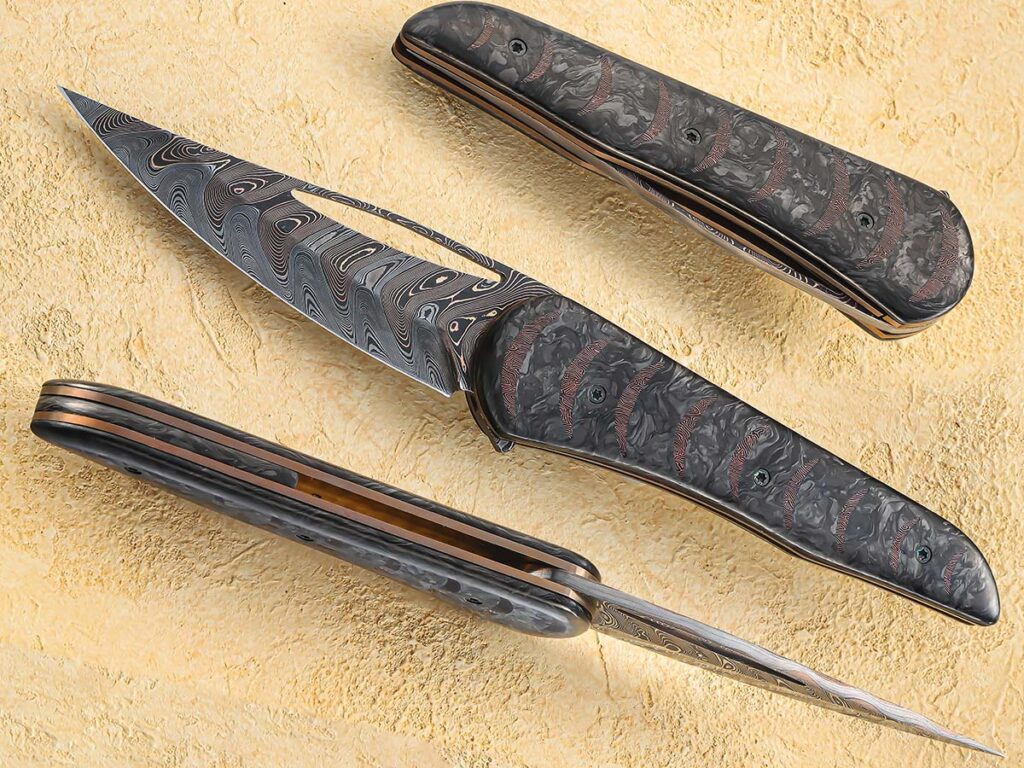
There’s something ominously attractive about what Alan Hollerbach achieves with this knife. Christened the Spectre—an homage to the nemesis organization of James Bond—the wasp-wasted flipper gets right to the point. Baker Forge TigerMai steel for the blade and Fatcarbon Dark Matter scales add to the knife’s dark good looks. (SharpByCoop image)
When customers consult with Alan Hollerbach on the attributes of a quality flipper folder, his response is straightforward. “Look for high-quality materials—hardened washers and bearings, a smooth action and a solid detent,” he offered. “I don’t take orders. I make knives I like and hope others do as well.”
The degree of knifemaker proficiency is tested somewhat further with the flipper folder in comparison to other designs. Alan welcomes the opportunity to put his skillset to the test. “It takes some more designing up front to get the layout and how it looks and the action correct,” he related. “The tab needs to be in a comfortable position for one-handed opening, tall enough to engage easily, but not too tall it looks out of place. It needs to have a strong detent to allow proper pressure to fire the blade and a smooth action with the bearings to allow the blade to open with minimum friction.”
Alan achieves his technical and aesthetic objectives in a handsome flipper folder model he has christened the Spectre, in reference to the James Bond feature film series. This example includes a 4-inch hollow ground blade of Baker Forge TigerMai Chevron damascus steel with jeweled and anodized titanium liners and Skiff bearings with hardened washers. Handle scales are Fatcarbon Dark Matter with 18 inlays in nine different sizes of Space Coral. The backspacer is also Fatcarbon Dark Matter, and the screws are black anodized titanium.
Rising interest in flipper folders is a matter of likes and style, as Alan sees the buying landscape these days. “I think it is a personal preference,” he commented. “I like the flippers for easy one-handed opening, but you can do the same with most other ways. It takes some more designing up front to get the layout and how it looks with the correct action. I like the lines as clean as I can make them, so tabs are just to open the knife, as I try to hide as much as I can when the knife is open, just for aesthetics.”
The addition of a hole in the Spectre blade gets attention as well. “You can open the knife with the hole, but it was designed for aesthetics mainly,” Alan noted. “I wanted to smooth the lines of the knife in the closed position and show with the curves of the cutout it was done on a pantograph by hand.”
Robert Champion: Dark Wind
Robert Champion spends plenty of time perfecting the placement of the deployment tab. On his Dark Wind, he employs a low-profile tab to avoid pinching when the blade is deployed. Also noteworthy on this knife, the knock-out engraving by Dale Bass that takes the work to another level. (SharpByCoop image)
Examining the locking mechanism is a must for those contemplating an investment in a quality flipper folder, a tip Robert Champion emphasizes. “A 3-point constraint is better than a 2-point constraint,” he said. “A 3-point will lock the knife more securely in the open position as well as in the closed position. The blade should lock solid, not be loose and never have a sticky lock.”
Robert’s Dark Wind model exemplifies his perspective on the flipper folder. Its 6-inch blade features hollow ground Dragonskin Damascus steel from Shaya Forge, while the furniture is in 416 stainless steel and the handle scales are fashioned from giraffe bone. Dale Bass’ engraving complements the piece in its entirety.
“I’m receiving more and more requests for flippers,” Robert remarked, “especially the more dressed and upscale models. Their popularity seems to be trending up. They’re easier to deploy and in regions where automatics are not permitted, the flipper is a great option. The flipper tab is an integral part of the tang design that is easily roughed in while profiling the blade. Thumb pegs and discs are separately fabricated components that require drilling, tapping and a turning process on a lathe. Then, they are attached to the blade. Tab location is important when designing a flipper. Placing it too far forward or too far back on the tang will cause inefficient deployment.”
Bringing all these components together in proper tolerance with respect to the look and feel of the finished product provides a worthy test for the makers of flipper folders. Like any folder, smooth deployment and ease of carry rise to the top. However, the flipper aspect brings another dimension to the requirements for optimal performance.
“Depending on the size of the knife, I use good-quality stainless or ceramic ball bearings,” Robert advised. “I tend to use stainless bearings on my smaller models, but that is just a personal preference. I also use dry slide oil lubricant. I design a low-profile tab to prevent pinching and currently make single-tab models. In the future, I plan to make flipper daggers that will have more of a guard-type tab.”
John Curran: Alpha 3
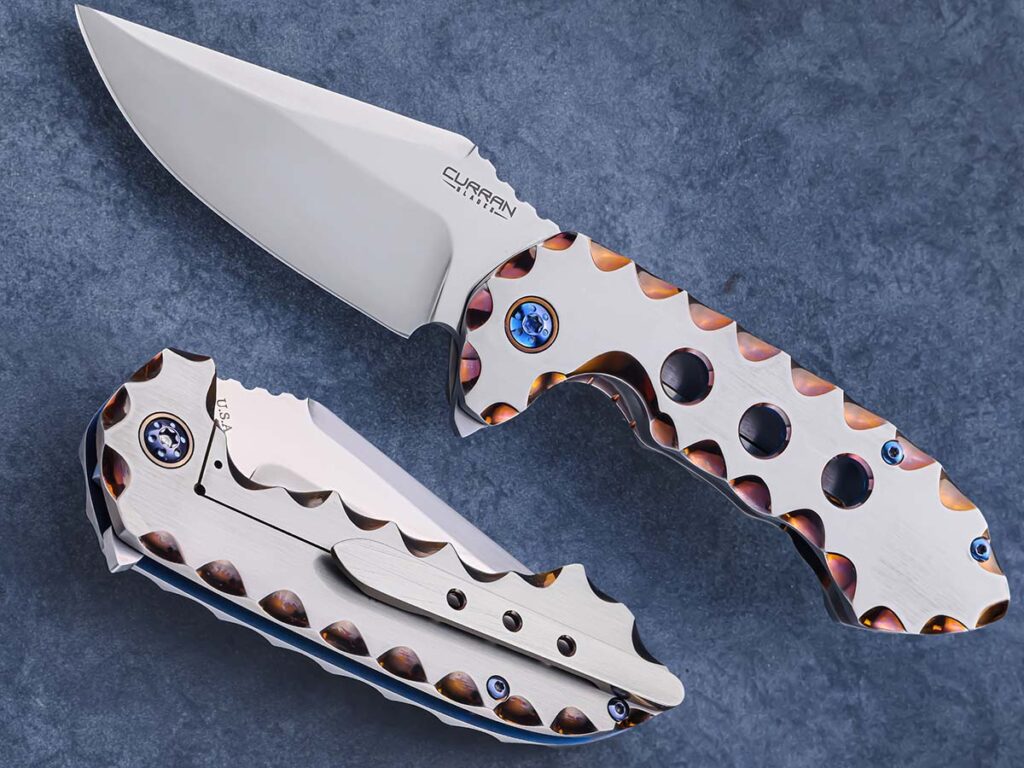
John Curran has focused much of his work on flipper folders and his experience in this design shows in his Alpha 3. Clean and complex, the knife pairs a titanium handle with an Elmax steel blade, featuring caged bearings for absolute, buttery-smooth deployment. (SharpByCoop image)
John Curran created a flipper folder in a model he calls Alpha 3 with a flat ground 3-inch blade of Elmax steel and an overall length of 7½ inches with a titanium handle and frame. The flipper design has been a mainstay of his work for some time.
“I’ve predominantly built flipper-style folders over the years, though I’ve done my share of thumb-stud and thumb-hole deployments as well,” he related. “In terms of trends, I haven’t noticed interest in one style rising or falling dramatically. What I have noticed is that customers are spending more carefully. People know what they want and they are choosing their purchases very intentionally.”
As John tries to fulfill his customers’ expectations, he watches the intricacies of the flipper folders he constructs carefully. “From my perspective, flippers don’t necessarily hold an advantage over other deployment methods,” he commented. “It really comes down to personal preference. Some customers want a classic flipper, others ask for a flipper paired with a thumb stud and some want a hole cut into the blade as an alternative opening method. There is no single best option, just what feels right in the user’s hand.
“The complexity of the build depends on the design more than the deployment style,” John continued. “I spend a lot of time sketching concepts only to discover during mock-ups certain ideas don’t translate well in hand. I typically prototype in G-10 or even wood to check ergonomics, mechanics and overall fit. That stage tells me a lot about whether the knife is going to meet my standards.”
John’s basic components include caged bearings and hardened stainless washers for smooth action. “If a customer wants to keep the cost down, I can build the knife without bearings and use phosphor bronze washers instead,” he advised. “Ceramic bearings undeniably offer the smoothest action, but bronze washers still perform well. It ultimately depends on what the customer values most. Milling pockets for the bearings adds time and labor and is reflected in the final price.”
Design concentrations on clean, reliable opening mechanisms and functional finger guards when the blade is deployed are hallmarks of John’s finished product. The challenge is always in the “tweaking” to solidify the geometry, but the result is worth the investment of time and effort.
The flipper folders emerging in the custom knife market today offer diverse profiles, materials and interpretations along with a wide range of price points. Each of these factors influences the consumer and makes the genre vibrant.
Bark River Knives owner Mike Stewart took to Facebook to admit to closure and the use of Chinese steel in Made-in-U.S.A. labeled knives.
Bark River Knives of Escanaba, Mich., has officially ceased operations following a public admission by owner Mike Stewart that the company utilized Chinese steel in blades marketed as American-made CPM 154. The announcement, made via Facebook on March 23, confirmed that the long-standing fixed-blade manufacturer concluded all business as of March 20.
In his statement, Stewart took full responsibility for the deceptive labeling, characterizing the use of imported steel as a measure intended to keep the company afloat. Stewart argued the alternative steel met his internal testing for toughness and stain resistance, with edge retention nearly matching that of Crucible Industries’ CPM 154. He further claimed that because the knife blanks underwent more than five distinct operations in the Michigan shop—including grinding, reshaping and etching—they technically met his interpretation of “Made in the U.S.A.” criteria.
It should be noted, the Federal Trade Commission (FTC) standards mandate a product must consist of “all or virtually all” domestic components to carry the label. Stewart admitted the steel was definitely mis-marked on the following models:
Camp Bolo
Fox River Trailing Point
Highwayman 4
Mini-Manitou
Gladstone Hunter
Bitterroot Caper
Select recent Club Knives
The closure follows a period of increasing pressure from collectors and dealers, alongside significant financial litigation, Outdoorlife.com reported. Stewart noted in his post that the shutdown was “long overdue” and should have occurred two years prior.
Stewart announced that his son, Jim Stewart, will open a new, 100 percent independent knife company. Notably, Jim Stewart has agreed to take over the warranties that would have normally been serviced by Bark River. Mike Stewart clarified that he will have no hand in the new entity and intends to exit the industry entirely after 50 years. Mike Stewart emphasized that his dealers, his wife Lesley and Jim Stewart were entirely blameless in the decision to substitute the blade steel.
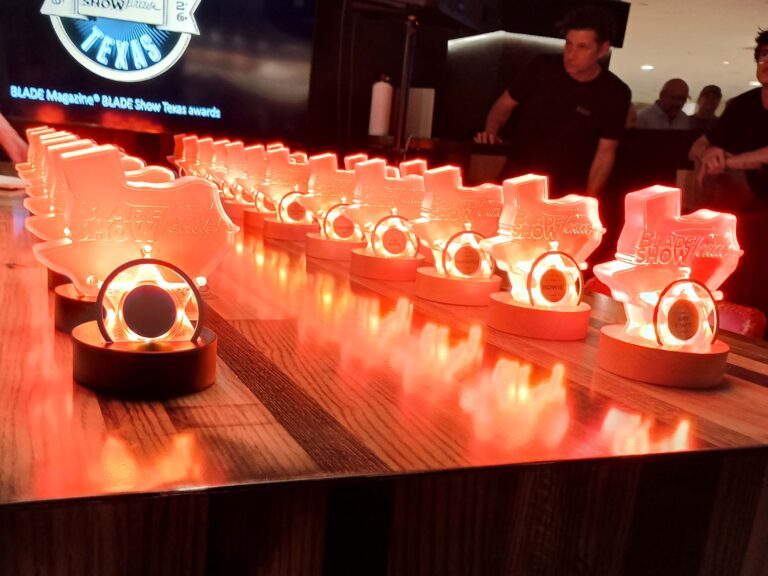
See who took home the hardware from the BLADE Show Texas Custom Knife competition.
With deep roots in fine custom knifemaking, BLADE Show Texas consistently attracts the top names in the industry, making its Custom Knife Awards a true showdown of elite craftsmanship. The 2025 competition, held March 20-21 at the Fort Worth Convention Center, was no exception.
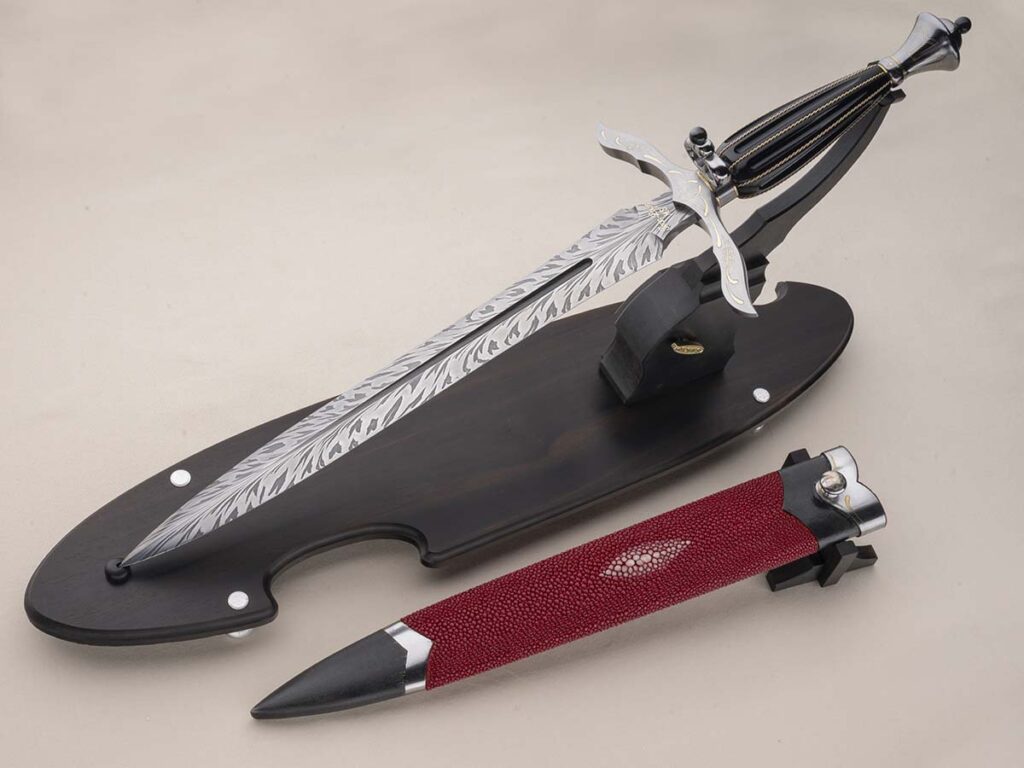
The judging hall overflowed with exceptional entries in 13 categories, pushing the three-judge panel to their limits. After intense deliberation, the judges selected the finest blades of the year—including Best of Show and Best Art Knife, awarded to Jean-Louis Regel for his stunning dagger.
See which factory knives took home the coveted hardware from the BLADE Show Texas Factory Knife Awards.
The BLADE Show Texas, held March 20-21 at the Fort Worth Convention Center, saw an intense factory knife competition. With an excellent turnout of competitors and a high-level of execution on the knives, it was most definitely a showcase of the top-tier production knives at the show.
With such an impressive lineup, the three-judge panel faced a tough challenge in determining which blade best represented each of the seven categories. In short, competition was hot. With the dust settled, here are the winners who claimed top honors, including Best in Show.