Home Blog Page 178

Never Tell An Army Ranger He Can’t Make A Knife

Is a U.S. Army Ranger made or is he born? Is it the training he receives that makes him a Ranger, or is there some innate quality in him that draws him to Ranger training in the first place? If you tell former U.S. Army Ranger Sergeant Kyle Gahagan (pronounced guh-HAY-gan) that he doesn’t have the proper credentials for full-time employment with your company, he’ll proceed to acquire three doctorates. If you were to suggest that he not go to work at the auto-body shop if the pain in his right arm is so bad that he cannot hold a toothbrush, he’ll go anyway and tape a hammer to his forearm. If you crush his 10-year-old spirit by telling him that the knife he spent hours making is no good and throwing it on the ground, he will one day use that craft to not only heal himself from the emotional ravages of war, but to help heal other veterans as well. Never tell an Army Ranger he cannot make a knife.
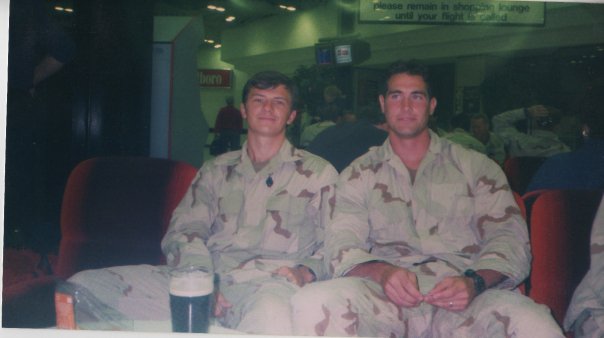
U.S. Army Ranger Kyle Gahagan deployed twice to Afghanistan and twice to Iraq.
U.S. Army Ranger Sergeant Kyle Gahagan, right, pauses for a drink with Chris Hickox after his first tour in Afghanistan. Kyle is using blacksmithing to help counsel veterans as they find new missions in life.

Kyle doesn’t remember a time when he didn’t want to be a soldier. As a boy, he would dress the part and play army for hours. He came from a military family with a grandfather who served in the U.S. Navy during World War II and a father who retired as a full Colonel after a near-three-decade career in the Army’s Armor branch. Kyle was born in Colorado and lived in Kentucky and Germany, but from ages 8 to 11 the family lived in Savannah, Georgia. He would see the then-black-bereted Rangers of the 1st Ranger Battalion, who were stationed at Hunter Army Airfield in Savannah, and he knew that’s what he wanted to be. “I thought they were the coolest guys on the whole planet,” he said.
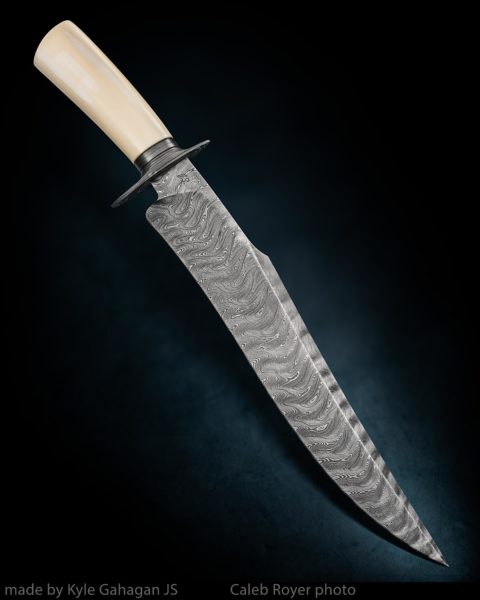
American Bladesmith Society journeyman smith Kyle Gahagan loves to craft large bowies.
Growing up Kyle remembers a giant-to-him W. R. Case & Sons bowie on display above the mantle. He was not allowed to touch it, but he spent many hours studying it. When he became a knifemaker the only thing he wanted to make was big bowies. Only now he was bigger and so his bowies kept getting larger to recapture the proportion of his boyhood fascination with the big bowie. “I had to scale that back a bit,” he says with a laugh. This one has a 12.5-inch blade of forge-welded 1075 annd 15N20 steels with a fossil walrus ivory handle. Maker’s list price: $3200. Contacts for Gahagan Knives are listed at the bottom of this article.

Kyle got his first knife from his maternal grandfather when he was 5. It was a little Old Timer pocketknife to go with the shotgun he got for deer hunting. “I hunted with my grandfather until he couldn’t hunt anymore,” he said. His father transferred back to German, so Kyle saw him infrequently. It was his grandfather who spent time with the hyperactive boy, teaching him how to hunt and build things, how to work with his hands. At 10 his grandfather handed him a piece of aluminum and told him to go make something with it. It was his first attempt at making a knife. Although not an easy material to be cutting and grinding on, he crafted something resembling a knife. There was no heat treating involved, he said with a rare chuckle.

As Kyle learned more, he once spent a long time forging a knife. He hammered painstakingly to forge-weld steel for the blade. He made a wooden sheath, carefully lining up the wood grain. “I was so proud of that knife,” he said. He took it to an area knifemaker. That maker couldn’t stop telling him how bad it was. He threw it on the ground. “It crushed me,” Kyle said. “I didn’t make another knife for about 20 years.” He didn’t even tell his grandfather what had happened. “I think he thought I just grew out of my interest in it.”
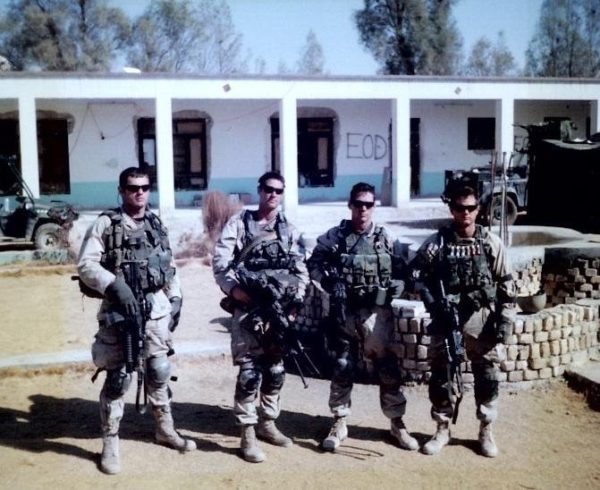
U.S. Army Ranger and knifemaker Kyle Gahagan was deployed to Afghanistan and Iraq two times each.
U.S. Army Ranger Kyle Gahagan, second from left, was deployed twice to Afghanistan. This was taken in Kandahar before a mission on his first tour.

In 1999 at the age of 19, Kyle enlisted in the Army with a Ranger contract. He was engaged when he went in and was married in between basic training and Airborne school. He went into the Ranger Indoctrination Program and Ranger school and was assigned to his boyhood heroes’ unit, 1st Battalion, 75th Ranger Regiment. But then 9/11 hit and he was being deployed back to back. He did two deployments in Afghanistan and two in Iraq, but because they blend into what amounted to nearly three years of being gone, he can’t quite recall the order. He was a SAW gunner in Afghanistan, he led a team for a while, and in Iraq, he was an S3, which organized training operations in the rear and coordinated missions during combat.

During one training session, Kyle was giving a private a block of instruction on the M203 grenade launcher. It hit a buried mortar not 15 meters away. They were able to determine that the grenade had not had sufficient time to arm itself, so the mine had caused most of the damage. Kyle received shrapnel wounds to his face, chin, neck and right leg. In a parachute training jump Kyle got his right arm entangled in his rigging, which led to a torn tendon and debilitating tendinitis. His unit was involved in the Jessica Lynch rescue, but the mission that had the most impact on Kyle was the Ranger rescue of a Navy SEAL team on the third day of Operation Anaconda, a sweep of al Qaeda and Taliban forces in the Shahikot Valley of Eastern Afghanistan.

Although not on the mission, Kyle lost three friends on the firefight atop Takur Ghar Mountain: Rangers Marc Anderson, Bradley Crose (with whom Kyle attended paramedic school) and Mathew Commons. You can read about the harrowing battle for Roberts Ridge in Sean Naylor’s “Not A Good Day to Die, The Untold Story of Operation Anaconda” and in Malcolm MacPherson’s “Roberts Ridge, A Story Of Courage And Sacrifice On Takur Ghar Mountain, Afghanistan.” Kyle can go for days without thinking about his brother Rangers, but then something in life will remind him that they’re not here to live their lives.
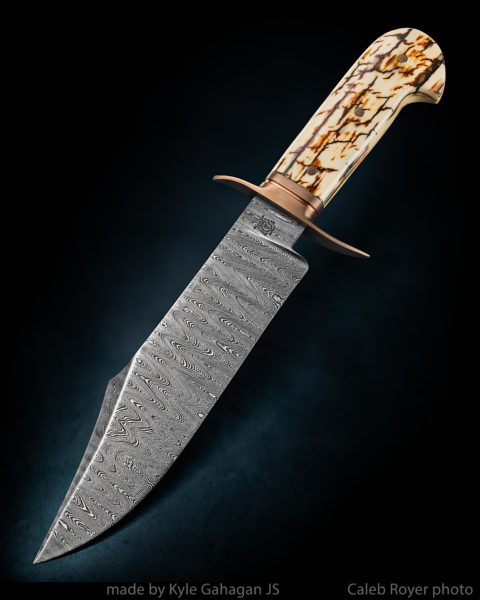
Kyle Gahagan of Gahagan Knives loves to make high-end bowie knives.
This Gahagan Knives bowie has a 10.5-inch blade made of forge-welded 1075 and 15N20 steels. The handle is mammoth ivory with a bronze guard. Maker’s list price: $3000. Contacts are listed at the bottom of this article.

Kyle would have stayed in the Army, but after seeing his parents divorce and his father remarry two more times, he knew he didn’t want to lose his wife over his career choice. He felt it wasn’t fair to Dana, so he transitioned out in 2004. Their daughter, Zoe, was born right after Kyle got out, and their son, David, was born in 2011. At first Kyle wasn’t sure what he wanted to do. He worked in an autobody shop, but when the pain in his right arm, exacerbated by a bone spur on his clavicle, got so bad he could barely function, he knew he had to find other work. “On my last day, the pain was so bad I couldn’t hold a hammer—I couldn’t hold a toothbrush.” He taped the hammer to his forearm and at the end of the day told his boss that he just couldn’t do the work anymore.

He was at the right place at the right time to land a job as an IT (information technology) contractor for Lowe’s, developing three data centers, one in Texas and two in North Carolina. When Kyle applied for full-time employment, the company told him it could not hire him because he lacked a degree. So, he went back to school. His mother was a teacher, so education has always been important to him. In the end, “100 percent and then some” in keeping with the Ranger creed, he came away with three doctorates, two in education and one in psychology.
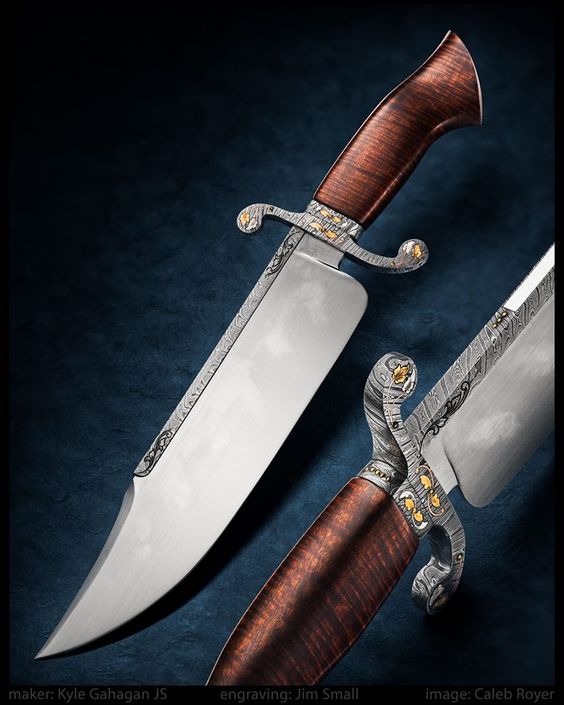
Kyle Gahagan knives are sometimes offered for sale through ExquisiteKnives.com.
Kyle Gahagan made this 10.5-inch blade with forge-welded 1075 and 15N20 steels. The guard uses the same steel, and the handle is ringed gidgee wood. Maker’s list price: $3500. Some Gahagan Knives pieces are available through https://exquisiteknives.com or you can contact Kyle via the methods listed at the bottom of this article.

During this time Kyle was an administrator to a local college, a school principal and eventually an acting superintendent. His frustration grew as he continually tried to hold students and parents to high standards. Kyle ensured that the children had what they needed to succeed, but if they didn’t follow the rules, they faced the consequences. He felt undermined, however, by a politically-correct environment in which his decisions were often overturned. Eventually, he just quit.

When Kyle was a school administrator, his chief financial officer asked him to make a knife he could give to his future brother-in-law as a wedding gift. Kyle was reconnected with that kid who had became engrossed in making the best knife he could make. “I enjoyed the process,” Kyle said. He began making knives “as a hobby.” Although he may not have recognized it at the time, that sounds like too casual an approach for a craft that would end up tying his love of knifemaking, education, psychology and his warrior brethren together, giving him a new mission in life.

In 2013 Nate Bocker began Resilience Forge in Virginia. Nate served in the Army with the 249th Engineer Battalion. The active-duty sergeant sought a way to help the wounded warrior community. He thought by teaching veterans the skill of bladesmithing they could hammer out some of the issues associated with post-traumatic stress disorder, receive appropriate physical therapy for some injuries and have the foundation of a new skill they could expand into a trade if they so chose. Nate’s first student christened the program Blade Therapy. Kyle then launched Resilience Forge North Carolina and began implementing standard operating procedures so that the non-profit could expand nationally. No matter where a veteran attended, they’d know that the program would be the same.
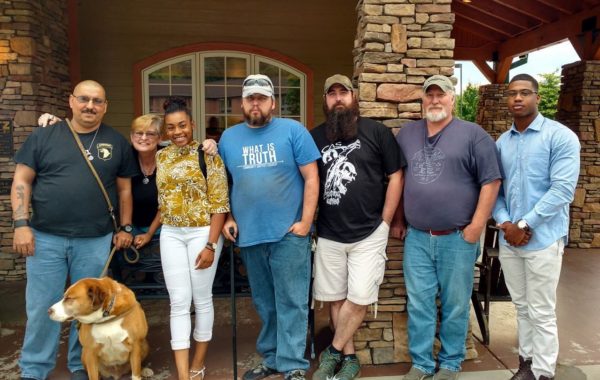
A DOD video entitled "Taking the Edge Off" showcases U.S. Army Ranger Kyle Gahagan's story.
The Department of Defense made a video of ABS journeyman smith and former Army Ranger Kyle Gahagan, third from right, to celebrate the work he’s done in helping veterans. You can watch it below.

The irony is that there is no structure to the program. Veterans when they’re transitioning from active duty or medical care into civilian life don’t have a schedule. “My door is always open,” Kyle said. All a veteran has to do is call ahead and he is there to provide counselling in the active environment of the forge. “Sitting on a couch and talking doesn’t work with the military mindset. They want to be producing something,” he said. Lots can unfold in the course of making a knife in one of Kyle’s classes. Take the 96-year-old veteran who was on Omaha Beach on the D-Day Invasion of Normandy. “He couldn’t do much,” Kyle said, but it was only a couple of weeks after visiting Resilience Forge that the veteran’s wife called. “She said, ‘I don’t know what you did, but my husband is happier.’ He had opened up to her,” Kyle said. And now Kyle is happy too. He’s found his new mission.

He knows what it’s like to reach that point where it’s darkest. Where the trudging goes on incessantly, you feel miserable physically and mentally, you’re exhausted and there’s no clear purpose to your life. Irrespective of his constant advancements career-wise, Kyle knows the heartbreak of remembering lost buddies. Anderson had been a school teacher. “We all face it,” Kyle said. At one point the emotional and physical pain was so bad that he walked away from the one thing that could have ever compelled him to leave the Army: his marriage. That lasted six months. There is a point, even in knifemaking, when the challenges seem to go on for too long, when things don’t fall naturally into place, when braking the blade seems nobler than letting it crack under stress.

Kyle taps into each veteran’s ability to adapt and overcome. Even though he’s teaching a physical skill, he’s giving veterans back their confidence, their ability to overcome and adapt. He helps them find their flexibility, their resiliency, their ability to fight back and achieve self-sustainability again. He can’t tell the veteran what his new mission is, but he can guide and support him while he figures it out. And that knife that they thought they couldn’t finish becomes a token of what they’re capable of accomplishing.

DoD News In Focus: Taking the Edge Off

Kyle’s plans, not surprisingly, are big. He currently puts veterans up in area hotels. He’d like to get a camper that he could use to haul a mobile forge to VA hospitals. He could use it for sleeping on those trips and to accommodate veterans when they’re at Resilience Forge. The VA is now sending patients to him. He sees the program expanding across the country, and eventually, Dana leaving her insurance agent job and working with him. He hints at perhaps another doctorate, and in 2018 he’ll be testing for his American Bladesmith Society master smith rating in Kansas. He uses a power hammer when he’s forging his own knives, but he teaches by hand. He’s hoping to stave off another tendinitis surgery, but he can feel his tendinitis getting worse. Like many veterans, his battle for coverage continues. Even so, his mission is crystal clear, and he is happier than he’s ever been.

Donations and Inquiries

To make a donation to Resilience Forge North Carolina, you can access gahaganknives.com through Paypal, or you can mail a check made out to Joy To The World Foundation to Kyle at the address below. The Joy To The World Foundation provides administrative services, such as tax preparation, to non-profits.

Kyle Gahagan, Ed.D Ph.D
Gahagan Knives
200 Preachers Bottom Drive
Moravian Falls, NC 28654
336-467-1244
[email protected]
www.gahaganknives.com
Facebook: Gahagan Arms

A Digital Subscription To BLADE Is The Answer
Save $4 off the print price of a annual subscription to BLADE Magazine with a digital subscription.
You can read your digital issues of BLADE Magazine anywhere you have your phone, tablet or computer, and there’s no need to find storage for all your old issues.

If piling-up issues of magazines seems like a waste to you… If you feel like you don’t have time to read a magazine… If you like the stories we offer in BLADE, but want a more economical option, then a digital subscription is the answer. An annual subscription to BLADE is $17.98, $4 off the print price.
Of Blue Mohawks, Butterfly Knives and Buddies

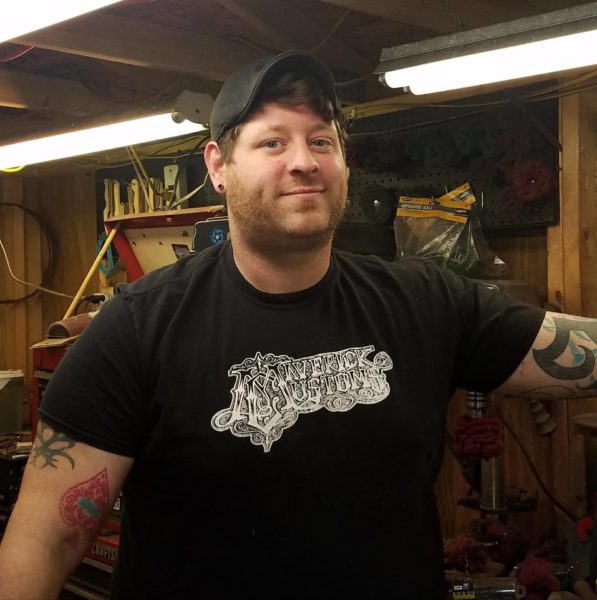
If you could apply a motto to VMX Knives it would be: Let’s have some fun. At least that’s the impression you get after talking with co-owners James Robert Buckley of Maverick Customs and Kyle Vallotton of three-generation-strong Vallotton Custom Knives. Rob and Kyle became friends online. For BLADE Show 2017, Kyle—sporting a new do—invited Rob, whom he calls Buckley, to share space at the Vallotton table. But due to a confluence of issues, Kyle, who is known for his butterfly art knives, had no balisongs at the table this year. Rob, a machinist and welder before getting into knifemaking, asked Kyle if he’d look at a design he’d come up with for a balisong. Kyle liked it. The men agreed to make the knife together, Kyle bringing his expertise in the art-balisong industry to the newcomer and Rob offering to show Kyle what he knew about machining steel. It wasn’t long before a work flow was ironed out and the VMX-1 was brought from paper to reality, a baby born of blue mohawks, butterfly knives and buddies.

Rob Buckley was a machinist and welder before he got into knifemaking full-time.
James Robert Buckley is the owner of Maverick Customs out of Horse Cave, Kentucky. He is also the co-owner with Kyle Vallotton of VMX Knives.

Rob Buckley grew up in Glasgow, Kentucky, about 45 minutes northeast of Bowling Green. While in high school and working at a family-owned cabinetry shop, he came to a realization: “I hated wood,” he said, laughing. But he took college-level courses in welding and machining. “It got me,” he said of metalwork. At 17 he entered the Army, wanting combat medic, but settling for infantry. He sustained injuries that would require surgery before continuing his training, so he accepted the proffered medical discharge. Returning home, he landed a machining job in Dickson, Tennessee, where his parents were living at the time. After those few months as a manual machinist and welder, he moved back to Glasgow to work as a certified welder. Six months later he took a position at a magazine printing plant, staying for 10 years. He left for a computer numeric controlled (CNC) machinist position, but he found operating the computer-programmed mills and lathes not as satisfying as hands-on metalworking. Three years ago he began making tools, then later knives, full time.

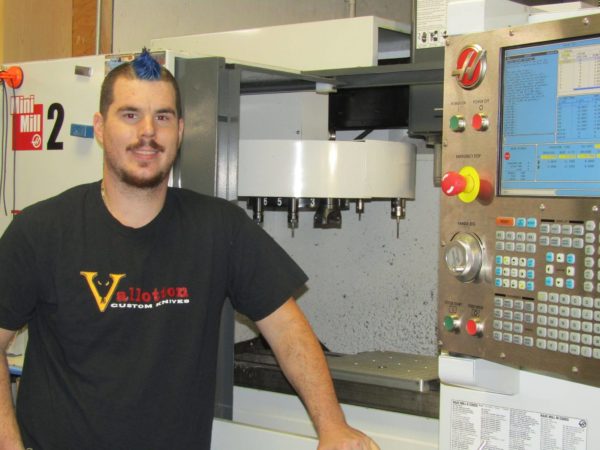
Kyle Vallotton specializes in art balisongs at Vallotton Custom Knives.
Kyle Vallotton hit BLADE Show 2017 with a blue mohawk. He is a third-generation knifemaker and the fifth person in his family to be making knives under Vallotton Custom Knives. He is also co-owner of VMX Knives with James Robert Buckley of Maverick Customs.

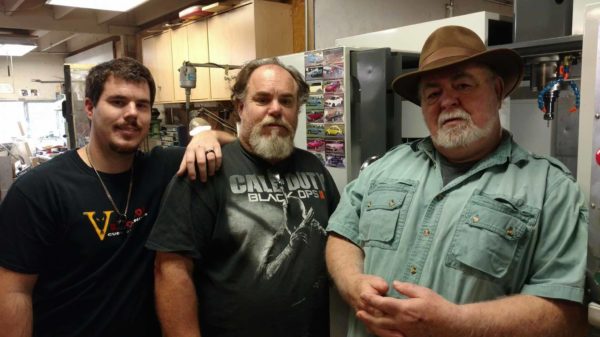
Kyle Valloton marks the third generation and fifth family member to be making knives under Vallotton Custom Knives. He began in the shop when he was 10 years old. He took some time off to test jobs away from the family business, such as telephone sales representative, but by the time he was 23, he knew he wanted to make knives for a living. He grew up in Umpqua, about an hour and a half south of Eugene. His grandfather Butch was an innovator in the tactical folder and automatic knifemaking world. The Vallottons hold 15 patentable developments with seven still-running royalty contracts. Vallotton innovations appear in numerous production knives, from Gerber to Spyderco.

Kyle, Rainy and Butch Vallotton have been making knives for close to four decades.
Kyle Vallotton, left, specializes in high-end balisongs, tapping into both the artistry of his dad, Rainy, and the innovations of his grandpa, Butch, right.

Kyle’s dad, Rainy, made his mark in the high-end art-knife market, and Kyle’s specialty is the butterfly knife. He taps into both his grandfather’s exactitude in specifications and his father’s artistic flare. Kyle’s demeanor exudes good-natured enthusiasm and a sense of fun without being reckless. He contemplated attending BLADE Show 2017 sporting a blue mohawk, but wasn’t sure how it would go over. Finally, he decided to do it. “Let’s have some fun,” he said. “Everyone loved it.”

The first VMX-1s will ship mid-November, 2017.
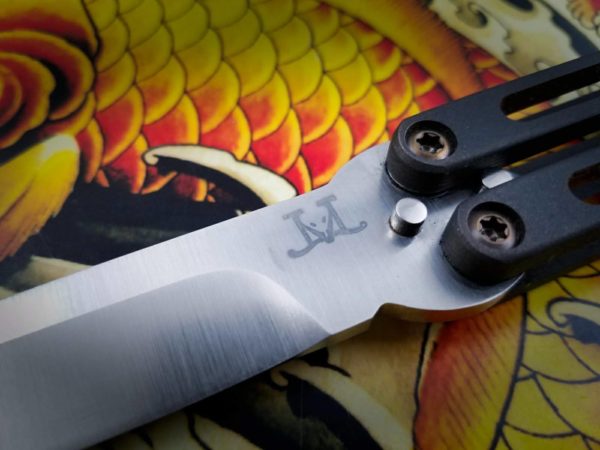
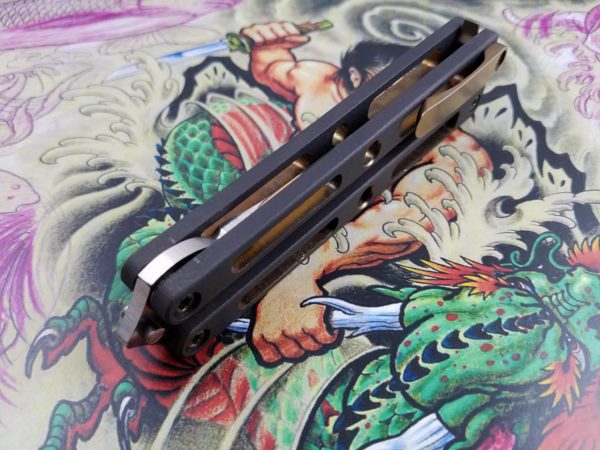
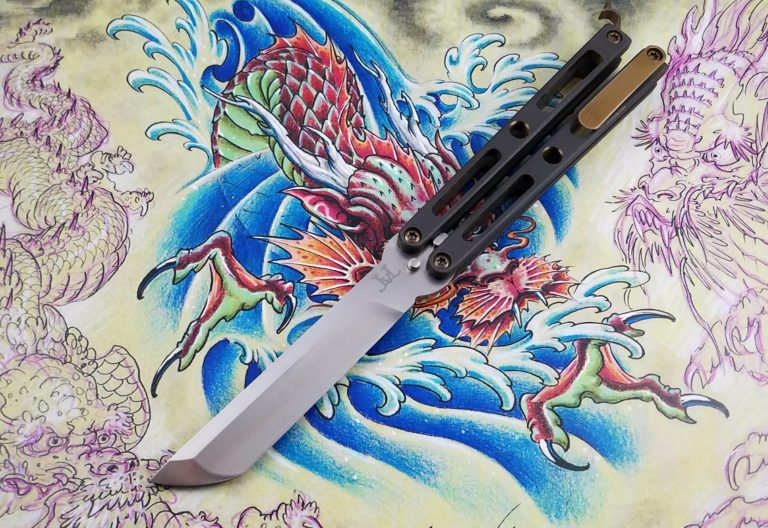
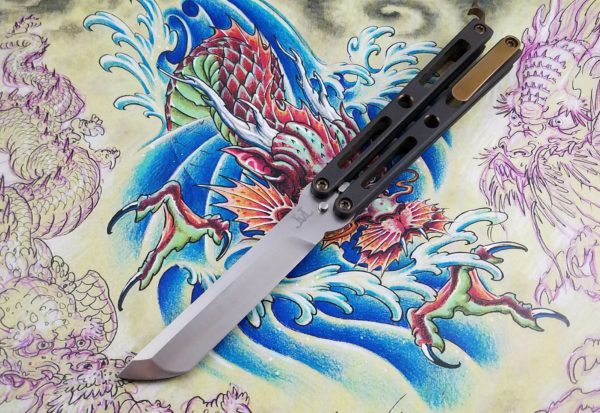
The VMX-1 prototype was made of BG42, but the production model has a 4-inch blade of CPM 154 steel. The prototype handle is black titanium, but custom-colored anodized titanium handles are available. Artwork by Zach Burcham of West Main St. Tattoos in Glasgow, Kentucky.

The balisong segment of the knife community is a microcosm of the knife industry itself. There are those who use the knives in the practice of Filipino-style martial arts; those who use the knives in a mesmerizing display of twirling and tricks, resplendent with the individual’s unique style; and those who collect the knives created as works of art. In addition, because many states have laws preventing the sale of balisongs—only trainers can be used by residents of those states. Kyle mentioned that he follows Knife Rights‘ work to overhaul outdated knife regulations in numerous states.

Rob jokes that he knows just enough about flipping balisongs to cut himself. In fact, VMX Knives will sell you its butterfly knife without an edge if you prefer. At any time, you are welcome to send it back if you decide you want to go with a live blade.

Zach Burcham of West St Tattoos in Glasgow, Kentucky, designed the VMX Knives logo.
Zach Burcham, owner of West Main St. Tattoos in Glasgow, Kentucky, designed the logo for Maverick Customs and was brought in again to combine the M from Maverick Custom’s logo as well as a V for Vallotton Custom Knives to create the VMX Knives logo. Like the VMX-1 balisong itself, the logo uses old-school lettering with a modern twist.

Rob got his tattoo artist, Zach Burcham of West Main St Tattoos, who designed the M logo for Maverick Customs—named after Rob’s son—to come up with a logo that incorporated a V for Vallotton with the M for Maverick, and the VMX Knives logo was born. It is representative of the gold-leafing in signs of yore in the style of David Smith, for example, but with a modern twist, which is exactly how this team approaches their design.

The VMX-1 utilizes a floating latch system designed by Kyle Vallotton.
The VMX-1 has phosphor bronze washers, titanium screws and standoffs, and a floating latch system designed by Kyle Vallotton. It measure 5.25 inches closed, 9.25 open. Artwork by Zach Burcham, West Main St. Tattoos in Glasgow, Kentucky.

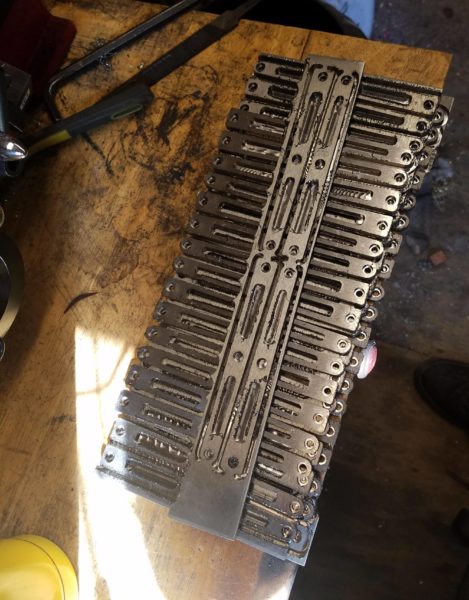
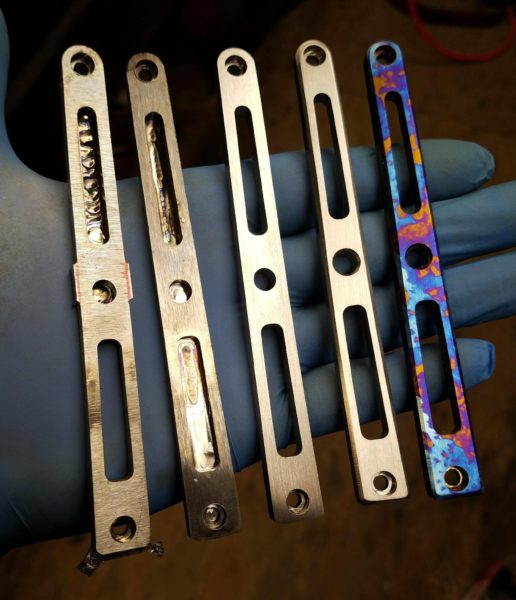
Right now, whichever of the two are ordering supplies in the course of their personal knifemaking businesses purchases whatever VMX needs. They split those expenses 50-50, watching the price of titanium as it fluctuates. At present, Kyle machines the profiles and handles then sends them to Rob, who likens what he receives to model car parts connected to their frames by plastic tabs. “From the sheet I surface everything flat, chamfer holes and shape the tops by hand,” he explained. He also applies any final finish, such as anodizing, and machines some internal parts. Currently, the blades go back to Kyle for hand-grinding, hollow on the belly and convex on the point. Soon unused equipment at the Vallottons’ will be heading Rob’s way so he can also do the grinding. Once all the components reach Rob’s shop, they’re ready for clean-up, assembly, packaging and shipping.


Blade HQ will have some VMX-1 balisongs or you can order directly from VMX Knives.
VMX Knives has built a high-end balisong that Kyle Vallotton hopes will change the way flippers think of flippers. You will find some offered for sale at Blade HQ or you can custom order yours by contacting Rob Buckley at Maverick Customs via methods listed at the bottom of this article. Tattoo art by Zach Burcham at West Main St. Tattoos in Glasgow, Kentucky.

“They are the strongest folding knives,” Rob said of balisongs. “There’s no locking failure; the pin stops it from closing.” No matter how tight tolerances are, owners will often loosen up butterfly knives for better flipping. “So it’s like a chain-link fence,” Rob said. He and Kyle are striving for a knife that is as tight as a bushings-and-washers construction can be while still allowing for smooth flipping action. In the future, they hope to offer a bearings model, as well as a limited-run high-end model.

Rob Buckley of Maverick Customs finishes the rough parts that come machined from Kyle Vallotton.
Even though Rob Buckley is in Kentucky and Kyle Vallotton is in Oregon, the men have worked out a division of labor that maximizes the strengths of each. Rob receives the parts on sheets. From there, they undergo numerous processes before they are ready to be finished, assembled and shipped.

The balisong community is an entity all to itself within the knife industry. Both Rob and Kyle acknowledge the achievements of others who started where they are now, while simultaneously carving out their own space in the market. Bladerunners Systems, which goes by BRS, started out as “flippers making flippers for flippers,” Kyle explained.

“I met the BRS boys before they became BRS,” he noted. “They are a bunch of balisong enthusiasts and great guys doing a great job.” In Kyle’s opinion BRS excels at using overlay materials that look cool and grab the attention of the crowd. “They are a big production company making a decent knife.”

“They make a great product,” Rob agreed, adding that butterfly knives made by Bali-Song Inc. (1979-1983), which became Pacific Cutlery Corp. (1983-1987), which became Benchmade (1988 to present) are well made as well. In fact, he owns a Benchmade Balisong 53 Mangus and a Spyderco Spyderfly.

VMX Knives is set to release its first round of VMX-1 balisongs in mid-November, 2017. They received 15 preorders, enough to get the project off the ground.

Kyle explained the partnership’s goals with the VMX-1. “What I have been doing and am now doing with VMX is simplifying and changing the norm,” he commented. “We are a small company making a very high-quality knife for the same price, and it’s custom-to-order.” Kyle wants to change the way flippers think about flippers. “I want to push boundaries and change things for the better. It’s what I wanted to do when I started making balis.”

It is obvious from their banter, that Rob and Kyle enjoy ribbing each other and genuinely respect what each brings to the project. The online acquaintances who developed a friendship and started a business together have also seemingly adopted each other’s families. Only Rob does not flip balisongs in front of his impressionable son, he admitted with a laugh.

Contact James Robert (Rob) Buckley, VMX Knives, 111 Corner Ave., Horse Cave, KY 42749; 270-576-4392. You can view the work of Rob on Facebook at Maverick Customs and Kyle’s work along with the work of other Vallottons at Vallotton Custom Knives.

A Digital Subscription To BLADE Is The Answer

Save $4 off the print price of a annual subscription to BLADE Magazine with a digital subscription.
You can read your digital issues of BLADE Magazine anywhere you have your phone, tablet or computer, and there’s no need to find storage for all your old issues.

If piling-up issues of magazines seems like a waste to you… If you feel like you don’t have time to read a magazine… If you like the stories we offer in BLADE, but want a more economical option, then a digital subscription is the answer. An annual subscription to BLADE is $17.98, $4 off the print price.
 

First Family of Knives?

Hoyt Buck knives
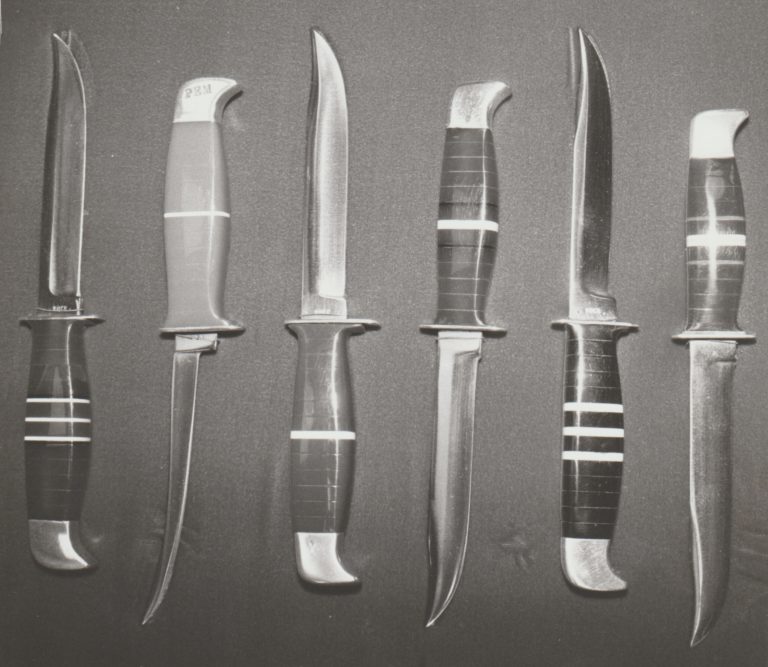
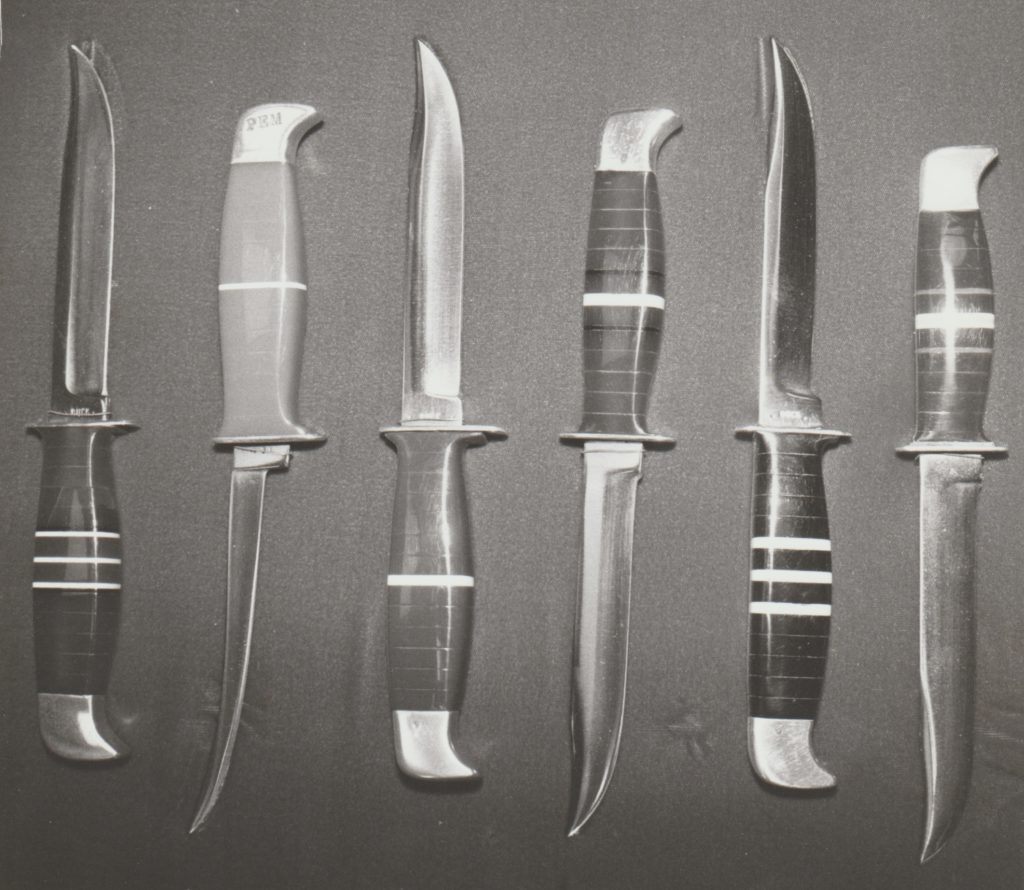
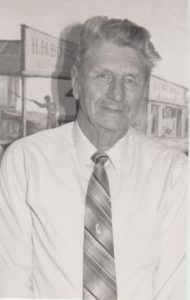
These pre-1950 Buck knives handmade by Buck patriarch Hoyt Buck are classic examples of the Buck legacy.
CJ First Family of Knives
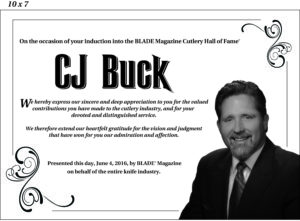
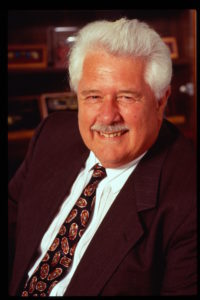
CJ Buck was the most recent member of the First Family of Knives to be inducted into the BLADE Magazine Cutlery Hall Of Fame, entering the hall in 2016.
Buck Knives Rush
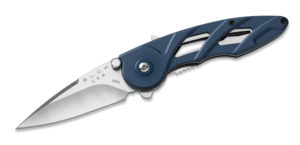
One of several of Buck’s assisted-opening folding knives is the Rush.
Buck 110
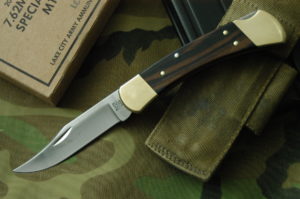
First produced in 1964, the Buck 110 remains one of the most famous modern production knives ever.

If there’s such a thing as the First Family of Knives, the Buck family is it.

Buck Knives has been run by a member of the Buck family—Hoyt, Al, Chuck or CJ—since “H.H. Buck and Son” set up shop in 1945. Since that time, the name Buck has become synonymous with fine hunting, sporting and other knives, and Al, Chuck and CJ help comprise the only family with three members to be inducted into the BLADE Magazine Cutlery Hall Of Fame*.

According to The Story of Buck Knives … A Family Business by Tom Ables, in 1946 “Buck’s knives were all created from used metal files that had been discarded by Consolidated Vultee, the huge aircraft manufacturing plant that later became Convair. These worn-out files, with their heavy carbon content, were perfect for the toughness and edge-holding qualities that Hoyt Buck required in his knives.”

Al joined his father full time in 1947. “[Al] learned how to laminate the thin strips of Lucite plastic used on the handles,” The Story of Buck Knives noted. “He learned how to separate and drill the handles themselves. Later, he learned how to temper the blades so painstakingly sharpened by his dad.”

Sadly, Hoyt learned he had cancer in 1948 and the dreaded disease claimed his life a short year later. He was only 59. Al assumed the company reins and guided it successfully through the 1950s and into the “modern age” of the 1960s. Buck incorporated in 1961, with a young Chuck Buck on the board of directors. The company began making the iconic Buck 110 Folding Hunter on a full production basis in September 1964. The knife’s sales jumped in 1965, increased 63 percent in 1966 and vaulted another 60 percent in 1967.

The knife industry would never be the same again.

Buck flourished under the direction of Al in the 1970s and ’80s, offering the latest in knife designs, materials and more. Along with the legendary Jimmy Lile, Howard Cole and William R. Williamson, Al was inducted into the Cutlery Hall Of Fame at the 1984 BLADE Show.

First Family of Knives Al
In 1984, Al Buck became the initial member of the First Family of Knives to join the Cutlery Hall Of Fame.

As the September/October 1984 issue of BLADE® noted in reference to Al and the 110. “Buck didn’t invent the lockback, but he certainly popularized it, and despite a flood of other lockbacks, the Buck knife still leads the way. If you are carrying a lockback today, you can thank Al Buck for his enduring promotional efforts. You have a safer knife for it.”

Chuck was next in line to be inducted into the Cutlery Hall Of Fame, being inducted along with Blackie Collins in 1996. Chuck was a part of the Buck family business from childhood. By 1970 he was corporate vice president for manufacturing, involved in all aspects of the process, from purchasing to personnel to packaging. In 1979 he became company president. Through Chuck’s leadership, the company completed a modern new plant and corporate headquarters in 1980 with 4.5 acres under one roof.

Under his direction the company grew and prospered, winning several BLADE Magazine Knife-Of-The-Year® Awards. By 2004 he was Buck Knives chairman and helped oversee the company’s historic move to Post Falls, Idaho, from El Cajon, California, in 2005.

First Family of Knives Chuck
Chuck Buck was the second Cutlery Hall Of Fame inductee from the First Family of Knives in 1996.

CJ was inducted into the Hall in 2016 following a career that saw him begin by working on the Buck production line in 1978. For 21 years he handled numerous company promotions and responsibilities. In 1999 he was named president of Buck Knives and, in 2001, CEO. In 2015 he was named Buck chairman of the board. He is a co-founder of the American Knife & Tool Institute (AKTI), serving multiple terms as AKTI president, and is the AKTI’s current CEO. He played a pivotal role in the AKTI’s historic defeat of an attempt by U.S. Customs to classify all one-hand-opening knives as switchblades in 2009. Ironically, today, thanks to the efforts of such organizations as AKTI and Knife Rights, switchblades—better known now as automatics—are being legalized in more and more states, and there’s even an effort under way to repeal the archaic Federal Switchblade Act of 1958. In addition, under CJ’s leadership, Buck has an entire line of automatics, including one of its latest—a version of the iconic 110 in full auto mode, no less.

The only family with three members in the Cutlery Hall Of Fame, the Bucks can legitimately lay claim to being the First Family of Knives. Their contributions speak for themselves.

•Uncle Henry and Al Baer of the original Imperial Schrade and A.G. and Goldie Russell are the only brothers and husband and wife, respectively, to be inducted into the Cutlery Hall Of Fame.


National Fraud Week: Fight Fake Knives

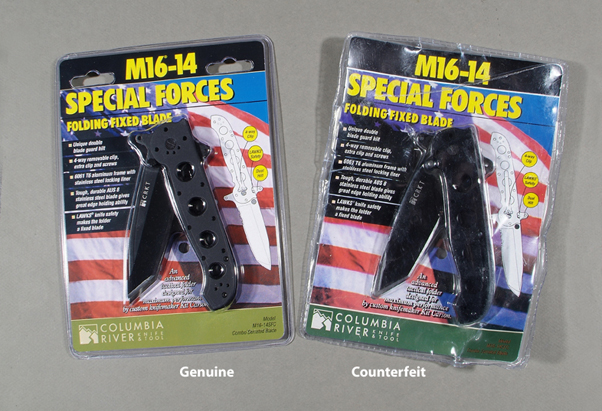
Counterfeit knives
True counterfeit knives are those that not only copy the original in terms of every one of the knife’s features and markings, but also in every detail of the knife’s packaging as well, such as here on the CRKT M16-14. The authentic one is at left, the counterfeit at right.
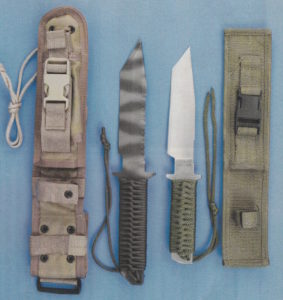
Counterfeit knives
Counterfeiters marked their counterfeit (right) of an authentic Strider fixed blade (left) “Strider,” but from there it becomes obvious the counterfeit is not legitimate. Note the counterfeit’s incorrect dimensions, inaccurate blade grind, finish and length of clip, miniscule sawteeth and sharp corners where they should not be, as well as the shoddy workmanship of the green sheath.
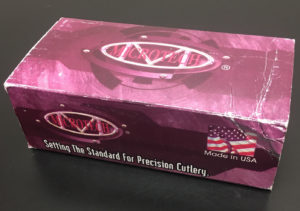
counterfeit knives
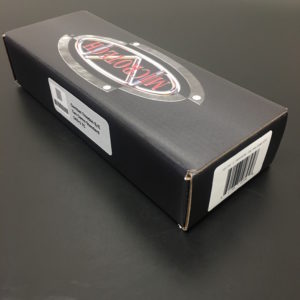
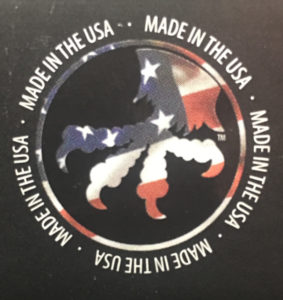
The Microtech knife box above with a pinkish hue is a counterfeit. The authentic box at left is outfitted with a unique serialized barcode and also a “claw” watermark to help identify the authentic packaging.
Counterfeit knives
The authentic Microtech packaging is black and has the unique serialized bar code.
counterfeit knives
Another indication of authenticity on the Microtech product box is the special Stars ‘n Stripes “claw” watermark.

Fake knives—better known as counterfeit knives—are a worldwide problem that needs everyone concerned to pay attention, and National Fraud Awareness Week Nov. 12-18 is a good time to sit up and take notice.

Factory knife companies are especially prone to having their knives counterfeited by nefarious operations, the latter usually based overseas. The American Knife & Tool Institute has a dedicated program tailored to fight the plague of fake knives, and other cutlery companies such as BrowningCRKT, Cold Steel, Chris Reeve Knives, Knifeart and others have websites that address the scourge.

What can you do? Visit the above sites and others and familiarize yourself with the situation concerning counterfeits of those companies’ knives. While some custom knives are victims of counterfeits as well, it’s largely the factory guys that are targeted simply because their knives are recognized by many and sold on a much larger scale than custom knives, and can earn the counterfeiters much more illicit money as a result.

One thing to keep in mind is exactly what is meant here by counterfeit knife. We are not talking about design features, designs, etc., that are “knocked off” without the original maker/designer’s OK or approval. That is another matter entirely. There are some instances of where knockoffs are done and the parties involved eventually wind up in court to settle the issue. If the matter cannot be resolved otherwise, the original designer ultimately may have to prove that the design feature, design, etc., is his or hers exclusively, it has not appeared on another knife before, etc. As you can imagine, since knives have been around since the dawn of humanity, such a thing many times can be very difficult to prove. However, again, knockoffs are not the issue here.

The issue here is a counterfeit knife in which the counterfeiter has copied everything in question about the knife, from the knife’s exact features, blade stamp and even the product box in which the knife is packaged. The product box even will illegally sport the knife and company’s name, the company’s address, etc. Then, when the unsuspecting buyer purchases the fake knives and sends them to the company about a warranty issue, the company in question has the unsavory duty of telling the buyer that he or she has been duped by counterfeits, and the company cannot honor the warranty. The buyer is then stuck with worthless fake knives.

Some of the counterfeits are easy to identify because they are shoddily done. Others, however, are not as easy to spot. It’s a growing problem, one that knife companies and knife enthusiasts everywhere—including you—must continue to deal with and be vigilant about. For more information look for Daniel Jackson’s story on counterfeit knives in the January 2018 BLADE®, on newsstands Dec. 26.

Pumpkin Carving Contest Winners Announced

0

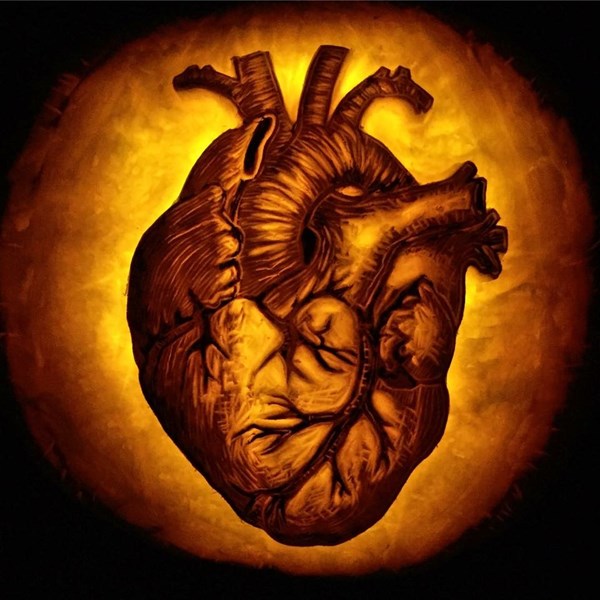
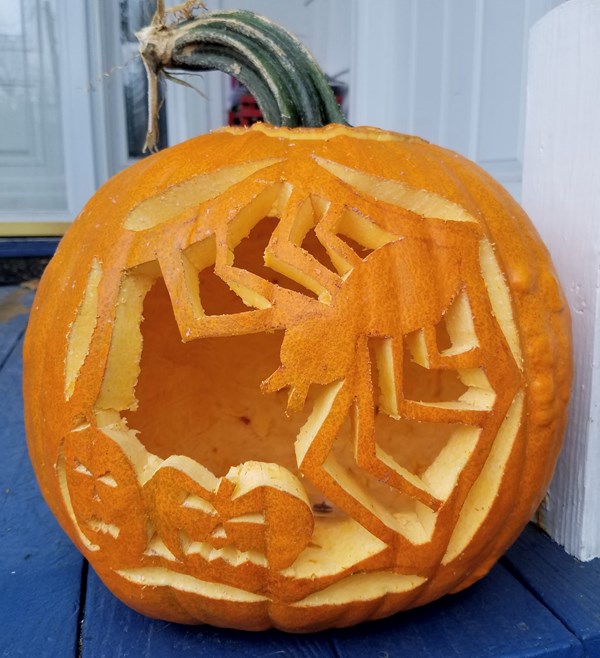
BLADE‘s Halloween pumpkin-carving contest is in the books. Here are the winners. They’ll be contacted separately for their prizes. Thanks to everyone who entered.

Reader’s Choice

heart carving pumpkin

Editor’s Choice

halloween carving contest

Runners-Up

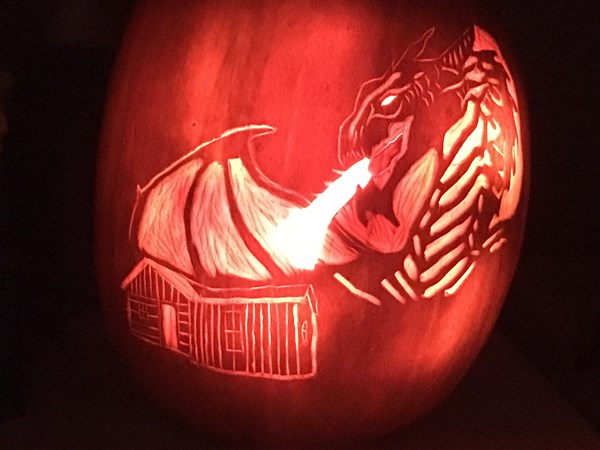
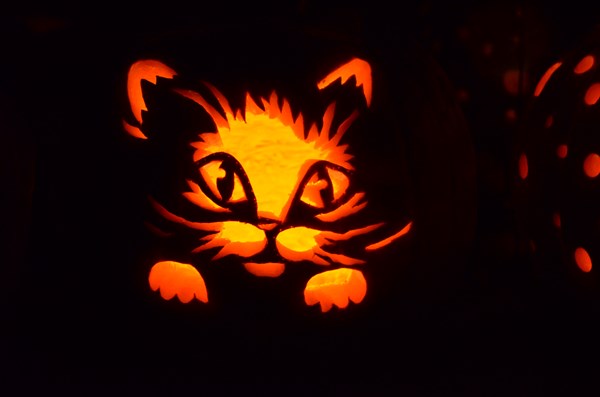
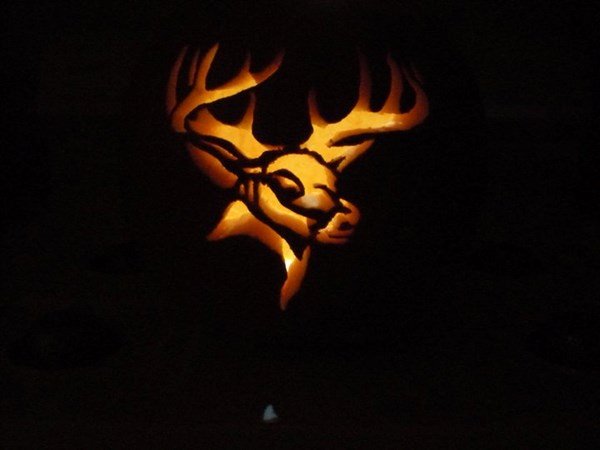
dragon pumpkin carving cat pumpkin carving deer pumpkin carving

Midweek Maker Forged-Style: David McConnell

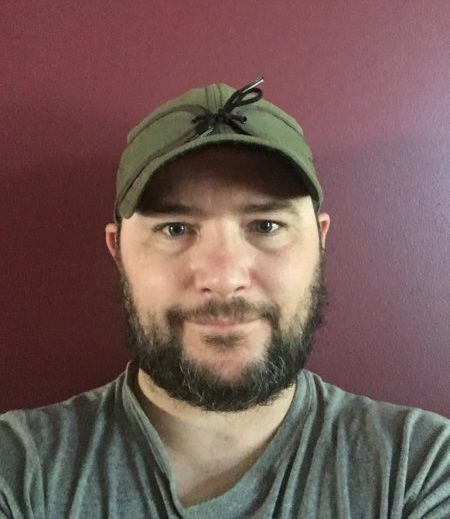
David McConnell is a stamping press repairman who hopes to convert to full-time bladesmithing soon. His first knife, was a cheap Wal-Mart special. Over the years he got frustrated with the lack of quality in such knives and began thinking about making his own. He knew he could make a better knife for himself, and he did. Only his buddy loved it so much that he bought it from him, David said, laughing.

North Woods Forge offers old-school styles of knives and tools.
David McConnell of North Woods Forge in Michigan. He forges, preferring a primitive style, using natural materials..

The self-taught bladesmith has been making knives for 11 now, including tomahawks and axes. “I like to make hunting knives and more traditional stuff,” David noted.

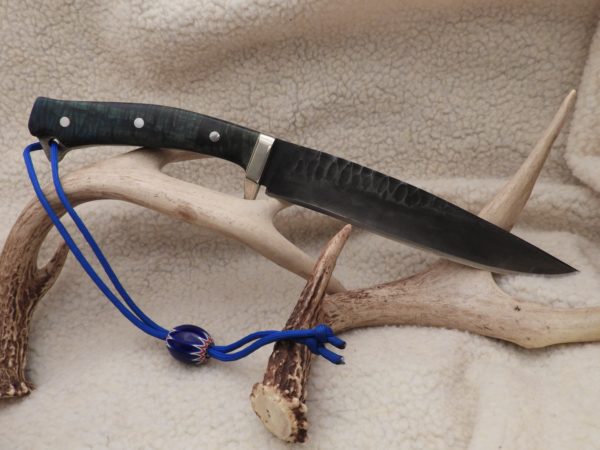
David McConnell of North Woods Forge used dyed and stabilize curly maple to make this bowie.
David McConnell made this bowie with an 8-inch blade of 1075 steel. The handle is blue-dyed and stabilized curly maple. Blue curly maple bowie. Guard is nickel silver. Overall length is 14 1/4 inches. Contacts listed at the bottom of this article.

He is an avid grouse and deer hunter, as well as and ice and fly fisherman. He lives in Kalkaska, Michigan, with his wife and 15-year-old son.

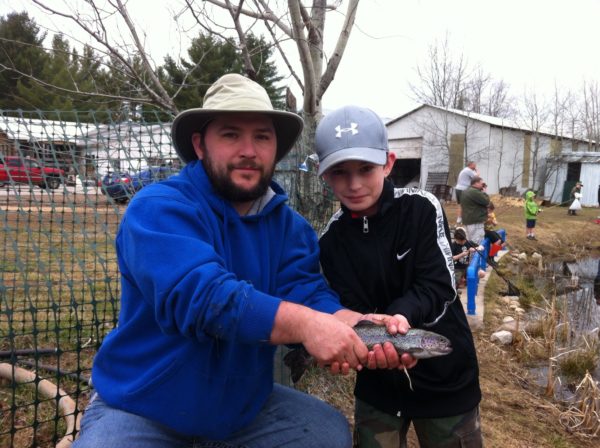
David McConnell of North Woods Forge helped his son Parker catch a trout at the National Trout Festival in Kalkaska, Michigan.
David McConnell started teaching his son Parker McConnell to fish early in life. The National Trout Festival, now in its 81st year, is held in April in Kalkaska, Michigan. Parker got this trout in the kid’s pond.
  • Best-selling knife patterns: 3 ½- to 4-inch-bladed bird-and-trout, 4- to 7-inch-bladed straight-back hunter, classic bowie
  • Favorite blade steels: W2 for hamon, toughness, ease of forging and grinding; 1075 for ease of forging and heat-treating
  • Blade grinds: flat ground, sometimes with appleseed edge
  • How he tests his knives: “If it can cut a nail and have no deformation or chipping and still stay shaving-sharp, I would have to say that’s a pretty good blade,” David commented.
  • Favorite handle materials: bone, wood, antler. “I just like the feel and warmth you get from natural materials.”
  • Price range: $85-$600
  • Knife shows he attends: local gun-and-knife shows and blacksmithing events
  • Member of: American Bladesmith Society
  • Forums he participates in: ABS
  • His website: www.northwoodsforge.com
David McConnell of North Woods Forge only forges his knives; he does not do stock-removal.
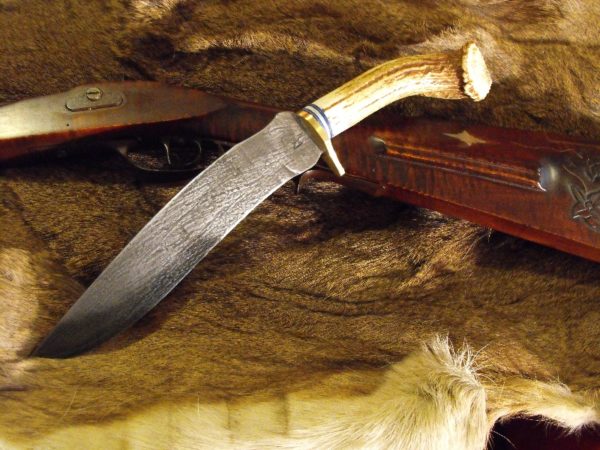
This 15-inch bowie has a 8 7/8-inch blade, flat-ground, appleseed-edged and forged from 1084 cable-patterned steel. The handle is made from axis deer crown antler with a brass guard and blue and white fiber spacers. Maker’s list price: $375.
Black Iron Days takes place every August in Grayling, Michigan. David McConnell goes each year to help with bladesmithing demonstrations.
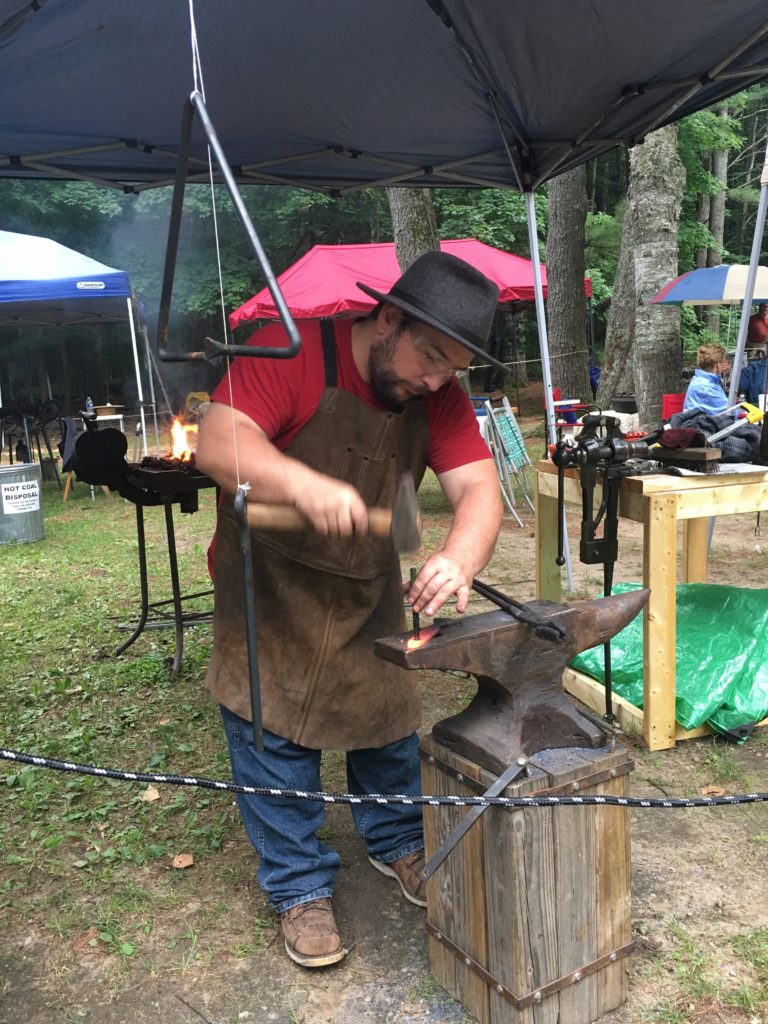
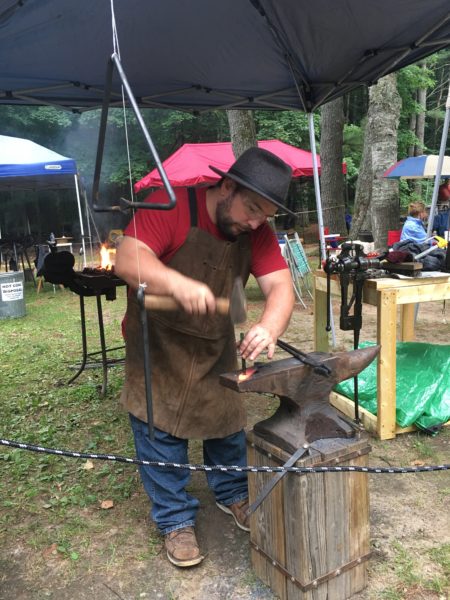
Bladesmith David McConnell puts on a forging demonstration at Black Iron Days at Hartwick Pines State Park in Grayling, Michigan. Every August blacksmiths from all over Michigan and a few from Ohio host demonstrations for the public for the whole weekend.
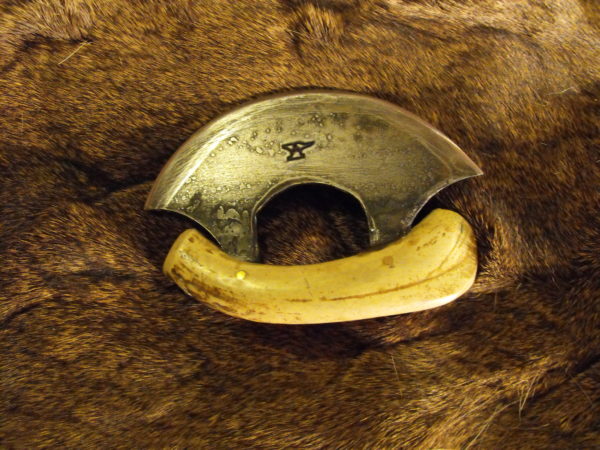
This ulu was forged by David McConnell of North Woods Forge.
North Woods Forge’s ulu has a 4 1/2-inch blade forged from 1095 steel. The handle is made from whitetail antler. David McConnell loves making primitive pieces and being an avid deer hunter, he often opts for antler material.

Contact David McConnell at 989-858-6344[email protected] or on Facebook at North Woods Forge.

A Digital Subscription To BLADE® Is The Answer

Save $4 off the print price of a annual subscription to BLADE Magazine with a digital subscription.
You can read your digital issues of BLADE Magazine anywhere you have your phone, tablet or computer, and there’s no need to find storage for all your old issues.

If piling-up issues of magazines seems like a waste to you… If you feel like you don’t have time to read a magazine… If you like the stories we offer in BLADE, but want a more economical option, then a digital subscription is the answer. An annual subscription to BLADE is $17.98, $4 off the print price.
 

6 Knife Handles That Glow In The Dark

There are four categories of “glow.” Bioluminescence is, say, a firefly. There’s chemiluminescence, caused by a chemical reaction—think glow stick. Radioluminescence is most frequently used in clock or watch paints and on instrument panels. Then there’s phosphorescence, frequently used in toys, or toys for grown-ups: knives, or more specifically knife handles. The old-school invisible type of glow-in-the-dark scales show white-ish in daylight. The handle might have tinges of color, but it’s essentially white. If it has been exposed to enough sunlight, it will glow in blues, purples or greens in the dark. New-school daylight glow is visible day or night and comes in variety of colors. Here are six knife handles that glow in the dark, three of each variety, perfect options for Halloween or the everyday kid in all of us.

1. A son makes glow-in-the-dark-handled knife for his dad

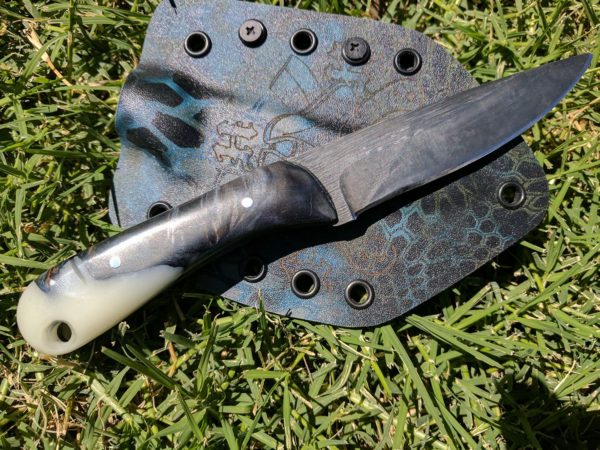
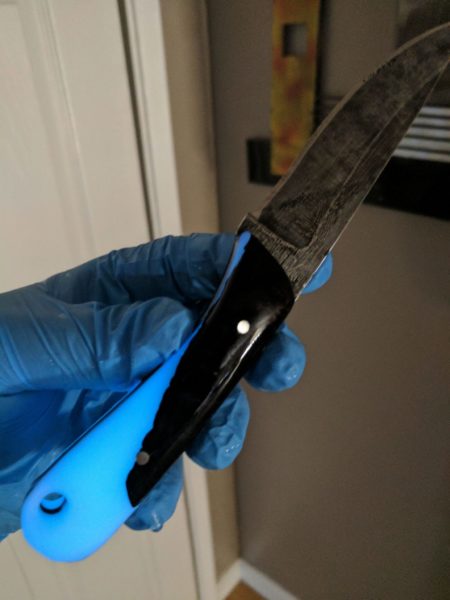
Randy Madan of Patriot Horde Knives made this Pig Poker for his dad, Randy, who uses it on his farm in Kentucky. This type of old-school glow will appear creamy or pasty by day and either blue-violet or green by night, provided it has absorbed some UV light, explained scalemaker, Rob Carper of Rob Carper Innovations (RCI).

This glow-in-the-dark knife handle is a hybrid by RC Innovations.
Randy Madan of Patriot Horde Knives made this 4.5-inch flat-ground blade out of 1095 steel from Aldo Bruno at New Jersey Steel Baron. The Pig Poker has an acid-washed finish and a hybrid glow-in-the-dark handle by Rob Carper of RC Innovations. The knife is 9 inches overall. Maker’s list price: $200. Contact Patriot Horde Knives, 760-885-9370, [email protected], on Facebook at Patriot Horde Knives or Jr Madan and on Instagram @the_patriot_horde.
Randy Madan made this glow-in-the-dark-handled knife for this father.
In low light this Pig Poker from The Patriot Horde Knives glows blue, provided it has absorbed enough light.

2. This GITD friction folder is pinned by a grenade pull

A rescue knife has a blunt point for two reasons, explained Denny Furey of Furey’s Urban Combat Knives – Unlimited. One, it can be used to pry with, and two, if you needed to cut someone’s seatbelt, for example, you don’t want to run the risk of sticking them with a sharp point.

The grenade pull locks the blade in the open position for secure cutting. The pin can then be stored in the attached slot on the sheath, similar to how a ferro rod might be stowed.

Denny Furey of Furey's Combat Knives - Unlimited made this blunt-tip rescue knife with grenade pull pin.
The “Resukyū” (Rescue) Friction Folder is a one-off by Denny Furey of Furey’s Urban Combat Knives – Unlimited. The 3-inch blunt-tip rescue blade is made out of O1 tool steel, as are the breacher/bottle opener and spacers. The blade and back spacer have an acid stonewashed finish. The knife measures 6.75 inches closed and 8 inches overall. The handle scales are Glow In The Dark by Voodoo Resins. The hardware, including the grenade pin lock, is stainless steel. Maker’s list price: $300 with Kydex/Holstex sheath. Contact Denny Furey, Furey’s Urban Combat Knives – Unlimited, 405-642-2198, [email protected], on Facebook at Furey’s Urban Combat Knives – Unlimited.
Furey Urban Combat Knives - Unlimited made this rescue friction folder as a one-off.
This Denny Furey friction folder handle was made by Voodoo Resins and appears green in the dark.

3. New-school daytime glow is visible day or night

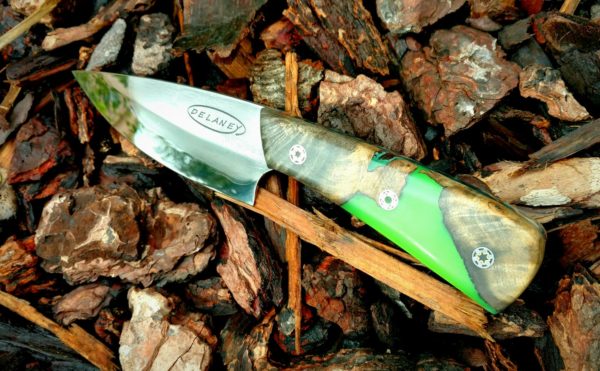
Jason Batdorf of Delaney Knives makes his own glow mix, using raw materials, but one would need to be a chemist with a laboratory to actually make the glow powder.

Jason Batdorf makes his own glow mix for his wood-glow hybrid knife scales.
Jason Batdorf made this 4-inch flat-ground Delaney drop-point blade out of 1095 steel with hamon. The handle is a buckeye burl and glow hybrid made by the maker with his own glow mix. Overall length is 8 inches. Maker’s list price: $250. Contact Jason Batdorf, at Delaney Knives on Facebook or call 419-583-8238.

4. Knife named for a customer’s departed sister

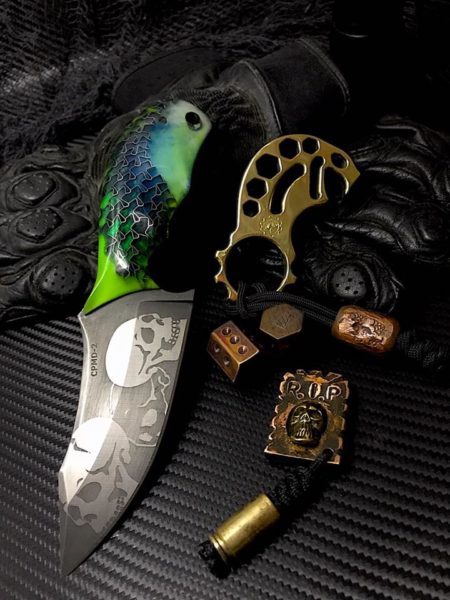
Brent Vacarro of Black Widow Knifeworks & Tactical Gear designed this blade for a customer as a custom order. When Brent began receiving interest in the knife, he wanted to introduce it into his lineup. But there were two problems. “First, I had to get permission from the customer, and second, I needed a name for it,” Brent explained. He contacted the customer and asked if it would be OK if he made more of this knife model. The customer was fine with that. “Then I asked him to name the blade,” Brent continued. “This is where it becomes very special very fast. He had told me about his sister passing away when they were younger, so he had asked if we can name the blade after her. My immediate response was ‘Of course!’ So that’s where H.E.R.L comes from, her initials.”

Brent Vacarro of Black Widow Knifeworks & Tactical Gear got permission from a customer to recreate his custom order. Brent let the customer name it after his deceased sister.
Brent Vaccaro’s H.E.R.L has a 4.5-inch flat-ground blade of CPM D2, acid-washed with etched skulls. The handle is Voodoo Resins’ Dr. Strangelove (green/blue glow) with green G-10 liners. Overall length is 7 inches. Maker’s list price: $280-$350. Contact Brent Vacarro at [email protected], 908-328-2049, on Facebook at Black Widow Knifeworks & Tactical Gear and on Instagram @blackwidowknifeworks.
Dr. Strangelove is a Voodoo Resins with blue and green glow in the dark.
Dr. Strangelove scales are made by Matt Peterson at Voodoo Resins. Dimensions are 5.9 inches long by 1.85 inches wide by .300-inch thick. Makers list price: $40/set.

5. Glow-in-the-dark honeycomb pattern is echoed in leather sheath

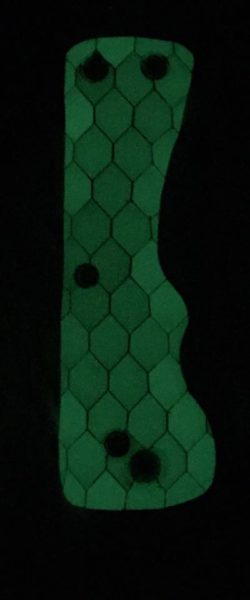
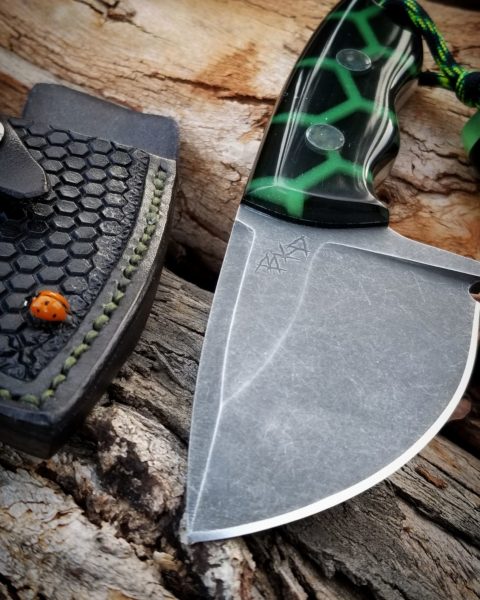
Namen Borras echoed the honeycomb glow-in-the-dark pattern in his accompanying leather sheath for the BKD Skinner.
Namen Borras’ BKD Skinner has a flat-ground 2.5-inch blade with swedge made out of CPM S35VN with acid and stonewashed finish. The knife is 6 inches overall. The handle scales are glow-in-the-dark honeycomb with clear resin by DerangedDonkey with black G10 liners. Maker’s list price: $350 with black leather sheath with matching honeycomb pattern. Contact Namen Borras on Instagram @borraskustomdesigns, www.bkdknives.com or at [email protected].
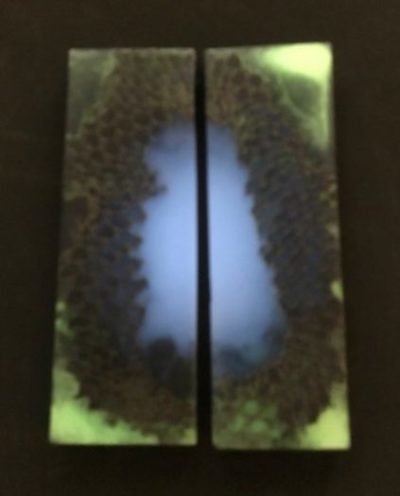
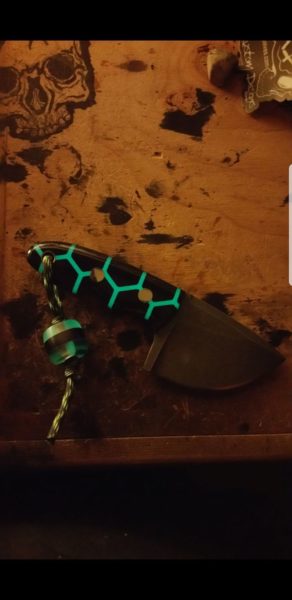
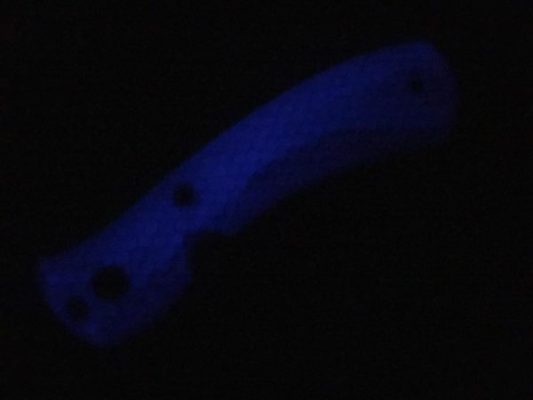
A knife handle can be a little or lot glow-in-the-dark, in random or purposeful design.
This is how the honeycomb pattern on the above knife appears in the dark.

6. Old-school Glow Hex emits violet shade in the dark

Tyler Freund's custom folder glows violet in the dark.
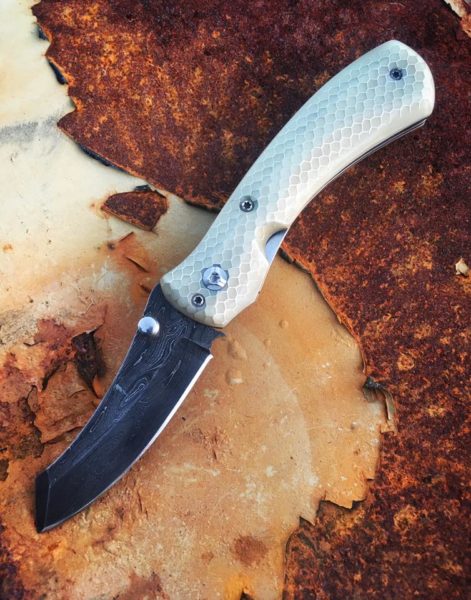
Tyler Freund made this one-off custom folder with a 1.3-inch flat-ground blade of pattern-welded steel from Alabama Damascus Steel. The Glow Hex scales are by Beyond Wood Products, and are paired with titanium liners. Screws, pivot pin, pivot screw, backspacers and clip are also titanium. Overall length is 9.7 inches. Maker’s list price: $400. Contact Tyler Freund, Freund Custom Knives, 1755 Madison 541, Ironton, MO 63650; 573-366-3906, [email protected] and on Instagram @freunds_customs.
Old-school invisible scale material can glow blue, violet or green in the dark.
Tyler Freund’s one-off custom folder glows a blue-purple in the dark when it has absorbed sufficient UV light.

A Digital Subscription to BLADE Is The Answer

Save $4 off the print price of a annual subscription to BLADE Magazine with a digital subscription.
You can read your digital issues of BLADE Magazine anywhere you have your phone, tablet or computer, and there’s no need to find storage for all your old issues.

If piling-up issues of magazines seems like a waste to you… If you feel like you don’t have time to read a magazine… If you like the stories we offer in BLADE, but want a more economical option, then a digital subscription is the answer. An annual subscription to BLADE is $17.98, $4 off the print price.
 

Advertisement

Must Read Articles

Read this before you make a knife

Knifemaking 101 – Read This Before You Make a Knife

  by Wayne Goddard My experience has taught me that there's nothing like digging in and getting started. I've often said the hardest part of the...
how to forge damascus steel

How to Forge Damascus

Advertisement
Advertisement