Home Blog Page 31

Penny For A Knife: Unraveling The History Of This Tradition

0

The fascinating origins of the “penny for a knife” custom, from ancient Rome to Sheffield. Learn why a coin was exchanged saved friendships.

Not all that long ago, the tradition of a penny for a knife was a common practice. Today the custom appears to be barely clinging to relevance, though as traditions go there is the possibility that it may linger and even gain new traction. That, however, remains to be seen.

The old story goes that when someone gives a knife to someone else, the recipient is obliged to present the giver with a penny as a token of appreciation or even as an insurance policy. The origins of the old custom are shrouded in mystery and have become more obscure with the passage of time. Nonetheless, there is a larger aspect to the tradition, and that is its questionable staying power in the modern milieu that is the world of knives.

Is the old practice virtually clinging to life? Apparently so. A few folks contacted for the story were frank in their assessment. Phil Gibbs of A.G. Russell Knives in Rogers, Arkansas, went to the buying public and then conferred with his boss, BLADE Magazine Cutlery Hall-of-Fame® member Goldie Russell, both longtime participants in all things knife.

If somebody gave you a knife and you didn’t give him a penny in return, Cutlery Hall-of-Famer Dan Dennehy noted, “it would cut your friendship.” Dan is also a member of the International Knife Throwers Hall of Fame.If somebody gave you a knife and you didn’t give him a penny in return, Cutlery Hall-of-Famer Dan Dennehy noted, “it would cut your friendship.” Dan is also a member of the International Knife Throwers Hall of Fame.
If somebody gave you a knife and you didn’t give him a penny in return, Cutlery Hall-of-Famer Dan Dennehy noted, “it would cut your friendship.” Dan is also a member of the International Knife Throwers Hall of Fame.

“I’ve polled customers in our store since we first discussed this, and zero people were aware of the old custom,” Phil remarked. “Goldie and I agree that it was once quite prevalent but now is long gone and forgotten.”

The late Cutlery Hall-of-Famer A.G. Russell knew the custom well but sometimes found himself having to explain it a bit.

“Sometimes people look at me funny,” he said years ago of the times he gave a knife to someone and asked for a penny in return, “especially when they are younger. The younger they are, the funnier they look at me. I just think it’s a matter of their not knowing about it.

“As I was growing up, I saw it being done, not just once but many times. I still do it myself. I insist on compensation. It may end up being a quarter if they don’t have a penny, nickel or dime. I knew a man years ago who liked to give knives away, and he would give the knife away with a penny and then make you give the penny back.”

Veteran knife dealer Bill Claussen of Northwest Knives in Salem, Oregon, is another source who definitely would be in the know regarding the tradition, and his assessment was a straight-up, “I really don’t have anything to offer on this one. This is really not ‘old knife’ country out here, and I never even heard of this until a few years ago,” he noted, “and then I never heard it discussed.”

Cutlery Hall-of-Famer A.G. Russell (at far left) waits on a customer in the retail knife store inside A.G. Russell Knives.
Cutlery Hall-of-Famer A.G. Russell waits on a customer in the retail knife store inside A.G. Russell Knives.

The tradition may well be on life support. While it is likely fading or the sun has quite possibly set on it altogether, there are related memories. Matter of fact, this writer put together a BLADE® story on the topic some 26 years ago. Coincidentally, I had just experienced the tradition in action. When I handed a nice folder to a close friend, his wife piped up, “Now you have to give Mike a penny. My mother and father never gave one another anything with an edge without receiving a penny in return.” Even then, my friend’s wife had no idea where the practice had originated.

Penny For A Knife Origins

In that BLADE story 26 years ago, Cutlery Hall-of-Famer Bruce Voyles related that he believed the custom originated in ancient Rome.

“The general theory was that you would ask for the lowest coin of the realm when you were given a knife,” he said. “Back then, when you were dealing with an absolute monarch and the king or queen handed you a knife of their own, you were expected to kill yourself with it. But, if the king demanded a coin from you, then he was giving you the knife.”

Well-known knife dealer Jim Taylor, who grew up in Sheffield, England, remembered the penny for a knife custom as it was practiced in his family. “When I was a little boy,” he recalled years ago, “I had to give my mom a penny before she would give me a pocketknife she had bought for me. It might have been a particular Sheffield custom that became popular.

“I’ve always expected to be given a coin, whatever it might be, any coin at all. In England you don’t have to explain it, but in the United States sometimes the custom is not held so tightly. If I were to take someone a gift of a pocketknife in England, they would without question give me a coin. They think, ‘You must buy this because otherwise it might cut our friendship.’ I’ve seen knives from time to time with an old English farthing or half penny built into them.”

That was then.

Bill Claussen with Sheffield Exhibition Knives, the book he authored in 1999 along with Brad Watts and Pete McMickle.

Even Queen Elizabeth II participated in the tradition. The Sheffield Star newspaper dutifully reported in its Dec. 12, 1986, edition that the Queen visited the city and was presented with a platinum penknife and responded by handing the presenter a six-pence coin in a case. Thirty-five years earlier, the monarch had visited Sheffield and handed a cased half penny to the giver in exchange for a gold penknife.

In fact, the practice was so widespread at one time that according to Cutlery Hall-of-Famer Bernard Levine, one of the foremost knife writers and folklorists, Gerber knives were often sold in the 1940s with an accompanying card that explained the penny for a knife tradition. The card even had a penny glued to the top along with the declaration of “invoice” and then space for a name along with the instruction, “debtor to” and then “1 box of Gerber Blades … 1 cent.”

Levine said the Gerber card explained the legend a bit further. “There is a superstition, or something, about giving away cutlery … etc., so I trust you will honor this bill,” the card stated. “Besides, I need the money.”

FRIENDSHIP CUTTER
Years ago, Cutlery Hall-of-Famer Dan Dennehy indicated that he had grown up with the tradition.

“If someone in our family gave you a pocketknife, they got a coin,” he recalled. “The value didn’t matter just as long as it was legal tender. If somebody gave you a knife, a letter opener, anything with a sharp edge, or even a butter knife, you always gave a coin in return because if you didn’t collect a payment it would cut your friendship.”

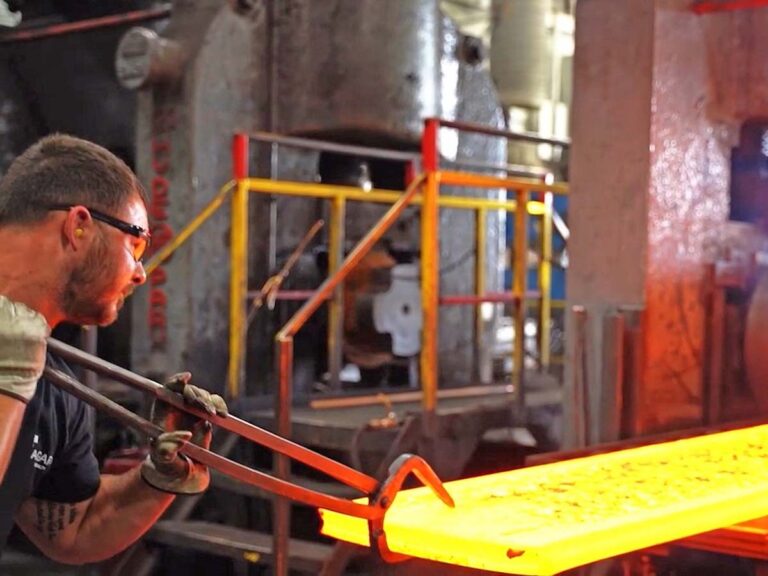
Cutlery Hall-of-Famer Bruce Voyles hammers hot steel during a basic bladesmithing course in 1994 at the Bill Moran School of Bladesmithing. (B. R. Hughes image)

Those who remembered the old practice seemed convinced a quarter century ago that fear of “cutting the friendship” was their prime motivation. Knifemaker John Dennehy, Dan’s son, remembers his close association with it.

“I’ve thought about this and don’t have any firm history about it,” John reflected. “I do remember my dad spoke about it a lot. Giving a knife as a gift can sever the friendship, so he always asked me for a quarter or something when I was a kid and a dollar as an adult. He often told the story about being on the radio with G. Gordon Liddy [talk show host, attorney and FBI agent involved in the Watergate scandal of the 1970s] and presenting him a knife. Gordon was prepared and had a silver dollar ready to give Dan. Being first-generation Irish in the U.S., he claimed it was an old Irish tradition. In the books and TV show Outlander, Jamie Fraser, the Scottish highlander, gifts his wife a custom knife. He asks her for a little something in return—says it’s an old Scottish tradition. That’s not much, but I did grow up with the tradition and carried it forward.”

In doing some research sometime back, it became apparent that the tradition has been a cross-cultural phenomenon. In Scandinavia, for example, it’s seriously bad luck to outright give someone a knife. A knife that was gifted but not meant to be a “killing knife” had a coin accompanying it with the initials of the maker. That would ensure the knife’s good use. Along with the knife an old saying, “A man without a knife is a man without a life,” added to the Scandinavian sincerity of the event.

Despite the fact that the tradition may be fading or has already slipped into history, some way or somehow it may experience a revival. Levine and many others seemed to love it. Some still do. After all, it adds to the quaintness and charm that surrounds the exchange of a knife with a friend or family member.

Tradition is a common thread that just makes the giving more memorable and enriches the experience for everyone. In these days of inflation, it’s cheap, too. It only costs a penny.

Pocketknife Info:

BLADE Show Beer: Brew That Taps Into Blades

0

Gabe Fletcher/knifemaker ale collaborations lead to the official BLADE Show Beer.

It’s a winning combination, no doubt—a blend of brews and blades.

Three years ago, Gabe Fletcher began making knives. Then, somewhere along the way he had a brilliant idea. The dynamic combination of his finest craft beers with the custom knives that could be developed in collaboration with friends who appreciate both, just as he does, was too tempting not to try.

Fletcher had been in the brewing business since 1988, and the joint venture of beverage and blade just seemed to fit. “I ran another brewery here in Anchorage for 13 years,” he recalled, “and decided to start my own brewery after so many years. I’m coming up on 27 years of professional brewing, and I started when I was 21.”

Gabe Fletcher (above at his Anchorage Brewing Company) and Salem Straub collaborated on a chef’s knife (facing page) in mosaic damascus and carbon fiber paired with a “niche” beer—a bold, crisp IPA with a low alcohol content.

Gabe knew that the collaboration opportunity was alive and well in the brewing industry, and it just seemed a natural progression. “I do many collaborations with other breweries and I’m pretty well known in the beer world,” he observed of his Anchorage Brewing Company*. “I thought in the beginning that it would be a fun way to get my name out there as a knifemaker. The first collaboration was with award-winning bladesmith Neil Kamimura. He was the person that got me into knifemaking.”

Seeing the knives in Neil’s shop a few years ago provided inspiration for Gabe to give it a try at the forge. At first, he did only beer collaborations as he refined his own knifemaking skills.

“Eventually, I started to get good enough to start actually making knives with these makers. I owe a lot to Mareko Maumasi [page 16]. I would consider him my mentor, and I’ve learned so much from him,” Fletcher reflected. “Working with him so much has really propelled my skills much faster than if I was learning on my own. Now Anchorage Forge and Anchorage Brewing are very connected, and I use it as a way to have fun, collaborate and excel in my knifemaking journey.”

Gabe Fletcher/knifemaker ale collaborations lead to the official BLADE Show Beer

To date, Gabe has completed at least nine knife/beer combos, and there are more to come. Naturally, he gravitated toward one with Mareko. The resulting knife was a dazzling chef’s tool with damascus blade, handle of white oak from the barrel in which the accompanying beer was aged, carbon fiber and G-10 spacers. Respective blade and overall lengths: 10 3/8 and 14.8 inches. Mareko’s price for a similar knife: $3,000.

“Gabe posed the challenge to me to see if I could design a steel that looked like a devil’s skull,” Maumasi explained. “I already had a design for a pattern that looked like a skull, which I hadn’t made yet but had sketched out in a notebook. At that point, all I had to do was figure out how to add horns to the skull. The devil skull came together nicely with the detailed elements for the teeth, cheekbones, eyes and horns. A lot of people who see it assume that it’s a canister damascus steel, but it’s actually a combination of several pattern-welded elements that started out as plate steel. For the forged design, we added a crushed ‘W’s’ flame along the edge of the blade.”

The damascus chef’s knife paired nicely with the latest in Fletcher and Maumasi beer offerings. The pair have actually done more than one brew, and the most recent is a synthesis of tropical flavors to honor Mareko’s Samoan heritage. The first was a Maumasi oak-aged imperial stout, which had a base aged eight months in Buffalo Trace bourbon barrels. It was then transferred to freshly emptied Woodford Reserve Double Oaked bourbon barrels for six months before moving to emptied Buffalo Trace bourbon barrels for four months, and was finished with toasted coconut and coffee from the Olympia Coffee Company in Mareko’s hometown. The second is the Maelstrom IPA, a smooth and light beverage with grapefruit, passion fruit, papaya and lechee hints.

GABE’S GREAT IDEA

Another example of Gabe’s great idea translated into a chef’s knife collaboration with Salem Straub. It includes a 10.5-inch mosaic damascus blade with a handle of copper/coral carbon fiber that features carbon fiber and G-10 spacers. Overall length: 14.9 inches. The knife sold for $5,850 through Eating Tools.

Plant Eater, a hefty chef’s knife with an 11.1-inch carbon steel blade, carbon-fiber handle with G-10 spacers, and 15.8-inch overall length, is a Gabe Fletcher/Josh Prince collaboration. The beer that accompanies it is a “dank, strongly fragranced IPA.”

“I forged a bold mosaic pattern of ‘distorted finger-type layup’—that’s Steve Filicietti pattern language—and sent Gabe a big chunk sawed from a loaf of that,” Straub related. “He worked his magic and forged a big sleek integral chef’s knife in an angular Western profile from it, and finished it up with some of his signature-style faceting applied to a hidden-tang handle of crazy carbon fiber. The steels in the blade are 15N20 and 1080.”

Salem has been making knives for 22 years and expressed real gratitude for Gabe’s initiative. “He always kills it at what he does, and this was no exception,” Salem observed. “I’ve had a lot of fun sharing his brew with family and friends.”

The Anchorage Brewing product Fletcher and Straub created found a niche among beer lovers. “Our idea was to come up with a bold, crisp IPA with a low alcohol content,” Salem said. “It’s what I would term a ‘performance IPA’ since you can have one or two and still get stuff done. It’s a real challenge apparently to make a beer to these specs, but Gabe is quite a talented and skilled brewer, as well as knifemaker.”

A hefty chef’s knife with an 11.1-inch carbon steel blade, handle of carbon fiber with G-10 spacers, and overall length of 15.8 inches was the result of Fletcher’s collaboration with Josh Prince. The knife sold for $5,850 on Eating Tools.

“I knew Gabe from interacting over Instagram and a few phone calls to talk about pattern and material processes around knives both carbon steel and stainless,” Josh noted. “Slowly, we developed the idea of working together on a knife/beer release. We worked on a chef’s knife in carbon steel in Gabe’s design with a plug-welded element. I provided the damascus plug element and Gabe did the rest. We dubbed it ‘Planet Eater’ after the classic Star Trek episode “Doomsday Machine,” where a mechanical entity consumes entire solar systems.”

In addition to running the internationally known Anchorage Brewing Company in Anchorage, Alaska, Gabe Fletcher is also an ABS apprentice smith.

Based in Rhode Island and making knives since 2016, Prince commented, “It’s just inspiring to work with another maker of such a high caliber and level of motivation and creativity.”

That motivation led to a discussion that brought back a pleasant memory for Josh. “I talked to Gabe about another beer that he made with Ben Kamon of Austria and how much the aroma reminded me of cannabis,” Prince remarked. “Oddly enough, Gabe told me that the hop and cannabis plants are very closely related and could even be grafted together! I asked for a dank, strongly fragranced IPA, and Gabe delivered.”

BLADE SHOW BEER

Adventures in knives and beers with Fletcher and friends doesn’t stop there. Recently, Gabe engaged with representatives of the BLADE Show to craft a unique brew just for the greatest show in knives.

Gabe Fletcher’s chef’s knife/beer collaboration with Austrian knifemaker Ben Kamon resulted in a striking combo.

“It’s an IPA that will be lighter at around 4.5 percent alcohol by volume—very floral and smooth drinking—and the BLADE Show beer will be available at the show in the Cobb Galleria of Atlanta at every bar on the floor and also on the main hotel floor, i.e., in The Pit!” Fletcher advised of the iconic sunken bar in the lobby of the show’s host hotel, the Renaissance Atlanta Waverly.

“We will also have some of the beer available online through one of my distribution partners, Tavour, where a person can have the beer mailed directly to their home in 23 states in the USA. I went to my first BLADE Show last year and ended up having dinner with some friends and a few people I hadn’t met yet. Henry Wu from the BLADE Show was sitting next to me. We got to talking, and later that year I had the idea of having a beer made just for the show. I pitched it to Henry and he was all about it.”

With his fine pairings of blades and brews already offered and more coming in the future, Gabe melds his two great passions, connects and collaborates with friends, and presents the resulting creations to the world. His love of both brewing and knives shines through in every aspect of the ongoing project.

Mareko Maumasi’s gyuto chef’s knife in a san-mai construction serves as the model for the knife second from right at top in the artwork for the BLADE Show Beer.

“The beer is sold through my distribution network and is mainly free advertising for the maker,” he said. “Also, it’s just a fun thing to do. I mean, who wouldn’t want a beer brewed in honor of them? As far as the knives are concerned, most of them are sold through Eating Tools. Abe Shaw and his crew over there do an amazing job of taking beautiful pictures and telling the story of the knife and beer as a whole.”

It’s a powerful, flavorful and altogether refreshing combination of brewer and bladesmith. Raise a glass. Slice and dice. And feel the fine craftsmanship in both.

*In 2024, Gabe Fletcher’s Anchorage Brewing Company was ranked among the country’s elite beer makers. According to Untapped, an app that allows drinkers to rate their beers, his company was ranked No. 6 nationwide in terms of producing the highest number of brews at a state or national level. The ratings are by nearly 11 million beer lovers covering over 26,000 of the world’s top-rated beers, as reported in Forbes.

More On The Blade Shows:

Tariffs & Knife Prices In 2025

Cutting Through the Costs: How Tariffs Are Reshaping the Global Knife Industry.

Tariffs. The simple mention of the word makes some folks tear their hair out. That’s not a problem for me because the word doesn’t upset me that much. Besides, most of my hair has already fallen out anyway.

As you know, a significant portion of American knife companies depend on China to manufacture some, most or all of their knives. As you also no doubt know, President Trump is addressing America’s tariff imbalance with other countries—including China—in no small part to help erase some of America’s $36 trillion debt. And, at press time, he was threatening to impose higher tariffs on China than any other country.

How will the President’s tariffs affect the knife industry? I asked one industry insider and he told me of a recent trip he made to China to talk business with those who make many of the knives for the company he represents.

He said the last time he went there was 2018 and he was amazed at all the changes in the interim. There wasn’t a bridge from Hong Kong to China seven years ago. Now there is one and they drove on it to the Chinese mainland. There are new superhighways all over with no cars on them.

“It’s crazy the money they’re spending on infrastructure,” he wrote. When he went to one city in 2018 there wasn’t a traffic light in sight. Now it’s a city of 2.6 million people with high rises everywhere.

“Maybe it was my imagination but the vibe wasn’t great,” he observed of the reception he received earlier this year. “A couple of factories seemed to blow me off. I used to get the golden carpet treatment. One of our guys who speaks Chinese said he was having a hard time getting answers from some of them. I think the tariffs have them scared.”

I wondered out loud if the Chinese manufacturers thought they’d gotten most all they could out of the company my friend works for and are looking at other revenue avenues.

“I don’t think so,” he wrote. “The other markets are small in comparison to the USA. The Chinese knife factories are so specialized that making knives is really all they know.”

He added that the big Chinese manufacturers are building factories in Vietnam to avoid the tariffs, though he predicted the President would close the Vietnam loophole soon if he hadn’t already by the time this story hits print. I asked if that would make it more economically feasible for those American companies who have knives made in China to have them made domestically, and he hit me with the cold, hard facts.

“Rough numbers: cost to make a folder in the USA, $100; cost to make the comparable folder in China, $25. Double the cost with tariffs and Chinese-made knives are still half priced,” he emphasized. “Knives are such a niche market and relatively low volume that even with automation it would be tough to match the price of knives made in China. Marketing, design and innovation can overcome that cost gap. Look at Benchmade. They are killing it.”

Concerning my earlier question of whether the Chinese manufacturers might be looking at other sources of revenue, he returned with a qualifier.

“I did see two factories that are now making manicure stuff like nail clippers. Ten years ago you would not have seen that. A knife factory was a knife factory. One factory was making Nite Ize® products, so I guess they are diversifying,” he wrote.

“One more thing,” he added. “I went to a big-name [Chinese] factory and the owner did not appear to be worried about tariffs. He is focused on making the best knife he can, so I think you could say the higher-end manufacturers aren’t as worried about tariffs.”

My insider friend, however, disagrees with that rationale.

“I think when the market goes bad even the billionaires slow down on impulse buys,” he opined.

On the domestic side, at least one U.S. company official says costs are increasing for steel and other knife materials even though the steel and materials are U.S. made. Meanwhile, by the time you read this, here’s hoping the President has been able to work out, or is well on his way to working out, deals with most if not all of the countries on which he imposed tariffs. Either way, as my insider friend summarized,

“The tariffs are going to have a big impact on our little industry!”

More On Knifemaking:

Hults Bruk Spika Review: Backwoods Beast

Sweden’s Hult Bruks Spika is a great all-purpose camping axe.

Most outdoorsmen use axes and hatchets—axes for chopping trees and splitting firewood, hatchets for lighter work. Axes were normally too big to carry backpacking, so we always settled on using a hatchet and made do. Some of us would cut the handle down of an axe to make it more manageable. Now, with the help of the internet, we’re able to see what other outdoorsmen use. The Spika from Hults Bruk of Sweden is the perfect size to handle most all axe chores and still be manageable to carry.

Spika Specs

The leather edge cover is a strap-on model.

Pros

  • Perfect Mid-Size for Versatility
  • Razor-Sharp Edge
  • Forged Finger Notch for Control

Cons

  • Uncomfortable Ridge at the Choil
  • Price May Be High for Casual Users

Model: Spika all-purpose axe
Company: Hults Bruk
Edge length: 3”
Head & edge material: Forged carbon steel
Handle: Hickory
Overall weight: 2 lbs. 5/32 oz.
Overall length: 17.5”
Sheath: Leather edge cover w/strap-on thong
Country of origin: Sweden
MSRP: $206

Light-Duty Cutting

The Spika sliced the 20-pound bond paper like a champ.

I just had to do a paper slice because the Spika felt wicked sharp. It was challenging to get started but the Spika sliced the 20-pound bond paper like a champ. I choked up on the head and used push cuts. The first slice included a piece of my fingernail. Wow, this is a sharp axe! It was loud while slicing, that is, the sound of paper being cut.

Single-walled cardboard slicing was next. It was easier than the paper to hold and move my fingers out of the way. The Spika was surprisingly easy to control as there is a forged-out finger notch to aid in choking up on the head for finer work. The axe made the cardboard curl up, which makes great fire starter. Again, I used the push cut. I was slowly getting used to this mid-sized axe. I still had to account for the longer handle.

Medium-Duty Cutting

The super sharp edge rendered some very nice, smooth curlicues.

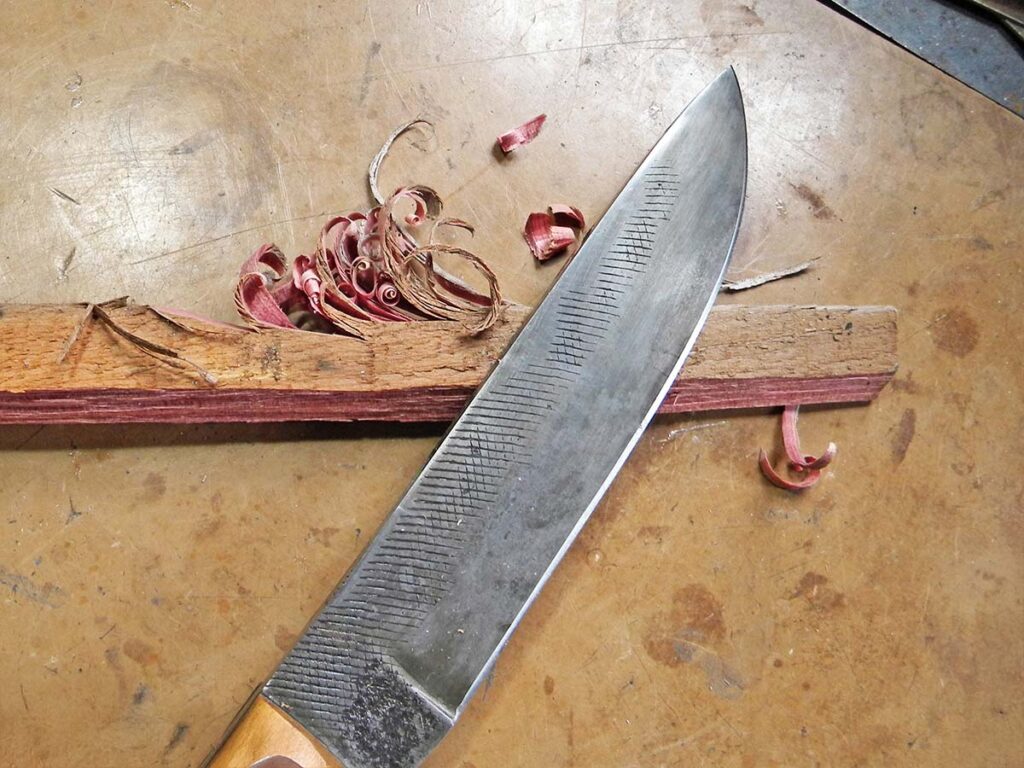
It was time to do some whittling on pine. The Spika was very controllable on the depth of the cut. The super sharp edge rendered some very nice, smooth curlicues. I did notice a sharp ridge on the choil area that needed to be softened if you are using bare hands. A few passes on a Kraton wheel made it easier on my index finger.

Chopping

The Spika split one red cedar slab in one chop. The author kept on splitting till he had a nice pile of kindling.

With camping season kicking off, I had some red cedar slabs that needed splitting. The Spika split one in one chop. I kept on splitting till I had a nice pile of kindling. I did a few more firesticks to add to the pile. This is a handy axe for sure. You just have to find the sweet spot on the handle for splitting and keep your fingers out of the way.

Near the bottom of the woodpile, I saw some seasoned hackberry chunks. It was time to try a little chopping—deep whacks for the Spika. It was accurate on the placement of the chops. (I really wanted to go after a standing tree but the neighbor didn’t go for that idea.)

Sharpness Test

 It was time to try a little chopping on some hackberry chunks—deep whacks for the Spika. It was accurate on the placement of the chops.
It was time to try a little chopping on some hackberry chunks—deep whacks for the Spika. It was accurate on the placement of the chops.

I went back to 20-pound bond paper for slicing and the Spika didn’t disappoint, slicing the paper cleanly. That’s very impressive for an axe.

The Spika has a polished cutting edge, a smaller hammer head, and a leather sheath on the base model. Hults Bruk offers belts, an axe holder and sharpening stones. The company carries all things axe related—a very complete lineup.
Final Cut

The Spika needs softening where your finger rides when you choke up on the axe head. The SPIKA is a must have for backwoods camping. Its size makes it easy to carry. It’s top of the line in terms of axes, without a doubt.

More Knife Reviews:

New Knives April 2025

0

Consider handy custom knives ideal for outdoor & indoor use.

Eyes always peeled, we’re on the look out for the latest and the greatest. We think we’ve found a bevvy of them this April. So, with out further adieu, here’s our latest round of new knives.


Lin Rhea Puukko

Lin Rhea Puukko

Knife type: Fixed blade
Blade length: 4.5”
Blade material: Damascus
Blade grind: Chisel
Scales: Desert ironwood, stacked Micarta®, antler
Overall Length: 9.5”
Sheath (not shown): By Joshua Rhea (Instagram, @rheas_leather), a Finnish traditional leather pouch model w/carry loop
Knife to know: Lin Rhea is an ABS master smith
Maker’s price for a similar knife and sheath: $1,200
Maker: Lin Rhea, rheaknives.com (Jocelyn Frasier image)


Chris Jones Vizsla EDC

Steeldog Knives Vizsla EDC

Knife type: Fixed-blade EDC
Blade: 3”
Blade steel: Nitro V stainless
Blade grind: Flat
Scales: TruStone, copper resin, Turkish walnut
Liners: G-10
Overall length: 7.25”
Sheath (not shown): Leather pouch
Knife to know: Integral single guard
Maker’s price for a similar knife and sheath: $400
Maker: Chris Jones, steeldogknives.com (Jocelyn Frasier image)


Kieren McNeilly Bird & Trout

Kieren McNeilly Bird & Trout

Knife type: Fixed blade
Blade length: 3.5”
Blade material: W2 tool steel
Blade grind: Flat/convex
Blade finish: 600-grit satin
Blade thickness @ricasso: .157”
Blade pattern: Clip point
Scales: Blackwood w/416 stainless pins
Overall length: 7”
Sheath (not shown): Leather belt model
Knife to know: Heirloom-fit handle; tapered tang; high-polished clip point, choil and spine; Kieren McNeilly is a probationary member of the Australian Knifemakers Guild
Maker’s price for a similar knife: $300
Maker: Kieren McNeilly, (Rod Hoare image)


Gooball Knives Wombat

Gooball Knives Wombat

Knife type: Fixed blade
Blade length: 1”
Blade material: 1084 carbon steel
Blade grind: Flat
Blade thickness @ricasso: .118”
Scales: Ringed gidgee
Overall length: 3”
Maker’s price for a similar knife: Contact maker for pricing
Maker: Giuseppe “Joe” Brunetta, Gooball Knives, (Rod Hoare image)


D.P. Brodziak Custom Knives Fighter

D.P. Brodziak Custom Knives Fighter

Blade length: 8.5”
Blade material: Mosaic damascus of 80CrV2 carbon and 15N20 nickel alloy steels forged by Mark Doyle
Blade grind: Double hollow
Blade thickness @ricasso: .197”
Guard material: 416 stainless steel
Scales: Banksia nut and gold fleck in resin
Overall length: 13.5”
Maker’s price for a similar knife: $1,600 at press-time exchange rate
Maker: David Brodziak, D.P. Brodziak Custom Knives, brodziakcustomknives.com (Rod Hoare image)


Bison Blades Tatanka

Bison Blades Tatanka

Knife type: Fixed blade
Blade length: 3.5”
Blade material: W2 tool steel w/hamon
Blade grind: Flat
Scales: Ironwood, bog oak and G-10 accents
Liners: G-10
Overall length: 7.75”
Sheath (not shown): By Letney Head, a leather pouch model w/color artwork
Knife to know: Named Troup 36 Scout Favorite at the 2024 Texas Select Custom Cutlery Event
Maker’s price for a similar knife: Contact maker for pricing
Maker: Eric Gubser, Bison Blades, bison-blades.com (SharpByCoop image)


Shawn Shropshire Neck Knife

Shawn Shropshire Neck Knife

Knife type: Fixed blade
Blade length: 3.5”
Blade material: 1084 carbon steel
Blade grind: Full flat
Scales: Ancient walrus ivory artifact and opal
Guard: Bronze
Overall length: 8”
Sheath (not shown): Elaborate frontier period style of leather w/beads, tassels, etc.
Knife to know: The blade is hand finished
Maker’s price for a similar knife and sheath: $1,000-$1,300, depending on pricing of the ancient walrus ivory artifact
Maker: Shawn Shropshire, sdsknifeworks.com (SharpByCoop image)


Charles “Chuck” Gedraitis Dr. Strange

Charles “Chuck” Gedraitis Dr. Strange

Model: Swiss-Army-knife-type automatic
Blade lengths: 3.25” and 2”
Blade steel: CPM 154 stainless
Blade patterns: Clip main and screwdriver/can opener
Lock: Linerlock
Knife to know: The knife is the maker’s tribute to Dr. Stephen Strange, the Marvel Comics fictional superhero; the main blade opens automatically by depressing the smaller tool blade; a tweezers and toothpick insert into slots in the handle butt a la SAK types; has lanyard w/key ring
Scales: Combo blue (represents Dr. Strange’s clothing) and red (his “magic cape”) G-10 w/leather (his belt) and brass (belt buckle) accents; the brass ellipse holds an emerald, which represents the “Time stone,” one of the “six infinity stones” in the Dr. Strange saga
Maker’s price for a similar knife: $2,500
Maker: Charles “Chuck” Gedraitis, (SharpByCoop image)


Will Stelter Hand Axe

Will Stelter Hand Axe

Axe type: Poll
Blade/head material: Damascus
Blade steels: 1080 carbon and 15N20 nickel alloy
Haft: Carved African blackwood
Pommel: Damascus
Knife to know: Will Stelter is an ABS journeyman smith
Maker: Will Stelter, willstelterbladesmith.com (SharpByCoop image)


Peter Bald Lockback Folder

Peter Bald Lockback Folder

Knife type: Lockback folder
Blade length: 3.15”
Blade material: Feather damascus forged by Rian Doodle under the supervision of ABS master smith Bill Burke
Blade grind: Flat
Blade thickness @ricasso: .098”
Blade @widest: .748”
Scales: Stabilized red mallee wood
Frame: Nickel silver
Bolster/liners/guard: Nickel silver
Closed length: 4.25”
Maker’s price for a similar knife: $630 at press-time exchange rate
Maker: Peter Bald, (Rod Hoare image)


Matthew Parkinson Medieval Knife

Matthew Parkinson Medieval Knife

Knife type: Fixed blade
Blade length: 4”
Blade material: 1084 carbon steel
Blade grind: Full flat
Scales: Stabilized koa
Bolster/pommel material: Sterling silver
Overall length: 8.5”
Maker’s price for a similar knife: $850
Knife to know: Matthew Parkinson is an ABS journeyman smith
Maker: Matthew Parkinson, (SharpByCoop image)


Alfred Faccipieri Big Mama Chef

Alfred Faccipieri Big Mama Chef

Knife type: Cleaver
Blade length: 6.7”
Blade material: Damasteel Bjorkman twist damascus
Handle Material: Buckeye
Overall length: 13.5”
Maker’s price for a similar knife: $1,400-$1,600
Maker: Alfred Faccipieri, faccipieri.com (Jocelyn Frasier image)


Check Out Knife Drops:

50 Years Ago In BLADE: Bo Randall And His Blades

The father of modern sporting knives was busy making them a half century ago.

Editor’s Note: BLADE Magazine is celebrating more than 50 years of bringing the knife community sharp coverage of the knife world at large. Given a more comprehensive picture of where the industry comes from—thus, where it’s going—we’re running a series of vignettes on important articles marking milestones in the knife design, knife making and knifemakers from 50 years ago.

A pioneering writer and photographer, Sid Latham chronicled his visit to the Orlando, Florida, shop of Randall Made Knives in the May-June 1975 issue of The American Blade to detail how Bo Randall and his staff made knives.

As Latham noted, Bo believed in the Cutlery Hall-of-Famer William Scagel theory that every blade shape should have a purpose and be practical—and the Randall utility, hunting, combat and survival patterns reflected the Scagel approach. The most popular Randall knife in ’75 was the Model 3 hunter. It was a Model 3 that pilot Francis Gary Powers was carrying when his U-2 spy plane was famously shot down over Russia in 1960.

Bill Platts was closing out his career as Randall shop foreman.

Latham wrote of what Bo considered his proudest achievement of specially designing knives for the astronauts of the Project Mercury NASA space mission. The final design was worked out by Major Gordon Cooper, who took one along on his 22-orbit flight. The knife was subsequently offered as the Model 17.

Latham also covered most of the Randall staff, including shop foreman Bill Platts, who was in the process of retiring and being replaced by Pete Hamilton, to Bo’s son Gary and more. Bo Randall had already been making knives for 37 years at the time—and Randall Made Knives (randallknives.com) continues turning them out to this day.

Editor’s note: Beginning with this issue, “50 Years Ago in BLADE®” journeys back in time to recall what was happening in the early days of BLADE—formerly The American Blade—and the world of knives. This time: BLADE Magazine Cutlery Hall-of-Fame® member Bo Randall and Randall Made Knives.
Pocketknife Info:

2025 Cutlery Hall Of Fame Welcomes Eight Inductees

Largest class as HOF honors living and deceased legends.

The BLADE Magazine Cutlery Hall of Fame® is proud to announce its new inductees for 2025: Harvey Dean, Stanley Fujisaka, Rick Dunkerley, Dr. James Lucie, Alfred Pendray, James Schmidt, and Daniel Winkler and Karen Shook.

In a procedural change new for this year, the Hall of Fame has expanded the number of annual inductees from three to seven, the latter including four living and four deceased individuals. (The team of Winkler and Shook is count as one inductee.) They, along with Dean and Dunkerley, are this year’s living inductees, with the balance being the deceased ones.

The new Hall of Famers will be formally inducted, including the posthumous inductions of the deceased members, during BLADE Show 2025 June 6-8 at the Cobb Galleria Centre in Atlanta. The induction ceremony will commence the Saturday morning of the show, June 7, at 8 a.m., and will include a breakfast in the Kennesaw Room of the show’s host hotel, the Renaissance Atlanta Waverly. Tickets are required in advance and are limited. For ticket information email [email protected].

Harvey Dean

Harvey Dean
Harvey Dean

According to a nominator, “Harvey Dean earned his American Bladesmith Society master smith rating in 1992 and since then has taught an impressive number of students the art of bladesmithing. He became a member of the ABS Board of Directors in 2004 and served four years with distinction as ABS president from 2015-19. He continues to serve on the ABS board today. He was inducted into the ABS Hall of Fame in 2016. He has won an impressive number of judging awards for his knives, including at BLADE Show Texas, multiple times at the BLADE Show, from the Antique Bowie Knife Association and others. His knives have earned him membership in the prestigious Art Knife Invitational, limited to 25 of the world’s top knifemakers by a vote of the member makers.

He is a marvelous bladesmithing teacher, a master leader, a master administrator, and a master ambassador for the forged blade.” Along with award-winning knifemaker Johnny Stout, Harvey coordinated two annual knifemaking seminars in New Braunfels, Texas, for a number of years. He has also passed the knifemaking torch to his son Dillon, who creates utility fixed blades of his own. Concluded the nominator, “Harvey is among those named in the book Greatest Living Knifemakers written by Cutlery Hall-Of-Famer Steve Shackleford. I know of no one man deserving of being named to the Cutlery Hall Of Fame more than Harvey.”

Rick Dunkerley

Rick Dunkerley
Rick Dunkerley

Rick Dunkerley began making knives in 1983 and started forging them in 1992. He specializes in mosaic damascus folders, winning judging awards for a number of them, as well as an occasional fixed blade. Among others, he’s won judging awards for his knives at the Oregon Knife Collectors Association Show, Montana Knifemakers Association Show, BLADE Show and BLADE Show Texas. His knives have earned him membership in the prestigious Art Knife Invitational, limited to 25 of the world’s top knifemakers by a vote of the member makers. He held many hammer-ins during the ’90s and brought in the best instructors of the time.

Rick has always been generous with information and is an excellent teacher. He’s taught at such venues as the Texarkana College/Bill Moran School of Bladesmithing, the Batson Bladesmithing Symposium, the Massachusetts College of Art, Saskatchewan Western Development Museum, Northern Minnesota Blacksmith’s Association, Northern Rockies Blacksmith’s Association and Western Canada Knifemakers’ Symposium. One of his students, Josh Smith, was the youngest ever to achieve both ABS journeyman and master smith status, and today runs the Montana Knife Co., a factory knife production operation with 80 employees. According to a nominator, “Rick has been on the board of the ABS and does the top shows worldwide. He has paid his dues, is a hell of a guy, always willing to share his knowledge, and makes world-class knives.”

Stanley Fujisaka

Stanley Fujisaka
Stanley Fujisaka

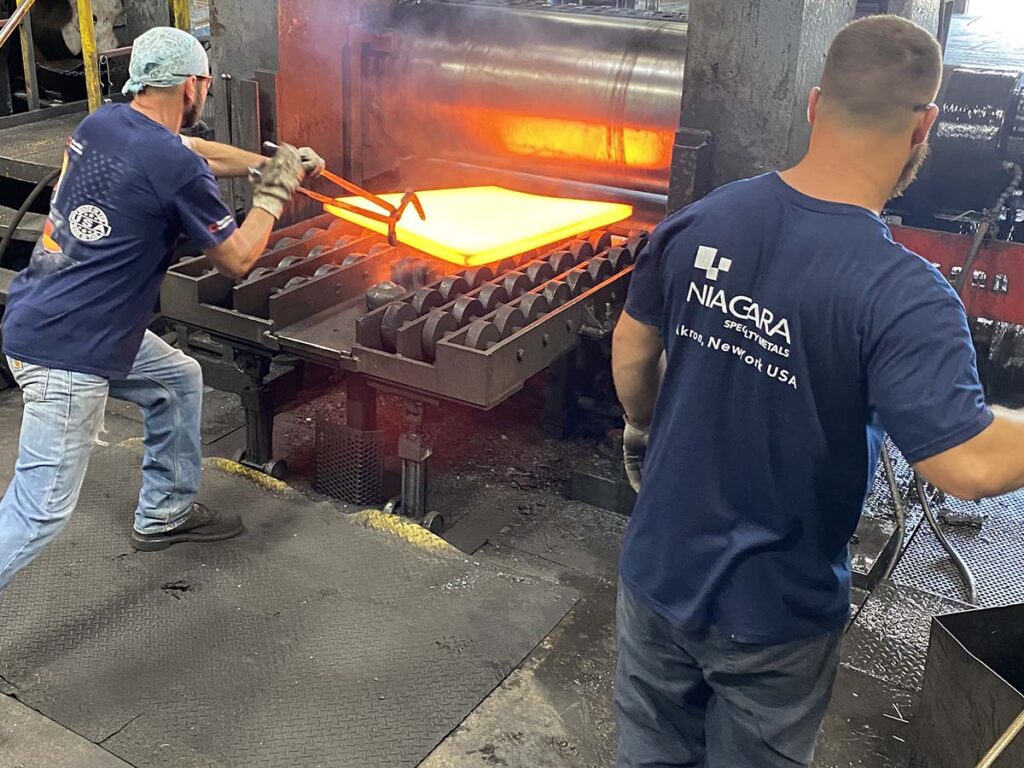
Stanley “Stan” Fujisaka went full-time making knives in 1984 and was a prolific builder of award-winning folders and fixed blades. He was a beloved mentor in his Kaneohe, Hawaii, knife shop to a number of Hawaiian and other makers, including Scott Matsuoka, Les George, Cutlery Hall-Of-Famer Ken Onion and many more. Stan played a key role in encouraging Onion to patent his famous SpeedSafe assisted-opening mechanism. As a result and as Cutlery Hall-Of-Famer Dan Delavan wrote, “Ken went on to become the savior of Kershaw Knives.”
Stan also generously assisted knifemakers who fell victim to floods, shop fires, medical issues and more. He was a regular exhibitor at knife shows, donating many knives for door prizes. He collected custom knives and promoted them and the custom industry in general by supporting the Bay Area Knife Collectors Association Show, The Knifemakers’ Guild Show and other knife events. Together with his good friend, Cutlery Hall-Of-Famer Jim Sornberger, Stan co-hosted dinners for knife collectors, area celebrities and others, all of which helped promote custom knives. Finally, when it came to being a goodwill ambassador to the custom knife industry, few if any could rival Stan for his many gifts—including flowers, Hawaiian coffee and boxes of chocolate-macadamia nuts—that he doled out to friends, customers and other patrons at the shows where he exhibited.

Dr. James R. Lucie

Dr. James R. Lucie
Dr. James R. Lucie

According to a nominator, “Dr. James R. ‘Jim’ Lucie was Cutlery Hall-Of-Famer William Scagel’s physician and signed Scagel’s death certificate in 1963. This was the beginning of Dr. Lucie’s Scagel knife-collecting avocation. Scagel is considered by many the father of the modern custom knife. Dr. Lucie discovered his passion for knifemaking in 1990 when he took a class on bladesmithing from Cutlery Hall-of-Famer Bill Moran. Jim was a very talented maker and received several awards for his contributions to the knifemaking community. He assisted other makers often. In 2001, the ABS created the Dr. Jim Lucie Award, which it bestowed on Jim as its inaugural recipient. The award was ‘presented for the unselfish contribution to the preservation of the forged blade. The person receiving this award has gone far beyond the call … and exemplifies the type of person needed to keep … bladesmithing alive.’
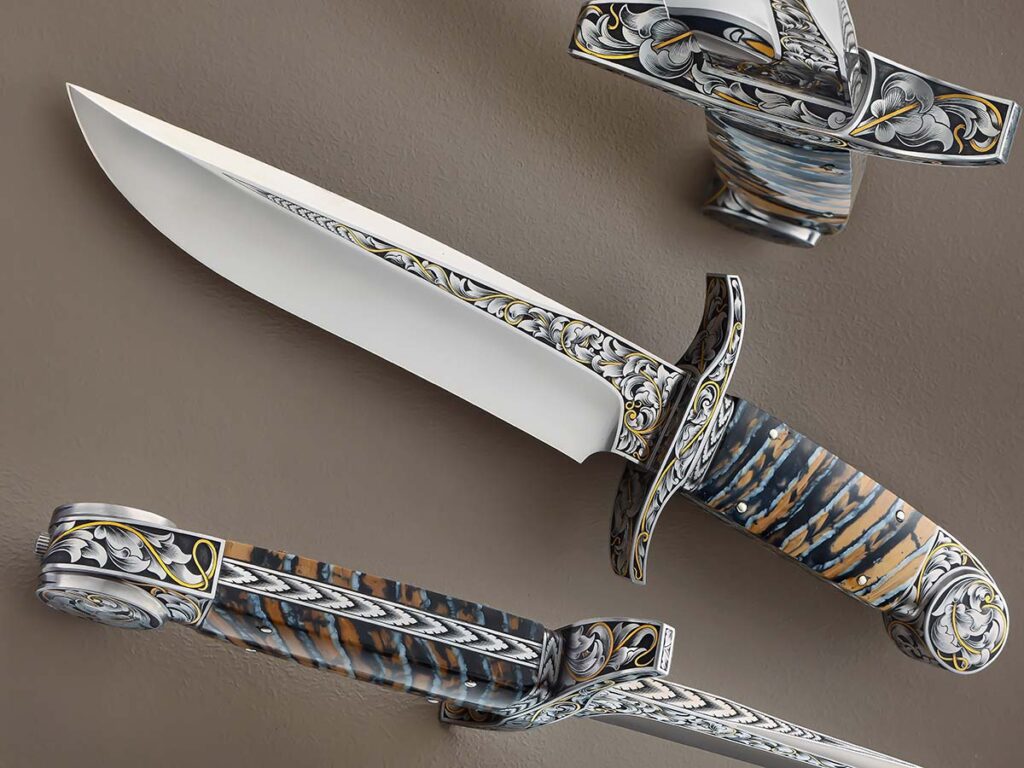
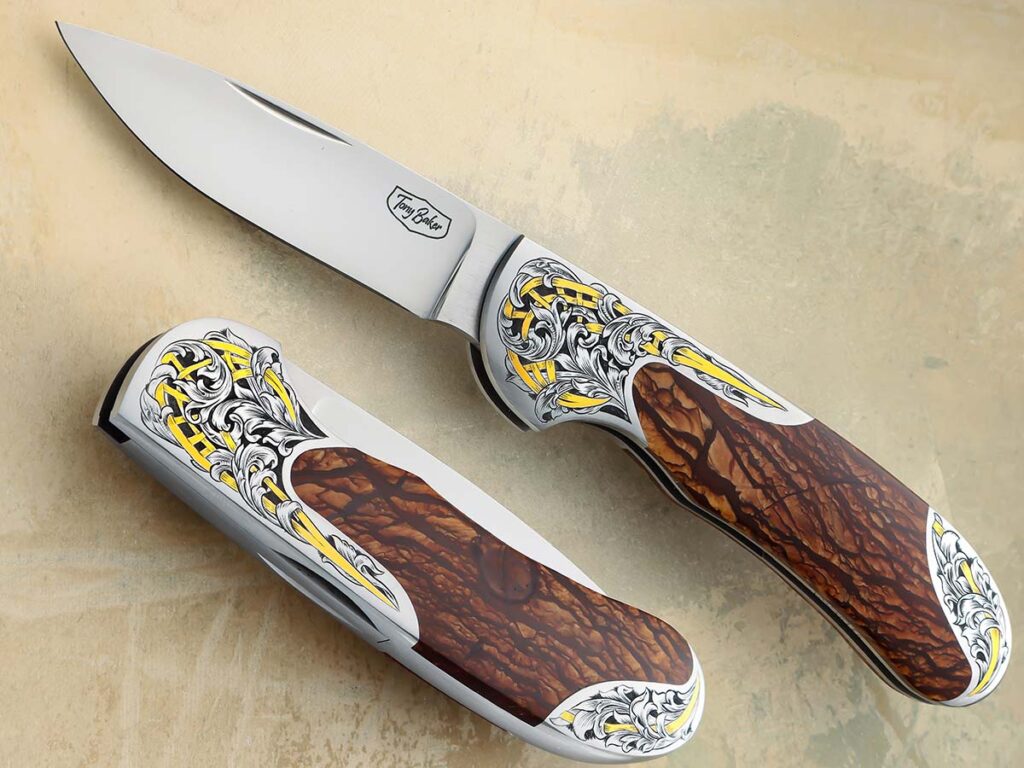


Jim also received an ABS Special Service Award in 2002 ‘in recognition of his meritorious and unselfish services on behalf of … the forged blade.’ He also received the ABS Chairman’s Award for Outstanding Service more than once. He was a talented bladesmith, hand-forging mostly Scagel recreations of the highest quality. He improved on Scagel’s designs when it would enhance the knife. Jim dedicated three decades to researching Scagel’s life and collecting his works. Jim’s efforts culminated in Scagel Handmade, a massive hardbound book detailing Scagel’s life, with photos of over 200 knives and other Scagel items. Dr. Lucie hosted a hammer-in in 2001, with over 500 people in attendance. He shared his knowledge of Scagel’s techniques by giving speeches at many bladesmithing events. Late in life, Jim donated his blacksmithing, grinding and finishing equipment valued at $62,700 to the ABS. His actions consistently exhibited honesty, compassion for others and a dedication to the bladesmithing community.”

Alfred Pendray

Alfred Pendray
Alfred Pendray

Alfred “Al” Pendray was a rock to the many bladesmiths he taught and influenced over the decades. “I learned so much from him,” noted ABS master smith Charley Ochs, “not only about knives and metallurgy but also about life and social interaction as a person.” Softspoken but never at a loss for words on the subjects that mattered to him, Alfred possessed an intricate knowledge of many things, including wootz steel, bladesmithing/knifemaking and knife history in general. He had a solid work ethic and led as much or more by example than the spoken word. He knew when to express his views and when not to, a trait sadly lacking in much of today’s discourse. Alfred is co-author—along with Dr. John Verhoeven, a former metallurgical engineering professor at Iowa State University—of articles appearing in eight scientific journals, four bladesmith publications and BLADE on the nature of “genuine damascus,” or wootz steel.

Pendray was granted patent number 5,185,044 on a “method of making damascus blades.” He was a speaker at the Symposium on Damascus Steel at New York University in 1984. He also spoke at the International Conference on Damascus Steel in Germany in 1985 and the same conference in 1992. He lectured at the Imperial College in London, England, in 1992. He joined The Knifemakers’ Guild in 1982 and was awarded his master smith rating by the ABS in 1983. He received the ABS award for the Bill Moran Knife of The Year in 1991 and was elected to the Guild board of directors in 1992. He received the ABS W.W. Scagel Award in 1998 and is a past recipient of the Guild’s Red Watson Award. He served as Guild president from 1998-2004. In September 2001, he was featured on the nationally syndicated Paul Harvey radio show. In 2003, he was inducted into the ABS Hall of Fame.

James Schmidt

James Schmidt
James Schmidt

According to a nominator, James “Jim” Schmidt was instrumental in raising the level of knifemaking to compete with the finest crafts ever made. Most importantly, he elevated the pursuit to an art but never forgot the meticulous details of the craft. His knives are immediately recognizable and he influenced so many who came after him in meaningful ways. A spectacular book by BLADE® field editor Mike Haskew memorialized the man and his knives: JAMES A. SCHMIDT, The Great Master. A few passages from the book: “As a custom knifemaker he knew few peers. As a mentor and teacher, he was without equal”; “A man of few words, he allowed the results of his skill, precision, and limitless creativity to speak for him. In silent, stunning beauty, they thundered”; and “He welcomed those who were earnestly interested in improving their bladesmithing and knifemaking skills into his shop … and shared with them the light of precious knowledge that he realized should be readily and freely given rather than hidden.”

In the 1970s, along with Jimmy Fikes and Don Fogg, Jim formed the New England Bladesmith Society to promulgate the skills and techniques of knifemaking.  Before long the groundbreaking Ashokan Bladesmithing Seminar was born. Jim was a principal organizer, lecturer and demonstrator. He was one of the earliest members of the ABS and one of the earliest ABS master smiths, and a member of the ABS Hall of Fame. He was a constant member of the Art Knife Invitational, a winner of the Red Watson Award from the Knifemakers’ Guild, the Beretta Award for Outstanding Achievement, and many other honors from a number of custom knife shows. In time Jim decided to let someone else win an occasional award and became a judge at many shows. His approach was to be meticulously but fairly critical and always encouraging. He was indeed the ultimate teacher, his profession for most of his life.

Daniel Winkler And Karen Shook

Daniel Winkler And Karen Shook

ABS master smith Daniel Winkler and Karen Shook first made their mark in the world of knives with custom reproductions of historical knives and tomahawks. Daniel made the knives and hawks and Karen made the accompanying authentic period sheaths, and the two became internationally known for their work. Daniel and Karen taught for the ABS for many years and Daniel was in the vanguard of the Society’s early cutting competitions. The two were at the forefront of early American historical arms and their period pieces were among those featured in the 1992 feature film, Last of the Mohicans. In 1994 a Navy SEAL Special Warfare operator asked Daniel to make a tomahawk because there was nothing on the market that worked for the SEALs at the time. According to a nominator, “Karen designed a sheath the SEALs liked and over the years she and Daniel did more special projects for the SEALs, ultimately inspiring the two to form Winkler Knives II.” Added another nominator, Daniel and Karen’s operation “soon became the cutlery armorer of many top Special Ops teams, from the SEALs to Delta Force, and to those of other nations as well.

For many years Daniel and Karen quietly made the knives, axes and sheaths without seeking glory or publicity for their work. In fact, they insisted that their generosity and unselfishness remain a secret among those who discovered it. It was only upon mention of their work in the book No Easy Day, in which the SEAL Team member on the Bin Laden take-down mentioned he was carrying a Winkler knife, that Daniel and Karen’s work became known to the general public. With such demand, they have expanded into a mid-tech operation and from there into that of a cutlery producer.” Today, Winkler Knives has a 35,000-square-foot facility employing one part-time and 28 full-time workers. “Few have transitioned into the changing markets as well as Daniel and Karen,” the nominator noted, “and none have done so with such humility and class.”

See Other Hall Of Fame Members:

Advertisement

Must Read Articles

Read this before you make a knife

Knifemaking 101 – Read This Before You Make a Knife

  by Wayne Goddard My experience has taught me that there's nothing like digging in and getting started. I've often said the hardest part of the...
how to forge damascus steel

How to Forge Damascus

Advertisement
Advertisement