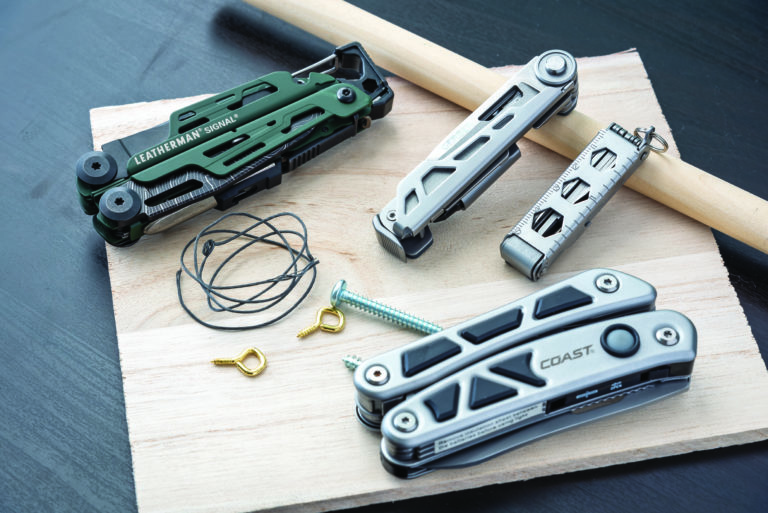
The Latest EDC Multitools

People Who Like to be Prepared Will Love the latest EDC Tools

Knife guys love gadgets, fix-it people love gadgets and DIY-ers love gadgets, so it’s easy to see why multi-tools do so well in the knife market. Though not knives per se, they off er more versatility than just cutting ability by offering on-board tools. With broader appeal than knives, multi-tools have a further reach and encompass more markets, too. They appeal to folks who like to be prepared.In addition to DIY-ers, campers, hunters, fishermen, hikers, mountain bikers and anyone who enjoys outdoor activities benefits from owning and using a multi-tool. It performs in-fi eld repairs on equipment when you do not have access to regular tools.  It can mean the difference between bowing out of a camping trip because of equipment failure, or performing an expedient in-field repair or adjustment and carrying on with your adventure. As with knives, advances in multi-tools have made them stronger and more user friendly and versatile.


FLASH in the HAND: Coast’s LED150 multi-tool 

When you think of multi-tools, what immediately comes to mind is a pliers-based tool with little fold-out implements nestled inside the handle. Truth is, multi-tools can take on any form as long as they incorporate the implements necessary for field-expedient repairs and adjustments.

At first glance, Coast’s LED150 multi-tool might appear like any other pliers-based multi-tool, except for one thing: it incorporates not one but two LED lights. One LED is on the pliers jaw end and the other is on the partially serrated end of the knife blade. This way, you can confidently work in tight and dark spaces with confidence thanks to the illumination. The lights are activated by a recessed push button located on one side of the handle. Press once to activate the light by the main blade. Press again and the light turns off and, at the same time, the light on the pliers jaws end turns on. Press again and the jaws light turns off. With the multi-tool closed, you can use either light as a stand-alone flashlight, further expanding the multi-tool’s versatility. The lights are powered by two CR1616 lithium button batteries. The batteries replace easily.
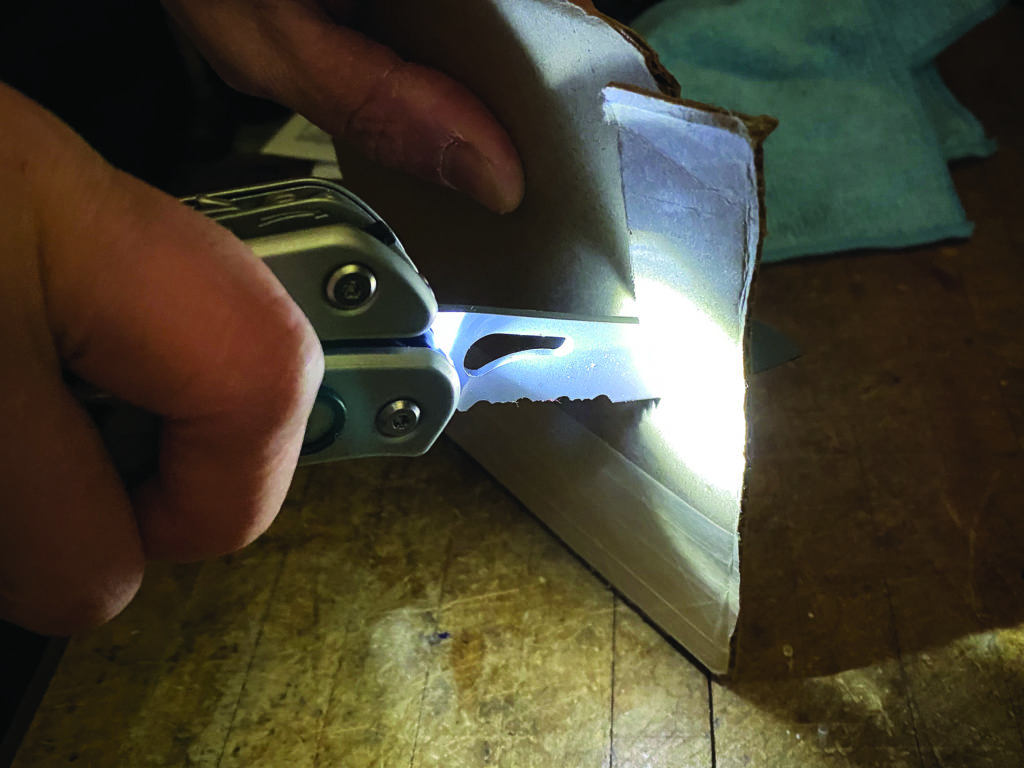
The light on the end of the Coast LED150’s handle illuminates what you’re cutting.

The pliers jaws have different gripping surfaces for smaller objects and larger nuts/round objects. The jaws themselves are spring loaded, which helps to open them by spring tension, reducing hand fatigue. When closed, all the fold-out tools are easily accessible: a partially serrated main blade that works on a linerlock, spring-loaded scissors, large and small flat-head screwdrivers, can opener, Phillips head screwdriver and the pliers jaws—most all the common implements necessary for field repairs and adjustments.

The handles are aluminum and feature raised hard rubber for a non-slip grip. The LED150 has a good heft and the heavy-duty build will withstand normal use. The sturdy ballistic nylon belt pouch has a fabric-fastener flap closure. Manufacturer’s suggested retail price (MSRP): $49.  
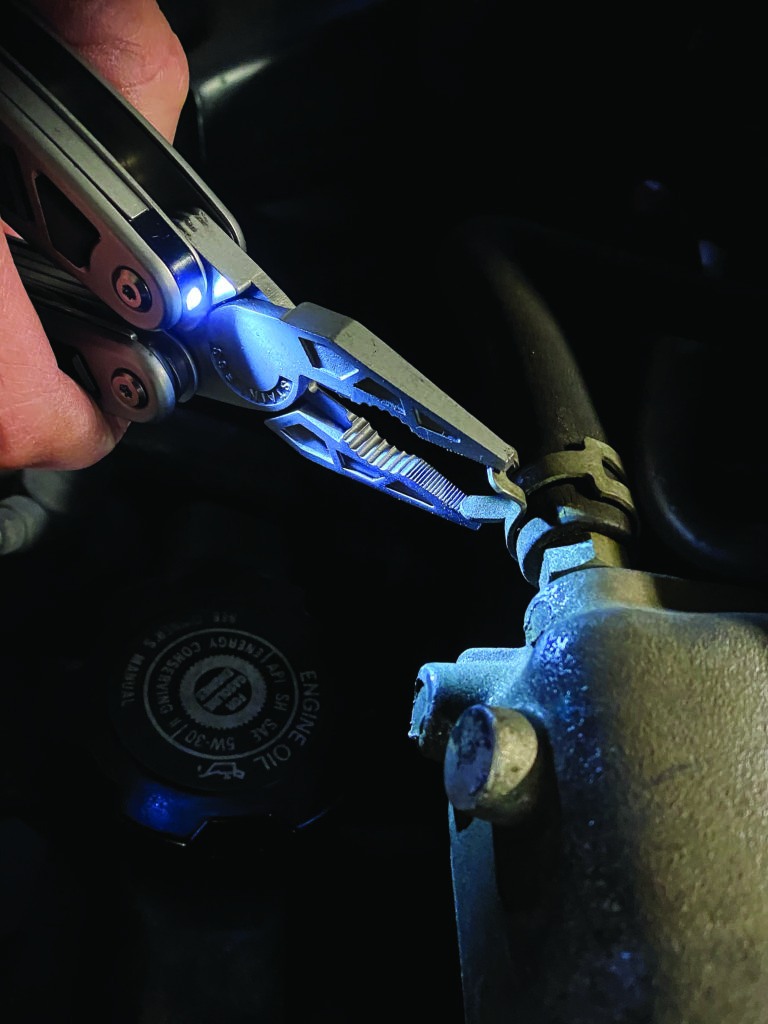
One of the LED lights on Coast’s LED150 multi-tool shines on the pliers jaws end so you can effectively work in dark areas easily without the need for a separate flashlight.


AFFORDABLE SOLUTION: Gerber’s Armbar

Gerber’s Armbar series incorporates the fold-out implements of pliers-based multi-tools like the Coast LED150—minus the pliers. Sometimes, you just need the versatility of screwdrivers, a knife blade and scissors. About the same size as a large multi-blade pocketknife, the Armbar Drive features seven on-board fold-out tools: 2.5-inch plain edge sheepsfoot blade with opening hole and framelock, 2.5-inch extension driver with a double-sided bit of Phillips and flat-head screwdrivers, a prybar, bottle opener, hammer, scissors and awl.
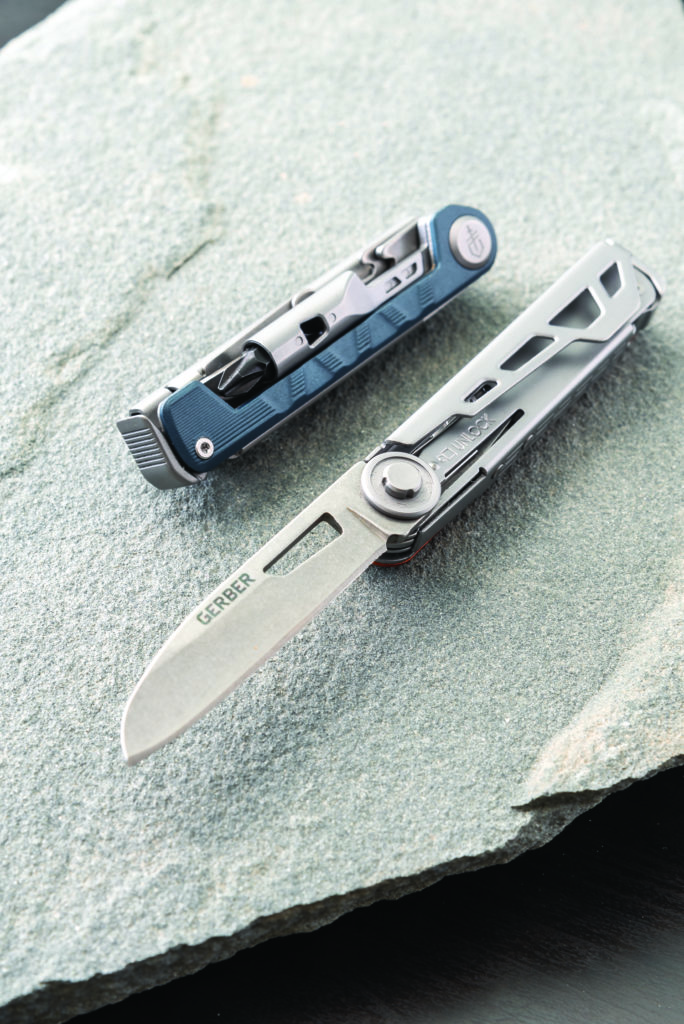
The Gerber Armbar Drive features a sturdy main blade. The entire package has about the same dimensions as a medium-sized traditional pocketknife.

The extension driver has a magnet that holds the double-sided bit and allows for fast flip-over when transitioning to different screws. The driver socket can accept aftermarket quarter-inch drive bits, too. Hence, you can customize your Armbar Drive just about any way to fit your tasks. The spring-loaded scissors provide enough blade length for cutting coupons, stray threads and duct tape. The plain edge sheepsfoot blade thumbs open easily like any lock blade. The blade is mostly exposed even when closed, but the metal channel protects it from damage and you from accidental cuts.

Perhaps the neatest implement is the combination hammer/prybar/bottle open-

er, which in the closed position is in the hammer mode by default. The squared-off back end takes care of light hammering. The prybar function is rather limited as you’re not going to get a ton of leverage. However, if you need staples removed or to pry open a casing and such, it does the job. 
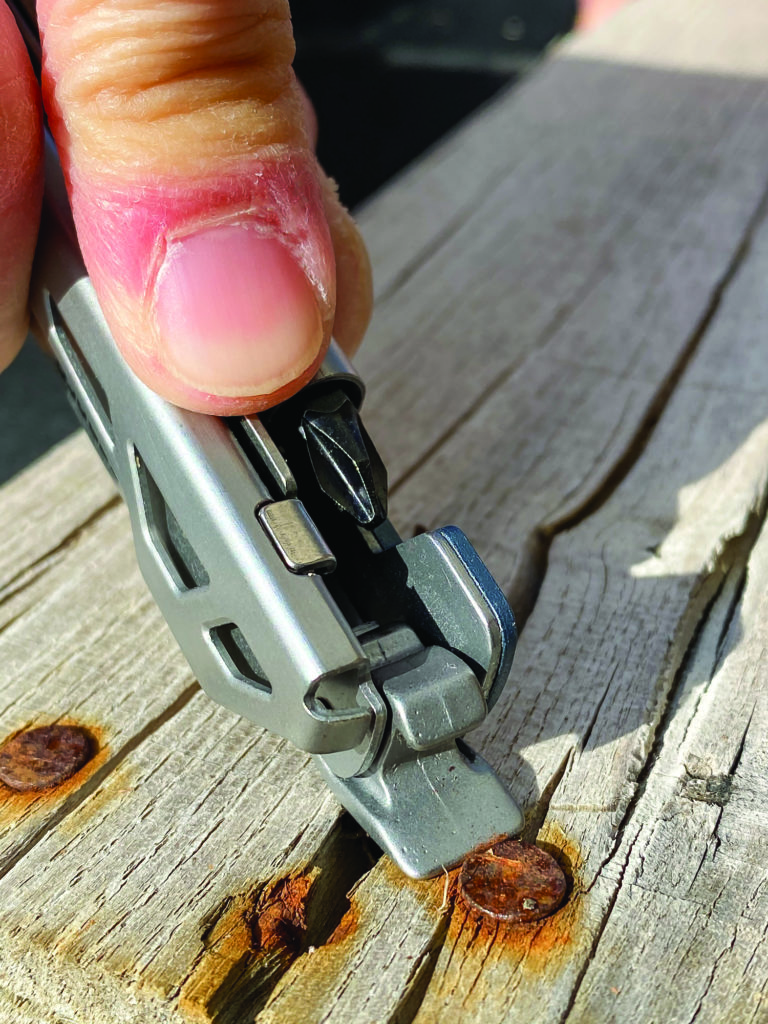
A fold-out prybar/bottle opener on the Gerber Armbar Drive performs light-duty prying when needed, saving the blade tips on your standard knives.

One thing I wish Gerber would have included is the ability to lock the screwdriver in the fully open as well as the 90-degree position. When you torque down with the driver, your hand may move and this will cause the screwdriver to fold a bit. Also, when you use the tool in the 90-degree position, you apply more torque. Having it lock in the 90-degree position would make it easier to use—if not lock in both positions, then a strong detent and a half stop, like a slip joint, would be better than nothing. The form factor permits easy carry in your pocket, toolbox, glove box or a backpack.

At 3.1 ounces the smallest multi-tool in the Armbar line, it comes in an aluminum handle anodized in a choice of urban blue, orange or onyx. With an MSRP of $39, it presents an affordable solution to a typical pliers-based multi-tool by reducing bulk and weight—that is, if you don’t need pliers.
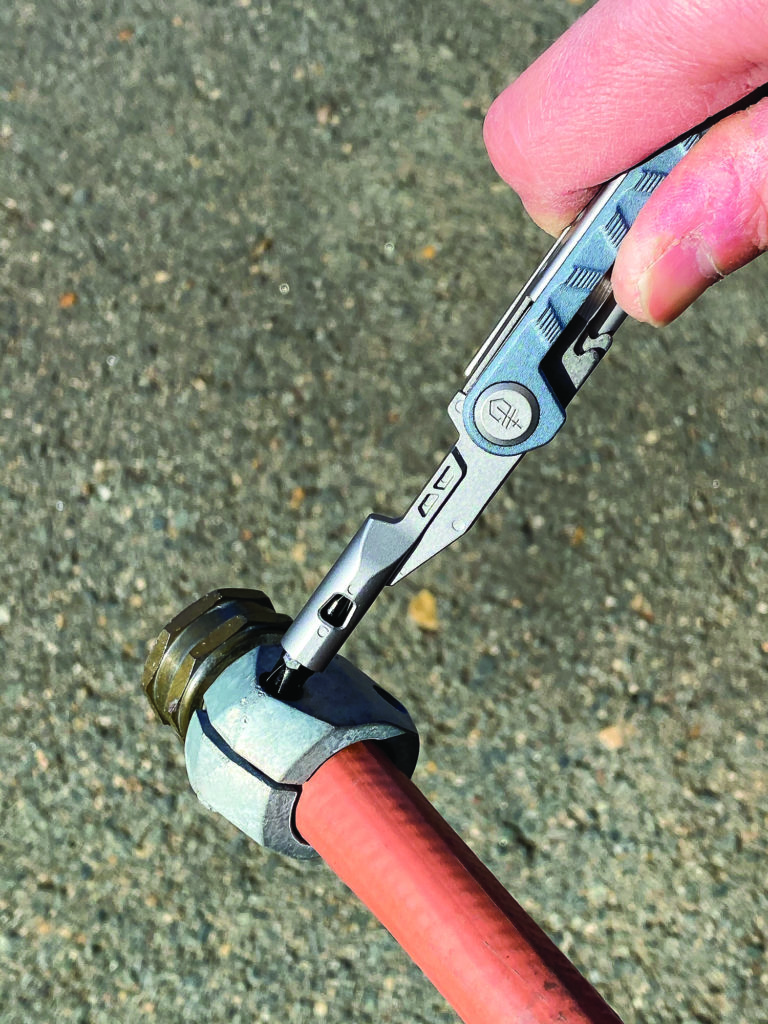
The screwdriver tool on the Gerber Armbar Drive is easy to manipulate. The magnetic socket allows you to flip the double-end bit over, as well as use most any aftermarket quarter-inch driver bit.


TINY TOOLBOX: Utica Minimaster

Utica primarily manufactures knives for hunting and tactical but also makes multi-tools. The Minimaster is the smallest multi-tool of the test bunch. It’s loaded with many small fold-out implements: a pair of tweezers, large and small flat-head screwdrivers, a Phillips screwdriver, scissors, fingernail file/cleaner, knife blade, bottle opener, and -, 11/32- and -inch wrenches integrated into the folding cover. Made in the USA, it’s roughly the size of a Victorinox Classic, so it fits well on a keyring, its preferred method of carry.
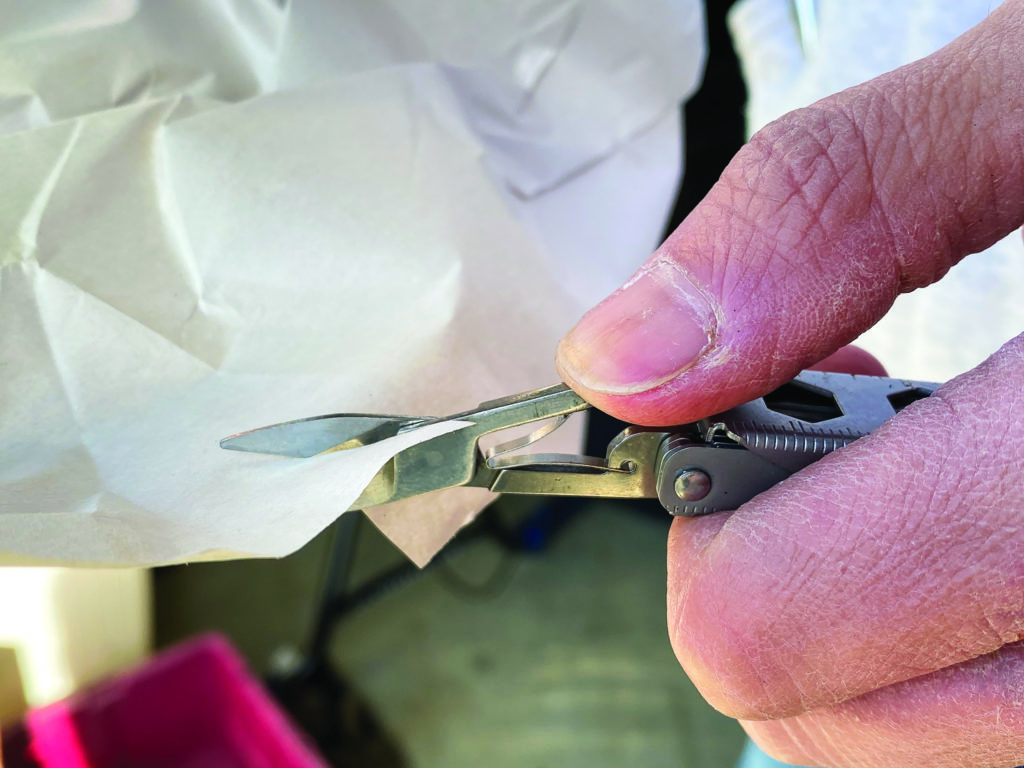
The scissors may be tiny on the Utica Minimaster but it is effective.

None of the tools lock in the open position. You pull one out and then close the cover; the cover held closed by your grip acts as the lock so the tools won’t fold on you. The tweezers are pretty neat—this is the only compact multi-tool I know of that integrates one. The tips are not textured or ground precise like regular tweezers, so grasping some things with it can be a bit difficult, though having one is better than not. As for the rest of the tools, they are handy to have and definitely will work in a pinch when you need them.
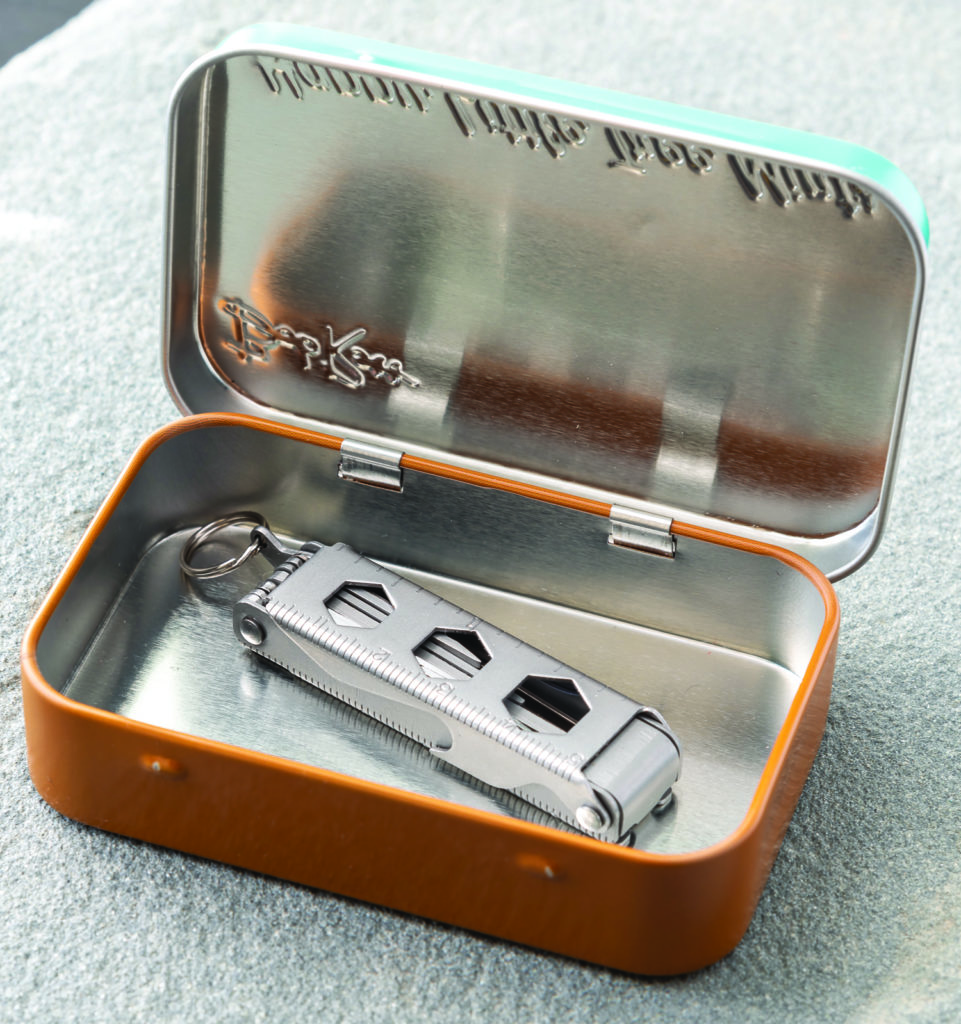
The ultra-compact size of the Utica Minimaster makes it a great candidate for improvised tin-based survival kits.

The only down side to the Minimaster is the hinged cover. It needs to detent tighter in the closed position, as the sample sent to us for review had a tendency to open partway easily. This could present a safety issue, especially if the tools open inadvertently. MSRP: $60. There’s also an imported version that retails for $9.95. Same construction and implement selection, except the multi-tool is made overseas.

MAPPED MULTI-TOOL: Leatherman Signal

When it comes to an article about multi-tools, I would be remiss to not include Leatherman Tool Group, the brand that pioneered the concept. It is the originator of the pliers-based format, and still among the best of them after all these years.
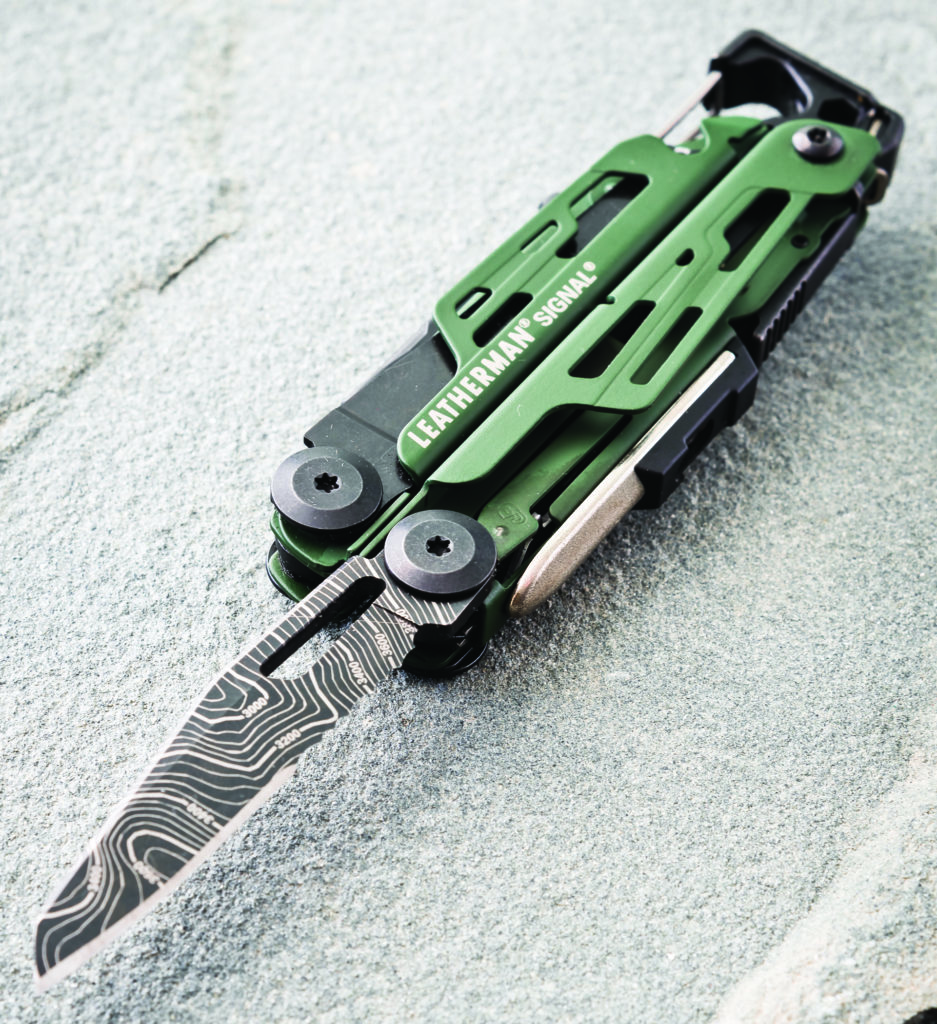
The main blade of the Leatherman Topo Signal features a map-topography laser etching, hence the multi-tool’s name.

The limited-edition Topo Signal is a variant of Leatherman’s Signal multi-tool. The Signal was developed specifically for the outdoor enthusiast, integrating features like a ferrocerium fire starter rod, saw, survival whistle, diamond sharpener and hammer, along with standard Leatherman features such as pliers jaws with replaceable cutting inserts, fold-out driver with reversible bit, awl and can opener. There’s also an integrated quarter-inch-bit socket built into the hammer portion of the handle, which will accept any standard quarter-inch bit driver.

The main blade is a partially serrated 420HC stainless sheepsfoot pattern that locks open via a linerlock. The blade features an oblong opening hole, while the partial serrations eat through tough and fibrous materials with ease. The blade has a map-topography-style laser etch, hence the name. The distinctive appearance is pretty neat and fits in perfectly with the outdoor theme. Speaking of outdoor theme, the Topo Signal comes in a nice dark green Cerakote coating for the aluminum handles and pliers jaws, fold-out implements, and all-black hardware.
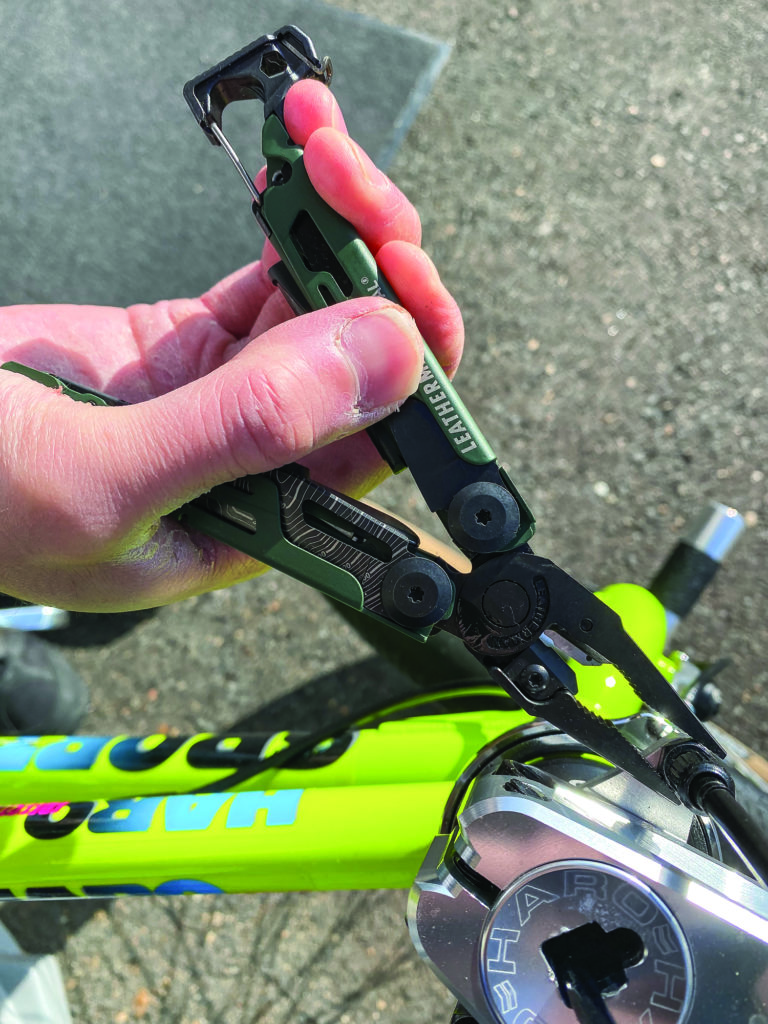
Making on-the-spot repairs and adjustments are a multi-tool specialty. The needle-nose pliers of the Leatherman Topo Signal works great at accessing small nuts in cramped places.

Each one comes with a nice ballistic nylon belt sheath with  button snap closure. It has a steel pocket clip. There’s also an integrated carabiner in the hammer portion so the tool can be clipped on a D-ring, etc.

Comparatively speaking, a Leatherman multi-tool is engineered better than most on the market. MSRP: $119.95. Country of origin: USA. It is the most expensive of the test group, but the quality of the manufacture and fit and finish justifies the price.
Three Blades with an East Asian Design Flair

Three blades with an Eastern design flair are zesty cutters

For many decades Asian knives, tools and swords languished in the cutlery industry, remembered most for blades brought back by U.S. service personnel who fought in the Pacific during World War II. Times have certainly changed, thanks in no small part to a highly accomplished custom knifemaker named Bob Lum.

Of Asian descent, Lum introduced the custom knife world to his “American” version of the Japanese tanto and leaf-shaped blades circa 1980. Through the balance of the ’80s, and later in the ’90s, Lum’s tanto design was rabidly embraced by a budding modern tactical knife crowd. The tanto has been a mainstay ever since. Other Asian blade styles, such as the bolo and kukri, have been embraced as well. My team and I look at three modern takes on the “Asian Equation” here and put these intriguing cutters through the paces.

CHAMP CHOPPER: Spyderco Lum Darn Dao

source: knifecenter.com

Designed by Lum before he passed away way too early in 2007, the Spyderco Lum Darn Dao is a full-tang Chinese dao-style knife. Overall length: 16.27 inches. The 10.63-inch blade is CPM 154 stainless steel with a flared tip and a swedge grind terminating at the clip on the spine. The 5.64-inch handle has a flared base and the black G-10 scales are ample, fully sculpted and highly polished. A handcrafted dark brown leather sheath with a thumb-break retention loop comes standard. Weight (minus the sheath): 17.89 ounces. MSRP: $649.95. This is a limited edition of one production run only.

The first thing we noticed about the Lum Darn Dao is that it’s not as cumbersome as it initially looks, and then we realized it’s just shy of 18 ounces, which is not that unwieldy as large knives go. The handle is an exercise in comfort—well sculpted all the way around.

The Lum Darn Dao has a deep V-grind, making it an excellent slicer. Sisal rope was a piece of cake. Full grinds like that of the Darn Dao slice and chop well, as the edge doesn’t encounter the hump of a ricasso when it goes about its work.

One inch seemed to be the Darn Dao’s magic number. Employing a basic hammer grip, we used the blade to cut through 1-inch sisal rope like it was butter. When we challenged it on an old phone book (remember those?) with diagonal full-force chops, it repeatedly sunk in an inch deep. For long-term use we’d opt for a rougher finish or texture on the G-10 grip, but all in all the Darn Dao chopped like a champ. 

Specs: SPYDERCO LUM DARN DAO
Blade length: 10.63 inches
Blade steel: CPM 154 stainless
Handle length: 5.64 inches
Handle material: Sculpted G-10
Sheath: Leather belt carry
Weight: 17.89 ounces
Overall length: 16.27 inches
Country of origin: Taiwan
MSRP: $649.95

SHORT, WIDE HYBRID: SOG’s Kiku XR Blackout

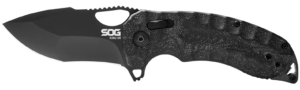
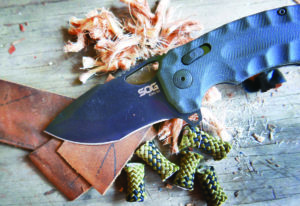
SOG’s Kiku XR Blackout is a mid-size folder 7.375 inches open and 4.3 inches closed. Designed by custom knifemaker Kiku Matsuda of Japan, the 3-inch black-coated blade of CTS-XHP stainless steel is a hybrid of the tanto style with some interesting twists. The main grind is recurved and there is a swedge grind on the spine that ends in a harpoon dip. The blade opens via a kidney-shaped hole in the blade or by an optional gimped flipper. The black handle has sculpted G-10 scales over black stainless steel liners, and SOG’s XR pull-down slide release unlocks the blade. On the rear is a blade-tip-up pocket clip. Weight: 5.19 ounces. MSRP: $189.95.


SOG’s Kiku XR Blackout has a hybrid version of the American tanto blade. The recurved portion of the main grind does a great job trapping leather and rope, and the tip finishes the job as it is pulled through.

The Kiku XR Blackout’s blade is shorter and wider than the traditional tanto pattern. We tested it first on 1.5-inch-wide harness leather, executing straight cuts and pull-throughs. The modified edge cut very well, though we almost ran out of blade while pulling upward through the leather strip.

Rope was much easier. The recurve of the blade trapped the rope, and the secondary grind from the dividing line—or yokoke—to the tip finished the job. It should be noted not all tantos have a yokoke; some simply sweep through upward to the tip. The cuts on 3/8-inch rappelling rope were clean as a whistle, while the edge tended to shred thicker 1-inch sisal. The handle was plenty comfortable and added to our cutting pleasure.

SPECS: SOG KIKU XR BLACKOUT
Blade length: 3 inches
Blade steel: CTS XHP stainless
Blade type: Hybrid American tanto
Handle material: Sculpted G-10
Special features: Multiple blade grinds
Carry: Pocket clip, blade tip upWeight: 5.19 ounces
Closed length: 4.375 inches
Country of origin: Taiwan
MSRP: $210.95

2-HAND HOSS: The TOPS CUMA Kage

photo source: knifecenter.com

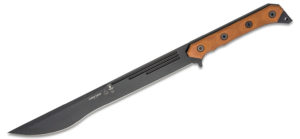
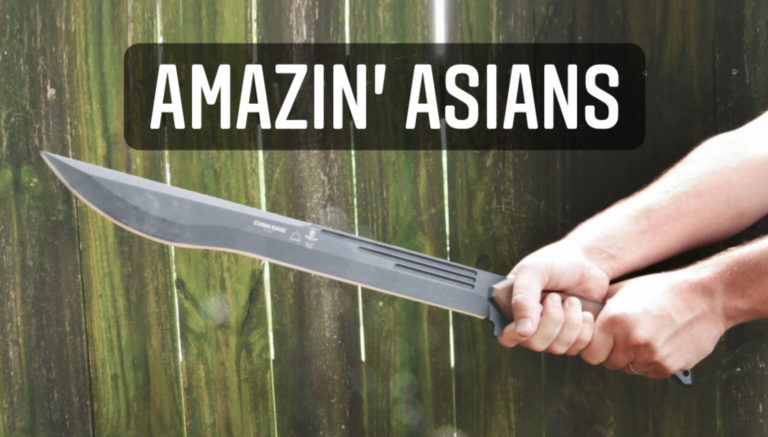
The TOPS CUMA Kage is a tour de force by martial arts guru Sijo Wayson Johnny Tsai. Overall length: 23.75 inches. The 15.5-inch blade of 1095 high carbon steel sports TOPS’ Black Traction Coating. The lengthy handle is 8.25 inches with Micarta scales sized for two-handed delivery. The blade is a hybrid straight sword pattern blended with 7 inches of kukri bulge at the tip to give it a bit of utility to go with its, ahem, badassery. It includes a full-length black Kydex sheath with a dangler/attachment ring. Weight: 31.5 ounces. MSRP: $360.

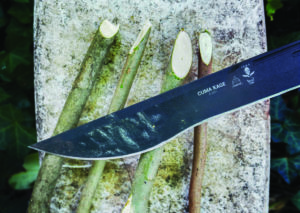
Using one hand or two, the author found the CUMA Kage cut brush equally well. However, as you might expect, you can take on much heavier tasks with it by using both hands.

To test the CUMA Kage for its utility billing, we took it outside for brush-clearing duty. We’ve always admired the kukri and have cleared an acre or two over the years with one, so this long send-up of the chopper intrigued me. We found out quickly we could use the CUMA Kage with one hand or two, which gives it a big leg up on its smaller cousin. The Micarta handle is well filled out and plenty grippy. One-handed we were able to easily whack through half-inch-thick green hardwood stalks and branches. Two-handed we sliced through stalks three-quarter of an inch with ease, and 1 inch as long as we had clearance to pull back for a full stroke. Though not the CUMA Kage’s original intent, it does have formidable utility.


Specs: TOPS CUMA KAGE
Blade length: 15.5 inches
Blade material: 1095 carbon steel
Blade finish: Black Traction Coating
Handle length: 8.25 inches
Handle material: Micarta
Special features: Kukri blade tip 
Sheath: Kydex w/leather dangler
Weight: 31.5 ounces
Overall length: 23.75 inches
Country of origin: USA
MSRP: $360

MELONIOUS ASSAULT

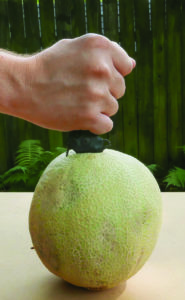
After testing the blades on a variety of fare, just for fun we took to the backyard to let them each have a go at a cantaloupe. Leading off with a reverse grip on the SOG Kiku XR, we stabbed the forlorn melon to the hilt. As stubby a version of the tanto as the Kiku XR’s blade may be, the cantaloupe’s pithy skin gave into the knife’s wishes quite easily.

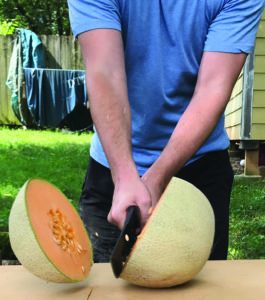
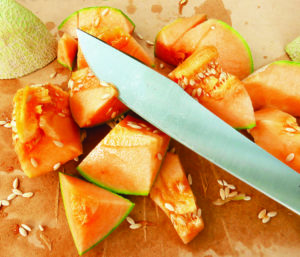
Next up the TOPS CUMA Kage tried the task of halving the cantaloupe in one fell swoop, which we captured in burst mode on my neighbor’s IPhone. Mission accomplished. Finally, we used the Lum Darn Dao to “prepare the meal” by using the blade in quick, rapid-fire chops. The sword’s deep V-grind—not unlike that of a chef’s knife—performed admirably.

Like an oversized chef’s knife, the Lum Darn Dao deftly whacked the cantaloupe into chunks with speed and style.

BEASTS of the EAST

While we often think of knives and swords of an Asian design in the context of combat and martial arts, it’s easy to forget that many Eastern blades were used for everyday utility as well. The tanto was an everyday carry by the Samurai class in Japan, and men and women alike carried a smaller version, the kaiken, aka kwaiken. The chisel grind was not typical on tantos as we see on some of them today, but on knives for culinary purposes. The Japanese kiridashi, which is rapidly gaining a toehold in the cutlery world, was also chisel ground and used for wood carving and marking.

The wicked Indian/Nepalese Kukri was employed in combat, but is primarily a tool for clearing land and is used widely for bush whacking today. Even the Indonesian karambit was considered a working knife by its users. If nothing else, the distinctiveness of Asian cutlery design has added richly to our knowledge base of cutlery and given us a plethora of modern-day knives to explore.

3 Awesome Axes for Chopping Wood Like a True Lumberjack

THREE FACTORY AXES TAKE THE CHOP, LIMB, TRIM, SHAVE AND STRIP TEST

BY JAMES MORGAN AYRES

We got snowed in one New Year’s in a rented cabin in the mountains. When I expressed concern about relying on electric heat in a remote cabin, the rental agent assured me that the electricity never went out. In any event, she said, “There was plenty of firewood for the fireplace and an axe. You’re an experienced outdoorsman. I’m sure you can cope.”

Of course, the electricity went out. I found about a cord of unsplit logs, each log 6-to-8 inches in diameter and 3 feet long. No split wood. No kindling. No axe. I batonned my ever-present Randall Model 1 around the edges of the logs to make kindling, and split enough wood to keep the fire going until the electricity came back on. Three days. I coped but every time I went to the wood pile, I wished I had an axe. Any of the axes in this field review would have been welcome.

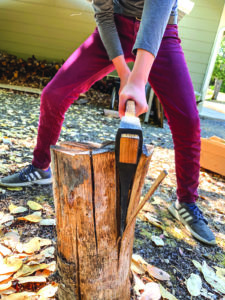
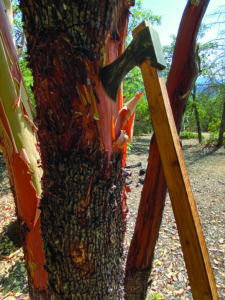
Almost anything will chop softwood such as pine. For a proper challenge, we spent a day clearing madrone and oak at a friend’s property. Oak is a hardwood. Madrone is more fibrous and even tougher. We also split seasoned oak logs for our friend’s fireplace.

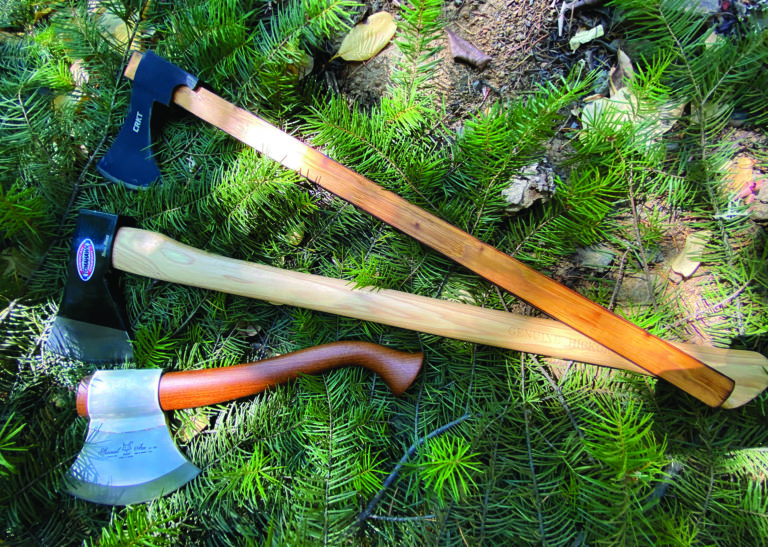
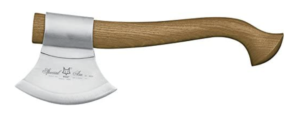
HIKING HACKER: The Fox Trekking Axe

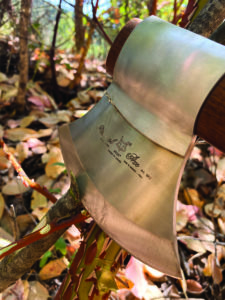
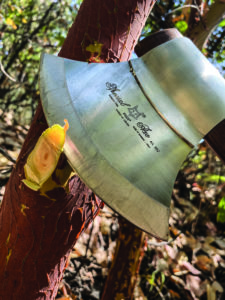
The Fox Trekking Axe is a terrific chopper for the backpacker, hunter or woods wanderer. Reminiscent of a medieval design, it’s light enough to keep in a rucksack and very well made.

The thin blade came sharp enough to cut paper and kept its edge during a day’s work. Its good edge geometry and balance, comfortable and ergonomic handle—well, really, its overall efficient configuration, which I suspect was inspired by an old, well-proven design—enabled painless hours of chopping, limbing and trimming. The long edge worked well for stripping and shaving bark to make bare poles. I have no doubt that the Trekking Axe would serve to quickly erect a shelter against an incoming mountain snowstorm, or dress out and break down an elk carcass. With its long, almost knife-like edge, it could also skin out the elk.

The thin blade, so efficient at taking down saplings and other work, tended to bind when chopped into the center of the seasoned oak logs. That’s a matter of geometry—the blade is not wedge shaped and won’t serve as a splitting maul, which is outside of its design envelope. A change in method overcame that limitation. By working around the edges and splitting off sections an inch or 3 thick, we were able to reduce logs to kindling.

Overall it’s a well-designed, well-made tool that I wouldn’t hesitate to take to the deep woods.

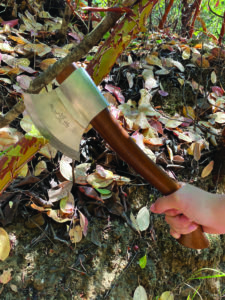
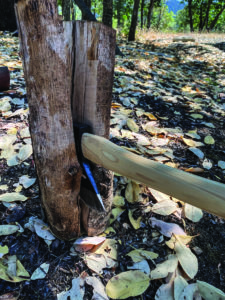
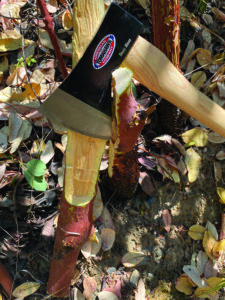
Good edge geometry and balance and a comfortable, ergonomic handle enabled painless hours of chopping, limbing and trimming with the Fox Trekking Axe. Here it chops the Ma- drone sapling with aplomb.

SPECS: FOX TREKKING AXE
CUTTING EDGE:
5.625”
BLADE STEEL: 12C27 Swedish stainless
HEAD WIDTH: 4.7”
HEAD THICKNESS: .22”
HEAD FINISH: Satin
HANDLE MATERIAL: Sassafras (wood)
WEIGHT: 13.8 ozs.
OVERALL LENGTH: 13.8”
COUNTRY OF ORIGIN: Italy
MSRP: $104.95

THAT’S AN AXE: Cold Steel Trail Boss

Photo from KnifeCenter.com

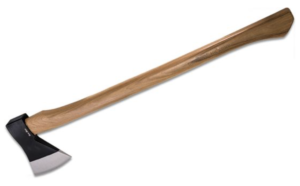
I hefted the Cold Steel Trail Boss, chopped through a 3-inch madrone sapling with one swing and paraphrased Crocodile Dundee’s line: “That’s an axe.”

About the size of a traditional cruiser axe, the Trail Boss has a smooth, comfortable haft/handle in-between axe and tomahawk length. The long edge came sharp and stayed sharp. The head has good wedge-shaped geometry that made splitting the seasoned oak logs a breeze. Unlike a splitting axe, it was not too thick for general work. One whack to the center of the log and there were two split sections on the ground. It’s not a splitting maul or splitting axe but almost as efficient. While it has enough heft to split oak, it’s also light enough and balanced so that downing saplings could be done with full control and no danger of cutting through and swinging too far.

When limbing, it was easy to control for precise cuts, even when limbing with one hand. The haft is not as long as that of a full-sized axe, nor is the head as heavy. However, the head’s well-designed geometry, the smooth, comfortable handle and overall good balance enabled it to perform almost as well as one.

This is a good, all-around chopping tool—actually, an excellent all-around chopping tool.

SPECS: COLD STEEL TRAIL BOSS
CUTTING EDGE:
4.5”
BLADE MATERIAL: 1055 spring steel
HEAD WIDTH: 6.5”
FINISH: Black
HANDLE MATERIAL: Hickory
WEIGHT: 2 lbs., 9.5 ozs.
OVERALL LENGTH: 27”
SHEATH: Not Included
COUNTRY OF ORIGIN: Taiwan
MSRP: $49.99

FRANKISHLY SPEAKING: CRKT Cimbri

Photo from CRKTknives.com

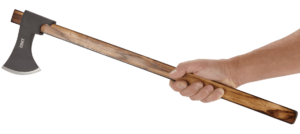
The CRKT Cimbri is an interesting design that, in my opinion, needs a bit of work to fulfill its potential. Modeled on a classic Frankish axe, with a nicely shaped head and a long handle, it is well balanced.

With a nicely shaped head and a long handle, the CRKT Cimbri is well balanced for such tasks as splitting oak logs.

Unfortunately, the edge wasn’t sharp out of the box and we test all knives, axes, tomahawks, swords, etc., as they come, so there’s a level playing field for all. The lack of a truly sharp edge required more force to chop through the saplings and impeded its penetration when splitting. Also, the thick coating on the carbon steel head caused it to drag in a cut. Even more unfortunate, and for some reason I do not understand, the haft is squared rather than oval or round. The acute edges of the haft/ handle not only were uncomfortable, they dug into our hands, producing blisters—in one instance breaking the skin of one of our testers’ palms.

The author stated he would round off the edges of the CRKT Cimbri’s squared-off haft.

Tuning up the edge would be a simple job, a matter of 20 or 30 minutes with a good stone. Reprofiling the haft wouldn’t be difficult, but I cannot understand why anyone would put a squared handle on an axe. Historical authenticity, perhaps?

SPECS: CRKT CIMBRI
BLADE LENGTH:
4.09”
BLADE MATERIAL: 1055 spring steel
HEAD THICKNESS: 1.26”
FINISH: Manganese phosphate coating
HANDLE MATERIAL: Tennessee hickory
WEIGHT: 2 lbs., .8 oz.
OVERALL LENGTH: 25.75”
DESIGNER: Elmer Roush
COUNTRY OF ORIGIN: Taiwan
MSRP: $69.99

AUTHOR’S CHOICES

Which of the three would I choose if I were again snowed in and had only a stack of logs to burn? If I hiked in, the Trekking Axe would be my choice, no question. I’m too old to hump anything heavier in a rucksack filled with camping gear, food and ammunition. If I arrived by car or truck, the Trail Boss would be it. If I had only the Cimbri, I would use my belt knife as a draw knife to take off the corners of the handle and smooth it. That done, 20 minutes with a sharpening stone and I’d head for the wood pile.


Advertisement

Must Read Articles

Read this before you make a knife

Knifemaking 101 – Read This Before You Make a Knife

  by Wayne Goddard My experience has taught me that there's nothing like digging in and getting started. I've often said the hardest part of the...
how to forge damascus steel

How to Forge Damascus

Advertisement
Advertisement