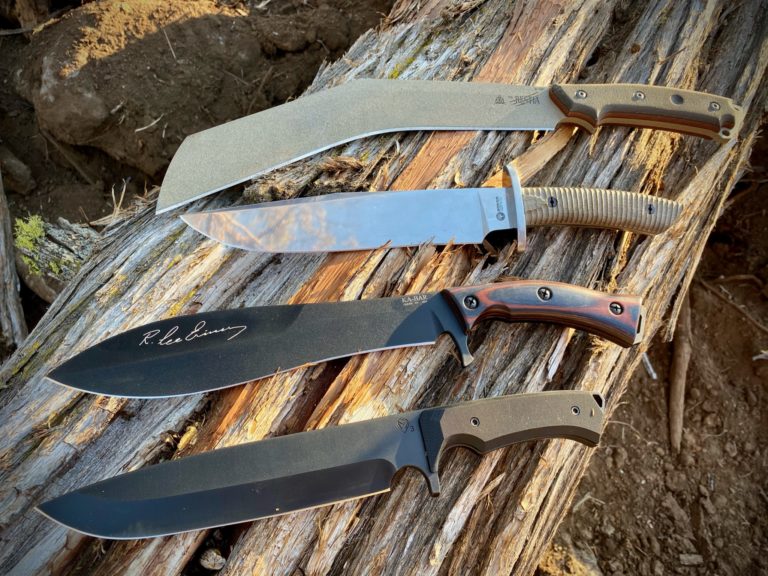
Best High-Carbon Steel Knife Options

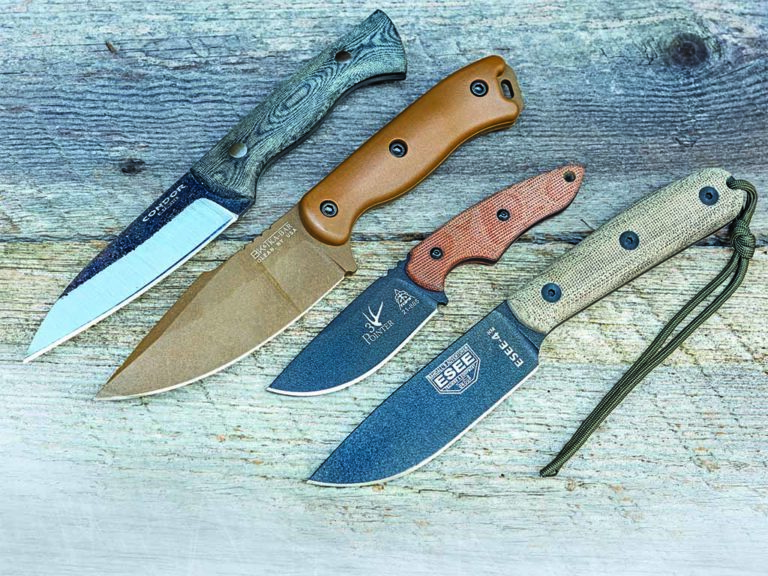
Looking for a tough and ready option for EDC? Here are 4 factory high-carbon steel knife options that wear and use the reliable 1095 steel well.

Knives in tried-and-true carbon blade steels such as 1095 often are left out of the conversation. Do they still have relevance in the modern world of knives? The short answer is yes—and they remain relevant for the same advantages that made them popular in the first place.

“There are a number of reasons why 1095 is popular with consumers and manufacturers,” states Joe Bradley, sales and marketing manager for KA-BAR Knives. “It’s a great steel to work with and maintain, which is the primary reason we have used 1095 Cro-Van for decades.” Says Shane Adams, marketing director for ESEE Knives, “It takes a beating and is field-serviceable. We know it, use it and trust it with our lives.” Adds Jeremiah Heffelfinger of TOPS Knives, “1095 is also easier to sharpen, especially in the field, than some stainless steels.”

You can work 1095 to death, then take your favorite sharpener and put an edge right back on it. Try doing that with CPM S30V stainless! Because of 1095’s tendency to rust, you must maintain it more than stainless. Many 1095 blades sport a coating that protects most of the surface except the edge. If you’re not careful, corrosion can begin at the edge then travel up underneath the coating. Consequently, in a wet environment keep a light coat of oil on the blade. If you wash the knife, towel dry it carefully and let it air dry, too. As for some of today’s top models in 1095, check these out.

Condor Tool & Knife Bush Slicer Sidekick
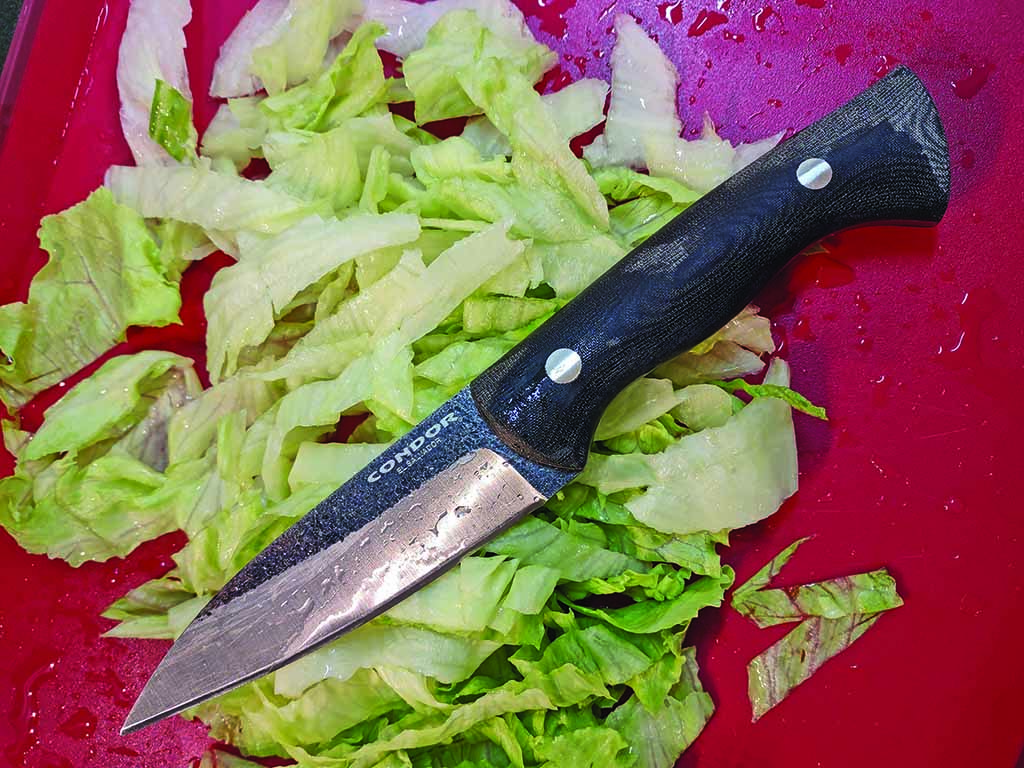
The Bush Slicer Sidekick from Condor Tool & Knife is a small, lightweight fixed blade designed to handle intricate food prep tasks similar to those paring knives address. It also functions as a stand-alone tool for bushcraft, as well as day hikes and such.
The Bush Slicer Sidekick from Condor Tool & Knife is a small, lightweight fixed blade high-carbon steel knife designed to handle intricate food prep tasks similar to those paring knives address. It also functions as a stand-alone tool for bushcraft, as well as day hikes and such.

The Bush Slicer Sidekick from Condor Tool & Knife is a small, lightweight fixed blade designed to handle intricate food prep tasks similar to those paring knives address. It also functions as a stand-alone tool for bushcraft, as well as day hikes and such.

The 6.4-inch modified wharncliffe blade on this high-carbon steel knife has a defined tip for intricate cutting tasks, but also enough sharpened real estate to get work done. Close to 9 inches overall, the knife carries well and is neither too big nor too small for many food prep and camp chores. The black Micarta® handle is ergonomically shaped for maximum user comfort. The sheath is well designed, too. One of the few hybrid-constructed models employing Kydex and leather, it is quite user friendly. You get the rigid protection of Kydex along with the carry versatility a leather loop offers, allowing the sheath to move somewhat while on the belt. The gray Kydex complements the handle’s appearance.

The Bush Slicer Sidekick is built extremely well, with high quality fit and finish. The edge is razor sharp out of the box. The standard Condor blade finish is two tone, with the darkened heat-treat scale finish on the flats and machine satin on the bevels. The cutting edge is tilted up a bit in relation to the handle, giving more hand clearance on a flat surface. The way the blade profile tapers toward the tip is smart as well, giving the knife the ability to tackle finer cutting tasks. Another nice feature is the 90-degree blade spine for use in conjunction with a fire-starting ferrocerium rod.
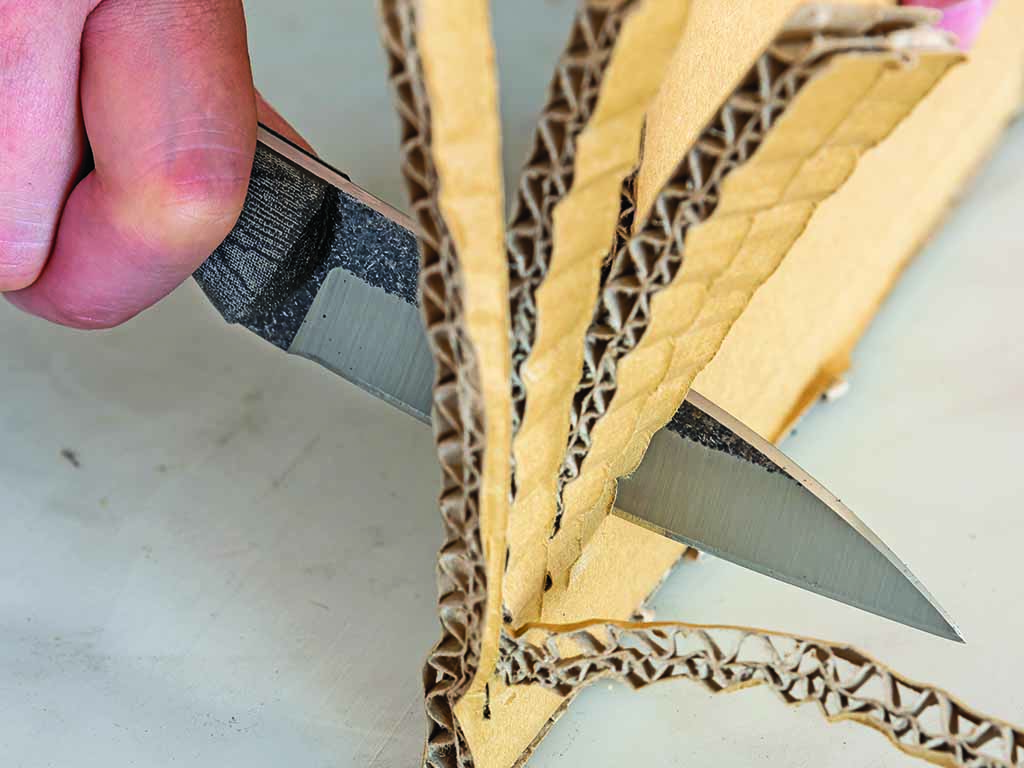
Condor’s knives are not flashy but work like pack mules. The Bush Slicer Sidekick slices cardboard like a champ. The flat grind tapers the edge to a thickness that is both durable and sharp.
Condor’s knives are not flashy but work like pack mules.  The Bush Slicer Sidekick slices cardboard like a champ. The flat grind tapers the edge to a thickness that is both durable and sharp.

The flat-ground blade thins the edge well so it sails through a variety of materials, yet is thick enough for durability. The tip is controllable for fine and precise cutting. Integral front and rear guards prevent unwanted hand movement in either direction. However, those with larger hands may find the grip a bit small. It also lacks a lanyard hole. At a manufacturer’s suggested retail price (MSRP) of $119, the Bush Slicer Sidekick represents excellent value in an expertly crafted using fixed blade. County of origin: El Salvador.

TOPS Knives 3 Pointer
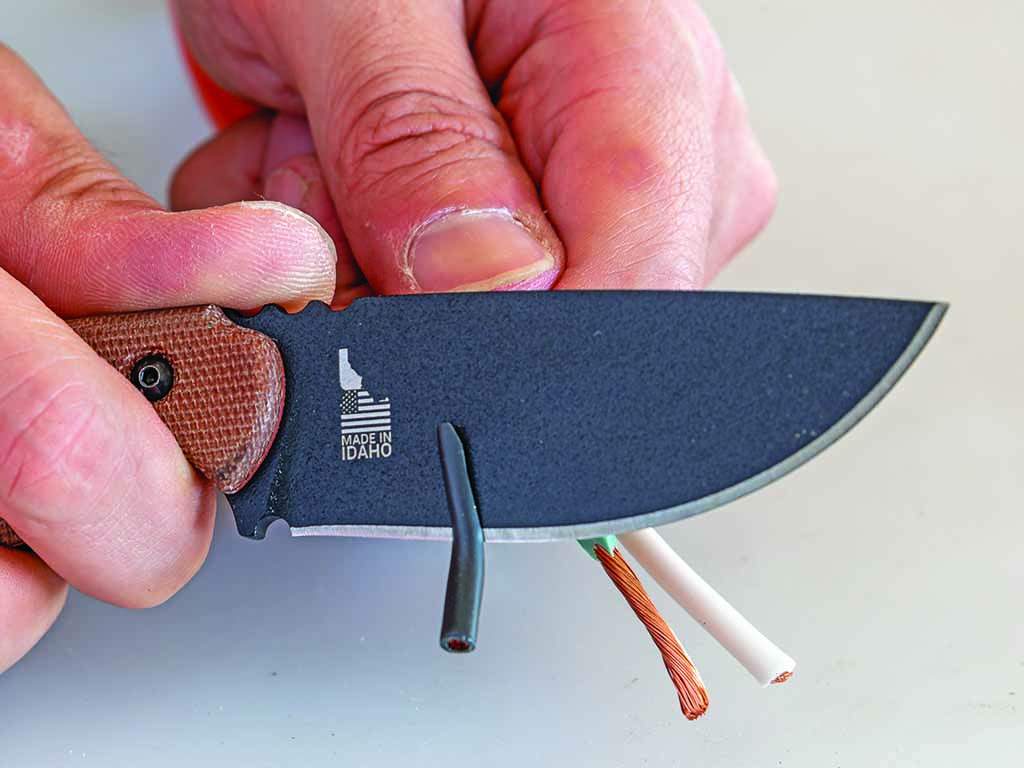
The TOPS Knives 3 Pointer is a great multi-carry fixed blade with the option of being a neck knife.  The drop-point blade is great for cutting food as well as utility tasks that require a sharp blade and precise control, such as wire stripping.
The TOPS Knives 3 Pointer is a great multi-carry high-carbon steel knife, a fixed blade, with the option of being a neck knife.  The drop-point blade is great for cutting food as well as utility tasks that require a sharp blade and precise control, such as wire stripping.

The TOPS Knives 3 Pointer might be the smallest of the test bunch, sporting a 3.1-inch blade and 6.6-inch overall length, but also has the most options. It comes in three handle choices—black Micarta, tan Micarta and skeletonized. In addition, each model comes with two modes of carry. Straps screwed to the sheath permit horizontal belt carry, and a chain provides neck carry (just remove the belt loops). The options might make you consider the 3 Pointer to replace a folder for EDC.

The high-carbon steel knife’s heart and soul lies in its deep-bellied drop-point blade capable of field dressing game, doing chores in camp, etc. Black Traction Coating helps ward off rust. It is a very durable coat that withstands frequent heavy use.

The handle is particularly interesting. The pronounced finger groove can lock into your grip, with the rest of your fingers falling into place on the tapered handle. Unlike other fixed blades of this size, the handle isn’t blocky or bulky, which allows it to be carried as a belt or neck knife.  We tested the tan handle version, which has a nice contrast in appearance to the black blade. Three large traction notches accept a thumb comfortably on the spine to exert control and pressure. The red liners provide a subtle pop of color contrast.
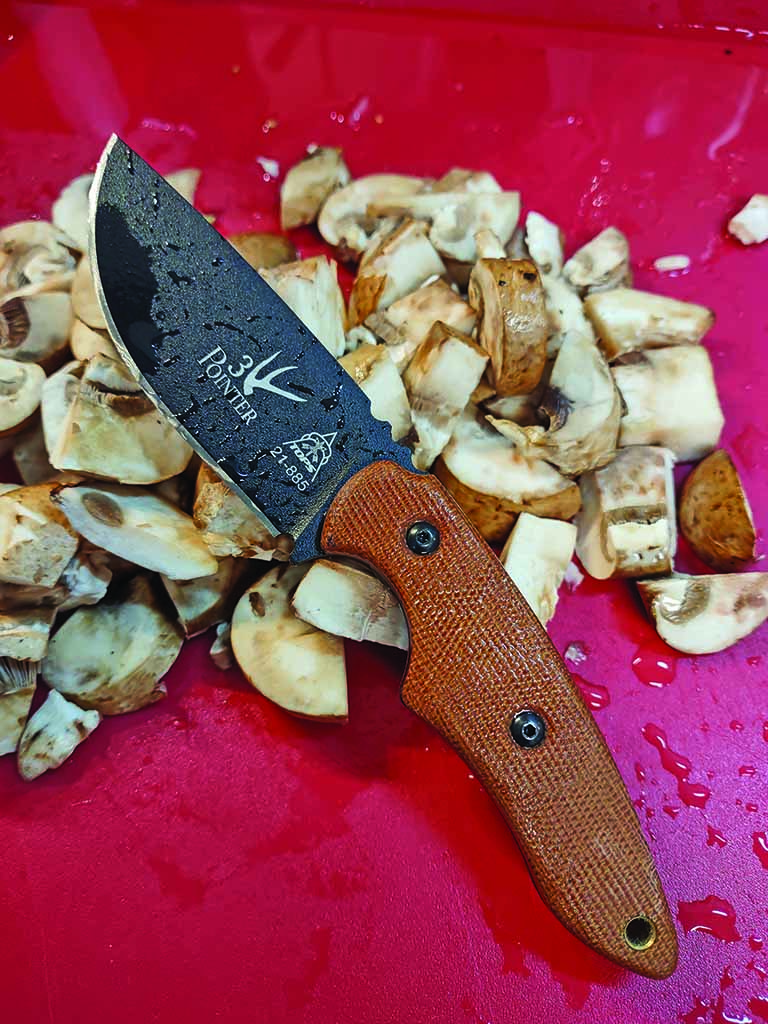
The 3 Pointer’s handle is particularly interesting. The pronounced finger groove can lock into your grip, with the rest of your fingers falling into place on the tapered handle.
The 3 Pointer’s handle is particularly interesting. The pronounced finger groove can lock into your grip, with the rest of your fingers falling into place on the tapered handle.

The Kydex sheath is well made and designed with an integrated thumb rest that lets you grip the knife handle and push out, easily popping it free of the sheath. The feature is very well thought out and not found on many knives.

I carried the 3 Pointer mainly as a neck knife for the evaluation. Neck knives are a love ’em/hate ’em proposition. If you want to carry a smaller fixed blade in a discreet manner this is the most viable option, as neckers conceal easily, even under a plain T-shirt*.  They also work well with polo-style and button-down dress shirts. And when you start layering as the temperatures drop, neck knives carry well under a hoodie and other cold weather wear. The flat handle profile enhances discreet carry without printing underneath the aforementioned T-shirt. I like how the shape and contours help you obtain a very secure grip.

The drop point blade is usually my favorite when it comes to straight knives due to its versatility. The belly allows the blade to tackle sizeable cutting tasks while remaining easy to carry.  If you prefer taking a small fixed blade into a restaurant to substitute for the knives provided, the 3 Pointer is low profile enough to cut food without attracting unwanted attention.  The TOPS 3 Pointer in tan Micarta has an MSRP of $125—an excellent deal for a USA-made sheath knife.

ESEE 4HM
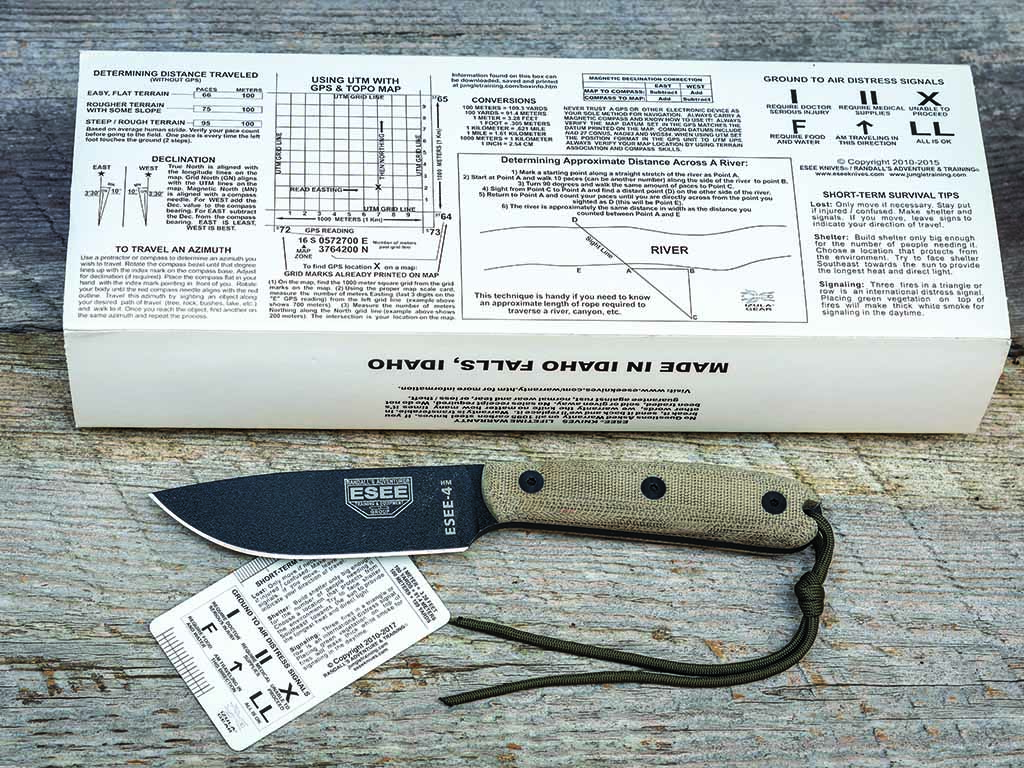
The ESEE 4HM comes in some of the most utilitarian packaging anywhere with information that every outdoor survivalist needs, including how to determine distance traveled, GPS and topographical map tips, and much more.

The ESEE 4HM blends toughness and cutting efficiency in one package that carries easily and is built for extended use. The 4.3-inch blade has a generous belly for field dressing, food prep and some bushcraft. Overall length is just short of 9 inches. Blade thickness is .1875 inch and the flat grind is robust for long-term durability, though thin enough for slicing. The blade has a black powder coat to protect it from the elements.
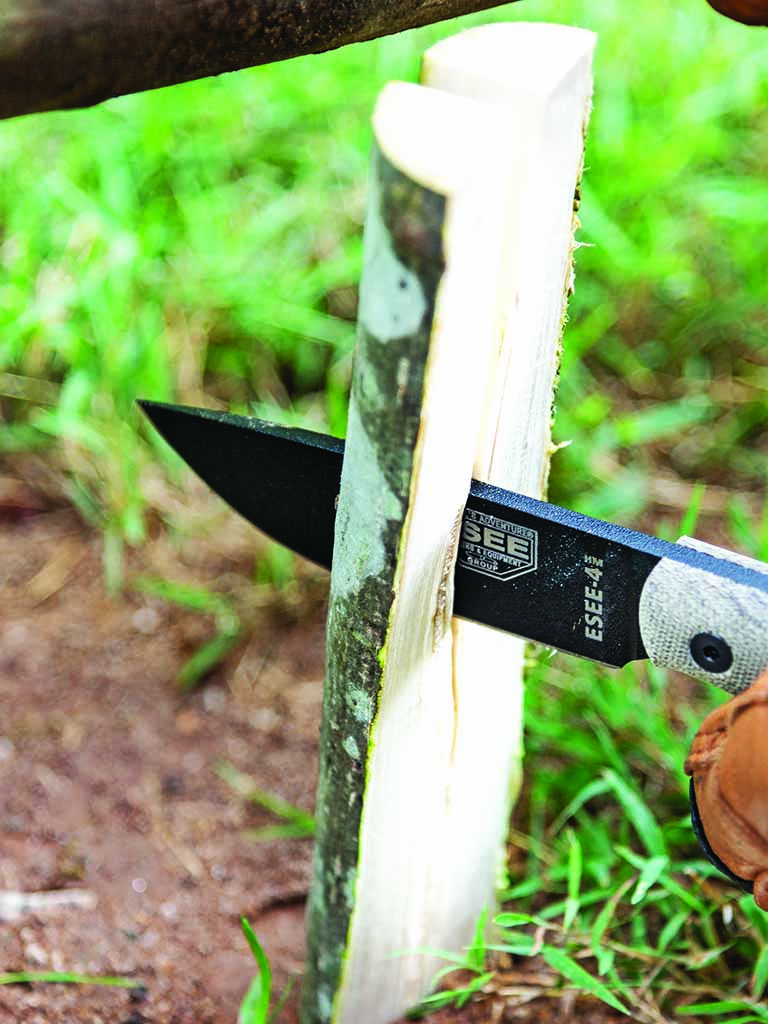
The ESEE Knives 4HM is designed to be a more modern variation of a bushcraft/utility knife. With its straight-forward design, it offers high performance with a more user-friendly blade.
The ESEE Knives 4HM is designed to be a more modern variation of a bushcraft/utility high-carbon steel knife. With its straight-forward design, it offers high performance with a more user-friendly blade.

The Micarta handle is beefy but rounded in the right places, and fills your hand without generating hot spots. The Micarta is fastened to the tang using three sets of flat-head Torx screws. A lanyard hole comes with a length of paracord, making the 4HM easy to extract from the well-made, sewn pouch sheath of brown leather. The knife sits down in it securely but loose enough so it comes free smartly when needed.

It is a great all-around fixed-blade high-carbon steel knife. The blade and handle shapes are universal and work well in most scenarios. The drop point shape is also a great scraper, if needed. The fat handle cross section gives a reassuring grip, as opposed to shapes that might be comfortable but, due to being too thick, are not as secure in the hand. If you enjoy hunting, camping and hiking and use a fixed blade a lot, this is the knife you need. Country of origin: USA. MSRP: $178.

KA-BAR BK18 Harpoon
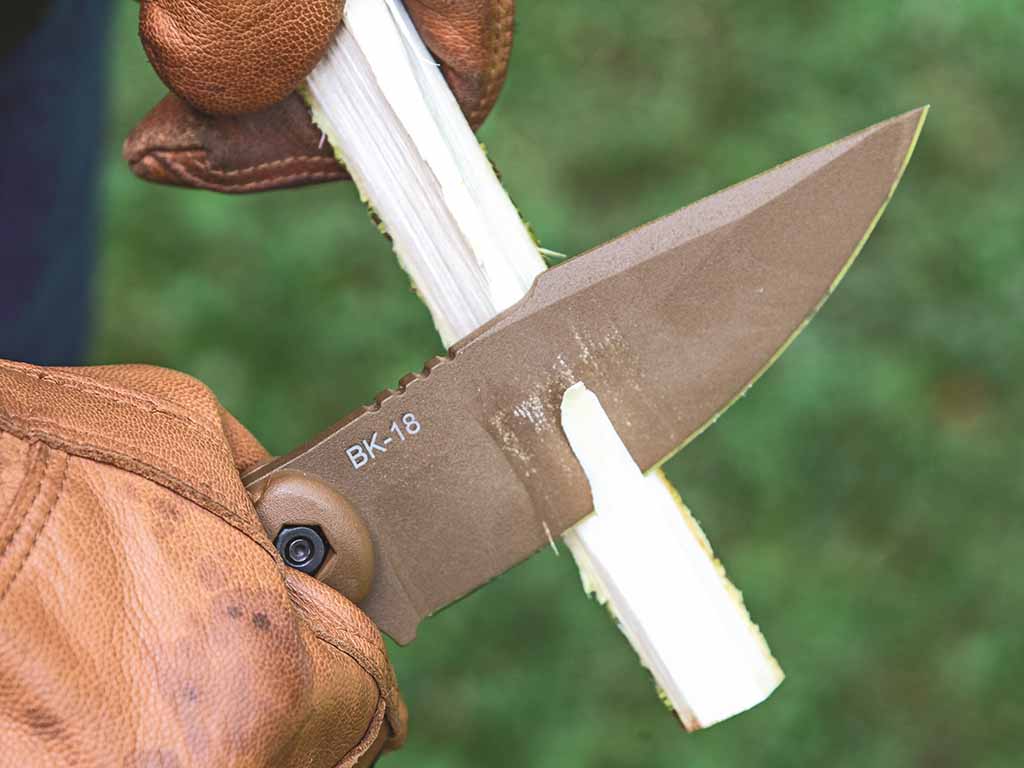
The BK18 Harpoon’s tall, flat grind engages whittling and carving jobs with gusto. The swedge provides a bit of visual attitude, too.
The BK18 Harpoon’s tall, flat grind engages whittling and carving jobs with gusto. The swedge provides a bit of visual attitude, too.

The BK18 Harpoon is Ethan Becker’s latest design for KA-BAR.  The 4.5-inch drop-point blade offers plenty of length for food prep and outdoor tasks. The prominent harpoon-style swedge projects attitude. The ergonomic handle features multiple swells for comfort and a non-slip grip. A palm swell fills your hand and provides excellent stability and control. The harpoon blade forms an integral forward guard, and the slightly dropped handle butt helps capture your hand. There’s an oblong hole for a lanyard.

At 9.3 inches overall, it’s a great mid-sized sheath knife. The blade belly slices easily, while the handle provides the ultimate in control. Traction notches on the spine allow you to choke up. The sheath is a molded Celcon® polymer with a heavy duty nylon webbing belt loop. The knife fits/clicks in to avoid inadvertent loss. A nifty feature is the two molded-in vent channels that reduce moisture by allowing inside air flow. A secondary webbing button snap secures the handle in place, though the way the knife clicks tightly into the sheath, I cannot imagine it popping loose accidentally. The belt loop also can be re-mounted to set the knife up for left-hand carry.
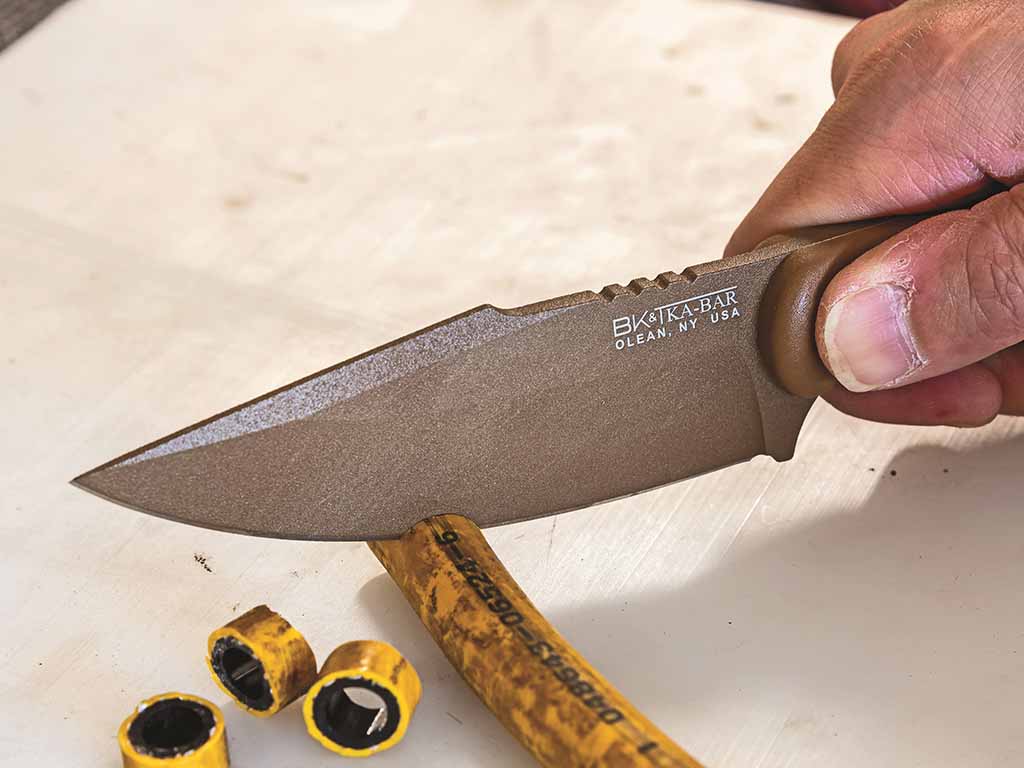
The KA-BAR Becker BK18 Harpoon is equally at home with food prep or work tasks. The blade’s sweeping belly tackles a host of chores inside and out.
The KA-BAR Becker BK18 Harpoon is equally at home with food prep or work tasks. The high-carbon steel knife’s blade’s sweeping belly tackles a host of chores inside and out.

One thing many remember about seeing their first Becker design is the chunky handle design. As awkward as it may look, it works. No matter the model, basically the same handle shape is used, a hallmark of Becker designs. The BK18 Harpoon has the same configuration but it’s slimmed down considerably. It’s comfortable for extended use and helps keep your hand in place with no awkward sliding in either direction. It also helps prevent the handle from rotating in your grip.

Speaking of handles, there is an optional upgrade. The tan Micarta kit, which replaces the stock molded grip, is $35. It’s worth it. The Micarta has a nice grab-you-back feel that holds well even with wet hands—a feature the stock handle somewhat lacks. MSRP is $120, also not bad for a USA-made fixed blade.  

Also Read:

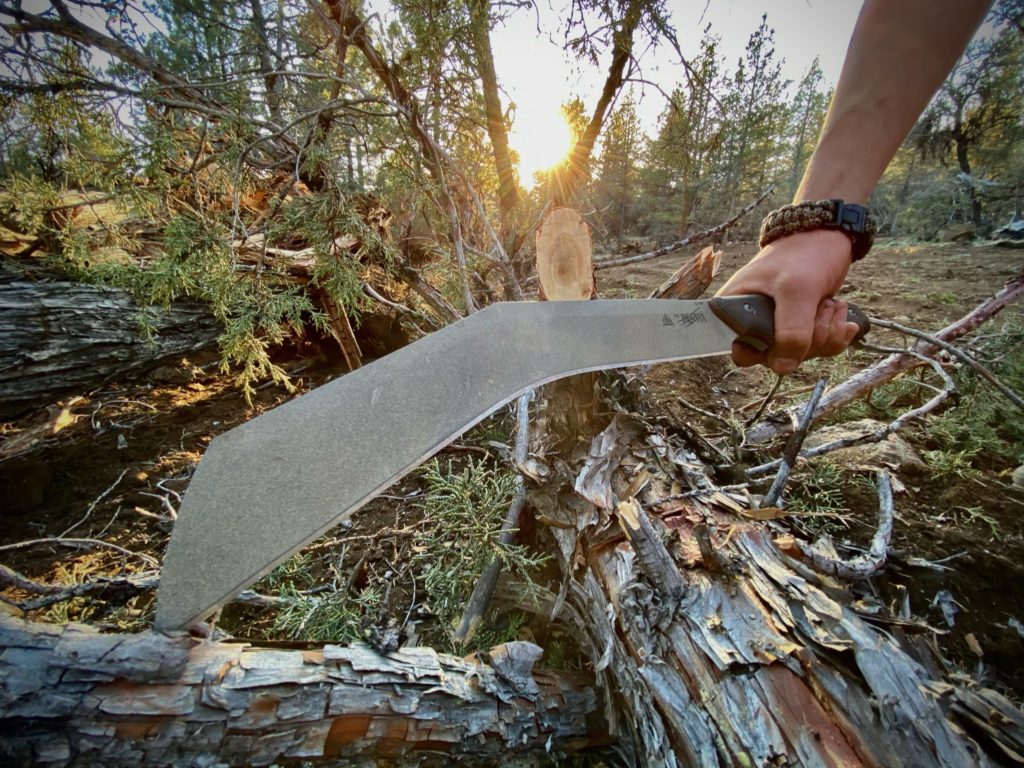
BIG Blades: 4 Monster Choppers for the Bush

BY JAMES MORGAN AYRES

Wherever folks live close to the earth, they use big knives

Little knives are convenient to carry but, if you have a lot of work to do, big knives are it. I’ve lived and worked with indigenous peoples in Latin America and Southeast Asia and found that wherever folks live close to the earth, they use big knives—machetes, parangs, goloks, bolos and the like. They use them for everything from rough work such as cutting poles and opening coconuts, to dressing out pigs and game, to delicate work such as slicing mangoes.

The advantage of the big blade was illustrated to me one day when I was working alongside a villager who, with his bolo and its 14-inch blade, cut wood for a fire, bamboo poles for a cooking rack, lopped off a banana leaf on which he filleted two large fish and sliced them thin as a sushi chef—all in the time it took me to bring down a few stalks of bamboo with my hair-shaving-sharp Randall Model 1.

We reviewed the test knives with that standard in mind. We chopped and split wood and sliced meat and tomatoes. We also, just because, cut hanging rubber hose and slashed through water-filled plastic bottles.


LONG, TALL & HANDSOME: Boker Arbolito El Gigante


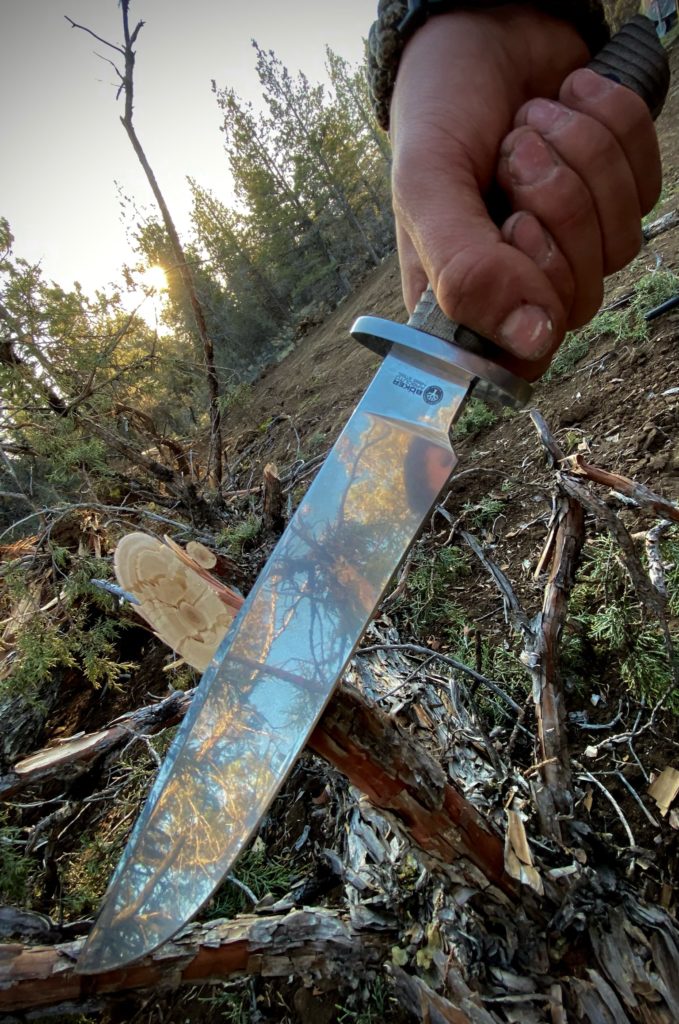
The Boker Arbolito El Gigante is a handsome classic bowie with a stonewashed blade, comfortable handle and nice leather sheath. Balance is excellent, all very much in the bowie tradition. Construction is top quality; so is performance. It cleaved 2-inch pine saplings with one stroke. The quarter-inch-thick spine was brought down to a well-supported edge fine enough to slice tomatoes, and slice meat thin enough to see light through the slices. We slashed rubber hose and the water bottles with ease.

Like all well-designed and crafted bowies, this is a versatile all-around knife.

A tree branch succumbs to the reflective blade of the Boker Arbolito El Gigante. It cleaved 2-inch pine saplings in one stroke.

BOKER ARBOLITO EL GIGANTE
Blade Length: 9.25”
Blade Steel: Bohler N695 stainless
Blade Thickness: .24”
Blade Grind: Flat
Blade Finish: Stonewash
Handle Thickness: .94”
Handle Material: Green Micarta®
Weight: 15.75 ozs.|
Overall Length: 14.75”
Sheath: Leather
Country of Origin: Argentina
MSRP: $229

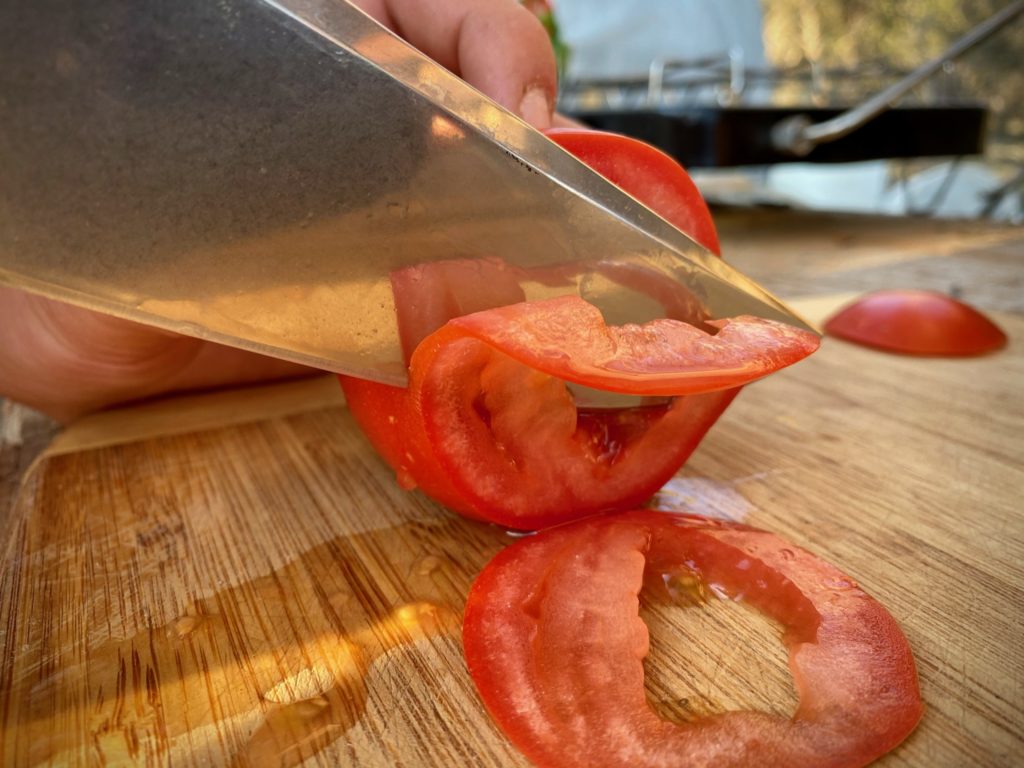
The El Gigante also proved its mettle after chopping wood by slicing a tomato nice and thin.


SEMPER FI! The KA-BAR Gunny


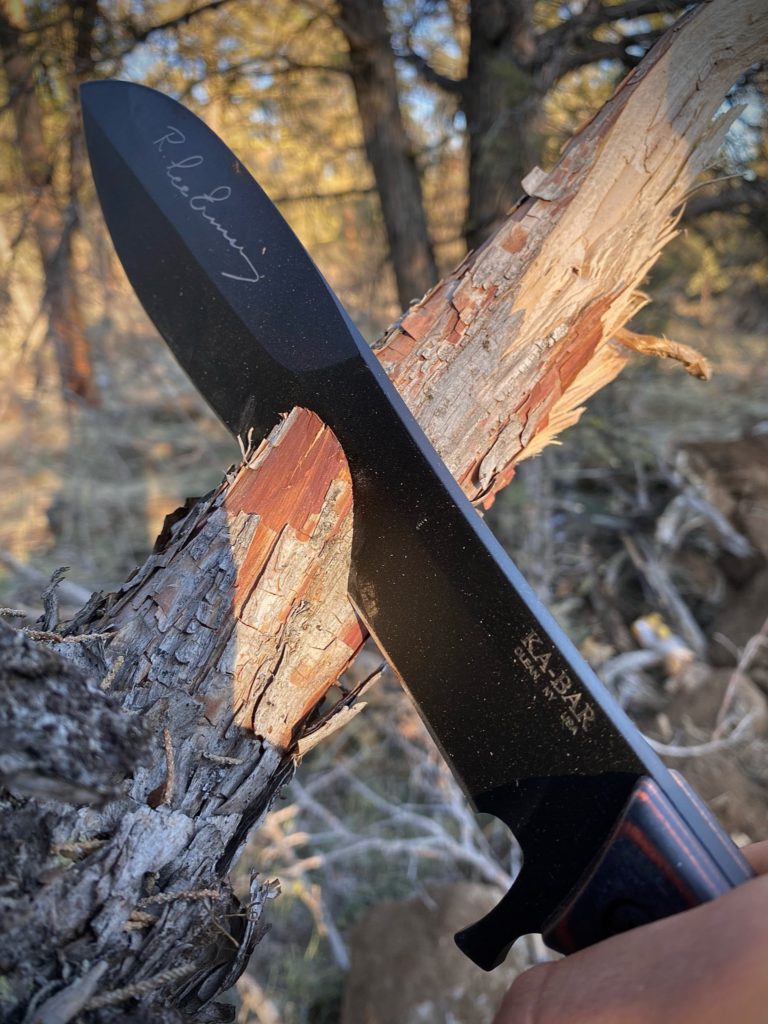
The KA-BAR Gunny is a hybrid design that resembles a bolo. I suspect R. Lee Ermey, the unforgettable Gunny who serves as the knife’s namesake, spent some time in jungles because this combination chopper/slicer’s performance is on par with village-forged bolos I’ve used in Southeast Asia, and that’s a high compliment. Its forward weight and terrific blade design promote efficient chopping.

The KA-BAR Gunny chomps into dry pine. Its forward weight and blade design promote efficient chopping.

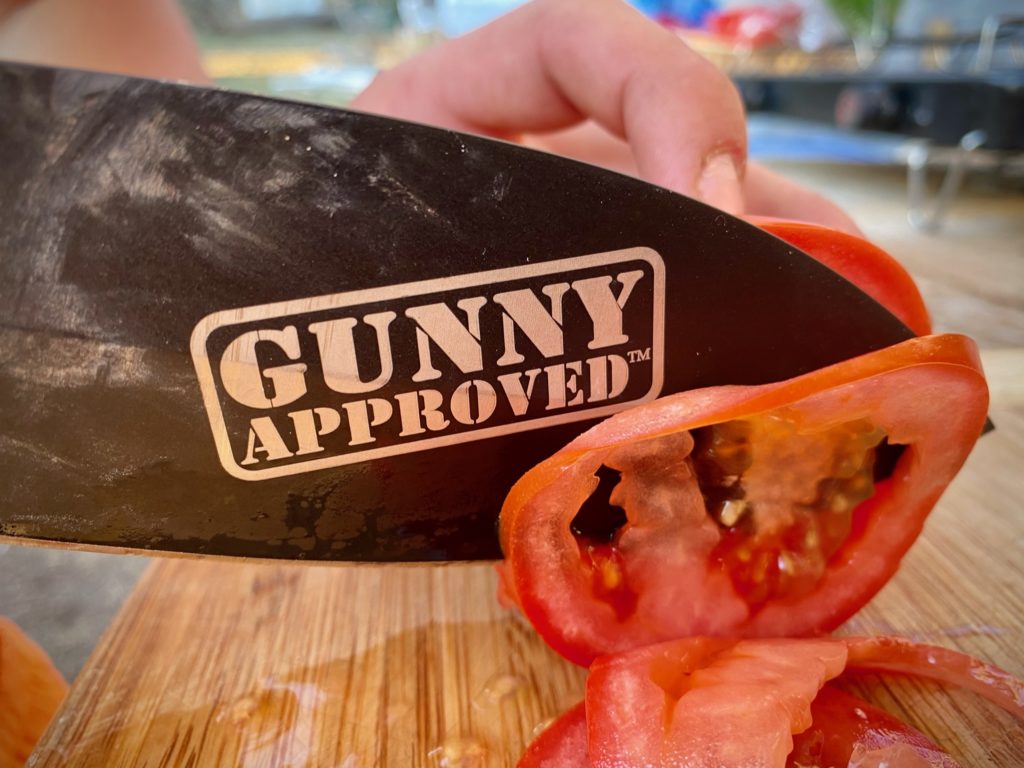
We cut through 3-to-4-inch-thick saplings with two strokes. We took down a tree with a 6-inch-thick truck just because we could. After the chopping the blade was still sharp enough for camp kitchen work. The belly, good balance and fine edge combined to make slicing meat and vegetables a pleasure. Slashing hanging rubber hose and the water bottle were a piece of cake. The comfortable handle lends itself both to heavy chopping and fine meat cutting, which is unusual.

The Gunny is an excellent all-around bush knife. The sheath has a pocket for a sharpening stone, which was not included with the review model.

After chopping wood, the Gunny sliced tomatoes like a chef’s knife.

KA-BAR GUNNY
Designer: R. Lee “Gunny” Ermey
Blade Length: 9.75”
Blade Material: 1095 Cro-Van carbon steel
Blade Width: 2”
Blade Thickness: .2”
Blade Grind: Flat
Handle Width: 1.5”
Handle Thickness: .94”
Handle Material: Wood
Weight: 15.29 ozs.
Overall Length: 15.5”
Sheath: Leather
Country of Origin: USA
MSRP: $292


RAZOR SHARP: Medford Knife & Tool Bonfire


The Medford Knife & Tool Bonfire came from the maker absolutely razor sharp! The blade design is interesting in that we do not often see a contemporary styled drop point and hollow grind on such a big blade. I don’t know the Rockwell, but the steel is hard and tough. It was just as razor sharp after we put it through its paces as when we started.

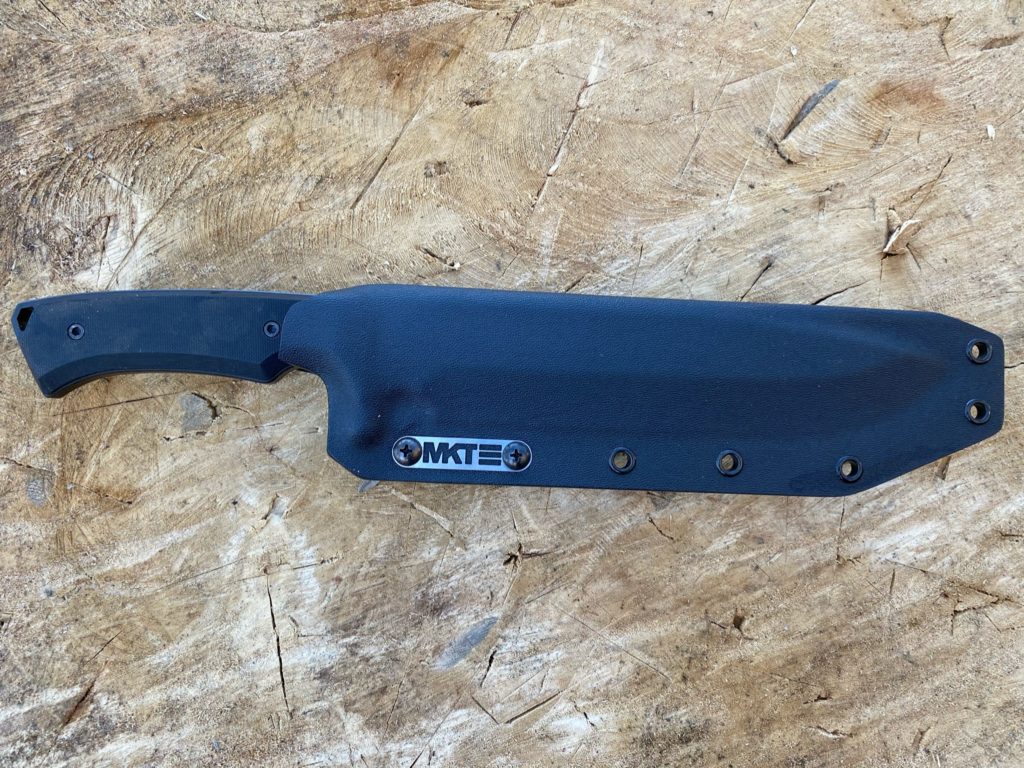
The Bonfire comes with a well-fitted Kydex sheath.

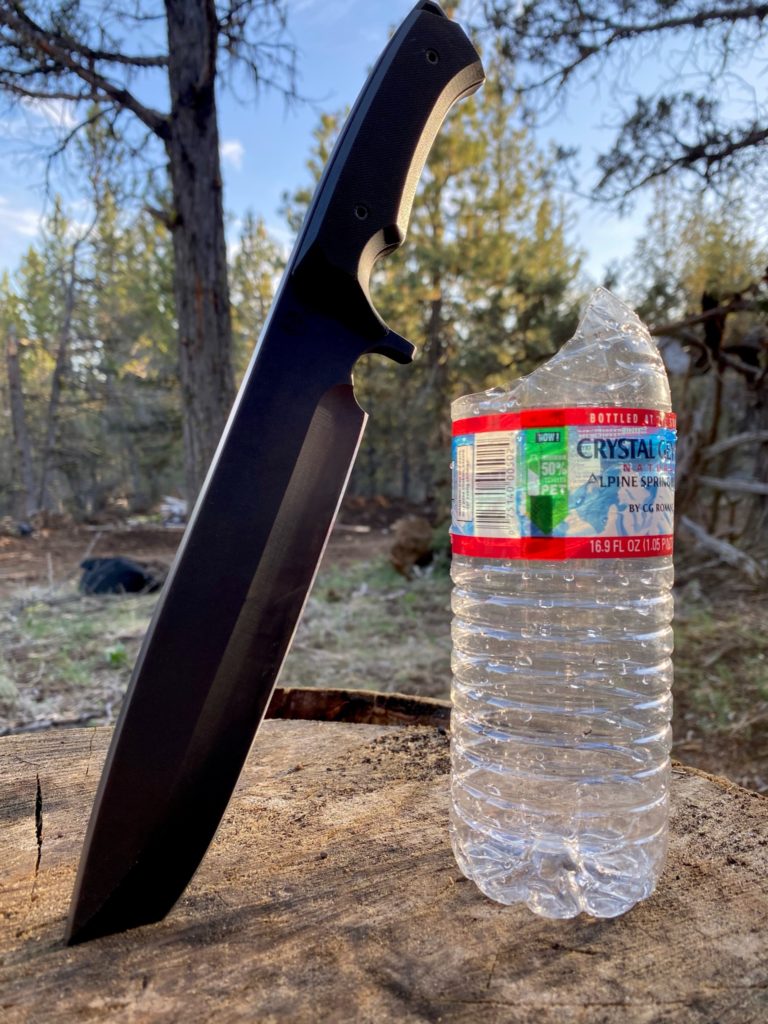
The fine edge made for a very good slicer and slasher and lopped off thin branches with one cut. The hollow grind tended to bind when chopping wood, though that’s to be expected—hollow grinds aren’t chopping designs. It’s better to think of this knife as a well-designed and crafted big knife rather than a bush tool such as a panga or kukri. It sliced rubber hose with a snap of the wrist and slashed through water bottles with more consistency than the other review blades and cut meat just fine. You probably could dress out a bear with it.

Use it as a big knife on soft materials and you won’t be disappointed. It comes with a well-fitted Kydex sheath.


The Medford Knife & Tool Bonfire slashed through water-filled plastic bottles with more consistency than the other review blades.

MEDFORD KNIFE & TOOL BONFIRE
Blade Length: 8.25”
Blade Material: CPM 3V carbon steel
Blade Thickness: .24”
Blade Grind: Hollow
Handle Thickness: .64”
Handle Material: G-10
Weight: 19.16 ozs.
Overall Length: 13”
Sheath: Nylon
Country of Origin: USA
MSRP: $450


CHEF’S CHOPPER: The TOPS Bestia


The TOPS Bestia is just a beast. A kukri-styled 13-inch blade and hefty weight make it the blade of choice for serious chopping or zombie cleaving. We hacked though a 3-inch sapling with one stroke, and used it to clear a stand of saplings and brush. The handle remained comfortable during an hour or so of work. Heavy as a small hatchet, it is more versatile and safer in use, especially in thick brush. During many survival classes, I’ve seen more injuries from hatchets than from big blades with their longer cutting edges.

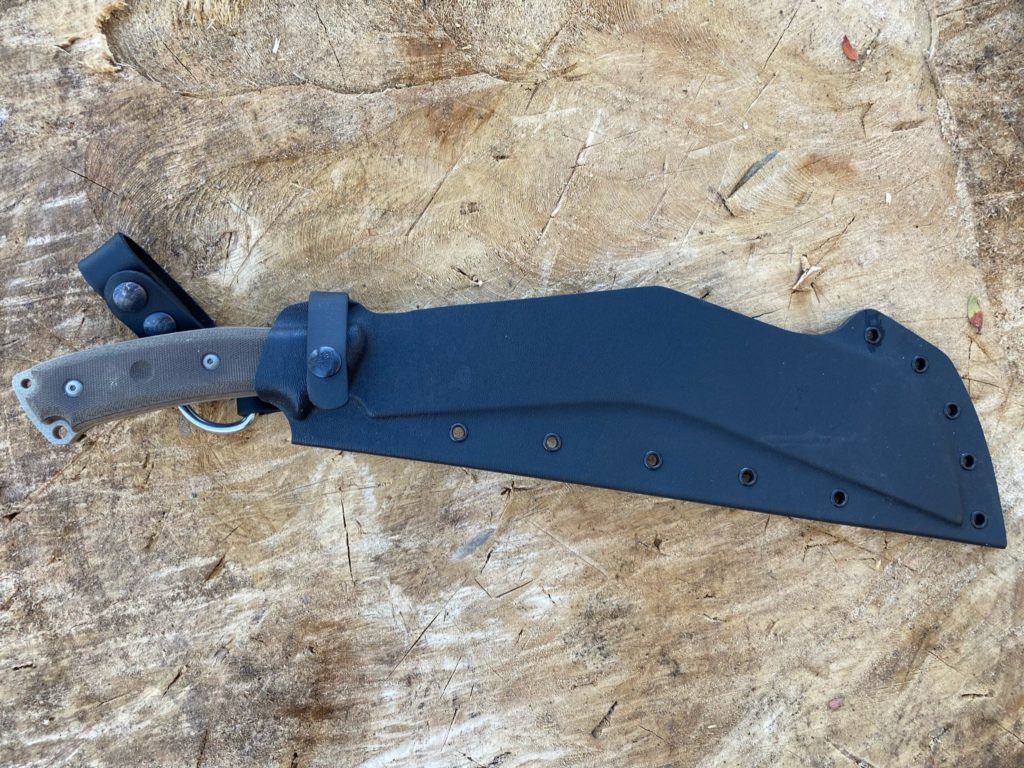
The Kydex sheath is formed to fit the unmistakable kukri-style blade of the Bestia.

Given its heft, blade design and chopping ability, the Bestia is surprisingly usable in the camp kitchen. We found it could slice meat quite well, allowing for adjustments in maneuverability due to its blade length.

The TOPS Knives Bestia’s kukri-styled 13-inch blade and hefty weight made it the blade of choice for serious chopping or, as the author puts it, “zombie cleaving.”

TOPS KNIVES BESTIA
Designer: Leo Espinoza
Blade Length: 13”
Blade Material: 1095 carbon steel
Rockwell Hardness: 56-58 HRC
Blade Width: 2.25”
Blade Thickness: .25”
Blade Grind: Flat
Handle Width: 2.125”
Handle Thickness: .97”
Handle Material: Green Micarta®
Frame/Liner: Micarta
Weight: 1 lb., 13.18 ozs.
Overall Length: 19.5”
Sheath: Kydex
Country of Origin: USA
MSRP: $300


VERSATILE BUSH TOOLS
If you haven’t spent much time with a big blade, try one. Work with it for a while. Direct close attention to your work and you’ll find a good big blade to be a terrific, versatile bush tool.

Benchmade Presents “Shepherds Of Helmand”

0

Benchmade is proud to announce the release of “Shepherds of Helmand,” a documentary about 17 Oregon National Guard soldiers deployed to Afghanistan to train a battalion of the Afghan National Army in 2008.

The film depicts their mission to conduct counter narcotics patrols in the deadly Helmand Province, a region notorious not only for its opium production but as a Taliban stronghold. “Shepherds of Helmand” is the true story of one of the most decorated units in Oregon National Guard history.

“I am very passionate about preserving our veteran’s legacies and supporting programs that help support our wounded veterans,” says Gary Mortensen, Director of Shepherds of Helmand. “This film couldn’t have been possible without the support of Benchmade.”

Filmmaker Gary Mortensen worked on the project for over two years and utilized photos and video clips provided by the soldiers.

Shepherds of Helmand is narrated by Don Trump Jr. and features music by Zac Brown Band. Both were thrilled to be involved and support this powerful documentary about the soldiers who served in Afghanistan.

“We’re extremely proud to support the making of this film,” says Rob Morrison, Benchmade’s Director of Marketing and Strategic Planning. “These stories help us understand what the soldiers go through on a daily basis when at war, bringing us closer to their personal sacrifices.”

ABS Spring Piney Woods Hammer-In

Spring Piney Woods Hammer In
April 28 and 29, 2012
 
Offered by the American Bladesmith Society, Inc.


Location:

Moran School of Bladesmithing Texarkana College Washington, Arkansas

Directions: Google Maps

Information Contact: B.R. Hughes at (903) 838-0134 for more information or email [email protected]

Registration Fee: Pre-Register and pay the $55 Registration fee Online in the Store or contact Cindy Sheely, ABS Store Manager at [email protected] or (419) 832-0400

Demonstrators:
Kevin Cashen, Master Smith – Michigan – Classic European Quillon Daggers – Advanced Heat Treating Concepts – A Systematic Approach to Steel Selection 

J. R. Cook, Master Smith – Arkansas – Acid Engraving Techniques – Cutting Competition Judge 

Mike Williams, Master Smith – Oklahoma Cutting Competion Judge – Handles and Guards Techniques – ABS Judging Standards for Master Smith and Journeyman Smith

BR Hughes, Founder – Texas – ABS Judging Standards for Master Smith and Journeyman Smith 

Dr. James Batson, Master Smith – Alabama – Bowie Knives


ABS Great Smoky Mountain Symposium

5th Great Smoky Mountain Bladesmithing Symposium

Offered by the American Bladesmith Society

Hosted by Haywood Community College Posted Image

March 9, 10, and 11, 2012

 Location:

 Haywood Community College

 185 Freelander Drive Clyde, North Carolina

For more information Contact: Bill Wiggins, ABS Coordinator at (828) 226-2551 or Email Bill

Registration:

$65 Registration fee can be paid at the event, or contact Cindy Sheely, ABS Office Manager at (419) 832-0400 or Email Cindy

Demonstrators:

Jerry Fisk, MS – Arkansas………….Forging, heat treating, and grinding
Greg Neely, MS – Texas…………….Hand finishing blades, finishing Damascus, and ABS Judging Standards
Burt Foster, MS – Virginia………….Knife Photography and Laminated blades


ABS Atlanta Knife Auction

Top masters in the world of bladesmithing have donated the most exciting set of auction knives ever seen for the American Bladesmith Society Annual fund raiser at the 2012 Blade Show and International Cutlery Fair in Atlanta, GA on June 9th in Saturday, June 9th at 10am in Room #103 of the Cobb Galleria.

There is currently an Online Auction being conducted through June 1, 2012 and information is posted on the ABS Forum at this link, Click: Online Auction. For more information you can contact the ABS Office at 419-832-0400 or send an email to the ABS Knife Auction Coordinator Dr. Dan L. Petersen at [email protected] .

California Hammer-In

California Hammer-In

American Bladesmith Society, Inc.

Location: College of the Sequoias
Visalia, California

Contact:
Mike Vagnino at 559-636-0501 or email [email protected]

Registration fee: $55
Pre-Register and pay the $55 Registration fee online in the Store
or contact Cindy Sheely, ABS Office Manager at [email protected] or (419) 832-0400

Demonstrators:
Tom Ferry, MS………………………Damascus Design & Construction Techniques
James Rodebaugh, MS…………..Forged Bowie – Start to Finish
Red St. Cyr, MS……………………..Green Coal Forging Demonstration
Bill Burke, MS………………………..Making Wootz & Forging Tamahagane Steel
David Lisch, JS……………………….Forging Bronze and Wrought Iron Fittings
Henry Torres, MS…………………….Blade Hand Finishing
Bill Herndon, JS………………………Hard Sheath Construction
Aaron Wilburn, JS……………………Leather Sheath Construction & Tooling

Schedule:
Thursday – October 6
3 – 5pm – Check-in and Registration

Friday – October 7
7 – 8am – Check-in and Registration
8am – 12noon – Demonstrations
1 – 5pm – Demonstrations

Saturday – October 8
8am – 12noon – Demonstrations
2 – 5pm – Knife Show and Auction (Free to the Public)
5 – 6pm – Round Table

Sunday – October 9
8am – 12noon – Demonstrations

Advertisement

Must Read Articles

Read this before you make a knife

Knifemaking 101 – Read This Before You Make a Knife

  by Wayne Goddard My experience has taught me that there's nothing like digging in and getting started. I've often said the hardest part of the...
how to forge damascus steel

How to Forge Damascus

Advertisement
Advertisement