
The BLADE Blogs

The blogs of the BLADE editors, Steve Shackleford and Erin Healy.

How Knives Can Save Babies

     The recent tragic death of the 11-month-old infant who onlookers were unable to free from a burning car because no one had a knife to cut the baby free from a jammed seat belt is heartbreaking. First and foremost, a young life was snuffed out in a most painful, terrifying way. My thoughts and prayers go out to the child’s parents and family, as well as those on the scene who were unable to save the infant. The incident will continue to haunt all concerned for many lifetimes.

     The lack of a knife carried by any of the bystanders to cut the seat belt and free the baby was a contributing factor in the infant’s death. The fact it happened in Los Angeles with its strict anti-knife ordinances is even more detestable, where anti-knifers continue to succeed in their crusade against knives. Anti-knife laws indirectly—some might say directly—kept the child from being rescued, and no doubt will prevent others from being saved in future catastrophes as well. (For more, see “For the Want of a Knife” in the “Forum” at http://knifeshowcase.blademag.com.)

     Ordinances designed to keep people from carrying knives and, as a result, from saving the lives of others in emergency situations must be repealed. Of course, organizations like the American Knife & Tool Institute and Knife Rights and elected officials such as New Hampshire Rep. Jenn Coffey are the standard bearers in focusing on the repeal of anti-knife legislation. By joining and supporting them and speaking out on your own, writing your legislators and local newspapers, voicing your concerns on social media like Facebook, Twitter, etc., you can do your part, too. And be sure to voice your concerns in non-knife venues. You are “preaching to the choir” if you do it in pro-knife venues. It is the non-knife ones that need to hear the message.

     In a heartrending way, the infant’s horrific death in a burning automobile magnifies the folly of anti-knife laws. In fact, thousands upon thousands more fatalities occur in car accidents than because of knives.

     In place of anti-knife ordinances that exaggerate the problem, why not institute pro-knife ordinances that not only protect your right to carry knives, but also address the slaughter that occurs on our nation’s highways by enabling you to respond to emergencies such as the one in L.A.? Moreover, why not require the manufacturers of automobile baby seats to equip each of the seats with a seat-belt cutter conveniently placed for a parent or onlooker to use to cut the baby’s seat belt in an emergency? And while we are at it, why not require automobile and truck manufacturers to stock each and every vehicle with a seat-belt cutter?

     Ideally, said manufacturers would take the lead and include seat-belt cutters with their products. Not only would it be a public service, the manufacturers would add value to their baby seats and vehicles. However, in today’s cost-cutting atmosphere, most manufacturers probably will not act without some kind of legislative push.

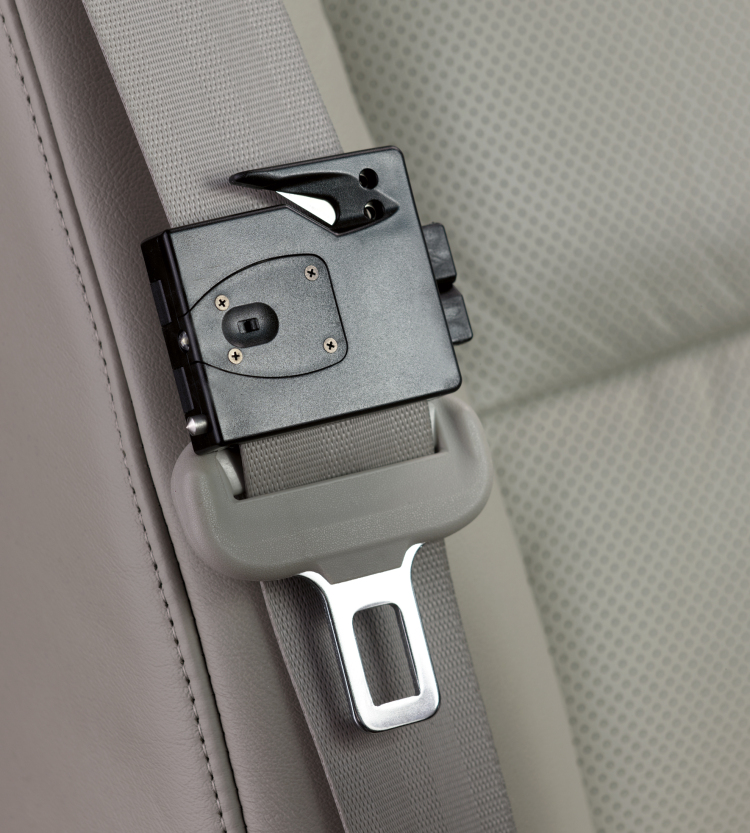
     A number of knife companies have seat-belt cutters with the edges recessed for safety. Columbia River Knife & Tool offers one—the model also has a window breaker and flashlight—that attaches to a seat belt and is thus immediately accessible in an emergency situation. Seat-belt cutters can be the next best thing to carrying a knife, and are probably better and definitely safer when it comes to cutting a person from a jammed seat belt.

     Repealing anti-knife legislation and promoting a seat-belt-cutter law would save the lives of innocents like the baby in L.A.—and, ironically, given the proper circumstances, maybe even the politically correct idiots who refuse to carry knives themselves.


To read similar stories and all about the latest knives, knife news, knife shows, knifemakers, knife manufacturers and much more, subscribe to BLADE® by clicking on http://www.shopblade.com/product/blade-magazine-one-year-subscription-us/?r+ssfb91211#BL1SU


CAPTION

Columbia River Knife & Tool’s Exitool is a seat-belt cutter, flashlight and window breaker that attaches to a seat belt—where you need it, when you need it. (CRKT photo)
 

Tips To Enhance Your BLADE Show Experience

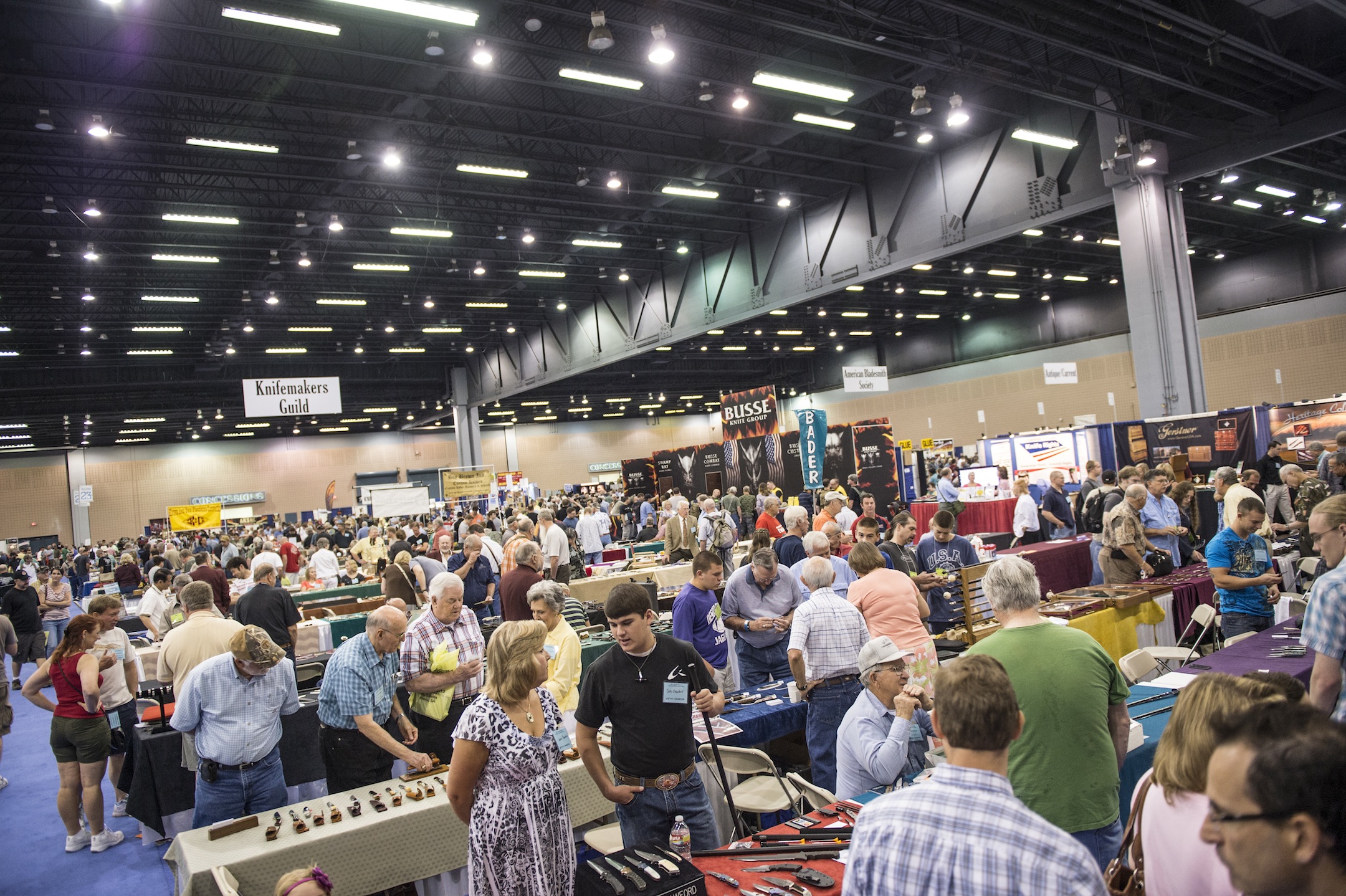
With folks already arriving at the Cobb Galleria Centre in Atlanta for the BLADE Show & Living Ready Expo (www.bladeshow.com), here are some tips to enhance your overall show experience:

•Get there early. The show opens to the public at 2 p.m. Friday and 9 a.m. Saturday and Sunday. The best knives always go first–which means early. Get there then to get the best;

•Stay hydrated. There are water fountains at the show entrances and concession stands in the back of the show hall. Also, apples are a great source of both nourishment and water. Eat one mid-morning and/or mid-afternoon, whichever works best for you.

•Wear comfy shoes. There are almost 1,000 exhibitors to see, and walking and standing can take a toll on your feet. Wear the most comfortable shoes you’ve got. It doesn’t matter what they look like, just be sure they’re comfy. In fact, if you’ve got two such pairs of shoes, bring both. Wear one pair in the morning and the other pair in the afternoon. Also, whenever you get the chance, sit down and rest.

•Wear a small backpack. Carrying stuff gets old in a hurry. A small backpack is a great way to carry knives, knife literature, that extra pair of shoes, etc.

•Dress for warm temperatures. With scores of people jamming the hall in late spring in Atlanta, chances are it will be warm inside, too. Shorts, T-shirts and sandals or tennis shoes are the uniform of the day.

•Study the seminar schedule and attend the ones that interest you most. Not only are there some most entertaining and educational seminars to enjoy, but you can find a seat at all of them (if you get there early enough) and rest for a spell, killing two birds with one stone.

•Follow the pack. The BLADE Show is one of those happenings that has many surprise/spontaneous events within the event. If you hear/see a commotion going on, go to it. You never can tell what kind of cool knives/accessories are being sold or, in some cases, even given away.


Want to get the most from your BLADE Show experience? Here's how. (Point Seven photo)
Get the most from your BLADE Show experience with a few insider tips. (Point Seven photo)

What Are The Best Blade Steels?

Follow the maker's steel recommendations.
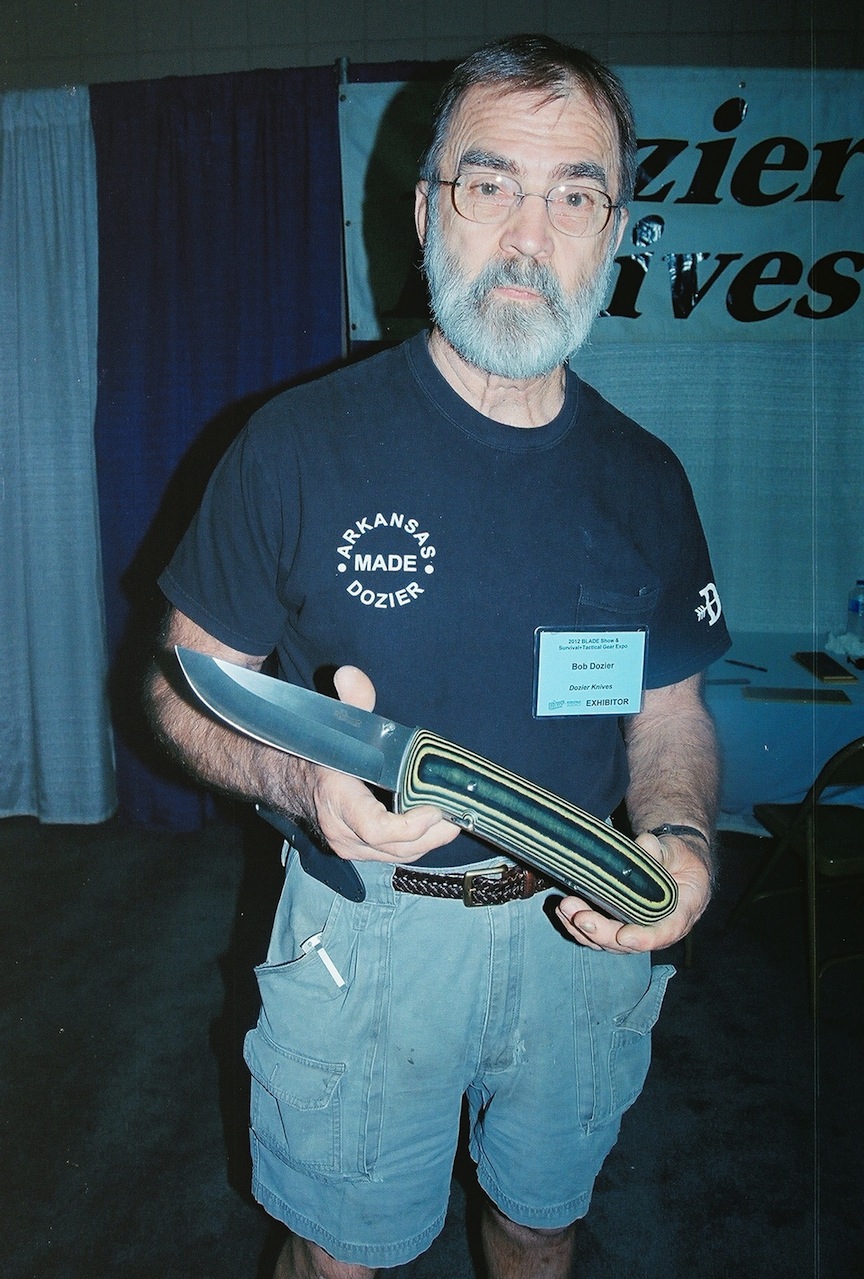
Ask the maker what blade steel he recommends. Bob Dozier holds one of his giant trappers.

A question we often hear is What are the best blade steels? A better way to approach the question is to determine what jobs the knife will be asked to perform.

Do you need a hunting knife or an everyday carry knife? A kitchen knife or a camp knife/chopper? There are others. The type of knife and how it will be used often will dictate the type of steel.

Say you need a hunting knife. Rather than ask what kind of blade steel will be best for it, research the websites of companies or makers who specialize in hunting knives. Such companies and makers will offer hunting knives not only with the steels that they find best for hunting knife purposes, but also with the edge geometries that the companies and makers feel they are most accomplished at making/offering.

Edge geometry refers to the blade’s grind and edge. If the grind and/or edge is too thick or otherwise not formed properly, it doesn’t matter how good the steel is—the knife will not cut well. As for the grind itself, there are many—hollow, flat, convex, chisel, etc., and combinations thereof. Usually the companies or makers employ the grinds they are best at. In cases where you have the option of picking the grind from a custom knifemaker, ask him which grind he’s best at and go with it.

Another important factor is the heat treatment of the steel. In fact, a low-grade steel heat treated properly often will outperform a high-grade steel with a substandard heat treatment.

In addition to the type of steel, ask how it is heat treated. While many makers are adept at heat treating their blades, many simply ship their blades off to professional heat treaters who specialize in the process. Blades heat treated by the pros usually will be heat treated properly and according to industry standards.

High-grade steels such as CPM S35VN, ZDP-189 and others are cutting tigers but can be difficult to sharpen and are more expensive. Lower-grade steels such as 440A, 5160 and others, all things being equal (including proper heat treatment and edge geometry), may not perform as well or hold an edge as long, but are usually easier to sharpen and will do most everyday cutting jobs that most people require. And, knives with such steels should be less expensive. In the case of 5160, while it is not a stainless steel, if you clean it and dry it off after each use, you should not have a problem with corrosion. The same is true with most non-stainless steel knives. Meanwhile, it’s not a bad idea to clean and dry off stainless steel knives after use as well. They can corrode, too—it’s just that they corrode less, as their name indicates.

Bottom line: Tell the company and maker what you plan to do with the knife. They make knives for a living and usually will be able to fit you with the proper knife and suitable blade steel for your needs.


The latest issue of BLADE is on newsstands now!Recommended:

Stay abreast of the latest developments on this and many more knife rights issues with a subscription to BLADE.

Knife Of The Day XV: O’Hare Tanto

     Our Knife Of The Day is Sean O’Hare’s tanto. It sports a flat-ground, 3.75-inch blade of CPM-154 stainless steel, a stabilized buckeye burl handle with a bird’s-beak butt, and a 416 stainless steel guard. Sean also made the leather pouch sheath. His price for a similar piece: $395.

     “This one is a bit of a departure from my norm as it is a tanto style,” Sean noted. “I was very pleased with the way it turned out. So far this is the only [tanto] I have made. It sold right away at the New York Custom Knife Show.”

     For more information contact Sean at [email protected].

     For more on the latest knives, knife legislation, knifemaking instruction, knife trends, knifemakers, what knives to buy and where and much more, subscribe to BLADE® Magazine, the World’s No. 1 Knife Publication. For subscription information click on http://www.shopblade.com/product/blade-magazine-one-year-subscripti…?r+ssfb013012#BL1SU

Bent, Shot Whiskey Knives Keep Chopping

The June issue of BLADE® magazine features a story about wilderness survivalist Creek Stewart and his line of Whiskey Knives, made by Hank Gevedon and crew at Reptile Toolworks in Mt. Vernon, Kentucky. Whiskey Knives are carefully tested, but Hank likes to destroy a few from time to time to spot-check their quality. He starts by bending a Whiskey Corvid model to show that the hard outer layer of the A36 carbon steel will crack when bent in half, but that the knife will stay intact because of the tough inner core. Then he gets to shooting them. Besides, Hank’s just entertaining to listen to.

A Bent Whiskey Corvid Knife Still Chops and Slices

Hank Shoots A Whiskey Corvid  with an 8mm Mauser FMJ

So what does all that mean to the knife owner? Well, you won’t want to bend your knife in a vise or shoot it at the range, but the following review of the destructive testing explains how the makuri method of construction can produce a sharp, yet tough knife, ideal for hard-use bushcrafting needs.

What Does Destructive Testing Reveal About Whiskey Knives?

Sure They’re Sharp, But How Sharp?

Know How to Sharpen Your Knives

Knife sharpening is a lost art; learn how to keep your knives and tools sharp.
A collection of knives is only as good as it is sharp. Understand how to sharpen all styles of grinds, along with other tips on caring for your collection.

The blades on Whiskey Knives are asymmetrical hollow-ground, meaning that you only need to sharpen one side, the one with the Creek logo on it. The other side just requires a touch-up. Reptile Toolworks puts instructions in the crate with each Whiskey Knife it sends out, but what about your other knives? “Sharpen A Knife, And Care For Your Collection” by BLADE editors covers all aspects of sharpening, demystifying the process and ensuring you have the knowledge to keep your knives sharp at home and in the field.

Merry Christmas and/or Happy Holidays Everyone!

0

On behalf of the staff of Knife Showcase, BLADE Magazine, the BLADE Show and everyone at Krause Publications and F+W Media, here’s wishing you a very Merry Christmas and/or Happy Holidays, and a most fruitful New Year.


The image of the Christmas tree decorated with Randall knives is courtesy of Dale and Laura Dorris of Dorris Wood Creations Custom Display Cabinets & Stands at http://www.DorrisWoodCreations.com.


And no–the image is not photoshopped. Those are real Randall knives!

James Black Descendant Gets a Bowie

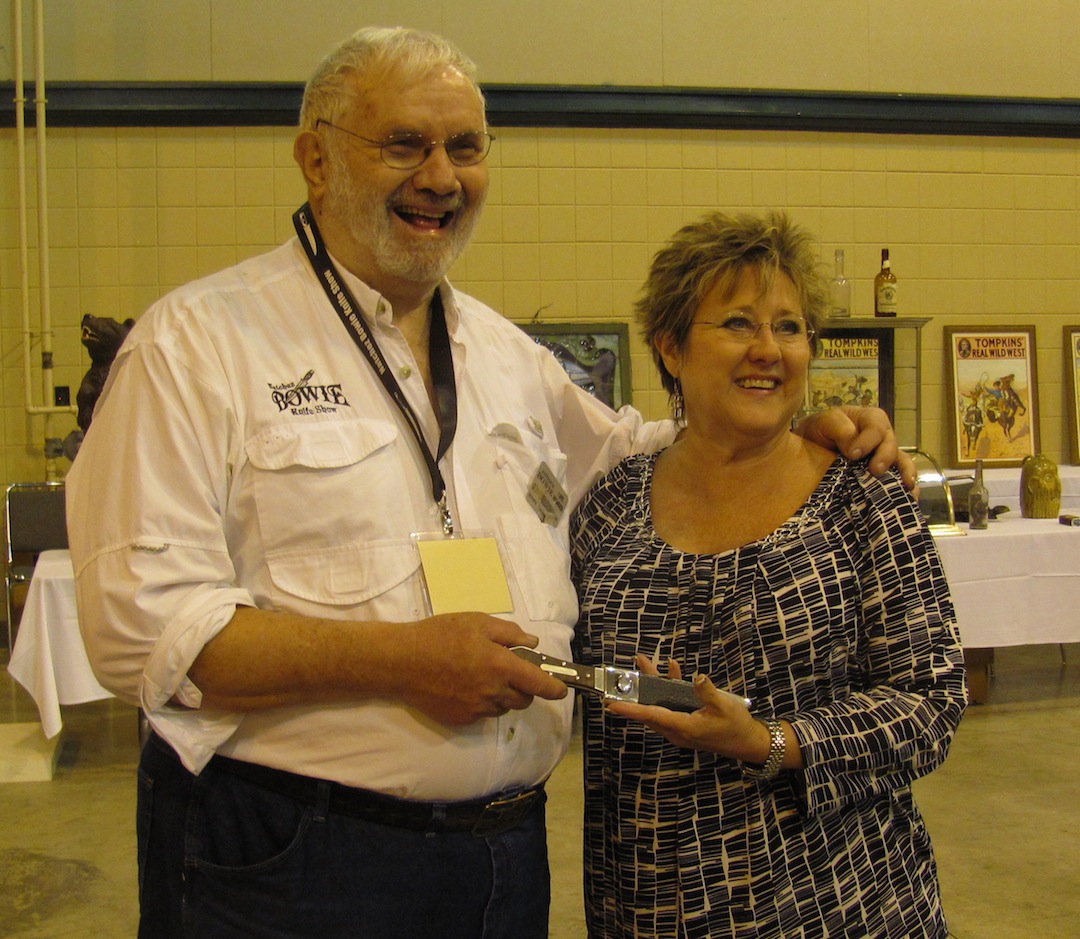
While there is still no definitive proof that James Black made a knife for Jim Bowie, one thing is certain: a descendant of Black’s received a “recreation of a James Black knife” during the Natchez Antique Bowie Knife Show last month.


Celia Johnson accepts Jim Batson's recreation of a "James Black bowie" from Batson.
Jim Batson presents a “recreation of a James Black bowie” to Celia Johnson.

ABS master smith James L. “Jim” Batson made the reproduction of the knife and presented it to Mrs. Celia Johnson, who claims to be a descendant of Black. She says she is descended from Gradison DeRorysten Black, the son of James Black. Celia and her husband, Jerry, traveled from Baytown, Texas, to accept the silver-mounted knife and sheath fashioned by Batson and based on what is believed to be a Black knife in the Historic Arkansas Museum in Little Rock, Arkansas. The Johnsons stayed at the Dunleift Hall, owned by Mike Worley, during the show. Worley sponsored the show, which was held in Natchez, Mississippi.


The Johnsons brought a scrapbook full of old family pictures and a handwritten list of ancestors and originally showed it to Batson during the American Bladesmith Society’s 2012 All-Forged Knife Expo in San Antonio, Texas (see page 44, July 2012 BLADE® www.blademag.com). Batson is one of the world’s foremost authorities on Jim Bowie and James Black. He has conducted extensive research on Bowie and bowie knives, written any number of stories on the subject for BLADE, a book on Bowie’s famous Sandbar Fight, coordinated Bowie Symposiums at the BLADE Show (www.bladeshow.com), and much more. He also coordinates the Batson Bladesmithing Symposium each spring in McCalla, Alabama, and is a past multi-term chairman of the ABS.


Batson pored over the Johnsons’ documents and pictures at the 2012 San Antonio show. Among the topics of their discussion was the famous 19th-century daguerreotype that reportedly shows James Black and Judge Jacob Buzzard, the physical resemblance of the man some believe is Black in the daguerreotype to that of some of Celia’s ancestors, and Black family history in general.


For the latest on knives, knife news and more, stay honed at www.blademag.com (www.blademag.com).


Advertisement

Must Read Articles

Read this before you make a knife

Knifemaking 101 – Read This Before You Make a Knife

  by Wayne Goddard My experience has taught me that there's nothing like digging in and getting started. I've often said the hardest part of the...
how to forge damascus steel

How to Forge Damascus

Advertisement
Advertisement