
The BLADE Blogs

The blogs of the BLADE editors, Steve Shackleford and Erin Healy.

Learn Japanese Swords at BLADE University

BLADE University/Wally Hostetter
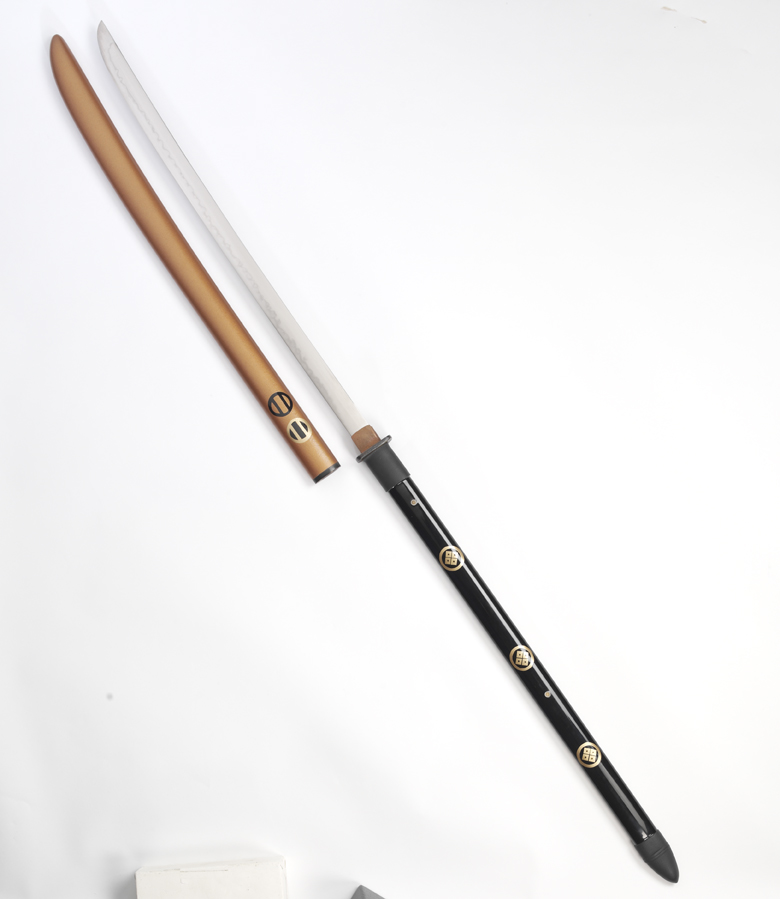
Learn all about Japanese swords from Wally Hostetter at BLADE University. Wally made the mounts for Steve Schwarzer’s Nagmaki, a repro of a pole arm with a sword-like blade used by 14th-17th-century Japanese warriors to cut the legs of the horses of enemy cavalry.

Japanese swords combine the elements that make everything about the world of blades fascinating—history, mystery, outstanding cutting performance, beautiful craftsmanship, collectibility and more—and Wally Hostetter will school you on it all at the 2nd Annual BLADE University.

Hostetter’s class will be one of many at BLADE University, which will be held the day before (June 4) through show Saturday (June 6) of the 2015 BLADE Show June 5-7 at the Cobb Galleria in Atlanta.

In his class entitled “Collecting & Maintaining Japanese Swords,” Hostetter will explain what to look for when you buy a Japanese sword—including different patterns/designs and genres, the proper fittings and more—and how to maintain and care for it once you’ve bought it.

Hostetter is a long-time swordsmith who also is known for making sword mounts for such world-renowned swordsmiths as Steve Schwarzer. From the tsuba (guard), habaki (collar), fuchi (pommel or metal hilt sleeve) and other mounts, Hostetter makes and knows them all quite well. No matter what question you have concerning the proper construction, sword terms, traditional Japanese handle wraps, menuki and more, Wally’s your man. He will bring examples of Japanese swords and encourages students to bring cameras and photograph them for future reference.

Wally has collected Japanese swords for 18 years and does his own restoration work on them. He also has done restoration work for others over the past eight years. They include Troy Baxley, president of the Florida Token Kia; Bob Elder, owner of East Coast Martial Arts Supplies Inc., and his students of Toyama Batto Jutsu/US Batto Federation; ABS master smith Don Fogg; and martial arts practitioners throughout the USA.

Hostetter forges katanas, wakizashis, tantos and Naginata blades, including all the fittings and poles for the latter. “I have wrapped many tsuka [sword handles] and done some intricate patterns not seen everyday,” he noted. “On sayas [scabbards] I have reproduced a lot of the old finishes and techniques. I also practice Toyama Batto Jutsu. We have cut many rolled tatami/wara [rolled straw mats] with the swords, wakizashis and tantos I make.”

For more information on Wally’s class and others, how to entroll, etc., visit BLADE University.


Also Check Out:
Sword Making Secrets.Sword Making Secrets (Download)
Author Don Fogg is here to help you build one of the big blades, the lengthy lopper — the sword! His step-by-step sword-making process resonates well with your fellow knife enthusiasts who can’t get enough of the romance, history, look, feel, usefulness, ethnic heritage and physical impressiveness of swords. Download here
DMT Brings You: Two Ways to Sharpen Your Hunting Knife

As every hunter knows, a hunting knife needs proper care, and there are countless methods for sharpening a hunting blade, depending on how the knife is used in the field or on the trail. The experts at Diamond Machining Technology (DMT) have composed a “how to” article below to help knife users understand which sharpening techniques are best for different hunting-knife tasks. If you enjoy the below, you’re also certain to like: “Sharpen a Knife & Care For Your Collection.”

Two Ways to Sharpen Your Hunting Knife

By Stan Watson

The hunting knife, whether the folding or fixed-blade type, is an invaluable tool for hunters since its hard, strong steel blade is made for cleaning and butchering game. But, truth be told, many outdoorsmen like to carry a hunting knife as an all-purpose cutting tool. So, when you think about the best way to sharpen your hunting knife, first think about how it will be used.

If you plan on using the blade for gutting and field dressing animals, you need a razor sharp blade. The hide of an animal is tough and you want your knife to make easy, smooth cuts through the skin and muscle. To get that result you want to sharpen at a shallower angle.

I always recommend manual sharpening on a diamond stone, because it removes only the necessary amount of metal—protecting your knife and prolonging its life. With diamond stones from DMT Diamond Machining Technology, you never need oil. If you want to moisten the stone, you can use water, but it’s not necessary. Start with a coarse grit diamond stone and, holding the knife so the blade meets the stone at a 20- to 22-degree angle, stroke the blade with modest pressure across the stone six or eight times; then change direction (if you began by stroking away from you, switch and carefully stroke the blade towards you using the same motion). Diamond stones sharpen blades quickly, so there’s no need to rush your strokes. Take the time to handle your blades and edges in a safe manner.

Once you’ve finished with the coarse grit, move on to a fine grit and repeat the process. Then, to get the razor edge you need, give the blade a few strokes along an extra-fine grit. Remember, the finer the grit, the lighter your strokes should be. The result will be a blade that has a straight, true sharp edge for cleaner cutting and dressing.

For those of you who like the feel and performance of a hunting knife, but want to use it as an all-purpose cutter, you don’t need the razor sharpness that comes with an extra-fine grit stone and a shallow sharpening angle. It’s better to have a micro-serration on the blade.

To get that result, use just a coarse grit diamond stone and hold the knife so the blade is at a steeper angle, about 24 to 28 degrees. This will give your blade greater strength to stand up to tough cutting tasks. A surface with tiny serrations allows the blade to work in a sawing motion—unlike the straight razor-sharp cuts you need when gutting a deer, for example.

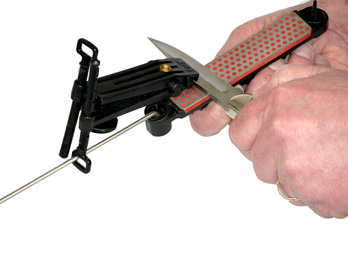
Whether you’re a pro or novice hunter, it can be hard to maintain a precise and consistent angle throughout the sharpening process. One solution is DMT’s Aligner Blade Clamp, which provides for guided sharpening to help you set and keep the correct angle for the task at hand. The Aligner is easy to use, offers seven-angle adjustability and accommodates wider and thicker blades. Plus, the clamp won’t damage your blades.

A well-made hunting knife can last for years, especially if you keep it sharp. With diamond sharpening stones from DMT, you will be able to quickly, simply and safely get the edge that keeps your knife working to its fullest potential.

Stan Watson is the technical director for Diamond Machining Technology, manufacturer of a full line of Made in the USA diamond sharpening tools for use in woodworking, camping, fishing, hunting, outdoor and winter sports, culinary arts, gardening, police/security and industrial applications. He is the holder of 11 engineering patents in the sharpening industry. He can be reached at [email protected].

If you enjoyed the above, you’re also certain to appreciate: “Sharpen a Knife & Care For Your Collection.”

The Whole World Will Be Cutting

IMG_0434 copy
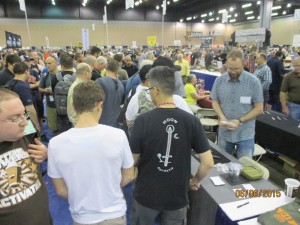
The whole world will be cutting at the 35th Annual BLADE Show June 3-5 at the Cobb Galleria Centre in Atlanta. Knifemaker Jens Anso (behind the table) waits on customers at last year’s show.

The whole world will be cutting at the 35th Annual BLADE Show. Question is, will you be among them?

June 3-5 at the Cobb Galleria Centre in Atlanta, the BLADE Show is the event knife enthusiasts point to year round, with many saving their knife “fun” money just for this one show where custom knifemakers, factory knife companies, and knife accessory, material, machine and tool suppliers and more introduce their latest knives and knife-related products.

Whether you’re a veteran of or a newcomer to the “sharp wars,” have your ducks in a row so you will miss as little as possible at the show. (Let’s face it, with almost 1,000 exhibitors spread out over 144,000 square feet and non-stop knife action for most of the three-day event, it’s hard to see it all.) With that in mind, here’s a short list of things to do and see:

•Get a BLADE Show Program: Available for free in the show lobby, the program will have the show’s most-up-to-date exhibitor listings so you will know how to find your favorite knifemaker, knife company, dealer, supplier, purveyor, collection or what have you. Also, check the program for special customer deals, knife giveaways, contests, live demos, silent auctions and other cool offers;

•If you don’t know, ask: Everyone’s knife family at the BLADE Show, so if you don’t know something, ask. And if the person you ask doesn’t know, ask if he knows someone who does. This includes finding out where the hottest knives are. Strike up a conversation with those in the show and ask them what they’ve seen that’s cool. You’ll be surprised at how you can find some really great knives this way;

•Check out the Knife-Of-The-Year Awards display sponsored by Smoky Mountain Knife Works in the show lobby for the entrants in the factory knife awards competition;

•To find out who wins the BLADE Magazine Knife-Of-The-Year® Awards, which are sponsored by Smoky Mountain Knife Works, the BLADE Show Custom Knife Awards and who the inductee to the BLADE Magazine Cutlery Hall Of Fame© is, see the signs outside the show entrance Sunday morning;

•For the complete BLADE University class schedule—including J. Neilson’s class on how the Forged In Fire TV show selects contestants—and the BLADE Show seminar slate, see the signs in the show lobby;

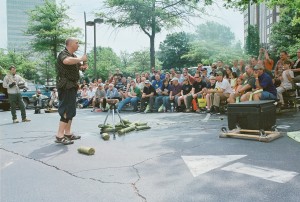
•Be sure to attend the first-ever BLADE Show Women’s World Championship Cutting Competition and the 14th Annual BLADE Show Men’s World Championship Cutting Competition at 4:15 p.m. Saturday in The Courtyard under a new, sprawling tent sponsored by Burr King;

•Check out The Pit, the sunken lounge in the lobby of the host hotel Renaissance-Waverly each evening after the show, including the spillover from The Pit outside the hotel entrance, the perfect place to have fun and compare show notes with your fellow show patrons;

•Meet BLADE Magazine Cutlery Hall-Of-Fame© member Ken Onion at the CRKT booth Saturday and Sunday from 11 a.m. to noon.

There’s much more, of course, much of which will be up to you and your inquisitiveness in finding it at the world’s most important knife event. See you there!


BLADE Show: You, Your EDC and the Police

The BLADE Show (www.bladeshow.com) is the place to learn all about knives—including what to say when you are stopped by law enforcement for carrying one.

BLADE seminar: Know what to say and not say to law enforcement when carrying a knife.
In a special BLADE Show seminar, learn how to deal with law enforcement when you are stopped for carrying a knife.

Have you ever been stopped for carrying a knife? What did you say to the officer? Did he ask you why you carried a knife? What was your response? Did he ask to search you? What was your response?

If none of these things have happened to you, that’s a good thing. But what if they do? What would you do?

Chris Conte is a legislative counsel for the National Rifle Association’s Institute for Legislative Action. He will conduct the seminar “You, Your EDC and The Police” during the BLADE Show & Living Ready Expo May 31-June 2 at the Cobb Galleria Centre in Atlanta. The seminar will be show Saturday at 4 p.m. in Room 109.

According to a spokesperson close to Mr. Conte, “Proper communication and understanding of the culture and expectations of both law enforcement and the law-abiding citizen with a knife is crucial to avoiding unnecessary conflict. During interactions with civilians, law enforcement frequently view knives as the most commonly possessed ‘weapon’ and individuals as ‘armed,’ posing a threat to their personal safety and others.

“Law-abiding citizens, believing their knife is an essential, valuable tool, need to know how to behave and respond to law enforcement to avoid legal problems and what to do to protect their liberties. Mr. Conte will present an overview of the legal and practical dynamics of how such encounters can go well or go poorly based on case law, and based on his work as a certified law enforcement instructor in encounters with civilians carrying handguns.”

All BLADE Show ticket holders are admitted free to the show’s seminars. Seating is limited, so be sure to get there early.

BLADE Show: Euro & Asian Sword Seminars

Watch those who know how use a selection of swords to recreate the way they actually were employed in combat in the days of yore in the fast-paced “Historical Swordplay Techniques” by the Reinhardt Legacy Fight Team at the BLADE Show (www.bladeshow.com) May 31-June 2 at the Cobb Galleria Centre in Atlanta, Georgia.


The team will present seminars on both European and Asian swordplay techniques. The European rendition will be Saturday, June 1, at 12:30 p.m., and the Asian version will be Sunday at 10 a.m. Both seminars will be conducted in “The Courtyard”—the parking lot of the BLADE Show’s host hotel, the Renaissance Waverly.


Led by such team members as Pembroke “Whit” Williams, David Lanyon and others, the Reinhardt Legacy Fight Team is named in honor of Hank Reinhardt, swordplay guru and genius behind Museum Replicas, a long-time sword, armor and accouterments retailer out of Conyers, Georgia. Hank searched the world over for the finest swords and armor for sale in the MR catalog. He was legendary for his ability to spar with swords, and retained much of his quickness and technique well into his later years. His swordplay seminars at the BLADE Show beginning in the early 1990s and up until his death in 2007 were replete with fast action, lavish costumes and the best in sparring swords.


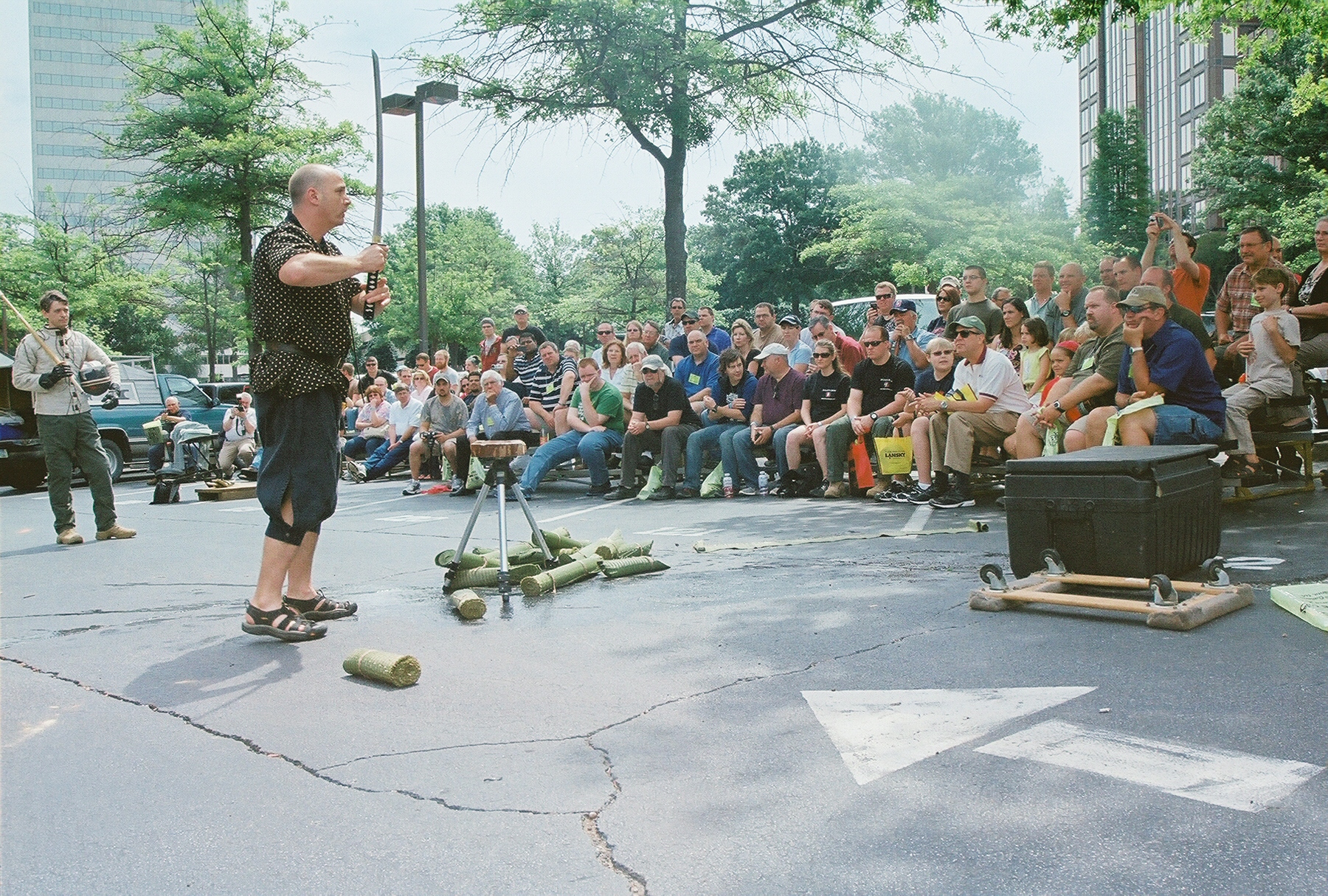
Today, the Reinhardt Legacy Fight Team carries on Hank’s legacy, training those interested in historic swordplay techniques and conducting seminars at any number of events, including the BLADE Show. Equipped with the latest in safety equipment, masks and more, members of the team take turns squaring off in spirited sparring sessions, demonstrating the techniques used in days gone by. Some of the sessions get quite frisky and are always entertaining to watch.


Get there early to secure a bleacher seat.


The BLADE Show will present the Reinhardt Legacy Fight Team's seminar on historic swordplay.
Whit Williams explains historic swordplay to patrons at last year’s BLADE Show.

Here Are The Top 5 U.S. Military Knives

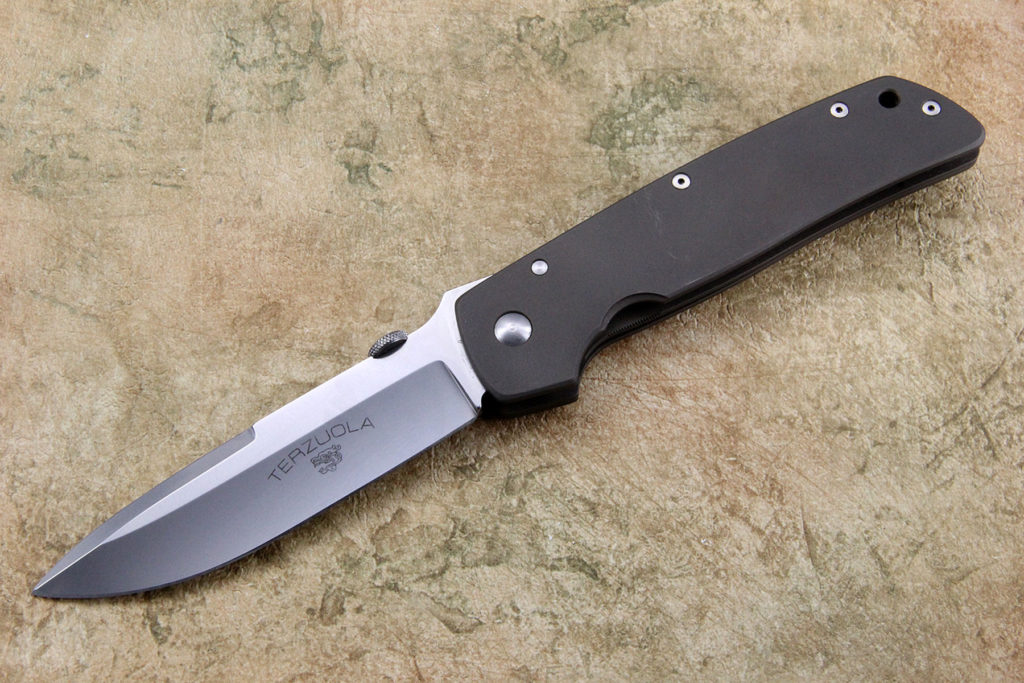
ATCF and BLADE
Bob Terzuola’s ATCF remains among the most iconic of tactical folders and is featured in the latest BLADE®.

The Gunny is n BLADE.
The Gunny shares his ample knife knowledge in the special military issue of BLADE®.

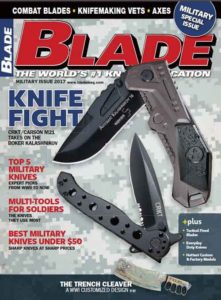
What are the top 5 U.S. military knives of all time? What’s it like to be married to the military, each other and knives all at the same time? Can the modern knife age be divided into two eras—before and after tactical folders? The latest issue of BLADE®, our special annual military issue, answers these questions and more, and is on newsstands and/or available in the digital edition now!

The top 5 U.S. military knives of all time–wow, that covers a lot of ground, don’t you think? BLADE polled such military veterans as USMC Staff Sgt. R. Lee “The Gunny” Ermey, Special Forces MSG/BLADE field editor Kim Breed, Navy EOD Chief Petty Officer Rob Cude, Special Forces/Green Beret Mark Carey, USMC Sgt. Les George and others to determine the elite knife grouping. Find out the results on page 42.

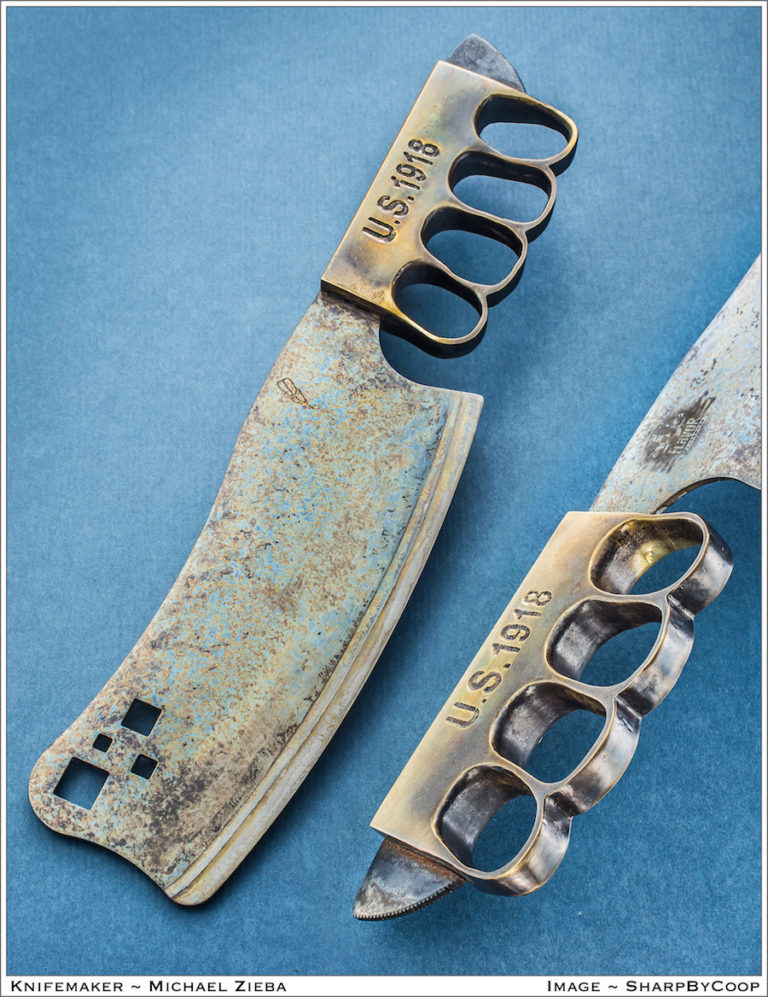
Trench Cleaver and BLADE
Michael Zieba’s Trench Cleaver includes a handle from the iconic World War I Trench Knife in the latest BLADE®.

Army SFC Michael “Rod” Rodriguez (retired) of the 7th Special Forces Group and SFC Kelly Rodriguez and also CW3 Jeremy Valdez (retired) and Sgt. Rachel Valdez (retired) are respective husband-and-wife teams who saw action in Iraq and Afghanistan, and now design knives for CRKT in the company’s “Forged By War” series. Read how these military heroes served their country above and beyond the call and their connection to knives—including Rod, who forges knives and had his portrait painted by President George W. Bush for Bush’s book, Portraits of Courage: A Commander In Chief’s Tribute To America’s Warriors—and more in Erin Healy’s story, “On-Point With Love & War.”

Ever since tactical folders became the hottest knives of all in the 1990s, knife observers have predicted time and again that the folders had peaked and/or were on their way out. Now, about a quarter of a century later, tactical folders maintain their lofty position as being among the most popular knives anywhere. Get the complete story on the longest-lasting knife trend going in Mike Haskew’s “The Renaissance Knife.”

Top 5 U.S. Military Knives and BLADE
See how many of the Top 5 U.S. Military knives of all time you can pick in the latest BLADE®!

There’s much more in the latest issue but you’re going to have to buy it to find out what all that entails. Get your copy on newsstands or the digital edition, or subscribe to the domestic, Canadian or international print editions, or to the digital edition now!

Knives 55,000 Years Older Than Previously Thought

0

Looks like man’s oldest tool just got older.

According to the journal Science, prehistoric humans were using a “highly skilled method” of making knives 75,000 years ago, about 55,000 years earlier than previously thought.

It had been assumed that the technique of “pressure-flaking”—otherwise known in the knife industry as “knapping” and practiced by Errett Callahan, Eric Bergland and others—was invented by Europeans 20,000 years ago. Basically, knapping consists of exerting pressure against the stone knife with another tool to create a sharp edge.

However, University of Colorado researchers found the same technique used in sharpening the “stone weapons” discovered in Blombos Cave in South Africa and knapped some 55,000 years earlier.

The researchers arrived at their conclusion by knapping some knives of their own and comparing the results to the stone points found in the Blombos Cave. The similarities between the results of the researchers’ knapped knives and many of the stone points from the cave led them to conclude the technique was used much earlier in the Middle Stone Age.

Information on exactly how the stone points were dated was unavailable at press time.

For more information visit http://www.thehindu.com/sci-tech/science/article863181.ece

Advertisement

Must Read Articles

Read this before you make a knife

Knifemaking 101 – Read This Before You Make a Knife

  by Wayne Goddard My experience has taught me that there's nothing like digging in and getting started. I've often said the hardest part of the...
how to forge damascus steel

How to Forge Damascus

Advertisement
Advertisement