



I have a ” how- to” scrimshaw dvd out. I am offering Free shipping on the dvd and many other items until Dec. 20 2010. There is also a nice selection of supplies, as well as scrimshawed jewelry, knives, ivory beads, etc…www.sandrabradyart.com
2017 BLADE Show Knife Makes The Cut
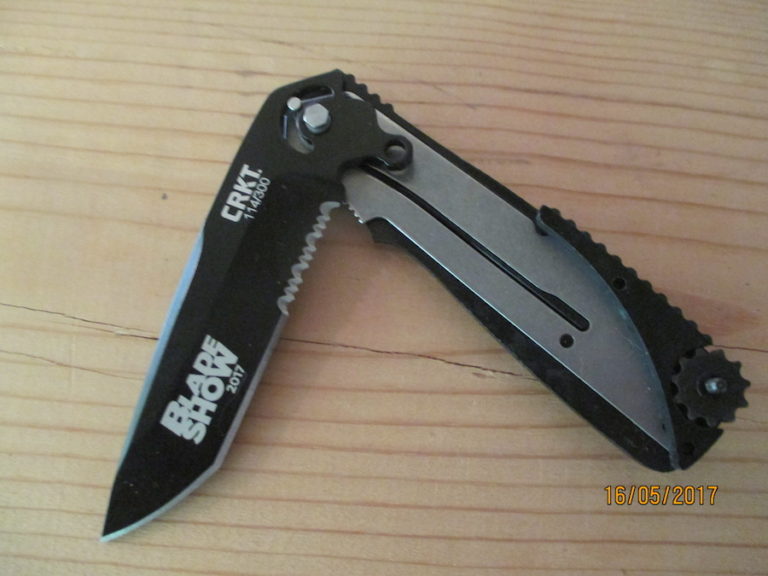
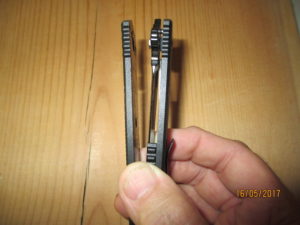
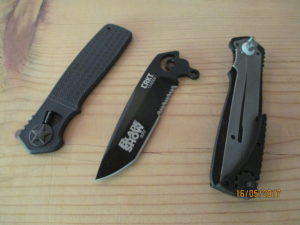
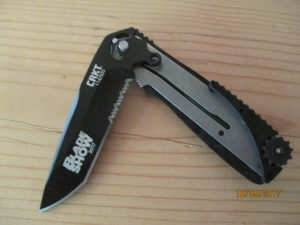
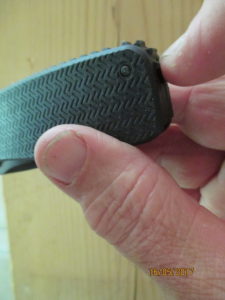
It’s the Official 2017 BLADE Show Knife by CRKT and I couldn’t wait to see what makes this puppy go.
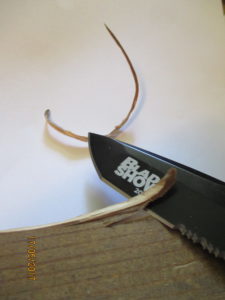
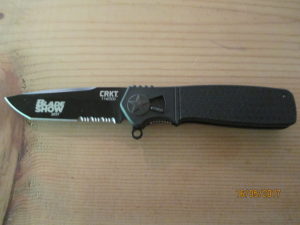
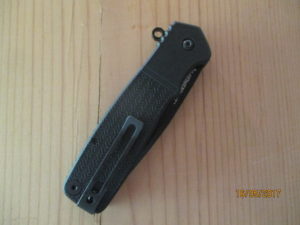
Designed by BLADE Magazine Cutlery Hall-Of-Fame© member Ken Onion, the Homefront Tactical features a 3.427-inch blade of 1.4116 stainless steel with an EDP coating and a combo edge. The flipper folder secures via a linerlock and the handle is a textured glass-reinforced nylon with a blade-tip-up pocket clip. Weight: 4.3 ounces. Closed length: 4.684 inches.
The centerpiece of the 2017 BLADE Show Knife, however, is Onion’s “Field Strip” technology, which enables you to easily disassemble the knife for cleaning and reassemble it in a matter of seconds without the need of a takedown tool of any kind.
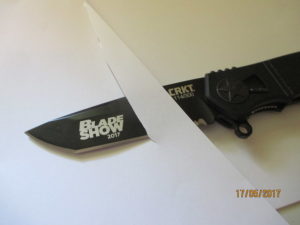
Sounds easy but what about people with 10 thumbs like me? I pulled out the 2017 BLADE Show Knife and opened and closed it a few times. The flipper opener works well. I tried whittling some curlicues from a board and cutting stationery, both with good success. The blade was very sharp out of the box.
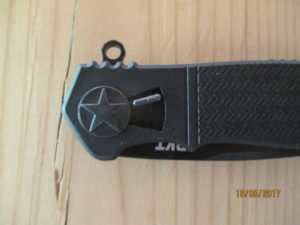
The directions for the “Field Strip” feature are pretty straightforward. With the knife in the closed position, push the lever on the bolster up. No problem. Rotate the wheel on the handle butt clockwise until the handle separates. The wheel is notched with gears. I found it turned well either with one of my 10 thumbs or my “second thumb” that passes for an index finger. The handle separates into three pieces—two handles and the blade—all simple to clean when the time comes.
To reassemble, put the three pieces back together, press down on and hold the pivot, rotate the wheel counter-clockwise until snug, and push the pivot lever down. It’s pretty easy, even for me.
A couple of things: If, after reassembly, the pivot lever balks any when you try and push it down, tweak the screw on the reverse side of the pivot pin until the lever cooperates. Also, be sure the white washers on the pivot pin stay put when you have the knife apart. If they were to come off for any reason during cleaning and/or reassembly, they could be difficult to find. You may even want to remove them during cleaning and apply a small dab of oil to keep them lubricated.
All in all, the Homefront Tactical is a cool knife—and the fact that it’s the Official 2017 BLADE Show Knife makes it even cooler. It features the BLADE Show 2017 logo on the blade and is limited to a run of 300.
To get yours, visit bladeshop or attend the 36th Annual BLADE Show June 2-4 at the Cobb Galleria Centre in Atlanta.
There May Be No Time Like Now to Buy a Bill Moran Knife
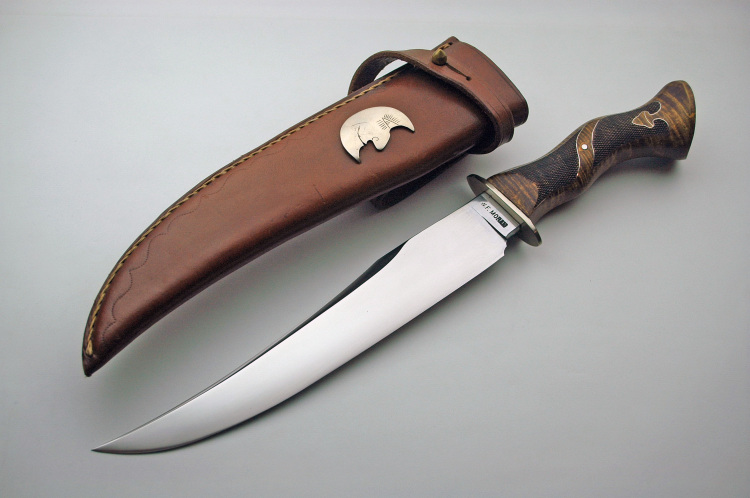
A coveted ST-24 by Blade Magazine Cutlery Hall-Of-Fame© member Bill Moran in wire inlay and checkering comes with a classic silver-half-moon leather sheath. Moran used the “W.F. Moran” stamp starting in 1980, typically on larger knives. It is not seen much anymore. (Dave Ellis photo)
By Dave Ellis
I still see Blade Magazine Cutlery Hall-Of-Fame© member Bill Moran each time I hold one of my many Moran knives. I miss visiting with Bill at the BLADE Show and the Art Knife Invitational. I miss showing him my latest Moran acquisition and watching his eyes light up as he explained how the knife came about.
I have collected a wide variety of Moran knives over the past 30 years. The one I have found the easiest to resell because of their collectibility and historical importance, in no particular order, are the ST-24, cinquedea, Southwestern bowies, 50-year anniversary editions, his damascus pieces, folders—he made fewer than 50—and quillon daggers, especially those in damascus.
In general, the more contemporary the Moran knife, the greater its value and collectibility. However, the cinquedea is an important exclusion to this rule. Bill made only about seven of them and most or all have Lime Kiln stamps, which indicates the knives were made sometime between the mid-1950s and 1973. I have sold a Moran cinquedea for over $30,000.
Value Enhancers
Some of the features that increase Moran knife values are wire-inlaid handles and sheaths, accompanying display boxes made by Bill, the knives that appear in the book written by Cutlery Hall-Of-Famers B.R. Hughes and Houston Price, Master of the Forge, the 50-yrs. stamping, and the newer raised-leather-style sheaths.
Since Bill’s passing in 2006, his knives have had a slight increase in value, though nowhere near the jump that will occur down the road. Many of his pieces are finding their way to China, Russia and other countries. Bill was never a prolific maker, so with the limited number of knives he made, those that hit the market are coveted by collectors and dealers alike.
Damascus Moran knives are in a class of their own. Bill is recognized as the father of modern damascus and his pattern-welded blades are highly prized, and can range from a low of $7,000 to upwards of $60,000! His damascus fighters and bowies seem to be the most desirable, followed by daggers and hunters.
Curly maple is a common Moran handle material, so when you can buy one in stag or other materials, it typically costs a premium.
The knives from the 1990s are probably among the finest to leave the Moran shop. They are lighter and quicker in the hand than Lime Kiln models and usually come with the newer-style sheaths. If you are lucky enough to find one with the 50 yrs. marking, you will see that it demands a premium.
The future looks very bright for those collecting Moran knives. You can still pick up a great example at a reasonable price and rest assured that it will increase in value down the road.
Bill made his knives one at a time by hand, no apprentices, no newfangled tools. His forge, anvil and hammer should reside in the Smithsonian!
For more information on Moran knives and their values, contact the author at 760-945-7177 or visit his website, exquisiteknives.com.
For more on the latest knives, knife legislation, knifemaking instruction, knife trends, knifemakers, what knives to buy and where and much more, subscribe to BLADE® Magazine, the World’s No. 1 Knife Publication. For subscription information click on http://www.shopblade.com/product/blade-magazine-one-year-subscripti…?r+ssfb022312#BL1SU
Moran Knife Values
Carbon steel hunters $4,000-$10,000
Carbon steel fighters (ST-23 and ST-24) $10,000-$25,000
Carbon steel bowies (Southwestern bowies can bring the upper range, $6,000-$35,000
especially with composite stag handles)
Carbon steel folders $15,000-$25,000+
Damascus hunters $7,000-$20,000
Damascus fighters $18,000-$70,000
Damascus bowies $18,000-$40,000
Damascus folders (extremely rare) $20,000-“to way up there”
*All values are the author’s. Features such as matched sets, gold wire inlay—which is especially rare—special stampings and logos, handle materials and blade materials can have an impact on value.
Moran Tang Stamps
Most of Bill Moran’s knives can be valued based on their tang stamps. The rule of thumb is that newer Moran knives bring higher values. The author values each stamp using a star system, with five stars being the most valuable, four stars the next most valuable, etc.
•Damascus—Bill started using this stamp in 1973 and discontinued it around 1979. It was always used along with the MORAN stamp: 4-5 Stars
•50 yrs.—Starting in 1989, Bill began his 50-years knife project. The stamp appears only on 50 knives celebrating his 50th anniversary of knifemaking: 4-5 Stars
•WFM—Bill’s first stamp used in the late 1940s: 4 Stars
•MORAN—He started using this stamp in 1973 and still uses it today: 3-4 Stars
•M.S.—Denotes a master smith with the American Bladesmith Society, first used by Bill in 1981: 3-4 Stars
•W.F. Moran—Bill used this stamp starting in 1980, typically on larger knives. It is not seen much anymore: 3-4 Stars
•Moran (small print)—Bill used it on his miniature knives: 3 Stars
•By W.F. Moran, Lime Kiln MD—This is a common stamping first used in the mid-1950s and continued until 1973: 2-3 Stars
Moran Sheaths
Depending on materials used and how they are made, the sheaths can add significant value to a Bill Moran knife. The author values each sheath using a star system, with five stars being the most valuable, four stars the next most valuable, etc.
•Wooden sheath with silver wire inlay: 5 Stars
•New style wood-lined leather sheath with raised leather design: 4-5 Stars
•Wood-lined leather sheath with throat and tip (steel or ivory is better than brass for fittings): 4 Stars
•Wood-lined leather sheath: 3-4 Stars (rating varies depending on the quality of the half moon and other accouterments)
•Leather sheath with a silver half moon: 3 Stars
•Wooden sheath: 3 Stars
•Plain leather sheath: 1-2 Stars
New BLADE On Most Newsstands Today
The growing use of Rick Hinderer’s Lockbar Stabilizer on factory knives, the knives of BLADE Magazine Cutlery Hall-Of-Fame© member George Herron, the current status of laws governing “once-living” knife handle materials, a novel that focuses on knives like none before by the author of the book that made Rambo famous, the upcoming 175th anniversary of the Alamo and more highlight the new May BLADE, which appears on most newsstands today, March 1.
In addition to the above, the May BLADE also includes editorial mention of: the cover knife, the Acies from A.G. Russell Knives; Hinderer’s XM-24; Strider Knives’ Stealth Model SnG Gen 6 CC; Zero Tolerance 0551; Case green-bone-handle trapper and stag hobo knife; Sean O’Hare hunter; Matthew Lerch “Thorn”; Joe Kious’ Model 10 auto; Jerry Halfrich’s “Rounder”; C.R. Miles’ drop-point hunter; Chistopher Meyer’s “Ring Hilt EDC”; Scot Matsuoka’s “Inferno”; and Herron’s first bowie, Model 3 Little Dude, Model 6, sub-hilt fighters, Teddy Roosevelt “Millennium” knife, interframe folders, and stag chute knives.
Also: a profile of KA-BAR; the conclusion of how to carve knife handles, by Joe Szilaski; a review of the EdgeCraft EdgeCrafter knife and tool sharpener; the fascinating story of 87-year-old knifemaker Jack Barrett and his knives; the Benchmade 9CB Hook; Case Jr. Scout; Boker/Magnum Bailey Mini Ziel throwing knife; Columbia River Knife & Tool Crossover combo knife/shears; Wenger Evolution 81; Gerber Brush Thinner; SOG Specialty Knives & Tools Hand Axe; William Henry Studio’s Gentac folder, Geneva money clip and divot tool; Spyderco Dragonfly2 FRN; ToolLogic’s SL3; and Cold Steel Pendleton Lite.
Also: Mantis Knives “Z’mora”; Erik Fritz chute knife; Ralph Turnbull’s trapper; Victorinox “Classic SD Argyle”; Wolfgang Dell’s hunter; Timberline “Alary”; Jason Brous fighter; Nathan House utility fixed blade; Meyerco Charles Sauer skinner; Kershaw Speedform II; and mini-profiles of Andre Thorburn, Al Warren, Karl B. Andersen, Pete Maltese, Des Horn and Cliff Parker.
Also: a story on sub-hilt fighters that includes Bob Loveless’ first knife marketed under the name “Big Bear,” Edmund Davidson’s “Orgasmatron,” and also sub-hilts by Steve Dunn, Steve Johnson, Don Hanson, Marcus Lin, David Broadwell and Steven Rapp; a test of CAS Hanwei’s folding fillet knife; Henry Torres’ kitchen slicer; Ernest Emerson Knives Inc.’s CQC7BW; Serge Panchenko’s art dagger; and much more.
If you can’t find BLADE on your local newsstand, check the Barnes & Noble nearest you, or go to www.blademag.com for subscription information.
1 Week To The BLADE Show: Knives Of The Year®
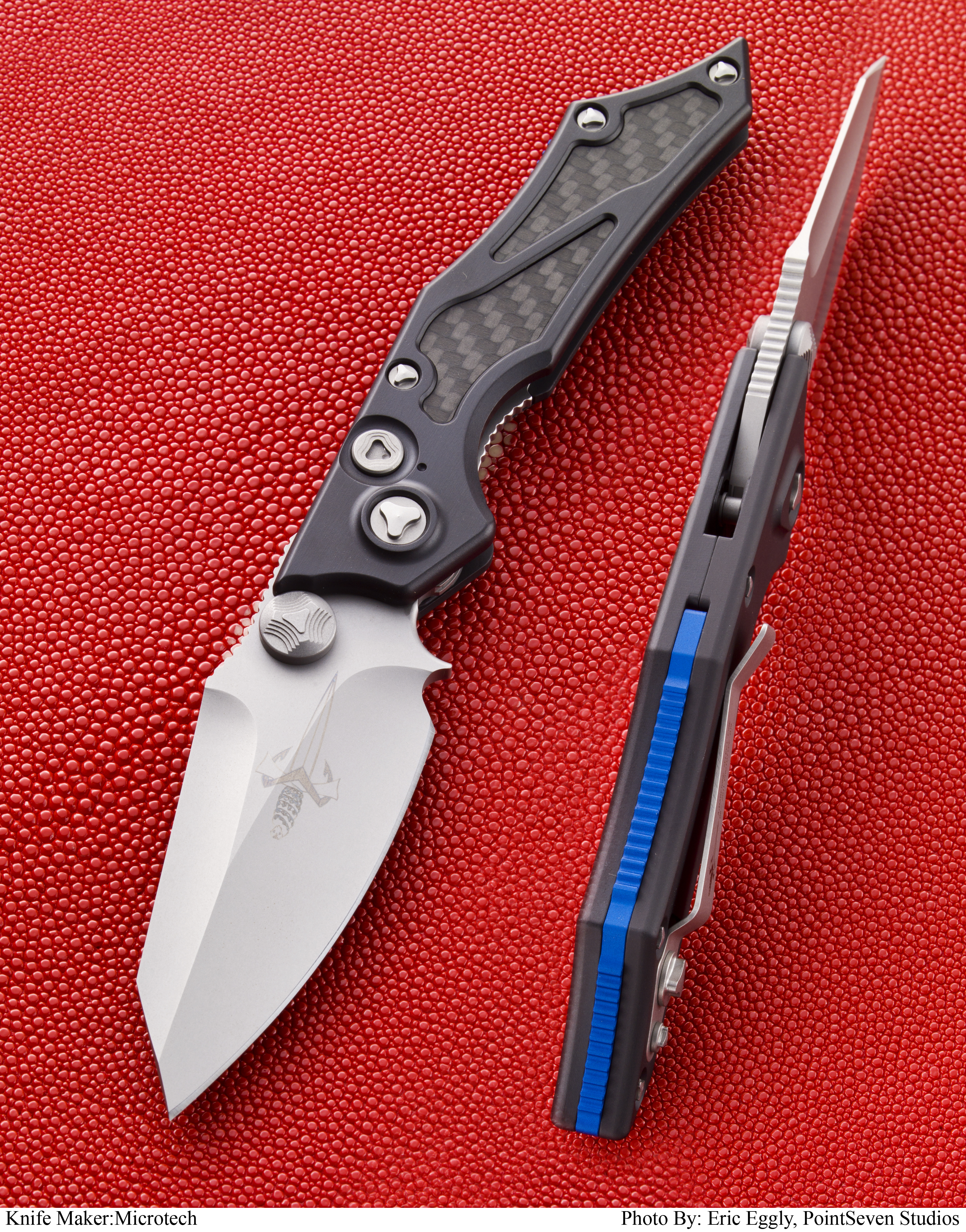 With it only seven days until the world’s most important knife event—the 31st Annual BLADE Show (www.bladeshow.com) June 8-10 at the Cobb Galleria Centre in Atlanta—that means the Blade Magazine 2012 Knives Of The Year® are on the cusp of being named.
The Blade Magazine Knife-Of-The-Year® Awards are barometers of the most successful companies in the knife industry and, as such, are production cutlery’s benchmark honors.
Qualifying exhibitors display their entries at their respective booths and in the center display area in the BLADE Show hall for patrons to examine and enjoy.
The winners will be announced at the BLADE Magazine Awards Banquet (tickets required) the Saturday night of the show, and a list of the winners will be posted at the show hall entrance the following morning.
The categories for the Blade Magazine 2012 Knife-Of-The-Year Awards (with the 2011 winners in parentheses) are: Overall® (Zero Tolerance Model 0777); American-Made® (Spyderco Native Fluted Titanium); Imported® (Spyderco Valllotton Sub-Hilt Folder); Most Innovative American Design® (Microtech SF [pictured above]); Most Innovative Imported Design® (Fox Knives USA Ax-Dobolock); Best Buy Of The Year® (Columbia River Knife & Tool Shenanigan PPS); Investor/Collector® (William Henry Studio B12 Rising Sun); Collaboration® (Zero Tolerance/Rick Hinderer Model 0560); Manufacturing Quality® (Chris Reeve Knives); Accessory® (Blade-Tech’s MOLLE-Lok); Kitchen® (Shun Fuji chef’s knife from Kershaw); Publisher’s® (New Hampshire Rep. Jenn Coffey); and Industry Achievement® (former National Knife Museum Curator Pete Cohan).
For more on the latest knives, knife legislation, knifemaking instruction, knife trends, knifemakers, what knives to buy and where and much more, subscribe to BLADE Magazine, the World’s No. 1 Knife Publication.
Knives Next For NY Ivory Sting Campaign?
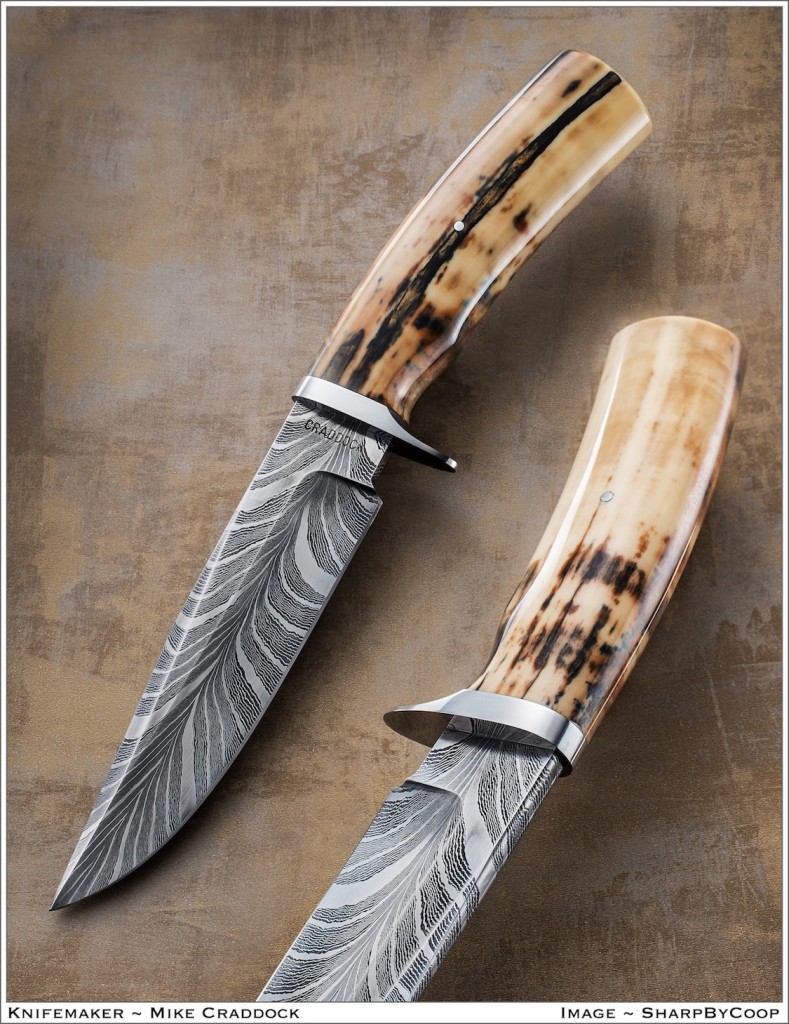
New York Department of Environmental Conservation agents conducted an ivory sting on a 72-year-old woman for selling a mammoth ivory bead necklace.
In its effort to stop elephant poaching and the trade in illegal ivory, the government has insisted that it does not care about small-time, mom-and-pop-type ivory owners, that it’s more concerned with international crime syndicates and environmental terrorists. However, the recent ivory sting operation by the New York Department of Environmental Conservation (NYDEC) on a 72-year-old woman for selling a necklace containing beads of mammoth—that’s right, mammoth, not elephant—ivory at the Pier Antique Show in New York City indicates the NYDEC apparently failed to get the government memo on the matter.
For knife enthusiasts, the question now is how soon the NYDEC—as well as its counterpart in New Jersey—will start targeting knives with handles of mammoth, mastodon and other ancient ivories, as well as elephant ivory.
Of course, though beyond all reason, mammoth ivory—the tusks of an animal extinct for thousands of years—has been declared illegal to sell in the state of New York and also New Jersey. However, since the senior citizen at the Pier Antique Show is from North Carolina, it’s understandable that she was completely oblivious to the New York law—especially considering how ridiculous it is to outlaw something millennia old in the first place. In addition to the necklace, the agents seized $1,400 worth of jewelry from her in all.
NYDEC agents did not stop with stinging the little old lady from Carolina. They also seized a couple of sets of “teethers”—whale bone or ivory sticks crudely carved by 19th-century sailors for babies to cut their teeth on—from a New York folk art dealer. The agents seized the teethers and issued both the folk art dealer and the little old lady from Carolina summons to appear in court.
Following the show, the folk art dealer and his wife learned he would need a lawyer because he faces a $5,000 fine if convicted of dealing illegal ivory. When he asked about getting a license to sell ivory in accordance with New York law, he said he was told all such license applications sit in a pile in the state capital, ostensibly collecting dust.
“This kind of government heavy-handedness is what we warned people about when the President’s Advisory Council started talking about imposing an ivory ban in March 2013,” noted Rob Mitchell of elephantprotection.org. “Instead of going after Chinese smugglers and criminal syndicates, the government is persecuting the most vulnerable and least culpable citizens in zealous pursuit of ivory ban enforcement statistics. No living animal was helped by this, but innocent small businesses will be crushed.”
The fight against the domestic ivory ban—a ban that won’t save a single elephant but will needlessly punish innocent Americans who own and trade legally imported ivory—is ongoing, and many Americans have been helping. Their “activism is why the federal government is taking its time publishing the regulation we expect will alter or revoke the Special Rule on African elephants that allows pre-ban ivory trade in the USA,” Mitchell noted. “Unfortunately, non-government organizations like the Humane Society of the United States and the Wildlife Conservation Society have been busy with a PR campaign against ivory. They are continuing to lobby both the federal government and many individual states for an ivory ban.”
You can help stop them and protect commerce in pre-ban ivory. For information on how you can contact all of your elected officials and voice your concerns, CLICK HERE.
 Recommended for You:
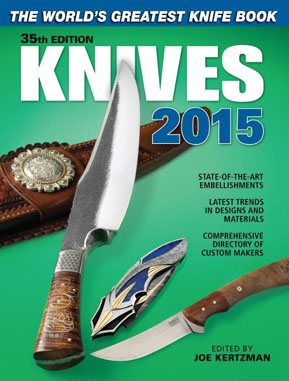
See the latest knives, swords, and edges of all types, and explore the latest trends in blades, steels, styles, and materials. Gaze upon a “State of the Art” section parading engraved, scrimshawed, jewel-inlaid, carved, etched, sculpted and forge-welded, and Damascus and mosaic-damascus knives. Click here.
Your One-Stop Knife Road Map
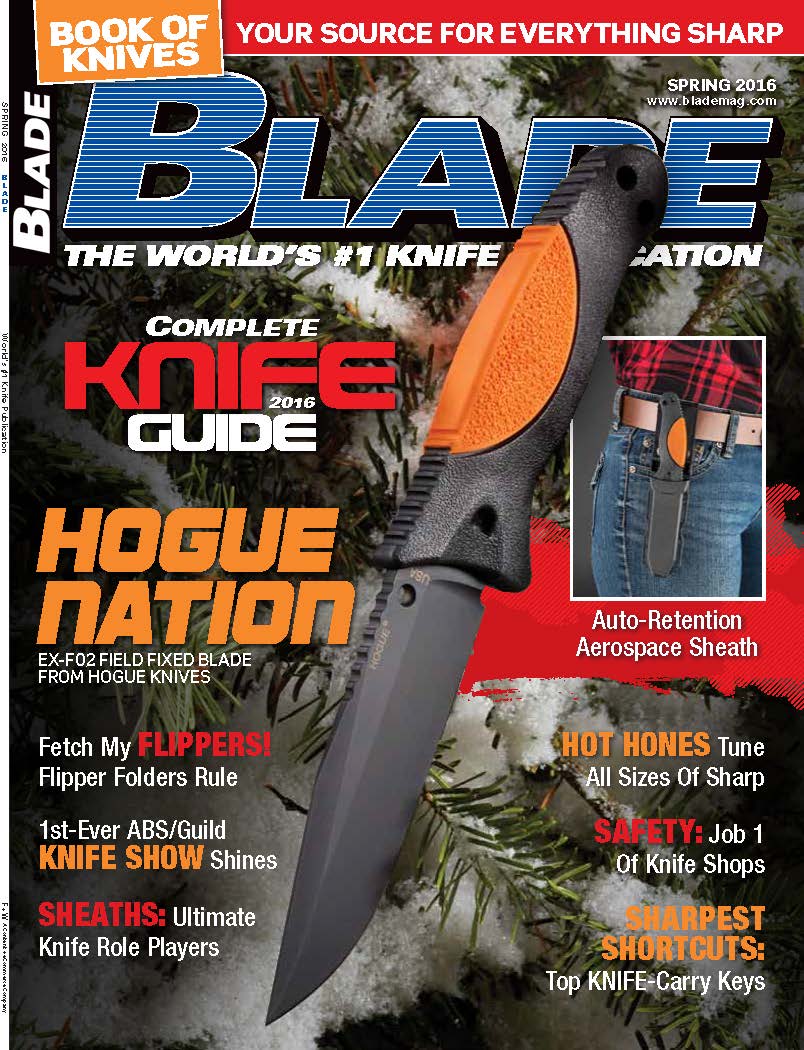
BLADE’s Complete Knife Guide Spring 2016 is your one-stop knife road map. It features the latest in knives, sharpeners, sheaths, knifemaking safety equipment, a comprehensive directory of knives/knife accessories and who sells them, and much more—and is on newsstands now!
Your annual buyer’s guide includes a complete directory of factory knife, accessory and other cutlery industry businesses, with each company’s specialties, contact information and other vital stats in easy-to-find alphabetical listings. Stories include the latest sharpeners that will put an edge on all sizes and types of knives, the hottest new everyday carry knives and the state-of-the-art in sheaths. There’s also an inside look at the newest custom flippers made by BLADE Magazine Cutlery Hall-Of-Fame© member Ken Onion and a number of his top protegees.
The first-ever International Custom Cutlery Exposition was held in September at the Downtown Marriott in Kansas City, and BLADE’s Complete Knife Guide (BKG) has exclusive coverage of the historic event. It was the first time members of both the American Bladesmith Society and the Knifemakers’ Guild—the world’s two oldest and most important knifemaker organizations—joined forces to produce and coordinate their own knife show. BKG also examines the latest folding knives for executive wear and some of the most convenient of all knives—the newest in keychain cutters.
For hobbyist, part- or full-time makers, BKG offers tips on must-have safety equipment for every knife shop, as well as an excerpt from knife-and-gun-rights attorney Evan Nappen’s new book “Knife Laws of the U.S.” The excerpt focuses on what to say and do, and, perhaps more importantly, what not to say and do if you get arrested for carrying a knife.
There’s much more, including the latest factory knives and accessories for the coming year, how knife professionals can get the most from social media and other sharp stuff, all in the latest BKG!
COVER KNIFE: The Hogue EX-F02 features a choice of a 4.5-inch tanto or clip-point blade in a low-glare black finish, and an ergonomic handle with an easy-to-grip insert in a choice of colors. An ambidextrous automatic retention sheath locks the knife in place and releases smoothly with the push of a trigger lever.
 Recommended:
Stay abreast of the latest developments on this and many more knife rights issues with a subscription to BLADE.
Must Read Articles

Knifemaking 101 – Read This Before You Make a Knife
by Wayne Goddard
My experience has taught me that there's nothing like digging in and getting started. I've often said the hardest part of the...




