The BLADE Blogs

The blogs of the BLADE editors, Steve Shackleford and Erin Healy.

World’s Hottest Knives in April BLADE®

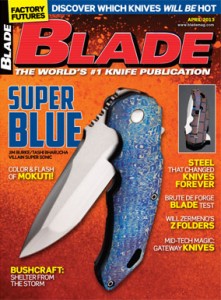
The steel that changed knives forever, the hottest custom makers’ hottest knives, how to build an emergency shelter, Chad Nichols’ MokuTi knife material, how to recognize future knife collectibles, these and much more highlight the new April BLADE®, on most newsstands NOW.

Bill Moran’s introduction of damascus steel at the 1973 Knifemakers’ Guild Show 40 yaers ago this year is the focus of “Steel That Changed Knives Forever.” Find out from those who were there what that was like and from others how the introduction transformed the industry and continues to do so today.

If you were stranded in the woods and needed to build an emergency shelter in a short amount of time, could you do it? James Ayres shows you how in “Shelter From The Storm.”

The custom knives most in demand change at any given moment. Get the latest installment of how they’re changing and what they are in “On The Boil!” The cover knife made by Jim Burke and designed by Tashi Bharucha is one of them.

If somebody asked you what factory knives you should collect now for the future, what would be your answer? See if it gibes with those who know in “Knife Pros Reveal What To Collect.”

There’s much more—a profile of knifemaker Will Zermeno, Ray Kirk’s giveaway knife for the upcoming Arkansas Custom Knife Show, the latest in mid-tech knives, how to clean hunting knives, part two of Ed Fowler’s step-by-step how-to on sheep horn knife handles, a test of Joel Worley’s “Woodsman” brut de forge knife and much more, all in the April BLADE.

For subscription information to BLADE click on BL0413CAN_finalwww.shopblade.com/blade-magazine-one-year-subscription-us?lid=ssfbbl013113

Pirate-Pistol-Packin’ BLADE On Newsstands TODAY!

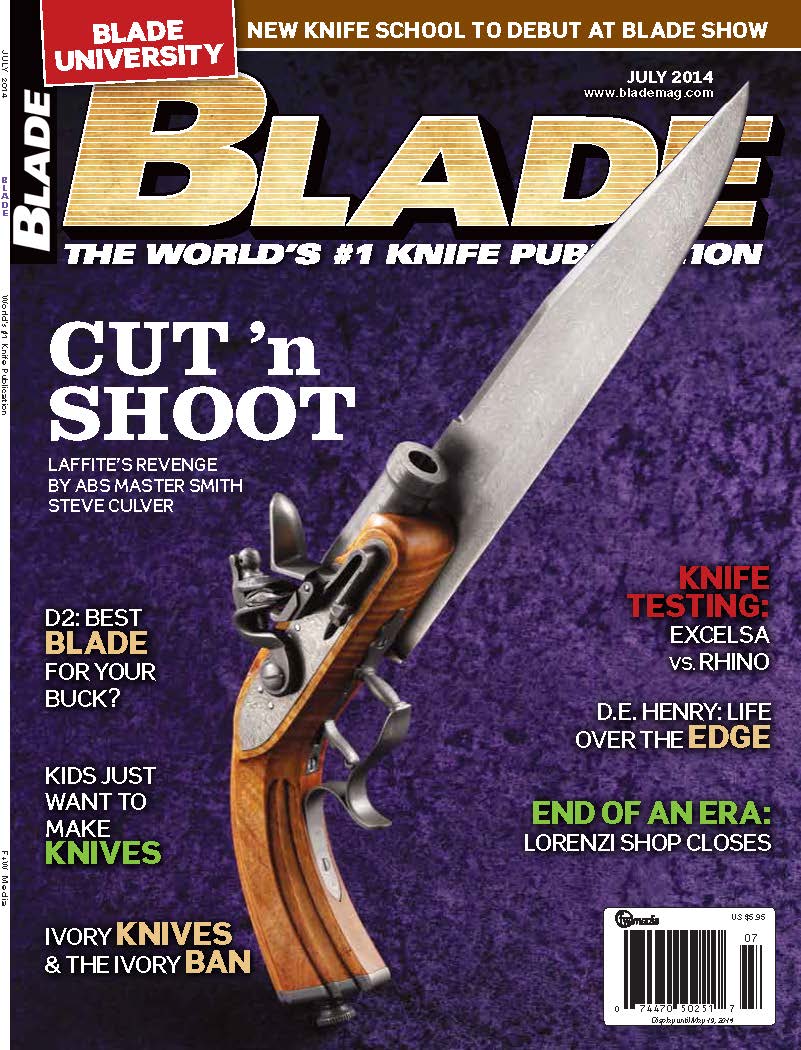
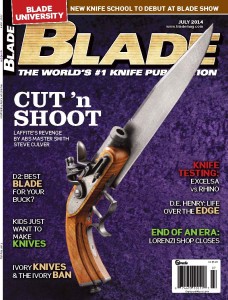
Learn how to make a cut ‘n shoot “pirate pistol,” what effect the federal ivory ban has on your knives, all about the BLADE Show’s groundbreaking new BLADE University and much more in the latest issue of BLADE®, on many newsstands today.

Hitting many newsstands today—the new, pirate-pistol-packin' issue of BLADE®!
New, pirate-pistol-packin’ BLADE® hits many newsstands TODAY!

Steve Culver won “Best Of The Rest” in the 2013 BLADE Show custom knife judging competition with his “Laffite’s Revenge” cut ‘n shoot, and he takes you through the building of his award-winning knife pistol in this month’s issue.

On the ivory knife front, the federal government is targeting any and all items made of elephant ivory, including the very same knives that have been legal to sell for decades! Find out what the new regulations mean for you and your knives on page 10.

BLADE University is a brand new approach to knife show seminars. In fact, instead of seminars, BLADE University is a curriculum of classes, each concentrating on specific subjects and including some of the world’s best-known knife professionals as teachers, including knifemakers Jerry Fisk, Chris Reeve, Jerry Busse, Tony Bose and Bill Harsey, to name a few.

A chief concern among many in the knife industry is there are far too few young people making knives. In “Kids Just Want To Make Knives,” three young aspiring makers show off the knives they’ve made and tell how they make them, and also explain the support system of family and friends that has sustained their knifemaking endeavor.

Other stories in the new BLADE include: the heartwarming tale of how many in the knife community came together to help damascus maker Zoe Crist and family after he suffered a debilitating shop accident; the end of an era is saluted with a story on the closing of Aldo and Edda Lorenzi’s famous retail knife store in Milan, Italy; and much more, all in the new BLADE.

Knife Bill Would Affect BLADE Show

Knife bill and BLADE Show.
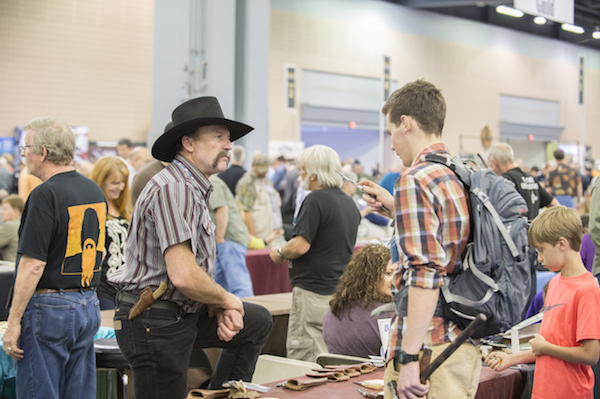
Knife bill SB 49 would affect this year’s BLADE Show and needs your help by Friday. Bladesmith Butch Deveraux (in cowboy hat) waits on a customer at last year’s BLADE Show. (PointSeven image)

A Georgia knife bill that would reform law and impact the 2017 BLADE Show needs your help by Friday, March 3, or it will die.

According to Knife Rights, SB 49 would increase the legal carry length of a knife blade in the state from 5.5 to 12 inches, but before that can happen the Georgia state Rules Committee must release the bill for a vote.

A recent applicable Knife Rights email stated that “efforts to completely eliminate the carry length limit have been stymied due to the manner in which a knife is defined in Georgia law. [If enacted, SB 49 would] make life much better for knife owners in Georgia without hampering future efforts to completely eliminate the carry length limit at some future opportunity.”

That’s where you come in.

If you plan to attend the BLADE Show June 2-4 at the Cobb Galleria Centre in Atlanta or live, travel or work in Georgia, please call or e-mail the Rules Committee members now. Whether you call or email—if emailing, enter on the subject line “Please Move SB 49″—tell them you respectfully request that they please pass SB 49 out of the Rules Committee so that it may be voted on by the full Senate. Also, be sure to thank them after you make your request. As noted in a recent Knife Rights email on the subject, “Please be polite and respectful and remain on point.” Hey, as with any request, sugar always works better than sulphur, right?

Below is a list of Georgia legislators to contact concerning the matter:

Sen. Jeff Mullis (Chairman) – (404) 656-0057 – [email protected]
Sen. Jack Hill (Vice Chairman) – (404) 656-5038 – [email protected]
Sen. Bill Cowsert – (404) 463-1366 – [email protected]
Sen. Steve Gooch – (404) 656-9221 – [email protected]
Sen. Hunter Hill – (404) 463-2518 – [email protected]
Sen. John Kennedy – (404) 656-0045 – [email protected]
Sen. David Shafer – (404) 656-0048 – [email protected]
Sen. John Wilkinson – (404) 463-5257 – [email protected]
Sen. Gloria S. Butler – (404) 656-0075 – [email protected]
Sen. Steve Henson – (404) 656-0085 – [email protected]
Sen. Butch Miller – (404) 656-7454 – [email protected]
Sen. Horacena Tate – (404) 463-8053 – [email protected]
Sen. Curt Thompson – (404) 463-1318 – [email protected]

Sen. Renee Unterman – (404) 463-1368 – [email protected]


Change The Types Of Knives You Collect?

Read this before deciding whether to change the types of knives you collect. (Written by Mike Haskew and excerpted from the March 2013 issue of BLADE®).

You may face a crossroads, a time of decision involving the realization that interests, tastes and possibly buying power change. In such situations, you may decide to begin collecting a different genre of knives, departing from what you have collected. If and when that time comes, evaluating your situation and making informed decisions is crucial.Hale_120608
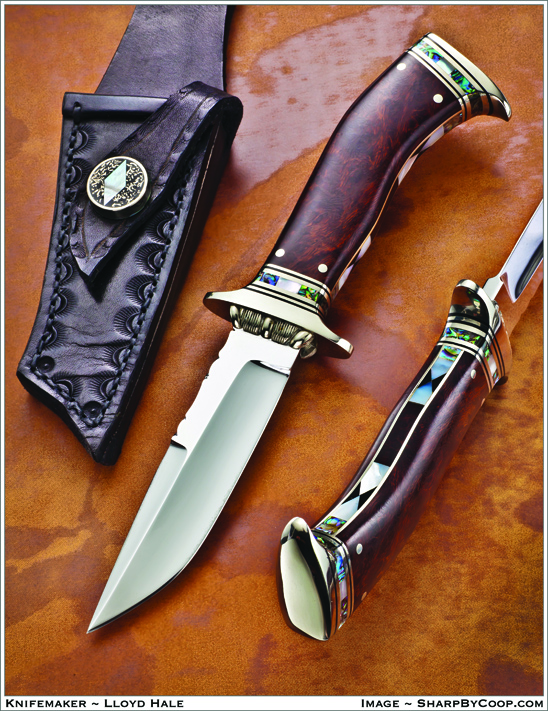
Well-made vintage knives by legendary makers can be very attractive to collect. Lloyd Hale does the honors here in a chute knife sporting an ironwood handle with pearl and abalone inlay. (SharpByCoop.com photo)

Some basic questions loom large, from deciding what to collect to getting the best education on what is available, selling or retaining an existing collection, and, if the choice is to sell, then maximizing the revenue generated.

First, the decision to make a change deserves due consideration. “You should have a very good reason for it,” remarked Peter Gill, who has been collecting knives for 15 years, “no whims.”

While some are into knife collecting for profit, it is always prudent to collect what you like. After all, you may own it for a lifetime. 08BL0313
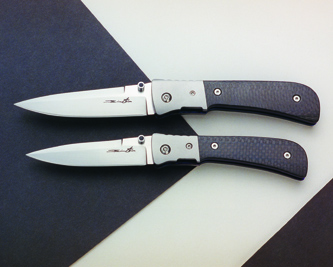
“I believe a collector who is going to start collecting another type of knife should buy and collect what he’s attracted to,” reasoned Ken Potolicchio, who bought his first handmade tactical folder, a large Tighe Pan by Brian Tighe, in the fall of 2001. “In other words, buy something you would like to own, handle or even use. Research the new type of knife to be collected and be comfortable with the effort and costs to start a new or additional collection.

“If you’re going to start collecting another type of knife, buy and collect what you’re attracted to,” reasoned Ken Potolicchio, who bought his first handmade tactical folder, a large Tighe Pan (above) by Brian Tighe, in the fall of 2001. “In other words, buy something you would like to own, handle or even use.” (Brian Tighe photo) 

“Ask yourself why you want to collect the new type of knife,” Ken continued. “Is it simply to make money, to carry and use the new knives, or is it in the pursuit of desirable knives of a new type? What if you change your mind? You need to be very sure, especially if the sale of your current collection is a factor.

“As to resources, I would recommend reading the magazines and contacting purveyors you may have dealt with, trust and have a relationship with, or that deal in the type of knives you’re planning to collect. Direct contact with the makers of the knives to be collected is a good idea. I’ve found that most are willing to talk about all aspects of their knives.”

Though you may be financially capable of retaining your current collection, you may have to liquidate your existing holdings to be able to afford to collect something new. Opinions vary on the best way to sell, and some experts tend to think that holding on to what you have already collected is the best of all options.ed's dad's wwII Ek
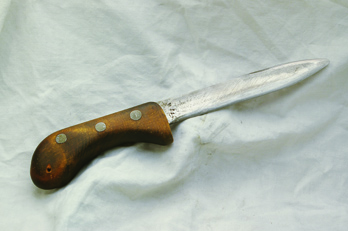
“Don’t buy knives that are damaged or of poor condition unless they are very old and rare, such as [antique] bowies, Civil-War-era knives, and rare military knives,” Marvin Clyncke commented. Ed Fowler’s dad carried this World War II-era Ek Model 3 during World War II. (Fowler photo)  

“If you decide to shift gears and like another kind of knife, you might consider the following,” advised Pete Cohan, a serious collector since the early 1960s. “Trade the knives you have for those you now wish you had, but be sure you know who you are trading with and be firm when it comes down to the final details. You could try to sell your old collection to somebody you know, but don’t let anyone talk you out of a few pieces. You may be left with the rest and can’t hardly give them away.”

If you are an informed collector, you have a solid sense of what your collection is worth and what you will take for it. Unless such a solid base is in place, the hazards of selling or trading are substantial. Tactics also will vary depending on your motivation—simply to recover your initial investment or to make as much profit as possible to plow into the acquisition of your newfound favorite knives.

Though selling your knives as a collection may move the transition process forward more rapidly than selling in ones or twos, there is a trade-off. Marvin Clyncke’s father worked for Western Cutlery in the late 1930s, and Marvin has been a collector for more than half a century.

“If you want to sell your existing collection, you should sell on eBay, as you reach the whole world there,” he recommended. “Selling as a collection is not a good idea unless you have a specific buyer who is willing to pay a good price. Selling as a collection, you are essentially eliminating a lot of folks who may have some of the same knives and don’t want to buy a whole collection just to get a few that they need. Also, the price of the whole collection could eliminate many buyers, especially if the collection is large. Selling individually definitely would realize top dollar for each piece.”

Cardinal Rules

• Collect what you like or even use;

• Chasing trends is a fool’s errand;

• Collecting knives that are hot now means paying top dollar now as well;

• Know which knives are collectible in specific geographic locations of the country;

• Inexpensive, low-end knives will never appreciate to any degree;

• Well-made, fine-condition knives should not lose you any money;

• Don’t buy damaged/poor condition knives unless they are very old and collectible, such as antique bowies and rare military knives.

A FOOL’S ERRAND

In the continuing debate of present vs. future value, collectors heading down a new road are regularly challenged with a values proposition. Collecting what is hot today by no means ensures an appreciation in price down the road, while collecting something that is under the radar now provides no assurances on an increase either.

“A collector should only collect what pleases him or her,” reiterated Gill. “Chasing trends is a fool’s errand.”

Cohan advised, “What is hot now and what will be hot in the future is the classic question asked by every stock market trader. The question and its answer in the case of pocketknives or knives in general is further complicated by such things as the geographic location of the collector. What is hot on the West Coast and what is hot in the South are often very different. This can provide opportunity as well as risk for the collector who is starting in another direction. It is still, in my opinion, better to collect knives that you like for whatever reason. The collectibility of knives and their ‘rarity’ at some future date remains an elusive projection.”IMG_1207 Pic 19
Potolicchio leans toward the long view and collecting for the future rather than some notion of today’s “hot” commodity. He provides an illustration of future value with a firearm that he bought some years ago. “I gave my son a Ruger 10/22 rifle that currently [fetches] about $275, and I have the original receipt for the rifle when I bought it new for $38.50,” he laughed.

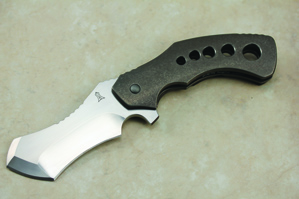
What’s hot in the West and South are often very different, Pete Cohan observed. This can provide opportunity as well as risk if you’re starting over. For instance, at the G4 Show in Las Vegas, tactical folders such as those by Jeremy Marsh (including the one at top just above photographed by Mike Searson) turned heads. In the South, antique pocketknives such as those by New York Knife Co. (immediately above) remain collectible. 

According to Clyncke, collecting knives that are hot now means paying top dollar now as well. Whether such knives will even hold their value or simply become yesterday’s fad is anybody’s guess. He does, however, see the thrill and allure of collecting something reasonably priced today that may in fact appreciate in the days to come.

“It is a guessing game,” Marvin warns, “but quality is everything. Cheap-made, low-end knives will never appreciate to any degree. Well-made, fine-condition knives will surely not lose you any money. Again, research is a big help.”

Sources To Use

• Read knife publications and websites you trust;

• Contact purveyors with whom you have dealt, trust and deal in the types of knives in question;

• Have direct contact with the makers of the knives in question;

• Let as many people as possible know what new collectible you want;

• Ask your friends to be on the lookout for examples.
Knives2013

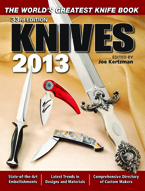
One of the best ways to research what is best to collect is to read publications you trust, such as the new KNIVES 2013

Experienced collectors may already have a feel for the do’s and don’ts of collecting a new style of knife. However, it pays to remember lessons learned and to benefit from the experiences of others.

“Don’t buy knives that are damaged or of poor condition unless they are very old and rare, such as [antique] bowies, Civil-War-era knives, and rare military knives,” Clyncke commented. “Junkers are a dime a dozen and will sell for a dime a dozen in 10 years. I would let as many folks know as possible what you’re looking for. Never tell them what you will pay, just what type of knives you want. If you tell them what you will pay and they’re surprised at the price, they may just keep the knives as an investment. Some good ones may pop up right away. It never hurts to have friends looking for you.”

Potolicchio added that research is a key element before the final decision to switch the type of knife being collected. Without investing enough time to understand the market for the new type of knife, you may never find your comfort zone, particularly if you have liquidated your existing collection in the process.

For Cohan, the collecting transition should be something of a soul-searching process. He advises considering several aspects of embarking on a new frontier in collecting.

“How available are the knives that you now fancy, and are they of recent vintage?” he asks. “Are they still in production or are they a ‘short run,’ which may or may not permit a wide distribution of the knives, directly affecting their collectibility? If the knives are antique, where will they be found and can they be found without undue cost? What are the prices typically asked for these knives in collectible condition? Are you going to collect only the mint or near mint/excellent examples, and can you afford to pay premium prices for this type of knife?”

Questions YOU NEED ANSWERED

• Do you have a very good reason for starting over?

• Are you comfortable with the effort and costs it will take to build a new collection?

• Do you want to make money or collect, carry or use the knives?

• What knives should you collect, and how do you best research them?

• How available are they and are they of recent vintage?

• Are they still in production or limited in distribution, both of which influence collectibility?

• If antiques, where can they be found and can they be found without undue cost?

• What are the prices typically asked for the knives in collectible condition?

• Are you going to collect only mint or near-mint examples, and can you afford to pay premium prices for them?

HAVE/EXECUTE A PLAN

Early in the collecting transition process, there may actually be more questions than answers. Nonetheless, if you plan appropriately and execute the plan, you continue to find your passion for knives rewarding, whatever type you seek.


BLADE Show: Experience Ed’s Homespun Knife Knowledge

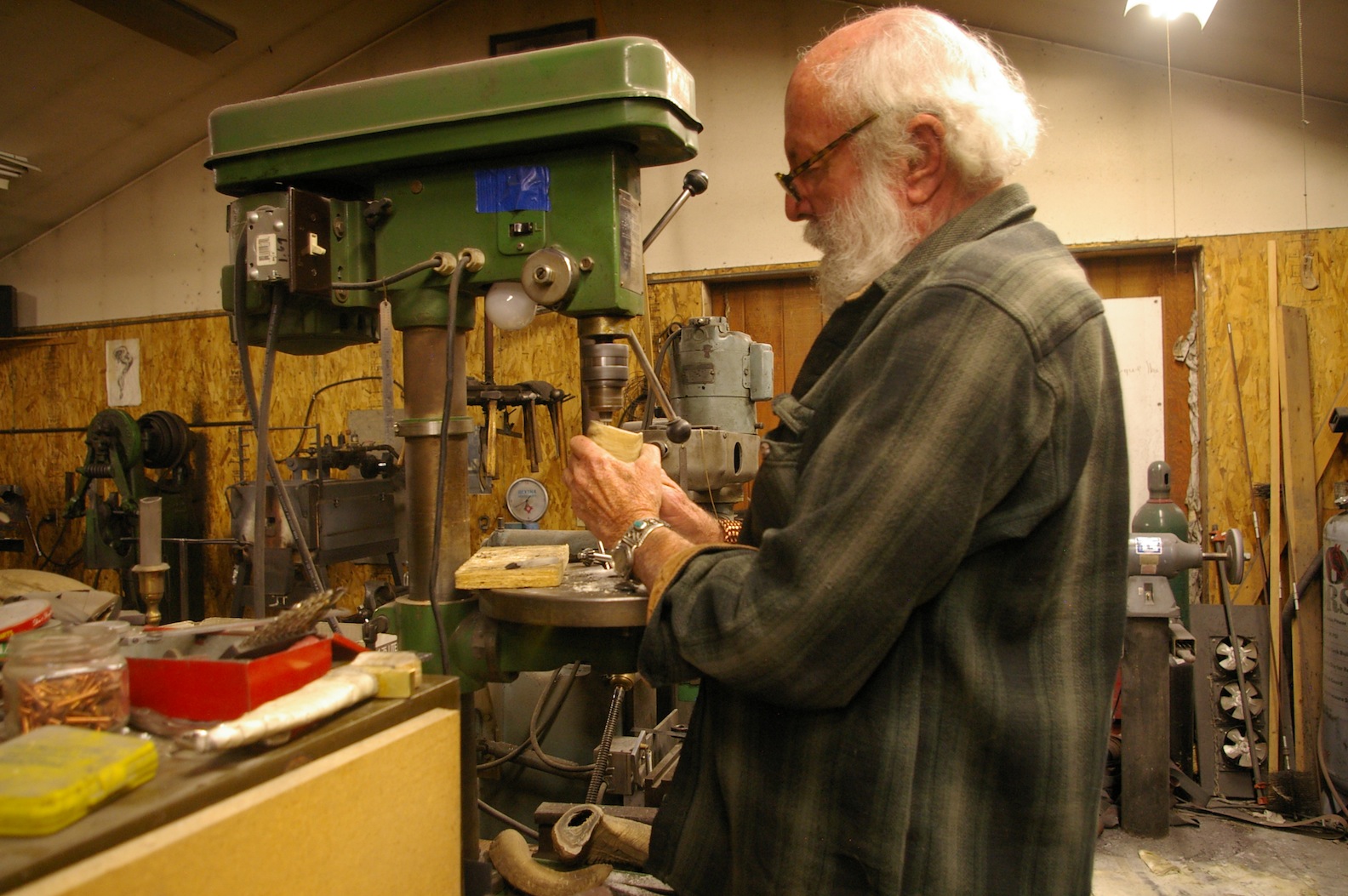
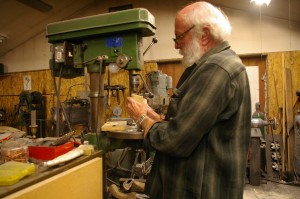
Ed Fowler works on one of his sheep horn handles in his shop.
At the BLADE Show, Ed Fowler will conduct a seminar on knives that survived the frontier.

BLADE® field editor and ABS master smith Ed Fowler will offer another of his seminars as only he can in “Knives That Survived The Frontier” during the 2013 BLADE Show & Living Ready Expo (www.bladeshow.com) May 31-June 2 at the Cobb Galleria Centre in Atlanta.

Ed’s seminar will be show Saturday at 2 p.m. in Room 104.

Ed will discuss an antique Huber bowie, Ames Rifleman Knife and a T-backed wootz knife.

“The Huber bowie made in 1832 looks to have been in combat as evidenced by the cuts in her blade,” he noted. “The Ames Rifleman’s Knife from 1849 was used hard, most probably during the Civil War. Her scabbard was refurbished on the frontier with what was available.

“The T-backed wootz knife collected by a British soldier who traded a carton of cigarettes for her while driving a lorry over the Khyber Pass during World War II is another knife with a great history visible through repairs where few tools and materials were available,” Ed continued.

“Those who attend will be invited to hold, study and discuss what aspects of design and steel made these knives great. These aspects of design remain as hallmarks of the high performance knife of today.”

Author of his “Knife Talk” column in BLADE for over two decades, Ed is well known for his controversial opinions and approaches to not only bladesmithing/knifemaking, but also to knives and their history in general. He also has written Knife Talk I and Knife Talk II—compilations of his Knife Talk columns in BLADE.


How To Build a Survival Shelter

The following is excerpted from a feature article by James Morgan Ayres that ran in the April 2013 issue of BLADE® Magazine.

Over 90 percent of wilderness deaths by mischance are caused by hypothermia. Knowing how to build an emergency shelter quickly can mean the difference between freezing to death and surviving. You can build a survival shelter that offers protection from cold and snow or rain in no more than 30 minutes, and with only the tools at hand—which is where knives can make the difference in getting the shelter up before it is too late.

5 Keys to An Emergency Shelter

1) Evaluate your situation and decide if you need to spend the night out before it gets so dark you cannot see to build a shelter; Expanding the framework of the shelter.2) If available, select a level spot that provides natural shelter—a large tree or boulder, for example. Barring that, choose a place that has building materials such as saplings or brush nearby; 3) Build a framework using the natural shelter as a base; 4) Cover the framework with branches, leaves, brush and whatever materials are available. If possible make the covering 6 inches to a foot thick; the thicker the covering, the better the insulation. If you are in an area where there are limited building materials, having a reflective blanket in your pocket could be a lifesaver. It weighs only about 3 ounces, is no larger than a handkerchief and can make a difference of up to 20°F, and; Expanding the framework of the shelter.5) Cover the floor with six-to-12 inches of leaves, pine needles, duff (decaying leaves and branches), or whatever is available for insulation. Leave the area near the entrance clear of debris. After making the cleared area safe for burning small pieces of kindling, build a small fire in it. The fire should be no larger than a soup bowl.

If you are properly dressed for the climate, you can spend the night in such a shelter with a tiny fire not only safely but also comfortably. Having the know-how to build the shelter is critical. Having a good knife can make building the shelter quick and easy.—by James Morgan Ayres 

Shelter framework ready for thatching with available material.Author’s note: The shelter in the photos using pine boughs was built in a national park, not a true wilderness area. We were required to “leave no trace” and return everything as it was. Therefore, we did not thatch the roof nor build up the floor with boughs and leaves as described in the text, as you would in a survival situation.

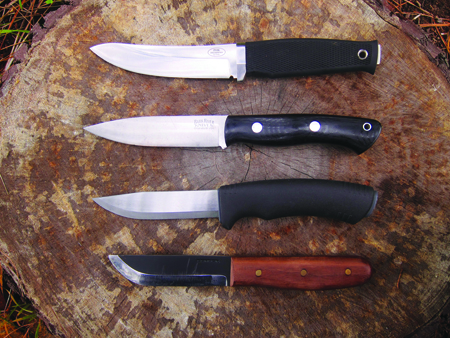
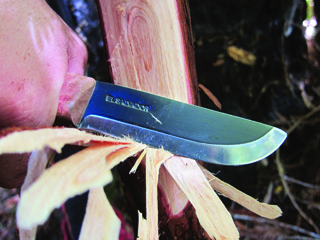
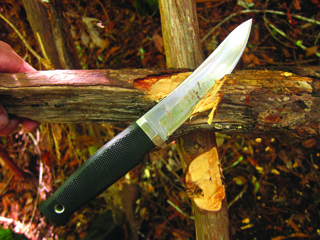
My associate and I used and evaluated four very different knives to construct two survival shelters. The review knives fall into two categories. The Mora and Condor both have ‘Scandi’ grinds and are economical. The Bark River and Fallkniven have convex grinds and are priced like the premium knives they are. Covering shelter framework with pine boughs.

CONDOR BUSHCRAFT

The Condor Tool & Knife Bushcraft Basic Camp Knife has a comfy wood handle, a 4-inch blade of 1075 carbon steel with a lot of belly, and a full tang. When driven into a tree it was strong enough for a 200-pound guy to do a pull-up on; we tried it, no problem. The belly of the black-epoxy-powder-coated blade proved its worth in general use, but a little more tip would have been welcome. In knife design everything is a compromise and this is a good one. The welted leather sheath holds the El Salvador-made knife securely and is unusually nice for a package in this price range ($34.98 MSRP).  Bark River Aurora illustrating an efficient push cut on a sapling.

IMG_0316BARK RIVER AURORA

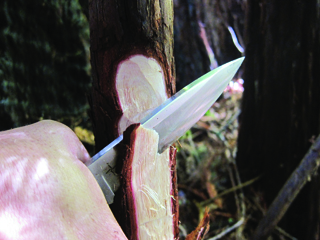
The Bark River Aurora ($239 MSRP) is Bark River honcho Mike Stewart’s personal design for an all-around bushcraft knife. The American-made fixed blade displays excellence in design and use. The convex blade of A2 tool steel provides easy, controllable push cuts, supports the edge for batoning, gets into a cut aggressively, and has a centerline point for precise control. The handle is ergonomically contoured, does not slip and is comfortable in hard use. The balance is so good and the 9.5-inch knife feels so lightweight and quick that it seems to weigh less than the specs (6 ounces) would indicate. The pouch-type leather sheath is handsome, secures the knife well, carries comfortably and has a loop for a firesteel.

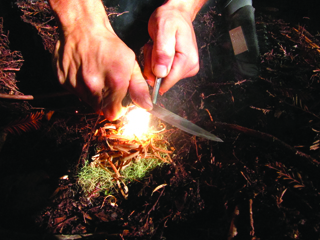
I suspect the Aurora has a reserve of strength that we did not come close to tapping in our review. Though not billed as one, I think the Aurora is an excellent choice for a wilderness survival knife. IMG_0305Condor Bushcraft makings shavings for a fire.

MORA BUSHCRAFT

Made in Sweden, the Mora Bushcraft Survival Knife ($57.95 MSRP) comes with a firesteel and diamond sharpener—both valuable tools—in a composition sheath. The thick, 4.25-inch blade sacrifices nothing in slicing and wood-shaving ability. It has a good, usable point and is strong enough for batoning. The handle is very comfortable. The knife popped out of the sheath, which was worn on a belt, while we were jumping over a log. A cut or the loss of the knife could have resulted.

FALLKNIVEN PHK

Fallkniven markets its Professional Hunter (PHK) as “one of the best hunting knives in the world.” It is also a very good all-purpose bushcraft and survival knife. The convex grind and long, curved edge combine to make a strong 5-inch blade of 3G steel that just wants to cut. It batons well, makes good push cuts and snap cuts efficiently on small branches. It would even do a little light chopping, though no knife this size (9.4 inches overall) can be an efficient chopper. The PHK’s nonslip Thermorun™ thermoplastic handle is comfortable in any grip, even during hard use.IMG_0181

Made in Japan, the knife offers a choice of a leather or Zytel® sheath. I much prefer the leather one since the Zytel sheath must be snapped to secure the knife, as we learned when the knife fell from the unsnapped sheath while we were running. MSRP: $470.

HOW THEY FARED

In general, we found the knives with the Scandi grinds to be somewhat better for fine woodwork, such as making fuzz sticks, while the convex-ground blades cut more efficiently and with less drag in deep cuts. All the knives’ handles were comfortable and did the job. On the other hand, each knife had its own character and pros and cons.

The Bark River was everyone’s all-around favorite, and if there had been a prize for most handsome, it would have won. The Fallkniven displayed the high level of function for which the brand is known, and clearly had enough reserve strength to serve as an urban destruction tool. The standard Mora is a good all-around bushcraft blade at a very low price. It is a bit stronger than other Mora models we have seen, and the inclusion of a firesteel and diamond sharpener produces a very nice package. However, the sheath needs work—otherwise you had better use duct tape to secure the knife, as we did. The Condor brings a welcome alternative to the bargain-priced market and stands on its own merits as a strong, efficient choice for the bush.

The premium-priced Bark River and Fallkniven exhibit higher-quality construction and did almost everything better than the less expensive Mora and Condor. Nonetheless, the difference was a matter of degree. All would serve to build a shelter and produce firewood, and maybe save your life.

10 U.S. Finalists Named For BLADE Show World Title Match

Donavon Phillips (pictured at the 2010 BLADE Show World Cutting Championship) won BladeSports International’s recent U.S. National Championships in Mountain View, Arkansas, and headlines the 10 U.S. qualifiers for the BLADE Show World Cutting Championship, which will be held June 11 during the BLADE Show.


The other qualifiers, in order of their finish in the U.S. Nationals: Dan Keffeler, Ted Ott, Gary Bond, Evan Martin, Bud Robbins, Lars Rosenblad, Jose Diaz, Michael Eubanks and John Czagas.


BSI Executive Director Jose Diaz, who is also one of the qualifiers, said he expected all 10 to attend barring any unforeseen circumstances.


International cutters expected to compete include the United Kingdom’s Ian “Longstrider” Allen-Rowlandson and Farid Mehr, and Ed de Pauw of Holland.


The BLADE Show will be June 10-12 at the Cobb Galleria in Atlanta. For more information, click on “BLADE SHOW” in bar above.


Advertisement

Must Read Articles

Read this before you make a knife

Knifemaking 101 – Read This Before You Make a Knife

  by Wayne Goddard My experience has taught me that there's nothing like digging in and getting started. I've often said the hardest part of the...
how to forge damascus steel

How to Forge Damascus

Advertisement
Advertisement