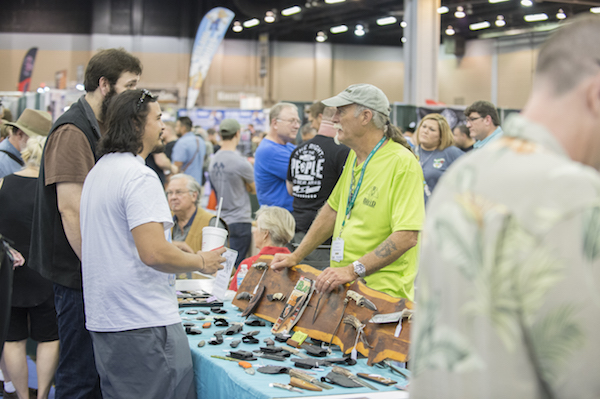
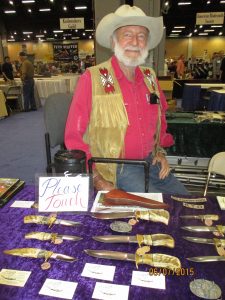
Also known for his “Funny Folder” design, among many others, Dowell was the only Guild member to exhibit at every Guild Show—40 in all—until the streak came to an end in 2010, Betty always by his side, smiling and flying the “Dowell banner.”
According to Hibben, the family of Ted Dowell has requested that in lieu of flowers, a donation be made to the Knifemakers’ Guild (www.knifemakersguild.com) in Ted’s memory. “Ted truly loved the Guild, and the Dowell family’s request reflects that love,” Hibben added.
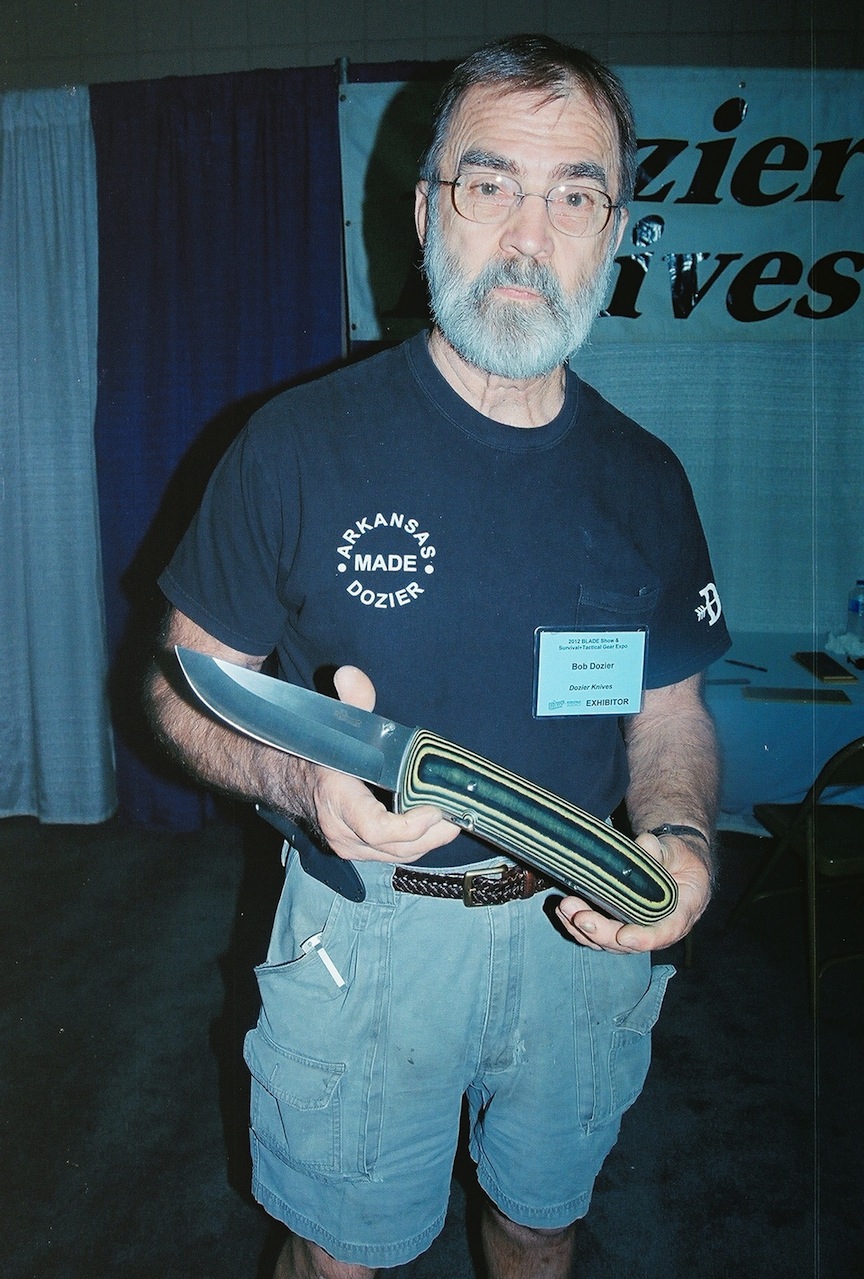
Ask the maker what blade steel he recommends. Bob Dozier holds one of his giant trappers.
A question we often hear is What are the best blade steels? A better way to approach the question is to determine what jobs the knife will be asked to perform.
Do you need a hunting knife or an everyday carry knife? A kitchen knife or a camp knife/chopper? There are others. The type of knife and how it will be used often will dictate the type of steel.
Say you need a hunting knife. Rather than ask what kind of blade steel will be best for it, research the websites of companies or makers who specialize in hunting knives. Such companies and makers will offer hunting knives not only with the steels that they find best for hunting knife purposes, but also with the edge geometries that the companies and makers feel they are most accomplished at making/offering.
Edge geometry refers to the blade’s grind and edge. If the grind and/or edge is too thick or otherwise not formed properly, it doesn’t matter how good the steel is—the knife will not cut well. As for the grind itself, there are many—hollow, flat, convex, chisel, etc., and combinations thereof. Usually the companies or makers employ the grinds they are best at. In cases where you have the option of picking the grind from a custom knifemaker, ask him which grind he’s best at and go with it.
Another important factor is the heat treatment of the steel. In fact, a low-grade steel heat treated properly often will outperform a high-grade steel with a substandard heat treatment.
In addition to the type of steel, ask how it is heat treated. While many makers are adept at heat treating their blades, many simply ship their blades off to professional heat treaters who specialize in the process. Blades heat treated by the pros usually will be heat treated properly and according to industry standards.
High-grade steels such as CPM S35VN, ZDP-189 and others are cutting tigers but can be difficult to sharpen and are more expensive. Lower-grade steels such as 440A, 5160 and others, all things being equal (including proper heat treatment and edge geometry), may not perform as well or hold an edge as long, but are usually easier to sharpen and will do most everyday cutting jobs that most people require. And, knives with such steels should be less expensive. In the case of 5160, while it is not a stainless steel, if you clean it and dry it off after each use, you should not have a problem with corrosion. The same is true with most non-stainless steel knives. Meanwhile, it’s not a bad idea to clean and dry off stainless steel knives after use as well. They can corrode, too—it’s just that they corrode less, as their name indicates.
Bottom line: Tell the company and maker what you plan to do with the knife. They make knives for a living and usually will be able to fit you with the proper knife and suitable blade steel for your needs.
Recommended:
Stay abreast of the latest developments on this and many more knife rights issues with a subscription to BLADE.
Best knives, best knifemakers and more are all in the latest BLADE®, on newsstands now!
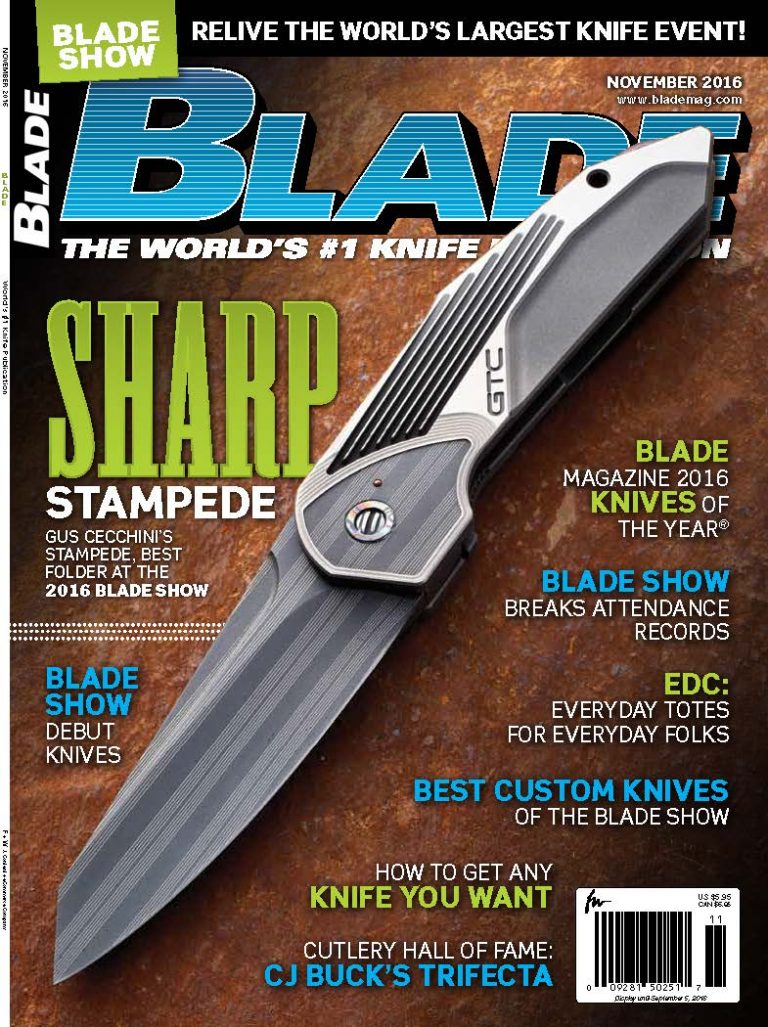
The best knives by the best knifemakers from all corners of the globe and much more highlight the new BLADE®, on newsstands now.
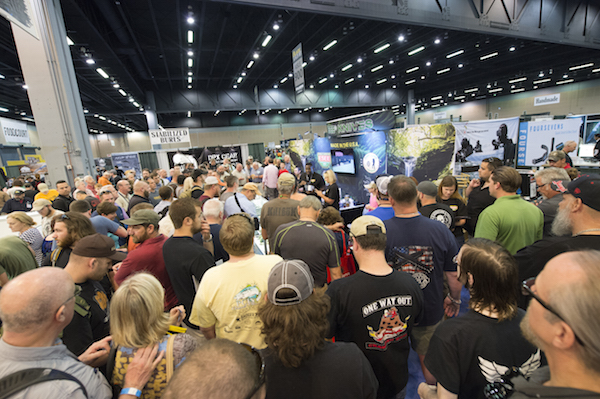
The best knives by the best knifemakers is what the world’s largest knife show, the BLADE Show, is about, and the latest rendition had them all. Held this past June at the Cobb Galleria Centre in Atlanta, the 35th Annual BLADE Show enjoyed its largest attendance ever—and that was only after the show’s first two days, with another day to go!
•The hottest EDC knives the industry has to offer;
•A near-total ban of knives with elephant ivory and also those of ancient ivory appears to be the goal of the Fish and Wildlife Service as it enacts a new rule, one that could result in ivory raids at knife shows as well;
•How to get any custom knife you want!
… and much more, including the elusive “shadown pattern” pocketknife, its collectibility and the latest collector values; Ed Fowler’s take on the BLADE Show and knife shows in general and how each can fulfill the dreams of many knife enthusiasts; a knife test of two new fixed blades—the Bullnose by Fred Pittman and his FP2 Custom Knives and the Venator by Frankie Heming of Tactical Pterodactyl Knives; the latest additions to the world’s top 25 knifemakers of the vaunted Art Knife Invitational; and much more, all in the latest issue!
U.S. military issue of BLADE® is on newsstands now!
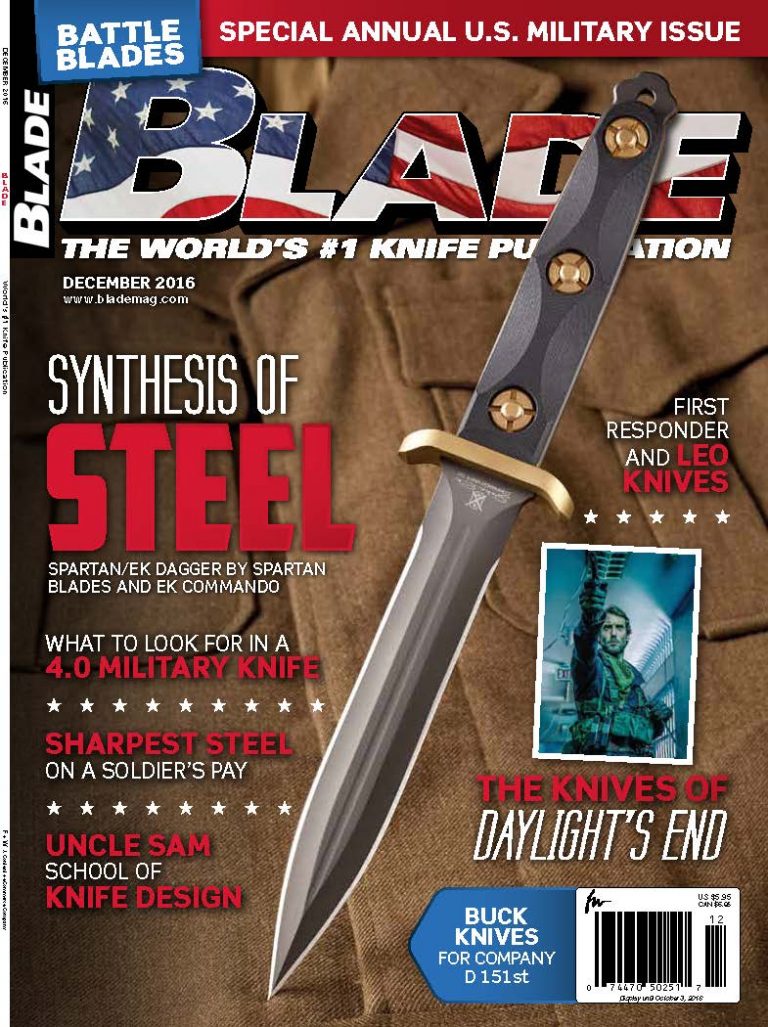
The annual U.S. military issue of BLADE® includes what to look for in a 4.0 military knife, special presentation Buck knives for a unique unit of National Guardsmen who fought during the Vietnam War, the knives from Johnny Strong’s latest movie and much more—and is on newsstands now!
What kind of knife do professional soldiers favor when they go on active duty? BLADE interviewed Special Ops veterans Jack Stottlemire, Kim Breed and Rob Cude, as well as veteran military knife designer William “Bill” Harsey Jr., for their recommendations. All give specifics and their reasons why in Mike Haskew’s informative story.
The stories of valor are many from the Vietnam War but the one about Company D 151st Infantry, the “Indiana Rangers,” is especially intriguing. They represent what is reportedly the only instance of a unit of National Guardsmen that stayed together from activation and served in combat in Vietnam throughout until being deactivated about one year later. Today many unit members are still living and belong to the Company D 151st Association. All of them were presented with engraved Buck 110 folders in recognition of their service and are saluted in the story, “A Lot of Brothers.”
Johnny Strong is the only actor we know of who also makes knives—knives that also appear with him in two of his films, including his latest, Daylight’s End, which premiered Aug. 26. Check out his movie knives—and a Bill Coye knife that also appears in the flick—Strong’s views on knifemaking and more in “The Knives of Daylight’s End.”
Also this issue:
•A test of four military-style knives in “Sharpest Steel on a Soldier’s Pay,” by Abe Elias;
•Some of the best in portable sharpeners for use in the field in Dexter Ewing’s “On-The-Spot Sharp”;
•Four of the latest military daggers and how they perform in “Daggerous!” by James Morgan Ayres;
And much more, all in the latest BLADE—on newsstands now!
BLADE® field editor Ed Fowler will hold down table 3N at BLADE Show 2017.
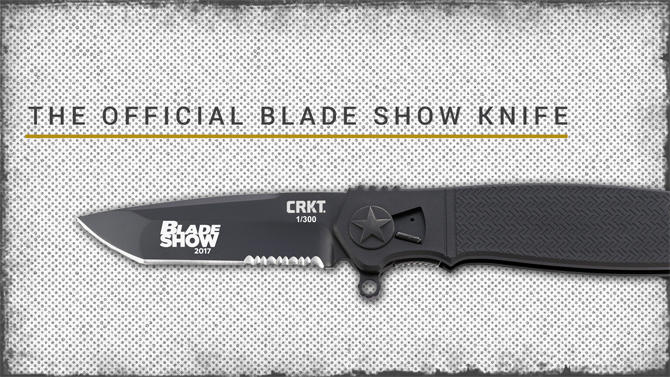
If you are one of thousands of knife enthusiasts worldwide who will attend the 36th Annual BLADE Show June 2-4, it’s time to start making your to-do list for the world’s largest and most important knife event.
There are oh-so-many—almost 1,000 booths and tables in all in the cavernous Cobb Galleria Centre show hall—including the world’s top makers, sellers and displayers of all things sharp. Among them will be three who on a regular basis help make BLADE® Magazine the World’s No. 1 Knife Publication—BLADE Magazine field editors Kim Breed, Joe Szilaski and, health permitting, Ed Fowler.
BLADE® field editor Joe Szilaski will exhibit at Table 3P for BLADE Show 2017.
A retired member of the 5th U.S. Army Special Forces group, Breed’s 20-year military career took him to various world hot spots, including the Gulf War in the early 1990s. It was while there that he wrote a letter to BLADE about his love for knives. One thing led to another and BLADE asked Kim if he would like to write for BLADE on a regular basis testing knives. He took over BLADE’s “Spec Sheet” department and has been testing and writing about knives for the magazine ever since. He also makes custom knives and will be displaying them, along with scrimshaw work by Mrs. Melissa Breed, at table 17G. Stop by and see them—and if you can, do it on June 2. That will be Kim’s birthday. Ask him how old he is—and be sure to duck afterward.
A High-Endurance Performance-Knife (HEPK) master smith, Fowler has been writing for BLADE even longer than Breed—since the late 1980s. BLADE got wind of him after reading a booklet he had written sharing his thoughts on all things knife, including how to use them, how they should be made and much more. Since then in his “Knife Talk” department he has exposed BLADE readers to his distinctive brand of writing and knifemaking, including his preference for 52100 ball-bearing steel, his multiple quenching of his blades, the HEPK courses he teaches at his Willow Bow Ranch in Riverton, Wyoming, and so much more. Visit him and his bladesmithing co-hort, Chris Amos (Chris also has written for BLADE), at table 3N. Also, be sure to attend Ed’s demo, “Choices The Maker And One Who Seeks a Knife Need To Make” show Saturday from 2:15-3:30 p.m. in Room 107. (Note: Ed has been experiencing some health problems of late but both he and we hope it will not prevent him from attending the show.)
Last among three BLADE field editors who will exhibit at BLADE Show 2017 is ABS master smith Joe Szilaski. A native of Hungary who was in-country during the Hungarian Revolution against the Soviet Union in 1956, Joe moved to America and has embraced all things USA, including bladesmithing. He has assumed the mantle of writing the BLADE “Question & Answer” department originally started by Cutlery Hall-Of-Fame member Wayne Goddard, and also teaches knifemaking and tomahawk making in his facility in New York state. In fact, he will teach the BLADE U. class “How To Filework Knives” on show Saturday from 8:30-9:30 a.m. in Room 109. His table is 3P, where he will be ably assisted by Mrs. Lori Szilaski.
BLADE® field editor Kim Breed (in ball cap) will be on duty at Table 17G at BLADE Show 2017.
It’s never too early to start planning your BLADE Show 2017 itinerary, and visiting three of the top BLADE field editors who also happen to be show exhibitors is as good a place as any to start. Meanwhile at least three other BLADE contributors—knifemakers Brian Goode (table 19G), David Lisch (13R) and RJ Martin (11M)—will be exhibiting. Also, other BLADE field editors who should be roaming the show hall will be Abe Elias, Dexter Ewing, Cutlery Hall-Of-Fame member B.R. Hughes and Les Robertson. Elias, in fact, on show Saturday in Room 107 will present the BLADE U. classes “Steel: The Heart Of The Knife” from 10:30 a.m.-12 p.m. and “The Best Edge For The Job” from 2-3:15 p.m.
Nearly 20 years later and with my original bolo in disrepair, I thought it time to replace it with an updated and more technologically sophisticated design. My goal was to find a knifemaker from my home state of Kentucky who would be capable and willing to collaborate on the project. It was not long before several members of the Knifemakers’ Guild recommended Gene Baskett. A Guild member since 1981, Gene has proved to be one of Kentucky’s finest custom knifemakers and has earned the respect of his peers for the quality work he produces.
He and I based the knife’s design on the old bolo I had used when I served in the SEALs. Our decision was to go with CPM-154 stainless steel, and Gene made several blade adjustments. We experimented with a rubber handle made from extremely durable horse matting material—a perfect Bluegrass State touch, and a substance also favored by a number of makers and contestants in the cutting competitions. The resulting grip is firm yet shock absorbing. The handle can also be securely grasped when wet. My concerns were simple: durability and performance. I wanted a knife that would withstand a heavy amount of punishment and still perform well.
Both Gene and I agree that the knife has exceeded our expectations. Its cutting ability is just plain scary. Without honing the original edge applied by Gene, I put the knife to the test. He already had whacked through 1-inch saplings, and still the blade was gliding through blades of grass and straw. My test consisted of saplings, 1-inch tree branches and wild grape vines. All were easily severed with one clean hit.
After 20-to-30 strikes on branches and vines, I moved on to a grass mat wrap 4 inches in diameter. The grass mat was wrapped tightly around a 1-inch piece of dried bamboo. One diagonal strike went completely through. I finished the test with a piece of quarter-inch tanned cowhide. With only slight pressure, the bolo sank through the hide from tip to handle. Drawing the blade out and away left a clean, effortless cut through 8 inches of hide. The blade was still quite sharp afterward.—BY STEVE WATKINS, retired Navy SEAL
For the complete story on the author’s super bolo, you can get the digital version of the December BLADE® by clicking on http://www.shopblade.com/blade-dec-2012-digital-issue?lid=SSfbbl101612
PICTURE CAPTIONS, FROM TOP
TOP: At top is the author’s old bolo and leather sheath and below it is Gene Baskett’s Super Bolo and Kydex® sheath. (photo courtesy of Steve Watkins)
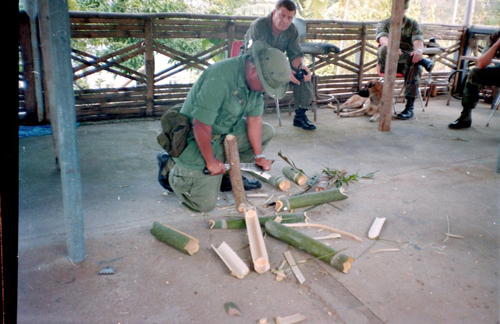
MIDDLE: One of the instructors near the author’s duty station in the Philippines circa 1990 splits wood with the author’s old bolo. (photo courtesy of Steve Watkins)
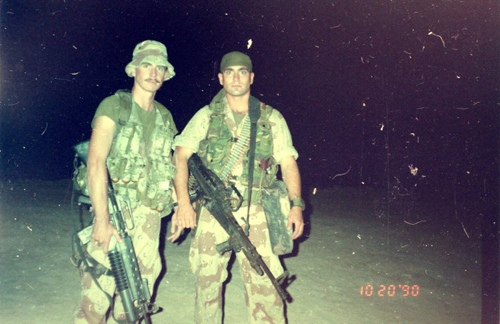
BOTTOM: The author (right) and his friend, Brad O’Neill, on patrol circa 1990. The author is shown holding an M-60 (7.62mm) and his friend an M-16 with an M-203 (a 40mm grenade launcher). (photo courtesy of Steve Watkins)
Along with Phil Lobred, coordinator of today’s Art Knife Invitational, Hibben gained an audience with Presley and Ed Parker, grand master of American Kenpo karate. It was only for one evening but Hibben and Lobred spent quality time with Elvis talking knives, music and more.
It was, of course, an evening neither Hibben or Lobred will ever forget.
Hibben has made knives for Sylvester Stallone in two Rambo movies and two Expendables movies. The second Expendables film, Expendables 2, is in movie theaters nationwide now, and the new knife Hibben made especially for it is the cover piece for the November BLADE®, on newsstands NOW.
From left above are “The King” striking a pose while holding a Hibben knife, Parker and a young, lean Gil Hibben. Kenpo is spelled incorrectly as “Kempo” in the caption below the picture. I tried to crop it out but as a computer layout artist I am a miserable failure. (photo courtesy of Gil Hibben and Mike Carter)
For the latest knives, knife trends, knifemakers, what knives to buy and where, knife legislation, knifemaking instruction, and much more, subscribe to BLADE® Magazine, the World’s No. 1 Knife Publication. Click here to start a subscription.