The BLADE Blog w/Steve Shackleford

Knives, knife people, knife news, knife use, knife collecting, knifemakers, knife events, the BLADE Show, BLADE Magazine, and more.

The Buseys’ Birthday Knives

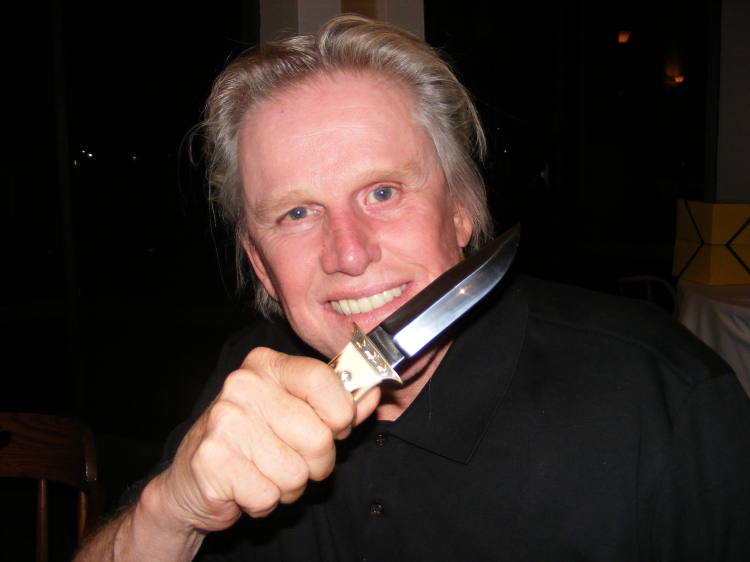
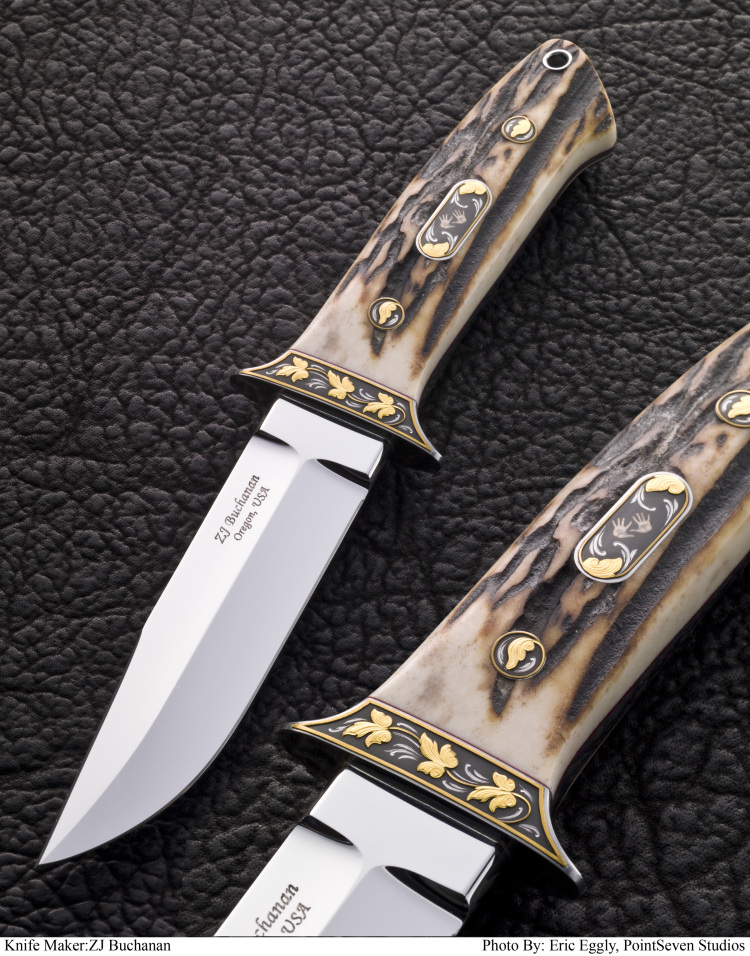
The author embellishes Charles Sauer and Zac Buchanan knives for actors Gary and Jake Busey

By Barry Lee Hands

Early last year, a friend of mine asked me to keep an eye out for some good collectible knives.

    “What are you looking for?” I asked.

    “Well,” he began, “I want two knives for you to engrave, maybe a bowie and a fighter. One is going to be a birthday gift for a father, Gary Busey, and the other a birthday gift from Gary to his son, Jake.”

    This was going to be fun! A veteran actor, Gary has appeared on television and in such movies as The Buddy Holly Story—for which he received an Academy Award nomination for Best Actor—Lethal Weapon, Under Siege, The Firm, Fear and Loathing in Las Vegas and many others, though in today’s “what-have-you-done-lately” world, he may be best known for his appearance last year on Donald Trump’s Celebrity Apprentice 4. Gary’s son Jake is also an actor.

    The 2011 BLADE Show was approaching and I told my friend I would keep an eye out for the knives there. Moreover, as soon as he mentioned bowie, I thought of my old friend, knifemaker Charles Sauer. Charles and I had done a few really nice knives back in the 1990s. He forges his own damascus, and a damascus bowie would be a good counterpoint to the as-yet-to-be-determined fighter.

    I called Charles and he said he had a blank for a Dall DeWeese-style bowie he could finish up in a few weeks. A bit later he sent me an e-mail describing the knife and explaining a bit about William Dallas “Dall” DeWeese (1857-1928).

    “Dall was a famous big game hunter in the late 1800s. He was largely responsible for the opening up of big game hunting in Alaska. The notable thing to me,” Charles noted, “is that he not only designed his knife but had it made—kind of like the Jim Bowie story. Most all knifemakers back then were indentured, so whoever made his knife was probably a blacksmith. I stayed true to the pattern but blew it up from a hunting knife to a bowie. The pattern also has that old ‘Green River flavor,’ which is very popular.”

    Charles spared no effort in obtaining the materials and preparing them for the knife.

    “I took a piece of the top rail of a baby mine car track from the Gold Mines in Montana, a chunk from an Apache attack helicopter chain-gun barrel, and seven pieces I cut out of an antique ice saw. I forged out the mine track and the barrel into two bars, then cut them both into seven pieces,” he explained. “Then, I alternated the three steels into a 21-stack and forged them down and out into a billet, then handforged roughly to the shape of the knife. I also zone tempered/differentially heat treated the blade, [including cryogenically treating] it. The chain gun and mine track are pretty soft steels, so the ice saw [steel] helped out for some strength.”

    The bolsters are bridge cable and the bolster pins are damascus as well. The handle is presentation ironwood with nickel-silver pins. The inlaid sheath is by Paul Long. “Paul is the best sheathmaker around,” Charles opined.

    When I received the knife, I was extremely pleased. The damascus pattern is very appropriate for what I call the “overall flavor” of the knife. The pins were engravable and Charles left me a polished spot on the bottom of the tang on which to engrave an inscription. With one knife down and one to go, I went to work.

Excellent Interpretation

The BLADE Show rolled around and there was a lot to see. I must confess, I spent as much time cutting up with friends as I spent looking at knives.

    Knifemaker Steve Johnson and I were looking about and visited Thad Buchanan’s table. Thad has been making Loveless-style knives for many years, and he was eager to introduce us to his son, Zac, and the knives he had been making. Zac had some really nice pieces and one of his fighters caught my eye. After the show I called and told him I needed a knife to engrave for Gary, and I was thinking about buying the fighter.

    “I could tell you liked that one, but it’s gone,” Zac said. My heart sank. I should have bought it when I could but somebody beat me to it. However, all was not lost. “I do have one that I was keeping for myself,” he confided. “It’s the best piece I’ve made to date and if you want, I’ll sell it to you.”

    “What is it?” I asked. “A Loveless-style Mini Wilderness,” he replied.

    Now I was excited. The Mini Wilderness is one of my favorite Loveless designs.

    Two days later I had it in my hands and was really pleased. The fit and finish is excellent. It is curved in all the right places and straight in all the right places—an excellent interpretation of the classic Loveless design.

Zac is a chip off the old block. He sent me a copy of the letter he sent to Gary that describes the knife. In part, Zac wrote:

    “I was pleased to hear one of my custom knives was purchased for you. I hope you enjoy my work as much as I enjoy yours. 

    “The steel is CPM-154,” Zac’s letter continued. “The guard and handle fittings are 416 stainless steel. The handle material is India sambar stag. If needed, the blade can be cleaned with a mild soap and warm water, but try to avoid washing the handle with soap and water. It is better to use vegetable oil on the stag if it needs to be cleaned. If the blade gets dull, I will be happy to sharpen it for you at no charge.”

    It was time for me to embellish the knife. The Mini Wilderness does not have a lot of area to engrave, but it still takes some time to do it. My friend wanted it ready for Gary’s birthday party, which was in a few weeks.

    I had been thinking about a new style of 24k-gold overlay with my trademark “black satin” background. I went at it working long hours, as an engraver is often required to do to meet a deadline.

Cuttin’ The Cake

The birthday party was at the California Yacht Club in Marina del Rey. Zac could not attend but Charles and I were there with Gary and a small circle of friends.

    Gary is a lot of fun and loved the knives. He asked many questions about how they were made. Later, after dinner and as Gary cut the birthday cake with Charles’ knife, I asked if he would supply the answers to a few questions for BLADE® readers. Those questions and his answers follow:

    BLADE: What was your first knife?

    GARY BUSEY: When I was in the 2nd and 3rd grades, I had a little pocketknife with a picture of Gene Autry on it.

    What do you like about knives?

    I like the artistry and manifestation of the knife and what the knife stands for—in survival in the woods, the mountains, and jungle. God bless the knife!

    Have you used knives in your movies?

    No, just guns and fists.

    Is there an inscription on the Charles Sauer bowie you gave your son for his birthday?

    Yes. “Happy 40th, Jake. Love, Dad.”

    Do you feel engraving enhances a collectible knife?

    Absolutely!

    What do you envision for the future of knife collecting?

    How much time you got? In terms of knife collecting, that’s here to stay.

For more on the latest knives, knife legislation, knifemaking instruction, knife trends, knifemakers, what knives to buy and where and much more, subscribe to BLADE® Magazine, the World’s No. 1 Knife Publication. Click on http://www.shopblade.com/blade-magazine-one-year-subscription-us/?r+ssfb061912 for more information.


For more on how to make knives the Bob Loveless way, click on http://www.shopblade.com/knifemaking-with-bob-loveless/?r+ssfb061912

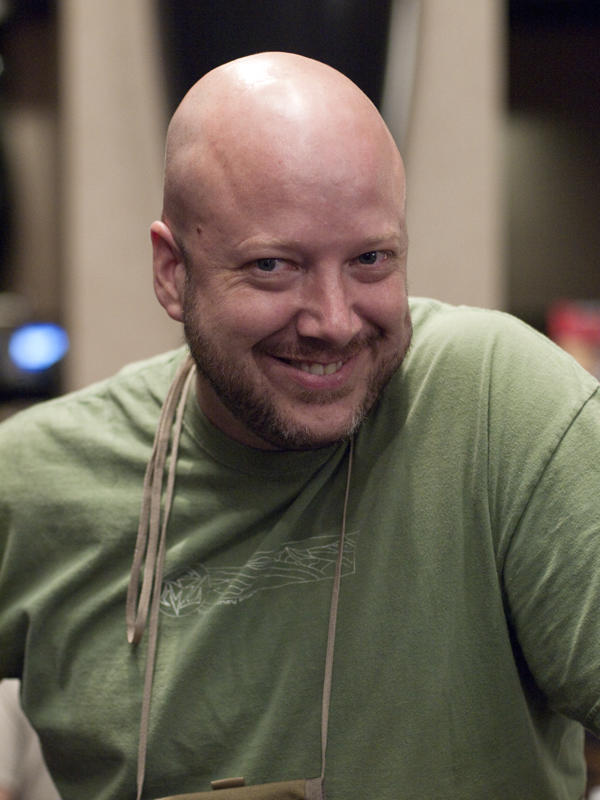
Michael Krein and Tom Burch—er, Make That Michael Burch and Tom Krein

For the record: that is Michael Burch at top and Tom Krein below him. (Krein photo by Mike Searson)

    Two of the most important things about a person are his/her name and likeness. As Blade Magazine Cutlery Hall-Of-Fame© member Bruce Voyles stresses, “I don’t care what they say about me as long as they spell my name right.”

    A person’s likeness is equally—some might even argue more—important than his/her name. All of which came crashing down on me on page 42 of the April BLADE®.

    On that page is the likeness of knifemaker Tom Krein. Only problem is, the caption identifies him as maker Michael Burch. The knife on the page is by Michael and, for some reason I cannot quite fathom, I gave instructions for our graphic designer to insert the likeness of Tom with the knife, thinking it was Michael’s likeness. I know Tom when I see him and I know Michael when I see him. Again, I can’t explain my mistake.

    I could blame it on Mom. I have two sisters, Chris and Juli, and a brother, Pat, and, for as long as I can remember, Mom has often called each of us a smorgasbord combo of all four. “Uh, Chris-Juli-Pat-Steve,” she goes through a checklist of all four names before finally arriving at mine, “tuck your shirt in, stand up straight,” etc. On the other hand, she has never mistaken me/my picture for any of my siblings/their likenesses (though on more than one occasion during my misspent youth she made me wish she had).

    Similarly, at last year’s BLADE Show I saw Gavin Hawk, talented knifemaking son of talented knifemaking father Grant, walking into the show, and for some reason I called him Grant. “That’s Gavin, Steve, Gavin!” he stressed. I sheepishly ducked my head and muttered, “Oops! Sorry.” Of course, I can understand Gavin’s frustration. He no doubt is called Grant from time to time, it being natural for people to associate him with his father, and he is no doubt extremely proud to be the son of such a creative dad. At the same time, Gavin wants to be recognized for his own achievements, and understandably so.

    In case you think I am getting old and forgetful—which, of course, I am—there have been a number of times over the years when I wasn’t so old that I misidentified people in person, too. There was the time at a Guild Show when I stopped at knifemaker Dennis Bradley’s table and carried on a conversation with him for several minutes, calling him Gayle (after knifemaker Gayle Bradley) repeatedly. Finally, when we were through talking, he said, “And oh, by the way, I’m Dennis.” Ugh. I slinked away.

    Another is production knife guru Vince Ford. On more than one occasion I have called him Paul, thinking he was knifemaker Paul Fox. Each time Vince has been gracious enough not to lose his temper, just shaking his head and giving me that funny little look he gives so well.

    On the other hand, some people in the knife industry simply look like others. I always thought in his later years Cutlery Hall-Of-Famer Bob Loveless resembled the older, heavier Peter Lorre. (And no, I never told Bob that. What, do you think I have a death wish or something?) I also think our managing editor, Joe Kertzman, looks like retired Major League Baseball catcher Mike Piazza. Heck, one time Mrs. Debbie Voyles told me I looked like Tom Hanks. Of course, that was a long time and many hair follicles ago. Or maybe it was just that I reminded her of Forrest Gump.

    Anyhow, I caught my mistake with Michael and Tom, though it was a day late and a dollar short—the day after the April BLADE went to the printer. I immediately fired off an e-mail with the subject line, “Man, did I screw up!” to Michael and Tom, as well as Mike Searson, the photographer of Tom’s picture that we used. Both Michael and Tom were equally gracious. “Now that will be funny!” Michael replied via e-mail. “I always wanted to be Tom for a month.” Not to be outdone, Tom e-mailed, “No worries! Michael never looked so good!”

    Thank you, Michael and Tom, for being good sports. And thank you, BLADE readers, for putting up with a well-meaning but often all-too-imperfect editor.

For more on the latest knives, knife legislation, knifemaking instruction, knife trends, knifemakers, what knives to buy and where and much more, subscribe to BLADE® Magazine, the World’s No. 1 Knife Publication. Click on http://www.shopblade.com/blade-magazine-one-year-subscription-us for more information.

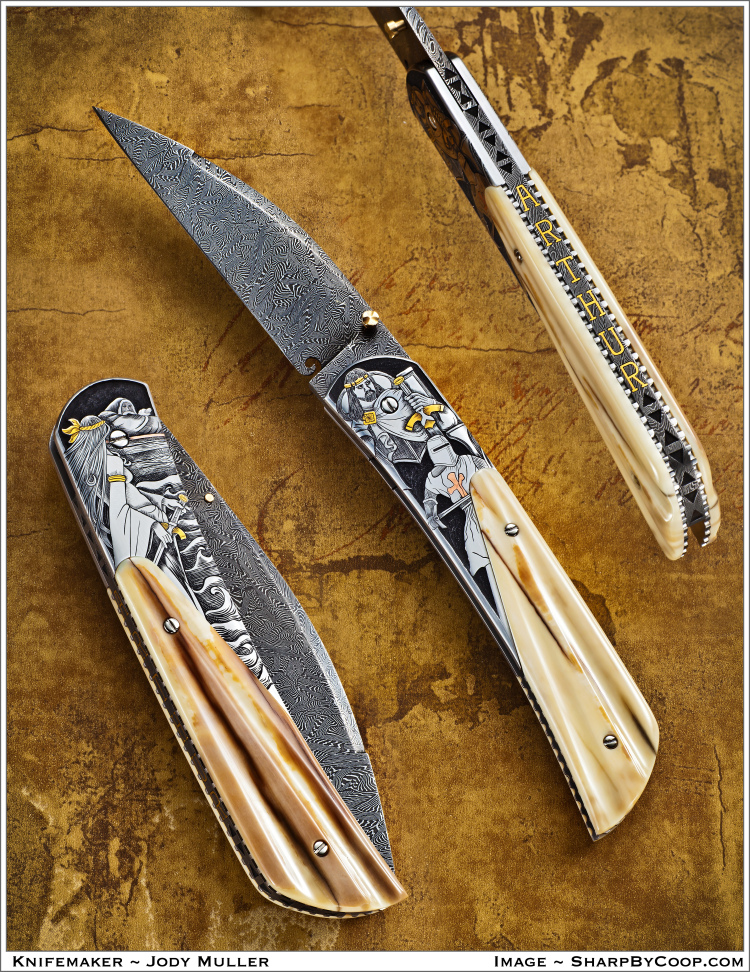
Knife Of The Day XXV: Jody Muller’s “King Arthur”

As Mel Brooks says in The History Of The World, Part I, “It’s good to be the king.” And Jody Muller’s “King Arthur” dress locking folder, the 25th installment in our “Knife Of The Day” series, resembles Brooks’s remark.

    Boasting damascus forged by Jody, a handle of carved ancient walrus ivory, and 24k-gold and copper inlays, the knife gives Camelot a whole new dose of cool.

    For more information on the knife, click on www.mullerforge.com.

For more on the latest knives, knife legislation, knifemaking instruction, knife trends, knifemakers, what knives to buy and where and much more, subscribe to BLADE® Magazine, the World’s No. 1 Knife Publication. Click on http://www.shopblade.com/blade-magazine-one-year-subscription-us for more information.

Memorial Day: Lest We Forget

Justin Gingrich flanked by two retired Army Rangers, from left: Roy Motsumoto, an original member of Merrill’s Marauders of World War II fame and a Ranger Hall of Famer, Gingrich and Korean War veteran Bill Spies. At right is Paul Vorhees, owner of Ranger Joe’s. (photo courtesy of Justin Gingrich)

    On this Memorial Day, be sure to think about those who have fought, were wounded and who died in the service of their/your country. Think of those who paid the ultimate sacrifice and gave their lives but also of those who survived and subdued those who would take our freedoms. Included among the latter, of course, are those wounded warriors who bear the physical and mental scars that will stay with them throughout their lives. We must never forget.

    As I watched Merrill’s Marauders, the movie about the U.S. Army outfit that fought so valiantly during World War II, I remembered a picture (above) we ran in the December BLADE® of Justin Gingrich and two other of our valiant military heroes, including ann original member of Merrill’s Marauders, Roy Motsumoto. Here’s to Mr. Motsumoto, Korean War veteran Bill Spies (who was also pictured) and Mr. Gingrich, and all the others who make it possible for us to enjoy living in the best country in the history of the world, USA.

    It doesn’t get any better, does it?

For more on the latest knives, knife legislation, knifemaking instruction, knife trends, knifemakers, what knives to buy and where and much more, subscribe to BLADE Magazine, the World’s No. 1 Knife Publication.

What’s Your Favorite Pocketknife Pattern?

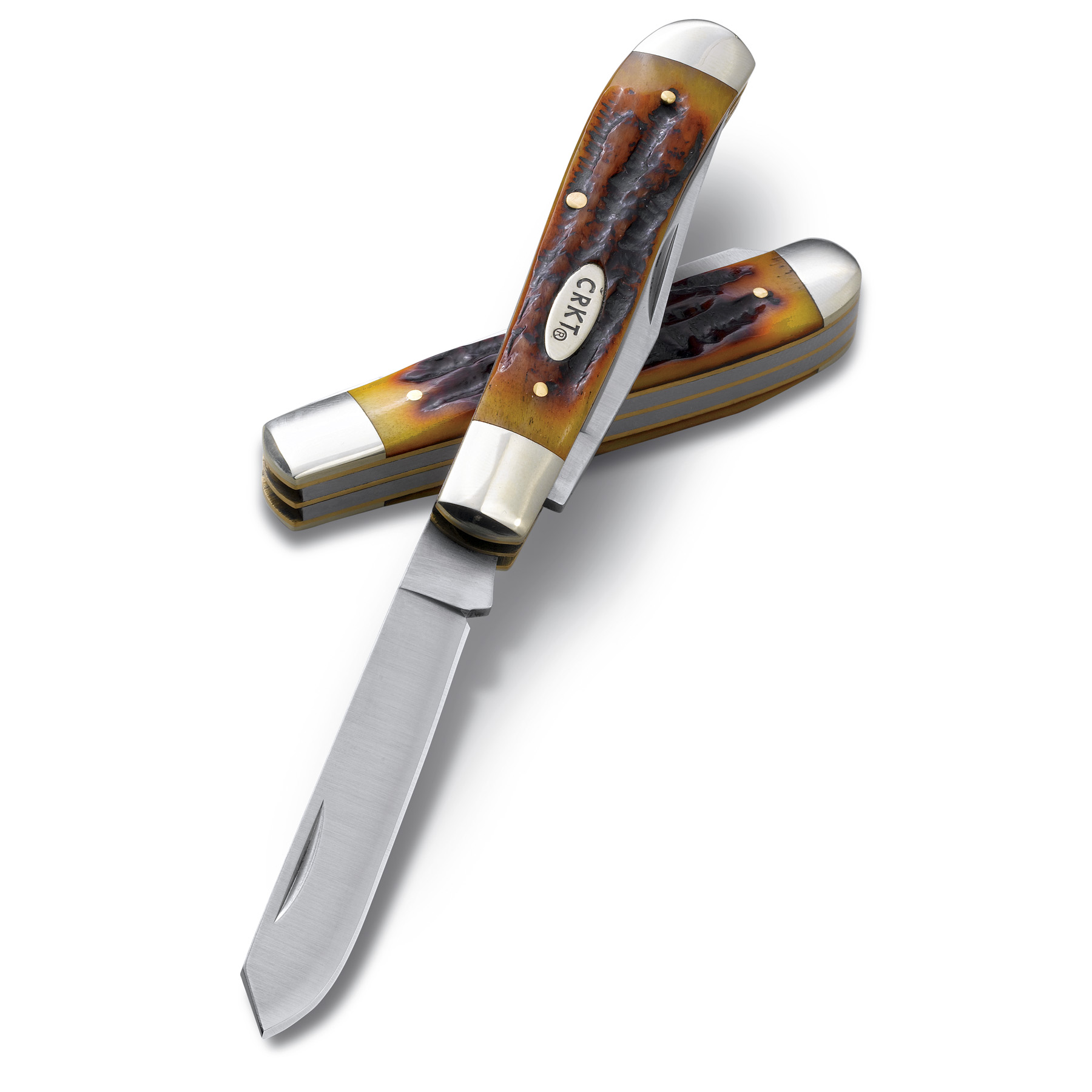
Tell us what your favorite pocketknife pattern is and chances are we will use all or portions of your comments in an upcoming issue of BLADE® Magazine. Is it a trapper like the CRKT Model 6064 shown above? (For more on it, click on http://www.shopblade.com/trapper-pocket-classic-6064.) Or is it a pattern such as a congress, stockman, muskrat, sowbelly, whittler or something else altogether?

    Feel free to include both the pattern and the brand, or just the pattern. And tell us WHY it’s your favorite.

For more on the latest knives, knife legislation, knifemaking instruction, knife trends, knifemakers, what knives to buy and where and much more, subscribe to BLADE Magazine, the World’s No. 1 Knife Publication.

Hones for the Sharpening Challenged

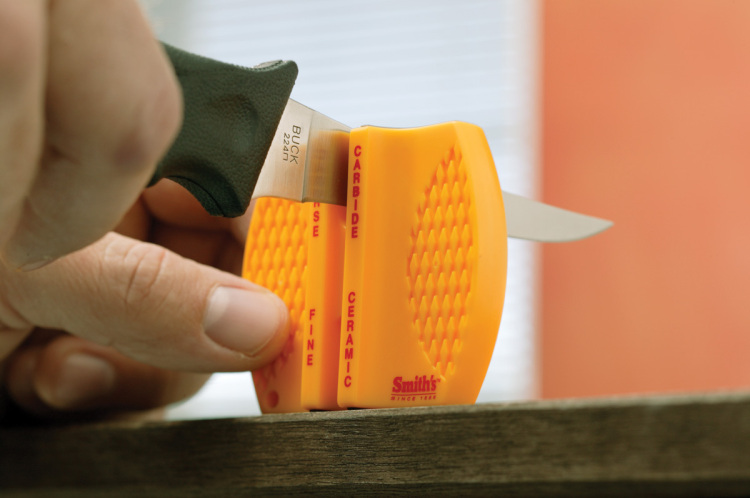
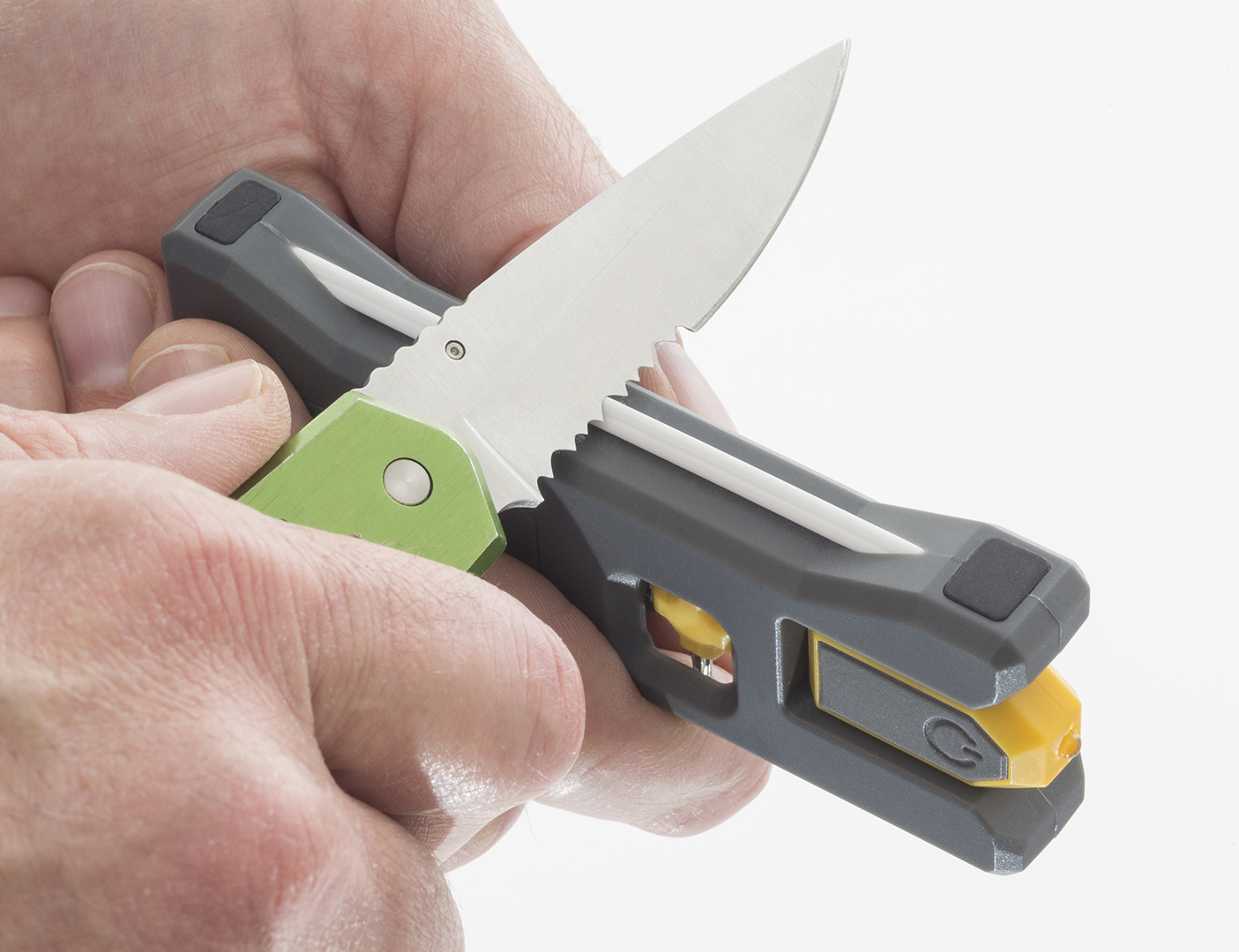
The CCKS 2-Step Knife Sharpener from Smith’s offers coarse tungsten carbide rods on top and extra-fine (1,000 grit) ceramic rods on bottom—both at pre-set angles for easy pull-through use—for sharpening and edge touch-ups/refinement, respectively. MSRP: $3.99. (Smith’s photo)

If sharpening stumps you, try one or more of these simple yet effective sharpeners

By Dave Rhea

A good working edge on a blade is one of the knife owner’s most important considerations, but sharpening is not always as easy as it seems. How do you hold the knife to the sharpener/which angle should you use? Do you use ceramic, stone or diamonds? How much sharpening is too much? How much is too little?

    Here is a better question: Since even thinking about sharpening can get complicated, why not idiot proof the subject?

Quick and Easy

Chris Fire is a sharpening expert. As the marketing manager for Lansky Sharpeners, Fire lives and breathes by the sharpening industry. His suggestion for the quickest and easiest sharpener is Lansky’s Quick Fix Pocket Sharpener.

    The Quick Fix has all the elements of an easy sharpener: Low price (MSRP: $5.99), small—about the size of a money clip—and fast results. A half-dozen or less strokes through one of the two slots clears up a problem blade edge in a hurry. One side holds a slight segment of tungsten carbide rod to return the edge to a proper geometry, and the other side holds a like-sized span of ceramic rod to deburr it.

    Fire drew a distinction between the quick-and-easy and something less expedient but perhaps wiser.

    “Tungsten-carbide sharpeners sharpen by tearing steel off the blade rather than slowly honing,” he warned. “They remove a lot of metal. Use them in a pinch, but for everyday edge maintenance you probably want to use something less aggressive like Lansky’s Turn Box Ceramic Sharpener.”

    The 4 Rod Ceramic Turn Box (MSRP: $21.99) offers a higher-grade sharpening experience but is also uncomplicated. It uses two pair of 5-inch alumina ceramic rods that are set at pre-determined angles: 20 and 25 degrees. Holding the knife upright vertically, you draw the blade down along the rods of the V-shaped sharpener. With internal rod storage, it also breaks down into a compact kit for stowing in a drawer or tool/tackle box.

    Fire added that perhaps as important as having a good sharpener is the knowledge that different tasks call for different knives. In other words, a chopping knife is not going to make a great slicing knife no matter what kind of edge it has.

    “Chopping knives have a more durable edge, but they’re not as sharp,” he professed. “Chopping potatoes with such knives is great. Achieving paper-thin tomatoes slices? Not so much. So keep a knife for slicing, a knife for chopping, a multi-purpose knife and maybe a fillet knife, and use each to its strengths.”

Hassle Free

Marketing manager for Smith’s, Russ Cowen adds that a seemingly insurmountable task is convincing the consumer on-going edge maintenance is the key to keeping a perpetually useful edged tool.

    “The best way to keep a knife sharp is to never let it get dull,” he explained. “If the consumer would just take a few minutes either before or after using a knife, and especially during use if doing lots of cuts for a longer time period, to touch up or freshen the cutting edge, he or she would see that not only would the knife cut better, but it would also take them half the time to accomplish the task.”

    For such hassle-free edge maintenance, he recommends Smith’s 2-Step Knife Sharpener, a small plastic-framed sharpener with an insanely low MSRP of $3.99. The two sharpening slots—in carbide and ceramic—offer two stages of edge work: 1) coarse “for re-setting the edge on very dull or damaged blades,” and 2) fine for finishing work that will bring a blade closer to the hair-popping sharpness so many knife users crave.

    “The 2-Step Knife Sharpener will sharpen any blade style with a flat grind on both sides of the blade as long as the blade will fit inside the sharpening slots. It works well on Euro/American style kitchen knives, everyday pocketknives, folding or fixed-blade hunting knives, fillet knives, outdoor sport knives, custom knives, and tactical/LE knives with little to no maintenance,” he said. “At most, the user may have to rinse it off or clean the ceramic rods after extended use.”

    For knives that suffer from the usual treatment—letting them go pretty much dull—Cowen offers this advice: “The best way to put a new, sharp cutting edge on a very dull or damaged knife blade is to use an abrasive surface that is aggressive enough to remove large amounts of metal from the blade quickly.”

    He suggests a sharpener with carbide blades or a low-grit diamond-coated surface. Such abrasive components are quite aggressive and remove metal from the blade very quickly—sometimes so fast you can see the metal shavings falling off the blade, he added.

Simplest Is Best

Pre-set angles and guides are all designed to make the obligatory task of sharpening a knife easier. However, according to Mark Brandon, president of Diamond Machining Technology (DMT), it does not get any simpler than the old-fashioned bench stone.

    “There’s a myth out there that sharpening is difficult,” Brandon began. “I don’t think the sharpening industry has done itself any favors—we’ve done our part to help convince people that it’s difficult by coming out with all these ‘we’ll-hold-your-edge-for-you’ kind of products.”

    He said the reality is that via its training videos available at www.dmtsharp.com, DMT has taught scores of folks to sharpen on a stone in less than five minutes.

    “We think it’s kind of idiot proof to begin with,” he stated. “Sometimes the simplest approach can be the best, and there is really nothing simpler than a 6-inch-by-2-inch stone.”

    Brandon’s two bench-stone suggestions start with the DMT Diamond Whetstone, which comes in 6- and 8-inch models. They have MSRPs of between $47.16 and $95.26, depending on the length and choice of either plastic or hardwood case. A diamond abrasive is the best and simplest material to put a great edge on a blade, he said.

    His other suggestion is the DuoSharp 8-inch model, another diamond stone that is double sided in fine and extra-fine grits to address both sharpening and refining the edge. The 8-inch DuoSharp has an MSRP of $105.03 for the stone alone and $114.58 with the stabilizing base accessory.

    “It’s all a matter of how much time are you willing to spend on it,” Brandon said. “If you have a fine stone, depending on how much time you want to take, you can get a dull knife sharp. But if you don’t have that much time, you may want to have a coarse stone available to get it to a certain level and a fine stone to get a good working edge, and if you really want to make it hair-popping sharp, go to an extra fine.”

Rule Of Thumb

No matter your preference, there are plenty of choices available. The key is to find your comfort zone and touch up the edge at least once for every three or four times you use a knife. The basic rule of thumb is do not let your knife go dull and it will be easier to keep a crisp, high-performing edge.

For more on the latest knives, knife legislation, knifemaking instruction, knife trends, knifemakers, what knives to buy and where and much more, subscribe to BLADE Magazine, the World’s No. 1 Knife Publication.

Knifemaker Earl Witsaman Passes Away

Long-time knifemaker Earl Witsaman, perhaps best known for his award-winning miniature knives, has passed away after a long illness.

    Earl worked out of Stow, Ohio, for many years, where he also made a wide variety of fixed-blade patterns, from Randall repros to D-guard bowies. He sold his first knife in 1974. He exhibited his knives at the BLADE Show for many years, including the early years of the show in Knoxville, Tennessee, with his wife Sue always at his side. Sue, in fact, collected miniature knives for many years and her display won awards at the BLADE Show, among others.

    Earl was one of the nicest guys in the business and always had a kind word and a smile. The knife fraternity will miss him greatly.

    For more on Earl click http://www.beckyscags.com/Earl_Witsaman/About_Me.html

For more on the latest knives, knife legislation, knifemaking instruction, knife trends, knifemakers, what knives to buy and where and much more, subscribe to BLADE Magazine, the World’s No. 1 Knife Publication.

Advertisement

Must Read Articles

Read this before you make a knife

Knifemaking 101 – Read This Before You Make a Knife

  by Wayne Goddard My experience has taught me that there's nothing like digging in and getting started. I've often said the hardest part of the...
how to forge damascus steel

How to Forge Damascus

Advertisement
Advertisement