Featured Knives
Here are BLADE Magazine’s Featured Knives of the Week. Browse through these articles to find the best knives available from both custom knifemakers and factory knives.
Click here to browse through our list of Featured Knifemakers.

Knifemaking – – Knife Collecting – – Tactical Knives – – Survival Knives
Knives Making Their Debut At BLADE Show 2024
Companies from every corner of the globe will unveil their new knives at the BLADE Show.
Knife companies know how their bread is buttered—by blue-collar and other like-minded knife enthusiasts who buy factory knives by the wagonload. And there’s no better place to tap that wealth of grassroots knife enthusiasts than the BLADE Show.

More companies from more countries than ever before will introduce their latest cutters in Atlanta’s Cobb Galleria Centre June 7-9. Scrutinize this and the following pages for just one knife each applicable company will debut. There will be many more, including those of exhibiting companies that were unable to participate in the story for one reason or another.

All the featured knives are either available for sale now or will be in June.


W.R. Case & Sons Ruple Axe Handle

W.R. Case & Sons Ruple Axe Handle

Designer: BLADE Magazine Cutlery Hall-Of-Fame® member Bill Ruple
Knife type: Folder
Blade length: 3.5” 
Blade steel: 154CM stainless
Blade grind: Flat taper
Handle material: Natural birdseye maple
Lock: Lockback
Special features: Axe-handle-shaped handle 
Weight: 4.2 ozs.
Closed length: 4.4”
Carry: Taco-shaped suede leather pouch a la the ones that came with past Case/Tony Bose collaborations
Knife to know: The knife marks the first of what promises to a series of collaborations between Case and Ruple as Bill officially succeeds the late Cutlery Hall-Of-Famer Tony Bose as Case’s go-to custom knifemaker designer
Country of origin:  USA
MSRP: To be determined


Halfbreed Blades CQC-02S

Halfbreed Blades CQC-02S

Designers: Halfbreed in collaboration w/Jared Wihongi
Description: Karambit
Knife type: Fixed blade
Blade length: 3.54”
Blade material: K340 carbon steel
Rockwell hardness: 59-60 HRC
Edge: Polished, partially serrated
Blade finish: PVD coated black
Blade pattern: Talon point
Blade @ thickest: .23”
Handle material: G-10
Knife weight: 7.65 ozs.
Overall length: 7.48”
Sheath: Molded Kydex
Mounting: IWB and belt (DOTS design)
Color options: Black, dark earth, Ranger green
Country of origin: Comprises Australian and Taiwanese make
MSRP: $220


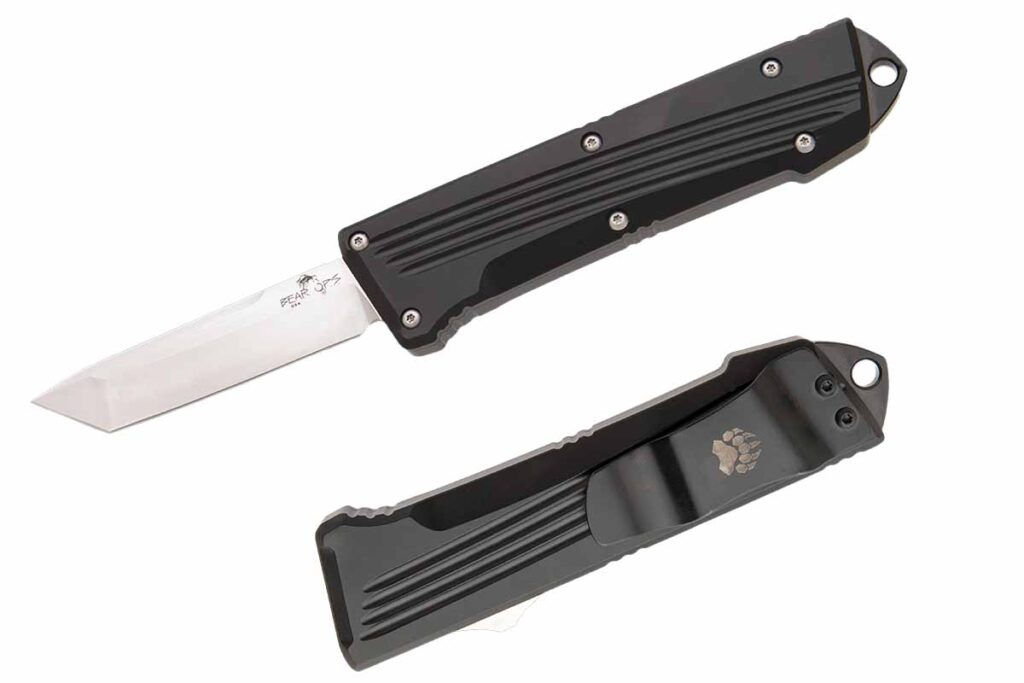
Bear OPS 4.5” Double Clutch IV

Bear OPS 4.5” Double Clutch IV

Knife type: EDC
Blade length: 2.5”
Blade material: D2 tool steel
Blade grind: Taper
Handle material: Aircraft aluminum w/grip ridges, hole for a lanyard
Opening mechanism: Automatic
Pocket clip: Robust steel model
Weight: 3.3 ozs.
Closed length: 4.5”
Country of origin: USA
MSRP: $289.99


Kansept Link

Knife type: EDC
Blade length: 3.55”
Blade steel: CPM 20CV stainless
Blade grind: Flat
Handle material: Titanium+Gecko camo carbon fiber
Lock: Framelock
Pocket clip: Milled titanium
Weight: 3.85 ozs.
Closed length: 3.61”
Country of origin: China
MSRP: $284


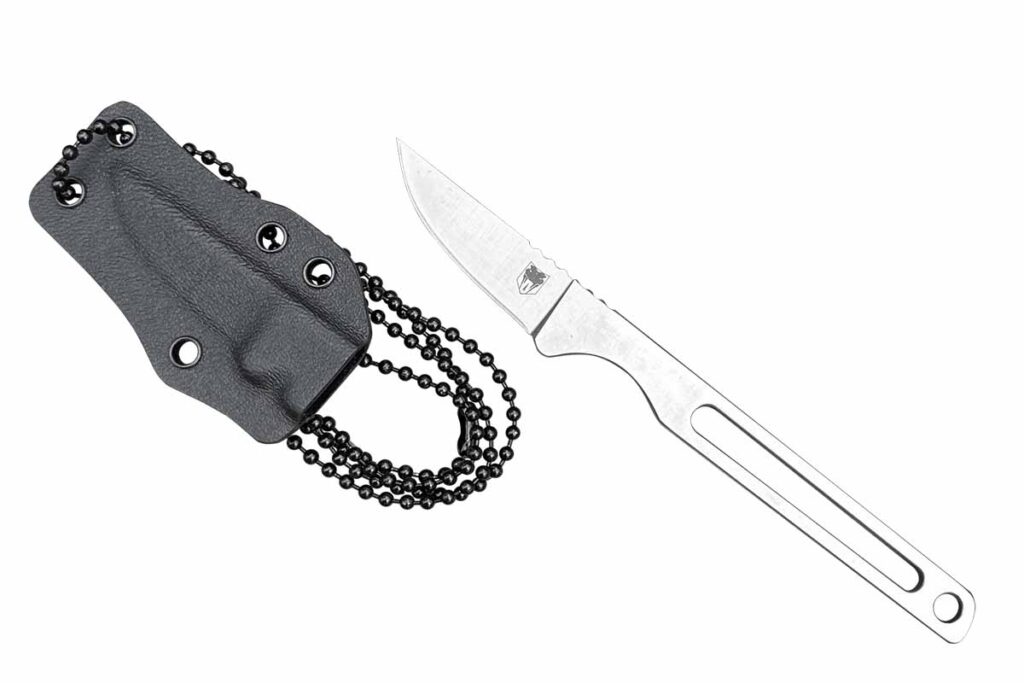
CobraTec Surgeon

CobraTec Surgeon

Knife type: Necker
Blade length: 1.75”
Blade steel: M390 stainless
Blade grind: Flat
Handle material: M390 stainless
Construction: Full tang 
Weight: 1.2 ozs.
Sheath: Kydex w/necklace bead chain
Country of origin: China
MSRP: $99.99


A.G. Russell Knives

A.G. Russell Knives

Knife type: EDC
Designer: BLADE Magazine Cutlery Hall-of-Fame® member A.G. Russell
Blade length: 3.25”
Blade Material: D2 tool steel
Rockwell Hardness: 60-61 HRC
Blade grind: Flat saber
Handle material: Green G-10 (also available in blue)
Blade opener: Thumb stud
Blade finish: Hand rubbed
Lock: Cutlery Hall-of-Famer Blackie Collins-inspired design
Pocket clip: Deep pocket, ambidextrous, blade tip up
Weight: 3.7 ozs.
Closed length: 4.25”
Country of origin: China
MSRP: $135


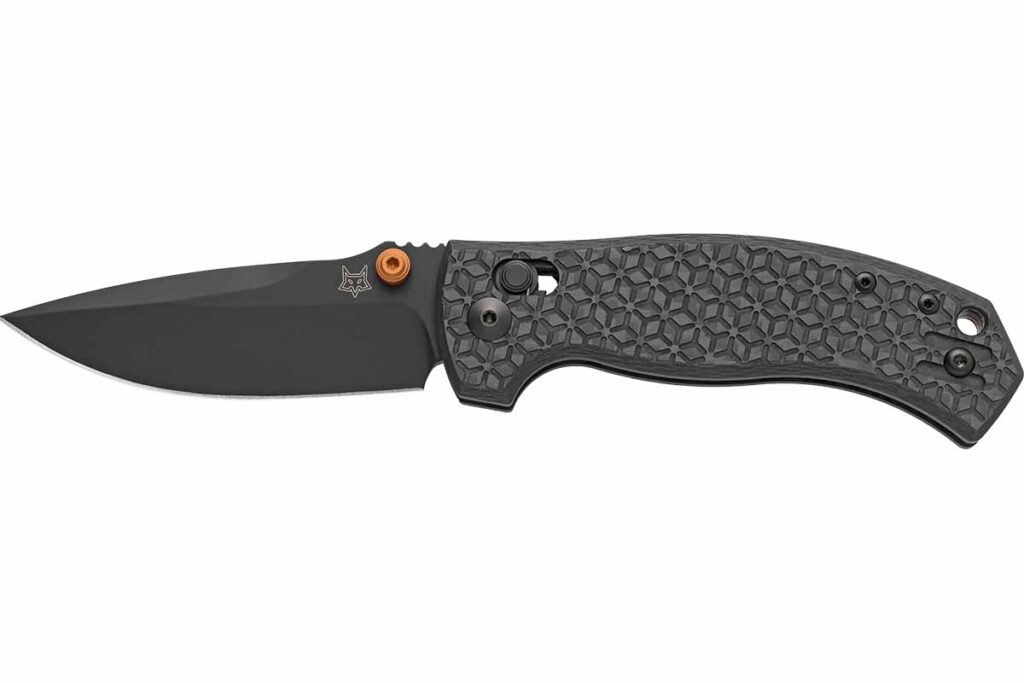
Fox Cutlery Anzu

Fox Cutlery Anzu

Designer: Les George
Knife type: EDC
Blade length: 3.15”
Blade steel: CPM MagnaCut stainless
Blade finish: Black PVD
Blade grind: Flat 
Handle material: 3K carbon fiber
Lock: Verso Lock 
Pocket clip: Black PVD-coated 420 stainless steel, reversible
Weight: 3.7 ozs.
Closed length: 4.13”
Country of origin: Italy
MSRP: $225 at press-time exchange rate


Ocaso Duo Desk Knife

Ocaso Duo Desk Knife

Model type: Desk knife
Blade length: 2.75”
Blade steel: 420J2 stainless
Blade grind: Chisel
Handle material: 420J2
Special features: Dual knives w/neodymium magnets
Weight: 3 ozs.
Overall length: 5.5”
Knife to know: Includes walnut and stainless steel stand
Country of origin: Taiwan
MSRP: $149.99


Condor Tool & Knife Narrowsaur

Condor Tool & Knife Narrowsaur

Knife type: Survival
Blade length: 4.2”
Blade material: 1095 carbon steel
Blade grind: Scandi
Handle: Walnut
Weight: 4.9 ozs.
Overall length: 8.66”
Sheath: Handcrafted leather
Country of origin: El Salvador
MSRP: $89.98


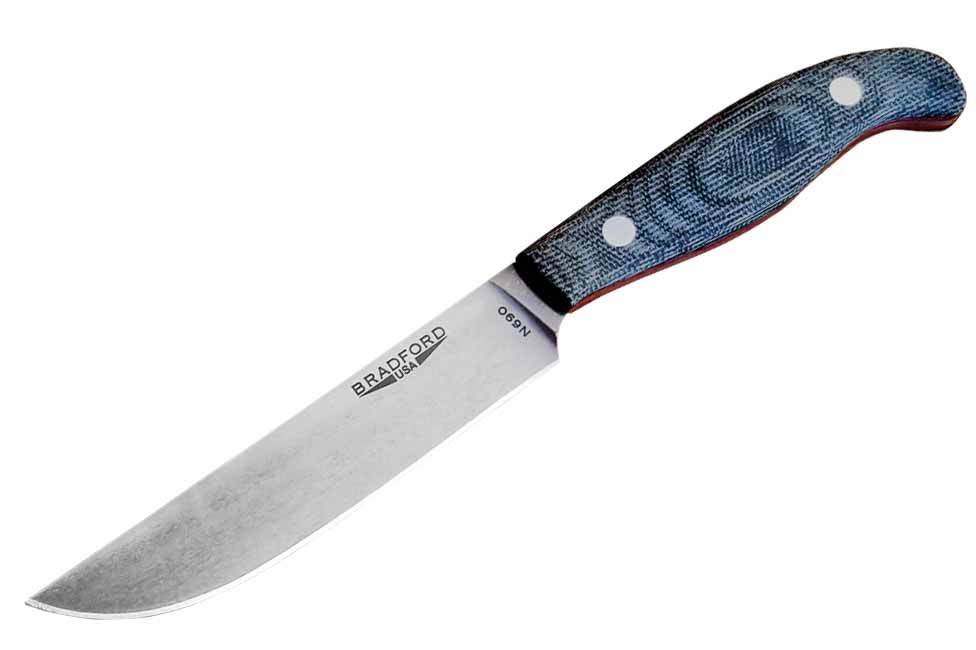
Bradford USA Gatsby Steak Knife

Bradford USA Gatsby Steak Knife

Knife type: Culinary
Blade length: 4.5”
Blade steel: N690 stainless
Blade grind: Full-height flat
Handle options: Maroon, wheat or ivory canvas Micarta®, and carbon fiber
MAKER’S REMARK: As Nicole Bradford noted, “It makes your steak taste better!”
Weight: 2.7 ozs.
Overall length: 8.5”
Sheath: 4-pack leather roll and/or individual Kydex
Country of origin: USA Proud
MSRP: $199 each


QSP Knife Turtle Punk

QSP Knife Turtle Punk

Designer: Keanu Alfaro
Model type: Pocketknife
Blade length: 3.5”
Blade steel: Sandvik 14C28N stainless
Blade grind: Flat
Handle material: Black-and-white-pattern G-10
Lock: Linerlock
Pivot: Ceramic ball bearings
Pocket clip: Blade tip up, stainless steel, deep carry, ambidextrous
Weight: 4.6 ozs.
Closed length: 4.5”
Overall length: 8”
Country of origin: China
MSRP: To be determined


Reate GTR

Reate GTR

Knife type: EDC
Blade length: 3.6”
Blade steel: M390 stainless
Blade finish: Hand satin
Blade openers: Flipper tab, blade hole and thumb stud
Blade pattern: Harpoon
Handle: Titanium in a selection of finishes, color anodizations, Zircuti inlays and more
Weight: 5.5 ozs.
Closed length: 5”
Country of origin: China
MSRPs: $687 (w/Zircuti inlays) and $450 (titanium version)  


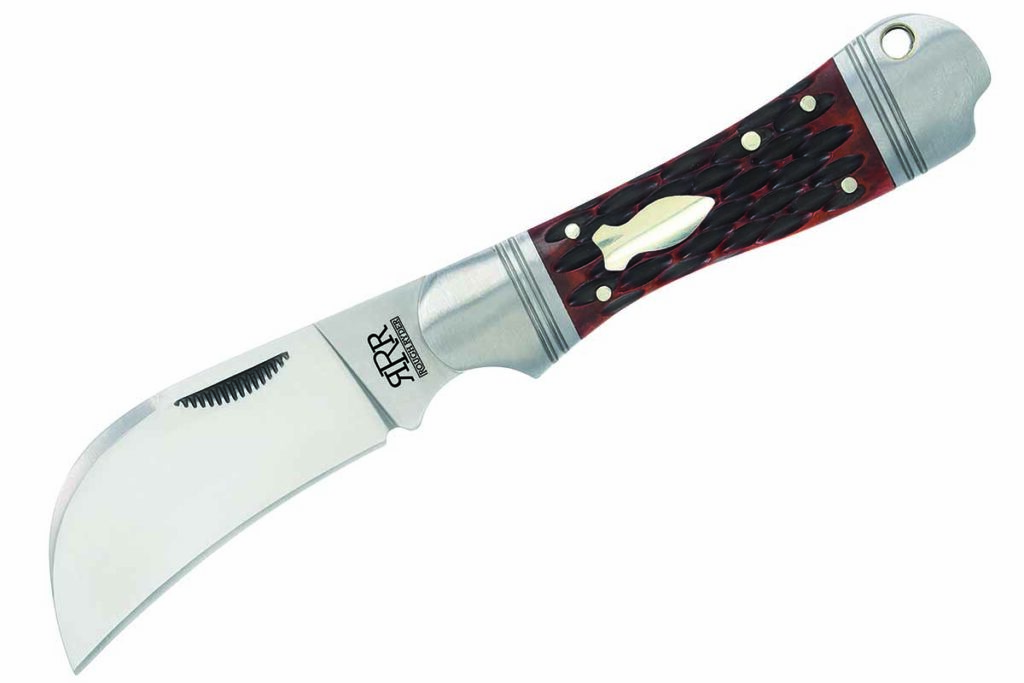
Smoky Mountain Knife Works Rough Ryder Reserve Hawkeye

Smoky Mountain Knife Works Rough Ryder Reserve Hawkeye

Knife pattern: Gentleman’s hawkbill
Designer: Brian Wilhoite
Blade length: 25/8”
Blade material: D2 tool steel
Handle material: Brown jigged bone
Action: Slipjoint w/half stop
Weight: 3.2 ozs.
Closed length: 3.5”
Special features: Brass liners and lanyard tube, nickel silver bomb shield and pins
Country of origin: China
MSRP: $44.95


SOG Tech Bowie Stonewashed

SOG Tech Bowie Stonewashed

Knife type: Tactical/utility
Blade length: 6.4”
Blade steel: AUS-8 stainless
Blade grind: Saber hollow
Handle material: Kraton
Weight: 11.2 ozs.
Sheath: Hard-molded nylon
Country of origin: Taiwan
MSRP: $199.95


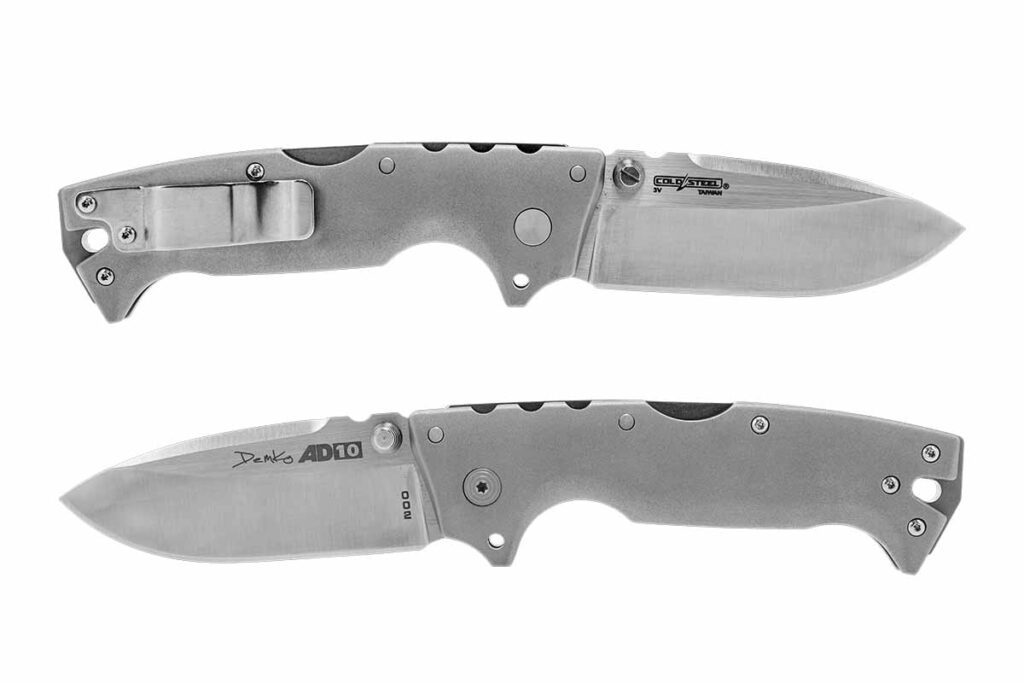
Cold Steel AD-10 Ti Limited Edition

Cold Steel

Designer: Andrew Demko
Knife type: EDC
Blade length: 3.5”
Blade material: CPM 3V carbon steel
Blade pattern: Drop point
Handle material: Titanium
Lock: Tri-Ad
Pocket clip: Blade tip up
Special features: Full titanium; limited run of 1,000; presentation box
Weight: 9 ozs.
Closed length: 5.25”
Country of origin: Taiwan
MSRP: $279.99


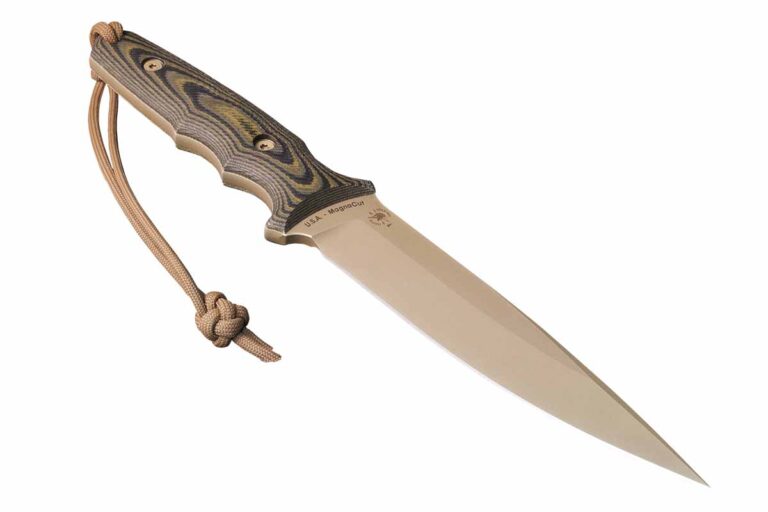
Spartan Blades Spartan-Harsey Clandestina

Spartan Blades Spartan-Harsey Clandestina

Designer: William W. “Bill” Harsey Jr.
Knife type: Fixed blade, combat/utility 
Blade length: 5.5”
Blade steel: CPM MagnaCut stainless
Rockwell hardness: 61-63 HRC
Blade grind: Flat/saber
Blade @ thickest: 3/16”
Handle material: CE canvas Micarta®, black or camo (shown)
Weight: 7.6 ozs.
Overall length: 10 3/16”
Knife to know: Flat ground main bevel with tapered top edge
Sheath: MOLLE and Kydex options
Country of origin: USA
MSRP: $360


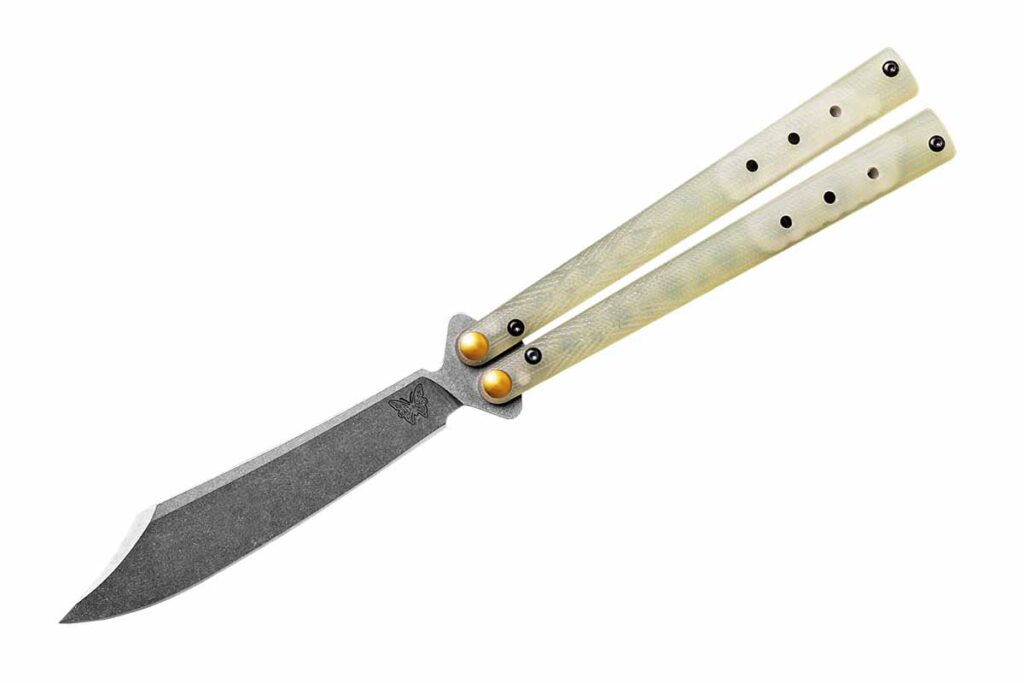
Benchmade 99 Necron

Benchmade 99 Necron

Knife type: Balisong
Blade length: 4.59”
Blade steel: CPM S30V stainless
Blade grind: Scimitar
Handle material: G-10 
Lock: Latchless balisong
Special features: Interchangeable backspacers and an interchangeable tungsten weight system beneath the G-10 scales tune the flipping dynamics; comes in ivory and ruby red (99BK-1) versions
Weight: 4.21 ozs. 
Closed length: 5.08”; 5.92” w/extensions
Carry: Nylon sleeve
Country of origin: USA
MSRPs: $500 ivory version, $550 ruby red version


More BLADE Show Info:

CRKT Soldotna Commemorates Company’s 30th Anniversary

Fixed-blade hunter finds its roots a knife gifted to CRKT’s founder.

CRKT is 30 years old this year, but who’s counting candles? Apparently, the company, because it’s commemorating the milestone with the release of a little something. And what better way for an outdoorsy brand from Oregan to mark an anniversary than with a hunting knife—a dang slick-looking one at that.

Shake hands with the Soldotna.

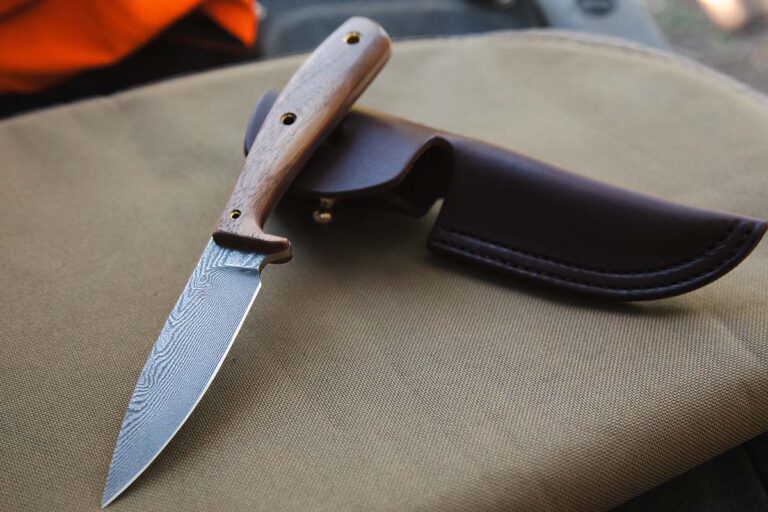
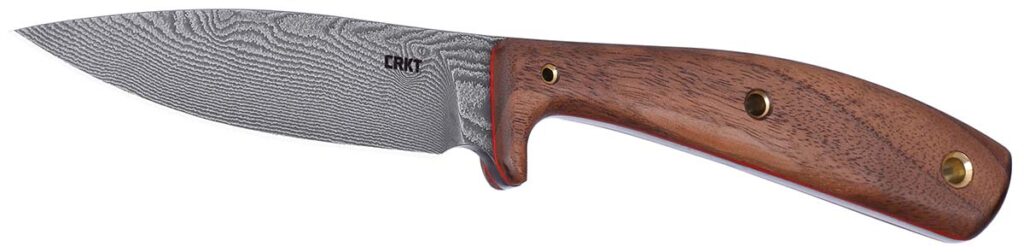
Designed by renowned craftsman, guide and all-around outdoorsman Russ Kommer the knife is a bit of a team effort. With the Soldotna, CRKT partnered with the master blacksmiths at Vegas Forge in Nevada to make the blade’s Damascus steel and worked with TOPS Knives in Idaho to manufacture the knife. It comes with a full-grain leather sheath with a belt loop and stud closer, which is hand-made in Idaho. Yet, the design itself is pure Kommer.

The Soldotna’s roots lie in a custom knife the maker and backwoodsman created for CRKT founder Rod Bremer. As the story goes, it was a gift for Bremer’s grandson who had a particularly special hunt planned. The name of the knife, interestingly, comes from an Alaskan town near the Kenai River where Kommer and Bremer would angle for king salmon together.

Soldotna carbon steel
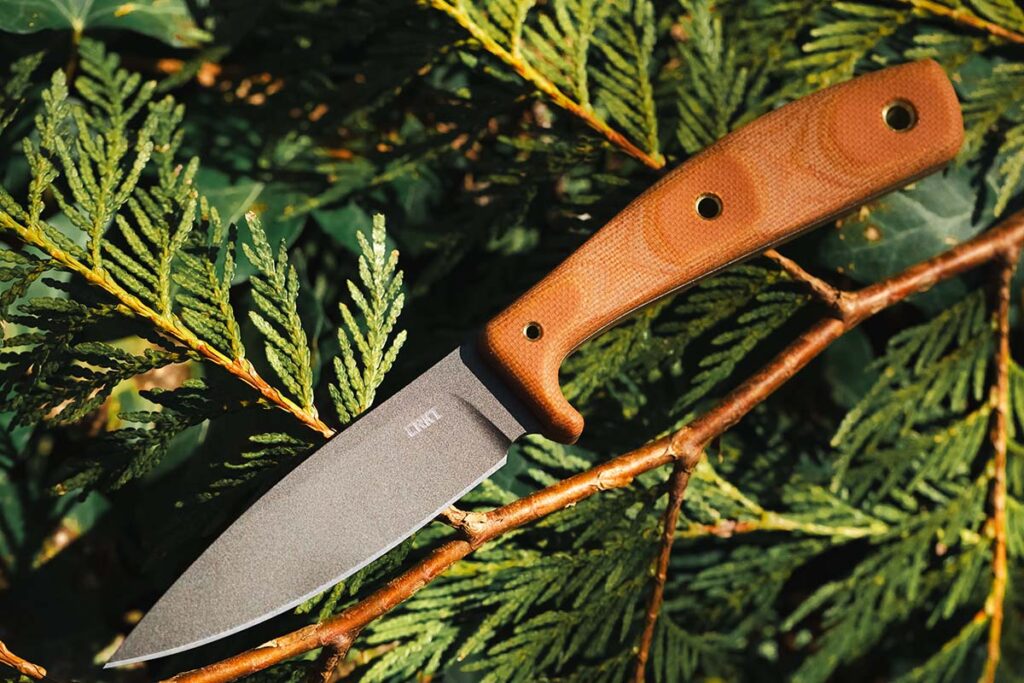
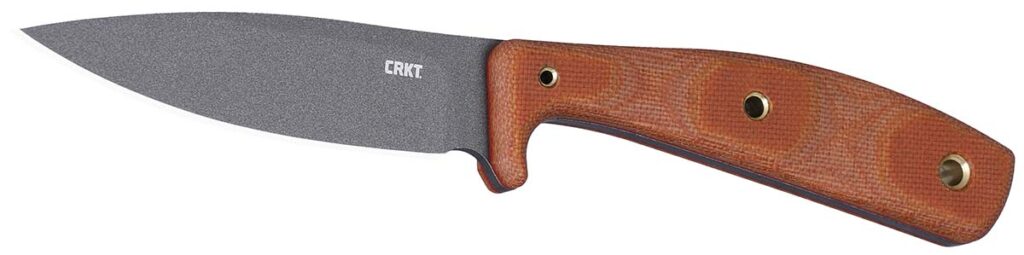
In addition to the limited edition, CRKT is offering a carbon steel version with a tan canvas Micarta handle.

As for the knife itself, it’s designed as a do-all hunting knife boasting a 3.5-inch drop-point blade, with a flat grind. It has enough belly for skinning detail but is svelte enough—particularly at the point—to handle more fine jobs in the field.

Ergonomics take the front seat in this extremely manageable knife, with a slight palm swell in the walnut handle to ensure it fills the hand. Furthermore, there’s a slight curvature near the finger guard, a safety feature that locks the knife in hand and prevents slipping. Well thought out, to say the least.

CRKT is only doing a limited run of the damascus Soldotna, with only 200 pieces up for sale. One of these beauties will set you back $500. However, if you don’t have that sort of change floating around your couch cushions, CRKT is offering a Cerakoted carbon steel Soldotna at a much more affordable $200. Note, the carbon steel model has the same specs as the Damascus, except in steel and handle material, which is tan canvas Micarta.

Soldotna Damascus

Soldotna Limited Edition Specs
Blade Steel: Damascus
Blade Edge: Plain
Blade Finish: Acid Etch
Blade Length: 3.53″
Blade Thickness: 0.13″
Overall Length: 7.63″
Weight: 3.00 oz.
MSRP: $500

Soldotna Carbon Steel

Soldotna Carbon Steel Specs
Blade Steel: 1095 Carbon Steel
Blade Edge: Plain
Blade Finish: Cerakote
Blade Length: 3.48″
Blade Thickness: 0.12″
Overall Length: 7.63″
Weight: 3.30 oz.
MSRP: $200

Check Out Our Knife Reviews:

Daniel O’Connor Goes With The Flow On His Black Widow

A sushi knife that developed a taste for Texas brisket.

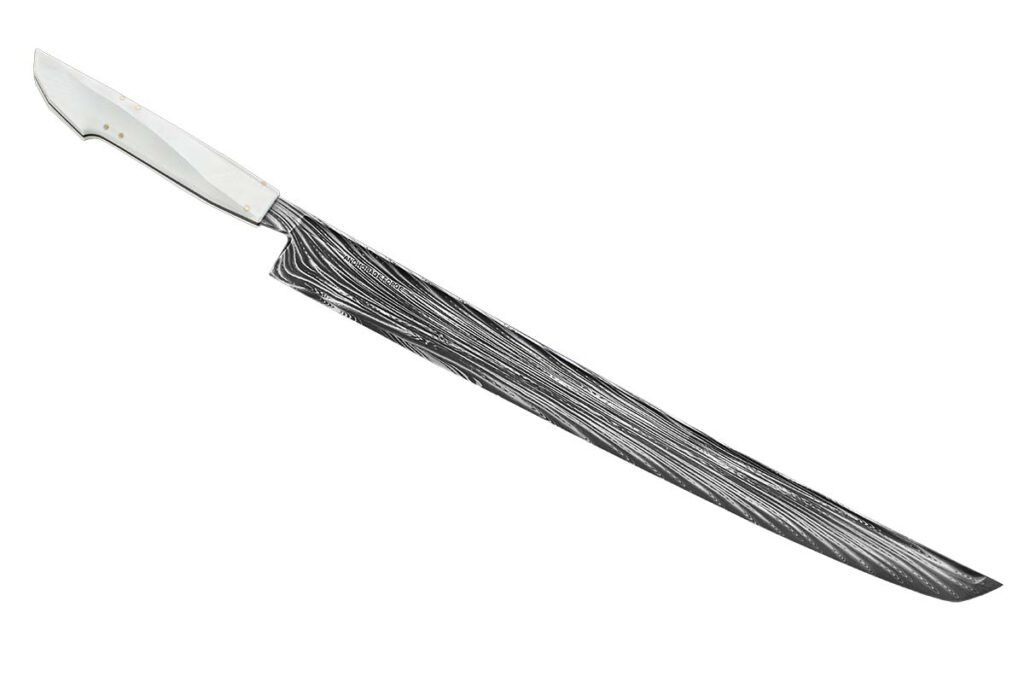
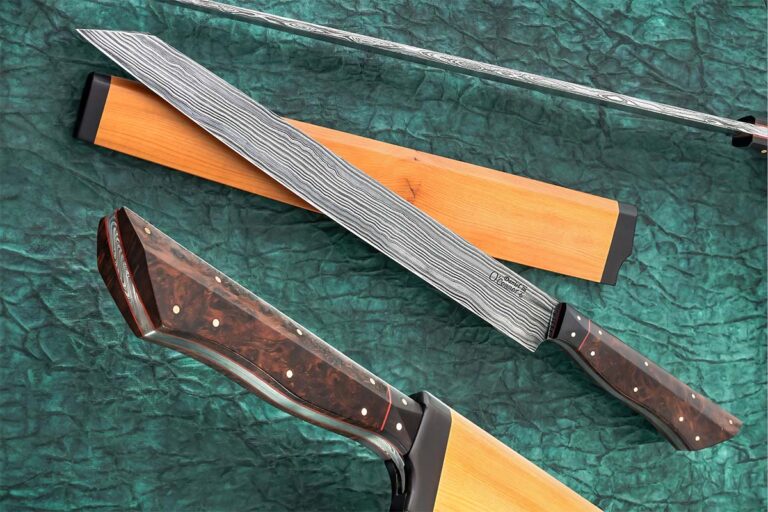
You might say Daniel O’Connor’s Black Widow leads a double life. It started as a sushi knife but when one of Daniel’s Texas pals said it looked like it would make a great brisket knife, O’Connor went with the flow, telling
his friend, “It’s about whatever you want it to be.”

OConnor Mug

Based on a kiritsuke yanagi-ba sushi knife, Black Widow features a damascus of 150 layers of 1084 carbon and 15N20 nickel-alloy steels. Daniel forged the steels in a square and then forged them flat, perpendicular to the original stack. This resulted in the edges of the layers showing up in more or less straight lines, what Japanese swordsmiths call masame hada.

The accompanying image of the knife’s butt shows how the layers distorted when forged on edge. Daniel indicated he will use the pattern in the future.

Black Widow Specs
Blade length: 12”
Blade grind: A double urashi—double bevel w/a slight hollow on each side
Handle: Bocote burl w/red fiber liners
Bolster: Bog oak
Overall length: 17”
Sheath: Irish yew and bog oak
Maker’s price for a similar knife and sheath: $1,500

Check Out More Cool Custom Knives:

OKNIFE Beagle Review: Nice Doggy

The OKNIFE Beagle emerges from testing as one well-bred blade.

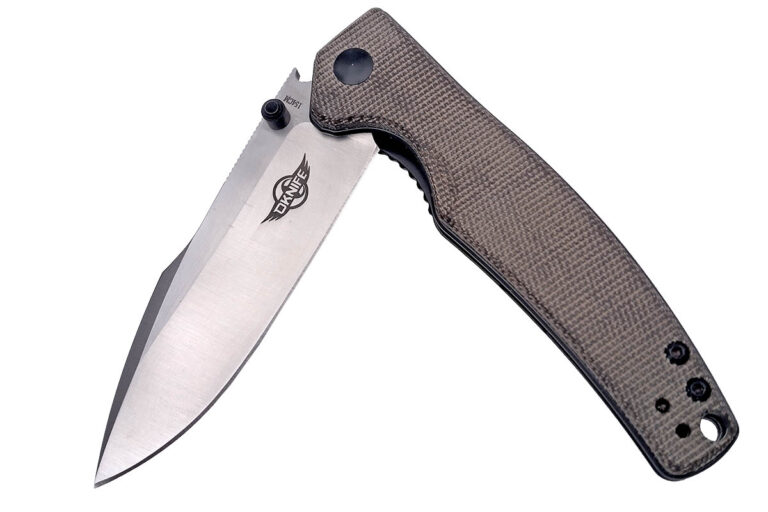
The Beagle by OKNIFE is a mid-sized folder that rides great in a pocket—big enough to handle most cutting chores but small enough to be comfortable to carry every day. As a heavy knife user, I always carry. It has to ride comfortable and perform or I won’t consider it. The Beagle was on my side for 30 days with no carry issues. Check the first block. Now for the performance side.

The Beagle was very sharp out of the box. A quick paper slice with 20-pound bond copy paper proved it. Via a push cut it sliced quite smoothly with no snags or tears. The handle shape made for easy control of the width of slices.

Next up: single-walled cardboard. The Beagle made zipping noises during the push cuts. Again, it was very controllable on the slice widths, nice and aggressive on every pass, with no snags or tears.

A scrap piece of 8-ounce leather was next. I sliced it similarly to the cardboard to see if I could get the same zipping noises. The Beagle didn’t disappoint. It zipped and crunched during every cut. I really liked the forcefulness in the leather cutting.

The knife made thin, even slices in the 8-ounce leather. The handle shape aided in controlling the thickness of each cut.

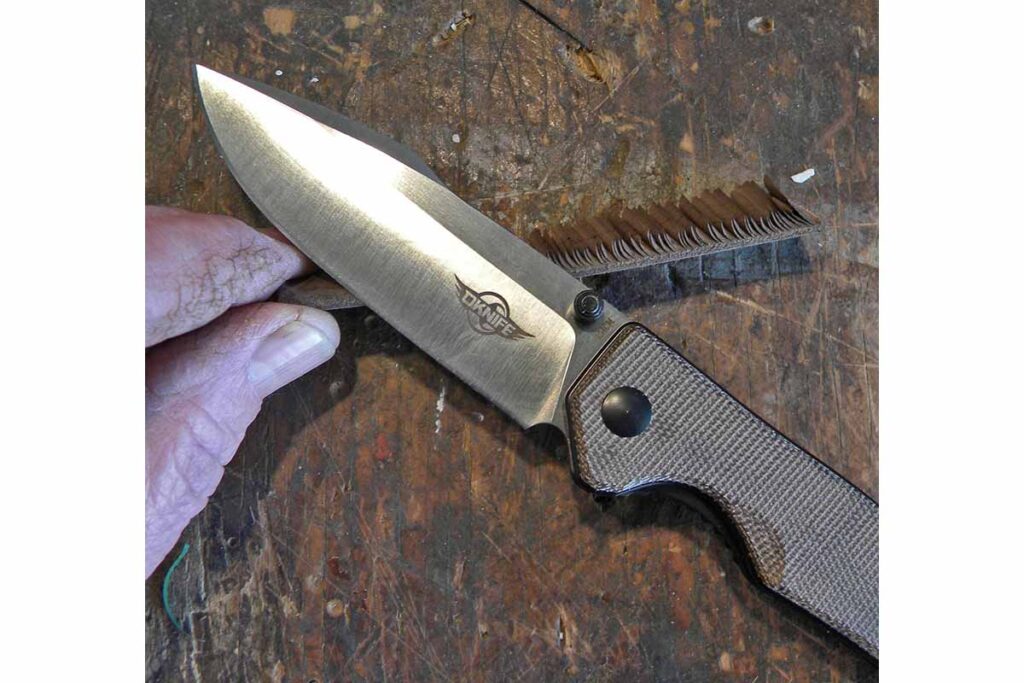
Using another piece of leather, I did some skiving. The knife made thin, even cuts. As noted, the shape of the handle really aids in controlling the thickness of the cuts. The blade was smooth and uncompromising on each slice.

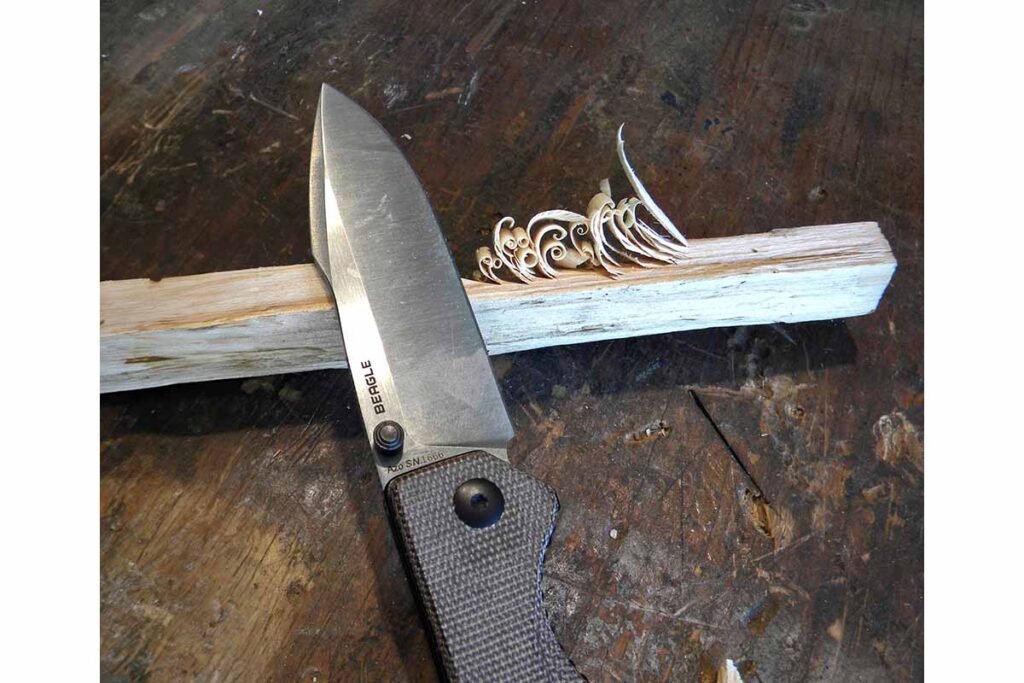
I grabbed some scrap pine and whittled a bit. The Beagle produced excellent curlicues, taking deep bites. The notches on the blade spine are just grabby enough to keep your thumb in place without abrading it. There were no hot spots on the handle.

The Beagle took deep bites in producing excellent curlicues. The notches on the blade spine are just grabby enough to keep your thumb in place without abrading it.

STRENGTH TEST

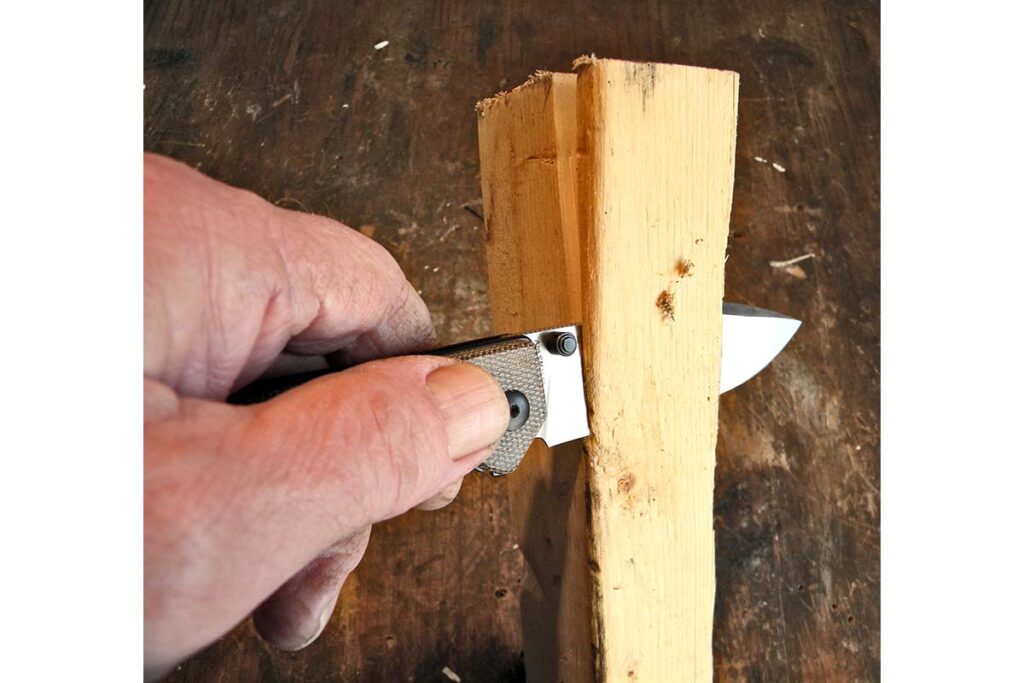
Baton cutting with a linerlock folder is not recommended but I did it anyway. On the other hand, it is a serious strength test for the lockup and liner. After several whacks there were pine pieces all over the work bench. The lockup stayed at 100 percent on every whack. The handle was comfortable throughout.

Baton cutting with a linerlock folder is not recommended but the author did it anyway. On the other hand, it is a serious strength test for the lockup and liner. After several whacks the lockup stayed at 100 percent, though the spring does appear to engage the tang too far to the right (inset). Upon later examination, however, the spring had returned more toward the left, possibly due to repeated opening/closing of the knife.

It was time to break out the half-inch sisal. The Beagle made 192 crunching cuts in the rope. I was surprised at how comfortable the handle was during cutting—not a single hot spot, warm spot or liner pinch. I’m very pleased OKNIFE paid attention to this detail. Job well done!

The Beagle made 192 crunching cuts in the half-inch sisal rope. The handle was comfortable throughout—not a single hot spot, warm spot or liner pinch.

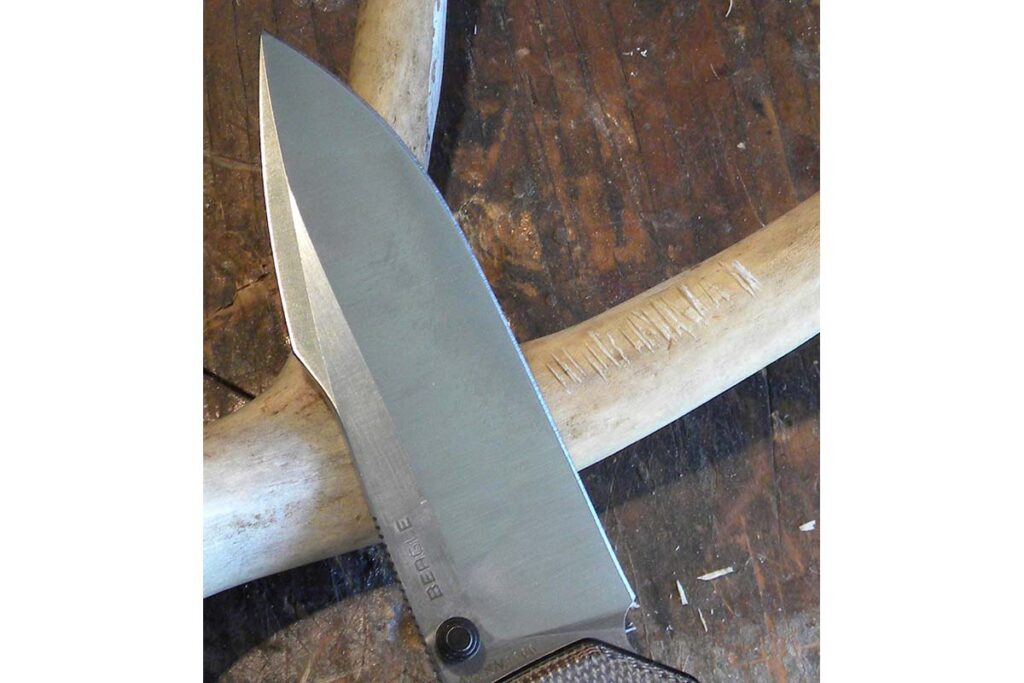
The last test for the edge and lock was chopping into a whitetail deer antler. Thirty hard whacks later and the edge had no damage. The lock was just as tight as when I started—100 percent.

In the final test, the Beagle chopped the antler 30 times with no edge damage. Verdict: heat treat spot on!

CHANGES

Maybe a few grooves in the handle for added grip?

BLADE GRADE

With its comfortable handle and sharp blade, the Beagle is a great folder for everyday carry.

OKNIFE BEAGLE Specs

Blade length: 33/8”
Blade steel: 154cm stainless
Blade grind: Flat
Blade finish: Satin
Blade pattern: Harpoon
Blade opener: Thumb stud
Handle: Green canvas Micarta®
Lock: Linerlock
Liners: Stainless
Pocket clip: Yes
Weight: 4 oz.
Closed length: 4.25”
Country of origin: China
MSRP: $79.95

More Knife Reviews:

Best Buck Knife: What Are The Company’s All-Time Classics

Buck Knives is among the most historic manufacturers in the county. We attempt to pick the best knives it has ever created.

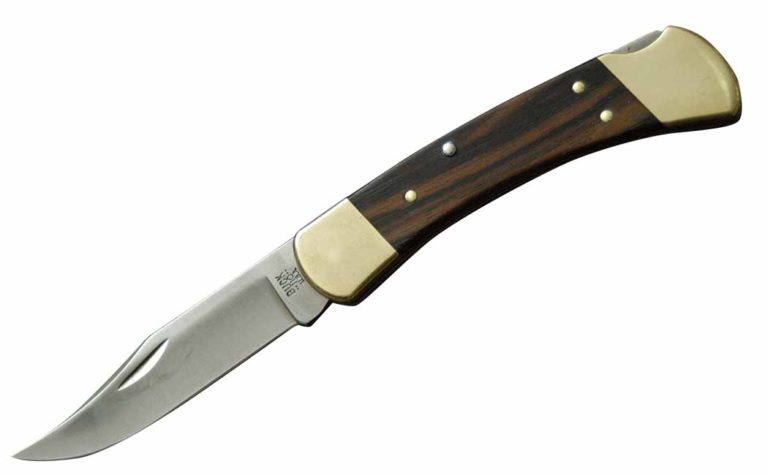
The famous 110 Folding Hunter was introduced to the market in 1964. This was a significant point for Buck Knives, and a significant point for the knife industry as a whole. 

Buck did not start in spirit in 1964, it began much earlier at the turn of the century, and was the culmination of over half a century of Hoyt Buck’s knifemaking experience. Several generations of the Buck family worked to build the company, and the result was nothing short of extraordinary. Buck Knives are one of the most recognizable brands in the country, and they have a well-earned reputation for quality. It is currently in its fourth generation of family ownership, an amazing feat in today’s fast-paced corporate environment. 

Buck knives are exceptionally well-made and will hold up for a lifetime if properly maintained. The knives also carry one of the best warranties in the industry which guarantees their products against any defects for life. This whole segment has nothing from him about how Hoyt formally started and built the company.

History Of Buck Knives

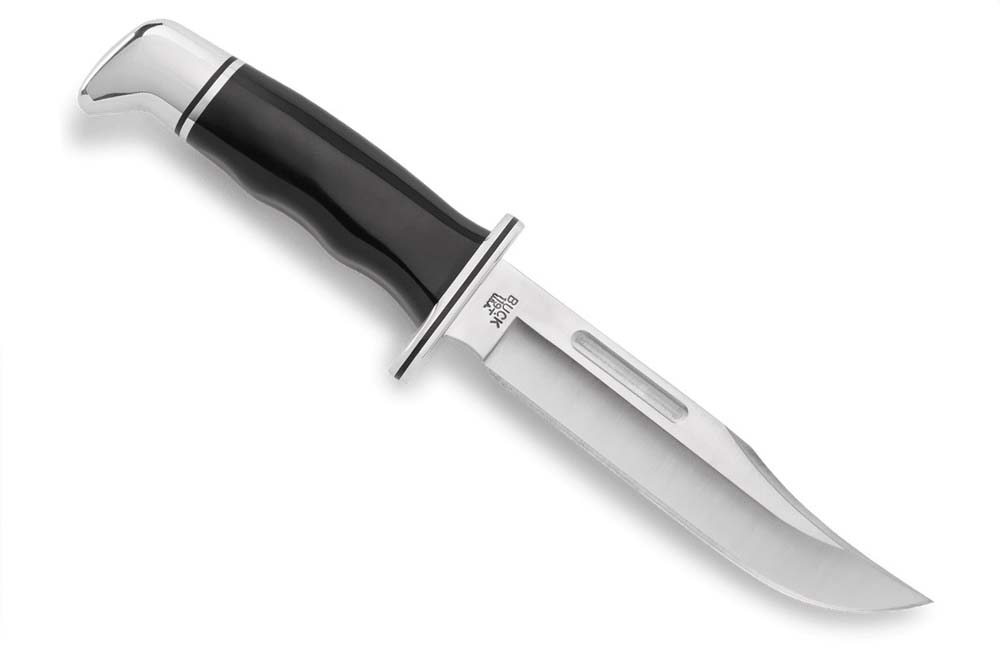
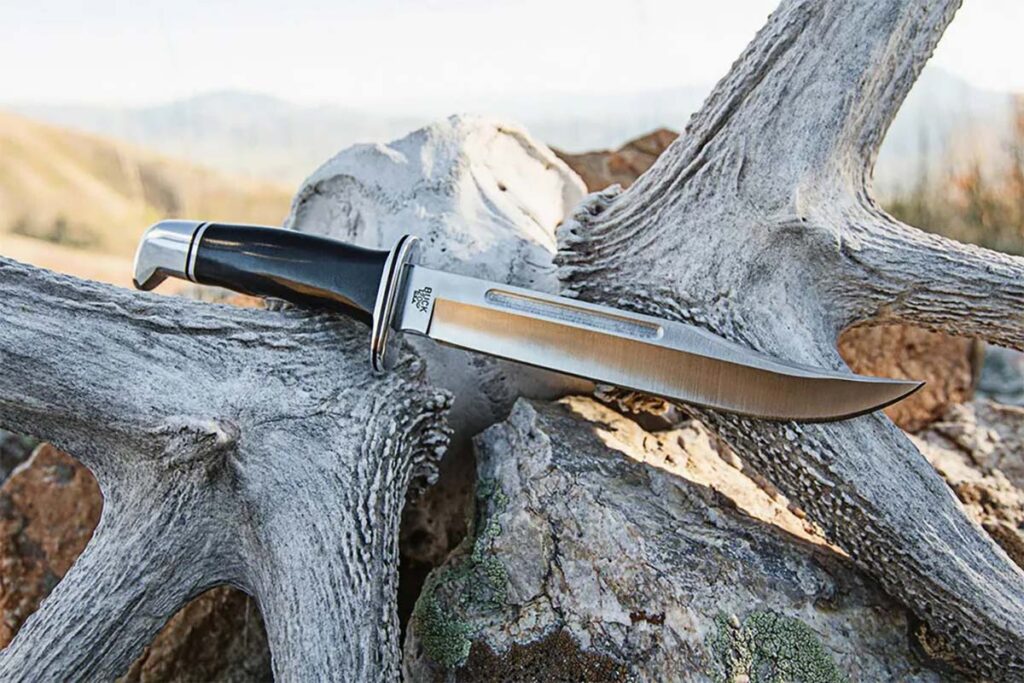
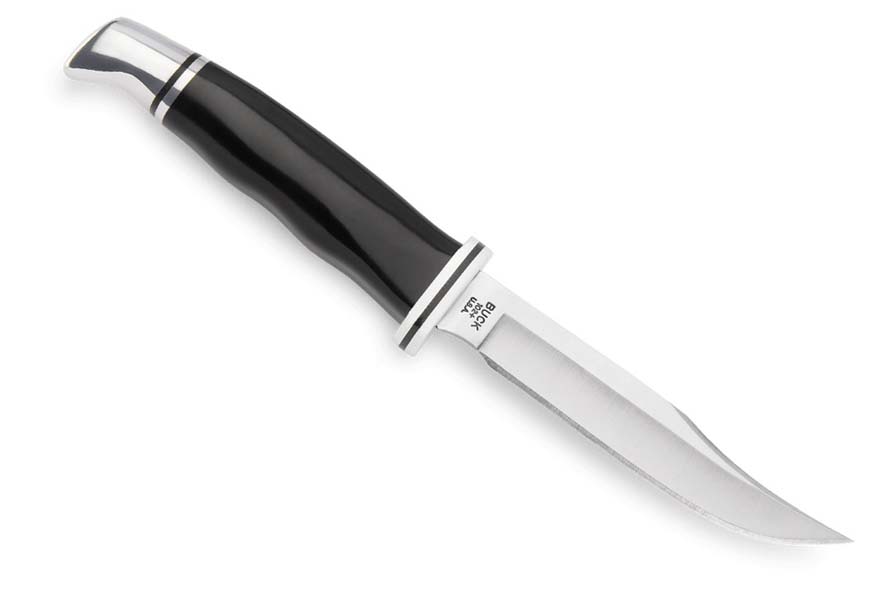
The Buck 119 Special is one of the company’s many fixed blades.

While it was not technically a company, Hoyt buck began making knives around 1900 and developed a way to temper steel that he deemed to be superior to what was being done at the time. It may seem a bit uppity of an apprentice blacksmith to take on something that had not been done in all of the history of man’s knife-making, but Hoyt Buck was not to be deterred. 

Sure enough, his methods became well-known and he made knives one at a time for decades afterward. His knives had superior edge retention as a result of his tempering process and to this day Buck knives are well-known for their ability to hold an edge.

While the seeds of Buck Knives were planted thanks to Hoyt and his skill on the anvil, the company’s journey is so much more than that. Hoyt had six children, and his oldest son Al would eventually play a key role in the company’s growth. 

By 1941 Hoyt and his wife were now living in Idaho, and he was a church pastor. However, the attack on Pearl Harbor roused his patriotism. As a way to help the war effort, he opened a small blacksmith shop in the basement of his church and began making knives once again. His knives became extremely popular on the military bases on the Pacific Coast and soldiers would come from all over to get one of his blades.

By the time the war ended in 1945 Hoyt and his wife Daisy decided to move south to San Diego and live near Al. In 1946 Hoyt opened his first manufacturing plant, really just a small lean-to attached to Al’s house, with his son. It was then that Buck Knives was officially born. 

Al took over the company when his father passed, and today the company remains in the family as CJ Buck is the fourth-generation CEO and Chairman of Buck Knives.

Hoyt’s Tempering Process

Hoyt Buck was 13 years old and an apprentice blacksmith in 1902. According to the company’s own history, Hoyt was dissatisfied with the edge hardness on common farming implements. Farmers seemed to be bringing in their tools far more often than he liked to see and thought of some solutions to make the edges stronger and able to hold their sharpness longer. He began experimenting with these tools and eventually figured out a quenching method to achieve his desired result.

Essentially, the secret Buck discovered was quenching the entire blade when it was all precisely the same temperature. Not an easy task, especially in the day and age he came up with the process. However, overcoming the technological challenges reaped impressive benefits. The uniformity of the tempering process ensured the metal had no soft spots–weakness that could eventually lead to damage. Furthermore, the even tempering–when applied to knives–resulted in blades that were extremely hard and were capable of retaining an edge.  

How To Date A Buck Knife

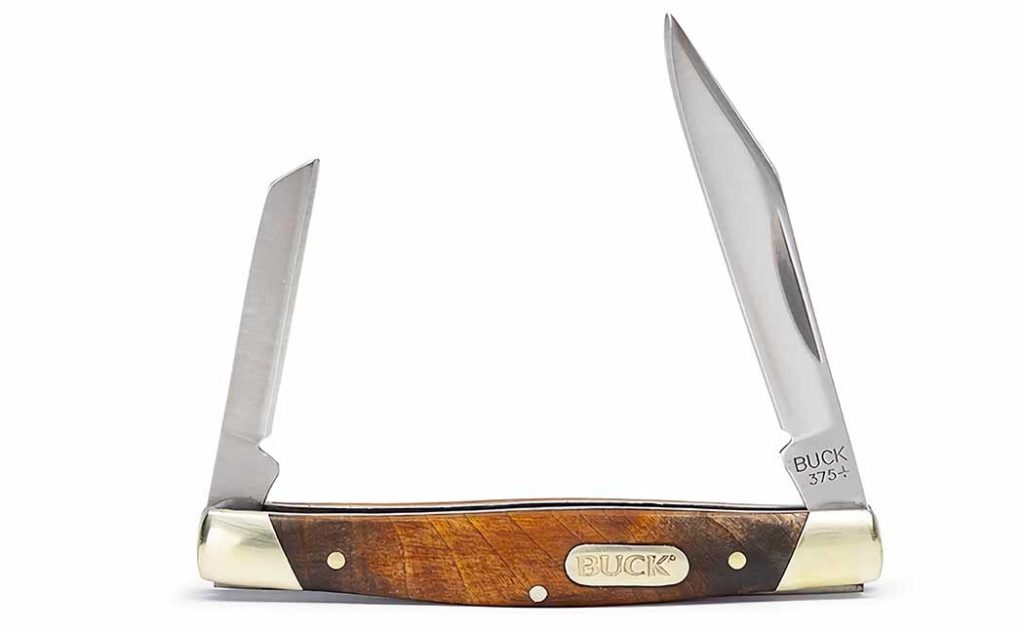
Buck 375
The Buck 375 shows off the company’s continued commitment to detail.

Unlike many knives across the industry, Buck knives are marked in certain ways to identify them based on the year they were made. The original Buck knives from 1961 to 1967 or simply stamped with ‘BUCK’. 

From 1967 to 1972, the knives featured the mark ‘BUCK, USA’. The 1972 to 1986 period had the knives labeled with ‘BUCK 110, USA’ with additional model information. From 1986 onwards, each year of manufacture has a unique symbol that is added to the blade. You can very quickly and easily identify this and match it to the model year on the Buck website. 

Buck knife collectors tend to have some of their own methods for identifying early knives. While it comes down to a degree of pseudoscience, there is demand for Buck knives that retain their original packaging, and even original receipts that can prove the age of the knife. Typically, the older the knife, the more it is worth. 

Vintage Buck knives do not tend to sell for all that much by comparison to other knives, but there is a healthy following all across the country. Most people do not sell their Buck knives at all, and they are passed down generationally.

Best Buck Knives

Whether it’s a contemporary knife or a classic, these 10 knives from Buck continue to be top sellers and beloved by knife aficionados around the world.

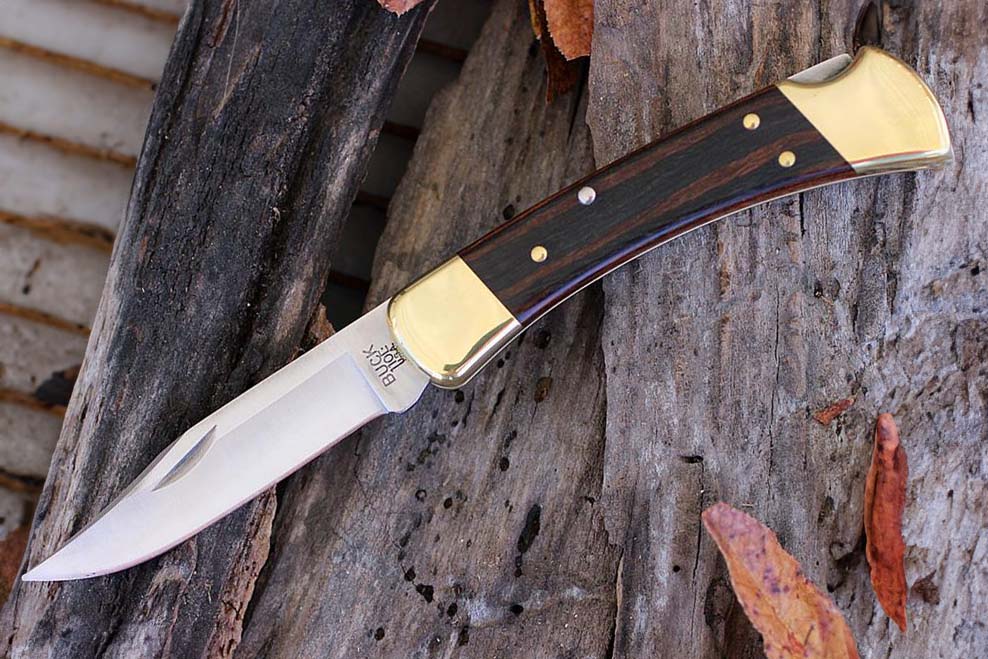
110 FOLDING HUNTER KNIFE 

Buck Knives 110 FOLDING HUNTER KNIFE 2

This is the one that started it all. The 110 Folding Hunter needs no introduction here. It is one of the most storied and respected knives in American history. What is remarkable is that the price is relatively low, even for Buck’s lineup.  The price of this knife sets it apart because it is well-known for its durability and sharpness. At under $70, you can easily buy this knife without breaking the bank.

MSRP: $65

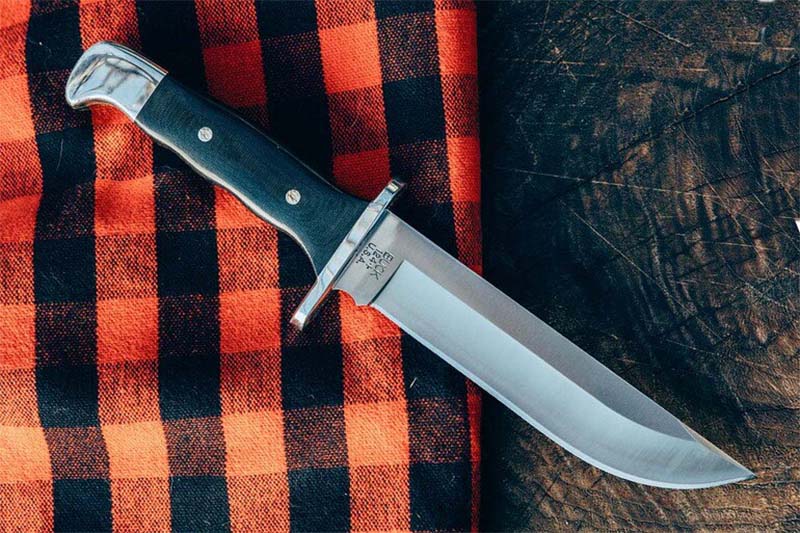
124 FRONTIERSMAN KNIFE 

Buck Knives 124 FRONTIERSMAN KNIFE 2

This knife harkens back to the old days in appearance but is all modern in terms of execution. The Frontiersmen knife is just about the perfect size if you prefer to carry a fixed blade. The design of the knife is completely functional and you should be able to accomplish just about anything you need to accomplish out in the woods or around the farm.

MSRP: $185

055 ‘THE 55’ KNIFE 

Buck Knives 055 ‘THE 55’ KNIFE 2

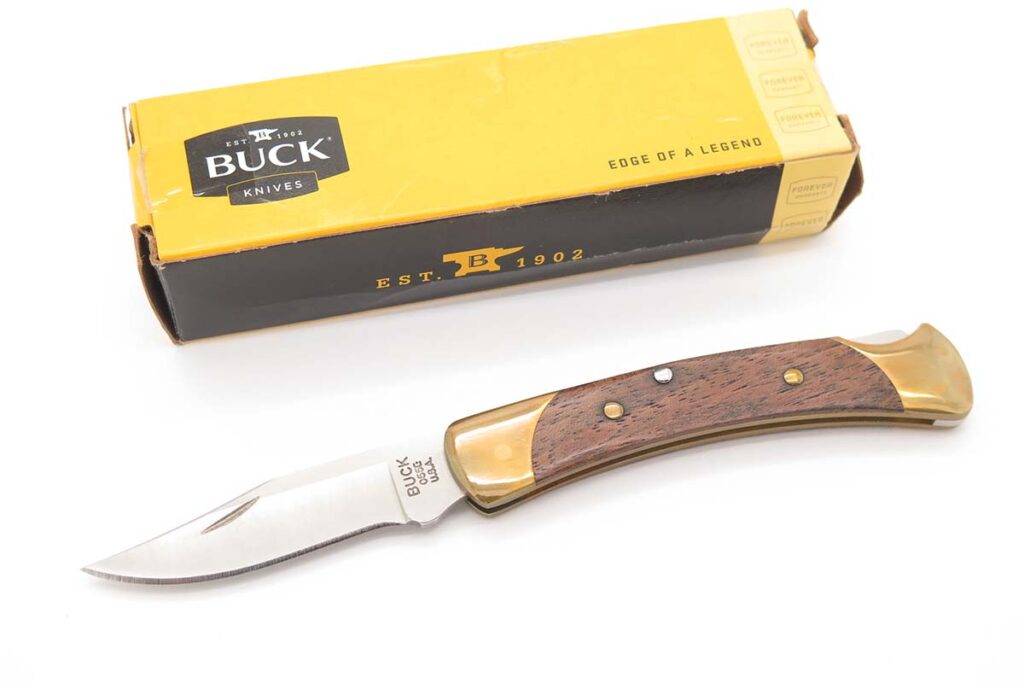
The 55 gets its name for being half the size of the famous 110. It is a popular and common pocket knife that is just as strong as its big brother. While it lacks many of the features of modern assisted-open knives or other types of more complicated designs, it makes up for it by being exceptionally durable and easy to use. Much like the larger 110, this is a knife that you will keep for life and pass down to your kids.

MSRP: $70

120 GENERAL KNIFE 

120 GENERAL KNIFE 2

There are very few knives that are as recognizable as the 120 General Knife. This Buck design is a classic, reminiscent of the military Ka-Bar. It is a bigger knife than what most people use for their everyday chores. The General Knife will be a companion for hunting, skinning, and preparing wood near the campfire.

MSRP: $130

103 SKINNER PRO KNIFE 

103 SKINNER PRO KNIFE 2

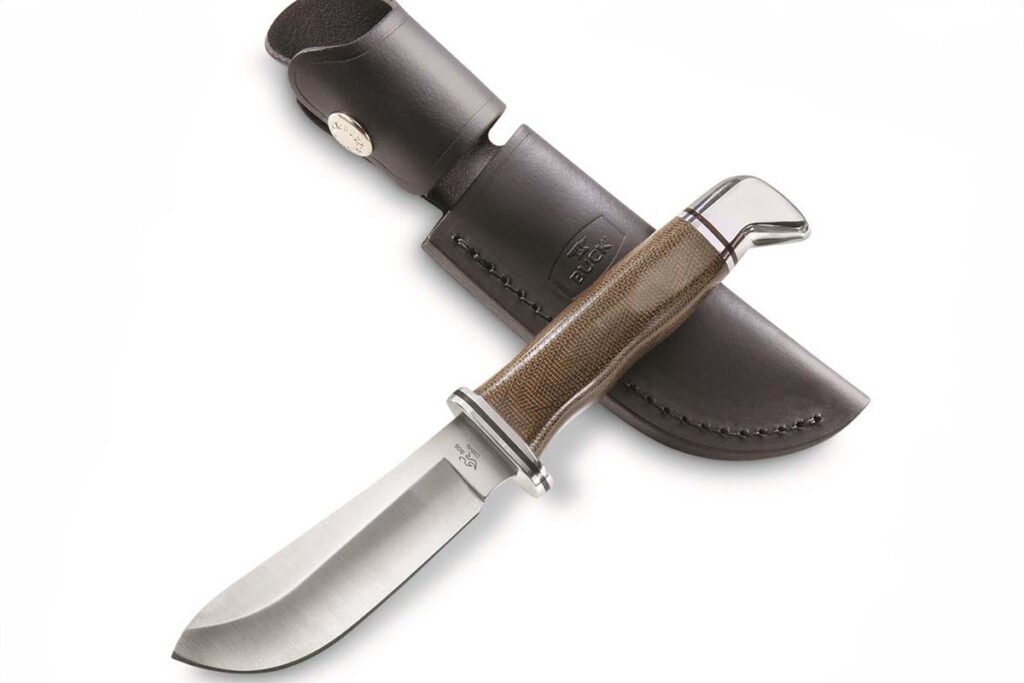
Back in the old days, a skinning knife was part of a larger set that you would take into the field. This knife profile saw its heyday during the decimation of the buffalo herds. Buck has an excellent skinning knife in the form of the 103 Skinner Pro. It is a fine tool and is exceptionally attractive in appearance. If you like to have separate tools for your various hunting chores, you would do yourself well to equip this knife alongside the larger 120 General Knife.

MSRP: $170

102 BUCK WOODSMAN KNIFE 

102 BUCK WOODSMAN KNIFE

For many young men, the Woodsman was the first serious knife they ever received. This is a classic design and is among the most popular and well-recognized American fixed-blade knives ever made. It is not the largest knife Buck has made, but this medium-sized Bowie profile blade has seen more use than most knife models could ever hope to achieve. 

This is an excellent knife for the aspiring outdoorsman. It can be used in just about any setting that requires medium lifting. It is a bit too thin to be used for wood splitting but can be used easily for making kindling by scraping. It is also an excellent small game knife and can be used for all sorts of camp chores. If you think about the knife that you would have in the Scouts, this would likely be as close to that knife as you can get.  

MSRP: $75

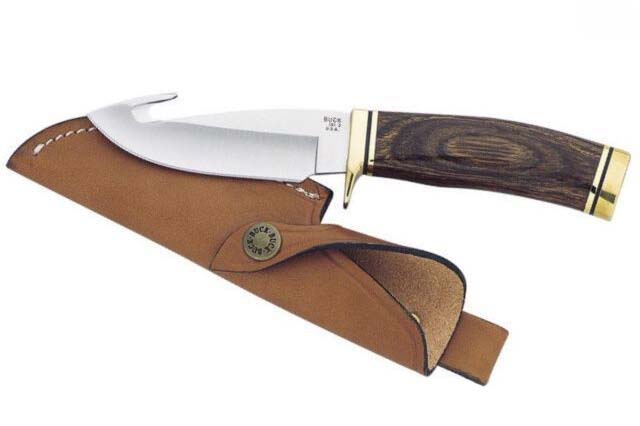
BUCK ZIPPER KNIFE 

The Buck Zipper is one of the many knives sold by the company today.

The Buck Zipper knife is arguably one of the most popular gut hook knives in the country, and it is fair to say that it is in more deer hunters’ hands than it’s not. As far as traditional designs go, the Zipper knife is not just well-made, it is also a symbol of the trade for many hunters that take to the field every fall. Gut hook knives do have other utility, they can be used in fishing settings for cutting line and for gutting as well. For a general-use hunting knife, you really can’t go wrong here.

MSRP: $129.99

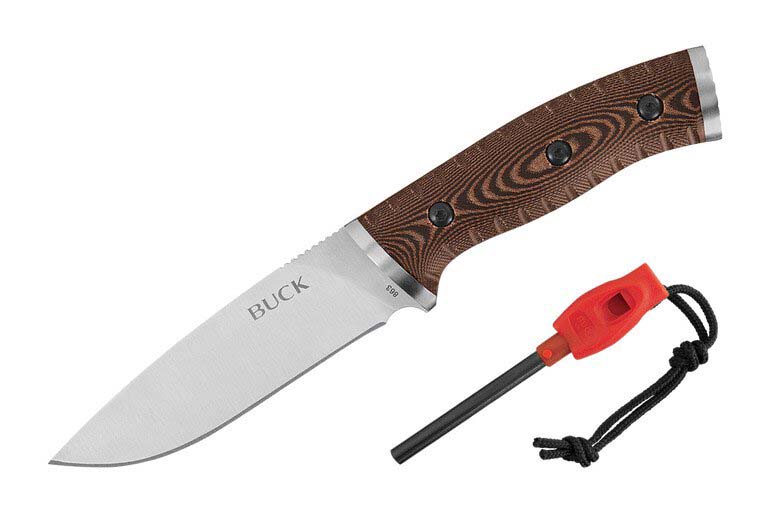
863 SELKIRK KNIFE w. FIRE STARTER 

buck knives 863 SELKIRK KNIFE W. FIRE STARTER

Bushcraft knives are all the rage these days. There are a plethora of TV shows dedicated to the topic, and it seems that every knife company out there is making something that fits the bill. The Selkirk knife is a nicely priced addition to the Buckline. The knife is well equipped and comes with a durable micarta handle and a sheath-mounted fire steel. The kit you get is able to function right out of the box. You can pretty easily get started with practicing right in your yard. MSRP $80

The knife does have a couple of downsides, though, from a Bushcraft perspective, it is relatively thin. A blade really needs to have some meat to it to be able to make it through the tanning for kindling You’ll never really get much life out of a thin blade if you snap it off in use. Even though Buck has a good warranty, you should take care to not treat a thin blade like this as a dedicated tool for splitting. The knife can, however, be used for making tinder out of smaller pieces of wood, and it should have no problem getting them to light.

MSRP: $80

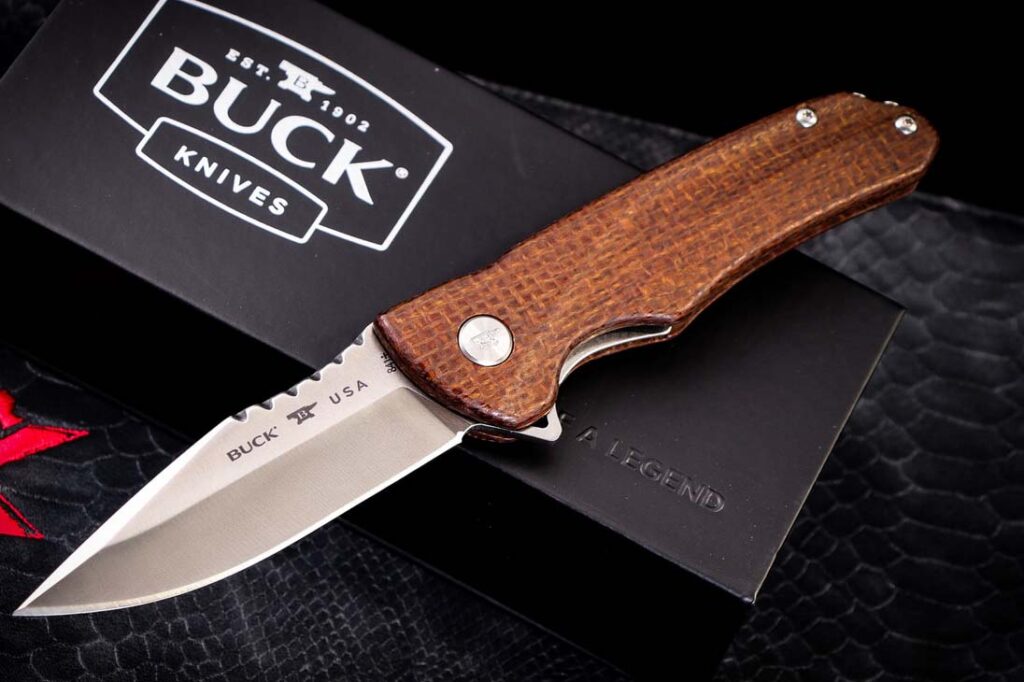
841 SPRINT PRO KNIFE BURLAP MICARTA 

841 SPRINT PRO KNIFE BURLAP MICARTA life

Another modern design, the Sprint Pro is a sleek looking folder that also has some classic lines. The knife is available in a couple of forms, most interesting is the burlap micarta model. Burlap micarta is made through an interesting process that suspends fabric in a resin base material. The result is a unique, very durable, and highly functional grip material that looks as good as it performs. This is a flipper-style knife and can be operated easily with one hand. The locking mechanism is a standard liner lock. Overall, it is a well-reviewed and well-designed knife that, while not the most visually striking, will give years of use.

MSRP: $155

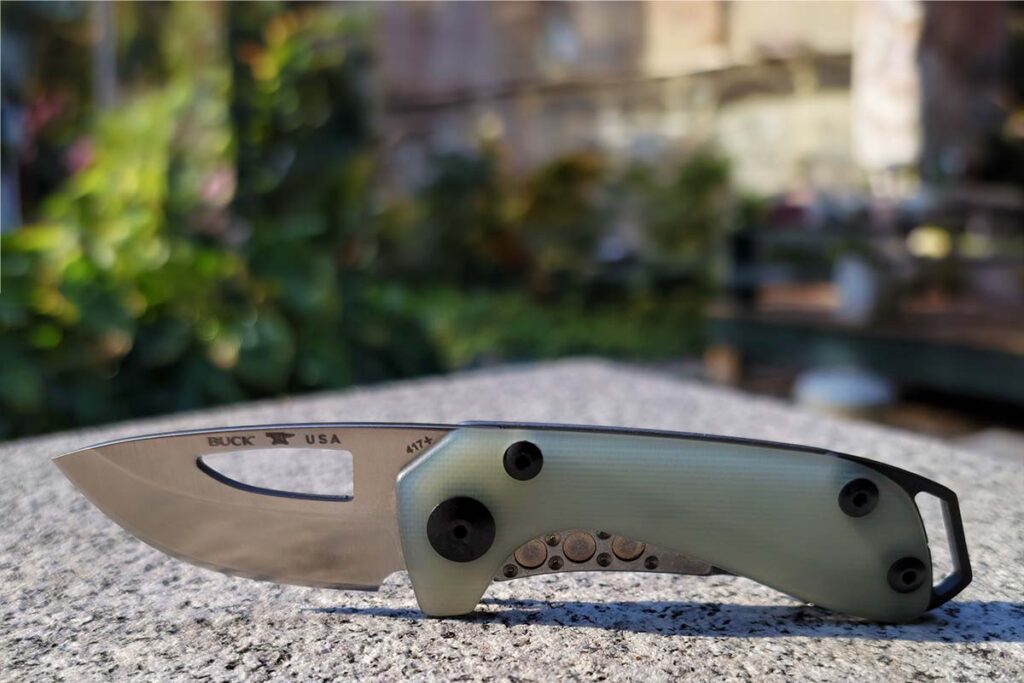
417 BUDGIE KNIFE 

841 SPRINT PRO KNIFE BURLAP MICARTA life

The Budgie is a very compact EDC knife that can go just about anywhere. The tiny design is minimalistic yet functional. It is a frame-like design that is available in a couple of colors, most notably natural green G10. This is a new design that does not necessarily have much in common cosmetically with the classic Buck lineup. That said, it is just about all the knife the average person needs for their daily life, and it can be kept on the person quite easily. While it is a bit more costly than the average mini pocket knife, the Budgie is backed by the same warranty extended to all Buck products and is going to last you for quite some time performing light and medium-duty tasks.

MSRP: $100

Read More

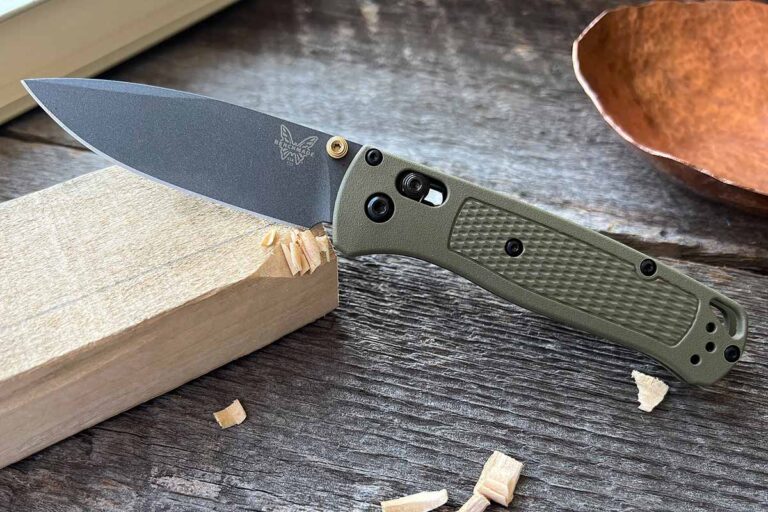
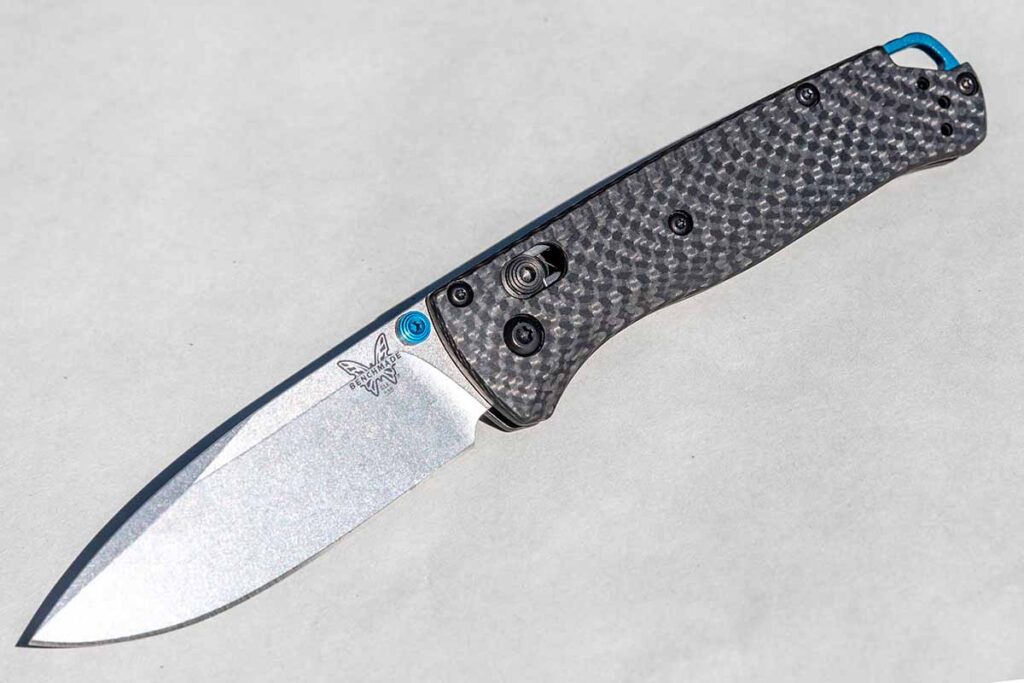
Benchmade Bugout Review: Getting A Handle On The EDC Icon

Is there a perfect EDC knife? If not, the Benchmade Bugout will do until perfect shows up.

When it comes to EDC folders, without a doubt the Benchmade Bugout is the king of the hill.

Its compact profile and just-right length make this model a popular hit with knife guys. It is all made in the USA with excellent fit, finish, and—perhaps key to EDC—Benchmade has cut its weight to the bone. Furthermore, the blade steel is premium level. In short, the Bugout is geared to go the distance.

So, if you haven’t yet checked out this icon, it’s high time you did. Because, if you take your everyday carry seriously, you owe it to yourself. We’ll lay a foundation for the knife in this article.

Bugout Blade

The Bugout is offered in two sizes—the Model 535, the company’s standard-sized version boasting a 3.2-inch blade, and 533 Mini, which pars the blade down to a very manageable 2.8 inches.

Benchmade Bugout Open
Standard-model Bugouts sport CPM S30V steel blades, however, S90V and M390 are available on higher-grade models. Photo: Marty Stanfield

The base models Bugouts use premium CPM S30V steel, a steel that is used widely for high-end factory knives. This is mainly due to its ability to hold an edge for an extended period, longer than most blade steels. Additionally, it is highly resistant to stains and corrosion.

As for the blade profile, the Bugout is a modified drop point and is highly adaptable to many tasks. Nicely, Benchmade outfits the knives with thumbstuds on either side of the blade, permitting ease of opening with either hand.  

Getting A Handle On The Bugout

The handle of the base Bugout is made from molded Grivory, making the Bugout a very lightweight folder. The standard size tips the scales at 1.85 ounces and the Mini at 1.5 ounces. Benchmade offers other handle material options, including anodized aluminum, carbon fiber, and CF Elite (a glass-reinforced nylon synthetic material that is lightweight and stiff).

Benchmade Bugout Spines
Given there is a thriving aftermarket for Bugout scales, the sky is the limit on the knife’s handle. Photo: Marty Stanfield

And if you have to have custom, there are aftermarket scales for the knife in a host of materials—titanium, copper, brass, bronze, G-10, and Micarta. In turn, you can truly have a one-of-a-kind feel and look to your Bugout.

Bugout Action

The Bugout uses Benchmade’s critically acclaimed Axis Lock crossbar lock, hailed by many as ultra-strong yet extremely safe because you don’t put any fingers in the path of blade travel. Add on to this, it’s easy to unlock with either hand, and you have a naturally ambidextrous across the board. The lock is simple, just pull back on one of the exposed lock bar ends at the back of the handle and then rotate your blade closed. Internally, two Omega-shaped springs provide constant tension for the lock bar on the blade tang to ensure positive lock engagement.

Benchmade Bugout Axis Lock
The Bugout is outfitted with Benchmade’s rock-solid Axis Lock crossbar lock, which has the added benefit of being ambidextrous. Photo: Marty Stanfield

As for other odds and ends, the handle’s checkering does a great job of preventing your hand from slipping. A deep carry, fold-over pocket clip carries the Bugout deep in your pocket and can also be switched to provide easy carry for left-handers. Integrated lanyard hole permits the use of Paracord for a lanyard if you are into that sort of thing.  

Using The Bugout

In use, the Bugout hits hard in spite of its ultra-lightweight stature. The flat ground blade bites in and is very effective. Opening mail, opening packages, peeling an apple, cutting up hose, cutting cardboard, or stripping wire—the Bugout won’t break a sweat. Perhaps the best way of thinking about the knife is as a minimalist working folder.

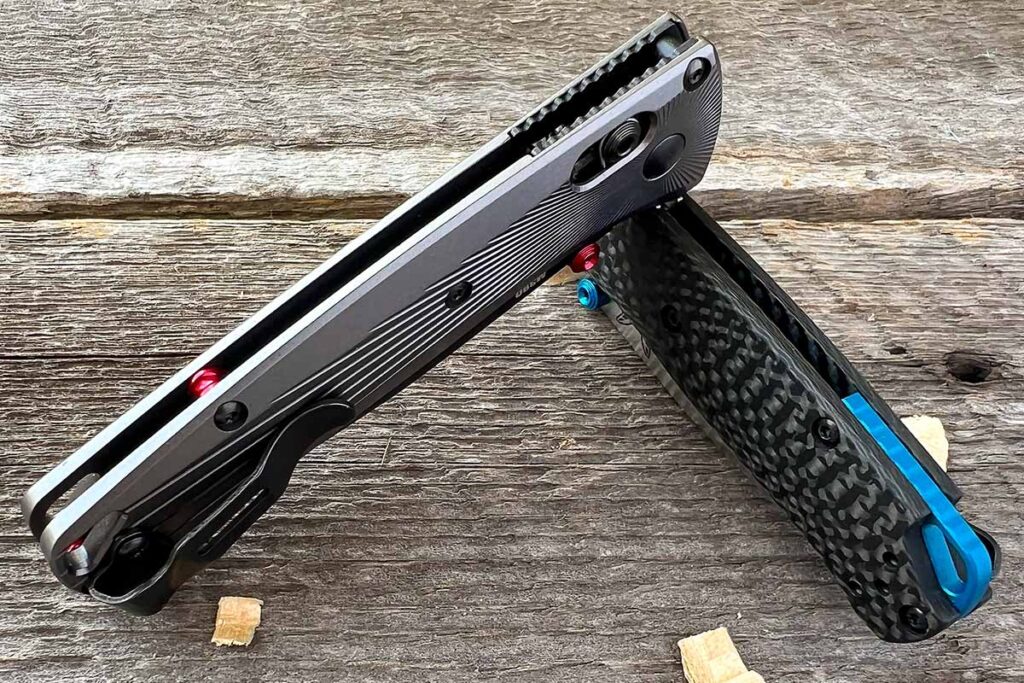
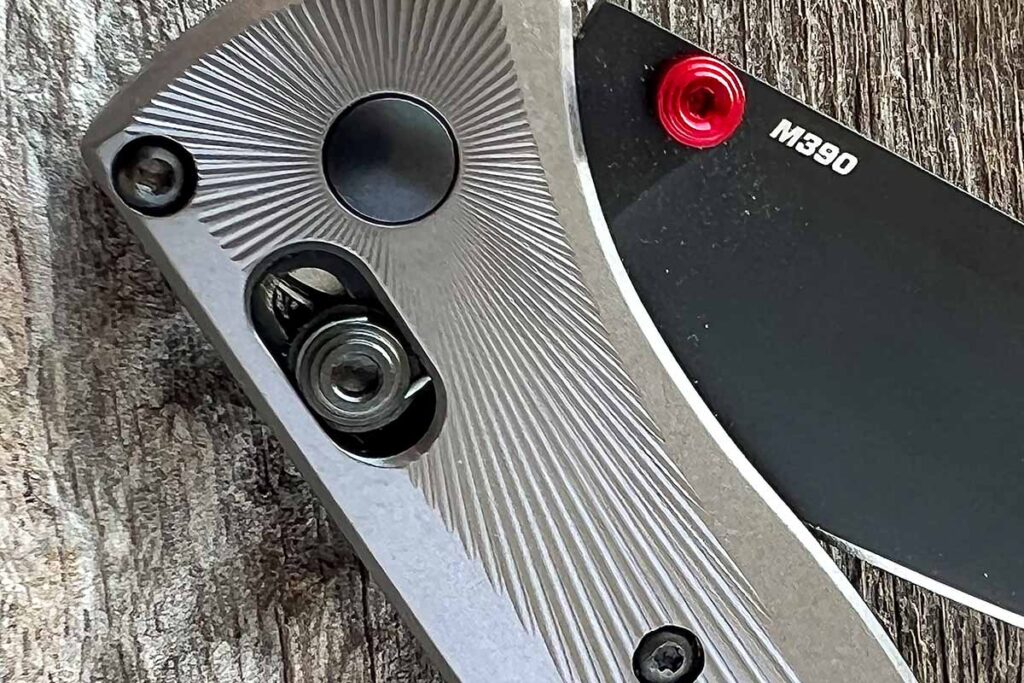
The higher grades of the Bugout have carbon fiber handles and milled aluminum handles, paired with S90V and M390 blades respectively. These upgraded blade steels offer high-performance cutting with excellent edge holding. The higher-grade handle materials give a bit more heft to the Bugout as well as an enhanced, high-tech appearance. It only makes sense to have upgraded blade steel with upgraded handle material. 

Benchmade Bugout Closed
Overall, the knife is lightweight, rugged and more than capable of tackling most task. In short, it’s dang near the perfect EDC option. Photo: Marty Stanfield

Even with the base model’s S30V, you still pack plenty of muscle for those long-cutting jobs. I like how thin the Bugout’s blade stock is combined with the flat ground blade bevel giving it plenty of bite to it. 

Some knife folks favor not a high performance without the bulk. I get it, it all makes for a comfortable everyday carry folder. For those of you who favor these kinds of knives, the Benchmade Bugout is for you. You have a high-end blade steel with a proven and popular blade lock, with a no-frills handle design. 

MSRP for the full-size Bugout starts at $180 and varies up from there depending on handle material and blade steel. There is also a Mini Bugout which scales the size down some to an even more pocket-friendly size.

Go here for more information on the Benchmade Bugout.

Bugout Model 535 Specs
Blade length: 3.2″
Blade thickness: 0.090″
Overall length: 7.4″
Weight: 1.85oz
Blade material: S30V
Handle material: Grivory

Mini Bugout Model 533 Specs
Blade length: 2.8″
Blade thickness: 0.090″
Overall length: 6.5″
Weight: 1.5oz
Blade material: S30V
Handle material: Grivory

More Knife Reviews:

Enter The Knife I Carry Feature… Win A Free Knife

1

Here’s your shot to show off your prized carry knife to the world!

What’s better than carrying a knife? Showing the world exactly what knife you carry. Now, this little act of gratification might earn you—what else—a new knife.

Show us your carry knife—be it slip joint, fixed-blade, or whatever—for our The Knife I Carry feature in BLADE® Magazine. The monthly feature focuses on knife enthusiasts who carry knives but who do not have the wherewithal to make their own. We’re looking for the folks who comb through the knifemakers, knife companies and knife retailers to find the gem they always have at hand. You know, your everyday, average knife nut.

Here’s the best part, if you enter a picture of your knife and a short writeup and we publish it, you’ll be entered in a drawing for a free knife! Brag up your present blade and possibly add a new one to the collection, what could be better? Just follow the instructions below to potentially become part of the “World’s No. 1 Knife Publication” and be entered to win a free knife.

Don’t be shy, show us the knife you carry!

How To Submit Your Blade For The Knife I Carry Feature:

  • Compose a short write-up about the knife you carry, with a little history or an anecdote about it.
  • Include a photograph—at least 600 KB but no larger than 2 MB—of you holding your knife.
  • Send both to [email protected] and include your physical address (this is for the knife drawing and will not be published).

Selected submissions will be published in an upcoming “The Knife I Carry.” If selected for publication, we will enter your name in a drawing to win a free knife, which will take place on November 15, 2023.

The Knife I Carry Examples

Knife I Carry

“My name is John Schwanke. My daughter, Eden, got me this knife for Father’s Day 2018. There are no identifying marks as to who made it, but on the slab scale it reads, ‘Best Dad Ever.’ The damascus blade is beautiful and I cherish and carry it every day. It walks and talks, is a flipper folder and of the highest quality you can imagine.”
John and Eden Schwanke,
Danbury, Connecticut


I carry a knife Vietnam Vet

“My tour of duty in Vietnam was from April 4, 1967, to April 4, 1968. My constant companion was my Camillus ‘k-bar.’ I left the country at the end of the 1968 Tet Offensive and brought my knife home with me. It continued to serve me well for several more years. It meant so much to me and had become like a trusted friend. It was always there to do whatever job was asked of it. One day I got to thinking, what if I lose it or break it after all this time? So, I reluctantly retired my knife, scabbard and stone. It now has a front-row seat in my showcase of mementos. It has a date stamped on the buttcap: 1-1967. Money can’t buy it. I know this is supposed to be about a knife I carry now and not an old relic, but I just had to tell you about my ‘old friend.’ I did carry it many, many years. I’m 76 years old.”
Danny L. Scott,
Tiptonville, Tennessee


I carry a knife

“My EDC has a blade of .220-inch-thick Spectrumwear steel and was hand made in California. I designed the knife ground up. Originally, I wanted a chopper. However, I wanted it to also have a dagger tip profile. Matt Freeman did an amazing job and had my knife done in under two weeks. He is the first maker I worked with who would email me pictures of the knife’s progress without me asking. He jokingly said it was the hardest blade to grind out, reason being it has four edges. He laid out the knife almost like a Roman gladius. I then angled the main edge to make it longer and then shortened the top edge. After that, Matt worked out the size and handle. The knife is just over 8 inches with a handmade leather sheath. We decided an old finish would look nice, so he Parkerized it, then gun blued it to protect against rust.”
Caleb Hoskins,
a letter via e-mail


Knife I Carry Vet

“The knife I carry into the woods each fall is my beloved Case fixed blade. She’s showing her age and has been passed down for three generations. Dad inherited her from my grandfather and then when Dad passed away in 1996 she was handed to me. Though I can’t tell exactly how old she is, I know she is well over 55 because that’s my age. For all I know the knife may be close to 100. She has been well used and processed more wild game over the years than I can count. She’s a true testament to Case quality and reliability. So many wonderful memories come to mind each time I draw this knife.”
Stacey Roberts,
Bridgewater, Vermont

Read More On BLADE Magazine And Show:

Advertisement

Must Read Articles

Read this before you make a knife

Knifemaking 101 – Read This Before You Make a Knife

  by Wayne Goddard My experience has taught me that there's nothing like digging in and getting started. I've often said the hardest part of the...
how to forge damascus steel

How to Forge Damascus

Advertisement
Advertisement