Featured Knives

Here are BLADE Magazine’s Featured Knives of the Week. Browse through these articles to find the best knives available from both custom knifemakers and factory knives.

Click here to browse through our list of Featured Knifemakers.

Knifemaking – – Knife Collecting – – Tactical Knives – – Survival Knives

Samurai Chef’s Knives

Few Knives Have Been As Heavily Influenced By Japanese Methods As The Chef’s Knife. These Four Quality Blades Show Off The Modern Meeting The Historic.

The Japanese influence on custom knives is everpresent in the marketplace, and, aside from the tanto, nowhere is its flair and focus felt more than with chef’s knives. 

These tools of the culinary trade are functional as much as they are eye-catching, especially in examples of some of the top makers in the genre today.

Honyaki Byuto Hybrid By Dmitriy Popov

Popov Gyuto hybrid
Dmitriy Popov aligned the tip with the spine on his wide-bevel Honyaki Gyuto Hybrid for enhanced control during jobs requiring precise use of the tip. (SharpByCoop knife image)

Dmitriy Popov has conjured up a masterpiece he calls the wide-bevel Honyaki Gyuto Hybrid, a new take on a recognized Japanese style. 

“It isn’t a traditional gyuto, as it has an upswept tip and the height of a nakiri,” he commented. “Having the tip aligned with the spine of the knife gives the user a feeling of control for precise tasks requiring use of the tip. Having the extra height in the heel allows me to create a knife that is super thin behind the edge while also having a significant amount of mass above it.”

Popov’s creation includes a near 9.5-inch blade of differentially heat treated W2 tool steel and a handle combination of desert ironwood and osage orange complemented by a carbon fiber liner. His prices for similar knives range from $900 to $2,500 based on size and materials.

“The hamon and ashi* I am able to get out of the W2 is mesmerizing,” Dimitriy added, “and I spend a large part of my life going deep down the hamon rabbit hole. Honyakis are part art and part science, and the failure rate is a lot higher than I would like it to be. I really like the minimalist wa handle style [see page 14], and rounding off the bottom facet does not alter the traditional design much, while making the handle more comfortable in the hand.”

Having made knives since 2011, Dmitriy looks back at the beginning in everyday carry, tactical and camp models. After three years, he gravitated toward chef’s knives, and since 2016 they have been his sole focus.

“Everyone cooks, and at some point most cooks or chefs will come to appreciate the benefits of a good quality knife,” he observed of a chef’s knife field that has become quite crowded. “There are way more prospective customers than there are makers, so to succeed as a maker all you need is a very small slither of the pie and a drive to evolve your craft each day.”

Santoku-Style Knife By Eric Hemker

Hemker santoku
The long, nearly flat cutting edge of the damascus santoku by Eric Hemker enables it to slice, dice, and mince vegetables much easier than a blade with a sweeping belly. (SharpByCoop knife image)

While Eric Hemker admits he is still learning some subtleties of making chef’s knives, he has found that the santoku style is excellent for use in final food preparation. 

His custom-ordered version sports an 8-inch blade of random-pattern damascus forged from 1084 carbon and 15N20 nickel-alloy steels. The overall length is 14 inches, and the handle is exotic blue-dyed curly mango. His price for a similar knife is $960.

“The lack of a pointed tip on the blade means it is not well suited for delicate carving work such as breaking down bony proteins,” Eric explained. “However, its long and nearly flat cutting edge allows it to slice, dice and mince vegetables and proteins much easier than a knife with a sweeping belly on the cutting edge.”

Translating literally from the Japanese, santoku means “three virtues, or three uses,” and so the slicing, dicing, and mincing description is spot on. 

“This blade is 144-layer random-pattern damascus, and it features a full flat grind with a convex edge. The flat grind is my usual go-to grind for most general-purpose cutting needs that are common in the kitchen or in hunting-type knives. I also add a slight convex grind that leads into the cutting edge to aid in food release.”

Eric chose a modified wa handle configuration and attributes the decision to keeping step with traditional Japanese appeal. 

“The top of the handle has the traditional wa-style octagonal facets,” he said. “But I wanted to spruce this handle up a little to challenge myself, so the bottom is curved to give it a shield-shaped cross-section. The handle has a 304 stainless steel bolster and an heirloom-fit black G-10 spacer. One of the only things the customer specified was a colorful handle, so this piece of wood was a perfect fit.”

For Eric, the entire package comes together nicely, blending the good looks and function that are inherent in Japanese-inspired chef’s knives. 

“All these materials will hold up well in kitchens,” he remarked. “G-10 is a synthetic material that also holds up very well in any harsh environment, and since the wood is stabilized it should also hold up well in water and getting dirty in general. Since the handle is wood, it would still need to be oiled occasionally, and it should go without saying that a custom piece like this with a carbon steel blade and a wood handle should never go in the dishwasher.”

Eric began making knives six years ago and still considers himself at the beginning of a promising journey. 

“Kitchen knives have been some of my favorite knives to make from the beginning because everyone uses one,” he noted, “so they are some of the easiest pieces to sell and get feedback on.”

Meanwhile, he welcomes the expanding number of makers and buyers in the chef’s knife arena. 

“I don’t believe the custom chef’s knife market is overly saturated by any means,” he commented. “I think the demand really drives the market for these custom pieces, and I believe there will almost always be customers at every price point. In the last decade or so, there really has been a resurgence of demand for well-crafted handmade goods in almost every category of consumer goods, and I don’t believe that trend is going to be dying out anytime soon. This may be especially true for culinary knives when food is such a big part of many people’s lives.”

Straight-Edge Kiritsuke By Dre Laborde

kiritsuke by Laborde
The straight-edge damascus kiritsuke by Dre Laborde is specifically made to slice fish and some softer meats. The handle is curly maple from Realeyezwoodz. The sheath is stabilized maple and a joint project between Dre and Realeyezwoods. (SharpByCoop knife image)

The straight-edge kiritsuke from Dre Laborde is specifically made to slice fish and some softer meats, he says, and doesn’t necessarily lend itself to chopping vegetables. 

“I’m no expert on Japanese knives as a whole,” he noted, “but from what I can find the kiritsuke seems to be a cross between the longer yanagiba and the stockier gyuto. The steel is X-pattern-ladder damascus that I purchased from MVH Damast based in the Netherlands. These steels have given me nothing but positive results and I can’t recommend them enough.”

The blade is 9.5 inches and the overall length is 14.5 inches. The handle is curly maple from

Realeyezwoodz, and the price of a similar knife would probably exceed the featured piece. 

“It sold for $760,” explained Dre, “but it was a semi-experimental project for me, so a future project of this scale would cost more. The design, like all my knives, was drawn on paper to scale first and then made with the freedom to change the design as I see fit.”

The choice of handle material and design contributed to the overall appeal of the knife and its performance in the kitchen. 

“The wood is stabilized, which means it was put under vacuum in a resin and hardened,” said Laborde. “This makes it resistant to water and to staining. The handle design is a slight variation on the common shape I do, made slightly longer to fit the length of the knife.”

Dre has been making knives for about three years and in that time hasn’t seen the chef’s knife market becoming overcrowded, though he has heard such comments. “Those willing to pay for a custom chef’s knife often have many and recognize the price tag that comes with them,” he added.

Haetori Honesuki By Tony Cetani

Haetori Honesuki by Tony Cetani
The Haetori Honesuki by Tony Cetani is an all-around kitchen utility knife design based on the santoku and honesuki, the latter a Japanese boning knife. Whereas a traditional honesuki’s main task is for deboning poultry, Tony made the Haetori Honesuki to handle multiple kitchen jobs.

When Tony Cetani built his Haetori Honesuki with a 5.5-inch blade of Chevron copper-mai steel and an 80CrV2 core from Baker Forge and Tool, he added a handle of spalted box elder to complete the package and priced it at $1,000.

“Haetori means ‘jumping spider’ in Japanese,” he related, “and following my love for spiders this knife is named for the Haetori Gumo, a very common spider in Japan. It’s an all-around kitchen utility knife, and I based the design on the santoku and honesuki. Whereas a traditional honesuki’s main task is for deboning poultry, I made this to handle multiple tasks around the kitchen.”

Tony has been making knives since 2017 and tried chef’s knives for the first time three years later. 

“Once I got a few kitchen knives under my belt, I fell in love,” he smiled. “I wanted to put kitchen cutlery on the market that was different and not your traditional kitchen-style knives.”

He succeeded with this effort and chose a slightly innovative handle style. 

“This is a newer style that I designed specifically for this knife,” he said. “Adding a clip at the butt of the tang gives the palm a comfortable spot to rest when working the knife. I chose natural spalted box elder because it went well with the copper in the steel, and you can’t ever go wrong with box elder!”

As for today’s chef’s knife market, Tony sees strong demand and the capacity to supply it. 

“There are a lot of makers out there putting out phenomenal chef’s knives. I think every maker has their style, and the style is what grabs the attention of a potential customer.”

*Ashi are various notches or details in hamons. To produce ashi, the maker applies thin strips of clay from the spine of the blade to the edge during the clay tempering process, which contributes to interesting variations in the resulting hamons.

Read More

First Look: SOG Aegis AT

The New SOG Aegis AT Is A Clean, Sleek Assisted Folder That’s Great For EDC Or More Intense Outdoor Use.

The new SOG Aegis AT is bright, colorful and fun. The knife immediately catches the eye with its bright indigo and acid design. The indigo GRN scales are textured for a better grip, and the electric yellow accents pop in a big way. 

The features are solid starting with a Cryo D2 tool steel blade boasting a titanium nitride finish for added durability, and a powerful assisted opening mechanism. Just give the thumb stud a little nudge and the blade deploys in a flash. SOG’s new AT-XR lock, similar to Benchmade’s Axis and Kizer’s Clutch Lock, keeps everything secure.

The blade is 3.13 inches long and the whole piece weighs in at 4.4 ounces so it will feel robust in the hand. A large lanyard hole accepts a thong for easy carry.

The safety on the back of the Aegis AT, which is easy to see thanks to the red accent dot, easily locks the knife closed and acts as a thumb backstop when deployed to aid in using the knife. Overall, this is a fine folder, especially considering it comes in at under $100.

MSRP: $94.95

First Look: Zero Tolerance 0762
First Look: Boker Gnome
First Look: Kershaw Interstellar

First Look: Zero Tolerance 0762

The Folder From Zero Tolerance Knives Looks Ready To Attack Tasks Big And Small Thanks To A Sweeping Blade And Carbon Fiber Handle.

Innovative and durable, the 0762 from Zero Tolerance Knives is packed with features to help it stand out in the EDC market. For starters, the knife looks fun to use. The reverse tanto blade appears both classy and aggressive. The two-tone stain/stonewash finish on the CPM 20CV stainless steel blade helps with that. It flows and screams out that it’s ready to slice into whatever you put before it.

Beyond the steel, the 0762 features a carbon fiber handle with blue anodized accents. It provides a great grip without feeling heavy or bulky. 

The tuned detent system allows you to adjust the detent how you like it. This means you can flip the knife open even when pressing down on the lockbar. The ZT Sub-Frame Lock is in the same anodized blue as the other accent pieces and confidently secures the knife in place.

This piece is pricier than many others on the market today, but with so many features and style touches it’s easy to see why.

MSRP: $352

Read More

First Look: Boker Gnome

The Boker Gnome Is A Fun Little Fixed Blade That’s An Excellent Neck Knife And Can Serve You Well As An EDC.

Sometimes bigger isn’t necessarily better. The new Boker Gnome fixed blade is a little gem that can be your trusty sidekick in the home and elsewhere.

It starts with a 2.2-inch wharncliffe blade of D2 tool steel. The knife comes in two different handle types. The one featured above is made from olivewood, and there is a slightly more expensive green Micarta® version. The big lanyard hole at the butt of the handle comes in handy if you want to lash the Gnome to your pack or hang it around your neck. Everything is kept safe thanks to the included leather belt sheath. 

Even though it’s small, the handle is rounded in such a way that the knife is easy to grip. It weighs just 1.6 ounces so is light and simple to use. So many neck knives trade quality for convenience. The Boker Gnome is high quality as it is convenient.

MSRP: $49.95 (olive wood); $64.95 (green micarta)

Read More

Knife Deal: Pre-Black Friday, Black Friday And Cyber Monday

The holidays are around the corner and besides spending time with family and stuffing ourselves with excellent food it is a time to give gifts and celebrate those we love. For the knife lovers in your family, whether they prefer a folder or a rugged fixed blade, now is the time to take advantage of Black Friday and Cyber Monday deals. Below are BLADE’S top picks for the best knife deals this holiday season.

This article will be updated as more deals become available, so be sure to check back often.

Amazon

Of course, Amazon has a ton of deals and is worth a look daily—especially if you’re on the hunt for a knife deal.

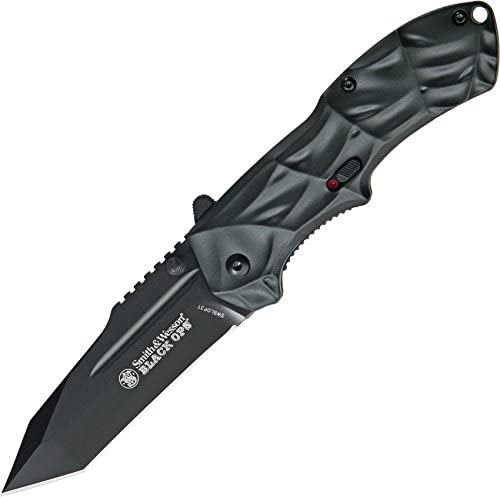
As for right now, Smith & Wesson’s Black Ops Assisted Opening Tanto for $27.41 makes a pretty good stocking stuffer.

Blade City

If the knife enthusiast in you life has more exotic tastes, Blade City will like scratch their itch. The site has its Christmas deals page up and running.

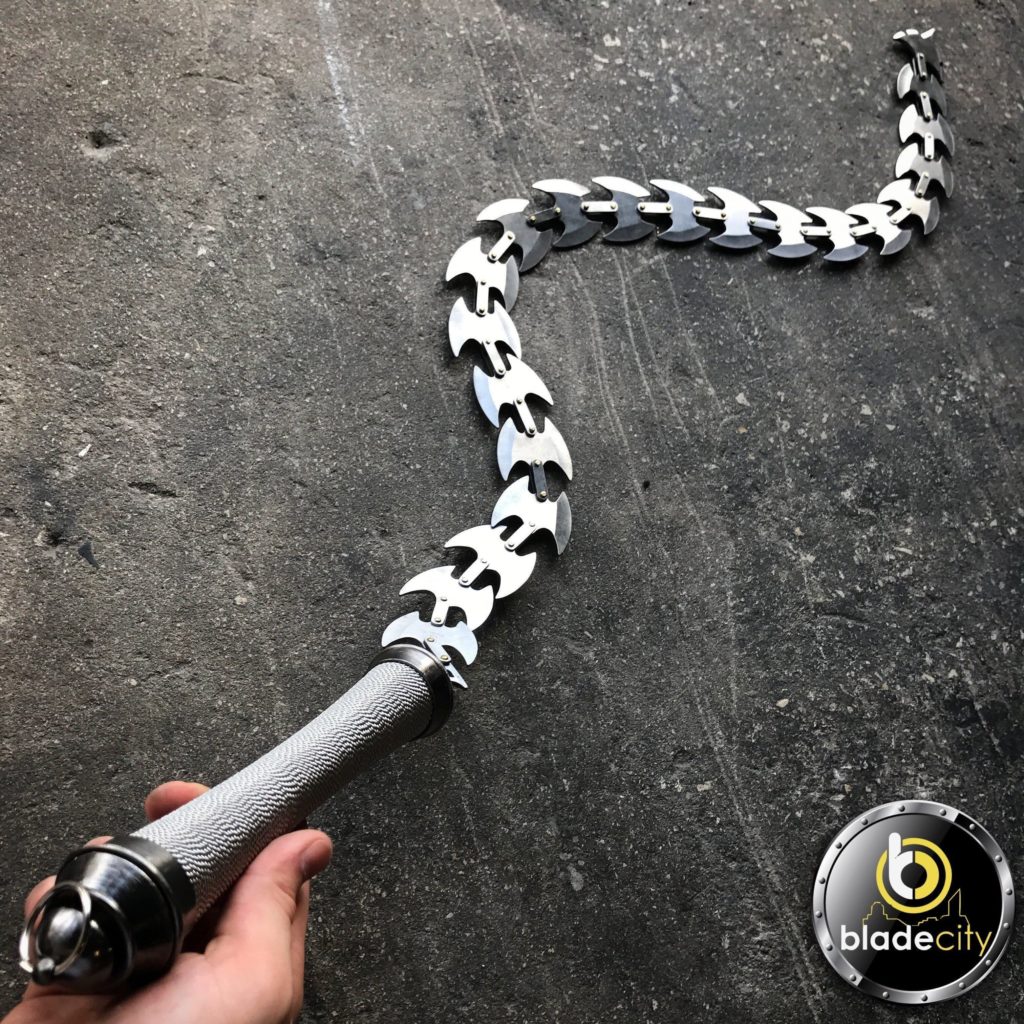
They has some unusual gems, such as Titanium Scorpion Whip … because, why not?

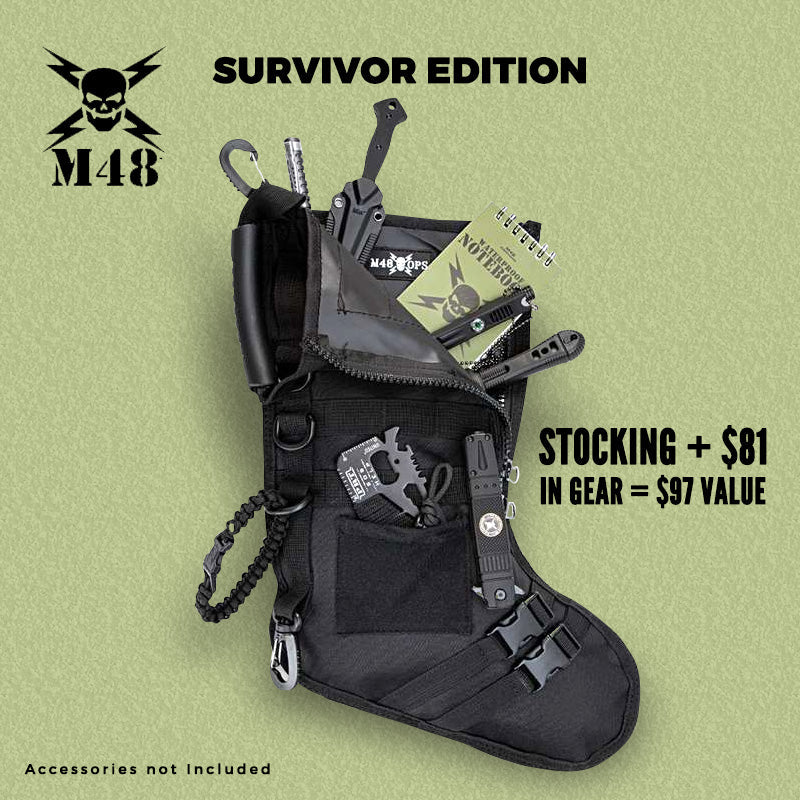
Also, their M48 Tactical Stuffed Stocking – Survivor Edition is packed full of all sorts of goodies.

Blade HQ

Blade HQ has a number of Christmas promotionals up and running. One of the more intriguing is laser engraving for an extra $9.99 on a purchase. Also, they’re giving away Winchester Shotgun Shell knives with a purchase over $75. Pretty Sweet.

The HQ also has a number of categories to shop their deals during the holidays:

Here are a couple that caught our eye.

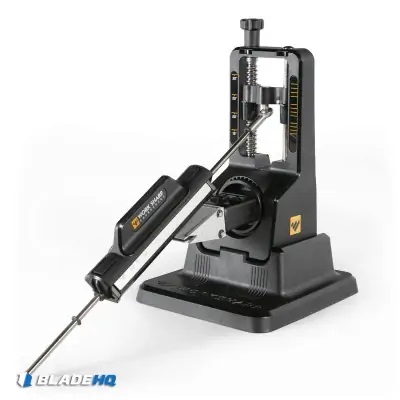
Any workshop—Santa’s or otherwise—is up graded with the Work Sharp Precision Adjust Angle Set Knife Sharpener, priced at $59.95

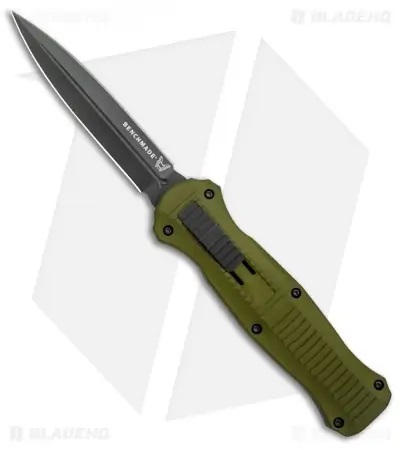
The very sexy Benchmade Infidel OTF Double Action Automatic going for just $385, more than $100 off MSRP.

Smokey Mountain Knife Works

SMKW is bursting at the seams with deals, with nine pages of site busters. You’re certain to find something for the knife lover in your life—even if that happens to be yourself.

A few we don’t think we could pass on include:

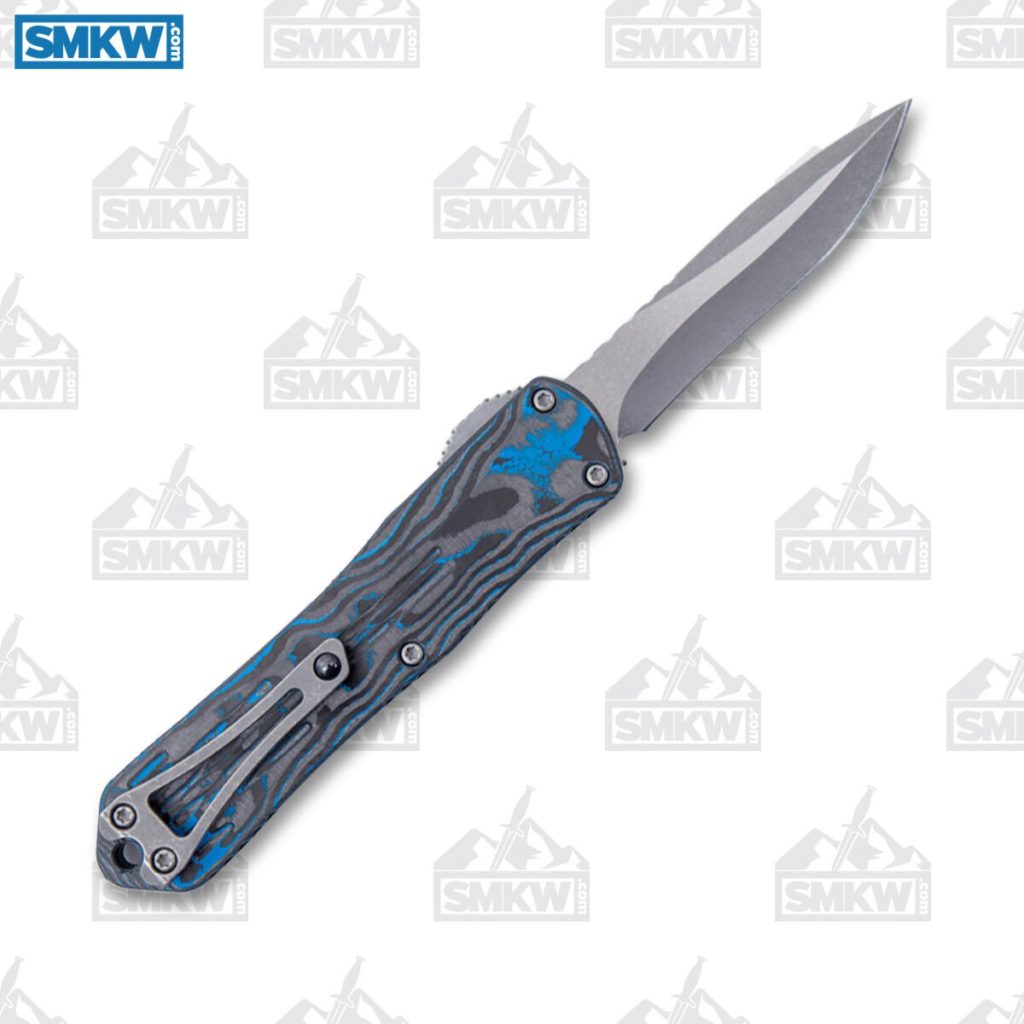
Heretic Manticore E Nightcrawler for $375

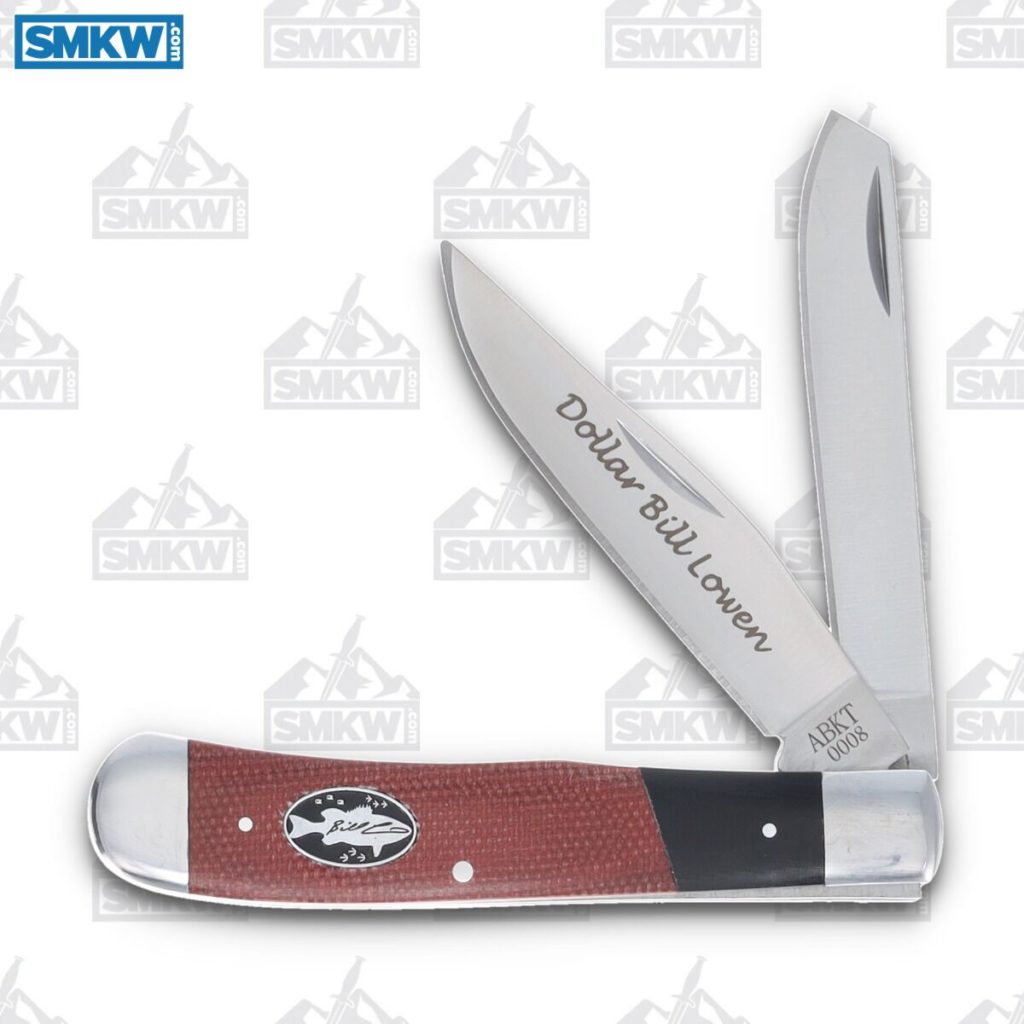
ABKT Bill Lown Trapper with Black and Read Micarta/G-10 handle for just $15.77

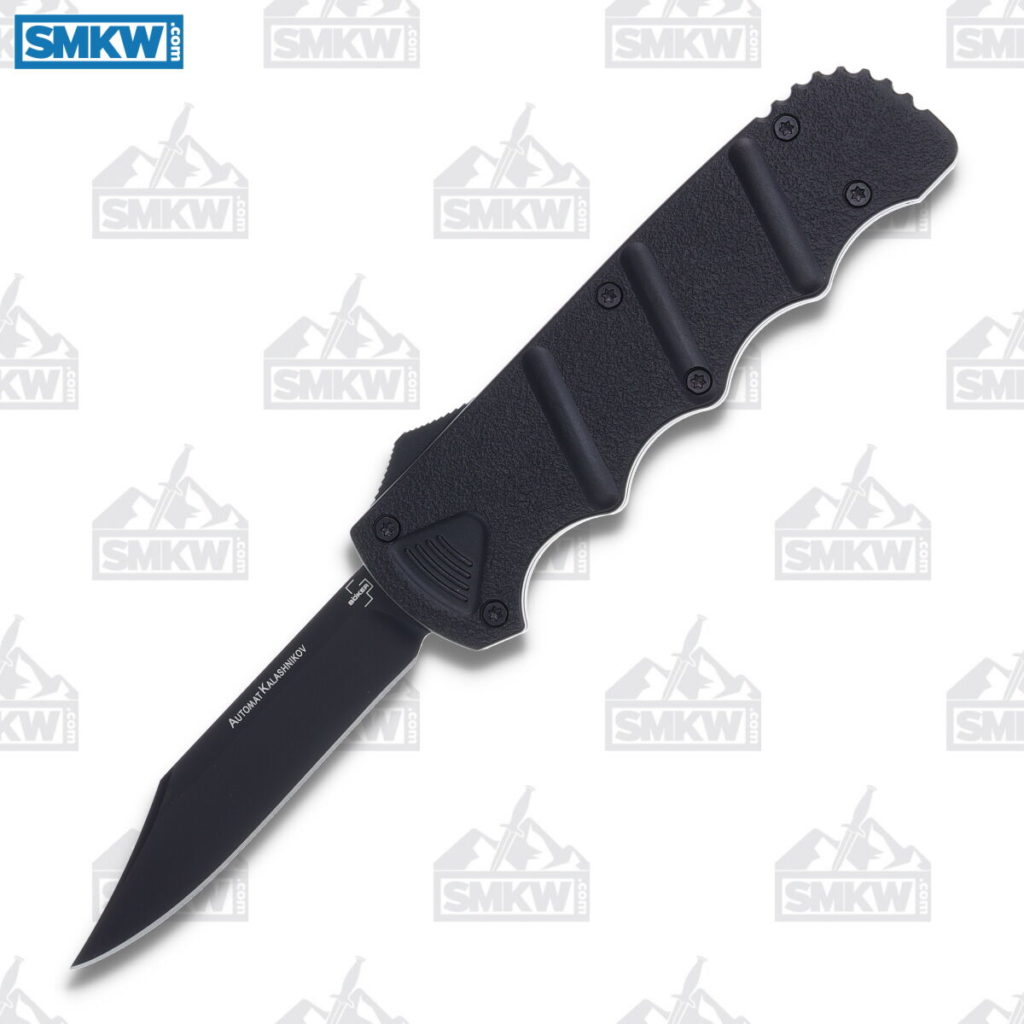
Boker-Kalashnikov OTF Blackout moving at $82.88

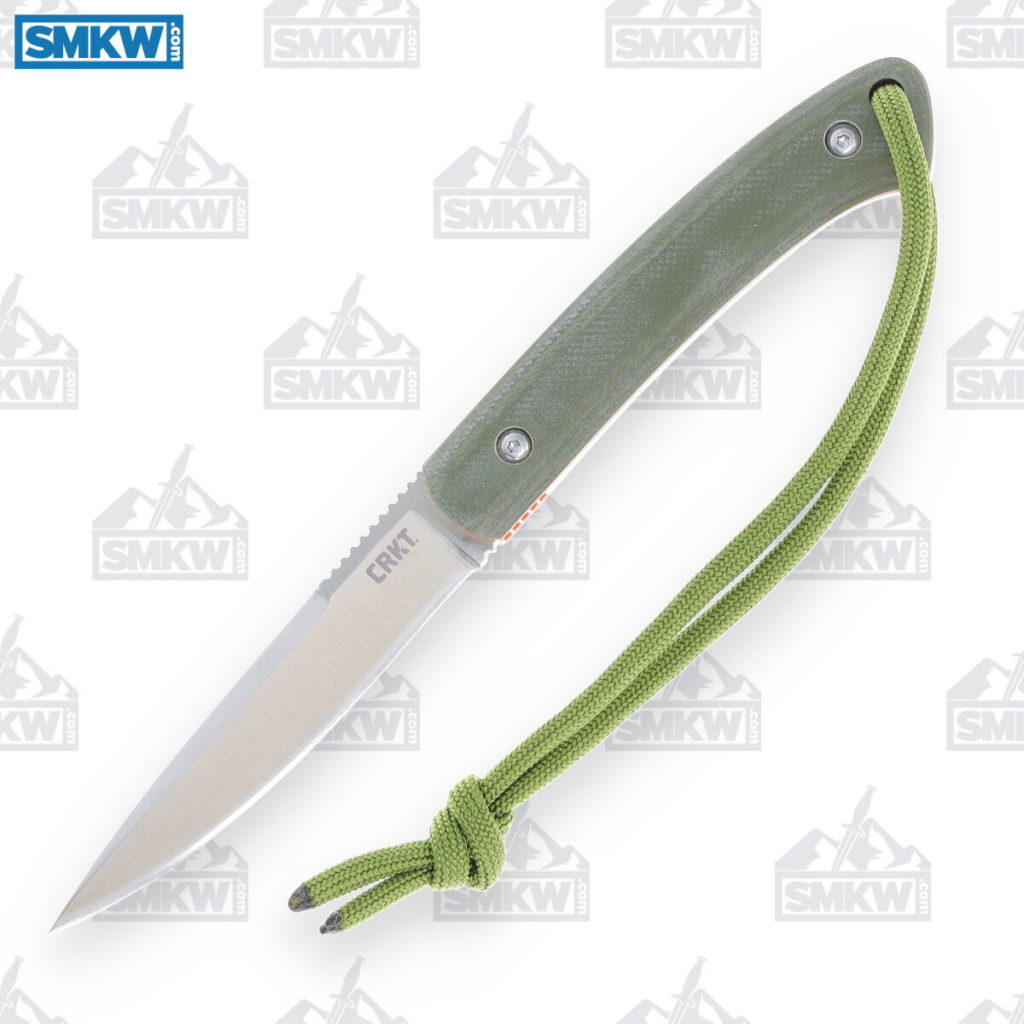
And the slick little CRKT BIWA in OD Green for only $29.99

First Look: Kershaw Interstellar

The Kershaw Interstellar Is The Company’s Newest OTF Knife. The Piece Is An Excellent EDC Designed For All Sorts Of Utility Tasks

Folders? No thanks. One of Kershaw’s newest releases is a sliding OTF (out-the-front) automatic that’s great for utility tasks indoors and out. The Interstellar is a partially serrated 8Cr13MoV stainless steel blade that comes out the front of a glass-nylon handle thanks to a sliding button on the front of the knife.

It looks great thanks to the blackwash coating, and it feels good to use thanks to the button lock keeping everything secure and snug when deployed. The blade is just 2.7 inches long, and the tip-up pocket clip allows you to carry the knife with ease. 

The Kershaw Interstellar is a simple knife, and that’s a good thing. It’s a no-nonsense piece that can serve you well for a long time. Oh, and the bottle opener built into the backspacer is the cherry on top of it all.

MSRP: $57.59

Read More

Veronique Laurent Is Winning In A Man’s World

Veronique Laurent Has Become One Of The Most Accomplished Smiths In The World Even After Fighting Against Prejudice In Her Native Belgium.

I come from Texas where a knifemaker is more likely to wear boots and a cowboy hat than a suit and tie. In many parts of the world, it’s commonly assumed that a knifemaker is a man. 

This past March I caught up with American Bladesmith Society Master Smith Veronique Laurent at BLADE Show Texas in Fort Worth, Cowtown, USA. She had no boots or cowboy hat and her accent isn’t “Southern,” but she’s sure enough a bona fide knifemaker.  

Veronique comes from Brussels, Belgium, where French is the spoken language. Now, I don’t speak French, so out of respect I asked her how a non-French-speaking person should pronounce her name. 

Over here she’ll answer to the Americanized Veronica Lawrent, but the correct answer is more like Vehr-o-NIK-eh Law-ron, with the rolled R’s in the middle of each. In Belgium the people use the last name first, so she’s often just called “Laurent.”  Now that you can read her name in your head in a beautiful French accent, let’s move on to the interesting part of the story.

Veronique found her first career as a clerk at a Belgian TV station. She did cold metalworking as a hobby. While on holiday in France in 2004, she attended a knifemaking and blacksmithing event similar to a U.S. hammer-in. She later took a one-day knifemaking class with the Belgian Knife Society and never looked back. 

She became involved with the Society and learned more about knifemaking from the members of that community. The group eventually broke up but not before Veronique was well on her way.

In 2010, again in France, she attended a hammer-in that included ABS Master Smiths/BLADE Magazine Cutlery Hall-Of-Fame® members Joe Keeslar and Jay Hendrickson. In Belgium and France, a woman is not commonly accepted as a knifemaker. So it was that Veronique was pleased and surprised by the hospitality that Joe and Jay showed her, particularly with the respect they gave her as a craftsperson. 

For while a female knifemaker is a bit of an American rarity, being female isn’t an automatic gale-force headwind in the American knifemaking journey. In Europe, however, things are quite different. Veronique struggled to sell knives in Europe even as her skills advanced.  

“When a man came to my table and picked up a knife, he would ask me who the maker was,” she recalled. “When I said that I made the knife, he would then ask the person next to me who made the knife. Once he knew I was the knifemaker, he’d put the knife down and walk away. In Europe they don’t want to buy a knife from a woman.” She made it her goal to be a full-time maker, and her American contacts became even more important.

Becoming An ABS Master Smith

Laurent Blade Show
Veronique (left) makes a point as her fellow panel members—from right, ABS Journeyman Smith Lora Schwarzer and knifemakers Grace Horne and Abie Lyons—listen during the Women’s Bladesmith/Knifemaker Panel class of BLADE University at BLADE Show ’22.

After her contact with Keeslar, she journeyed to the 2013 BLADE Show and gained her ABS journeyman smith certification. She then began corresponding with ABS Master Smith John White, who encouraged her to learn to build takedown knives. 

“In 2015 I built my first takedown knife, and that same week I received the ABS email notification that John White had passed away,” she recalled. “I built all of my master smith test knives as takedowns in his memory.” 

Veronique pretty well blew away the crowd at the 2015 BLADE Show and gained her MS stamp. After the show, she and ABS Master Smith Jean-Louis Regel of France spent three weeks in Brazil learning advanced damascus techniques from ABS Master Smith Rodrigo Sfreddo.

“After I was a master smith, I began to ‘exist’ in Europe,” she noted. “I became a full-time knifemaker shortly after that.” Even with American renown and credibility, the headwinds of bias still were a challenge in her home country.  “People were rude, and it made me think ‘I will show you!’ Their bad attitude became my motivation,” she said. 

She began to work with Jean-Louis more and more (Jean-Louis also earned his MS in 2015). Because of bias, it was often assumed that he did her work for her, that he made her damascus or that she worked only in his shop. This was not the case. 

Though to Americans it makes sense that the two French-speaking master smiths must be connected, the real story is that Veronique and Jean-Louis each have their own shops in their hometowns. Their shops are roughly 375 miles apart, with Veronique in Belgium and Jean-Louis in France. The journey between them takes about eight hours. 

Even in Texas, where we measure trips in hours, not miles, an eight-hour trip is a “long haul” or a “far piece.” While the distance was significant, they covered it about once a month depending on workflow. Veronique says that she has better grinding and finishing tools in her shop, while Jean-Louis has a bigger shop with better damascus-making equipment.  

Veronique and Jean-Louis attended the International Custom Cutlery Exposition (now BLADE Show Texas) in Fort Worth in 2018, and each won multiple awards. 

“In all my trips to America, only one time has anyone set my knife down rudely like in Europe,” she noted. They joined The Knifemakers’ Guild on that trip also and spent a week learning bladesmithing from ABS Master Smith Rick Dunkerley.

Covid got in the way of travel plans and so Veronique and Jean-Louis were unable to return to America until this year’s BLADE Show Texas. As an American, it wouldn’t cross my mind to visit France regularly to try to sell knives, so I was curious why Veronique keeps coming back.  She explained that “Europe doesn’t like to ship big knives. It is very complicated and expensive. Sometimes you can ship a small letter opener or something, but it is very difficult.” 

Rather than fight the restrictions, it’s easier to travel over here and sell her work where it is in high demand. Another thing she does is make a “junior baby” model of each major piece. If she makes a dagger, she makes another small one. If she makes a big bowie, she makes a similar hunter. These smaller pieces tend to sell better in Europe than the big works.

Veronique Laurent’s Knives

Laurent bowie
Based on the Musso Bowie, Veronique’s Big Boy Bowie won Best Fighter at BLADE Show Texas. It has a 13-inch feather damascus blade of O2 and 45NCD16 tool steels with a riveted brass back. Parts of the guard are mirror polished, parts are stippled, and parts are engraved with raised flowers. The handle is ancient walrus ivory. Overall length: 18.5 inches. (SharpByCoop image)

Veronique had a good variety of knives at BLADE Show Texas that showcased her skills and versatility:  a large brass-backed bowie, a few elegant hunters and a folding dagger. 

“It was an honor to be asked to make a big bowie,” she observed. “It’s a man’s knife and it took many years for a man to trust that I could build a large bowie.”  

While she doesn’t build knives “to order,” she does keep a list of customers who are looking for a particular type of knife. “I don’t take orders. I want to be free!” she explained. She’d been asked to build a big bowie and did her research and came across the Musso Bowie. She built the Big Boy Bowie and it promptly won Best Fighter in Fort Worth.

Big Boy is highlighted by a feather damascus blade of O2 and 45NCD16 tool steels with a riveted brass back. The guard is O2 also. Parts of the guard are mirror polished, parts are stippled, and parts are engraved with raised flowers. 

“O2 steel is good because you can finish it many ways and it works well for the engraving,” Veronique explained.

The handle is ancient walrus ivory.  Also on her table was a fine damascus folding dagger that won the show’s custom judging award for Best Folding Knife. All the fittings, engraving, jewel settings, and display box are by Veronique.

So where does one go next when you’re already known worldwide?  

“I want to focus on engraving and filework,” she said. “I am also learning to make automatic folding knives from Rick Dunkerley.”  

Veronique is a strong woman and plays well at what is often a man’s game. She doesn’t take orders but builds a few major pieces in several categories each year. She prefers email communication from Americans because it is difficult to hear and translate over the phone. She’ll be at the major shows, but you’d better get there early as her work is in high demand.

For more information about Veronique Laurent and her knives e-mail her at [email protected].

Read More

Advertisement

Must Read Articles

Read this before you make a knife

Knifemaking 101 – Read This Before You Make a Knife

  by Wayne Goddard My experience has taught me that there's nothing like digging in and getting started. I've often said the hardest part of the...
how to forge damascus steel

How to Forge Damascus

Advertisement
Advertisement