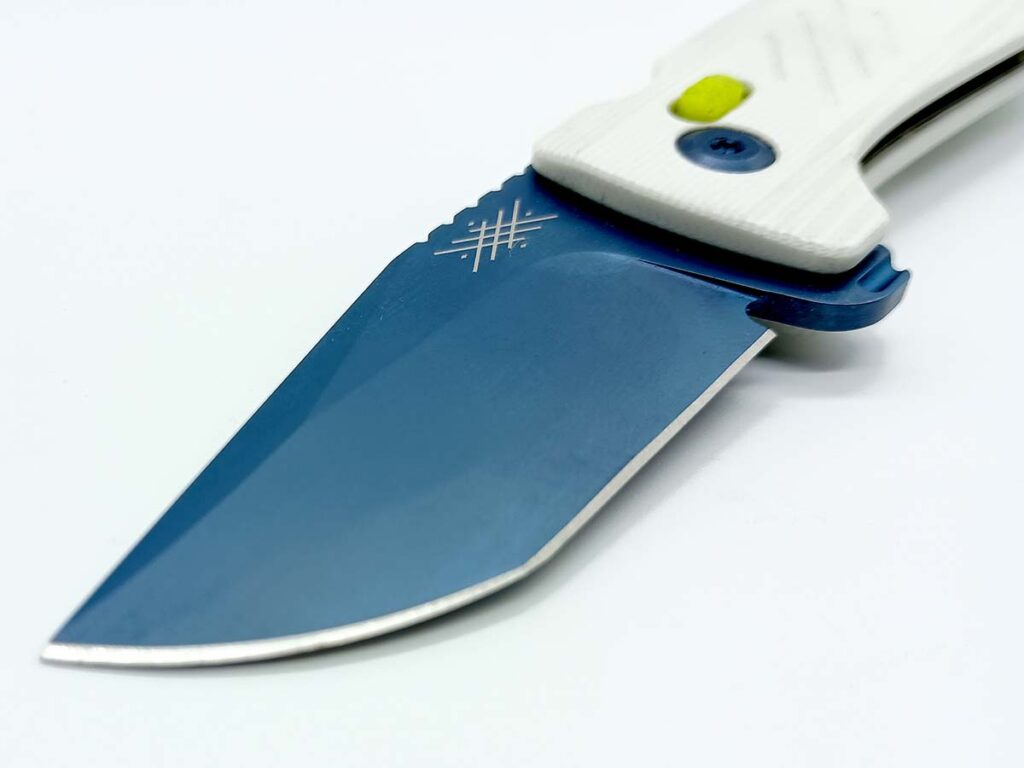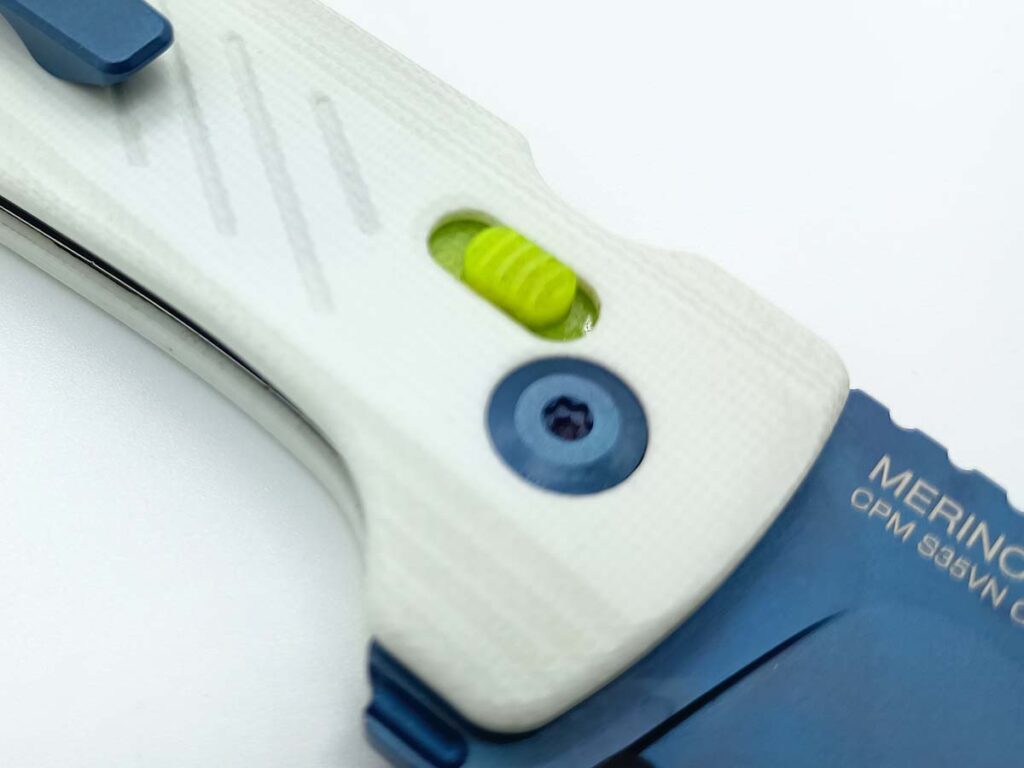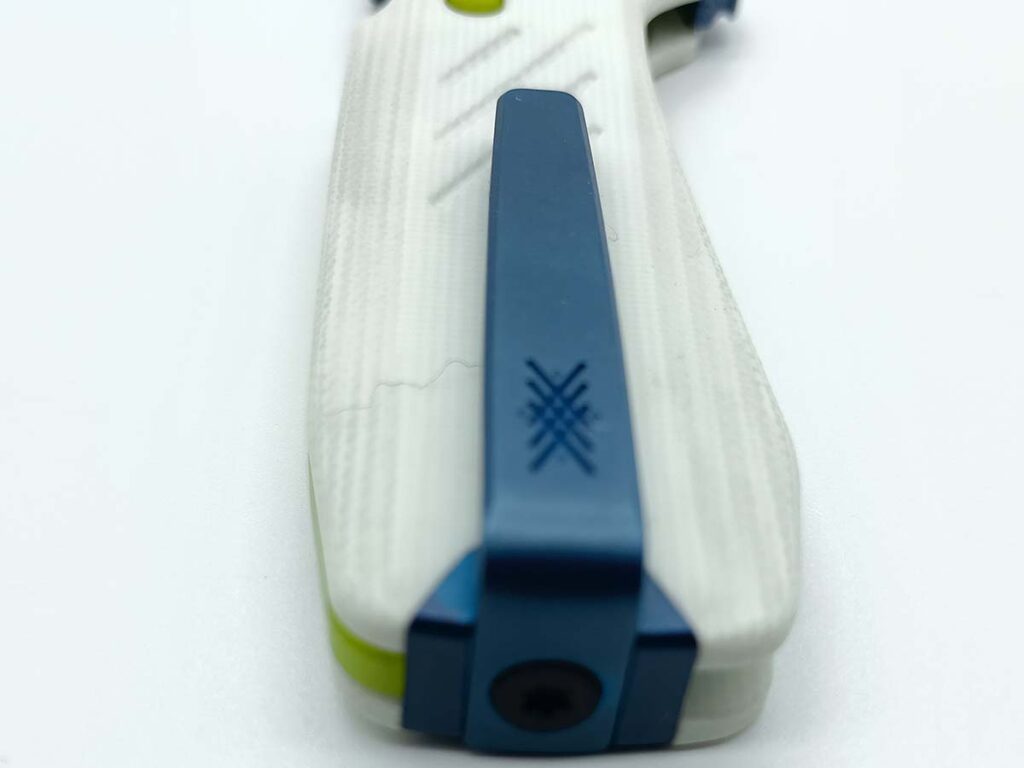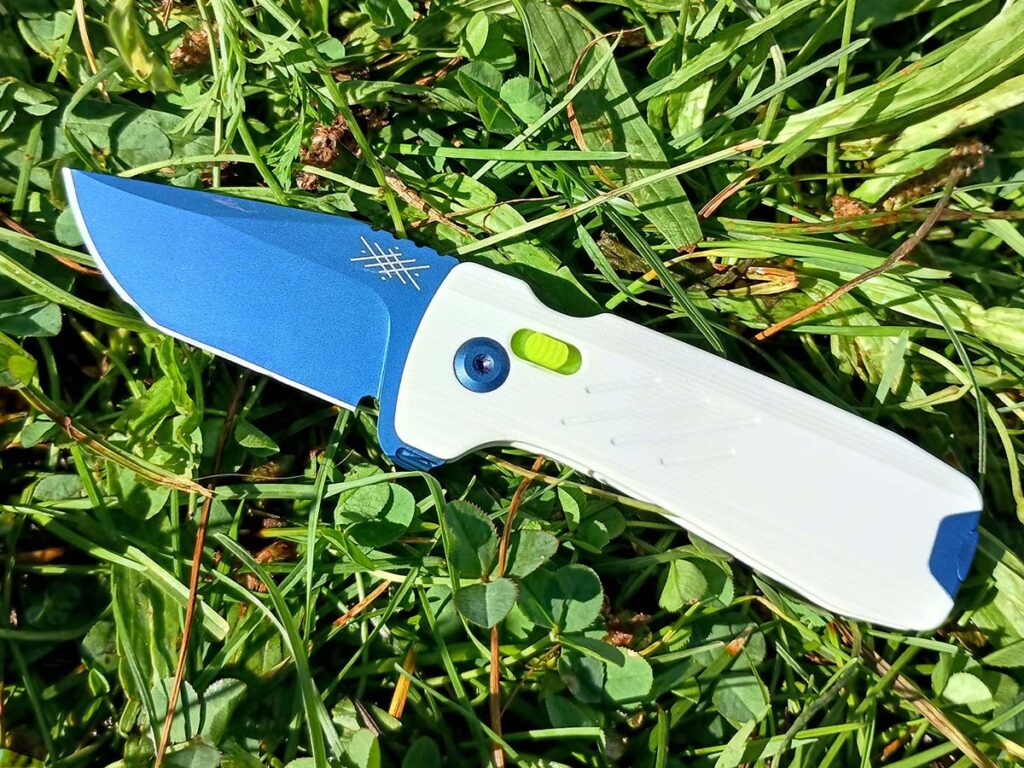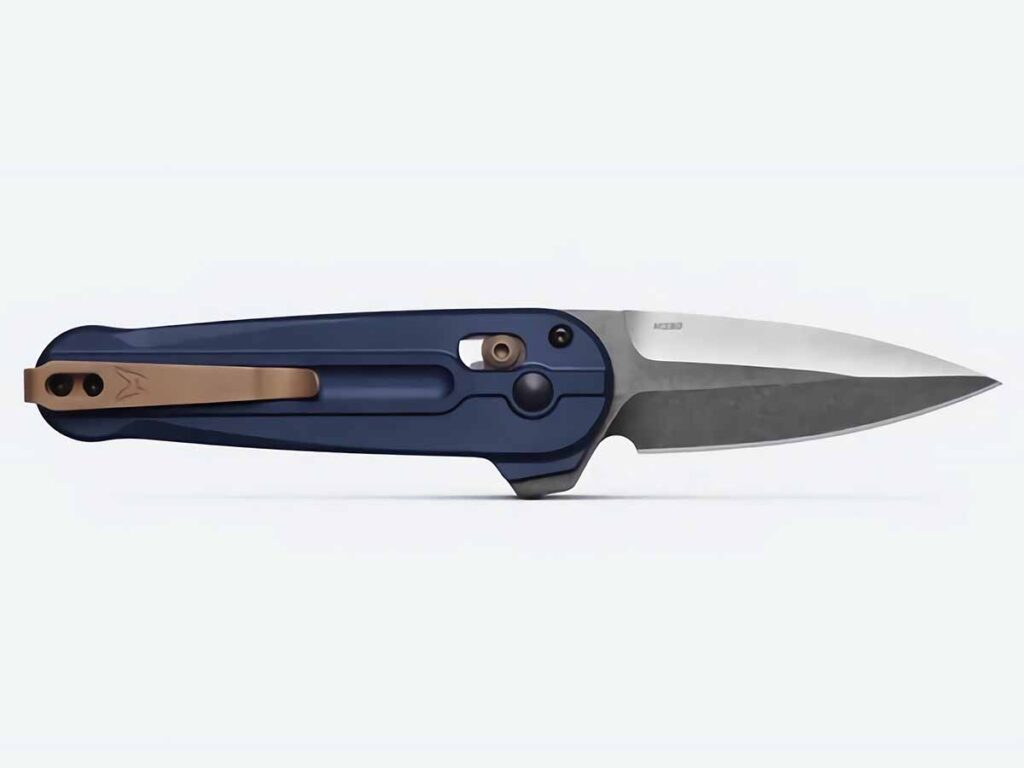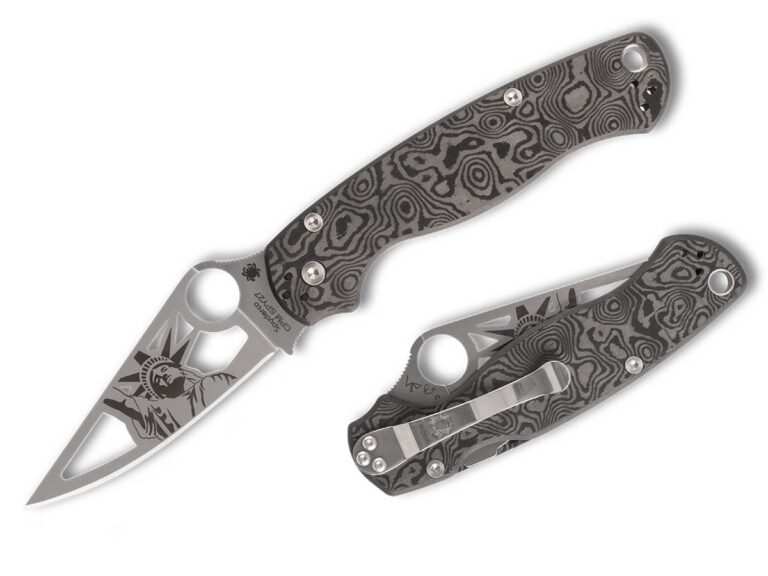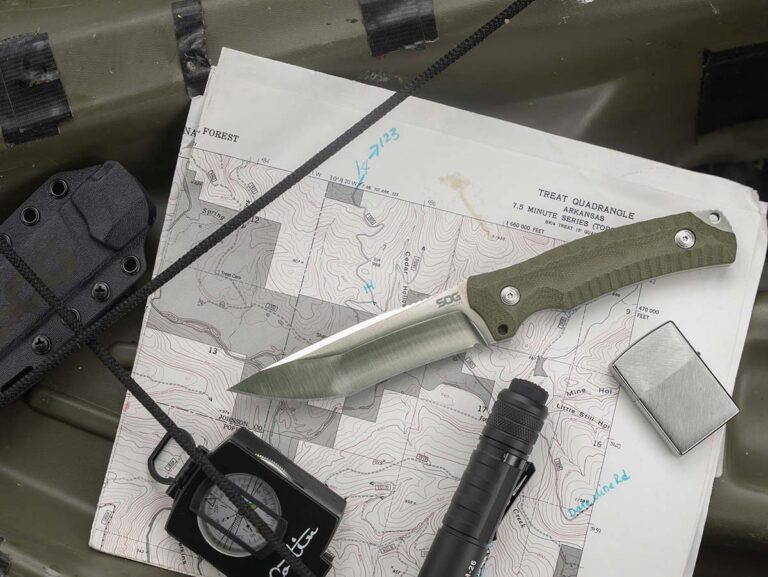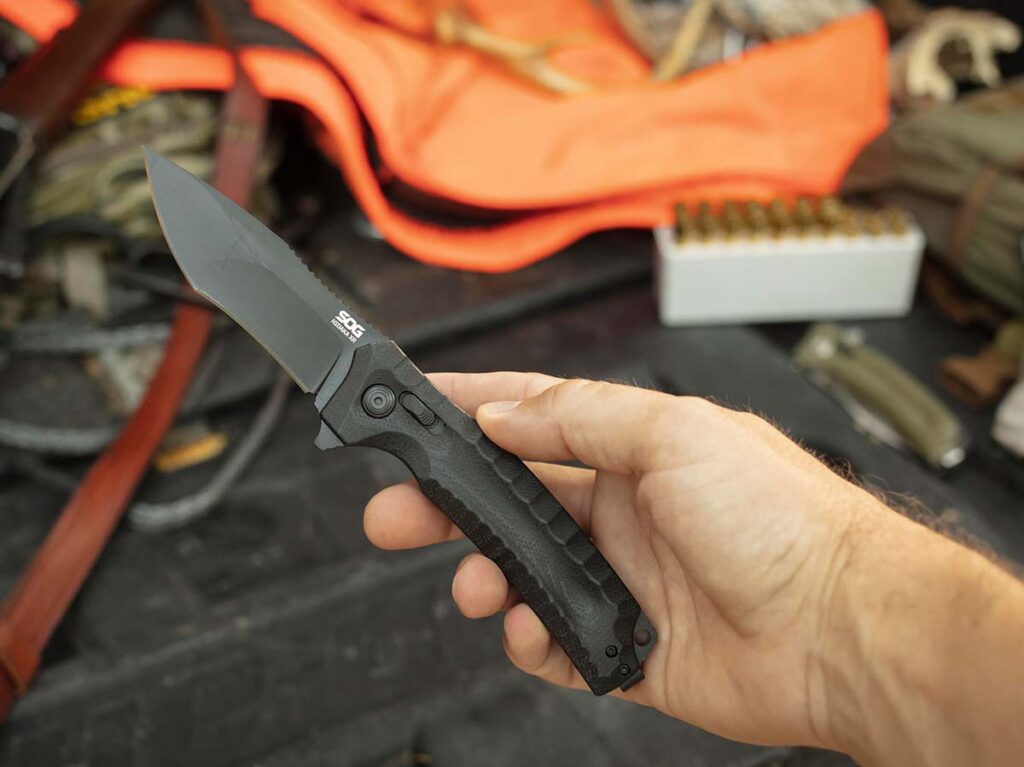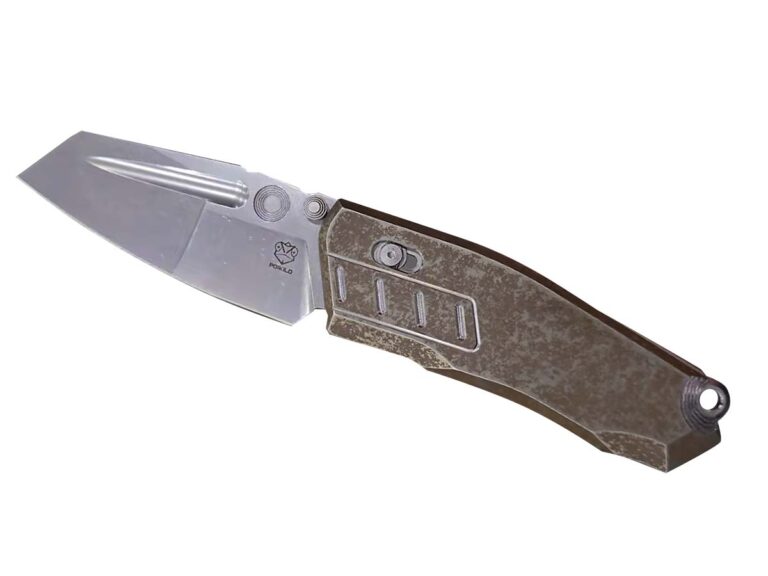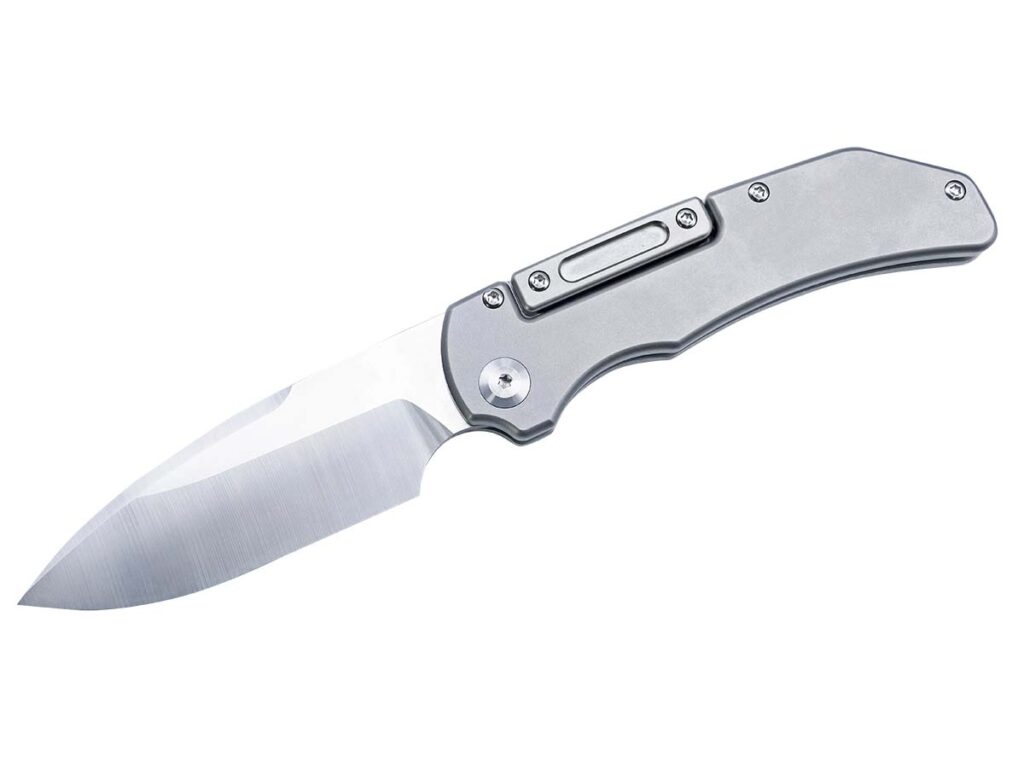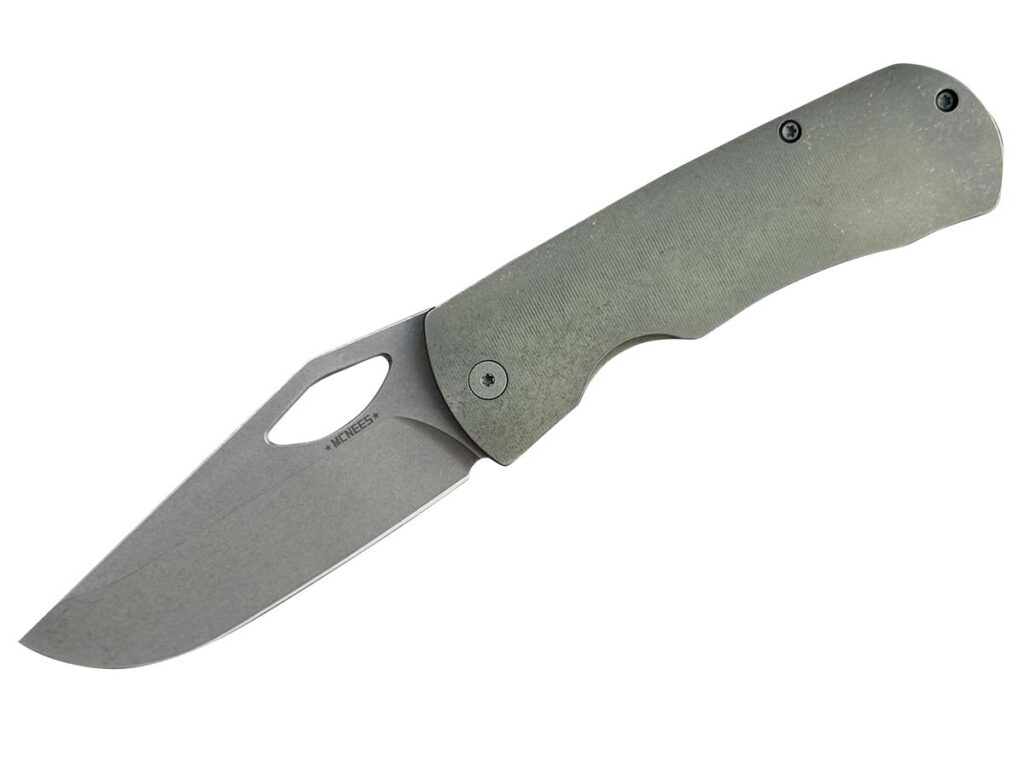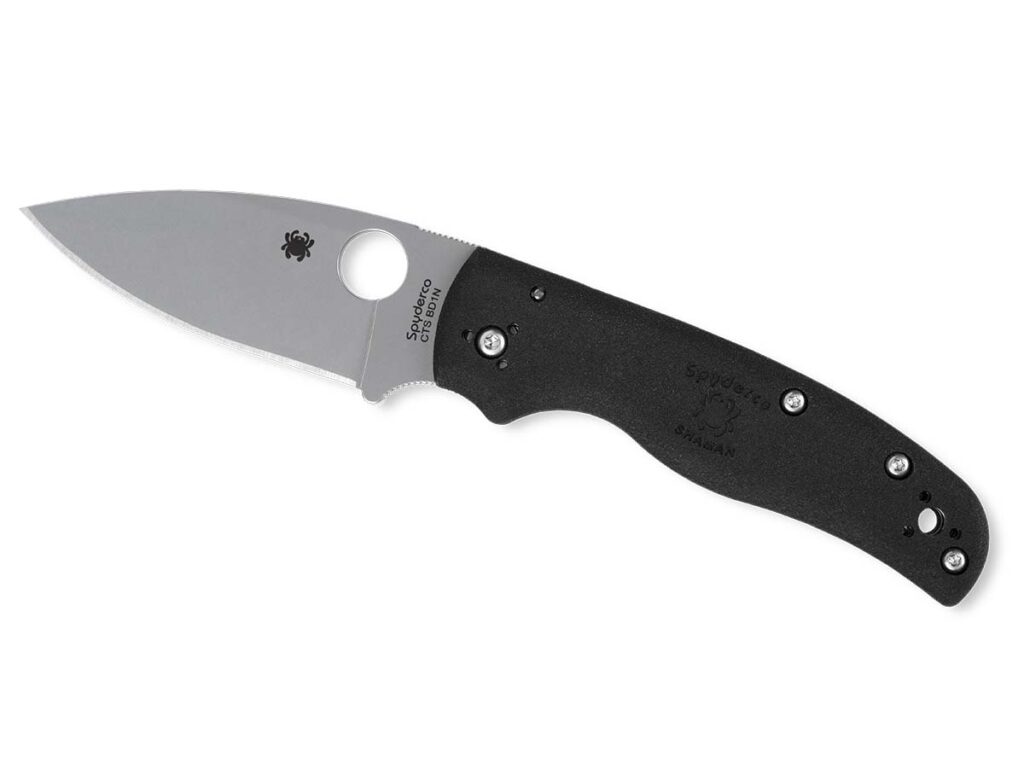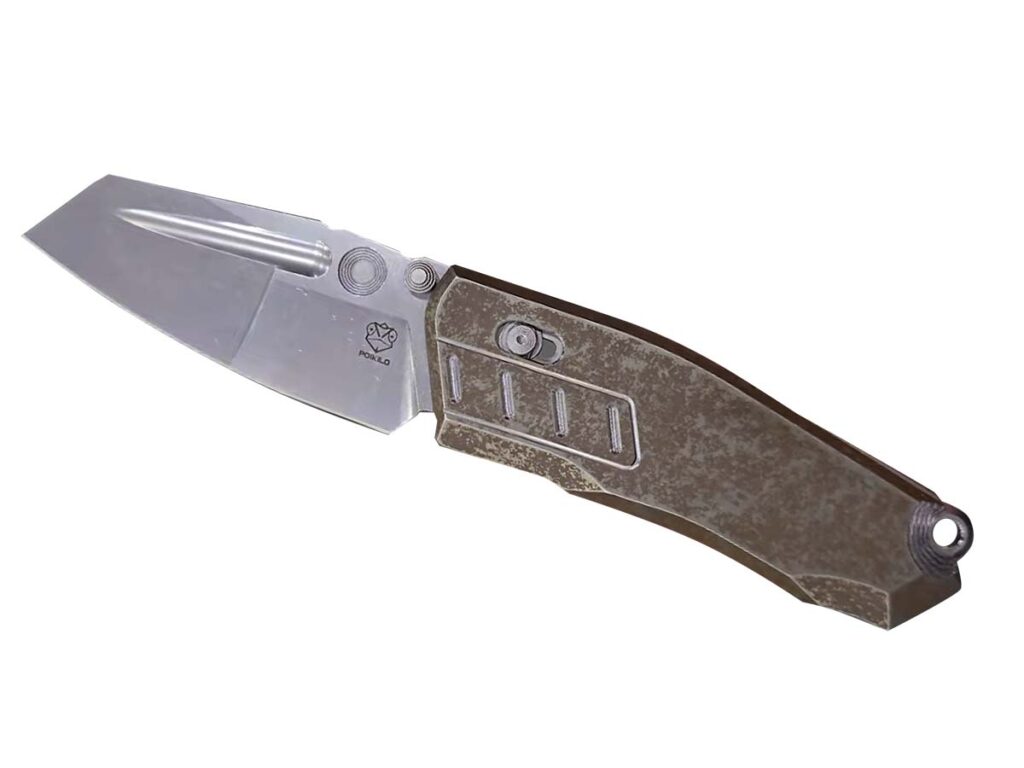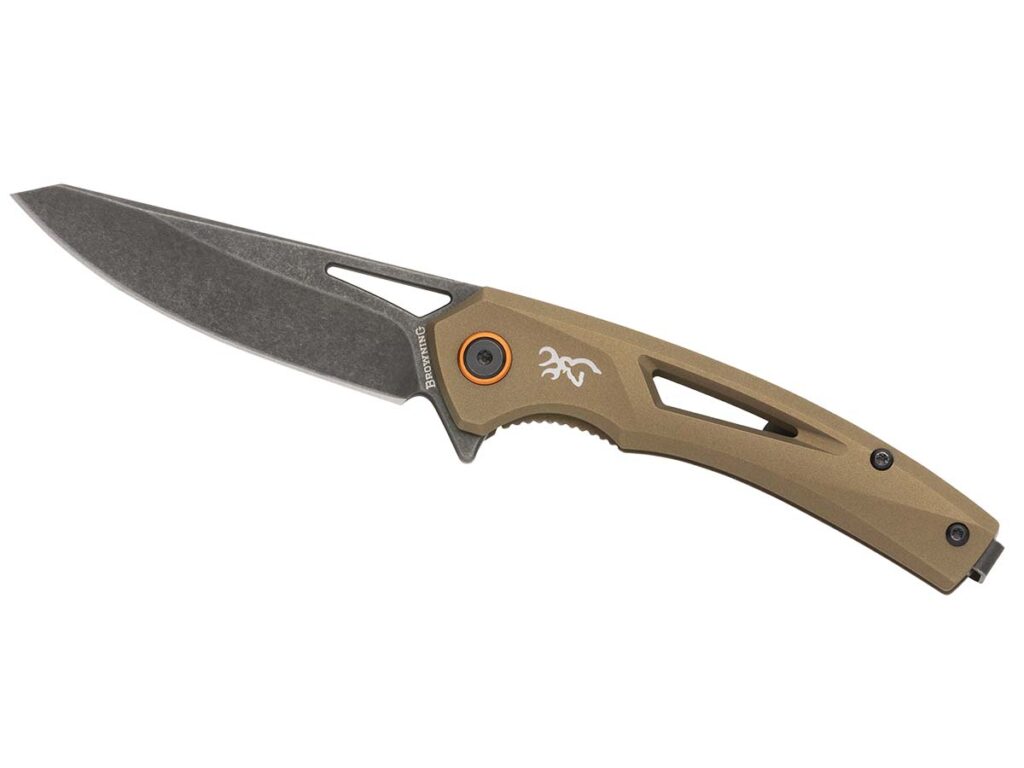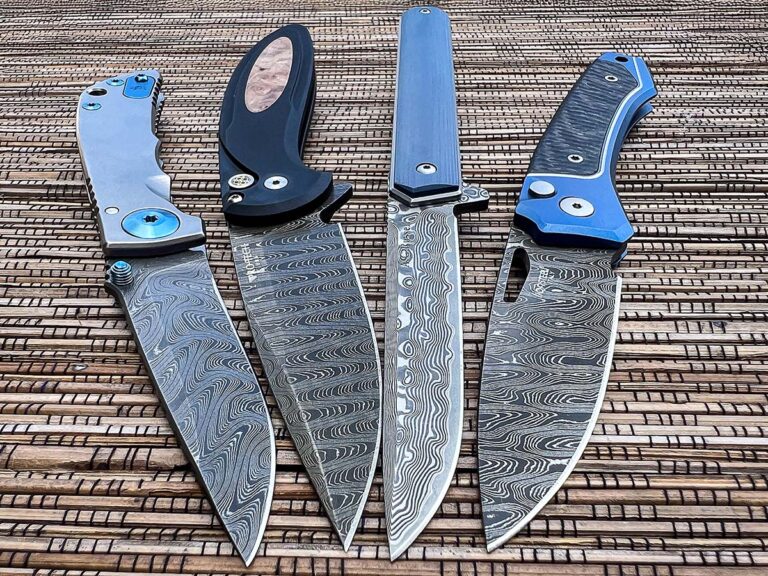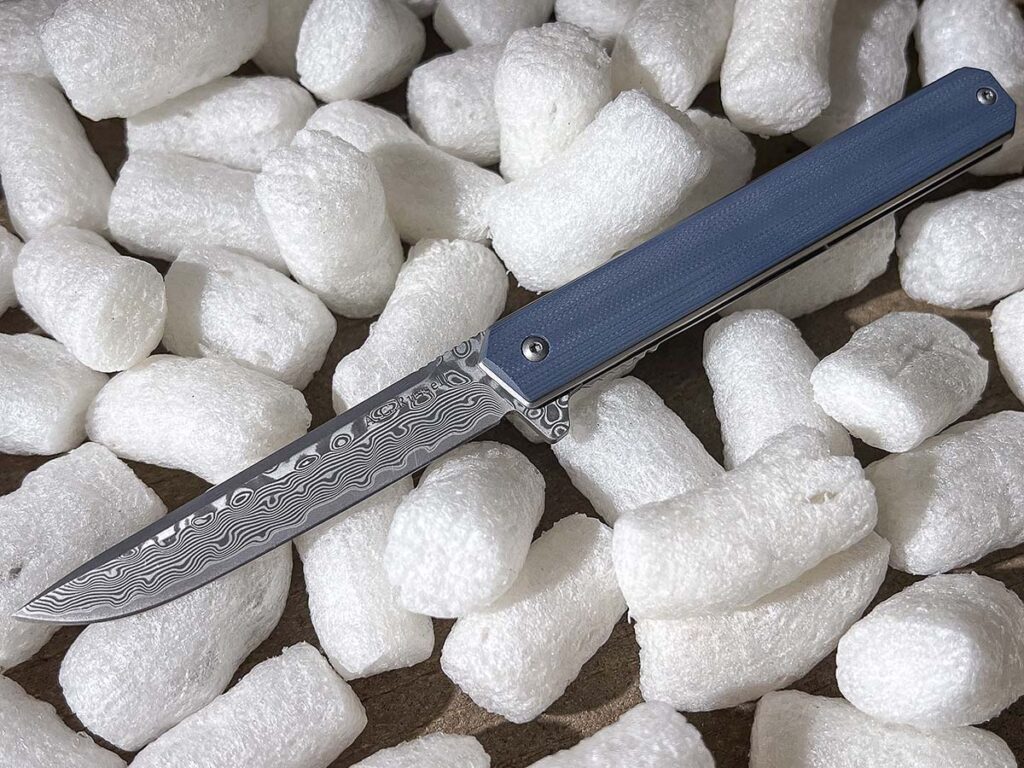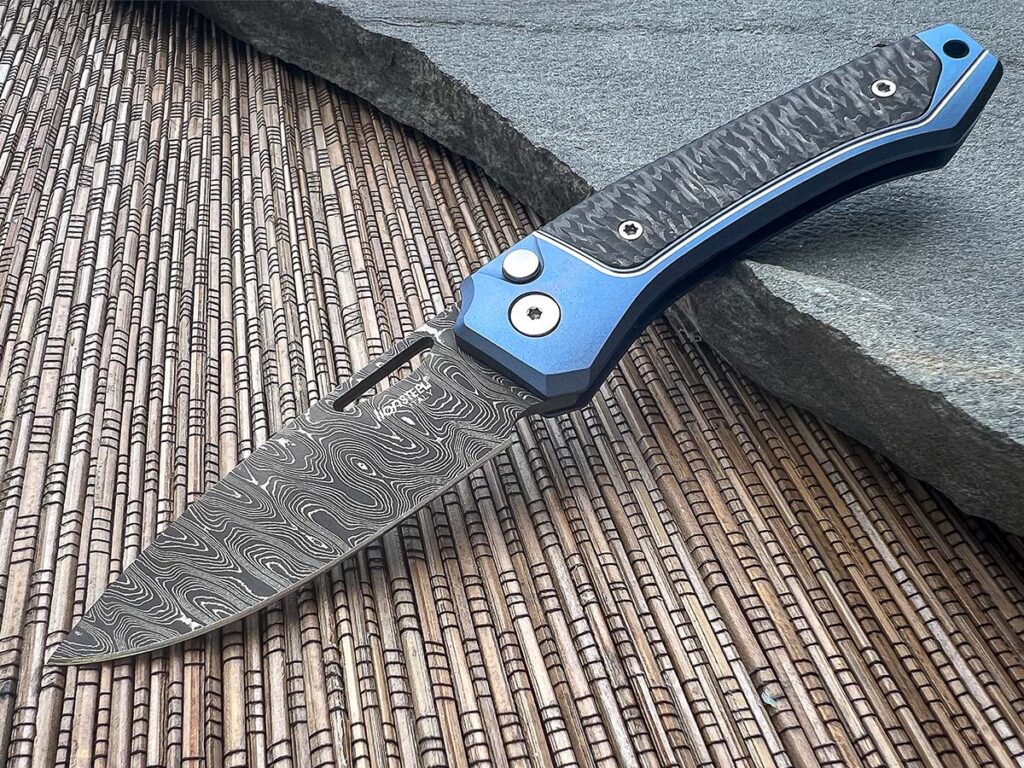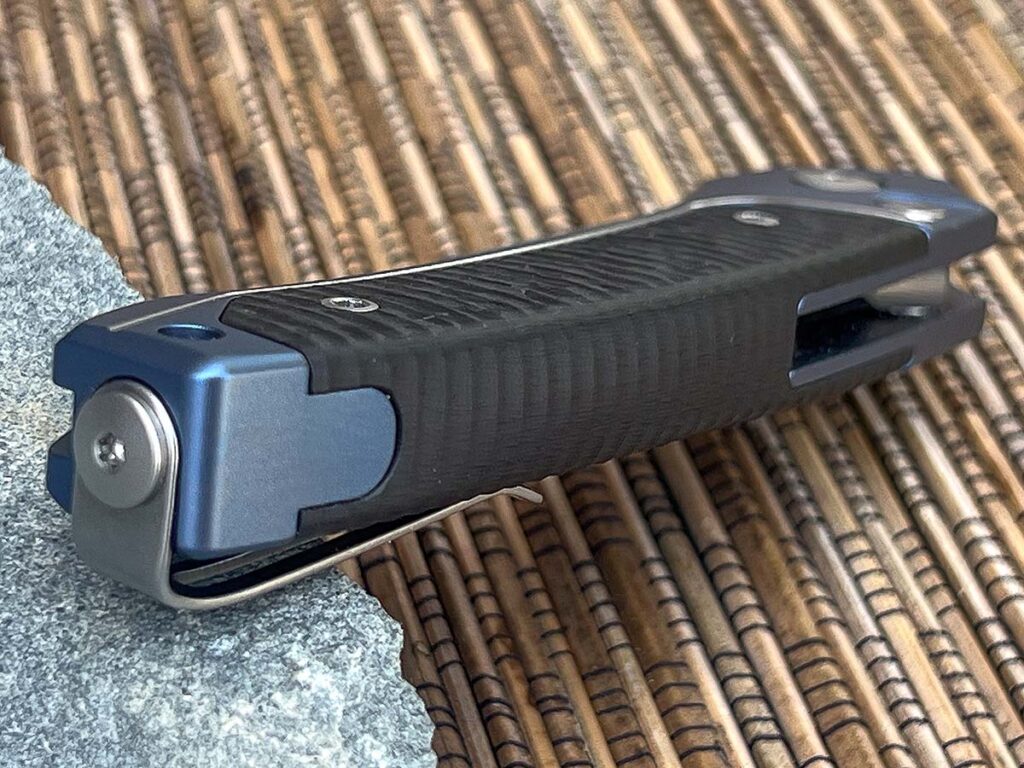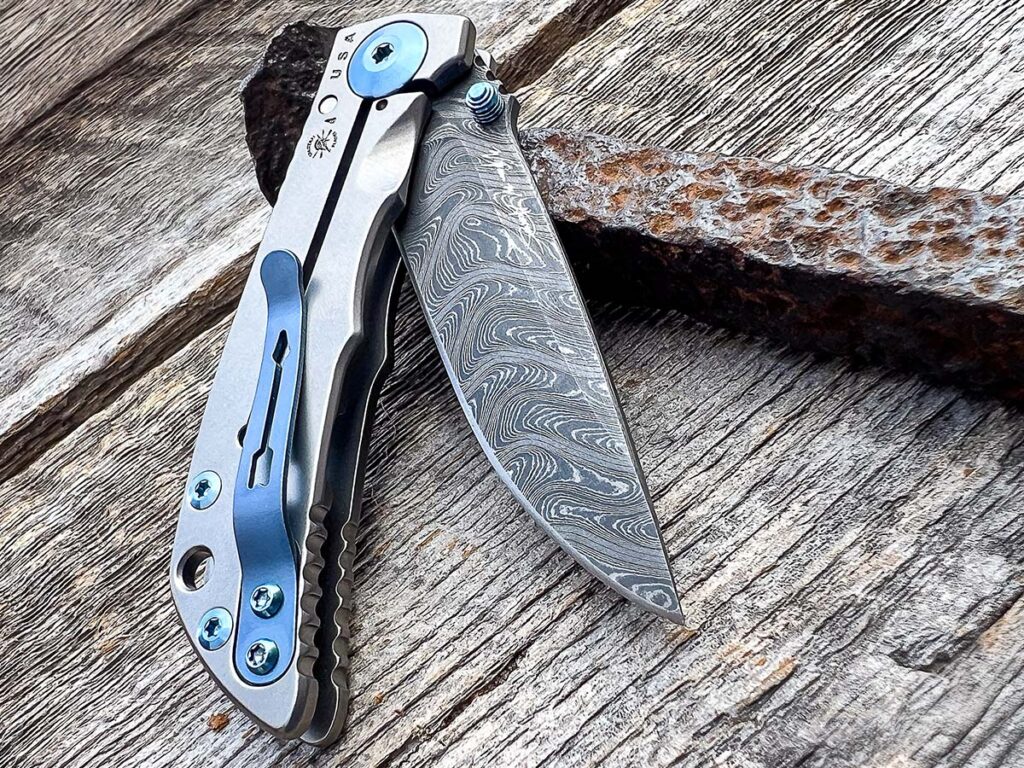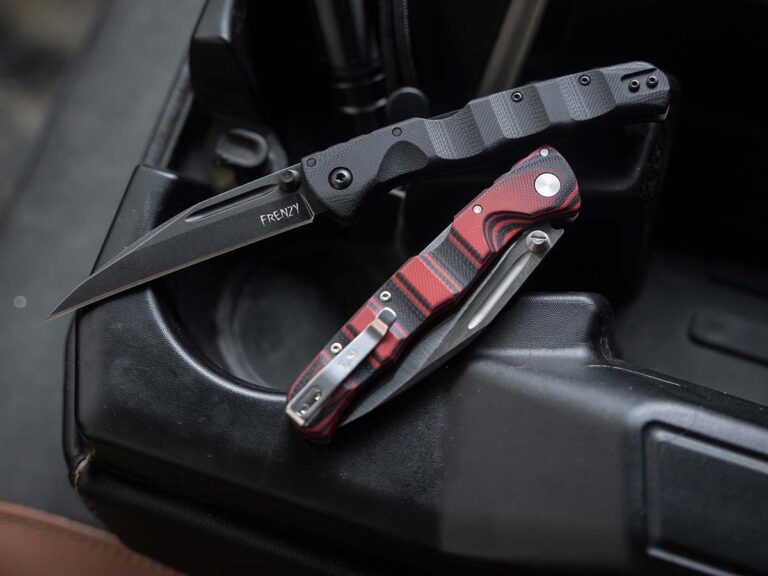

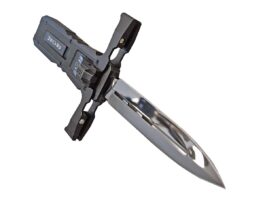
Discover the new Cold Steel Frenzy II folding knife, designed by Andrew Demko and inspired by the Japanese Kabutowari.
Cold Steel has never been shy about bold designs, and the new Frenzy II folding knife is no exception. Designed by custom knifemaker Andrew Demko, the Frenzy II takes its cues from the ancient Japanese Kabutowari and morphs those warrior-worthy aesthetics into a mega-folder ready for today’s EDC crowd.
Let’s start with the blade. At 5.5 inches, it’s not subtle—but it is refined. Forged from premium S35VN powdered steel, the long, flat edge and needle-sharp point make it as functional as it is fearsome. You get top-tier edge retention, durability and slicing performance, all dressed up with a satin line-grain polish and a deep fuller that plays with light like a katana in the sun.
But Cold Steel didn’t stop there. The Frenzy II is all about balance—of power and precision, size and slimness. Despite its impressive blade length, the handle is slim, flat and built for pocket comfort. Crafted from dual-tone, 3D CNC-machined G-10 scales, it’s grippy, eye-catching, and disappears under a shirt tail. This knife may look large, but it carries light and lean.
And yes, the Frenzy II comes equipped with Cold Steel’s bombproof Tri-Ad lock, so when that blade is deployed, it’s staying put. That kind of confidence is why Cold Steel has earned the trust of law enforcement, military and serious knife users for decades.
So, who’s the Frenzy II for? Anyone who appreciates a fusion of heritage-inspired design and modern performance. Whether you’re a collector, a gear geek, or someone who just wants a folding knife that can go toe-to-toe with fixed blades, this one’s worth a serious look.
Frenzi II Specs Weight: 5.7oz Blade Thickness: .14″ Blade Length: 5-1/2″ Blade Steel: American S35VN Handle Length/Material: 6 3/4″ Long Duo Tone G10 Overall Length: 12-14″ Additional Features: Pocket / Belt Clip Knife Type: Folder Blade Length Range: 5+ in Steel Family: CPM Blade Shape: Sheepsfoot Locking Mechanism: Tri-Ad Lock
Summer Steel: June’s Hottest Custom and Production Knives You Need to Know.
From mosaic fighters to modern flippers, this month’s standout blades bring a mix of artistic craftsmanship and everyday utility. Whether you’re in the market for a hand-forged Damascus showpiece or a no-nonsense EDC, June’s lineup has something sharp for every collector and user. Here’s a closer look at what’s turning heads in the knife world this month.
Miguel Navarro Fixed Blade
Blade length: 4.25” Blade material: Diamond Damascus by Baker Forge & Tool Blade grind: Hollow Scales: Fat Carbon Gold Snake w/black and red G-10 liners Weight: 7.4 ozs. Overall length: 9” Maker’s price for a similar knife (includes custom sheath): $550-$600 Maker: Miguel Navarro (SharpByCoop image)
Dale Holt Mosaic Fighter
Blade length: 10” Blade materials: 1084 carbon and 15N20 nickel alloy steels Blade grind: Flat Blade pattern: Clip-point recurve Handle material: Spalted sassafrass Spacers: Textured brass and nickel silver Guard: Blued mild steel Knife to know: Design features include an S-guard and dropped handle; Dale Holt is an ABS journeyman smith Overall length: 15” Maker’s price for a similar model: Contact maker for details Maker: Dale Holt (Jocelyn Frasier image)
Kelly Frasier Paring Knife
Kelly Frasier Paring Knife Blade length: 3.5” Blade material: 26C3 carbon steel Blade grind: Flat Blade finish: Mustard patina Scales: G-10 w/red liners Overall length: 7.5” Maker’s price for a similar model: Contact maker for details Maker: Kelly Frasier (Jocelyn Frasier image)
Sam Renwick Farmer’s Lockback
Knife type: Folder Blade length: 2.78” Blade steel: Nitro-V stainless Blade grind: Flat Blade @thickest: .98” Scales: Spalted maple Frame & bolsters: 416 stainless Knife to know: The bolsters are dovetailed Weight: 5.3 ozs. Closed length: 3.38” Maker’s price for a similar knife: $291 at press-time rate of exchange Maker: Sam Renwick (Rod Hoare image)
Bjorn Jacobsen Ghost Recon Chef
Blade length: 7.87” Blade material: 1084 (the black core) laminated w/stainless steel etched Blade grind: Flat w/forged texture on top half Blade @thickest: .118” Blade @widest: 1.97” Handle: Curly birch dyed w/black leather dye and sanded w/600 grit paper, then sanded mostly off again at 1500 grit, blue leather dyed and sanded w/1500 grit yet again; finished w/Uncle Bjorn’s Handle Finish Fittings: Stainless Weight: 6 ozs. Overall length: 12.6” Knife to know: Blade etched in ferric chloride to make the carbon migration “pop,” then left in instant coffee overnight to make the 1084 core black Maker’s price for a similar knife: $320 at press-time exchange rate Maker: Bjorn Jacobsen (Rod Hoare image)
Rob Wayman Knives Feather Damascus Fighter
Blade length: 8” Blade material: Feather damascus of 1084 carbon and 15N20 nickel-alloy steels Blade grind: Full flat Handle materials: Stabilized bog oak, black G-10 and stainless steel spacers, dyed/stabilized fossilized brain coral, and stabilized curly narra Guard & pommel: Feather damascus Overall length: 13.75” Sheath: By Rob Wayman; belt model of vegetable-tanned leather w/stingray inlay Maker’s price for a similar knife and sheath: $2,400 Maker’s remark: “I’m all about sole authorship, so I make all my own steel and keep everything in house.” Maker: Rob Wayman Knives (SharpByCoop image)
Shining Blades: From the Aldo and Edda Lorenzi Collection
Authors: Aldo and Edda Lorenzi Format: Hardcover, 9 x 9.75 inches Pages: 344, including 280 in color Publication date: May 27, 2025 Publisher: Silvana Editoriale Content: BLADE Magazine Cutlery Hall-of-Fame® members, the authors operated the G. Lorenzi retail knife shop in Milan, Italy, from 1959 to 2014. To stock their store and to add to their collection, they traveled far and wide in search of all manner of knives, scissors, razors, corkscrews and other edged tools. They acquired over 2,000 pieces from the Etruscan period to the present, many incredible specimens of which are illustrated in their book—including those by some of the most famous custom knifemakers of all time—along with the stories of how the Lorenzis obtained the pieces, met the makers and much more. A must read for true knife and edged tool aficionados, both present and future alike. List price: $50 Order: artbooks.com
Bear & Son Cutlery Lawman
Bear & Son Cutlery Lawman Knife type: EDC folder Blade length: 3.25” Blade material: D2 tool steel Rockwell hardness: 59-61 HRC Blade grind: Taper Blade finish: Polished Blade opener: Thumb stud Pivot: Ball-bearing washers Scales: White smooth bone Bolsters: Carbon fiber Lock: Slidelock Pocket clip: Blade tip up Weight: 3.5 ozs. Closed length: 4 3/8” City & state of origin: Jacksonville, Alabama MSRP: $119.99 Company: Bear & Son Cutlery
APOC Wallace Bowie
Designer: Mike Wallace Blade length: 9 5/8” Blade material: D2 tool steel Blade thickness @guard & tip: .256” & .039” Blade finish: Titanium coat Slabs: G-10 Knife to know: Handle screws accept a size T9 Torx or star bit; any other bit used may strip the screws Weight: 1 lb., 5 ozs. Overall length: 15 1/8” Sheath: Kydex, vertical or horizontal carry, MOLLE compatible Country of origin: China MSRP: $117 Company: APOC
CIVIVI Clingman
Designer: Taylor Martin Knife type: Flipper folder Blade length: 2.99” Blade steel: Nitro-V stainless Rockwell hardness: 58-60 HRC Blade grind: Hollow Blade @thickest: .12” Blade finish: Black stonewashed Pivot: Caged ceramic ball bearings Lock: Linerlock Scales: Black G-10 Handle @thickest: .47” Liners: Stainless steel Pocket clip: 6Al4V titanium; ambidextrous, tip up Weight: 2.8 ozs. Country of origin: China MSRP: $71.70 Company: CIVIVI
Boker Plus LRF G10
Knife type: Flipper folder Designer: Japanese knifemaker Kansei Matsuno Blade length: 3.07” Blade steel: VG-10 stainless Blade @thickest: .075” Pivot: Ball bearings Scales: G-10 Lock: Linerlock Weight: 1.94 ozs. Closed length: 4” Continent of origin: Asia MSRP: $108.69 at press-time exchange rate Company: Boker Plus
Jack Wolf Knives The Benny Fat Carbon Arctic Storm
Knife type: Slipjoint Pattern: Lanny’s Clip Blade length: 3.25” Blade steel: CPM S90V stainless Rockwell hardness: 60-61 HRC Blade grind: Hollow Blade finish: Belt satin Blade @thickest: .12” Lock: Framelock/bolster lock Pivot: Ceramic bearings Scales: Fat Carbon Arctic Storm Bolsters: 6Al/4V dark-blasted titanium Pocket clip: Titanium anodized a light blue Knife to know: A pocket-clip recess plug provides clipless carry option Weight: 3.5 ozs. Country of origin: China MSRP: $279.99 Company: Jack Wolf Knives
Go inside linerlocks to judge its operation and workmanship.
For those who truly appreciate the custom knife, particularly the variety of folders, there is beauty in the function as well as the aesthetic qualities of the piece. Nowhere is that functional beauty more evident than in the intricacies, tolerances and precision of a well-made linerlock.
Inspecting the inner workings of the linerlock presents an opportunity to evaluate its operation and determine the degree of expertise that has gone into the finished product. In assessing what goes into the best of linerlock construction, top makers agree that the critical connection between spring and blade is the most obvious indicator of a particular lock’s capabilities. To be sure, there are other aspects to consider in the evaluation of the well-constructed linerlock, and these should never be discounted. But first things first.
Blade-Spring Relationship
“There is more to proper linerlock construction than just the blade-spring relationship,” agreed Ethan Kolar, a custom maker since 2020 with about 65 percent of his work devoted to the linerlock. “There’s a lot of small things that work together to make the knife function as it should, but the blade-spring-lock relationship is the most crucial part of the knife’s functionality as it is critical to a safe and user-friendly knife.”
Ethan Kolar uses an unusual material for the liners of his Persian Style Linerlock—15N20 nickel-alloy steel—and stipples it to boot. “It’s a good, springy material and has good wear resistance allowing the lock to have a longer life before maintenance needs to be done or the lock needs to be extended,” he wrote. Ethan opts for a smaller spring (middle panel, top) on his Persian model. (SharpByCoop image)
When Maverik Murdock watches his linerlock work, blade and spring functionality is his primary concern as well.
“The lock fit is probably the first noticeable portion of a well-made linerlock folder, but it is a small part of what makes an overall good knife,” he explained. “The lock fit, or timing, is a good thing to look for as a sign of attention to detail from a folder maker, though there is some personal preference on how the lock fits.”
Murdock has been making custom knives for 15 years and folders for the last five with about 60 percent of his current output in linerlocks.
“Other good signs of a well-made linerlock are good fit and finish with the materials used,” he observed. “The blade should be centered between the liners when closed. This is a sign of proper pivot construction, good bearings or bushings and good alignment of the liner, back spacer and blade. Smooth travel when opening and closing the blade is also good.”
Repercussions Of A Bad Relationship
The Boomslang linerlock folder by K.C. Gray boasts a 4-inch blade of CuMai copper damascus by Baker Forge & Tool, mammoth molar scales, zirconium furniture and hidden hardware. Closed length: 5 inches. Gray’s price for a similar knife: $2,500. (SharpByCoop knife image)
In the event the linerlock fails the first critical test and the function is flawed, there are consequences.
“If the lockup engagement isn’t correct, it will do one of two things in my experience,” Maverik began. “If there isn’t enough engagement, it could create an unsafe and unstable lock as there isn’t enough lock contacting the blade, which will run the risk of the blade coming back on the user’s hand. On the other end of the spectrum, too much lock engagement can crowd the user’s thumb or thumbnail, making it difficult to release the lock and decrease its service life as the lock has less area to wear into before it has sloppy lock engagement. The most common types of incorrect lock interfaces, I would say, are the two I’ve listed. However, in my opinion, over-engagement is more common than under-engagement as it is easy to both grind more material than is needed for proper lock engagement and the blade taper angle can be easily canted less than is necessary.”
If the spring extends beyond the optimal position, the condition is commonly described as “overtravel,” and the knife’s function is significantly impaired as time and use progress.
“If the lock bar has overtravel or over engagement, it generally isn’t dangerous to begin with because the angle change on the lock bar isn’t high enough to compromise the compression strength of the lock under normal working conditions,” Murdock explained. “But that does depend on the construction of the knife and materials used. Overtravel generally just means a shortened working life of the lock mechanism where it would need to be replaced sooner than a properly timed lock. The problems with overtravel begin to show up with the reach to the far side of the lock. If the lock bar fully reaches the other side of the lock, there comes a point where it no longer has contact with the blade when open, or has minimal pressure where it can bind.”
Other Linerlock Concerns
Marverik Murdock’s Steadfast has a 3.5-inch blade in a san-mai construction of CPM 154 stainless steel and CPM 3V carbon steel. The scales are Fatcarbon® space coral and the bolsters are feather damascus. Closed length: 4.25 inches. His price for a similar knife: $3,200.
K.C. Gray has been making custom knives for a decade and collecting them for 30 years. He produces about 100 knives per year and roughly half are linerlocks. His perspective on quality workmanship includes the vital connection between spring and blade as well as other factors.
Interface
“That interface is the prime concern,” Gray observed, “and people usually talk about it in terms of ‘percent of lockup.’ Basically, that is how much the lockbar travels across the lock face toward the opposite liner. Everybody has their own idea of the ideal number. Some like as little as 10 percent lockup. I think most makers would say 40 to 50 percent would be the correct range. Too little lockup and the blade can slip off the lockbar and close. Too much and the lock will stick or even light wear will cause the blade to wiggle. So getting the lockup in the sweet spot in the middle is a sure sign the knife was well constructed.”
Detent
According to K.C., other critical elements should be considered in the overall quality of a particular linerlock.
“Other things to look for would be the strength of the detent holding the blade in the closed position,” he advised. “It should be firm enough that the blade doesn’t fall open when lightly shaken. But it can also be a problem if the detent is too strong. If it’s very strong it can make opening awkward and dangerous. Thumbs can slip onto the cutting edge or the knife can be dropped more easily. Another thing to look for is the centering of the blade between the liners. It should be bang down the middle except in chisel-ground blades.
Clearance
“Something else,” Gray continued, “is whether there is enough clearance between the liners for the thumb to get purchase on the lock to disengage it. If the blade is thick, often no relief is needed. But a thinner blade will usually need some relief cut into the opposite liner. It’s usually a sign that the maker thought the design through thoroughly.”
Other Aspects To Look For In Linerlocks
Viewed straight on two-dimensionally, some folders scream linerlock while others do not. The linerlock folding dagger by Brian Nadeau with dragon engraving by Vitalij Quaranta fits the latter category. (SharpByCoop image)
Of course, there are attributes to the well-made linerlock that are not necessarily visible. The feel in the hand and the ease of simple repetition in opening and closing contribute to the best linerlock experience.
“The blade motion when opening and closing should be smooth and consistent through the whole opening/closing cycle,” Murdock related. “Some makers like more or less drag on the blade, but it should be consistent. If the drag is excessive, it can be a sign of improper pivot sizing or too much lock bar pressure. The blade should have little or no side play when open. If it does the pivot may not be tight enough or the working surfaces may not be in alignment. The blade should be centered when closed and should be tight against the stop pin with a firm enough detent to prevent accidental deployment.”
Kolar also acknowledges the telltale signs of poor construction that are not necessarily readily apparent on sight and warns prospective buyers to consider these red flags.
“There are a few limited signs of improper construction that can’t be seen by the eye,” he commented. “Sloppy blade lockup oftentimes is very difficult to see as it doesn’t take very much for the blade to rock against the lock. How tight the blade pivots is another, as well as whether it has side play in the blade, and this is something that you can usually only feel. A good simple rule for cases such as these from both the maker and the buyer standpoint is to go with your gut on what you feel. A lock should lock up tight with no horizontal side play and no vertical lock play relative to spring size. Smaller springs can compress easier than larger.”
Questions To Ask When Buying A Linerlock
As K.C. Gray observed, the “percent of lockup” refers to how much the spring/lockbar travels across the lock face toward the opposite liner. “I think most makers would say 40 to 50 percent would be the correct range,” he opined. Brian Nadeau appears to achieve that range (far right, middle panel, top) with his dragon-themed linerlock. (SharpByCoop image)
When buyer and seller meet, the evaluation of a prospective linerlock should include more than just a consideration of the knife itself. Buyers should engage the maker in conversation and ask a few questions. A healthy dialogue always enhances the experience and gives the customer confidence in the decision to plunk down hard-earned money.
“Ask about the liner material,” Gray offered. “It’s almost always titanium in custom knives. Ask what angle the lock face has been ground to. Most often seven to nine degrees is used. Ask if the blade runs on bearings or washers. And just ask if the maker can explain the materials used and why he or she likes those materials.”
Murdock agrees. “If you are talking to a maker about his work, he should know the process and materials used and should be confident in what he does. It’s good to ask about the materials and why they’re used. If you can see the work in person and look at these points and the fit and finish, that’s a great place to start.”
The making of a quality linerlock requires attention to detail and presents challenges that go well beyond a simple aesthetic. While eye appeal is always a factor, the proof of the linerlock’s worth is in its operation. Informed buyers can help themselves in taking the time to understand the attributes of linerlock mechanics and the skill that is present in the finished product. Then, the unbeatable combination of beauty and optimal use can be attained.
With its first foray into knifemaking, Work Sharp cooks up a doozie–a knife that’s both a folder and an automatic.
Work Sharp has five decades of experience keeping the knife world as sharp as ever. At that time, the tool and knife sharpening implements company had never dipped its toe into knifemaking—until now.
At the 2025 BLADE Show, the Ashland, Ore., company will debut its first foray into edged tools with the introduction of the RMX EDC-style knife. And while the pocket partner might seem like just another folder at first blush, the knife’s internals make it an innovative addition to nearly anyone’s collection. Work Sharp isn’t lying when it says the RMX is “Your knife. Your Way.”
Manual Or Auto
The groundbreaking aspect of the RMX (Replaceable Mechanism Exchange) is that the knife is both an auto and a manual action. And no, it’s not just manual by muscling open an auto or flicking open a manual.
As its name suggests, the RMX utilizes what Work Sharp claims is the first-ever interchangeable pivot cartridge. Essentially, the knife comes with two pivots—one ball bearing (manual) and one spring-loaded (auto). Simply switch one out for the other via a 2mm hex head.
Furthermore, internally, the tension is adjustable thus, the deployment of the blade in both manual and auto configurations is tunable. It’s a slick system, not only because of the implications of having two knives in one, but also legally.
Theoretically, the RMX should make shipping the sometimes automatic knife all the simpler, while also giving users more control over exactly what they’re carrying. Not to mention, it’s a plain and simple concept.
As for deployment, a push-button near the pivot kicks the blade out as an auto and acts as the release as well.
RMX Blades
The Work Sharp RMX comes in two blade styles and three sizes. The one I’ve seen making the most headlines is the full-sized 3.2-inch Reverse Tanto profile—a wicked-looking blade with an ultra-thin edge and excellent slicing properties. The company is also offering a drop-point profile in two sizes, 3.2 inches and a compact 2.4-inch option. Both come with a saber grind.
As for blade material, Work Sharp utilized Crucible Industries’ CPM 3V steel. This is a solid choice, given the metal is known for its toughness, high wear resistance and ability to hold a very fine edge.
RMX Handle
Interestingly, especially for a knife with auto guts, the RMX is feather light, thanks mainly to its handle. Work Sharp opted for magnesium, keeping the knife between 2.24 ounces and 2.7 ounces, depending on its configuration. Additionally, the material imparts a good deal of stiffness to the knives and, with a gray Cerakote treatment, proves plenty durable, not to mention eye-catching.
Complete Package
Even for the sheer novelty, the Work Sharp RMX is an intriguing system made even more so due to an affordable price. The RMX compact has an MSRP of $130 and the full-sized version an MSRP of $140, making the line competitive in both the folder and auto markets—very competitive. Overall, the offering makes one wonder why it took Work Sharp so long to take a stab at knife manufacturing.
Latest assisteds have all you need in swift, sharp folders.
The assisted opener appeals to many who are mechanism oriented and like to fidget with their knives. There’s something satisfying about tapping a flipper tab or nudging a thumb stud and then having spring force kick in and propel the blade open crisply and quickly. It’s sort of like an automatic but it’s not. In fact, in most areas its legality is no different than a standard one-hand folder* because you initiate the opening by manually pressing the flipper or thumb stud as opposed to releasing the blade under spring tension via a push button as done with an auto.
Kershaw Dawnstar
The flipper tab of the Kershaw Dawnstar is highly effective at deploying the blade. The large semi-circular choil is sort of unusual and adds to the knife’s distinct appearance
Kershaw was one of the first manufacturers to go all-in with assisted openers in the mid-to-late 1990s. It teamed with BLADE Magazine Cutlery Hall-of-Fame® member Ken Onion to make a line of collaboration knives that incorporated Onion’s SpeedSafe assisted-opening mechanism. The knives not only were great sellers for the company, but, more importantly, helped start the assisted-opening revolution in the knife industry. Soon after, other manufacturers began producing versions of folders with mechanisms that closely mirrored the SpeedSafe for both tactical and EDC purposes.
The Dawnstar is Kershaw’s latest entry in the genre. Sporting a hawkbill blade paired with a true tactical handle offering deep, tip-up carry, it is one of the company’s more radical configurations. The hawkbill isn’t seen too widely in tactical folders, so it stands out both visually and functionally. The 3.5-inch blade is 8Cr13MoV stainless steel.
The main grind is hollow with a swedge, making the blade look a bit aggressive and also following through in use. A flipper tab deploys the blade quickly and is the only opening method. The handle is molded glass reinforced nylon (GRN) with dual skeletonized steel liners for strength. Strategically placed cutouts reduce weight. The handle is textured for a comfortable, nonslip grip.
The knife cuts best in a pulling motion, allowing the hawkbill to gather the material being cut into the blade’s curvature, not unlike pulling a zipper. The hawkbill is an aggressive pattern and goes through a variety of materials with ease. This is where the hollow grind really makes a difference. Cardboard, foam, even wire stripping—the assisted opener sails through it all. If you cut a lot of cardboard or make long, straight-line cuts in any material, the Dawnstar is for you. The handle is easy to hold onto. The large finger recess helps seat your hand.
Approximate closed length: 4.4 inches. Country of origin: China. MSRP: $54.99.
SOG Twitch III
The Twitch III is ultra-light, ultra-slim and elegant in appearance. A simple design with high function, it goes well with dress or casual clothes.
The Twitch III is the third installment in a highly successful series of assisted openers from SOG. It is a slim, stylish EDC capable of tackling a wide variety of cutting chores. It features a 3.1-inch spearpoint blade fully flat ground from 154CM stainless steel with ambidextrous thumb studs and a low-profile flipper tab for an additional opening option. A light press on the flipper and the blade pops out with authority.
The handle is lightweight yet strong aluminum, with dual steel liners providing the backbone. A subtle finger recess forms a bit of an integral guard to prevent your hand from sliding forward. A deep-carry, bayonet-style clip is affixed to the butt and positions the folder as low as possible in the pocket for ultimate concealment. The handle profile is flat and slender, making it extremely comfortable for daily pocket carry. The knife is equally at home in dress or casual clothes.
For a slim knife the Twitch III performs very well. The blade glides through various materials with surprising ease. The 154CM offers more mileage for edge retention than lesser steels such as D2, 8Cr13MoV and AUS-8. It is the type knife you can carry for a range of varied-use scenarios, from slicing steak to more mundane things such as opening mail, packages, etc.
It excels at cutting open blister packs due to its pointy tip and flat- ground blade. Performance is great and the folder carries exceptionally well, so what’s not to like? However, I would caution against prolonged use due to the slender, flat profile and slick aluminum scales. If your hand is wet or sweaty, grip retention might be an issue.
The Twitch III comes in three varieties: all-black blade and handle, natural finished aluminum with satin blade and gold TiN coated hardware, and gray aluminum handle with black blade and hardware anodized a light blue. All are great-looking EDCs and a welcome addition to your collection.
Closed length: 3.9 inches. Country of origin: China. MSRP: $79.95 for any of the three variants.
Benchmade PSK 593BK-01
Benchmade’s PSK is a high-end outdoor folder using CPM MagnaCut stainless blade steel. MagnaCut holds an edge extremely well in addition to having excellent corrosion resistance—pretty much the perfect outdoor blade material.
The brawny Benchmade PSK 593BK-01 is a rugged assisted opener engineered for survival use. It exhibits all the hallmarks of what makes applicable Benchmade knives standards in the industry: the AXIS crossbar lock mechanism and advanced materials for the handle and blade, including carbon fiber, G-10 and CPM MagnaCut stainless steel. The 3.4-inch modified drop-point blade has excellent edge retention and superior corrosion resistance—a perfect steel for a knife to carry while hiking, camping, hunting, etc.
An exposed flat area below the thumb stud that resembles a choil serves as a spot to use a ferrocerium rod for fire starting. It’s such a thoughtful touch on the PSK. The ergonomic handle incorporates forward and rear integral guards to prevent slipping and seats your hand well. Black carbon fiber bolsters are mated with black G-10 scales, with the blade DLC coated for additional corrosion resistance and a low-profile appearance—in other words, the knife is “murdered out” in mostly all black.
The ambidextrous thumb studs are anodized red for an interesting splash of color. A deep carry pocket clip positions the PSK tip up and switches to the opposite side to accommodate lefties. The AXIS Lock Assist is rock solid while remaining easy to disengage by pulling back on the studs, then rotating the blade closed. A sliding switch safety in the handle spine locks the blade closed to help prevent the knife from accidentally flying open in your pocket or during inside waistband carry.
The PSK looks great and performs even better. Grip quality is excellent; the 3D machined grooves in the handle and bolster work great at keeping your hand in place without feeling overly aggressive, and they displace water as well. The blade rockets out via the assisted opener very quick and sure, almost like an automatic.
The robust build and ergonomic grip instill user confidence in any climate. The PSK handles anything you throw at it, from slicing meat to whittling. The flat grind leaves enough cross-sectional steel on the blade to give it structural integrity, yet thins the edge down to where it has bite.
Approximate closed length: 4.6 inches. Country of origin: USA. MSRP: $450.
Editor’s note: For that matter, in the many states and jurisdictions where bans against automatics have been lifted, neither is an assisted opener’s legality any different than an auto.
Four new entries help show why locking folders rule the pocketknife world.
Locking folders are the most popular pocketknives—perhaps even the most popular sporting knives of all. Slipjoints have the romance and tradition, vintage style, natural materials and many other things that make knives coveted by so many users and collectors, but locking folders are a lock in terms of being the king of pocketknife sales.
For one thing, while slipjoints can have anywhere from one to multiple blades, they are basically limited to one non-locking mechanism, that being the slipjoint mechanism itself. Locking folders, on the other hand, come in a wealth of locks, including the lockback, linerlock, Integral Lock/framelock, Benchmade AXIS Lock/crosslock, ring lock, button lock, Spyderco Compression Lock and others. Not only that but since they lock they’re much less likely to close accidentally than slipjoints.
Meanwhile, since the explosion in lockbacks after the introduction of the Buck 110 folding hunter in 1964 and the introduction of the linerlock by BLADE Magazine Cutlery Hall-of-Fame® member Michael Walker in 1981—that by the end of the decade was catching on with custom and factory makers far and wide—locking folders have experienced booms in types and runaway sales that continue to this day.
As Matt Salazar, general manager of House of Blades retail knife store in Fort Worth, Texas, noted in “2025 Trends and Takeaways” of the Spring 2025 BLADE Complete Knife Guide, “While slipjoint collectors are diehards, they’re a drop in the bucket compared to those into locking folders.”
All of which brings us to the subject at hand: a sampling of a few of today’s top factory pocketknives that lock.
KA-BAR State & Union F01OD
The KA-BAR State & Union F01OD was with the author in the woods and carved a beautiful feather stick able to take a spark.
State & Union F01OD Specs Lock Type: Lockback Blade Length: 3.25” Blade Steel: CPM S35VN stainless Blade Grind: Hollow Blade @Thickest: .16” Blade Finish: Satin Handle Material: Olive drab G-10 Closed Length: 4.1” Country of Origin: USA MSRP: $175
The KA-BAR State & Union F01OD is the first all-USA-made folding knife by KA-BAR in over 50 years. The sleek, reliable edged tool features a sharp drop-point blade. The handle provides a solid grip and is complemented by eye-catching anodized orange hardware.
Designed for everyday carry, the F01OD has a reversible wire clip, ensuring it stays securely in your pocket. Checking in at a lightweight 3.2 ounces, the knife is suited for most any cutting adventure—whether in the field or around the house. Available in several colors, it also looks good while doing it.
Spyderco Alcyone
The leaf-shaped blade of the Alcyone has a sharp PlainEdge and the familiar Spyderco hole for ambidextrous opening.
The Spyderco Alcyone is named after a multi-star system in the constellation Taurus. The locking folder combines high performance with classic Spyderco design at an affordable price, featuring premium U.S.-made blade steel. The leaf-shaped blade has a sharp PlainEdge and a Spyderco trademark round hole for ambidextrous opening.
Thanks to its open-backed construction and full skeletonized stainless steel liners, the ergonomic handle is lightweight and easy to clean. The rugged gray scales provide a secure grip with a non-slip peel-ply texture for sure handling. The four-position pocket clip provides left/right side, tip-up/tip-down carry. A generous-sized lined lanyard hole completes the handle package.
CobraTec Olympian
The modified drop-point blade of the Olympian flipper folder is tailored for precision cutting and slicing. The ball-bearing pivot system provides smooth, swift deployment. A robust glass breaker and lanyard loop enhance versatility.
The CobraTec Olympian flipper folder is a marvel of precision engineering, seamlessly blending high-quality materials with an elegant, ergonomic design. A lightweight yet exceptionally durable titanium grip ensures effortless handling and superior strength. The right-hand carry clip provides convenient accessibility.
The modified drop-point blade is tailored for precision cutting and slicing. The ball-bearing pivot system provides smooth, swift deployment. A robust glass breaker and lanyard loop enhance versatility.
CRKT Ibis
Designed by Lucas Burnley, the CRKT Ibis features a drop-point blade with a prominent belly great for slicing, while the black finish complements the titanium handle.
Designed by Lucas Burnley, the CRKT Ibis is named after a graceful wading bird. For a distinctive look, the blade features a sleek curve along the spine. The drop-point blade boasts a prominent belly great for slicing, while the black finish complements the titanium handle. As Burnley notes, “It just looks good.”
With fast flipper deployment, the Ibis opens smoothly thanks to the Ikoma Korth Bearing System (IKBS)/ball bearing pivot. A low-profile pocket clip keeps the 2.9-ounce knife securely by your side.
Carrying
The way a knife is carried is essential. The sleek Olympian (top left) and discreet Ibis (bottom right) are great gentleman’s knives, while the bulkier Alcyone (top right) is more noticeable. The State & Union (bottom left) is the least noticeable of all.
How a knife rides in your pocket is essential. The Olympian carried deep with enough handle to grab onto. The sleek diameter, closed and open, never felt bulky.
The Ibis also carried deep and was easy to retrieve. It came in second to the Olympian for sleekness. The black color also made it the most subdued of the gang, attracting less attention.
The Alcyone carried bulky and a lot more exposed. The protrusion makes it easier to get at but screams, “I have a knife!” If that bugs you, you can always opt for a different folder.
The State & Union carried exactly how I like—deep and almost invisible. It has the right amount of pocket capacity to let me know it was still there. It and the Olympian were my favorite pocket carry folders of the test bunch.
All the knives come with a lanyard hole.
Opening
The test knives are studies in differing approaches to colors, locks, blade openers, pocket clips, lanyard holes, bulk, dimensions and more.
The Olympian has a flipper-style opener—and it was smooth and sleek. The Ibis has two ways of opening. Despite how smoothly the flipper operated, the thumb studs were another animal. CRKT should remove the thumb studs altogether. I’ve handled hundreds of one-handed openers. I could not open this one, no matter how hard I tried. All the king’s horses couldn’t open it using the thumb studs.
The Alcyone, on the other hand, has the eternally trusty large opening hole. I could open the blade in an inverted position, using my middle finger to lightly disengage the blade and let a wrist flick do the rest. That’s a Spyderco. It doesn’t vary in quality from any other Spyderco. The State & Union has an undeniable thumb stud for easy access. It opened smoothly, and the sound of the lockback engaging gave a sense of confidence. Solid as can be—it’s a KA-BAR!
Ergonomics
An easy winner in hand comfort was the State & Union. I had it the longest and exposed it to more use than every other test model. Second was the Olympian, though it was close. After all, I spent more time with the S&U. The Alcyone earned a third place yet was very solid. The Ibis wasn’t uncomfortable but would show hot spots as a long-cutting task knife.
Final Cut
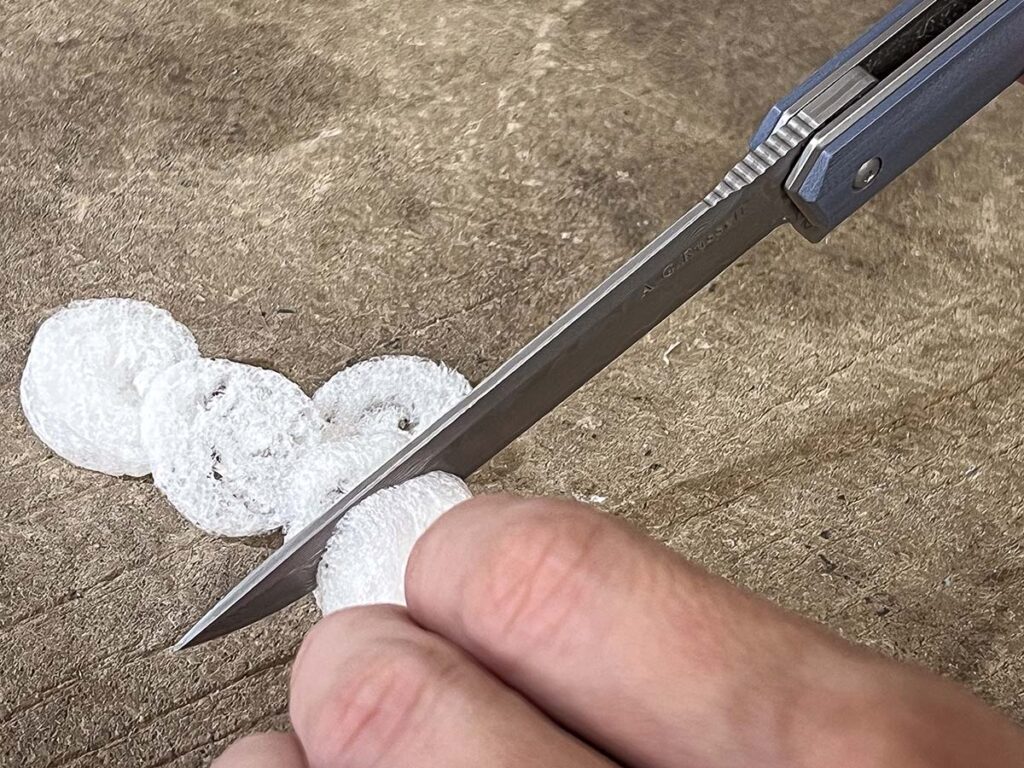
Packaging peanuts, leather, light phone cords, 550 paracord, cardboard and nylon webbing are all part of my test gauntlet for folding knives.
The State & Union made feather sticks in the forest for a winter fire with ease. I found some stray nylon rope in the woods and tried slicing it with the S&U. It did not slice through. The task may have dulled the edge. During the gauntlet test, the knife faltered on packaging peanuts, nylon webbing, leather and 550 paracord. It made it through phone cord and cardboard but was a step behind the others.
The Olympian deploys with a fierce snap and displays a ready-to-go attitude—and means it. It slices well and can easily fit the role of a gentleman’s carry knife. The Ibis deployed almost as smoothly as the Olympian. It sliced all materials with authority. It ranked second among the review bunch in knife tasks. However, the Alcyone absolutely smashed it—maybe I should say slashed it. It was the best slicer across the board. Winner, winner, chicken dinner!
The technological advancements that have redefined the pocketknife as we know it.
When I stumbled onto the knife scene in 1985, the only pocketknives I had carried up to that point were slipjoints and lockbacks. Of course, slipjoints weren’t called slipjoints back then but simply pocketknives. Today, as far as BLADE® is concerned—not that it’s any major newsflash or anything—any knife you can carry in your pocket is a pocketknife.
All of which brings me to the subject at hand: my picks of the five most important pocketknife developments of the modern sporting knife era. In rough chronological order they are:
•The pocket clip:BLADE Magazine Cutlery Hall-of-Fame® member Sal Glesser’s introduction in 1981 of the Spyderco pocketknives with the hole in the blade and the pocket clip would turn the genre on its head. While the hole in the blade was a masterstroke in and of itself, it was the pocket clip that forever changed the way people would carry their pocketknives. Rather than rattling around in the bottom of a pocket with change, car keys and what have you, the closed knife was held on the pocket lip by the clip, free from pocket-bottom scratches and poised at the ready to be deployed to cut whatever needed cutting.
•The linerlock: Cutlery Hall-of-Famer Michael Walker invented the linerlock in 1981, but it would take a few more years before custom knifemakers—and shortly thereafter, factory makers—began readily adopting the lock that made one-hand manual opening and closing of the pocketknife an easy reality rather than an exercise in hand contortions. Today, the argument can be made that the linerlock is used on more sporting folders than any other lock.
•The flipper: While exactly who made the first folder with the flipper tab that manually deploys a folding blade with the tap of a finger may be up for debate, there is no debating that the person who popularized it was Cutlery Hall-of-Fame knifemaker Kit Carson. A simple addition to the pocketknife on its face, the flipper tab opens a blade as fast and easy as any other manual method—probably faster.
•The Ikoma Korth Bearing System (IKBS): Pivot systems that helped open folding blades quickly and smoothly had been around before, but it was the IKBS conceived in 2002 that took blade opening to a new level of quick and smooth. In conjunction with the flipper especially, the IKBS transformed one-hand pocketknife opening from fast to just this side of automatic. Developed by Brazilian custom knifemakers Flavio Ikoma and Ricardo “Rick” and Paulo Lala (the latter two collectively known as Korth), the IKBS is another masterstroke of design and invention.
•Material upgrades: These cover a number of materials and years, from Walker’s switch to titanium for his linerlock spring in 1983, to a wide array of other hi-tech substances in subsequent years for pocketknife handles, including titanium, thermoplastics, Micarta®, G-10, carbon fiber and other state-of-the-art materials that not only were super strong and tough but also were lightweight, reducing the weight of pocketknives to the point that they were basically unnoticeable in a pocket. Meanwhile, the advances in blade steels over that same stretch are too many to mention.
How about you? What are the most important pocketknife developments? Tell us in the comments.