



36th Annual Oregon Knife Show
KEEPING Your Knife Sharp
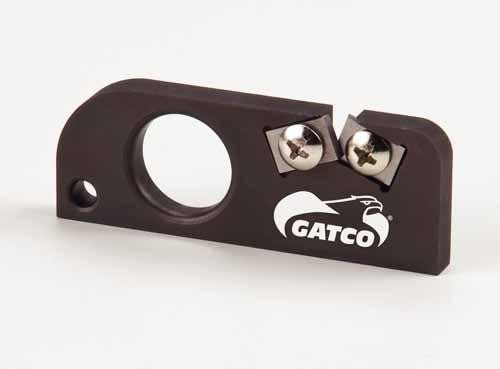
KEEPING your knife sharp entails more than knowing how to sharpen it. If you maintain the knife’s edge on a regular basis, it will eliminate having to re-establish the edge each time the knife goes dull.
Maintaining the edge is easy. The hard part is getting in the habit of doing it. However, once you get tired of re-establishing the edge every time your knife goes dull, you will appreciate how important the habit is.
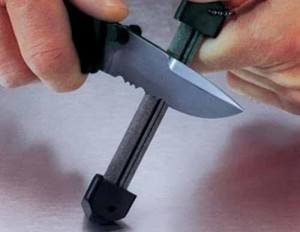
First, get one of the easy to use pull-through or similarly easy to use sharpeners and store it by wherever you put your knife at the end of the day. When you go to put your knife up, simply grab the sharpener and pull the blade edge through it five or six times. This should be enough to fine tune the edge and get it back to a working sharpness for the following day.
Such sharpeners as the GATCO TRI-SEPS are ideal for the job because they are easy to use and store or even carry. The TRI-SEPS, for instance, includes a chain for keyring carry. It sharpens both plain and serrated edges.
For more information on the GATCO TRI-SEPS—ideal for end-of-day edge touch-ups—click here.
Act Now To Fight Ivory Ban
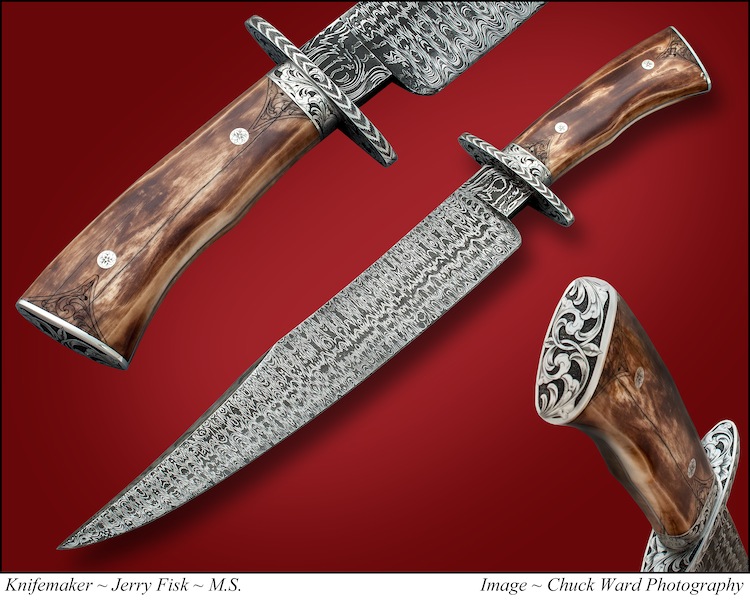
If you think it’s too late for you to do anything about the oppressive ivory ban being implemented by federal officials, think again.
You can act now to have your voice heard by congressional and federal officials to stop more language adverse to those who buy, sell and collect ivory knives being added to the federal government’s “use after import” regulations.
One of the issues that apparently remains unsettled in the official language of the new ban is the exact wording concerning the legality of the sale of ivory, including ivory knives, across state lines. The updated regulations are due to be completed and released sometime in April, sources said.
As a result, you have time to contact your representative and other federal officials now before it’s too late. For more on the specifics of the ban, frequently asked questions and more, visit http://www.fws.gov/
To determine the name and contact information for your Congressional representative, visit http://www.house.gov/representatives/find/
In addition, make your views known to Sally Jewell, Secretary of the Interior, and Daniel M. Ashe, director of U.S. Fish and Wildlife. The mailing address for the Department of the Interior is 1849 C St., NW, Washington, DC 20240. It can be reached by phone at 202-208-3100 or e-mail at [email protected]. The mailing address for U.S. Fish and Wildlife is 4401 N. Fairfax Dr., Arlington, VA 22203.
We recommend hitting all of them on all fronts—by phone, e-mail and snail mail. They say a written letter carries more weight, so it may be time to break out the pen and paper and attack this issue old-school style.
For the latest knives, knife news, trends and more, stay tuned to www.blademag.com.
Which Knife Collaborations Would You Arrange?
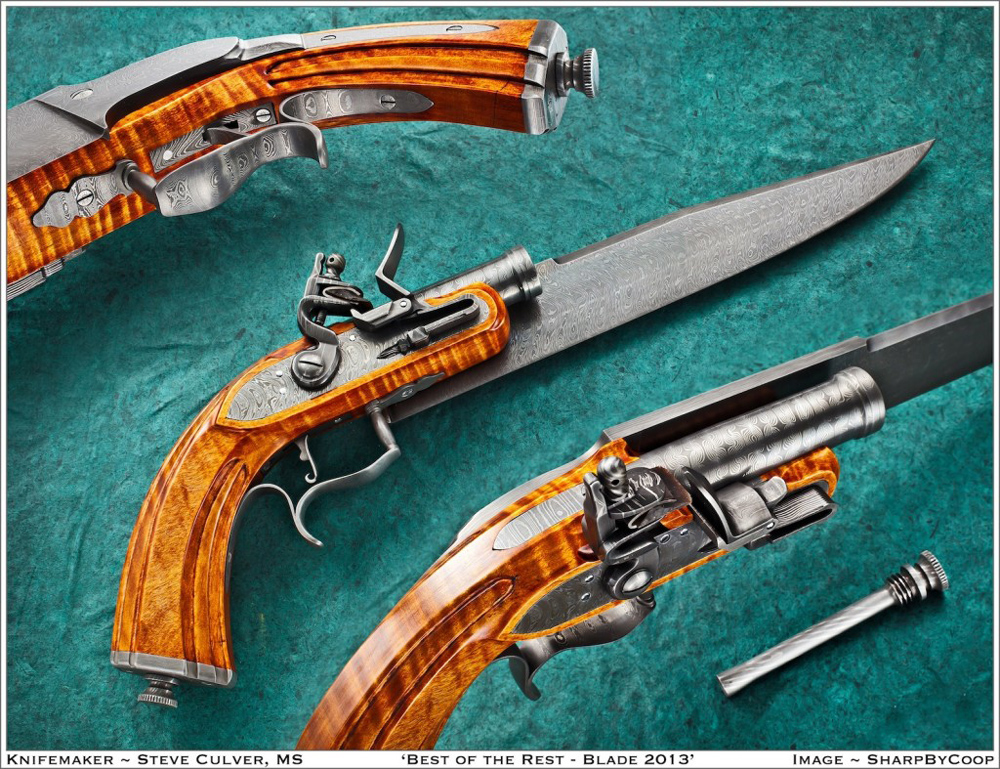
Which knife collaborations would you like to see between today’s custom knifemakers and knife and/or gun companies?
There have been many great knife collaborations over the years—from such early ones as those between Smith & Wesson Knives and Blackie Collins and Bob Loveless and Schrade, to those between Spyderco and Bob Terzuola, CRKT and Kit Carson, Benchmade and Mel Pardue and many more—all of which got us to thinking: What great collaborations that never happened would you like to have seen?
Or, perhaps better yet, which ones would you like to see among today’s companies and knifemakers?
Here are a few, first of the former:
•Bob Loveless and Marble’s: Hey, the man behind the dropped hunter and one of the leading hunting knife companies of a bygone era. Seems like a natural collaboration;
•Bill Moran and Busse Combat Knife Co.: Moran made those big, sweeping fixed blades and Busse does, too;
•Bob Lum and Cold Steel: OK, so it probably never would have happened, but the possibilities for a special American tanto collaboration would have been intriguing.
And now for the latter:
•Wolfgang Loerchner and William Henry Knives: Two great makers of fine knives would make an awesome pairing in anybody’s knife book;
•Joe Keeslar and Spartan Blades: Joe’s a retired Marine and Mark Carey and Curtis Iovito of Spartan Blades are retired Special Forces. I bet they could put their heads together and come up with a really cool combat knife collaboration;
•Steve Culver and Browning: Culver’s cut ‘n shoot is a tour de force of the genre and a collaboration with Browning would be a real breakthrough in terms of a special limited-edition crossover between the knife and gun industries. Browning has experience working with the knife industry—for example, Russ Kommer and Jim Crowell are two makers who have collaborated with Browning on knife projects—so Browning would not have to break new ground.
How about it? What knife collaborations would you like to see/have seen?
Use A Hunting Knife Designed by Russ Kommer

A hunting knife is great—and when you use a hunting knife designed by an Alaskan hunting guide who also happens to be a knifemaker, that’s even better.

The Alaskan Skinner from Timberline is a hunting knife designed by knifemaker Russ Kommer, who also is a long-time Alaskan hunting guide. Kommer spent most of his youth in the Minnesota north woods hunting, trapping and fishing. Idaho is where he got his start as a big-game guide in the Selway-Bitterroot Mountains. He took his passion for hunting to Alaska in 1984—which is where he also discovered his love of knives, particularly the hunting knife design, after dressing big game. He learned to design the most functional and comfortable hunting knife he could and started making versions of them in 1997.
Kommer’s custom knives include the hunting knife/skinner, camp knives, folders, “unique” fillet knives, fighters, boot knives, bowies, hatchets and tactical knives. In addition to Timberline, Kommer also has designed knives for CRKT, including the Signature line of hunting knife, and the Escalade and Extreme Mountain hunting knife models for Browning
The Alaskan Skinner features what is called an upswept blade with a hollow grind—great for high-performance field dressing, skinning and other chores associated with big game. Besides that, it will also help you prepare your meals in camp and do the other cutting chores that need doing outdoors.
The blade steel is a 440 stainless that fights corrosion and is relatively easy to sharpen compared to steels such as CPM S30V and others. The handle is a soft Zytel rubber with a palm swell to fill your hand, and finger grooves and a bird’s beak pommel to lock your hand in for any number of cutting tasks, from light slicing to heavy-duty cutting. Overall length: 9.625 inches. A black ballistic nylon sheath with belt loop is both handsome, durable and secure. Weight (including the sheath): 13.5 ounces.
Click here for more about this Russ Kommer hunting knife.
First Family of Swedish Steel
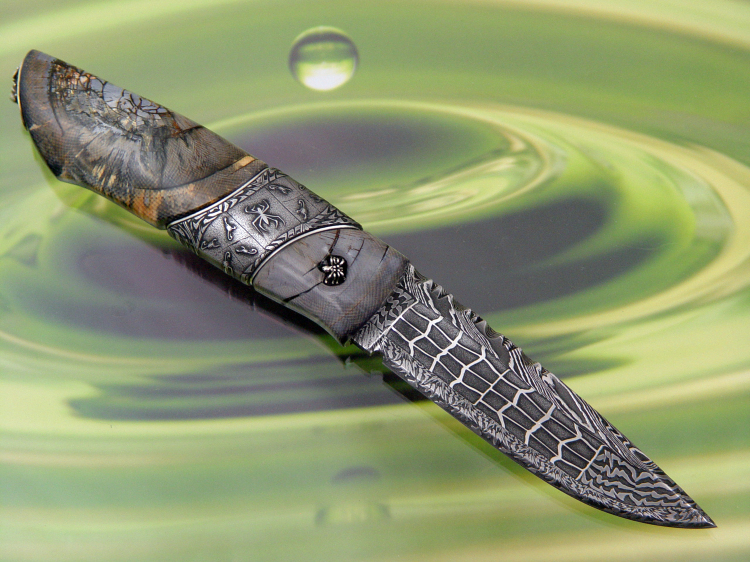
“Mammoth Spider” by Thomas Lofgren features a blade of a net-pattern mosaic damascus forged by Mattias Styrefors, a mammoth ivory and mosaic damascus handle, and sterling silver detail. (Lofgren photo)
Thomas and Claes Lofgren
Among the noteworthy Swedish knifemakers who have burst on the international cutlery scene in recent years, one of the names that stands out is Lofgren—father Thomas and son Claes.
It is the family’s favorite sport, fishing, which brought Thomas to handmade cutlery. An annual family rite is to spend 10 days fishing—and fishing only—in the Lofoten Islands of Northern Norway. The waters are fish rich and it is not uncommon to pull out one in the 18-to-24 pound range. When you catch them you have to fillet them, which calls for a pretty good knife. Hence, Thomas began making such knives about 20 years ago. The first one cut reasonably well but was so ugly he felt obligated to make another one, and he has not quit making them since. He learned a few things from a book on knifemaking but the real trigger for improvement was an encounter with Roland Stromberg, an experienced maker. Roland taught him how to sew a nice sheath and from there showed him how to improve the general quality of his work.
Having a technical background, Claes started getting interested in the craft in 2000, which made knifemaking just that much more important to Thomas. Since then there have been many elements of progress, emulation and sharing between father and son in the knife field. Now they are both part-time makers. Claes also works for an industrial company, and Thomas was instrumental in coordinating the 2005 and 2008 Sävsjö International Knife Expo. Thomas also found time recently to write the book, Making a Sheath for a Nordic Style Knife. It includes 150 of his own photos and sold 2,600 copies in its Swedish version, was translated into French and is now being published in German and Russian. Meanwhile, He exhibits at many shows in Sweden, other European cities (Paris, Helsinki, Solingen, Nontron), and in the USA.
His knife motto is “What stops growing will soon be dead.” Consequently, Thomas is always trying to improve, learning new techniques—Claes’s contributions are important in this regard—looking for new materials, and experimenting with fresh combinations of shapes and colors. “I like challenges, to walk on thin ice, even if I am not a very good swimmer,” he quipped.
All his knives are distinctive. Even on models of similar design, he introduces many different decorations of handle and sheath, and combinations of colors and materials. In the past few years he turned toward even more high-quality materials. He is using less wood and more mammoth and walrus ivory, hippopotamus or warthog tooth, giraffe bone, etc. If he uses wood, it is often stabilized and colored. Once in a while he will embellish his knives with gold and silver, or a small precious or semi-precious stone. He prefers mosaic damascus for his blades, especially that of Conny Persson or Johan Gustafsson, or sophisticated damascus by Mattias Styrefors and André Andersson. His knives have won a number of awards in judging competitions at Swedish and American knife shows.
LIKE FATHER …
Claes’s background includes welding, most notably operating a robotic welding machine for three years. As the company he worked for expanded, a part-time position for supervising the planning of materials supply was created. Claes applied for the post and got it.
For years he knew his father made knives, but Claes was not interested. However, in 2001 he watched his father and Johan Gustafsson board an airliner for the Knife Expo near Los Angeles (Pasadena), and “felt envious when Dad took off.” Wanting to experience the USA and California—and, of course, “California girls”—Claes saw making knives as one way to pay for the trip. His knowledge of metalworking and materials, plus the teaching of the basics by his father, resulted in very quick progress. Five months after making his first knife alone, he entered it in a judging competition at the Ludvika Show in Sweden and won in his chosen category. It was an enormous boost. By February 2002, he already had enough pieces ready to accompany his father to the Knife Expo. Since then it has become a sort of tradition for father and son to attend the Knife Expo and Ludvika Knife Week, as well as several other European shows.
Claes’s knives share several points of similarity with his father’s. Both makers prefer mammoth bark ivory (the “bark” is the outside crust of the tusk), the same steel suppliers, quality sheaths in the Nordic style, and the same way of naming knife models. Nonetheless, not all the similarities are the result of Thomas’s influence. It is often Claes’s ideas and imagination that inspire his father.
There are also some differences between the two. “Thomas’s knives are well made and imaginative, but with a more traditional approach. He has a feel for elegant and functional knives,” Samuel Karlsson stated. “Claes’s knives are more daring; his designs are more adventurous and extreme.”
Being younger and with more of a technical background, Claes probably experiments more than Thomas. “The worst thing that can happen is that it goes wrong and I have to start all over again,” the younger Lofgren observed. “It can cost some material but I think it’s worth a try. I find it exciting to cross the line to find new approaches.”
I would be remiss if I did not mention that Anna, Claes’s younger sister, also is a very good maker and has won prizes in judging competitions at Swedish knife shows. For the moment her knifemaking career is on hold as she works with her partner on restoring a farm they bought and caring for a 2-year-old boy. Meanwhile, Claes’s partner, Monika Bengtsson, also is making her first knives. “I think that I can retire now, before they all become too good for me!” Thomas laughed. “The only person not making knives in the family is my wife, Ann-Charlotte. But I can tell you that she bought two small blades …”
Father and son makers are not uncommon, and father and daughter are less frequent. But if you add son, daughter, partner of the son and maybe one of these days the mother, a real first family of Swedish steel is in the making.—by Francis Anglade
Thomas and Claes Lofgren
+4670 834 9229 (Claes)
+46381 135 73 and +4670 69 77 405 (Thomas)
Specialties: Both make one-of-a-kind knives in similar styles and materials
Blade Steels: Mosaic damascus forged by Conny Persson, Johan Gustafsson, Joe Olson and Henry Hilden, and damascus forged by Mattias Styrefors and André Andersson
Handle Materials: Mammoth (including bark) and walrus ivory, hippo and warthog tusk, giraffe bone and woods (the latter often stabilized and colored)
Embellishment: Occasionally gold and silver, and precious and semi-precious stone inlays; some engraving by Jonny Walker Nilsson
Sheaths: Nordic style
Author! Author!: Thomas wrote the book, Making a Sheath for a Nordic Style Knife, which sold 2,600 copies in the Swedish version and has been translated into French, German and Russian
 If you’re looking to make your own mosiac damascus, look no further than the Forging Mosaic Damascus Knives download from BLADE. You’ll learn the foundation of this fascinating process to be able to build your own great designs.
26th Annual Southern California Blades Knife Expo 2011
e-mail Helen Nauert at [email protected] for more details
Must Read Articles

Knifemaking 101 – Read This Before You Make a Knife
by Wayne Goddard
My experience has taught me that there's nothing like digging in and getting started. I've often said the hardest part of the...




