

Don’t overlook small tactical fixed blades for everyday carry.
When most blade fans talk everyday carry (EDC) knives, they usually mean folders. The two main EDC advantages of folding knives are they are convenient to carry and, except for that pesky pocket clip, easy to conceal. Of course, while many overlook the clip, others know it indicates you are carrying a knife.
Folders are designed primarily for smaller everyday chores—opening a box, peeling fruit and so on. This is especially true of slipjoints, which rely on you cutting away from yourself—which you should always do with all knives—and a half-stop as a safety device. Granted, when slipjoints were popularized long ago, lockback, linerlock and framelock folders were unavailable. The problem with both slipjoints and lockbacks is most take two hands to open and close, which, if you are trying to cut something you simultaneously must hold, can be inconvenient at the very least.
The late 20th and early 21st centuries saw a boom in the commercial availability of manual folders that could be opened and closed with one hand. Utilizing the flipper opener and the roller bearing system made the blade deploy quickly and smoothly, often even quicker than an automatic. With the perfection of linerlocks and framelocks, unlocking and closing the manual folder with one hand was no longer a problem.
Even with these technical improvements, the folding knife still has its limitations. A small blade can do only so much before it bends or, in some cases, breaks. Some tactical folder makers tried to address this issue by making folders with 5-inch blades of 1/4-inch stock. This was done primarily for cosmetic reasons without addressing the folder’s primary weakness—the pivot. The very nature of the pivot means it must allow some side-to-side movement of the blade, no matter how slight. If the folder is used for an unintended purpose or put under undue force, the blade can be moved off-center.
On top of that, folding knives require more regular maintenance than fixed blades. Locking folders with back straps and slipjoints with backsprings collect dirt, lint, etc., during daily use and must be cleaned. What’s more, using a folding knife beyond its capabilities and failing to perform regular maintenance can affect its opening and closing ability. Lastly, a folder cannot do anything until you first deploy the blade.
Fixed-Blade Pros
Fixed blades, on the other hand, offer several advantages. As already suggested, larger fixed blades can do tasks that smaller blades either can’t perform or do so with difficulty.
One of the fixed blade’s most significant advantages is full-tang construction, providing added strength and durability. A full-tang fixed blade especially is better suited for heavy cutting and repeated hard use, and safer for use with a heavy load.
A fixed blade also has a superior mechanical advantage. Unlike the folding knife, there is zero chance of mechanical failure under stress. Locks and pivots can fail, especially when using the knife for tasks for which it is not intended.
Another advantage is the style and size of the blade. Fixed blades can feature longer and thicker blades that will perform better under the rigors of hard use.
A fixed blade typically will have better handle ergonomics. Its handle is usually designed for prolonged use, featuring a more comfortable grip that also aids in balance and is ready for immediate deployment. While many folders can be opened with one hand, not so slipjoints. If your hands are cold, wet, injured or gloved it can present a problem as many, if not all, slipjoints require two hands to deploy the blade or blades. On the other hand, with the correct sheath combination, a fixed blade can be rapidly deployed under almost any circumstance.
Sheath Concerns
Top material options for EDC fixed-blade sheaths are leather and Kydex®. Kydex gained popularity because it provides two main advantages over leather.
First, most makers can build at least a rudimentary kydex sheath. Leather sheaths are more of a challenge. Second, Kydex does not hold moisture and does not require tannic acid, which is used in the processing of leather. This is very important for EDC. Tannic acid in the leather can cause carbon steel to discolor. Leather, once wet, can shrink and/or deform, allowing the blade to accidentally cut or poke through it.
Conversely, Kydex does not hold moisture and does not require tannic acid. Kydex can be molded to fit the blade and, over time, will not deform, providing a safer carry option. Finally, the clip attachment on most Kydex sheaths can be adjusted to wear in either a vertical or horizontal position.
They Have The Edge
I’m not suggesting that folders do not have advantages as EDC knives; they do. They are usually more comfortable and concealable to carry than fixed blades. They are more socially acceptable and usually have limited legal restrictions. They can provide versatility for light tasks such as opening letters, boxes, cutting cord, etc.
It is in fact the EDC folders’ size that is its biggest disadvantage. The smaller blades and less ergonomic handles limit the number of tasks folding knives can perform. Also, their moving parts provide a mechanical disadvantage when compared to EDC fixed blades.
The majority of this story’s featured tactical fixed EDCs have a 4-inch or shorter blade. Many tactical EDC folders also have 3.75-to-4-inch blades. When open, they are about the same length as the featured fixed blades.
With perhaps the exceptions of concealability and some legal restrictions, fixed blades have the edge. Depending on what you are using it for, you may want to consider a knife that has the mechanical advantage, requires less maintenance, can be easier to deploy in difficult situations or environments, and is more comfortable in the hand: fixed blades, the other EDC!
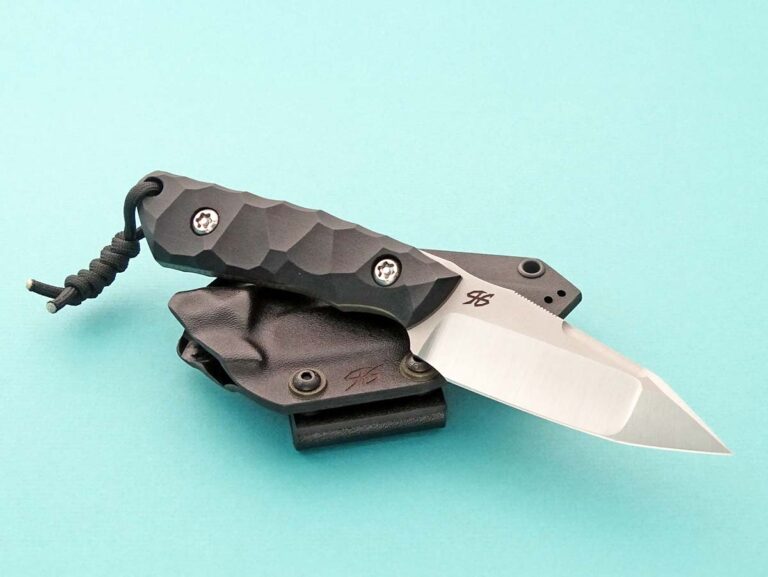
Rebel Specs
Knife type: Small tactical EDC fixed blade
Blade Length: 4.25”
Blade Steel: Elmax stainless
Blade Finish: Two-tone satin and bead blast
Handle Material: Textured black Micarta® w/OD green Micarta liners
Overall Length: 9”
Sheath: Custom-built by the maker; Kydex®
Author’s Comments: “Excellent all-around knife … the tip is ground to give the knife extra penetration … the texture of the black Micarta on the handle gives the user additional traction … primarily designed for belt wear, the clip can be configured for additional carry options … serrations along the top of the blade enhance the knife’s ability to handle small chores … a great knife that provides lots of user options.”
Maker’s price: $430
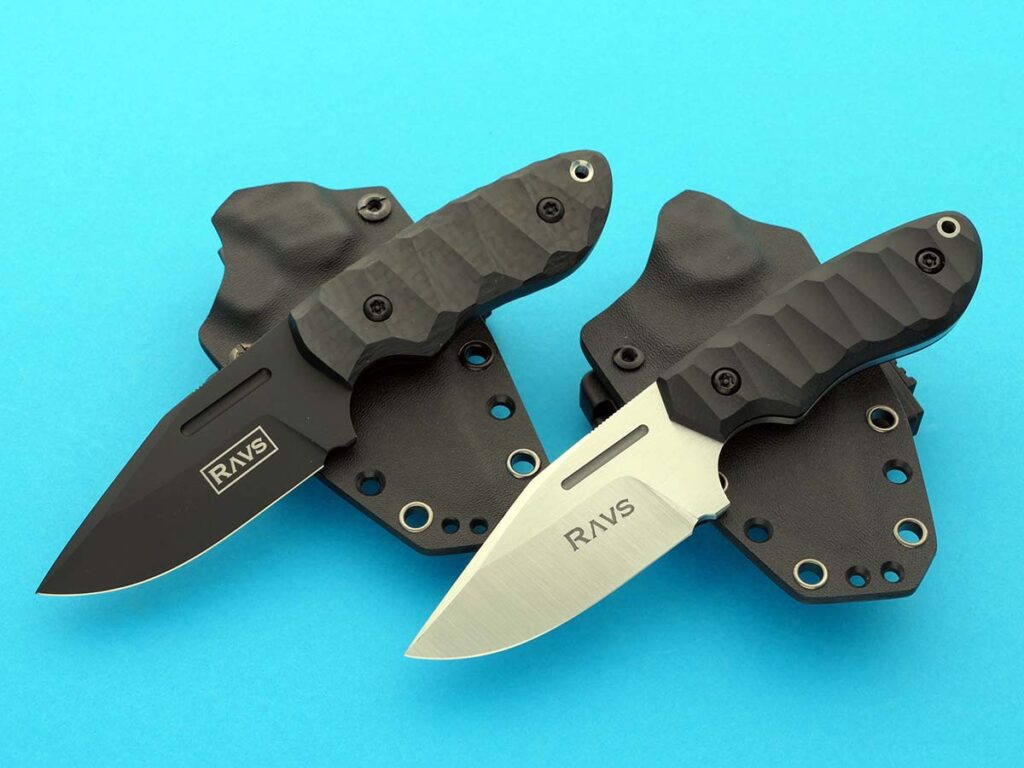
Ridgeline Specs
Knife type: Small tactical EDC fixed blade
Blade Length: 4”
Overall Length: 8.75”
Blade Steel: Becut stainless
Blade Finish: Satin
Handle Material: Black G-10
Sheath: Custom-built by the maker; Kydex®
Author’s Comments: “Double-hollow-ground blade with a fuller for added strength … full-tang construction … sculpted handle material for enhanced ergonomics … stainless-steel-tube-lined thong hole.”
Maker’s Price: $350 each
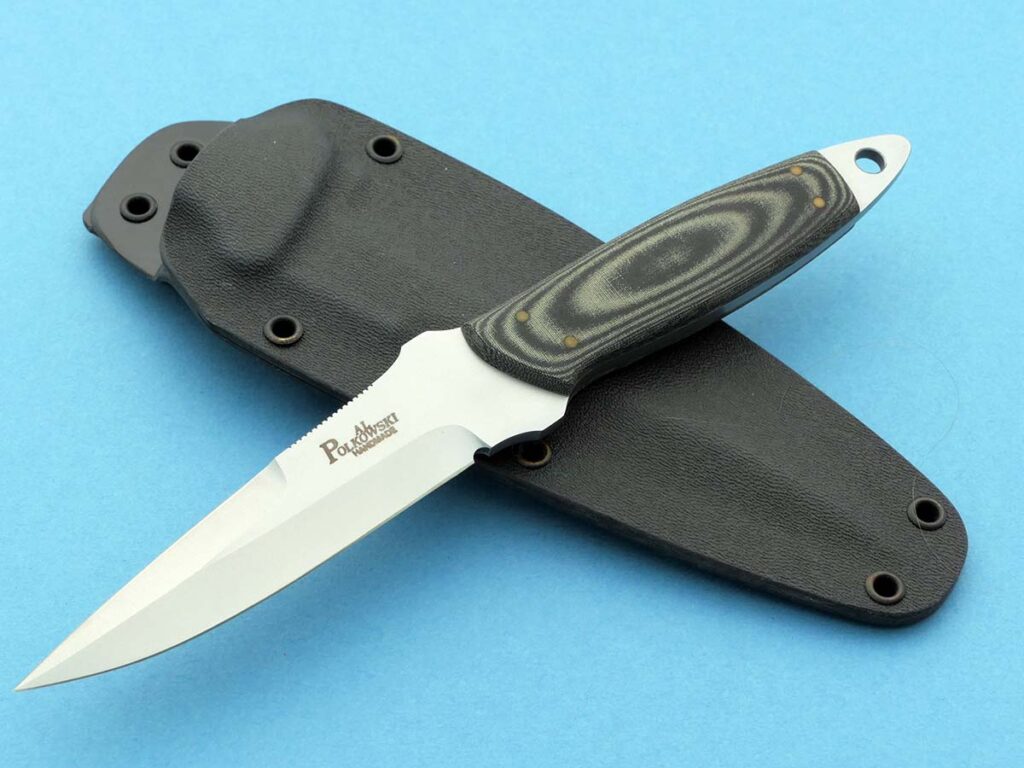
Boot Fighter Specs
Knife type: Small tactical EDC fixed blade
Blade Length: 4”
Blade Steel: 154CM stainless
Blade Finish: Bead blast
Handle Material: Black and green G-10
Overall Length: 8.25”
Sheath: Custom-built by the maker; Kydex®
Author’s Comments: “Great little back-up knife … it features a double-hollow-ground double edge with an extended tang that features a thong hole … quick and light in the hand.”
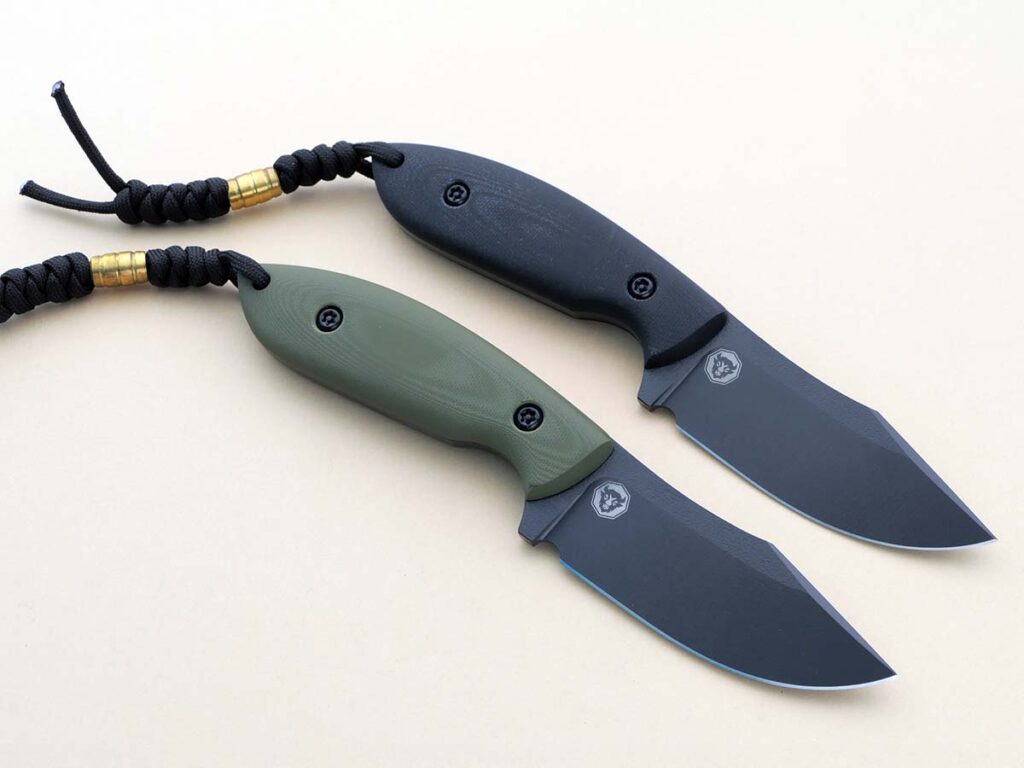
Trailhead Specs
Knife type: Small tactical EDC fixed blade
Blade Length: 3.5”
Blade Steel: Sleipner stainless
Blade Finish: Black Cerakote®
Handle Material: OD green G-10
Overall Length: 8.25”
Sheath: Custom-built by the maker; Kydex®
Author’s Comments: “Flat-ground, upswept utility-style blade … full-tang construction, excellent handle ergonomics … small knife built for hard work … stainless-steel-tube-lined thong hole … perfect knife for camping, a hike and everyday carry.”
Maker’s Price: $280 each
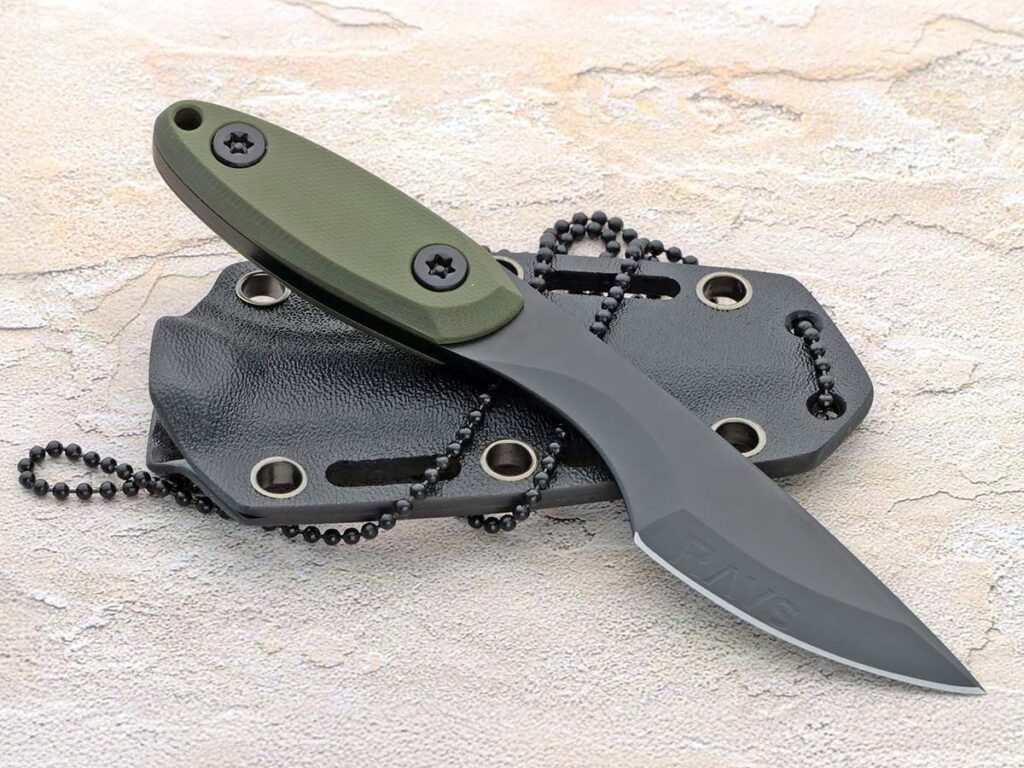
Street Scalpel Specs
Pattern: Tactical fixed-blade neck knife
Blade Length: 2”
Blade Material: 80CrV2 carbon steel
Blade Finish: Black Cerakote®
Handle Material: OD green G-10
Overall Length: 5.9”
Sheath: Custom-made, multi-position in Kydex® by the maker w/ball-bearing breakaway chain
Author’s Comments: “Perfect for utility or self-defense … the attachment holes on the sheath allow the knife to be carried however you like.”
Maker’s Price: $280
More Knife Reviews:
- Sharps Bros. Meanstreak Review: Keen, Mean Cutting Machine
- Relentless Knives Curved Fillet Knife Review
- Cold Steel Finn Bear Review: Light, Sharp And Up To Snuff
- Spartan Blades Clandestina Review: 2024 Blade Knife of the Year
 NEXT STEP: Download Your Free KNIFE GUIDE Issue of BLADE Magazine
BLADE’s annual Knife Guide Issue features the newest knives and sharpeners, plus knife and axe reviews, knife sheaths, kit knives and a Knife Industry Directory.Get your FREE digital PDF instant download of the annual Knife Guide. No, really! We will email it to you right now when you subscribe to the BLADE email newsletter.






You spelled tactical wrong in the headline of this story