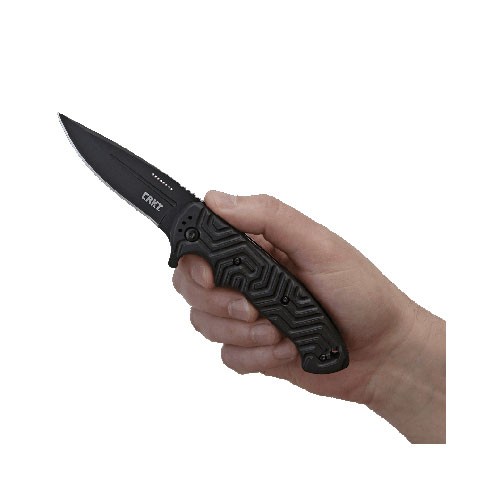
Benchmade Knife Company has announced that David Fee will be the new Vice President of Sales and Marketing. The position involves all sales and marketing activities for Benchmade at their headquarters in Oregon.
“We’re thrilled to have David join the Benchmade senior management team,” said Les de Asis, founder and CEO of Benchmade Knife Company, in a news release. “His background and success in the consumer product and automotive industries will help drive our sales, marketing and new products initiatives as we continue to grow and compete on a global scale.”
The Bob Dozier 10th anniversary 9-11 knife sporting a damascus blade that includes steel from the South Tower of the World Trade Center brought $1,525 in an auction that concluded earlier this week, with proceeds going to the New York Police and Fire Widow’s and Orphans Benefit Fund.
The bid for the winning knife—the folder was featured on page 50 in the December BLADE®—was submitted by retired New York City firefighter Keith Kaiser.
Forged by Daryl Meier, the knife’s blade includes a piece of South Tower steel and 1095 carbon steel. The pre-ban ivory handle boasts scrimshaw scenes by Sandra Brady. On one side is “We Remember 9-11-2011” commemorating the 10th anniversary, and the New York city skyline, including a shadow outline of the Twin Towers in place of the missing jet in a flyby jet formation, and a soldier saluting. On the flip side is a scene of firemen fighting the fires of the Twin Towers before they fell, an American flag, and the words, “Lest We Forget 9-11-2001.”
“There will never be enough to repay our debt for what [the first responders] paid,” Dozier noted. “All proceeds from the auction of this knife will go to help the families of the firefighters and policemen who lost their lives that day.”
Sometime in the early 1990s, a journalist—to the chagrin of the handful of other knifemakers also still working in Sheffield, England—described Stan Shaw as “The Last Little Mester,” and the title stuck until Stan’s passing in February. Stan made many fancy pocketknives but “Little Mester” was never simply a title that denoted mastership of a craft skill.
Historically, workers in the Sheffield cutlery industry were notoriously independent. As the industry moved from craft-based to industrialization, nearly all cutlers were on piece-work and would rent space in the workshop—a yard of bench or a “trough” for grinding. Work came from other workers, and each worker did a very specific task on the knife before it was passed to the next worker. The process was efficient because of the hyper-specialization of all of the workers in the chain. There was a complicated, ever-changing network of subcontracting, renting, supplying and rivalries, but no one learned all the processes to make a knife—there was no concept of sole-authorship.
In her thesis, Sally-Ann Taylor* states that the “differing opinions regarding the status of the little mester reflected the actual diversity in his possible position and role. Some felt that the title implied that his enterprise should involve him in a certain number of commercial risks and liabilities. Sometimes he was an actual workman himself, obtaining orders from larger factors, merchant or manufacturers, and then employing a few men to help him … sometimes even these workers would employ others beneath them, but usually only members of their own family—particularly women and children.” Hence, little mesters were small-scale flexible employers, recruiting workers to supplement their own labor as required.
In 1844, a commentator on the cutlery trades stated that “there are several modes of conducting the manufacture, but the factory system is not one of them … there is no large building, under a central authority, in which a piece of steel goes in one door and comes out at another converted into knives, scissors and razors. Nearly all the items of cutlery made at Sheffield travel about the town several times before they are finished.”**
HE KNEW at 14
Stan didn’t come from a cutlery background. He was born in 1926 in a small village outside Sheffield, and, after seeing a market stall of knives, decided at 14 that that was what he wanted to do. By chance, he walked into the prestigious company, Ibberson, and spoke to the owner, Billy Ibberson.
Pointing to a showcase displaying the firm’s best pocketknives, Stan said he’d like to learn how to make such knives. As Stan recalled, “Billy then fetched up one of the cutlers, Ted Osbourne—a little bloke about 5 feet or so tall—and asked, ‘Will you have him?” He said, ‘Yes.’ And I started on the Monday at an apprentice’s wage of 10 shillings a week.”
When Stan joined the firm, the old patterns of working had long gone; “little mesters” and “factors” had morphed into the more familiar patterns of factory working, with all the workers employed by the company and paid a wage. He was one of the last apprentices to be taken on and his curiosity about the entire process of making folding pocketknives was insatiable. As he moved through Ibberson and other companies over the years, he actively approached other workers to learn their processes as well as his own. It was this breadth of training that made him unique and was vital to him in later life.
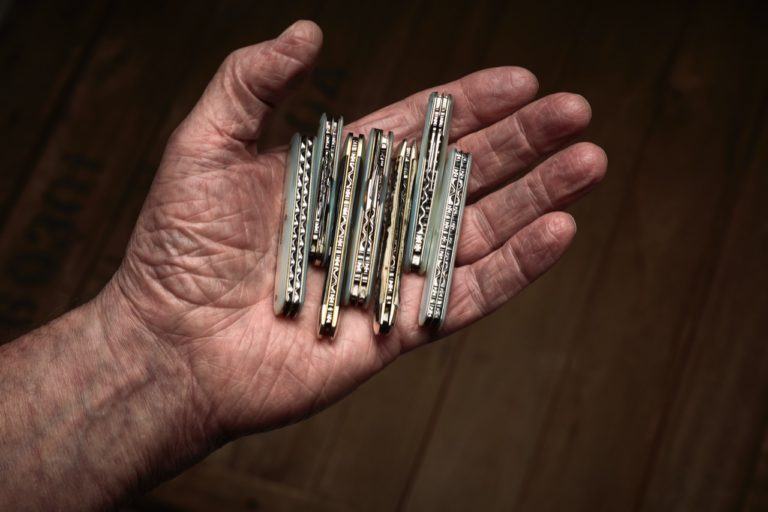
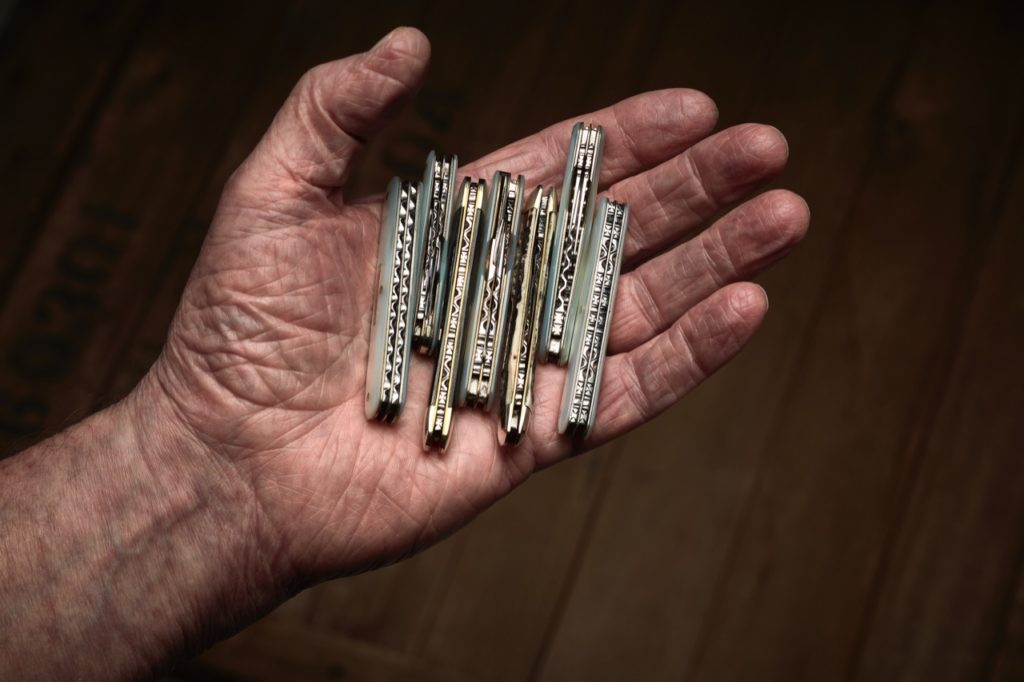
A sampling of Stan Shaw’s pocketknives with richly fileworked blade spines and backsprings. Look close and you can see the Maltese crosses for which Stan was so well known. (image by Carl Whitham, Sheffield)
THEIR PATHS CROSS
By the beginning of the 1980s, the contraction of the Sheffield cutlery industry was such that there were no more companies left to employ him, so he set-up his own workshop in Garden Street. It was there, 10 years later, that our paths crossed.
I had made a set of three folding knives for a college project and hadn’t been able to find anyone still making traditional Sheffield slip joints to ask for advice. A couple of years later, I heard Stan being interviewed on the radio and realized that I still desperately wanted to learn to make knives. I packed up my workshop in London and moved to Sheffield to persuade him, in person, to take me on as his apprentice. He welcomed me into his workshop but said that he was nearly 70 and too old for an apprentice. Instead, he offered me his bucket of old, handforged blades and springs, told me to select a handful and “go and figure it out yourself because it’s not that hard.” He would always be there to help if I got stuck.
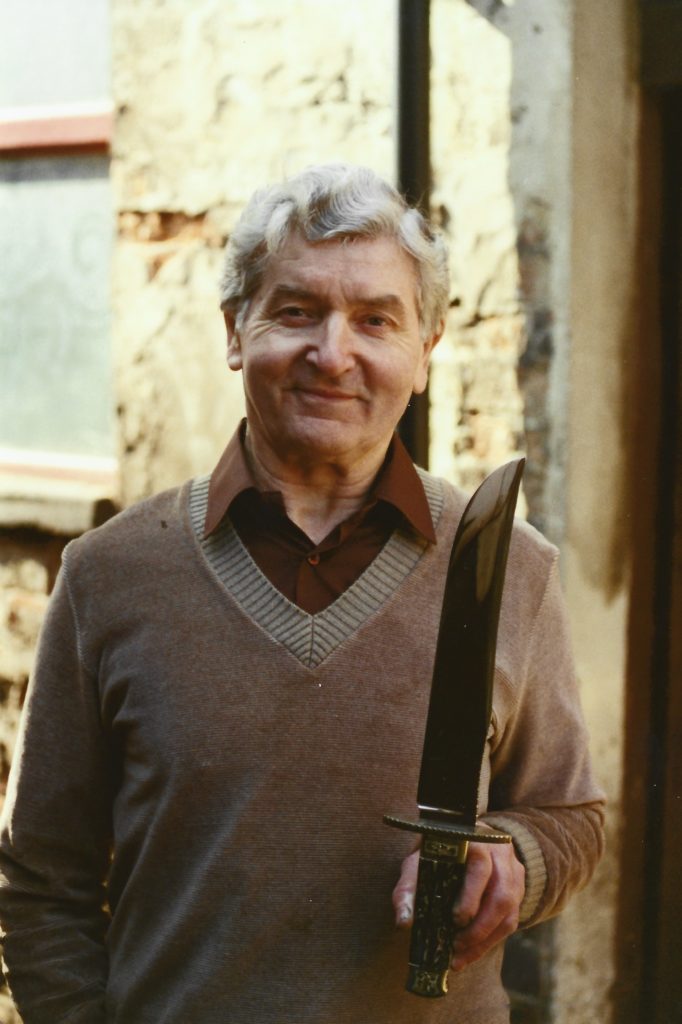
Stan Shaw as he appeared in the early 1990s. (Geoffrey Tweedale image)
A few years ago, when I was gently teasing him about still having a 10-year waiting list for his knives, he said, “I should have taken you on then, lass, you’d just about be useful to me now!” So, for all the times our paths crossed, for all the gentle encouragement and for completely changing my life’s path when I was 23 years old, thank you, Stan.
Stan was not a “little mester.” He was a master and was proud that he could make his knives from start to finish, a concept that would be completely alien to Sheffield knifemakers a hundred years ago.
Stan Shaw, whose career of making classic pocketknives spanned almost 80 years, passed in late February at the age of 94.
He started work for W.G. Ibberson in Sheffield, the old knifemaking capital of England, in 1941. Apprenticed to Fred and Ted Osborne, men Stan described as the two best cutlers in Sheffield, he eventually succeeded them in 1954 as the company’s top maker of pocketknives. Though the Sheffield knife industry was in rapid decline, he continued making knives, renting an old workshop in 1983 and becoming an independent cutler.
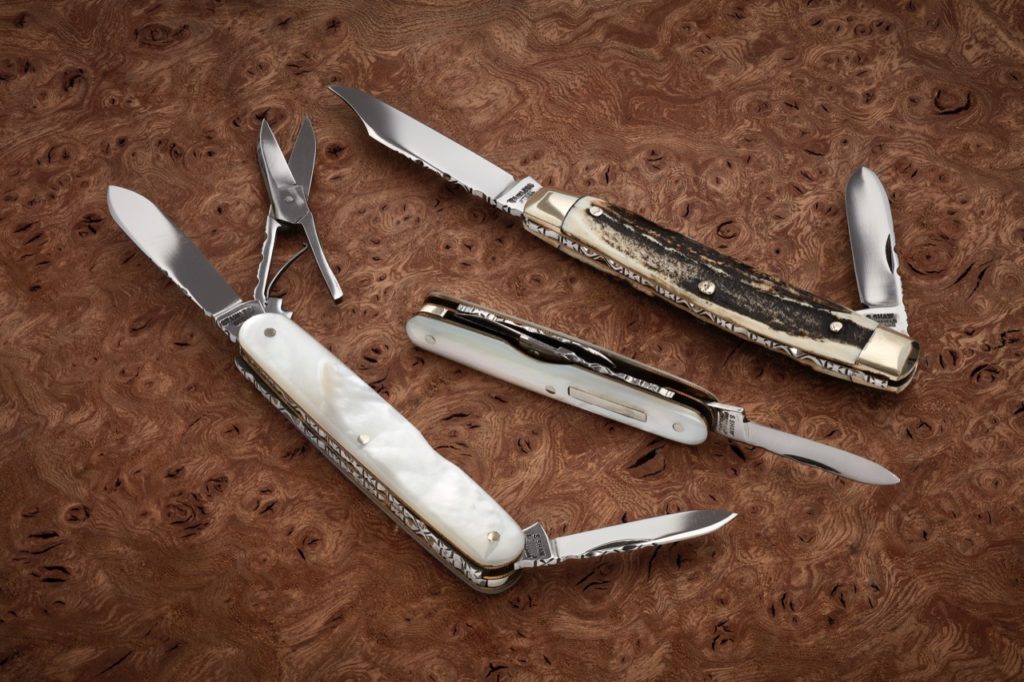
As Stan moved through Ibberson and other companies over the years, he actively approached other workers to learn their processes as well as his own. It was this breadth of training that made him unique and was vital to him in later life. (image by Carl Whitham, Sheffield)
As an independent he did it all in the making of his pocketknives, and he did it all quite well. As he said in “Stan Shaw: Little Mester of Sheffield” in the May 1994 BLADE: “I have to do everything now because there are no forgers, grinders, scissor-makers and so on left. My earlier experience with Ibberson’s has proved invaluable in that respect. All my knives are hafted, ground and assembled by me. It’s harder work but the satisfaction is greater. Scissors, files, punches, shields, shackles, handles, scales, bolsters—the list is endless—but each part is made by me on these wheels and dollies with only hacksaws, files and a few other traditional tools, such as my parser. The only job I don’t do is the occasional engraving I have done on the bolsters.”
His knives are testaments to the classic exhibition pieces, many with a host of blades and other tools and implements. In 2003 he became an honorary freeman of the Company Cutlers and in 2017 was awarded the British Empire Medal. As late as 2019, into his 90s, he continued to clock in bright and early in the mornings to make pocketknives at Kelham Island Museum. In the interim he served as a mentor to many makers, including award-winner Grace Horne, among others.—by BLADE® staff
In addition to pocketknives, the author is also well known for her award-winning custom scissors made in the original knifemaking center of the United Kingdom—Sheffield, England. (Eric Eggly/PointSeven image)
The Author, Grace Horne
Editor’s note: An award-winning knifemaker from Sheffield, England, the author currently makes traditional folders. For more information contact her at Dept. BL9, The Old Public Convenience, 469 Fulwood Rd., Sheffield, United Kingdom, S10 30A [email protected], gracehorn.co.uk. Also: Steven and Kylie Cocker, Instagram @steven_cocker_sheffield; Michael May www.michaelmayknives.com; and/or Michael and Ashley Harrison plus apprentice at A Wrights & Sons www.penknives-and-scissors.co.uk.
*Tradition and Change: The Sheffield Cutlery Trades 1870-1914; Sally-Ann Taylor
**The Penny Magazine Supplement, April 1844, p.168; Thomas Allen
Long-time knifemaker Earl Witsaman, perhaps best known for his award-winning miniature knives, has passed away after a long illness.
Earl worked out of Stow, Ohio, for many years, where he also made a wide variety of fixed-blade patterns, from Randall repros to D-guard bowies. He sold his first knife in 1974. He exhibited his knives at the BLADE Show for many years, including the early years of the show in Knoxville, Tennessee, with his wife Sue always at his side. Sue, in fact, collected miniature knives for many years and her display won awards at the BLADE Show, among others.
Earl was one of the nicest guys in the business and always had a kind word and a smile. The knife fraternity will miss him greatly.
For more on the latest knives, knife legislation, knifemaking instruction, knife trends, knifemakers, what knives to buy and where and much more, subscribe to BLADE Magazine, the World’s No. 1 Knife Publication.
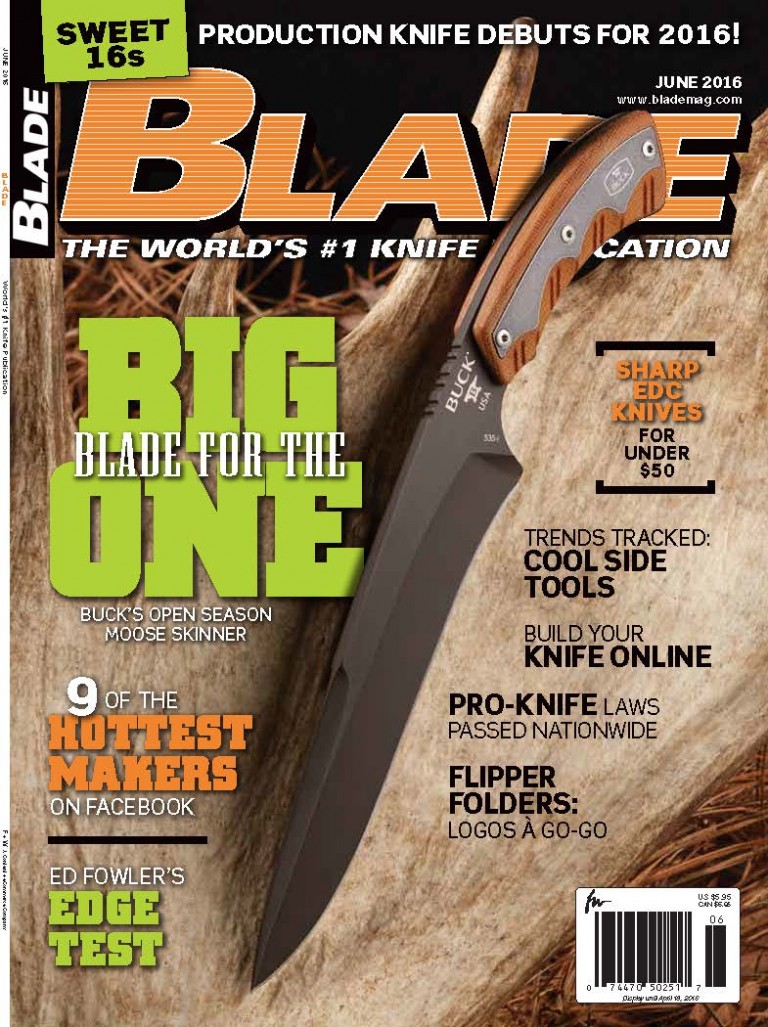
9 hottest Facebook makers help highlight the new BLADE®, on newsstands now!
Nine of the hottest Facebook makers, the latest factory knives for 2016, one of the hottest trends going in cool side tools and much more inundate the latest issue of BLADE® Magazine, on newsstands now!
With social media embracing the cutlery industry like James Bowie’s long-lost knife, Facebook is near or at the top of the list of those peopled by any and all who admire sharpened steel. As a result, BLADE used its BLADE Facebook page to poll its friends on who they think are the hottest custom Facebook knifemakers who post pictures of their work on Facebook. Check out the results of our Facebook poll in “9 of Facebook’s Hottest Makers.”
Along with the annual BLADE Show, the annual Shooting, Hunting, Outdoor Trade (SHOT) Show is the place many factory cutlery companies introduce their latest knives. Feast your eyes on some of the latest in tactical, folding, fixed, traditional, hunting, bushcraft, automatics, flippers and other state-of-the-art blades in our edged exclusive, “Sweet 16s: The New Factory Knives for 2016.”
According to ABS master smith Wally Hayes, a side tool is “an ancillary tool for cutting, opening, turning; something useful and fun.” Cool side tools are flooding the industry, from the Dual Action Dragon Opener by Suz and Bob Terzuola on the custom side to the MacV Tool from SOG Specialty Knives on the factory side and everything in-between. Pop a top, cut a rug or whatever hones your edge with one of the latest in these handy multi-tools outlined in “Side-Tool Cool.”
Also this issue: How to build your own knife online; custom logo’d flipper folder tabs; some of the best EDC knives for under $50; the latest in pro-knife laws passed nationwide; the conclusion of Jeffrey Dane’s historical six-part series, “Bowie Legend: Fact or Fable?”; Chad Mock’s “Texas Ulu”; and much more in the latest issue of BLADE.
The American Knife & Tool Institute (AKTI) presented its inaugural Integrity Award to BLADE and F+W for contributions to work against counterfeit knives. The presentation took place at the recent BLADE Show awards reception in Atlanta.
The BLADE Show is world’s largest annual knife event; F+W is a media and e-commerce company headquartered in New York City.
Rod Bremer, chair of AKTI’s Anti-Counterfeiting Committee and CEO of CRKT, along with John Sullivan, AKTI Vice President and W.R. Case’s Vice President of Marketing, made the first presentation of the evening to BLADE editor Steve Shackleford.
“AKTI was proud to partner with BLADE to develop a policy to fight the growing number of counterfeit knives damaging our industry,” said Rod Bremer. “The BLADE Show will now be a safer place to display products and for our customers to buy branded knives and tools with confidence they are genuine.”
“BLADE Magazine and F+W are most humbled for being recognized with the first AKTI Integrity Award. The fact that it salutes us for our integrity in fighting the worldwide problem of counterfeit knives and that it’s the inaugural presentation of the honor makes it doubly humbling. On behalf of both BLADE and F+W, I thank you,” said Steve Shackleford.
The BLADE Show policy on counterfeiting, trademark infringement and intellectual property can be seen on their website www.bladeshow.com and is incorporated into the rules for the 2017 show on June 2-4 at the Cobb Galleria Centre in Atlanta, Georgia.
The BLADE Show provides a forum for members of the knife community to gather and focus on knives. Designers, makers and manufacturers can showcase their efforts. Consumers, collectors and users can meet firsthand with those on the supply side and conduct hands-on comparison and evaluation of much of what comprises the knife. The protection of intellectual property, including trademarks and trade dress, is critical to preserving a dynamic and innovative knife industry. The BLADE Show is, accordingly, committed to an anti-piracy policy. Exhibitors who are found to be offering counterfeit or “pirated” knives may be subject to any or all of the following:
Removal by law enforcement of items proven to be counterfeit or pirated.
Legal action by the affected parties, including removal from the Show by law enforcement.
Banned from exhibiting at future BLADE shows.
The BLADE Show will work with law enforcement, private anti-piracy consultants retained by various exhibitors and all involved to arrive at the most equitable solution to issues involving counterfeit and pirated knives. All exhibitors are encouraged to exercise care to avoid counterfeit and pirated knives. Know the source and integrity of the knives you display.
The effects of counterfeits are devastating. In addition to the loss of sales revenue, manufacturers and custom knifemakers incur other costs such as increased customer service issues, legal fees, monitoring counterfeiters, and erosion of their brands.
AKTI works to provide information to the knife community on how to protect their intellectual property, brand and how to fight against counterfeits on the market.
New York Gov. Andrew Cuomo’s knife bill veto at the end of 2016 targets minorities and others who carry pocketknives.
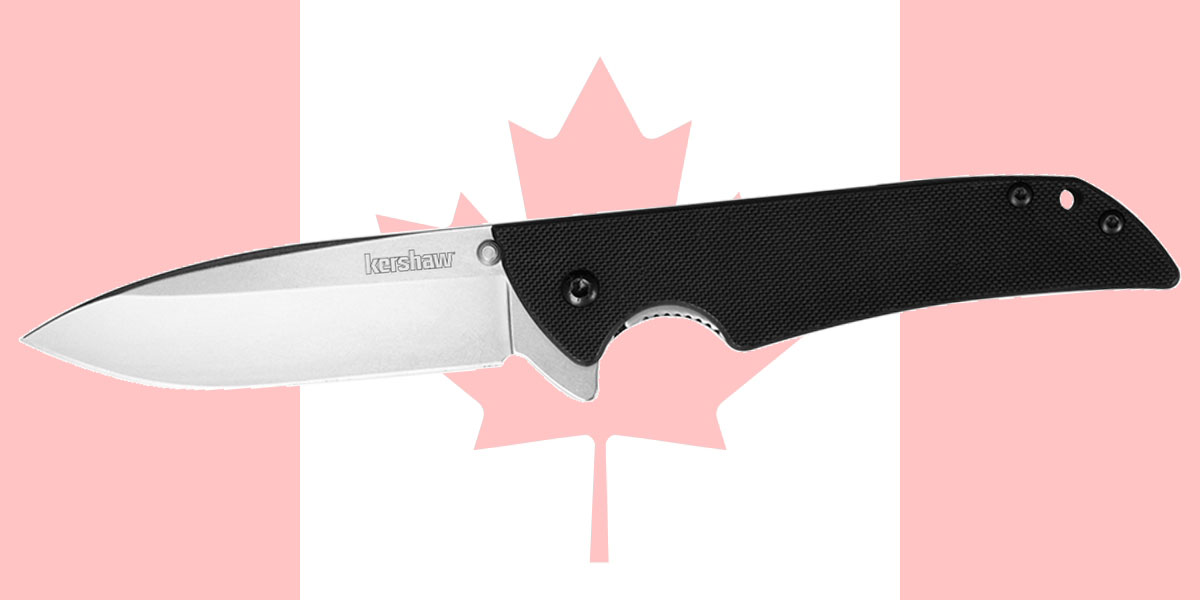
Flipper folders such as the CRKT Acquisition, pocketknives, linerlocks, framelocks and other folding knives remain subject to the definition of switchblade and/or gravity knife as a result of Gov. Andrew Cuomo’s veto of S. 6483-A.
According to Knife Rights, Cuomo vetoed the Gravity Knife and Switchblade Reform Bill, or S. 6483-A. If he had approved it, the bill would have excluded the vast majority of pocketknives, linerlock and framelock folders, flipper folders, assisted openers and other one-hand-opening folding knives from being designated as gravity knives or automatics (aka switchblades) under existing law. As a result of Cuomo’s knife bill veto, those who carry pocketknives, flipper folders, linerlocks and framelocks, and other one-hand-opening folders in New York remain subject to violating the state’s ban on automatics and gravity knives.
Since many minorities in New York City and others throughout the state carry pocketknives and folders and are the ones most likely to be targeted by the law that stays in place as a result of Cuomo’s knife bill veto, they remain subject to a fine and jail time if arrested for carrying said knives. As BLADE® field editor Ed Fowler notes in his story in the upcoming issue of the April BLADE, on newsstands Jan. 24, “The ultimate display of bureaucratic stupidity are the thousands of knife laws that serve no purpose other than to turn law-abiding citizens, usually minorities, into criminals in the name of public safety.”
According to the Knife Rights news release, Knife Rights will return when the New York legislature convenes this year to the job of fixing “the state’s Gravity Knife law to prevent these arrests and prosecutions. This bill passed with such large majorities in both houses of the legislature that an override of a veto is theoretically possible.”
As Knife Rights noted, Cuomo effectively thumbed his nose at a New York legislature that had overwhelmingly passed S. 6483-A, as well as at other New Yorkers, many of whom include his own constituents, who had supported the bill. In so doing, he joined the “Nexus of No” that includes New York City Mayor Bill de Blasio, New York Police Department Commissioner James O’Neill and District Attorney Cyrus Vance, Jr., in being virtually the only ones who oppose S. 6483-A.
The defeated bill would have added wording excluding knives with “a spring, detent or other mechanism designed to create a bias toward closure and that requires exertion applied to the blade by hand, wrist or arm to overcome the bias toward closure and open the knife” from the existing bill’s definition of switchblade. In other words, knives such as pocketknives, linerlocks and framelocks, assisted openers and others could not be defined as switchblades in New York if Cuomo had not vetoed S. 6483-A. Similar wording would have excluded pocketknives, etc., from the definition of gravity knife as well.



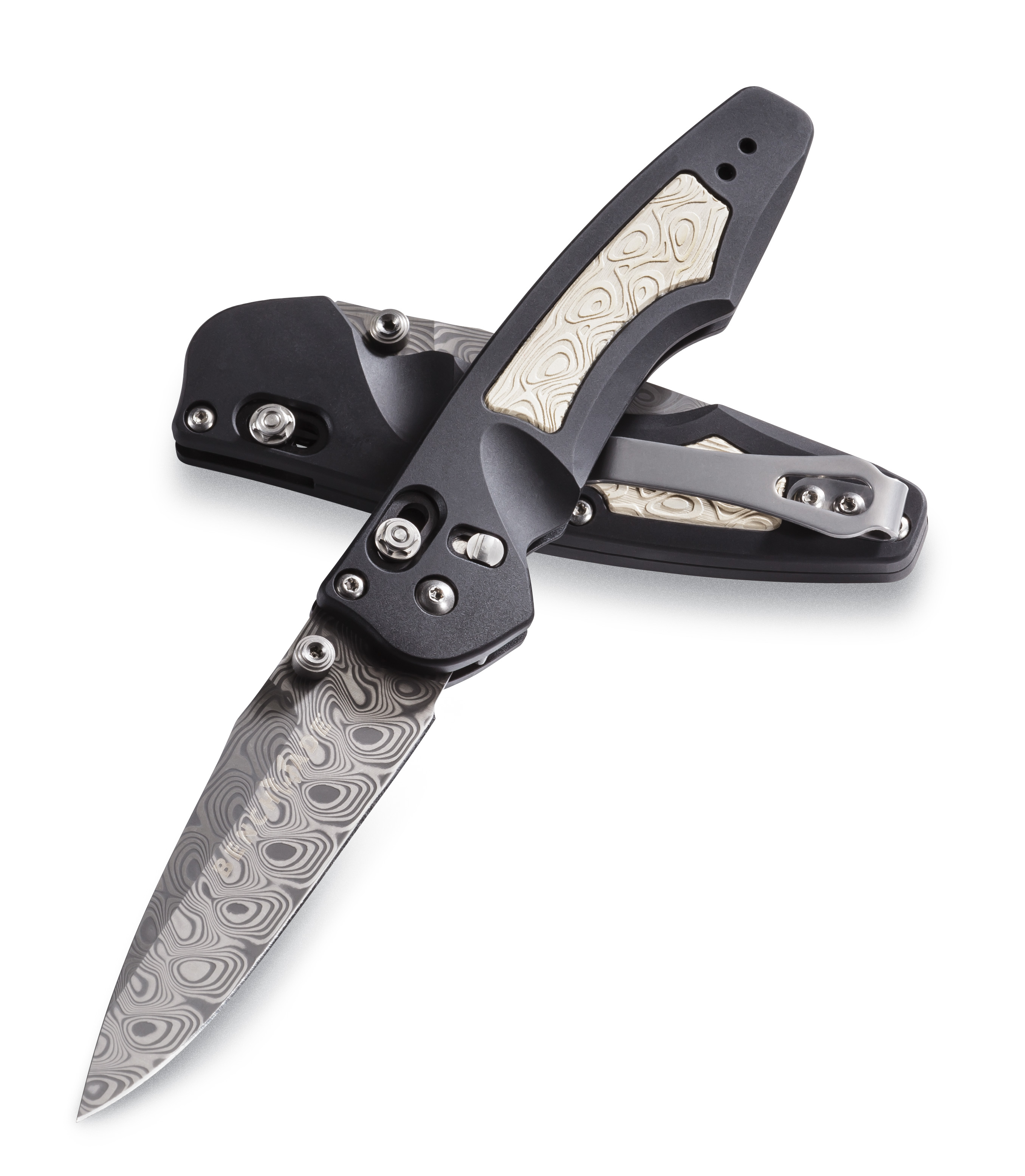
 Benchmade Knife Company has announced that David Fee will be the new Vice President of Sales and Marketing. The position involves all sales and marketing activities for Benchmade at their headquarters in Oregon.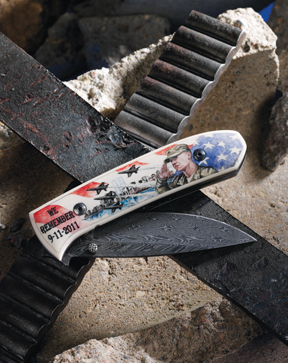


 From the