Wayne Goddard, Renowned Knifemaker and Writer, Passes Away

0
Wayne Goddard obituary
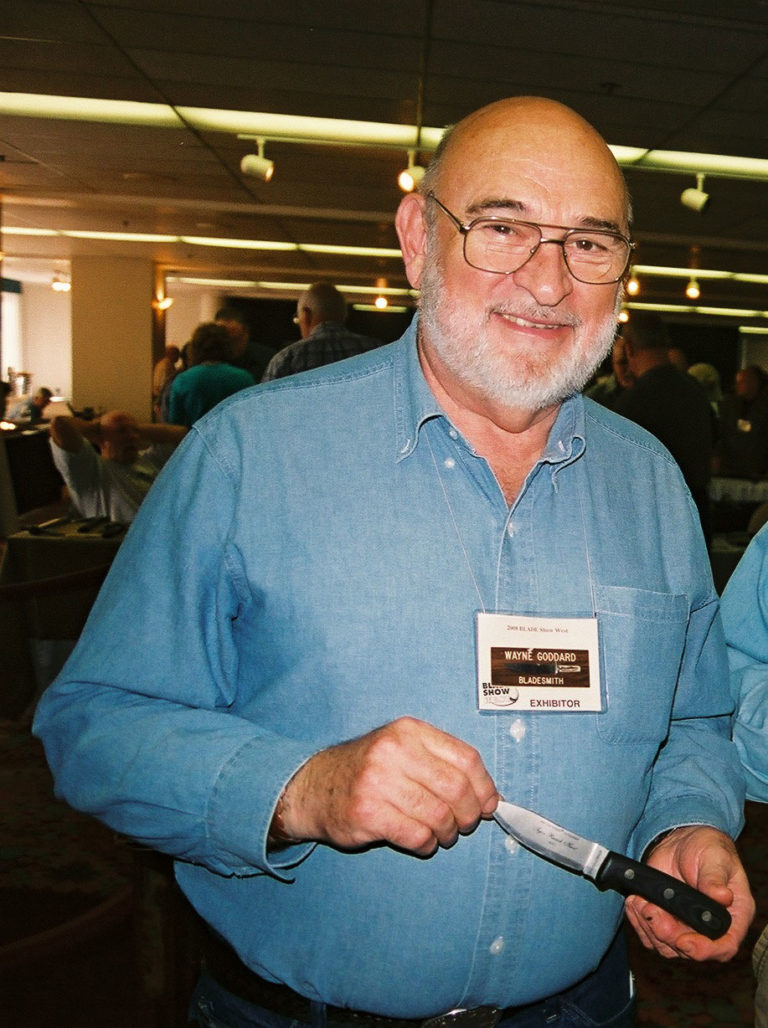
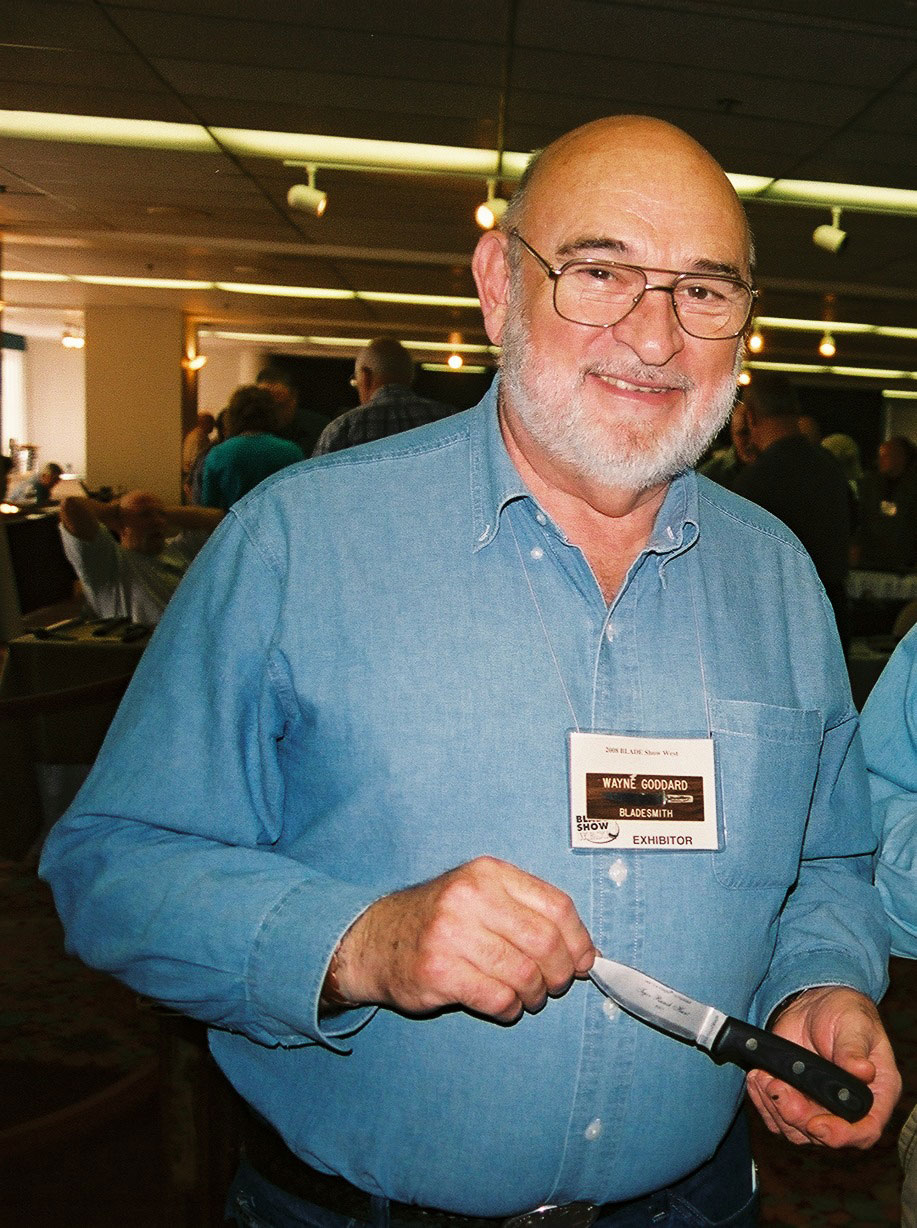
Wayne Goddard
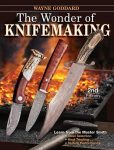
Goddard’s classic guide for new knifemakers is still popular and remains in print.

Wayne Goddard, BLADE Magazine Cutlery Hall-Of-Fame® member, ABS master smith and long-time BLADE® Magazine field editor, has passed away.

Goddard was widely respected and loved throughout the knife industry for his undying mentorship to bladesmiths and knifemakers everywhere. He was a prolific writer, and his Question & Answer column in BLADE Magazine was regularly one of the magazine’s most popular features in reader surveys, with Wayne also being picked as the most popular BLADE writer in those same reader surveys. On at least one occasion he was referred to as “The BLADE Answer Man.” He also wrote a column on knife steels for BLADE.

Wayne Goddard's "The Wonder of Knifemaking" is a knifemaking library essential.
 

His books $50 Knife Shop and The Wonder of Knifemaking remain popular.

A long-time member of the Knifemakers’ Guild, he designed knives for Spyderco and taught bladesmithing at locations throughout the USA. His sharpening seminars at both the BLADE Show and BLADE Show West were among the best attended of each show’s seminars for many years.

There will be more here on his passing and in BLADE Magazine as details emerge. May he rest in peace.

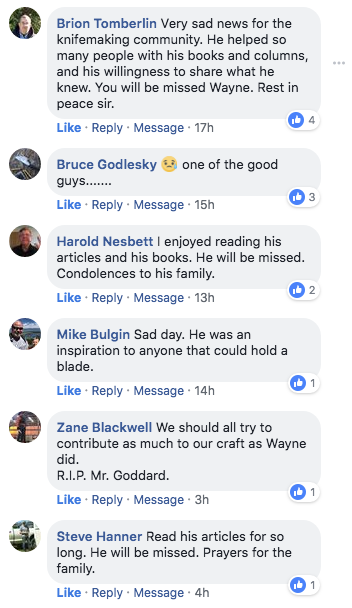
Knifemakers and Fans React

From BLADE‘s Facebook page:

Wayne Goddard knifemaker


Three Knifemakers Pass Away: Michael Holtschulte, Bernard Sparks and Ralph Turnbull

The knife community lost three dedicated contributors recently with the passing of knifemakers Michael Holtschulte, Bernard Sparks and Ralph Turnbull.

Ralph Turnbull

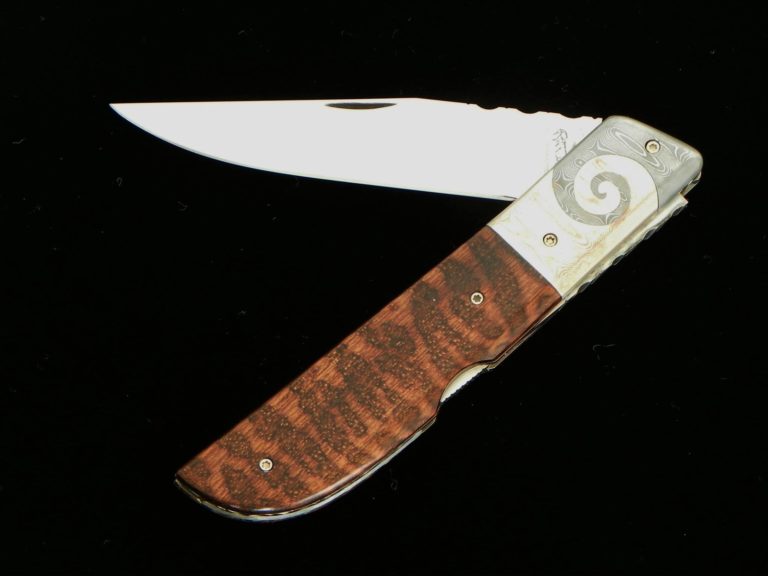
A full-time knifemaker for almost 50 years, Ralph specialized in knives in the latest materials, including mosaic damascus, tigerwood, white and black ebony and others. He made a wide range of models, including though not limited to folders, fixed blades and even butterfly knives.

We had just published a story on one of his folders written by J.T. Hill (J.T.’s No. 1 Knife Hero) in the July issue when we got word Ralph had passed on June 6—the anniversary of D-Day. He was 85.

The last time I saw Ralph Turnbull was at the inaugural International Custom Cutlery Exposition in 2015 in Kansas City. Mrs. Raenelle Turnbull was there with him, as usual, and Ralph was smiling and sassy as he almost always seemed to be. Though he was 81 he looked at least five years younger—he always did look younger than his age—and talked about how he had beaten just about everything old age had thrown his way.

He said he’d had bypasses, diabetes and one other malady that I can’t recall, and talked about how the doctor told him he’d lived through the biggest killers.

While Ralph recently succumbed to the inevitable fate that eventually awaits us all, his attitude toward life is one I will always envy. To paraphrase the old sports saying, it wasn’t that anything beat him—he simply ran out of time.

Bernard Sparks

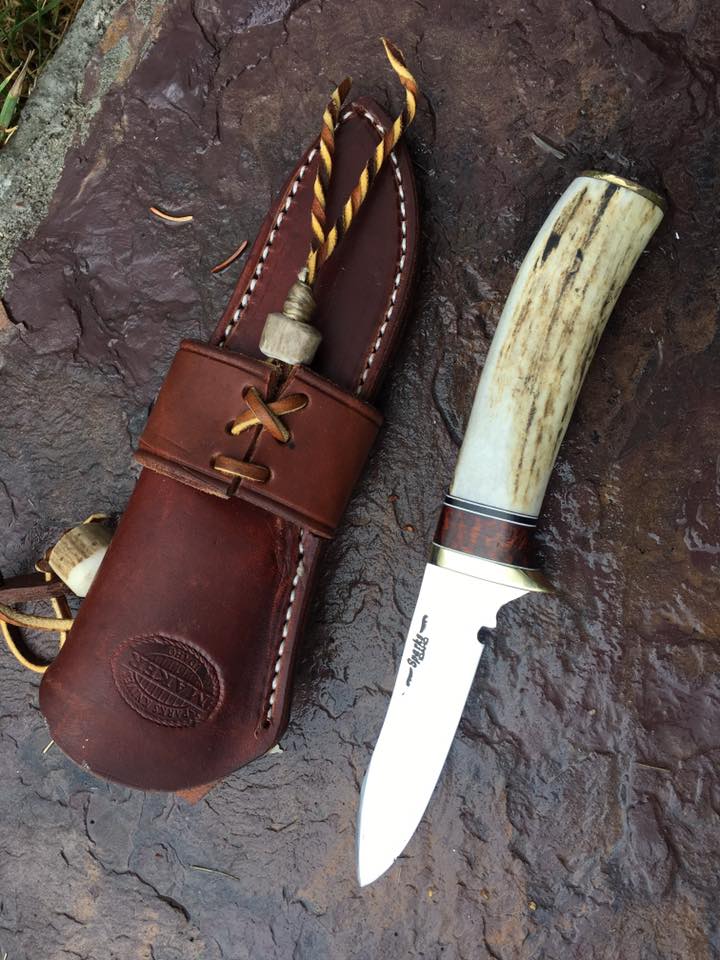
(Image via Bernard Sparks Facebook page)

Born in Dingle, Idaho, on the longest day of the year, June 21, 1931, Bernard Sparks began making knives part time in 1967.

According to Mrs. Vicki Sparks, Bernard was among 16 makers who met in 1969 to discuss forming The Knifemakers’ Guild. He served on the Guild’s board of directors for a time. His full-time job was as a teacher, which he retired from in 1996, at which point he turned to making knives full time until the spring of last year.

Over the decades, his obituary noted, he made several thousand knives. He was one of the first makers to use Vascowear, a high-speed tool steel, for blades. Bernard passed away on his birthday. He was 89.

BLADE field editor Ed Fowler remembers Bernard and Vicki, who survives her late husband.

“Bernard was one of the very early makers and a good one, totally honest, and made great knives,” Ed wrote. “They were high quality, well designed and each blade had a very practical geometry for its intended purpose. He and Vicki are a tribute to all that is good about our community.”

Michael Holtschulte

(Image via holtschultehandmadeknives.com)

Michael Holtschulte was born Nov. 17, 1956. He served three years as an Army combat engineer during the Vietnam War. He built knives for 28 years, making and selling over 12,000 of them over that span.

In a December 2013 BLADE® story that asked if a soldier had just one knife what it should be, Michael said he preferred a fixed blade with a 6-inch blade of 1095 or 5160 carbon steel.

“I would say that because a knife is a tool that becomes a multitool,” he reasoned. “One knife would have to do all the chores of self-defense, cutting, chopping and skinning game.”

He passed away May 10. He was 63.

I never had the pleasure of meeting Michael, though I did get to talk to him on the phone, and he was most professional. As his daughter Lisa wrote, he expired while forging a knife for a customer.

“My dad put his whole life into making knives and he passed getting to do what he loved,” she stated. “I remember how absolutely smitten he was that you guys did an article on him, and it was by far one of his proudest accomplishments.”

I’m sure I speak for the entire BLADE staff when I state we are humbled that we were able to inject a moment of pride into Michael’s short time on this earth.

Neuman Reintroduces Alaskan Pro-Knife Bill

Following the lead of the Federal Switchblade Act amendment of 2009, and language American Knife & Tool Institute (AKTI) officials said they successfully used first in California in 2001, Rep. Mark Neuman (R), Alaska House District 15, last year introduced clarifying “bias toward closure” language to the definition of gravity knife and switchblade in Alaska’s criminal law.

    Unfortunately, time ran out last year for the legislation to be passed.

    But as Rep. Neuman promised, he is reintroducing HB 55 this session. As Rep. Neuman states in his Sponsor Statement, “According to the American Knife and Tool Institute, there are over 35.6 million Americans who carry and use some type of utilitarian knife which opens with one hand.”  He encourages fellow legislators to recognize the importance of one-handed or assisted-opening knives in Alaska to hunters, anglers and craftsmen, and to support the definition changes to protect Alaskans’ knife rights and clarify that the knives are legal to own and use. 

    Rep. Neuman attended a presentation last fall by members of the  AKTI Board of Regents who showed him several examples of knives, answered his questions and explained the advocacy goals of the organization to protect the knife industry and all knife owners from restrictive and confusing laws. 

    Alaskans, encourage your representatives to support HB 55.  Contact them today at http://w3.legis.state.ak.us.

    To understand knife mechanisms and bias toward closure, check out www.AKTI.org/resources/additional-definitions

    For more information, call (307) 587-8296 or visit the American Knife & Tool Institute website at www.AKTI.org. The mailing address is 22 Vista View Lane, Cody, WY 82414-9606. Or follow AKTI at: http://www.Facebook.com/SaveOurKnives.

http://twitter.com/SaveOurKnives

For more on the latest knives, knife legislation, knifemaking instruction, knife trends, knifemakers, what knives to buy and where and much more, subscribe to BLADE® Magazine, the World’s No. 1 Knife Publication. For subscription information click on http://www.shopblade.com/product/blade-magazine-one-year-subscripti…?r+ssfb021512#BL1SU

Hawaii Knife Ban Stopped In Its Tracks

Vagueness of bill could have potentially banned the carry of all but a few knives.

Hawaii Knife Ban bill SB 433, which would have banned all carry of most knives and all knives in many public places in Hawaii, has been stopped. The stoppage occurred because the bill failed to receive a hearing by the stated deadline.

According to Knife Rights, one of the worst aspects of the bill was its vagueness. The bill added “bladed weapons” to the state’s sweeping firearms bans, which would have been expanded in SB 433.

“As written, nobody, not a resident, not a police officer, not a prosecutor, could possibly look at the proposed statute and know for sure what a ‘bladed weapon’ is that is being banned,” KR reported. “This is fundamentally unconstitutional and leaves the law open for law enforcement and prosecutorial abuse. Terms that capture everyday tools carried daily by the public for perfectly lawful uses should be defined crisply and clearly to provide fair notice as required by longstanding law.”

The bill banned all undefined “bladed weapons” everywhere in Hawaii except for switchblades and butterfly knives.

“So,” KR noted, “a not at all unreasonable interpretation of [‘bladed weapons’] would have banned carry of a common pocketknife in Hawaii, except for [switchblades and butterfly knives]! Who decides whether it’s a ‘bladed weapon’? Certainly not the average resident or visitor.” 

In other examples, fillet knives used for recreational, subsistence and commercial fishing and hunting knives used for boar hunting—a popular means of reducing feral hog populations on the islands and a popular tourist business—could have been banned, as could a box cutter carried to work by a warehouse worker.

More On Auto Knives:

Knifemaker Joe Kious Perishes In Accident

Veteran knifemaker Joe Kious, popularizer of the “Pocket Locket” style of high-end art folder and long-time Knifemakers’ Guild member, passed away Dec. 5 as a result of injuries suffered in a vehicle accident.

A resident of Kerrville, Texas, Kious was a full-time knifemaker who sold his first knife in 1969. He specialized in investment-quality interframes and bolstered folders, some bringing up to as high as $10,000 apiece.

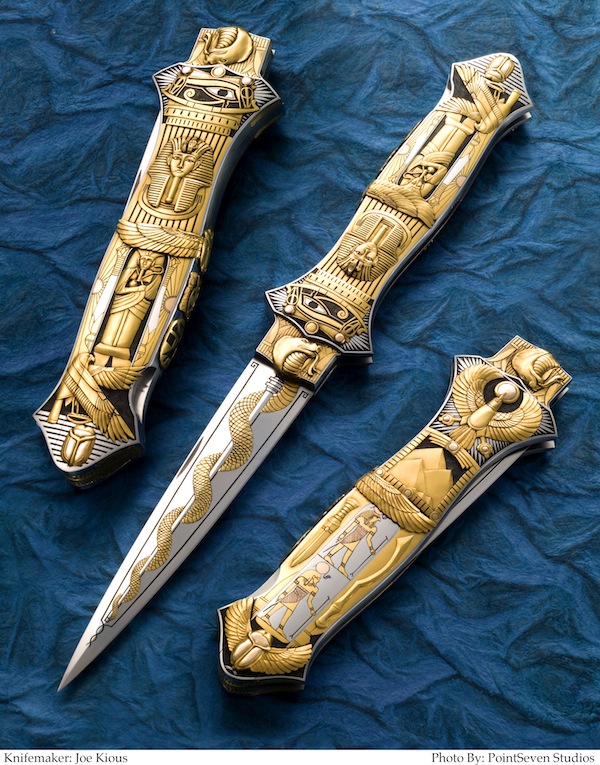
However, it is his Pocket-Locket models for which he may be best remembered. Featuring elaborate engraving, the folding knives include a small compartment in the handle with a sliding panel that slides back to reveal another engraved scene inside.

“Joe was a staunch supporter of the Knifemakers’ Guild and believed in handmade knives,” said knifemaker and fellow Guild member Edmund Davidson. “Joe had a wonderful personality, was very easy to speak with and would tell you anything you wanted to know. He held nothing back and had no secrets. His knives reflected a great deal of thought, craftsmanship and artistry. He was a true master and genuine person. He will be sorely missed. When we lose a man of his caliber, we are all diminished.”

“Joe was a gentleman who loved his family, friends, enjoyed shooting, fine scotch and making knives,” noted Michael Donato of KnifePurveyor.com. “Please keep his family in your thoughts and prayers.”

A member of a close-knit group of Texas-based Guild knifemakers that includes Warren Osborne, Tom Overeynder and others, the stately Kious was liked and respected by most everyone who knew him in the industry. A lean, handsome man with a full head of grey-white hair, he was soft-spoken but never at a loss for words or a well-thought-out opinion.

Though he did not make BLADE® Magazine’s 40th anniversary list of top knifemakers—he received enough votes to make honorable mention—his Pocket Locket was chosen No. 6 among the most important custom knives of the period from 2001-2012 in the magazine’s 40th anniversary list of top custom knives.

“Joe’s Pocket Locket is important because it is the most flexible engraving platform ever offered,” noted custom knife purveyor Paul Shindler of KnifeLegends. “It includes many models and styles but offers pretty much endless possibilities for the imagination of any collector. The Pocket Locket may be the most important engravable knife ever conceived.”

Added Donato, the Pocket Locket “has a very high ‘cool factor’ to it and has served as a canvas for many of the best engravers to work their magic. Joe’s Pocket Lockets are featured in many books, magazines and great collections worldwide.”

The world of knives lost knifemaker Joe Kious to a traffic accident Dec. 5.
Joe Kious, popularizer of the “Pocket Locket” art folder, was killed in a vehicle accident Dec. 5. His “two-door Pocket Locket” in a King Tut theme with Ron Skaggs engraving won Best Knife Collaboration at the 2007 BLADE Show and served as the cover knife for the December 2007 BLADE®.

How Custom Knifemakers Adapted to COVID-19

Companies on the cutlery side seem to be weathering the COVID-19 era better than those in most other industries, in no small part due to online knife sales. BLADE promised to check on the custom side of things for you, and, though maybe not quite as well as their production brethren, the custom knifemakers we asked about it seem to be holding their own.

Already Practicing Social Distancing

Having employees work from home is one of the measures factory knife and other companies have taken to ensure long-range social distancing and to help control the spread of the virus.

Many custom makers, of course, work out of their home shops and have done so for decades, so they were a step ahead of the game in that regard from the outset.

Moreover, many makers take orders and sell their knives through their own websites, on social media, via email, and through advertising in knife magazines and elsewhere. As a result, not unlike their factory counterparts, they have experienced some success in that area, too. Purveyors who sell the makers’ knives are an added bonus as well.

Ironically, the early lockdown and also the downturn in another industry—travel—actually benefitted at least one knifemaker.

“Good For My Business”

“Honestly, COVID has been real good for my business.At the beginning when everything was closed, we suddenly had a bunch of free weekends when travel all got canceled,” noted Jason Fry.“I used that time to do a lot of knife work.In the first three months of COVID, I have one customer that bought four of the six knivesI put out for sale.Product has continued to move well, even at the $500+ price points.”

Another boost to custom knife sales early on was the federal stimulus and unemployment checks.

“Our sales went up a whole lot when the stimulus checks were sent out and people on unemployment were getting that extra $600 a week,” noted Linda Hibben, wife of BLADE Magazine Cutlery Hall-Of-Fame® member Gil Hibben. 

Linda added that while things had slowed down a bit in late summer, Gil continued to accept orders.

“Believe it or not, the Rambo III bowie and machete are still selling,” she enthused. (Along with the third Rambo movie, the Rambo III bowie debuted in 1988.) “We have had several different bowie orders and combat-type knife orders recently.”

“Orders Are Down Overall”

ABS master smith and BLADE contributor Wally Hayes indicated he was still taking orders via email, messenger, Instagram and Facebook, but had “lost a bunch” also.

“I would say orders are down overall,” he stated. Helping take up the slack for Wally are the damascus watch dials he builds for a watchmaker in Oslo, Norway.

Supplies Still Plentiful

As for having enough supplies to fill knife orders, maker George Brackett said he had everything he needed to make about 70 forged knives, with 32 orders “in the pipeline.” After he gets the go-ahead from his doctors following some recent surgery, he’s going to start making knives again.

Fry indicated he’s experienced no real issues with supplies yet, and intends to order bulk every few months.

“I haven’t tried ordering steel lately,” he added, “but belts, etc., haven’t been a problem.”
On the down side have been the cancellations of a number of knife shows, including BLADE Show 2020, the latter a place where many makers would have sold a significant number of knives and taken a large number of orders. (BLADE Show 2021 is set for June 4-6 at the Cobb Galleria Centre in Atlanta.)

If it weren’t for the fact that other knife shows aren’t the go-to venues they once were due to online sales and other factors, such makers no doubt would be hurting more than they are now.

Contracts Still In Place

Another bonus for makers such as Gil is the collaboration agreements they have entered into with factory knife companies. In fact, his long-time contract with United Cutlery is going great knives, including a knife design in the works celebrating his upcoming 65th anniversary as a knifemaker in 2022.

“We have new designs coming out with United on a regular basis,” Linda wrote, “so all is good!”

Help USA Knifemaker Help Harvey Victims

Harvey and makers
Donate now to USA Knifemaker’s program to assist full-time makers’ shops flooded by Hurricane Harvey.

Help full-time knifemakers whose shops have been damaged or destroyed by Hurricane Harvey through a program initiated by the folks at USA Knifemaker.

A leading supplier of knifemaking equipment, materials, tools and other products used to make knives, USA Knifemaker’s assistance program is designed to help full-time knifemakers—and with floodwaters continuing to rage in and around Houston, Texas, the effort comes not one moment too soon.

“We would like to help our knifemaker brothers that have been wiped out to get back on their feet,” notes Tracy Mickley of USA Knifemaker. “This isn’t about advertising. This isn’t about making us look good. This is about doing the right thing and about helping people in need. If I could do this quietly I would, but I can’t. These guys need your help and I am going to bang the drum as loud as I can to get some help headed their way.”

USAknifemaker.com will match donations up to $2,000 in knifemaking supplies for full-time knifemakers that have lost their shops to the hurricane and flood. “If I can manage more I will but right now it’s the best I can do,” Mickley writes. “If public donations do not reach $2,000 for the match, we will still give out the full $2,000 in the form of gift certificates to USAknifemaker.com. I hope we can max this out to $4,000 plus.

“We will give $250 gift certificates to eight—at the minimum, we hope for at least 16 or more—full-time knifemakers that have had their shops destroyed by floods. It’s not enough to restock a shop. I get that. I also understand there are hundreds, maybe thousands of part-time makers that also have had tragic losses and I wish we could help everyone. Those makers that depend on knifemaking as their primary income can use our help as a community.”

Makers and Harvey
If you know any full-time makers in the Houston area whose shops were damaged or destroyed by Harvey, you can help through USA Knifemaker’s assistance program.

Send a check, cash, use Paypal or a credit card. “We will cover the Paypal and credit card fees,” Mickley notes. “We will total up the donations and match up to $2,000 to be given out as gift certificates to eight full-time makers. If the total of public donations exceeds $2,000, we will compile the extra and give out as many $250 gift certificates as the funds allow. One-hundred percent of donations will be given out. We will recap all activity on Knifedogs.com for full transparency here.

“We are asking you to provide names and contact information of full-time knifemakers in and around the Houston area that you know who have lost their shop or had significant shop damage. We do not need a list of random names of makers in the area. We need to know who got hurt in this. We will have to filter out opportunists so we will require proof of loss in the form of pictures of their shop and a short description of damage. To be clear, we aren’t ‘covering’ any other losses. There are other agencies for that. We are trying to help those that lost their knifemaking shop.

“I am hoping for a lot of interest and support,” Mickley continues. “I will have a thread on Knifedogs.com to track donations, candidates and awards, and to keep this transparent. I welcome your input and suggestions on how the knifemaking community can step up and lend a hand. Post your comments and suggestions here.”


Advertisement

Must Read Articles

Read this before you make a knife

Knifemaking 101 – Read This Before You Make a Knife

  by Wayne Goddard My experience has taught me that there's nothing like digging in and getting started. I've often said the hardest part of the...
how to forge damascus steel

How to Forge Damascus

Advertisement
Advertisement