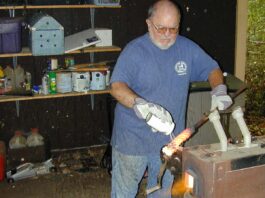
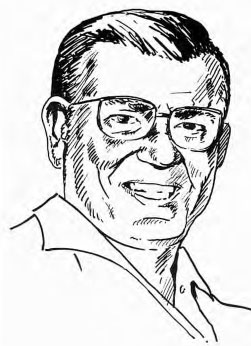
A.G. Russell, long-time knife entrepreneur, founder of A.G. Russell Knives, a founding member of The Knifemakers’ Guild, and a member of the BLADE Magazine Cutlery Hall Of Fame, passed away Oct. 12. During what was supposed to be a routine angiogram to check for blockage in a coronary artery, A.G.’s heart gave out. He was 85.
As recently as Wednesday, Oct. 10, A.G. spent a big part of most business days in the office working with Phil Gibbs on knife designs and talking to customers in the A.G. Russell Knives retail knife store in Rogers, Arkansas. Saturdays were especially important to A.G. He would spend most of the six hours that the store was open on that day, talking to customers. He especially enjoyed the children who visited the store.
“To say we are all in a state of shock is putting it mildly,” stated Mrs. Goldie Russell, A.G.’s wife, business partner of over 30 years and fellow BLADE Magazine Cutlery Hall Of Famer. “I do take great comfort in knowing from conversations we have had of late that he was simply tired and ready to be called Home, and that he is no longer experiencing pain and discomfort.”
Visitation will be on Sunday, October 21 from 3:00 – 5:00 p.m. at Westfield Chapel Funeral Home in Springdale. Funeral services will be held on Monday, October 22 at 2:00 p.m. at Lakeview Baptist Church on Hwy 265 between Lowell and Cave Springs.
In lieu of flowers, the family is requesting donations be made to military and veterans organizations that will be listed shortly here.
If it is your preference to send flowers, that may be arranged at the Heartfelt Sympathies Store online. Click here for more information.
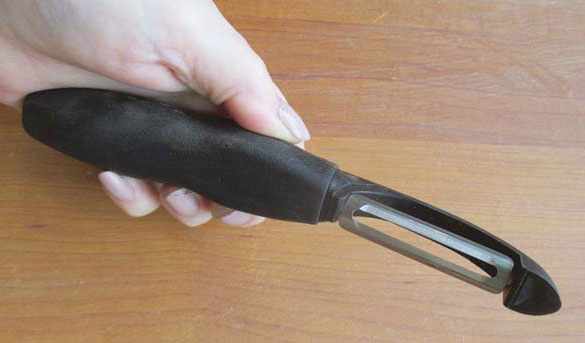
On May 3 in Scotland, a man was arrested for carrying a potato peeler. That’s right, a potato peeler. He was charged for carrying “an article which had a blade or which was sharply pointed, namely a potato peeler.” Maximum penalty: four years imprisonment.
Knife Bans Are About Control
Knife bans, like gun control, are not about saving lives but controlling them—including controlling the economically disadvantaged, people of color or others the state wants to keep “in their place.” (The potato peeler violator, by the way, was said to suffer “from significant learning difficulties.”) More to the point, knife bans are designed to keep the people down.
The inequality of policing and prosecuting for possession of gravity knives by black and Hispanic men is most striking in NYC’s Union Square. There, according to Legal Aid, such men consist of only 11.5 percent of the population but account for a whopping 52 percent of those arrested and prosecuted for gravity knife possession. Moreover, the New York County District Attorney’s Office (DANY) exacerbates things by often classifying gravity knife possession as a felony, a charge that carries up to seven years in prison. From July 1-Dec. 31, 2015, DANY charged 65 Legal Aid clients with felony gravity knife possession—four times more often than all other NYC prosecutors combined!
Magnifying the inequality of the situation is the fact that NYC chain retailers sell folding knives designed and marketed as work tools, yet when Legal Aid clients are found with those knives in their pockets, the knives are suddenly “illegal” and the clients are arrested as criminals. Such inconsistent application of the law ensures a regular money flow to the local big box stores via sales revenues and to government through sales taxes and fines, while simultaneously keeping the victims “in their place.” As Doug Ritter of Knife Rights noted, knife bans help ensure that the circle of inequality remains unbroken.
“Repealing knife bans removes another excuse to engage in such biased arrests and prosecutions for the innocent carry of some otherwise arbitrarily illegal or allegedly illegal knife,” he observed.
Great Britain, Canada Lead the Way on Knife Bans
When knife bans disproportionately impact minority populations, something is wrong.
Meanwhile, despite—or perhaps because of—its long-time ban on guns, for the first time in over 200 years London recently overtook NYC in terms of the murder rate. Though it is currently illegal in Britain to carry a knife longer than 3 inches in public “without good reason,” in early April London Mayor Sadiq Khan infamously said, “No excuses: there is never a reason to carry a knife. Anyone who does will be caught, and they will feel the full force of the law.”
No excuses: there is never a reason to carry a knife. Anyone who does will be caught, and they will feel the full force of the law. https://t.co/XILUvIFLOW
The vast majority of those who will feel the full force of Khan’s edict as well as that of knife bans in general are the economically and other of the disadvantaged, or the simply not quite so advantaged. What better way to keep them all down than to arrest, fine and jail them for carrying knives?
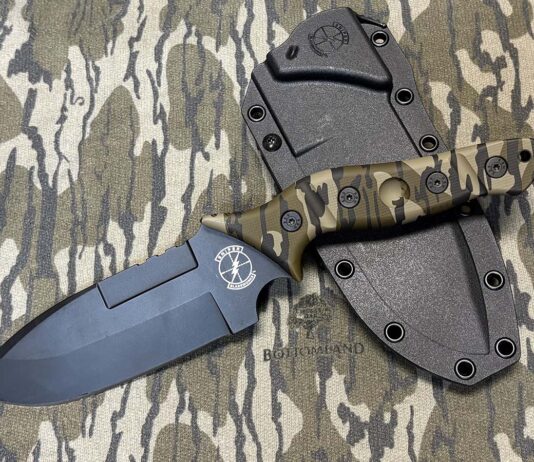
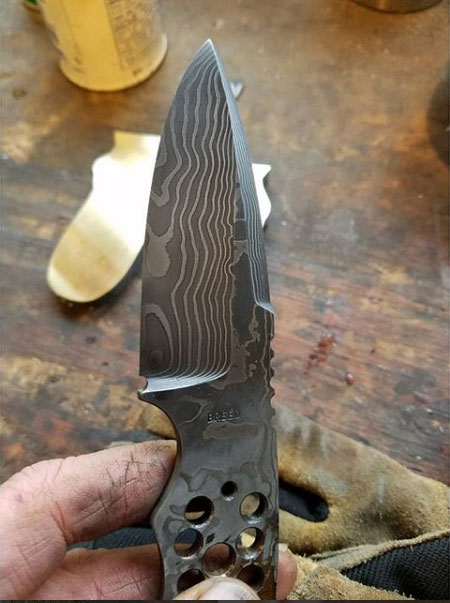
Msg. Kim Breed (retired), a long-time field editor for BLADE best known for his knife reviews, will partner with DoubleStar Corp. to produce knives for that company’s Edged Weapon line.
There’s no doubt that Breed’s 18 years of experience in the United States 5th Special Forces Group will inform the designs that come out of the collaboration, as well as his time as the owner of Breed Custom Knives. Although DoubleStar has not announced specific models, a release from the company suggests that Breed’s custom work will be adapted for affordable price points.
“Kim is a legend within the custom knife community and we are very excited to have the opportunity to collaborate with him, turning his custom design into something that is accessible to a wider audience. Adding Kim to our already impressive roster of collaborators only strengthens our commitment to the edged weapon market, and we look forward to unveiling his designs soon,” stated Rob Cabrera, director of Edged Weapon, in a DoubleStar release.
The following are examples of Breed’s custom knives:
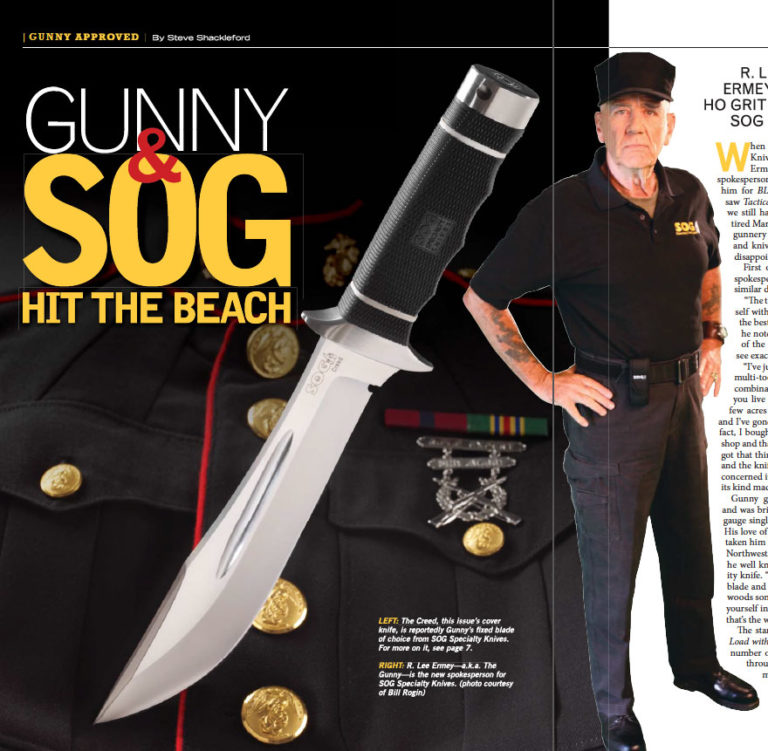
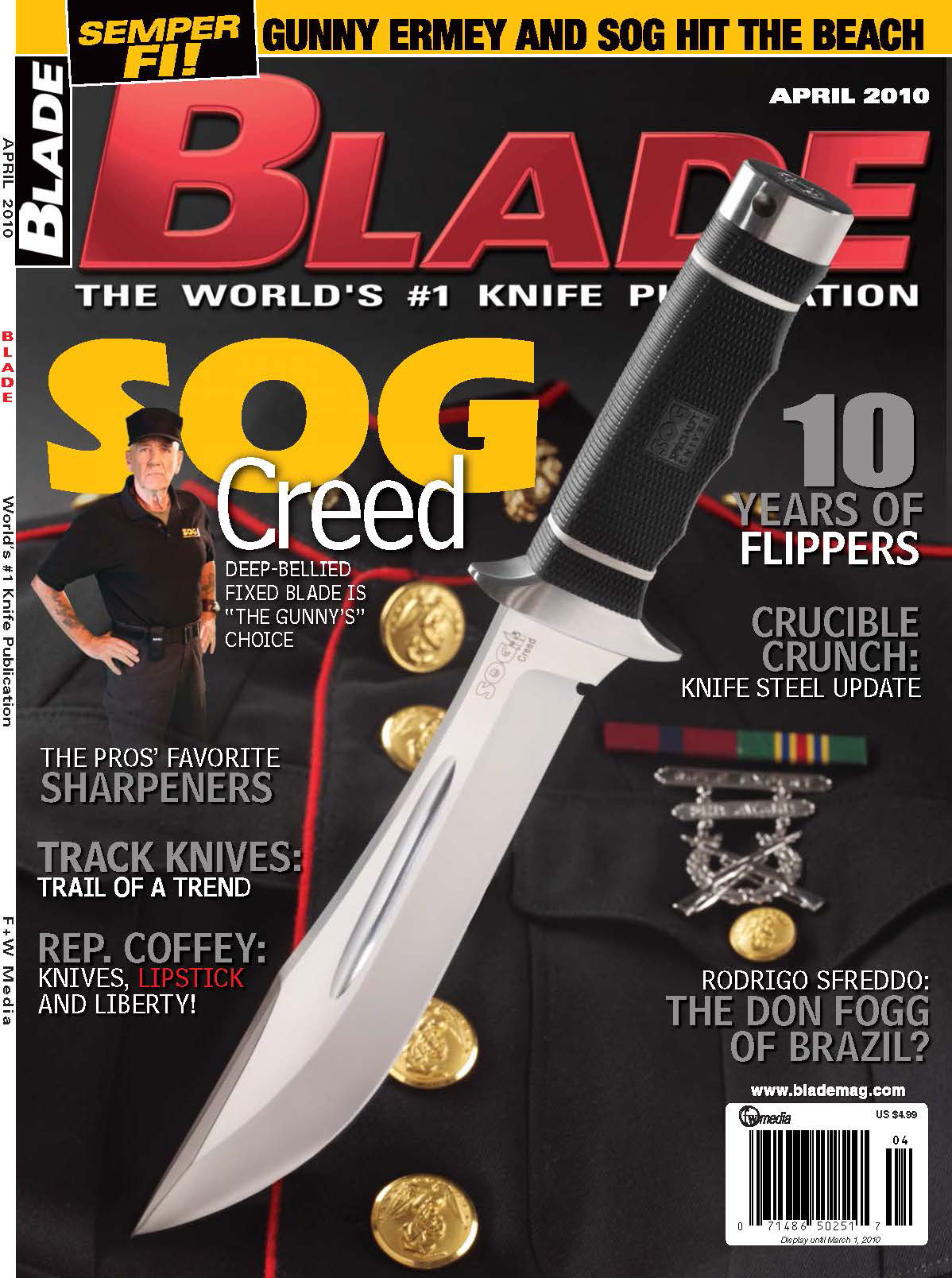
R. Lee “The Gunny” Ermey appeared on the cover of the April 2010 issue of BLADE.
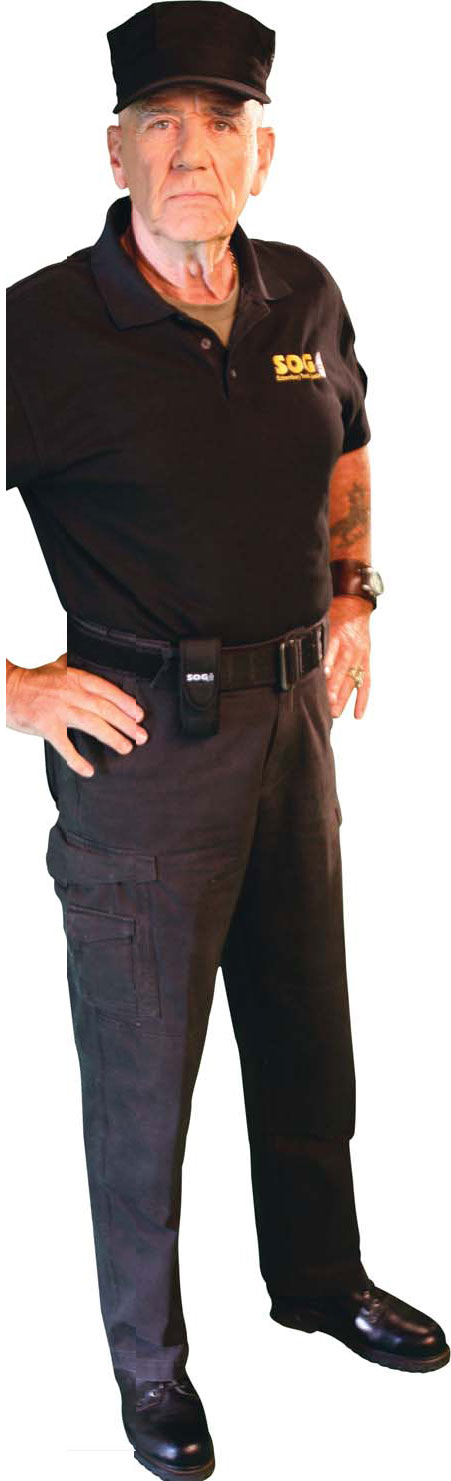
Editor’s note: The following article is from the April 2010 issue of BLADE. At the time, R. Lee “The Gunny” Ermey had signed on as a spokesperson for SOG Specialty Knives & Tools. Here he talks with Steve Shackleford about knives and his career in films.
Ermey, best known for his portrayal as Gunnery Sgt. Hartman in Full Metal Jacket, died April 15, 2018, at age 74.
The Gunny, the Knife Enthusiast
R. Lee “The Gunny” Ermey made frequent appearances at BLADE Show on behalf of knife companies.
Gunny comes by his love of knives honestly. He has over 100 custom and factory pieces in his collection, including his great grandfather’s pocketknife. First and foremost, though, he uses his knives.
“I’m a firm believer that the only thing a dull knife is good for is cutting yourself, because that’s exactly what you do with a dull knife,” he said. “I believe a man ought to be able to shave with that knife and after he shaves with it, he ought to be able to fold it up and then go chop a tree down.”
He also keeps up with the news and is outraged at the way knives are portrayed by the media.
“What really upsets me, I’ve seen this young Eagle Scout [Matthew Whalen],” Gunny began. “Because he had a knife, a little pocketknife in a survival kit in the trunk, they put him out of school. What the hell kind of a survival kit have you got without a knife? You’d be a dead man.
“When I grew up, I was probably 6 years old, I started carrying a pocketknife and I’ve carried one ever since. It’s a tool, you know. I grew up on a farm and I went to school and I can’t ever recall any kid pulling his pocketknife out at school and wanting to do harm to another kid. Times have changed. We need to start taking responsibility for our actions, we need to teach our children a bit of discipline.”
Gunny was just getting warmed up.
“My Swiss Army knife, what, they’re 2 inches long these little guys. I travel constantly, and I’ve had about 20 of those little knives taken away from me at the airport. I finally took one and just broke the knife blade off it and there’s still a big debate if I can go on board because there’s a scissors on it.
There’s a toothpick and a tweezers and I use those tools constantly. After a meal I have to use that toothpick. Society’s gone to the dogs as far as I’m concerned. They need to pull their heads out of their butts and realize that a Boy Scout carrying a pocketknife that’s got a spoon and a fork on it is just a tool, it’s not a weapon.”
A Standup Guy
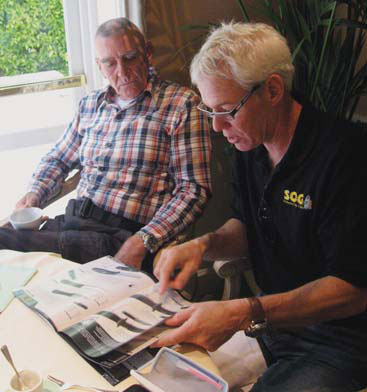
Spencer Frazer (right), SOG founder and president, and Gunny go over the company catalog. (photo courtesy of Bill Rogin)
Gunny enlisted in the Marines in 1961 and was medically retired as a staff sergeant in 1971 for injuries incurred during his tours, which included 14 months active duty in the Vietnam War, and, as you might guess, as a drill instructor (at the Marine Corps Recruit Depot in San Diego and Parris Island, South Carolina). In ’Nam he carried his issued Ka-Bar USMC fighting/utility knife, using it for everything from cutting threads off his uniform to opening “C” rations. He also carried a pocketknife and, of course, his trusty machete.
He said many of his fellow Marines bought their own fixed blades and folders in addition to the issue Ka-Bar.
Did he ever use a knife as a weapon over there?
“No. And I hope I never have to. I would just leave the area,” he laughed. “I would go get my gun. I don’t care for the up-close-and-personal stuff.”
Like most fresh out of the military, Gunny was unsure of what to do after his discharge, so it came as no surprise when he fell back on his Marine background.
“I didn’t have any formal training that would improve my lifestyle and I looked around and thought, what can I do, and I found out,” he recalled. “I was basically pretty much a standup comic when I was in the Marine Corps. I was an instructor, and in order to be a good instructor you have to be able to keep the troops awake. It’s almost like being a standup comic.
Gunny made a number of visits to the troops in Iraq and Afghanistan for the U.S. Navy Department of Morale and Welfare. Here he is with a group of Marines in front of Saddam Hussein’s palace in December 2008. (Rob Scott photo)
“So, when I retired, I wrote a couple of scripts and I went off to Hollywood. I did some of the comedy clubs and was pretty successful at it, and then I found out they were going to start shooting a Vietnam war movie in the Philippine Islands.”
Gunny boarded a military transport, flew to the Philippines where The Boys in Company “C” was being filmed in 1978, landed the part of a Marine drill instructor and his acting career had begun.
However, it was 1987’s Full Metal Jacket that, as Gunny put it, “kicked all the doors open.”
In it he established his onscreen persona as the gung-ho drill instructor, Gunnery Sgt. Hartman.
Not only did the role earn Gunny a nomination for a Golden Globe Award as Best Supporting Actor, it played a key part in his receiving an honorary promotion to gunnery sergeant from the Commandant of the Marine Corps. According to Wikipedia, it made Gunny the first retired military member in the history of the Corps to be promoted. Wikipedia, it seems, needs to check its sources.
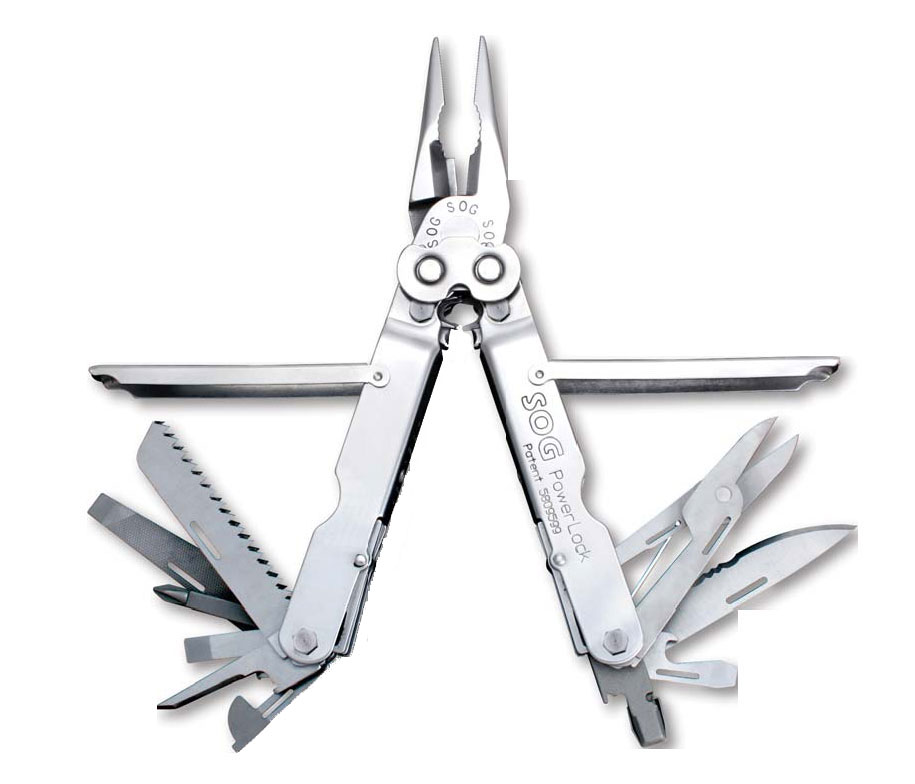
Gunny carries a SOG PowerLock multitool. It includes a pliers/gripper, hard wire cutter, crimper, double-toothed wood saw, a partially serrated blade, three-sided file and more.
“I’m not just the first but the only,” retired member in Corps history to be promoted, Gunny noted with pride.
He continues to be active in supporting young Marines, making morale-building visits to Iraq and Afghanistan when he can, as well as Guantanamo Bay and Okinawa, Japan. In between comes his acting and promotional work.
“I spend 90 percent of my time working with the military,” he said. “The other 10 percent I have to do shows and movies and whatever it takes because I have to support the 90 percent.”
The new SOG spokesman would seem to have his priorities in order. And, luckily for his new employer, SOG is one of them.
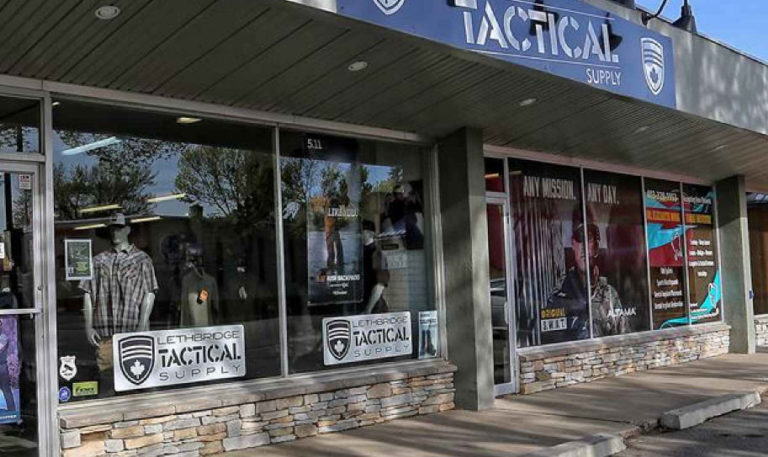
The author is the owner of a store that sells knives, often to first responders. Restrictions on the importation of the folding knives those customers often use hurts not only her business, but also the ability of first responders to do their important work. (Image via LethbridgeTacticalSupply.com)
Editor’s note: Sarah Jorgensen is the owner of Lethbridge Tactical Supply, a knife retailer in Lethbridge, Alberta, Canada. Read BLADE‘s previous articles about prohibitions on the import of folding knives into Canada here.
More Questions Than Answers
Sarah Jorgensen
A recent decision by the International Trade Tribunal (ITT) has only added more questions than answers when it comes to the tools Canadians can and cannot use for self-defense, emergencies and everyday tasks. After a seizure by the Canadian Border Services Agency (CBSA), the ITT announced in January 2018 that it is restricting the import of knives that “have a blade that opens by centrifugal force,” and that “includes knives that require some preliminary or simultaneous minimal manipulation of either a flipper or other non-edged parts of the blade.”
So what are our rights? What are we allowed to use to protect ourselves? Will we get in trouble if we hurt someone with a particular kind of knife while acting in self-defense? And most importantly, are we risking our safety by asking these questions in an emergency instead of acting?
Section 84(1) of the Criminal Code of Canada states that a prohibited knife “has a blade that opens automatically by gravity or centrifugal force or by hand pressure applied to a button, spring or other device in or attached to the handle of the knife.”
Wait a minute. How did we go from a device on the handle, to a device on the blade? The Criminal Code has not changed, but the CBSA’s interpretation has. This means that Federal, Provincial and local law enforcement agencies do not consider flippers on the blade of a knife as prohibited, but the CBSA does.
It Doesn’t Add Up
As a retailer, I can still purchase and sell these knives with no restrictions. However, if I can’t import them, how can I sell them? There are very, very few knives made in Canada, certainly not enough to keep up with the demand of our customers. Some knife manufacturers are now refusing to ship any folding knives at all into Canada because they are not sure which knives the CBSA is going to consider prohibited and seize.
So, why would the CBSA and International Trade Tribunal come to this decision? Are they keeping Canadians safer? Has there been an increase in attacks with knives that have assisted openings? The answer to both of those questions is no. I can still import fixed-blade knives, machetes, axes and batons. Are those items any more or less dangerous than an assisted-opening knife?
And who uses these assisted-opening knives that are so dangerous that the CBSA must override the Criminal Code to protect Canadians? Well, the majority of my customers are first responders (including CBSA agents) and they use these knives. They use them to gain access to vehicles and cut seat belts from people involved in car accidents. They use them as a last line of defense. They use them while on camping trips with their families. Most commonly, they use them to open packages and boxes. I sell these knives to knife enthusiasts and collectors, avid outdoorspeople and, yes, I sell them to people looking for a way to protect themselves in an emergency.
So, the question I have for the CBSA is this: How are you going to explain why your agents are seizing the same knives they use at work?
It’s one for the record books, but it’s nothing to celebrate.
The murder totals in London for February and March tallied at 37. That’s two more than New York City’s 35 for the same time period. This marks the “first time in modern history” that London surpassed New York City for murders, according to the The Times.
Despite that, stabbings accounted for 31 of London’s murders, and knife crime in general is the driving factor for the increase. This would seem to indicate the ineffectiveness of London’s knife restrictions overall, as indicated by this tacit admission from MP Sarah Jones.
“We need a proper strategy that looks at all of the issues.
“Knife crime and violent crime acts like an epidemic, so you need to go in at the source to cut it off and then you need to inoculate the future young people against it.
“Going in at source means major intervention work with youth workers, inoculating means going into schools, changing the social norms, educating kids, teaching them what it is to be a man, teaching them how they don’t need to carry knives.”
This quote, also from the BBC, from the former superintendent of London’s Metropolitan Police, Leroy Logan, echoed those sentiments.
“Police can’t just arrest or stop and search their way out of this problem; it has to be done in partnership with the communities.”
This is in line what many in the knife community have argued for years. Knives aren’t why someone commits a violent act. There are other factors at play that influence behavior, and those should be identified and addressed.
Granted, banning certain items, such as knives (or firearms, a parallel discussion in the United States), may well prevent someone from committing a violent act with that item, but left unaddressed are the would-be aggressors’ motivations and circumstances. Until and unless that happens, the sliding scale of destructive tools will simply move on to the next item. Case in point: UK acid attacks are on the rise. That follows extensive prohibitions on firearms and knives.
Even The Guardiancalled into question the term “knife crime” as being misleading or overly simplified.
“Knife crime” is a construct. It does not simply mean, as one might reasonably expect, crimes committed with knives. It denotes a certain type of crime committed by a certain type of criminal in a certain kind of context.
Those “certain types” often single out particular groups of people, which makes “knife crime” as a concept even more insidious. From The Guardian again (emphasis is mine):
In 2007, then prime minister Tony Blair told an audience in Cardiff: “The black community – the vast majority of whom in these communities are decent, law-abiding people horrified at what is happening – need to be mobilised in denunciation of this gang culture that is killing innocent young black kids. But we won’t stop this by pretending it isn’t young black kids doing it.”
When politicians frame the issue in this way, the results can disproportionately impact communities of color via increased law enforcement scrutiny. It’s as if white majority populations are somehow exempt from the factors that lead to “knife crime.” Or, worse, that there is something inherent about people of color that predispose them to violent acts.
When white kids are killed, people opine about the state of youth today, the demise of the town in which they died, or the world in general. When black kids are killed, usually the assumption is that their race had something to do with it.
It comes full circle when comments come in following a murder involving a knife and a person of color.
And yet a few days after his death, a Conservative councillor in Dover, Bob Frost, posted a news story about Djodjo’s murder on Twitter with the message “#BlackKnivesMatter. The carnage continues into 2017. Any protest from the ‘community’? Thought not.”
This phenomenon is well-known to the knife community at large. For example, New York’s restrictions on “gravity knives,” enforced with enthusiasm in New York City, levy an oversized impact on minority groups.
That this toxic stew of tunnel vision, racial bias and misleading terminology should finally express itself in a historic first for murders in London shouldn’t come as a surprise. It should come as a warning. If the root of “knife crime” isn’t dug out, London may, unfortunately, find itself positioned at the floor of a rising trend, not the ceiling.
Kirpan: When Knife Restrictions Collide with Religious Freedom
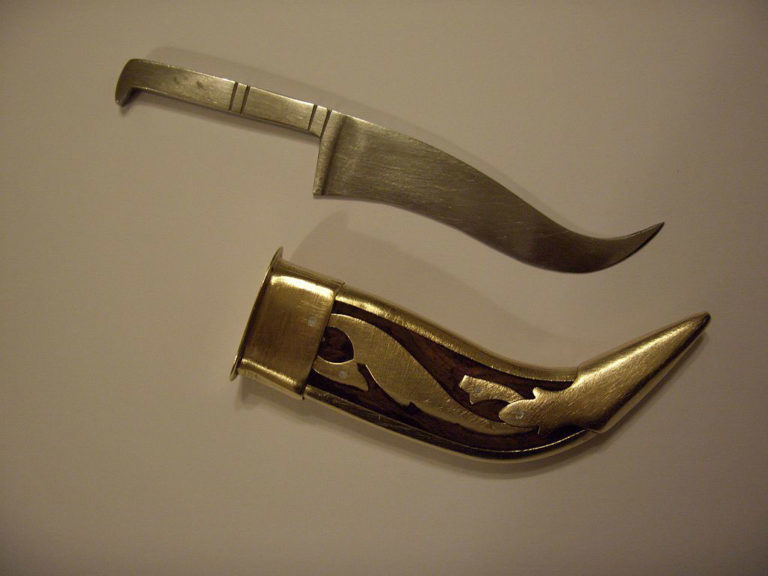
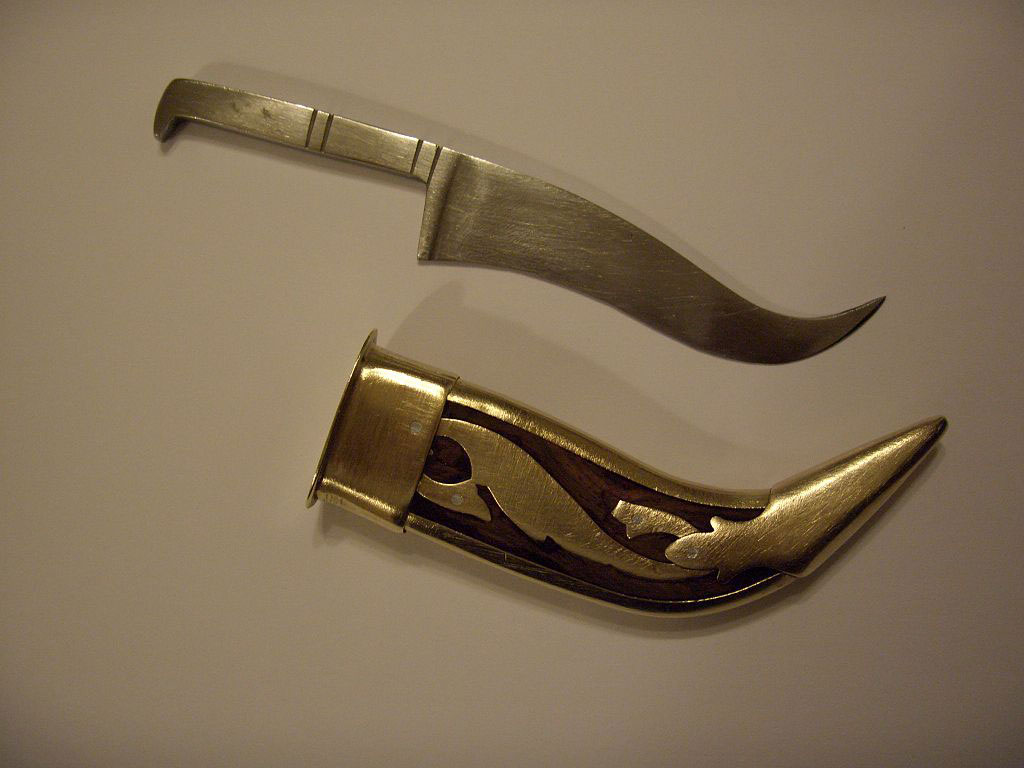
A kirpan and sheath. (By Harisingh at the English language Wikipedia, CC BY-SA 3.0, https://commons.wikimedia.org/w/index.php?curid=4525719)
As part of the Five Ks, the kirpan is a dagger that is central to the Sikh faith. Sikhs carry the dagger on their person, and that can conflict with knife restrictions. Simply put, Sikhs can find themselves forced to choose between adhering to their faith and breaking the law.
New Zealand, which restricts the public carry of daggers such as the kirpan, is one such place where this scenario plays out frequently. It’s home to 19,000 Sikhs, which is why that status could change in the future.
National Party MP Kanwaljit Singh Bakshi wants the law changed to make it legal for Sikhs to carry ceremonial daggers.
It’s one of five articles of Sikh faith, that baptised Sikhs must carry the small, curved knives known as kirpan.
Bakshi said Kiwi Sikhs were “criminalised” by not being granted an exemption under the Crimes Act to practice their faith and wear the kirpan.
So what’s the hold up? It comes down to the challenge of separating “good” daggers from “bad” daggers.
“It requires an exception to the law carrying what could be classed as a weapon and it has implications for going onto aircraft, that sort of thing, you just have to really careful.”
That “careful” approach may be small comfort for the 19,000 Sikhs living in New Zealand, as indicated by similar attempts around the world to balance public safety and religious expression. Denmark, for example, ruled kirpans as illegal items in 2006. In Sweden, a kirpan must be dull in order to be carried in public. In the United Kingdom, where public knife possession could result in years in prison, kirpans are generally accepted as being lawful, although it may take a trip to court to prove it.
Knife Companies Play April Fool’s Day Pranks
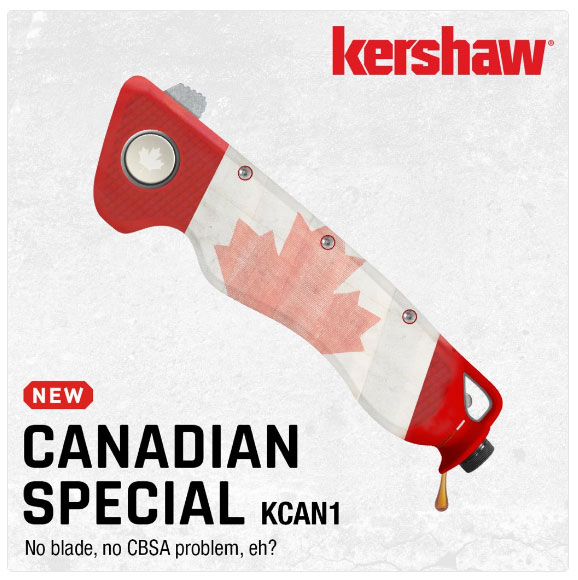
Not one to miss out on a holiday built around jokes (the knife puns write themselves!), the knife community sharpened its wits for April Fool’s Day. Here are two great examples.
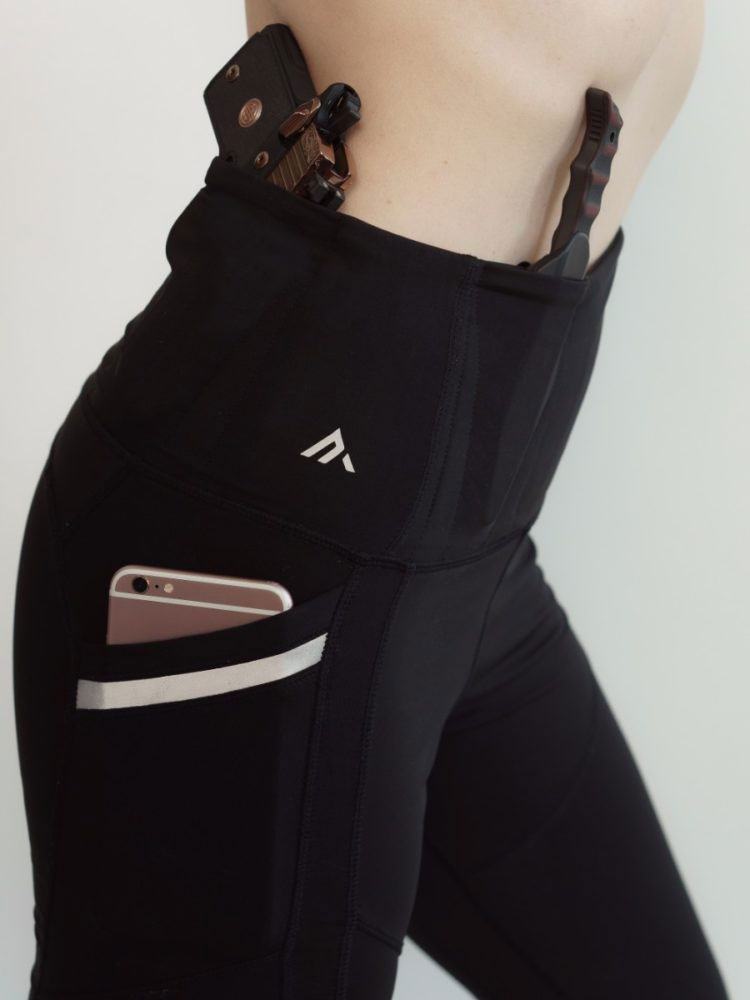
If you ever thought to yourself, “What this yoga session needs is a knife strapped against my pelvis,” you’re in luck. Alexo Athletica recently debuted yoga pants with room for a sheathed knife, as well as any other items to round out your tactical-inspired athleisure ensemble.
With nine pockets, these versatile high-rise quality leggings were designed to hold all your essentials that make you carry with confidence.
With yoga pants becoming ubiquitous outside of exercise rooms, it only makes sense that a company would design products for the concealed carry crowd. The Signature Pant, pictured above, was sold out at press time.