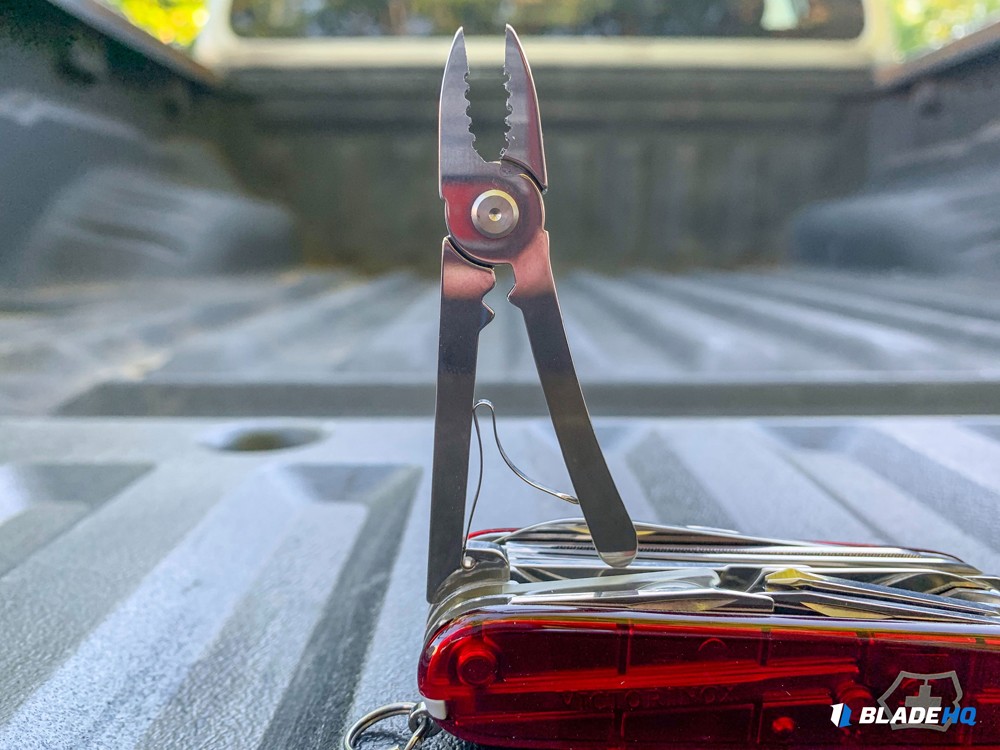
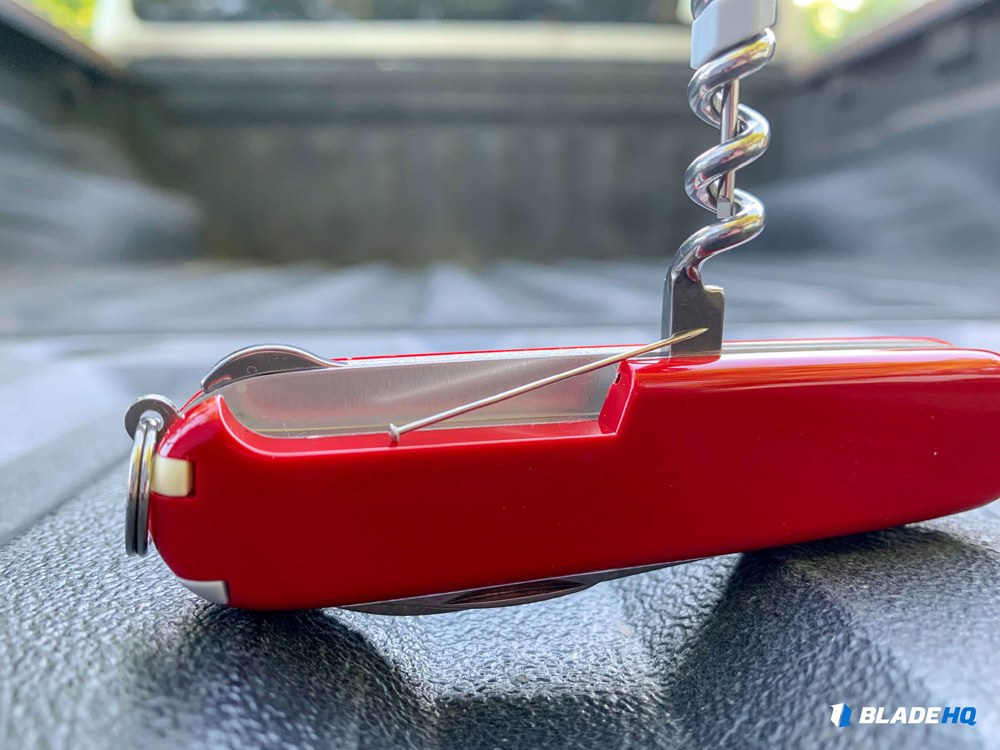
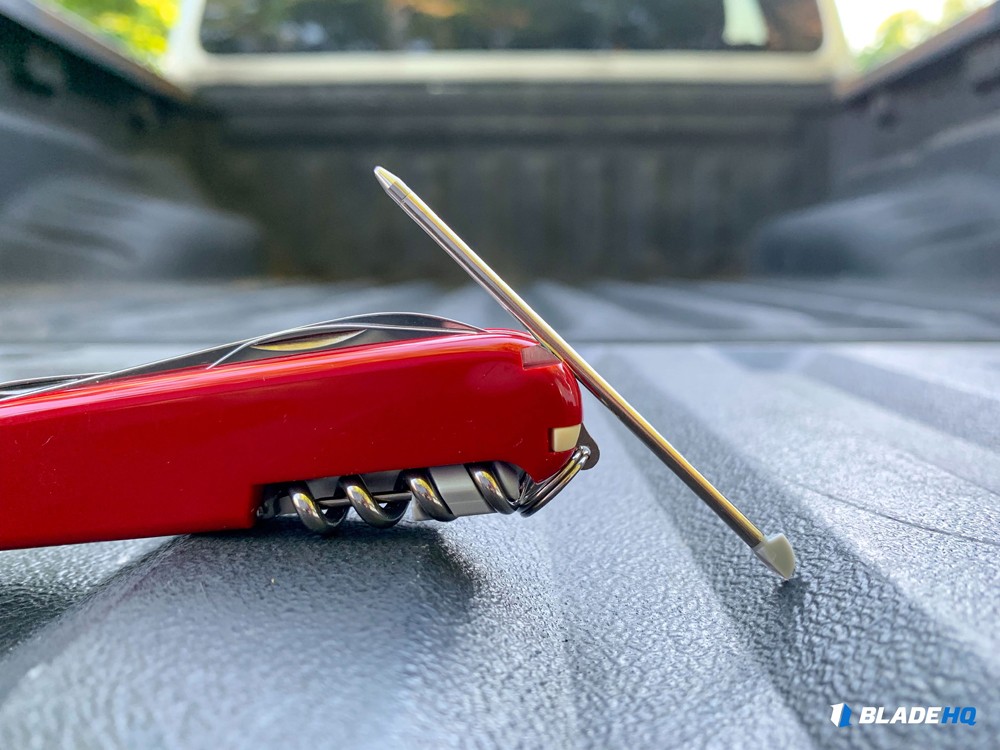
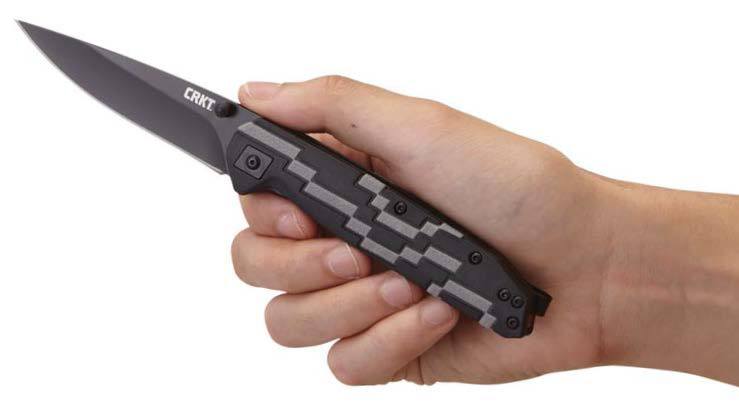
BLADE had a blast at the Wuertz Machine Works 2019 Hammer In last month in Arizona. Check out the action with Mike Quesenberry. That’s Neil Kamimura in the beginning, too.
See more of your favorite knifemakers at BLADE Show 2019!
BLADE had a blast at the Wuertz Machine Works 2019 Hammer In last month in Arizona. Check out the action with Mike Quesenberry. That’s Neil Kamimura in the beginning, too.
See more of your favorite knifemakers at BLADE Show 2019!

NEW ORLEANS – Today, archeologists with the University of Louisiana announced they’ve recovered the knife wielded by James Bowie during the infamous 1827 Sandbar Fight. The bloody encounter, which took place on the banks of the Mississippi River near Vidalia, cemented said knife’s design into what is now known as the Bowie knife. Researchers have attempted to locate the knife Bowie used ever since.
As surprising as this discovery is, it’s nothing to compared to the shocking truth hidden beneath nearly 200 years of history.
“We came across this discovery during a dig for a separate project to study Mississippi flooding patterns as expressed in pre-colonial pottery dispersal, in concert with our partners at [National Oceanic and Atmospheric Administration],” said Dr. Edward D. Wood, Jr. “I don’t often use the word ‘excited,’ but that accurately reflects the dig team’s feelings.”

Wood immediately contacted BLADE for confirmation following the discovery before going public with the find.
“The lore around the Sandbar Fight is so deep, it’s hard to separate fact from fiction. However, I feel confident that what Wood’s team discovered is, in fact, the exact weapon brandished by James Bowie at the Sandbar Fight,” said Steve Shackleford, BLADE editor-in-chief. “As such, it redefines our understanding of knife history and of James Bowie completely. Earth-shattering is an understatement.”
Other BLADE staffers echoed Shackleford’s sentiments.
“This is, hands down, the most important piece of knife history to come around in generations. There’s no going back after this. The world of knives will never be the same,” said Ben Sobieck, BLADE online editor.

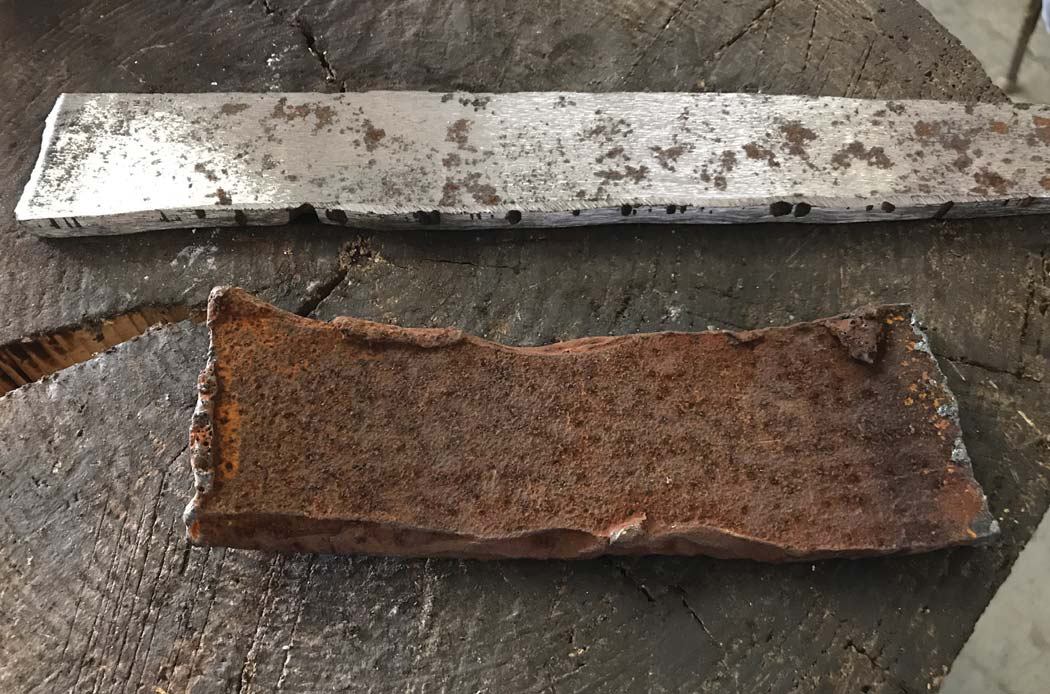
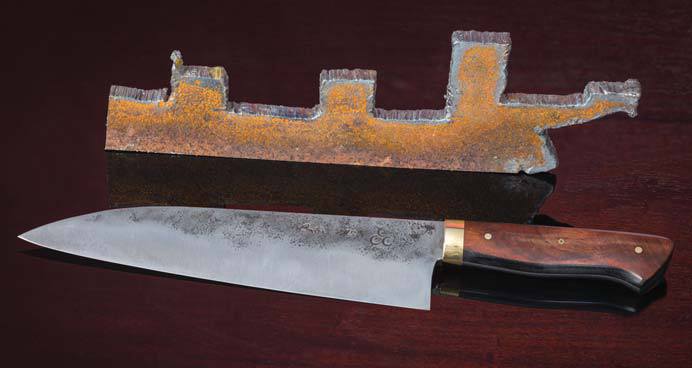
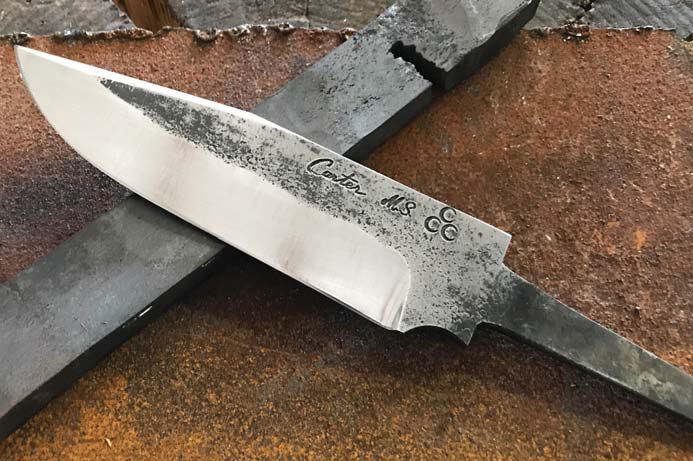
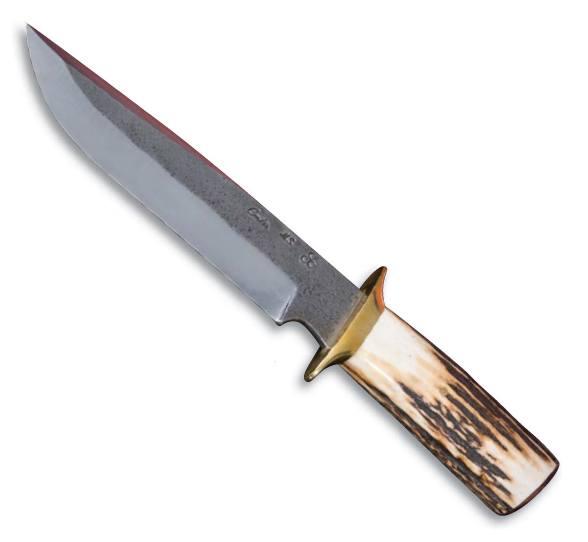
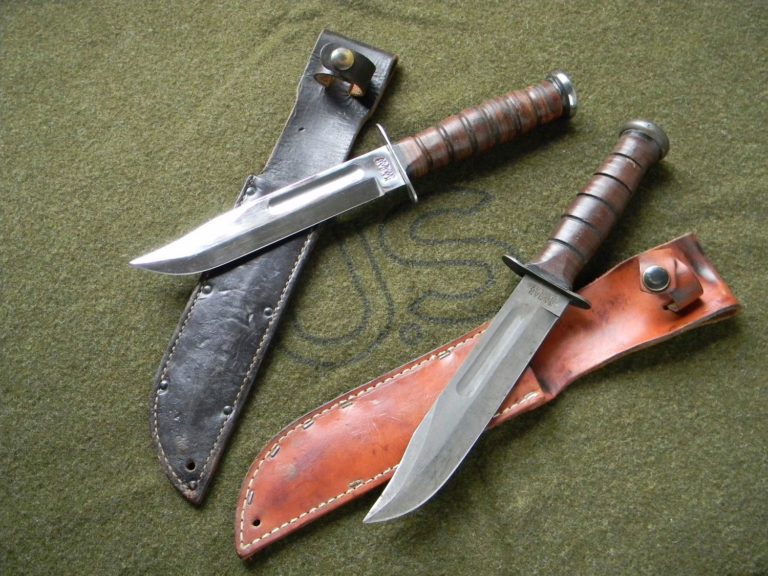
As it turns out, the knife James Bowie used during the brawl isn’t actually the Bowie knife people know today (example above). Because the original knife was never photographed, it could only be described in written reports. This may have led to some confusion as word spread.
“It’s like a game of telephone, 19th century style,” Wood said. “Now that we know the truth, it’s easy to see how the original description morphed into something completely different throughout the decades.”
BLADE is the first and only outlet authorized to share the photo of the original Bowie knife. Wood snapped the picture before recovering the artifact.
“Only now can we share this image with our audience,” Shackleford said. “It’s going to burst a lot of bubbles, but we feel it’s important.”
“This calls into question the entire Sandbar Fight. What really happened on the banks of the Mississippi River all those years ago?” Sobieck said. “Was there really a brawl? Or did the aggrieved parties resolve their disputes through non-violent means?
“Perhaps there was, dare I say it, a pie-making contest?”
The evidence certainly points that way.
“I can’t come to any other conclusion,” Wood said.
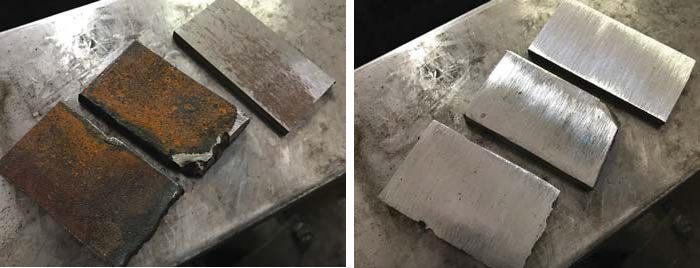
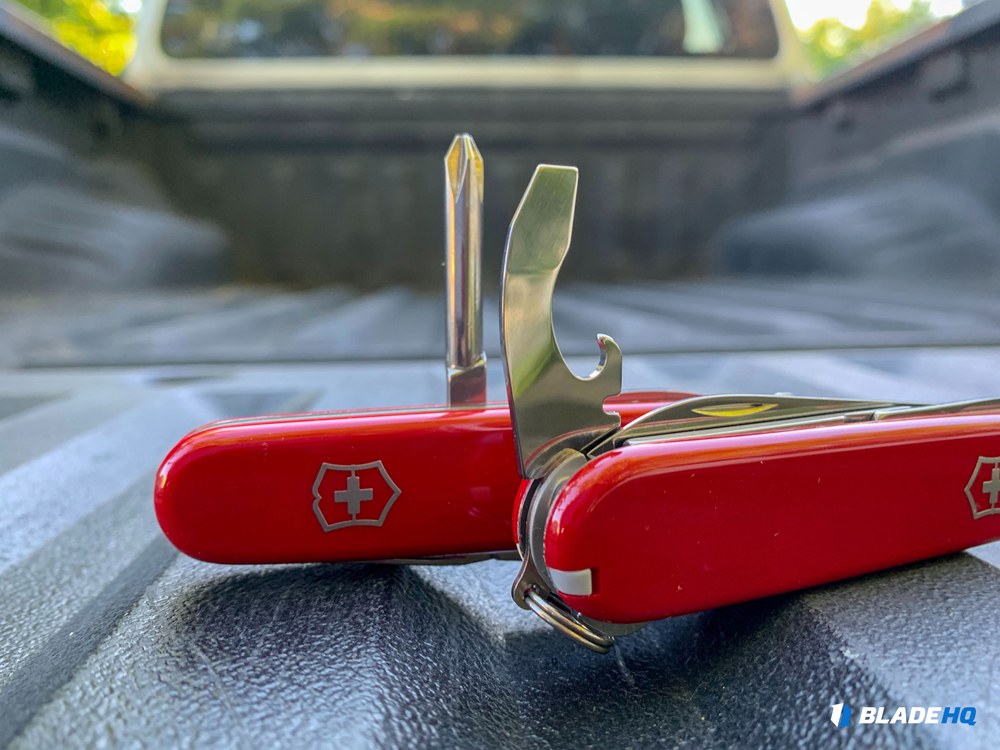
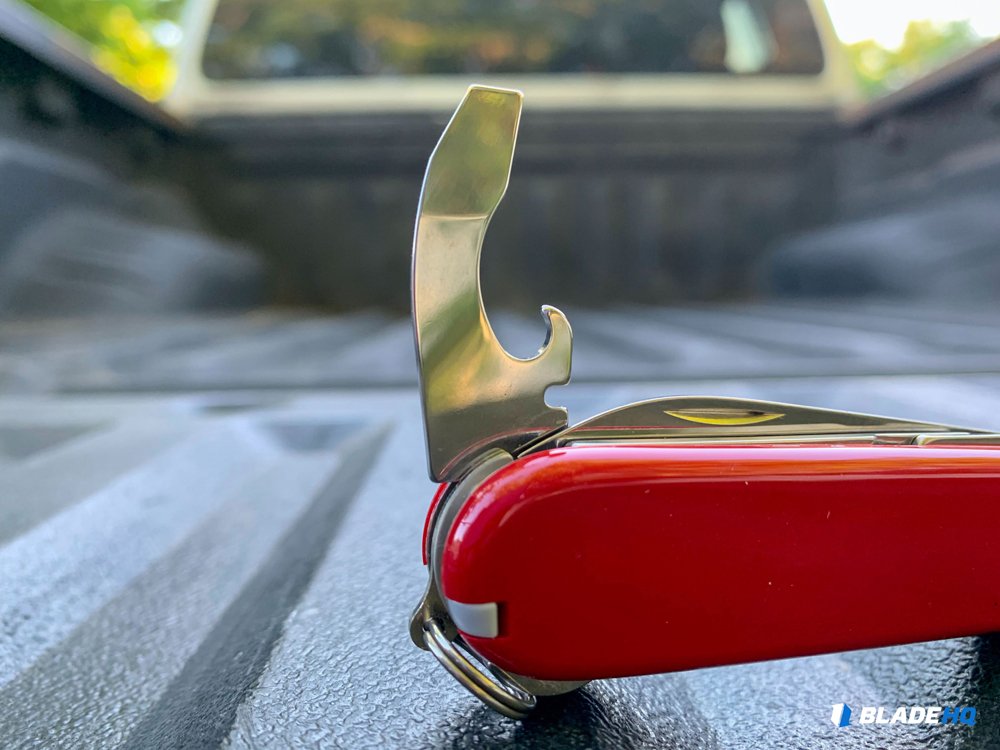
James Bowie’s “knife” was, in fact, a can opener.

“The can opener’s proximity to the canned pumpkin points to a pie-making contest, in which James Bowie was clearly the victor. How this simple fact distorted into a bloody brawl is beyond me,” Wood said. “We carbon dated the dirt and everything checks out.”
“One more note I’d like to add is that it’s April 1, which is April Fools’ Day, and that I feel that the BLADE staff did a great job with this year’s prank,” Shackleford said.
“Definitely. And now I’m hungry for some pie. Pumpkin, apple, strawberry, it doesn’t really matter. I’ll put a pot on, too,” Sobieck said.
Happy April Fools’ Day
Editor’s Note: This article is by both Abe Elias (arguing for the Scandi) and James Morgan Ayres (taking the opposite view). It is excerpted from the April 2019 issue of BLADE.

A Scandi grind carries a single bevel that runs to zero degrees. In other words, it is a single grind only.
Unlike many other grinds, the Scandi runs to the edge with no angle change in what is also known as a zero grind. Scandi grinds have a flat section of the blade that starts at the top of the bevel and runs to the spine.
Anything else is simply not a Scandi. People have tried to create a variety of variations with names like modified Scandi or Scandi vex. In actuality, there are no variations of the Scandi because such “variations” usually are other grinds that already exist.

Perfect wood geometry: The Scandi excels at bushcraft chores because its geometry is perfect for working with wood.
Zero grind: The fact the Scandi is ground to zero allows the edge to be as thin as possible with no change in angle. Changes in angle create extra friction. Hence, the Scandi grind meets with the least resistance possible when it enters the cutting medium.
Inertia is your friend: Another benefit of a Scandi grind is that you can achieve a thin edge and, unlike with a full flat grind, you maintain the blade weight of a saber grind. Having that bit of extra spine weight increases your ability to drive the edge forward.
Parting is such sweet sorrow: As the blade enters the cutting medium, it meets the transition point where the bevel changes to the flat. This benefit is one of the reasons why the knife can dive deep into a cut and take off huge potato-chip-like shavings.

Geometry: The intersecting planes of the Scandi grind create a wedge. A wedge is useful for shallow woodcraft on soft woods, such as making fuzz sticks or carving spoons, and for batoning soft woods. However, the wedge creates too much resistance and drags and hangs up in deep cuts, especially in hard woods.
Not ideal for food prep: That wedge also struggles with any dense or tough material, including root vegetables, which crack rather than split, and, importantly, on meat. Try butchering any large game with a Scandi grind and you’ll quickly learn why butchers and hunting guides do not use Scandi-ground blades.
Goodbye, steel: The Scandi grind is also said to be easier to sharpen because the blade provides a guide. But, if the user follows the instructions of the advocates of Scandi, he must remove a great deal of steel, which requires hundreds of strokes on the stone. With a modicum of skill other grinds are faster and easier to sharpen.
There is a better alternative: The smooth, slim, oval profile of the convex grind offers less resistance to materials, is superior to the Scandi on all points and will do everything better.
If your bushcraft knife needs are limited to working with wood, you’ll find a Scandi grind will help you work fast and effectively.
For tasks beyond that, you’ll likely find a convex grind is the better match.
The best books about knives are at BLADE‘s official online store, ShopBlade.com.
Editor’s Note: The following article by Pat Crawford was originally published in the April 1980 issue of BLADE, but the advice still holds true today.

Any knifemaker can make almost any kind of knife, but some knifemakers are better than others. Knowing where you fit in the scheme of things is important, especially for developing a pricing structure that is compatible with the quality of your work.
Those makers who can command big bucks for anything that leaves the shop have paid a lot of dues for this success. And just because your work looks just as good doesn’t necessarily mean that you’ll be able to compete with the big names and legends whose work is priced at the higher end of the spectrum.
Remember, even today’s legends got their start by turning out quality work at fair prices.

Decide where you want to compete in the market. Should you specialize in something unique or should you offer a wide range of products?
The latter strategy has the potential of appealing to a larger share of the knife buying public. One example of this approach is the addition of folding knives to many makers’ offerings.
However, this type of market coverage won’t work for everyone making knives. You will have to decide whether diversification will capitalize on your strengths or spread your resources too thin.
Whatever you decide, the wrong choice could end you up making something that nobody wants. “Being there” at the right time with the right product takes as much hard work as it does luck, whether that product is one knife or a whole line of knives.

If you think making knives is a fun, romantic way to make a living, you may be overlooking a very important point. Making knives is enjoyable, but it is hard work.
There is a big difference between hobby knifemaking and doing it full-time. Hobby knifemakers (and there are some super part-timers) don’t have to depend on their knives for a living, while full-time makers do.
And the transition from part- to full-time can be a traumatic experience. For the first time, there’s the pressure of getting the work out and meeting delivery dates just to put bread on the table, and what used to be an activity you enjoyed in your spare time is suddenly a job you must do to exist.
Living with a constant backlog, increasing demands, and monthly quotas takes a certain amount of nerve and self-discipline. Roses wilt and so do some knifemakers under this kind of pressure. But, if you enjoy the challenge of a sink or swim kind of life, you may not want to do anything else for a living.

It’s a business world fact that some products are more popular than others, and what was popular yesterday may be a dog tomorrow. However, makers who are unable or unwilling to make what the people want have seen once loyal customers flock to those who do.
Trends may be spotted by attending the more popular knife shows and events.
People will not automatically knock down your door just because you make knives. You have to let the public know what you have to offer; then if you’re lucky, they’ll knock down your door.
Of course, word of mouth advertising is great and it’s free, but a lot of mouths would have to do an awful lot of talking to reach as many people as are reached by a good magazine in even one issue.

People are more likely to buy your knives if they like you as a person. A personal relationship is one of the most important parts of the custom knife trade.
Knifemakers who are unfriendly, too busy to answer questions, too sold on themselves, or just plain rude to potential customers are shorting themselves as well as other makers.
Even the greatest knifemakers are constantly striving to better their product. Whether it’s a new design, material, or method of construction, there is always something you can do to perfect your product. And believe me, if you don’t, the competition will.

No knifemaker can get away from the fact that he or she is a small businessman as well as a craftsman. Neglecting the business side of knifemaking has probably put more makers out of business than any other single factor.
You don’t have to be a business whiz to know you can’t have more money going out than you have coming in. To keep track of cash flow, accurate recordkeeping is imperative. This includes knowing the cost, both in time and materials, to produce one knife so the revenue from its sale is enough to cover costs and produce a profit.
If you’re serious about getting into knifemaking, there’s only one place you need to be: BLADE Show. See you in Atlanta.
Good morning #knivesout #knivesandcoffee pic.twitter.com/XefipGc8he
— Melissa Rose (@Thepitbulllady) January 21, 2019
“What knife are you carrying today?”
It’s a question familiar to knife enthusiasts for ages, and it recently took a step forward in the age of social media, especially on Twitter.
“What knife are you carrying today? And how do you take your coffee?”
As part of an online trend, or meme, knife enthusiasts are answering both with photos of their everyday carry (EDC) knives alongside a cup of morning coffee. While knife+beverage photos themselves aren’t new, this caffeinated version appears to have creeped onto the scene around March 2013. Here’s an early example from Instagram, posted on April 29, 2013:
View this post on Instagram
So, I finally gave in to peer pressure. My #knivesandcoffee pic this morning.
In 2018, Twitter accounts like @CoffeeNKnives, helped popularize the meme further. Early 2019 saw the meme gain new life as a way for knife enthusiasts to say “hello” in the morning.
Here are a few examples:
Keeping it classic on #wharncliffewednesday with a couple of case slippies from @NYC_CoachO on IG. https://t.co/U24V8uGswG pic.twitter.com/R66z1O3P8y
— Coffee And Knives (@CoffeeNKnives) February 14, 2019
Bring on the heat, please!!! Kinda over this cold, rainy weather. #edccoffeeco #offgridknives #greyfoxpottery pic.twitter.com/87NyXNIjT1
— Pocketknife Housewife (@PktHousewife) March 12, 2019
Coffee /knife appreciation break.
•#edc #edcgear #everydaycarry #edcig #edcdump #edcshowcase #echodeltacharlienetwork #pocketdump #knife #knifenut #knivesofinstagram #knifestagram #knivesdaily #knivesandcoffee #lamniacontest @lamnia_webstore #edcpen… https://t.co/hmWmPgk47G pic.twitter.com/ziCe3qYzTL— Magnus Isaksson (@mifoto_se) February 12, 2019
@CoffeeNKnives @PktHousewife @BladeHQ @BladeMagazine @CamillusBrand @kchilites
Good morning 🇺🇸☕ pic.twitter.com/yjiSYLALZ3
— Jay Cuervo (@JayCuervo762) March 12, 2019
Brekkies, coffee, knife#anytimeiscoffeetime #knivesandcoffee pic.twitter.com/aMlF1OHMMG
— Sharp Steel (@cookingthecat) March 7, 2019
Lovin’ coffee and knives @CoffeeNKnives pic.twitter.com/ZfmOFNSE8D
— Jason de Leon (@jasedeleon) March 7, 2019
Cheers to the weekend… and coffee of course!
.
📷micahtbyrd #emersonknives #cqc15 #ekiordie #knivesofinstagram #knivesandcoffee #knives #coffee pic.twitter.com/CfsXWsZM9S— Emerson Knives, Inc. (@Emerson_knives) January 19, 2019
There are video versions as well:
Time to fire up the espresso machine for my morning cup.
Hope you’re having a great day out there.
Cheers!#coffee #latte #Barista #latteart pic.twitter.com/lNCRZxl1Tz— Coffee And Knives (@CoffeeNKnives) February 12, 2019
It’s not limited to just Twitter. Instagram, where a lot of the knife community spends time, is no stranger to this meme:
And if there is to be a meme, it must, at some point, eat itself. Hats off to this gem:
Well it didn’t quite turn out how I had hoped, but its knife…ish.
I’ll have to practice a bit and get a design down. pic.twitter.com/RnmFWRX8AT— Coffee And Knives (@CoffeeNKnives) March 8, 2019
Internet memes are notoriously challenging to pin down, but there are a few factors that may contribute to this one’s popularity.
First, the timing is perfect. Preparing and drinking coffee coincides with getting ready for the day. Selecting an EDC for the day is also part of that routine. The pairing isn’t as random as it may seem. Coffee and knives are the perfect match.
Second, it gives knife enthusiasts a reason to engage with one another online. It’s not that the average knife nut is anti-social; it’s usually the opposite. But once a person becomes comfortable inside of a certain knife community, branching out isn’t always a top priority. These coffee+knife photos are a quick and easy way to connect with someone new.
Finally, many memes are successful because they plug into an existing piece of culture. This is a fresh spin on the age-old question of, “What knife are you carrying today?” The online crowd is already primed.
That’s not to discount the appeal of a knife photo itself. This community enjoys looking at pictures of knives online. It could be as simple as that.
Want to post your own photo? There are only three simple rules:
BLADE hopes this isn’t a meme that dies down any time soon. Keep posting those photos! What knife are you carrying today? And how do you take your coffee? Let us know.

Without a doubt, he was one of the best custom knifemakers to ever pursue the art. He gave information, expertise and precious time freely to those who wanted to learn. He was a crack shot, spitting in death’s eye during the Korean War and walking out of literal hell to fight another day.
BLADE Magazine Cutlery Hall-Of-Fame® member George Herron was many things to many people, and they will never forget the positive impact he had on their lives. The South Carolina resident was a fixture among the finest in the custom knife business for years, a winner of many awards, president of the Knifemakers’ Guild, founder of the South Carolina Association of Knifemakers and genuine friend to those he held close.

“George Herron wasn’t just a great custom knifemaker,” began Bobby Branton, a custom maker who knew Herron and collected his knives for many years, “he was a great human being and a great person. You didn’t have to make knives for him to have an interest in you.”
Branton met George and his wonderful wife, affectionately known by the many who know her as “Miss Barbara,” when he was “bitten by the knife bug” and wanted to buy a few of the great maker’s knives.
“I started out as a collector and wanted to buy some John Nelson Cooper knives from a lady in a shop and found out from her that there were a number of South Carolina makers out there,” he recalled.
In his early days as a knifemaker, Branton bought the leading books on the topic by Sid Latham and David Boye. He noticed photos of some of Herron’s knives in Latham’s book and traveled to Herron’s home in Aiken and later Springfield, South Carolina.
“I called ahead of time and asked if I could stop by,” Bobby said. “I bought two knives with all the money I had. We looked around the shop and he was getting ready to go to a show. We went inside and he pulled a big deerskin off the table like a matador, and his inventory was sitting there.”
After Bobby made his first knife, he returned to Herron’s home to get a review of the effort.
“He said, ‘That’s nice, but if you’re going to make a knife, make a knife,’” Branton smiled. “He gave me tips and mentored me.”

George did the same for many would be custom makers who came calling. Custom maker Wayne Hendrix worked for him in the 1980s and learned to make custom knives from the master.
“He was a heck of a teacher,” Wayne said. “I tell you right now, if I went out there and picked a maker to work for, I couldn’t have picked a better one in terms of making working knives. His designs were simple and his knives were functional. He was a very intelligent man and he had common sense to go along with it. You don’t necessarily see someone with both that often.”
At the time he started working in the shop, Wayne indicated George was considered one of the world’s top five custom makers. Herron built a reputation of outstanding quality for a fair price, and part of his legacy is that his knives were affordably priced. He sold them by the thousands.
Wayne grew close to George, not just in the knife shop but in other aspects of life as well.
“I hunted with him and painted the inside of his house after they moved to Springfield,” he smiled. “It was super cold that winter, and he had an enclosed two-car garage where we set up his shop. We were a lot alike but he was a lot smarter than I am, and I consider him to be my second daddy. I couldn’t have picked a better maker to apprentice under, and I’m still riding George Herron’s coattails.”

In an era when knifemakers looked to pricing of individual units as a barometer of their profitability, George was different. He never forgot that working people needed affordable knives.
“One time a committee of Guild members came to his table,” Cutlery Hall-Of-Famer and past BLADE publisher and editor Bruce Voyles remembered, “and they told him that he was selling his knives too cheap. He said, with a few words that I can’t repeat, that he would make and sell knives the way he wanted and they could do the same. Now, George sold most of his knives for $150 to $300, and most of those have doubled or tripled in value. None of the guys on that committee could say that their knives have done that.”
Voyles lighted up describing Herron as “a man’s man, gracious, courteous, or mean as he needed to be in a given situation.”
Perhaps the best tribute anyone could provide to the life and legacy of the great George Herron was Voyles’ effort to be at the only place on Earth he wanted to be when his friend passed away.
“We were in New Orleans at Mardi Gras,” Bruce commented. “On Fat Tuesday morning the telephone rang, and it was Bobby Branton telling me that Mr. George was gone. We loaded up and went home right then so we could attend the funeral in South Carolina. There are very few people I would have done that for.”
Such an effort proves one thing for sure. George Herron, larger than life, remains with those who knew him in undiminished spirit.
The world’s largest knife show takes place this June in Atlanta. Learn more here.
As these words are written, sitting members of the BLADE Magazine Cutlery Hall Of Fame® are making their nominations for who will be inducted into the Cutlery Hall Of Fame during BLADE Show 2019 on June 7-9 at the Cobb Galleria Centre in Atlanta. When you read these words those nominations will have been completed and the final balloting will be under way.
The entire process rekindles fond memories for this writer, most of which involve the Hall Of Fame ceremony itself that annually occurs during the BLADE Magazine Awards Reception the Saturday night of the BLADE Show.

The first such ceremony that stood out for me was in 1988 when A.G. Russell and Ken Warner inducted each other—with neither knowing at the time the other would be inducted as well! When each inducted the other the expression on the new inductee’s face was priceless, and that ceremony remains like no other before or since.
Hubert Lawell’s induction in 1989 was memorable for his bringing a copy of the old and now defunct EDGES pocketknife newspaper we used to publish up on the stage, holding it high in the air, and praising it and everything it/we did as the greatest thing for the knife industry since sliced bread. Never mind that many in the audience appeared unsure of what Hubert was saying in his low Tennessee drawl, at the end of his speech he had everyone on their feet cheering—though I’m not sure all of them were cheering because of what he said so much as he was finished saying it.
The 1993 inductions of Col. Rex Applegate, B.R. Hughes and Bruce Voyles were unique. They were the only inductions ever held outside the BLADE Show venue, specifically under a big canvas tent at Stone Mountain Park near Atlanta. Bruce became the first-ever member inducted by acclimation of the membership, which was a pleasant surprise to him. Not to be outdone, upon his induction B.R. uttered perhaps the best acceptance line ever.
“I don’t know that I deserve this Hall-Of-Fame plaque,” he deadpanned, “but I’m not giving it back!”
Following it all everyone retired to a giant fireworks presentation courtesy of the park.
Spyderco CEO Sal Glesser’s induction in 1999 was particularly memorable. Not only were we able to keep Sal from knowing until the last minute that he would be inducted, but Mrs. Gail Glesser was able to keep secret from him that she would be there, too.

Gail was supposed to miss the BLADE Show entirely that year due to a scheduling conflict. However, when we told her Sal was going to be inducted, unbeknownst to him she begged off on her other engagement and arranged to arrive at the show just before the ceremony began. So not only was Sal surprised to be inducted, he was equally tickled to have his wife there to share in the honor with him.
In recent years we’ve had to forego all the cloak-and-dagger stuff involving keeping the inductions secret because we have been announcing the inductions on our website well before the show, which we will do again for this year’s inductions sometime next month. Stay tuned to blademag.com for that announcement.
Meanwhile, visit the list and mini-bios of all our illustrious Cutlery Hall-Of-Fame members. While all of their induction ceremonies are not recounted here, each was special in its own way just the same.