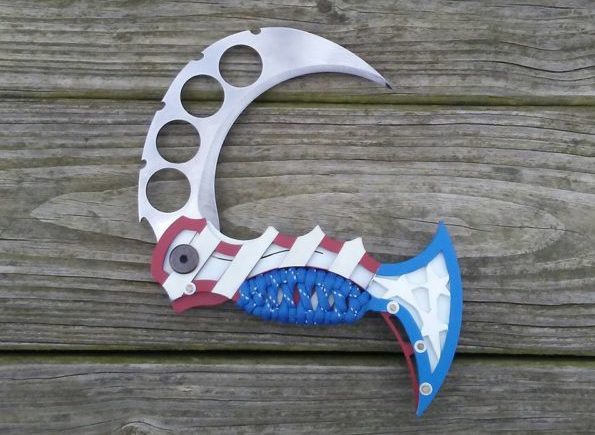
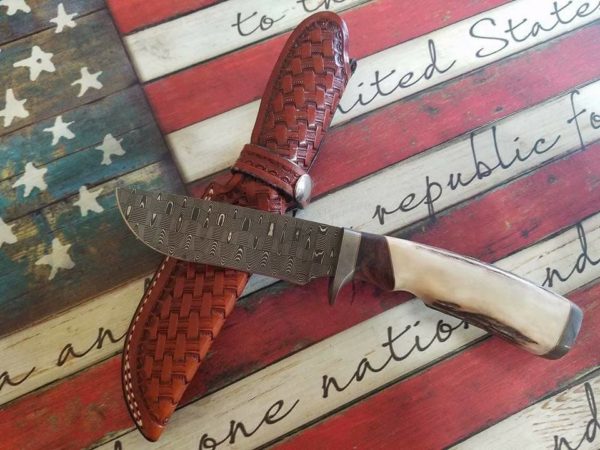
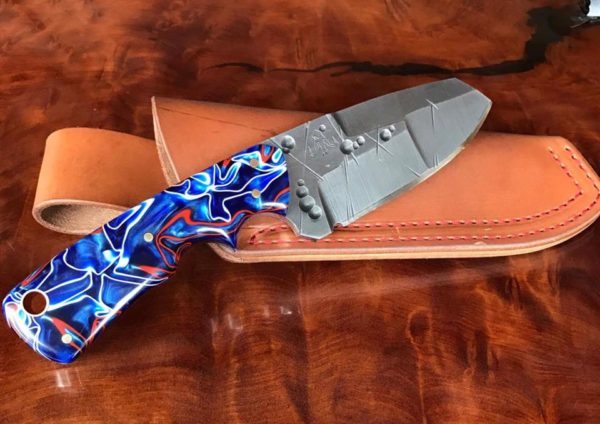
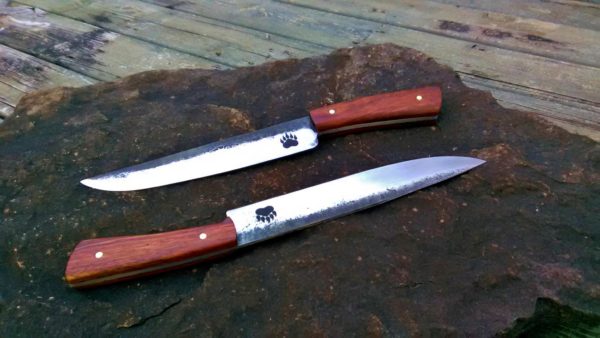
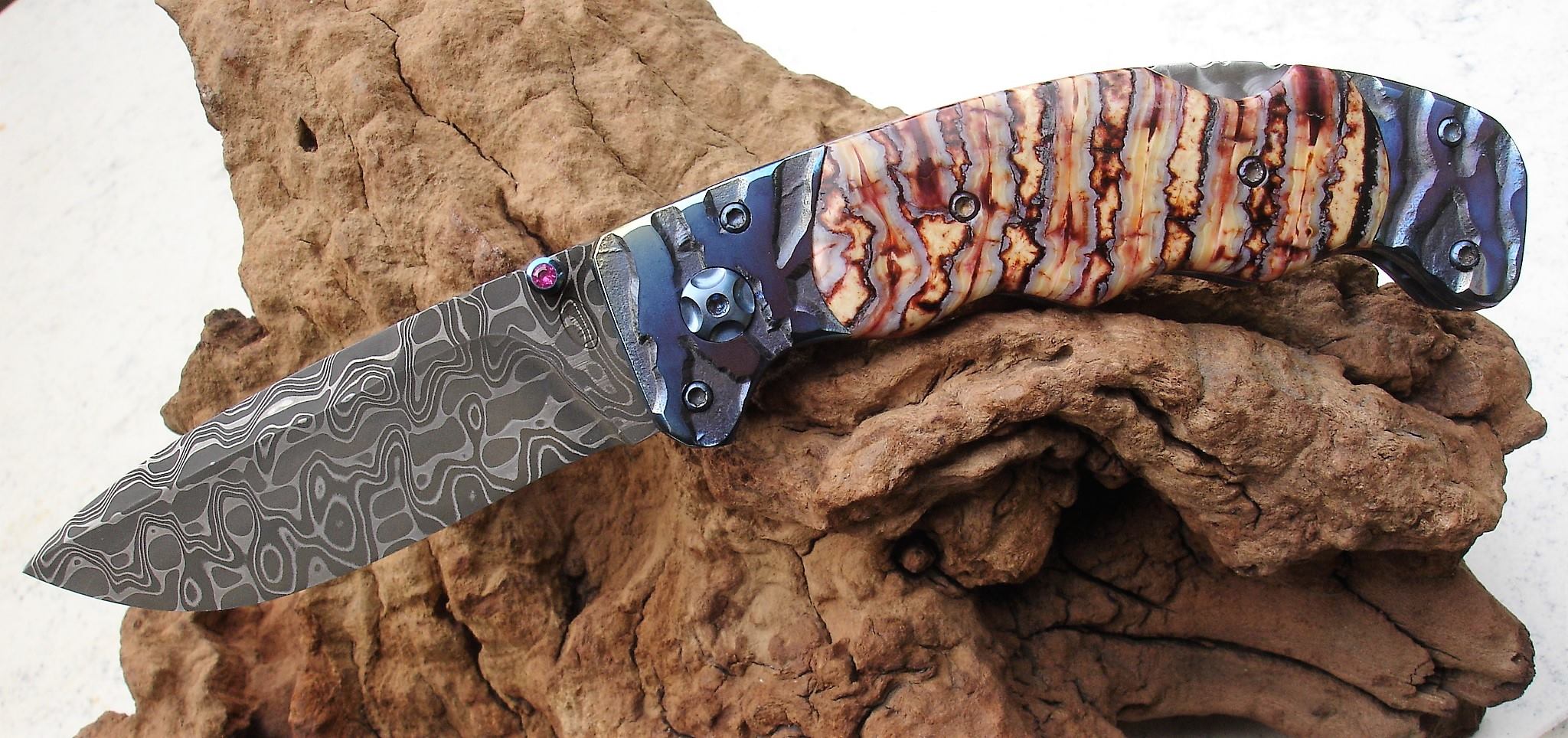
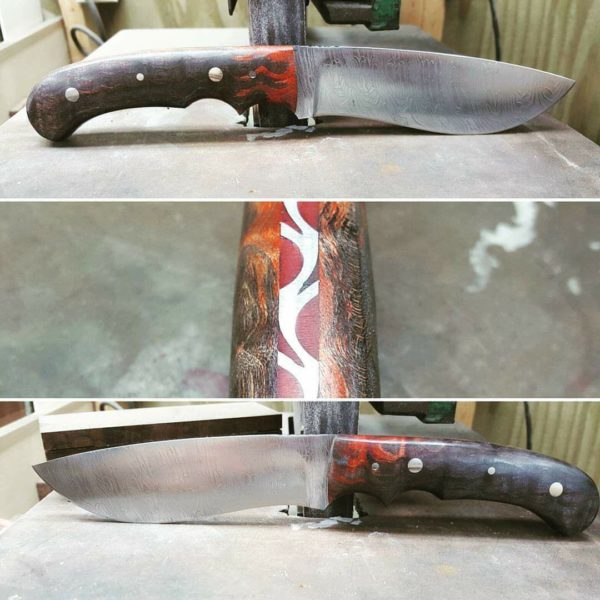
BLADE posts knife pictures on its Instagram account to highlight knifemakers’ work.
Editor’s note: Follow BLADE on Instagram here. Also, anyone buying or selling knives online should take caution when doing so on a social media platform. Recent events have singled out “weapons” content, and Instagram (owned by Facebook) is likely to be no exception. Diversification is key. Remember: In-person knife shows are still the best bet for buying/selling safely and securely.
Instagram Knife Pictures Help Knifemakers Sell and Knife Collectors Buy
A wave of Instagram commerce is building in the knife industry, and there is no indication of a slowdown at this point. Those who have leveraged the platform have seen increased activity that otherwise might have required hours and expenses associated with travel, marketing and promotion.
“The impact on the knife community is significant,” Curtis Iovito of Spartan Blades commented. “I can say that this year we have reached more prospective customers and knife lovers than we have on Facebook based on customer responses. It truly is a mix of social responses, providing information and assisting prospective buyers. Instagram has started allowing businesses to sell via the platform, and we plan to do this soon. Sixty-four percent of sales for us are from mobile platforms, so we see this as a plus.”
“I had to come out of the stone age to get with the program, and it has doubled or tripled my business,” asserted knifemaker and BLADE® field editor Kim Breed. “You can put your wares out there for sale, and people comment or order and everything else on one simple site. You can go straight to your cell phone and post pictures and get immediate feedback.”
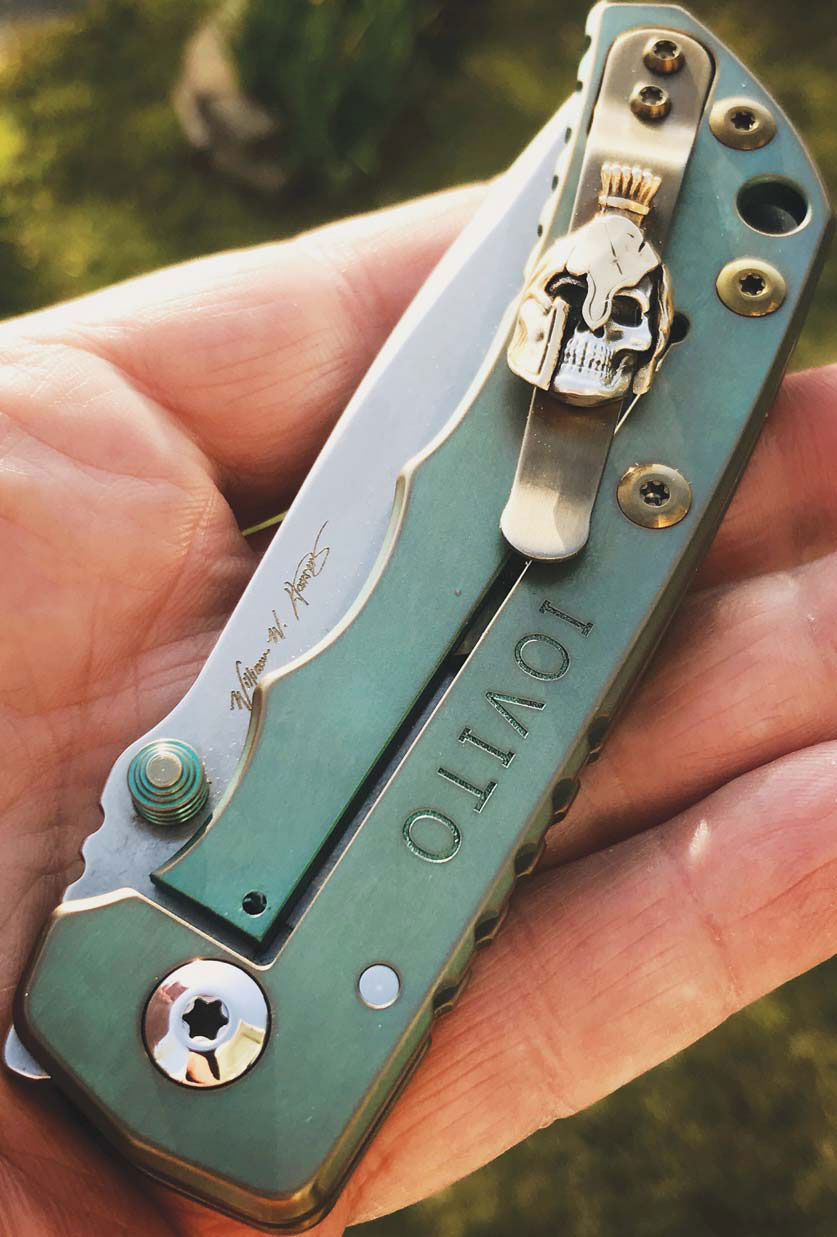
Curtis Iovito of Spartan Blades said Instagram is a great way to share knife pictures and information, and to do so “in a flash.” (Spartan Blades photo)
Purveyor Neil Ostroff of True North Knives started an Instagram account as a social tool to connect with friends, family and customers, but it soon became apparent that an additional sales tool was at his disposal. He changed his account from his personal name into the True North Knives (TNK) brand. He monitors how posts are received by the public, using the “View Insights” option for real-time metrics.
“As Instagram and other social media platforms are constantly evolving and getting better, I’m finding that Instagram is the easiest to use and provides the most results,” Neil explained. “An example of a result is getting a direct message, e-mail or phone call asking for more information about the product. Although we only post knives that are immediately available for online purchase, it’s always nice to have some practical contact with the buyer. We take pride in our knife images, whether they’re taken by a professional like Jim Cooper or our excellent in-house team. If the picture is not top rate, then it reflects badly on the product.”
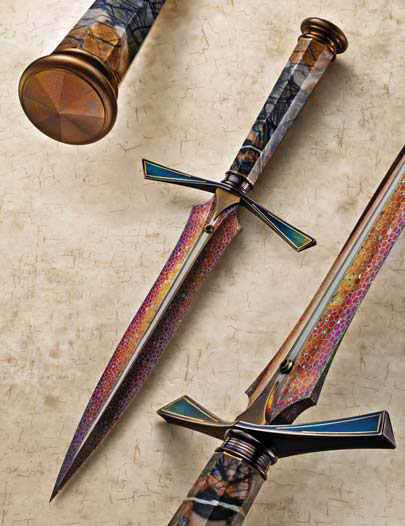
Bertie Rietveld put this image of his Omega dagger on Instagram and received a number of interesting comments, including one that read, “More like OhMyGod Dagger.” The guard is stainless steel with 24k gold. The blade is Rietveld’s dragonskin damascus with Stanhope lens at the base of the fuller. (SharpByCoop image)
More Than Just Knife Pictures
Breed points out that advertising in most any format is expensive. Knife pictures posted on Instagram allow immediate access to potential buyers at virtually no cost.
“Putting yourself out there to hundreds of thousands of people is powerful,” he noted. “If they’re looking for a knife, as soon as they search for custom knife or damascus, all sorts of stuff pops up to choose from.”
Kim refuses to hard sell on the platform. “Buyers just ask ‘how much?’ and it is a process of direct messaging between you and that person,” he said. “Some people post prices out there and everything has a different price to it. [Costs of knife- making supplies] have gone up 20 to 25 percent this year. If you’ve got old stock maybe you can keep prices lower, but if it’s newer stock you’ve got to pass the cost on. People will message me if they’re interested in something and then we talk price.”
After seven or eight months on Instagram, Kim sees an unlimited future for the platform.
“All the stuff you’ve posted from when you first started [on Instagram] is out there,” he observed. “So, you don’t have to continually post the same kind of knife. Just as you make them you can throw them up on Instagram.”
Instagram Cautionary Tales
Though social media is asserting itself in the TNK sales process, Ostroff is warily watching developments. His website is still king with his business at this point.
“In spite of Instagram’s popularity and audience, for True North Knives our website still takes in 90 percent of our sales,” he added. “As with any other shopping-cart-based website, the purchase is triggered by the photos, but then we offer a smooth and easy way to select, pay and order the knife. Instagram does not do that. It merely brings the product to the subscribers but then the hunt begins, and many potential buyers must go through many steps trying to contact the knifemaker, who may or may not be available to take an order.”
Another caution from Ostroff is that Instagram provides any seller with an “escape hatch” to sell a knife to anyone and not necessarily the first customer who steps up to buy. When a traditional e-commerce website operates, the item for sale is listed and directly connected to actual inventory; once it is sold it is gone and marked as out of stock. “Fair game for all!” he said.
“Many knifemakers on Instagram are only offering their knives for sale by lottery or raffle. As I don’t buy knives from Instagram I feel sorry for the people who aren’t always ‘attached to’ their phones, and also don’t have the money to, in many cases, overpay for knives due to the hype,” Neil related. “Many knives are sold at grossly inflated prices by knifemakers who are merely looking for the quick buck with no regard for a potential secondary market”—a secondary market that will never come about when the initial/primary purchase price is way too high.
Still, the luster of Instagram has drawn custom makers, purveyors and purchasers to the platform like moths to a flame.
“Initially, the knifemakers get a large audience, not only from active buyers but also from fans who may not be able to afford these knives but who really enjoy seeing the blade—like eye candy,” Ostroff said. “Knifemakers should assign or hire others to manage their account after knives are posted. Potential clients have questions, most of which never get answered by the knifemaker.”
According to Breed, payment is sometimes a sticky proposition. “When people talk with the knifemaker they should use common sense,” he remarked. “Like the internet, Instagram is a great thing, but it can be ugly at the same time. I let a guy place his order, and when I get close to sticking the handle on [the knife], then he needs to pop a check in the mail. Others pay with Paypal as soon as they order a knife, but some want to see what the finished product looks like.”
Mixed Signals?
No, simply an assessment of the pros and cons of a growing medium in the knife industry, one that cannot be ignored and likely will never go away.
“You almost have to get on Instagram,” Breed offered. “The younger generation that was raised on it will be jumping on other sites, too. I get on the computer once or twice a week because I’m spending most of my time making knives. Instagram is nice because it’s on your phone. If you’re grabbing lunch out or in your shop, you can have a brand new knife posted in less than two minutes and can follow up on what is happening with it.”
However, the traditional opportunity to hold the real knife in your hand is diminished. Buying from knife pictures has its own risks. The situation is always improved when buyer and seller really know one another. Time will tell how Instagram truly changes the buying/selling process.
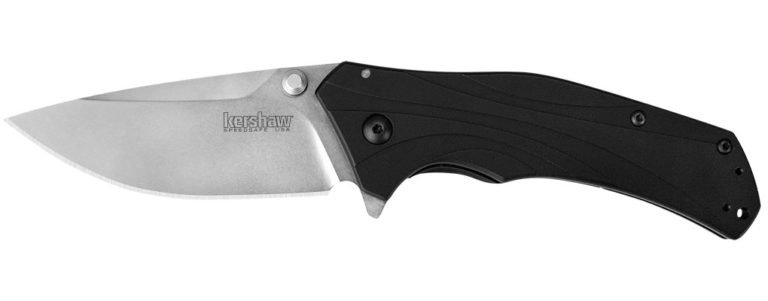
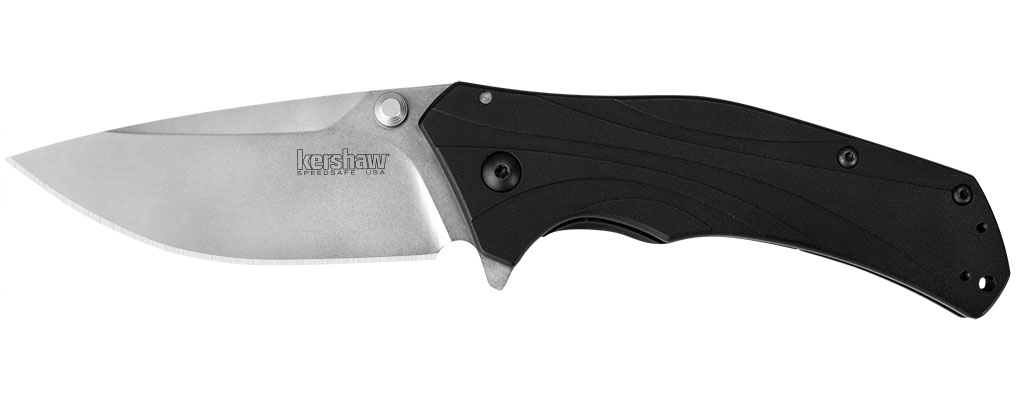
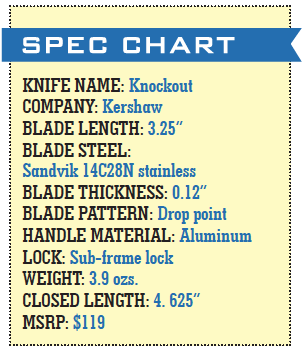
The Kershaw Knockout offers a bigger design than most EDC, but it’s still lightweight enough to stick in a pocket. (Kershaw photo)
An Eye-Catching EDC Knife
To my eye the Kershaw Knockout is in fact a knockout. The design is sleek, flowing and graceful, with all details blending into the whole—clearly a 21st century EDC folder.
The deep-bellied drop point blade emerges from the smoothly contoured handle easily and strongly but doesn’t threaten to jump from your hand.
The thin handle makes for a comfortable waistband carry. Though thin, the chamfered edges of the aluminum handle made for a surprisingly comfortable grip, even after extended cutting of rope and rubber tubing. It also balances right where it should at the index finger.
The deep belly sliced everything well. The frame lock was as solid as the proverbial bank vault door. The thumb stud is machined and polished and has no rough edges. In fact there are no rough edges anyplace on this little gem.
The clip is strong but not long enough or strong enough to prevent the knife from moving in the waistband of athletic pants, which I happen to wear a lot. Like most tip-down models, the positioning of the knife when carried requires a grip shift to get to a proper cutting position.
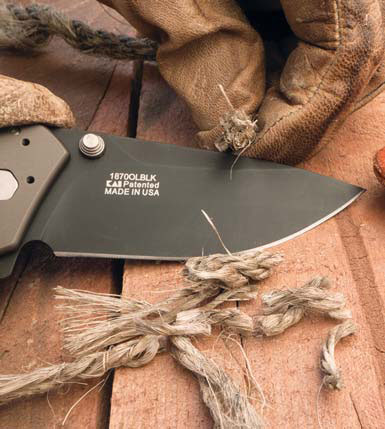
The deep belly of the Kershaw Knockout sliced everything well, including quarter-inch hemp.
The Verdict
This is such a handsome piece of work I’m almost tempted to put aside my preference and EDC this one.
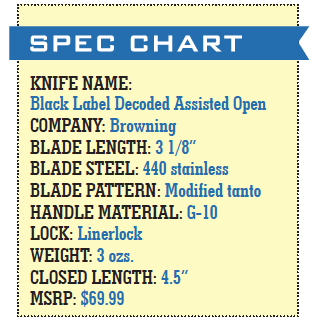
The Browning Black Label Decoded assisted opening knife sits somewhere between an EDC and a tactical. (Browning photo)
A Workhorse EDC Knife
Generally speaking I am not a fan of tanto blades. In the case of the Browning Black Label Decoded Assisted Open, however, I like the blade design quite well.
Its squared-off tip made for a perfect cutting edge on rope and rubber tubing, and made my work easier. If I had to cut rope or tubing all day, this would be my knife of choice. The modified tanto blade worked equally well on other materials.
The handle is contoured and reasonably comfortable, though the edges could do with some rounding. The grip is a tad heavy but nothing most folks would notice. The clip was very strong and positioned the tip-down blade for an easy, natural grip.
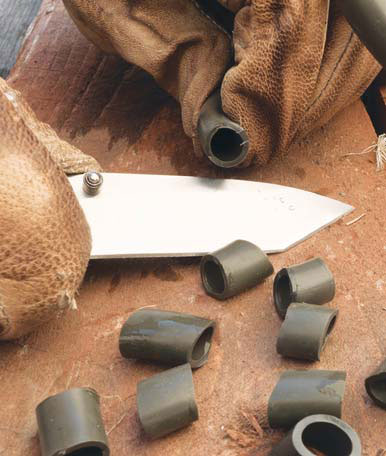
Testing the Browning Black Label Decoded.
The Verdict
It’s a handy-sized assisted opening knife that does pretty much everything I would need it to do.
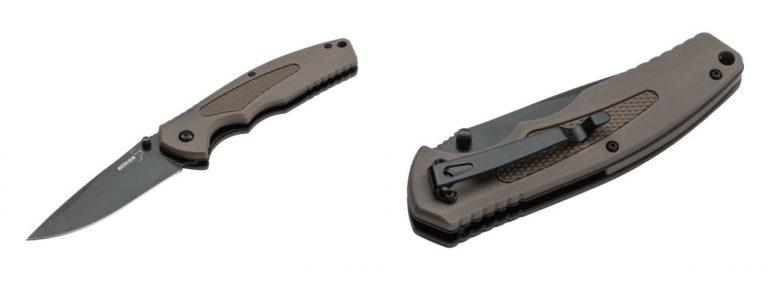
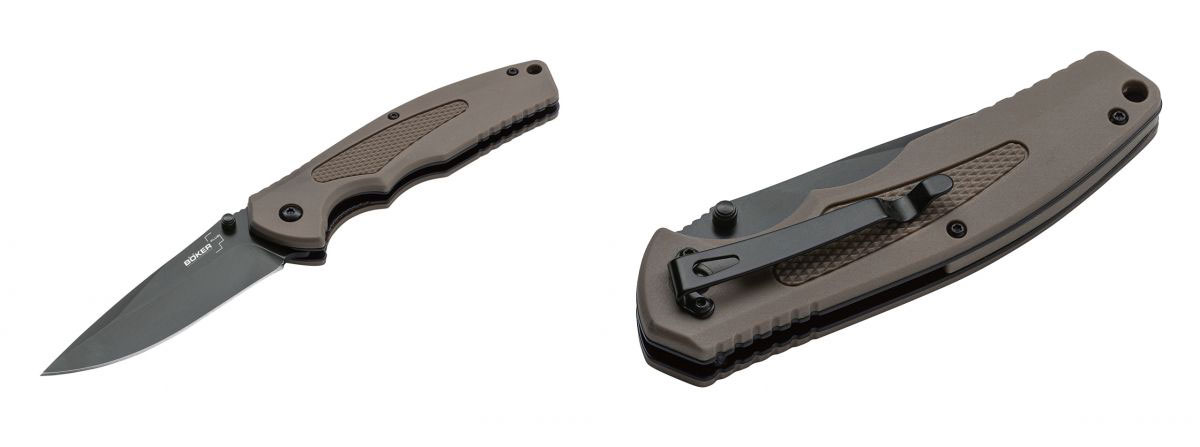
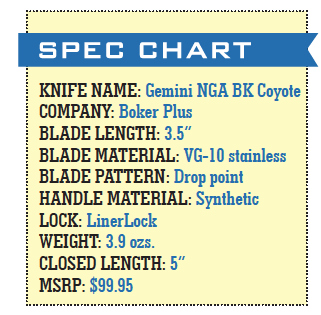
The Boker Plus Gemini NGA Coyote offers extra heft as an EDC knife. (Boker image)
Tough Like a Gorilla
The Boker Plus Gemini NGA Coyote carries tip down, which I prefer because it places your thumb on the blade opener without requiring a shift of grip. The clip was strong and secure, even in athletic pants, and positioned just enough of the handle to protrude above the belt line to allow a secure grip with no fumbling or shifting required. The handle has a slightly tacky feel with checkering on the sides of the scales.
The assisted opener flings the blade strongly from the handle with a slight touch on the opening stud. Make sure you have a firm grasp on this one before pushing the stud. The linerlock was solid.
The knife balances perfectly right at the index finger, which makes it seem light in hand and makes for ease of use.
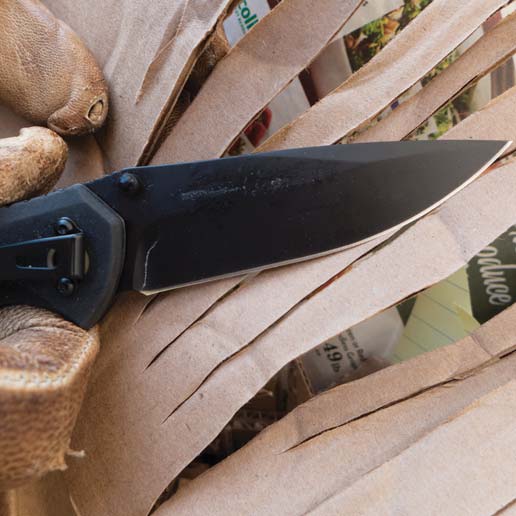
If you like your EDC knives to pack bite, the Boker Plus Gemini NGA Coyote is a great choice. (Mary Lou Ayres photo)
The Verdict
The Gemini is a well-made knife and the one I would choose if I had to cut up a garage full of cardboard.
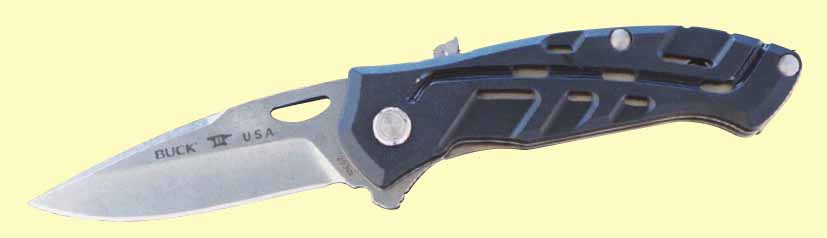
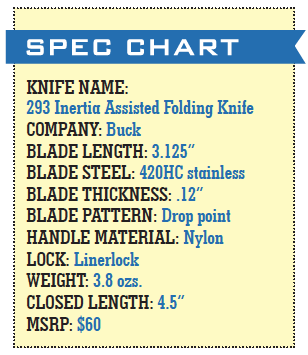
BLADE magazine review: For an MSRP of $60, it’s tough to beat the Buck Inertia as an EDC knife. The locking blade keeps accidental opens at a minimum. (Mary Lou Ayres photo)
Why the Buck Inertia is a Great EDC Knife
The Buck 293 Inertia Assisted Folding Knife stands out with a mechanism to lock the blade closed. An open blade in a waistband or pocket could be a painful, bloody mess.
With the lock disengaged, pushing the hole in the blade opened the knife smoothly and strongly without it threatening to jump from my hand. The liner locked the blade open securely.
On all cutting materials the drop-point blade performed with predictable results—well. I mean, come on, it’s a Buck!
The skeletonized scales lightened the knife and gave it a nice balance right at the index finger. The clip was strong but a little too short to prevent the knife from moving when worn with elastic-waisted athletic pants. The tip-up position required a shift of grip to get to a cutting hold after withdrawing the knife.
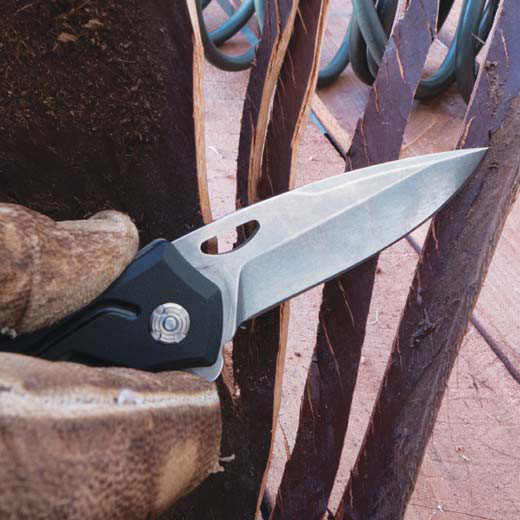
Cutting strips of dried palm fronds with the Buck Inertia. (Mary Lou Ayres photo)
The Verdict
All in all, the Inertia is a good example of a contemporary assisted opener at a modest price from an old-line company known for decades of quality.
It’s challenging to know which knife sharpeners are junk and which are worth the money. To help, BLADE staff and contributors assembled this list. These are the knife sharpeners that those “in the know” use, but they won’t break the bank.
How BLADE Chose These Knife Sharpeners
BLADE received no compensation for the items that appear on this list. BLADE does not benefit financially from affiliate programs on any of the links. These picks are based on experience, knife sharpener reviews from the magazine, and what’s hot in the marketplace. There are more excellent options beyond this list.
Remember: a sharpener can’t help you if it never leaves the drawer! Buy a knife sharpener you’ll enjoy using.
Top Pick: Electric/Manual Combo Knife Sharpener
Work Sharp Combo Knife Sharpener
PROS
For all types of knives
Simple to use for beginners, but yields advanced results
Offers electric sharpening (removing metal) and manual honing (straightening metal) in one unit
Easy maintenance with compressed air
CONS
Produces metal dust (store it away from food)
Only offers 25-degree angle for edges
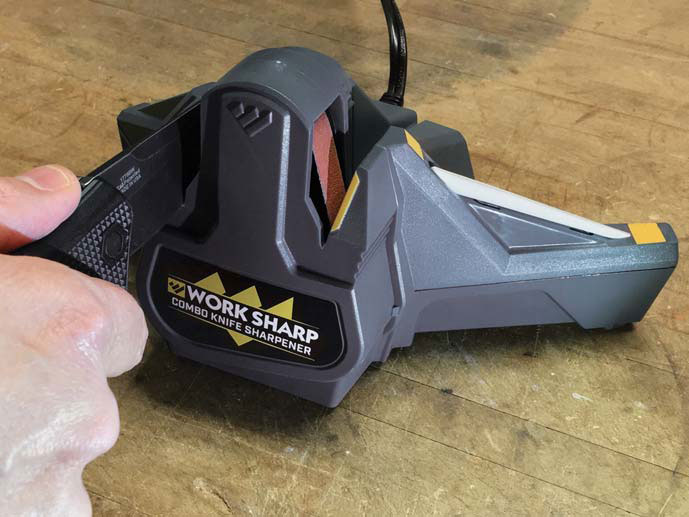
The Work Sharp Combo Sharpener is designed for those who want simplicity along with the results that abrasive belt sharpening offers. One speed, one belt, one angle—everything is fixed. (DMS Captures image)
Winner: 2016 BLADE Magazine Accessory of the Year!
Featuring a flexible abrasive belt, the motorized Work Sharp Combo Sharpener (WSCS) from Work Sharp is simple and effective. It uses long lasting abrasive-belt-sharpening technology and puts a convex edge on any blade.
It has one sharpening angle, one motor speed and one grit of belt only. Simply plug it in and turn it on. Configured in a nice, compact form, the built-in angle guides eliminate the guesswork of holding a consistent 25-degree angle.
Pull the blade through each slot to sharpen both sides. After achieving a sharp edge using the belt, switch to the tapered ceramic rod to further hone the edge to hair-popping sharpness. Rest the blade flat against the yellow pads and move it from tang to tip in one sweeping motion using light pressure.
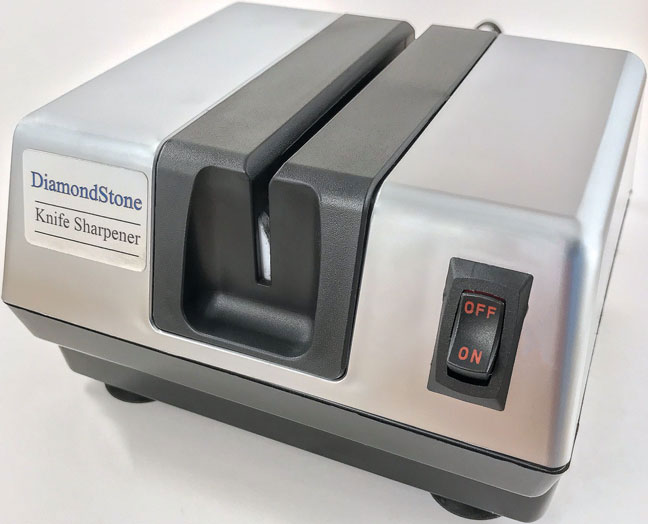
The McGowan DiamondStone electric sharpener is a singlestage unit with counter-rotating abrasive wheels that produce a keen edge quickly on any blade, though it does so especially well with kitchen knives.
PROS
Quick and easy to use
Works especially well on kitchen knives
Chrome finish doesn’t look out of place on the countertop
Design keeps metal dust to a minimum
Less noisy than other models
CONS
Boxy design may not be visually appealing to everyone
Housed in a combination metal/plastic housing, the DiamondStone is available in brushed chrome or black. The brushed chrome blends in nicely on a kitchen countertop with other kitchen appliances.
Out of the box, the sharpener looks well built with top-notch fit and finish. It is quite boxy in appearance, with a pronounced slot running down the middle. Inside the slot sits multiple diamond-infused ceramic wheels that interlock and rotate counterclockwise in relation to each other in order to sharpen both sides of the edge simultaneously. The unit runs smoothly with minimal noise.
Place the blade in the slot starting with the tang end and pull straight toward you, using a minimal amount of pressure on the wheels and drawing back at a moderate pace to allow the ceramic wheels to do the work. As you approach the blade tip, lift the handle slightly so you can sharpen the blade’s belly evenly as well. Once you reach the tip, lift the knife out of the slot and repeat. Usually, a few strokes through the DiamondStone yield a very sharp edge.
This is an ideal type of sharpener for novices because there’s only one motion involved—pulling the blade through the machine.
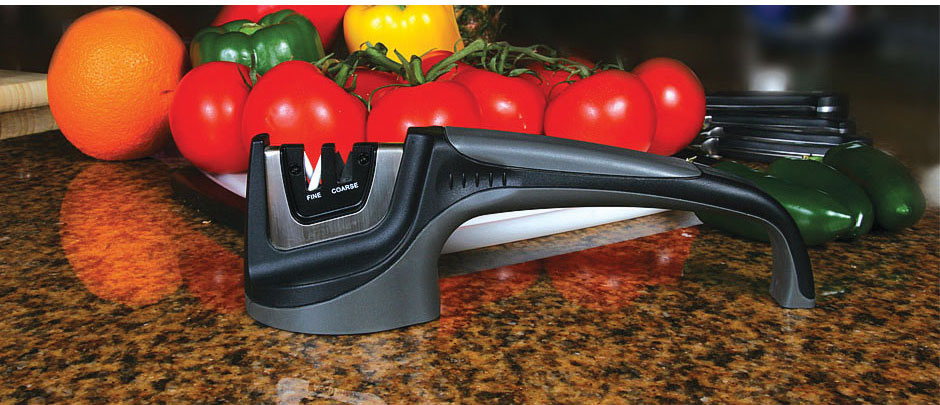
The best pull-through, manual knife sharpeners feature a secure grip, a sturdy design, and solid construction for durability. A $20 investment ought to last you several years. (AccuSharp image)
PROS
Rubber grip for secure sharpening
Sharpening and honing options
Heavy duty design
Compatible with most plain-edge knives
Could not be simpler to use
CONS
Sharpener/honer may become loose after years of use (as with most manual pull-through knife sharpeners
Lacks the “cool factor” of more advanced knife sharpeners
Yes, there are plenty of pull-through, manual knife sharpeners out there. Some of them even resemble the design of the AccuSharp Pull-Through Knife Sharpener. So why did this one make the list?
To put it simply, this is a well-built manual knife sharpener with a sturdy design. That’s really all you need to worry about, because the sharpening technique will be the same. Draw the blade through the sharpening or the honing V with gentle pressure. Let the tool do the work. So long as you can safely move the blade through the V, this manual sharpener will tackle any type of knife (except for serrations).
This is a knife sharpener to keep in the kitchen drawer, the work bench in the garage, at the cabin, or even in a backpack.
See Also: Just about any other manual, pull-through knife sharpener. Look for solid grips, a sturdy design, and solid construction. It’s OK to pay a few dollars extra for durability’s sake.
Knife Honing Rod Tips
What’s the difference between honing and sharpening knives?
Honing rods refresh an edge, but they do not sharpen. That’s an important distinction. Honing is something that’s done regularly to tune up a blade, such as before preparing a meal, or immediately after sharpening. That’s because honing straightensthe existing edge. Sharpening removes metal from the edge, which is why it shouldn’t be done as often as honing.
Confusing this entire category is how some honing rods are called sharpening rods, and vice versa. The key is to look at the material.
Three Types of Honing Rods
Generally speaking, there are three types of honing rods: steel, ceramic and diamond. While each has different characteristics, there are some things to watch for:
A secure, ergonomic grip
A sturdy guard that protects your hand
A ring on the handle for slipping a pinky through in case you drop it
The rod should be longer than the blade of the knife/knives you intend to sharpen
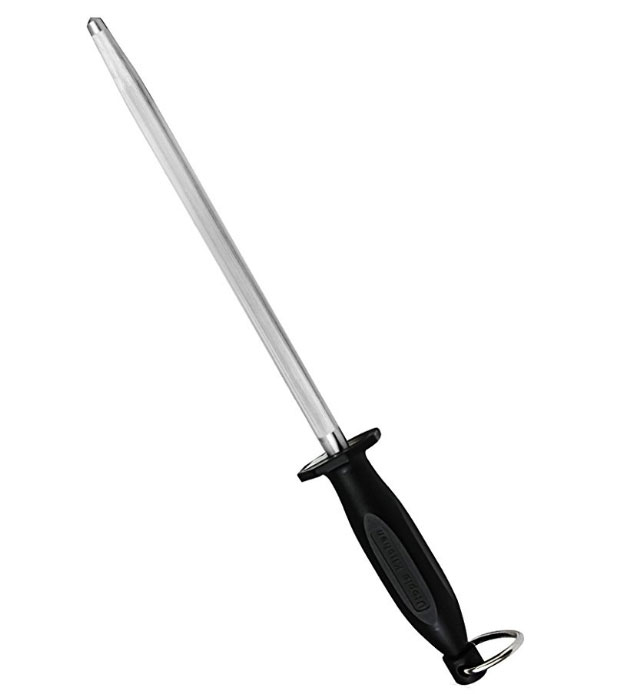
There’s no need to overspend on steel honing rods. This 12-inch rod from Utopia Kitchen goes for $15.99.
Steel honing rods are the most common type, and the least expensive. Because they’re made from metal that’s softer than what’s typically found on knives, they’re excellent honing tools. Don’t pay more than $20 for one.
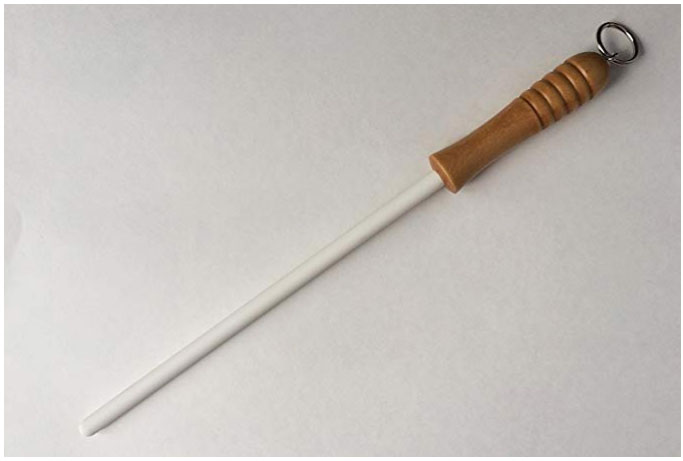
The Idahone Fine Ceramic Sharpening Rod sells for $34.99 at most retailers.
Ceramic honing rods are a bit more aggressive than steel versions. They’ll remove some steel in the process of honing. Isn’t that technically sharpening? Yes! However, if you’re someone who doesn’t sharpen as often as you should, a ceramic honing rod is a way to delay the inevitable. Expect to pay between $30 to $40 for the best value.
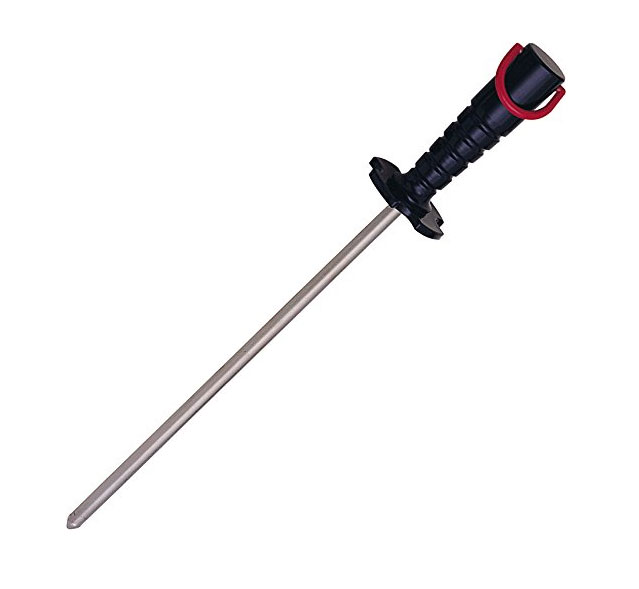
The 12-inch Diamond Steel Sharpening Rod has an MSRP of $39.68.
Diamond honing rods remove the most amount of steel during the honing process, which is why they’re basically sharpeners. If you go down the diamond rod route, pick up a steel or ceramic honing rod, too. On the plus side, diamond rods will last a lifetime. Pay $35 to $45 for a nice ROI.
Portable Keychain Knife Sharpener
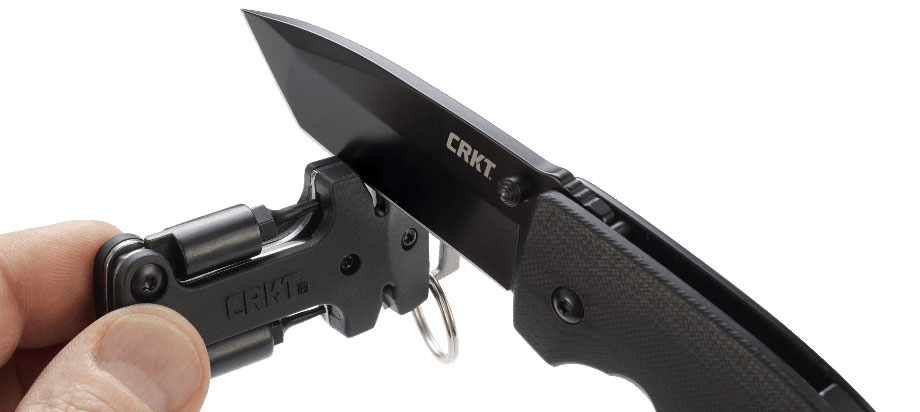
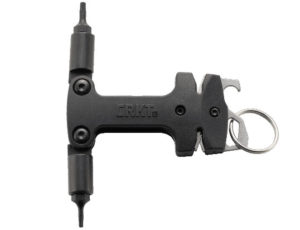
CRKT Knife Maintenance Tool (KMT)
The CRKT Knife Maintenance Tool is an excellent portable knife sharpener. (CRKT image)
PROS
Compatible with most folding knives
Tungsten manual sharpener on one side
Ceramic honing edge on the other
Attaches to keychain
Bonus: T6 & T8 Torx screwdrivers
CONS
Too small for larger fixed blade knives
Maybe you prefer a different screwdriver?
Winner: 2018 BLADE Magazine Accessory of the Year!
The KMT weighs in at only 2.2 ounces. It sports a glass reinforced nylon handle. (CRKT image)
Too many keychain knife sharpeners are garbage. They fall apart, don’t get the job done, or are challenging to hold safely. The CRKT KMT, however, is an exception.
Place the KMT horizontally on a surface, then pull a blade through the tungsten carbide sharpener or the ceramic honing edge. Use gentle pressure, because the classic V will automatically bite into the edge’s preset angle.
The T6 and T8 screwdrivers may seem like filler for a keychain knife sharpener, but they actually offer a nice grip while working the blade.
An MSRP of $29.99 may seem high for a keychain knife sharpener, but consider the abuse you put your keys through on a daily basis, and it’s worth the price.
Here’s how to sharpen serrated knives. (Bear & Son photo)
PROS
Tapered diamond rod makes sharpening knife serrations a breeze
Built-in carbide sharpener tunes up plain edges, too
Bonus: Magnesium fire starting rod
Compact design: Both rods fit inside the body
Rugged body keeps components safe
CONS
Best used in tandem with a separate, dedicated sharpener for plain (non-serrated) edges
May not want to pay extra for the fire starting rod
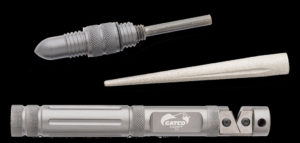
A view of the Scepter 2.0 fully assembled, with both rods inside the body. (Bear & Son photo)The two rods screw apart and back into the knife sharpener’s body. This is a serrated knife sharpener that should last you a lifetime. (Bear & Son photo)
The GATCO Scepter 2.0 leans toward the survival category, but don’t let that turn you away from it. This is an overbuilt tool that should take care of sharpening your knife serrations for the rest of your life. Diamonds are forever.
The tapered diamond rod easily sharpens all types and sizes of serrations on tactical, sporting and kitchen knives. Simply lock the rod into the groove of a serration and lightly run it toward the blade’s edge. The classic V of the tungsten carbide sharpener will handle plain edges, too.
But the real gem in this design is the way the components can all be screwed into the rugged, 6061-T6 aluminum carbide body for secure storage.
Do you really need the magnesium fire starting rod? Maybe, maybe not, but that’s just gravy.
“We invented the Tri-Angle Sharpmaker because, while similar to the [V-stick] sharpener, it solved many sharpening challenges/problems the [V-stick] couldn’t perform,” he says.
One of those problems is the V-stick model could not sharpen serrated blades. Enter the Sharpmaker’s triangular-shaped rods, which allow it to address both plain edges on the rods’ flats and serrations using the “points” of the triangle.
Once you set the sharpener up, start your blade from where the edge starts closest to the tang and run it down the hone, at the same time pulling the blade back toward you, ensuring the hone contacts the entire length of the cutting edge all the way to the tip. Hence, you’re doing two simultaneous motions—moving down the hone and pulling the blade back toward you. Do it all with light pressure.
Don’t think you can learn how to sharpen a ceramic knife? Think again. (Dexter Ewing image)
PROS
Handles ceramic or steel blades
Don’t need to mail ceramic knives in for sharpening
Works with most types of knives
Simple to use
CONS
Only offers a convex edge
Pricier than other sharpening options
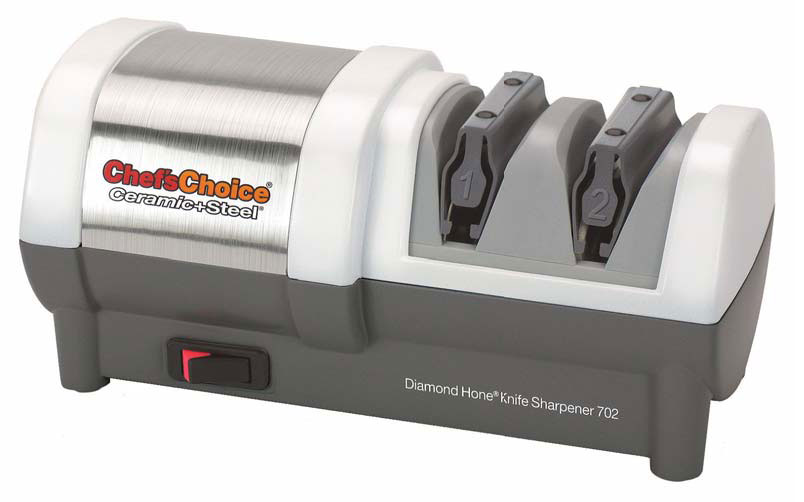
As with all motorized Chef ’s Choice sharpeners, the 702 will handle steel kitchen knives. However, it also will put the same quality edge on any ceramic kitchen blade. Employing advanced diamond abrasive technology, the 702 features two sharpening slots that hold the knives at pre-set angles, optimized for the best edge on both ceramic and steel blades. Turn the motor on and, using a steady drawing motion, pull the blade through each slot.
The 702 applies a convex edge, or what the Chef ’s Choice literature calls a “gothic arch,” to either steel or ceramic blades. The resulting grind leaves behind more “body,” which gives the edge added strength and resists chipping, while still remaining very sharp. This translates into a longer lasting edge.
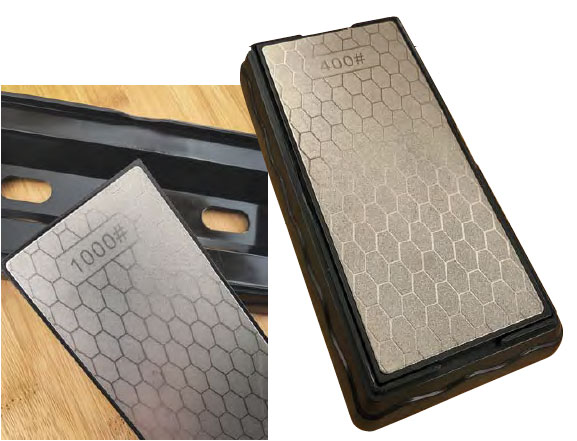
The DMD Double Sided Bench Stone features two grits on one stone. Coarse (400) and fine (1,000) grits address high-performance steel blades. The metal plate is double sided and lies on the base just so to provide sharpening convenience. (DMS Captures image)
DMD Double-Sided Bench Stone
PROS
As with all knife sharpening stones, total control over edge angle
Two sides offer two grits
You look like a pro
Sharpens knives and edged tools
CONS
May be too advanced for knife novices
Some prefer a larger stone
The DMD double-sided bench stone sports two different grits: a coarse 400 and fine 1,000. The base is molded ABS plastic and features wide, anti-skid rubber feet to keep the sharpener in place while working on a flat table, counter or bench. The sharpening surface sits in a cavity of the base. To change grits, flip the hone over and return it to the base.
A hex-like pattern on both sharpening surfaces removes the tiny metal particles so they won’t collect and clog the surfaces as you sharpen the blade.
Work with the DMD and discover the convenience of a double-sided diamond bench stone, a rarity among such stones. The coarse side easily and quickly re-establishes worn edges to sharp. After you establish the primary edge, flip the sharpening surface over to the fine side and fine-tune the blade.
Pro Tip: Try using a permanent marker to color in the entire cutting edge on both sides of the blade. As you sharpen, note where the ink is removed and where it remains on the cutting edge. By doing so you can adjust your angle accordingly to capture the entire cutting edge and, therefore, keep the angle consistent for a sharp blade.
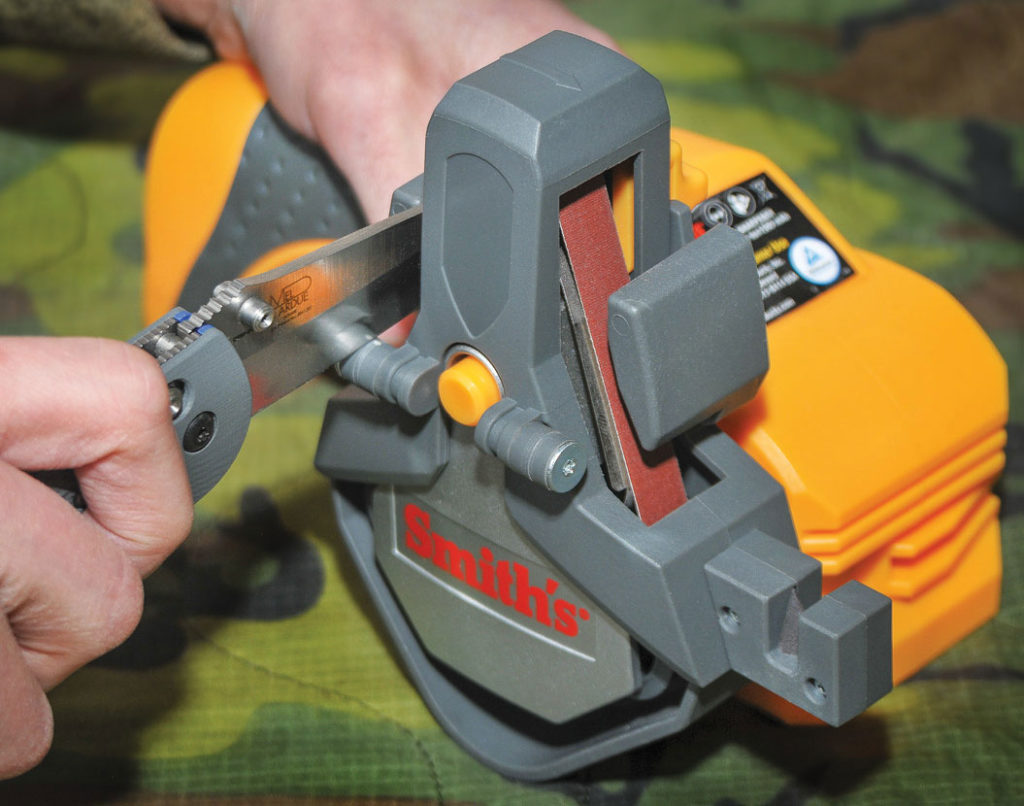
The Cordless Knife & Tool Sharpener from Smith’s Products features easily adjustable angle guides that hold the knife at the proper set angle for a consistent edge. (DMS Captures image)
PROS
Take an electric knife sharpener anywhere
No need to replace batteries
Sharpens knives and tools
Interchangeable belts for different grits
Backer plates offer extra safety
CONS
Belts can wear out
“Grabby” belts can apply an uneven edge if you’re not careful
Battery life limits use time
The Cordless Knife & Tool Sharpener represents a new step for Smith’s Products. While the company has sold and continues to sell electric sharpeners, this is the first time it has offered a powered abrasive-belt unit. Moreover, Smith’s added an extra twist by making it cordless and rechargeable. A pivoting head enables the unit not only to sharpen knives, but other cutting and digging tools such as axes, hedge clippers, bypass pruners, shovels and more. It comes with three interchangeable belts in coarse (80), medium (220) and fine (600) grits.
The belts are simple to change and color-coded for easy recognition. In addition to the multiple grits of belts, an adjustable guide maintains a consistent angle throughout the sharpening process. Another cool feature consists of “backer plates” behind the flexible sharpening belts.
“The backer plates prevent the belt from wrapping around the tip of your blade when you pull it through the sharpening slot,” says Ricky Dukes, Smith’s vice president of marketing.
Pull the blade through the slots to easily achieve a very sharp cutting edge. An ergonomic, soft-grip molded handle makes holding the sharpener very comfortable as well as non-slip.
In order to operate the sharpener, depress the rocker switch with your finger. Release the switch and the motor shuts off. There is no trigger lock to enable the sharpener to run continuously. Hence, if you need to stop the unit to regain control, simply release the switch.
One of the unit’s advantages—being cordless and rechargeable—is also a downside. BLADE’s tester operated it non-stop for 8 minutes and 20 seconds before it ran out of charge with no warning. Around the 8-minute mark the motor slowed slightly and 20 seconds later it shut off . There was no gradual tapering off —it simply shut down.
You need a knife. Everyone needs a knife. You know those plastic zip ties that you can’t get the scissor blade under that are lashing down the new grill spatula? Yeah, those. You need a knife for that. You know how it aggravates your sense of order when you’re forced to tear into the plastic shrink-wrapped to your case of water bottles? A nice slit down the center keeps the bottles upright without any unsightly stretches or ragged openings. You know how you try to open impossible-to-open snack bags with your teeth, because who carries scissors, and the seem causes a vertical tear? Yeah, that. You need a knife for that. But what we all need right now are some star-spangled, flag-waving knives that cut great!
6 Selections From True North Knives’ Freedom Collection
We’ll start with six selections from the Freedom Collection assembled by True North Knives. Often these models are available with different options, and of course they’re made right here in the USA. Maker warranties cover defects, but not abuse, so remember, it’s a knife, not a hammer or a pry bar.
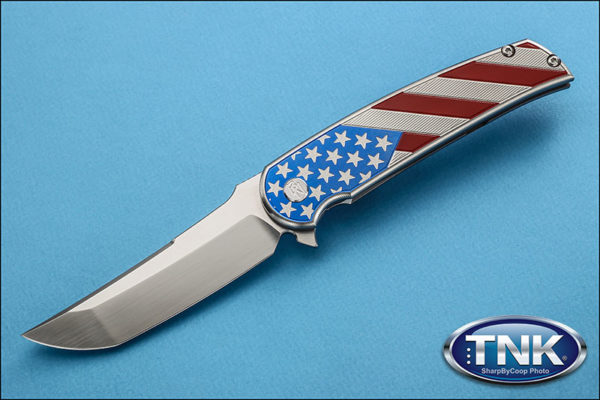
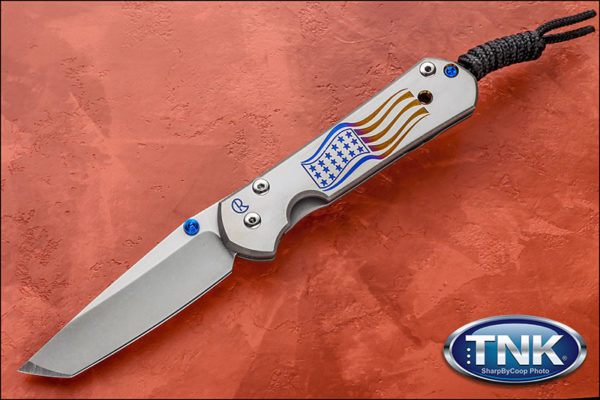
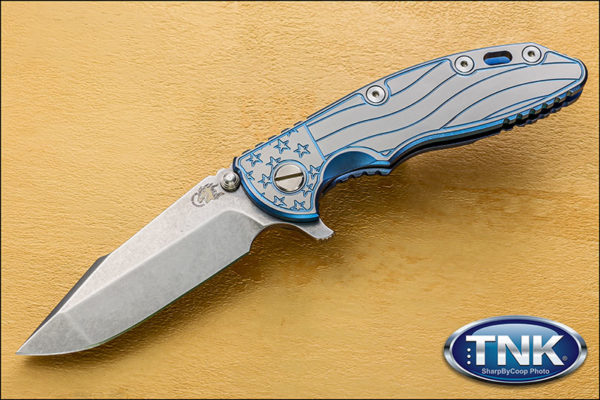
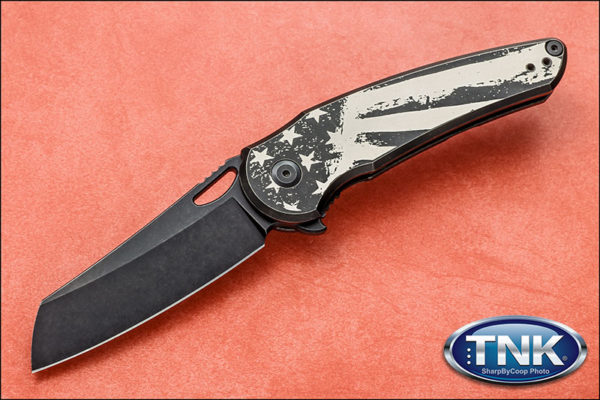
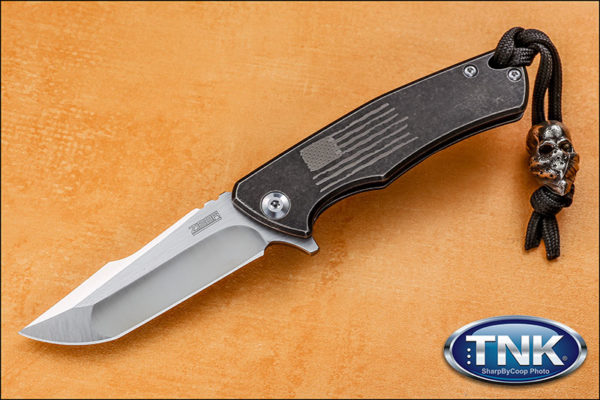
Brian Fellhoelter’s Freedom Frikkie has a 1 3/4-inch blade of stone-washed CPM 154 steel. The frame is stone-washed titanium. Overall length is 4 1/8-inch, overall weight, 1.27 ounces. Maker’s list price: $180. Contact: www.truenorthknives.com.Three-time recipient of the BLADE Show Knife of the Year Custom Best Folder, Brain Nadeau adds the Freedom Hurricane Flipper to True North Knives’ Freedom Collection. 9 1/8 inches overall, it has a 4-inch blade made of hand-rubbed CPM S35VN. The handle is titanium. Maker’s list price: $1250. Contact: True North Knives.Chris Reeve’s contribution to the True North Knives Freedom Collection is the Flag 21 version of the Sebenza 21. The 3-inch blade is made with CPM S35VN stainless steel in a tanto design. The polished titanium frame sports an anodized flag pattern. Makers list price: $425. Contact: True North Knives.Rich Hinderer’s XM-18 Flipper is another knife in the True North Knives’ Freedom Collection. The CPM 20CV blade is done in Hinderer’s Harpoon Spanto design and measures 3.5 inches. The frame is titanium and measures 8.25 inches. Maker’s list price: $650. Contact: True North Knives.True North Knives’ Freedom Collection includes Jake Hoback’s Freedom OSF (Open Source Folder). The 3.5-inch blade is made out of CPM S35VN stainless steel in a modified sheepfoot design. Overall length is 8.75 inches, overall weight, 6.4 ounces. Frame is titanium. Maker’s list price: $550. Contact: True North Knives.We round out the True North Knive’s Freedom Collection with Michael Zieba’s S1 Mini. The 2 5/8-inch blade is made with M390 super stainless steel. Overall it measures 6 inches and weights 2.288 ounces. The frame is titanium. Maker’s list price: $395. Contact: True North Knives.
21 Patriotic Cutters From Custom Makers Across The USA
These custom cutters may take longer to receive, but that’s because they’re all made one at a time in the shops of hard-grinding knifemakers who sometimes have day jobs. They’re worth the wait and will have you hitting every note of “The Star Spangled Banner” when you see how they cut.
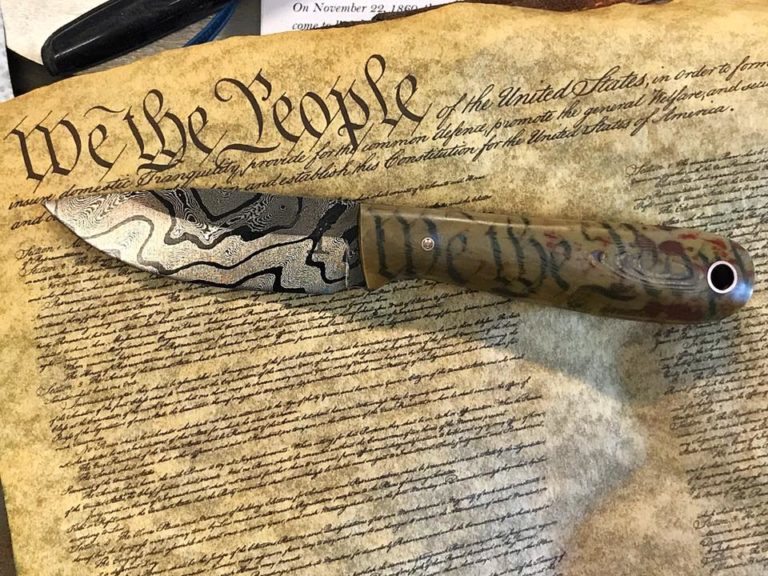
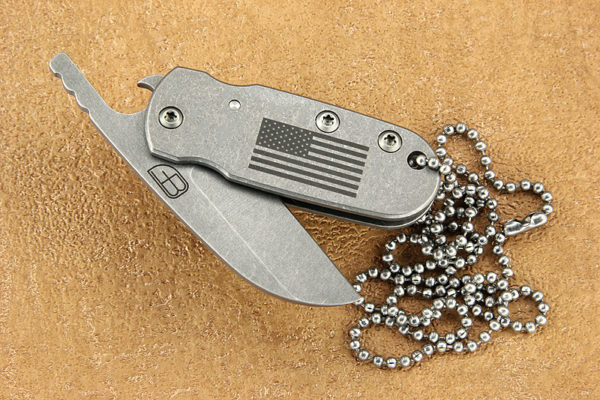
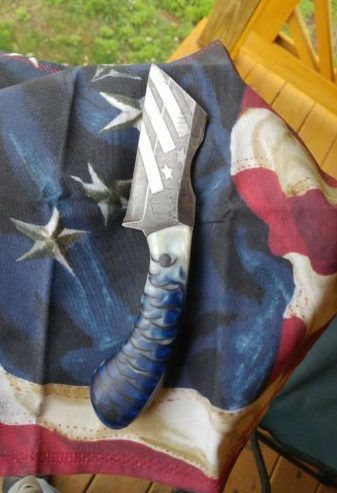
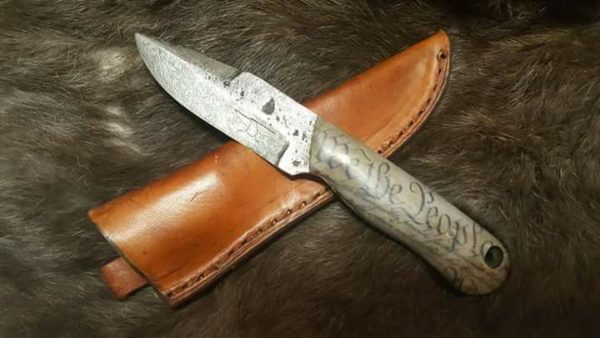
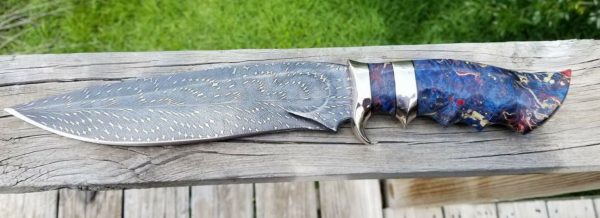
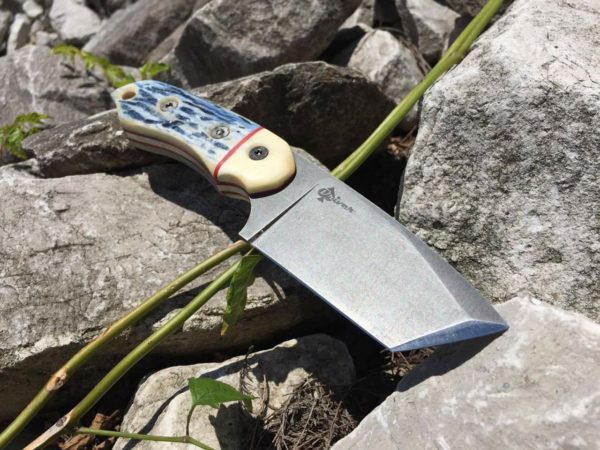
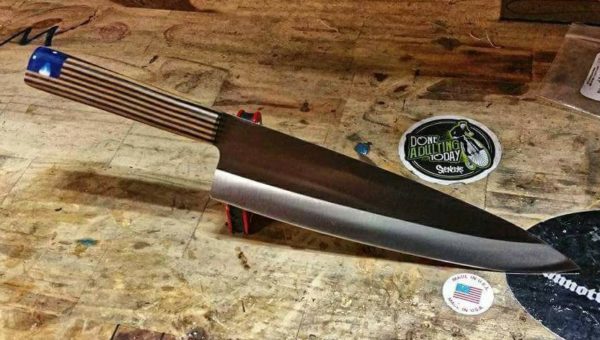
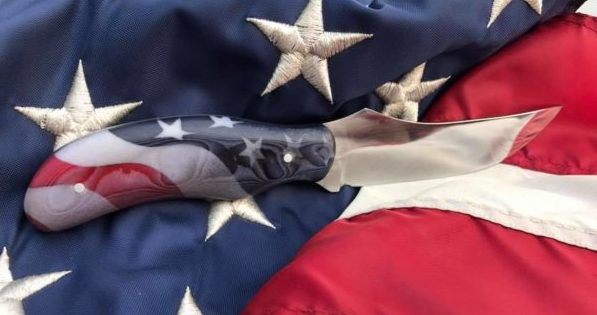
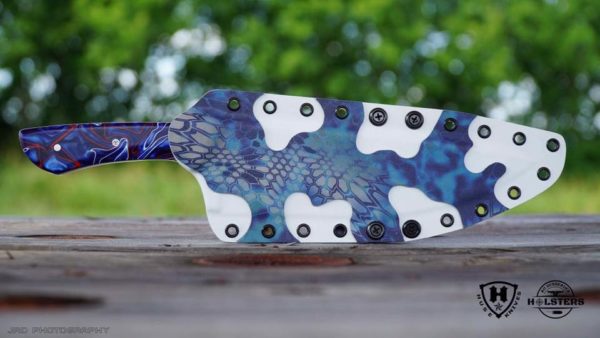
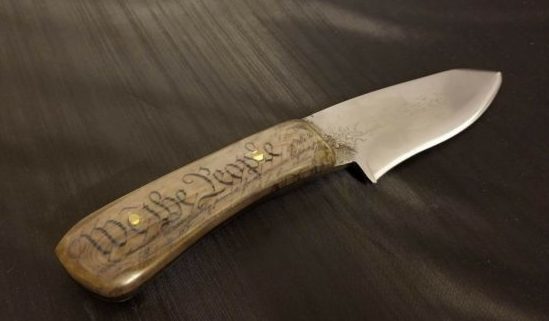
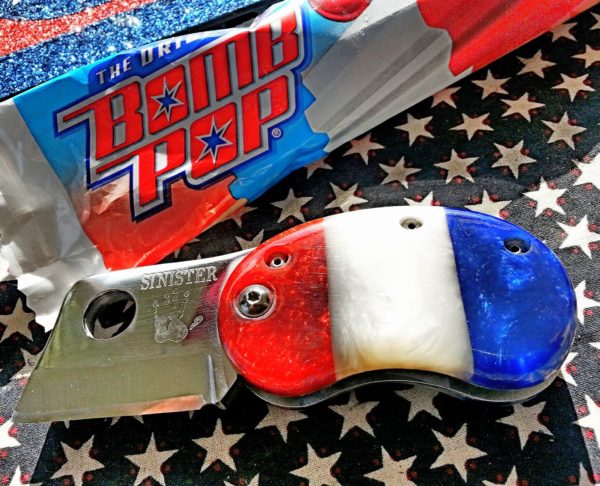
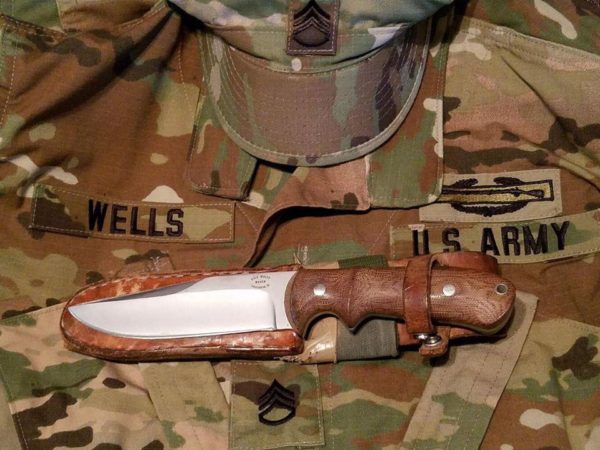
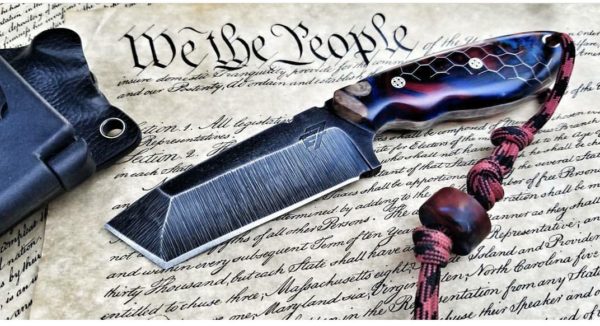
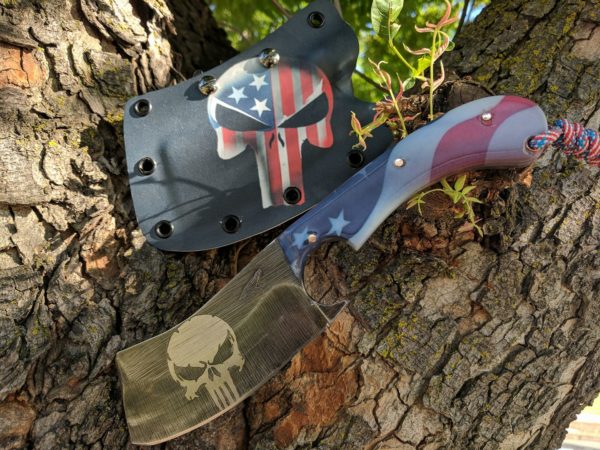
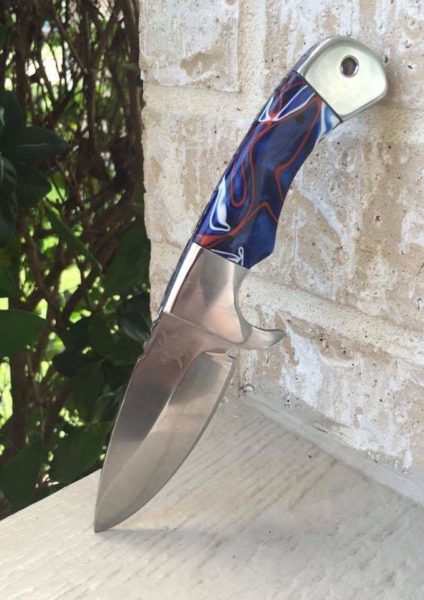
The Warnaught by Eric Luther has a S35VN blade, full titanium frames, clip and backspacer, and ceramic detent and bearings. The custom Cerakote is by Warlock Custom. Maker’s list price: $700. Contact: [email protected] or join Eric Luther Knives on Facebook.Brent Chumbley of Triple Deuces Knives made this Regulator with a 3-inch blade made of Bohler N690 steel. The titantium framelock handle’s custom Cerakote job is by Chad Waldow. Overall length is 7 1/4 inches. Maker’s list price: $510. Contact Brent Chumbley on Facebook at Triple Deuces Knives and on Instagram at triple_deuces_knives.The Beaver Tooth by Matthew Nolan of Angry Beaver Knives, has a Scandi V-ground 3 1/2-inch blade made out of W2 steel and acid etched with a flag design. The handle is a Rob Carper Innovations patriot red pine cone in white and blue resin. Maker’s list price: $275 with Kydex sheath, $325 with leather. Contact: Matthew A. Nolan, [email protected], 518-791-2551 or on Facebook at Angry Beaver Knives.Cody Wheeler of Mill Creek Knives calls this his Steel Bridge Camp model. The steel is a Nicholson American file with CARVex “We the people” scales by VP5. The 3-inch blade has a flat grind. Maker’s list price: $225. Contact Cody Wheeler at [email protected], on Facebook at Mill Creek Knives and on Instgram @millcreek_knives.Spencer Aplin of STA Custom Knives made the 9-inch blade for this American Glory out of star feather-pattern steel from HHH Damascus and Knives. The fittings are nickel silver and the handle material is stabilized and double-dyed California buckeye burl. Maker’s list price: $2000. Contact Spencer Aplin at www.stacustomknives.com.The Driver Defense Toxin has a 3.5-inch tanto blade made out of S35VN. The knife is 7.5 inches overall with jigged and dyed blue bone scales with bone bolster and red G10 liner and spacer. Maker’s list price: $250. Contact Dustin Driver at Driver Defense on Facebook.This 13-inch chef knife by Jack Keith of Dunnottar Forge Knifeworks has an partially flat-ground 8-inch blade made out of CPM 154 that is finished with a hollow grind and satin finish. The handle is stacked maple and walnut veneer with a cast blue acrylic with white stars. Maker’s list price: $350. Contact Jack Keith at www.dunnottarforge.com.The Karma by Jase White at Kastaway Custom Living was inspired by a real-world self-defense situation. The knuckles are in the CPM S30V blade rather than the handle, which is made of 1095 carbon steel. Maker’s list price: $50. Contact: Jase White at 423-453-9793, [email protected] or message at Kastaway Custom Living on Facebook.Rich Richardson made this for a retired navy commander. The blade is a mix of Devin Thomas Damascus steel in basket weave pattern and steel from the battleship USS Texas. (Authentication was provided.) Overall length is 9 inches. Handle is stag with a mesquite spacer. Maker’s list price: $800. Contact Rich Richardson at [email protected] or message him on Facebook.Jason Karl Glover of Mammoth Creek Knives made this 5 1/2-inch cleaver with triple grinds out of 1095 steel. The handle is Kirinite Patriot scales. Overall length is 11 inches. Maker’s list price: $375. Contact Jason Karl Glover at [email protected], call 801-540-7023 or message him on Facebook at Mammoth Creek Knives.JD Edwards hand-forged and hammer-finished this pair of fighters in 1095 carbon steel. The knives are 16 inches overall with an 11-inch cutting edge. The handle is made of bubinga wood and fitted with brass pins. The knives were commissioned by a family member of two brothers who are combat veterans of Iraq and Afghanistan. Maker’s list price: $250 each. Contact: JD Edwards at [email protected] or message him on Facebook at JD Edwards.Bobby Toerck made this trailing-point skinner with a 4.5-inch 1095 carbon steel blade, polished to a mirror finish. The overall length is 9 1/2 inches. The scales are fashioned with Wavy American Flag by Robert Belcher of Mental Co. Maker’s list price: $350. Contact Bobby Toerck at 903-812-1173 or message him on Facebook at T4 Custom Knives.Tom, short for Thomas, Jefferson of No Surrender Holsters made this sheath with a slide-out beverage opener on the backside to accompany “Forged In Fire” winner James Huse’s BBQ knife below. Contact Tom Jefferson on Facebook at No Surrender Holsters.James Huse, “Forged In Fire” champion made this knife using patterned steel from Alabama Damascus Steel. The blade is 9.5 inches, 14.5 overall. The handle is made from Patriot Kirinite. Maker’s list price: $700. Contact James Huse on Facebook at Huse Knives.Adam Rose of The Bearded Blade made this 4-inch blade from 1075 steel for a veteran who recently returned from Afghanistan. The handle is made from We the People CARVex scales. Overall length is 9 inches. Maker’s list price: $150. Contact Adam at [email protected], on Facebook at The Bearded Blade or on Instagram @thebeardedblade.Clay Smith of Sinister Knives calls this model the Battle Bean. The everyday carry is a friction folder knife/ bottle opener, perfect as a BBQ buddy! The 2-inch hollow-ground blade is made with W2 steel. The hardware and pivot pin are stainless and the liner and backspacer are aluminum. The handle scales are by Voodoo Resins. Maker’s list price: $150. Contact: Clay Smith at Sinister Knives on Facebook @bud809 on Instagram or email him at [email protected].Dale White of White Made Knives in Sweetwater, Texas, made this 10-inch knife for a soldier. Both the staff sergeant and the knife did two tours in Iraq. The blade is hollow-ground made out of 440C steel. The handle is sand-blasted canvas Micarta. Maker’s list price: $350. Contact Dale White at [email protected] or on Facebook at White Made Knives.John Waltz of Edge7 Custom Knives made this everyday carry tanto out of CPM3V. The hollow-ground blade is 3 inches and the knife is 7 inches overall. The scales are from J Hue Customs. Maker’s list price: $275. Contact John Waltz through www.edge7customknives.com.Jr. Madan of Patriot Horde Knives calls this model DaCleava. The 4-inch blade is made out of 1095 steel with a flat grind. Overall length is 9 inches. The handle is fashioned with CARVex Wavy Flag scales, fitted with brass pins and lanyard tube. Maker’s list price: $250 with Kydex sheath. Contact Jr Maden or Patriot Horde Knives on Facebook.Denny Furey of Furey’s Urban Combat Knives Unlimited uses high carbon 1095 steel to make the Americana. The knife is 7.5 inches overall with a 3.25-inch blade with mild hamon. There is file work on the spine, and the bolster and pommels are 410 stainless steel. The handle is fashioned from Patriot Kirinite scales. Maker’s list price: $300 shipped with Kydex sheath with hardware and embossed makers mark. Contact Denny Fury at [email protected], 405-642-2198 or at Furey’s Urban Combat Knives – Unlimited on Facebook.Tim Lambkin of Chops Knives hand makes everything on The Patriot Folding Lockback. The overall length is 8 1/8 inches. The 3 1/4-inch blade is made with pattern-welded stainless steel by Chad Nichols. The handle scales are mammoth tooth with anodized titanium bolsters and pommels. Filework everywhere, inside and out, is done by Tim. Maker’s list price: $1950. Contact Tim Lambkin at [email protected] or on Facebook at Tim Lambkin (Chops Knives).Shane Barefoot of Barefoot Custom Knives offers the Competition Chopper model in 3/4 size. Overall length is 13 inches. The flat-ground blade is made with 52100 steel. The handle is made with blue-and-red-dyed maple burl. Barefoot Custom Knives big-vine filework is filled with red resin. Maker’s list price: $450. Contact Shane Barefoot at 864-444-7410 or visit www.barefootcustomknives.com.