They might not look real, but the knife photos don’t lie. These fantasy knives, each made by a wizard of custom knifemaking, bring to mind sword-and-sandal TV shows and movies.
Aaron Schwartz
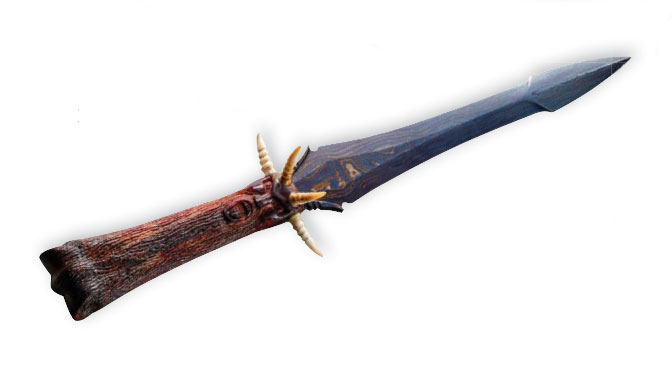
Some dyed zebra bone and Alabama damascus, and a tree came to life in the blue woods, horns protruding from its skull as it wreaked havoc on the land. (PointSeven image)
Josef Rusnak
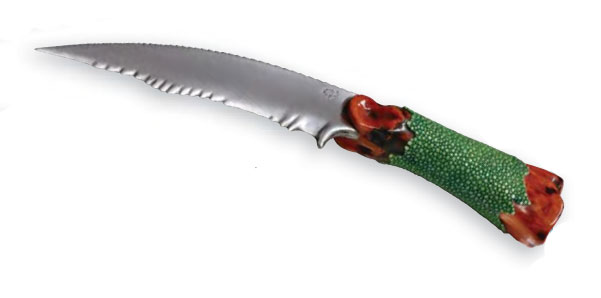
You don’t see much antelope bone on knives, nor too many 440C blades shaped like the “Dragon Claw,” which, in turn, wears the skin of a stingray with pride.
Logan Pearce
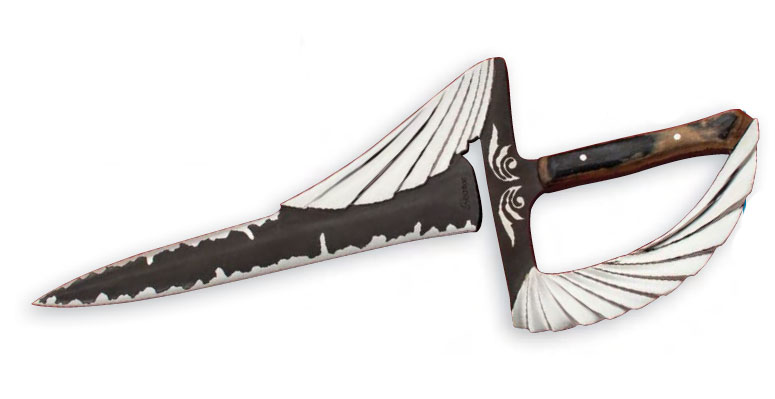
The Valkyrie, with filed O1 wings and blue mammoth ivory body, chooses those in battle who may live and those who die. (Ward image)
Jeff Knox
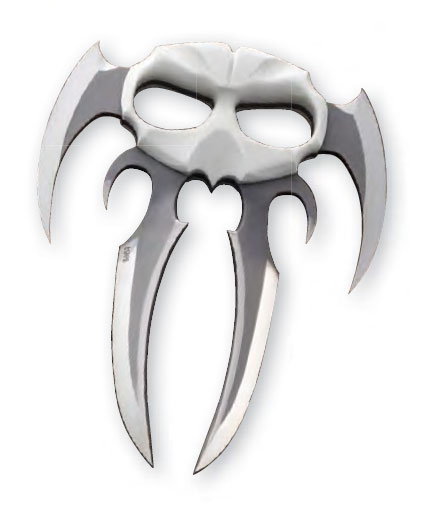
The main tusks of the “Trandoshan Mount” are hollow-ground 440C bent at 30 degrees, the horns ground using 1- and 3-inch wheels and the body of white Corian. (PointSeven image)
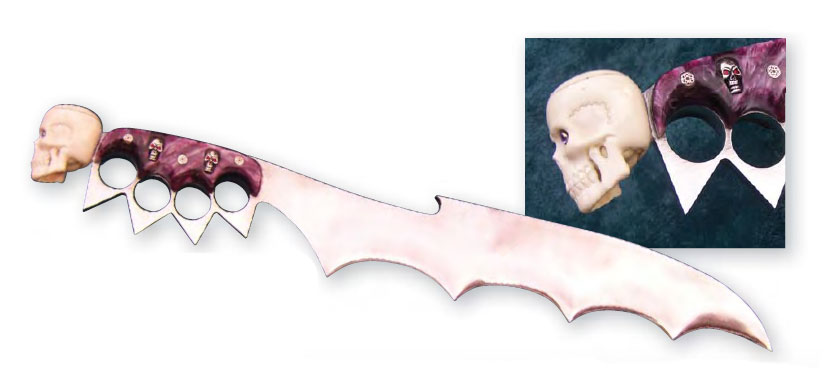
Glenn Paul Smit
The integral “knuckle duster” guard of the “Myrlande Machete” would dust ’em off if the 18-inch tool steel blade didn’t take care of them first. Silver skulls embellish the purple swirled acrylic grip, and the skull pommel is carved bone with purple glass eyes.
Like “Weird” Knives? Come to BLADE Show West 2018
BLADE Show West is taking place Oct. 5-7, 2018, in the home of weird, Portland, Oregon. Expect high strangeness and masterful custom knife presentations. Details here.
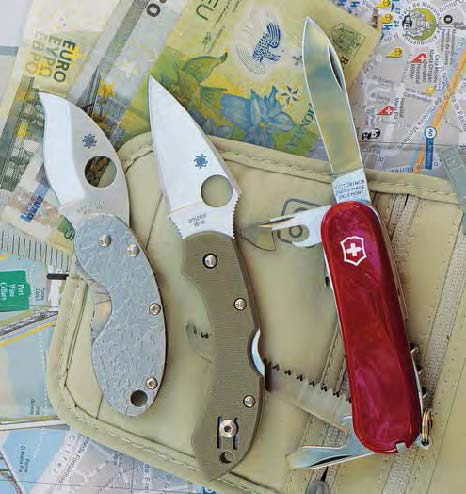
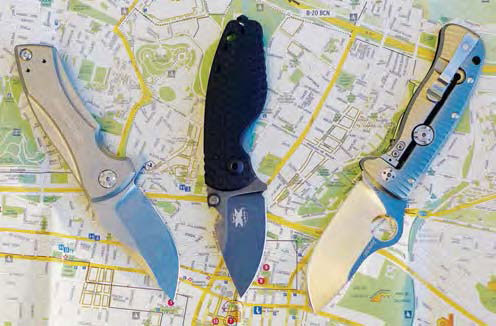
When traveling in Europe, the author and his wife often use small folding knives—from right to left, a Victorinox EVOGrip, Spyderco Dragonfly and Spyderco Cricket—for everyday tasks, sometimes including food preparation.
“Can I Bring My Knife to Europe?”
Since I write about travel, and about knives, I receive many emails from readers asking this question. I understand. You always have a knife handy. It’s your basic tool. How do you open packages, or cut anything? How can you get through your day without a knife? What if you need your knife to punch out the window of an overturned bus, or escape from a burning building?
What about that picnic next to the Canal du Midi, or on the train? You don’t want to be reduced to ripping and tearing at salami, cheese and baguettes with teeth and nails. You need your knife. But you don’t know laws and regulations in Europe and you’re a law-abiding person. So can you take your knife with you?
Yes, you can. But there are some things you need to know. In the United States, laws and regulations concerning knives are a confusing patchwork that varies from state to state, town to town, and which sometimes make no sense whatsoever. It is not possible to travel from California to New York with any kind of knife without violating a law or regulation in some place along the way.
Few of those laws and regulations are actually enforced. Enforcement is up to decisions made by an individual police officer. Those decisions will vary from officer to officer, and most importantly, according to his perception of you and the situation.
European Knife Regulations: A Primer
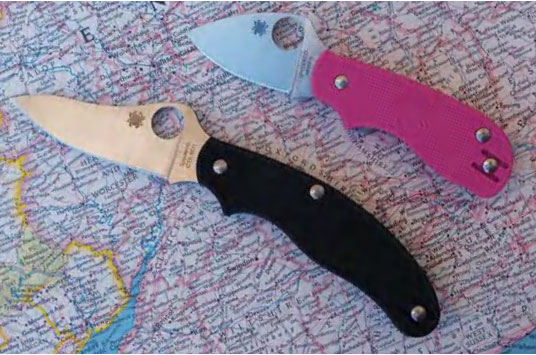
Nonlocking folders such as the Spyderco C94PBK3 “UK Penknife” (left) and C154PPN “Squeak” (right) are acceptable to carry in most European locales.
It is similar in Europe. The European Union is made up of almost 30 countries, each with its own laws, customs and regulations, which like in the United States, can seem confusing and senseless. As in the Unites States, enforcement of those laws and regulations is dependent upon the decisions of the individual police officer or security person.
I’ve worked and traveled in Europe for decades, and lived there for the past 10 years. I’ve written for BLADE Magazine and for the KNIVES annual book for almost 20 years, and have written two books on knives: The Tactical Knife and Survival Knives. As a result, I’ve met many folks in the European knife community—knifemakers, bushcraft enthusiasts, and so on.
I know many people who work in the security services and police departments in many European countries, and have talked with them about travelers carrying knives. What follows are my personal experiences and opinions based on traveling and living in almost every country in the European Union, and some that are not members of the Union. I am not a lawyer. I offer no legal advice.
German Knife Laws
Some examples of regulations concerning knives in Europe: In Germany a person may not carry on his person any folding knife with a locking blade. He can, however, carry a fixed blade up to 3½ inches long.
French Knife Laws
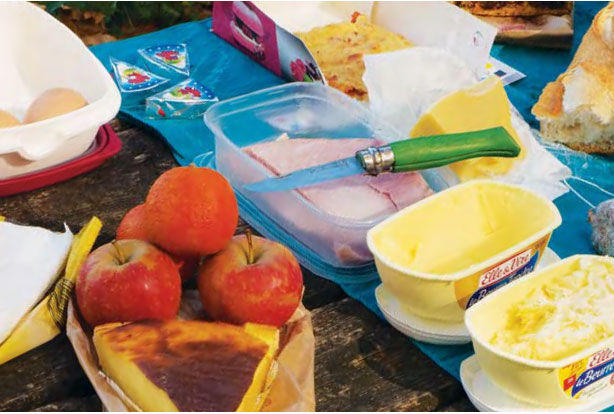
In France, a person may not carry any object that can be used as a weapon. That includes France’s famous Opinel (shown here amidst a picnic lunch) or Laguiole knives, which are national icons and are in the pockets of every third Frenchman.
In France a person may not carry on his person any object that can be, or is, used as a weapon. That includes France’s famous Opinel or Laguiole knives, which are national icons and are in the pockets of every third Frenchman.
Spanish Knife Laws
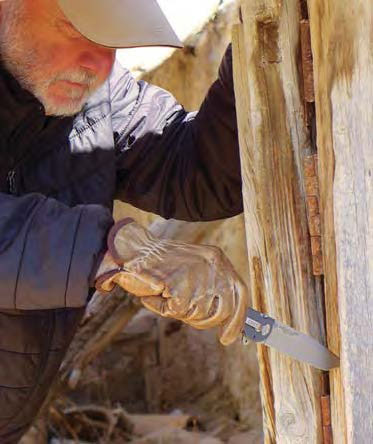
The author uses a CRKT M-16 to deconstruct part of an abandoned house in Huescar, Spain.
Spain has considerable history as a knife culture and has knives of all kinds available for purchase pretty much everywhere – including village bars, and a confusing morass of regulations that my friends, who are Spanish police officers, cannot understand or explain.
UK Knife Laws
U.K. laws dictate that a person must have a reason to have a knife, such as being a carpenter. Locking folders are not allowed. Bushcrafters carrying fixed blades while on the way to do some bushcraft seem to get a pass. From top to bottom are the Spyderco Bushcraft, Condor Tool & Knife Bushcraft, Morakniv Garberg, Fällkniven F1, a Bud Nealy Cave Bear and an ESEE DPX H.E.S.T. knife.
In the United Kingdom, there was a recent attempt to prohibit chef’s knives from having a point. That regulation did not pass.
My understanding of the current UK laws is that you must have a reason to have a knife, such as being a carpenter. Locking folders are not allowed. Bushcrafters carrying fixed blades while on the way to do some bushcraft seem to get a pass.
Danish Knife Laws
In Denmark a person may not have any folding knife with a blade lock, or that opens with one hand. Wait! That regulation was just changed. Locking folders are OK now, for today.
European Knife Laws by Region
Attitudes about knives also vary by region. Eastern Europe, the Balkans and Turkey are much more liberal about knives than in Western Europe. I’ll delve more into that later.
European Knife Law Tips
Ideal travel knife attributes include minimum size and maximum strength, like these bulldogs, from left to right: the Zero Tolerance Les George 0900, DPX H.E.A.T and Spyderco Li’l Lion.
What’s a European traveler to do? How could anyone know or conform to all of the different laws and regulations while traveling through four or five countries? You cannot. So, you have two choices:
Choose not to carry a knife.
Use some common sense.
You can stop reading now if you select choice number one.
ML (my wife and companion of many adventures) and I always travel in Europe (and every place else) with knives, carrying at least two each, and often more. We frequently rent holiday apartments and live for a month or so in various places where we shop, cook and settle in to experience local life. The kitchens in those apartments never have usable knives.
Common Sense and European Knife Laws
We also teach survival and bushcraft classes during which we make shelters, primitive tools and so on. During the past year I’ve been attacked twice by feral dog packs in the Balkans. On one occasion I had no stick and my knife was my only defense. Often I’m toting a half-dozen or so knives that I’m reviewing for various publications. We need our knives.
Many Americans we meet traveling in Europe also need their knives, the ones who have knives. In addition to the practical everyday uses of a knife and its indispensable use in disasters, a blade can provide steely comfort in a dark and lonely place, and not only from dog packs.
A young American woman, a solo world traveler I wrote about in my recent book, Essential Survival Gear, used her J.A. Henckels paring knife for daily camp chores while hiking in coastal mountains in Turkey, and was glad to have her little blade one night when a crowd of drunken men made her very uncomfortable.
A retired American who I met in Romania used his Benchmade 710 to cut the fuel line on his BMW motorcycle while doing some repairs, and for frequent picnics, and one dark night to confront two muggers, who then decided to find easier prey. Potentially violent incidents like this are rare. Europe in general is safe for travelers, arguably more so than in the United States. But hey, you never know.
So how do I and other folks travel in and through European countries with knives and not run afoul of the law? We do so by using common sense and being sensible in our selection of knives, and by not doing stupid things such as going to a sketchy bar, getting drunk, hitting on a local girl, and when her boyfriend, also drunk, forcefully objects, waving a knife around and threatening him.
In Spain I saw three guys passing a bottle of wine and a folding knife around, cutting bread and cheese while picnicking at the beach. It was all good, except they were talking loudly, arguing with each other and annoying the folks around them. When one fellow politely objected to their behavior, one of the idiots grabbed the knife, shook it at the follow and yelled, “Allahu Akbar!” Then he collapsed laughing, as did his friends.
This incident didn’t end well. Personal demeanor, behavior and appearance affect how a person is perceived and treated by security people, and everyone else.
Choosing Knives to Bring to Western Europe
As to knife selection, attitudes in Western Europe regarding knives and security have changed considerably in recent years due to many terrorist attacks, some of which have been carried out with knives. As a consequence, although not yet common, there are security checks in some Western European train and bus stations, and of course in all airports.
We’ve never encountered a security check at an Eastern European train or bus station. If you encounter one of these security checks and have a black, 10-inch blade with “Zombie Killer” etched in steel and stuffed into your waistband, it will not endear you to the security people.
When ML and I travel, in Western Europe or elsewhere, we each always have a tiny folder with a locking blade of about 2 inches on our persons and a small fixed blade in our bags. These knives look inoffensive and have caused no alarms with security people, or anyone else. Probably folders with blades a bit larger, single blade or multi-bladed, such as small Swiss Army Knives, would also be seen as inoffensive.
Most regulations address carrying a knife on the person, with knives in bags being considered differently. Security people also seem to see a difference between carrying on your person and in a bag. Maybe not in all instances, but this has been our experience. I’ve never seen a knife in a day bag with bread and cheese and other picnic things, whether my knife or someone else’s, cause scrutiny.
Our tiny folders are for everyday tasks, sometimes including food preparation when we don’t care to get out our fixed blades. ML can girdle a baguette and reduce it to slices in less than a minute with her Spyderco Cricket. My Spyderco Dragonfly will slice salami, cheese, tomatoes and so on about as well as my fixed blade. They will also serve in an emergency, if you know what you’re doing.
These little folders and others in the same size range or a bit larger are convenient everyday carry knives. We use the fixed blades in our kitchens, for field work and in emergency situations. I also carry a small red-handle Swiss Army Knife (SAK) with a locking main blade and the all-important corkscrew. We add to this selection if needed, say, a machete in the tropics.
Our day bags are also our ready bags, or bug-out bags, and are always with us. Our fixed blades have much daily utility and will serve in an emergency, such as having to cut through a locked steel fire door to escape a high-rise fire, serve as a climbing aid to escape freezing water, or fend off a pack of feral dogs.
I’ve done all of these things and know that, if needed, our fixed blades will provide us with a measure of protection.
Western European Security Checks, Police Searches and Knives
We’ve only ever been questioned about our knives during a few security checks. Before boarding a high-speed train in Barcelona, we put our bags through the X-ray machine and walked through the metal detector. One of the security officers asked if I had a knife. I said I did. He asked to see it. I first took out my Spyderco Dragonfly, intending to next get my Fallkniven F1 out of my bag. The security guy looked at the little Dragonfly, smiled, and said, “Oh never mind. It’s so little. Just put it back in your pocket.” He waved us through and said nothing about my F1, or ML’s Sypderco Cricket and Fred Perrin Street Beat.
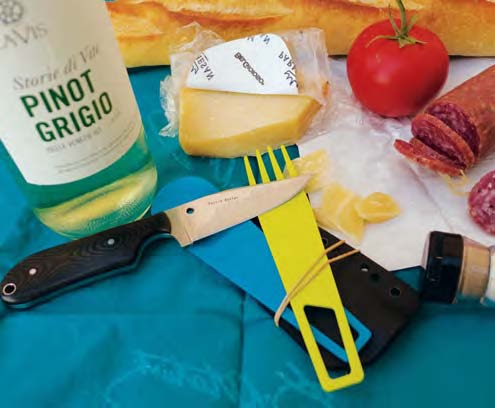
The author’s picnic basket was filled with goodies, including a plastic fork and spoon banded to the sheath of a Fred Perrin Street Beat, the latter for cutting cheese and sausage.
Clearly, he made his evaluation based on our appearance and behavior, as well as our choice of knives. On another occasion, while disembarking from a bus in Lyon, France, we encountered an intensive security check due to an alert that a terrorist suspect might be on our bus. Results were the same as in Barcelona, as they have been on other occasions. European police, like American police, evaluate the person and the situation when making a decision. We do not appear to be a threat, nor do our knives. When asked, we give a straightforward explanation of why we have knives, and have had no problems.
Carrying Knives in Eastern Europe, the Balkans and Turkey
In Eastern Europe, the Balkans and Turkey, attitudes concerning knives are very different. Full-size tactical folders are popular for everyday carry, and no one seems alarmed by them. Fixed blades that are 6 to 10 inches long are preferred for field activities, hunting, backpacking and so on, and for use in villages to do everyday village things, such as killing pigs and goats.
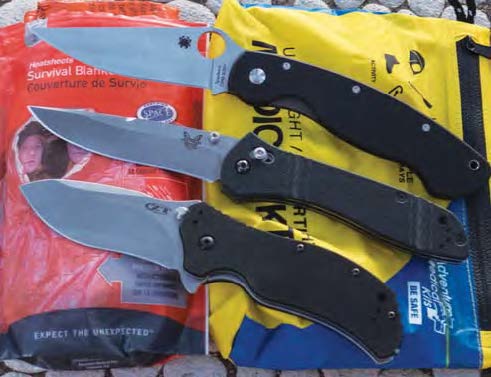
Some full-size tactical folders often seen in Eastern Europe include, from top to bottom, the Spyderco Military model, Benchmade 710 and ZT Knives 350.
I asked a friend, who is a Bulgarian undercover cop, what the laws were governing carrying knives in Bulgaria, and what the police attitude was. I also explained the regulations in Western Europe. He said, “We don’t concern ourselves with such silly things as that. We don’t care what kind of knife you have. But, if someone attacks and harms another person with a knife, or any weapon, then we do care.”
A former Czech special forces officer now in a civilian security service said much the same thing.
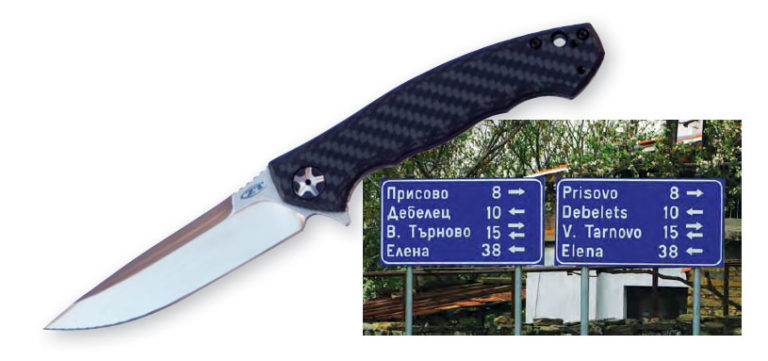
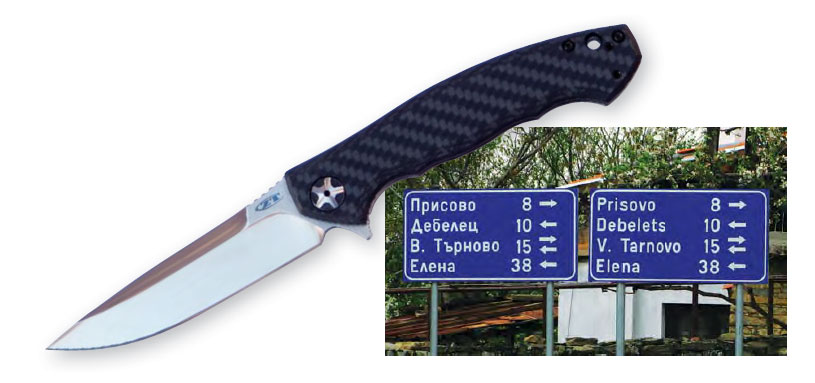
In Eastern Europe, the Balkans and Turkey, full-size tactical folders such as the ZT Knives 0452CF Sinkevich are popular for everyday carry and no one seems alarmed by them.
We’ve only been questioned about knives in the East once, at Ataturk Airport in Istanbul. Going through first layer security at the entrance to the airport, I tossed a bag on the counter containing a kindjal, a yatagan, a 10-inch bowie, and a half-dozen or so tactical folders and fixed-blade survival knives, all for field work and photography for articles and books.
The security guy said, “You have quite a few knives in your bag.”
“Yes,” I replied, “I do.”
“You’re going to check them, not carry them on, right?”
“Of course.”
“Have a nice day.”
Obviously we check all knives before boarding a commercial aircraft.
Trust Your Internal Compass
If you like to drink and hang out in sketchy bars and clubs, leave your knife in your room. Don’t try to use your knife as a weapon, except in extreme circumstances when your own life is actually at stake. Doing so is considered lethal force everywhere, and you will have to defend your actions. Again, use common sense. You have an internal compass that points in the right direction. Pay attention to it. This approach has worked for us. Your results may vary. No guarantee is offered or implied.
Get the Most Out of Your European Trip
Before your trip, use the Internet to locate knife shows. There are many all over Europe. Attend one.
Perhaps visit one of the famous knife-producing towns: Thiers, France; Solingen, Germany; and Maniago, Italy. You’ll meet friendly people with a common interest. Do go. You’ll have a great time. Bon voyage.
Keep Learning About Knife Laws — in the United States
A Wharncliffe is a distinctive style of knife blade characterized by a perfectly straight cutting edge and a spine that tapers to meet that edge at an acute point. Often associated with gentlemen’s folders intended for fine utilitarian cutting, its history can actually be traced back to a specific gentleman of the 19th century—Colonel James Archibald Stuart-Wortley-Mackenzie—the first Lord Wharncliffe of England.
Origins of Wharncliffe Knives
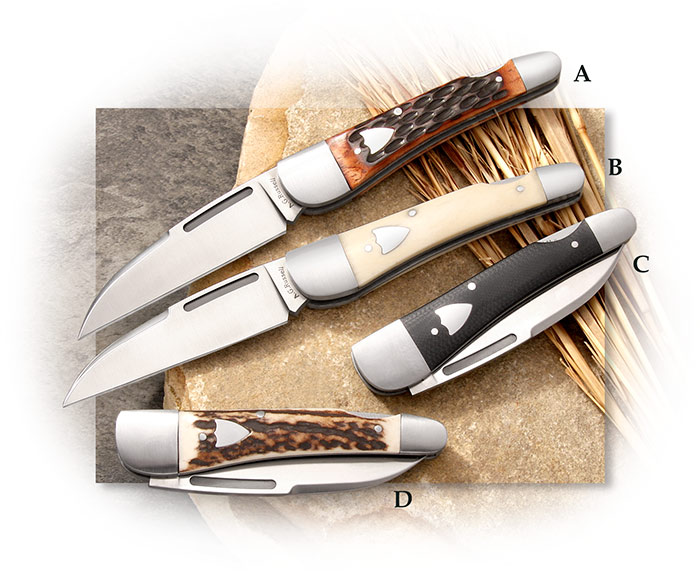
Examples of Wharncliffe lockbacks, from AG Russell.
According to the book British Manufacturing Industries, around 1820 the first Lord Wharncliffe and his relative Archdeacon Corbett were sipping wine after dinner and lamenting the relative lack of creativity of the British cutlery industry. To address the problem, they put their heads together and designed a new blade pattern that they presented to the Joseph Rodgers & Sons cutlery company in Sheffield. Rodgers adopted the pattern and soon introduced the world to the first “Wharncliffe” blades.
Original Wharncliffe blades sported full flatground edges and had rounded spines that tapered to the points. The pattern has since evolved to include many other variations, but as long as the cutting edge is straight and the spine tapers to meet it at an acute point, it’s a Wharncliffe.
Advantages of Wharncliffe Knives
From a utilitarian perspective, the biggest advantage of a Wharncliffe blade is that it cuts with full power all the way to the point.
No matter where the cutting edge makes contact, it transfers its energy directly into the material being cut and consistently increases that pressure as the cut goes deeper. Even if you’re cutting with the extreme tip of the cutting edge, a Wharncliffe’s straight profile ensures that you’ll do it with maximum power and leverage. That’s why razor knives, box cutters and similar utility cutting tools are typically Wharncliffe patterns.
In contrast, swept edges actually curve away from the material, paralleling the arc of motion of the hand and purposely limiting the depth of the cut. This is best for skinning knives used for chores where cutting too deeply could nick an animal’s intestines or cut through the hide.
The Wharncliffe’s acute point also makes it a great tool for detailed work and, interestingly, enables it to penetrate with less resistance than most other blade styles. Although the tip is admittedly not as strong as some other profiles, it does its job exceptionally well.
Interestingly, all of the things that make the Wharncliffe an outstanding utilitarian blade style also allow it to excel as a personal-defense tool.
Wharncliffe Tactical Knives?
Until recently, however, Wharncliffe tactical knives (at least the pocket-size kind) were relatively uncommon. At the risk of being immodest, I’d like to think I had a hand in changing all that.
I’ve been a knife enthusiast since I was a kid and an avid student of knife combat since my early teens. I also had the great privilege of working closely with the late Col. Rex Applegate during his later years and learning the conventional wisdom of knife fighting and combat knife design directly from one of the topic’s most respected sources.
When I had the opportunity to design my first production knife—the Masters of Defense Tempest—back in 1997, it reflected what I believed worked based on what I’d been taught. It had a classic bowie-style blade, plenty of blade curve, or belly, to slash better and a swedge (false edge along the spine) that created an acute, well-centered point. Essentially, it was a very traditional approach to a fighting blade, scaled down to fit into a folder.
A few years later, Sal Glesser of Spyderco took an interest in my Martial Blade Concepts (then, Martial Blade Craft) curriculum and offered me the opportunity to teach knife tactics under the Spyderco banner. He also asked me to design a signature knife that fit my approach to personal defense.
By that time, I had begun incorporating live-blade cutting demonstrations into all of my courses. With the help of “Pork Man”—a pork roast tied around a wooden dowel and wrapped with multiple layers of plastic—I showed students exactly how to quantify the cutting power of their actual carry knives. In the process, I began to realize that the performance of different blade designs in this simple test varied considerably.
In fact, many highly regarded fighting knife patterns actually cut pretty poorly. Since my system focused on small, legal-to-carry knives and cutting tactics geared toward disabling an attacker, I wanted to make sure that whatever I designed for Spyderco would cut as effectively as possible.
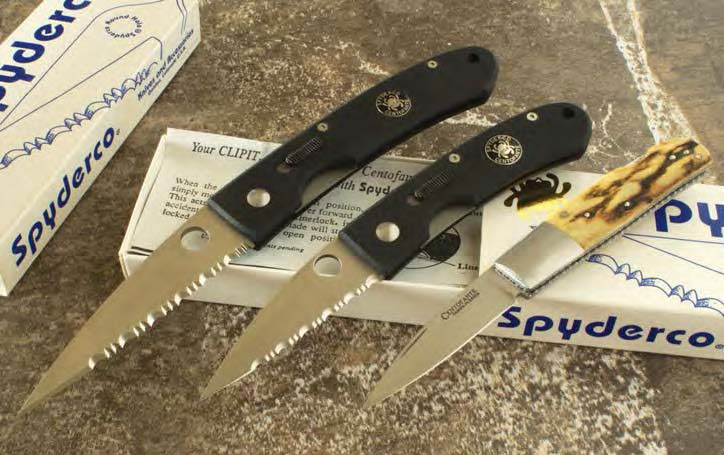
The original inspiration for the author’s focus on Wharncliffe-style tactical blades was the work of the late Frank Centofante, whose gentlemen’s folders cut with extreme authority.
To do that, I invested a small fortune in pork roasts and crafted an army of Pork Men. I then pulled out all the knives in my collection and went to work. The side-by-side cutting experiment was extremely revealing. After several hundred cuts with all conceivable blade styles, grinds and edge configurations, the hands-down winners were a pair of Frank Centofante-designed gentlemen’s folders from Spyderco with classic Wharncliffe-style blades and beautifully executed full, flat grinds.
Their perfectly straight edges invariably cut the meat targets deeper and cleaner than other blade profiles and did not snag on clothing or the target’s wooden “bone.” They also penetrated almost effortlessly during thrusts. Despite their elegant demeanor, they were tactical cutting machines and a clear direction for my knife design efforts.
The Ronin Knife is Born
Around the same time that I was sketching and modeling my folder design for Spyderco, I wrote an article about the work of a then-new custom knifemaker named Mike Snody. Snody was very pleased with my analysis of his knives in the article and even more thrilled when the orders that resulted from that piece launched his career as a full-time knifemaker.
To thank me for my part in making that possible, he invited me to design a knife for him—specifically the “ultimate neck knife.” I was already convinced of the merits of the Wharncliffe, so I took him up on his offer and designed a small fixed blade I named the Ronin. Unfortunately, Snody wasn’t as convinced as I was … at least at first.
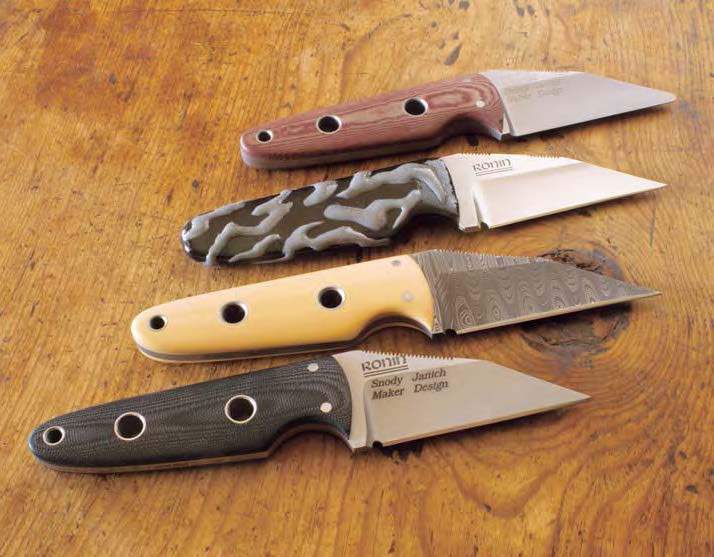
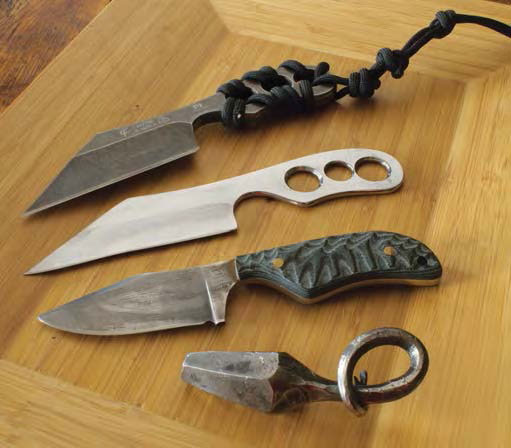
The author’s fi rst tactical Wharncliffe design was the Ronin neck knife, which began as a custom project with knifemaker Mike Snody. Here are several Snody custom Ronins, including an extremely rare (one of two) Ronin trainer (top).
After Snody’s underwhelming initial response, I thanked him for his offer and suggested that he abandon the project to move on with his new career.
He politely agreed, only to call me back several days later. His first words when I answered were, “You evil _______ [expletive deleted]! I’ve never cut with anything like this before!”
It was then I realized that he actually made my design and, more importantly, did some cutting with it. Snody embraced the Ronin design and began turning out a variety of custom expressions of it.
Although I had already submitted a folding knife design to Spyderco, they were still apprehensive about the concept of a tactical Wharncliffe. To test the waters, they decided to do a production version of the Ronin, since product development and production of fixed blades is more economical than folders.
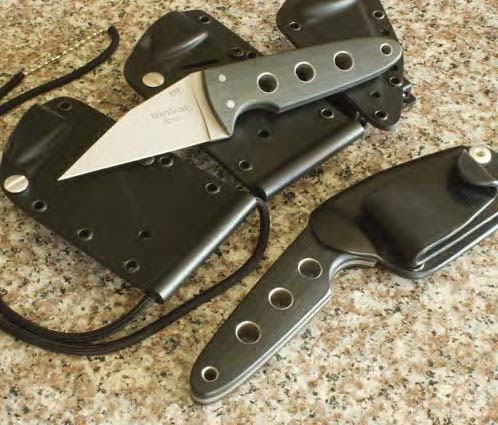
Spyderco put the Janich/Snody Ronin design into production. The knife was sold with three different sheath patterns, all shown here. Also shown is the author’s well-carried Ronin in a Mike Sastre custom Kydex sheath with a J-clip.
The Spyderco Ronin was a reasonably faithful expression of Snody’s custom version produced in Japan. The Kydex sheaths for it, however, were made at Spyderco’s factory in the United States. Unfortunately, the hand-finishing of the G-10 handles done by the Japanese factory created some dimensional variances in the finished knives that made it necessary to have a one-to-one match of sheaths to individual knives. This made mass-production methods challenging and ultimately contributed to the demise of the design, which only lasted one production run.
Despite its limited commercial success, the Ronin did manage to change some minds with regard to tactical knife design. Following the live-blade Pork Man demonstrations I did in my seminars, I had students lined up to buy Ronins. However, I also had a deluge of requests for a folding version of the design. Unfortunately, Spyderco still wasn’t ready to make that investment, so I decided to tip the scales a bit.
I contacted Snody again, who was now firmly established as a full-time maker and had expanded his skills to folder making, and asked him if I could commission a special one-off folding knife. I sent him the drawings of my folder design, which I had dubbed the Yojimbo™ (Japanese for “bodyguard”) and asked him to make one for me, post photos of it on the Internet, and mention that Spyderco might be working on a production version of it. He eagerly agreed and honored all three of my wishes, generating enough interest in the design to get Spyderco to commit to producing it.
Spyderco Yojimbo: A Tactical Wharncliffe Knife
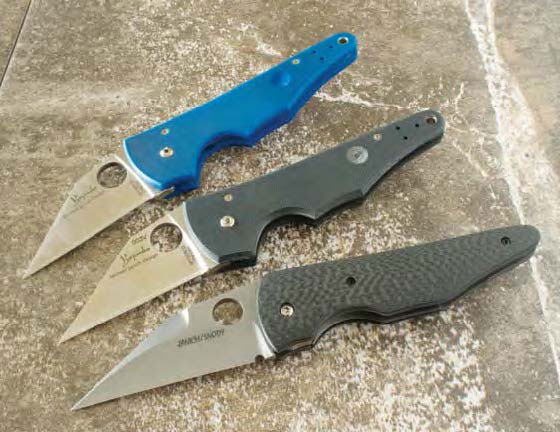
Spyderco’s expression of the Yojimbo was released in 2003. Manufactured in their Golden, Colorado, factory, it featured a fully flat-ground CPM S30V Wharncliffe blade, nested stainless steel liners, blue or black textured G-10 scales and an early version of their patented Compression Lock™ mechanism.
Its 3-inch blade was purposely shorter than its tapered handle because I had designed it before the 9/11 attacks to be legal to carry on airplanes even during heightened security alerts. Although that point was moot after 9/11, it still made the knife a viable choice for carry in jurisdictions with restrictive blade-length limits.
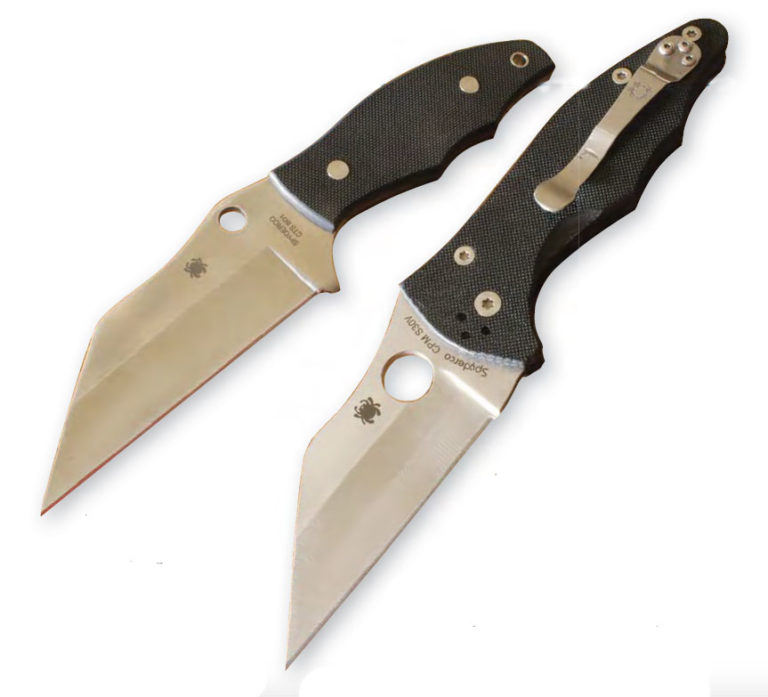
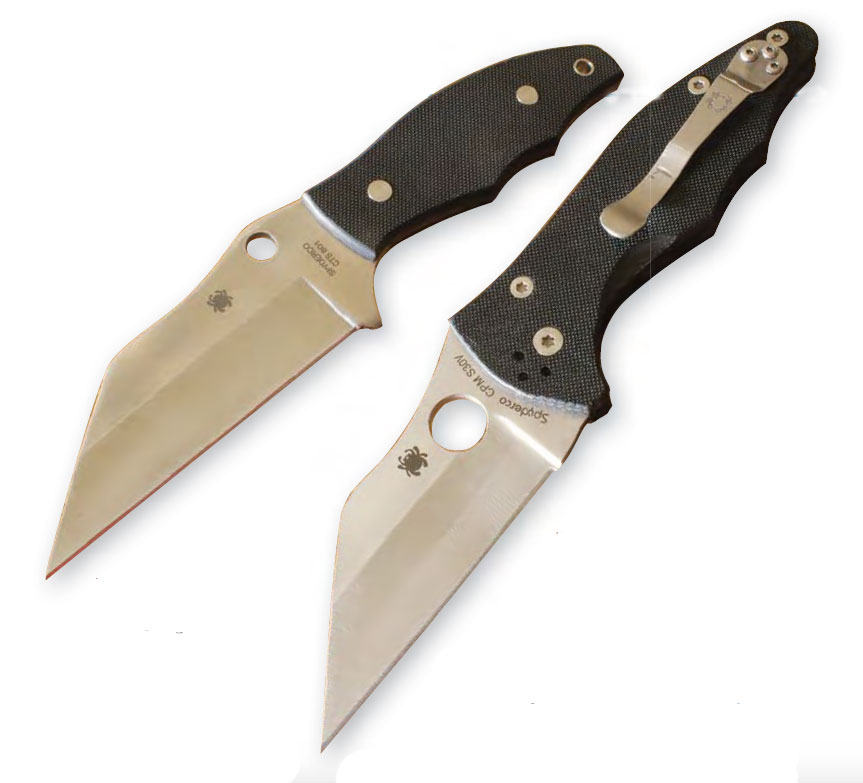
The author’s second-generation Wharncliffe folder design for Spyderco is the Yojimbo 2 (bottom), which also inspired a second-generation fixed blade called the Ronin 2 (top).
Although it received wider acceptance than the Ronin, the Yojimbo was still greeted with skepticism by most tactical knife fans. Many dismissed it as a “box cutter on steroids” and couldn’t get past the imbalance of its blade-to-handle ratio. The brave few that bought one and cut with it, however, quickly understood its advantages and joined the ranks of the converts.
Interestingly, during this same period, Snody was recruited as a designer for Benchmade Knives. Shortly after receiving the good news, he approached me at the BLADE Show and said he wanted to ask me a favor. He then reached into his pocket and produced a prototype of his Gravitator design—a Wharncliffe folder that he unabashedly admitted was directly inspired by the Yojimbo.
The fi rst-generation Yojimbo folder from Spyderco was the fi rst dedicated tactical Wharncliffe. Available in blue or black G-10 handles, it is shown here with a one-of-a-kind Mike Snody Yojimbo prototype that the author commissioned to validate the design and tip the scales.
Grateful for his help in creating a tipping point for the Yojimbo, I gave him my blessing to move forward with the design. Deep down, I also took pride in the fact that the tactical Wharncliffe was gaining ground. In 2004, I accepted a position with BlackHawk Products Group to design for the Masters Of Defense brand, which they had just acquired. Since it was inappropriate for me to work for one company while endorsing a design produced by another, I asked Spyderco if we could part ways as friends. They agreed, and shortly thereafter discontinued the Yojimbo design, just as it was beginning to attract a following.
BlackHawk Blades
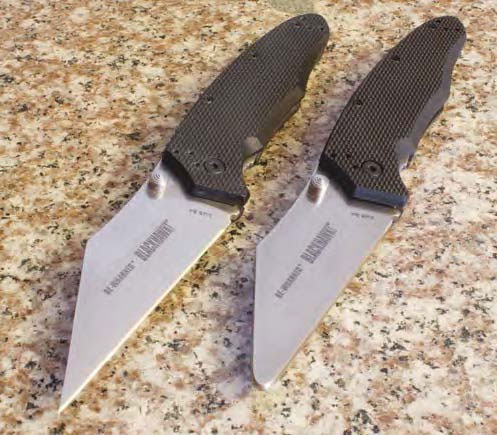
During my tenure at BlackHawk, I ultimately took over management of Masters Of Defense and a second knife brand, BlackHawk Blades. In the process, I designed and brought to market a number of designs, but my hands-down favorite was a folder called the Be-Wharned. Based on lessons learned from the Yojimbo, I designed it so, closed, it was no larger than the ubiquitous Spyderco Delica (my favorite back-pocket knife), yet offered a very capable 3.5-inch Wharncliffe blade.
While managing BlackHawk’s knife brands, the author designed the Be-Wharned—an economical tactical Wharncliffe that packed lots of cutting edge into a compact package.
Its handle consisted of coarse-textured G-10 scales that housed a nested LinerLock mechanism and supported a four-position pocket clip. Made in Taiwan by that country’s premier manufacturer, the Be-Wharned retailed for less than $100 and represented another significant step in spreading the word of the tactical Wharncliffe.
In addition to my full-time job in the knife industry, I also pursued my personal passion for Wharncliffes with a number of other custom knifemakers, most notably Mickey Yurco and Fred Perrin. Their deep understanding of blade design and cutting performance allowed them to share my appreciation for Wharncliffe dynamics and has resulted in a variety of both custom and, more recently, factory designs, including the Perrin/Janich Fusion neck knife made by the French company Max Knives.
French custom knifemaker Fred Perrin is also a big proponent of Wharncliffe blade patterns for personal defense. After the author confessed his love for Perrin’s Neck Bowie (second from bottom), the maker tweaked the design to include a Wharncliffe blade. The result was a Janich-Perrin collaboration called the “Fusion” and produced by Max Knives.
In 2009, BlackHawk abandoned its focus on knife production. Fortunately, Spyderco was still interested in my skills and offered me a full-time position with the company. Although my primary focus is technical writing and product education, they also wanted me to have a signature design in their current product line.
Since the first-generation Yojimbo never achieved its full potential, I set my sights on designing a revised version, taking full advantage of my lessons learned since the first one. The result was the Yojimbo 2, which was released in late 2011.
Like the original, the Yojimbo 2 features a CPM S30V blade, a Compression Lock and textured G-10 handle scales with nested liners. However, its ergonomics are greatly refined and its blade-to-handle ratio provides much greater blade length. Its blade is also hollow ground with a full-thickness spine for increased strength and mass, and it includes a four-position pocket clip that supports all carry positions.
By the time the Yojimbo 2 was released, my proselytizing efforts and the gradual introduction of tactical Wharncliffes by other companies allowed it to be much better received. In a reversal of the sequence of the first-generation models, the Yojimbo 2 inspired a second-generation fixed-blade version—the Ronin 2.
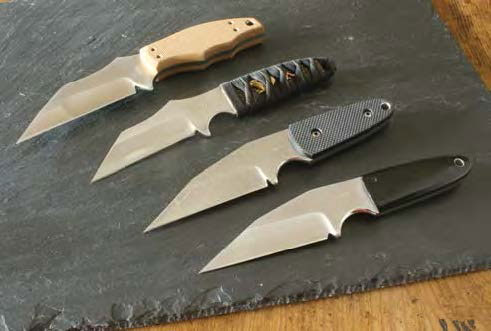
Custom knifemaker and retired law-enforcement officer Mickey Yurco is one of the author’s favorite makers of Wharncliffe blades. Shown here are several examples of Mickey’s take on the Ronin.
In fact, the very first Ronin 2, a custom blade made by Yurco, was based on his hand-traced outline of a Yojimbo 2. When it was shown in Spyderco’s prototype case at the BLADE Show, customer response was immediate and a Spyderco factory version followed quickly thereafter.
Can You Trust Wharncliffe Tactical Knives? You Bet
As an instructor of knife tactics, I owe it to my students to recommend only the best personal defense knives. That commitment and the extensive cutting tests it inspired led me to not only believe in the tactical Wharncliffe, but to make it a central focus of my efforts as a knife educator. If you’re looking for a knife you can trust your life to, get a Wharncliffe.
See More Innovations in Knives at BLADE Show West 2018
Editor’s note: A long-time vintage knife enthusiast originally from England, Jim Taylor wrote a number of stories on antique knives for BLADE®, including this one on a knife that belonged to Abraham Lincoln and fetched almost $100,000 at auction in 1989. Help us celebrate BLADE’s 45th anniversary with his story from the July/August 1989 issue.
by Jim Taylor
The hammer fell. The auctioneer at Sotheby’s January 1989 auction in New York couldn’t get another cent. The buyer, an anonymous American collector, had bought a 4.25-inch pearl-handled pocketknife.
The facts reported above are true. The sums of money mentioned are certifiable. Add the 10 percent buyer’s premium and the knife’s new owner got back $175 change out of 100 grand! Yep, the net price was $99,825.
The knife in question was not one you’re likely to find on a dealer’s table. This one was special!
An “Historic” Knife for President Lincoln
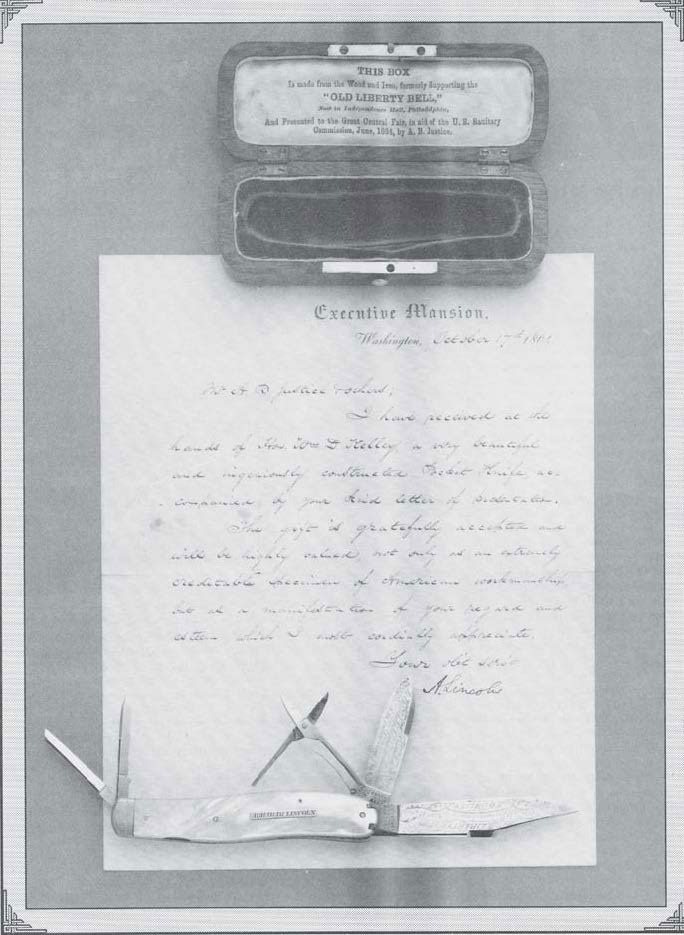
On June 16, 1864, President Abraham Lincoln spoke at the Great Central Fair in Philadelphia. To mark the occasion, prominent Philadelphians presented him with what Sotheby’s catalog described as an “historic mother of pearl presentation ‘American Army’ multi-bladed pocketknife of slightly serpentine outline. Paneled with mother of pearl and inlaid with a gold plaque engraved ‘Abraham Lincoln,’ the pocketknife is fitted with polished steel scissors, nail file and five various blades, two of which are damascened (decorated with inlaid patterns of gold or silver) with foliated inscriptions.”
Accompanying the historic knife is the original presentation box, made of fitted oak and lined with velvet and satin. The inscription inside the lid states that the wood and iron used in the box’s construction came from the “Old Liberty Bell.” The lid is inlaid on the outside with a spread-winged eagle surrounded by 13 stars. The sale also included a handwritten letter of thanks from Lincoln. The letter, dated Oct. 17, 1864, states:
“I have received at the hands of the Hon. Wm. D. Kelley a very beautiful and ingeniously constructed pocketknife accompanied by your kind letter of presentation. The gift is gratefully accepted and will be highly valued, not only as an extremely creditable specimen of American workmanship, but as a manifestation of your regard and esteem which I most cordially appreciate.
Your ob’t serv,t A. Lincoln
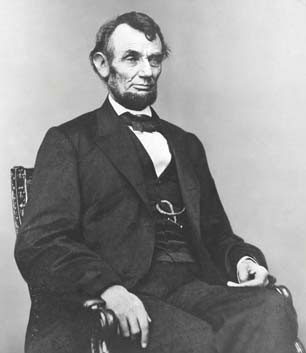
Abraham Lincoln lived at a time when knives were carried by most everyone on a daily basis—not only as a convenient tool but because, quite simply, knives were indispensable for a wide variety of tasks and personal needs. And, back then at least, Lincoln apparently was no different than anyone else.
The inscription on the clip blade reads, “LIBERTY, July 4th, 1776. Abraham Lincoln, Jan. 1st, 1863 EQUALITY.” The blades all carry the tang stamps “J. Ward & Co., Bronxville, New York.” It also is apparent from the photograph—kindly supplied by Sotheby’s—that various implements are fitted behind the pearl handle, such as a tweezers, pick and more.
Ward originally made the knife to the order of Albert B. Justice, a Philadelphia hardware merchant. Justice presented the knife to the fair’s board of directors, of which he was a member. He then solicited some 130 wealthy Philadelphians to endorse its subsequent presentation to the president. When presented, the knife was accompanied by a document containing the 130 Philadelphians’ signatures.
The document is currently in the Library of Congress in Washington, D.C. Other items sold with the knife include a bronze medal commemorating the fair, as well as photographs of the presentation document, photocopies of a publication called Our Daily Fair that described the fair, and the text of Lincoln’s address.
The Bronxville factory in New York was originally a grist and saw mill prior to the Revolutionary War, and the four-story building housing the factory came into the hands of James Swain circa 1849. Swain utilized the building for the manufacture of axles, among other things.
In 1880, James Ward bought the property solely for the manufacture of cutlery.
Ward, like so many of his countrymen of the day, sought the aid of qualified and experienced Sheffield cutlers, and he even advertised for them. One tiny fragment of a prospectus survives. It reads:
“Dear Sir,
The undersigned, Manufacturers of PEN AND POCKET CUTLERY, are now prepared to sell to the trade, a first class article, manufactured on the English system…”
Knives made by Ward in Bronxville are certainly not plentiful, nor are the records clear about how long the company lasted. The factory later became the police headquarters for the Bronx River Parkway before its eventual demolition circa 1959.
Editor’s note: The current location of the Lincoln pocketknife was unknown at press time.
the expansion to the new John A. Williams Ballroom
the reduction in additional exhibitor badges sold to exhibitors
Let’s examine both.
Expansion
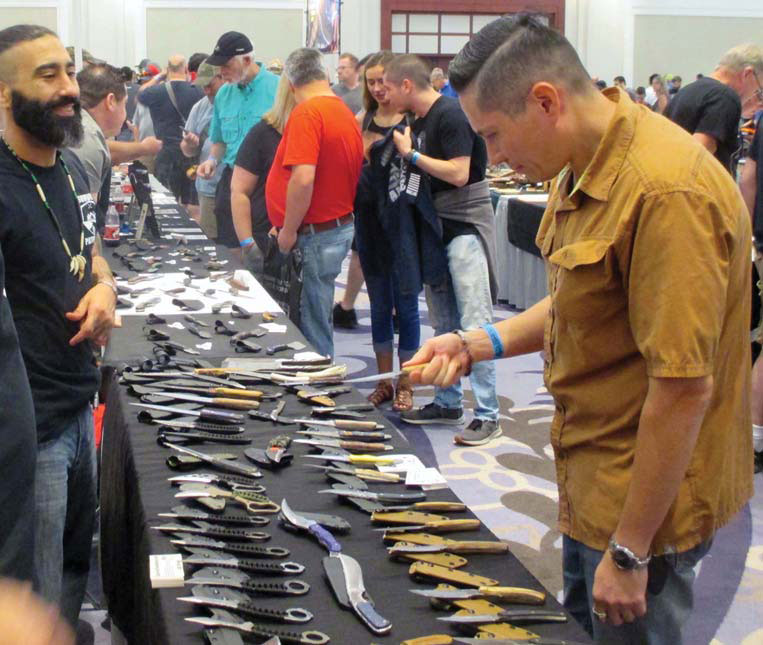
A record number of exhibitors—950+—required an expansion of the show to the adjoining John A. Williams Ballroom, which was abuzz with activity much of show weekend.
With the number of exhibitors growing to a record 950+ this year, the show hall simply ran out of space. Expansion was the most viable option, thus the move to add exhibitors in the adjoining John A. Williams Ballroom. While a number of exhibitors complained about the move due to it separating them from the show hall and how it required more walking for patrons to get to the exhibitors’ tables and booths, the ballroom was extremely busy most of the weekend. Whether it was a real success or not will have to wait between now and next year’s show to see if the ballroom fills up with exhibitors again. The bet here is it will.
Exhibitor Badges
Exhibitors buy additional exhibitor badges to get their helpers that assist them in assembling their booth and table displays, etc., into the exhibitor areas early on Thursday and early Friday morning and early afternoon before the show opens to the general public. Such helpers are crucial to the exhibitors to get their displays ready for the show.
Of course, the exhibitors setting up in the exhibitor areas have their display knives with them. Meanwhile, there is a large number of knife enthusiasts that are not helpers who, one way or another, obtain some of the additional exhibitor badges, get into the exhibitor areas early, and try and buy the best knives before the show opens to the public.
Combined with historically long patron lines, an excess of exhibitor badge holders almost resulted in a delayed opening of BLADE Show 2017.
When the BLADE Show first started selling additional exhibitor badges to exhibitors years ago, not that many exhibitors and others tried to obtain so many of them—particularly not in the numbers in recent years. It was only a matter of time before the buying of the additional exhibitor badges became a problem, and that threshold was reached at BLADE Show 2017.
It was then that so many holders of additional exhibitor badges were in the show hall immediately prior to the show opening to the public that we—by “we” I mean BLADE Show officials—were notified we would have to delay the show opening. Why? Because the hall was so full of people already that the Cobb Galleria Centre fire marshal said to admit the historically long lines of patrons that were waiting to get in would create a fire hazard. In other words, if there were to be some kind of emergency requiring the show hall to be emptied promptly, too many people in the aisles trying to get out could result in injury to them—or worse.
To delay the show opening would cost exhibitors many thousands of dollars in sales and cause a major inconvenience to show patrons that had traveled from all over the world to attend. Luckily, show officials were able to alleviate the situation to where the fire marshal granted permission to open the show on time.
As a result of the near fiasco, show officials had no choice but to reduce the number of people in the show hall—many of whom were holders of the additional exhibitor badges—before the show opens. And the best way to do that was to reduce the number of additional exhibitor badges available for sale for BLADE Show 2018, which we did. The result was the number of people in the show hall was reduced enough so that opening the show on time this year was not an issue.
Does the reduction impair some exhibitors’ ability to set up their displays? Undoubtedly. However, the alternative of having the show opening delayed or the show possibly cancelled altogether would be much worse.
Looking Ahead
Though the changes may seem questionable initially, we believe they will be best for the future growth of the BLADE Show. With the continued growth of the show come new challenges. However, we will continue to strive to make this the best show ever for exhibitors, patrons and knife enthusiasts everywhere.
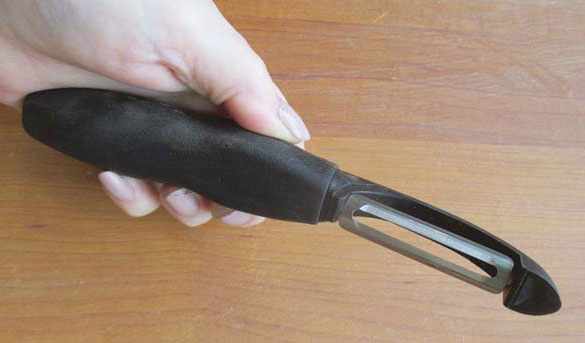
On May 3 in Scotland, a man was arrested for carrying a potato peeler. That’s right, a potato peeler. He was charged for carrying “an article which had a blade or which was sharply pointed, namely a potato peeler.” Maximum penalty: four years imprisonment.
Knife Bans Are About Control
Knife bans, like gun control, are not about saving lives but controlling them—including controlling the economically disadvantaged, people of color or others the state wants to keep “in their place.” (The potato peeler violator, by the way, was said to suffer “from significant learning difficulties.”) More to the point, knife bans are designed to keep the people down.
The inequality of policing and prosecuting for possession of gravity knives by black and Hispanic men is most striking in NYC’s Union Square. There, according to Legal Aid, such men consist of only 11.5 percent of the population but account for a whopping 52 percent of those arrested and prosecuted for gravity knife possession. Moreover, the New York County District Attorney’s Office (DANY) exacerbates things by often classifying gravity knife possession as a felony, a charge that carries up to seven years in prison. From July 1-Dec. 31, 2015, DANY charged 65 Legal Aid clients with felony gravity knife possession—four times more often than all other NYC prosecutors combined!
Magnifying the inequality of the situation is the fact that NYC chain retailers sell folding knives designed and marketed as work tools, yet when Legal Aid clients are found with those knives in their pockets, the knives are suddenly “illegal” and the clients are arrested as criminals. Such inconsistent application of the law ensures a regular money flow to the local big box stores via sales revenues and to government through sales taxes and fines, while simultaneously keeping the victims “in their place.” As Doug Ritter of Knife Rights noted, knife bans help ensure that the circle of inequality remains unbroken.
“Repealing knife bans removes another excuse to engage in such biased arrests and prosecutions for the innocent carry of some otherwise arbitrarily illegal or allegedly illegal knife,” he observed.
Great Britain, Canada Lead the Way on Knife Bans
When knife bans disproportionately impact minority populations, something is wrong.
Meanwhile, despite—or perhaps because of—its long-time ban on guns, for the first time in over 200 years London recently overtook NYC in terms of the murder rate. Though it is currently illegal in Britain to carry a knife longer than 3 inches in public “without good reason,” in early April London Mayor Sadiq Khan infamously said, “No excuses: there is never a reason to carry a knife. Anyone who does will be caught, and they will feel the full force of the law.”
No excuses: there is never a reason to carry a knife. Anyone who does will be caught, and they will feel the full force of the law. https://t.co/XILUvIFLOW
The vast majority of those who will feel the full force of Khan’s edict as well as that of knife bans in general are the economically and other of the disadvantaged, or the simply not quite so advantaged. What better way to keep them all down than to arrest, fine and jail them for carrying knives?
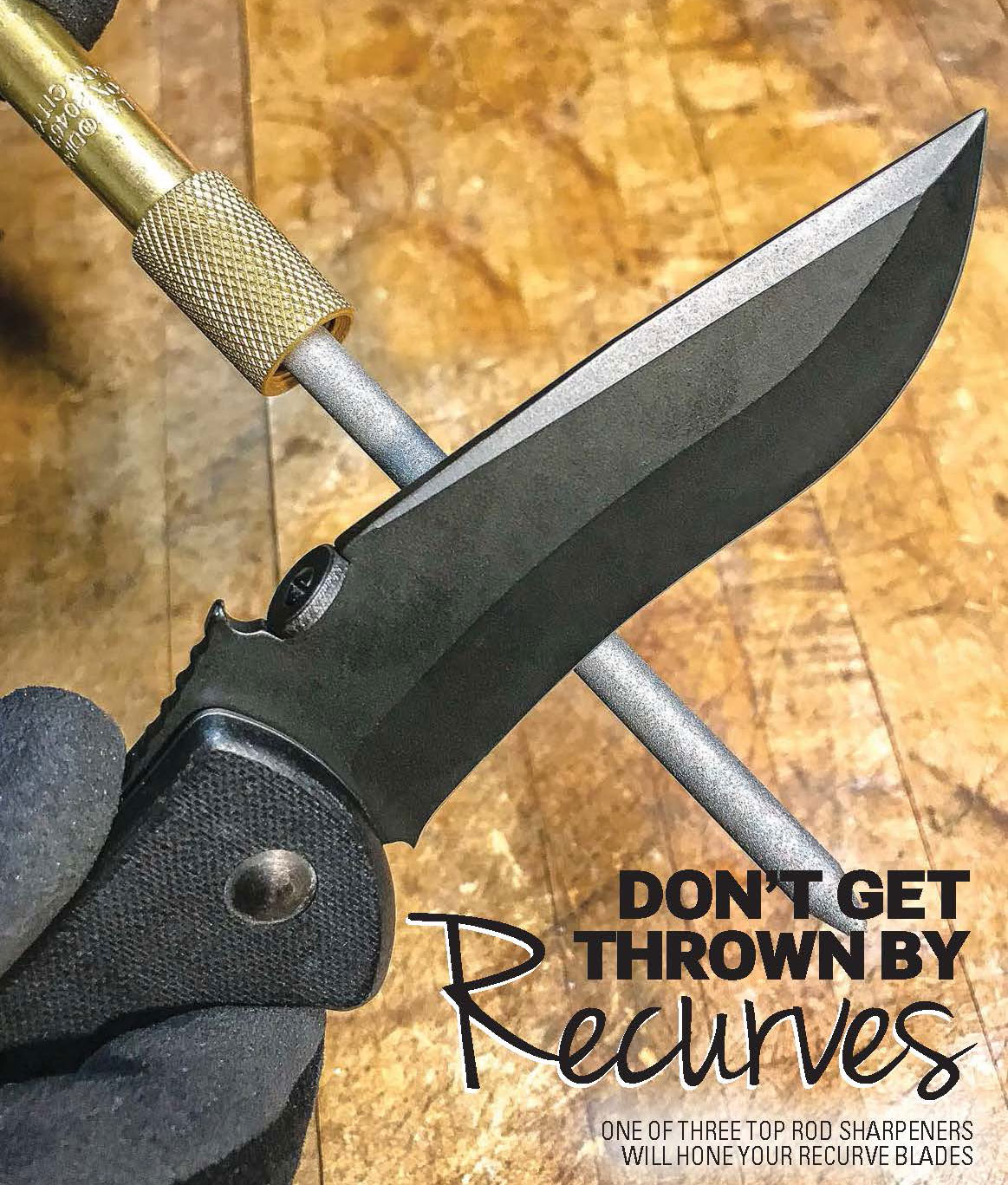
Recurve blades throw some folks off when it comes to edge maintenance because the lines of the curving edges do not fit those of more common blade patterns. Truth is, with the proper sharpener, re-sharpening recurve blades is just as easy as any more common blade pattern—and here are some sharpening rods well suited for the job.
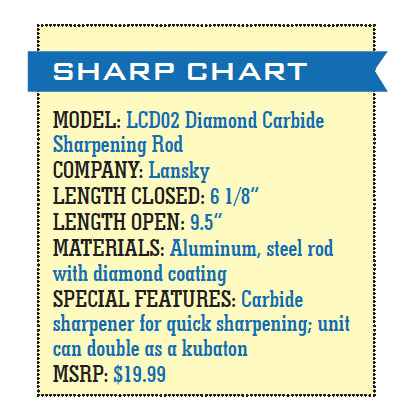
Lansky LCD02 Diamond Carbide Sharpening Rod
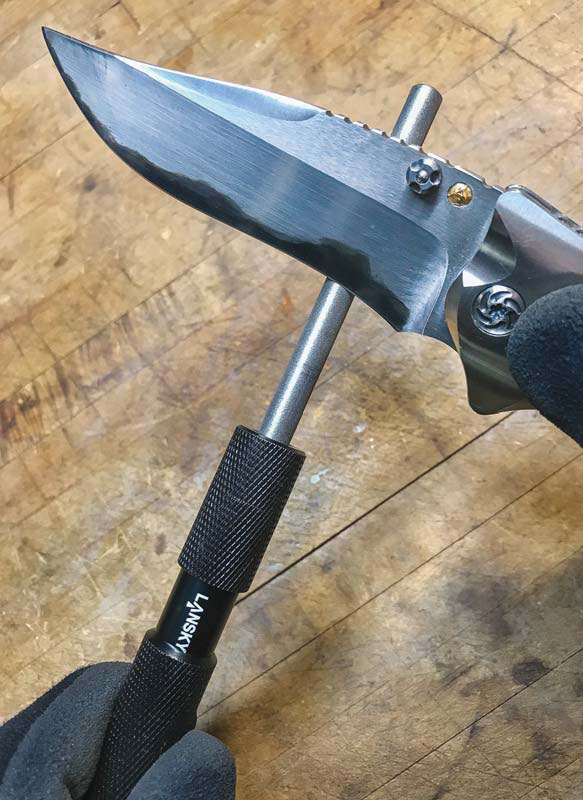
The diamond rod of the Lansky LDC02 easily handles recurve blades.
At a manufacturer’s suggested retail price (MSRP) of $19.99, the sharpener represents a good value in the genre.
The LCD02 Diamond Carbide Sharpening Rod from Lansky marries the effectiveness of a diamond abrasive with the convenience of a retractable sharpening rod and the expediency of a pull-through carbide sharpener all in one package.
“The Lansky tactical sharpening rod is a must-have tool for any trip into the field,” says Barbara Worden, Lansky national sales manager. “It makes short work of dressing and honing knives, machetes, hatchets and axes.”
The LCD02 is designed to quickly and easily handle any type of knife—large or small, fixed blade or folder—and most common steels found on today’s production knives. The coarse-grit diamond rod also can be used with recurve blades, as the rounded profile—and this is a key to handling any sort of recurve edge—allows you to effectively sharpen the recurve’s flowing curves. When not in use, simply retract the rod into the handle to protect it from damage during transport. The whole package is compact and stows easily in a tacklebox, toolbox, glove box, or any sort of backpack or storage container.
With recurve blades the carbide portion of the sharpener is pretty much impossible to use, so you will need to use the retractable diamond rod only. Employ light pressure as you work the blade down the rod. A nice feature is the carbide draw-through sharpener’s flat base. It stabilizes the unit, preventing it from rolling during use. Handle knurling adds a nice, non-slip grip.
According to Worden, the pull-through/diamond rod combo unit can serve as a kubaton/striking instrument, too. The LCD02 is the longest of the three sharpeners tested, which translates well as an impromptu kubaton, but the added length makes it less compact. If the carbide portion would be omitted, that would shorten the length to where the LCD02 would be more compact and travel friendly.
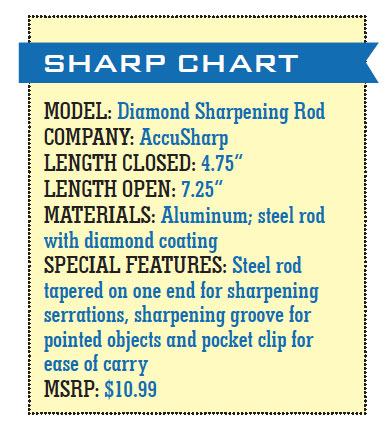
AccuSharp Diamond Sharpening Rod
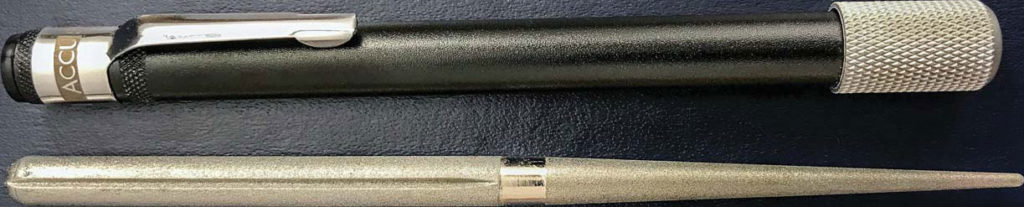
The AccuSharp Diamond Sharpening Rod can easily sharpen plain edge recurve blades as well as serrations, the latter by using the tapered end. The anodized aluminum handle has a pocket clip for ease of carry.
The sharpener’s compact size makes it easy to carry.
“The retractable rod is engineered with a cone-shaped end for use on serrations and tight spaces,” says Kelly Clark, sales manager of Fortune Products, Accusharp’s parent company.
In the fully retracted position, the rod extends by unscrewing the knurled nut and pulling the rod out of the handle some, then re-tightening the nut to secure the rod in the extended position.
The rounded profile allows it to follow the edge of a recurve blade. The overall diameter is similar to that of a pen, and it includes a steel pocket clip. The rod also has sharpening grooves for hooks, darts and other pointed objects.
It is a pretty simple model construction wise but works well. The only thing I saw that could be improved is the overall diameter of the handle/body. Adding a bit of thickness would make it much easier to hold but also would increase weight and bulk. As is, it carries very well in multiple ways.
EZE-Lap Retractable Diamond Sharpening Rod
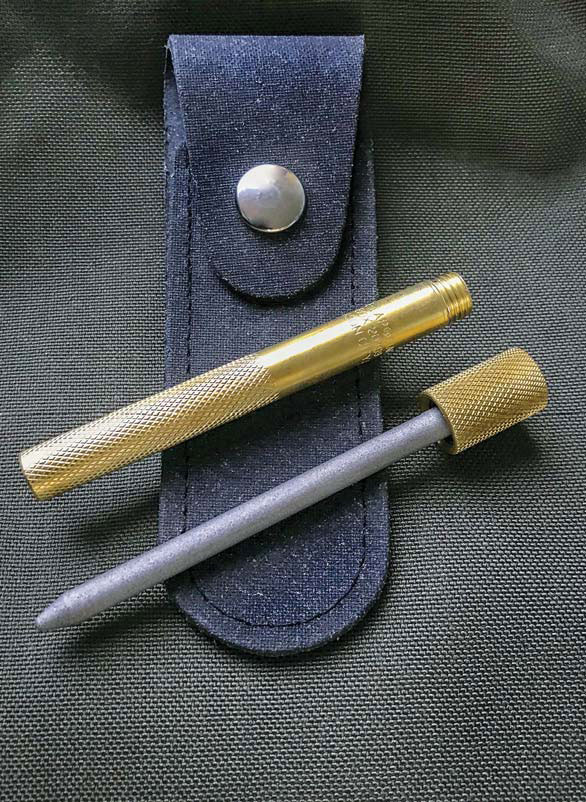
The EZE-Lap Diamond Sharpener has a knurled brass handle and screws onto the rod to form a non-slip handle design.
The EZE-Lap exhibits very good quality manufacturing.
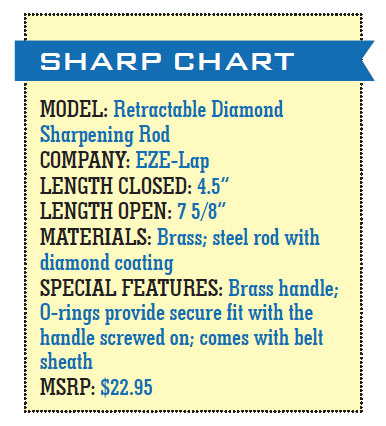
Similar in nature to the AccuSharp, the EZE-Lap Retractable Diamond Sharpening Rod is another compact, rod-based sharpener that stores easily. Unlike the AccuSharp, the EZE-Lap has a brass handle, which looks nice compared to the anodized aluminum of the other review models.
Measuring 3.25 inches long, the sharpening rod does not retract into the handle.
Instead, it unscrews from and inserts into the handle, and then screws back down. In other words, it stows similarly to a capped fountain pen. A nice touch not found on many sharpeners of this type is the full knurled handle. The knurling aids in achieving a non-slip grip and works well wet or dry. The knurling adds confidence by not allowing the handle to rotate inadvertently in your hand.
Unlike other knife sharpeners of the type, the diamond coated steel rod does not have a tapered end for serrations. However, the EZE-Lap will handle any size of plain edge blade, including recurves, and does so quite well. The quarter-inch-diameter rod is coated with a diamond substrate that allows the sharpener to easily remove metal and restore dull edges quickly. It comes with a belt sheath for an alternative carry option. It is the only sharpener herein that comes with a belt sheath—a nice touch and added value.
The EZE-Lap exhibits very good quality manufacturing. Part of this is from the brass handle, so its appearance alone makes it stand out. The only thing I would change, like with the AccuSharp, is the handle diameter. I would make it slightly bigger for ease of holding onto in use.
See You At BLADE Show West
The biggest and best knife show in the world, BLADE Show, is coming to Portland, Oregon, Oct. 5 to 7, 2018. Expect factory knives, custom knives, accessories and everyday carry gear.