Home Blog Page 169

The Blue Chips: Collecting Swiss Army Knives

5
popular swiss army knife models
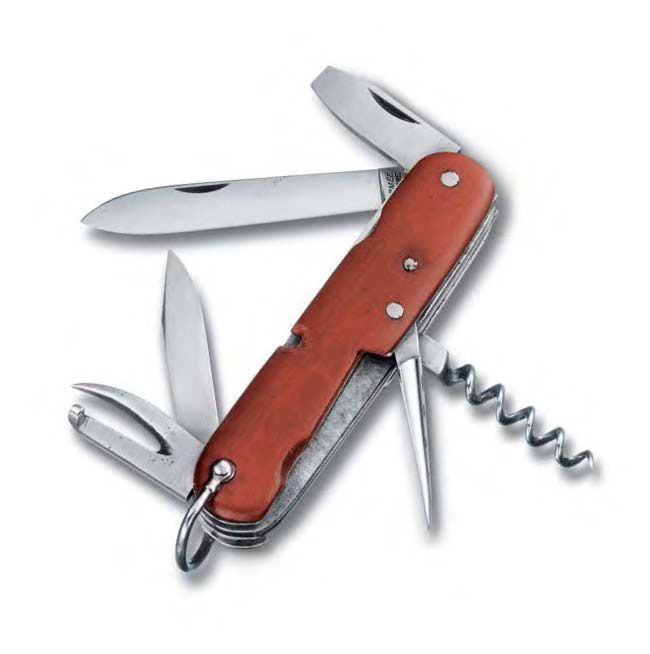
In 1897, Victorinox founder Karl Elsener created the Officer’s and Sports Knife (above). It evolved into
the model known today as the Spartan, the most popular Swiss Army knife.

Rarely does a single brand, style or look set the standard for an entire genre in the knife industry, let alone hold its place for decades with no sign of a loosening grip. Just say the words “Swiss Army knife” and the image is clear and constant.

The classic red handle emblazoned with the shield and cross of its land of origin render the Swiss Army knife (SAK) instantly recognizable, while its multifunction versatility makes it indispensable for those who carry it and rely on it in a variety of situations.

Cut, slice, tighten/loosen a flat- or Phillips-head screw, punch, file, open a can or bottle and even sign your name, the pride of Victorinox and the trademark of the Swiss Army is the versatility that is found nowhere else.

Origins in the American Market
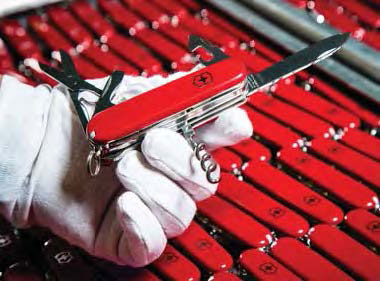
world war two swiss army knives
The consensus is that the Swiss Army knife gained widespread appeal during and after World War II as Allied soldiers brought them home, and those who saw them clamored for one of their own.

Like every icon in any field, the SAK is surrounded in legend and lore. The consensus is that the knife gained widespread appeal during and after World War II as Allied soldiers brought them home, and those who saw the knives clamored for one of their own.

American military personnel came to further love the SAK when it became available at the nearest base PX (post exchange), and sales are said to have exploded.

The History of Swiss Army Knives
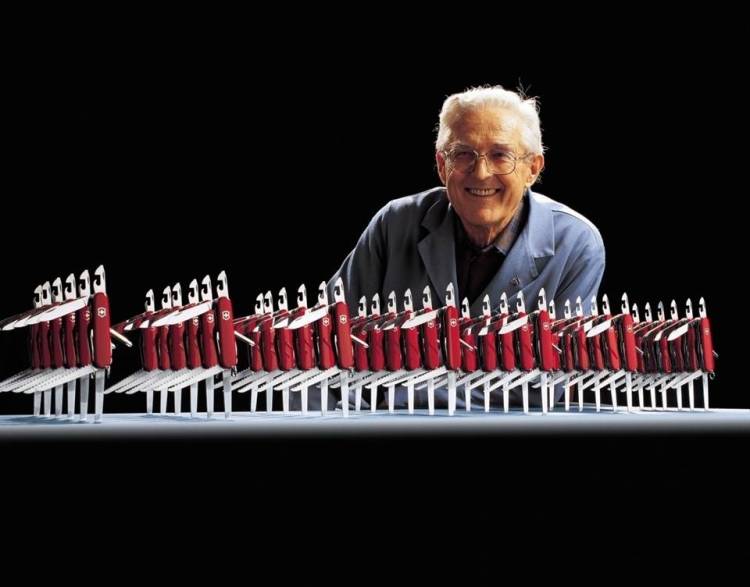
carl elsener
Carl Elsener III

Of course, there was a tinge of controversy related to the “first” Swiss Army knives. In 2005, Victorinox went a long way in closing the book on that discussion with the acquisition of rival Wenger, followed by the consolidation of the two brands into the single Victorinox label in 2013.
Victorinox Global Chief Executive Officer Charles Elsener likes to tell the story of his family’s development of the early SAK.

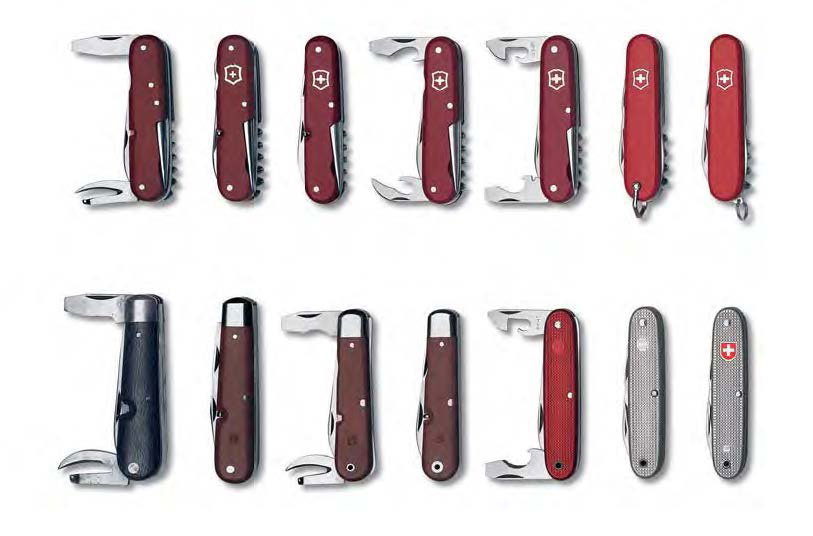
“In 1897, founder Karl Elsener created his ‘Officer’s and Sports Knife,’” Charles explained, “and registered it legally June 12 of that year. He also was responsible for the iconic design, which has not changed to this day. From 1897 to 1937, the handles were made of red fiber. Functions of the knife included big blade, small blade, can opener, corkscrew and reamer. The name of this model today is the ‘Spartan.’”
swiss army knives evolution
An evolution of the Officer’s and Sports Knife by year and feature, top row from left: 1897 (fiber grip); 1909 (fiber grip/cross and shield); 1937 (celluloid grip); 1946 (new can opener); 1951 (new can opener and Alox dividing layer); 1961 (new awl and invisible rivet); and 1968 (ring instead of bow bail). The same for the Soldier’s knife, bottom row from left: 1891 (wood grip); 1908 (fiber grip); 1951 (fiber grip, stainless steel); 1954 (fiber w/rosettes); 1961 (red Alox); 1965 (silver Alox); and 1980 (silver Alox w/Swiss flag).

In 1937 the knife handles changed to celluloid, and since 1971 the material used is Cellidor. The red color was probably chosen for the red in the Swiss flag and also for the Swiss canton [district] of Schwyz—and probably to help the owner find his treasured possession when it falls on the ground!

Popular Swiss Army Knife Models
swisschamp swiss army knife
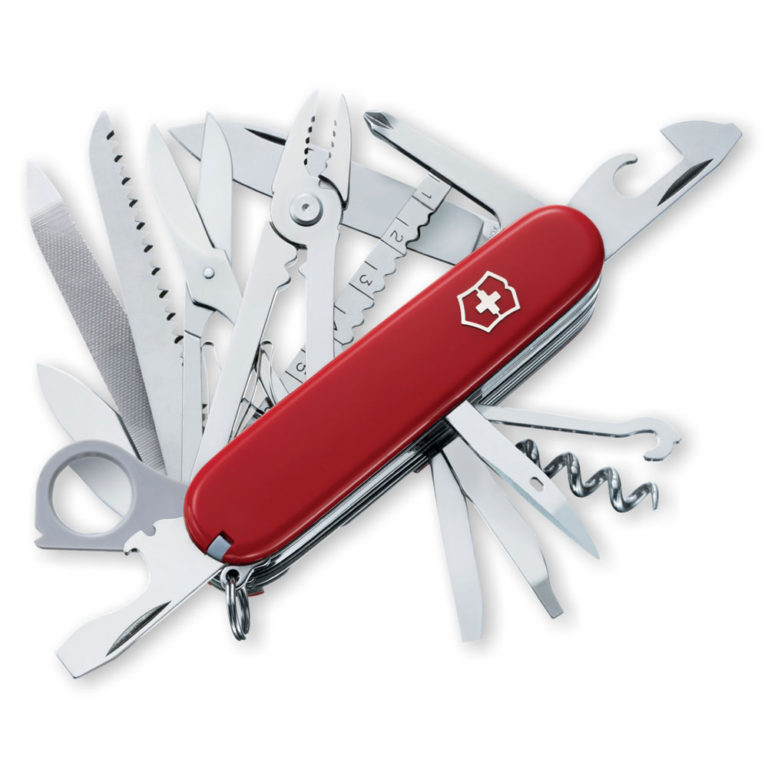
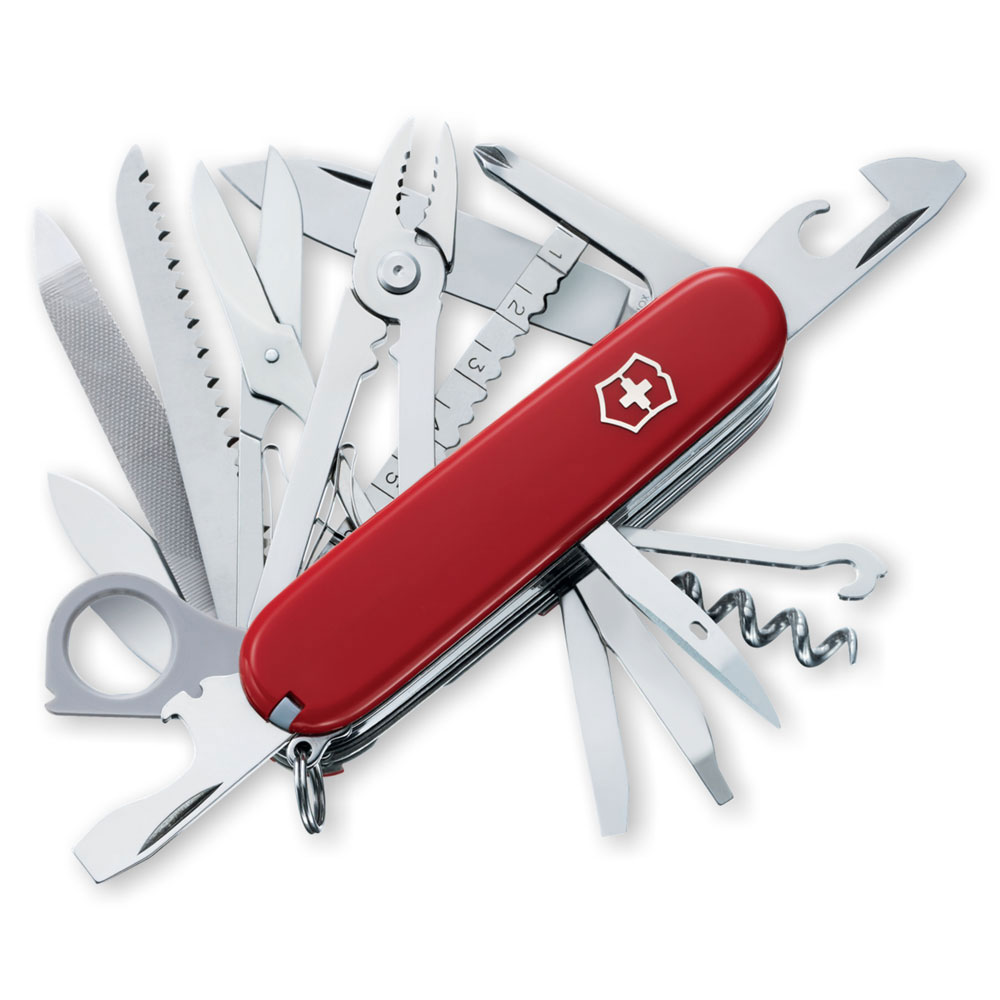
The flagship SAK is the SwissChamp, introduced in 1986 with a grand total of 33 functions.
swiss army knife production
Today, Victorinox produces 60,000 SAKs
per day and a staggering 13 million pieces annually.

According to Elsener, the most popular SAK in the company’s early days was the Spartan. In 1902, a wood saw and scissors were added. The new model with scissors was christened the Climber, and the Huntsman included both the wood saw and scissors.

As more and more tools were added, the flagship knife became the SwissChamp, introduced in 1986 with a grand total of 33 functions.

“The fourth bestseller is our smaller Classic keyring model,” Elsener added, “and these five bestsellers have been the same since their introduction.”

Charles confirms that American soldiers popularized the SAK during World War II and are responsible for its name today since they had difficulty pronouncing it in German as the “Schweizer Offiziers-und Sportsmesser.”

Today, Victorinox produces 60,000 SAKs per day and a staggering 13 million pieces annually, achieving these numbers consistently.

A Humble Knife

BLADE Magazine Cutlery Hall-Of-Fame© member Tim Leatherman, developer of the popular Leatherman Tool, gave the introduction speech when Charles Elsener’s father, Carl, was inducted into the Cutlery Hall Of Fame in 2011.

Charles told of a modest, unassuming man who wore a workman’s smock while at the company.

“One day Carl happened to be at the loading dock when a truck pulled in and everyone else was at lunch,” Tim smiled. “The driver saw Carl and said, ‘Hey you! Help me unload this truck.’ Without saying a word, Carl did. Only when another worker returned from lunch and saw what was happening did the mortified driver realize what he had done. But Carl took no offense at all. He was still his humble self.”

An Unassailable Knife

The humble knife the Elsener family put together also has risen without unnecessary fanfare to the height of fame and cutlery glory. Leatherman sees an unassailable place in knife history for the SAK.

“Victorinox with the Swiss Army knife anchors the knife industry,” he asserted. “One category of products within the cutlery industry is ‘pocket-carried knives,’ which has three subcategories—common pocketknives, tactical knives and multipurpose pocketknives. And deservedly so. The design deserves every bit of recognition it has received. I know firsthand how hard it is to make a knife or tool without a cosmetic defect. And I have never seen a cosmetic defect in a Swiss Army knife. The Swiss Army knife is recognized and coveted worldwide.

“I was very much aware of the Swiss Army knife as I was designing the Leatherman Tool,” Tim continued. “So much so that in one of my prototypes I cannibalized a pair of scissors from a Swiss Army knife to put in my tool. However, my design diverged away from the Swiss Army knife because in a Swiss Army knife the blade is the central feature, and I wanted a pair of pliers to be the central feature of my Leatherman Tool.”

The Swiss Army Knife Collectors Society

While satisfying the needs of the businessman, blue-collar worker and outdoorsman, the SAK also has cultivated a devoted group of collectors. Doug Dillman, owner of Freeport Knife Co. in Freeport, Maine, leads the Swiss Army Knife Collectors Society, which was founded in 2000 by avid collector Dan Jacquart.

“The club currently has about 150 members,” Dillman commented. “Our objective since the beginning has been to encourage and support collectors who share a passion for both collecting Swiss Army knives and educating members about the many changes to the product and the factory’s history since its creation in 1884. We largely accomplish this through the publication of a biannual newsletter. We try to offer articles about changes to the many models over the years, new product introductions, and special-edition models. Our last issue included a tang stamp chart to help members determine the age of a knife.”

Insights for Swiss Army Knife Collectors
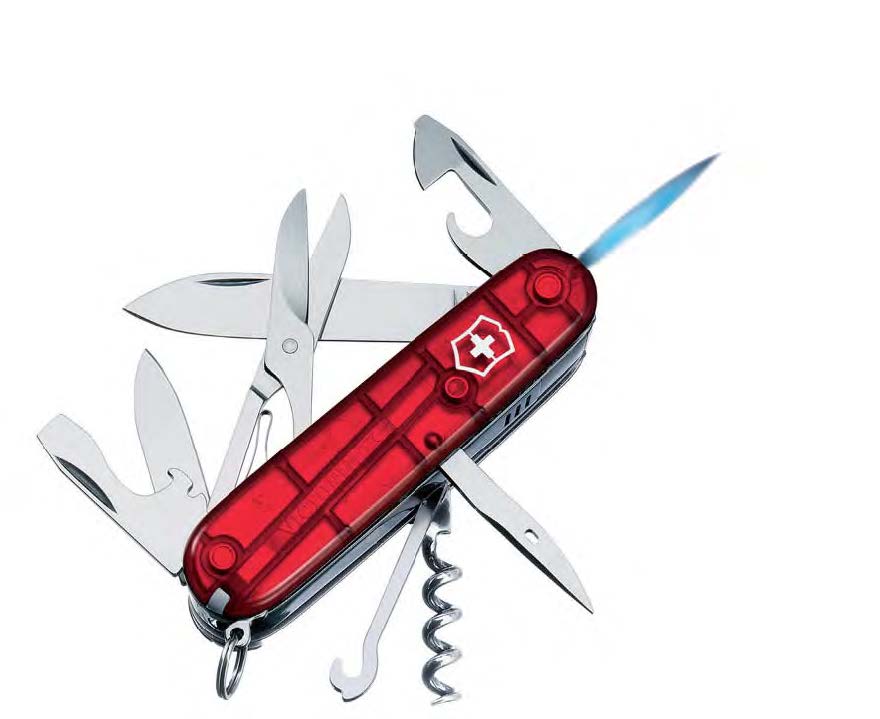
Swissflame knife lighter
SAKs highly desirable for collectors are often models made for only a short time, such as the Swissflame series from the late 1990s and early 2000s. The model included a butane lighter.

A collector for 30 years, Dillman has seen a number of SAKs appreciate in value.

“Old-style Soldier’s knives prior to 1954 can be found anywhere from $100 to more than $1,000, depending of course on condition,” he commented. “Very early ones from the 1890s with black-stained oak handles are certainly the most valuable. Many people also try to collect specific Soldier’s knives with specific-year date stamps. Knives that are highly desirable for collectors are often models made for only a short time, such as the Swissflame series from the late 1990s and early 2000s. These were unique in that they included a butane lighter.”

Other highly prized collectibles include the Scientist, produced in the 1980s and ’90s, and the Motorist with its metal inlay of St. Christopher. Knives made first as presentation gifts for four American presidents sell for $50 to more than $100.

Chris Lubkemann wrote The Victorinox Swiss Army Whittling Book, published in 2015, which already has been translated into Swiss, German, Dutch and Spanish. His use of the Swiss Army Tinker for carving led to the research and the publication of the book.

Actually Lubkemann carved for many years with an assortment of other knives.
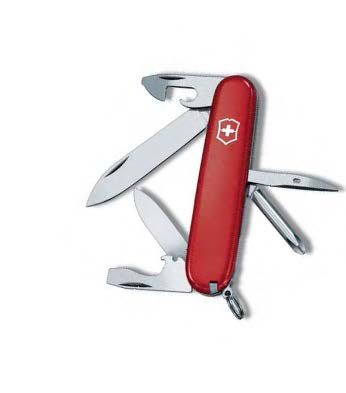
swiss army knife tinker
The Tinker SAK led Chris Lubkemann to write “The Victorinox Swiss Army Whittling Book,” published in 2015, which already has been translated into Swiss, German, Dutch and Spanish.

The Tinker had been given to him as a gift and stayed put on a shelf. As he recalled, “My [previous knife] developed a lot of play between the handle and the blade, to the point where it was no longer a viable carving tool. I’m sure I could have gone out and bought another, but conservative spender that I am, I decided to pull out my Swiss Army Tinker and see how it worked.

“The rest is history. Not having any personal previous experience with Swiss Army knives, I was immediately impressed with the tool. While the blades were stainless they took an edge well, and for my special purposes maintained the edge well.”

Chris met Brian Huegel of Country Knives in Lancaster, Pennsylvania, and Brian in turn knew Carl Elsener. At Brian’s suggestion, Chris contacted Carl, who demonstrated an interest in the whittling book, which became a reality with the support of both Victorinox and Fox Chapel Publishing.

“I was a fan of the knife long before I had any contact with Victorinox,” Chris concluded. “The more I used my Swiss Army knife the more I liked it and recommended it, especially the Tinker model, which is widely available, reasonably priced and incredibly useful—for much more than carving!”

“The Value Given is Much, Much Higher than the Price Charged”

Tim Leatherman remembers a trip to Europe that he made about 30 years ago.

“I had occasion to be near Ibach, Switzerland, so, uninvited, I parked well away and walked up to the entrance of Victorinox’s headquarters and factory. I was totally in awe,” he said. “I felt like I had found the Holy Grail. I remember they had a display on the outside wall of a Swiss Army knife broken down into its components. I must have studied it for an hour. I was too awestruck to knock on their door. The key to the success of any knife is that the value given be more than the price charged. With the Swiss Army knife the value given is much, much higher than the price charged, and the price is very reasonable.”

All images courtesy of Victorinox.

Find Swiss Army Knives at BLADE Show 2018

best knife show to go toThe world’s largest and foremost knife show, BLADE Show, is taking place June 1-3 in Atlanta. You’ll find the planet’s most innovative knifemakers in one spot. Learn more about how to attend BLADE Show 2018 here.

Photos: 4 Creative Knife Sheaths

0

Knife sheaths usually don’t get a lot of press. However, occasionally some particularly interesting developments in the area necessitate attention. While it may seem a rather mundane topic to expound on how to get your knife from here to there in a manner other than carrying it in your pocket or hand, there are some vehicles of transport that require notice.

Derick Kemper’s Sailor’s Delight

Derick Kemper’s Sailor’s Delight rigging set incorporates 30 individual pieces into a sheath outfit that makes mobile a rigging knife, including a marlinspike with individual sheaths for each, all harnessed together on a free-swinging swivel system. 

custom creative knife sheaths
(SharpByCoop images)

custom knife sheath

Smith & Wesson Bullseye Combo Sheath

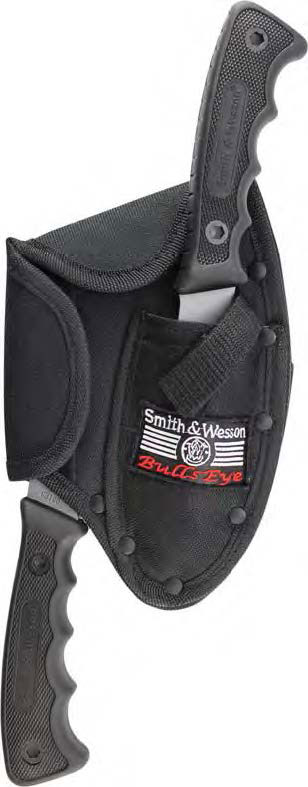
The Smith & Wesson Bullseye Combo sheath holds two tools as one unit and orients them in opposite directions. This offers full purchase of each handle without interference of the other, and doesn’t take up as much space by having the axe handle hang down on your leg. Blade steel: 420 stainless. MSRP: $54.96

Smith Wesson knife sheath

smith & wesson gut hook combo
The sheath, knife and axe come as a set.


Benchmade 10 Rescue Hook Boltaron Sheath

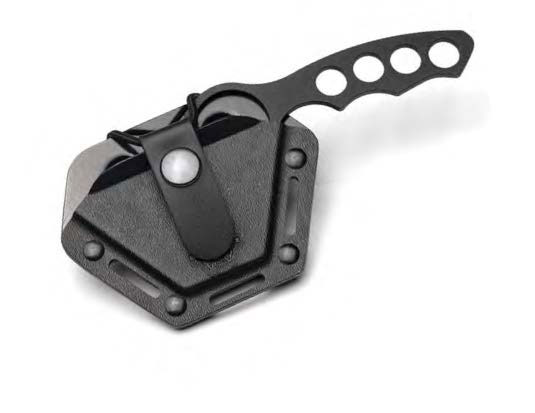
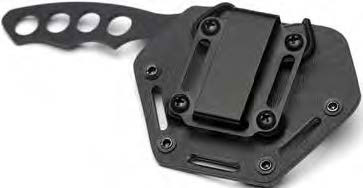
The shape of the Benchmade 10 Rescue Hook’s Boltaron sheath is a symmetrical polygon, allowing it to cradle and engage the detent from either a left- or right-side mounting. By designing the sheath to allow multiple mounting positions, it increases the versatility of how the tool can be accessed. MSRP for the knife and sheath: $75.

Benchmade Rescue knife sheath

benchmade 10 rescue sheath

Brian Tighe Fighters Sheaths

Brian Tighe matches the carbon fiber handles of his Tighe Fighters with a carbon-fiber pattern with the accompanying sheaths.

brian tighe fighter custom knife

Like Creativity in Knives? You’ll Love BLADE Show 2018

best knife show to go toThe world’s largest and foremost knife show, BLADE Show, is taking place June 1-3 in Atlanta. You’ll find the planet’s most innovative knifemakers in one spot. Learn more about how to attend BLADE Show 2018 here.
 

“I Sawed My Index Finger in Half” – 5 More Knife Shop Horror Stories

0
how to make a knife
(image via sxc.hu)

With the popularity of the original article about knife shop accidents, here are five more knifemaking lessons learned the hard way. Use these stories as examples of what to watch for while in the shop. Stay safe!


“I Sawed My Index Finger in Half”

Lesson: A slow moving metal-cut bandsaw can appear quite harmless, yet one of my worst injuries in over 40 years of knife making occurred with mine.

While hurrying to cut a screwdriver slot into the head of a threaded stainless steel handle escutcheon bolt, I failed to do the two safety steps I apply now: fully support the fastener upon a slotted plate encircling the saw blade and hold the bolt with a pair of vice-grips, keeping my hands a safe distance back away from the blade.

But instead, as I pushed the 3/8″ fastener into the saw blade, it snagged the top edge of the face, dragging it down into the exposed slot in the table in front of the blade, pivoting the front part of my index finger into the blade while wedging it in place with the opposing shoulder on the part. As the blade sawed my nail in two and continued to slice through my entire fingertip due to the back pressure from the part, I had to slowly watch and wait for this gruesome process to end once I quickly turned the machine off.

To say it bled a bit was an understatement, as a friend who’d stopped by after I’d left for the hospital asked excitedly if I’d gotten a deer that morning, due to the amount of blood all over the doorknobs and floor leading into the house.

As the doctor was about to remove the sectioned fingernail pieces and stitch up the huge, tapered gash, I’d chosen to remain seated upright on the bench to watch. However, upon trying to insert the needle into my fingertip to deaden it, the callused tip proved so dense that he proceeded to drive the needle all the way through my finger and out the top, shooting a stream of Novocaine all the way to the top of my shoulder.

At that point, I told him, “I think I’ll lie down now.”

Jim Hammond
Hammond Knives & Designs, LLC 


“I Blocked the Knife with My Hand”

Lesson: Any time you place a blade against a fast-moving wheel, use extra caution.

I was getting ready for a turkey dinner and noticed how dull my knife was. I went out to my garage to my paper wheel. I started to sharpen, but my sleeves were loose. I put the knife down, rolled up my sleeves, and grabbed the knife. The knife caught the wheel like a bullet. It hit the back wall and shot straight at my head. I blocked the knife with my hand, and in doing so cut tendons on top of my little finger at the knuckle. I felt like a fool and knew that I did a stupid thing.

James Merten


“That Got Me Nine Stitches”

Lesson: Don’t assume pliers will never fail.

I’ve had a few times that scared me, but one time stands out in particular. I almost had this knife done, and I was holding the handle in my left hand and the blade in my right with a pair of pliers. The blade slipped, and the point went right through my first finger. That got me nine stitches.

Bill Stout


“The Point Spun Across the Palm of My Hand”

Lesson: Protect your hands when using a drill press.

I just finished grinding the blade and a small clip on this little 3-inch blade. I took it over to the drill press for the handle holes. Little did I know that copper, which is what the customer wanted, would grab the drill bit. The knife started to spin out of my hand, like a helicopter.

Instinct made me hold tighter, but the press was stronger. The point spun across the palm of my hand and gave me a deep, 1.5-inch gouge in the palm of my hand.

Now I always wear a Kevlar glove or use a stopper of some sort to catch the knife if it ever spins again.

Art Maldonado
Art’s Knife and Leather Works


“He Stared at His Drooping Fingers in Disbelief”

Lesson: Locks have come a long way, but they’re not foolproof. Also: don’t stab tires to be a show off.

Editor’s note: This one isn’t about knifemaking, but it’s still worth reading.

I was at one of those big shows they hold at Las Vegas every year. The guy hawking the knife was talking about how his knife had the best grip. He was stabbing his knife through a steel belted radial tire.

As the demo went on he invited anyone from the crowd to come up and try to stab their knife through the tire. Finally, a man that looked like Charlie Daniels decided to try. He had a folder in his hand. He took two or three steps and lunged at the tire knife in hand.

I heard a crack and the big man withdrew his hand like people do when they get cut. He stared at his drooping fingers in disbelief. The lock on the lock back had broke and the folder folded closed on his fingers. The crowd gasped. The first aid guys shuffled him off.

So another big guy comes up with a rather large hunting knife. He raised his hand as high as he could and brought the blade down hard in a hammer fist motion. His hand slid down the handle on to the blade, cutting most of the way through three fingers.

That brought the dog and pony show to an end while the organizers of the show directed everyone’s attentions else where. Lesson learned: let someone else show off for the big crowd.

Ernest Lephart


Share Your Stories

Have a horror story of your own? Tell BLADE about it. It could save someone from injury, or worse.

    Have a photo? Upload it here

    Learn More About the Craft of Knifemaking

    Learn how to make a knife

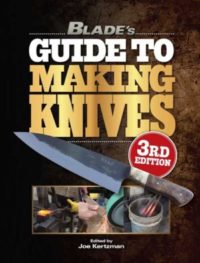
    Learn what you should do in the knife shop with BLADE’s Guide to Making Knives, 3rd edition. You discover techniques for forging, heat treating, grinding and more. Get the book from ShopBlade.com for the best deal.


    Knife News Wire 1/29/18: New “Crocodile Dundee” Movie is a Fake

    1
    Dundeemovie.com

    New Crocodile Dundee Movie is a Fake

    A trailer for a reboot of Crocodile Dundee caught our attention here at BLADE, especially because the teaser (the trailer for the trailer – sheesh!) featured the “that’s not a knife, this is a knife” line.

    However, it now appears that admirers of movie knives fell for a brilliant piece of viral marketing to encourage tourism in Australia.

    From the Brisbane Times:

    Industry sources have indicated the teaser – featuring US actor Danny McBride – is part of an advertising campaign for Tourism Australia, set to air during next month’s NFL Super Bowl.

    If BLADE is going to fall for a hoax, especially a well-meaning one, this isn’t so bad.

    Collector Waits 36 Years for Custom Knife

    Knives annual bookAs published in The Jamestown Sun, Bernie Kuntz placed an order for a custom knife with legendary knifemaker Buster Warenski 36 years ago. After delays and setbacks, he eventually received something similar. A photo in one of the Knives annual books published by BLADE sealed the deal.

    From The Jamestown Sun:

    [Warenski] mailed a signed sketch that he had done on onion paper of the knife he suggested, and said the price would be $550. Gulp! In those days you could buy just about anyone’s work for $100 to $200. An exception might be Bob Loveless, the famous knife designer who was charging $300 to $350 for a hunter in those days.

    You can’t help but smile at those 1980s prices.

    Read the full article here.

    Bill for Knives in Places of Worship Advances in Virginia

    Virginia knife lawsIntroduced by Sen. Ben Chafin, SB 372 would end prohibitions on several types of knives in places of worship. From Knife Rights:

    This bill is a reaction to the Texas church shooting last year and will allow citizens to carry effective weapons for self-defense.

    Listen to Oral Arguments in NYC Gravity Knife Appeal

    Earlier this month, Knife Rights presented oral arguments in its second appeal in its lawsuit against New York City. At issue is the lawfulness of NYC’s ban on “gravity knives,” which it defines as any knife that can open with a flick of the wrist.

    Here is the 26-minute audio recording of the arguments. It’s interesting to listen to the way these cases play out, because the issue stretches beyond the borders of the Big Apple.

    Have a Tip for Knife News Wire? Submit it Here

    Tell BLADE with this form.

      Check this box to prove you're not a bot

      Photos: New ‘n’ Nice Knives for $200 or Less

      0

      It’s becoming easier and easier to add quality knives to your collection without breaking the bank. Here are new knives with price tags of $200 or less.

      Bear & Son Cutlery 5A08

      bear and son cutlery automatic knives
      Bear & Son Cutlery photo

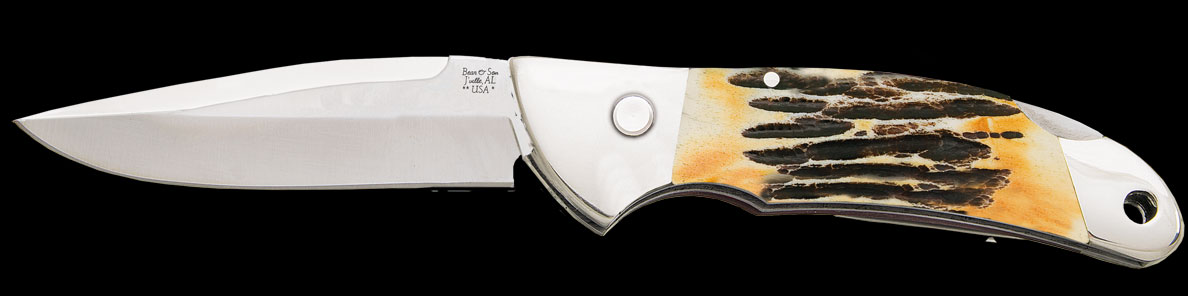
      The 5A08 from Bear & Son Cutlery attaches handsome stag to an automatic platform. $164

      • Blade Material : 440 Stainless Steel
      • Handle Material : Genuine India Stag Bone™
      • Open Length : 8-3/4″
      • Closed Length : 6-5/8″
      • Blade Length : 2-3/4″
      • Weight : 2.9 oz.
      • Extras : Lockback & Pocket Clip & EDM Precision Locking Mechanisms

      Benchmade Proper

      benchmade proper knife
      Benchmade photo

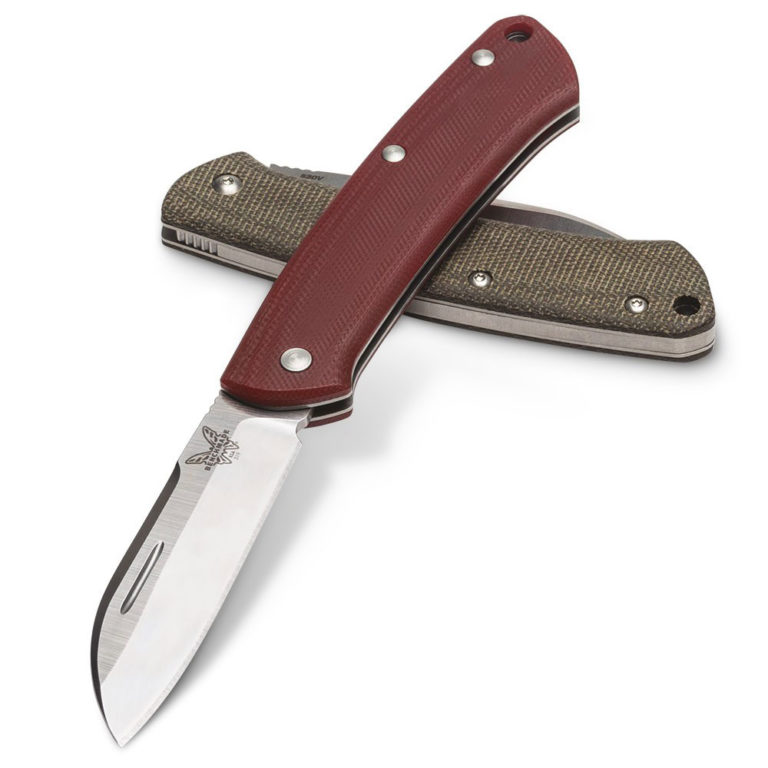
      The Benchmade Proper sports a classic design with either canvas Micarta or G-10 handles. $135

      • Mechanism: Slip-joint
      • Action: Manual-opening
      • Blade Steel: CPM-S30V (58-60 HRC)
      • Blade Length: 2.86″ (7.26cm)
      • Blade Thickness: 0.090″ (2.286mm)
      • Open Length: 6.69″ (16.99cm)
      • Closed Length: 3.85″ (9.78cm)
      • Handle Thickness: 0.40″ (10.16mm)
      • Weight: 2.32oz. (66.0g)

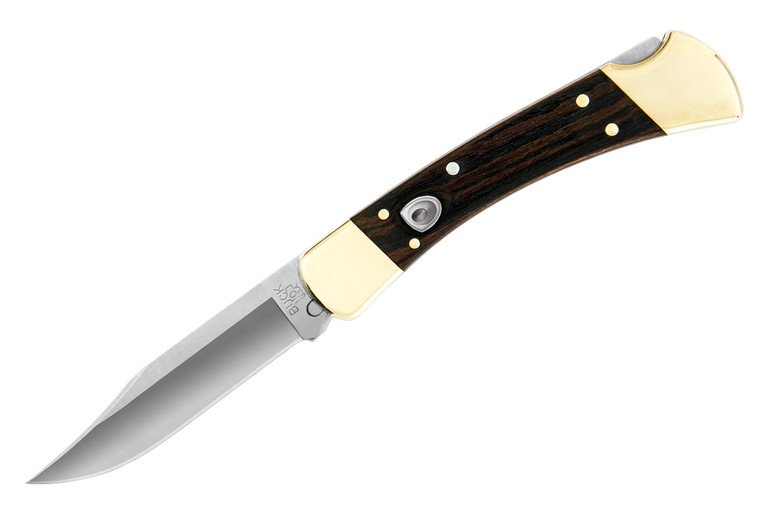
      Buck 110 Auto Knife

      buck model 110 automatic knife
      Buck photo

      The familiar Model 110 receives an automatic overhaul in one of Buck’s latest releases. $200

      • Blade steel: 420HC Stainless Steel
      • Blade shape: Clip
      • Blade thickness: 0.120″
      • Blade length: 3 3/4″ (9.5 cm)
      • Weight:7.1 oz. (201.3 g)
      • Handle: Macassar Ebony Dymondwood
      • Carry: Genuine leather, friction fit sheath
      • ORIGIN:Made in the USA

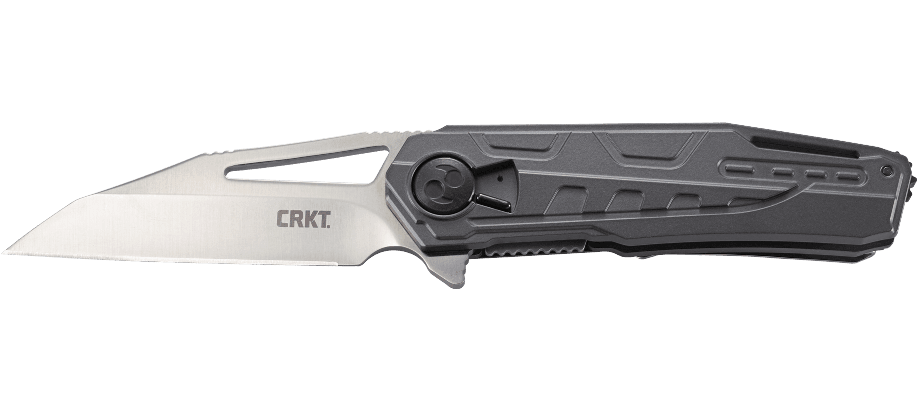
      Columbia River Knife & Tool Raikiri

      CRKT Raikiri knife
      CRKT photo

      The CRKT Raikiri won a Most Innovative Design award at the 2018 Shot Show. $99

      • Blade Length: 3.759″ (95.48 mm)
      • Blade Edge: Plain Edge
      • Blade Steel: 1.4116 SS
      • Blade Finish: Satin Finish
      • Blade Thickness: 0.134″ (3.4 mm)
      • Closed Length: 5.112″ (129.84 mm)
      • Weight: 5.0 oz
      • Handle: ADC12 Aluminium; Casting
      • Style: Folding Knife w/Locking Liner
      • Overall Length: 8.938″ (227.03 mm)

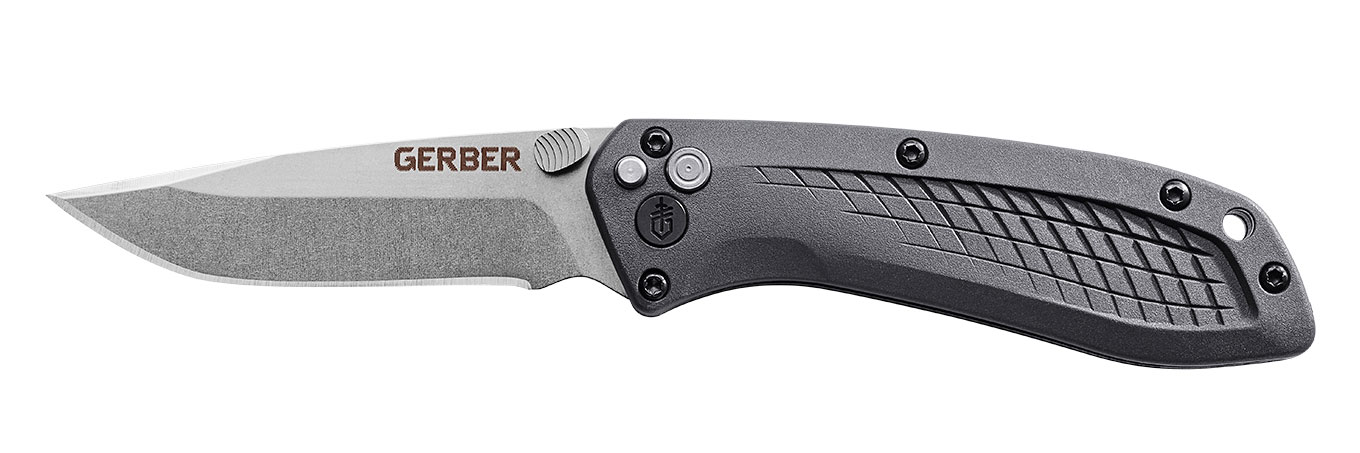
      Gerber US-Assist S30V

      gerber assisted opening knife that looks like an automatic knife
      Gerber photo

      Don’t be fooled by the button on the handle. This is an assisted opener, sporting Gerber’s smooth-deploying B.O.S.S. tech. $119

      • Blade Material: CPM S30V with stone washed finish
      • Blade Length: 3.0″
      • Overall Length: 7.2″
      • Weight: 3.9 oz
      • Handle Material: Glass-filled nylon
      • Lock Type: Plunge-lock w/ cross-bolt safety (locks blade open or closed)
      • Made in USA

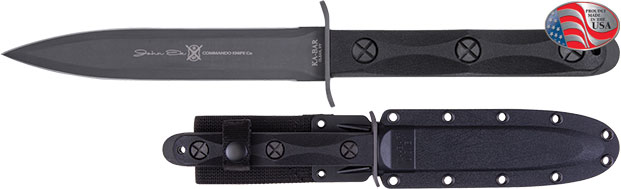
      KA-BAR Ek Model 4

      Ek Model 4 KA-BAR knives
      KA-BAR photo

      The Model 4 bakes in the spirit of the jungle fighting knife that inspired it. $135

      • Weight: .70 lb.
      • Steel: 1095 Cro-Van
      • Blade length: 6.625”
      • Overall length: 12.625”
      • Edge angle: 20 degrees
      • Grin: Flat
      • Blade thickness: .154”
      • Blade width: 1.125”
      • Shape: double-edged spear point
      • Handle material: Glass-filled nylon
      • HRC: 56-58

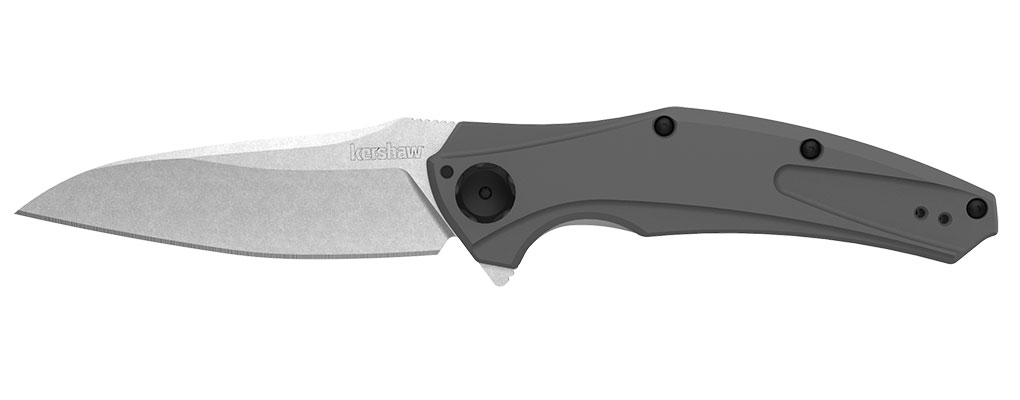
      Kershaw Bareknuckle

      Kershaw bareknuckle knife
      Kershaw photo

      The Kershaw Bareknuckle is similar to the Natrix, but there’s one important difference: the Bareknuckle is made in the USA. $109

      • Steel: 14C28N, stonewashed finish
      • Handle: 6061-T6 anodized aluminum
      • Blade Length: 3.5 in. (8.9 cm)
      • Closed Length: 4.7 in. (11.8 cm)
      • Overall Length: 8.2 in. (20.7 cm)
      • Weight: 3.4 oz. (96.4 g)

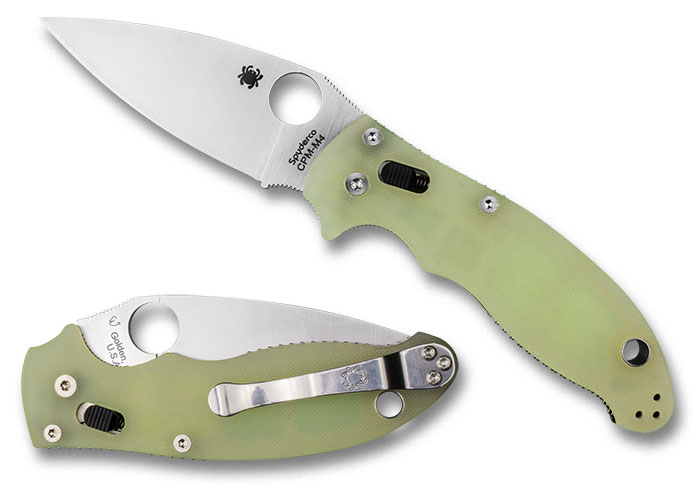
      Spyderco Manix 2

      Spyderco Manix 2 Blade HQ
      Spyderco photo

      The Manix 2 receives a tune up with G-10 handles and CPM M4 steel, exclusively for Blade HQ. $189

      • Overall Length: 8.03”
      • Blade Length: 3.37”
      • Steel: CPM M4
      • Closed Length: 4.66”
      • Edge Length: 2.92”
      • Weight: 4.3”
      • Blade Thickness: 0.125”
      • Handle: G-10
      • Lock Type: Ball Bearing
      • Grind: Full-Flat
      • Origin: United States


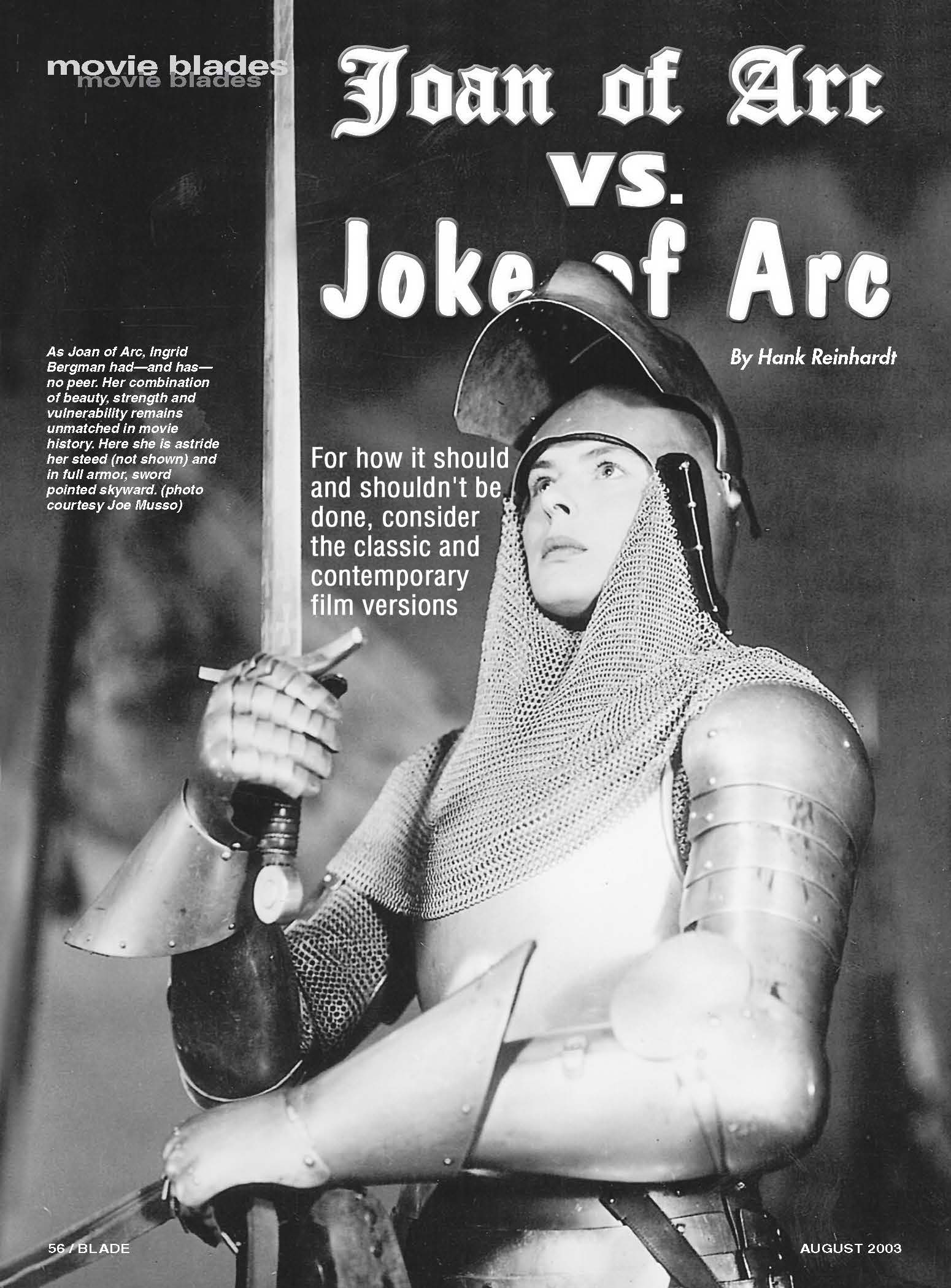
      Getting Movie Swords Right: Joan of Arc vs. Joke of Arc

      joan of arc movie swords
      For how it should and shouldn’t be done when it comes to historic blades, consider the classic and contemporary film versions of the Joan of Arc story.

      Editor’s note: This article originally appeared in the August 2003 issue of BLADE magazine. You can read more from BLADE‘s archives with this extensive collection.

      When I first heard of The Messenger, the 1999 movie version of the Joan of Arc story, I thought it best to ignore it. It just didn’t sound very good. However, I caught a trailer on HBO about the film—directed by Luc Besson and starring Milla Jovovich as Joan and John Malkovich as The Dauphin—and was quite impressed.

      According to the trailer, the producers spent an enormous amount of time researching the era in which the story is set, including the armor and weapons. They also researched Joan and reportedly would present a different portrait of “the Maid of Orleans.”

      On this basis, my wife, Toni, and I journeyed to the theater prepared to see the new portrait, and to appreciate the research into the clothing and the arms and armor.

      What Went Wrong

      custom knives action moviesOne of the most notable things about the movie was the popcorn. It was really fresh and delicious. The drinks were well mixed, and, as usual, the price was sky high—but the popcorn was worth it.
      I regret to say, however, that I have a weak stomach. Oh, scenes of carnage don’t bother me, but really bad acting, directing and outright falsehoods in a movie have a tendency to make me want to heave!

      Nonetheless, I’m not a coward. I walked to the restroom, threw some cold water on my face, steeled my nerves, and went back to try to watch the rest of the movie.

      I failed.

      I made it through the fall of the Tyrell and the relief of Orleans. About 10 minutes later, though, my stomach quailed at what I watched on the screen, and Toni and I had to leave. Meanwhile, a couple of my friends braved the whole film. They told me that as the time approached for Joan to be burned at the stake, many in the audience were shouting, “Burn her! Burn her!”

      Not Falling for Those Cheap Movie Swords

      If the producers paid for research on The Messenger, they should get their money back.
      All the armor looks as if it’s straight out of some cheap fantasy movie, and the same goes for the swords and other weapons. However, the war hats look pretty good. As for the fighting, it’s more ludicrous than anything else.

      After the fall of the Tyrell, the camera pans somewhat lovingly over the scene of “carnage.” There’s one severed foot, a “tastefully arranged” group of what might be entrails and, I think, an arm lying about. In short, it’s the most unrealistic battle scene since the Saturday serials.

      Actually, I would be willing to overlook a lot of the flaws and errors if the movie had anything else going for it, but this one doesn’t.

      The Hundred Years War helped create a time of deep cynicism that co-existed with a profound and strongly held religious belief. Whatever one’s opinion of Joan of Arc—and whatever the reality actually was—she was able to lead and inspire many men, those sincere in their religious belief, as well as those quite cynical.

      On the other hand, this movie’s version of Joan could, and did, inspire an exodus from the theater. Don’t waste your time with this one. For one thing, I doubt that you’ll be as lucky with the popcorn as we were.

      Better Swords, Better Movie: Joan of Arc (1948)

      movie swords historical accuracy

      After we left the theater from watching The Messenger, I promised Toni that I would show her the definitive film version of Joan of Arc. Produced by Walter Wanger in 1948, Joan of Arc remains one of the most stupendous epics ever produced for the silver screen.

      As Joan, Ingrid Bergman had a positively ethereal beauty that really hits home in the movie. She was also a tremendous actress and comes across as a confused peasant girl, driven by forces she only partially understands but in which she fully believes.

      La Hire, one of Joan’s great battle captains, is well played by a bluff, tough Ward Bond. Since I always liked what I read about La Hire, I was pleased to see him played so admirably.

      The Dauphin, a somewhat feckless and timid person, is well handled by Jose Ferrar. I could go on and on, as everyone in the movie does a superb job and each is quite believable in his/her role.
      The primary battle in the movie is the capture of the Tyrell and the relief of Orleans that’s besieged by an English army under the command of Sir William Gladsdale. This is one of Joan’s first battles and in it she’s wounded by a crossbow bolt.

      She regains consciousness and insists on leading a final charge against the Tyrell, which falls in the ensuing battle.

      accuracy of weapons in hollywood movies

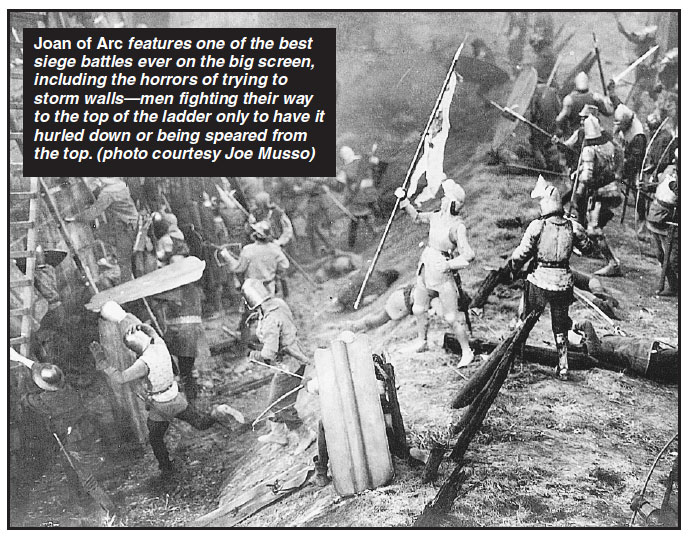
      This is one of the best siege battles ever on the big screen, and is worth the price of the movie rental alone. You see arrows flying from crossbows and bows, and the horrors of trying to storm walls—men fighting their way to the top of the ladder only to have it hurled down or being speared from the top.

      As the Tyrell falls, La Hire climbs over the wall and shouts for Gladsdale, and the two meet in the center and fight with two-hand swords. La Hire drives him back and, rather than surrendering, the Englishman falls into some burning debris.

      Getting the Two-Hand Swords Right

      Hollywood movie swords

      read blade magazine back issues
      Read 10 years worth of back issues, including the three-part series about “The Iron Mistress,” in this collection.

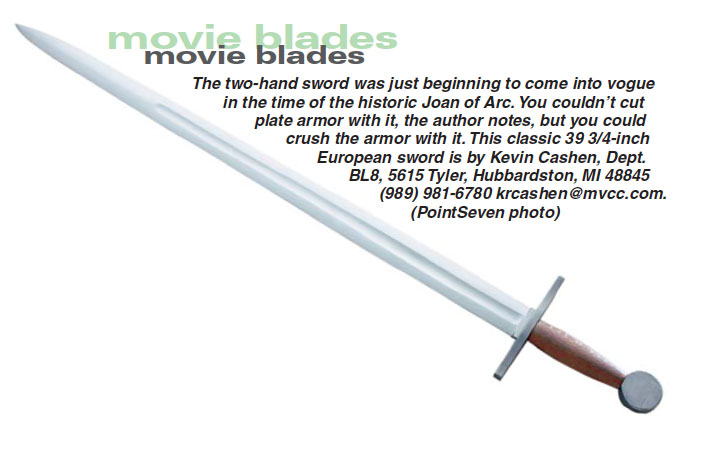
      The two-hand sword was just beginning to become popular at that point in history, and for two knights in full plate armor it was a handy weapon to have. Certainly, you can’t cut plate armor with a regular sword but you can crush it.

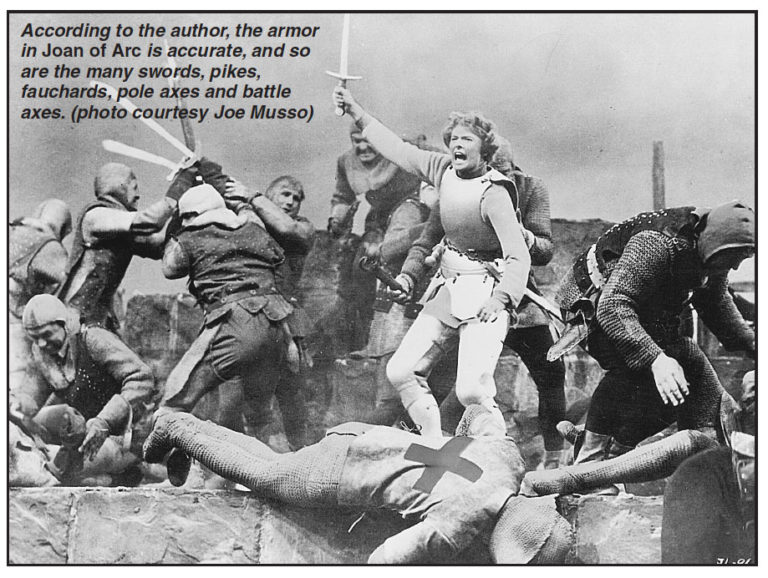
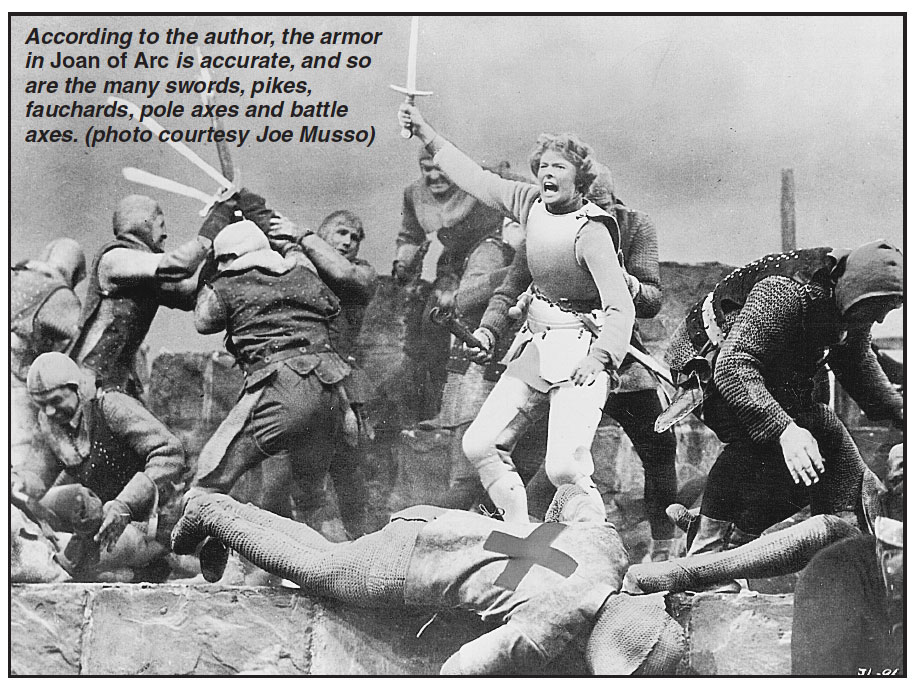
      The movie is well acted and well done, but even more impressive is the costuming, right down to the haircuts of the men. The hair is worn thick and cut into the shape of a bowl. This was done at first to provide extra padding under the helmet but also became the fashion for the dandies, even if they never fought. The armor is accurate and so are the many swords, pikes, fauchards, pole axes and battle axes.

      See this one. It’s fun and a good movie as well.

      The Iron Mistress: A Legendary Movie for a Legendary Knife

      2

      the iron mistress movie

      Editor’s note: This article originally appeared in the May 2002 issue of BLADE magazine. It’s the first part in a three-part series about The Iron Mistress. You can read the entire series, plus 10 years of back issues, in this digital collection.

      A “Choicely Good” Knife

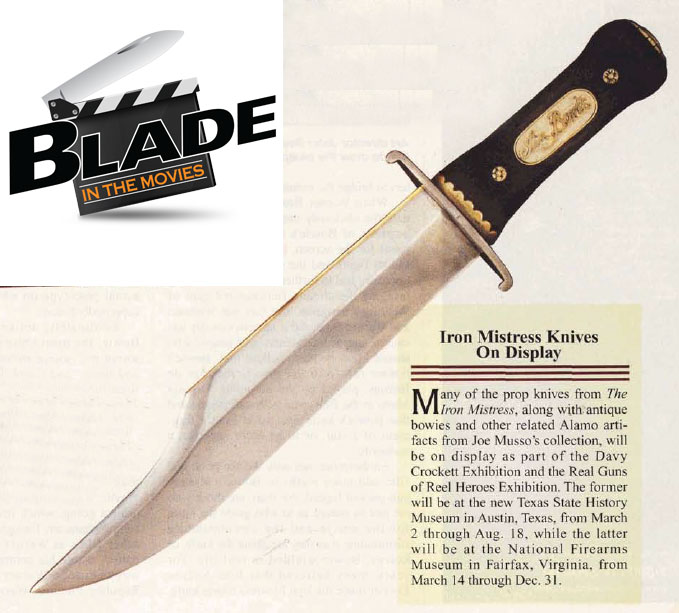
      the iron mistress bowie knife“It’s choicely good; I never thought such a knife could be,” remarked Jim Bowie as he handled the knife with its gleaming brass-backed blade, silver-lugged crossguard and shiny black hilt that showcased a scalloped brass ferrule and fancy nameplate.

      “It will never be again,” concluded its maker, James Black, as he stepped forward added, “I fused into it a fragment of a star. For better or worse, that knife has a bit of heaven in it, or a bit of hell.”

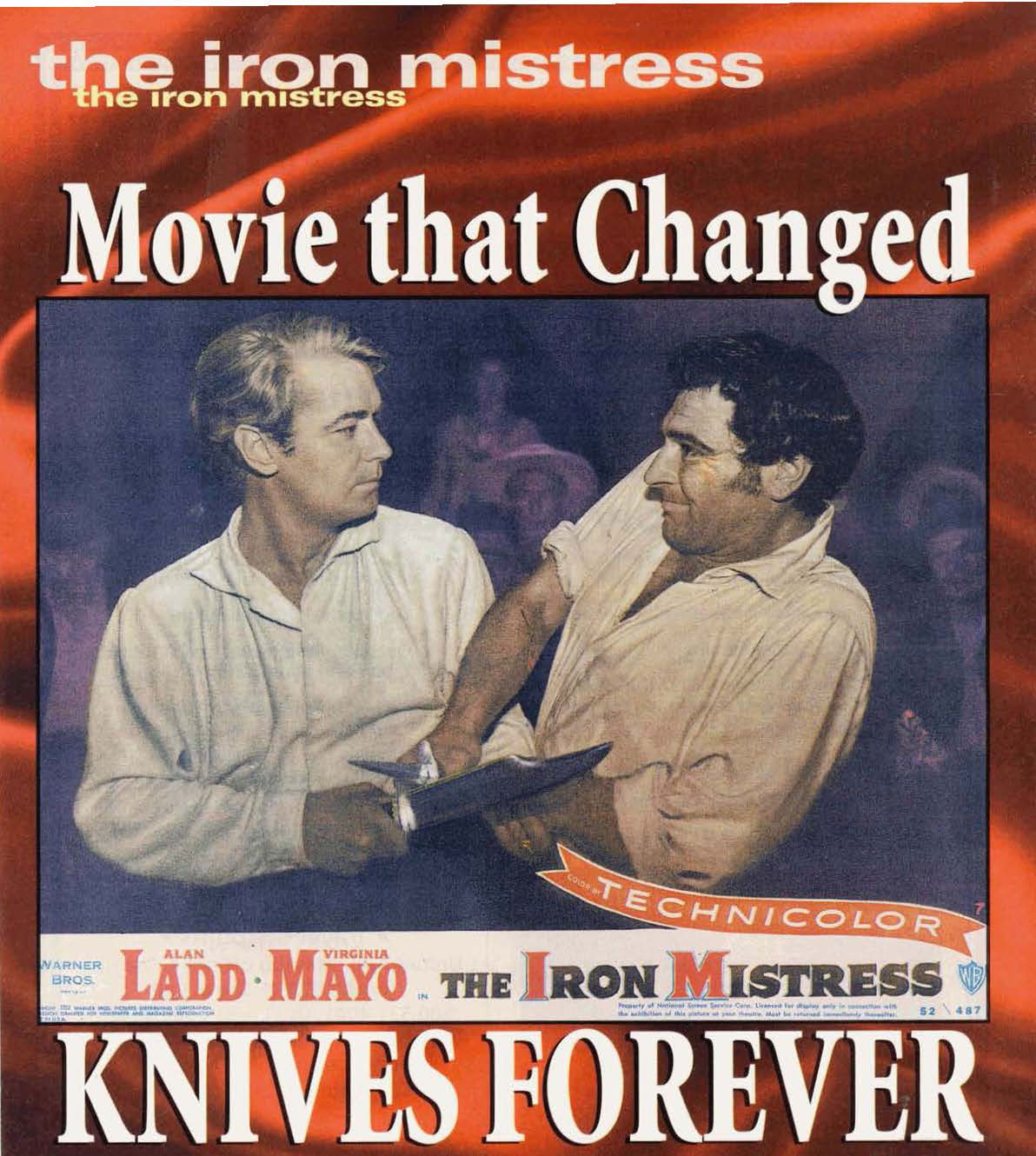
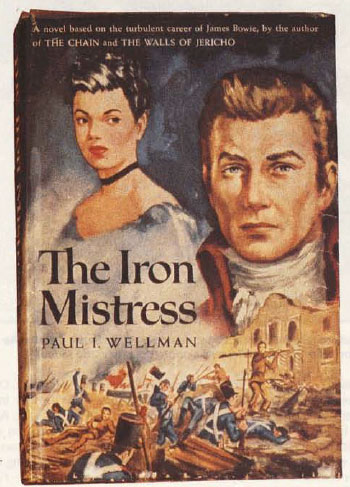
      With these words, actor Alan Ladd, as Bowie, and David Wolfe, as Black, summed up 50 years ago in Warner Bros.’ film version of Paul I. Wellman’s best-selling 1951 novel, The Iron Mistress, what was to become, for better or worse, the world’s best known and, in some cases, favorite interpretation of Jim Bowie’s knife.

      An Enduring Mystery

      Actually, they had every right to do so, since whatever knife, or knives, the historic Jim Bowie may have owned disappeared after his valiant death on March 6, 1836, in the crumbling mission-fortress of San Antonio de Valero, nicknamed the Alamo, at the hands of hordes of Mexican soldiers.

      This event, while giving Bowie immortal fame, unfortunately caused the exact style, mountings, dimensions and identity of whoever made his equally legendary knife to be argued by his family, including older brothers John and Rezin, and their descendants, as well as friends, historians, writers, collectors and fans ever since. Once Warner Bros. acquired the rights to Wellman’s novel, the chore of through the existing research and period bowie knives in order to arrive at a credible visual of Bowie’s blade was added to the other production concerns, such as the casting of the larger-than-life Bowie himself and deciding exactly how much of Wellman’s sprawling, epic novel to film.

      bowie knife iron mistress

      Not only was the book colorful, befitting the real life Bowie, but it was also expensive in film terms. There were pirate fights, knife fights, Indian fights, fistfights, gunfights, and the Texas War of Independence from Mexico, culminating with Bowie’s force of possibly 200-260 men at the Alamo against an army of thousands.

      As with his knife-and since the historic Bowie left no written record an his life known of thus far. The historians who preceded Wellman had to piece together all the salient events leading up to Bowie’s untimely yet heroic death. They were far from successful in many instances, so much so that Bowie and his knife, or knives, have been shrouded in legend almost from the day he died, and in some cases before then.

      In choosing a fictionalized rendition, Wellman obviously not only felt that it wasn’t necessary to document his sources, but decided to incorporate all the fragmented, and sometimes inaccurate, 19th-century accounts on Bowie into a cohesive narrative, even if the author had to invent characters to bridge the events.

      Adapting the Novel for the Silver Screen

      the iron mistress bookWhen Warner Bros. decided to eliminate portions of Bowie’s life in adapting the novel for the screen, including the pirates, Indian fights and the entire Texas Revolution, they had to further confound history by bridging the already fictionalized gaps of Wellman’s narrative.

      The fact that Wellman and Warner Bros. did it so convincingly has caused succeeding writers and people who should know better to believe that Bowie’s femme fatale in the novel, Judalon de Bornay, played by the gorgeous Virginia Mayo in the film, was an actual person and that Bowie’s knife was made from a fragment of a star, or to be more specific, a meteorite.

      Furthermore, not only did the book and film add more myths to Bowie’s already jam-packed legend, but there are those who are just as unsure as to who made the knife for the movie and the circumstances surrounding it as they are about the knife, or knives, Bowie wielded in real life. For years, many believed that John Nelson Cooper made The Iron Mistress movie knife.

      Others insisted it was Bo Randall. Only last year, a well-known cutlery writer indicated that Jimmy Lile was the artificer. All three makers drafted versions of it on request after the movie was released, but not for the movie itself. Still others are traipsing through the Smithsonian Institution to find the actual prototype on which the knife was supposedly based.

      Fortunately, unlike the historic Jim Bowie, the prop knives and the primary source records regarding the film still exist, and those involved with the production lived long enough to share their insights.

      Setting the Stage

      read blade magazine back issues
      Read 10 years worth of back issues, including the three-part series about “The Iron Mistress,” in this collection.

      Turning the clock back to 1951, these records show that Wartier Bros. initially considered John Wayne, William Holden, Steve Cochran, Burt Lancaster, Jeff Chandler and Charlton Heston to play the larger-than-life Bowie.

      However, at the time, Wayne was trying to get his own Alamo project going, which involved Bowie as a central character. Though he was starring in other films at Warner Bros. during the period, where his contract was split three ways between Warner Bros., RKO and Republic Pictures, Wayne was mistakenly led to believe by Republic’s president, Herbert J, Yates, that Republic was committed to also allow him to direct his Alamo film, as well as produce and star in it.

      At the same time, while Warner Bros. was considering other options, 20th Century Fox president Darryl F. Zanuck announced that, “There aren’t any box office stars anymore except John Wayne and Alan Ladd.”

      It’s interesting to note that Ladd’s 10-year contract was coming up for renewal at Paramount Pictures in 1951. Upset with the roles he was getting there, Ladd announced that he would be taking offers from other studios.

      Team Iron Mistress

      With these factors in place, Warner Bros. wooed Ladd away from Paramount, as well as from Fox who was also angling for him, and gave him the Bowie role to showcase the studio’s new contract with the star.

      Warner Bros. then backed the film with a top production team. Besides assuring the studio that Ladd would be a credible Bowie, it was this team that spearheaded The Iron Mistress. The triumvirate of producer Henry Blanke (The Adventures of Robin Hood, The Maltese Falcon, Treasure of the Sierra Madre), director Gordon Douglas (San Quentin, Kiss Tomorrow Goodbye), and art director John Gabriel Beckman (The Adventures of Robin Hood, The Maltese Falcon, Casablanca) would play monumental roles in the finalized film version of The Iron Mistress.

      Making The Iron Mistress Knife

      The Iron Mistress bowie knife
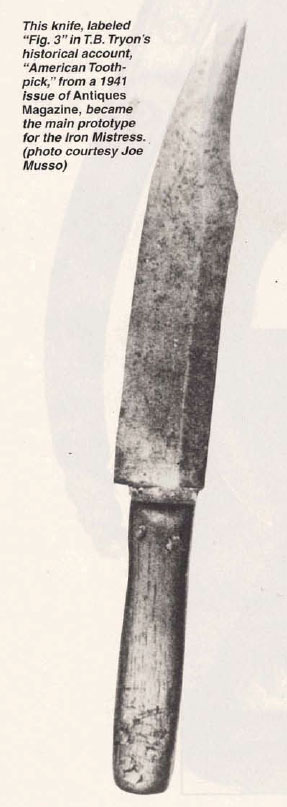
      The knife referenced in the “American Toothpick” article.

      With the Warner Bros. research department behind them, Blanke, Douglas and Beckman examined all the then-known accounts and photos of authentic bowie knives. Like Wellman, they also consulted Raymond W. Thorp’s 1948 book, Bowie Knife. In the end they decided to adapt the antique bowie labeled “Fig. 3” in T.B. Tryon’s historical account, American Toothpick, from the April 1941 issue of Antiques Magazine.

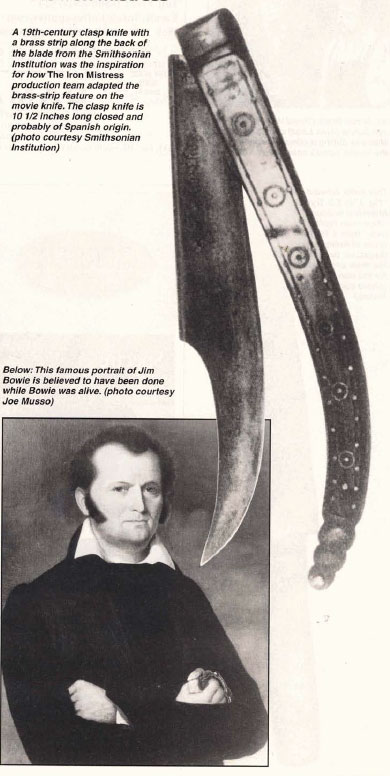
      It’s interesting to note that they also saw that the knife had a similar blade shape to the 19th-century folding bowie, termed “clasp knife,” with a brass strip on the blade spine in the Smithsonian Institution.

      clasp knife james bowie
      The 19th century clasp knife with a brass strip along the back of the blade is pictured at top. James Bowie’s portrait is below.

      Since Thorp described the brass-strip feature as being on some bowie knives made by one of Jim Bowie’s knifemakers, James Black, and Wellman said that the feature was on the knife Black made for Bowie, Blanke, Douglas and Beckman felt that they had “solved the mystery.”

      Of course, other influencing factors included the similarity of the clip point on the knife facing page 97 in Thorp’s book, as well as Tryon’s belief in his American Toothpick article that the knife in “Fig. 3” was the style the historic Bowie used in the Sept. 19, 1827, Sandbar Fight, which initiated Bowie’s fame, and the fact that the brass strip could be traced back to the Highland dirk knives of Bowie’s Scottish ancestry.

      making bowie knives

      Though Jim Bowie’s brother, Rezin, described the Sandbar Knife as having it 9 1/4-inch blade, family friend Caiaphas Ham said it was an 8-inch blade, Thorp described a brass-backed bowie made by Black with a 14-inch blade and Wellman wrote that it was an 1 1-inch blade, the Warner Bros. team compromised on a 10 1/2-inch blade 2 inches wide and 3/8-inch thick tapering to 3/16 inch at the brass back. Beckman then had production illustrator Philip Jefferies do some concept sketches for approval.

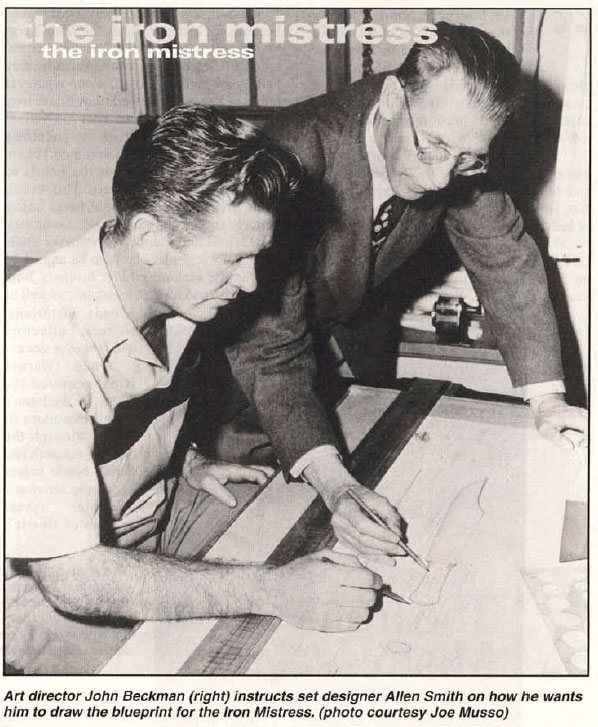
      Once accepted, set designer Allen Smith drew up the blueprints for the knife. Besides the brass strip on the blade’s back, Beckman’s design included a lugged German (nickel) silver crossguard, a scalloped brass ferrule encasing the dogbone-shaped wood handle that was lacquered black, and a fancy three-piece brass buttcap.

      making bowie knives

      Feeling that the historic Bowie would want his name somewhere on the knife, Beckman designed the letters “Jim Bowie” in script to be cut out of sheet brass. This was laid over an oval nameplate made of a cream-colored Formica to simulate ivory. A strip of brass bordered the nameplate and the entire ensemble was inlaid in the hahdle on the trademark, or reverse, side of the knife.

      Flanking the nameplate were two brass rivet heads, each in the shape of a five-petal rosette. However, only the two rosette rivet heads appeared on the opposite, or obverse, side of the handle, not the nameplate.

      knifemaking bowie knives
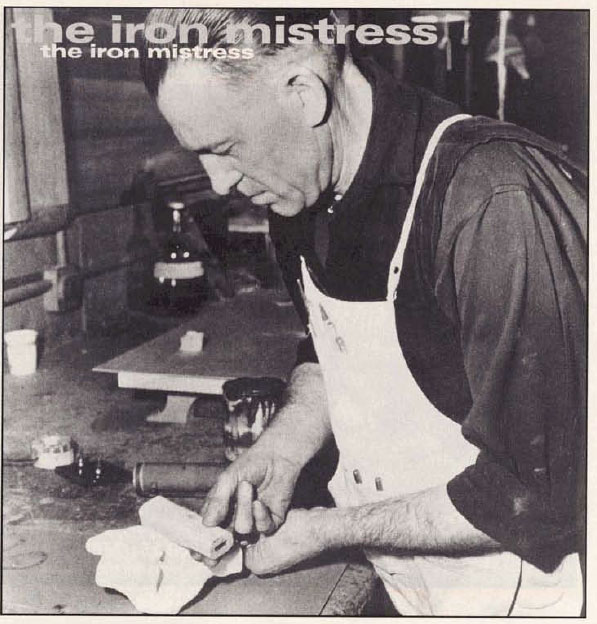
      Prop maker Arthur Rhoades fits the wooden handle for the “Iron Mistress” to a plaster cast of Alan Ladd’s hand. (photo courtesy of Joe Musso)

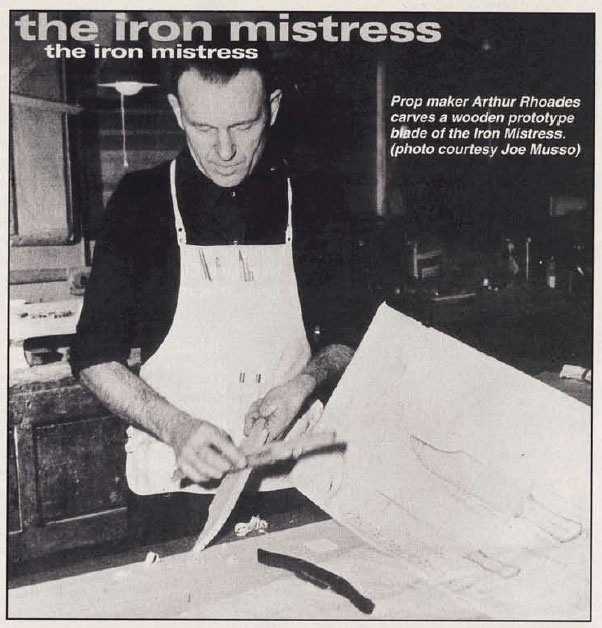
      Beckman then gave the blueprints to property master Ed Edwards who, in turn, assigned prop maker Arthur Rhoades to execute the finished version. Using automotive spring steel, Rhoades ground out the blade and brazed a strip of brass along the back. A plaster cast of Ladd’s hand was given to the prop maker prior to carving the wooden hand1e. This caused Rhoades to alter the blueprints slightly by lengthening the handle to 5 31/4 inches and the crossguard to 3 1/2 inches for an overall length of 15 5/8 inches, or the entire knife.

      Advertisement

      Must Read Articles

      Read this before you make a knife

      Knifemaking 101 – Read This Before You Make a Knife

        by Wayne Goddard My experience has taught me that there's nothing like digging in and getting started. I've often said the hardest part of the...
      how to forge damascus steel

      How to Forge Damascus

      Advertisement
      Advertisement