Home Blog Page 171

Battle at the U.S. Border: Tackling Counterfeit Knives

Editor’s note: With news of Canada ending imports of folding knives rocking the knife world, here is another important issue taking place at international borders.
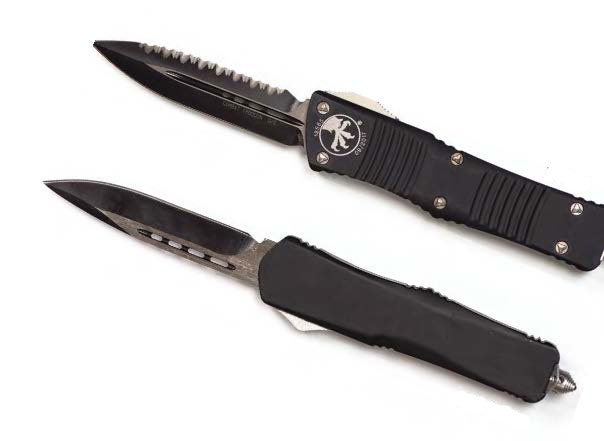
 

Microtech fake knife
U.S. Customs and Border Protection recently seized a dozen counterfeit Microtech knives attempting to enter via Alaska. Note the difference between an authentic Microtech Trodoon (above, top) and a counterfeit of it (bottom). (Microtech image)

Knife Companies Get Proactive

As part of his duties at Buck Knives, Joe Houser clicks through e-commerce websites like eBay, searching for fake Buck knives. When he finds a listing where someone is pedaling a counterfeit Buck, Houser works with the website to take the listing down and perhaps banish the seller from the site.

A few years ago, Buck didn’t have someone doing this job. But more and more fans of Buck Knives were sending their blades to the company’s warranty department only to learn their cherished knives really weren’t Bucks at all. Someone had ripped off the designs, piggybacking off Buck’s name and reputation to sell a shell of a knife to a swindled customer.

Counterfeiting may be the most recent challenge to adversely affect the knife industry. Over the past year or two, counterfeiters have gotten smarter, mimicking knife designs better. And thanks to the rise of international e-commerce websites, it’s harder to stop shipments of illegal knives entering the country because many come through in onesies and twosies, sent direct to the buyer through FedEx, UPS and other shipping outfits.

Bad for Collectors, Bad for Business
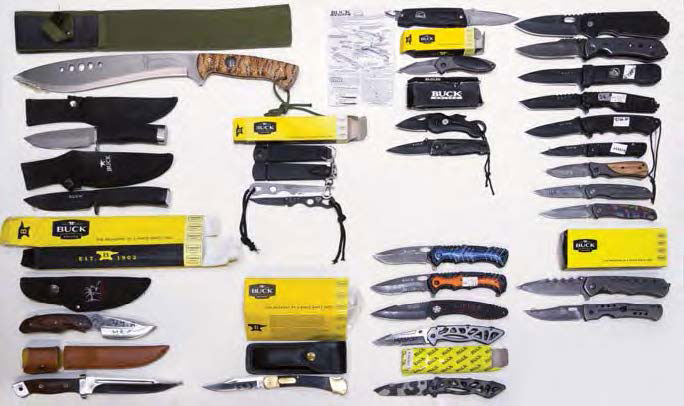
Buck knives counterfeit fake
Buck Knives took a dozen Buck knife counterfeits and gave them a Rockwell hardness test. “None of the blades, not one, were made of hardened steel,” noted Buck’s Joe Houser. “They are very cheaply made and fall apart quite easily.” A display of Buck counterfeits (above) reflects the scope of the problem. (Buck image)

Buck took a dozen of the counterfeits and gave them a Rockwell hardness test.

“None of the blades, not one, are made of hardened steel. They are very cheaply made and fall apart quite easily,” Hauser wrote by e-mail. “I know of one model of Buck’s that I see counterfeited where the producers of the knife did not even install the linerlock. The blade had nothing at all to hold it open or closed.”

Research by the American Knife & Tool Institute (AKTI), a leading organization fighting for common-sense knife laws, indicates U.S. manufacturers lose 10 percent in sales annually to counterfeiting.

As a result, AKTI officials estimate counterfeit blades siphon about $95 million from the knife industry every year. It’s enough to erode the bottom line of knife manufacturers providing American jobs. And if the problem is to be solved, it will take the whole of the knife industry, AKTI officials say.

U.S. Government Struggles to Keep Up
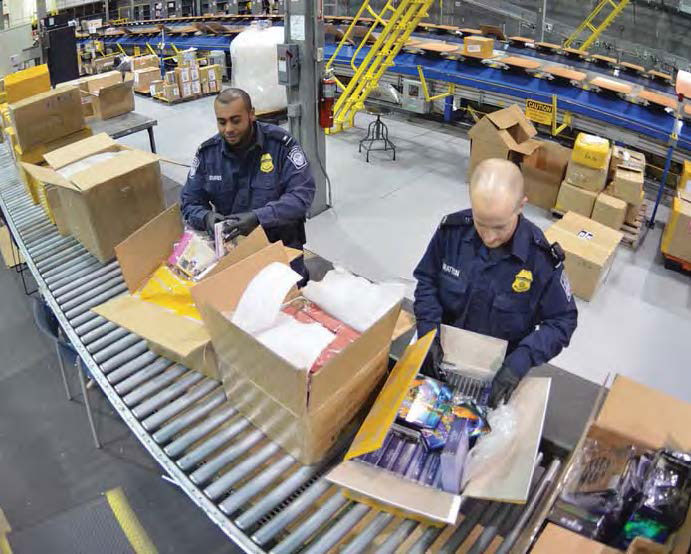
Counterfeit knives
U.S. Customs and Border Protection made 31,500 seizures in 2016 of products it found to have violated intellectual property rights—52 percent more in fiscal year 2016 than in 2014. (U.S. Customs and Border Protection image)

Gregory Moore, public affairs specialist with U.S. Customs and Border Protection (CBP), said Customs made 31,500 seizures in 2016 of products it found to have 77 violated intellectual property rights—52 percent more products in fiscal year 2016 than in 2014. The increase presents a challenge for the agency.

“With the global rise of e-commerce and online shipping, the number of small packages containing counterfeit goods continues to rise,” Moore wrote. “Ninety percent of the seizures in fiscal year 2016 were small packages shipped through express carriers or international mail. The increase of [goods infringing on intellectual property rights] in the small-package environment creates both a logistical and enforcement challenge for CBP.”
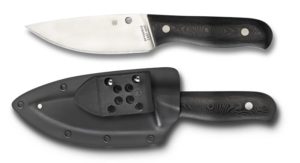
Fake counterfeit spyderco knife
The best way to make sure the knife you order online is legitimate is to buy from retailers that specialize exclusively in knives. ShopBlade.com is one of them. Click to browse a selection of genuine knives.

Counterfeit knives make up less than 1 percent of the products Customs seizes that it considers a threat to health and safety, a category that also includes counterfeit pharmaceuticals and sporting goods. After all, poor steel can cause a blade to snap, a pivot to fail, etc., increasing the chances of injury or even death.

Besides, seeing a knife being ripped off and made with poor materials stinks.

“Well, it’s frustrating,” said Doug Ritter, executive director of the other leading organization dedicated to common-sense knife laws, Knife Rights. Ritter also has designed knives for CRKT and Benchmade.

Most honest knives are derivatives of older knives, Ritter said, where knifemakers seek to improve the designs and make a better knife.

“That’s the way stuff develops,” Ritter said.

Meanwhile, the organization spearheading the effort against counterfeit knives is AKTI.

“We encourage them in their efforts and hope they are successful because these counterfeits hurt everyone in the knife community,” Ritter wrote.

Counterfeiters Get Smaller, More Numerous
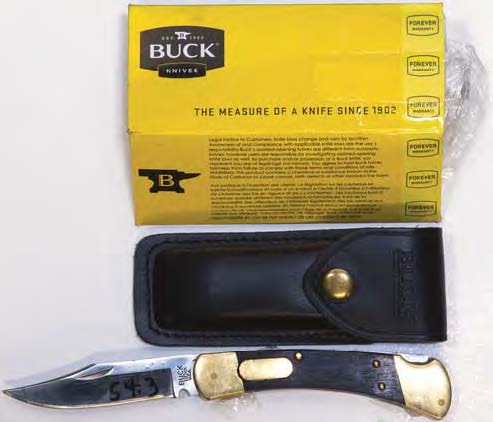
counterfeit buck knives
Some of the counterfeits go so far as to copy the knife right down to the blade mark and product box with literature, as here with a fake Buck 110. (Buck image)

CRKT President Rod Bremer’s interest in counterfeit knives began to grow about five years ago when he started noticing more and more counterfeits from Southeast Asia. Today, he noted, most counterfeit knives originate from China.

Bremer, who chairs AKTI’s anti-counterfeiting committee, said most counterfeiters have small operations—simply working out of a garage—making them hard to track down. Sometimes they copy manufacturers’ knives right down to the packaging and warranties that are honored for genuine models only. Often, the counterfeiters try to catch the eye of buyers looking for a deal.

Compared to legitimate knives, Bremer said, counterfeits are usually priced at 50 to 70 percent of the MSRP of the genuine article. For example, one American knife company manufactures a fixed blade for $425 of which a Chinese e-commerce site recently listed a counterfeit—complete with the company’s logos on the packaging—for about $41.

Some counterfeiters have become so sophisticated that knife companies must look at machining marks and other small details to identify the real thing, similar to identifying counterfeit currency.
These details are kept secret by the companies lest the knowledge falls into the hands of counterfeiters.

What Can be Done?
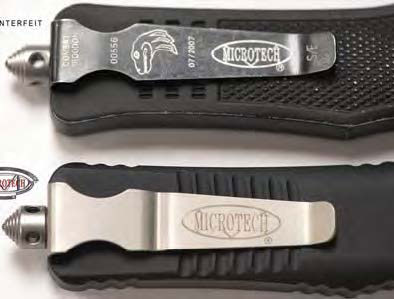
counterfeit pocket clips
A close-up of the pocket clips of the genuine Microtech Trodoon (bottom) and a counterfeit (top) reinforces just how far counterfeiters will go to copy the genuine article. (Microtech image)

Bremer said the knife industry’s most comprehensive strategy is to play a full-court press, including being vigilant in asking e-commerce sites to remove listings of counterfeit models. If the knife industry as a whole makes it a “pain in the butt” to sell bogus knives, he said, then the bad actors may move to more lucrative products.

“Counterfeiters are not particularly selective,” Bremer observed. “They just want to knock somebody’s brand off, sell it and make a lot of money.”

Can the federal government build a virtual wall of blue-gloved U.S. Customs officers opening boxes and targeting shipments coming in from outside nations? Unfortunately, as Bremer noted, “I don’t think they have the manpower to catch all the shipments.”

Stop by any major port, such as San Francisco or Savannah, and you’ll see container yards of goods miles and miles long. But not all is doom and gloom.

“China has gotten more aggressive on intellectual property,” Bremer said. “The new president of China has gotten pretty harsh on people that are knowingly ripping off patents, but the effort is clearly not as aggressive as most of us would like. And it’s going to take time.”


Knife News Wire 1/18/18 – Is This Jim Bowie’s Brother’s Knife?

0
Jim Bowie brother knife
A portrait of Rezin Pleasant. (public domain image)

Is This Jim Bowie’s Brother’s Knife?

A few times a year, a knife with a supposed James Bowie connection pops up, usually leading historians to raise a collective eyebrow. It’s the Elvis, or sasquatch, sighting of the knife world.

The latest entry can be found in Waco, Texas, where a bowie knife donated to the Texas Ranger Hall of Fame and Museum bears the inscription, “R.P. Bowie to Capt. Wm. Y. Lacey,” per the Waco Tribune.

The “R.P.” could be the initials of Rezin Pleasant Bowie, older brother to James Bowie, who gave knives as gifts.

Here are pics the Waco Tribune posted to Twitter:

From the article:

Johnson said it would not be unusual to find a forged inscription on a Bowie knife, but it seems unlikely that a forger would have chosen William Lacy as the recipient.

“There’s only about half a dozen historians who have heard of William Lacy,” he said.

That the knife’s previous owner didn’t seek money from the museum is no indication of authenticity. Neither is the circumstantial evidence supporting its origins. The truth could split either way. 

By default, BLADE takes a skeptical view with these sorts of claims, and this case is no different. 

Read the full article here.

Mississippi Moves to Relax Knife Restrictions

Knife Rights reports that it’s working alongside legislators to move HB 924 forward in Mississippi. The bill, introduced by Rep. Gary Staples, would strike bowies, dirks, butcher knives and switchblades from statutes governing deadly weapons.

As an aside, it’s surprising that butcher knives would be restricted in, of all places, Mississippi. 

Concealed Carry of Fixed Blades Proposed in Washington State

It’s not currently legal to carry a concealed blade longer than six inches in the state of Washington, but the could change. If signed into law, HB 2600 would decriminalize just that. Here’s more from Knife Rights.

This Knifemaker Learned from Autopsies

forensic pathologist makes knives
By Ralf Roletschek – Self-photographed, FAL, https://commons.wikimedia.org/w/index.php?curid=29775777

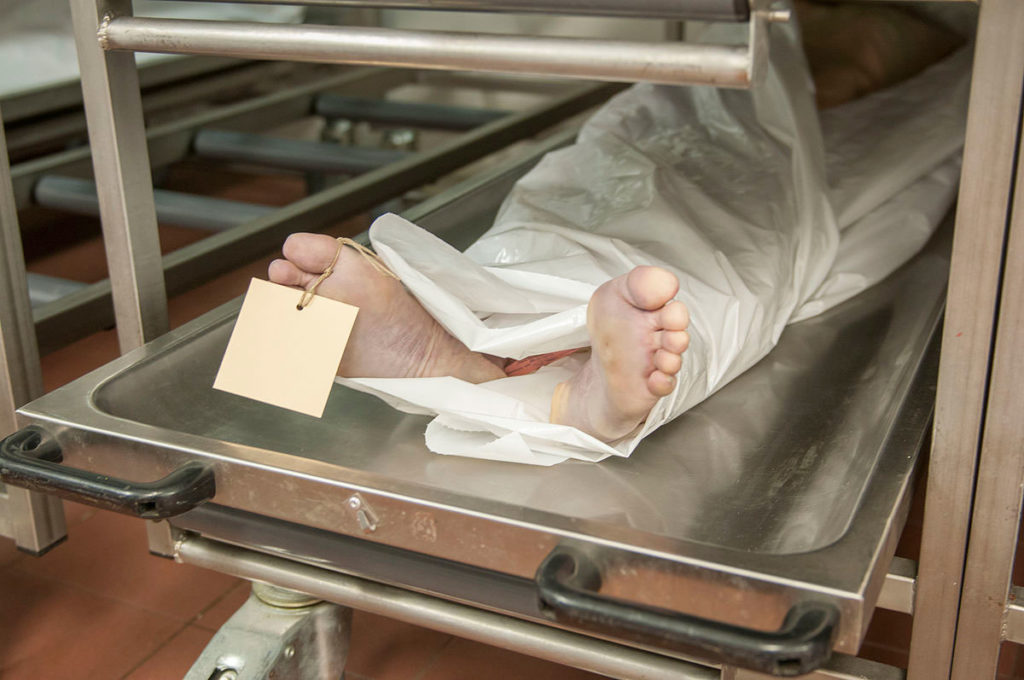
It doesn’t take much to imagine where Dr. Stephen Pustilnik, of Houston, developed an appreciation for knives. He performs autopsies for a living. It’s only natural that he’d try his hand at knifemaking, too.

From the Texarcana Gazette:

He is now working his way through a year-and-a-half-long waiting list of chefs, home cooks and pathologists willing to spend hundreds of dollars on knives that hold an edge and make clean work of anything from gnarly vegetables to sinewy flesh.

This line takes the cake:

Pustilnik, after spending years examining human bodies, speaks easily of the particular mechanics of the hands. He measures his customers’ palms and observes where the metacarpophalangeal joints—the hinges at the knuckles—rest on a knife handle.

You, too, can reach that level of expertise, if you put in enough corpse time.

Read the full article here.

Have a Tip for Knife News Wire? Submit it Here

Tell BLADE with this form.

    Check this box to prove you're not a bot

    Collector Alert: Prices Set to Rise for Folding Knives in Canada

    0
    Canada import rule prohibited knives
    Buy low while you still can, Canadian knife collectors.

    New CBSA Rule to Drive Prices Up

    If you live in Canada, expect the price of most folding knives to go up, especially in secondary markets. Collectors may want to start stock up while prices are still at par.

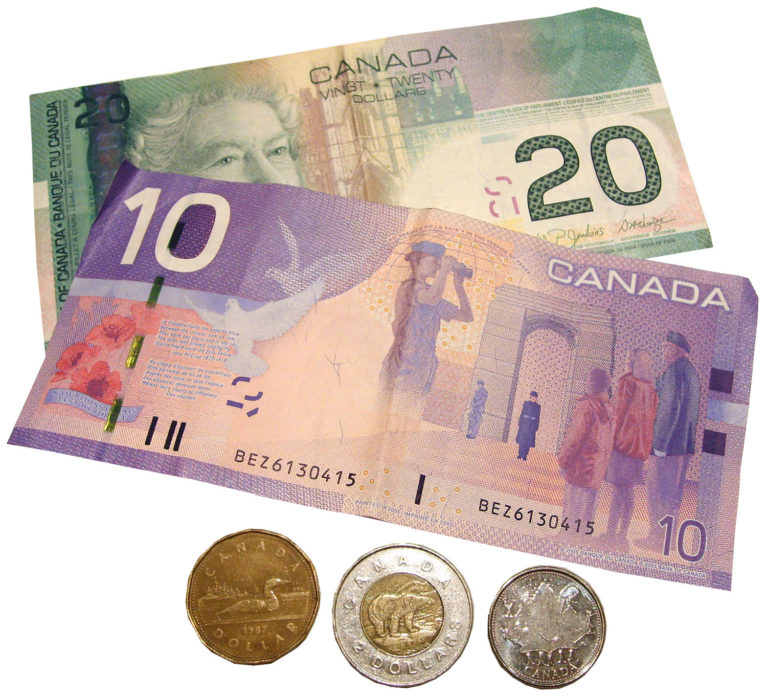
    The culprit is a new rule by the Canada Border Services Agency (CBSA), in effect now, that prohibits the import of assisted openers and any manual folder that opens with centrifugal force. (Automatics were already restricted, but the rule covers them, too.) This only applies to imports, not knives already legal to own in Canada. Both businesses and individuals are impacted.

    As BLADE reported here and here, it’s that centrifugal force qualifier that will especially limit Canadian knife enthusiasts’ choices. An inspecting CBSA official may open a blade halfway, give a flick of the wrist and determine the knife is prohibited.

    If a knife can open with one hand, it’s not going to make it into Canada.

    Existing Stock Will Dry Up

    This wide leeway effectively ends the flow of fresh folders imported into Canada. That includes popular brands from the United States.

    Imported folders already in Canada will remain on shelves and are not banned from purchase or possession. However, retailers won’t be able to reorder them.

    More Investment Options than Ever Before

    If anyone will benefit from this new CBSA rule, it’s enthusiasts with assisted openers and manual folders already in their collections. Mundane assisted openers and folders not originally thought of as collectibles are now investment pieces.

    Collectors have more, safer bets in categories never considered before. That $50 flipper doesn’t look so insignificant anymore.

    How High Could Prices Go?

    It’s hard to say, but prices will only go in one direction in 2018. Beyond that is less certain. Rising prices reflect a market adjustment. Expect that prices will find a ceiling, then drop to a new normal. The trick will be to catch prices in secondary markets on the upswing before the fall happens.

    Caution

    Canada bans imported folding knives assisted opening
    The CBSA, a federal agency in Canada, cannot make laws. However, it can issue rules based on interpretations of existing law.

    The rise in prices may press some Canadian collectors to try their luck with the CBSA and order folders/assisteds from outside the country. However, authorities are already working to stay one step ahead.

    “The way the Canadian government figured out all the tricks on how to get knives into Canada was reading blade forums and watching YouTube where all these people were bragging and giving instructions on how to get knives into Canada,” Neil Ostroff, owner of True North Knives, told BLADE in an e-mail. Ostroff is originally from Canada, but now resides in the U.S.

    The Bottom Line: Buy Low Now, Sell High Later

    If you’re a knife collector in Canada, it’s time to start buying new assisted openers and folders while you still can. Hold on to them and wait to see where prices go in secondary markets.


    * For those also interested in U.S. knife laws, don’t miss this book by attorney Evan Nappen.


    Knife News Wire 1/17/18 – Knife Industry Reacts to Canada’s New Knife Prohibitions

    1
    Canada knife law
    (Image by Spend A Day Touring, LLC via Flickr)

    Knifemakers and knife companies based in the United States and elsewhere are scrambling to find a way to push back against new rules adopted this month by the Canada Border Services Agency.

    The new rules prohibit assisted opening knives, automatics and any manual knife that can open by centrifugal force from entering Canada. The restriction doesn’t extend to the rest of Canada. It only impacts imports, as well as individuals or mail crossing into Canada.

    As a result, knifemakers and knife companies not based in Canada can no longer offer most types of folding knives to Canadian customers. A more detailed summary is available from BLADE here.

    Knife Advocacy Organizations Rally

    Both Knife Rights and the American Knife & Tool Institute (AKTI), the two foremost knife advocacy organizations in the U.S., told BLADE they are examining options.

    “I attended an AKTI board call last week where this very recent ruling was discussed. At this time, AKTI is working to understand more about it so a cogent response can be strategized and developed,” said BLADE Magazine Cutlery Hall-Of-Fame© member Les de Asis, CEO of Benchmade, in an e-mail to BLADE. “From what little I know, I expect this will be an ‘all hands aboard’ effort.”

    It isn’t only the knife world in the U.S. reaching out to these organizations.

    “I have gotten about a hundred emails and calls from Canadians about this,” noted Doug Ritter, chairman of Knife Rights. “I have offered to help with advice and such based on our experience if they put together a Canadian organization, but I can’t do it for them. Way too much to do just here in the U.S. So, no time, lack of resources, and quite frankly, it wouldn’t be taken well for a U.S. organization to come try and fix Canadian law. Bad idea.”

    Restrictions Severely Limit Options for Canadian Enthusiasts

    Neil Ostroff, owner of True North Knives, and someone who relocated to the United States from Montreal, told BLADE in an e-mail that his options for Canadian customers are now limited.

    “Vendors outside of Canada, like me, will no longer ship any knives to Canada other than slip joint, lockback or fixed blade knives,” Ostroff said in an e-mail. “Even the old trick of tightening the pivot down by the shipper so the knife barely opens until the pivot is released by the buyer will no longer work.”

    That’s because of how much leeway the CBSA can now use.

    “In the law they can now go so far as to open the knife halfway and then flick it open, making it inadmissible,” Ostroff said. “Example: Chris Reeve folders. These cannot be flicked or opened by centrifugal force, but if the officer opens it halfway and flicks it, then it can be determined illegal.

    “So any examiner will be allowed, by law, to make any legal knife a prohibited weapon.”

    Canadian Knifemakers Impacted, too

    If it sounds like these rules could insulate Canadian knifemakers from competition, few are making that case.

    Brian Tighe, an award-winning knifemaker from Ontario, Canada, expressed frustration with how his international work will be shut down.

    “This will impact the knives I have designed with CRKT. They are now prohibited weapons and can’t be imported into Canada. Bass Pro, etc., can sell what stock they have, but they can’t reorder,” Tighe told BLADE in an e-mail.

    Tighe also runs Brian Tighe and Friends, a knife company based in Erie, Pennsylvania.

    “We can’t import [those knives] into Canada unless they were shipped in pieces and assembled in Canada,” Tighe said.

    An Exception to the New Rules? Not Really

    Holders of a specific type of Firearms Business Licence (FBL) are exempted from the new rules. In theory, a knifemaker or knife company could obtain such a license. However, that’s not the case for those who tried to do so.

    “No one in Canada has [that type of FBL] except RCMP [Royal Canadian Mounted Police] and cops. I tried to get one and there was no way,” Tighe said.

    Ostroff agreed. “To get a Firearms Business License in Canada is almost impossible and no knife store will be able to do it,” he said.

    There was similar confusion about this license outside Canada, too.

    “There does seem to be an out for importers, distributors and retailers, but I have no idea what is required to get a license to import ‘prohibited weapons,'” Ritter said.

    Could Canada Repeat U.S. Success?

    If this scenario sounds familiar, it’s because a similar situation came about nearly a decade ago in the U.S. That led to an amendment of the 1958 Federal Switchblade Act.

    However, there isn’t a Canadian equivalent to organized knife advocacy in the U.S.

    “Whether the knife community in Canada can rally the resources is yet to be seen. They may not have quite the same level of influential friends in Ottawa,” Ritter said. “And, they also need to find someone to lead the charge; no small thing itself. It takes a huge commitment of time and effort and the right attitude. We [Knife Rights, AKTI and the U.S. knife industry] spent a small fortune in 2009.  It takes a fortune. They will need to raise a ton of money.”


    * Steve Shackleford contributed to this report.

    Photos: 5 Jaw-Dropping Art Knives

    0

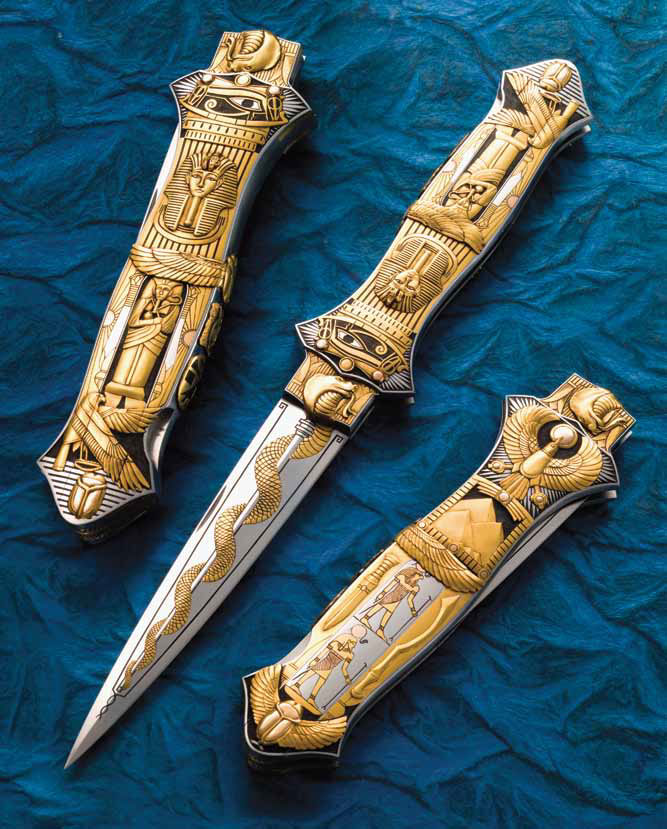
    Pocket Locket – Joe Kious

    Joe Kious pocket locket knife

    The Pocket Locket is considered one of the most flexible engraving platforms of all time. This is just one example of the versatility of Joe Kious’s design, and it’s a stunner.

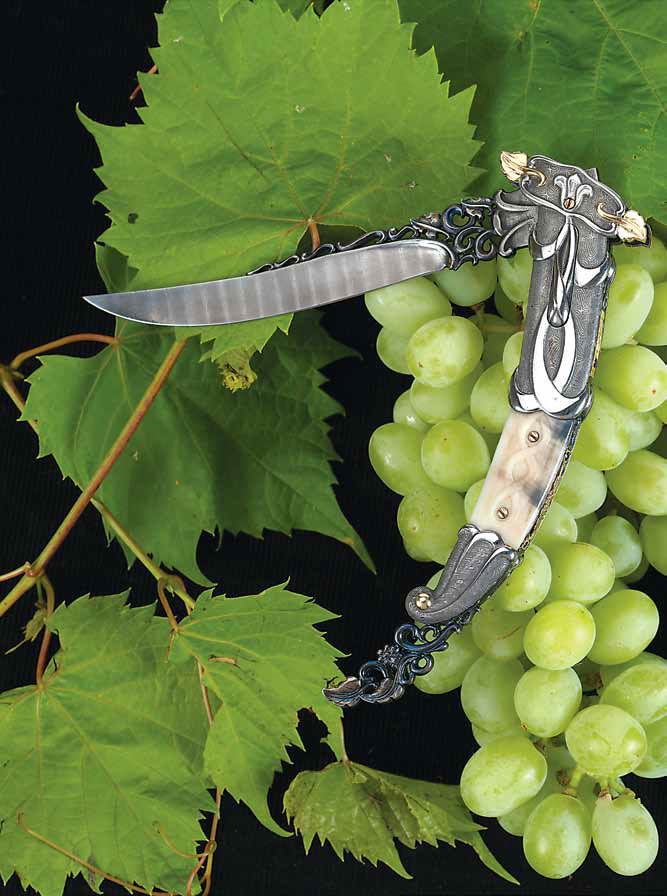
    Grapes of Wrath – Stephen Olszewski

    Stephen Olszewski art knife

    Art knives don’t get much more complex yet graceful as Stephen Olszewski’s Grapes of Wrath. 

    “To this day, I have not seen another art knife with as many flowing lines, curves, carving and piercing of the steel in such a masterful way,” Michael Donato, of KnifePurveyor.com, told BLADE.

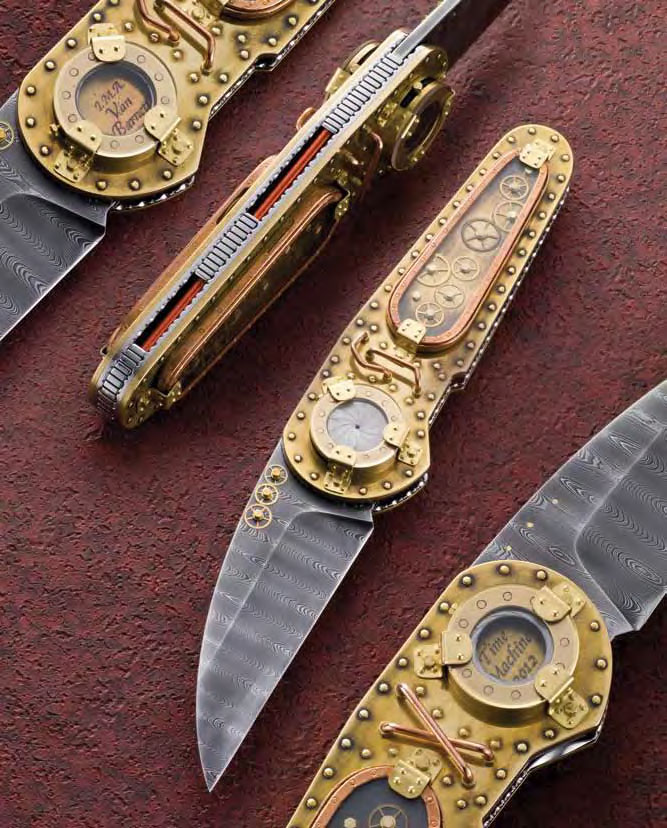
    Time Machine – Van Barnett

    Van Barnett Time Machine

    This steampunk-inspired piece sits at the intersection of knives and luxury watches. As a result, the Time Machine caught the attention of those outside of the usual crowd.

    “It also brought much-needed new collectors to the custom knife world,” Donato said.

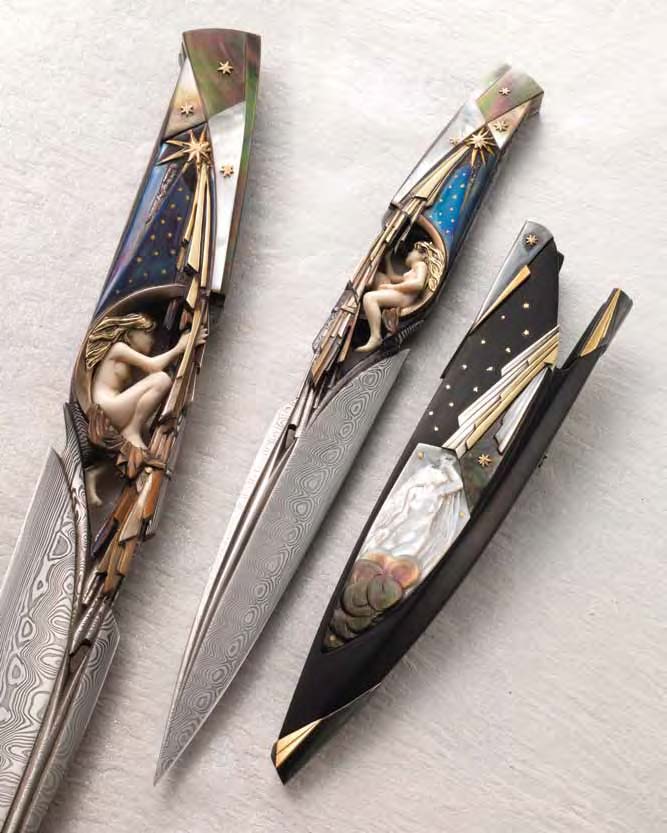
    Luna – Arpad Bojtos

    examples of art knives

    Words won’t do justice to the interplay between the handle, blade and sheath in this mixed media masterpiece. This is the art knife’s art knife.

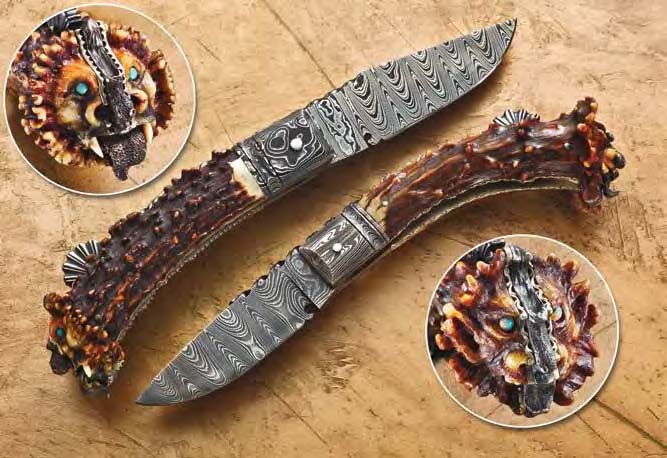
    Goblin Folder – Jim Schmidt

    Jim Schmidt goblin folding knife

    Many imitators followed Jim Schmidt’s lead after the Goblin Folder hit the scene, shaping faces into pommels. It’s proof that imitation is the sincerest form of flattery.

    See More Art Knives

    Knife books

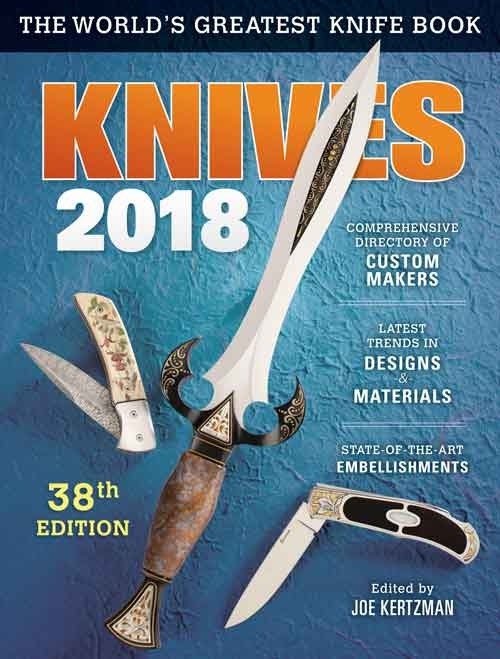
    Art knives litter the pages of Knives 2018, and they’re all in full color. Get a terrific price on the world’s greatest knife book at ShopBlade.com.

    Knife News Wire 1/16/18: Canada Bans Imports of One-Hand Opening Knives

    1
    Canada bans knives
    Don’t bring knives that can open with one hand into Canada.

    The Canada Border Services Agency (the equivalent to U.S. Customs and Border Protection) will ban knives capable of opening with one hand, per a recent announcement made on Jan. 10. The prohibition is in effect now.

    The Exact Language of the Ban

    Specifically, the restriction covers knives meeting these conditions, as specified here:

    1. a knife has a blade that opens by centrifugal force, when the blade is released from the handle into the fully ejected and locked position with a simple and brisk outwardly flick of the wrist; and
    2. it includes knives that require some preliminary or simultaneous minimal manipulation of either a flipper or other non-edged parts of the blade.

    Applies to Most Folding Knives

    This applies to flippers, assisted openers, automatics or any blade that doesn’t require two hands to open. Much sway is given to CBSA officers’ judgement. A cautious traveler to Canada may want to leave all folding knives at home.

    History

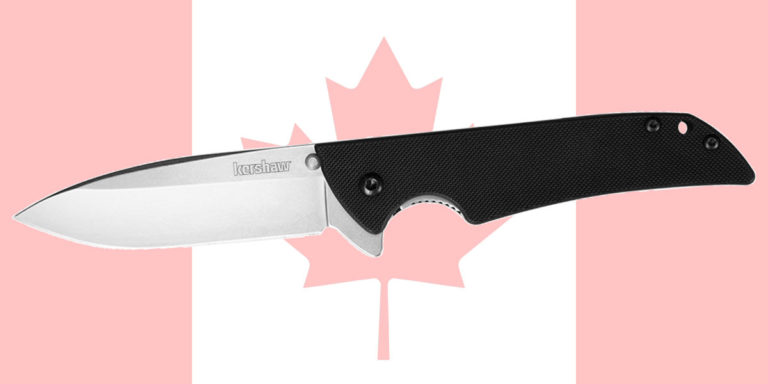
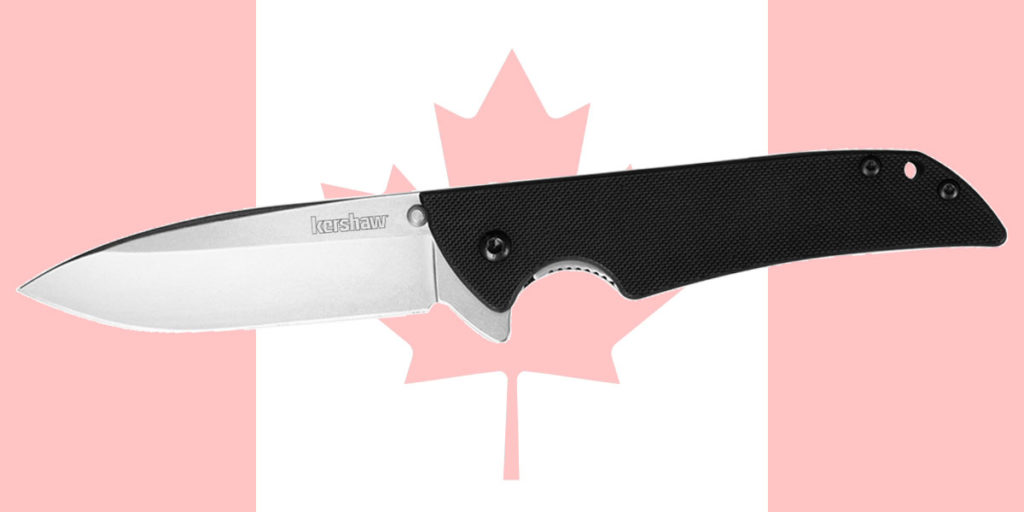
    This development comes after the resolution of an appeal in the T. LaPlante v. President of the Canada Border Services Agency case. That case came about after the CBSA seized five imported Kershaw Skyline Model 1760 knives (pictured above) at the border in August 2016.

    This isn’t the first time the country banned a wide category of knives. The decision adds to Canada’s growing list of prohibited weapons, available here. That includes:

    • Bladed finger ring
    • Push daggers
    • Devices shorter than 30 cm containing a concealed blade; including canes, daggers and multitools
    • Belt buckle knives
    • Morning stars
    • Spiked wristbands

    Big Changes for Canadian Collectors, International Tourists

    Note that this doesn’t prohibit the exportation of these items, only the importation. This doesn’t spell the end of the Canadian knifemaking industry.

    It does, however, mean the end of bringing a large category of knives into Canada. It’s likely this will especially impact Canada’s hunting and fishing tourism industries. Canadian knife collectors purchasing internationally will also be hit hard.

    One Way Around It: An Exemption for FBL License Holders

    There is one way around the prohibition. From the CBSA:

    Importation by a business is permitted if a Firearms Business Licence has been presented with import – prohibited weapon, listed as a business activity on the licence.

    Despite this workaround, obtaining an FBL may be challenging or out of reach for smaller knifemakers and companies. Individuals may also be unaware of or unable to meet this requirement, and will have their knives confiscated at the border.

    U.S. Does Not Have a Similar Prohibition

    Coincidentally, this is similar to what happened in the United States 10 years ago. U.S. Customs and Border Protection seized imported assisted openers at the border, claiming they violated the 1958 Federal Switchblade Act. The pushback led to an amendment exempting assisted openers and all manual folders capable of opening with one hand, signed into law in 2009 by President Barack Obama.

    Have a Tip for Knife News Wire? Submit it Here

    Tell BLADE with this form.

      Check this box to prove you're not a bot

      Make a Bowie Knife in 10 Steps

      0
      bowie knife guide to knifemaking
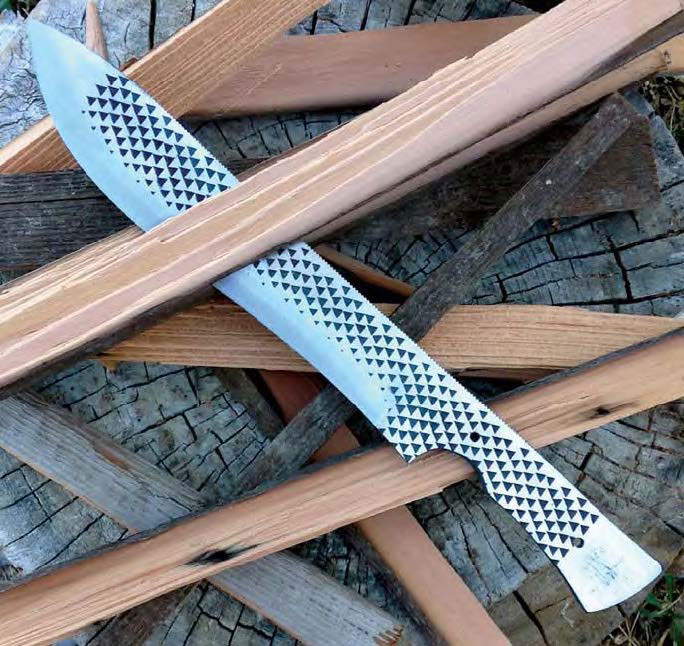
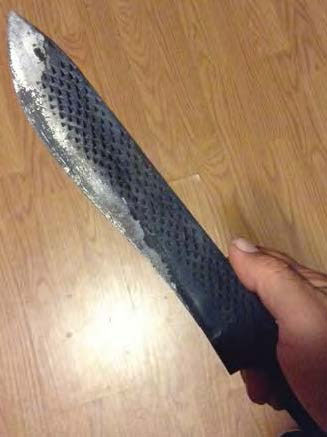
      This is what the finished project looks like. The handle is not covered in this tutorial, but the design is ready to take any number of options. (All images by the author)

      I’m going to walk you step by step through making a bowie from a common farrier’s rasp, as simply as possible, with a few tips to save time and improve the finished blade as we go. It is a simple bowie-style camp knife useful for all sorts of tasks.

      1) Pattern Sketch

      knifemaking bowie
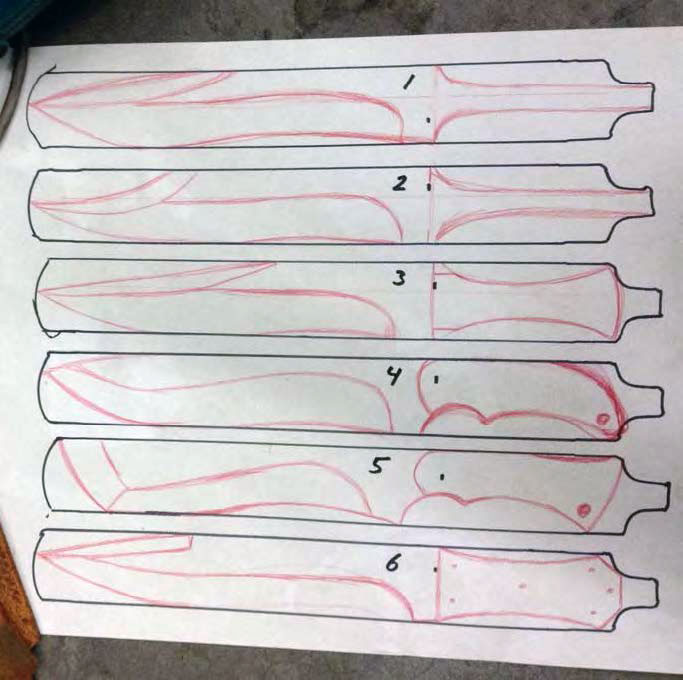
      The author traced assorted patterns on the rasp images on a large sheet of paper so he could compare each style side by side and see what works and what doesn’t.

      The first thing you need to do is decide on a style that suits your needs and your purpose. I find that visual aids are the easiest way to get the results I’m after, so I often do several sketches and drawings to decide what I’m trying to accomplish.

      For this I traced the rasp multiple times on a large sheet of paper so I could compare each style side by side and see what works and what doesn’t, as well as what the maximum potential of my material was. I decided on blade shape #4 with handle shape #5. The combo should be a good general chopper and comfortable in the hand.

      By visualizing this way I can mix and match infinitely. Don’t be afraid to get creative, especially when using recycled and often-free materials. This is a chance to express yourself and your vision in steel.

      2) Annealing

      tutorial for making knives
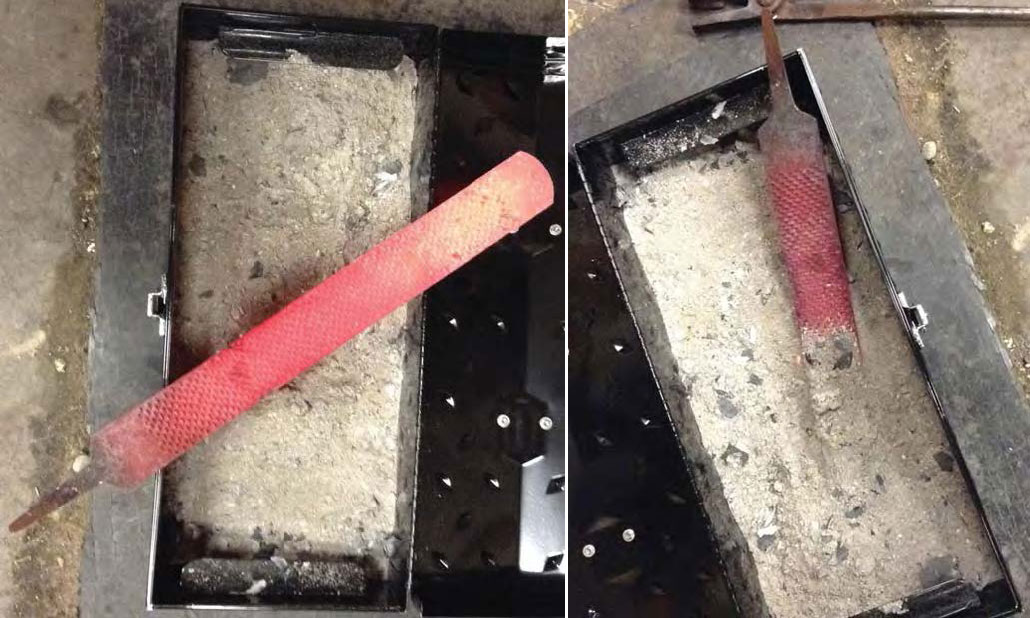
      Heat the rasp to nonmagnetic and then bury it in a simple metal toolbox filled with clean wood ash.

      Now you have a design in mind, but, before you can achieve bowie knife greatness, you must anneal the rasp so it can be shaped, drilled and ground more easily.

      It is certainly possible to make a rasp or file knife without annealing, but great care must be taken not to get the steel too hot and ruin the temper. Moreover, the high hardness of the file in its current state means a blade made this way would be very brittle and prone to breaking under hard-use conditions.
      If you have access to a heat-treating oven, by all means use it to anneal your steel. This is a very simple and basic build, so I’ll be heating the rasp to nonmagnetic and then burying it in a simple metal toolbox filled with clean wood ash. Burying it insulates the steel, allowing it to cool very slowly. The slow cooling softens the steel so it’s easier to work.

      Vermiculite is also great for this step if you don’t have access to wood ash. Vermiculite can be purchased at most garden centers and insulates very well. It will take several hours for the rasp to cool. Don’t rush it! It will be well worth it once you start filing, drilling and grinding.

      3) Design Transfer

      how to make a knife
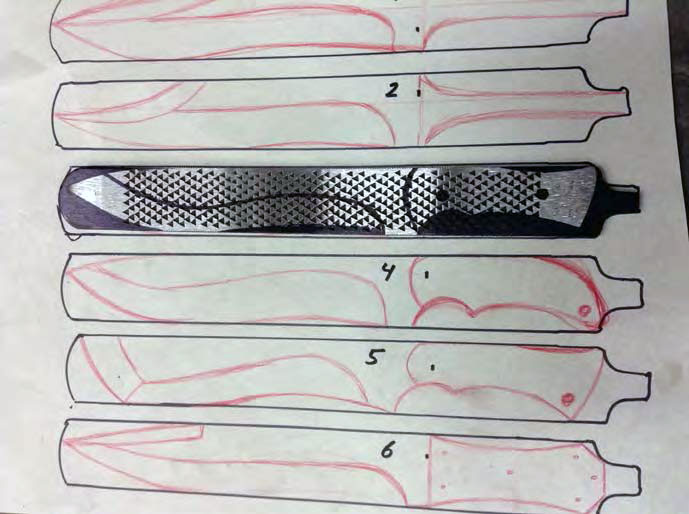
      Once the teeth are cleaned off, transfer the blade design to the rasp.

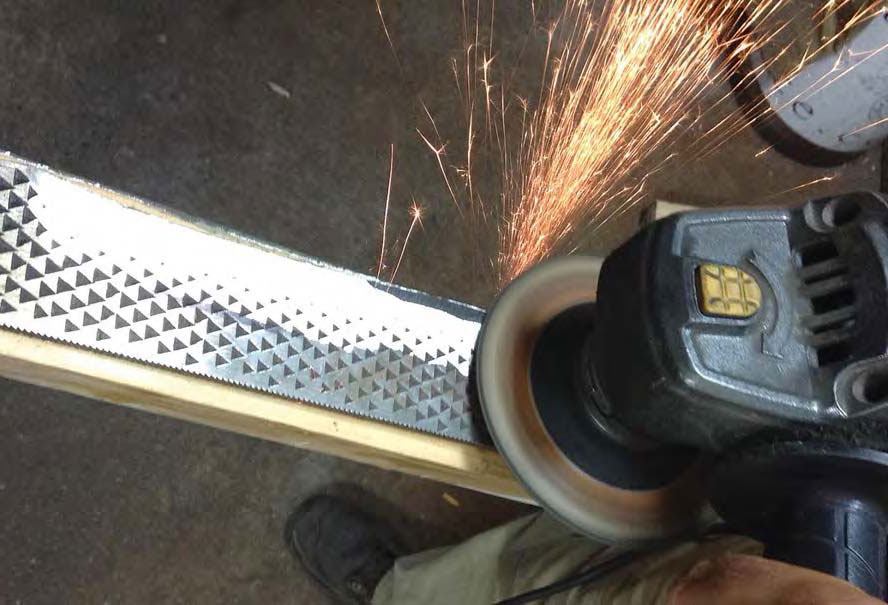
      The rasp has cooled and it’s time to go to work. The first step is to grind the teeth off both sides. This leaves a nice, flat surface to work with but the memory of the rasp is left behind, which gives the knife a distinctive, rugged look.

      An angle grinder will work great for this task, but any number of basic tools will suffice. Use whatever is readily available to you. Once the teeth are cleaned off , transfer the blade design to the rasp. Cutting out the pattern and over spraying it with black paint works very well.

      However, since this design is fairly simple, I drew it out with a permanent marker.

      4) Notched & Cleaned Up

      steps for making a knife
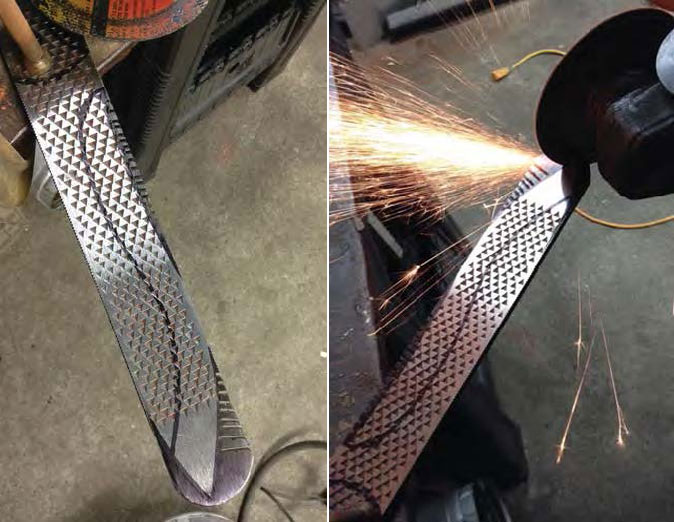
      When you go to cut out the profile from the rasp (left), notching out the shape with a hacksaw or cutting wheel (right) makes the job much easier.

      Now you can start cutting out the profile. Notching out the shape with a hacksaw or cutting wheel will make the job quite a bit easier. I find that removing small pieces of metal is easier then trying to make large cuts.

      After the bulk of the steel has been removed, the final profile can be shaped out with files or an angle grinder.

      5) Drilling Pins

      guide for making a knife
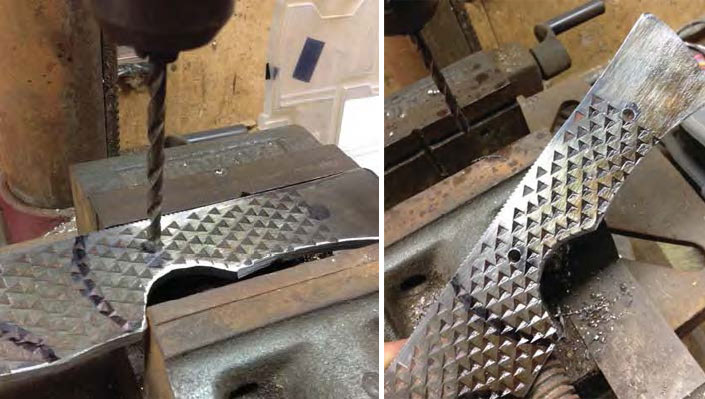
      Drill a couple of holes for pins. The author uses brass bolts for the latter.

      The blade is starting to take shape. Now is a good time to consider what handle material is best for your creation.

      There’s no wrong choice. With the seemingly limitless options available today, you can truly express yourself from mild to wild. If you’re feeling traditional you can go with antler or perhaps stacked leather.

      If you want to go more cutting edge, there are hybrid burl blocks with every color resin in the rainbow. Shredded money and eggshells are even finding their way into knife handles these days.
      I’m going more traditional, so now is the time to drill a couple of holes for pins. I’m going to use brass bolts as pins. They are inexpensive and can be bought at any hardware store. The threads add an extra mechanical bond when they are epoxied into place, and also act as built-in clamping devices to ensure a solid, tight fit-up when the scales are applied.

      6) Grind the Bevels

      guide to how to make a knife
      Rough grind the bevels. The author used a 4-inch angle grinder. Leave the edge about the thickness of a penny.

      With the profile cleaned up and all necessary holes drilled, it’s time to start grinding in the rough blade bevels in order to get your blade ready for hardening.

      The trusty 4-inch angle grinder goes to work again, though a bench-top grinder or even a good, sharp file will get the job done. The goal here is simply to remove the bulk of the metal on the sides of the blade evenly so there is less work to do after hardening.

      Don’t grind all the way to sharp at this point! Leave the edge about the thickness of a penny—this will protect the steel that will become your cutting edge from overheating and decarburization, helping to ensure your finished knife will live up to its maximum potential.

      Once the bevels are roughed in, finish up with sandpaper or a flap disc to 220 grit. Be sure to remove any deep, heavy scratches, as these could lead to cracks during hardening.

      7) Heating and Quenching

      Bowie knife tutorial step by step
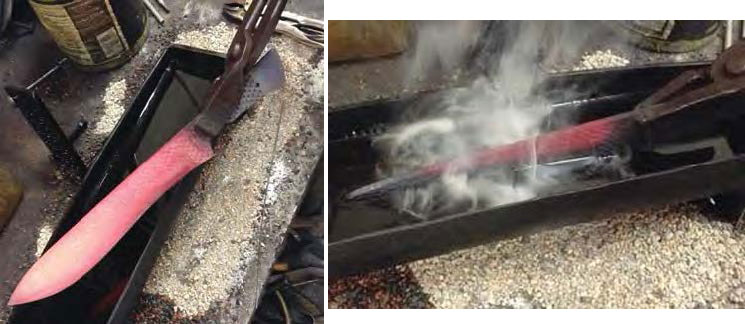
      After you heat the blade to nonmagnetic, quench the edge. 

      Now you’re ready to harden some steel! I’m going to use a forge to heat the blade to nonmagnetic—aka the critical temperature—though a torch works equally well.

      Slowly bring the blade up to temperature and check it oft en with a magnet. When nonmagnetic is reached, edge quench to harden the cutting edge, and leave the spine slightly softer for additional strength and toughness.

      Submerge the blade in the quench oil once all the color has left the blade and it goes to black. Allow the blade to cool to room temperature in oil. This will take an hour or so.
      A variety of things will work as quench oil and everyone has a favorite. Depending on the types of steel used, I’ve had good luck with canola oil, ATF transmission fluid and mineral oil. I quenched my blade in Texaco type A.

      WARNING! Mixing hot steel with oil can and will cause a fire! Be sure to take appropriate safety precautions. A well-ventilated space free of other flammable materials, as well as personal protective gear and a fire extinguisher, are musts!

      8) Check for Hardening

      knifemaking process bowie knife
      Once the blade has cooled, remove it from the oil and clean it off. Brake cleaner works well for this, as well as simple dish
      soap and warm water.

      Once the blade has cooled, remove it from the oil and clean it off . Brake cleaner works well for this, as well as simple dish soap and warm water. If the hardening was successful, you should see an area of clean steel on the cutting edge where the carbon scale has popped off the blade.

      A second simple and easy way to check for a hardened blade is with a fresh, sharp file. Run the file over the knife’s cutting edge. The file should skate easily and not bite into the edge. If this is the case, you are ready to temper the blade.

      9) Tempering

      tempering heat treating knifemaking bowie
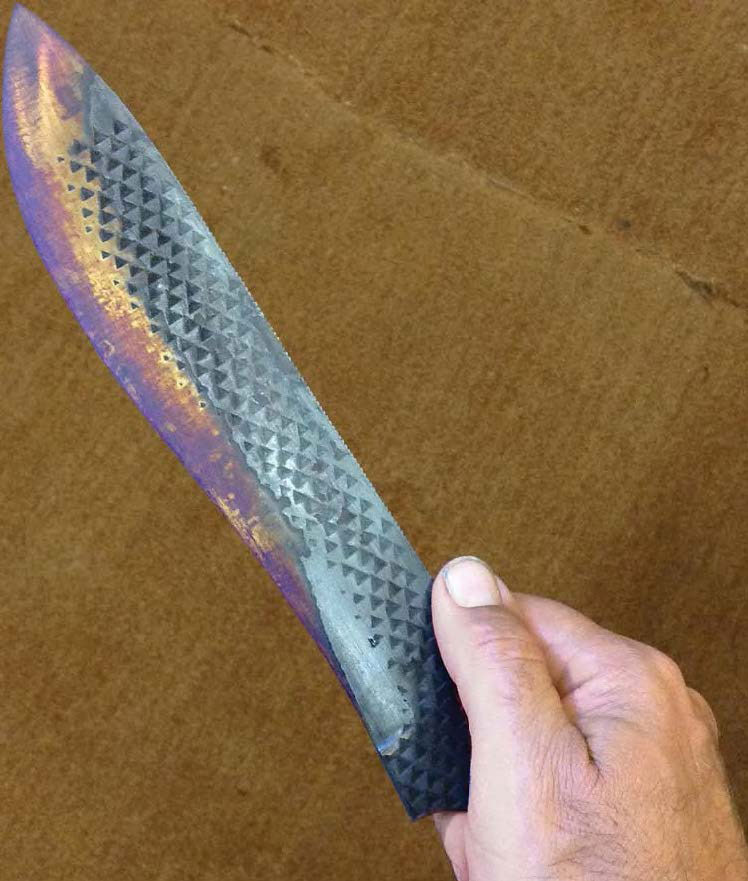
      During the basic heat treatment and tempering process, the steel oxidizes and the clean portion changes color.

      Tempering is a fairly simple process. Basically, in order to reduce brittleness and increase toughness, tempering is heating the blade to a lower temperature than you did in the annealing step.

      Again, if you have access to a heat-treating oven, by all means use it. However, a toaster oven or basic household oven will work just as well. Oven temperatures vary greatly—especially toaster ovens—since they lack heavy-duty insulation. This means the exact temperature you need to use will vary as well.

      I start by putting my blade in the oven for an hour at 375°F. As the steel heats it oxidizes, and the clean portion changes color. This is a simple, basic heat treatment and temper, so the color change is your indicator rather than an exact temperature.

      As the heat rises the color goes from a bright gold to a shade of bronze straw, then a light purple to a blue on its way to a dark blue/almost black. The dark bronze to purple is your goal. The blade should be hard enough to hold a good edge but soft enough to not chip or break during use.
      I did three one-hour cycles, each 25°F hotter according to my oven, and 425°F was the temperature that gave me the desired result. A simple trick to get a more even heat in a regular household oven is to put a sheet pan on the bottom rack.This holds heat closer to the element and keeps the temperature fluctuations to a minimum.

      10) Finishing and Final Edge

      Learn how to make knife from a rasp file
      Jump into the rich tradition of knifemaking with this collection of essential books from BLADE. You’ll save a bundle with this bundle!

      Now you have a hardened and tempered blade ready for finishing and a final edge.

      You need to remove only a small amount of steel to get down to the final edge. Don’t rush at this point! Go slowly to keep from getting the steel too hot and ruining all your hard work up to now. As long as the steel stays bright and shiny you will be fine. Any discoloration at this stage means overheating and the risk of losing the blade temper.

      You also are working down to the final, finished and sharp edge. Stitches aren’t cheap! Be aware of where your fingers are.

      Some light grinding or fi ling as in the previous steps will bring your bevels down to the finished edge. Polish to at least 220 grit. A higher-grit polish will look more finished, as well as be less prone to rust, and provide smoother, more fluid cuts.

      Once you get to 220, it’s time to apply an edge and see how you did. Some simple test cutting and chopping will tell you if you need to change anything, such as the thickness of your cutting edge or if you need to re-temper perhaps a few degrees hotter. Use the materials you originally planned on cutting with your new bowie to decide this.

      For example, since the blade primarily will be a camp knife, simple tests such as splitting kindling, cutting rope and twine, and making the all-important hotdog stick will tell you what you need to know.

      Time to Make the Handle

      Click here to read how to make a handle for this knife.


      Advertisement

      Must Read Articles

      Read this before you make a knife

      Knifemaking 101 – Read This Before You Make a Knife

        by Wayne Goddard My experience has taught me that there's nothing like digging in and getting started. I've often said the hardest part of the...
      how to forge damascus steel

      How to Forge Damascus

      Advertisement
      Advertisement