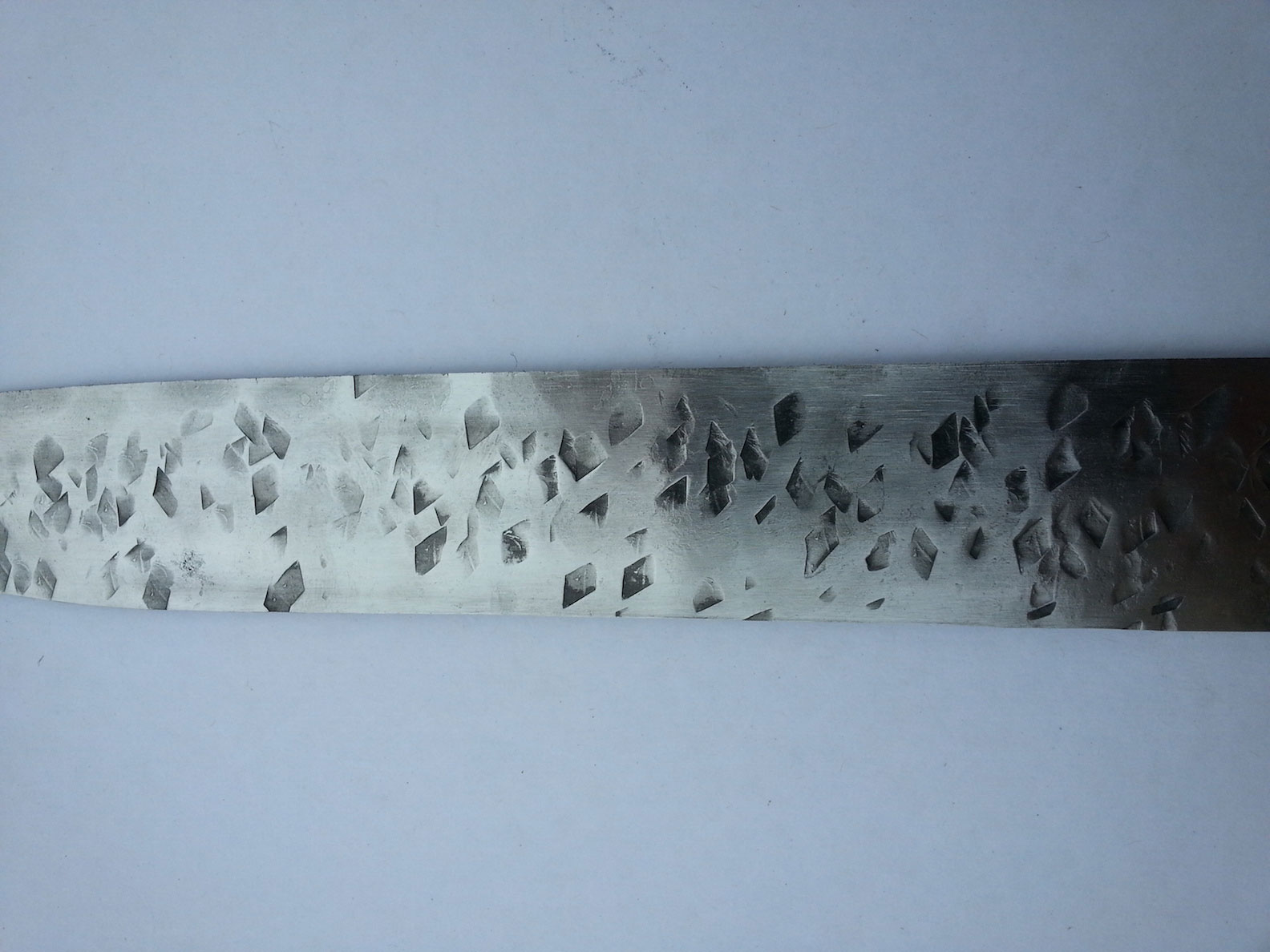
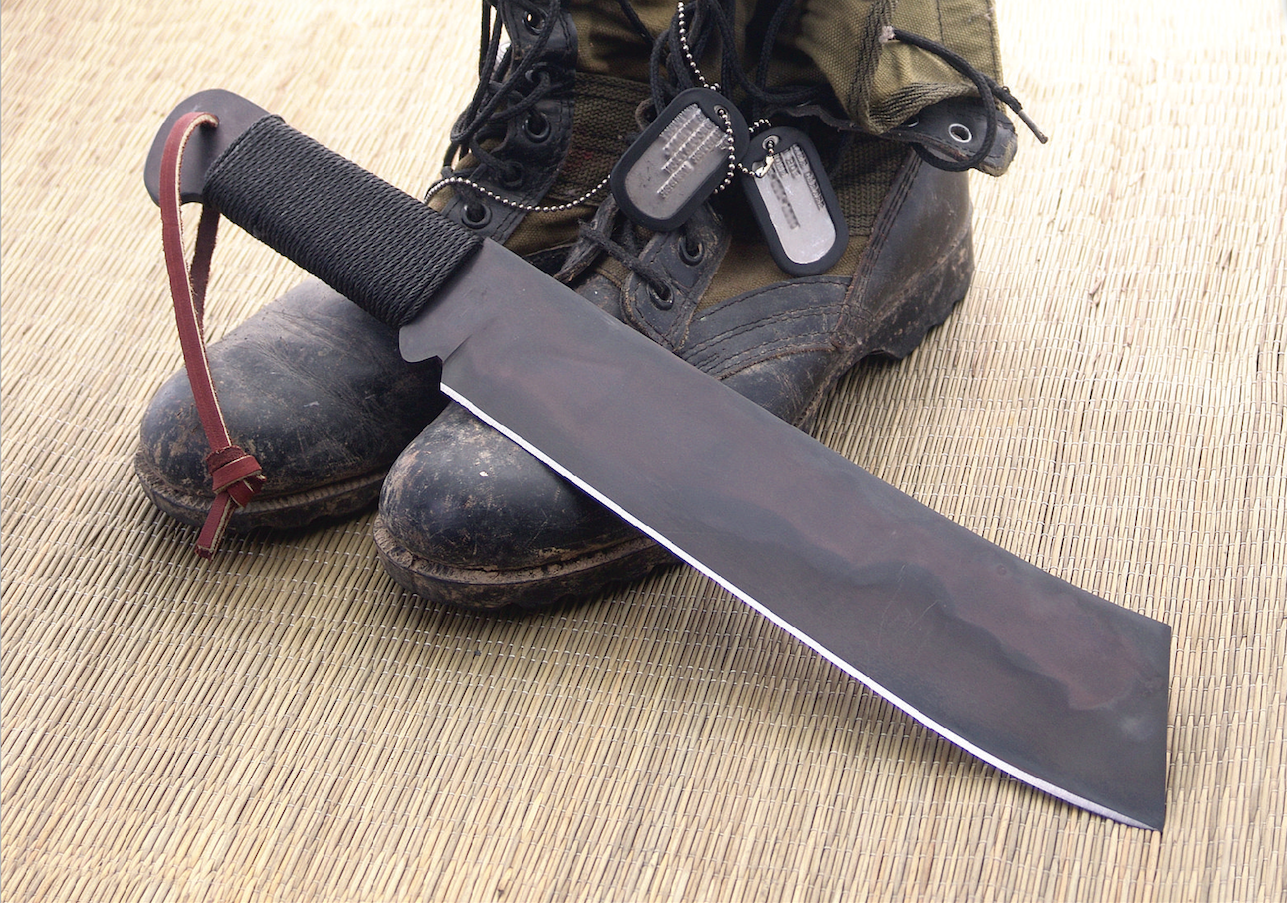
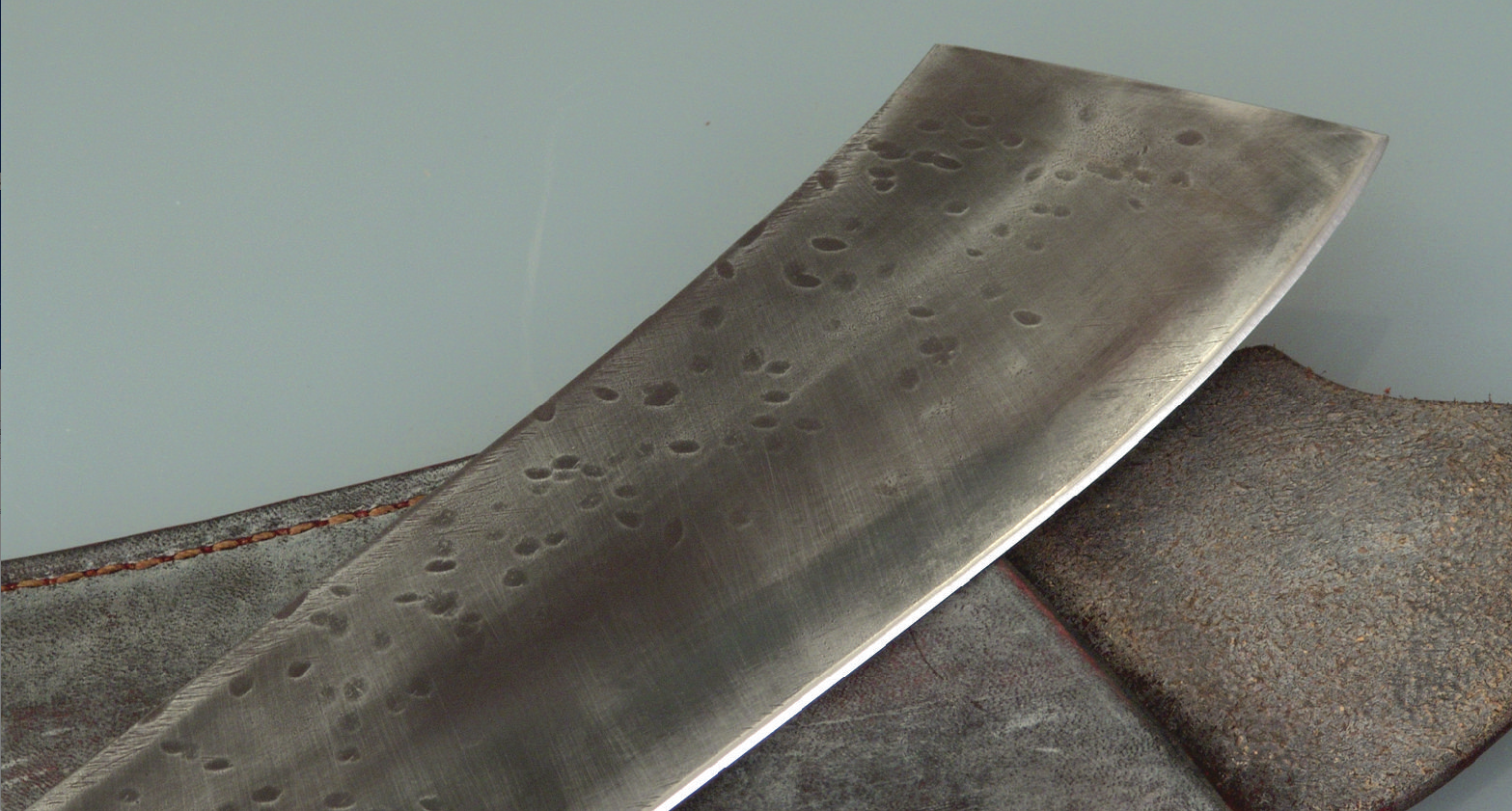
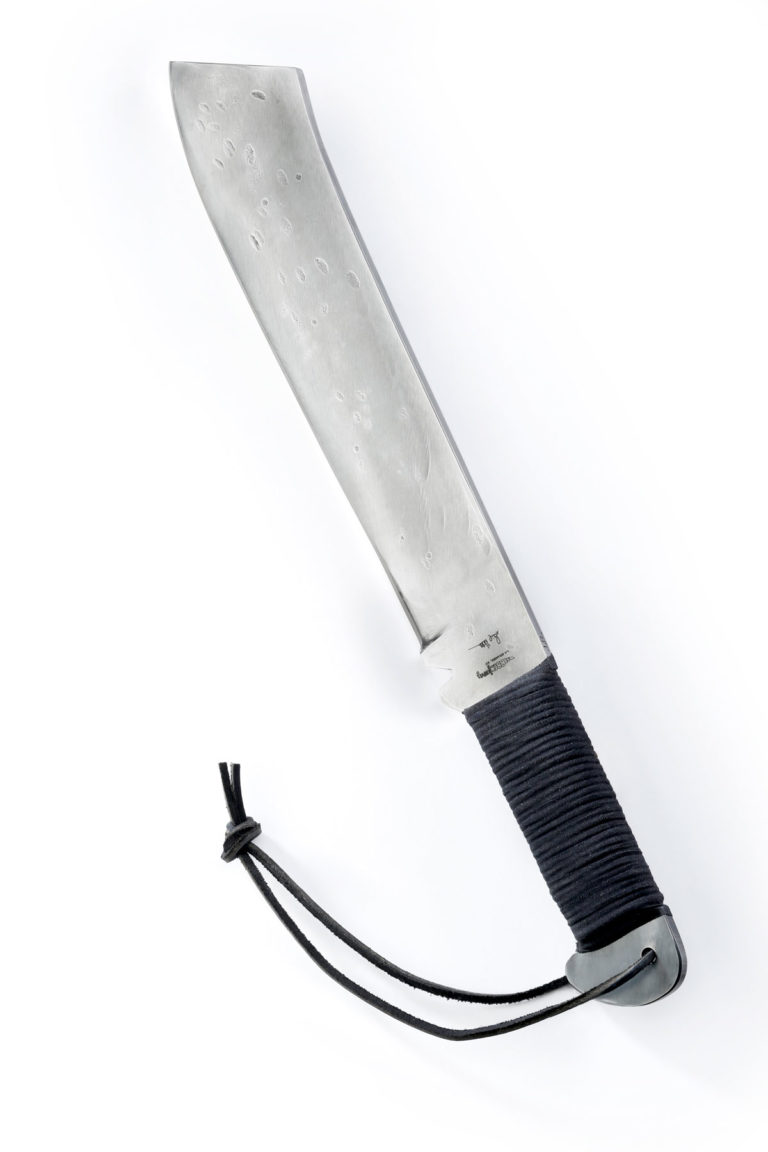
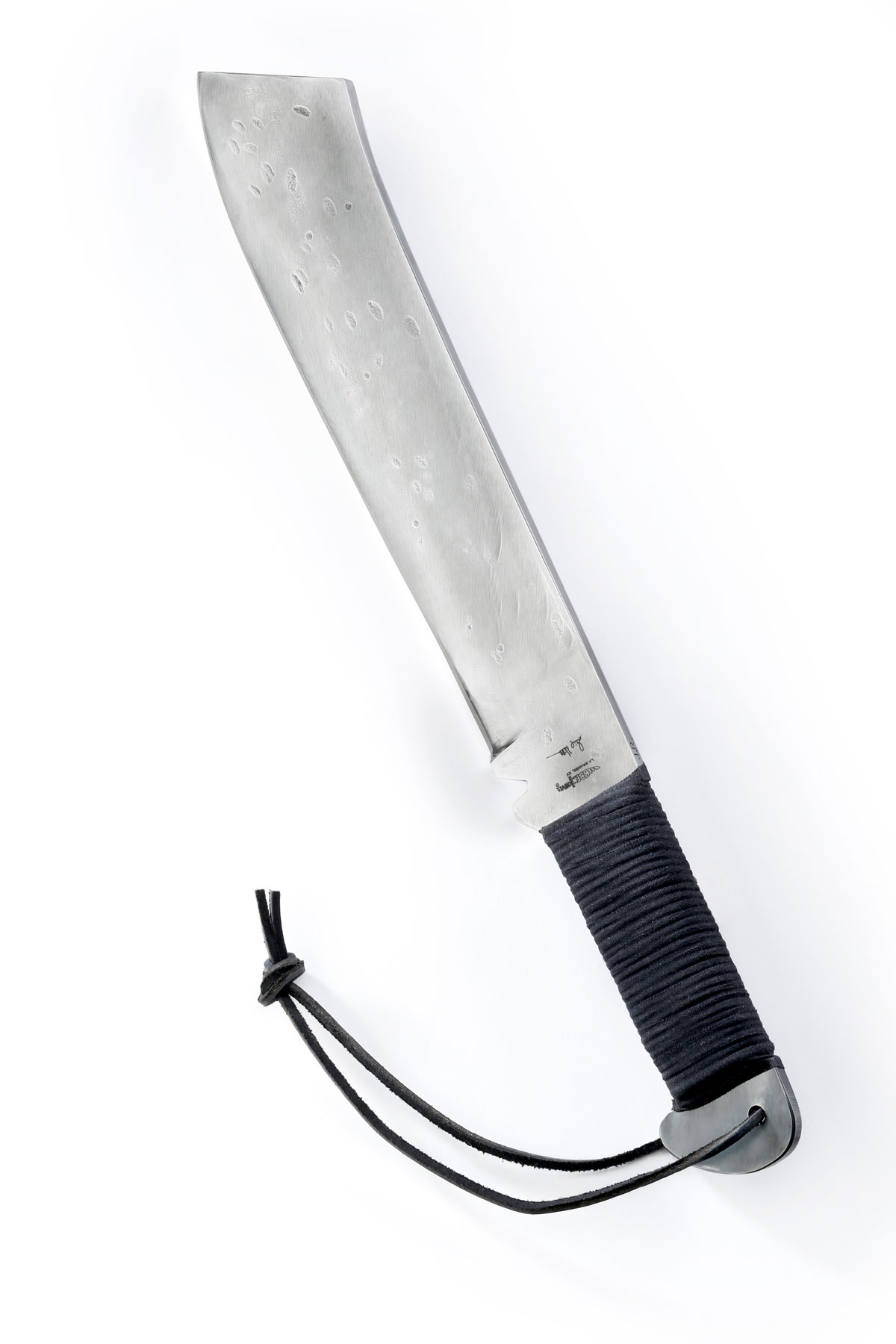
The dents create air pockets so food does not stick to the blade.
In his story, How To Make a Sushi Knife, in the August 2015 BLADE®, ABS master smith Wally Hayes explained how he achieved the texturing on the blade’s surface. The reason for the texturing is to create air pockets so food does not stick to the steel.
For blade material, he used 90-thousandths-inch-thick 15N20 carbon steel from New Jersey Steel Baron.
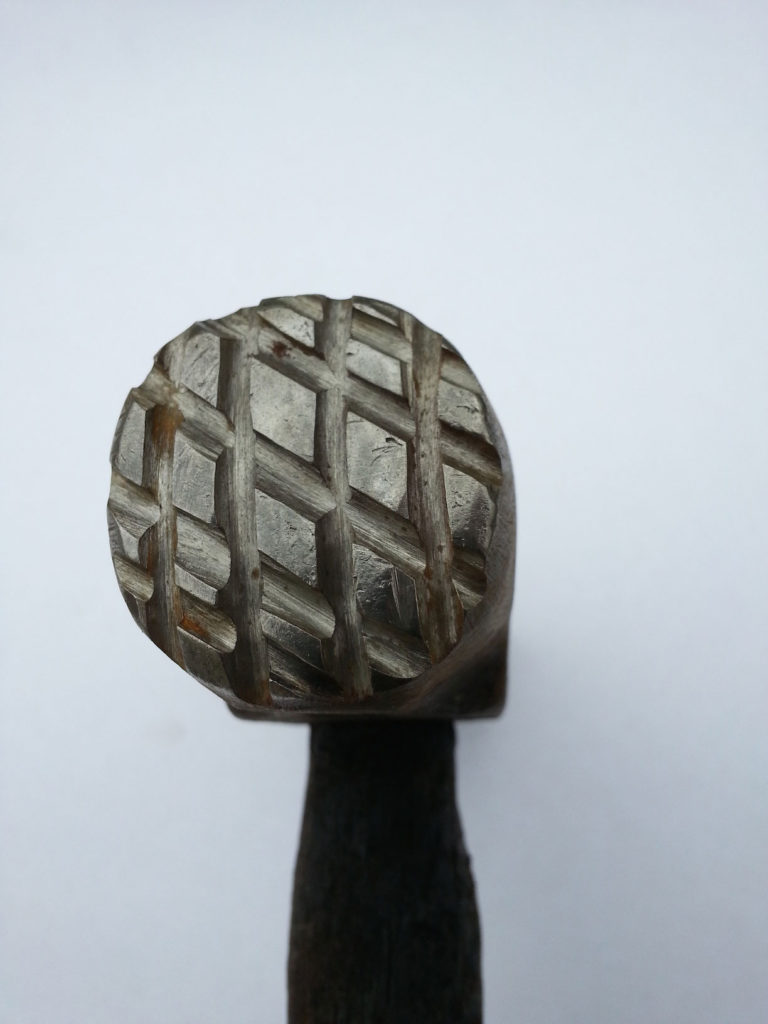
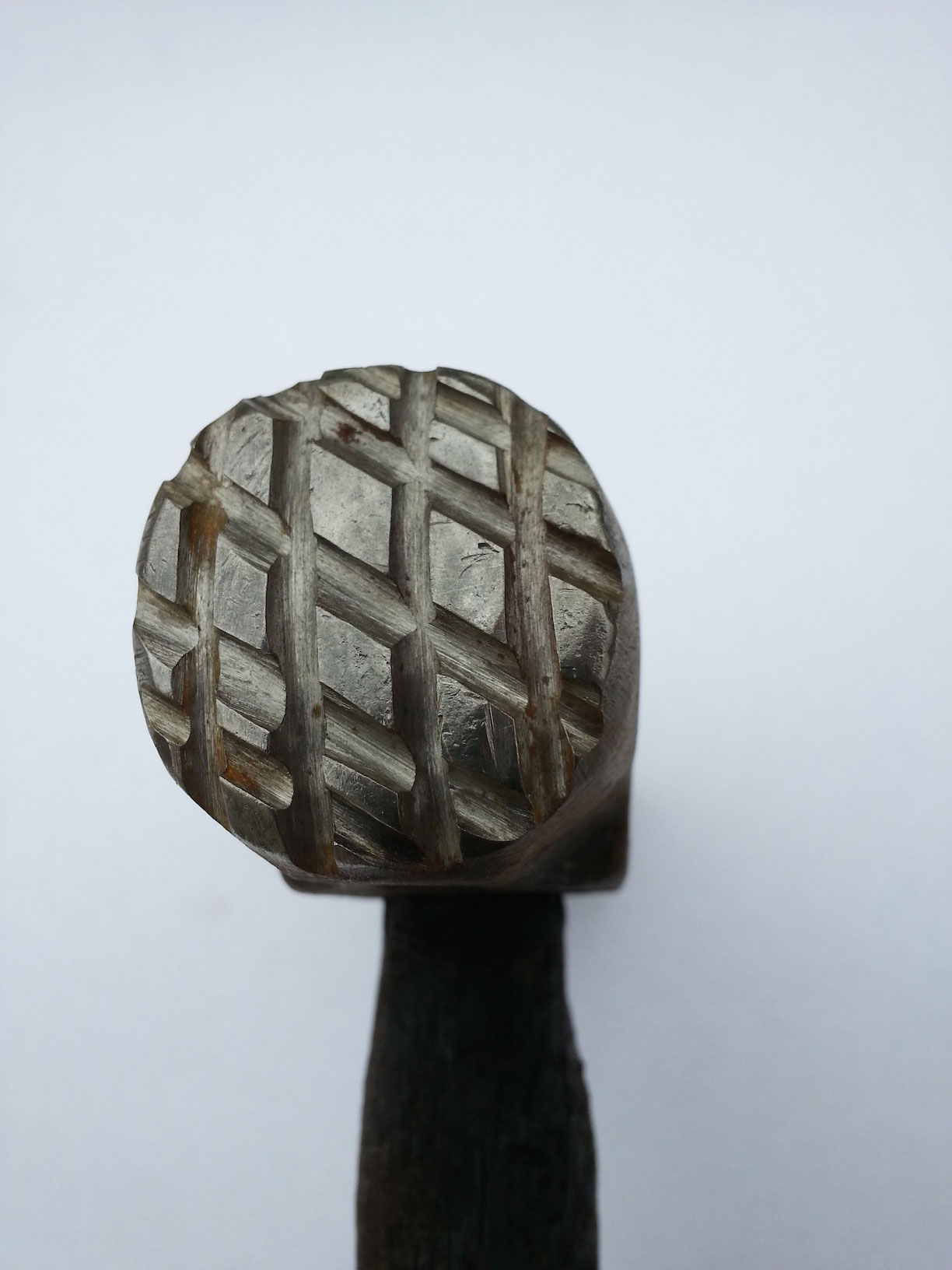
After cutting the blade to shape and heating it in his forge, the author used the hammer with a cross-hatched face to give each side of the blade a textured finish.
“First, I cut the blade to shape, around 7 inches long,” he wrote. “The tang is about 4 inches. I take one of my old hammers and cut a cross hatch into the face using a side grinder with a cut-off wheel. Then I heat up the blade in my forge and hammer a textured finish into the steel. This takes about five heats and is lots of fun! I put dents into both sides of the blade and then make sure it is straight.”
The sushi knife the author completed for the story in the August 2015 BLADE® features a blade with the hand-hammered finish and a handle of ebony and walnut.
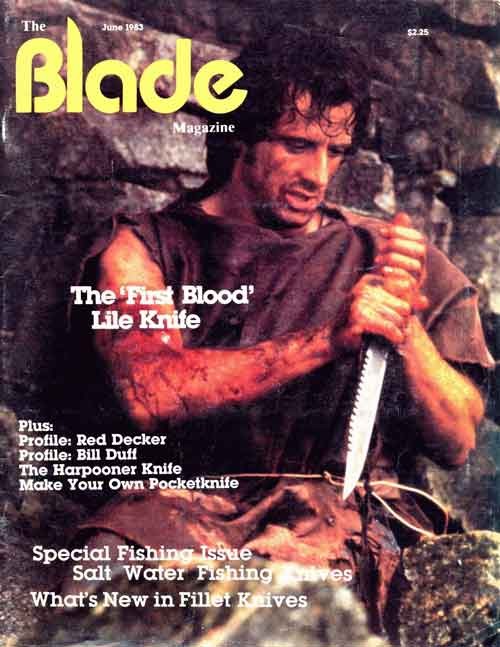
Follow the Rambo knives through the first four movies with these photos. If you want to step back in time even further, download the June 1983 issue of BLADE.
David Morrell, author of the novel First Blood, based the book’s title on an old dueling term.
“I thought of it as a kind of duel between the characters, and there’s a dueling term about drawing first blood,” he explained. “In some duels the person who drew first blood would be the victor, so there was a kind of irony here of who drew first blood and who was going to win in this harrowing conflict.”
Rambo is More Canadian than American
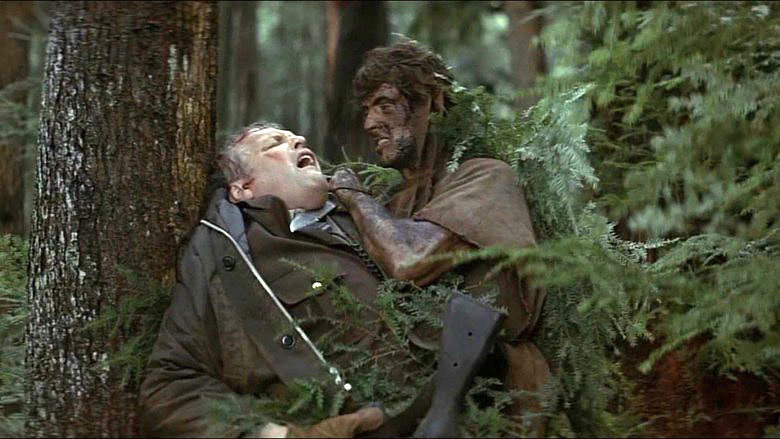
Though set in Kentucky in the novel First Blood, the movie’s locale was supposedly in the American Pacific Northwest. Actual filming was done in British Columbia. (image via imdb.com)
Born in Kitchener, Ontario, Canada, Morrell today is an American citizen.
The setting he chose for the novel, First Blood, was a wilderness area in Kentucky called the Grand Canyon of the East. However, Carolco, the production company that made the First Blood movie, wanted to do the flick in British Columbia, partly for financial reasons.
Meanwhile, for the purposes of the film, the locale would be identified as the American Pacific Northwest.
“It’s ironic that a Canadian created one of the most recognizable American icons,” Morrell noted. “It’s doubly ironic that the movie adaptation of First Blood was filmed in Canada’s British Columbia, even though my novel is set in Kentucky.”
Uncle Sam Makes an Appearance
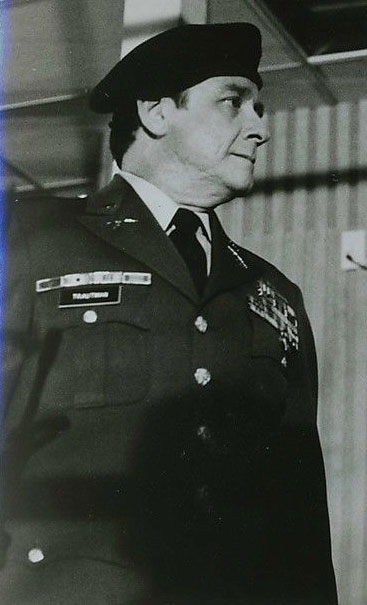
The First Blood character of Col. Sam Troutman, played by Richard Crenna in the movie, was inspired by an American icon. Can you guess which one? (image via imdb.com)
Morrell gave Col. Sam Troutman, played by Richard Crenna, the name Sam because he represents Uncle Sam. As Morrell noted, “I saw him as the system that had created Rambo.”
You Only Got Half the Story
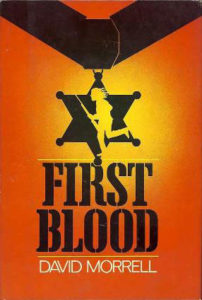
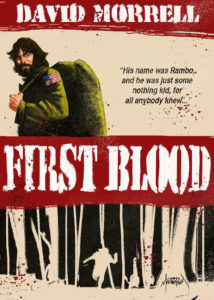
The original cover for “First Blood.”
Originally, First Blood was about 600 pages long. Morrell didn’t like it and so went back and started reading it again. He found a chapter he didn’t like and deleted it. He read the book again and found it moved faster as a result of the deletion.
“I had digressions for one of the deputies, and the man who flew the helicopter and so many different viewpoints in it that I began cutting this chapter and that chapter and found that all I had to do was have the alternating sections between Rambo and the police chief,” he said. “So I probably lost about 300 pages doing this. It was like sculpting, knocking bits of granite off to create a statue. I had written and written so much that I learned that by cutting back I got an intensity that I hadn’t expected. So it was a big lesson for me.”
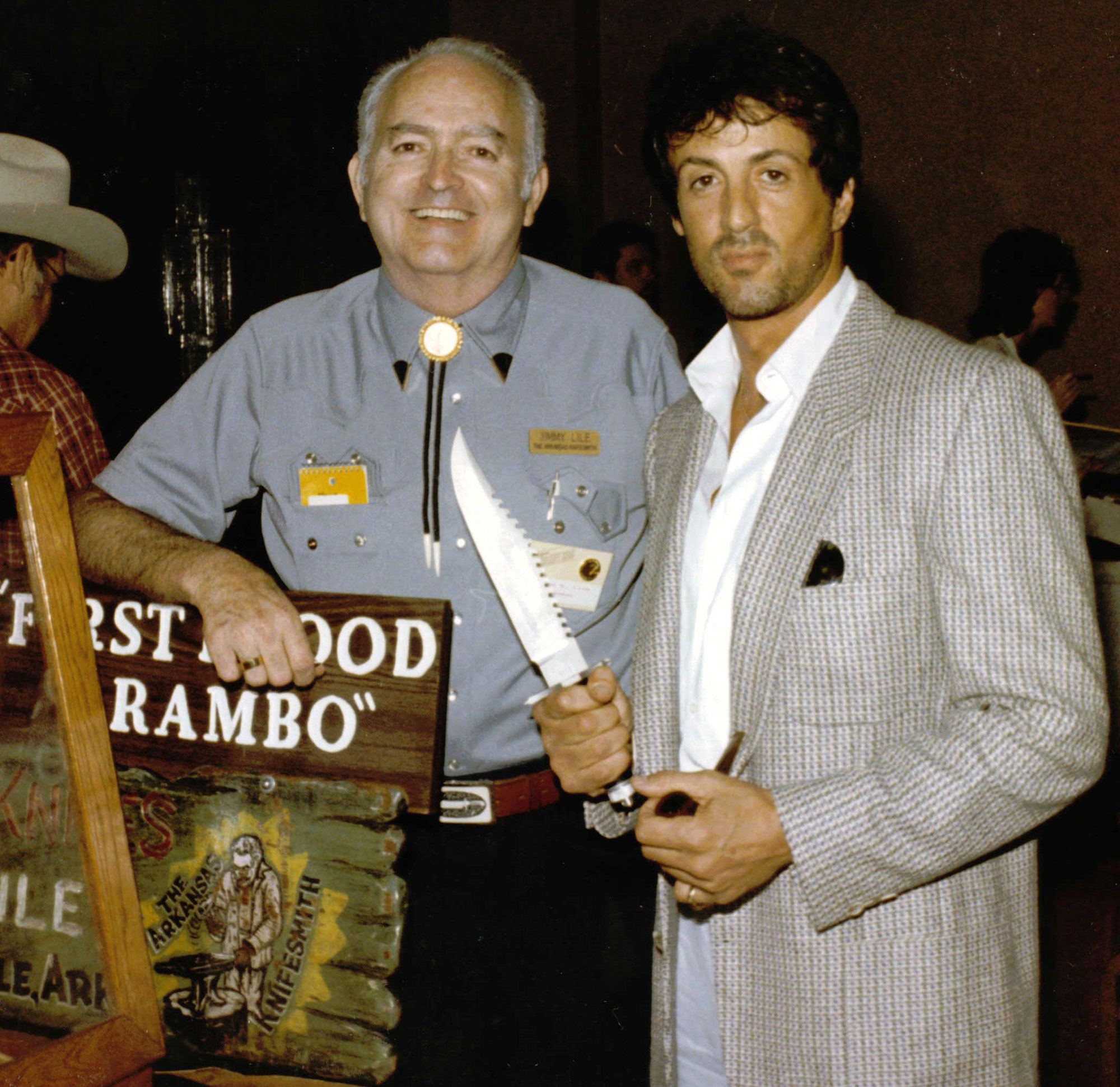
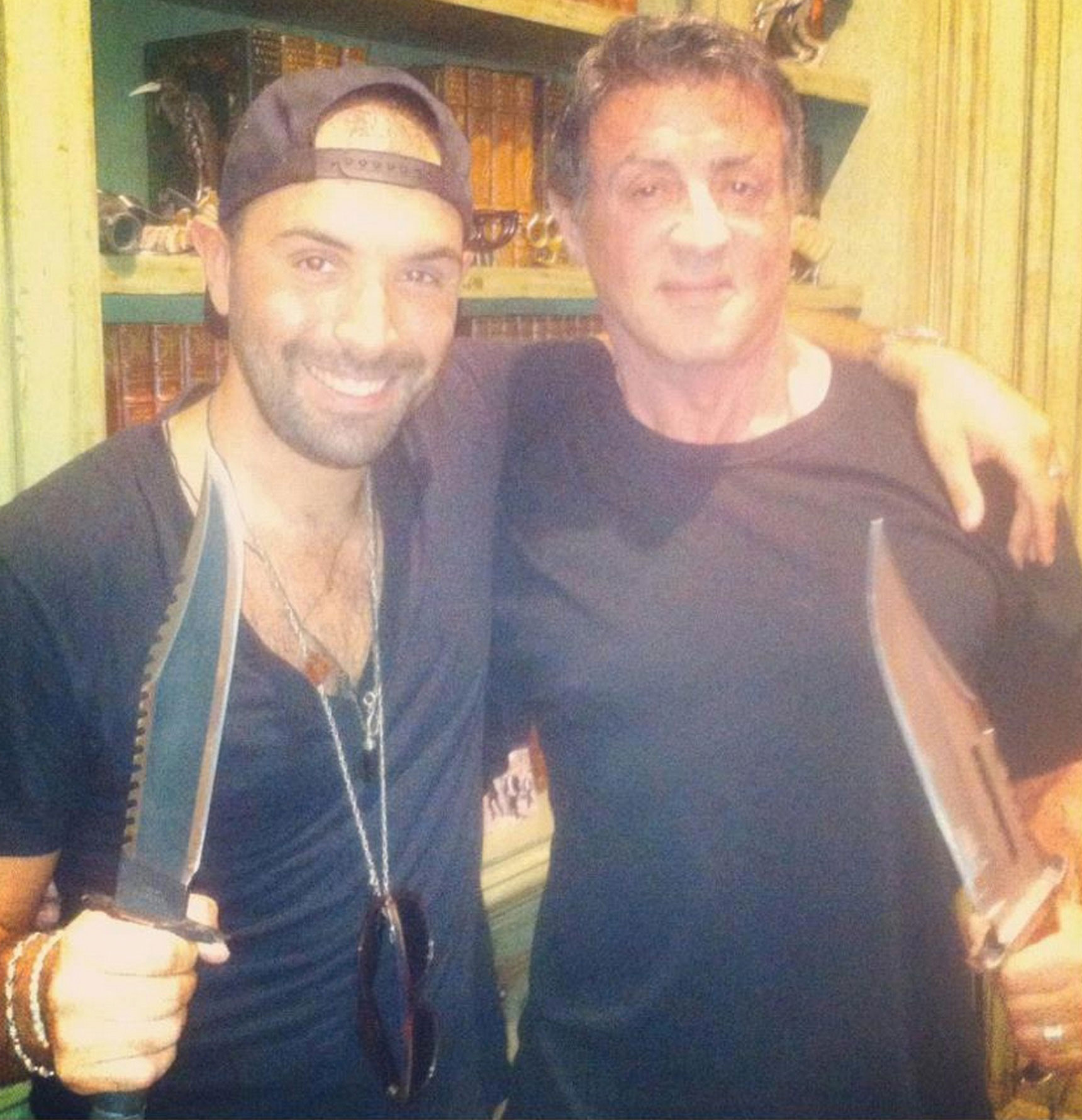
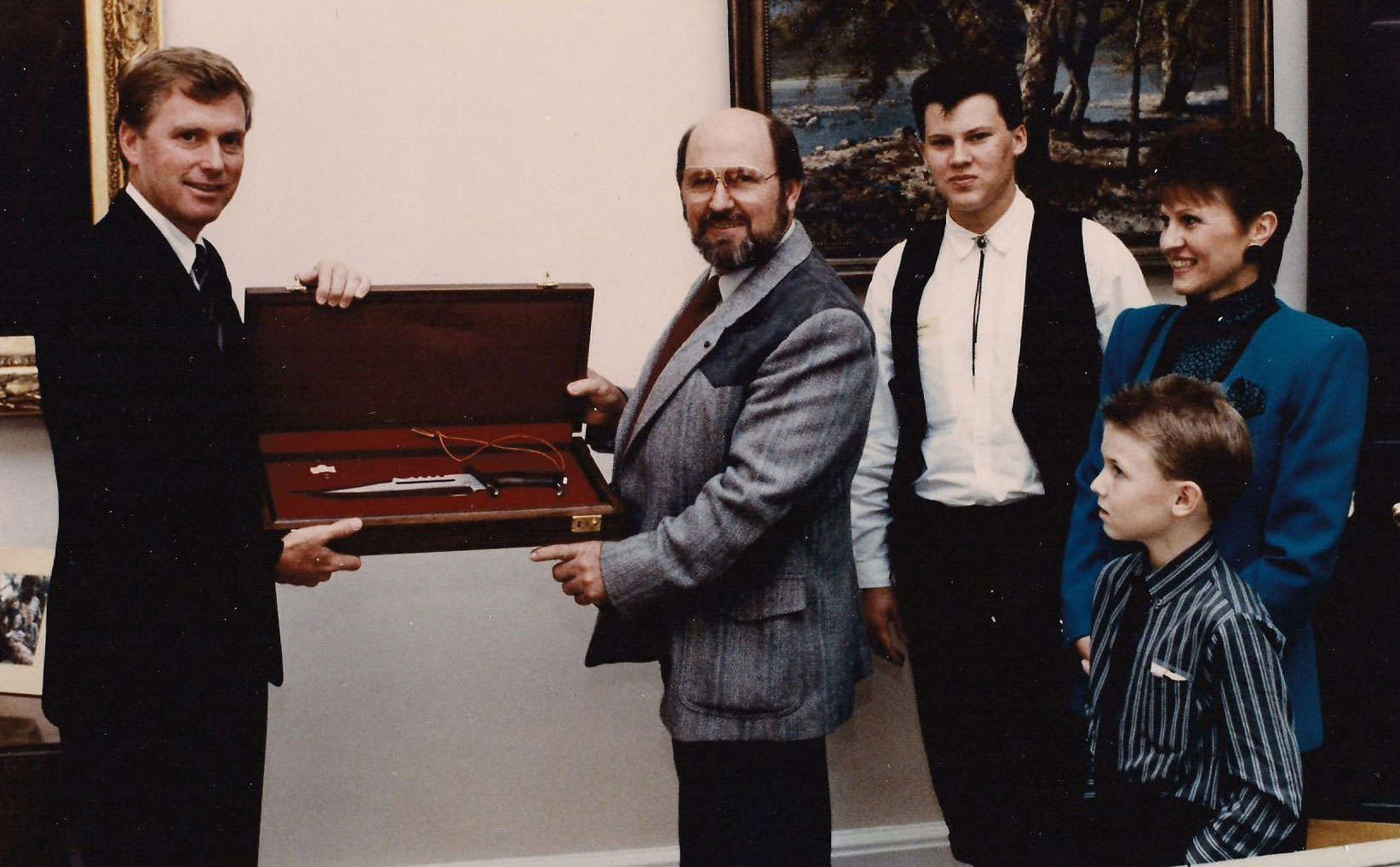
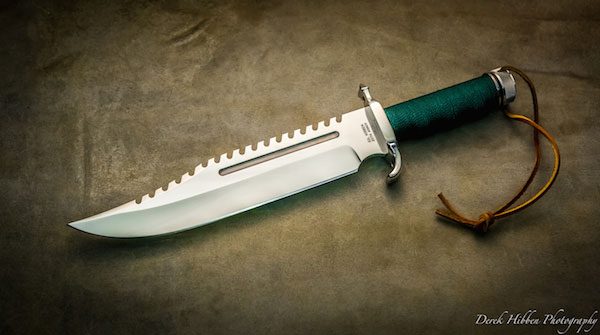
Rambo III was the first Rambo movie for which Gil Hibben made knives, taking over from Cutlery Hall-Of-Famer Jimmy Lile, who made the knives for the first two Rambo films. When Stallone contacted Hibben about doing the knife for the third film, Hibben made a prototype hollow-handle survival knife with sawteeth on the spine.
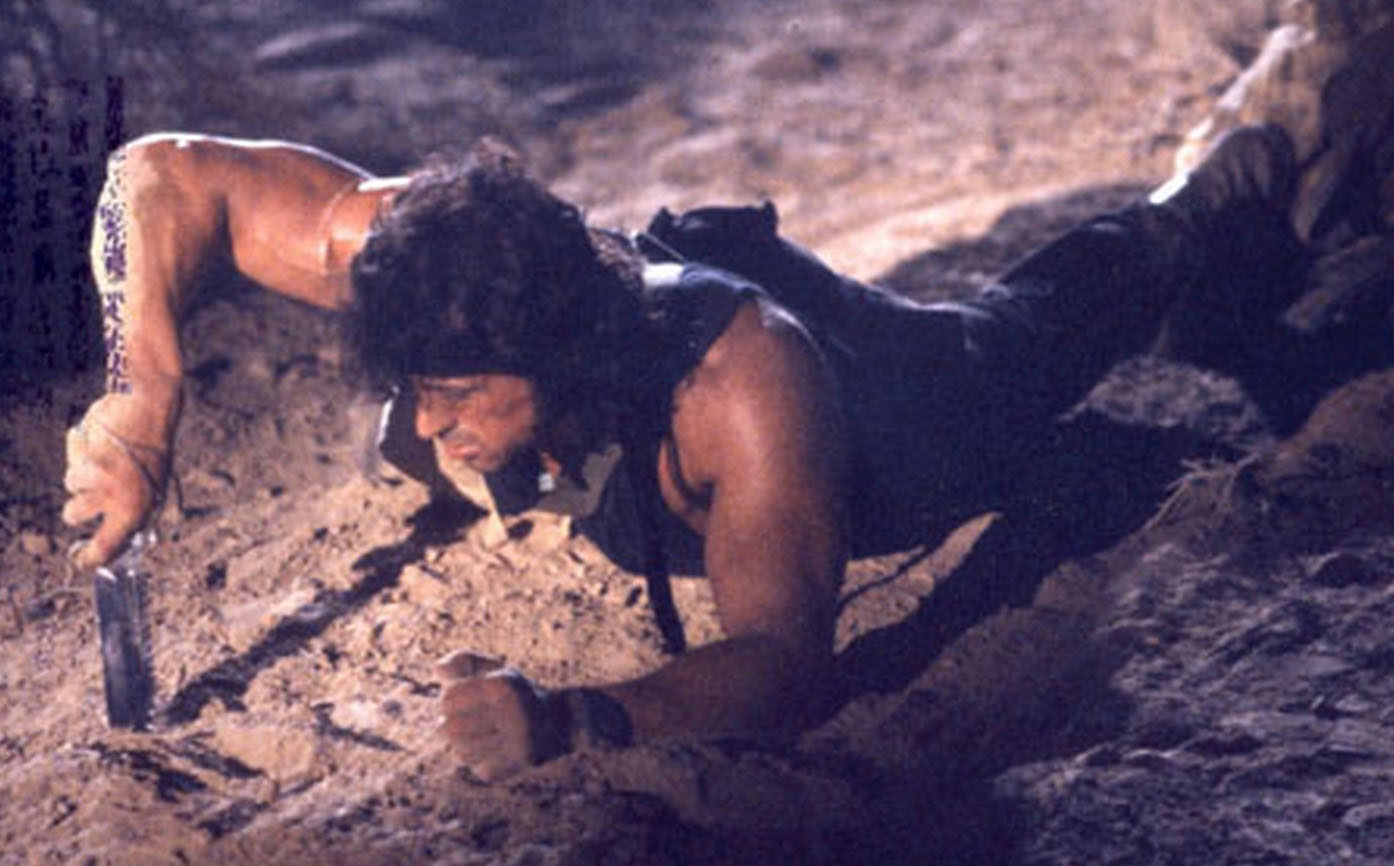
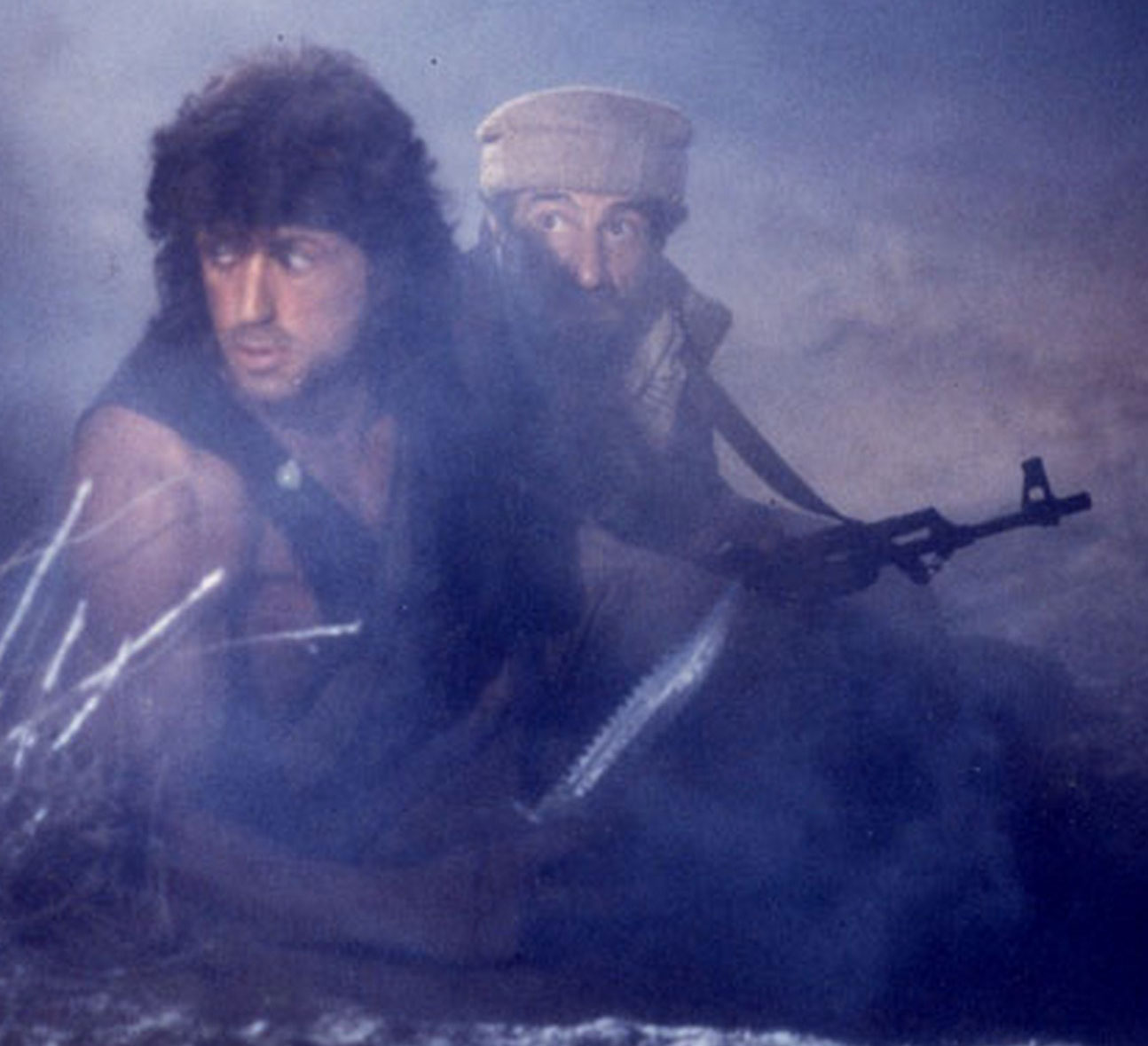
However, Stallone decided he wanted something different and opted for another of Hibben’s designs, the now famous Rambo III bowie. However, the minefield scenes for the third movie already had been filmed with Stallone using the first design, the knife known as the Rescue Mission Knife.
On the 25th anniversary of Rambo III, Hibben teamed with award-winning knifemaker Vaughn Neeley to fashion a limited edition of 100 specially marked, mirror-polished and serial-numbered 25th anniversary Rescue Mission knives. Go here for more information.
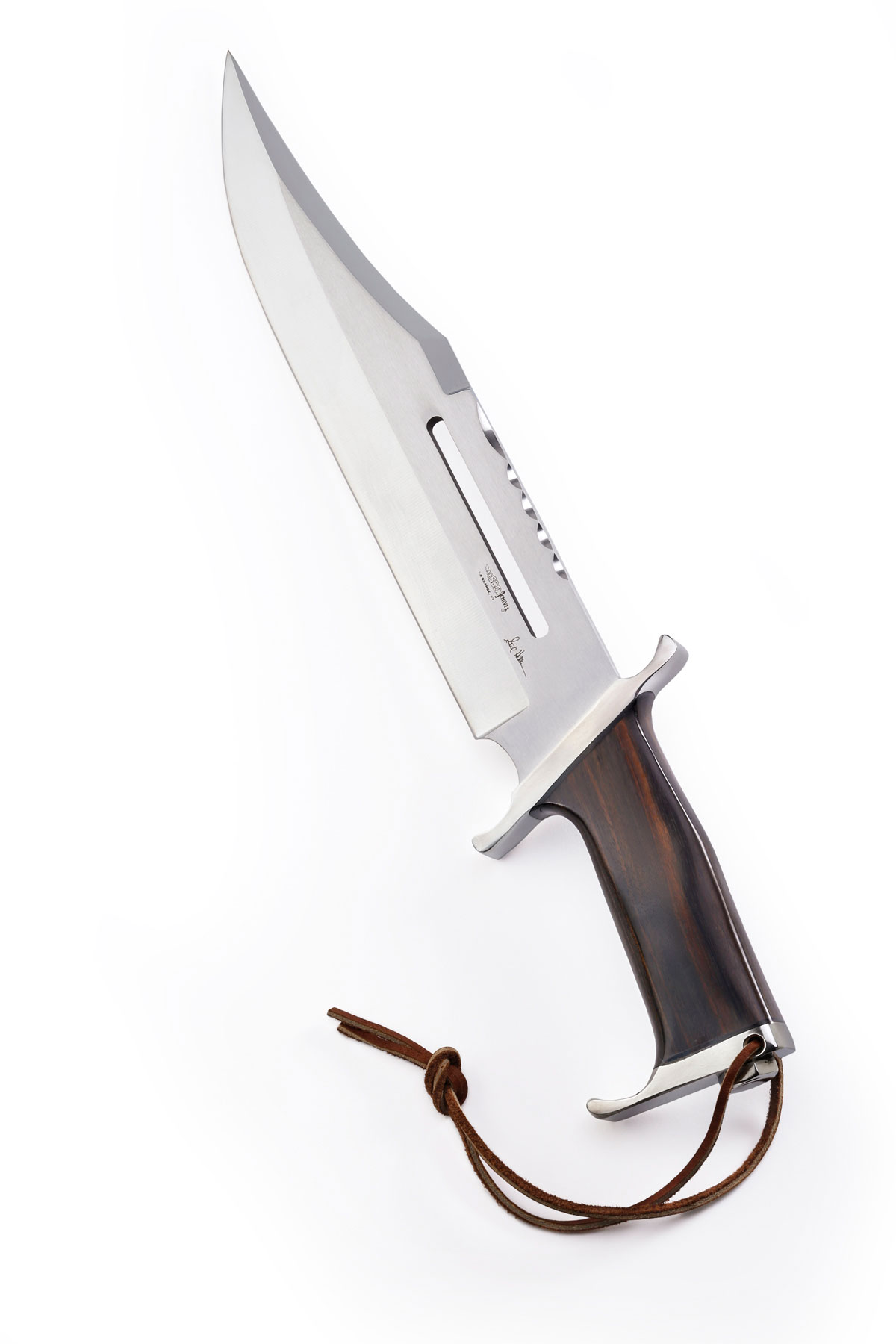
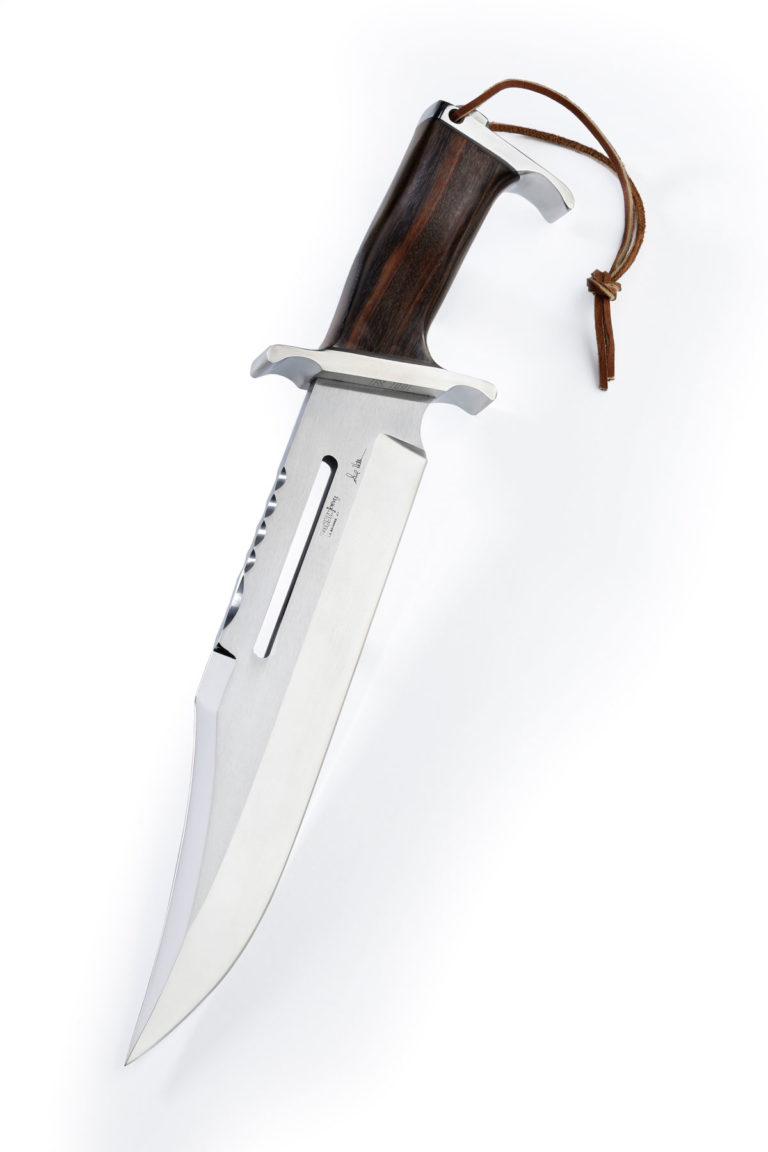
Instead of the Rescue Mission Knife, Stallone opted for Gil Hibben’s Rambo III bowie (shown here) as the featured knife for the third film. Stallone had more input on the design of the bowie, including the long cutout in the blade. (Kris Kandler image)
Editor’s Note: This article originally appeared in the February 2008 issue ofBLADE magazine, which you can download here.
Over a quarter century after John Rambo burst onto the big screen and changed cutlery history forever, it is near time for the character created by author David Morrell to cut a worldwide cinematic swath with his indomitable knife once again.
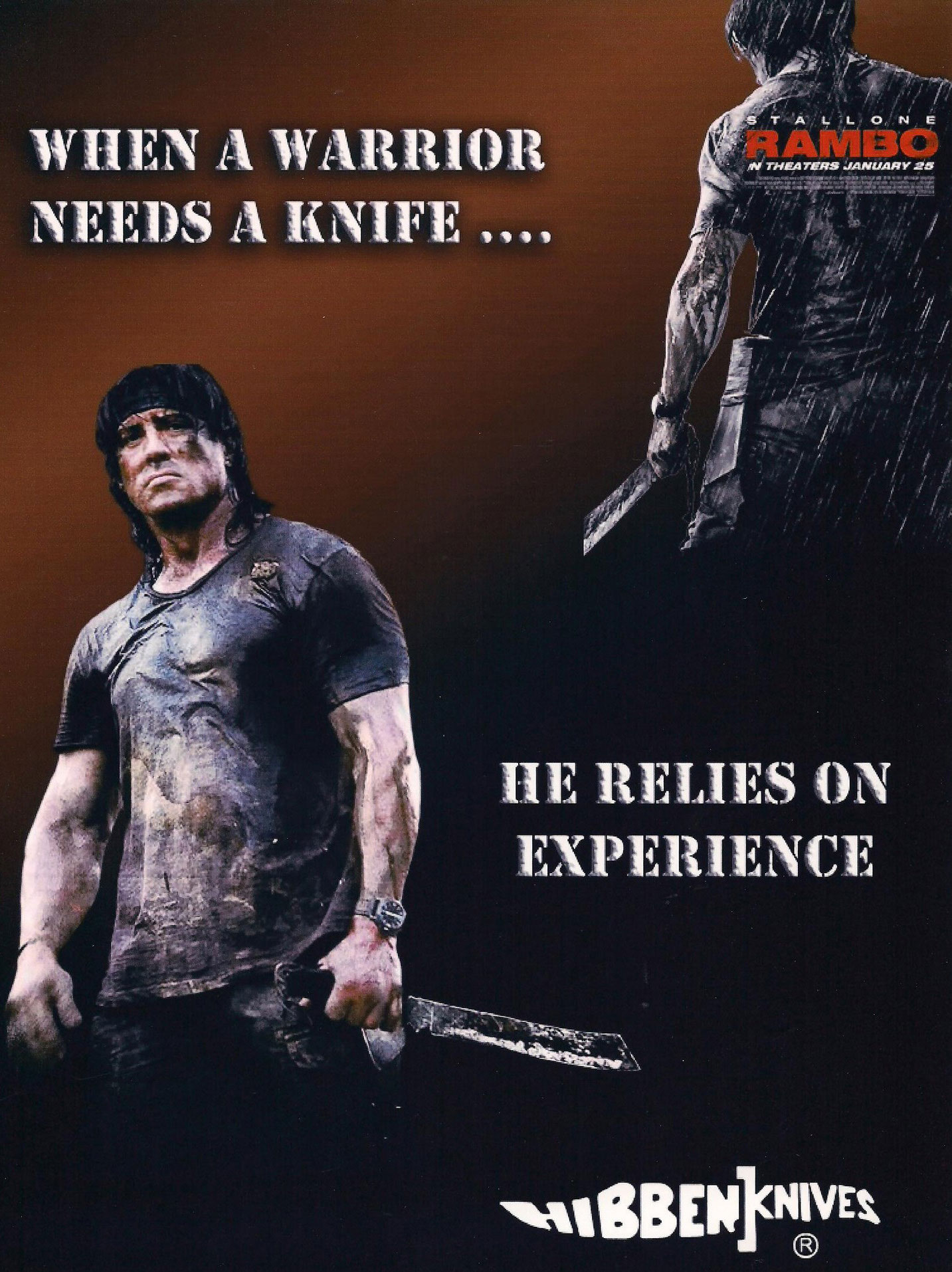
As BLADE® was going to press, the fourth installment of the Rambo movie series, Rambo (aka Rambo IV) a Lionsgate film, was due to be released at movie theaters on Jan. 25, 2008. Sylvester Stallone wrote the screenplay, directs and stars in the movie that finds Rambo living a secluded life working as a snake catcher in Thailand some 26 years after Rambo first appeared in First Blood.
Rambo Knives: A Brief History
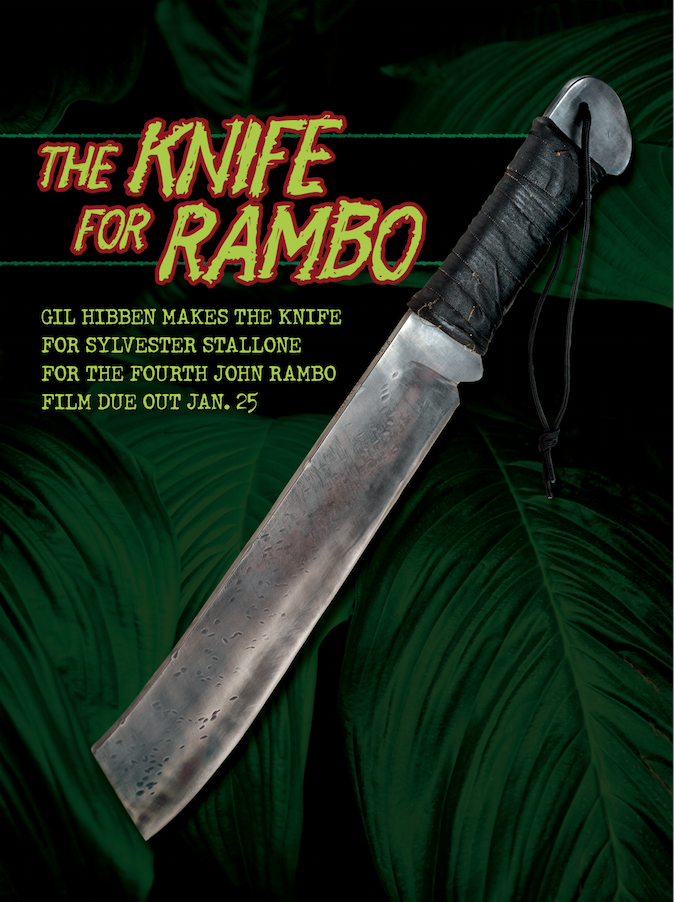
An isolated shot of the “J.R.,” the knife designed by Gil Hibben for the fourth Rambo film.
For Rambo III (1987), Stallone called on Cutlery Hall-Of-Fame knifemaker Gil Hibben to create the knife.
A Series of False Starts
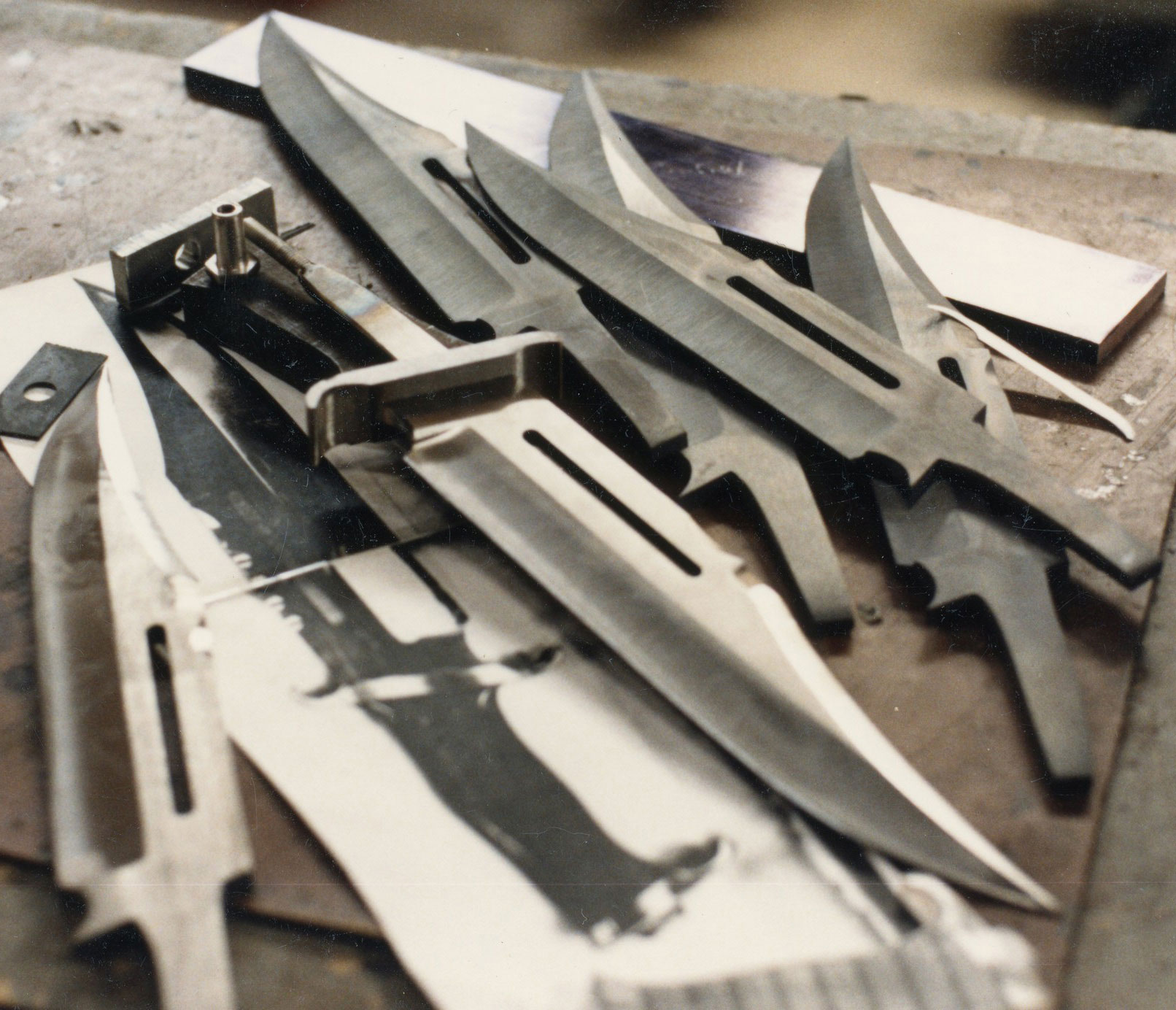
For Rambo, Stallone once again called Hibben to help create a new knife for the movie. Stallone had a basic idea of what he needed and the knife was written into the script as an integral part of the movie. Hibben made at least five prototype versions of the piece before finally arriving at the design that will be used in the film.
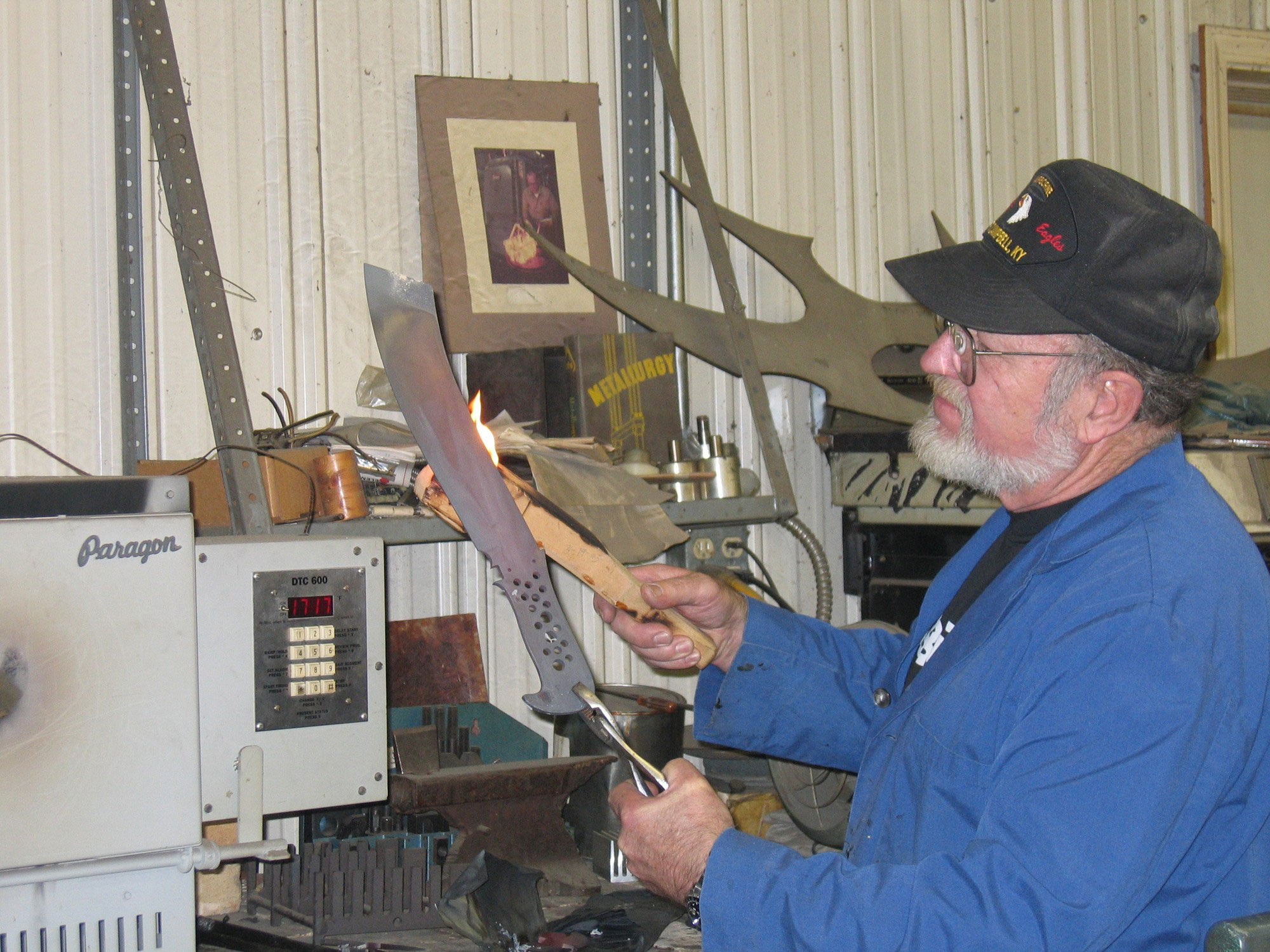
In October 2006, Hibben began designing the knife. At first, the blade exhibited characteristics of the Rambo III model.
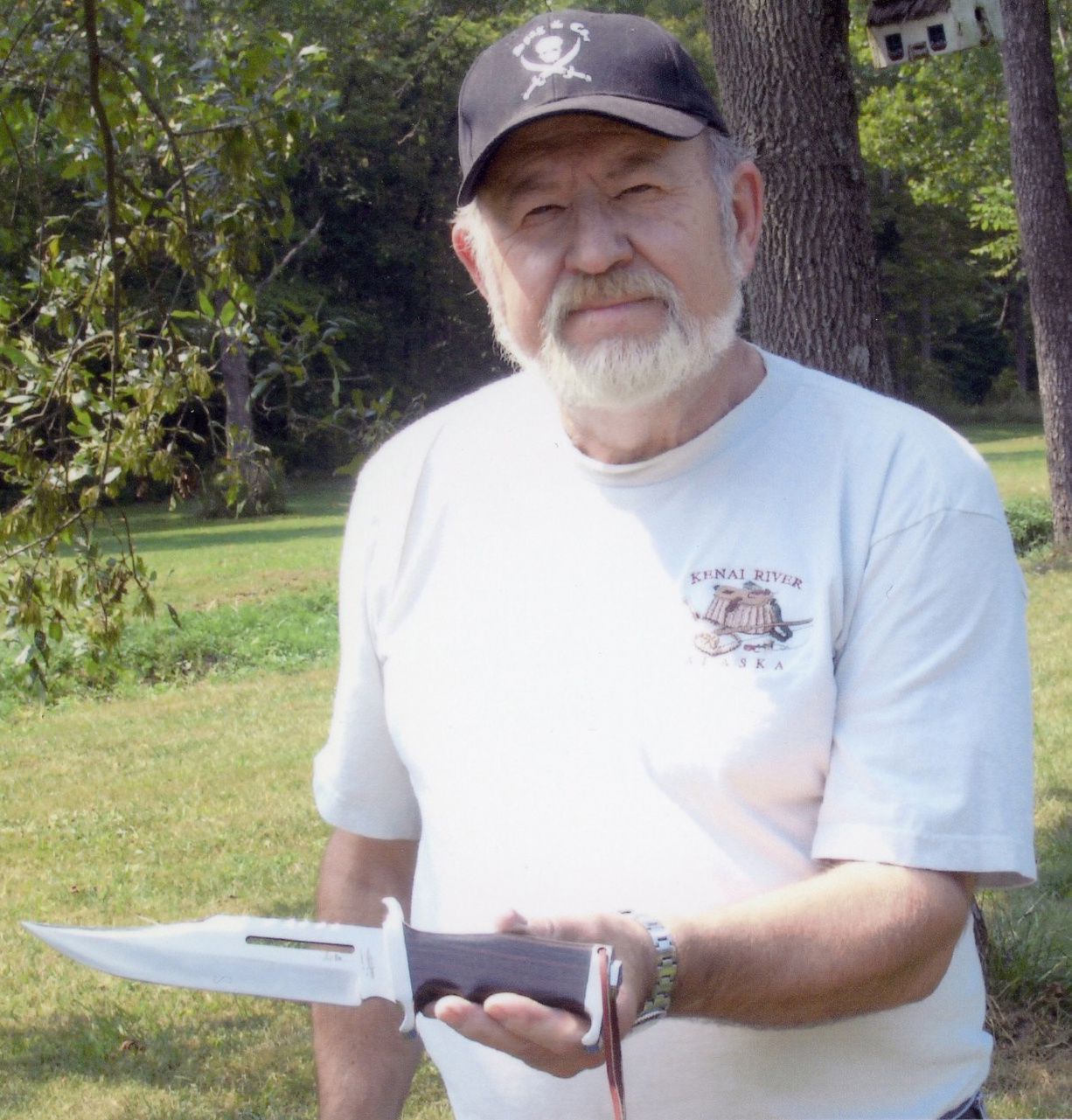
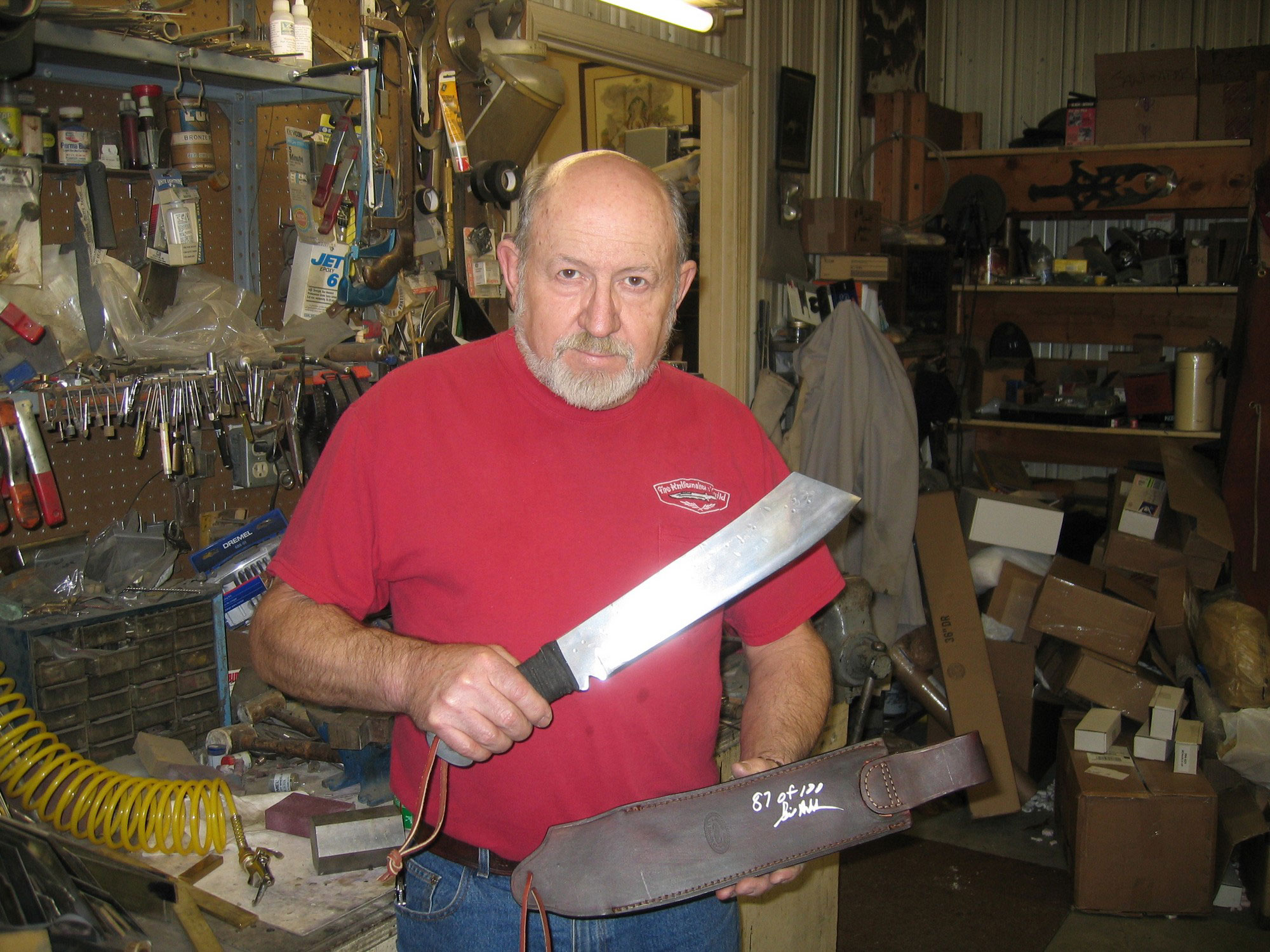
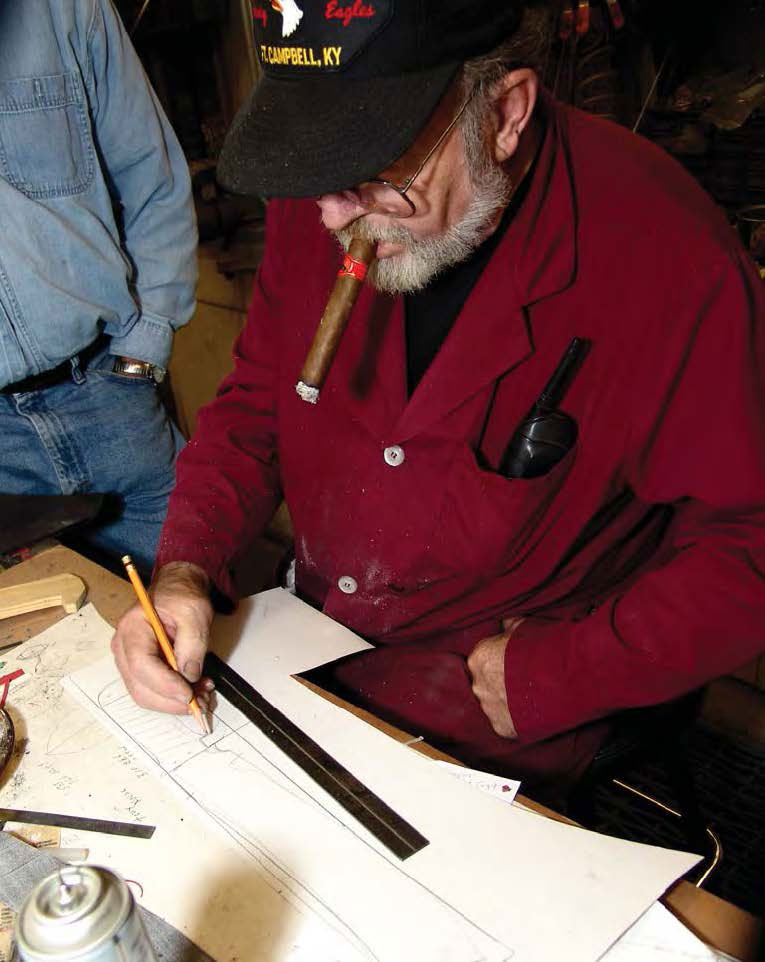
Hibben designs the knife in his shop in LaGrange, Kentucky. (photo by the author)
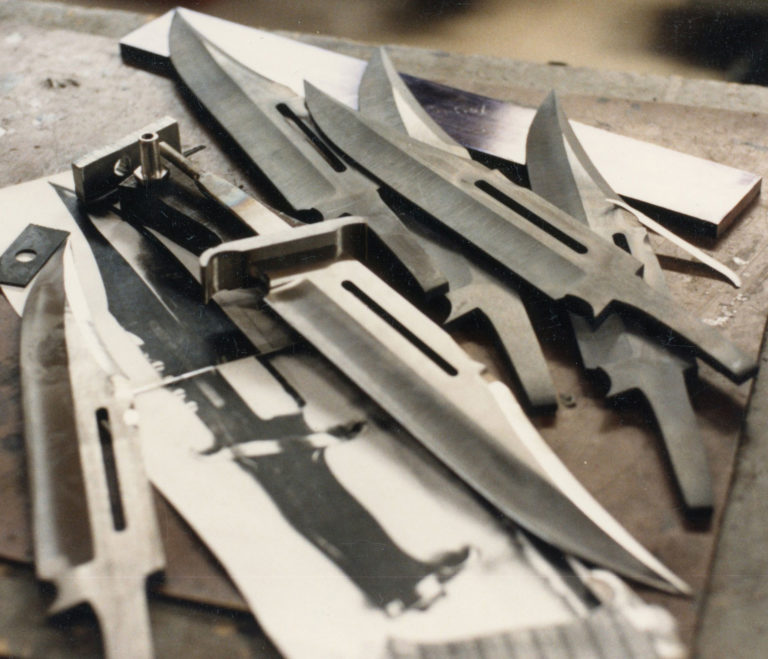
“My first one had a slot in the blade [as in the Rambo III knife] but in a machete or old Chinese sword design,” Hibben recalled. He also made a modified version in which he removed the top lug of the guard.
Stallone reportedly liked the blade design but said it was “too perfect.” He wanted something much more crude looking, as if it had been pounded out quickly from the limited resources Rambo has at his disposal in the movie.
It was back to the drawing board for Hibben.
“The blade size was originally 10 inches and Sly faxed me some pictures of some of the knives he’d seen from the cutting competitions,” the Cutlery Hall-Of-Famer explained. “He liked that style, so I made one up. It evolved from a 10-inch blade to a 12-inch one. It evolved from several sizes and shapes until I got what he liked.”
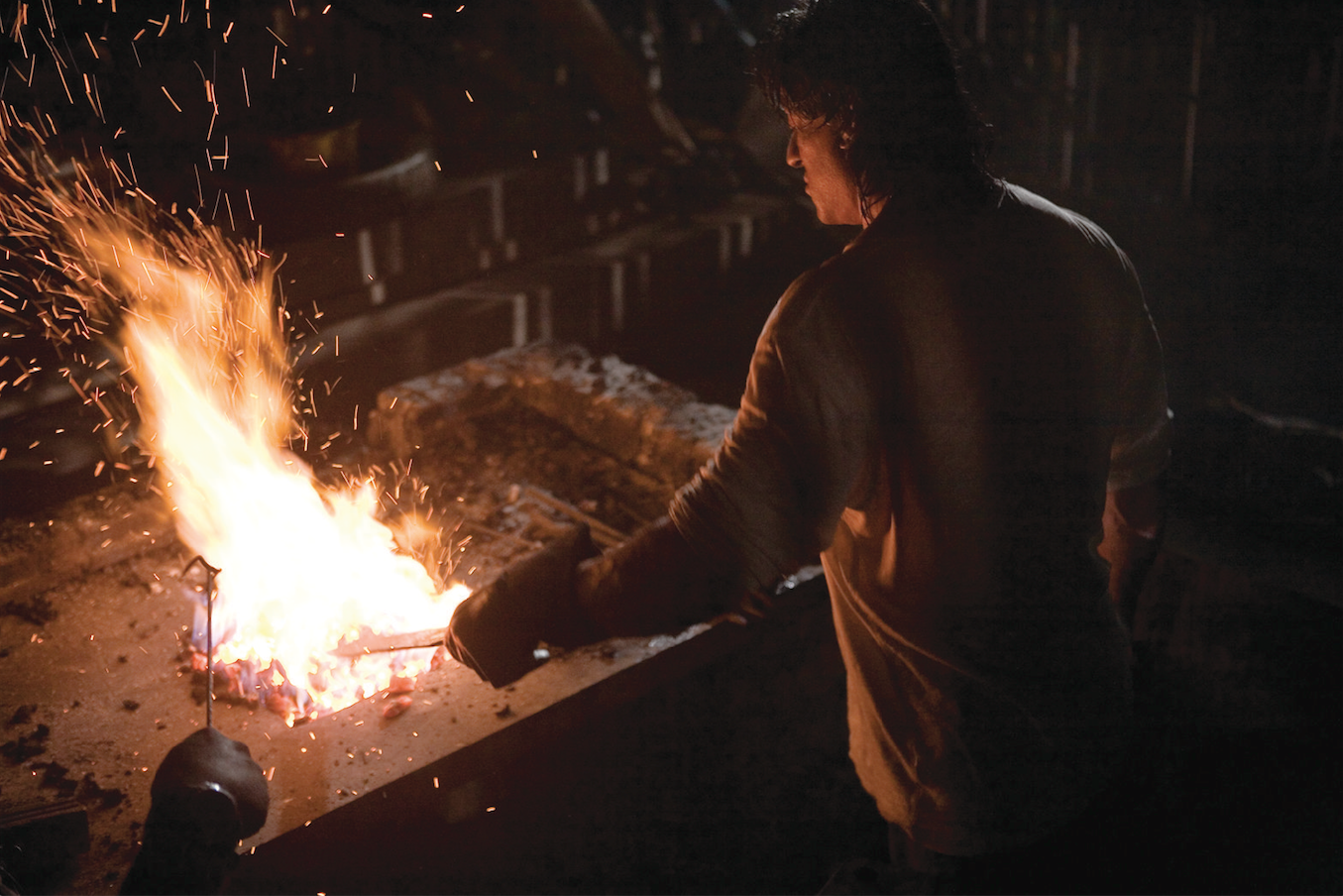
To make it authentic, Hibben forged the next few prototypes from pieces of a truck leaf spring. Since there was agreement on the basic blade design, next came the question of the handle and finish of the knife.
Hibben thought about what materials might be available to the character in the movie. He considered leather, wood, paracord, tape and even seat-belt webbing for use on the handle. The second prototype had a wooden grip wrapped in green paracord and an enclosed sheath. Hibben also made a third prototype with a leather-wrapped handle.
Again, the studio said it needed something more crude looking.
There’s Crude, and then There’s CRUDE
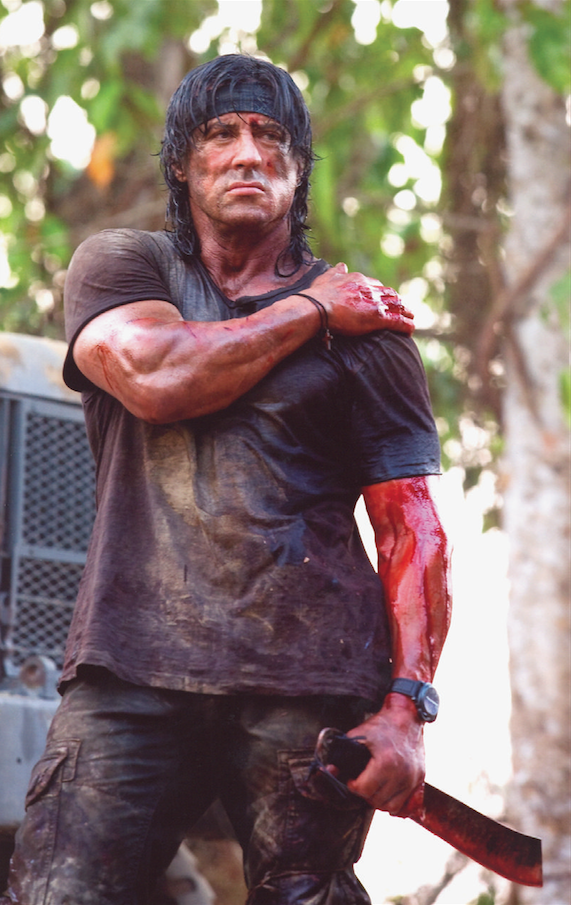
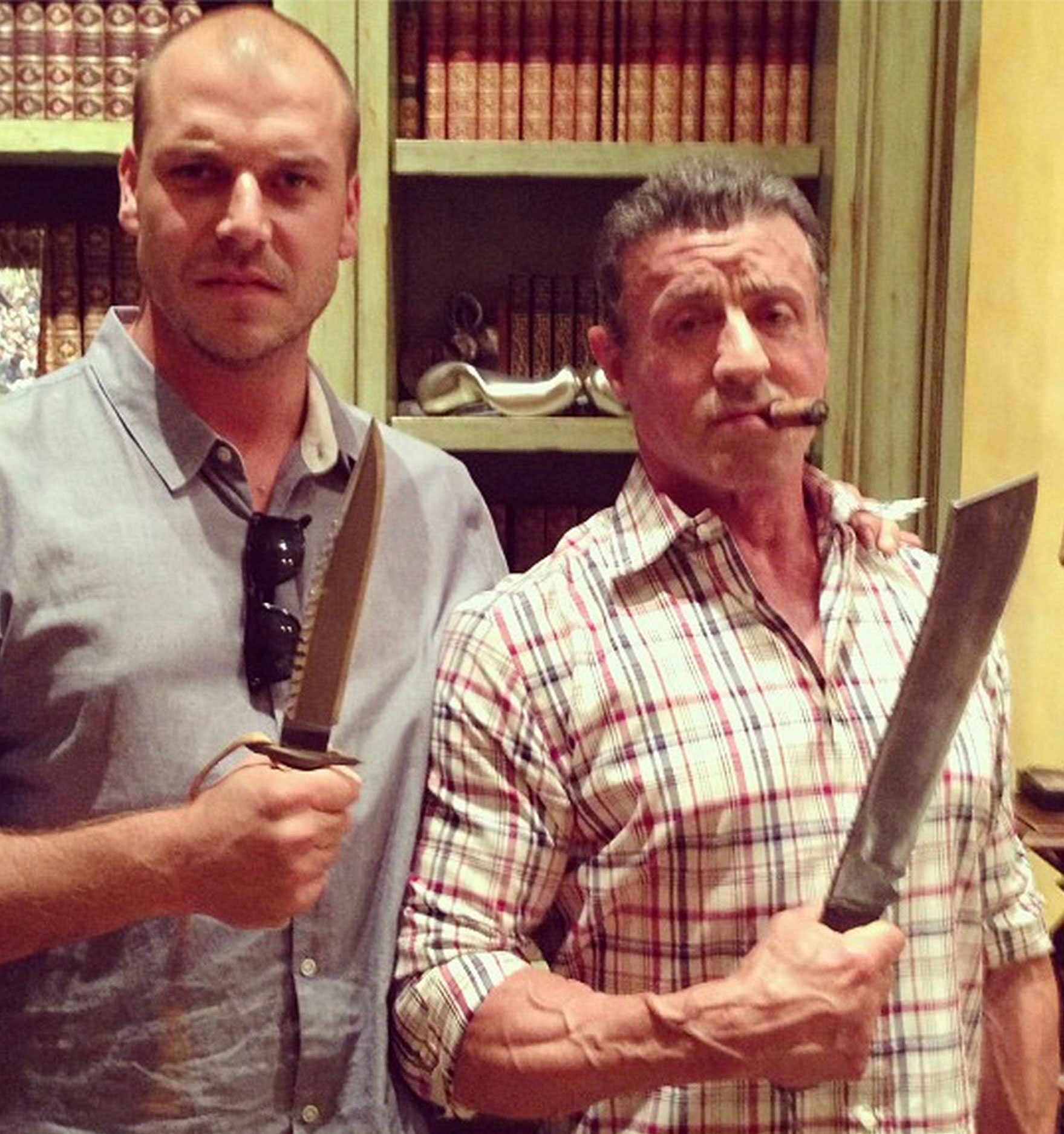
Sylvester Stallone, seen here playing John Rambo in the fourth movie in the franchise, holds Hibben’s final version. (photo by Karen Ballard from Rambo®, a Lionsgate film)
Prototype number four was a very simple design with a cord-wrapped handle. Hibben made one with green cord and one with black cord. It was close to being right, but the finish was still too slick to have been quickly forged as it is in the script.
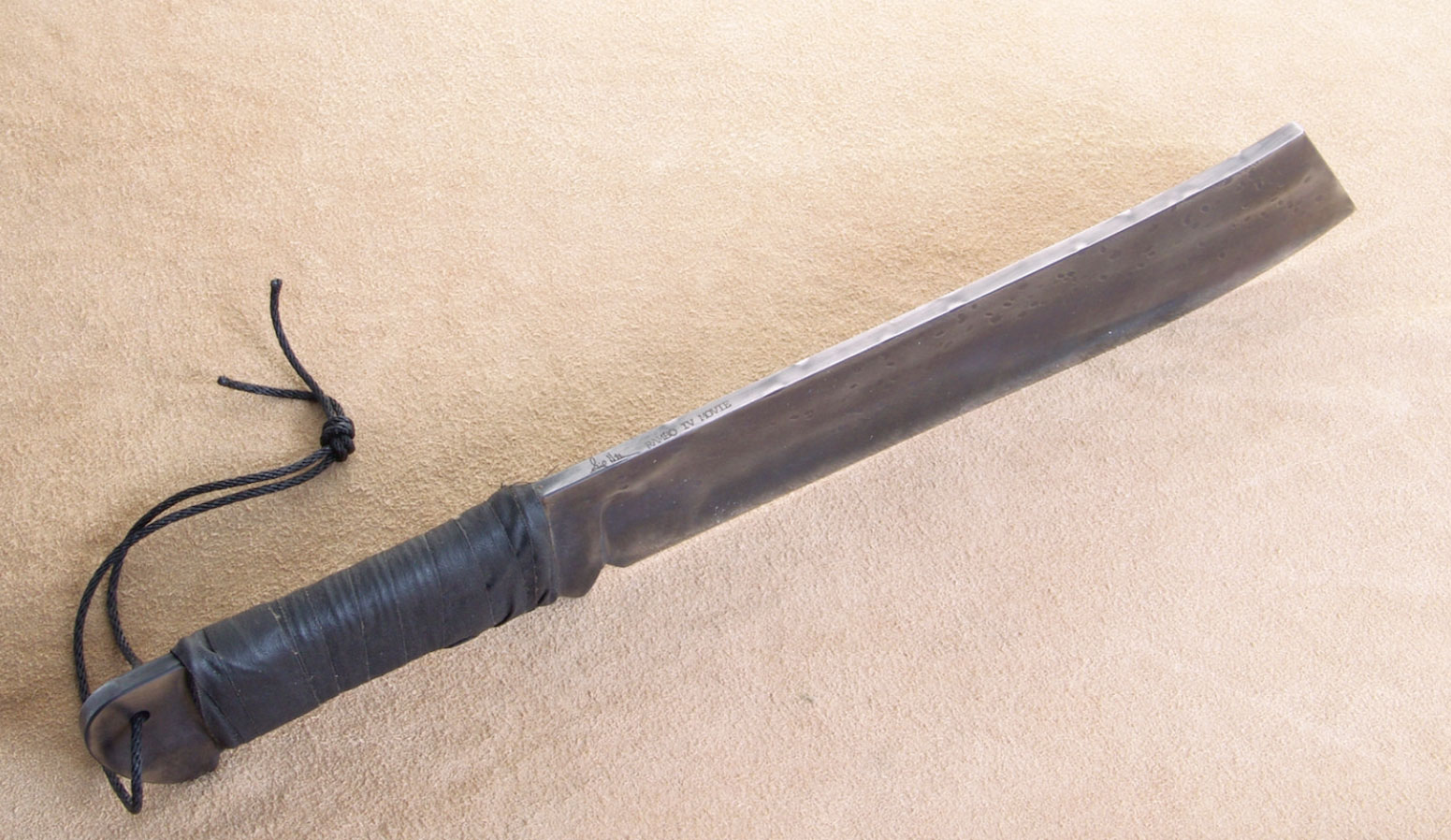
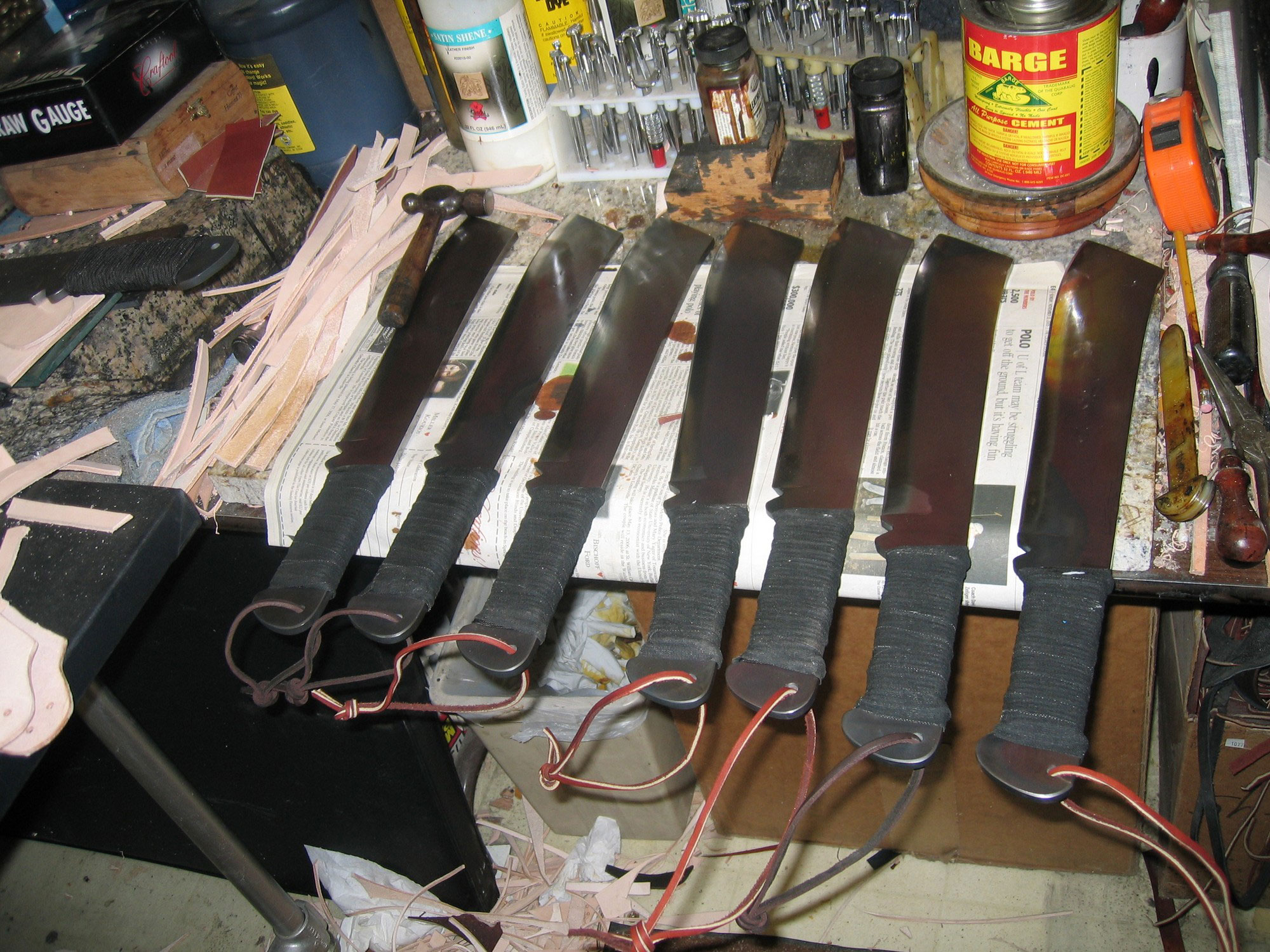
Finally, Hibben decided that, considering John Rambo’s skills and experience and the materials that the title character would have available, the knife would have a cord-wrapped handle, perhaps covered with tape for additional grip. The blade would be marked with depressions from the hammer blows from being forged quickly without time or resources to put a fine finish on the blade.
“So I took it out of the heat treat and beat the heck out of it,” Hibben recalled. “I really made it look like Sly made it.”
Following the Rambo knife tradition, it would be a large, heavy blade with a thick spine. Assuming that Rambo would not have time or materials to make a new sheath but would still have the sheath from his previous knife, he opts to cut the end of the old Rambo IIIsheath to accommodate the larger blade and broader tip of the new knife. This is the knife and sheath in Rambo.
Rambo IV Knife Specs
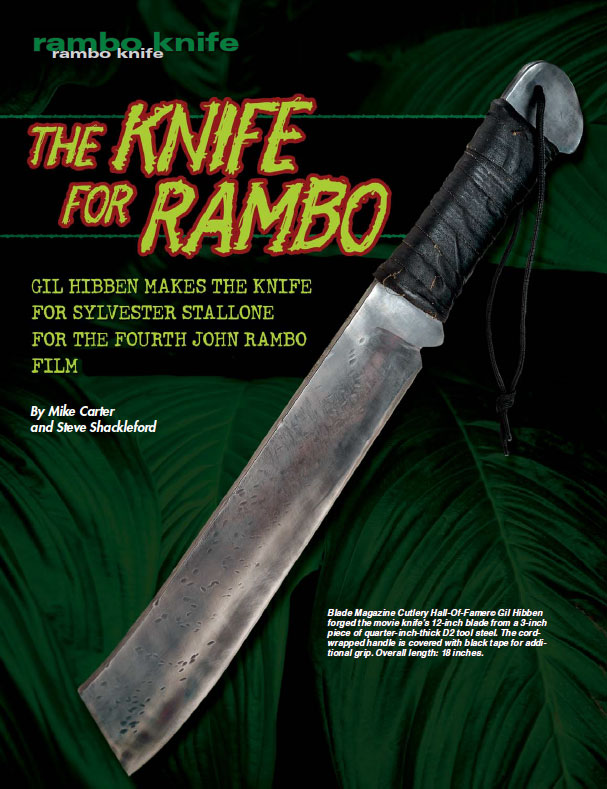
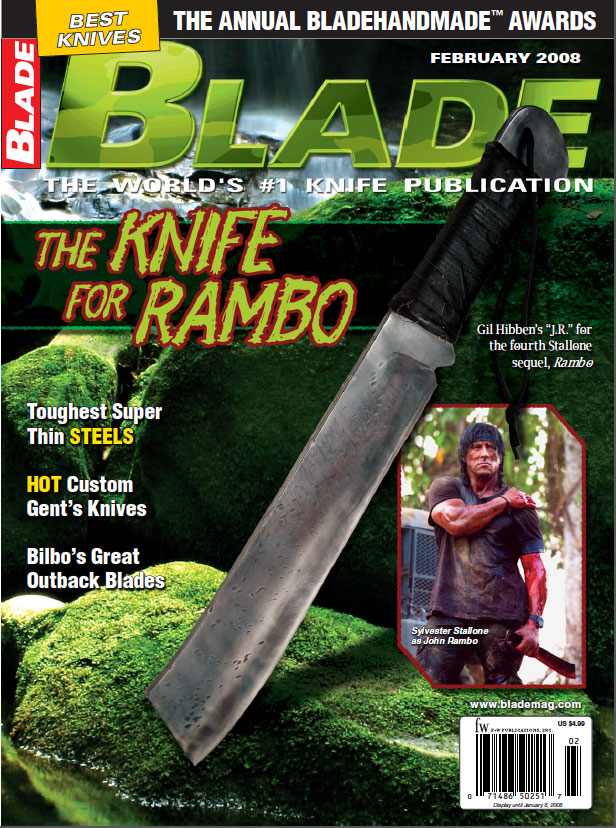
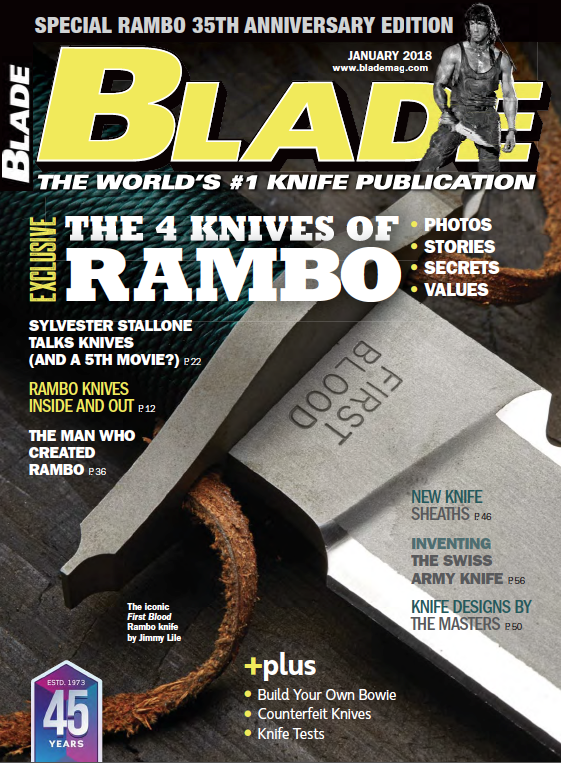
The final version, the “J.R.,” appeared on the cover of the February 2008 issue of BLADE. Click to download the issue.
The 12-inch blade is forged from a 3-inch piece of quarter-inch-thick D2 tool steel. As you might imagine, such a knife is somewhat heavy—2 pounds worth—so Hibben made some lightweight aluminum versions for Stallone to use when need be for safety’s sake during filming.
Since the movie was shot in the corrosion-inducing environs of the jungle, Hibben said he put Renaissance Wax on the non-stainless D2 to protect the blade from rust.
“There was a lot of rain there,” he noted. “Luckily they got out before the monsoons hit.”
The cord-wrapped handle is covered with black tape for additional grip. Eighteen inches overall, the knife comes in the modified Rambo III sheath.
Collector Pricing Reference
At press time (in 2008), Hibben was offering a handmade version of the knife in all the original materials—though with nicer sheaths—for $1,250. It is called the “J.R.” There will be 100 in all, with 25 of them already having been sold.
One (the Bowie knife) is primarily for combat, while the other (the Rambo knife) a survival knife. One was carried by a real person, the other by a fictional character. Both sparked explosive marketing in their respective heydays and were often emulated. Both were carried by men who were larger than life. Perhaps most telling, they continue to spark in-depth conversation long after their debuts.
The Rambo Knife: Built for Survival, then Combat
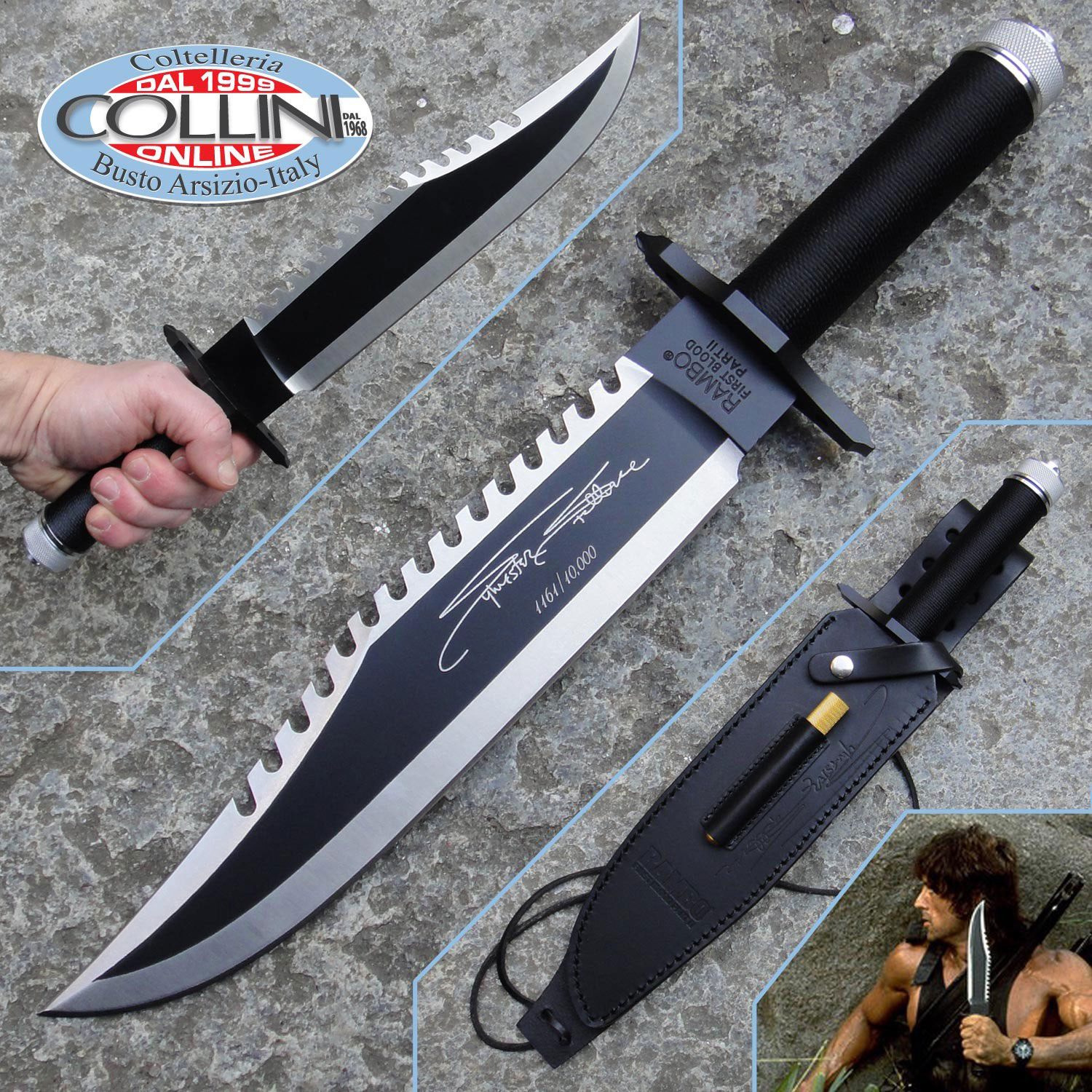
The second Rambo movie also features a survival knife, known as The Mission, designed and made once again by Jimmy Lile, but the viewer sees less survival use of the tool and more killing. Abe Elias comments on how Rambo’s female guide shows fear when she sees Rambo’s knife. Intuitively she senses that the knife isn’t a tool but a weapon. This reproduction is from Italy.
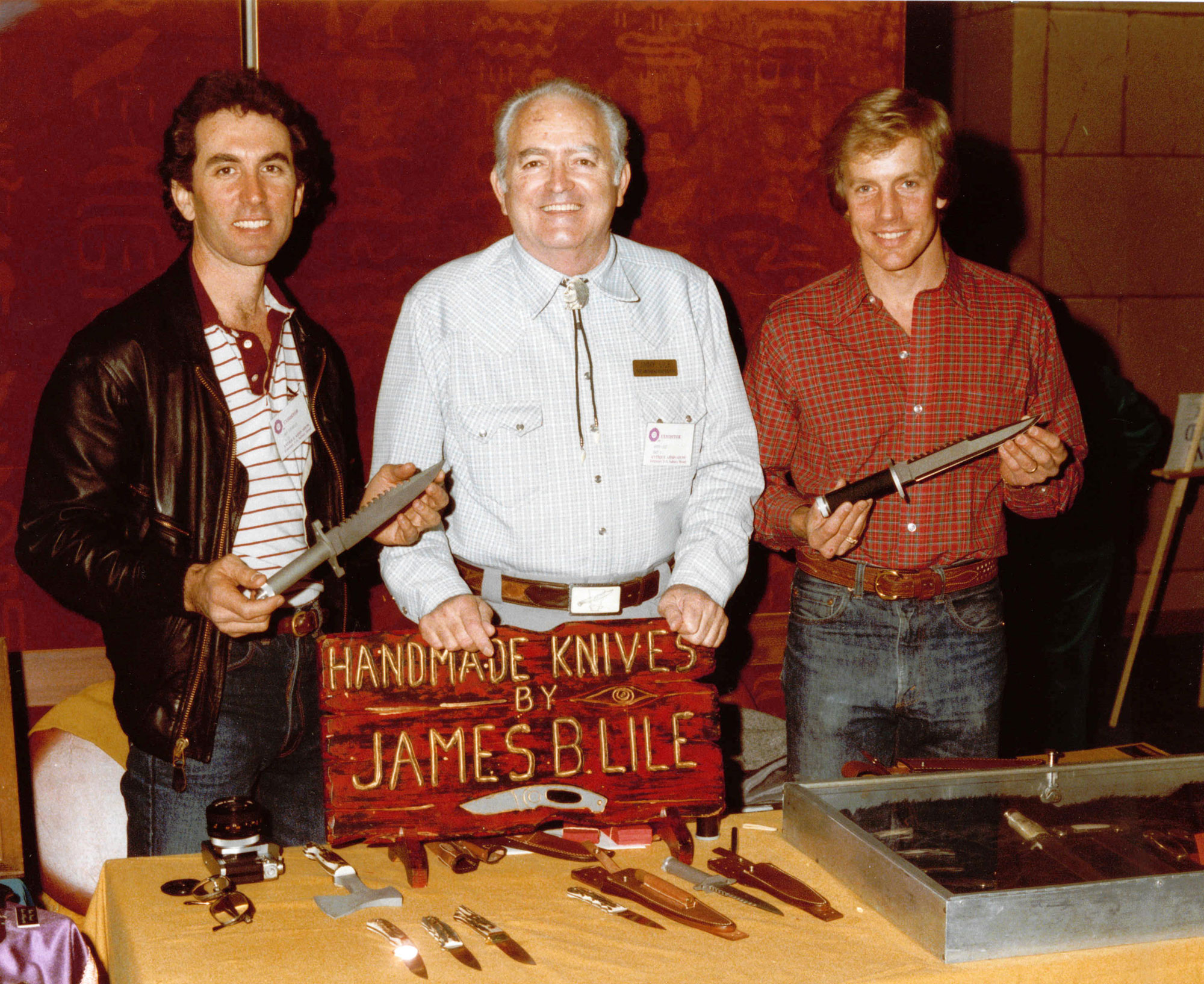
When we say “Rambo knife,” we first think of the Jimmy Lile-designed survival knives that were used in First Blood (1982) and Rambo: First Blood Part II (1985). But there were four movies in the series, and in Rambo III (1988) John Rambo actually carried a bowie designed by Gil Hibben. In Rambo (2008), the fourth and final movie, a chopper-machete made by Hibben was Rambo’s blade of choice.
The fourth Rambo movie is the most like “First Blood” in tone. The violence is harder to watch, the remote, distant explosions giving way to up-close-and-personal eviscerations and decapitations, all done with a chopper-machete made by Gil Hibben. (Cory Sorensen image; knife from the Randy Rousseau collection)
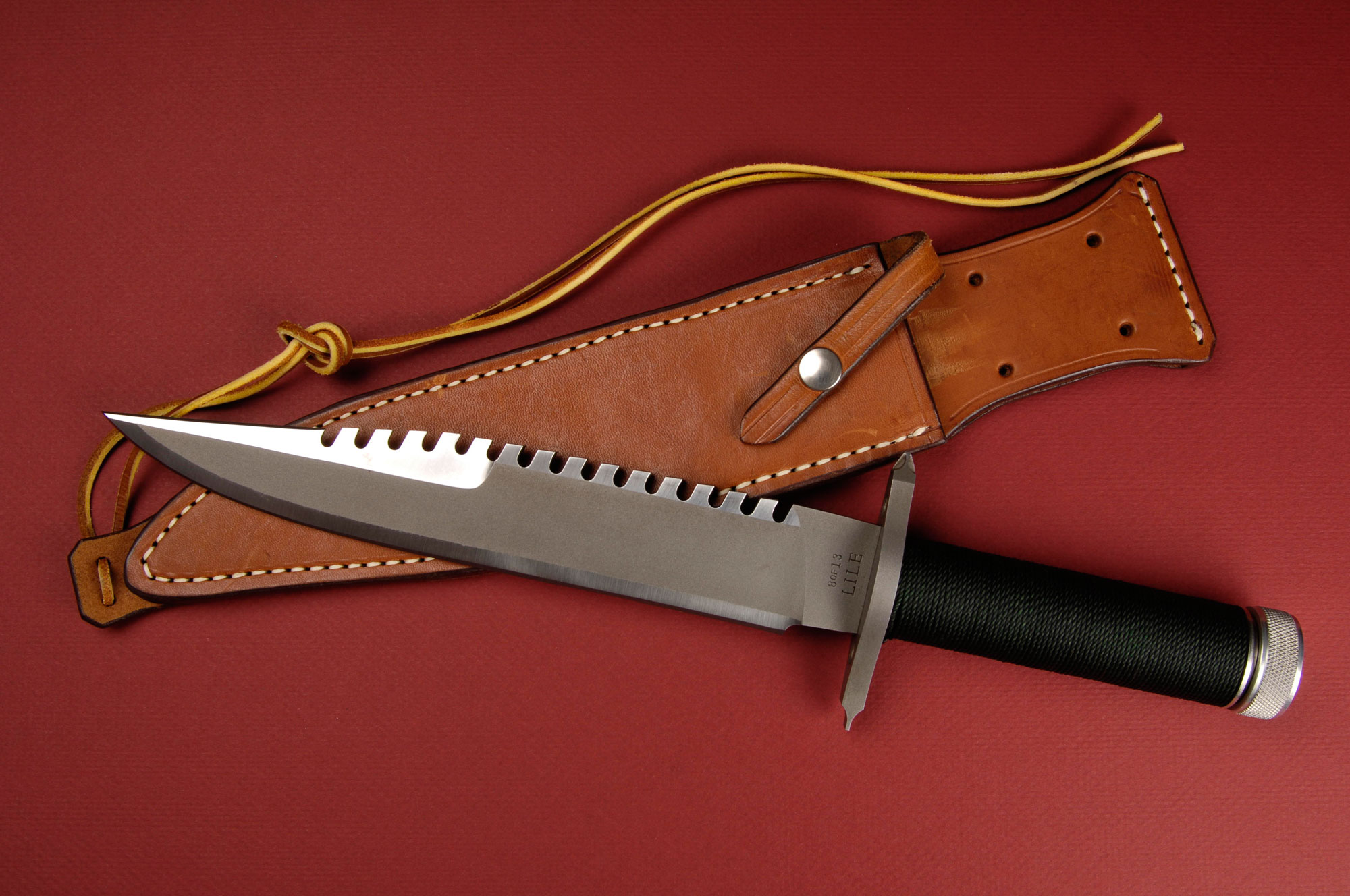
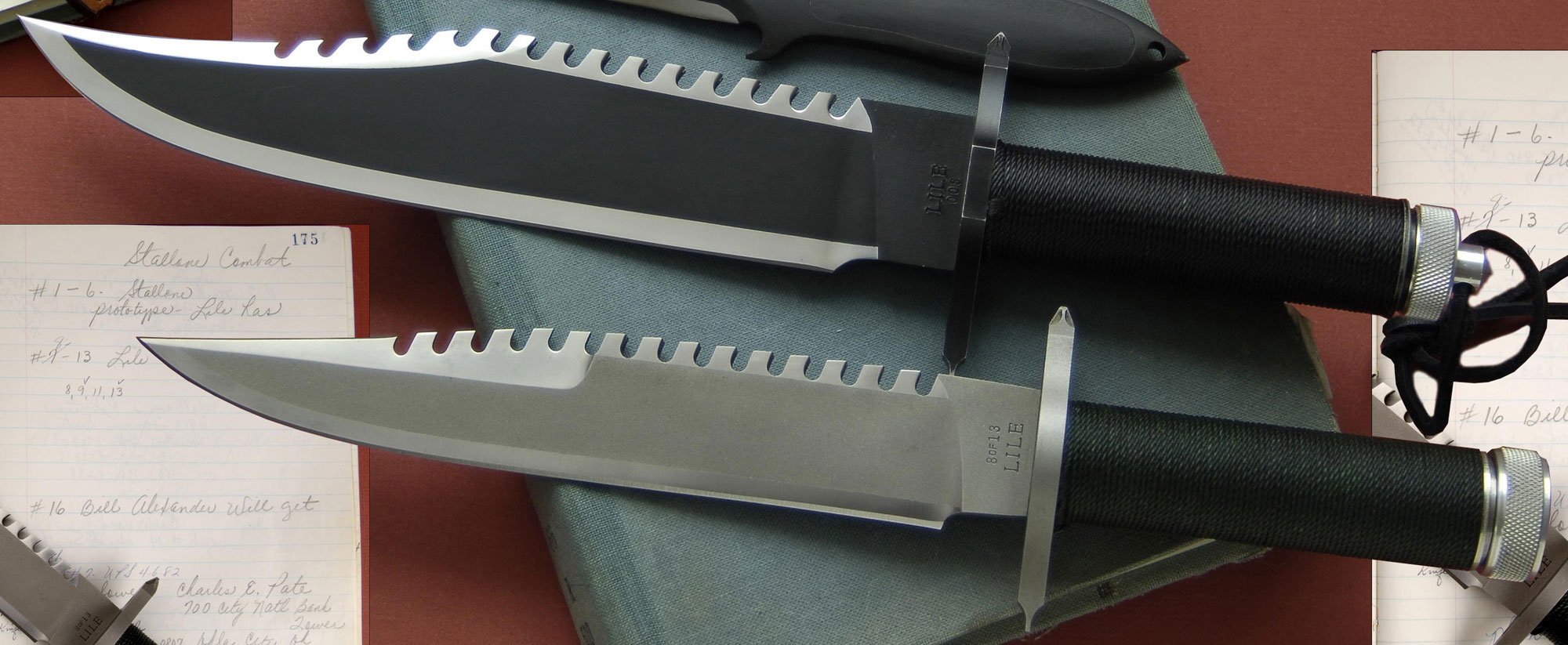
Survival authority, knife and tool designer, and writer Abe Elias mentioned that in the first movie we actually see Rambo open up the hollow-handled knife and use the items inside. He sews up his own wounds with the fishing line and uses the knife to make traps and kill a boar. He has a compass on the inner side of the butt cap, and can break glass with the outer side. The sawteeth on the spine can be used in woodcraft. The ends of the crossguard are Phillips and flat-head screwdrivers.
The entire concept was based on a pilot survival knife for Air Force pilots and Army helicopter pilots, the intent being that if they were shot down, they would have what they needed to survive in one tool. The sawtooth spines, for example, were for cutting through the acrylic canopies on the downed aircraft.
Cutlery Hall-Of-Famer Gil Hibben designed the knife for “Rambo III” with input from Sylvester Stallone. While Rambo’s knives in the first two movies were survival knives, this was definitely a bowie—a massive one, with an 11 7/8-inch blade. (Cory Sorensen image; knife from the Randy Rousseau collection)The main character of Rambo does not have a first name in the book “First Blood” by David Morrell. The movie gives Rambo the first name of John.
By Rambo III, Gil Hibben had designed an actual bowie for Sylvester Stallone to use in his penultimate appearance as John Rambo. In actuality, the pilot survival knife is said to be based on the Bowie, so there always was a strong connection between the knives. The Hibben version has a 3¾-inch cutout running parallel to the spine, which mainly serves to lighten the 11 7/8-inch blade. Rambo loses the knife but keeps the sheath that he’ll later convert to fit his machete in Rambo, the final in the series.
Elias reminds us that Rambo didn’t kill with the knife in First Blood. He did some serious damage, but not with the knife.
After First Blood, the other three movies seem more caricatures, building a legacy around a fictional character who already was larger than life, symbolized by the knives getting less survival-centric and increasingly combat focused.
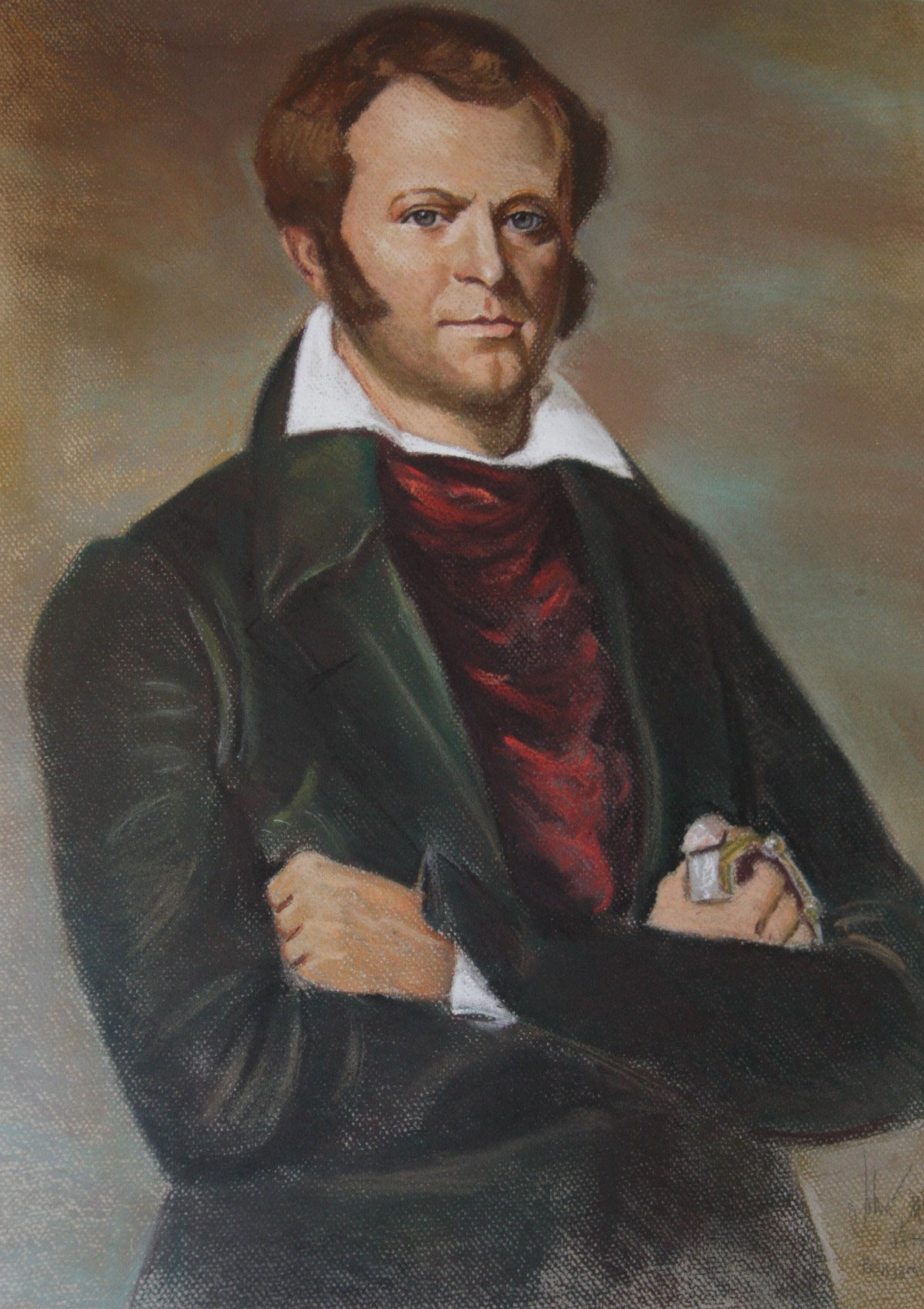
Similarly, historians often surmise that James Bowie may have only participated in one knife fight, a duel-turned-melee that left him with multiple gunshot wounds and stabbings.
He is believed thereafter to have worn a large sheathed knife, bolstering his reputation as a fighter and frontiersman. He held a leading role in the Texas Revolution, and stories built him into a folk hero.
Rambo Knife: Marketing Drove Design Changes
Hollow-handled survival knives were already in existence prior to Jimmy Lile’s Rambo knife, but it wasn’t until First Blood that their popularity took off.
Elias remembers the mid-to-late `80s as a time when the survival industry as we know it was just coming into its own, but it still wasn’t commercialized. There were military surplus stores, but there weren’t countless companies selling survival foods and gear. There were very few items that had been capitalized on as “survival” and specialized for that intent. Knives were one of those items, and so the Rambo knife was a hit with both adults and kids.
But then a funny thing happened. Manufacturers began producing hefty bushcraft knives that could stand up to any type of abuse, but often couldn’t cut. So, it became necessary for a survival knife to be “indestructible.”
Well, if you repeatedly baton a hollow-handled knife into a 16-inch log of seasoned hardwood, it won’t hold up. But that was never the intent, and Elias reiterated that it’s rare that you’d baton logs of seasoned wood in a survival situation. It’s far more likely that you’d be making feather sticks, cutting twigs off bigger downed branches and otherwise working with smaller wood for deadfall traps, spears for fishing and roasting small game, and the like.
Bowie Knife: Marketing Drove Manufacturing
The history of the Bowie design is murky, but by the 1830s a longer, thinner Bowie with a longer false edge but less pronounced clip was being shipped from Sheffield, England. They were often etched or stamped with slogans such as “Americans Never Surrender.” The English were able to hide the originating location of the knives by operating works named after American cities, and thus stamping their blades with NY or other U.S. designations.
For the Bowie, it was the increased reliability of larger-caliber revolvers that killed the craze. Knife fights became a less likely proposition.
Larger than Life
If the knives aren’t fantasy enough, the stories around them fill in any gaps.
For instance, in Rambo III, Rambo partners with the mujahideen to defeat the Russian Army in Afghanistan in order to free his captured commander.
Meanwhile, we have stories of James Bowie wiping out Indian raiding parties during an expedition to find the San Saba silver mine, joining the Texas militia, and furthering his fighting prowess in at least two battles of the Texas Revolution.
Legends Die Hard
The most enduring story of James Bowie’s demise is that he fell ill at the Alamo and could no longer lead his volunteers. He is said to have died in his bed after unloading his pistols into the advancing Mexicans.
The cinematic John Rambo lives on. The literary Rambo—well, you’ll just have to immerse yourself in the book to find out.
Keep Learning About Knife Designs
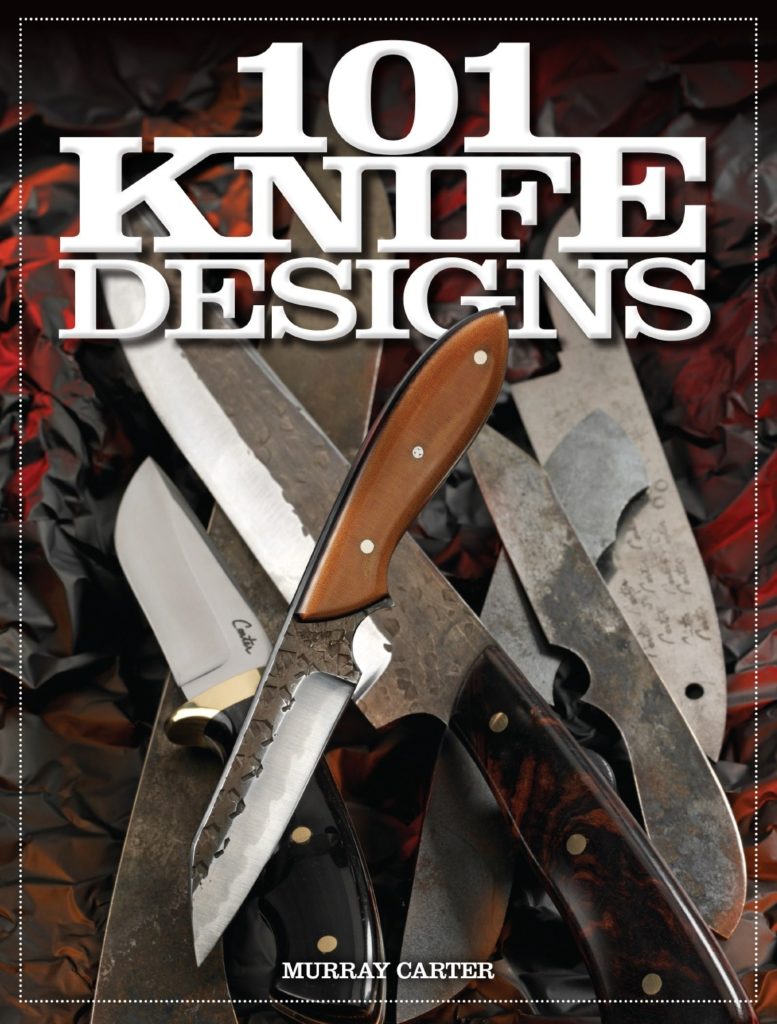
The history of knife design is the history of the knives themselves. Learn more about enduring knife designs in 101 Knife Designs, by renowned knifemaker Murray Carter. It’s available here at ShopBlade.com.
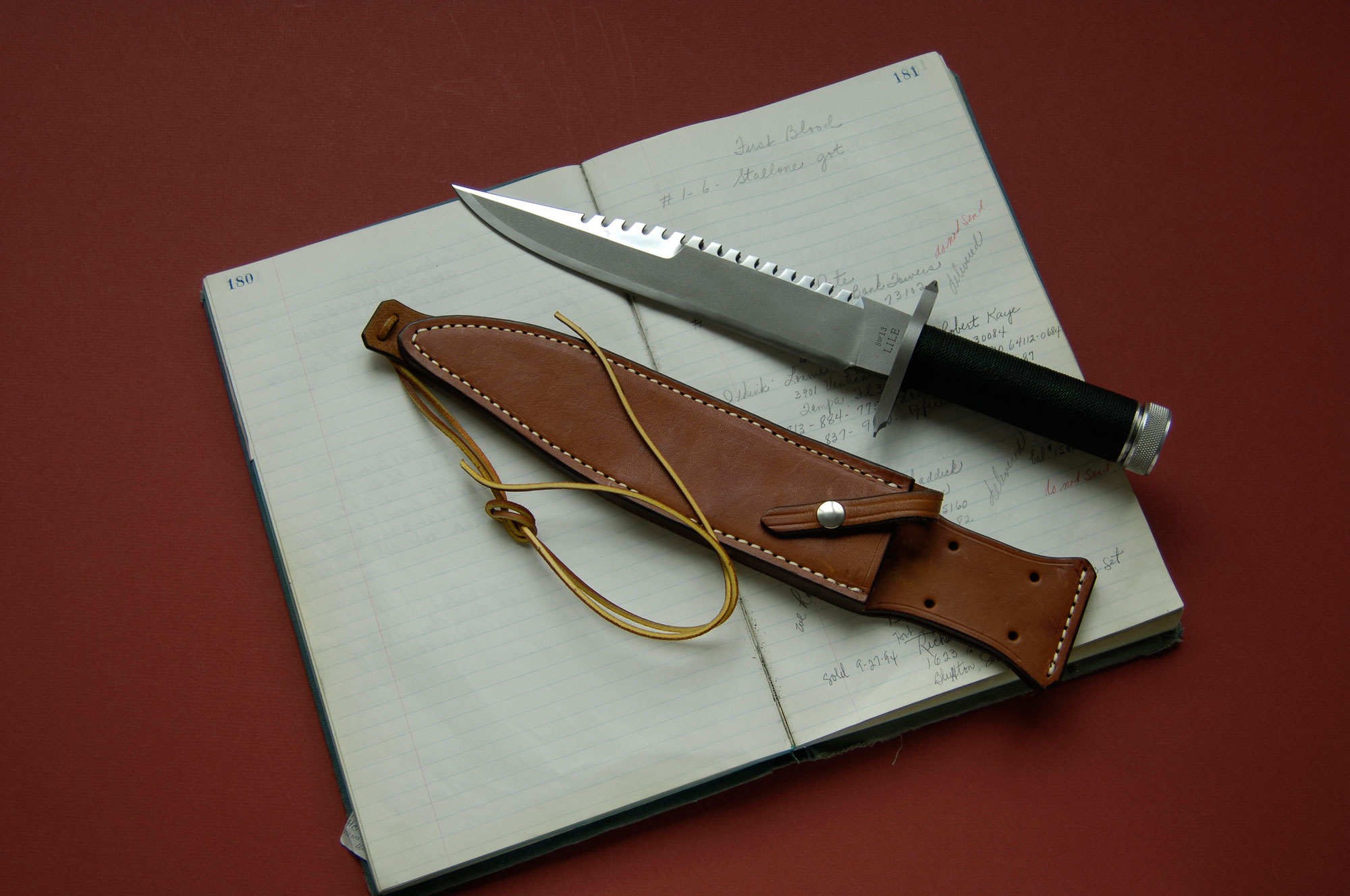
A 1-of-1 Raven First Blood model Lile originally made for Sylvester Stallone, the knife is in the collection of Randy Rousseau. It is one of four 1-of-1 Ravens of the Rambo movie knives—two by Lile for First Blood and Rambo: First Blood II, and two by Cutlery Hall-Of-Famer Gil Hibben for Rambo III and Rambo IV—that are in Rousseau’s collection.
The Raven First Blood has the same specs as one of the original 100 First Blood models—the only difference is that the flip side of the tang is marked “1 OF 1” over “LILE” over “RAVEN.” The 9-inch blade is 440C stainless steel with a non-glare matte finish and polished edges. The stainless-steel hollow handle is pinned to the tang and wrapped with 36 feet of duck-decoy nylon line.