Grand prizes include a free knife and pass to the 2018 BLADE Show in our Best Carved Jack-o’-Lantern Contest.There will be two Best Carved Jack-o’-Lantern Contest categories: Reader Favorite and Editor’s Choice.
Win your share of “ghoul’s gold” in Blademag.com’s first-ever Best Carved Jack-o’-Lantern Contest.
Halloween will be here soon, so now’s the time to break out that pumpkin and get to carvin’! While you’re at it and to add to the fun, you might as well enter our contest for the chance to win a ghoul’s gold in free prizes.
There will be two categories: Reader Favorite and Editor’s Choice. The grand prize winner in each category will receive a free knife and a free pass to the 2018 BLADE Show, the world’s largest knife show, June 1-3 at the Cobb Galleria Centre in Atlanta, Georgia. Three honorable mentions will win free tuition to the 5th Annual BLADE University, which is held the day before the 2018 BLADE Show begins and on show Friday and Saturday, also in the Cobb Galleria Centre. BLADE University is the most comprehensive array of educational classes on all things knife offered by any knife show.
The rules are simple: Carve a pumpkin in a manner that you think will get the most votes from our voters. And feel free to get creative! Though many choose to make scary looking jack-o’-lanterns, you can carve a pumpkin in just about any design you like. Take pictures of your carved jack-o’-lantern and a picture of the knife you use to carve it, include the knife’s model name and brand, and email it all to us. Visit the site daily to view the entries and vote for your favorite. Meanwhile, tell your family and friends to go to our page and vote, too. Remember: One vote per person only please! We will announce the winner on Halloween, Tuesday, Oct. 31.
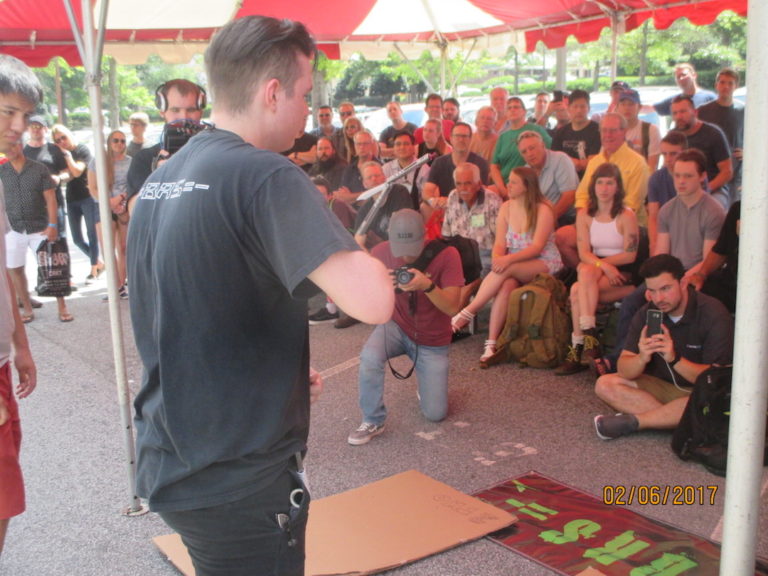
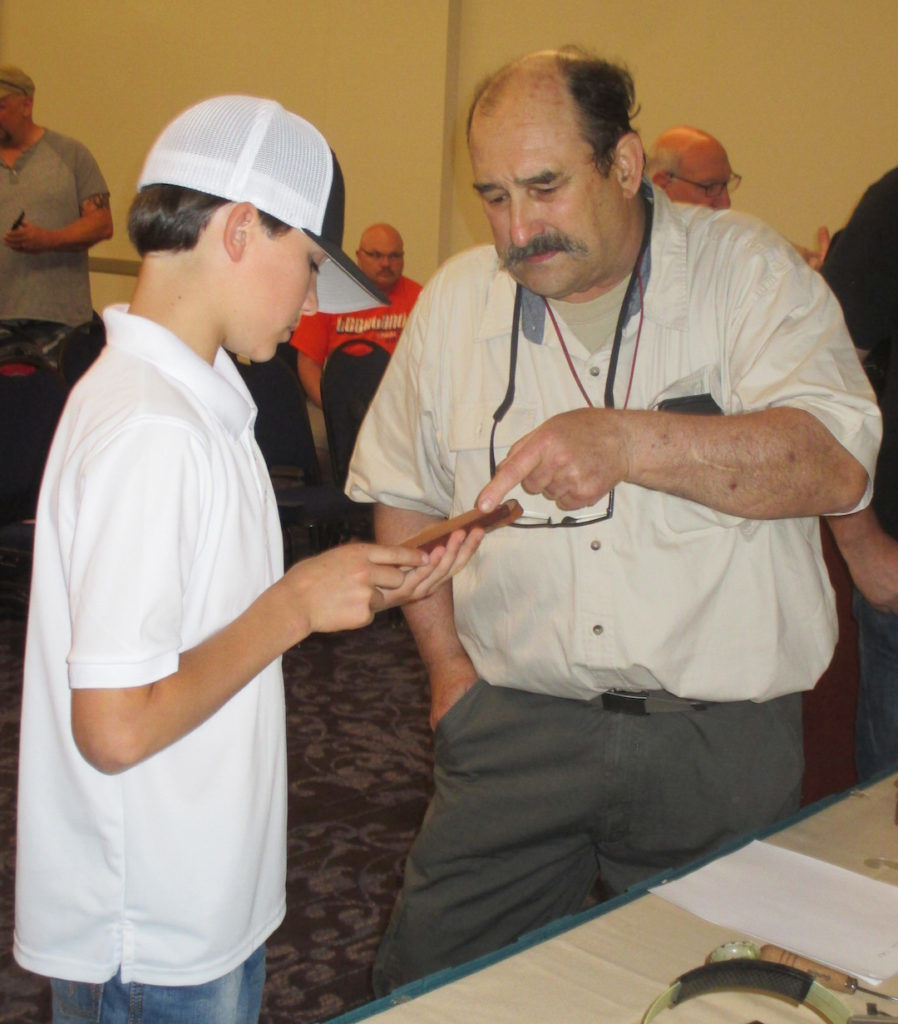
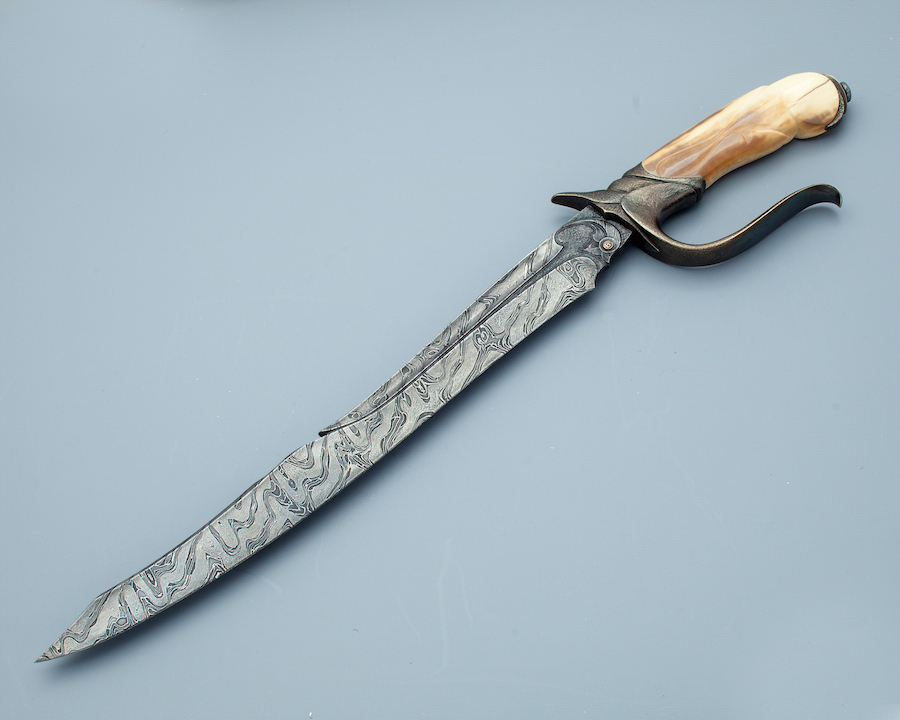
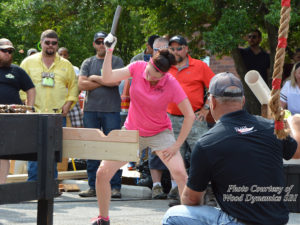
BLADE Show 2018 will host the 5th BLADE University with instruction from such teaching pros as ABS master smith Timothy Potier (right), here giving a few tips to budding knifemaker Zander Nichols.David Broadwell won Best Art Knife at BLADE Show 2017 for The Wanderer. (Ward image)The BLADE Magazine Knife-Of-The-Year® Awards will be named at BLADE Show 2018. The BLADE Magazine 2017 American-Made Knife Of The Year is the Kranos by Spartan Blades. (Ward image)BLADE Show 2017 hosted the Men’s and Women’s World Champtionship Cutting Competition. Nicole Worden shows her championship form in winning the Women’s Title for the second consecutive year.
BLADE Show 2018 will return to the Cobb Galleria Centre in Atlanta, Georgia, June 1-3 for the 37th annual rendition of what has become the seminal event in the world of knives. More exhibitors and patrons attend the BLADE Show than any other knife event. Every continent in the world with the possible exception of Antarctica will be represented. Custom and factory knives in all categories—tactical, kitchen, EDC, art, utility, combat, commemorative, antique, bowies, hunters, skinners, daggers, camp knives, assisted openers, flippers, balisongs, neck knives, folders, multi-tools, swords, tomahawks, sharpeners, knifemaking equipment, displays—if it cuts, BLADE Show 2018 will have it.
BLADE Show 2018 will be many events within the event. The most comprehensive array of classes on how to make, use, appraise, collect, sharpen and otherwise do most everything concerning knives will be presented in the 5th Annual BLADE University held the day prior to the show and show Friday and Saturday. Free demos including a balisong-flipping competition, the BLADE Show World Championship Cutting Competition coordinated by BladeSports International, on the use of swords, knife and tomahawk throwing, what to look for in custom knives and many more will be offered show Saturday and Sunday. The annual meeting of the American Bladesmith Society, a special knife collection
BLADE Show 2018 will welcome back the balisong-flipping competition.
Make plans to attend the 37th Annual BLADE Show now. For hotel and other information click here. For the BLADE Show newsletter with regular show updates, click here.
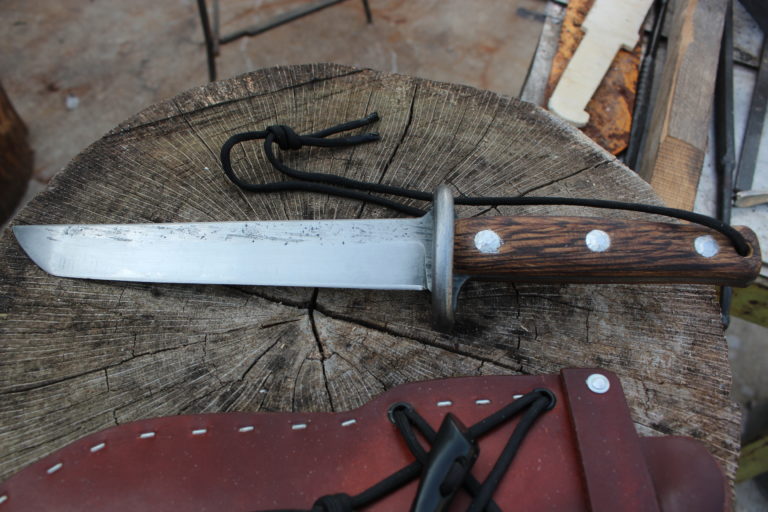
Survival instructor and host of The Weather Channel’s new series “SOS, How To Survive,” Creek Stewart is releasing a new addition to his line of Whiskey Knives. The 7.75-inch-bladed tanto in A36 carbon steel is designed by Hank Gevedon of Reptile Toolworks with continual input from Creek.
Creek Stewart of “Fat Guys In The Woods” fame is hosting a new Weather Channel series: SOS, How To Survive. He is also adding The Rising Sun to his line of Whiskey Knives.
Creek runs Willow Haven Outdoor in Anderson, Indiana, where he teaches survival skills, provides some survival supplies and especially enjoys partnering with American artisans to offer items of high quality craftsmanship at affordable prices. His Apocabox is a subscription-based collection of survival items that arrives at your door every two months. He also offers a monthly survival skill program. Creek was the star of “Fat Men In the Woods,” and is again working with The Weather Channel on the new series. He is the author of an young adult survivalist romance titled “Rugosa.” A follow-up to that is also in the works.
In “SOS, How To Survive,” Creek and other survival experts analyze a series of real-life survival situations. They discuss what happened, what was done correctly by the survivors or what went wrong. The show started Sunday, August 20 and is ongoing. Throughout Creek offers tips that can be used in survival situations.
Creek Stewart Hosts The Weather Channel’s New SOS Series
Meanwhile back in Mount Vernon, Kentucky, Hank and his crew are gearing up to roll small batches of The Rising Sun into production by early 2018. Like all Whiskey Knives, The Rising Sun marries the early American frontier spirit and looks with the precision of Asia’s strong cutlery tradition. All of the knives are asymmetrically ground (so remember to only sharpen one side and just strop the other). The A36 carbon steel allows for a hard outer edge that is sharp and holds an edge with a tough inner core that is flexible and stands up to the rigors of hard outdoor use.
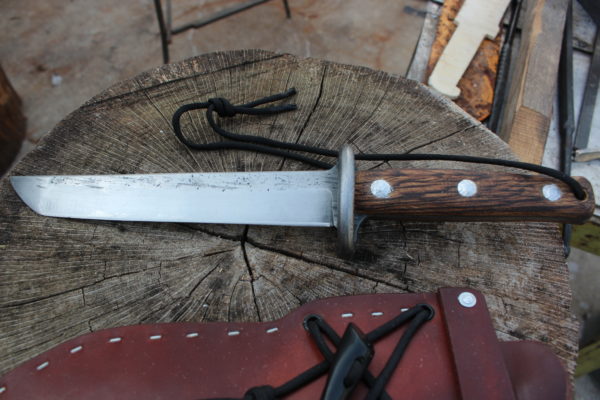
The Rising Sun from Whiskey Knives has a “ghost” guard that rides up the sheath, creating a striking visual when carried.
The handles are made from upcycled white oak whiskey barrel staves, which have already gone through a processing and aging. Fitting rivets are aluminum, and Whiskey Knives come with a 9-ounce belly leather sheath, stapled and dipped in paraffin wax. The Rising Sun’s sheath slides up through the knife’s ghost guard for an attractive-looking carry. MSRP: $189.
Contact Creek Stewart, Willow Haven Outdoor, 2867 N. 200 E., Anderson, IN 46012, www.creekstewart.com/whiskey-knives, on Facebook at Creek Stewart and on Instagram at @creekstewart.
A Digital Subscription To BLADE Is The Answer
You can read your digital issues of BLADE Magazine anywhere you have your phone, tablet or computer, and there’s no need to find storage for all your old issues.
If piling-up issues of magazines seems like a waste to you… If you feel like you don’t have time to read a magazine… If you like the stories we offer in BLADE, but want a more economical option, then a digital subscription is the answer. An annual subscription to BLADE is $17.98, $4 off the print price.
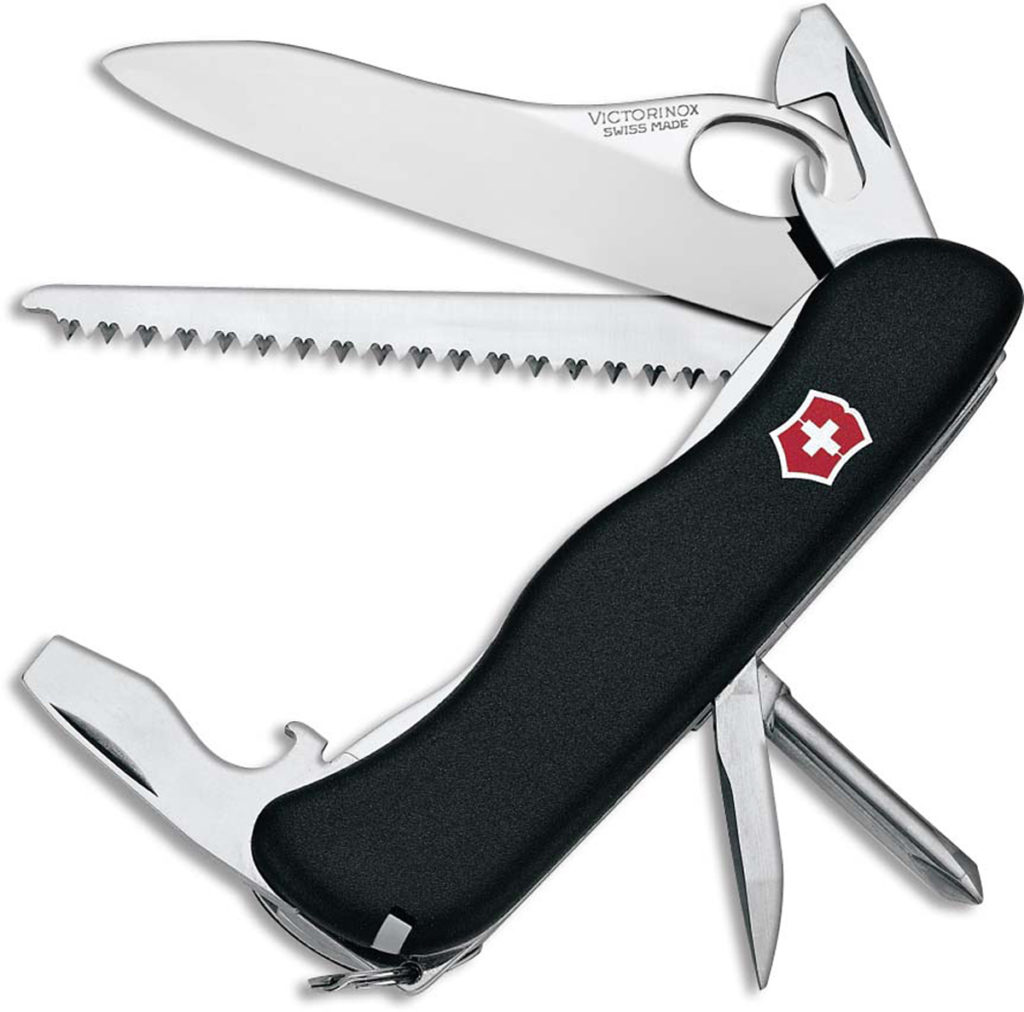
Troney Troler of Knives Plus likes the Victorinox Trekker as a fish knife—and it also has a bottle opener for your favorite ale.
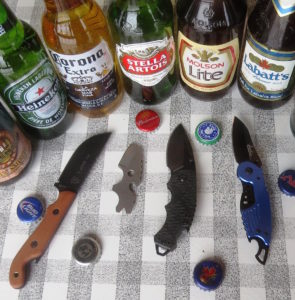
Opening your favorite beer will be on tap Thursday, Sept. 28, for National Drink Beer Day, and you can cap off the festivities with one of the latest in beer knives.
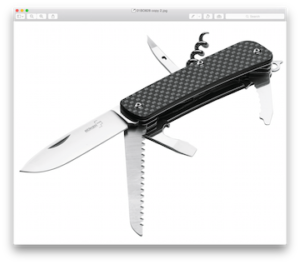
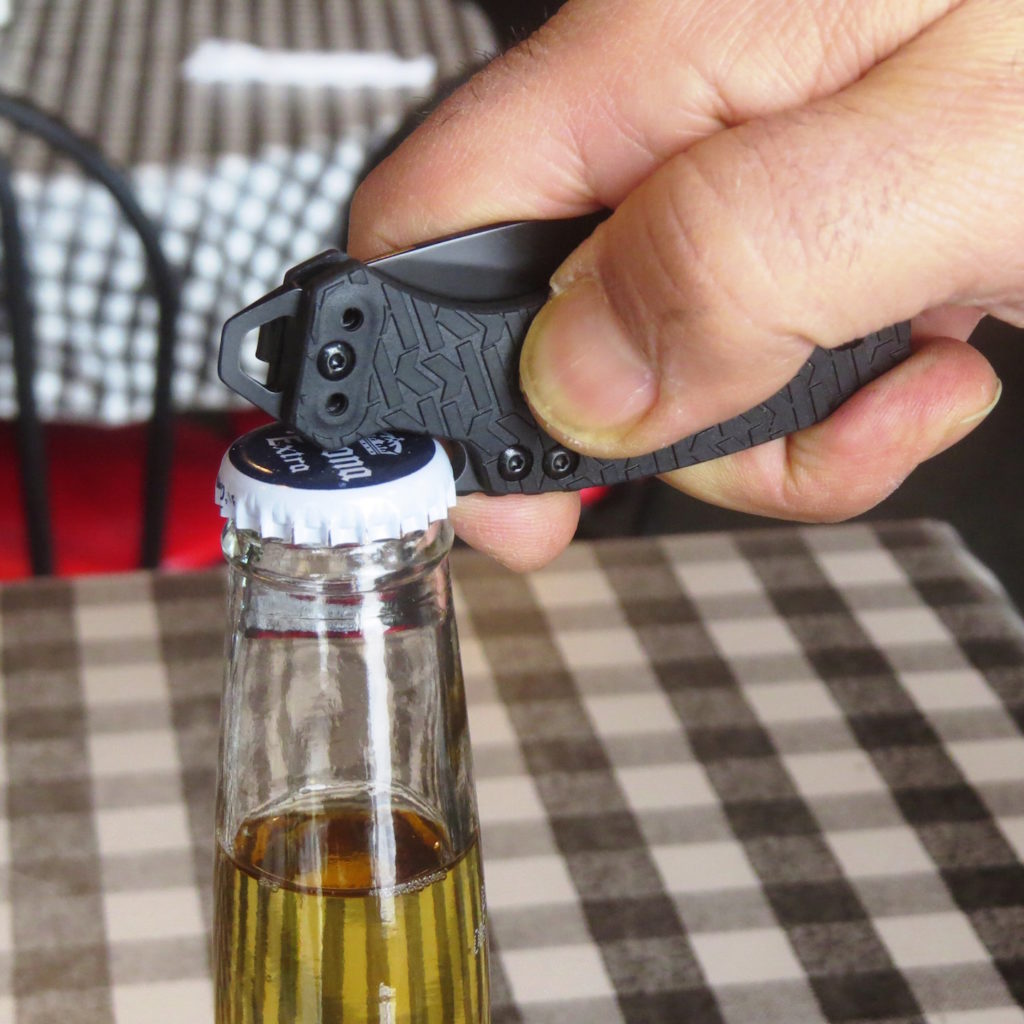
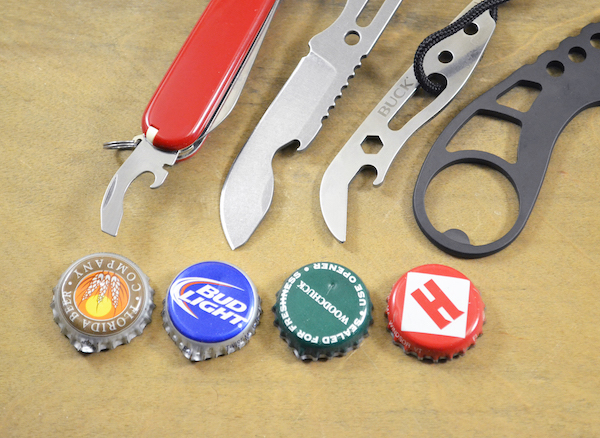
Boker’s Tech Tool takes the traditional bottle-can opener approach to beer knives.
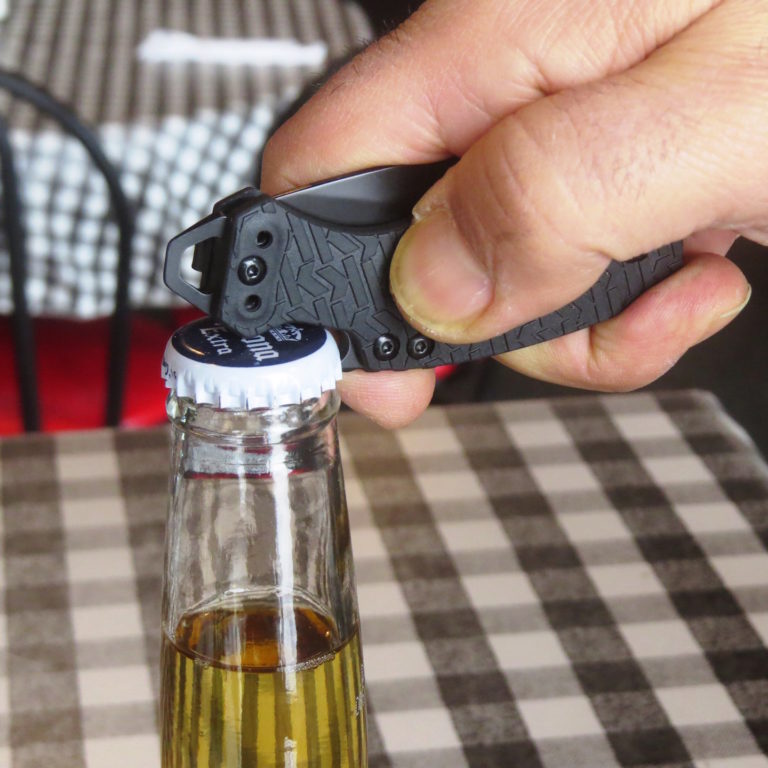
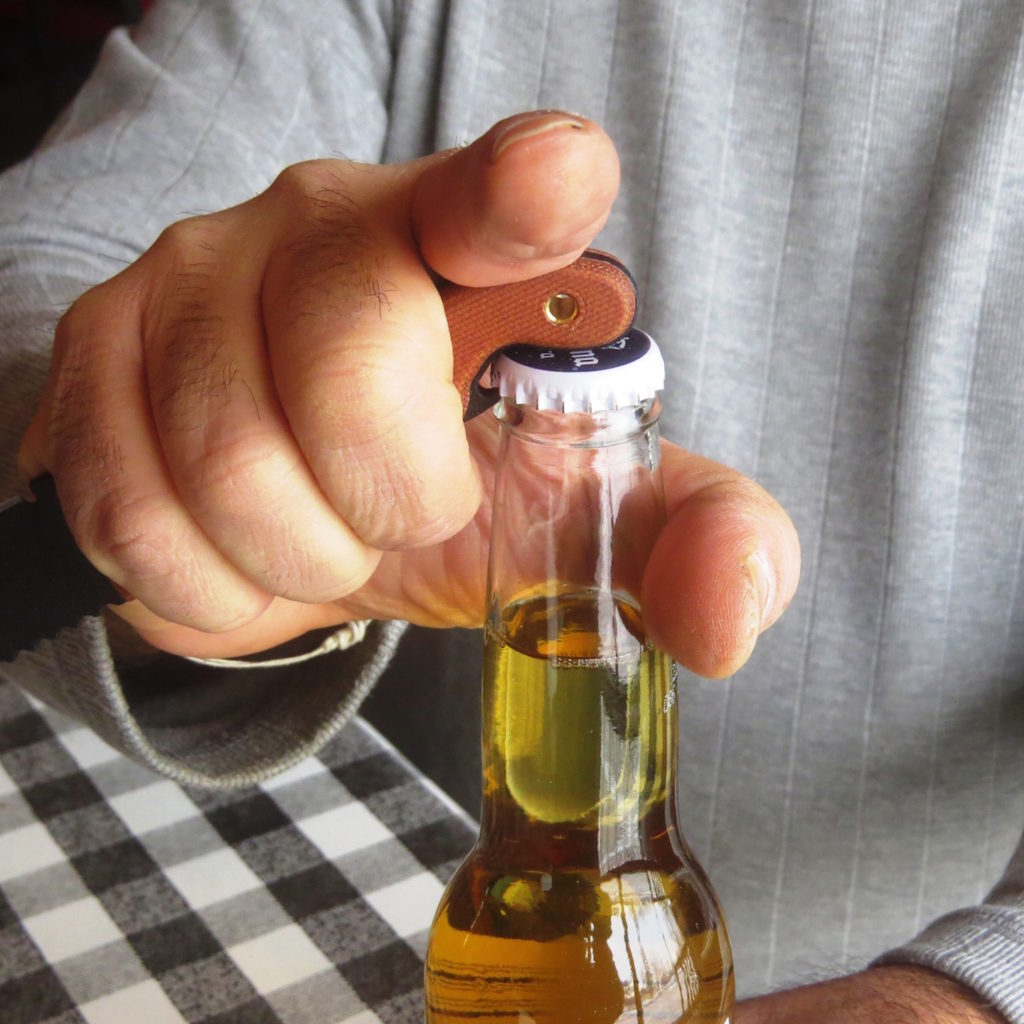
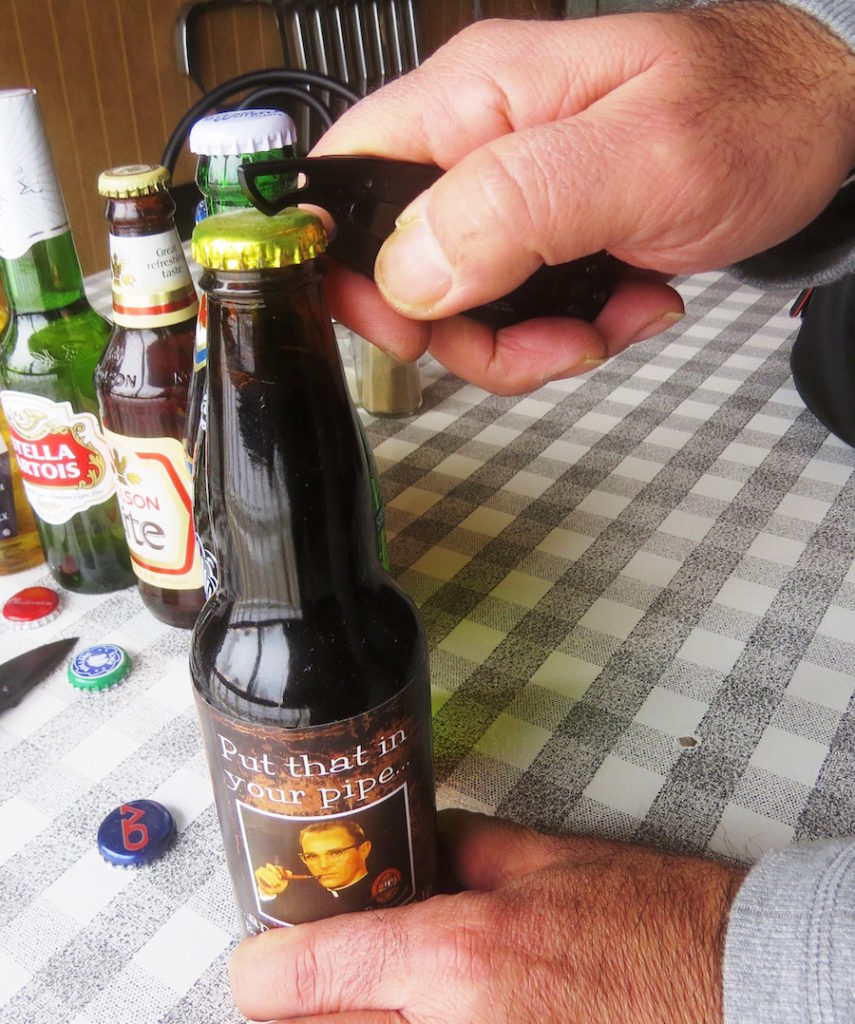
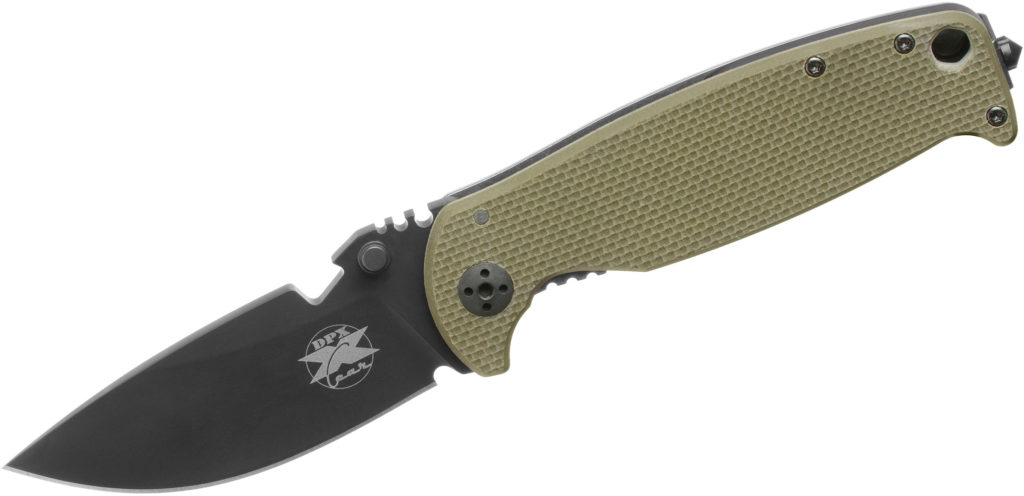
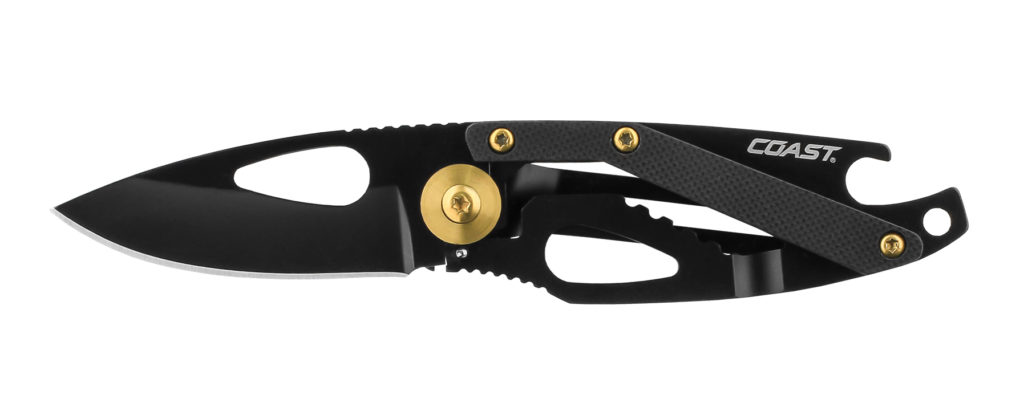
There are a number of new beer knives, from the traditional combo bottle/can-opening tools on Swiss Army and other multi-implement knives, to the more recent trend toward knives with the bottle opener in the butt of the handle or otherwise incorporated into the body of the knife. Examples of the latter style include the TOPS Pit Stop 3 and F.O.R.K. IT, Timberline Javelin BOK, the Kershaw Shuffle, Hops and Malt, Boker Plus Toucan, Coast FX200, DPx Gear HEST 2.0, White River Knife & Tool GTI 2.5 and Knucklehead, and Buck Selkirk Firestarter, Examples of the former include the Boker Tech Tool, Victorinox Walker and Trekker, and Great Eastern Cutlery Beer Scout Knife (a tip of the hat goes to the latter for the title of the knife category).
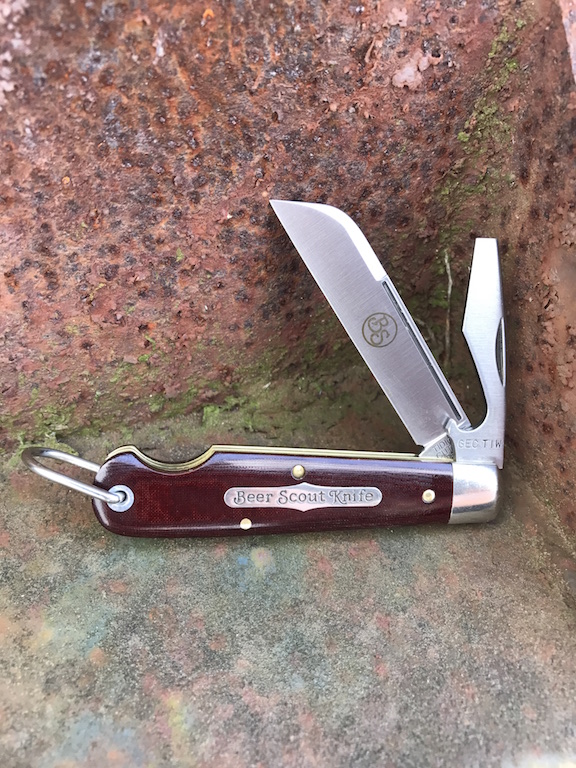
Since it provided the fizz for the headline, let’s start with the Great Eastern Beer Scout Knife. It employs a bottle opener of 1095 carbon steel to accompany a highly utilitarian sheepfoot blade. Since it’s carbon steel, be sure to wipe your bottle-opening implement and knife down after use and corrosion should be held to a minimum.
The White River Knife & Tool Knucklehead makes a great beer knife with a bottle opener in the butt and has a blade of CPM S30V stainless.
While we don’t think White River Knife & Tool was trying to insinuate anything about beer drinkers in general with the name of its Knucklehead beer knife, we DO like the name—Moe Howard of Three Stooges’ fame problem would, too—and we also like both the Knucklehead’s 2.875-inch blade of CPM S30V stainless steel and the bottle-opener in the butt. As Curly Howard might intone, get yourself a Knucklehead and “whoop-whoop-whoop” on down to National Drink Beer Day.
The preceding two are but a sampling of the latest beer knives. Check out those herein and be sure to drink responsibly and let someone else drive on National Drink Beer Day!
The Kershaw Shuffle has the bottle opener in the butt of the handle for easy opening.The bottle opener on the TOPS Pit Stop 3 is on the handle spine and should be used when the knife is sheathed.The Timberline Javelin BOK has a long handle for great leverage in popping your top.Four beer knives, from left: the TOPS Pit Stop 3, Boker Plus Toucan, Kershaw Shuffle and Timberline Javelin BOK (Bottle Opener Knife).The Beer Scout from Great Eastern Cutlery has a traditional bottle opener and a sheepfoot blade of 1095 carbon steel.Cap off your day with the bottle openers of, from left, the Victoinox Walker, TOPS F.O.R.K. IT, Buck Selkirk Firestarter and White River GTI 2.5.KnifeCenter’s Jason Kunkler used the bottle opener on the blade spine of the DPx Gear HEST 2.0 while on vacation in Peru. He did not mention whether he opened a cold one at Machu Picchu, however.The Coast FX200 is one of the new breed of beer knives with the bottle opener in the butt.
Contingency by Winkler II Knives is well designed for concealed carry. The sheath system offers a variety of carry options and the curved handle easily accommodates positive or 90-degree reverse grip. Contacts for Winkler II Knives are listed at the bottom of this article.
Contingency by Winkler Knives II is a concealable personal protection knife with a sheath system that allows for inside- or outside-the-waistband carry. (You’ll want to order a left-hand-draw sheath for right-hand IWB draw.) The 3 1/2-inch blade on Contingency is made of 80CrV2 steel and has thumb-grip gimping. The knife has a tapered, skeletonized tang and measures 7.625 inches overall.
The curved-handle design is well-suited for easy draw and positive grip or 90-degree reverse-grip positioning. It comes in your choice of walnut, maple or Black, Tan or Green Micarta. Rubber is available but is not recommended for concealed carry. The MSRP is $300. You can also order yours with sculpting, $15; sculpted WASP (air injection), $30; or sculpted multi-camo, $30.
Daniel Winkler’s Early Frontiersman Style
Daniel Winkler, along with wife and leather craftswoman, Karen Shook, started Winkler II Knives in 2016. Daniel’s ever-present love of early American history intensified when he started using black-powder weaponry to extend his hunting season. He added to his 18-century woodsman outfit by making powder horns and other accessories, and in 1975 he made his first knife. He was a member of The American Mountain Men and other historically strict reenactment groups, and began selling knives at gatherings, called rendezvous. The money he made allowed him to upgrade his car-wheel forge to a hand-cranked model. By 1988 he was making knives full time.
Daniel Winkler, co-owner of Winkler Knives II with his wife, Karen Shook, is based in Blowing Rock, North Carolina.
When he’d been at it for nearly two decades, he spent a few years entering cutting competitions. He says those experiences taught him more than he had learned in all the other years combined. Not only did he improve his knife-handling skills, he came to understand what made a knife perform in a wide variety of tests. Cutting competitions are timed events that involve a number of stations at which the maker and his knife must cut, say, a hanging rope, an upright straw, a row of water bottles, a cardboard tube, a pool noodle and then chop through a piece of lumber. The blade either cuts or it doesn’t.
Now he establishes the use of the knife before anything else, because no single knife can do all things well. He is honest about how knifemaking is always changing, sometimes advancing, sometimes failing.
In 1992 Daniel had the opportunity to make the knives and tomahawks used in the movie “The Last of the Mohicans.” His pieces also made appearances in 2012’s “Zero Dark Thirty.” It was his work on “Mohicans,” however, that would send him on the path to making knives and combat axes for today’s Special Operations personnel, while continuing to serve the hunter-outdoorsman community.
Contact Daniel Winkler, Winkler Knives II, P.O. Box 2166, Blowing Rock, NC 28605; 828-295-9156; [email protected]; www.winklerknives.com and on Facebook at Winkler Knives.
A Digital Subscription To BLADE Is The Answer
You can read your digital issues of BLADE Magazine anywhere you have your phone, tablet or computer, and there’s no need to find storage for all your old issues.
Save $4 off the print price of a annual subscription to BLADE Magazine with a digital subscription. If piling up issues of magazine seems like a waste for you… If you feel like you don’t have time to read a magazine… If you like the stories we offer in BLADE, but want a more economical option, then a digital subscription is the answer. An annual digital subscription to BLADE is $17.98.
Once upon a time, two little boys were smashing their toy cars with hammers. An errant swing caused a brain injury that left one of them without his hearing. Thirty-four years later the deaf boy grew up to be a man who swings a hammer in the forge. He holds no grudges. They were just boys playing, neither knew any better. “I’m a forgiving person,” wrote Norman “Buddy” Thomas of Quapaw, Oklahoma, in a Messager note. Today Buddy is a graphic artist and runs a screen printing shop by day, making knives part-time by stock removal and forge. He also strives to set a positive example in the deaf community. So, in essence, the hammer that took a bladesmith’s hearing gave him his craft. Another loss would wound Buddy further, but he is grateful, always grateful, for the love of his family and the means to create beautiful knives.
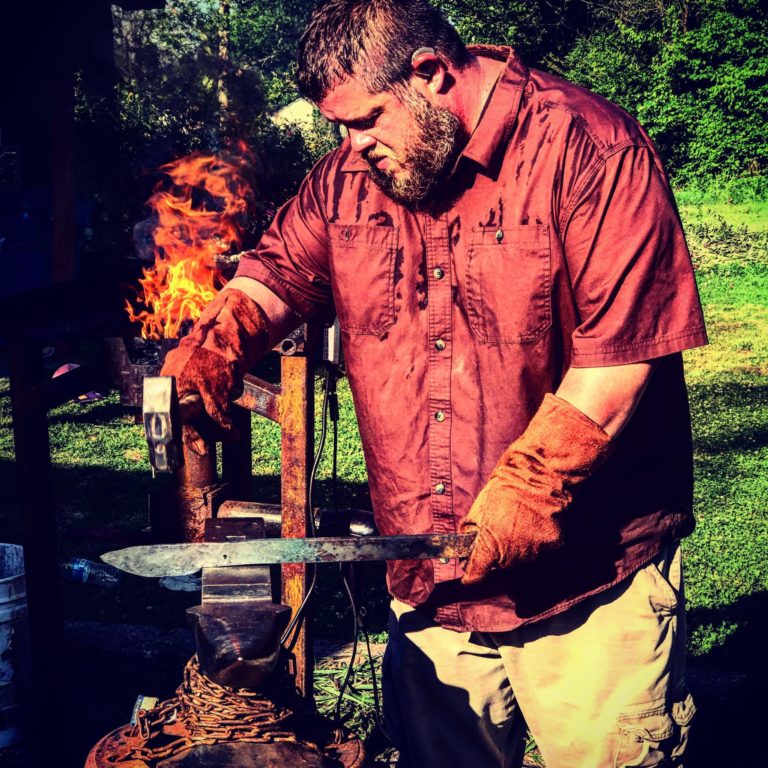
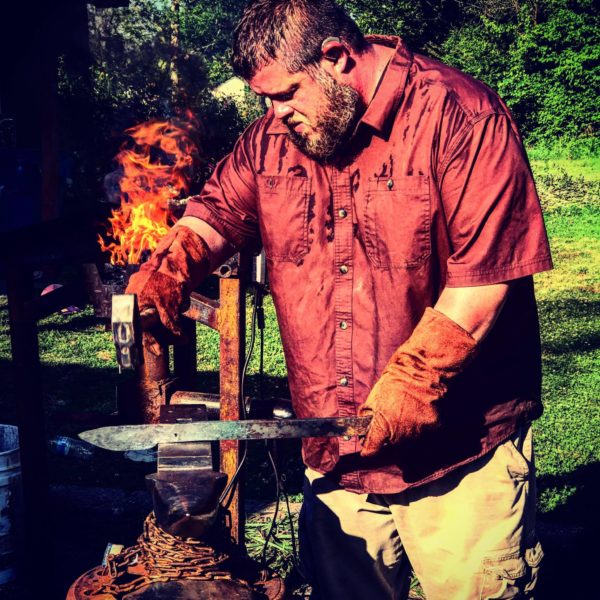
Norman “Buddy” Thomas of Tree of Liberty Bladecraft and Forge lost his hearing when he was accidentally hit in the head with a hammer. Today he’s the one wielding the hammer as he forges knives that run from frontier-style to post-apocalyptic.
Buddy was born in 1980. He and a neighbor boy were beating on their Hot Wheels with a hammer. Buddy was 3, the other boy, 5. The other boy’s swing went wild, hitting Buddy in the head. But a baby’s crown is not as forgiving as a die-cast model car. He irreparably lost his hearing. At first his parents tried the speech therapy route. Buddy began displaying social issues. It doesn’t seem like a bad idea to teach a non-hearing child to speak, but it confuses people who can hear and who do not realize the person is deaf. “No matter how well you can hone the speaking skills of a deaf individual, one thing is concrete certain, you can’t fix deaf,” Buddy explained.* He has one ear that is slightly better than the other and a hearing aid can maximize what remains, but it can’t cure the problem.
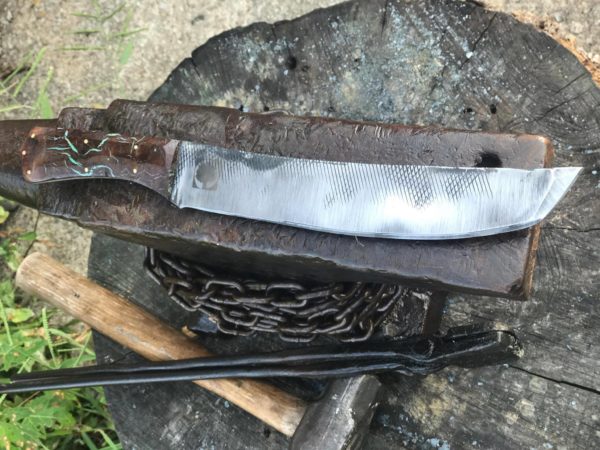
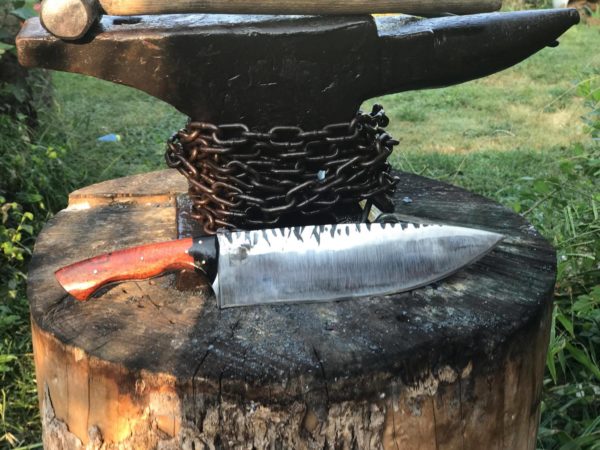
Buddy Thomas’ tanto chopper is made from a farrier rasp drawn out to 15 inches overall with a 9.75-inch blade length. The frontier-style coffin-shaped handle is stabilized maple burl with turquoise casting. Maker’s list price: $375. Contacts for Tree of Liberty Bladecrafting and Forge are listed at the end of this article.
Pre-kindergarten began for Buddy in an all-deaf environment. Throughout elementary and middle school Buddy was educated through a public-school system that focused on teaching deaf students to speak. His parents saw that he needed a change and enrolled him in Oklahoma School for the Deaf in Sulphur, which, funny enough, is one town over from where Jantz Supply is located in Davis. Jantz has been offering knifemaking supplies to craftsmen worldwide for 50 years. It was at OSD where Buddy flourished and his interest in metalwork began.
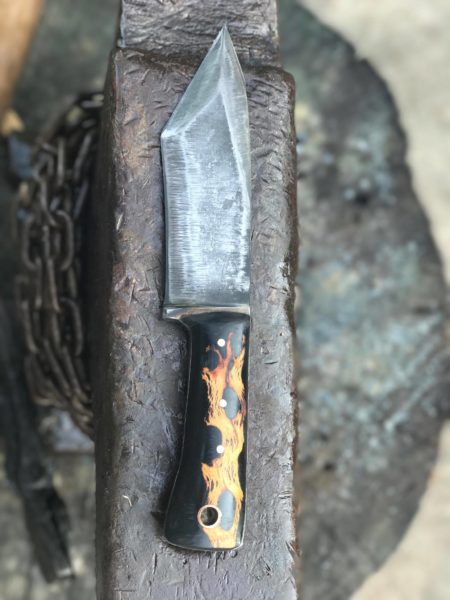
The American tanto hybrid from Tree of Liberty Bladecraft and Forge is made with 5160 spring steel. The blade length is 5.75 inches; overall length is 9.75 inches. The handle material is stabilized cholla cactus cast in black epoxy. Maker’s list price: $350. Contacts for Tree of Liberty are listed at the bottom of this article.
Meanwhile, at this time there were not a lot of American Sign Language courses for Buddy’s parents, but he taught them what he learned. His sister, Kalley, picked up on it quickly. Today, hearing parents are teaching sign language to their pre-verbal hearing children. Science is showing, in all mammals not just human babies, that possessing a non-verbal means of communication minimizes frustration and thereby aggression. Later these babies and, say, puppies who are taught means of communicating as early as three to four weeks of age, are more confident and better able to cope with the inevitable challenges of life. There are also positive physiological benefits. Buddy said that it was easiest to conduct a non-sign conversation with his parents, but even now he uses ASL frequently with his father. His mother passed away after an illness in 2014. Both of his parents encouraged Buddy tremendously, and his father, along with his fiance, June, remains one of his biggest supporters.
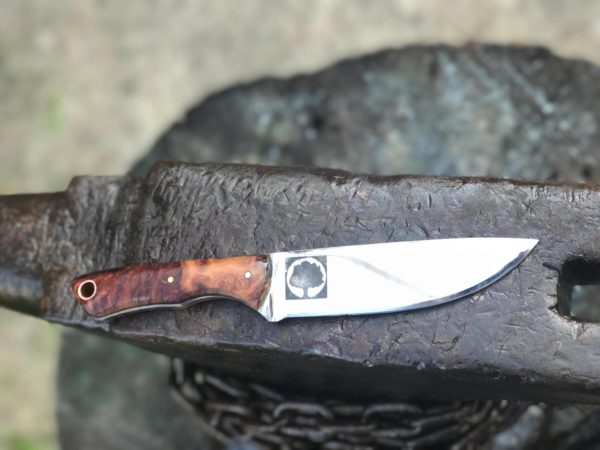
This small hunter has a 5.75-inch blade of 1095 high carbon steel. The overall length is 8.75 inches. The handle material is stabilized Australian red mallee burl cast in blur Alumilite by Lucas Free. Maker’s list price: $350. Contacts for Buddy Thomas at Tree of Liberty Bladecraft and Forge are listed at the bottom of this article.
Buddy didn’t realize how much his machine shop/metal working class would impact his life. He was focused on going to college. He graduated from OSD as a Salutatorian with a 4.0 grade point average, serving as president in the local National Honor Society. “The only mismatched puzzle was my machine shop/metal working class, which I loved because when I tried the first semester out in that class I got hooked to the welding and metal fabrication,” Buddy wrote. His instructor Dwayne Bryant spent hours of one-on-one time with him, helping him develop his welding skills. Each advancement in his metal fabrication skill fueled his creativity. “In fact, my very first nonfunctional knife was made in that class in 1997 when I was just 17 years old,” he recalled. “A piece of mild steel plating, ground into the shape of a knife roughly 8 inches overall. A DeWalt angle grinder was used to taper a bevel and create an edge. The handle was from a can of spray-on rubber. I wish I still had it. Well, after that it would be years before I attempted another knife build again.” Buddy sprinkled laughing emoticons throughout that description.
“It was pretty much just a plain little skinner, probably only an inch wide but at least a quarter-inch thick,” he noted with tears of laughter.
Buddy was also the co-editor of the school newspaper along with his good friend James Mitchell, who in his own right has had an impact on the deaf community supporting various organizations. Then it was off to major in visual communications art at the University of Oklahoma (UO) in Norman. “I was one of only three deaf students on campus: a football player recruited from Lee’s Summit, Missouri, a French major and myself, an art major,” Buddy wrote, revealing how isolating it can sometimes be for a deaf person in a hearing world.
Buddy Thomas’ large bushcraft chopper is made from reclaimed early-1900s saw mill high-carbon steel. It is 16 inches overall with a 10.25-inch blade. It is 2.75 inches wide at its widest point. The handle material is figured cedarwood with a black epoxy bolster guard. Maker’s list price: $425. Contacts for Tree of Liberty Bladecraft and Forge are listed at the bottom of this article.
But Buddy got to work, putting his art and journalism experiences into play as a cartoonist and copy editor for The Oklahoma Daily, the school newspaper. “My childhood dream was to be a comic book artist. Of course, dreams change as we go through life,” Buddy noted. He grew up around several talented comic artists, including Steve Erwin, the original penciler for DC Comics’ Deathstroke the Terminator, a character portrayed on the television show “Arrow.” “I had originally wanted to attend the Joe Kubert School of Cartoon and Graphic Art in Dover, New Jersey, but I was persuaded to apply to UO and was accepted, so I went that route.” It was nice to have UO on his resume, but by the end of his first semester all the visual communications art slots were filled and he was assigned to a painting major. That was definitely not where he wanted to take his art, so he did not return, despite his good grade standing.
Buddy now manages a screen print shop and does graphic designs and color separations. “Part of my time I’m out running the automatic press and printing T-shirts, and the other part of my time I’m cooking up some wicked graphics, either for the storefront or a customer order,” he wrote. “At night and on weekends I work my forge and knife shop.” Care to guess what the name of the print shop is? Metal Fab Trophy and Screen Printing. You don’t have to hit Buddy over the head for him to get that he may be exactly where he was meant to be all along. The name he chose for his business: Tree of Liberty Bladecraft and Forge, invoking the freedom that he experiences through his creativity.
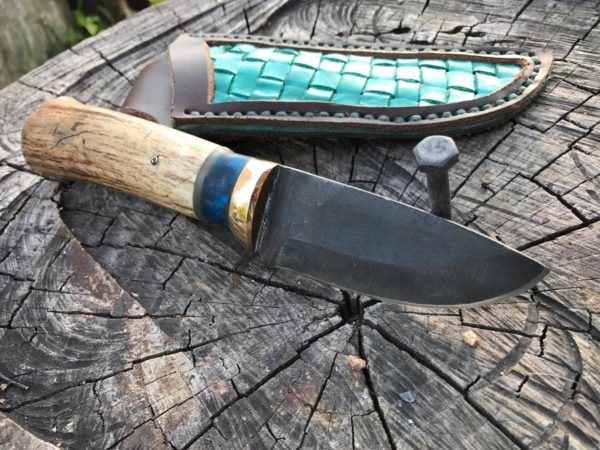
This Buddy Thomas creation comes with a turquoise leather weave sheath. It is made from CPM S90V steel, 9.5 inches overall with a 4.75-inch blade. The handle is elk antler with a rustic coffee stain and a blue Alumilite spacer and solid brass guard. Maker’s list price: $575. Contacts for Tree of Liberty Bladecraft and Forge are listed at the bottom of this article.
Buddy’s design skills do help him when he’s working up a pattern for a stock-removal knife on card stock, “but when forging, it’s all in the eye,” he wrote. Buddy started in stock removal and worked his way into forging by trial and error with lots of research and time spent learning from other forge artists. “A guy I ran into in a forum a few years back—his name was Ethan Paul Dobbins—he sent me tons of material to read up on. Another was a lifelong friend who did some blacksmith work as a tool maker, James Moore. I have actually learned most of my blacksmithing skills at the anvil from James, who was there to help me correct my hammering form and help guide me through and recognize heat requirements and steel reactions,” Buddy explained.
Buddy can read lips and his hearing aid, although not the best, helps him hear a little. “James is as hearing as they come! Maybe selectively deaf at times,” Buddy joked with a laughing emoticon. “I can read him pretty well, but sometimes have to have him repeat himself.”
Deaf bladesmith Buddy Thomas and his hearing wife, Sundae, have two daughters, Anna, 12, and Kaity, 9.
Buddy’s wife, Sundae, is also hearing. They met at a football game in Picher, Oklahoma, and were married in 2001. She did not know sign language at the time, but she has learned from Buddy. They have two daughters, Annaleigh, 12, and Kaitlynne, 9, who also know sign language. Their first child, also a girl, Daisy Elizabeth, would be 15 now, but the couple lost her two weeks after she was born, to infection. “She passed in my arms,” Buddy wrote.
Buddy and Sundae Thomas lost their first child, a daughter, at 2 weeks of age, due to infection. Buddy lost his hearing at the age of 3; his wife is hearing.
“She was beautiful. I always wonder what she might have been like as their older sister. I’m so grateful and thankful for those two.”
If you converse with Buddy for any length of time, you will sense the sad undercurrent of the tragedies in his life, but you simultaneously get the feeling of a silent, gentle but unwavering determination to not just live, but thrive. He doesn’t minimize the impact of his losses—his hearing, his daughter, even his childhood aspiration to become a comic strip artist though he admits to outgrowing that aspiration—but the Tree of Liberty gives him more than solace; it restores his life-battered spirit.
He enjoys the stock-removal method of knifemaking, but whenever possible, he prefers to forge. He started on a coal forge and still loves it, but he often goes to the propane forge because it’s quicker and cleaner. “Most CPM steels are difficult to forge,” he observed. “Stock-removal methods work much easier for such jobs. Most of my stainless and powder steels I apply the stock-removal method to, but my high carbons benefit me better at the forge. Ultimately, they all go in the forge for heat treating.”
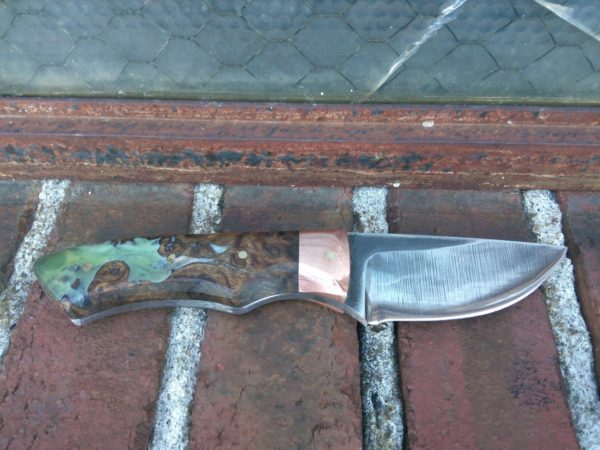
This Tree of Liberty Bladecraft and Forge creation has a 4-inch Elmax steel blade and an overall length of 8.75 inches. The handle material is rare black nargusta cast in a jade green Aluminite by Rob Carper of RC Innovations. The bolster is copper. Maker’s list price: $475. Contacts for Buddy Thomas listed at the bottom of this article.
Buddy’s knifemaking style swings from old frontier to post-apocalyptic utilizing reclaimed steel. He also makes everyday carry knives and has a preference for using copper bolstering. “One of my biggest goals as a maker is to get a prop knife made for ‘The Walking Dead’ show,” Buddy notes. His forging buddies, Aric Davis, Ryan Edwards and Louis Stark, often get together for Sunday forge-ins. In other words, the forge is the hearth of Buddy’s heart.
“I would not be where I am in this world if I did not have the deaf community behind me, specifically my best friend who has always had great words of encouragement,” Buddy said of a deaf woman who is like a sister to him. He recommends that deaf people who are interested in learning about knifemaking and forging do so through a deaf school or access vocational rehabilitation departments in their state for guidance and research. The next step is to seek out experienced bladesmiths who offer classes in their shops. “A deaf individual would acquire an interpreter to accompany them to the classes. It is actually my goal to establish a stronger bridge in that direction,” Buddy added. His plan is to work toward his American Bladesmith Society journeyman smith rating and eventually his master smith rating so he can offer classes to other deaf people. He knows they would be more comfortable learning from a deaf instructor. Three-way conversations with an interpreter can lead to a loss in focus.
Buddy lives out his favorite quote, attributed to Helen Keller: “Optimism is the faith that leads to achievement. Nothing can be done without hope or confidence.”
*Editor’s note: For this interview Buddy and I Messaged about using Facetime, but we felt it would be easier for him if we Messaged. It forced me to slow down and try to pick up on all of those nuanced things that happen even in phone conversations, like tone. In the end, Buddy and I both felt that he had told his story and I had heard his story in all its bittersweet humanness.
Buddy’s Links for Deaf-Related Services And Assistance
September is National Deaf Awareness month. Here are a few organizations that deaf bladesmith Buddy Thomas of Tree of Liberty Bladecraft and Forge in Quapaw, Oklahoma, recommends.
Empowers Oklahomans with disabilities to live healthy, active, smoking-free lives.
A Digital Subscription To BLADE Is The Answer
You can read your digital issues of BLADE Magazine anywhere you have your phone, tablet or computer, and there’s no need to find storage for all your old issues.
If piling up issues of magazine seems like a waste for you… If you feel like you don’t have time to read a magazine… If you like the stories we offer in BLADE, but want a more economical option, then a digital subscription is the answer. An annual subscription to BLADE is $17.98, $4 off the print price.
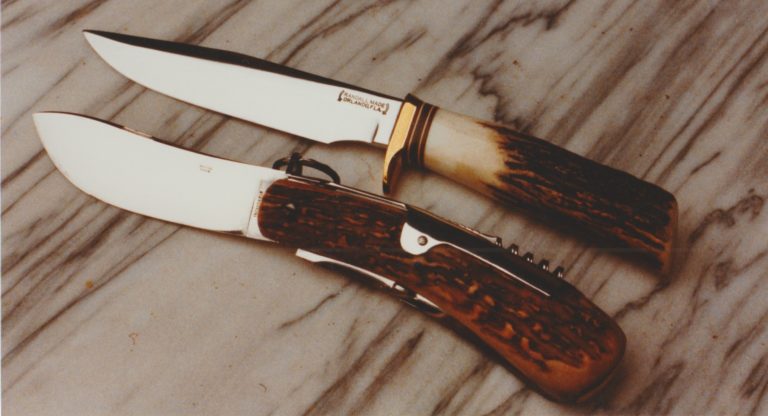
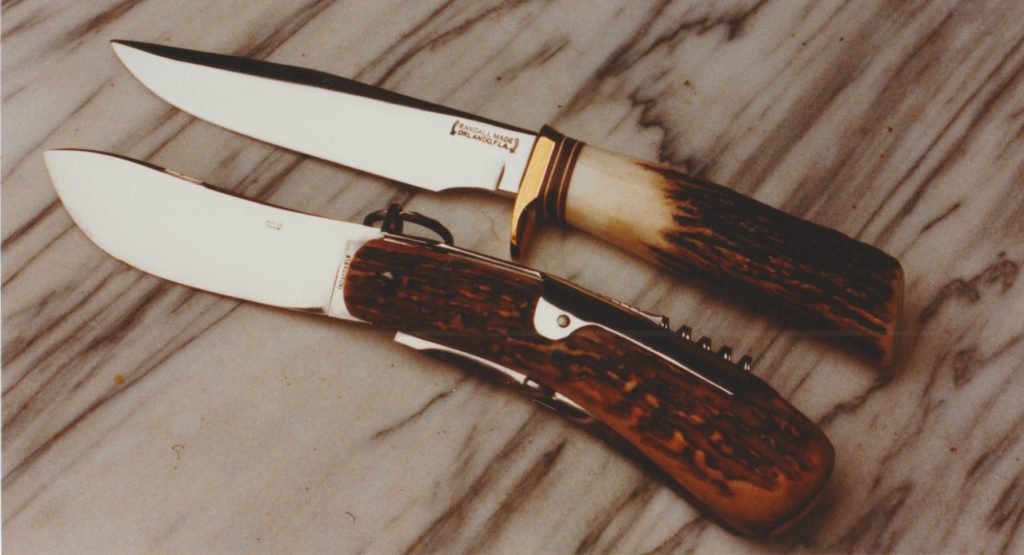
Two of Shelley’s early favorite knives: the Hermes folder (right) and a Randall.
While there have been many celebrities in and out of show business embraced by the custom knife community, none embraced it in return and then some as did cutlery’s comic, Shelley Berman. Actor, comedian, writer, poet, professor and knife collector, Berman passed away quietly on Sept. 1 at the age of 92, but not before decades of touching the custom knife community like no one else.
Known worldwide beginning in the late 1950s as a top comedian, Berman recorded six comedy albums, including 1959’s Inside
Shelley Berman, the first non-musical recording to win a Grammy Award. Three of his comedy albums went gold and he was the first non-musical comedian to appear in Carnegie Hall. According to an Associated Press story, Berman was “a pioneer of a new brand of comedy that could evoke laughter from such matters as air travel discomforts and small children who answer the telephone. He helped pave the way for Bob Newhart, Woody Allen, Jerry Seinfeld and other standup comedians who fashioned their routines around the follies and frustrations of modern living.”
Shelley also starred on stage and in musicals on Broadway, had several film roles and continued acting into his mid-80s, appearing as Larry David’s dad on TV’s Curb Your Enthusiasm, and also on Boston Legal and Grey’s Anatomy, among others. He retired in his 80s after 20 years of teaching humor writing in the Master of Professional Writing program at the University of Southern California.
Shelley Berman was known worldwide for his comedy in the 1950s and won the first ever Grammy Award for a non-musical album—of comedy, naturally enough—in 1959.
of custom knives. All that changed when he was working in Las Vegas in the late 1970s.
It was there he saw his first custom knife at a knife show in the old Sahara hotel and casino. He wasn’t sure custom knives were for him until he subscribed to the American Blade magazine—now BLADE® Magazine. “When I saw [the stories in the magazine] I realized, my God, I’m not crazy, I’m a collector!” he said in an interview with Dave Harvey in the December 2009 BLADE. “I had all these knives in my drawer, so I ‘came out of the drawer.'”
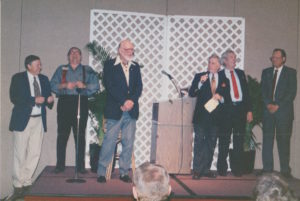
But it was more than just the knives that attracted both Shelley and Sarah—it was the makers themselves. The Bermans admired the work of such cutlers as Cutlery Hall-Of-Famer Buster Warenski, Warren Osborne and Larry Fuegen, to name a few. The Bermans also came to know the wives of the makers as well, such as Dorothy and Jim Ence, Betty and Ted Dowell and many more. The Bermans were regular visitors to the Art Knife Invitational, the California Custom Knife Show, the Solvang Custom Knife Show and other knife events. Each April during the Solvang Show there would be a barbecue, and for many years Shelley emceed the post-dinner awards ceremony. In 1996 he did a comedy routine to headline the banquet for the 25th anniversary Knifemakers’ Guild Show—now the International Custom Cutlery Convention (ICCE)—at the Marriott Hotel in Orlando, sparing no one from a comedic jab or two, including Cutlery Hall-Of-Famers Bob Loveless, A.G. Russell, Frank Centofante, D’ Holder and Dan Dennehy, Ted Dowell and others in the jam-packed ballroom.
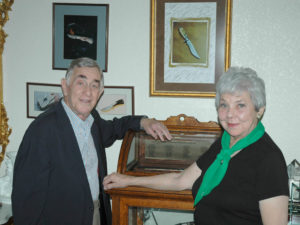
Shelley and his wife for 70 years, Sarah, and their knives in the Berman home—including the photo of the Virtue knife signed by all the participating makers at top right.
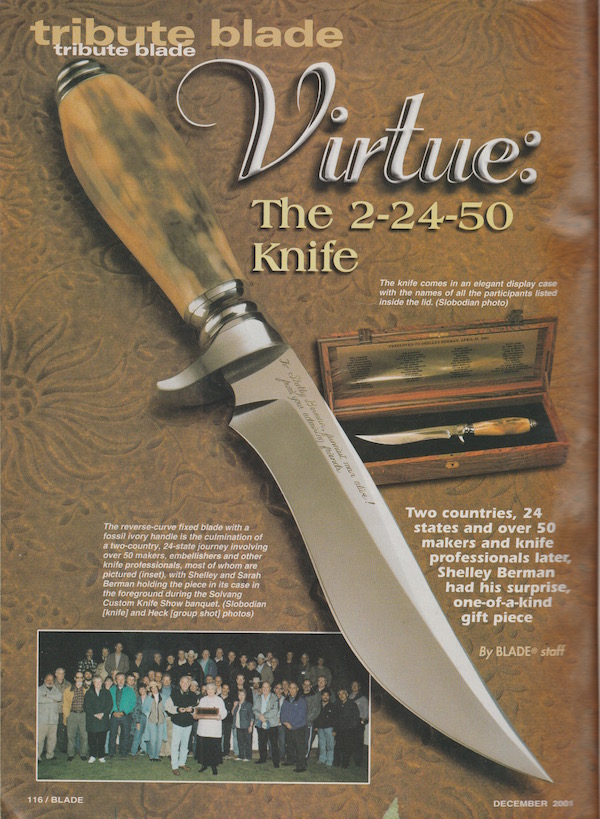
During the 2000 Solvang Show, many of the show’s custom makers the Bermans had befriended over the years huddled and decided to make a special surprise knife that they would deliver unbeknownst to the Bermans at the following year’s Solvang Show. A work schedule was planned so the knife would spend the least amount of time possible in the mail between destinations. One of the biggest obstacles was getting the knife in and out of over 50 workshops in less than 10 months. Work began in July 2000 and the completed masterpiece arrived in Solvang just three weeks prior to the 2001 Solvang Show. The project began in Arizona and from there went to Nevada; Idaho; Washington; Oregon; California; Hawaii; back to Arizona; Utah; Colorado; New Mexico; Texas; Arkansas; Kentucky; Tennessee; South Carolina; North Carolina; Virginia; West Virginia; Maryland; Pennsylvania; New Hampshire; Quebec, Canada; Ohio; Minnesota; and Wisconsin.
The worry was that the knife, christened “Virtue: The 2-24-50 Knife,” would look as if 50 different makers had made it, which, of course, would not be the desired result. However, just the opposite occurred and the knife came out beautifully. Nothing quite like it has been attempted before or since.
As Dave Harvey, Solvang Show producer and owner of Nordic Knives, noted, one concern was that word of the knife would leak to Shelley before it was finished. However, the secret was kept and Shelley’s reaction made it abundantly clear that he was genuinely surprised and thrilled when the knife was presented to him and Sarah at the 2001 Solvang Show.
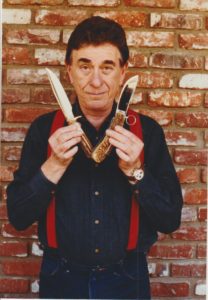
Shelley holds two of his favorite knives, the favorite being the Hermes folder. He was featured with it in the second installment of BLADE‘s “My Favorite Knife,” the forerunner to the magazine’s popular “The Knife I Carry” feature, in the October 1991 issue.
Shelley also wrote for BLADE on occasion, and even appeared in the second-ever installment of the magazine’s popular department, “The Knife I Carry,” which originally was known as “My Favorite Knife.” The knife was a Hermes folder and Shelley is pictured holding it on page 94 of the October 1991 BLADE.
With the permission of Cutlery Hall-Of-Famer Jim Weyer, the March 1996 BLADE reprinted Shelley’s story “Symbiosis” from Weyer’s Points Of Interest Book IV. In the story about knife collectors and what makes them tick, Shelley nailed it perfectly when he wrote, “Since only the Good Lord knows what makes a collector a collector, it follows that only the Good Lord knows why a collector is after only a certain kind of knife on a given day. Even then, if one should ask the collector what kind of knife he has in mind, the collector may answer, ‘I’ll know it when I see it.'”
Likewise, the members of the knife community know a great collector and friend when they see one, and along with his wife Sarah, Shelley will forever fit the mold.
Over 50 makers working on the knife in shops in 24 states resulted in the Virtue knife for Shelley and Sarah Berman.