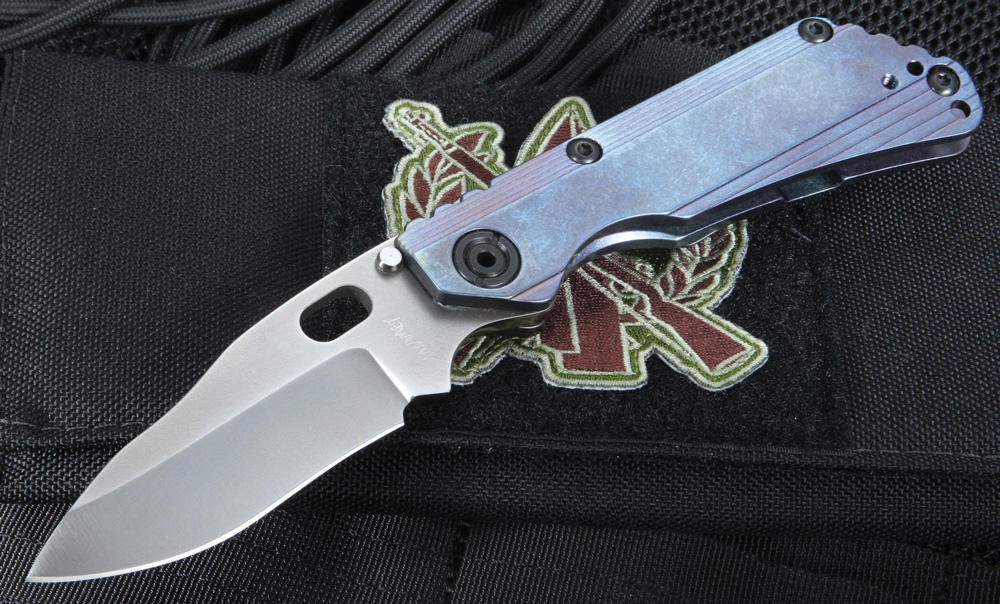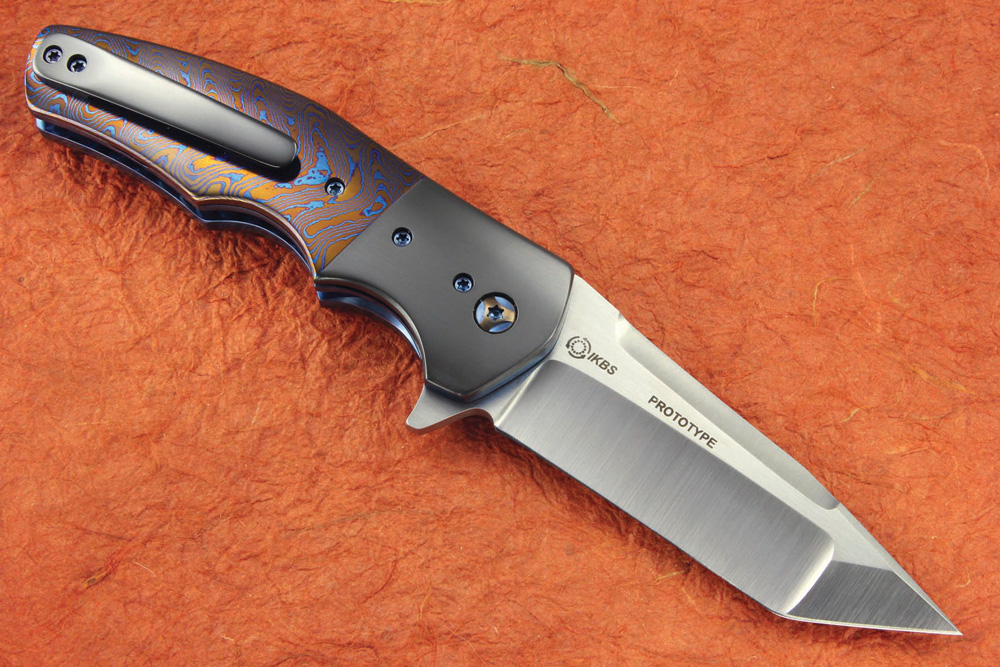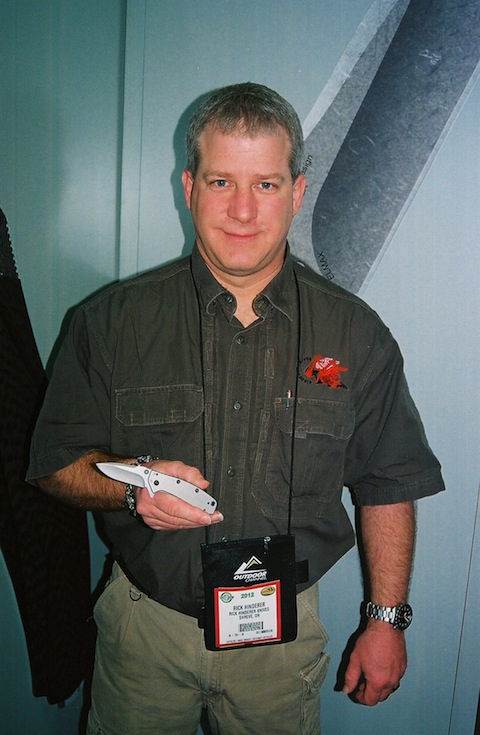
A partnership between Benchmade and Kroll International, a supplier of military and law enforcement products, offers a new take on the Heckler & Koch Tumult. Sporting special handle colors and a lasermarked blade, this special edition is available only through Kroll and its retail partners.
“We are excited to be able to partner with a great Law Enforcement outfitter like Kroll International on this remarkable project,” said Matt Elliott, senior marketing manager at Benchmade, in a Kroll release.
Specs
8.1 inches OAL
3.5-inch blade
3 oz.
Double-action auto OTF
Ambidextrous action
Clip-point D2 blade
6061-T6 aluminum handle (black, desert sand or OD green)
“Law Enforcement/Military Elite Edition” lasermarked on blade
Made in the USA
MSRP $290
Where to Get this Exclusive Benchmade Tumult
Retailers should contact Kroll at krollcorp.com. After confirming a purchase is legal in their area, consumers can watch for the new Tumult at participating Kroll dealers.
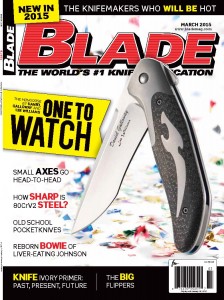
A special knife for a special Navy SEAL, knifemakers for elite warriors and a rebirth of military daggers highlighted by the Spartan Blades/Les George V-14 cover knife headline BLADE®’s annual military issue, on many newsstands today.
Navy SEAL Matthew G. Kantor was killed in action in Afghanistan on Nov. 1, 2012, receiving the Bronze Star for his bravery in action. Knifemaker Jim Behring made a special knife, the T.A.S.S. E4, in honor of Kantor and supplied 22 of the knives to Kantor’s platoon teammates. Find out more in this touching story about an American hero.
Inspired by the Fairbairn-Sykes combat dagger of World War II fame, today’s renditions include any number of updates, including state-of-the-art materials and designs. Knifemaker Les George, a retired U.S. Marine, designed such a dagger for Spartan Blades and it is one of many new daggers on today’s market. Find out more in the story on page 12.
ABS journeyman smith Erik Fritz and ABS master smith Shane Taylor got together after a meeting with retired Marine Pat Goodale and decided to make custom knives Goodale could give to special active-duty Marines. The two smiths got several other makers to participate in the project as well and the result was Knifemakers for Elite Warriors. Discover more in the story on page 84.
I got some good-natured ribbing at the 2014 BLADE Show because of my EDC folder. Being part of the show staff, I’m constantly taking my knife out to open boxes of magazines or books, or to cut tape for the book booth, etc.
When one guy saw me unclip the Gerber Bear Grylls lockback folder and extract it from my front pocket, he said, “Geez, Joe. Here you are, managing editor of BLADE Magazine, at the largest knife show in the world, surrounded by high-end, superbly crafted knives, and you’ve got an inexpensive Gerber in your pocket?!”
Well, yeah, I like the way the rubber handle feels in my hand, it’s slim, I like the black and orange color combination, it’s got a modified drop-point blade, it’s utilitarian, easy to sharpen, I like the wide paddle-style pocket clip, it doesn’t weigh much, and I don’t mind using it to open boxes and cut tape. So what if it’s only $33?
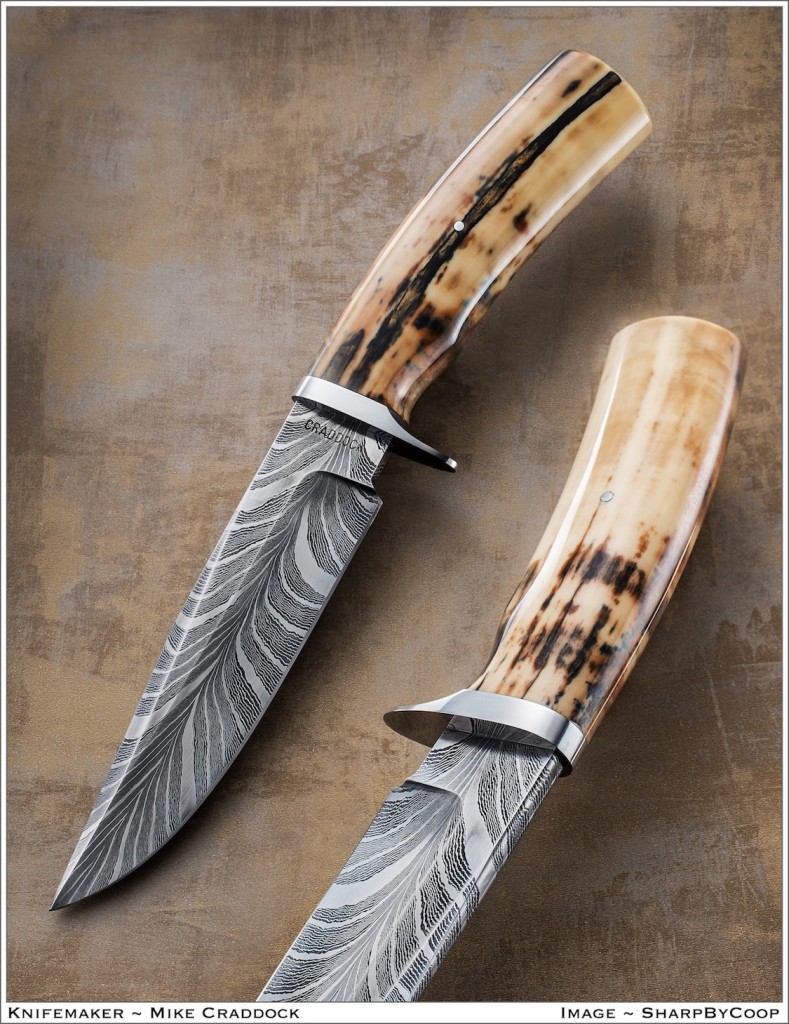
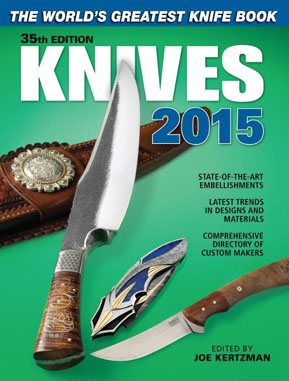
Get the latest knife information with features on the latest developments, history, and transformation of knives, swords, and edges of all types, and explore the latest trends in blades, steels, styles, and materials. Gaze upon a “State of the Art” section parading engraved, scrimshawed, jewel-inlaid, carved, etched, sculpted and forge-welded, and Damascus and mosaic-damascus knives. Learn more
Instrumental in popularizing the flipper style of folding knife, Kit made a wide range of tactical and utility folders, the best known of which are the M16, M4 and M21. Reproduced by Columbia River Knife & Tool in a wide range of iterations, the M16 has been one of the company’s best-selling and most successful knives for many years.
As revered as he was for his knives, Kit was more respected for his willingness to teach any and all how to make them. When knives and knifemaking exploded on the Internet circa the late 1990s and early 2000s, his mentoring benefited perhaps as many new and upcoming potential makers as anyone before or since.
A voting member of the Knifemakers’ Guild, Kit spent 20 years in the Army, retiring as a master sergeant in 1993. He grew up in North Georgia, interested in all things mechanical from the start. He began making knives in 1972, the same year he was drafted into the Army. It was during his last 10 years in the service that knifemaking became an extremely interesting and challenging hobby for him. While he and his wife Betty supported their children, Kit would scrounge any place he could in government housing to grind a blade shape or handle, or try to figure out how a lock mechanism worked.
“We did not have the Internet, all the books or the specialty tools,” he said of those times in his prepared induction speech into the Cutlery Hall Of Fame at the 2012 BLADE Show. “Many of us still today do every piece by hand, filing, sanding, honing blades, slowly creating knives, spending hundreds of hours at knife and BLADE Shows establishing our names in the industry and, most importantly, making lifelong friends.”
A celebration of his life with military honors will be at 2 p.m. Wednesday, Sept. 10, at the chapel of Coffey & Chism Funeral Home in Vine Grove. Visitation begins after noon Wednesday. At the request of family, everyone is asked to wear casual clothing and bright colors in honor of Kit’s life. Donations can be made to the National Parkinson’s Foundation at www.parkinson.org.
Ask the maker what blade steel he recommends. Bob Dozier holds one of his giant trappers.
A question we often hear is What are the best blade steels? A better way to approach the question is to determine what jobs the knife will be asked to perform.
Do you need a hunting knife or an everyday carry knife? A kitchen knife or a camp knife/chopper? There are others. The type of knife and how it will be used often will dictate the type of steel.
Say you need a hunting knife. Rather than ask what kind of blade steel will be best for it, research the websites of companies or makers who specialize in hunting knives. Such companies and makers will offer hunting knives not only with the steels that they find best for hunting knife purposes, but also with the edge geometries that the companies and makers feel they are most accomplished at making/offering.
Edge geometry refers to the blade’s grind and edge. If the grind and/or edge is too thick or otherwise not formed properly, it doesn’t matter how good the steel is—the knife will not cut well. As for the grind itself, there are many—hollow, flat, convex, chisel, etc., and combinations thereof. Usually the companies or makers employ the grinds they are best at. In cases where you have the option of picking the grind from a custom knifemaker, ask him which grind he’s best at and go with it.
Another important factor is the heat treatment of the steel. In fact, a low-grade steel heat treated properly often will outperform a high-grade steel with a substandard heat treatment.
In addition to the type of steel, ask how it is heat treated. While many makers are adept at heat treating their blades, many simply ship their blades off to professional heat treaters who specialize in the process. Blades heat treated by the pros usually will be heat treated properly and according to industry standards.
High-grade steels such as CPM S35VN, ZDP-189 and others are cutting tigers but can be difficult to sharpen and are more expensive. Lower-grade steels such as 440A, 5160 and others, all things being equal (including proper heat treatment and edge geometry), may not perform as well or hold an edge as long, but are usually easier to sharpen and will do most everyday cutting jobs that most people require. And, knives with such steels should be less expensive. In the case of 5160, while it is not a stainless steel, if you clean it and dry it off after each use, you should not have a problem with corrosion. The same is true with most non-stainless steel knives. Meanwhile, it’s not a bad idea to clean and dry off stainless steel knives after use as well. They can corrode, too—it’s just that they corrode less, as their name indicates.
Bottom line: Tell the company and maker what you plan to do with the knife. They make knives for a living and usually will be able to fit you with the proper knife and suitable blade steel for your needs.
Recommended:
Stay abreast of the latest developments on this and many more knife rights issues with a subscription to BLADE.
The American Knife and Tool Institute has launched a revised version of its website, www.AKTI.org, with improved features for members and accurate information about the laws that impact knife businesses and owners in every state.
“Making state knife laws available online to our members and easily accessible has been a priority for AKTI in the last year,” explained AKTI Executive Director Jan Billeb. “Ensuring that the information is complete and legally accurate has been our primary goal.”
Members of the organization are able to see knife law information for any state, while non-members can see quick legal facts about each state. The information was compiled and written by AKTI’s legislative consultant, Dan Lawson, a lawyer who has been involved in the knife industry for more than a decade. Topics include which knives are prohibited, which knives can be sold or manufactured, critical dimensions, major cities with ordinances and more.
The website also features news and action alerts; education on knife use for kids, the general public and law enforcement officers; popular resources like AKTI’s approved knife definitions and guide to traveling with knives; and a monthly fundraising auction that supports the organization’s ongoing legislative efforts. In addition, visitors to the site can buy or renew their memberships, give memberships as gifts and purchase AKTI merchandise online.
“Every year we see more and more people – both our members and the general public – looking for information about safe and legal knife use,” Billeb said. “Our website has been redesigned to make it even easier for visitors to learn more about all facets of knife use in the U.S.”
Jimmy Lile’s Rambo knife is one of the most influential knives of the past half century. (Jack Lucarelli photo)
This being the 50th anniversary of the Buck 110 and all, it got our friendly staff to thinking: What are the most influential knives of the past half century?
As with any such list, the parameters must be set. Those would include knives that have been emulated most (unfortunately, this would have to include the many unauthorized copies, knock-offs and downright counterfeits that have long plagued the industry) and/or knives that dramatically changed the knife culture (one observer explained it as “the knife that changed all knives after it”). There are other common denominators among the most influential knife designs, but we’ll stick with these two for the moment.
The Buck 110 obviously would have to be in the mix, as its overall look, size, feel and lockback design have been emulated by many. The K.I.S.S. folder designed by Ed Halligan for CRKT has been knocked off/counterfeited perhaps as much as any knife over the past 15 years or so. Michael Walker’s LinerLock™ folder changed the way the industry approached locking folders. Jimmy Lile’s Rambo knife was THE knife of the 1980s and was emulated by scores of factory and custom makers alike.
Ernest Emerson’s CQC-6 and/or CQC-7 had a monumental impact on the tactical knife phenomenon that continues to this day. Bob Lum’s American tanto galvanized the industry in the 1980s and is still seen. Spyderco‘s Worker, introduced in 1981, was the company’s first knife with the blade hole and pocket clip that changed modern knives completely. Bob Loveless‘s drop-point hunter was and remains an international sensation. Though not a knife, Bill Moran‘s reintroduction of damascus steel in 1973 and the repercussions and the many spinoffs from it continue to this day.
There are many others. Which ones would you pick from the above or add of your own?
For the latest knives, knife news and more, stay tuned to blademag.com.
Get the latest knife information with features on the latest developments, history, and transformation of knives, swords, and edges of all types, and explore the latest trends in blades, steels, styles, and materials. Gaze upon a “State of the Art” section parading engraved, scrimshawed, jewel-inlaid, carved, etched, sculpted and forge-welded, and Damascus and mosaic-damascus knives. Learn more