Home Blog Page 245

Use A Hunting Knife Designed by Russ Kommer

A hunting knife is great—and when you use a hunting knife designed by an Alaskan hunting guide who also happens to be a knifemaker, that’s even better.

The Alaskan Skinner designed by Russ Kommer for Timberline.
A hot hunting knife is just what the doctor ordered—the Alaskan Skinner designed by Russ Kommer for Timberline.

The Alaskan Skinner from Timberline is a hunting knife designed by knifemaker Russ Kommer, who also is a long-time Alaskan hunting guide. Kommer spent most of his youth in the Minnesota north woods hunting, trapping and fishing. Idaho is where he got his start as a big-game guide in the Selway-Bitterroot Mountains. He took his passion for hunting to Alaska in 1984—which is where he also discovered his love of knives, particularly the hunting knife design, after dressing big game. He learned to design the most functional and comfortable hunting knife he could and started making versions of them in 1997.

Kommer’s custom knives include the hunting knife/skinner, camp knives, folders, “unique” fillet knives, fighters, boot knives, bowies, hatchets and tactical knives. In addition to Timberline, Kommer also has designed knives for CRKT, including the Signature line of hunting knife, and the Escalade and Extreme Mountain hunting knife models for Browning

The Alaskan Skinner features what is called an upswept blade with a hollow grind—great for high-performance field dressing, skinning and other chores associated with big game. Besides that, it will also help you prepare your meals in camp and do the other cutting chores that need doing outdoors.

The blade steel is a 440 stainless that fights corrosion and is relatively easy to sharpen compared to steels such as CPM S30V and others. The handle is a soft Zytel rubber with a palm swell to fill your hand, and finger grooves and a bird’s beak pommel to lock your hand in for any number of cutting tasks, from light slicing to heavy-duty cutting. Overall length: 9.625 inches. A black ballistic nylon sheath with belt loop is both handsome, durable and secure. Weight (including the sheath): 13.5 ounces.

Click here for more about this Russ Kommer hunting knife.

How To Build a Survival Shelter

The following is excerpted from a feature article by James Morgan Ayres that ran in the April 2013 issue of BLADE® Magazine.

Over 90 percent of wilderness deaths by mischance are caused by hypothermia. Knowing how to build an emergency shelter quickly can mean the difference between freezing to death and surviving. You can build a survival shelter that offers protection from cold and snow or rain in no more than 30 minutes, and with only the tools at hand—which is where knives can make the difference in getting the shelter up before it is too late.

5 Keys to An Emergency Shelter

1) Evaluate your situation and decide if you need to spend the night out before it gets so dark you cannot see to build a shelter; Expanding the framework of the shelter.2) If available, select a level spot that provides natural shelter—a large tree or boulder, for example. Barring that, choose a place that has building materials such as saplings or brush nearby; 3) Build a framework using the natural shelter as a base; 4) Cover the framework with branches, leaves, brush and whatever materials are available. If possible make the covering 6 inches to a foot thick; the thicker the covering, the better the insulation. If you are in an area where there are limited building materials, having a reflective blanket in your pocket could be a lifesaver. It weighs only about 3 ounces, is no larger than a handkerchief and can make a difference of up to 20°F, and; Expanding the framework of the shelter.5) Cover the floor with six-to-12 inches of leaves, pine needles, duff (decaying leaves and branches), or whatever is available for insulation. Leave the area near the entrance clear of debris. After making the cleared area safe for burning small pieces of kindling, build a small fire in it. The fire should be no larger than a soup bowl.

If you are properly dressed for the climate, you can spend the night in such a shelter with a tiny fire not only safely but also comfortably. Having the know-how to build the shelter is critical. Having a good knife can make building the shelter quick and easy.—by James Morgan Ayres 

Shelter framework ready for thatching with available material.Author’s note: The shelter in the photos using pine boughs was built in a national park, not a true wilderness area. We were required to “leave no trace” and return everything as it was. Therefore, we did not thatch the roof nor build up the floor with boughs and leaves as described in the text, as you would in a survival situation.

My associate and I used and evaluated four very different knives to construct two survival shelters. The review knives fall into two categories. The Mora and Condor both have ‘Scandi’ grinds and are economical. The Bark River and Fallkniven have convex grinds and are priced like the premium knives they are. Covering shelter framework with pine boughs.

CONDOR BUSHCRAFT

The Condor Tool & Knife Bushcraft Basic Camp Knife has a comfy wood handle, a 4-inch blade of 1075 carbon steel with a lot of belly, and a full tang. When driven into a tree it was strong enough for a 200-pound guy to do a pull-up on; we tried it, no problem. The belly of the black-epoxy-powder-coated blade proved its worth in general use, but a little more tip would have been welcome. In knife design everything is a compromise and this is a good one. The welted leather sheath holds the El Salvador-made knife securely and is unusually nice for a package in this price range ($34.98 MSRP).  Bark River Aurora illustrating an efficient push cut on a sapling.

IMG_0316BARK RIVER AURORA

The Bark River Aurora ($239 MSRP) is Bark River honcho Mike Stewart’s personal design for an all-around bushcraft knife. The American-made fixed blade displays excellence in design and use. The convex blade of A2 tool steel provides easy, controllable push cuts, supports the edge for batoning, gets into a cut aggressively, and has a centerline point for precise control. The handle is ergonomically contoured, does not slip and is comfortable in hard use. The balance is so good and the 9.5-inch knife feels so lightweight and quick that it seems to weigh less than the specs (6 ounces) would indicate. The pouch-type leather sheath is handsome, secures the knife well, carries comfortably and has a loop for a firesteel.

I suspect the Aurora has a reserve of strength that we did not come close to tapping in our review. Though not billed as one, I think the Aurora is an excellent choice for a wilderness survival knife. IMG_0305Condor Bushcraft makings shavings for a fire.

MORA BUSHCRAFT

Made in Sweden, the Mora Bushcraft Survival Knife ($57.95 MSRP) comes with a firesteel and diamond sharpener—both valuable tools—in a composition sheath. The thick, 4.25-inch blade sacrifices nothing in slicing and wood-shaving ability. It has a good, usable point and is strong enough for batoning. The handle is very comfortable. The knife popped out of the sheath, which was worn on a belt, while we were jumping over a log. A cut or the loss of the knife could have resulted.

FALLKNIVEN PHK

Fallkniven markets its Professional Hunter (PHK) as “one of the best hunting knives in the world.” It is also a very good all-purpose bushcraft and survival knife. The convex grind and long, curved edge combine to make a strong 5-inch blade of 3G steel that just wants to cut. It batons well, makes good push cuts and snap cuts efficiently on small branches. It would even do a little light chopping, though no knife this size (9.4 inches overall) can be an efficient chopper. The PHK’s nonslip Thermorun™ thermoplastic handle is comfortable in any grip, even during hard use.IMG_0181

Made in Japan, the knife offers a choice of a leather or Zytel® sheath. I much prefer the leather one since the Zytel sheath must be snapped to secure the knife, as we learned when the knife fell from the unsnapped sheath while we were running. MSRP: $470.

HOW THEY FARED

In general, we found the knives with the Scandi grinds to be somewhat better for fine woodwork, such as making fuzz sticks, while the convex-ground blades cut more efficiently and with less drag in deep cuts. All the knives’ handles were comfortable and did the job. On the other hand, each knife had its own character and pros and cons.

The Bark River was everyone’s all-around favorite, and if there had been a prize for most handsome, it would have won. The Fallkniven displayed the high level of function for which the brand is known, and clearly had enough reserve strength to serve as an urban destruction tool. The standard Mora is a good all-around bushcraft blade at a very low price. It is a bit stronger than other Mora models we have seen, and the inclusion of a firesteel and diamond sharpener produces a very nice package. However, the sheath needs work—otherwise you had better use duct tape to secure the knife, as we did. The Condor brings a welcome alternative to the bargain-priced market and stands on its own merits as a strong, efficient choice for the bush.

The premium-priced Bark River and Fallkniven exhibit higher-quality construction and did almost everything better than the less expensive Mora and Condor. Nonetheless, the difference was a matter of degree. All would serve to build a shelter and produce firewood, and maybe save your life.

8 Amazing Additions To Any Knife Book Library

One thing that humble knifemakers find difficult to do at times is to express pride in their work. It’s the same thing with we knife editors and publishers. But when you look at these eight knife books that F&W Media has put out over the past few years, they’re not only impressive as a whole, but each individual title is clearly an example of quality work.

If you were interested in knifemaking and started with the two books Bladesmithing With Murray Carter and Knifemaking With Bob Loveless, you’d be well ahead of the game and your peers. Add in BLADE’s Guide To Making Knives, 2nd Edition, and suddenly you’re learning the craft from such knifemakers as Don Fogg, John Lewis Jensen, Tim Zowada, Allen Elishewitz, Vince Evans, Rick Dunkerley and Kevin Hoffman. Are you kidding me?! And how many of you have NOT heard of Wayne Goddard? His book The Wonder Of Knifemaking, 2nd Edition is a must-have for any knife book library.u1059_500px_72dpi_1 v0802 W1852 W5865 X3269 Z4387 Z7240 Z7241


If custom or handmade knives are your thing, the 33rd Edition of the Knives annual book, Knives 2013, will blow you away with full-color photography, feature articles written by the world’s best knife writers and a complete directory of custom knifemakers. Another sweet, full-color, gorgeous coffee-table book is Spirit Of The Sword by Steve Shackleford. It takes you on a trip from historic to modern swords and back again.

For knife collectors, you can’t go wrong with a book devoted entirely to Case Knives, the most collected brand in the world. Check out Collecting Case Knives by long-time collector, expert, accumulator and investor in everything Case, Steve Pfeiffer. And if after all that, you’re ready to design your own knives, or just need inspiration from over 100 classic knife designs, be sure to put in your pre-order for the brand-new, soon to hit bookshelves and stores everywhere 101 Knife Designs by none other than Murray Carter.

Admittedly, that’s one impressive knife book lineup, and would make any knife enthusiast’s library complete!

History Channel Features Ka-Bar Knives

Ka-Bar Knives is set to star in the premier episode of the new History Channel series What People Earn. What better theme than “Beer, Knives & Football” for the initial episode of the show, and at 115 years old and going strong, is there a better fit than Ka-Bar for the show, starring alongside Samuel Adams, the famous brewer? It’s time to kick back, relax, grab a brew, and watch What People Earn while mindlessly, though carefully, opening and closing your Ka-Bar pocketknife.

A companion piece on the new show and KA-BAR Knives will run in the March 10 issue of Parade Magazine6112CU_HalfSize

What People Earn will air at 10 p.m. EST on Sunday, March 10 on History Channel 2.  History Channel 2 can be found on DirecTV channel 271. Dish Network subscribers can find the premier of What People Earn on channel 121.  For cable subscribers, please check your local listings. For additional information, please visit History.com.  To learn more about KA-BAR Knives, please visit KA-BAR.com or call 800-282-0130.

KA-BAR Knives Featured on New History Channel Show

KA-BAR Knives will be featured on a new History Channel Show, What People Earn, Sunday, March 10.

Highlighted on the show’s premier episode entitled “Beer, Knives & Football,” the 115-year-old manufacturer will star along with American brewer Samuel Adams.

The March 10 issue of Parade Magazine will run a companion piece on the new show and KA-BAR.

The show will air at 10 p.m. EST in most areas, though be sure to check your local listings.

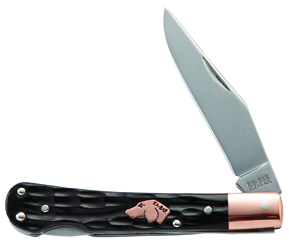
Of the 45 products that were in the KA-BAR line in 1996, only five still remain in line and one that is/was made in the USA: the 1217 Marine Combat Knife. There are now 85 products made in the USA by American cutlers stemmed in the KA-BAR tradition born in 1898. Among them is KA-BAR’s Zombie® Knives line, the Becker Knife & Tool line, a number of Bob Dozier designs, the TDI Law Enforcement line, Union and traditional KA-BAR knives including the Dog’s Head pocketknives, the Mule line of folders, and more.

For more visit KA-BAR.com or call 800-282-0130.

KA-BAR's USMC fighting/utility knife, an industry icon.
KA-BAR’s USMC fighting/utility knife, an industry icon.

Some Carry-On Pocketknives Will Be Allowed

TSA Knives Allowed

Update: Click here to download the official PDF from the TSA outlining approved knives.

For the first time since the 9/11 terrorist attacks, passengers on U.S. airline flights will be allowed to have some small carry-on pocketknives by the U.S. Transportation Security Administration (TSA).

The change reportedly will go into effect April 25.

Knives with “retractable blades” under 2.36 inches and narrower than 1/2 inch at the widest point will be allowed, TSA Administrator John Pistole said. However, some knives will remain prohibited, including those with “locking blades” and/or molded handles. Exactly what “molded handles” pertained to in terms of knives is unclear at this time, though handles with finger grooves and otherwise contoured for an enhanced grip appear to be targeted. Box cutters and razor blades will continue to be banned.

As a result of the knives that remain prohibited, it appears that “small pocketknives” would be those within the aforementioned blade and lock constraints with uncontoured handles such as traditional Swiss Army knives, keychain knives, utility/scout pocketknives with can openers, screwdriver blades, etc., and “champagne patterns”—wine/bottle-opening knives with corkscrews. However, it is difficult to find a utility/scout pocketknife with a blade that is less than 2.36 inches long and 1/2-inch wide. As a result, it would appear that only such knives as the Victorinox Swiss Army Classic and other similar pieces will pass muster.

Meanwhile, overseas passengers will not have to check their applicable knives when traveling through the USA.

For the latest on knives, stay on www.blademag.com.

Video: The Kevin Cashen Phoenix Knife

Kevin Cashen
The stories behind the blades are part of what makes collecting knives so much fun. The provenance might be happy or sad, but it’s the storytelling itself that is so valuable. Knives can be keys to unlock those stories. Instead of calling up a house fire, the Kevin Cashen Phoenix Knife tells the story of getting through tough times.

Part of the appeal to knife collecting are the stories behind the blades. The so-called “Phoenix Knife” from master smith Kevin Cashen is one such knife.

Judging from the name, you’d be correct in guessing Kevin Cashen’s piece figuratively rose from the ashes. In a tragic turn of events, it literally earned the title, too.

According to the American Bladesmith Society (ABS), which posted the video above, the Phoenix Knife started life as a group project. Several ABS board members got together to make a Bowie, including Kevin Cashen.

However, a house fire destroyed much of the knife’s progress. Undeterred, the board members regrouped and gave it another shot.

The result, as the video shows, is the Phoenix Knife. “It’s alive!”

Have a great knife story? Post it in the comments below.


The Stories Behind the Designs

Knife Patterns BookCertain knife designs are repeated again and again for good reason: They work. Murray Carter explores the stories behind many designs in his new book, 101 Knife Designs. You know the designs that stand the test of time. Now read why.

Click here to order 101 Knife Designs.

Advertisement

Must Read Articles

Read this before you make a knife

Knifemaking 101 – Read This Before You Make a Knife

  by Wayne Goddard My experience has taught me that there's nothing like digging in and getting started. I've often said the hardest part of the...
how to forge damascus steel

How to Forge Damascus

Advertisement
Advertisement