Home Blog Page 33

Sharps Bros. Meanstreak Review: Keen, Mean Cutting Machine

A somewhat new player, Sharps Bros. makes the cut with the Meanstreak.

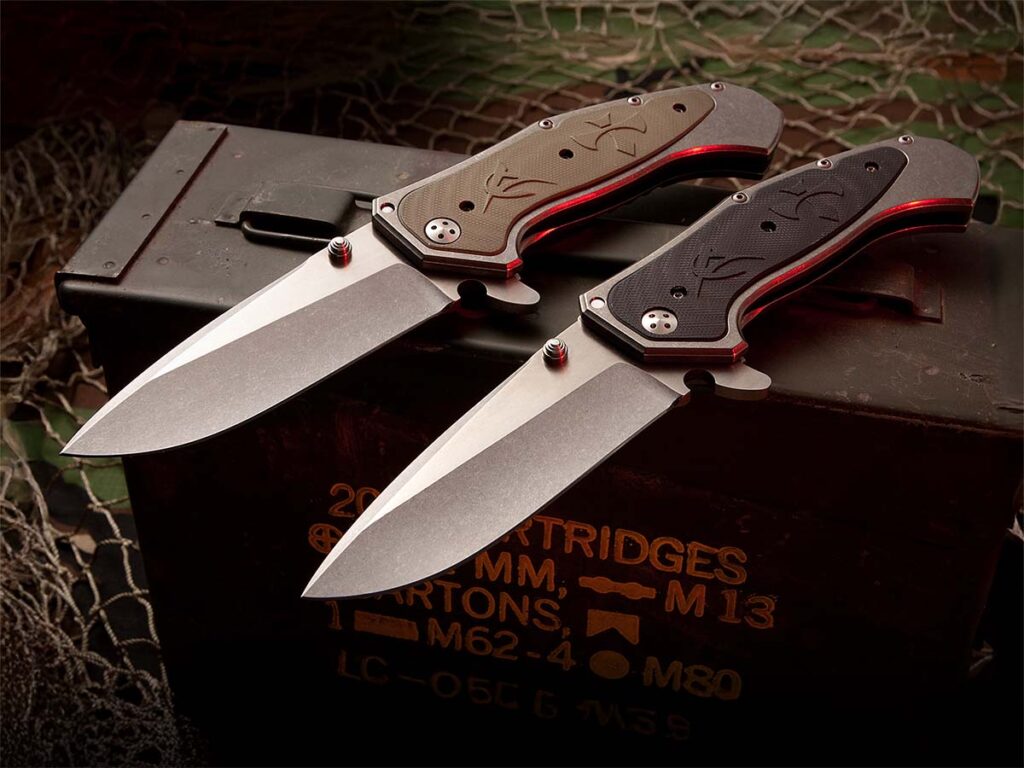
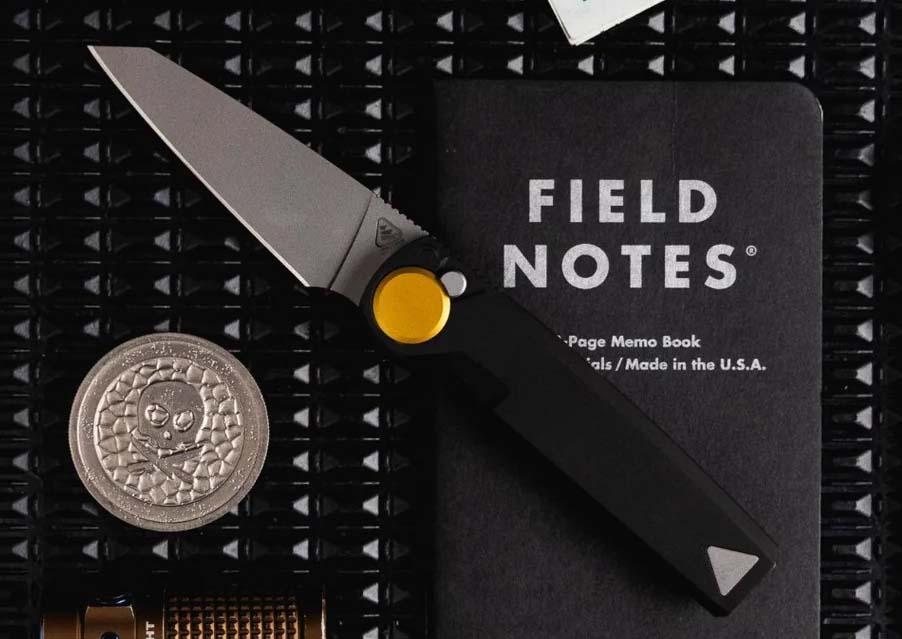
Relatively new to the knife arena, Sharps Bros. made its original mark in the gun world. The company team used their machining know-how to produce some well-built fixed blades and folders. The Meanstreak 3-inch Button Lock Folder is one of the latter.

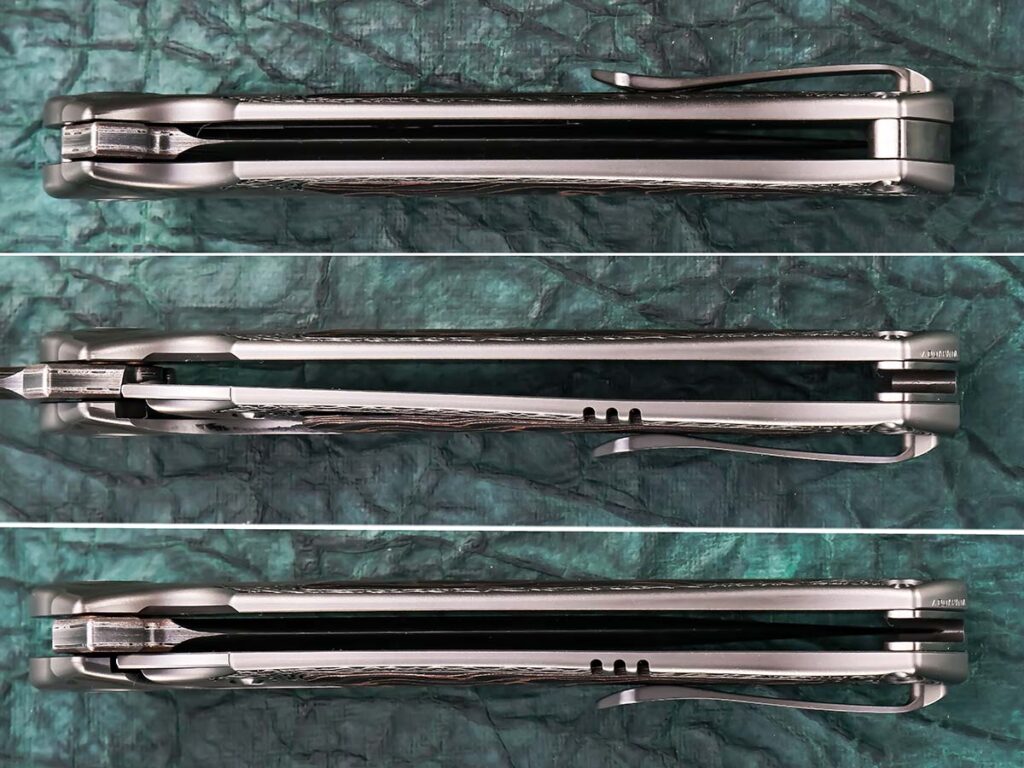
The author said the machining of the Meanstreak’s titanium frame is “superb.”

It’s a button lock—to unlock the blade, simply depress the logo button on the bolster. The blade opens manually via a flipper. The machine work on the titanium frame is superb. Opening and closing the knife is smooth. Question is, does the blade cut?

Meanstreak Specs

Company: Sharps Bros.
Knife type: Flipper folder
Blade length: 3”
Blade steel: CPM S35VN stainless
Blade grind: Hollow
Blade finish: Non-glare
Pivot: Brass and ceramic bearing system
Lock: Button lock
Handle: Titanium and stainless
Pocket clip: Titanium, deep carry
Hardware: Torx
Weight: 5 ozs.
Closed length: 4.25”
MSRP: $200

Pros

  • Exceptional Blade Performance
  • Smooth Button Lock Mechanism
  • Superb Machining Quality

Cons

  • Potential Hot Spots

Light-Duty Cutting

I used the Meanstreak straight from the box to slice 20-pound bond paper. The knife did so smoothly and aggressively. I could hear every slice. The handle shape aided in positive control. (I had already nicked the meat of my thumb on the blade tip. Ouch.)

The edge withstood 30 antler whacks and then cut the paper smoothly to culminate testing. Spot-on heat treatment!

Single-walled cardboard was next on the test menu and the Meanstreak made short work of slicing it up. The relatively small blade cut straight with no hangups. From there it was time to slice leather scraps. I cut sideways into the 8-ounce leather and the CPM S35VN blade zipped through the medium as fast as I could move my fingers out of the way. The folder made some very nice crunching noises.

I wanted to hear more crunching, so I started skiving the leather. It was easy to control the Meanstreak, so I didn’t cut all the way through the material. This is a sharp little knife!

Heavy-Duty Cutting

Next up: whittling a fire stick. To get it to curl I used dry wood and shallow cuts. With my thumb on the spine notches, the curls started coming. Controlling depth was easy, though the inside of the frame was a little too sharp on my hand for the grip I was using. The Meanstreak made nice curlicues.

The Meanstreak made nice curlicues. However, the inside of the frame was a tad too sharp on the author’s hand for the the grip he used.

On to my favorite test medium: sisal rope. The Meanstreak produced 225 crunching cuts and was ready for more, but my arm was done. It was very forceful cutting. I wore a thin glove to protect my hand against hot spots as I used more pressure with the cuts. A fine emery board would take care of the unwanted sharp areas.

To check the edge for brittleness, I subjected it to several whacks on my trusty whitetail deer horn. After 30 hard whacks there was no edge damage. Heat treatment is spot on—excellent job! To prove it, I sliced up the other half of the 20-pound bond paper from the initial test. I could not tell the difference in blade performance between the first and last paper slices.

Final Cut


As for changes, soften the inside edges of the handle frame. (Editor’s note: The pivot could use better action as well as the blade is a bit sluggish when opened via the flipper.)

For a factory knife especially, fit and finish is impressive.

The Meanstreak is one sharp knife. Since there was no dulling of the blade it seemed like I didn’t cut anything with it at all. Plus, it’s made in the USA!

Read More Knife Reviews:

Cool Customs: Pat Antuzzi’s Hand-Knapped Fixed Blade

When it comes to crafting a knife, Pat Antuzzi works one flake at a time.

“What I do is go back to the Stone Age,” Pat Antuzzi says of his knapped obsidian knives. He has been knapping blades for almost a quarter century.

In that time he has found the best of the best obsidian to be the royal Mexican variety from the state of Jalisco in Mexico, a variety that’s basically been mined out. He used the material for the blade of his straight-edged fixed blade, as well as Portoro marble from Italy for the handle. But it’s the royal Mexican obsidian itself and how it’s knapped that are the keys.

Pat Antuzzi

“Every indentation you see on the blade is one flake removal from [the obsidian], and if it’s done right, you’re going to see it one flake after the other, just like the ancients would’ve done it,” he explained. “It’s wicked sharp.”

Hand-Knapped Fixed Blade Specs
Maker: Pat Antuzzi
Blade length: Not quite 5”
Blade material: Mexican gold obsidian volcanic glass from Jalisco, Mexico
Handle material: Portoro marble from Italy
Overall length: 9.5”
Maker’s price for a similar knife: N/A

SHOT Show 2025: Cutting New Knife Drops

Check out a few of the new blades that caught our eye in Las Vegas.

It was a busy week at the Sands Expo Center in Las Vegas for the outdoor and shooting extravaganza known as the SHOT Show. Of course, there were plenty of factory makers in attendance with plenty of new releases for the coming year.

Sadly, we were unable to make every cutler in the house for the big dance but we did stop by a good number and caught a glimpse of some of the new blades for 2025.

Kronos Knives Gung Ho! Line By Ken Onion

Kronos Knives

Kronos is a new kid on the block, one-year-old as of SHOT Show 2025. The upstart knifemaker had a heck of an anniversary surprise at the home of its launch. The South Carolina-based company unveiled four Ken Onion-designed Gung Ho! line of fixed blades. The four knives that make up the line are all outdoor/tactically angled with 1095 steel blades and G10 handles. The models include the Stiffneck (MSRP $220), Maxhunter ($228), Elitesurvival ($256), and Truedefender ($228, pictured above). Kronos will have them for sale at the end of February.

Case Sculped Ridgeback

Case Ridgeback

Case gives a modern and rugged look to its Ridgeback Hunter line with the introduction of the Sculpted Ridgeback. The fixed blade still has the sexy sweeping stainless steel blade true to the line but is dressed out in a durable and attractive new handle. In this case, canvass Micarta with G10 liners. The texturing is aggressive, making a workhorse that’s not afraid of bad weather but just as attractive as its rosewood predecessor which it is pictured with above. Case has a $128 MSRP on the knife.

Vero Engineering/Pro-Tech Custom Synapse

Vero Pro-Tech

The Custom Synapse Auto is a pretty sweet meeting between two of the knife industry’s heavy hitters. Given the fanbase of both companies, expect these to fly off the shelves with the $525-$700 price points. Jeez, who doesn’t want an auto Synapse? Especially one done up with Pro-Tech’s typical flare—pearl inlay button, an action that snaps like a wet gym towel, etc. Mouths will have to water for a while, the auto Synapse doesn’t go public for another six months or so.

CRKT Provoke X Axe

CRKT

An axe in your pocket? You bet—thanks to the mad geniuses at CRKT. Unveiled at the show, the Provoke X Axe is the latest in the forward-thinking Provoke line. Designed by Joe Caswell, the axe’s head and spike fold flush against the handle, deploying with a flick of the wrist. Built from D2 steel, it’s too light for felling trees but perfect for its tactical role—and it looks like it means business. With an MSRP of $350, the Provoke X Axe is set to drop to the public later this year.

Check Out More Buyer’s Guides:

The Rise Of Tactical Fixed Blade

The author explains why tactical fixed blades will “come into focus” in 2025.

It’s 2025, and no doubt the new year will bring many changes. The same can be said for custom knives.

I was interviewed for a recent article in BLADE®. I was asked my opinion about several custom knife market sectors and how they would perform in the new year. As with any collectible market, interest in specific sectors ebb and flow with time.

The year past started to see a shift in the custom knife market. Specifically, it was because of inflation impacting most everyone’s daily lives. Multi-thousand-dollar knives, sales of which began to slow in 2023, almost came to a complete halt in ’24.

Vanguard Guardian by David Broadwell, tactical fixed blade
The Vanguard Guardian by David Broadwell has an 8-inch blade of CPM 154 stainless steel with a hand-rubbed satin finish and scales of black Micarta® with black canvas Micarta. Overall length: 13 inches. Leather sheath by Nita Broadwell. Author’s note: “This is the epitome of what a tactical sub-hilt fighter should be. This knife features a fuller to provide lateral strength to the blade. The integral guard and sub-hilt are titanium.” Maker’s price for a similar knife and sheath: $2,500.

The trend I saw was collectors were still buying custom knives—they just changed their strategy. The primary strategy I saw was to purchase high-quality, less expensive knives. In times like these, collectors will often look around to check out the work of makers they were previously unfamiliar with, or new makers. I have done this for the past 40 years and I highly recommend it.

No matter the custom knife sector, while it may seem to disappear, no sector ever disappears completely. When a sector heats up, other sectors cool off. It is only a matter of time before they all get their turn again. No matter how hot a market sector seems or how popular the style of knife or maker is, eventually they all cool off. The increased popularity brings an increased demand, which causes a rise in prices, which brings more makers into the market sector. And often all but a few makers will continue to maintain their popularity.

Why Tactical Fixed Blades Are On The Rise

Because I watch the custom knife market closer than most, I often become aware of trends before most custom knife buyers. In marketing terminology, this is referred to as being an early adopter. Early adopters are the ones who start the path that, months later, others will begin to walk down. The market sector of tactical fixed blades is once again coming into focus.

Nomad by Tomasz Dziubinski
The Nomad by Tomasz Dziubinski features a 10-inch blade of Sleipner stainless steel with a black Cerakote® finish, full-tang construction and a sculpted handle of OD green G-10. Overall length: 15 inches. Kydex sheath by the maker. Author’s note: “The quarter-inch stock, weight slightly forward, makes it perfect for chopping. Its razor edge gives it the ability to perform smaller knife chores around the camp. An excellent all-around knife.” Maker’s price for a similar knife and sheath: $395.

There are three reasons for this:

Diversity of styles: The word tactical is a marketing term that first appeared in the knife business circa 1995 (page 10). It was more about the look of a knife than its style or function. As the BLADE Show added best tactical knife awards to its custom knife judging competition, I was asked to help define the parameters for the category. It was straightforward. There were no parameters for style, length or materials, with one exception: the handle material had to be synthetic, not natural. Also, the blade and guard/bolster materials, if there were any of the latter, had to have a non-reflective finish. You would not believe the grief I have received over this simple definition.

With this definition in mind, most any variation of blade length, grind, single or double edge, double guard, single guard, no guard, integral guard, or bolster could be utilized in the design and subsequent build of the knife. The only stipulation was that the knife had to have a synthetic handle material. The variety of custom tactical knives was mind-blowing once this became a category. Finishes ranged from machine satin, bead blast, tumble and, finally, blackened.

Diversity of materials: In this instance, the materials are primarily those for blades and hardware. Tactical fixed blades and folders introduced an explosion of steel to the custom knife market. The knives featured a wide variety of steels not previously associated with custom knives. Such materials as Stellite®, Talonite® and powdered steel were utilized for blades, and these were introduced to the custom knife world through tactical knives.

The initial choices for tactical handle materials were limited to G-10, Micarta® and 550 para cord, though the options changed rapidly. G-11 was introduced as an alternative, as were various carbon fibers, including lightning strike and copper, and also Carbo Quartz, Fat Carbon, antique Micarta and others.

Phillip Patton's Vanguard Cheetah Sub-Hilt Fighter tactical fixed blade
Phillip Patton outfits his Vanguard Cheetah Sub-Hilt Fighter in an 8-inch blade of satin-finished W2 tool steel, stainless steel guard with an indexing radius cutout, a black Micarta® handle and a leather sheath by the maker. Overall length: 12.75 inches. Author’s note: “This knife features a full double hollow grind, exceptional balance and enhanced handle ergonomics.” Maker’s price for a similar knife and sheath: $825.

Price Point: The price of a custom knife was a significant consideration in 2024 and will be a major factor in 2025. Due to their diversity, tactical fixed blades will offer the collector numerous choices in the sweet spot of $300 to $800, which is in just about every serious custom knife buyer’s budget.

Tactical Fixed Blade Visual Appeal

As with most knives, the initial attraction to tactical knives is visual. Once a knife catches your eye, you impulsively want to handle it. Because most tactical knives are built to use, they often have more attention to detail toward that end than other knives. Consequently, a visceral reaction happens when you put the knife in your hand. The knife instantly becomes an extension of yourself. The knife’s symmetry, balance and handle ergonomics all combine to make the knife effortless to use.

Because of the variety of styles and materials, you can easily match up the tactical knife to meet your needs, whether a smaller utility knife for camping, bushcraft work or even an EDC. A knife like the Ridgeline by Rafal Kolakowski or the Trail Head EDC by Tomasz Dziubinksi can be used for many tasks in the field. Both combine light weight, excellent handle ergonomics and very durable materials.

Rafal Kolakowski’s Ridgeline
Rafal Kolakowski’s Ridgeline sports a 4-inch blade of Becut stainless steel in a black Cerakote® finish and a carbon fiber handle. Overall length: 8.75 inches. Kydex sheath by the maker. Author’s note: “Double hollow ground blade with fuller for added strength. Full tang, sculpted handle material for enhanced handle ergonomics. A small knife but built for hard work. Stainless steel tube lined thong hole.” Maker’s price for a similar knife and sheath: $350.

At the other end of the spectrum are the choppers. The large, heavy blades are designed to do what small knives can’t, including break trail, create firewood and assist in processing large game. The Piotr Gosciniak Tracker offers several options with its unique blade design. A straight primary edge is designed for baton work, the cleaver-style grind for chopping and slicing, and a distinctive grind on the top edge for cutting cord. Dziubinski’s Nomad is another example of a serious tactical to get things done.

Then there is the sexiest tactical knife: the sub-hilt fighter. It is my favorite knife style and my favorite maker of it is David Broadwell. Dave’s limited-edition Vanguard Guardian is highlighted by its unusual fuller and integral titanium guard and sub-hilt. Phillip Patton’s Vanguard Cheetah features a sexy recurve blade with a more traditional guard and sub-hilt.

This article wouldn’t be complete without a tactical knife showing off its military influence. For that, consider the Spektra dagger by Rafal Kolakowski. It’s sleek, compact and built for serious use.

Less Is More

Sleipner
A 3.5-inch blade of Sleipner stainless steel with a black Cerakote® finish and black G-10 handle highlight Tomasz Dziubinski’s Trailhead. Overall length: 8.25 inches. Kydex sheath by the maker. Author’s note: “Flat-ground, upswept utility-style blade. Full tang, excellent handle ergonomics. A small knife but built for hard work. Stainless steel tube lined thong hole.” Maker’s price for a similar knife and sheath: $325.

Please do your research. Understand what the knife can and cannot do. Try to get one with a guard or at least handle material over the guard. Integral guards with square edges will tear up your hands. Often, “Tacti-Cool” features—extra holes, extra serrations or saw teeth, etc.—may look cool but seldom, if ever, add anything to the knife except extra expense. With tactical knives, usually less is more. Balance and handle ergonomics are essential on a knife that will be used hard.

More Tactical Knives

New Knives January 2025

0

Take your pick of contemporary tactical and utilitarian cutters, custom & factory.

The new year is here and makers are hard at work in their forges and factory lines turning out new knives. We collected a bevvy of them, both custom and production, to kick off the coming year and continue to build out your wish list.


Ramm Bladesmithing Wapiti Hunter

Ramm Bladesmithing Wapiti Hunter

Knife name: Wapiti Hunter
Knife type: Fixed blade
Blade length: 4.5”
Blade material: O1 tool steel
Blade grind: Flat
Blade finish: Parkerized
Handle: Black canvas Micarta®
Guard: Bronze
Overall length: 8.5”
Sheath: By Peyton Ramm
Knife to know: Peyton Ramm is an ABS journeyman smith
Maker’s price for a similar knife and sheath: $700
Maker: Ramm Bladesmithing LLC (SharpByCoop image)


Dark Water Knives Tactical Hunter

Dark Water Knives Tactical Hunter

Knife type: Tactical hunter
Blade length: 5.25”
Blade steel: CPM 154 stainless
Blade grind: Flat
Blade finish: Satin
Handle material: Black G-10 w/red G-10 liner
Overall length: 10.5”
Sheath: Sedgwick bridle leather hand stitched w/linen thread
Knife to know: Thanks to the exaggerated heirloom fit, the scales are left .059 to .078” larger than the tang instead of the usual slight oversize
Maker’s price for a similar knife and sheath: $270 at press-time exchange rate
Maker: Dark Water Knives (Rod Hoare image)


Don Sylvest Fat Bubba Skinner

Don Sylvest Fat Bubba Skinner

Knife name: Fat Bubba Skinner
Knife type: Fixed blade
Blade length: 3.25”
Blade steel: CPM 154 stainless
Blade grind: Flat
Blade finish: Stonewash
Handle: Coyote Ultrex
Overall length: 7.75”
Maker’s price for a similar knife: $330 (includes a basic sheath)
Maker: Don Sylvest (Jocelyn Frasier image)


Cold Steel Recon M1

Cold Steel Recon M1

Knife name: Recon M1
Knife type: Utility folder
Blade length: 4”
Blade steel: CPM MagnaCut stainless
Blade pattern: Clip point
Blade finish: Stonewash
Handle material: G-10
Lock: Tri-Ad®
Clip: Integral
Weight: 5.2 ozs.
Closed length: 5.5”
Country of origin: Italy
MSRP: $259.99
Company: Cold Steel


Sencut Skarnax

Sencut Skarnax

Knife name: Skarnax
Knife type: Flipper folder
Blade length: 3.79”
Blade steel: 9Cr18MoV stainless
Rockwell hardness: 58-60 HRC
Blade grind: Flat
Blade finish: Satin
Blade pattern: Drop point
Blade @thickest: .12”
Blade pivot: Caged ceramic ball bearing
Handle material: G-10
Handle @thickest: .47”
Lock: Linerlock
Liner & Clip: Stainless
Weight: 4.75 ozs.
Closed length: 4.83”
Country of origin: China
MSRP: $45.90
Company: Sencut


J. McClure Knives M-44

J. McClure Knives M-44

Model: M-44
Knife type: Fixed-blade hunter
Blade length: 4”
Blade steel: Damascus
Handle: Water buck horn
Bolster: Stainless steel
Overall length: 8.25”
Sheath: Leather pouch belt model by Daniel Gallegos
Maker’s price for a similar knife and sheath: $800
Maker: J. McClure Knives (SharpByCoop image)


Coast Founder’s Series Origin Tanto

Coast Founder’s Series Origin Tanto

Knife name: Founder’s Series Origin Tanto
Knife type: Flipper folder
Blade length: 3.35”
Blade steel: 9Cr18MoV stainless
Blade pattern: Tanto
Blade finish: Glass bead blast w/black titanium nitride coating
Handle: Stainless steel
Lock: Framelock
Pocket clip: Yes
Knife to know: All-steel construction
Country of origin: China
MSRP: $49.99
Company: Coast


Australian and New Zealand Knifemaking 2025

Australian and New Zealand Knifemaking 2025

Content: Profiles of top Down Under knifemakers, including leading lady makers, and stories on the mental health bennies of knifemaking, the Australian Knifemakers Guild, Australian Knife Art Association, New Zealand Blade Art Association, the ABS and knife shows, directories and more
Format: 8.25 x 11.5” full-color paperback on slick paper; hundreds of pictures by some of the world’s top knife photographers; 288 pages
MSRP: $46 at press-time exchange rate
Publisher: Hoare Publishing/Rod Hoare Knife Images


L. Lynch Knives Pig sticking knife

L. Lynch Knives Pig sticking knife

Style: Pig sticking knife
Model: PSK-1
Blade length: 8”
Blade material: 52100 carbon steel
Blade grind: Helical hollow
Blade thickness @ricasso: .256”
Handle material: G-10
Maker’s price for a similar knife: $360 at press-time exchange rate
Maker: L. Lynch Knives (Rod Hoare image)


Gerber Prybrid Utility Clip Burnt Orange

Gerber Prybrid Utility Clip Burnt Orange

Knife name: Prybrid Utility Clip Burnt Orange
Knife type: Replaceable blade multi-tool
Tools: Standard replaceable utility blade, stainless pry bar, nail puller, wire stripper, small and large flathead drivers, bottle opener and cord cut notch
Handle: Glass-filled nylon
Pocket clip: Yes
Weight: 3.1 ozs.
Width: 1.25”
Overall length: 4.25”
Knife to know: Dual-ended design and keychain for easy access
MSRP: $16
Country of origin: USA
Company: Gerber


GiantMouse ACE Biblio XL

GiantMouse ACE Biblio XL

Knife name: ACE Biblio XL
Knife type: Flipper folder
Blade length: 3.2”
Blade steel: CPM MagnaCut stainless
Rockwell hardness: 62 HRC
Blade finish: Satin
Blade @thickest: .138”
Handle: Textured titanium
Lock: Linerlock
Backspacers: Brass
Clip: Wire, reversible
Weight: 5 ozs.
Closed length: 4.375”
Knife to know: Biblio is the name of the Williamsburg, Brooklyn, bar where the idea for the knife was conceived
Country of origin: Italy
MSRP: $295
Company: GiantMouse


Steven Bryan Baron Fighter

Steven Bryan Baron Fighter

Knife: Baron Fighter
Blade length: 10”
Blade material: 80CrV2 carbon steel
Handle material: Flash weathered maple
Bolster: Oil-seasoned pipe collar
Overall length: 16”
Knife to know: Steven Bryan is an ABS journeyman smith
Maker’s price for a similar knife: Contact maker for pricing
Maker: Steven Bryan (Jocelyn Frasier image)

Check Out Knife Drops:


Best Tactical Knives [Tested]

We put production tactical knives to the test to see which ones come out as best in class.

Originally conceived for law enforcement and military and rescue personnel, tactical knives quickly found their way into the hands of those looking for a heavy-duty edged tool robust enough to withstand extreme use and abuse—and to do so without falling apart.

Modern tactical knives are some of the most refined and precisely manufactured of cutters in terms of ergonomics, edge holding and price points, and the market is saturated with all the big names producing them in almost all price ranges.

No matter the mission, one of these sharp tactical knives can cut it.

Originally conceived for law enforcement and military and rescue personnel, tactical knives quickly found their way into the hands of those looking for a heavy-duty edged tool robust enough to withstand extreme use and abuse—and to do so without falling apart. Modern tactical knives are some of the most refined and precisely manufactured of cutters in terms of ergonomics, edge holding and price points, and the market is saturated with all the big names producing them in most all price ranges.

What Is A Tactical Knife?

Exactly what constitutes a tactical knife has been addressed in BLADE®, other knife magazines—one of which was even called Tactical KnivesKnifeForums and other knife discussion forums, social media, books, the national media and elsewhere. Some originally described it, and still do, as a folding or fixed-blade knife with a non-glare blade and black synthetic handle ideal for any number of utility purposes, including combat. There are other qualifications but these three seem to universally apply to tactical knives.

As noted by many, BLADE Magazine Cutlery Hall-Of-Fame© member and Spyderco founder Sal Glesser once said a tactical knife is any knife you have with you when you need a knife. Such a definition also would seem to apply to an everyday carry (EDC) knife. The Wall Street Journal once even referred to a Buck Metro keychain knife as a tactical knife. Go figure (though, technically, the Buck Metro would seem to fit both Glesser’s definition and the EDC comparison and, thus, the definition of a tactical knife). Others insist the term tactical knife is no more than a marketing gimmick.

Buck Metro keychain knife
The Wall Street Journal even referred to the Buck Metro keychain knife as a tactical knife.

As for who the father of tactical knives is, that is a question guaranteed to spark healthy debates. Some say custom knifemaker Bob Terzuola made the first tactical folding knife, while others say custom knifemaker Ernest Emerson did. Some say any number of other makers made the first one. The argument even can be made that the original popularizer of the term is Greg Walker, editor of the now-defunct Fighting Knives magazine, who wrote extensively about tactical knives during FK’s run in the 1990s. Some say the original tactical knife is the Buck 110 folding hunter, which was introduced in 1964 and used by many American GIs in the Vietnam War. Of course, if Glesser’s definition holds true, then the first knife fashioned by early man from a bone, rock, obsidian or what have you many millennia ago is the original tactical knife.

Whatever the case, tactical knives have been hot for over two decades with no end in sight. Observers have predicted the end of the tactical knife phenomenon any number of times, with the knife and its spinoffs enjoying almost as many popularity spikes as the predictions of its demise. About the only thing that seems certain about tactical knives is that such forecasts will continue until one of them actually comes true.

Then again, who really knows anything for sure when the subject is tactical knives?

Best Tactical Knives Specs Comparison

KnifeBlade Length (inches)Overall Length (inches)Weight (ounces)Blade SteelHandle MaterialMSRP
CRKT Septimo3.628.198Cr13MoV$70
Halfbreed Blades CCK-03 Tuhon Raptor3.947.793.53Bohler K110G103.15
Fallkniven R2 Scout8.6255.2440 Stainless SteelZytel$35
Bear Edge Brisk 1.03.828.936.54CPM-Cru-WearG10$325
Benchmade Adamas3.828.936.54CPM-Cru-WearG10$325
CobraTec Special Ops3.758.6255.9M390Titanium$500
Maserin 920/TP Tactical3.5828.26440C Stainless steelAnodized Aluminum~$165
Hogue Deka Manual3.257.52.3CPM 20CV Stainless SteelG10$195

CRKT Septimo

CRKT Septimo
In a pinch, the Ve serration of the CRKT Septimo can be used to strip electrical wire. Doing it this way a ords great cutting control, thus increasing user safety.

Septimo Specs
Blade Length: 3.62″
Overall Length: 8.19″
Weight: 4.7 oz.
Blade Steel: 8Cr13MoV
Handle Material: Aluminum w/Glass-Reinforced Nylon Inlay
MSRP: $70

Pros

  • Effective Serration
  • Deep Carry Pocket Clip
  • Quick Deployment

Cons

  • Mid-Tier Blade Steel

CRKT is among the industry leaders in production tacticals that strike an outstanding balance between affordability and the most modern of designs. What’s more, the company has a great reputation for offering the biggest bang for the buck. Among its many forward-thinking designs is the Septimo tactical folder.

Jeremy Valdez of Olalla, Washington, is an Army veteran who served with the 7th Special Forces. The primary inspiration for the Septimo—the name means seventh in Spanish, an homage to Jeremy’s brothers in the 7th—came from his tour of duty in Afghanistan in 2009. While there, he was aboard a helicopter when it crashed. The knife Valdez had on him at the time proved ineffective at cutting through various materials during the exit from the chopper carcass. Soon after, he set out to design a tactical folder that could fulfill multiple roles as a backup weapon and cutting and rescue tool. The Septimo is the result.

Jeremy’s design for CRKT has a 3.6- inch tanto blade of 8Cr13MoV stainless steel with a black oxide coating to bolster corrosion resistance and reduce glare. While it may seem you can thumb the blade open by the oblong hole, it actually is difficult to do so, which is why the blade has a flipper tab opener. A flick of your index finger is all it takes to deploy the blade quickly. The action is very smooth.

The blade’s most noticeable feature is the single large Ve serration close to the tang. The serration’s large tooth helps gather and hold the material in as it’s being cut, so it provides a lot of control. It severs webbing, cord, string, paracord, small diameter tubing and most anything else that fits inside it.

Septimo Ve Serration
The Septimo blade’s most noticeable feature is the single large Ve serration. The large tooth helps gather and hold material in as it’s being cut, so it provides a lot of control. It severs webbing, cord, string, paracord, small diameter tubing and anything else that fi ts inside it. Country of origin: China. (CRKT image)

The ergonomic handle has T-6 6061 aluminum scales with textured TPR (thermoplastic rubber) inlays for grip enhancement.  Two stainless steel liners provide the knife’s backbone.  The linerlock engages securely. The clip is mounted to carry the closed knife blade tip up and as deep as possible in the pocket.  Multiple grooves provide comfortable placement to wrap your fingers around the handle.  A solid steel spacer anchors the rear of the handle and includes a lanyard hole. The Septimo is an ideal tactical folder for those in law enforcement and the military. Thanks to its distinctly angled tip, the tanto blade has a great reputation for penetration power.

Crkt Septimo "Forged By War" Liner Lock Knife 7050

Crkt Septimo "Forged By War" Liner Lock Knife 7050

$47.95
Prices accurate at time of publishing. Affiliate disclosure.

Halfbreed Blades CCK-03 Tuhon Raptor

The Halfbreed Blades CCK-03 Tuhon Raptor Tactical Knife.

Tuhon Raptor Specs
Blade Length: 3.94″
Overall Length: 7.79″
Weight: 3.53 oz
Blade Steel: Bohler K110
Handle Material: G10
MSRP: ~$165

Pros

  • Compact and Discreet
  • Ergonomic Grip
  • Live Edge Identifier

Cons

  • Maintenance Requirements

The Halfbreed Blades CCK (Compact Clearance Knife) series was developed as low-profile bladeware for fast-access self-defense situations.  Designed for discreet carry, the series shares a common handle design but with varied blade patterns. The handle is very slender and features a ring at the end, which accommodates an index finger to lock in your grip. The top of the ring has an indentation to seat the thumb comfortably, as well as aid in applying downward pressure on the blade. The CCK-03 Tuhon Raptor is one of the most distinctively shaped blades in the series. 

Designed by Special Operations CQC instructor Jared Wihongi, the blade is designed to be implemented in multiple ways, including to trap and hook. The talon-shaped tip has a devastatingly eeffective ability to slash as well as thrust, with its slight hook implementing a gathering action.  The main and top edges offer options for slashing in either direction. While most of the blade is sharp all the way around, a portion is unsharpened to incorporate a feature called a live edge identifier. It can be seen as a raised protrusion on the handle. You can use it to index the knife, that is, determine by the feel which way the blade is oriented.

The talon-like tip of the Halfbreed Blades Tuhon Raptor acts as your own personal claw. The curved edge grabs and feeds on the material to be cut—as in slicing a section of air hose lengthwise—thus amplifying the force applied.

Halfbreed Blades CCK-03 Tuhon Raptor

At 8 inches overall and sporting a 3.94-inch blade, the Tuhon Raptor has plenty of length to get the job done while remaining compact in nature. The D2 blade steel boasts a balance of toughness, edge holding and value pricing.The knife comes in three hues: black, desert tan and OD green. Each color permeates the knife with matching G-10 handle overlays. The injection-molded plastic sheath corresponds in color to match the knife. It is a single-column design molded as one piece, not halves riveted together.  The sheath is MOLLE compatible and there’s a Blade-Tech Tek Lok for those who prefer belt carry.  The knife locks into the sheath very securely—no worries about it falling out accidentally. It locks with a firm and deliberate push.

Unlike the other two test pieces, the Tuhon Raptor is a single-purpose modern tactical knife. It is meant for self-defense and not as a utility tool. The handle design is not conducive for lengthy cutting in a traditional grip. However, in a pinch it can be used as a scoring tool or even to open packages and mail. Nonetheless, if you want to use the knife for self-defense, you should not subject it to any sort of utility use to preserve the sharpness of the edge.

Halfbreed Blades Halfbreed s CCK Tuhon Raptor Bundle 4.00 in Training Knife

Halfbreed Blades Halfbreed s CCK Tuhon Raptor Bundle 4.00 in Training Knife

$339.99 $289.99
Prices accurate at time of publishing. Affiliate disclosure.

Fallkniven R2 Scout

The Fallkniven’s R2 Scout

R2 Scout Specs
Blade Length: 3.15″
Overall Length: 7.13″
Weight: 4.66 oz.
Blade Steel: Elmax
Handle Material: Thermorun
MSRP: ~$181

Pros

  • Sturdy Design
  • Good Blade Steel
  • Full-Tang Construction

Cons

  • Limited Blade Size

Fallkniven’s R2 Scout is a smaller knife designed for users with littler hands, or for folks who just prefer a somewhat undersized blade. Meanwhile, it’s a myth that smaller knives cannot function as tactical tools. Smaller knives are just as capable, or maybe even more so, as their larger counterparts for certain tactical tasks. They can be just as strong as well.

At only 3.1 inches long, the R2’s drop point blade is .196-inch thick, which is quite thick for a short blade. The thickness is intentional to give the knife strength to withstand heavy-duty tasks. The blade’s ELMAX Swedish stainless particle steel is known for superb edge holding, and its Scandi grind descends straight down to a sharp edge. This is known as a zero edge because there is an absence of a cutting-edge bevel. What results is a blade that’s very sharp and easy to maintain.

The Fallkniven R2 Scout’s extra-thick blade enables it to tackle tougher tasks such as baton work easily. The extra thickness works as a wedge to split wood quickly. Country of origin: Sweden.
The zero-grind edge of the Fallkniven R2 Scout has excellent bite and is great for whittling tasks that require the ultimate in sharpness.

The sheath of the R2 carries well on the belt and has the freedom to move when you sit down or snag it on something. (Fallkniven image)

The handle is Thermorun, a sturdy, grippy plastic with rubber-like properties. It has a coarse textured finish on the sides, which does a great job at preventing the handle from slipping out of your hand in adverse conditions. The sheath is equally well thought out, too. Molded of Zytel, it incorporates a webbing belt loop and an imaginative locking system that holds the knife securely. Activate the lock and the knife is guarded against accidental loss. You also can choose not to activate the lock, as the sheath otherwise holds the knife via an ever-present spring detent.

Fallkniven’s R2 Scout

The sheath carries well on the belt and has freedom to move in case you sit down or snag it on something. The R2 is a workhorse of a compact fixed blade. The zero-grind edge has an incredibly aggressive bite. The blade is well suited for camp chores, food prep and carving/whittling utility jobs. As thick as the blade is, don’t be afraid to use it hard. Dig right in with it without worrying about the blade tip breaking or the blade bending. It withstands batonning well. Full-tang construction lends it a nice balance. Since the tang protrudes a bit through the handle butt, you can use it as a crushing tool. I found the texture of the handle to be just right; it gives a great grip in all conditions. 

Fallkniven Falln R2 Scout Fixed Blade Knife thermorun

Fallkniven Falln R2 Scout Fixed Blade Knife thermorun

$195.99
Prices accurate at time of publishing. Affiliate disclosure.

Bear Edge Brisk 1.0

Bear Edge Brisk 1.0
Bear Edge Brisk 1.0

Edge Brisk 1.0 Specs
Blade Length: 3.635″
Overall Length: 8.625″
Weight: 5.2 oz.
Blade Steel: 440 Stainless Steel
Handle Material: Zytel
MSRP: $35

Pros

  • Sharp Out of the Box
  • Partially Serrated Blade
  • Easy to Carry

Cons

  • Not Ideal for Hard Use

The Bear Edge Brisk 1.0 tactical fixed blade features a 4⅞-inch modified drop-point blade of 440A stainless steel with a black-epoxy-type coating. The cutting edge is partially serrated to power through tough materials. The ergonomic handle is stainless steel with a soft touch coating for grip comfort. Five oblong holes through the full tang and handle provide additional grip traction, as well as lighten the load. A large forward finger recess aids in indexing your grip, and the dropped-butt design helps seat your fingers and prevent your hand from sliding backward off the handle. The lower integral guard and choil allow you to employ a choke grip for precise cutting tasks. The knife has a folder counterpart in the Brisk 1.0 series, which, along with the slimmed-down handles, explains why the fixed blade sports a folder look.  

While the knife has an overall tactical appearance and feel, it seems better suited to outdoor use. Why? The blade grind is hollow. Most tactical fixed blades have a flat grind to leave more steel in the cross-section, therefore increasing lateral strength. And then there’s the slim handle. For a tactical fixed blade, the handle needs to be wider to accommodate a secure grip. The thin handle doesn’t feel that secure in-hand, so I would be hesitant to use it for tactical tasks. While the slim handle minimizes weight and bulk, making the knife carry on a belt very easily, it’s just not geared toward a hard-use environment most tactical fixed blades must tackle.

Bear Edge Brisk 1.0
The partially serrated 440A stainless steel blade of the Bear Edge Brisk 1.0 eats through tough and fibrous materials with ease.

As for the blade, it slices easily. The edge was extremely sharp out of the box and had the right amount of bite that I prefer, though it won’t last long due to its lower-end 440A stainless. It’s just not a steel known for edge holding. Conversely, it’s easy to sharpen in the field because it’s not wear resistant. Hence, if you prefer stainless blades for outdoor leisure activities and don’t want to fool with the extra care of carbon steel blades, consider the Brisk 1.0. The serrations are equally as sharp and eat through fibrous materials with ease. Those who love partially serrated blades will enjoy their versatility with cutting tasks. Plus, it saves you from carrying a separate serrated knife.

The knife includes a ballistic nylon belt sheath with button-snap closure. It’s a basic style sheath, nothing to get excited about. It just does the job. 

Bear Edge Brisk 1.0 Fixed Blade Knife 9.75in Overall 4.88in Black Partially Serrated 440 SS Blade Camo Rubberized SS Handle Black Nylon Belt Sheath

Bear Edge Brisk 1.0 Fixed Blade Knife 9.75in Overall 4.88in Black Partially Serrated 440 SS Blade Camo Rubberized SS Handle Black Nylon Belt Sheath

$40.99 $39.99
Prices accurate at time of publishing. Affiliate disclosure.

Benchmade Adamas

Benchmade Adamas
Benchmade Adamas

Adamas Specs
Blade Length: 3.82″
Overall Length: 8.93″
Weight: 6.54 oz.
Blade Steel: CPM-Cru-Wear
Handle Material: G10
MSRP: $325

Pros

  • Durable Blade Steel
  • Axis Lock Reliability
  • Ergonomic Handle

Cons

  • Thick Handle

The Benchmade Adamas is a stout, full-on, all-in tactical folder that oozes brawn and might in appearance and has the muscle to back it up. Knifemaker Shane Sibert designed the Adamas series and is known for heavy-duty tactical folders and fixed blades. The original comes in a larger size with a 3.7-inch blade, but customers started asking for a more pocket friendly, scaled-down version. Enter the Benchmade 273GY-1 Mini Adamas. With a blade of 3.25 inches and at 4.35 inches closed, the Mini Adamas is probably the toughest small folder you’ll ever meet. 

The drop-point blade is CPM Cru-Wear tool steel to go the distance in edge holding and toughness—two important factors in tactical knives. The blade has a fuller milled in on both sides and sports dual conical-shaped thumb studs for easy one-hand opening. The tank-like handle comes in a choice of black or OD green G-10. The design incorporates three holes and milled grooves to enhance grip and aesthetics.

The Axis™ Lock provides the ultimate in blade lockup while being easy to disengage and close. Integral forward and rear lower guards prevent your hand from sliding off, and a deep-carry pocket clip positions the knife blade tip up. Additional screw holes permit relocating the clip to accommodate southpaws. 

The Mini Adamas is a good chunk and larger and wider than other mini folders. Compared with its bigger brother, the 275 Adamas, it’s scaled down. Still, it carries better in the pocket and is easy to deploy. The Axis Lock has a longstanding reputation as one of the best locks on the market, and Benchmade has it dialed in with being ultra-solid yet easy to operate—even for novices. If you like the Adamas design but say the regular size is too big for EDC, the 273 is for you. 

Benchmade Mini Adamas
The Benchmade Mini Adamas is easy to control for finer cutting tasks like stripping wires. The edge geometry of the CPM Cru-Wear blade from the factory is spot on. 

A common complaint about mini folders is when you reduce the size, it changes the in-hand dynamics from the original. Not so much here. There’s still plenty to hold onto! The same cutting power and durability is present, and the boxy handle shape is still comfortable in-hand, more so than you expect—which is a good thing. It is a good working folder and/or tailored for hiking, camping and other outdoor activities. 

Cru-Wear goes the distance and is a perfect choice for such a knife. It isn’t stainless so you will have to take some care of it, even though it has a Cerakote coating. The tungsten gray Cerakote has some sparkle to it, is kind of reminiscent of Teflon-coated cookware, and goes well with the black G-10 handle. Don’t be fooled, this mini is definitely mighty.

Adamas Deals

Amazon $320Check Price

CobraTec Special Ops

CobraTec Special Ops

Special Ops Specs
Blade Length: 3.75″
Overall Length: 8.625″
Weight: 5.9 oz.
Blade Steel: M390
Handle Material: Titanium
MSRP: $500

Pros

  • Durable Blade Design
  • Smooth Flipper Action
  • Aesthetically Unique

Cons

  • Handle Could Be Better

I would have to put the CobraTec Special Ops in the large folder category. It’s built like a tank. The blade is stout, with a well-executed grind. It’s thick enough to have plenty of strength for hard use yet fine enough to create a keen cutting edge. It is definitely not a folding pry bar.

The knife has a blade thumb hole and a flipper for opening. The thumb hole is a little too close to the scale for me. Having the hole so close prevented me from opening the blade smoothly; I just couldn’t get a comfortable angle on it. On the other hand, the flipper is so smooth it’s like that first sip of a good coffee in the morning. I just love the fast, crisp action.

CobraTec takes advantage of the titanium handle by using a framelock system. As the blade opens, the locking bar slides over smooth and easy for a bank-vault action. The dimensions and finish are down pat on the framelock. Sometimes on framelocks you find the lock binds a bit. Not on the CobraTec—everything seems to flow on the knife’s action.

The flipper action on the Special Ops is smooth. “One of the reasons CobraTec has such a smooth action is they don’t skimp on the flipper,” the author noted. “You can easily get a purchase on it and it is large enough to follow through on the action.”

Handle fit is spot on. As for the texturing, it is a milled CNC design. I understand the urge to look different and have appealing aesthetics but the most important thing should be ergonomics. I am not saying the knife is painful to hold but it isn’t like a broken-in pair of house slippers, either. At this price range, grabbing the handle should give me shivers. If the handle ergonomics were as sweet as the action, I would be a new fan boy. The pocket clip is too tight. A large blade provides plenty of length for penetration. The knife is a solid build so there is no reason why you can’t expect faithful service from it for a lifetime.

Maserin 920/TP Tactical

Maserin 920/TP Tactical

920/TP Tactical Specs
Blade Length: 3.582″
Overall Length: 8.26″
Weight: 3.95 oz
Blade Steel: 440C Stainless steel
Handle Material: Black Anodized Aluminum
MSRP: ~$165

Pros

  • Functional Blade Profile
  • Compact and Nimble Design
  • Corrosion Resistance

Cons

  • Overly Tight Sheath

I would call the Maserin 920/TP Tactical a small boot knife or even a modern dagger. It has a dagger blade profile with one side a combination serrated/razor and the other a false edge. Keep in mind dual-edged blades are illegal in some areas, so know your local laws before you decide to sharpen the second side.

The guard is integral to the handle. A mechanical system fastens the aluminum scales to the blade. The 920/TP is not a full-tang knife. Maserin screws the scales to a short tang and then uses spacers at the back, somewhat like a folder. A through-handle construction such as this does not lend the knife to extreme hard use. The 440C stainless blade steel is tolerant of close-to-the-body carry without getting rusty, and the heavy blade coating helps resist rust.

The construction of the 920/TP lacks a full tang and uses a through handle design like some folders. Observed the author, “I would not pick this design for tough use.”

A molded Kydex sheath accommodates MOLLE and horizontal or vertical belt carry. The sheath was so tight that I struggled to pull the knife out. I’m not a strongman competitor and I don’t want to have to work that hard. After repeated drawing, unsheathing the knife did become manageable. I would say the grip is good and serviceable. Overall, the knife is light and nimble but is not built to abuse. I think it would make a good 4:30 or vest carry.

Hogue Deka Manual

Positioned here at 10:30 to the pivot, an Ambidextrous Bar Lock Enhanced (ABLE) mechanism secures the Deka blade open. Simple to use and very convenient, the lock matches up well with the thumb stud blade opener.

Deka Manual Specs
Blade Length: 3.25”
Overall Length: 7.5”
Weight: 2.3 oz
Blade Steel: CPM 20CV Stainless Steel
Handle Material: G10
MSRP: $195

Pros

  • Ambidextrous Pocket Clip
  • User-Focused Design
  • Reliable Everyday Carry

Cons

  • Pocket Clip

According to Hogue, the Deka Manual is one of its more popular folders. It’s easy to see why, since without missing any points on style it maintains a straightforward user design. CNC-milled G-10 scales with a “V” design are basic in nature yet effective in helping gain a solid hold. An Ambidextrous Bar Lock Enhanced (ABLE) mechanism secures the blade open. Simple to use and very convenient, the lock matches up well with the thumb stud blade opener. You can pull back the lock and give the knife a decent flick to open it as well.

I would like to spend some time on the blade. Aesthetically, the wharncliffe pattern the company uses isn’t my cup of tea, though I must say the design has plenty of utility and for that reason alone has appeal. Hogue uses a compound angle grind. At the base, the edge starts out following one angle and then takes a crisp but slight upward angle. Wharncliffe tips give plenty of engagement to manipulate the point during cuts. Add the gimping on the thumb ramp and you can control the force you drive into the cut.

The Deka was razor sharp out of the box. A straight angle on the back of the blade allows you to put some power into a cut without the material trying to run along the blade.

The Deka has a deep carry, ambidextrous pocket clip that carries the knife tip up. I would like to see a sturdier clip but it does its job, and I had not experienced any issues with it as of press time. Sometimes the simple designs stand out most because they are solid users. I think the Hogue is a user-driven knife, unlike many knives that are popular for their Gucci factor. It comes in more colors than black but since there’s a black one it can be tactical.

Hogue Deka Manual Folder: 3.25 Wharncliffe Blade - Tumbled Finish, G-Mascus Blue Lava G10 Frame

Hogue Deka Manual Folder: 3.25 Wharncliffe Blade – Tumbled Finish, G-Mascus Blue Lava G10 Frame

$18.95 $17.66
Prices accurate at time of publishing. Affiliate disclosure.

Editor’s Note: Steve Shackleford and Abe Elias contributed to this report.

Check Out More Buyer’s Guides:

Japanese Blades: Mystique Of The East

0

Japanese blades have enchanted and endured for centuries with no end in sight.

The lure of the Eastern style has captivated cutlery artisans for centuries, and interpretations of it remain alive and well, blending tradition seamlessly with modern techniques and materials while staying true to their roots in Japanese culture. While there is plenty of skill required and the artist’s eye lends its perspective, custom knifemakers continue to produce wonderful examples in fusions of blade, tsuka (handle) and furniture—and they are quick to explain the reasons why.

Denis Tyrell

Denis Tyrell’s aptly named Silver Moon katana features a 29-inch blade that is pure silver laminated: damascus over silver with an 80CrV2 carbon steel core. The traditionally wrapped tsuka (handle) has silver and mild steel fittings and silver inlay. The tsuba (guard) is mild steel. Overall length: 40 inches. Tyrell’s price for a similar sword: $9,500.
Quite a Japanese blade! Denis Tyrell’s aptly named Silver Moon katana features a 29-inch blade that is pure silver laminated: damascus over silver with an 80CrV2 carbon steel core. The traditionally wrapped tsuka (handle) has silver and mild steel fittings and silver inlay. The tsuba (guard) is mild steel. Overall length: 40 inches. Tyrell’s price for a similar sword: $9,500. (Jocelyn Frasier sword image)

“Japanese blades have both an elegance and a mystique to them,” said maker Denis Tyrell of Livermore, California. “They have subtle curves that really appeal to me. They are also very complex to build and get right—I’m still striving for a higher standard.”

Setting out on a creative path that brought modern and traditional methods together, Tyrell made great strides toward that standard in his Silver Moon katana. “I appreciate all the complex fittings on these swords, so I try to keep to that mix,” he noted. “The blade is where I step out a bit more into the modern, using damascus steel and other techniques to really show it off.”

The result of Tyrell’s effort succeeds in highlighting the 29-inch damascus blade and handle wrapped in faux leather. The fittings are silver, while the guard is mild steel with silver inlay. The blade presents something of a surprise with its damascus cladding over silver with a solid core of 80CrV2 carbon steel. To preserve the integrity of the damascus, the blade was not heat treated. The sword is 40 inches overall and the blade grind is convex.

“The melting point of silver is 1,763 degrees Fahrenheit,” Denis added, “so it’s challenging to forge that together with the damascus cladding and core without melting it. I also found getting the fittings perfect so a single pressure-fitted peg will hold it all together with no slack to be a challenge.” Denis said the Silver Moon sold for $9,500. The owner has invested in an authentic Japanese-style sword that not only exhibits great talent but also pays tribute to the historical appeal of those produced in the past.

Drew Lininger

A hollow-ground blade of AEB-L stainless steel and a jade-green G-10 handle highlight Drew Lininger’s Tanto Kwaiken. His price for a similar piece: $400.
A hollow-ground blade of AEB-L stainless steel and a jade-green G-10 handle highlight Drew Lininger’s Tanto Kwaiken. His price for a similar piece: $400. (Jocelyn Frasier knife image)

Drew Lininger of Belgrade, Montana, honed his knifemaking skills further with his Tanto Kwaiken, a stylized version of the small, single-edged dagger carried by the Samurai for close self-defense.

“I love slimmer, more streamlined knives, and the Japanese style really appeals to me with its simple lines that make for a complex knife,” he related. “I also like how you can scale the designs easily. You can basically make the same knife in multiple sizes without having to change anything but the dimensions.”

The Tanto Kwaiken has a 4-inch blade and 8.25-inch overall length. Drew decided on AEB-L stainless blade steel complemented with a handle of jade-colored G-10, its fibers presenting a pleasant textured look approaching the ricasso. The guard is Grade 5 titanium. The most difficult aspect of the knife’s production was succeeding with the precision required for the numerous angles and lines to meet at the same apex without variation on all sides of the handle.

One departure from tradition is the blade grind. “It is a 6-inch hollow grind,” Drew commented, “definitely not standard for traditional kwaikens. I had originally seen the full hollow grind on some folding knives and wanted to try it on a kwaiken.”

Jim Perkins

Jim Perkins’ wakizashi takes down by removal of the pin from the Japanese maple handle. The 19-inch blade is 1,724 layers of 1095 carbon and 15N20 nickel alloy steels. Overall length: 28.25 inches. Jim’s price for a similar piece and saya (scabbard) is around $2,500.
Jim Perkins’ wakizashi takes down by removal of the pin from the Japanese maple handle. The 19-inch blade is 1,724 layers of 1095 carbon and 15N20 nickel alloy steels. Overall length: 28.25 inches. Jim’s price for a similar piece and saya (scabbard) is around $2,500. (SharpByCoop knife image)

Jim Perkins of Garden City, Kansas, built a superb wakizashi at 28.25 inches overall with a 19-inch damascus blade consisting of 1,724 layers of 1095 carbon and 15N20 nickel alloy steels. The stunning blade is accented with copper habaki (collar), seppa (spacer) and tsuba (guard), and a handle of gleaming Japanese maple. Jim’s price for a similar sword would be around $2,500, and he likely would relish the opportunity to take another stab at such a piece.

“For me, the appeal of the Japanese style is in the history and the flow of the traditional blades,” he offered, “along with challenging myself to make the symmetry of mine as aesthetically pleasing to the eye as possible. If you look at traditional Japanese blades, you see a natural beauty that has been a tradition of the master smiths who have made them. It is hard not to be inspired by their work.”

Giving a nod to his preference for modern materials, Jim also takes advantage of some conveniences in the shop. “Since I’m a bit older, the hydraulic press is invaluable,” he explained. “It saves my shoulder from the abuse hammering out the steel would inflict. That said, while I am working the steel I try to keep in my mind’s eye the process the masters might have used, and attempt to honor their traditions the best I can using modern materials and methods. Examples of this would be that I ‘bed’ the tang in the handle and my milgraining treatment to the tsuba.”

Jim describes the wakizashi as full takedown with the removal of the handle pin. He fits the tang to each side of the handle using a saya nomi, Japanese for scabbard chisel, made by Walter Sorrells. Afterward, Jim glues the handle sides together for fitting to the tang, applies petroleum jelly to the fittings and the tang, and fills the handle cavity with epoxy, which he allows to cure for approximately three hours.

From there he removes the handle from the tang, cleans off the petroleum jelly, and resets the handle in the tang to allow final setup. Jim works the tsuba with a hammer from the center toward the edge, and hammers a design into the material with a small ball-pein hammer. In this particular case, he finalized a textured finish on the engraving bench with a milgrain tool.

“I allow the copper tsuba, seppa and habaki to patina naturally through handling as opposed to using a chemical application,” Jim said, “and I would be remiss not to mention the meticulous requirements of prepping the steel for each forging session. Keeping the steel as pristine as possible for the next forging session to eliminate any forge welding failures is tremendously important. The discipline required to do this increases as the layer count goes up, but it is an absolute necessity to avoid disappointment in myself or the final product.”

Kieren McNeilly

An 11-inch blade forged from W2 tool steel sporting a slanted choji (clover-tree flower) hamon and a raw stingray hide handle top off Kieren McNeilly’s traditional tanto. The stingray hide underwent no dying or tanning to keep it nice and hard. Overall length: 16.5 inches.
An 11-inch blade forged from W2 tool steel sporting a slanted choji (clover-tree flower) hamon and a raw stingray hide handle top off Kieren McNeilly’s traditional tanto. The stingray hide underwent no dying or tanning to keep it nice and hard. Overall length: 16.5 inches. (Rod Hoare knife image)

Capitalizing on available media such as books and YouTube videos while also talking with other makers, Kieren McNeilly of Warwick, Queensland, Australia, stepped into Japanese-style knifemaking with optimism. “I highly recommend anyone thinking about making one to just go out and do the same,” he smiled.

McNeilly’s work is a reflection of other aspects of his life. “My house has touches of Japanese art all around, from Samurai masks to antique tsuba and more things not related to knives,” he said. “Japanese knives are simple, well-thought-out designs, all built for a purpose. I’m also a big fan of a satin or polished finish on a blade with contrasting forged texture, which is another common thing you see in Japanese knives. Same for the swords. All parts of the katana serve a purpose, from differential heat treatment of the blade to the ray skin down to the mekugi [pin] that holds it all together.”

McNeilly’s traditional style tanto is 16.5 inches overall with an 11-inch blade forged from W2 tool steel. The saya (scabbard) is buffalo horn and the handle is raw stingray hide. The latter did not go through any dyeing or tanning process, which keeps the material hard and stiff.

“Three areas of this knife gave me issues,” he related. “The first was the heat treatment when the water quench failed. Luckily, I had no cracks. The blade didn’t fully harden, so as an easy fix I went back through my normalization cycles, clayed the blade again and then quenched it in oil.

“The second issue was the constant attention needed to get the width and diameter of the handle and saya to match as closely as possible when sheathed, with perfect fit-up and zero gaps. Lastly was working with the raw stingray hide. The calcium nodules are extremely hard and make cutting the material difficult. The hide also has to be soaked in water to take shape around the handle.”

To solve the problem of gaps developing as the raw stingray hide dried, McNeilly used masking tape to add mass to the handle and then removed the tape to allow the hide to shrink to the proper position. “It left just enough space for the hide to shrink that last little bit,” he remembered, “and this still took me a few attempts to get it right.”

Using a combination of Japanese and Western methods and materials, Kieren achieved magnificent results. “I have not used tamahagane, a precious bloomery steel, and if I were to, I would make a point to use all traditional materials and more traditional techniques,” he concluded. “Synthetic materials like G-10 and Micarta® work great as substitutes for more traditional materials like bone or horn, although I love how horn and bone can add a lot of character to a piece.”

More On Knife Collecting:

Advertisement

Must Read Articles

Read this before you make a knife

Knifemaking 101 – Read This Before You Make a Knife

  by Wayne Goddard My experience has taught me that there's nothing like digging in and getting started. I've often said the hardest part of the...
how to forge damascus steel

How to Forge Damascus

Advertisement
Advertisement