Have the yen to build our your collection? Just need a sharp new blade? Check out these new knives for May and build out your wish list.
Eyes always peeled, we’re on the look out for the latest and the greatest. We think we’ve found a bevvy of them this May. So, with out further adieu, here’s our latest round of new knives to add to your wish list.
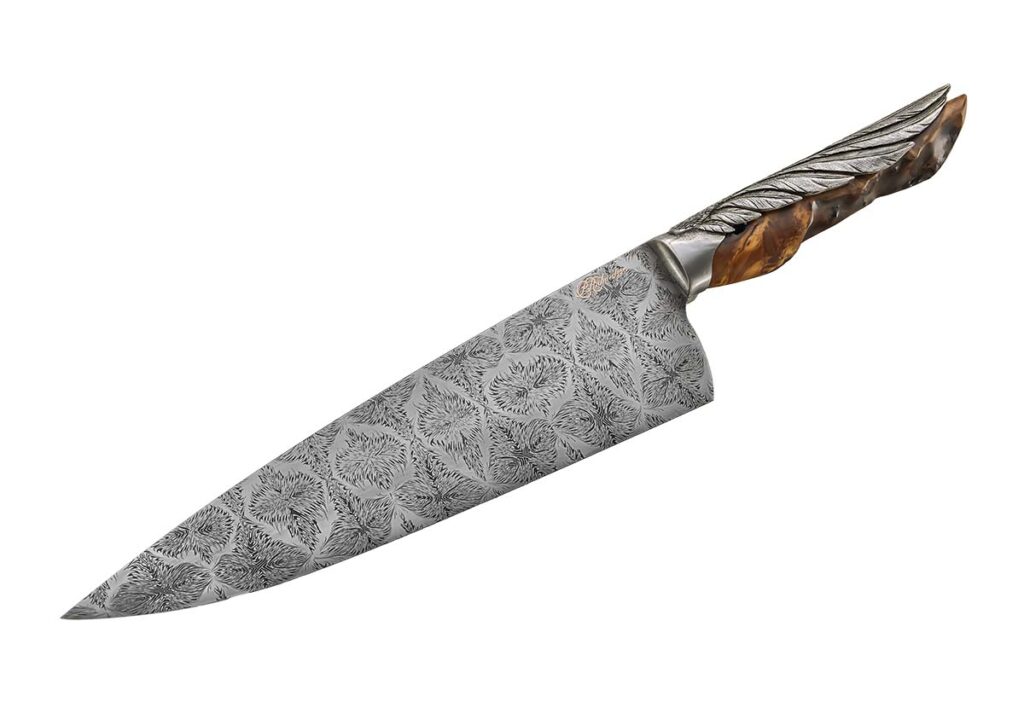
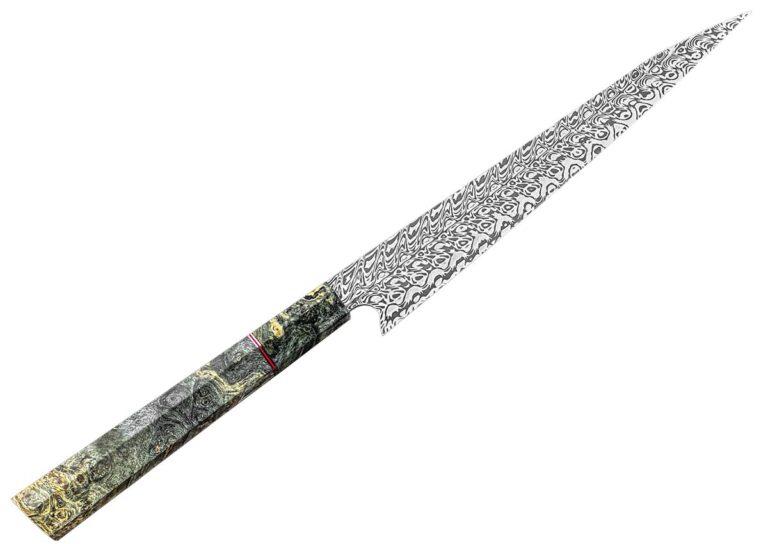
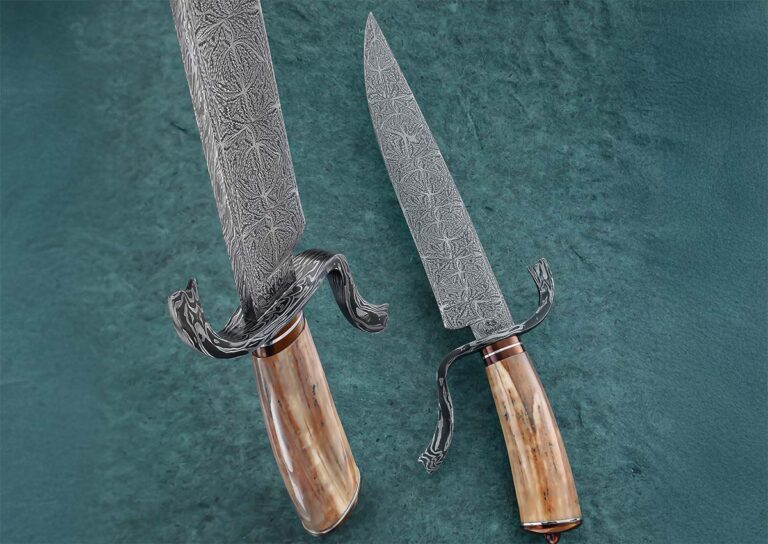
Pearce Richardson Silver Swan
Model type: Chef’s knife Blade length: 8” Blade material: Mosaic damascus of 1084 carbon and 15N20 nickel alloy steels Blade grind: Flat Scales: Turkish olive wood root burl Bolster: Mild steel Overall length: 13.25” Maker’s price for a similar knife: $6,500 Knife to know: The maker’s mark on the blade is brass inlaid; Pearce Richardson is an apprentice smith in the American Bladesmith Society Maker: Pearce Richardson, icarusforge.com (SharpByCoop image)
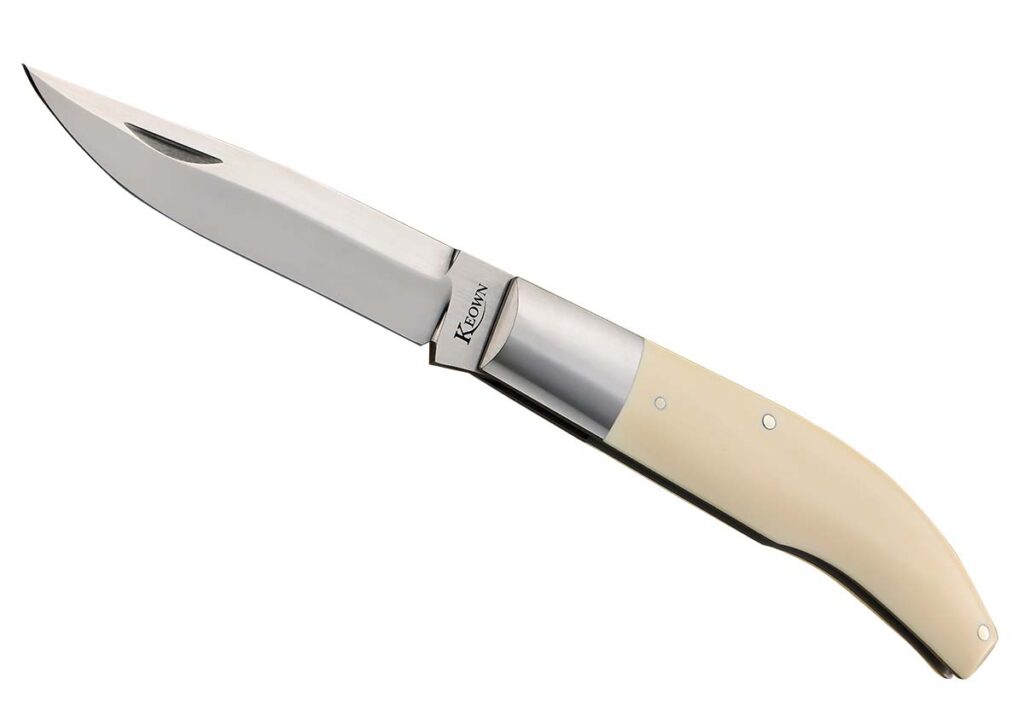
Daniel Keown Big City Fighter
Knife type: Slipjoint Blade length: 3.5” Blade steel: AEB-L stainless Blade grind: Hollow dagger Handle frame: 416 stainless Scales: Mammoth ivory Bolsters: 416 stainless Liners: Integral Closed length: 3.5” Maker’s price for a similar knife: $1,800 Maker: Daniel Keown, (SharpByCoop image)
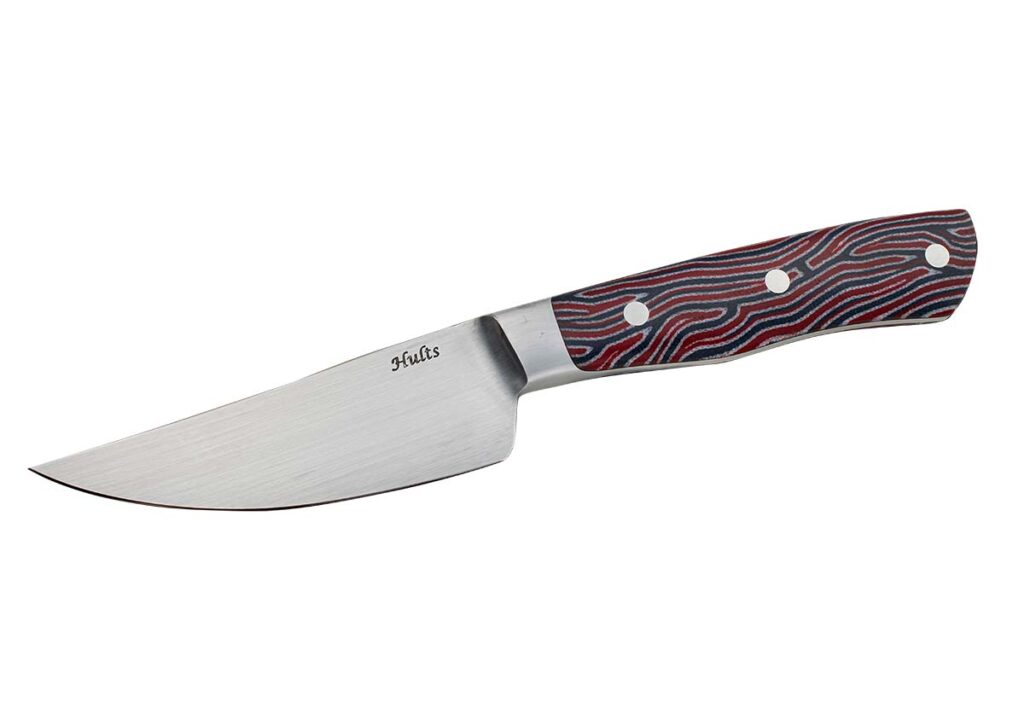
Josh Hults Camp Knife
Blade length: 4.5” Blade material: 1085H carbon steel Blade grind: Flat-ground integral Scales: G-carta Bolster: Forged integral Overall length: 9.5” Maker’s price for a similar knife: $500 Knife to know: Josh Hults is a journeyman smith in the American Bladesmith Society Maker: Josh Hults, southern-forge.com (Jocelyn Frasier image)
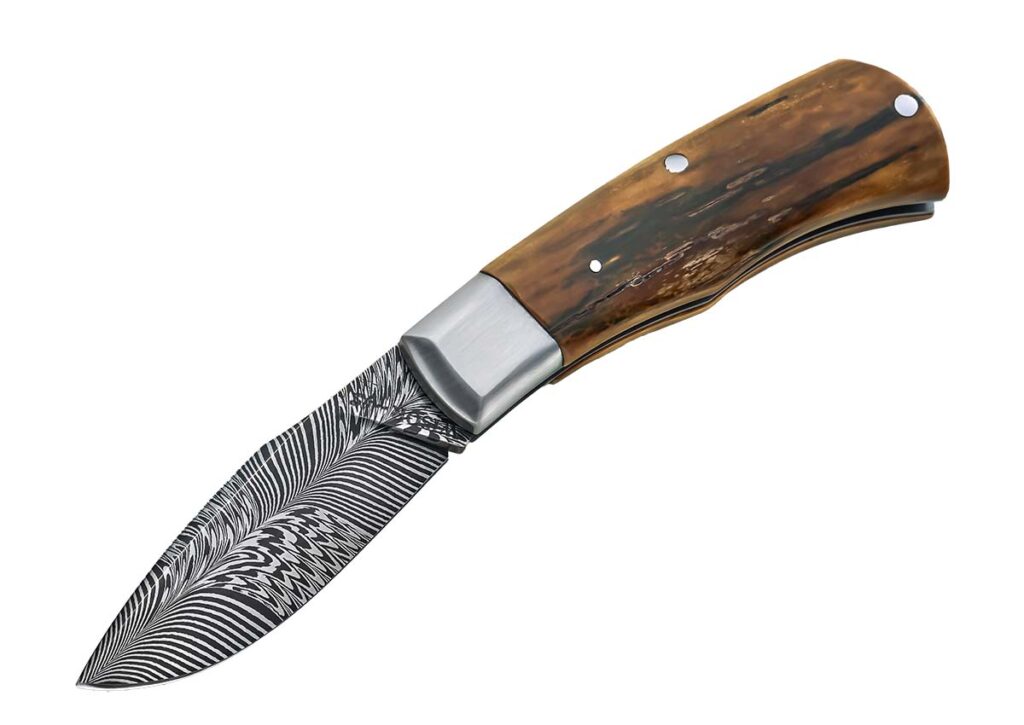
Josh Wisor Dress Slipjoint
Blade length: 3” Blade material: Feather damascus Blade grind: Flat Handle frame: Stainless steel Scales: Mammoth ivory Maker’s price for a similar knife: $1,300 Knife to know: Josh Wisor is a journeyman smith in the American Bladesmith Society Maker: Josh Wisor, wisorforge.com (SharpByCoop image)
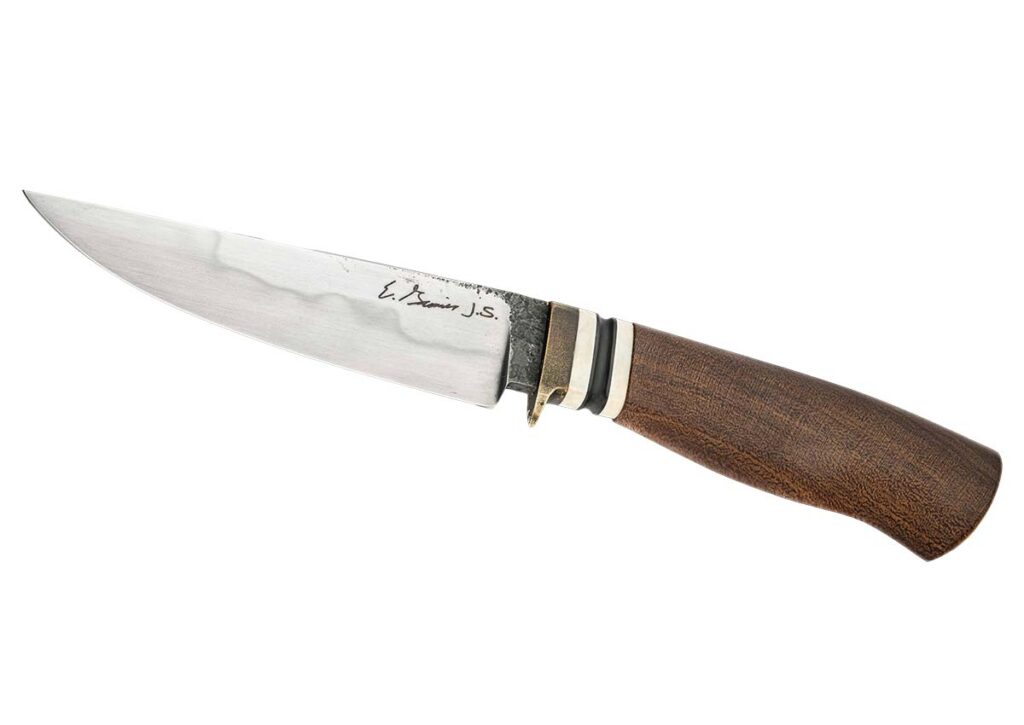
Erik Greiner Hunter
Blade length: 4.25” Blade material: 80CrV2 carbon steel w/hamon Blade grind: Flat w/secondary edge bevel Scales: Dolf wood Spacers: Oryx horn and warthog tusk liners Guard: Antiqued brass Overall length: 8.5” Maker’s price for a similar knife: $450 Knife to know: Erik Greiner is a journeyman smith in the American Bladesmith Society Maker: Erik Greiner, greinerblades.com (Jocelyn Frasier image)
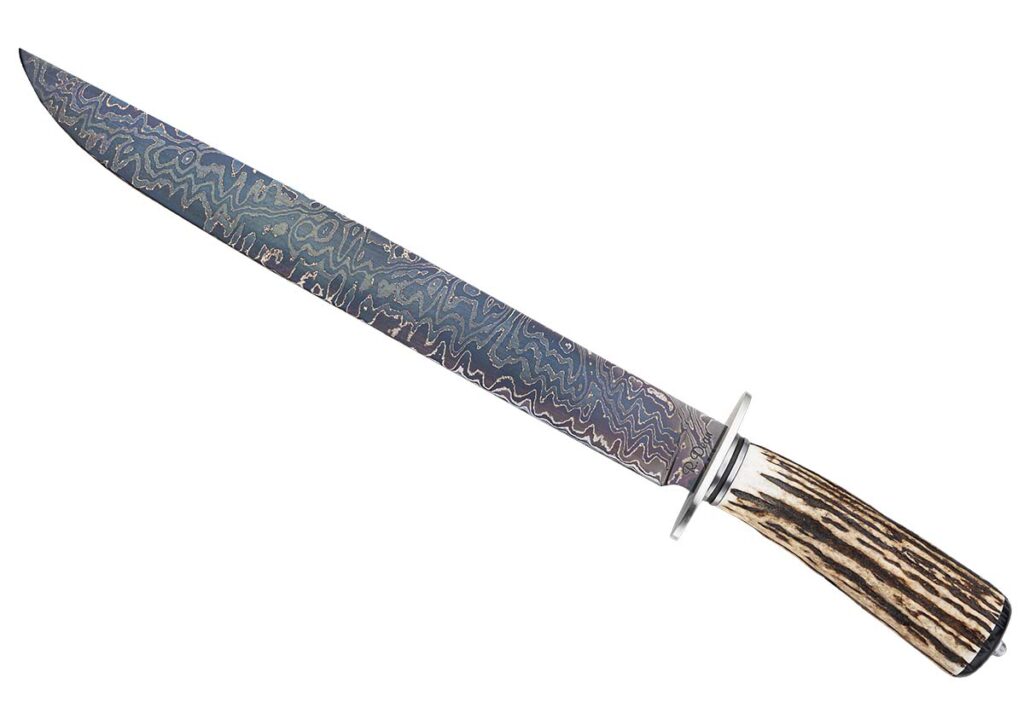
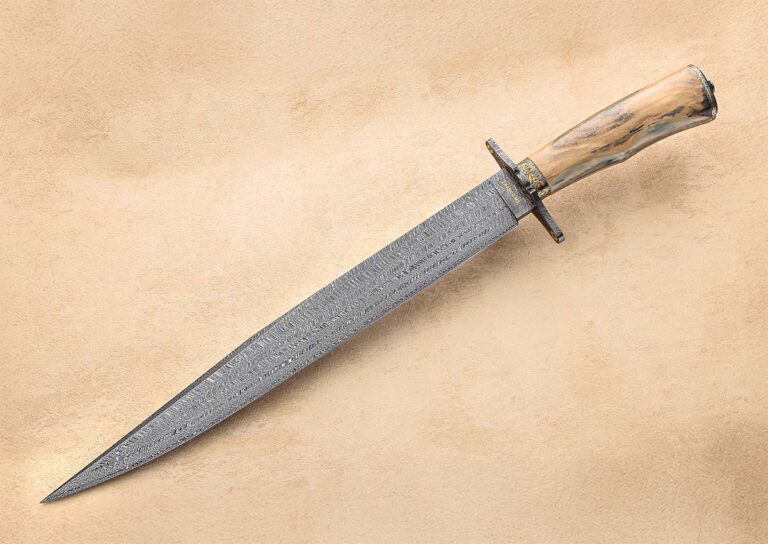
Rudy Dean Fighter
Blade length: 11.75” Blade material: 136 layers of colored damascus Blade grind: Full flat Scales: Stag Guard material: Nickel silver Spacer: Nickel silver Overall length: 17” Maker’s price for a similar knife: $1,750 Knife to know: Rudy Dean is a journeyman smith in the American Bladesmith Society Maker: Rudy Dean, rudydeancustomknives.com (Jocelyn Frasier image)
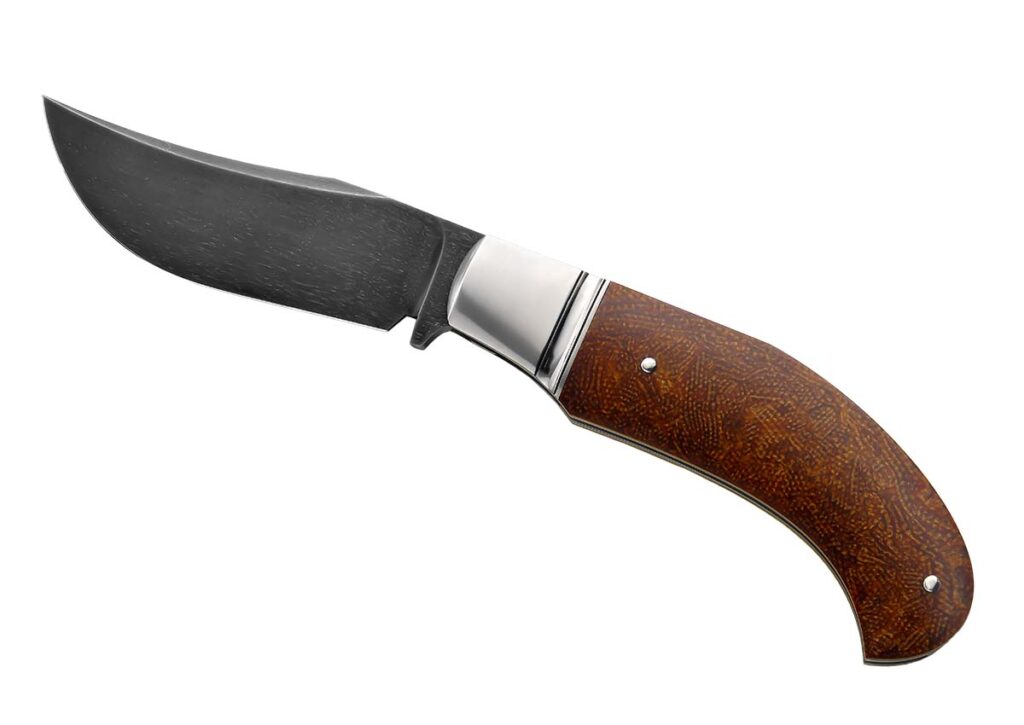
Honoré Vilain No. 7 Slipjoint
Blade length: 3” Blade steel: RWL-34 stainless by Damasteel Blade pattern: Clip point Handle frame: Z40 stainless Scales: Vintage rag Micarta® Liners: G-10 Bolsters: Integral Closed length: 4.5” Maker’s price for a similar knife: Contact maker for pricing Maker: Honoré Vilain (SharpByCoop image)
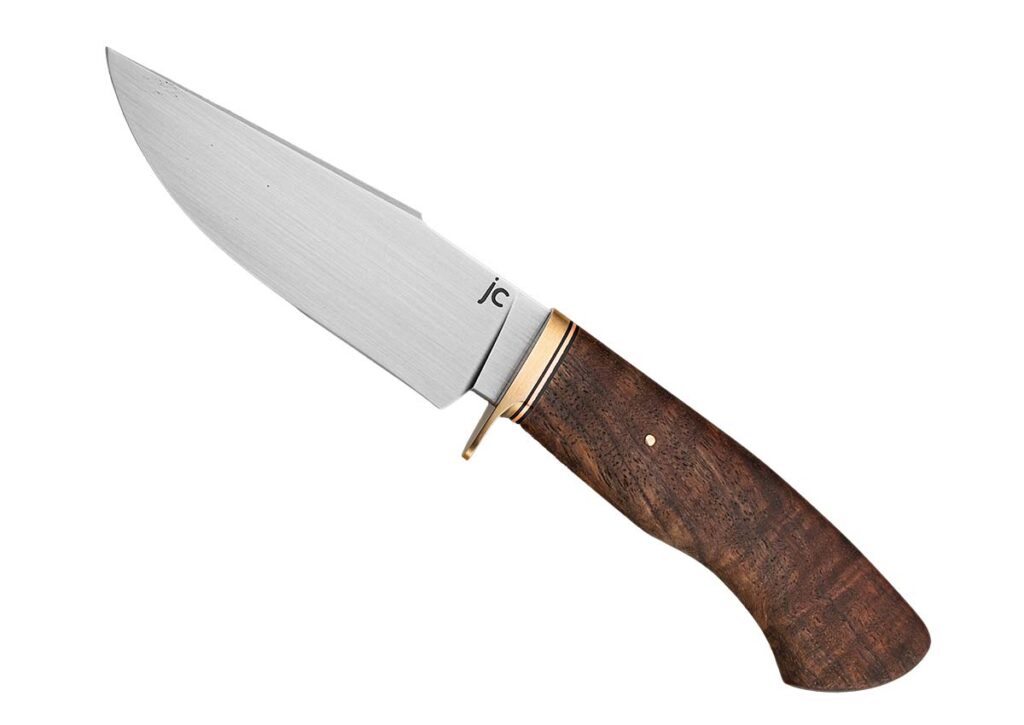
Jason Coy Clip-Point Hunter
Blade length: 4.5” Blade material: 80CrV2 carbon steel Blade grind: Flat Scales: Walnut Handle pin: Bronze, domed Guard material: Bronze Spacers: Black fiber and copper Overall length: 9.25” Maker’s price for a similar knife: $500 Maker: Jason Coy, jasoncoyknives.com (Jocelyn Frasier image)
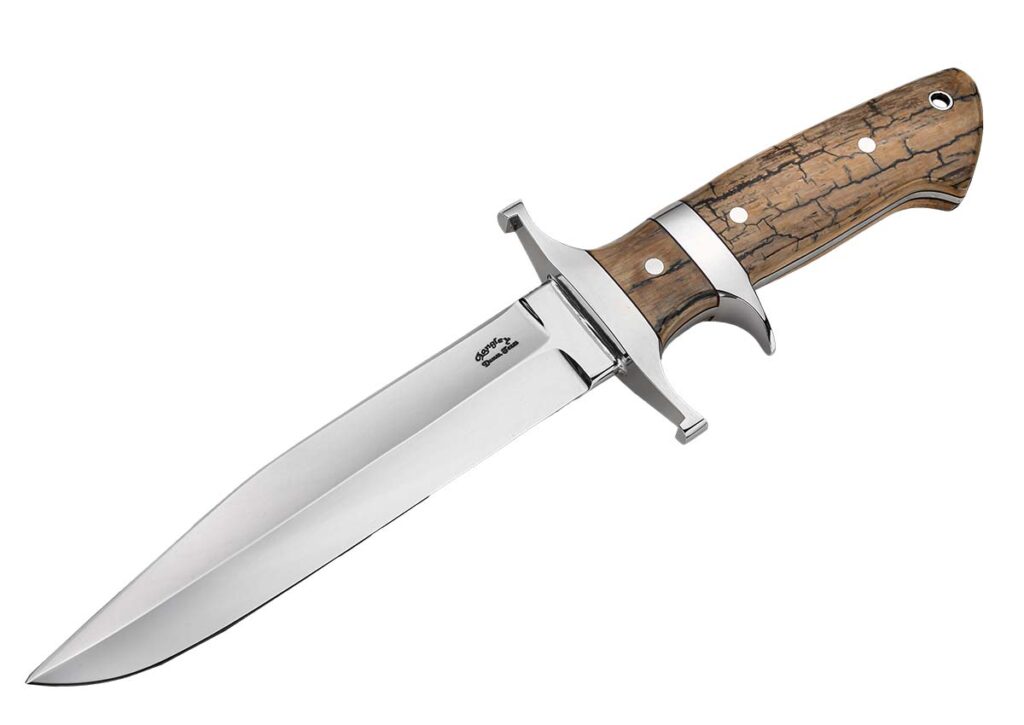
Gary Langley Subhilt Fighter
Blade length: 6.25” Blade steel: CPM 154 stainless Scales: Mammoth ivory Guard & subhilt: 416 stainless Overall length: 11.5” Maker’s price for a similar knife: Contact maker for pricing Knife to know: Gary Langley is a voting member of The Knifemakers’ Guild Maker: Gary Langley, gllangley.com (Jocelyn Frasier image)
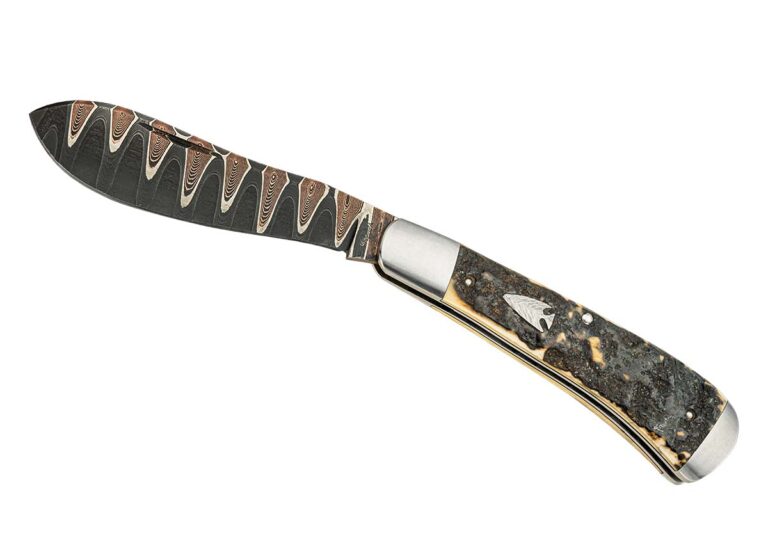
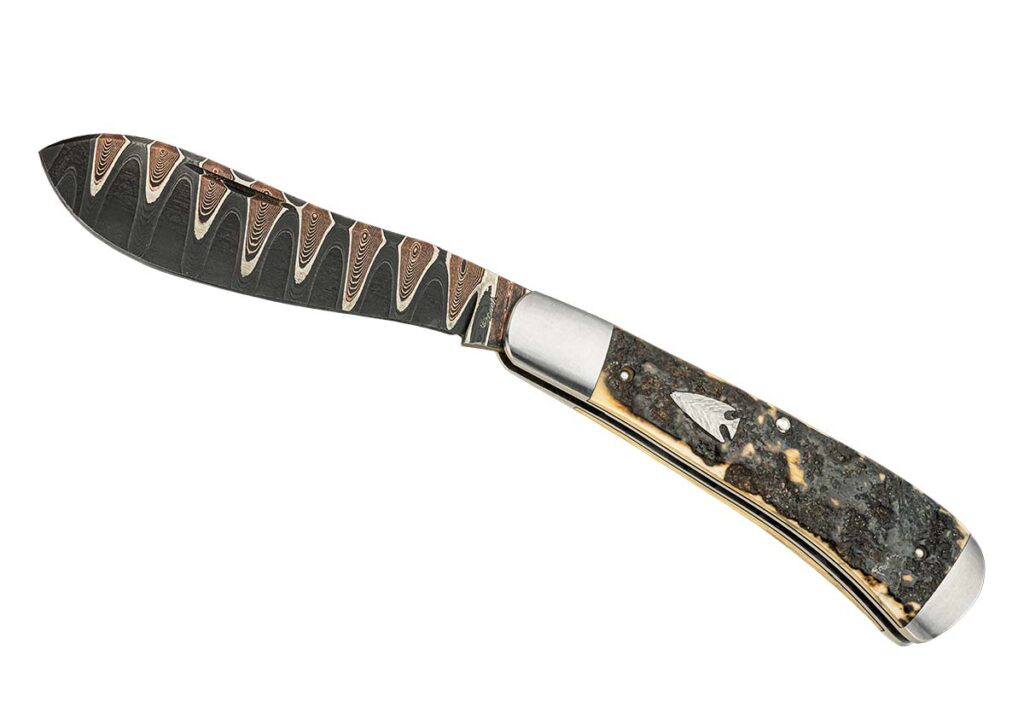
Bubba Crouch Trapper Skinner
Knife pattern: Trapper skinner Blade length: 3.5” Blade material: Copper san-mai by Baker Forge Blade grind: Hollow Scales: Barky mammoth ivory Bolster: Integral Liners: 416 stainless steel Backspring: Heat-colored CPM 154 stainless Closed length: 4.25” Maker’s price for a similar knife: $2,200 Maker: Bubba Crouch (Jocelyn Frasier image)
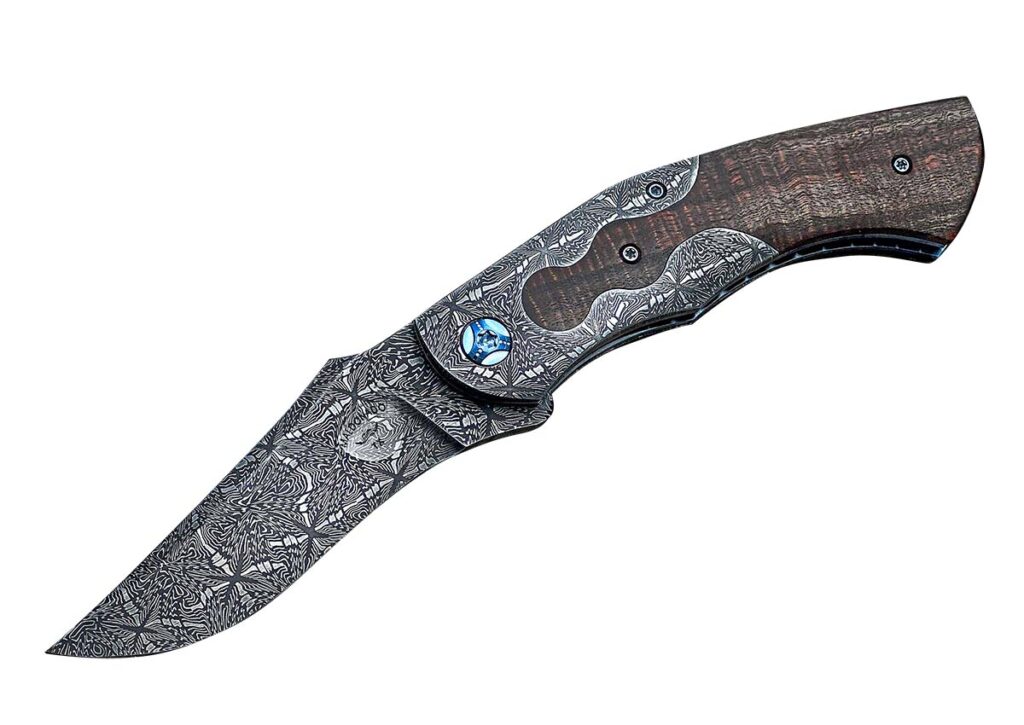
Eliot Maldonado Folding Fighter
Blade length: 3” Blade material: Mosaic damascus by Curt Zimmerman and Kelly Vermeer Vella Blade grind: Hollow Blade pattern: Clip point Blade opener: Flipper Bolster material: Same as blade Bolster design: Double keyhole Scales: Koa Handle hardware: Titanium Lock: Linerlock Closed length: 4” Maker’s price for a similar knife: $2,200 Maker: Eliot Maldonado (Jocelyn Frasier image)
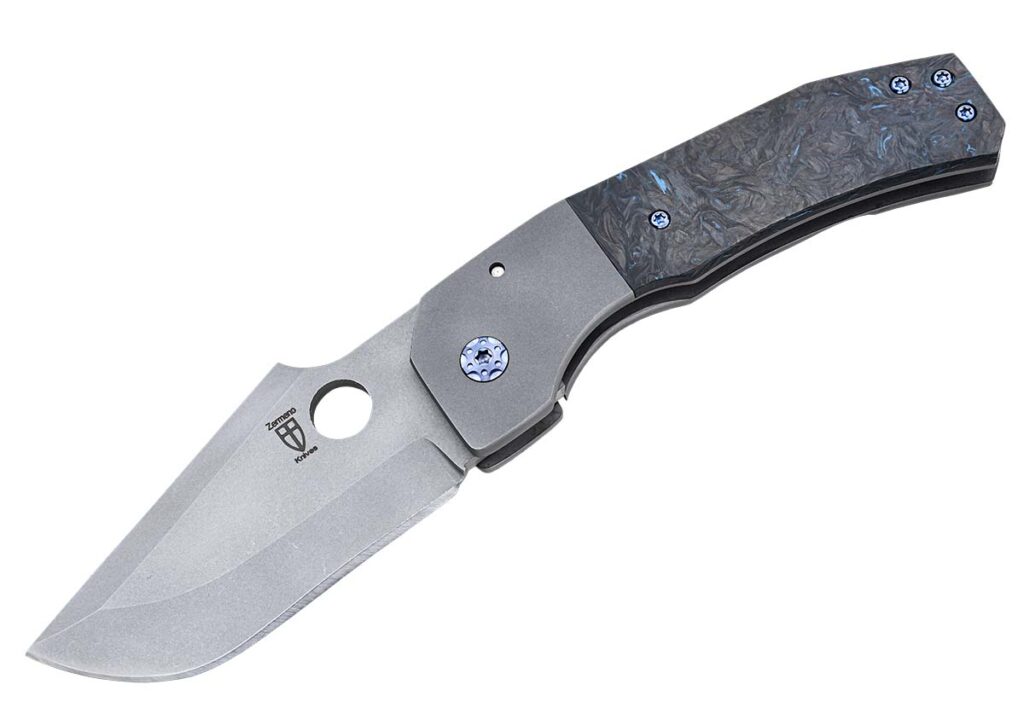
William Zermeno Folder
Blade length: 3.5” Blade steel: CPM 154 stainless Blade @thickest: 3/16” Blade grind: Hollow Handle frame: 160 titanium milled out Scales: FatCarbon® Handle screws: Titanium Lock: Framelock Lock stabilizer: Titanium Pocket clip: Titanium Closed length: 5.25” Maker’s price for a similar knife: $550 Maker: William Zermeno, wdzknives.com (Jocelyn Frasier image)
Only at the BLADE Show do the continents come together so well.
With the possible exception of Antarctica and a stray archipelago or two, knife fans and knifemakers from every continent and beyond will come together as one for the 44th Annual BLADE Show.
Sponsored by Smoky Mountain Knife Works, the BLADE Show June 6-8 in Atlanta’s Cobb Galleria Centre is where more knives—custom, factory, antique, classic collectibles, etc.—are exhibited, played with, bought and sold than at any other knife event. Nine-hundred-fifty exhibitors from 35 countries will showcase their newest, coolest knives and examples of most every edged tool extant, accessories, knifemaking supplies and equipment, and more. Knife purveyors, pro-knife legislation entities, knifemaking teachers and other cutlery outfits too numerous to mention will display their wares as the world knife community undertakes the yearly pilgrimage to Georgia.
WHAT: BLADE Show WHERE: Cobb Galleria Centre, Atlanta WHEN: June 6-8 DAYS and TIMES: Friday, 11 a.m.-6 p.m. (early bird ticket holders can enter at 10 a.m.) Saturday, 9 a.m.-6 p.m. Sunday, 9 a.m.-2 p.m.
Factory knife debuts, the educational knife instruction of BLADE University, and informative, entertaining and action-packed demos are among the sharp goodies awaiting show patrons. The BLADE Magazine 2025 Knife-Of-The-Year® Awards and the custom knife judging competition are others. The American Bladesmith Society (ABS) will name its latest master and journeyman smiths, and some of the best knives the ABS and The Knifemakers’ Guild and unaffiliated makers offer will be on display in all their sharpest glory.
And don’t forget The Pit, the after-hours meeting place in and around the sunken bar of the host hotel, the Renaissance Atlanta Waverly, where show patrons and exhibitors will party into the wee hours beginning the night before the show through the end of the weekend to compare knives, swap lies and otherwise celebrate the year’s most momentous cutlery weekend.
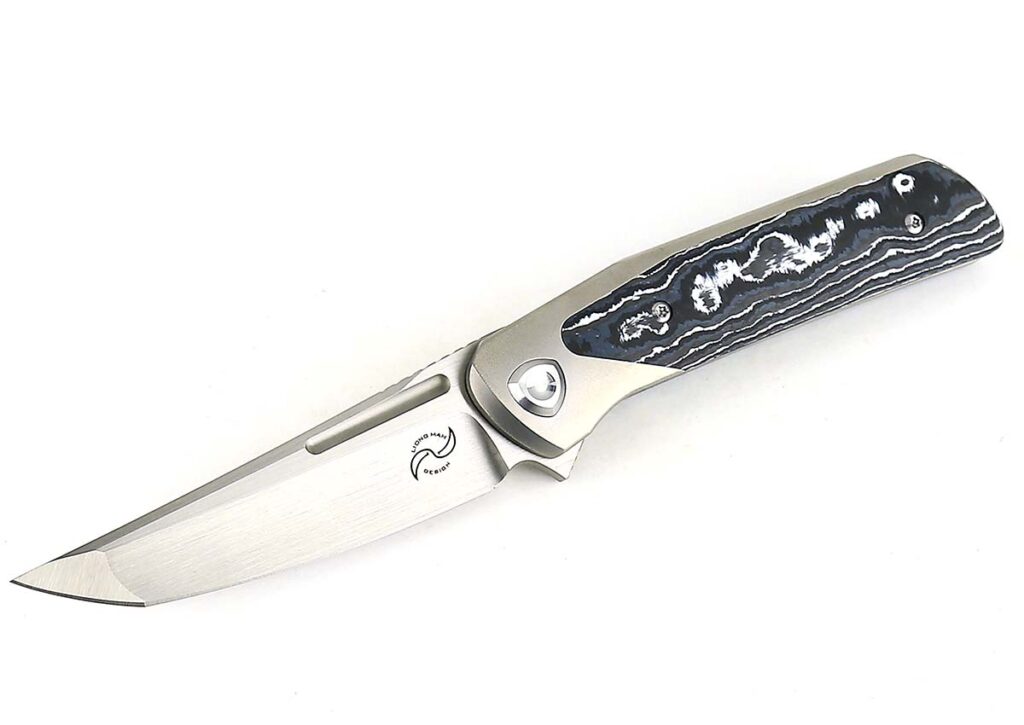
Liong Mah Knives will debut the Warrior 3 framelock folder in a 3.5-inch hand-ground traditional tanto blade of Bohler M390 stainless steel. Handle: titanium. Country of origin: China. MSRP: $420.
Among the outstanding makers from a potpourri of countries who will be exhibiting:
Argentina
CAS Brothers
Mauricio Daletzky
Javier Vogt
Australia
Bruce Barnett
Belgium
Jean-Louis Regel
Veronique Laurent
Samuel Lurquin
Brazil
Franco de Souza
Rodrigo Sfreddo
Fabio Barros
Gus Cecchini
Denmark
Jens Anso
China
WE Knife
Reate
Ketuo
Italy
Lionsteel
Alfredo Faccipieri
Fox Cutlery
Maniago Knife Makers (MKM)
Maserin
Japan
Kiku Matsuda
Koji Hara
Norway
Helle Knives
Portugal
Carlos Queiros
Russia
Sergey Shirogorov
South Africa
Bertie Rietveld
Theuns Prinsloo
Henning Wilkinson
Neels van den Berg
Sweden
Damasteel
Michael Andersson
United Kingdom
Grace Horne
Some of the leading American exhibiting makers will be BLADE Magazine Cutlery Hall-Of-Fame® members Bill Ruple and Steve Schwarzer; ABS master smiths Harvey Dean, Mike Quesenberry, Shane Taylor, David Lisch, Jordan LaMothe, Josh and Karis Fisher, and Andrew Meers; slipjoint makers Stanley Buzek, Tom Ploppert, Luke Swenson and Tim Robertson; Allen Elishewitz; Les George; Walter Brend; Murray Carter; Strider Knives; Hawk Knives; Vince Evans; Vladimir Kolenko; Owen Wood, a transplanted South African who now calls Texas home; factory companies Spyderco, Case, TOPS Knives, Chris Reeve Knives, Spartan Blades, Pro-Tech, Microtech, Kershaw, Squid Industries, KA-BAR and Heretic Knives; and many more.
Knives Of The Year Revamp
The BLADE Magazine Awards Reception (page 61) will be the Saturday night of the show on the second floor of the Renaissance Atlanta Waverly Hotel at the top of the escalators above The Pit. ABS master smith Harvey Dean (right) accepts his award for Best Fixed Blade at last year’s reception.
The BLADE Magazine Knife-Of-The-Year® Awards are the factory knife industry’s premier honors. In its ongoing effort to maintain the awards’ preeminent position in the knife industry, the BLADE Show is changing the way the winners are determined. Instead of being exhibited in the BLADE Show lobby display case for judging, this year the knives will be judged in a private room. In this way, BLADE Show officials believe, it will be much easier for the judges to fully examine the knives minus the hustle and bustle of onlookers and passersby that engulfed the display case area in past years.
In another change, a new category, Best Of The Rest, has been added to address entries that do not fit any of the existing award categories. Moreover, the Automatic Knife Of The Year sponsored by PVK.com that debuted last year returns.
As in the past, the entries are limited to BLADE Show factory booth exhibitors, all of whom received the rules well before the show outlining the new changes. Like last year, the winners will be announced and presented during the BLADE Magazine Awards Reception Saturday at 8 p.m. in the room on the floor above The Pit. The winners will be listed on BLADE’s blademag.com after the awards reception, and a list will be posted outside the show entrance Sunday morning.
Knife-Of-The-Year® Awards Categories:
Overall Knife of the Year
Most Innovative American-Made Knife of the Year
American-Made Fixed Blade of the Year
Most Innovative Imported Knife of the Year
Imported Fixed Blade of the Year
Best Buy of the Year
American-Made Folder of the Year
Investor/Collector of the Year
Imported Folder of the Year
Manufacturing Quality Award
Automatic of the Year
Accessory of the Year
Kitchen Knife of the Year
Collaboration of the Year
Best of the Rest Award
BLADE University
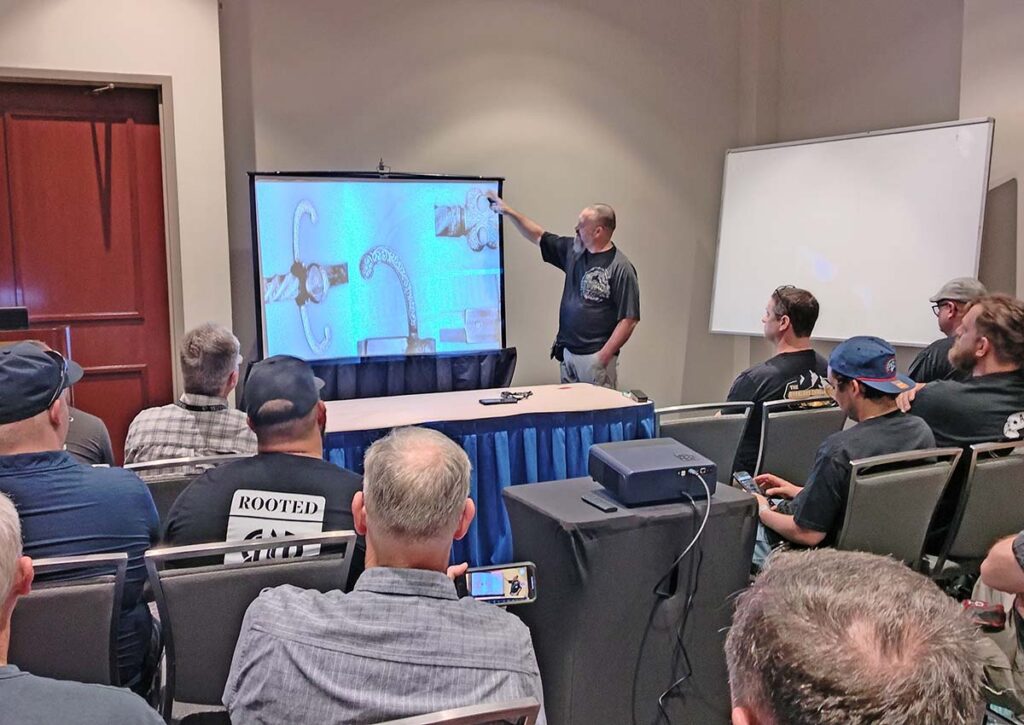
BLADE University classes will run the Thursday before the show through show Saturday. Neels van den Berg—here giving a class on quillon daggers at last year’s show—will conduct the class “Level Up Using Lasers, Ninjas and Other Cool Tools.” For the full BLADE U.
Get current on the latest knifemaking techniques and other trending sharp subjects during the 12th Annual BLADE University on Thursday, Friday and Saturday.
Sponsored by Work Sharp, BLADE University has the most extensive schedule of knife, knifemaking and other instruction held at any knife show.
Thursday, June 5
Material Conservation for the Forging Smith, 4-5 p.m., Room 104. Award-winning bladesmith Mareko Maumasi shares techniques and approaches he uses to reduce guesswork and material waste in the workshop.
Friday, June 6
Material Conservation for the Forging Smith, 4-5 p.m., Room 104. Award-winning bladesmith Mareko Maumasi shares techniques and approaches he uses to reduce guesswork and material waste in the workshop. FRIDAY, JUNE 6
Fundamentals of Grinding, AmeriBrade and guest grinders, 8 to 9:30 a.m., The Courtyard. AmeriBrade and guest makers provide a general overview on grinds, techniques and different equipment.
Deep Dive into Culinary Knives, 10 to 11:30 a.m., Room 103. Mareko Maumasi returns to help collectors and makers better understand the nuances of high-performance culinary knives.
Brakimo: Forged for the Field, Room 107. Nick Italiano, Recoil OffGrid associate editor and host of the Raise The Flag Podcast, interviews knife designer Joe Flowers on the untold story of how the TOPS Knives Brakimo knife was crafted for survival and other uses.
Take Damascus Etching to the Next Level, 1:30 to 2:30 p.m., Room 103. Baker Forge & Tool’s Greyson Weltyk of Grey Blades and Jordon Berthelot of JB Blades teach step-by-step processes on how to use Gator Piss etchant to enhance intricate patterns in damascus, including in-person demos with damascus knives.
How To Steal Designs (But Not from Other Knifemakers) and Make Them Your Own, 2 to 3 p.m., Room 113. Drawing inspiration from such sources as Byzantine-era cathedrals, Art Deco and Art Nouveau and others, Jason Knight shows you how to take your knife idea and make it uniquely yours without copying anyone else’s work.
Hands on Sharpening, 3:30-4:30 p.m., Room 113. Bring your knife or a borrowed one and learn the progression of shaping a bevel, sharpening and edge maintenance from the team at Work Sharp.
Leather Sheath Making Tips, Tricks & Tools, 4:30 to 5:30 p.m., Room 107. John Dennehy shares the sheath-making tips he’s learned after working leather for almost 50 years, including leather selection, the tools he uses and why he uses them.
Saturday, June 7
Elevating Your Handle Appearance: Spine Filework, Handle Shapes and Pin Placement, 8:30-9:30 a.m., Room 113. Knifemaker Kyle Daily shares how to embellish your knife with distinctive features that go far beyond standard production models.
Demystifying Damascus, Mareko Maumasi, 9:30 to 11 a.m., Room 104. Mareko Maumasi helps collectors gain a better appreciation for the skill required to make damascus patterns and deepens the makers’ understanding of pattern design and composition.
The Cutting Edge, Nick Italiano, 9:45 to 10:45 a.m., Room 107. Nick Italiano returns to discuss the nuances of various blade grinds. From common everyday uses to survival situations, Nick covers several common grinds and their real-world function.
Level Up Using Lasers, Ninjas and Other Cool Tools, 12:30 to 1:30 p.m., Room 113. Join Neels van den Berg and dive into how laser engravers, digital design, and jigs and process design can streamline your workflow and improve your work. Plus, explore the mindset and discipline—the “ninja skills”—that separate good makers from great ones.
Designing Knives: Philosophy, Tools and Inspiration, 2:15 to 3:15 p.m., Room 104. Jens Anso shares his approach to knife design, including how he thinks about form and function, the tools he uses and where he finds inspiration.
You Can’t Make Knives! 2:30-3:30 p.m., Room 107. Jason Knight returns to explain why he ignored the warnings and made knives anyway—and how you can survive, flourish and establish yourself as a timeless, classic knifemaker.
How to Select the Best Steel for Every Knife, 4 to 5 p.m., Room 104. Steel metallurgist Dr. Larrin Thomas covers which steels are more optimal for a large chopper, kitchen knife, folder and more, covering cost, edge retention, forgeability, grindability and other factors.
The judges will have their hands full during the custom knife judging competition.
Leading industry authorities will pick the best custom knives by BLADE Show exhibitors in the annual knife judging competition, with the winners announced during the BLADE Magazine Awards Reception Saturday at 8 p.m.
The categories are:
Hugh Bartrug Best Of Show
Best Fixed Blade
Best Damascus
Best Kitchen Knife
Best Miniature
Best Art Knife
Best Fighter
Best Bowie
Best Handle Design
Best Tactical Folder
Best M.A.C.K. (Machine Assisted Custom Knife)
Best Utility Hunter
Best Folder
Most Innovative Design
Best Knife Collaboration
Best Sword
Best New Maker
Best Of The Rest
The competition is open to the show’s custom knife exhibitors only. The winners will be announced on BLADE’s blademag.com website after the awards ceremony, and a list will be posted outside the show entrance Sunday morning.
World Championship Cutting Competition
The BLADE Show World Championship Cutting Competition will be conducted by BladeSports International (BSI) and held in The Courtyard, the parking lot of the host hotel, the Renaissance Atlanta Waverly, Saturday at 4:30 p.m. Attendance is free to BLADE Show ticketholders.
Returning to defend their titles in the men’s and women’s divisions are the first-ever same-year husband-and-wife champs: Mr. and Mrs. James and Michael Clifton. While the BSI Nationals (April 26) were still to be held at press time, 16 men and 14 women had qualified for the BLADE Show World Championship.
Men’s Qualifiers
David Moore
James Clifton
Ben Propst
Anthony Stovall
Mike Eubanks
Gary Bond
Eldon Johnson
Daniel O’Connor
Hunter Eubanks
David Barnes
Chris Berry
Ben Leyder
Donavon Phillips
Jayson Pilosi
Daniel Thompson
Aaron Tarone
Women’s Qualifiers
Jo Carothers
Sara Maly
Terri Lynn
Kenda Speaks
Sue Ann Propst
Michael Clifton
Robin Berry
Juli Coon
Lindsay Zehrung
Rhiannon Sibley
Lauren Kalns
Cindy Pilosi
Katie Adams
Jamie Doung
Bali Grand Master
Top balisong flippers will vie for the title of “Grand Master” in the 9th Annual Battle for Bali Champion sponsored and conducted by Blade HQ.
BLADE Show ticketholders are invited to watch the competition on the floor above The Pit of the Renaissance Atlanta Waverly Hotel on show Saturday from noon to 2 p.m. Competitors will start flipping knives at 12:30 p.m.
The top three finishers will receive prizes and all participants will get swag bags. Steven Ash was crowned Bali-Champion last year, with Corbin Lovins finishing runner-up for the second year in a row and Seiji Brown third.
Cutlery Hall-Of-Fame
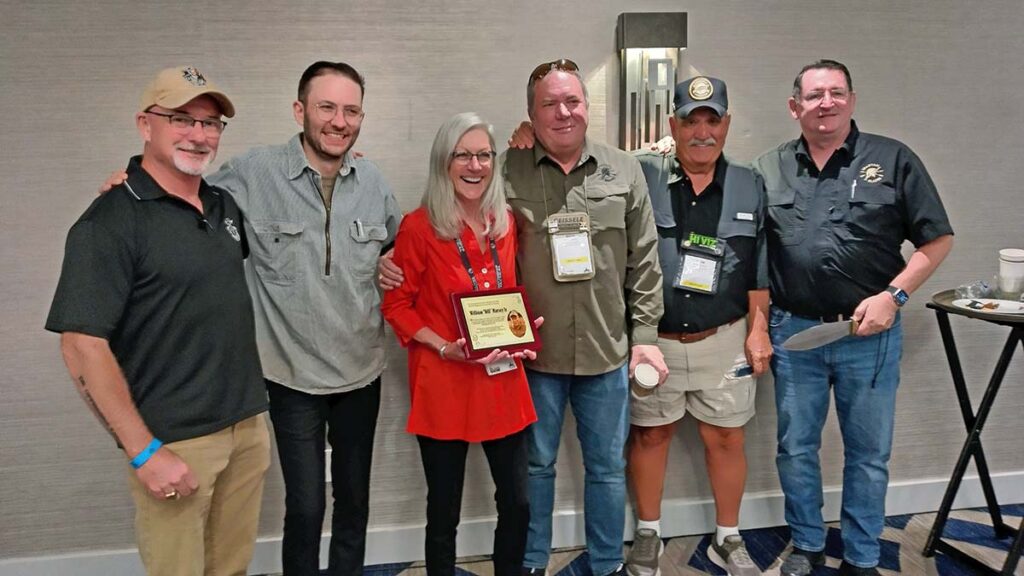
The BLADE Magazine Cutlery Hall-of-Fame® inductions (page 61) will be the Saturday morning of the show. William “Bill” Harsey, Jr., was inducted by his friends at last year’s ceremony. From left: U.S. Army Special Forces (retired) Col. Joseph Osborne; Tim and Anne Reeve (holding Bill’s Hall-of-Fame plaque) of Chris Reeve Knives; Mark Carey, Spartan Blades; Dean Felides of Old Yankee Cutting Boards; and Curtis Iovito, Spartan Blades.
The BLADE Magazine Cutlery Hall Of Fame® will formally induct its new members at 8 a.m. show Saturday in the Kennesaw Room of the Renaissance Atlanta Waverly Hotel. Tickets are required ahead of time for the ceremony, which includes a breakfast. Seating is limited. For ticket information, email [email protected].
Hall of Fame inductees includes:
Harvey Dean
Rick Dunkerley
Stanley Fujisaka
Dr. James R. Lucie
Alfred Pendray
James Schmidt
Daniel Winkler
Karen Shook
Classroom Seminars
Classroom seminars are held inside the Cobb Galleria. Admission is free to BLADE Show ticketholders:
The History, Mystery, and Meaning of Emerson Knives: Emerson Knives has always been more than just a knife company. Don’t miss this opportunity to spend an hour with Ernest Emerson as he pulls back the veil to give you the history and the reasons Emerson Knives has come to represent more than just knives. You’ll also get a chance to ask questions about all things Emerson from Ernest himself.
The Unadulterated Story of Knifemaking: High-Endurance Performance Knife master smith/BLADE® field editor Ed Fowler will examine what made the great makers great. They could have gone into other occupations—why didn’t they? Are today’s knife goals different than they were then? What are the ways to price your knives? What can makers do to gain their markets? Ed will examine the topics as only he can.
Saturday
8 a.m.: BLADE Magazine Cutlery-Hall-Of-Fame Inductions, Kennesaw Room, Renaissance Atlanta Waverly Hotel (tickets required in advance; contact [email protected])
11:30 a.m. to 12:30 p.m.: The Unadulterated Story of Knifemaking, High-Performance Endurance Knife master smith/BLADE® field editor Ed Fowler, Room 107
Noon to 2 p.m.: 9th Annual Battle for Bali-Champion, conducted by Blade HQ, on the second floor at the top of the escalators of the Renaissance Atlanta Waverly Hotel (flipping starts at 12:30)
Noon to 3 p.m.: Buck Collectors Club, Room 103
12:30 to 1:30 p.m.: The History, Mystery, and Meaning of Emerson Knives, Ernest Emerson, Emerson Knives, Inc., Room 104
4:30 p.m.: BLADE Show World Championship Cutting Competitions, conducted by BladeSports International in The Courtyard
Knife For A Novel
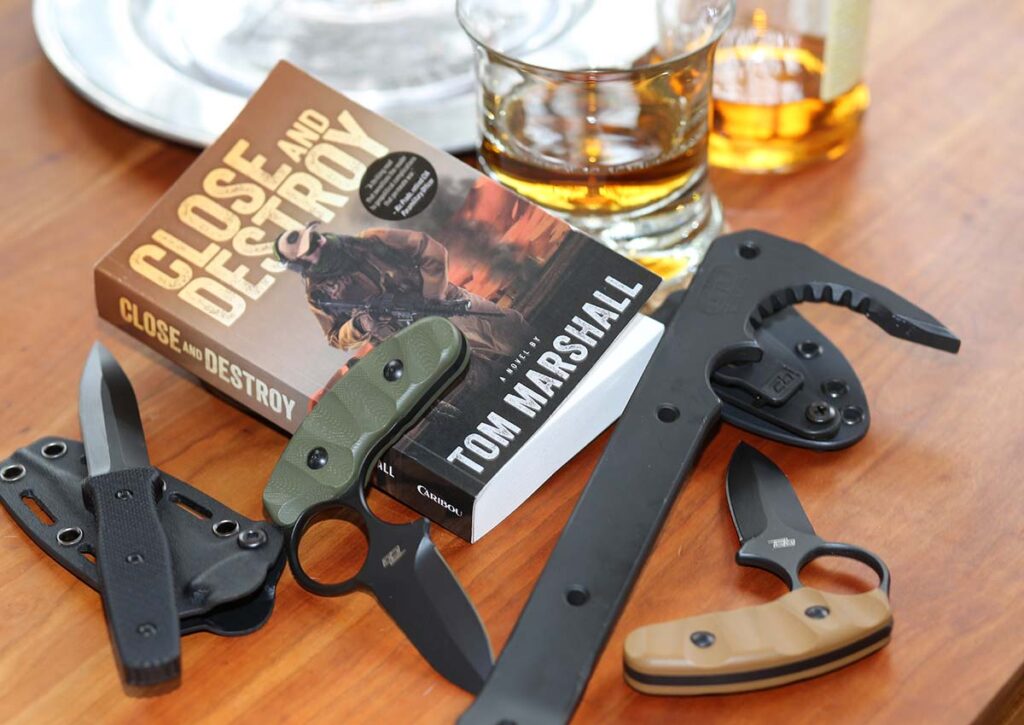
Author Tom Marshall designed the Colonel Blades Contingency dagger (left) for his debut novel, Close and Destroy.
Colonel Blades will showcase the Contingency dagger designed by military veteran and author Tom Marshall specifically for his debut novel, Close and Destroy, at the BLADE Show.
While training and researching for the book, Marshall realized he hadn’t found an EDC fixed blade that did quite what he wanted for the characters in his story. He shared his vision with Colonel Blades, who brought it to life with the no-frills, EDC-friendly Contingency in AUS-8 stainless steel and G-10. The author will be at the Colonel Blades table signing copies of the novel that inspired the knife.
Colonel Blades also will display the BRB, a new breaching tool done in partnership with Good Dude Concepts, a company with deep roots in tactical law enforcement. The BRB is a compact, lightweight breaching tool for residential structures and vehicle extrication. It is especially equipped for vehicle work with its glass-ripping profile, a feature that allows it to literally saw through laminated safety glass such as the kind used in car windshields.
Colonel Blades will display its latest knife, the Yoru push dagger, as well. Made by Fox Knives, the compact, sturdy push knife features an oversized finger hole and thumb gimping to maximize the ergonomic experience.
What’s Next?
The final BLADE Show-sponsored event for 2025 will be BLADE Show West, Oct. 10-11 at the Salt Palace Convention Center in Salt Lake City, Utah. For details, visit bladeshowwest.com. BLADE Show Texas 2026 will be March 20-21 at the Fort Worth Convention Center. Visit bladeshowtexas.com for more on it. And, of course, it’s never too late to start thinking BLADE Show 2026 June 5-7 at the Cobb Galleria Centre in Atlanta. For details, visit bladeshow.com.
Editor’s note: Smoky Mountain Knife Works is the official sponsor of BLADE Show 2025. WE Knife is the floor plan sponsor. Rosecraft Blades is The Pit sponsor. Work Sharp sponsors BLADE University. Nottingham Tactical is the lanyard sponsor. Hogue Knives is the housing sponsor. EKnives is the concessions sponsor. Kizer Cutlery is the Wi-Fi sponsor. The other sponsors are Heretic Knives, TOPS Knives, Reate Knives, QSP, Artisan Cutlery, McNees Knives and Ketuo/Rike Knives.
Blade-o-philes from far and wide converged to cut in Fort Worth.
Knives and knifemakers with a worldly flair, a strong contingent of domestic cutlers, and makers and knife enthusiasts with a nod toward a promising future helped make BLADE Show Texas another entertaining way to start off the new knife show year.
Sweden’s Anders Hogstrom, South Africa’s Bertie Rietveld and Brazil’s Franco de Souza were among the overseas headliners, and BLADE Magazine Cutlery Hall-of-Fame® member Bill Ruple, Harvey Dean and Evan Nicolaides led the American charge, while 10-year-old Adam Storts of Duncan, Oklahoma, brought his special kind of fixed blades to the Fort Worth Convention Center March 6-8.
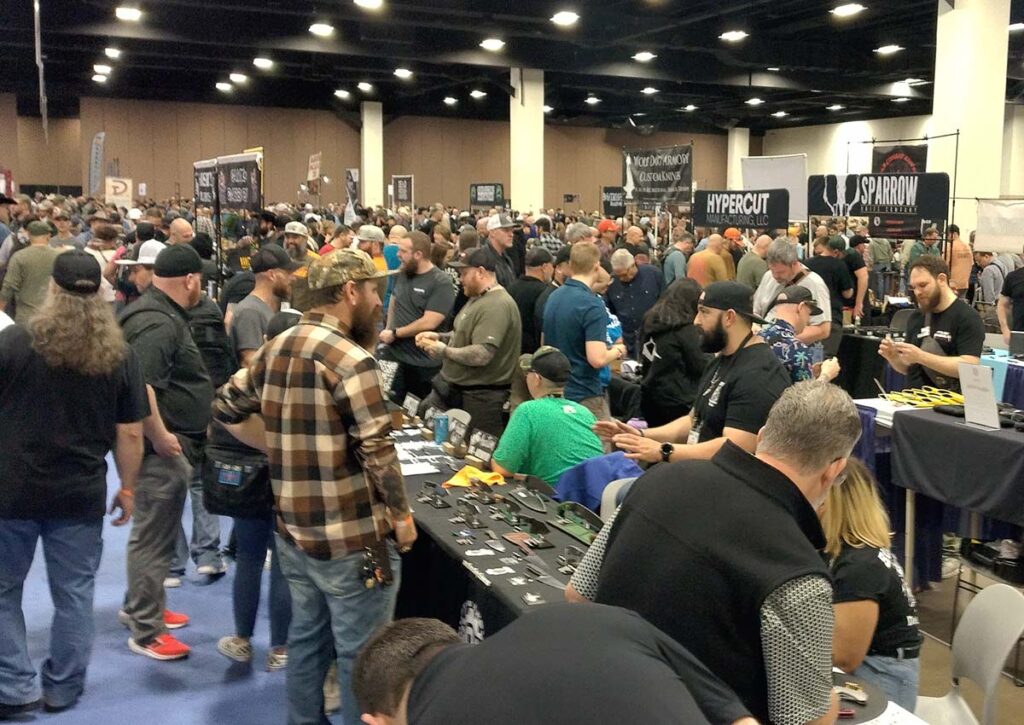
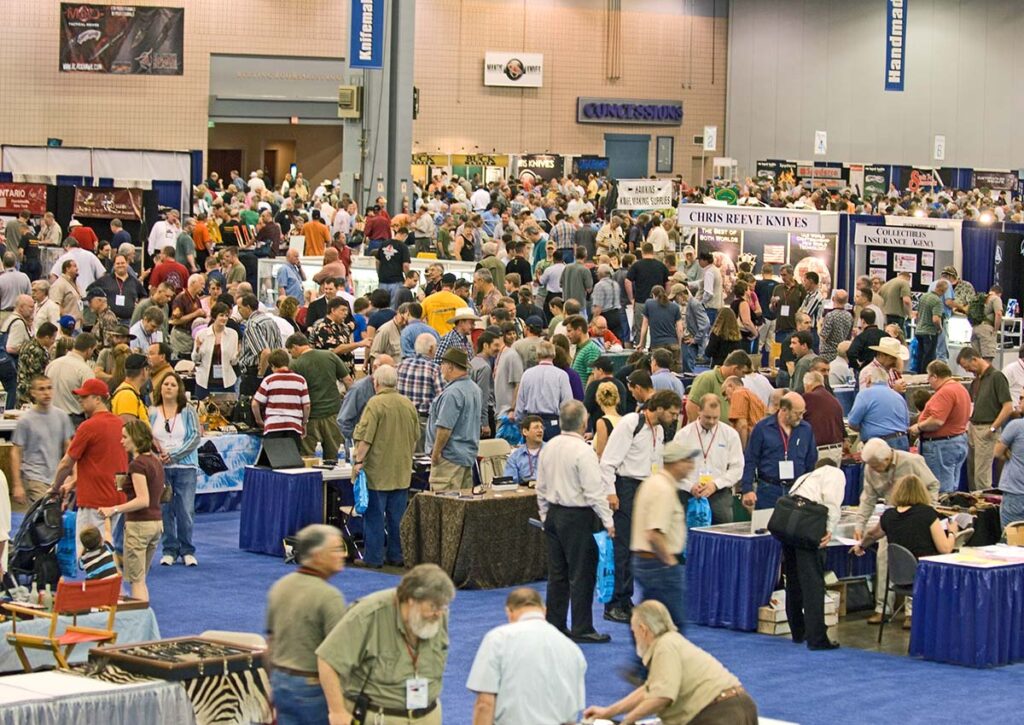
Knife fans and knives go wall-to-wall at BLADE Show Texas.
Adding to the youthful mix was knifemaker Tom Overeynder—not because he’s young but because he gave a knife to a happy 10-year-old knife enthusiast. (No word on whether the youngster gave Tom a penny in return; check out this story to learn more about the penny for a knife tradition). Meanwhile, the factory section was a beehive of activity throughout the show, drawing patrons of all ages.
Knife sales, the barometer of any show, were a mixed bag. Most of those who didn’t sell as well as they would have liked attributed much of it to an economy that was still in the throes of a downturn caused by inflation and lingering high prices for standard consumer goods and services. As a result of the economic uncertainty, many folks were understandably cautious about making large purchases. Exhibitors who did sell well, though, were upbeat.
FACTORY BEST IN SHOW/BEST IMPORTED The Poikilo Blade VK-Zen framelock folder has a 3.25-inch blade of Bohler M398 stainless steel with a “V” grind. Handle and pocket clip: titanium. Designer: Vulpex Knives. Closed length: 4.25 inches. Country of origin: China. It comes in four different configurations with MSRPs ranging from $380 to $700.
“I had a great show,” noted Jared Oeser. “I brought eight custom knives along with some productions and sold them all.” Business also seemed good for members of the South Texas Slipjoint Cartel, with Phil Jacobs selling 10 of the 14 knives he brought and Toby Hill selling eight of nine.
It was the first BLADE Show Texas for David Lisch and he liked what he saw. “It’s a great location and the size was good.” He brought 13 knives and sold 11, though only two to collectors. “The rest went to purveyors,” he noted, adding with a wink, “I was glad to have them there.” So was Paul DiStefano. “I brought eight knives and sold seven,” he wrote, “all of them to dealers and not individual collectors. I’m definitely not complaining about that.” Overeynder brought seven knives, selling four of his handmades and three out of his collection. “I also sold one a few days after the show to a guy who couldn’t be there,” he stated.
BLADE Show Texas Attendance
Sweden’s Anders Hogstrom appears pointedly pensive.
Show attendance graded out very well overall. “I think Saturday had more people than Friday. It seems like the local attendance in Texas is good,” Oeser observed. “I did meet new customers and friends, which was really great.” Overeynder indicated there was a “pretty constant flow of people,” agreeing with Oeser that Saturday had the most traffic, though noting it seemed to slow after 2 p.m. Considering the high number of exhibitors, Lisch said attendance was “just OK.” Added Andy Wang of Poikilo Blade, “Friday was moderately busy for us but Saturday we were packed almost the entire day.”
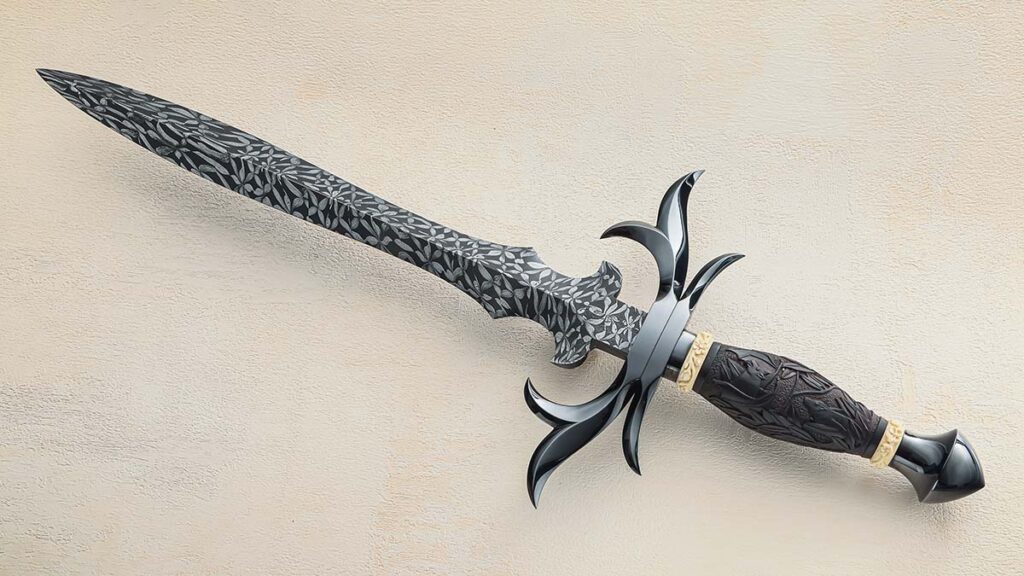
Josh Taylor brought seven pieces and sold two, including his award-winning sword cane and a fluted dagger. “I love BLADE Show Texas,” he wrote. “It was the first show I did in the BLADE Show world and I have been back four years in a row. Attendance seemed pretty solid considering the cold and the rain. My table was covered up with people for both days.”
“The attendance was all right. It seemed to be the same at what most shows are at, which from when I started going to shows seven years ago is slightly less,” DiStefano observed. Nonetheless, he indicated he enjoyed himself. “I thought the show was run extremely well and everyone involved was incredible! I for sure plan on coming back every single year. It was a great time.”
BLADE Show Texas Awards
The custom and factory knife judging competitions recognized an array of outstanding work. The custom knife judges were Michael Vagnino, Lin Rhea and Bill Burke, while the factory judges were Tom Krein, David Carver and Clayton Ensigner.
The custom winners were: Best in Show and Best Fighter: Franco de Souza; Best Folder and Best in Show Contender: Tom Overeynder; Best Art Knife: Paul DiStefano; Best Bowie: David Lisch; Best Damascus: Pedro Fornari; Best EDC: Evan Nicolaides; Best Hunter: Josh Fisher; Best Kitchen Knife: Luke Dellmyer and Richard Patterson; Best Slipjoint: Evan Nicolaides; Best M.A.C.K.: Jared Oeser; and Best of the Rest: Josh Taylor.
CUSTOM BEST ART KNIFE Paul DiStefano won for Megachiroptera with an 11.5-inch blade in a “mosaic damascus of with leaves,” a theme that carries over to the African blackwood handle carved as a eucalyptus tree abundant with eucalyptus leaves. Overall length: 17.5 inches.
The factory winners: Best in Show and Best Imported Knife: Poikilo Blade VK-Zen; Best American Made Knife: Dauntless Manufacturing Clifft; Best EDC: Dauntless Manufacturing Moss; Best Fixed Blade: QSP Viper; Best Folder: Pro-Tech/Vero Engineering Synapse Auto; and Best of the Rest: Vero Engineering Vortex TI Maintenance Kit.
Knife companies will debut their latest at BLADE Show 2025.
Knives and plenty of them, the BLADE Show is the Mecca for anything that cuts, hack or chops. It’s also a launching pad.
Many companies wait for the big dance in Atlanta’s Cobb County Convention center to release their latest and greatest, making the June 6-8 shindig the perfect place to pick up a brand-new, nobody-else-has design. While we’re certain there some makers have some rabbits they’ll pull out of their hats at the show, we’ve got a sneak peek of a few factory blades set to go on sale at the show.
So, without further adieu here are a bevvy of 2025 BLADE Show knife debuts you should keep an eye out for at gathering!
Work Sharp throws its hat into the knife ring with its first-ever knife: the RMX EDC folder. The 3.2-inch reverse tanto blade of full-flat-ground CPM 3V carbon steel button locks both open and closed. Comes with both a manual and auto pivot to allow you to switch between whichever mode of operation suits your needs. The magnesium handle has a reversible, tip-up, deep carry clip. Weight: 2.4 ounces Closed length: 4.3 inches Country of origin: Designed, assembled and quality checked in Ashland, Oregon, using foreign parts MSRP: $139.95 Available: BLADE Show 2025
McNees Knives MAC2 3.5
McNees Knives MAC2 3.5
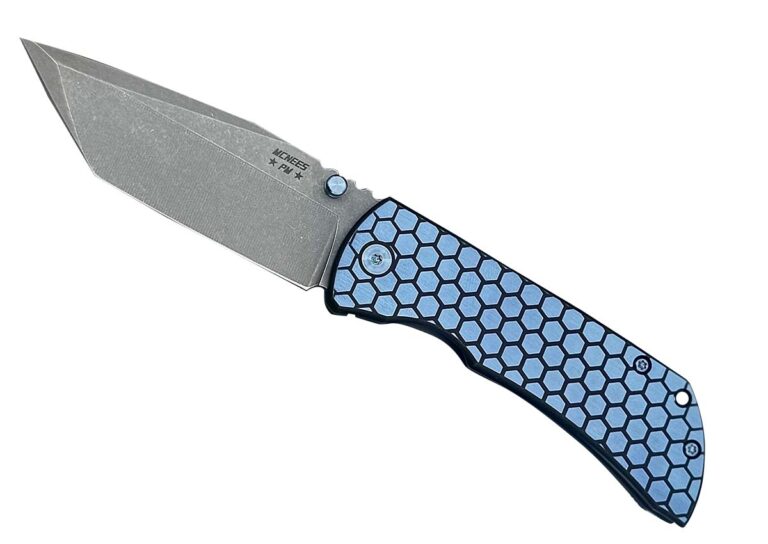
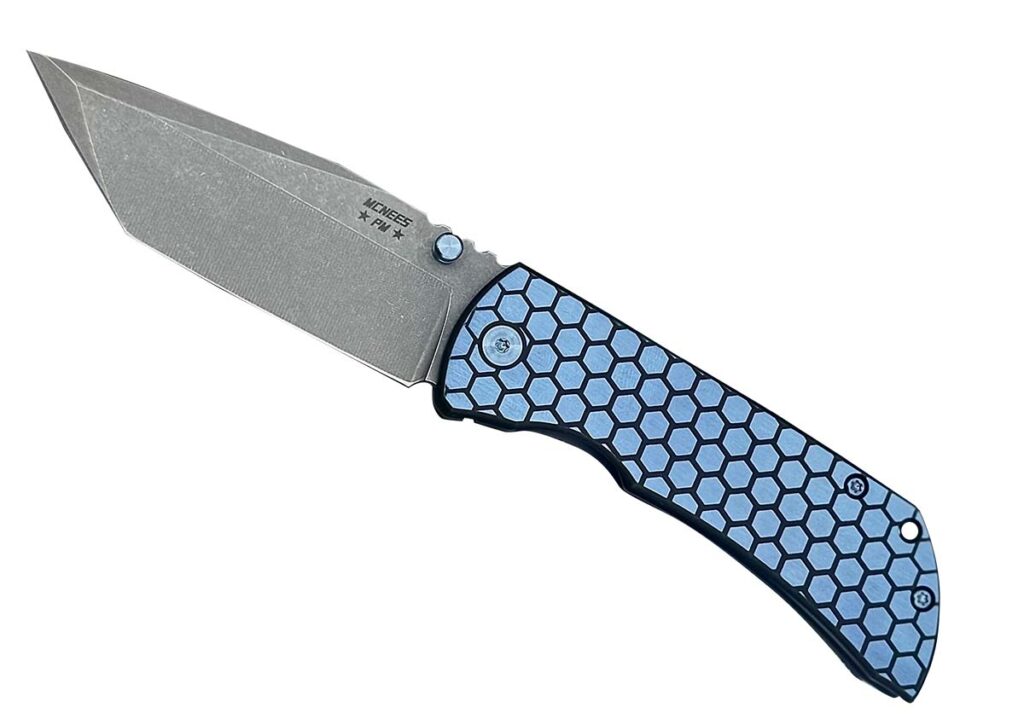
Titanium scales with a honeycomb look and a 3.5-inch tanto blade of hollow-ground CPM MagnaCut stainless distinguish the MAC2 3.5 tactical folder by McNees Knives. Blade opener: thumb stud. Lock: Reeve Integral Lock (aka framelock) Clip: bent titanium Weight: 26 ounces Closed length: 4.25 inches Country of origin: USA MSRP: $625 Available: BLADE Show 2025
Condor Tool & Knife K-Night Panabas
Condor Tool & Knife K-Night Panabas
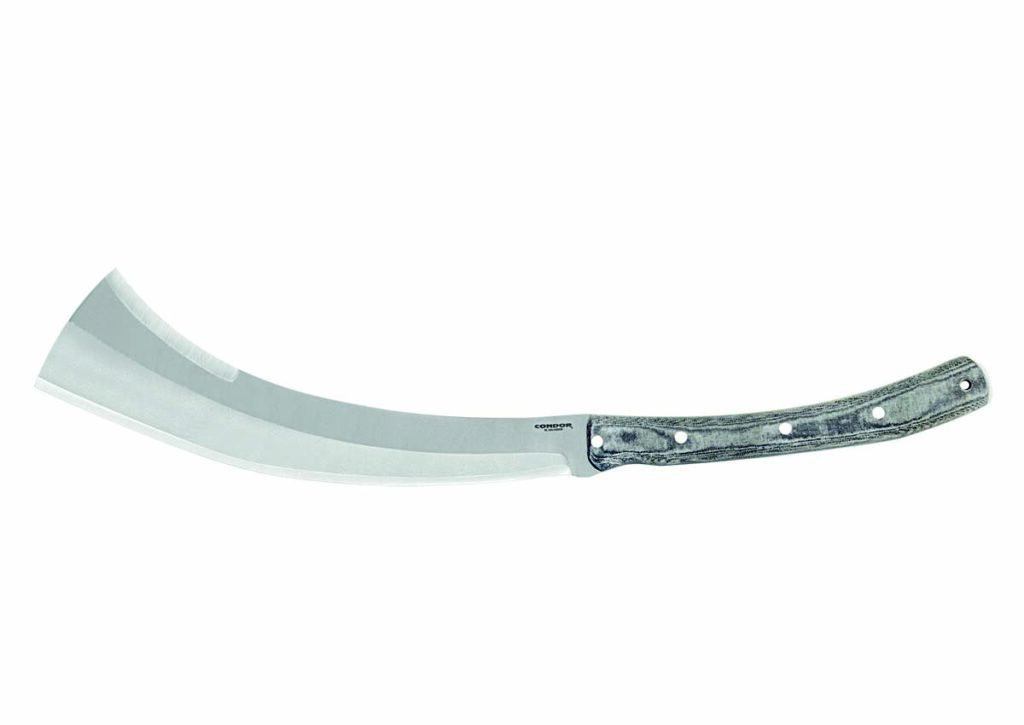
The K-Night Panabas from Condor Tool & Knife boasts a 14.29-inch blade of convex-ground 1075 carbon steel and Micarta® scales. Weight: 32.98 ounces Overall length: 25.35 inches Sheath (not shown): Kydex with leather belt loop Country of origin: El Salvador MSRP: $174.98 Available: NOW
Rick Hinderer Knives Bowie
Rick Hinderer Knives Bowie
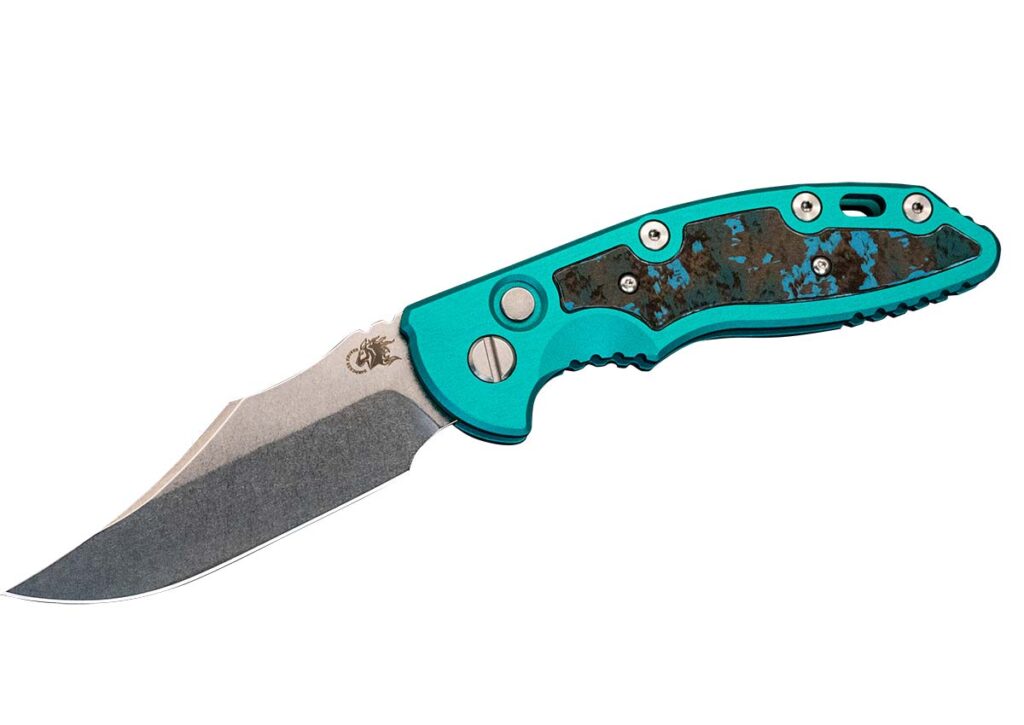
The Aluminum Automatic XM-18 3.5-inch Bowie from Rick Hinderer Knives features a 3.5-inch blade of CPM S45VN stainless steel. The aluminum handle with titanium half liners is anodized turquoise and inlaid in Arctic Storm FCF. Lock: button lock Clip: Chaos Horsehead model in stonewashed titanium Weight: 5.12 ounces Closed length: 4.75 inches Country of origin: USA MSRP: $495 Available: Late 2025
Fox Knives Pacifico EDC
Fox Knives Pacifico EDC
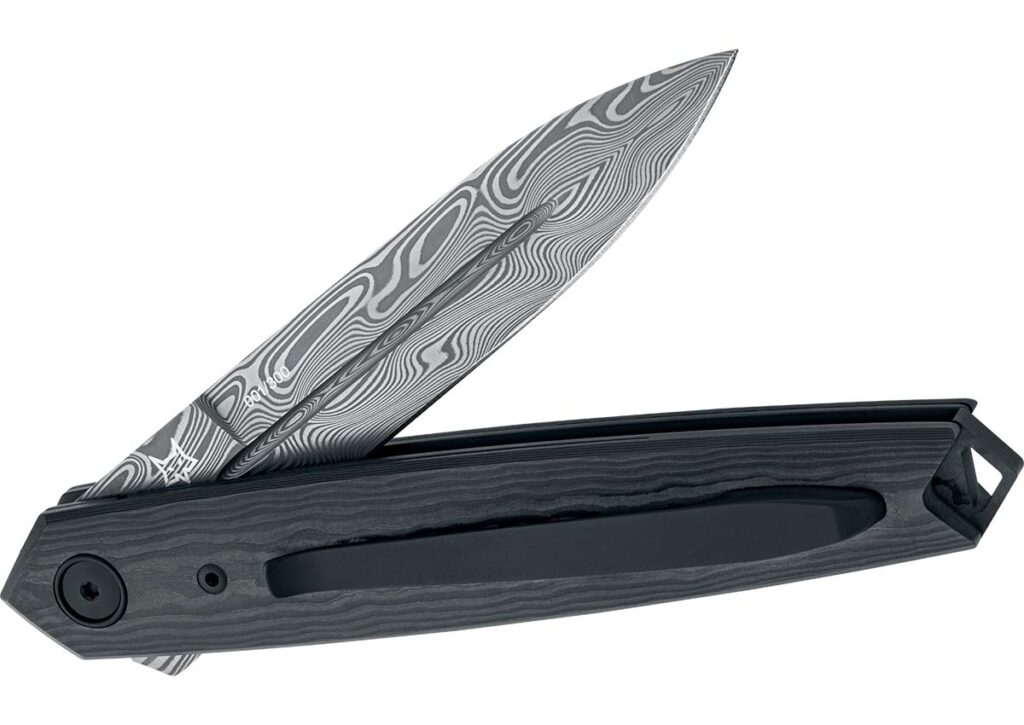
Designed by BLADE Magazine Cutlery Hall-of-Fame® member Bob Terzuola, the Pacifico EDC flipper folder by Fox has a 3.74-inch blade of Thor pattern damascus by Damasteel. The handle is black camo carbon fiber by FatCarbon®. Clip: titanium PVD-coated black Lock: linerlock Weight: 3.88 ounces Closed length: 5.31 inches Country of origin: Italy MSRP: $583 Available: July
Big Idea Design Signal
Big Idea Design Signal
Designed by ABS journeyman smith Mak Kelsay, the Signal utility from Big Idea Design has a 3.5-inch blade of flat-ground Nitro-V stainless steel and G-10 scales with custom pass-through titanium hardware. Weight: 3.4 ounces Overall length: 7.67 inches Sheath (not shown): taco-style Kydex w/titanium pocket clip Country of origin: USA MSRP: $275 Available: May/June
Queen/Smoky Mountain Knife Works Mountain Man Trapper
Queen/Smoky Mountain Knife Works Mountain Man Trapper
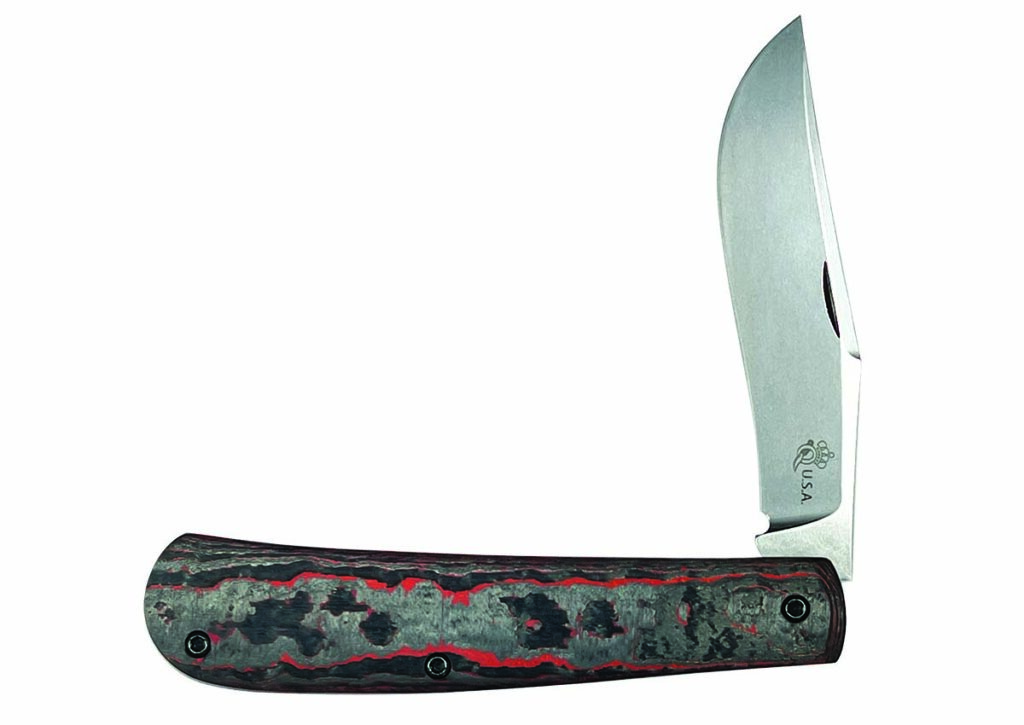
The Mountain Man Trapper from Queen/Smoky Mountain Knife Works sports a 3 3/8-inch blade of CPM MagnaCut stainless steel and Lava Flow FatCarbon® scales. Blade pattern: Clip Action: slipjoint Weight: 2.93 ounces Closed length: 4 1/8 inches Country of origin: USA MSRP: $299.99 Available: July
GiantMouse GMP13
GiantMouse GMP13
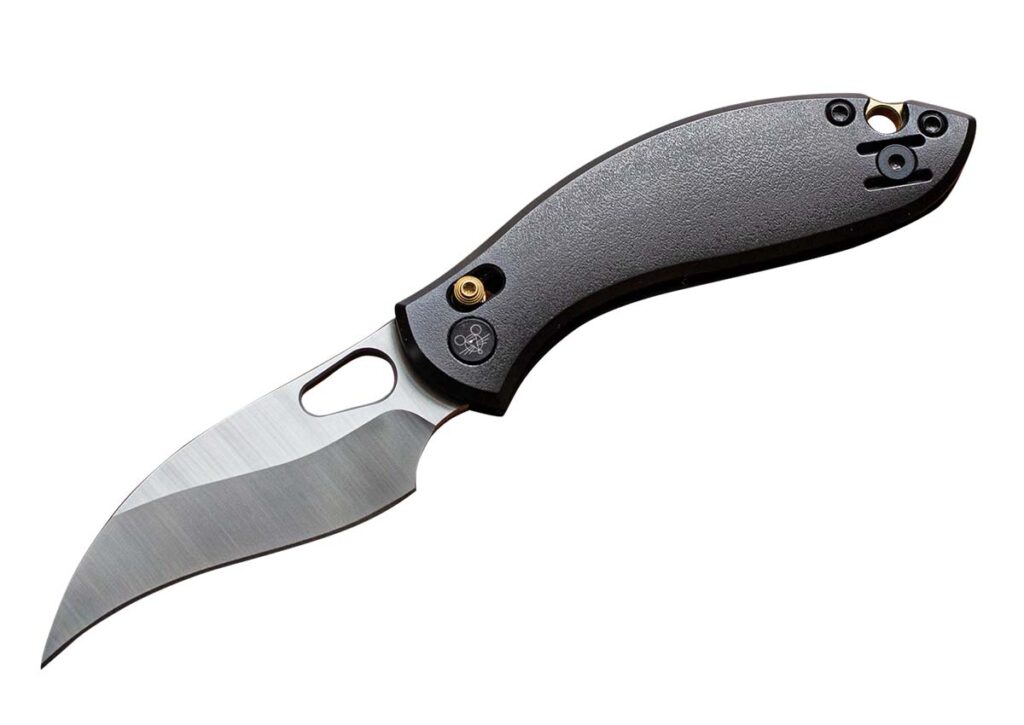
A 2.4-inch blade in a distinctive modified hawkbill pattern of flat-ground CPM S90V stainless and zirconium scales highlight the GiantMouse GMP13 “defense folder.” Lock: crossbar Clip: ambidextrous Weight: 3.7 ounces Closed length: 3.67 inches Country of origin: China MSRP: $435 Available: NOW
Lionsteel ACHA
Lionsteel ACHA
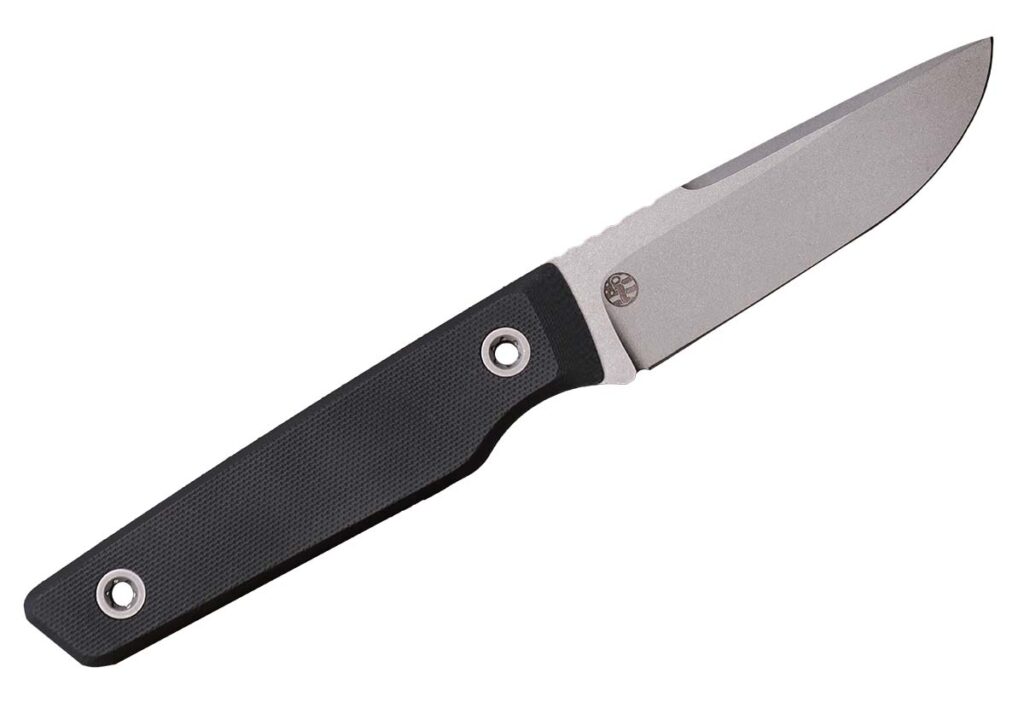
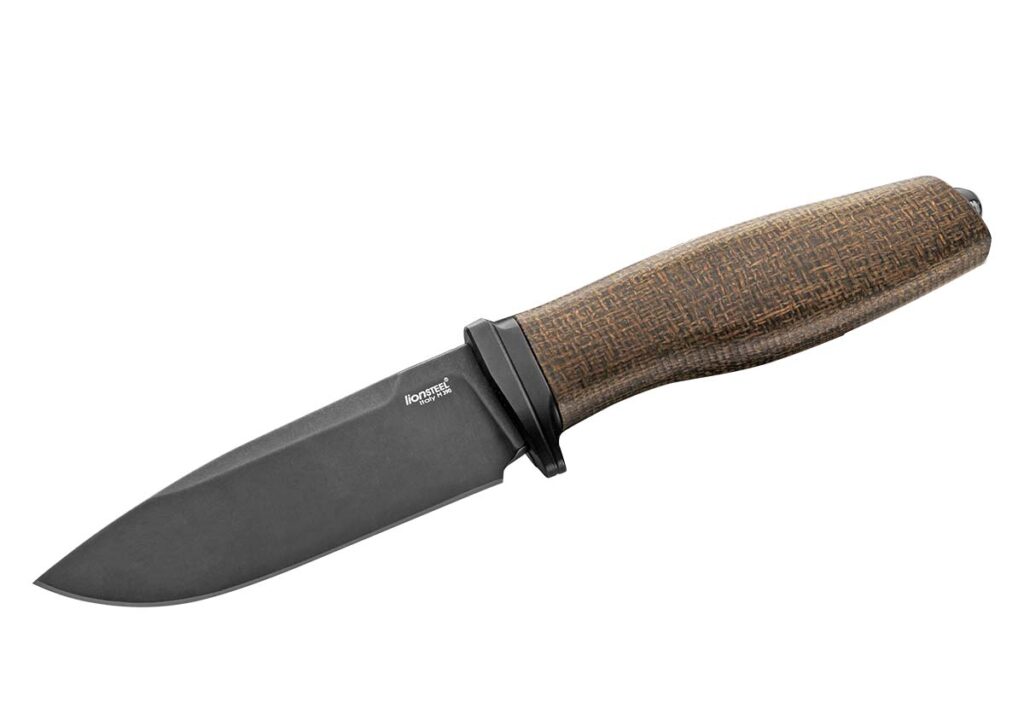
A contrasting combo of a 4.21-inch blade of M390 sintered steel in an “old black” finish and a burlap Micarta® handle in an integral construction set the Lionsteel ACHA outdoor knife apart. Blade grind: V flat Guard: titanium Sheath (not shown): Leather Weight: 6.24 ounces Overall length: 9.17 inches Country of origin: Italy MSRP: $252 at press-time exchange rate Available: NOW
Spyderco Chaparral
Spyderco Chaparral
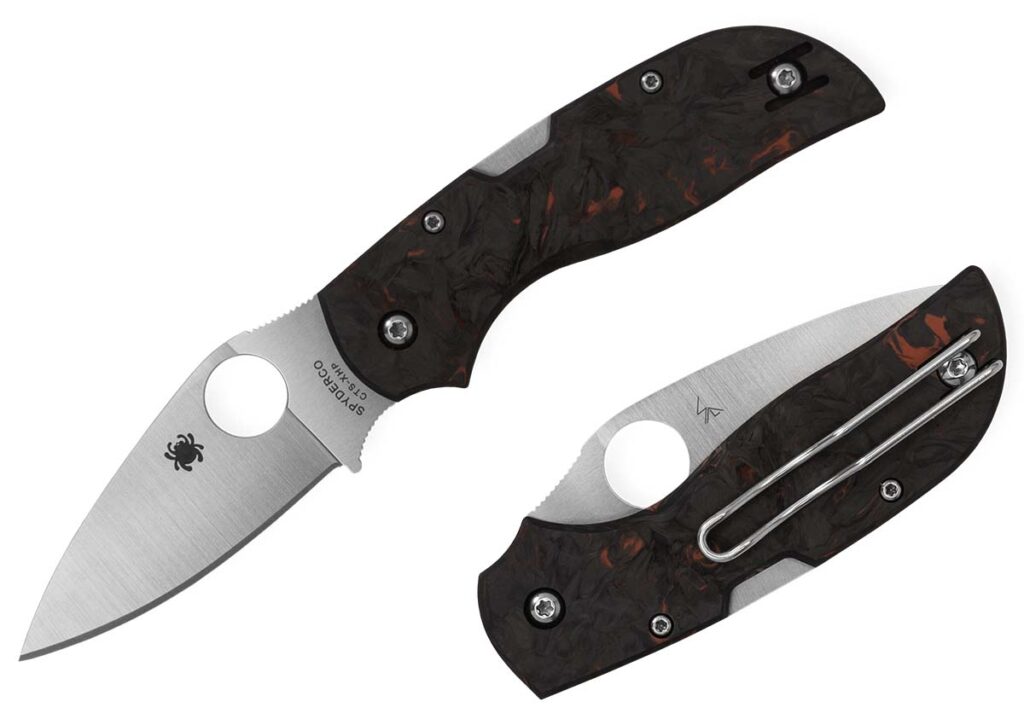
Dark Matter Red FatCarbon® scales and a 2.77-inch blade of full-flat-ground CTS-XHP stainless steel highlight the latest iteration of the Spyderco Chaparral back-lock folder. Clip: wire Weight: 2.2 ounces Closed length: 3.6 inches Country of origin: Taiwan MSRP: To be determined Available: To be determined
Ocaso Lucent Automatic
Ocaso Lucent Automatic
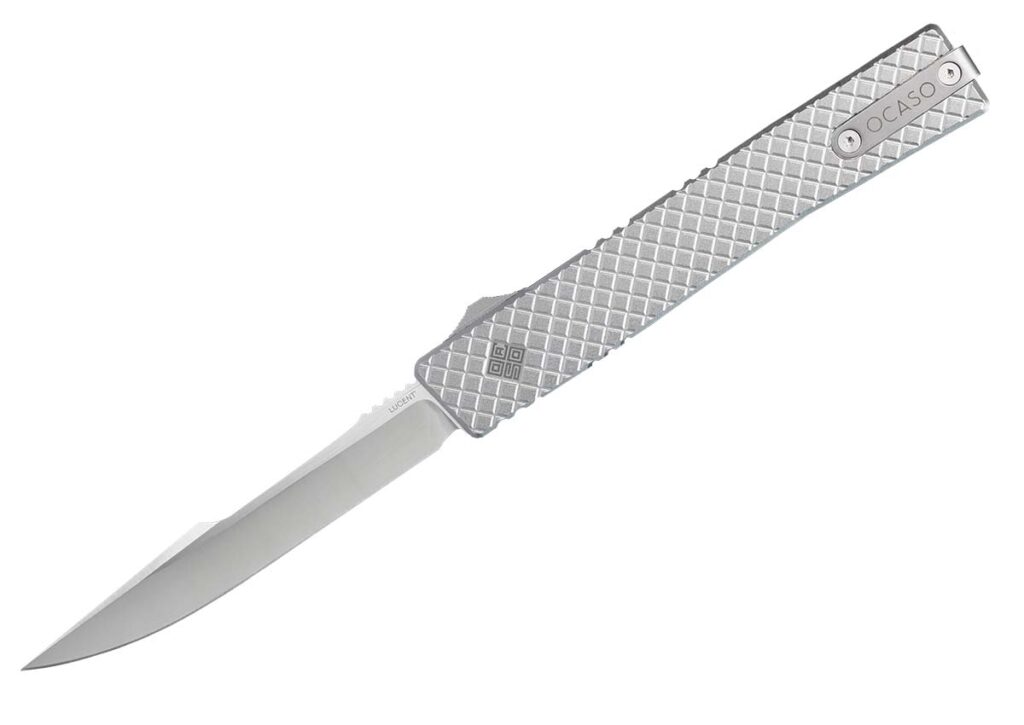
The Ocaso Lucent Automatic is a dual-action out-the-front with a 3.5-inch blade of flat-ground Bohler M390 stainless and a 6061-T6 aluminum handle with an ambidextrous deep-carry pocket clip. Weight: 2.2 ounces Closed length: 4.4 ounces Country of origin: China MSRP: $274.99 Available: July
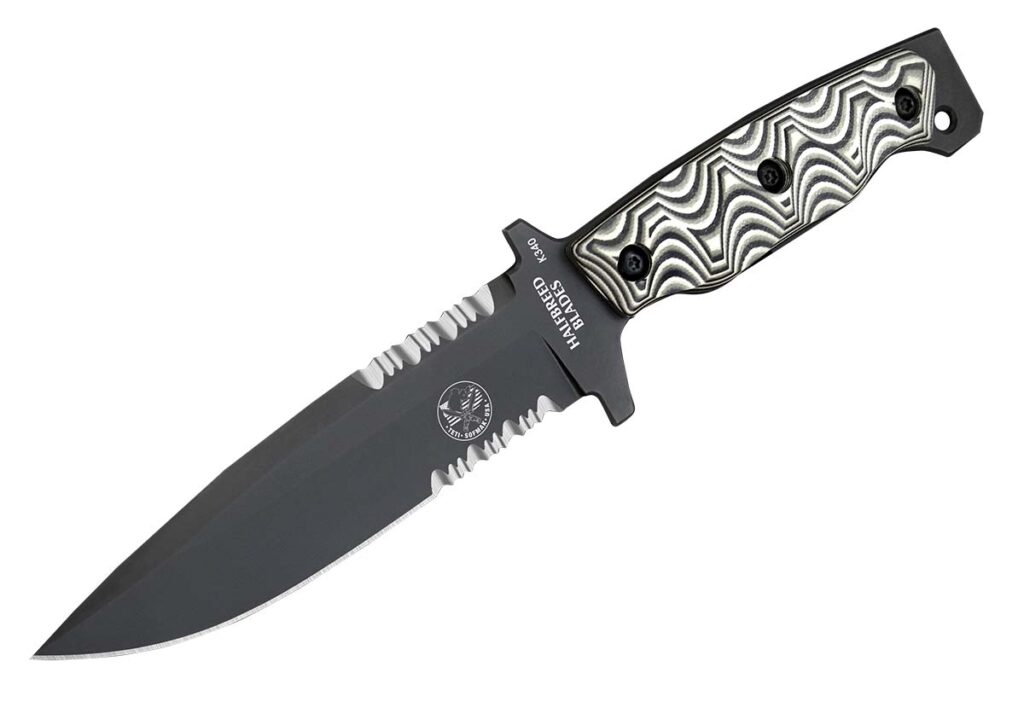
Halfbreed Blades SOFMAK
Halfbreed Blades SOFMAK
Scales of an electric G-10 and partially double-serrated blade of PVD-coated K340 ISODUR tool steel stand out on the MIK-04 SOFMAK from Halfbreed Blades. Blade length: 5.31 inches Weight: 11.14 ounces Overall length: 10.31 inches Designer: Jonathan Loftes in collaboration with Joseph Teti Sheath (not shown): Belt and PALS/MOLLE Country of origin: Comprises Australian and Taiwanese make MSRP: $275 Available: NOW
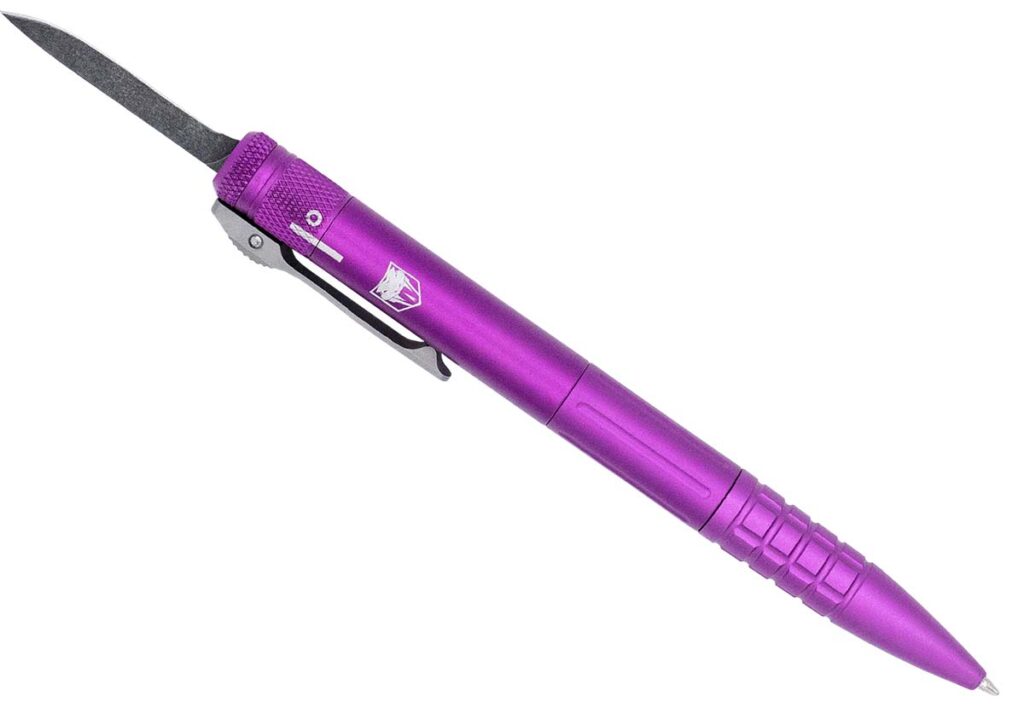
CobraTec CNC OTF Pen Knife Generation 2
CobraTec CNC OTF Pen Knife Generation 2
The CNC OTF Pen Knife Generation 2 from CobraTec sports a 1.75-inch blade of stonewashed stainless steel. The dual-action out-the-front has a handle of 6061 T6 aluminum with a titanium pocket clip/switch and a safety lock. Includes a replaceable black ink cartridge. Weight: 1.4 ounces Closed length: 5.875 inches Country of origin: China MSRP: $89.99 Available: NOW
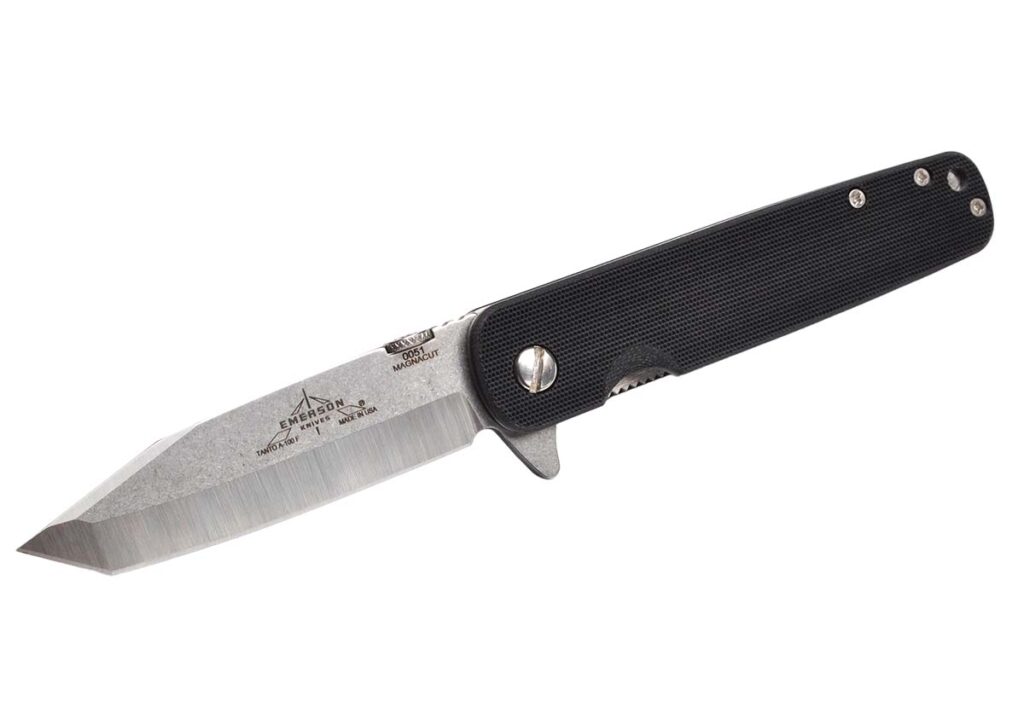
Emerson Knives, Inc. Tanto A-100
Emerson Knives, Inc. Tanto A-100
The Tanto A-100 Flipper by Emerson Knives, Inc., cuts with a 3.6-inch blade of CPM MagnaCut stainless in a conventional “V” grind. Handle: G-10 with a hole for a lanyard. Lock: linerlock Closed length: 4.8 inches Additional blade opening option: thumb disc Country of origin: USA MSRP: $295 Available: NOW
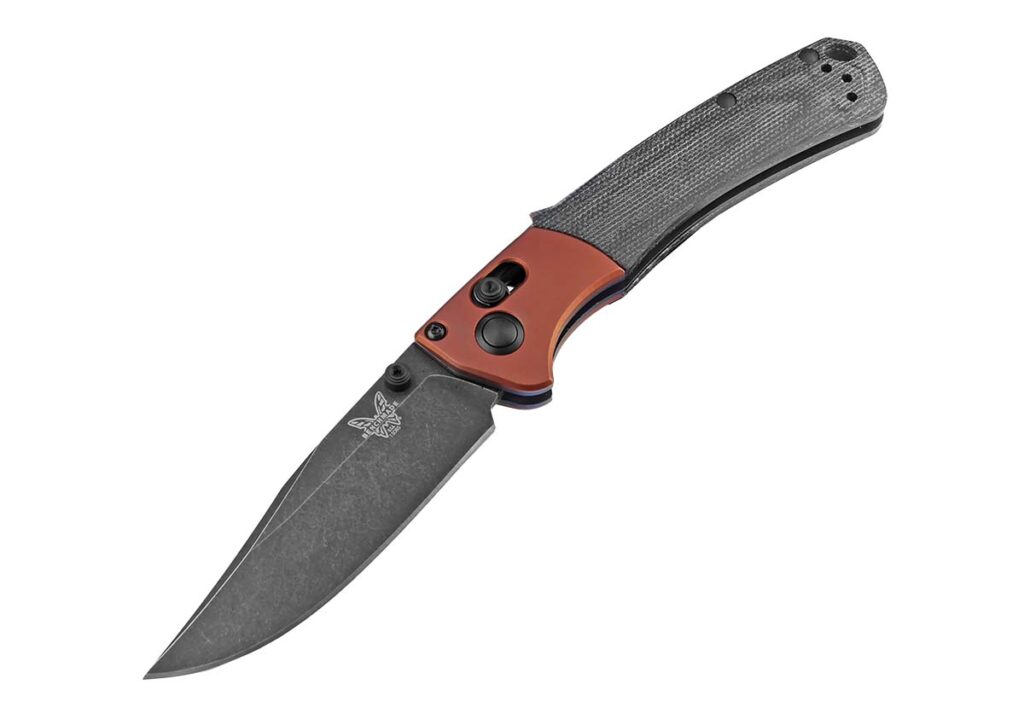
Benchmade Mini Crooked River
Benchmade Mini Crooked River
Benchmade’s Mini Crooked River folder sports a 3.4-inch clip-point blade of CPM MagnaCut stainless in a Battlewash finish. The handle is black canvas Micarta® with aluminum bolsters anodized a burnt copper. Lock: AXIS Weight: 3.2 ounces Closed length: 4.5 inches Country of origin: USA MSRP: $320 Available: July
QSP Hyena
QSP Hyena
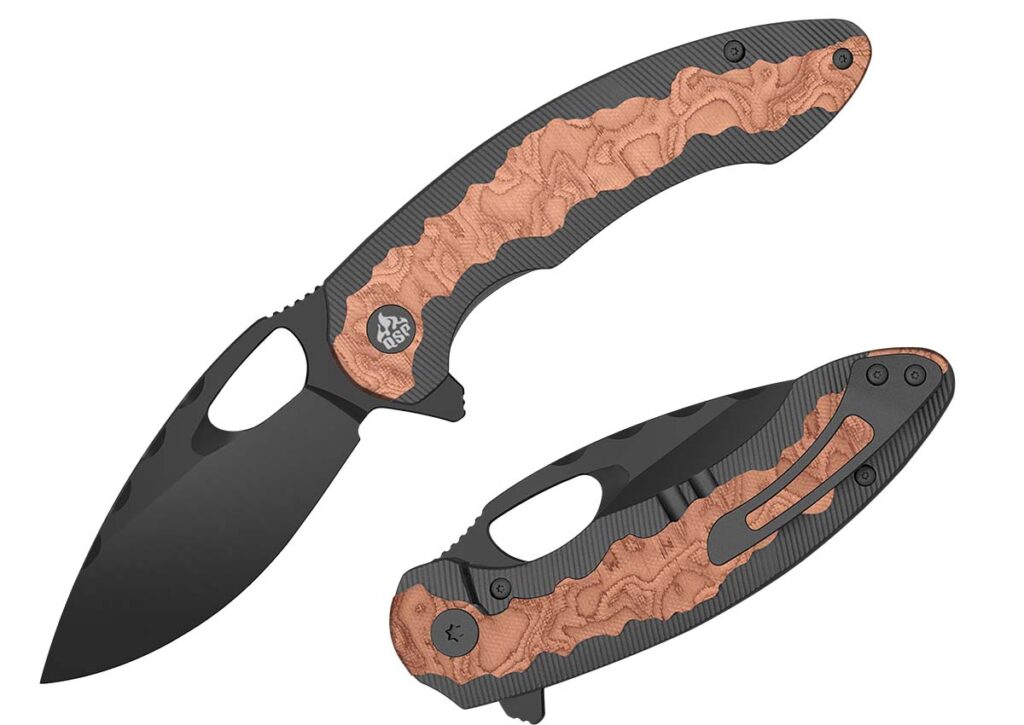
The Hyena flipper folder from QSP has a striking grip of anodized aluminum and copper-foil G-10 inlay and a 3.25-inch blade of flat-ground Bohler N690 stainless that pivots on ceramic ball bearings. Clip: Titanium, tip up. Closed length: 4.53 inches. Country of origin: China. MSRP: Contact maker for pricing. Available: September.
Maserin Pulse
Maserin Pulse
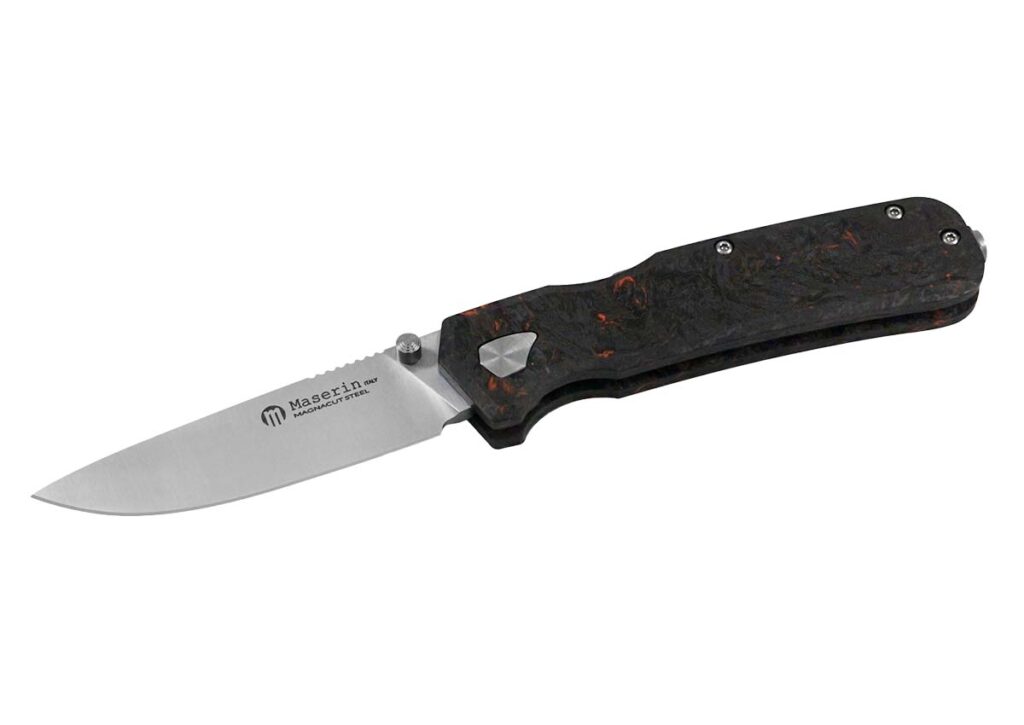
Black/orange FatCarbon® scales serve as the steering wheel for the 3.149-inch blade of flat-ground CPM MagnaCut stainless on the Maserin Pulse. Blade finish: stonewashed. Lock: W-Lock Clip: Stainless, reversible Weight: 3 ounces Closed length: 4.5 inches Country of origin: Italy MSRP: $219 at press-time exchange rate Available: NOW
Reate PL-7
Reate PL-7
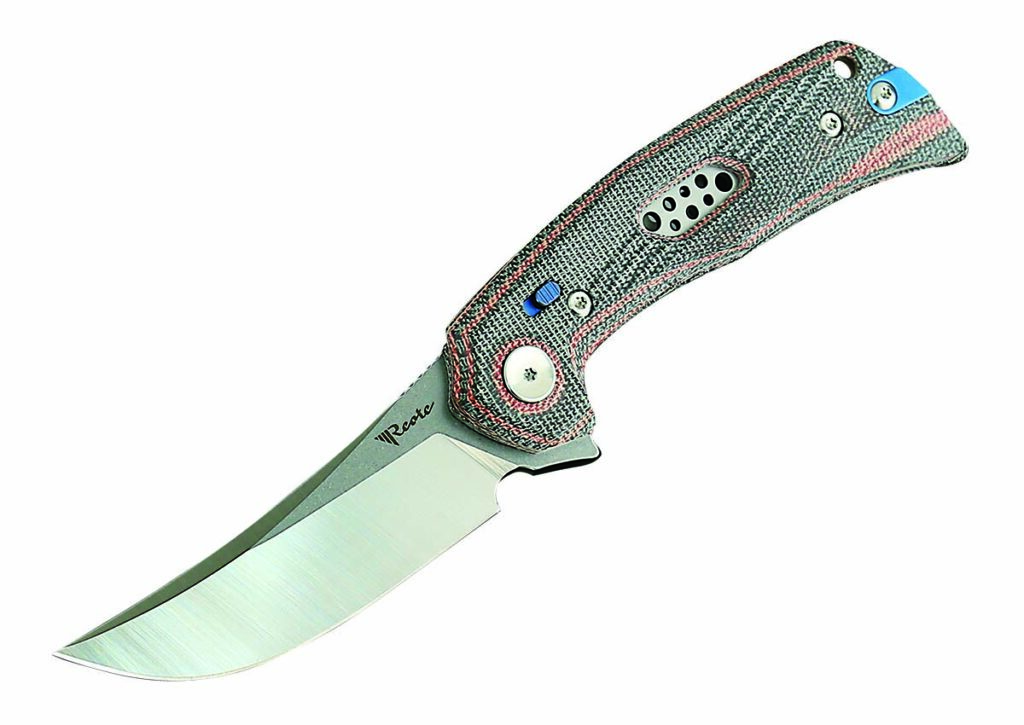
A 3.5-inch upswept blade of Nitro-V stainless in a belt-satin finish and a Micarta® handle top off the PL-7 from Reate. Weight: 4.5 ounces Closed length: 4.5 inches Country of origin: China Knife to know: The PL stands for Pivot Lock MSRP: Pending Available: Pending
CRKT Padawan
CRKT Padawan
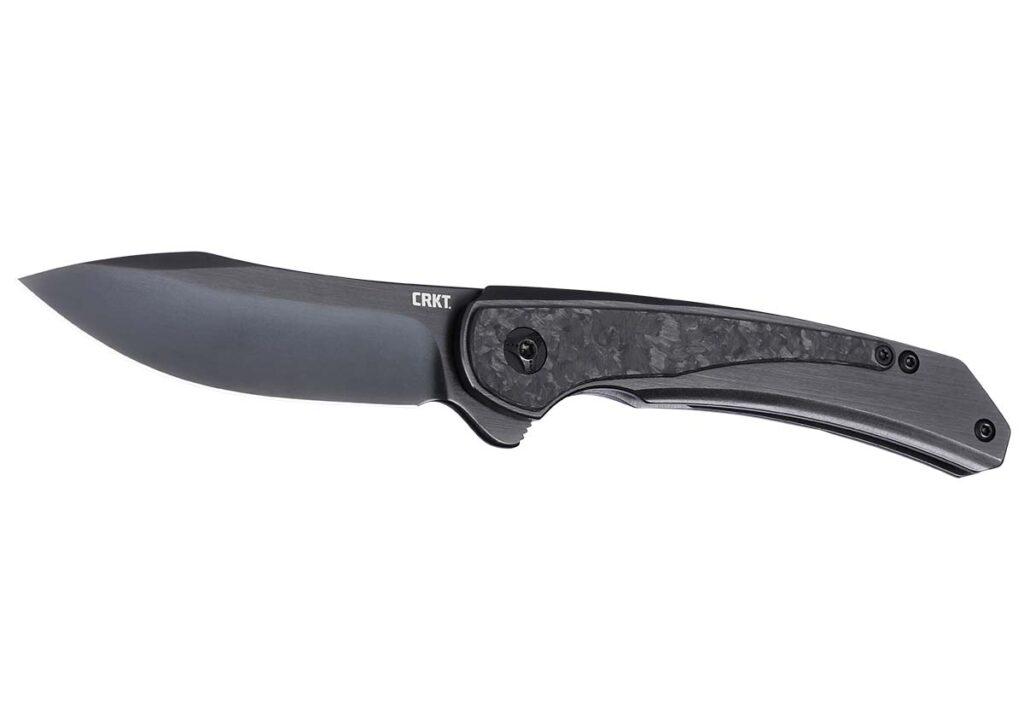
An EDC flipper/framelock folder, the CRKT Padawan has a 3.01-inch drop-point blade of hollow-ground 14C28N stainless. Blade finish: nitride coated Pivot: Ikoma Korth Bearing System Handle: stainless steel with carbon-fiber overlay Pocket clip: low profile, stainless Weight: 3.1 ounces Closed length: 4.14 inches Country of origin: China MSRP: $100 Available: NOW
APOC/CAS Iberia Wallace Smatchet
APOC/CAS Iberia Wallace Smatchet
Designed by Mike Wallace, the Wallace Smatchet from APOC/CAS Iberia is a “historically inspired bushcraft” knife based on the classic World War II combat model. The 9 5/8-inch blade is flat-ground D2 tool steel in a titanium coat. Scales: G-10 Weight: 1 pound, 10 ounces Overall length: 15.5 inches Sheath: Kydex with drain hole Country of origin: China MSRP: $175. Available: NOW
BLADE Show ’25 is the author’s 40th BLADE Show—and counting
In the spring of 1985, my fellow U.S. Army lieutenant and knife collector Fletcher Crews told me about the BLADE Show. Having never heard of it, I asked him what it was. His response: “It’s like a gun show but with knives.”
Later in May of that year we took our wives on a road trip from Clarksville, Tennessee, to the Holiday Inn and Convention Center in Knoxville, Tennessee, the show’s former time of year and venue. We allowed ourselves four hours to cover the show. (Don’t get ahead of me; we didn’t know what we were in for.) You have undoubtedly seen TV commercials telling you about someplace in Florida that is the “happiest place on earth.” Those who say this have never been to the BLADE Show!
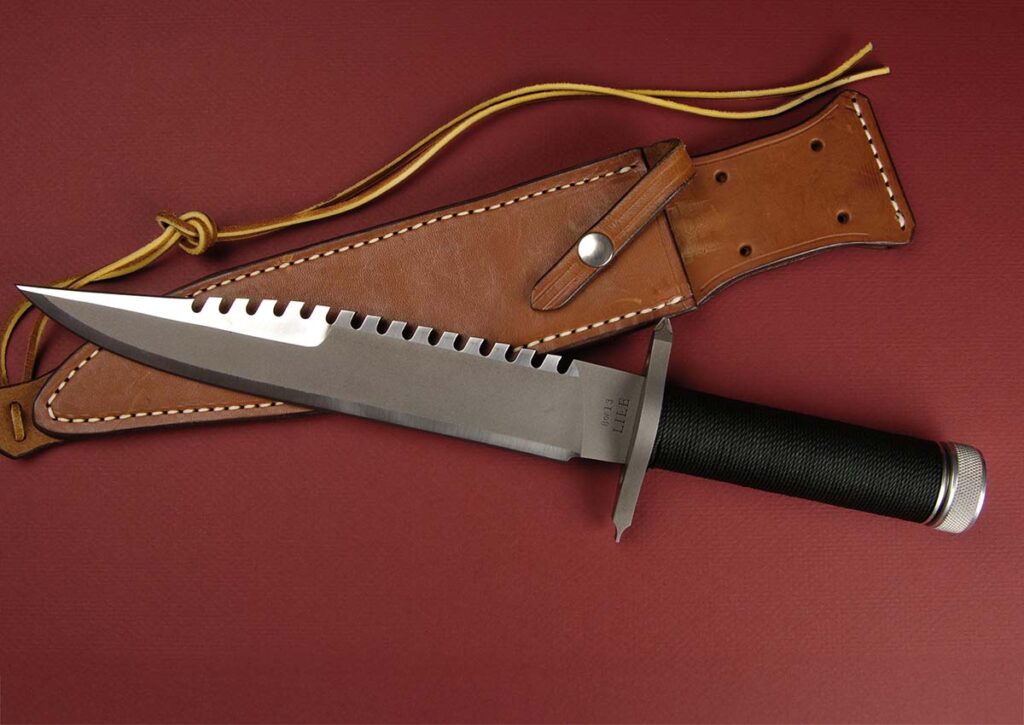
The highlight of the show for me was meeting BLADE Magazine Cutlery Hall-of-Fame® member Jimmy Lile and seeing and handling the Sly II knife he made for the original Rambo movie, First Blood. For those of you who were not fortunate enough to meet Jimmy, he was everything you hear. He was outgoing and friendly, making you feel like he had known you for years. He only made being able to see the knife in person that much better. After all, this is the knife that started me on a path I am still on today.
The BLADE Show has been the Happiest Place on Earth for decades—including here in 2007—and will be this coming June 6-8, too. (Eric Eggly/PointSeven image)
Heading back to Clarksville, I realized that planning had already started for the 1986 BLADE Show. As it turned out, I would make a life-altering decision shortly after returning home. Several weeks later, my wife Kathy and I were having dinner with Fletcher and his wife Karla.
Karla said, “If you did this as a business, you could go to more shows and write off your expenses.” Jerry Seinfeld famously said on his TV show, “You don’t even know what a write-off is.” That was true of me then but I still liked the sound of it. The following week, I went to a CPA and filled out the paperwork to form Robertson’s Custom Cutlery. I realized I had made a tactical error by only allowing four hours for the show. In 1986, I corrected that. I was, in fact, third in line to get in.
The doors opened and hundreds of people rushed into the room, all taking different paths to the hundreds of tables. I went to the first table closest to me and within 15 minutes was out of money. It was at this show that I learned my next vital lesson. As I walked among the rest of the tables and booths, I realized I had set a land speed record for buyer’s remorse. The essential lesson I learned was to have a plan.
Armed with my recently acquired KNIVES ’86, the plan began to take shape. The book has photos and an equally important index of makers’ contact information in the back. It started me on my path to creating what would become my Robertson’s Maker Market Matrix. In the early days, I used the Matrix exclusively to figure out what specific knives I wanted to buy.
The Sly II, aka the original Jimmy Lile First Blood knife, is the knife that got the author started on his career of buying and selling custom knives 41 years ago. The 9-inch sawtooth blade is bead-blasted D2 tool steel. The hollow handle is cord wrapped with an aircraft-grade aluminum buttcap. Overall length: 14 inches. The leather sheath is custom made. The author’s collector value for one of the originals: $4,000-$6,000.
Using KNIVES ’86 and the information within helped me identify what I wanted and implement my purchase plan. Early in 1987, I started to contact knifemakers, asking them what they were bringing to the show or if they could deliver the particular knife I wanted there. The plan was in place and it was implemented to perfection. I received all five knives I had ordered. With the pressure off, I was allowed to move through the Holiday Inn and Convention Center show hall and really enjoy everything the BLADE Show had to offer.
Gil And Bruce
The 1987 show was memorable for more than just the five knives I bought. I was introduced to legendary Cutlery Hall-of-Famer Gil Hibben, who invited me and others to dinner. He was a gracious host with fascinating stories to tell. At that same show, fellow custom knife purveyor Bob Neal (miss you, buddy) introduced me to Cutlery Hall-of-Famer Bruce Voyles, who owned both the BLADE Show and BLADE, and edited the magazine, too. Bruce couldn’t have been nicer. What impressed me most was his encyclopedic knowledge of older factory slipjoints, multi-blade folders and antique bowies.
In 1992, Bruce gave me another of my favorite memories of the BLADE Show—he asked me to judge the custom knife competition. I’ve judged at more shows than I can remember, but there is nothing like seeing all those knives from some of the best makers in the world all in one room. Bruce introduced me to current BLADE editor, Cutlery Hall-of-Famer Steve Shackleford, who, during a conversation at the 2006 BLADE Show, asked me if I would like to write an article for BLADE. Nineteen years later he continues to ask me to write for BLADE. Bruce and Steve were also instrumental in having me—sometimes with Bob Neal—conduct seminars for both custom knife collectors and makers at several BLADE shows.
At the 1988 BLADE Show, I set up for the first time. With the exception of the show in 1990, I had a table at each BLADE Show until 2011. Having a table at the BLADE Show was an incredible learning experience. It taught me that there is always more to learn about custom knives. Also at the show, custom knifemaker Dave Broadwell and I collaborated and came up with the final design for the MLR Sub-Hilt Fighter. Since then, Dave has made well over 100 MLRs for me in different configurations.
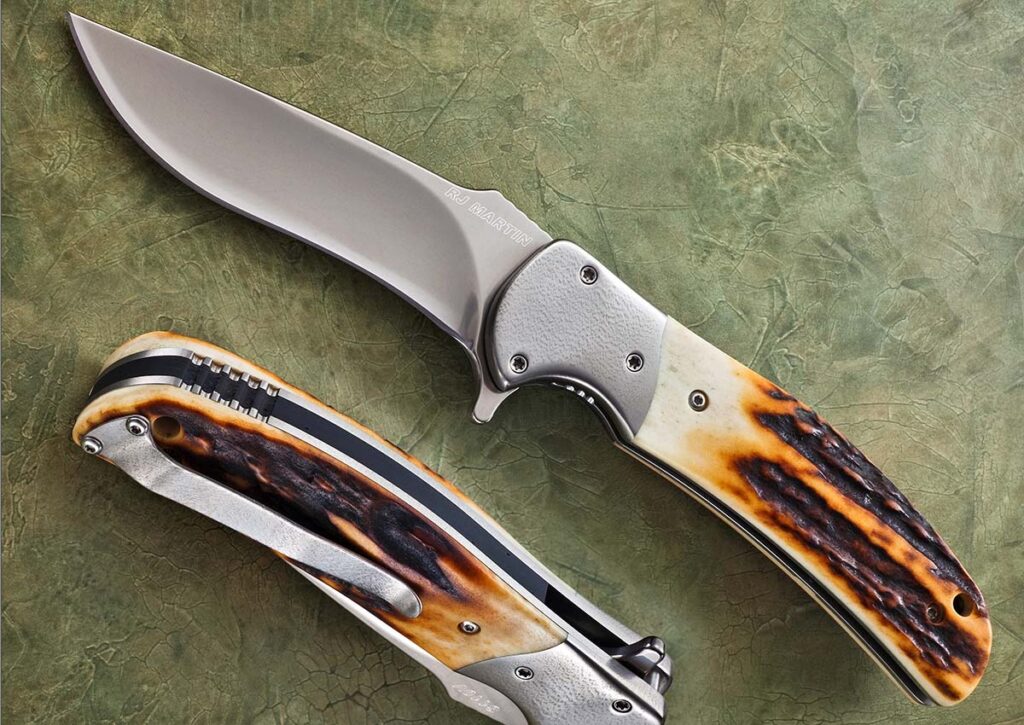
At the 1997 BLADE Show, the author talked to RJ Martin about making a few folders for him. RJ went home and came up with a knife he called the Q30. He later modified it and the result would become his signature model, the Q36, an iteration of which appears here. He went on to win the Best Tactical Folder award at the BLADE Show four years in a row. Today, RJ’s order books are closed. (SharpByCoop image)
At a mid-’90s Knifemakers’ Guild Show, I met a talented maker who at the time was making what I considered the finest Japanese tacticals in the world. However, at the 1997 BLADE Show we talked about him making me a few folders. He went home and came up with a knife he called the Q30. He later modified it and the result would become his signature model, the Q36. He went on to win the Best Tactical Folder award at the BLADE Show four years in a row. His name: RJ Martin.
At the 2015 BLADE Show I met Steve Randall and his wife, Alison. Steve reminded me a lot of the exceptional maker John White. Steve’s knives were clean, incredibly well made and fairly priced. Today, table 3R is always my first stop to check out his knives.
For me, there are many people I talk to throughout the year but I only get to see them once a year at the BLADE Show, and that makes the show even more special to me. Two of those fellow knife nuts are Jack Alsop and Alan Snow.
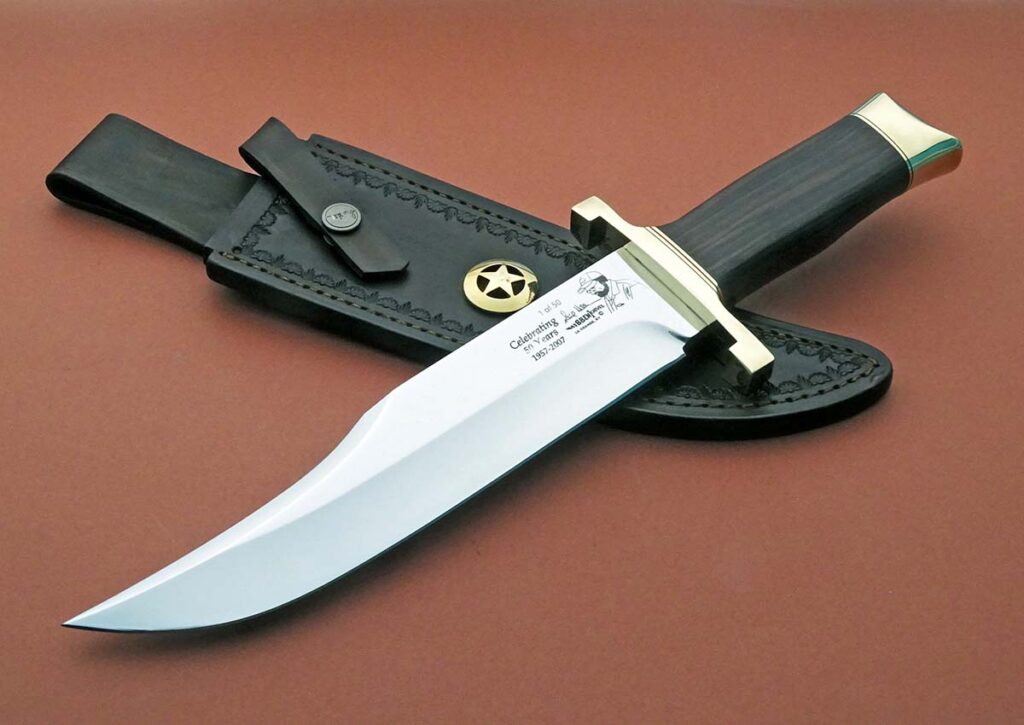
At the 1987 BLADE Show the author met Gil Hibben, who promptly invited the author and others to dinner. Hibben’s 50th Anniversary Bowie features mirror-polished 440C stainless steel and macassar ebony. The guard and pommel are brass. Blade and overall lengths: 9.5 and 14.25 inches. Hibben’s price for a similar knife: $1,900. (Robertson’s Custom Cutlery image)
What I appreciate most about the BLADE Show, aside from the knives, is the camaraderie of the people there. They are literally from all over the world. They are willing to share their knowledge that, for many, has taken a lifetime to acquire. Like I said previously, forget that place in Florida. The BLADE Show is the happiest place on earth. See you there!
How you exert control determines knife handle design.
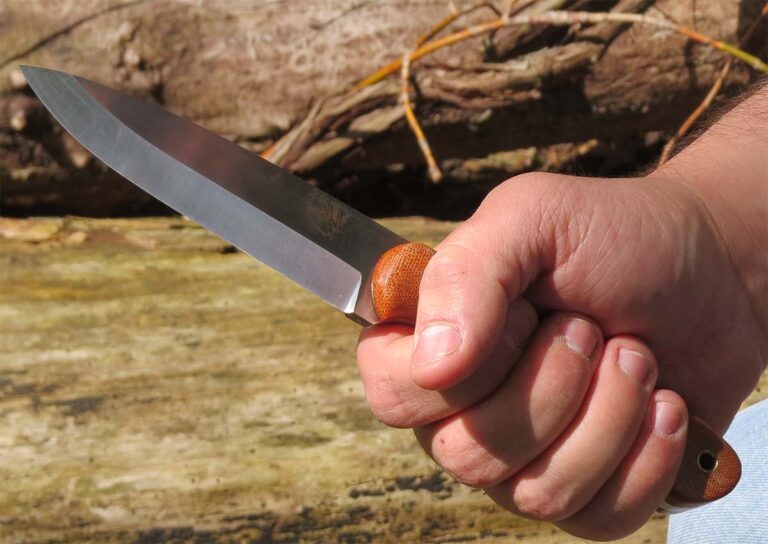
After 19 years as an autoworker, 30 years as a traditional woodworker and what seems an entire life of being a knife nut, I have come to appreciate a properly formed tool handle. During any workday at the auto plant, I picked up and used tools over 500 times—to be precise, once every 43 seconds. After a while, I started to take notice and favor tools shaped in an ergonomic fashion that allow efficient, accurate manipulation.
How useful is your knife if you can’t hold it and can’t control the edge? Just look to the “Riddle of Steel” from the original Conan the Barbarian movie. Steel is nothing compared to the hand that wields it. Perhaps that is where I find my largest bane. I constantly hear custom makers and users alike talking about a “super steel” and how they would use no other steel or find those to be the best, yet the fact that the knife is a system gets left by the wayside. A knife should be considered a tool and, as such, a tool that is easy to use. That’s if you plan to use it. “Gucci knives” are exempt. The blade and handle working together and a properly heat-treated steel is part of that, so let’s get started with how to hold a knife.
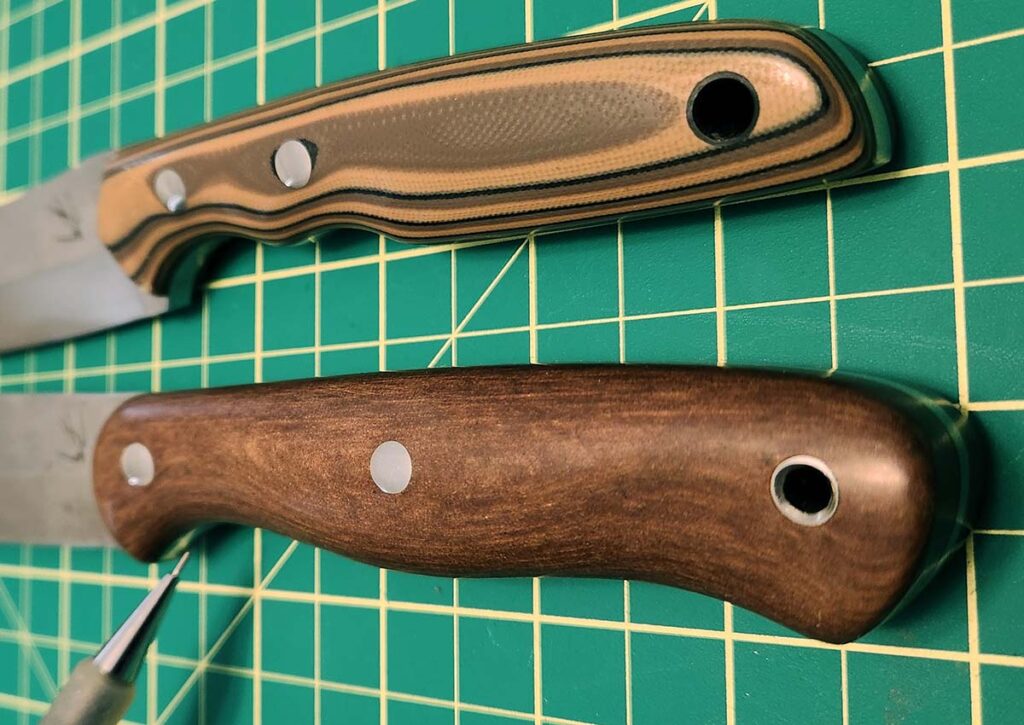
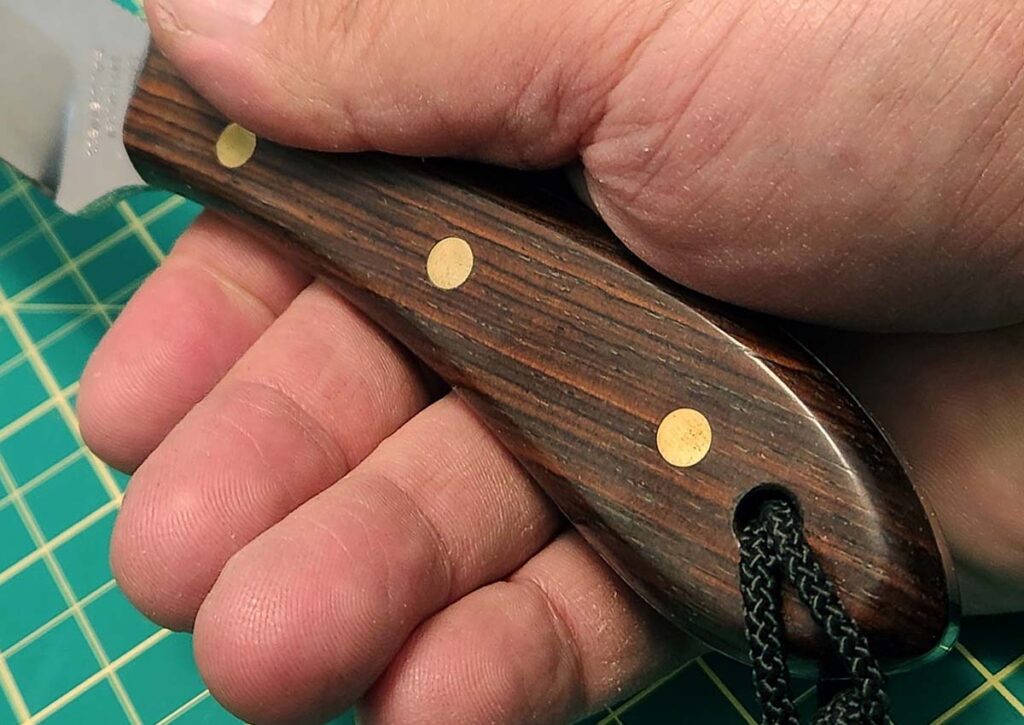
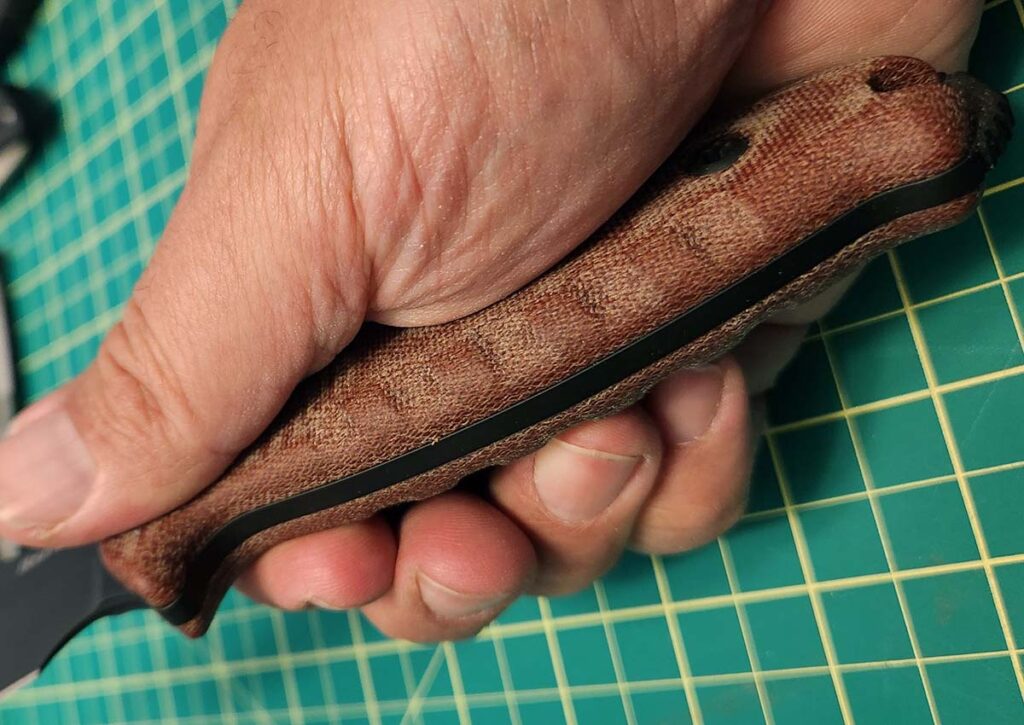
Two Diving Sparrow Knives prototypes. Follow the layering lines built into the material and you can see the flowing contours. The contours not only provide a place to grip but the subtle grooves give your fingers platforms to manipulate the knife in your hand
First off, I am not a human kinetics major so let me indulge myself and develop my own vocabulary for this section, along with some proper terms. The grip consists not only of just your hand but extends back farther through your wrist, forearm, elbow and all the way to the shoulder. Your arm works as a system and how your hand grasps an object will affect the positioning and strength exerted by your wrist and so on up the line.
3 Grip Functions
Starting with your hand, there are three functions of the grip I call selection, reaction and manipulation. Selection is when the hand selects or picks something up, often via the index finger and thumb. Usually, the intent of selection is to seek control over the object until it is firmly held within your grasp, resulting in a solid purchase. The group of muscles and body parts, that is, your index finger and thumb, are also the same group that normally exerts finite control for most people. Writing with pencil and paper is an example how over time humans have developed the index finger and thumb pinch for finer control. Watch any surgeon or chef use a cutting tool; specific direction is guided by the two main leaders of the band, the thumb and index finger.
The Grohmann knives survival model uses a flared teardrop handle, narrow at the front and wide at the back, to prevent the knife from slipping from your grip.
Reaction is best reflected in the act of catching an item, be it a ball or what have you. Your hand is prepared to catch and instantaneously selects the process of gripping the item based on how it enters your hand and what parts of your hand it touches first. A good example is when something small touches the center of your hand; your fingers surround it because it is already in the middle of your grip. If the item is touched to the outside, say just on your fingertips, your hand tries to react by drawing the item to the center and then closing the fingers.
How reaction works in the use of tools can be expressed as “for every action there is an equal and opposite reaction.” Without getting into a huge physics argument over string theory and the purity of the law as it applies to using a knife, it is a simple expression of how your body works. As the cut is made, your body exerts force. In turn, the item being cut provides resistance. To maintain control, your body must adjust your grip; in that that way you can manipulate the tool to continue cutting. Simply speaking, your reflexes kick in, something your mind has been honing all your life and now operates on a subconscious level.
The Cold Steel Republic uses texture on the handle belly to prevent slipping.
Manipulation is what I call a blend of selection and reaction. During your effort to control a tool while using it, you try to coordinate selection and reaction to manipulate it. Remember: how your hand works is mostly subconscious. The process seems inherently simple while using tools; you decide what you want to do. Therefore, the next step is to direct the tool. Your hand goes into a selection mode with the intent of gripping and directing the tool. As you use the tool, different forces often change and your grip must adjust. Taken altogether, I refer to this manipulation as the process of exerting force with a tool and reacting while trying to accomplish the task/directing the tool.
Knife Handle Shape
Ideally, a knife handle should be large enough to fill your hand yet small enough for your hand to grasp it. Given that you’re provided just enough volume to fill your grip, you might figure you could solve the shape issue by grabbing a ball of clay and mimicking the resulting shape. Alternatively, you could keep it simple and use the broom handle approach.
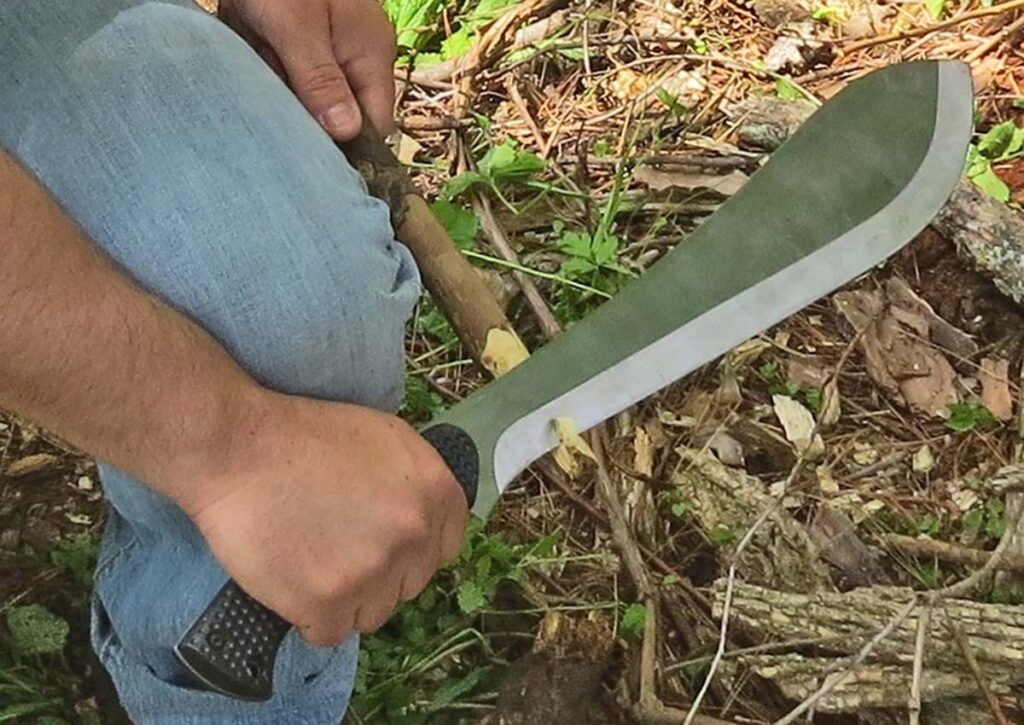
Fox uses a curved handle on its bolo-style machete to allow your hand some movement up and down the grip. “I tend not to like such a grip on smaller knives as it crams the fingers into a small area during use,” the author opined. “The flared back end prevents the hand from slipping off during a swing.
To optimize a handle, I use what I call the absence and presence method. Take, for example, a box-end wrench. The hole in the end of the box-end wrench fits around the nut. At the same time, the wrench has platforms designed to exert force on the flats of the nut to turn it. As the box-end wrench is to a nut, the hand is to a handle. A handle should be shaped to allow the hand to be able to grasp it, yet there should be enough handle to provide various platforms for the hand to exert pressure on to manipulate the knife itself. To achieve this, consider the knife’s purpose.
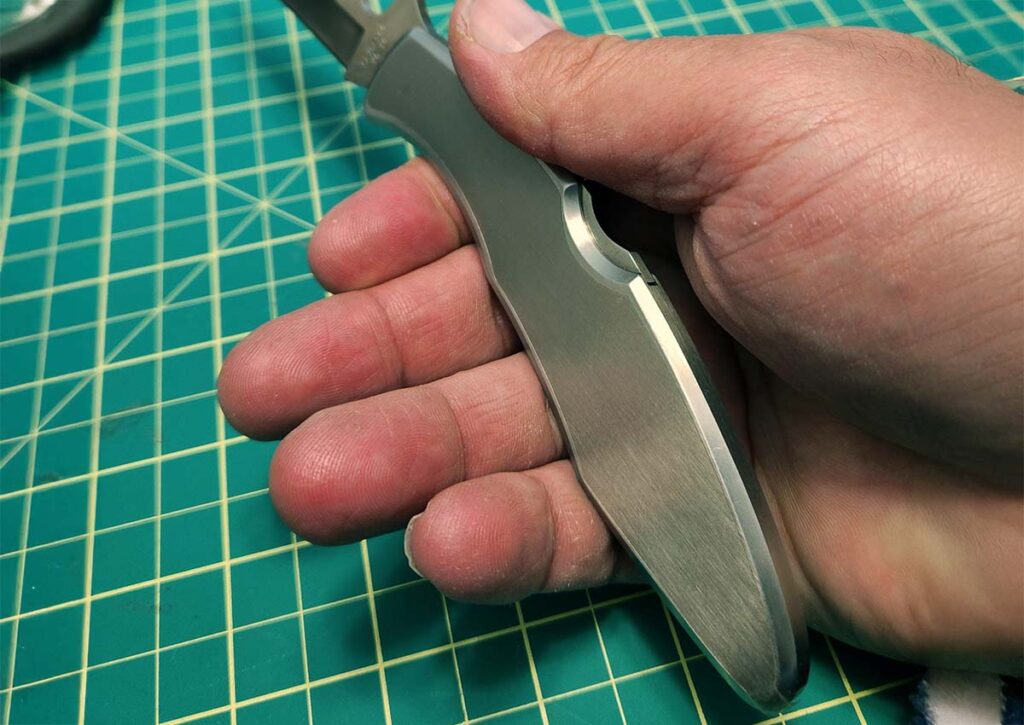
In shaping the handle, keep in mind first and foremost it must fit the hand. Secondly, it must have platforms/contours that provide places to push off from to control the edge, all the while being mindful not to create hot spots that might abrade the skin either via sharp surfaces or by simply rubbing against the handle.
Knife Handle Materials
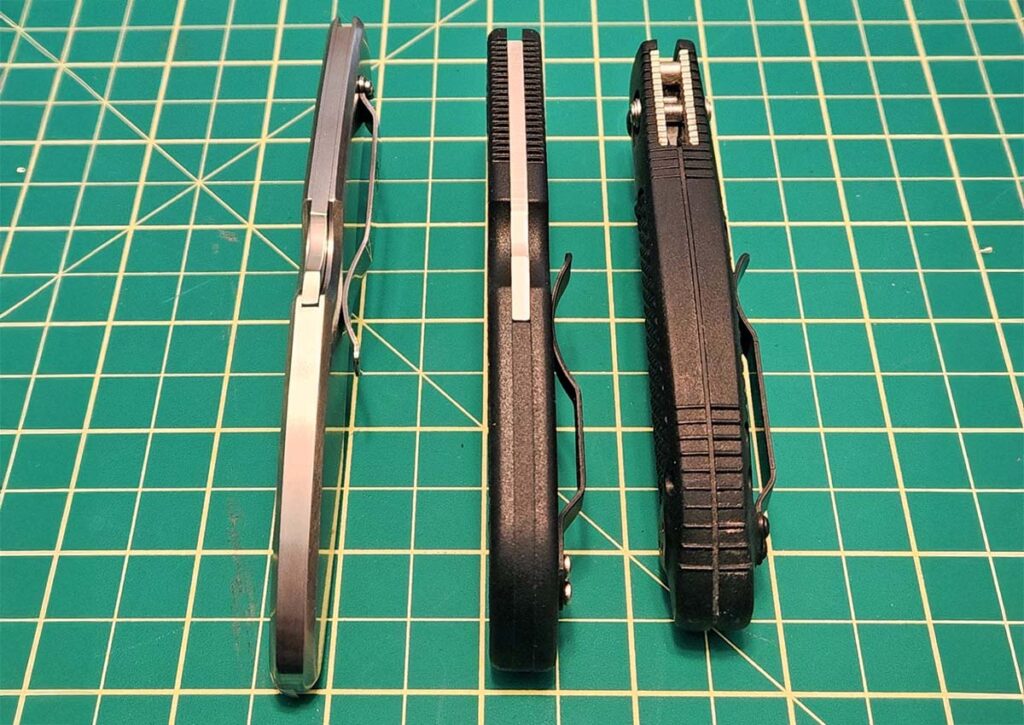
The trim profile of the Spyderco Police (left) allows manipulation for draw cuts, point use and especially lateral force. The Spyderco Endura (center) is a good midway thickness for an EDC. The Benchmade Griptilian (right) has a thicker handle and, like the Endura, scale texture. When using the Griptilian you will find lateral rolling in your hand a bit smoother because of the handle’s fullness.
There is a staggering array of available handle materials, including wood, G-10, carbon fiber, Kirinite and many more. Custom makers even employ rubber barn mats used for horses for cutting competition/chopper handles. Materials chosen correctly can enhance your grip or even overcome some shortfalls of certain handle designs. The use of materials is a large enough topic on its own; I cannot do it justice here. Let it be said, though, that a lot of it is influenced by design and structure.
A handle occupies a three-dimensional space, so forming it should take a three-dimensional approach that addresses the grip’s length, width and thickness. Fine points in design depend on the knife’s use. For instance, a chopper should have a natural stop at the handle butt to prevent your hand from sliding off while swinging, though the stop should not jam or create a rub point to irritate your hand.
The trim handle of the Police enables it to sit nicely over the joints and in-between the pads of your fingers. The trim grip also enhances lateral knife control.
There are many fine points to look over in a handle but the major thing for me is that those finer points should get more consideration. For example, consider again a chopper. Too often I’ve seen chopper handles be too narrow. When a chopper strikes something solid, the energy from the impact travels through the chopper to your hand. A wider handle would distribute the force more evenly, preventing shock to your hand. If the handle is too narrow, the force will be concentrated on a small area. A wider handle will disperse the energy over a broader area, lessening the effect of the impact. In the end there is a fine balance because you do not want the handle to be so large that it’s difficult to hold. That’s why handle design tends to be a sticking point for me when not enough attention is paid to doing it properly.
There is way more information to cover about handles than I can cover in such a short article. I have only grazed the surface here. Creating a well-formed handle and covering common mistakes would take a chapter of a book. I could burn up a whole article on handle nomenclature alone. Hopefully, this will get you thinking more about the handle on your knife than just the latest super steel for the blade.
The fascinating origins of the “penny for a knife” custom, from ancient Rome to Sheffield. Learn why a coin was exchanged saved friendships.
Not all that long ago, the tradition of a penny for a knife was a common practice. Today the custom appears to be barely clinging to relevance, though as traditions go there is the possibility that it may linger and even gain new traction. That, however, remains to be seen.
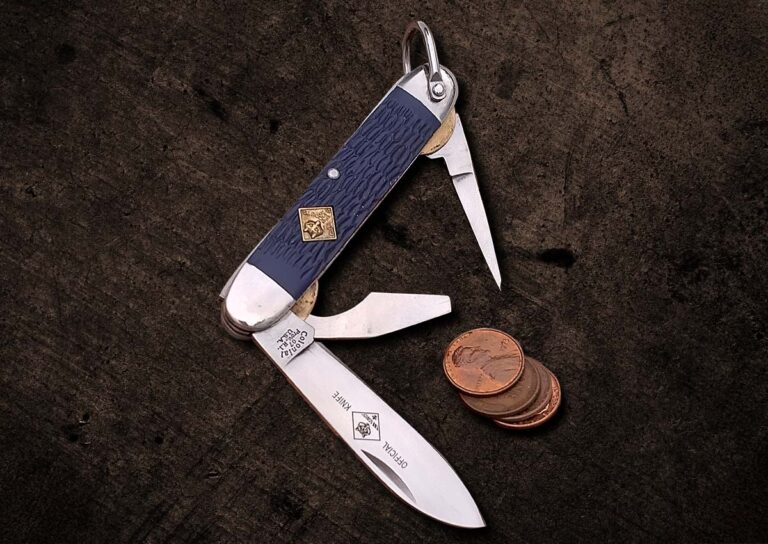
The old story goes that when someone gives a knife to someone else, the recipient is obliged to present the giver with a penny as a token of appreciation or even as an insurance policy. The origins of the old custom are shrouded in mystery and have become more obscure with the passage of time. Nonetheless, there is a larger aspect to the tradition, and that is its questionable staying power in the modern milieu that is the world of knives.
Is the old practice virtually clinging to life? Apparently so. A few folks contacted for the story were frank in their assessment. Phil Gibbs of A.G. Russell Knives in Rogers, Arkansas, went to the buying public and then conferred with his boss, BLADE Magazine Cutlery Hall-of-Fame® member Goldie Russell, both longtime participants in all things knife.
If somebody gave you a knife and you didn’t give him a penny in return, Cutlery Hall-of-Famer Dan Dennehy noted, “it would cut your friendship.” Dan is also a member of the International Knife Throwers Hall of Fame.
“I’ve polled customers in our store since we first discussed this, and zero people were aware of the old custom,” Phil remarked. “Goldie and I agree that it was once quite prevalent but now is long gone and forgotten.”
The late Cutlery Hall-of-Famer A.G. Russell knew the custom well but sometimes found himself having to explain it a bit.
“Sometimes people look at me funny,” he said years ago of the times he gave a knife to someone and asked for a penny in return, “especially when they are younger. The younger they are, the funnier they look at me. I just think it’s a matter of their not knowing about it.
“As I was growing up, I saw it being done, not just once but many times. I still do it myself. I insist on compensation. It may end up being a quarter if they don’t have a penny, nickel or dime. I knew a man years ago who liked to give knives away, and he would give the knife away with a penny and then make you give the penny back.”
Veteran knife dealer Bill Claussen of Northwest Knives in Salem, Oregon, is another source who definitely would be in the know regarding the tradition, and his assessment was a straight-up, “I really don’t have anything to offer on this one. This is really not ‘old knife’ country out here, and I never even heard of this until a few years ago,” he noted, “and then I never heard it discussed.”
Cutlery Hall-of-Famer A.G. Russell waits on a customer in the retail knife store inside A.G. Russell Knives.
The tradition may well be on life support. While it is likely fading or the sun has quite possibly set on it altogether, there are related memories. Matter of fact, this writer put together a BLADE® story on the topic some 26 years ago. Coincidentally, I had just experienced the tradition in action. When I handed a nice folder to a close friend, his wife piped up, “Now you have to give Mike a penny. My mother and father never gave one another anything with an edge without receiving a penny in return.” Even then, my friend’s wife had no idea where the practice had originated.
Penny For A Knife Origins
In that BLADE story 26 years ago, Cutlery Hall-of-Famer Bruce Voyles related that he believed the custom originated in ancient Rome.
“The general theory was that you would ask for the lowest coin of the realm when you were given a knife,” he said. “Back then, when you were dealing with an absolute monarch and the king or queen handed you a knife of their own, you were expected to kill yourself with it. But, if the king demanded a coin from you, then he was giving you the knife.”
Well-known knife dealer Jim Taylor, who grew up in Sheffield, England, remembered the penny for a knife custom as it was practiced in his family. “When I was a little boy,” he recalled years ago, “I had to give my mom a penny before she would give me a pocketknife she had bought for me. It might have been a particular Sheffield custom that became popular.
“I’ve always expected to be given a coin, whatever it might be, any coin at all. In England you don’t have to explain it, but in the United States sometimes the custom is not held so tightly. If I were to take someone a gift of a pocketknife in England, they would without question give me a coin. They think, ‘You must buy this because otherwise it might cut our friendship.’ I’ve seen knives from time to time with an old English farthing or half penny built into them.”
That was then.
Bill Claussen with Sheffield Exhibition Knives, the book he authored in 1999 along with Brad Watts and Pete McMickle.
Even Queen Elizabeth II participated in the tradition. The Sheffield Star newspaper dutifully reported in its Dec. 12, 1986, edition that the Queen visited the city and was presented with a platinum penknife and responded by handing the presenter a six-pence coin in a case. Thirty-five years earlier, the monarch had visited Sheffield and handed a cased half penny to the giver in exchange for a gold penknife.
In fact, the practice was so widespread at one time that according to Cutlery Hall-of-Famer Bernard Levine, one of the foremost knife writers and folklorists, Gerber knives were often sold in the 1940s with an accompanying card that explained the penny for a knife tradition. The card even had a penny glued to the top along with the declaration of “invoice” and then space for a name along with the instruction, “debtor to” and then “1 box of Gerber Blades … 1 cent.”
Levine said the Gerber card explained the legend a bit further. “There is a superstition, or something, about giving away cutlery … etc., so I trust you will honor this bill,” the card stated. “Besides, I need the money.”
FRIENDSHIP CUTTER Years ago, Cutlery Hall-of-Famer Dan Dennehy indicated that he had grown up with the tradition.
“If someone in our family gave you a pocketknife, they got a coin,” he recalled. “The value didn’t matter just as long as it was legal tender. If somebody gave you a knife, a letter opener, anything with a sharp edge, or even a butter knife, you always gave a coin in return because if you didn’t collect a payment it would cut your friendship.”
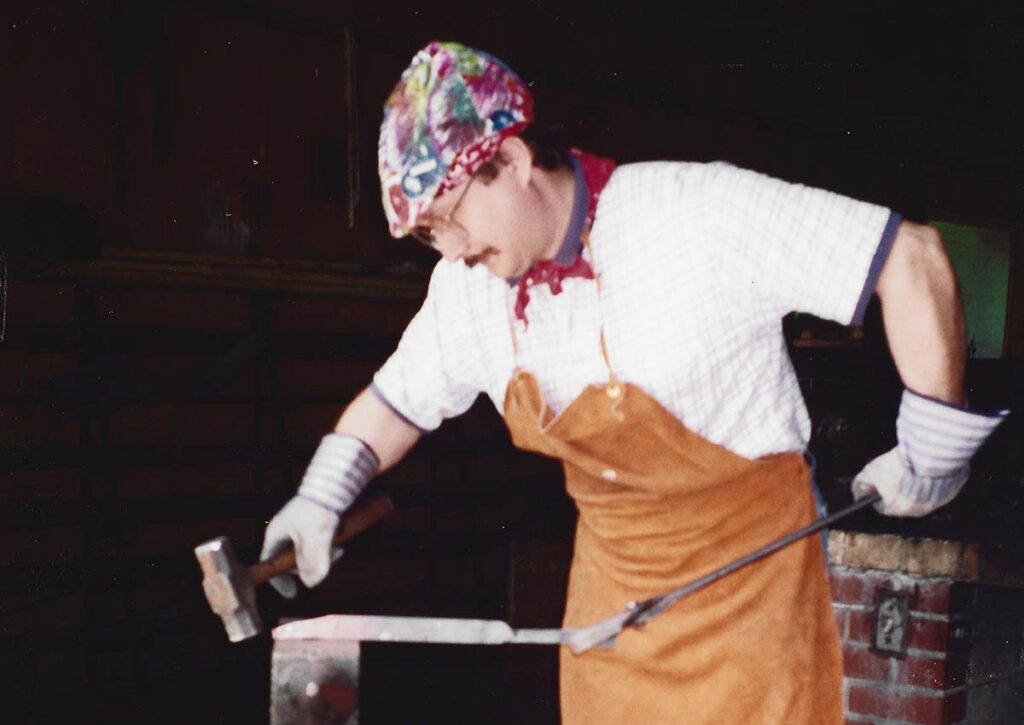
Cutlery Hall-of-Famer Bruce Voyles hammers hot steel during a basic bladesmithing course in 1994 at the Bill Moran School of Bladesmithing. (B. R. Hughes image)
Those who remembered the old practice seemed convinced a quarter century ago that fear of “cutting the friendship” was their prime motivation. Knifemaker John Dennehy, Dan’s son, remembers his close association with it.
“I’ve thought about this and don’t have any firm history about it,” John reflected. “I do remember my dad spoke about it a lot. Giving a knife as a gift can sever the friendship, so he always asked me for a quarter or something when I was a kid and a dollar as an adult. He often told the story about being on the radio with G. Gordon Liddy [talk show host, attorney and FBI agent involved in the Watergate scandal of the 1970s] and presenting him a knife. Gordon was prepared and had a silver dollar ready to give Dan. Being first-generation Irish in the U.S., he claimed it was an old Irish tradition. In the books and TV show Outlander, Jamie Fraser, the Scottish highlander, gifts his wife a custom knife. He asks her for a little something in return—says it’s an old Scottish tradition. That’s not much, but I did grow up with the tradition and carried it forward.”
In doing some research sometime back, it became apparent that the tradition has been a cross-cultural phenomenon. In Scandinavia, for example, it’s seriously bad luck to outright give someone a knife. A knife that was gifted but not meant to be a “killing knife” had a coin accompanying it with the initials of the maker. That would ensure the knife’s good use. Along with the knife an old saying, “A man without a knife is a man without a life,” added to the Scandinavian sincerity of the event.
Despite the fact that the tradition may be fading or has already slipped into history, some way or somehow it may experience a revival. Levine and many others seemed to love it. Some still do. After all, it adds to the quaintness and charm that surrounds the exchange of a knife with a friend or family member.
Tradition is a common thread that just makes the giving more memorable and enriches the experience for everyone. In these days of inflation, it’s cheap, too. It only costs a penny.