Josh Smith’s new knife company tackles the wild with bushcrafter Marshall Knife.
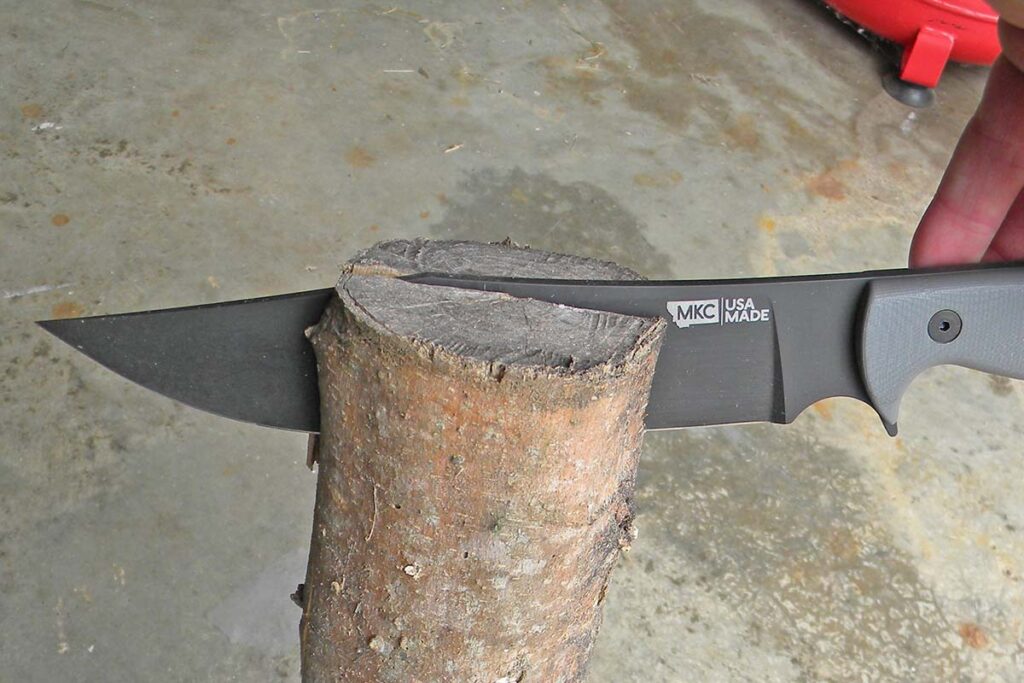
I was surprised at the thickness of the Marshall—.17 inch. Great design makes the blade wider, which adds weight for chopping, yet still keeps the knife lightweight enough to wear all day long without discomfort. The addition of a finger cutout just before the choil is perfect for control during smaller tasks. It is a nice knife on first glance. However, it has to cut and be comfortable to pass muster.
Light-Duty Cutting
To test the edge I sliced 20-pound bond copy paper. Supported by a full flat grind, the edge cut the paper effortlessly. The wide blade made indexing the slices very safe and smooth on each pass. It should be a cutter for sure, I figured.
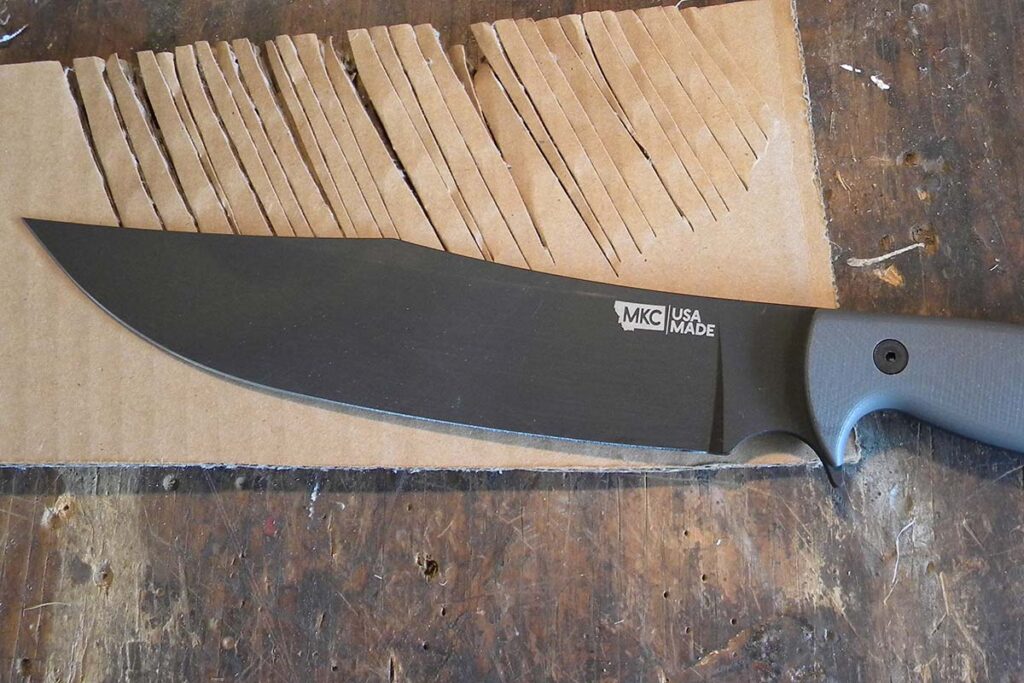
The knife zipped quickly through the double-walled cardboard. The slices were straight with no distortion of the cut pieces.
On to double-walled cardboard. I thought the blade would drag some with the deeper cuts but the Marshall zipped through quickly. The slices were straight with no distortion of the cut pieces. I enjoyed slicing the cardboard with the bigger blade.
I grabbed a piece of plastic board to dispatch while choking up via the finger cutout. This really helped in controlling the finer slices. The Marshall passed through the material quickly. I really like the finger cutout. It balances the knife in use.
Marshall Medium-Duty Chores
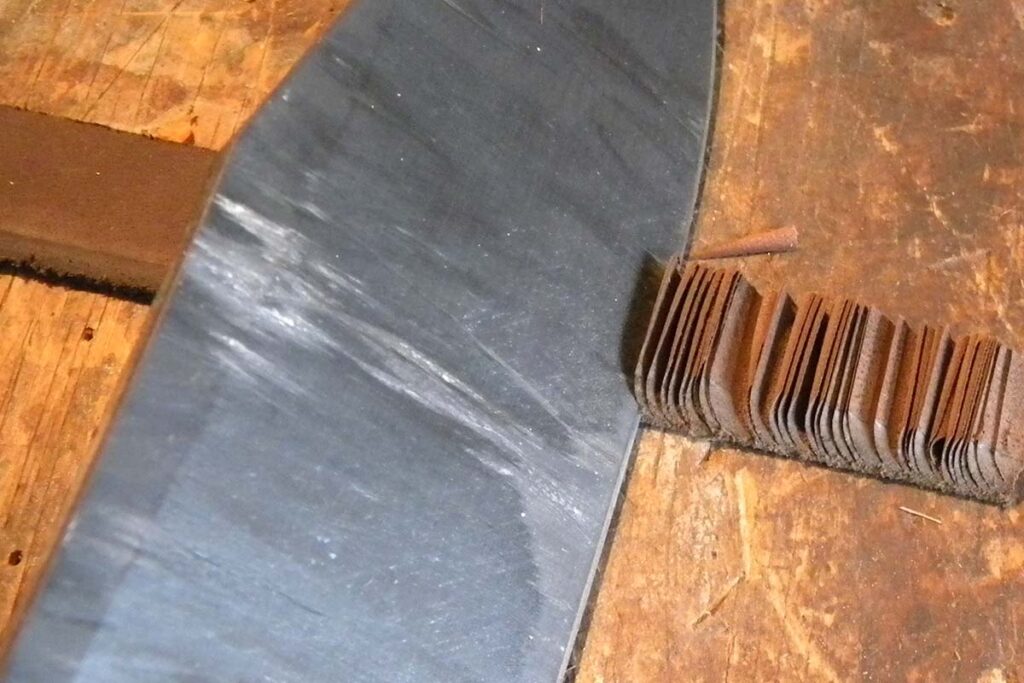
On to my favorite medium, half-inch sisal rope. As I used a push cut, the Marshall started crunching. After 200 clean crunching cuts, I wanted more out of the larger blade, so I switched to 1-inch manila rope. It took 35 crunching cuts to slow the Marshall down. The handle was comfortable throughout. Excellent work from Montana Knife Co.
Crunch, crunch; the Marshall cut nice and aggressive in skiving the 8-ounce leather.
I almost forgot to skive some 8-ounce leather. Crunch, crunch; the Marshall was nice and aggressive cutting the material. The knife provided great control, again using the finger cutout.
Heavy-Duty Cutting
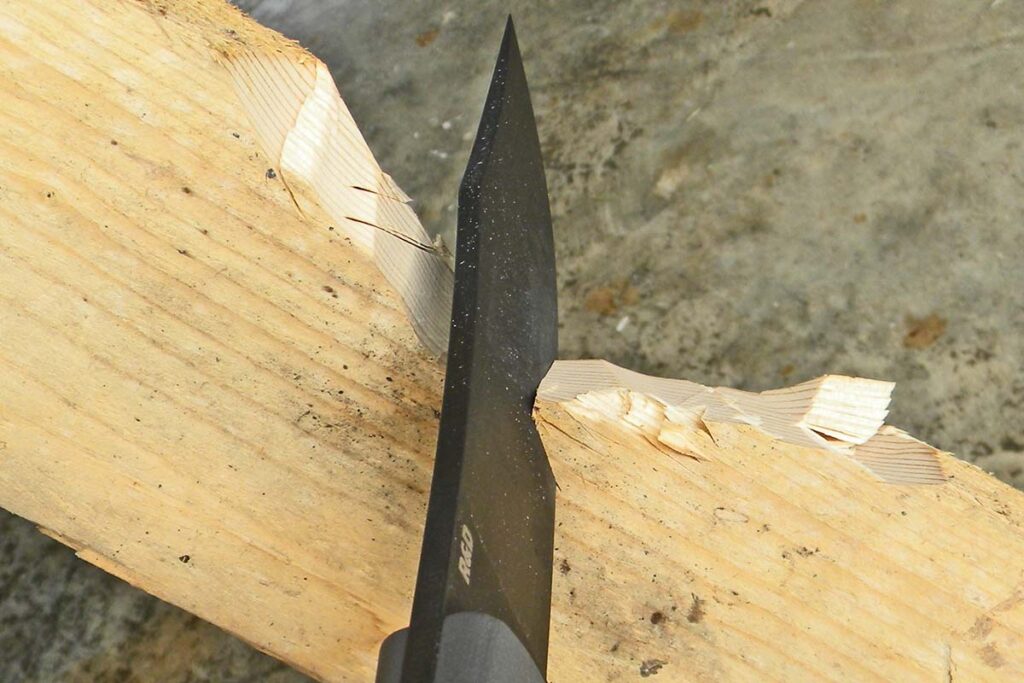
It was time to whittle a firestick. The knife rendered large curly-cues. I tended to push the knife too far and cut the curly-cue off the stick. Don’t you hate it when that happens? The Marshall was controllable during whittling but the blade wanted to take bigger bites. Still, it did a nice job.
The blade bit deep into the 2×8 every swing and soon the author had wood chips scattered over the driveway. The handle was comfortable and transferred no shock up the author’s arm. It was easy to free the blade from the wood for each subsequent chop.
After rearranging the storage area, I found a piece of 2×8 that would work great for chopping. The blade bit deep every swing and soon I had wood chips scattered over the driveway. The slightly blade-forward balance really shines with chopping. The handle was comfortable and didn’t transfer any shock up my arm. It was easy to free the blade from the wood for each subsequent chop.
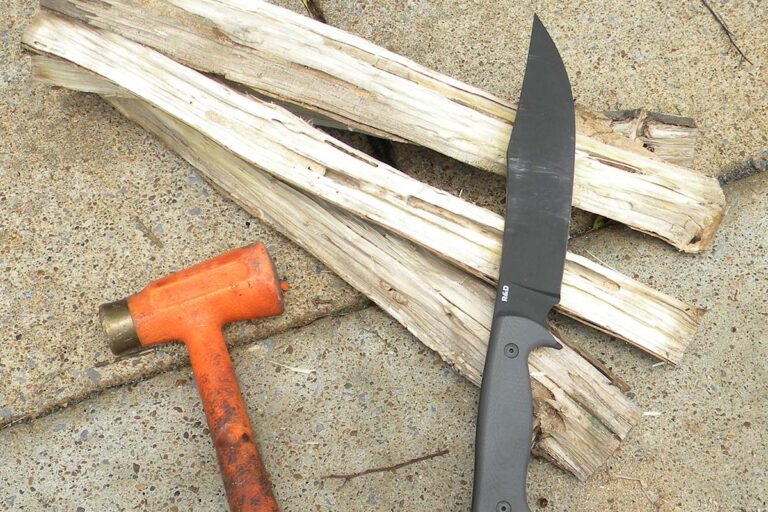
I split some seasoned hackberry using my trusty dead blow hammer as a baton. I split a 3.5-inch piece four ways for kindling. The Marshall penetrated deep with each blow of the hammer, averaging 3.5 whacks per split. The results were outstanding!
The author split some seasoned hackberry with the help of his dead blow hammer. He split a 3.5-inch piece four ways for kindling. The Marshall penetrated deeply with each blow of the hammer, averaging 3.5 whacks per split. The results were outstanding!
It was time for the whitetail antler chop to check for edge toughness. Thirty hard wrist snaps into the antler didn’t damage the edge at all, a sure sign of spot-on heat treatment. Wow!
The last is first—back to the 20-pound bond paper. The Marshall still sliced cleanly. It incurred a snag in the paper but I don’t know if it was because of a mistake on my part or the knife.
Final Cut
The Marshall is an excellent bushcraft knife with a large blade that’s not too heavy. I might make the handle a tad thicker for my personal use.
These classic custom daggers dare the steal the show.
The custom dagger is enjoying a renaissance, in no small part because it is a style that takes so much talent to do properly. Double grinds, fluted handles and a high level of fit and finish are just three of the things a maker likely will have to do well at one time or another in making a dagger. And if he or she nails the dagger build, it’s a crucial step on the way to the next level.
Camille Sennegon: Wenge Wood Handle
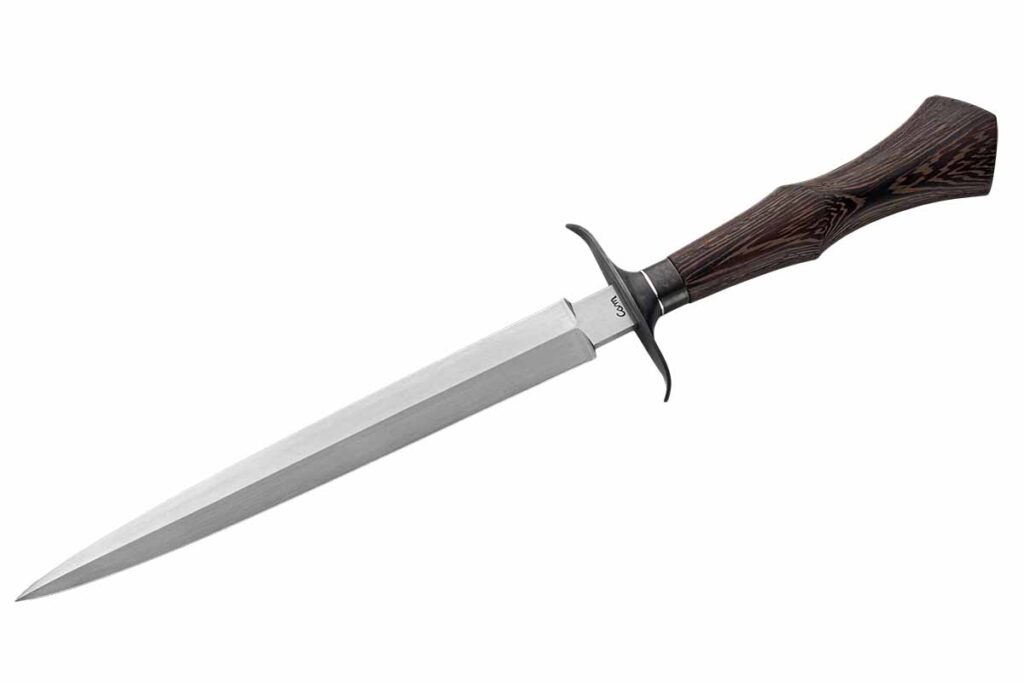
A masterfully sculpted wenge wood handle and a 9-inch blade of 1095 carbon steel sandwich the stainless steel crossguard of a custom dagger by ABS journeyman smith Camille Sennegon. Overall length: 15 inches. (Jocelyn Frasier image)
James Bishop: Death Watch Dagger
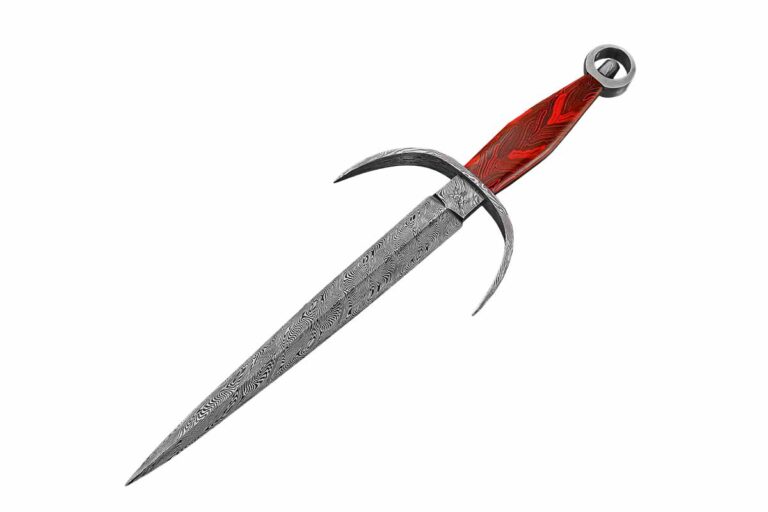
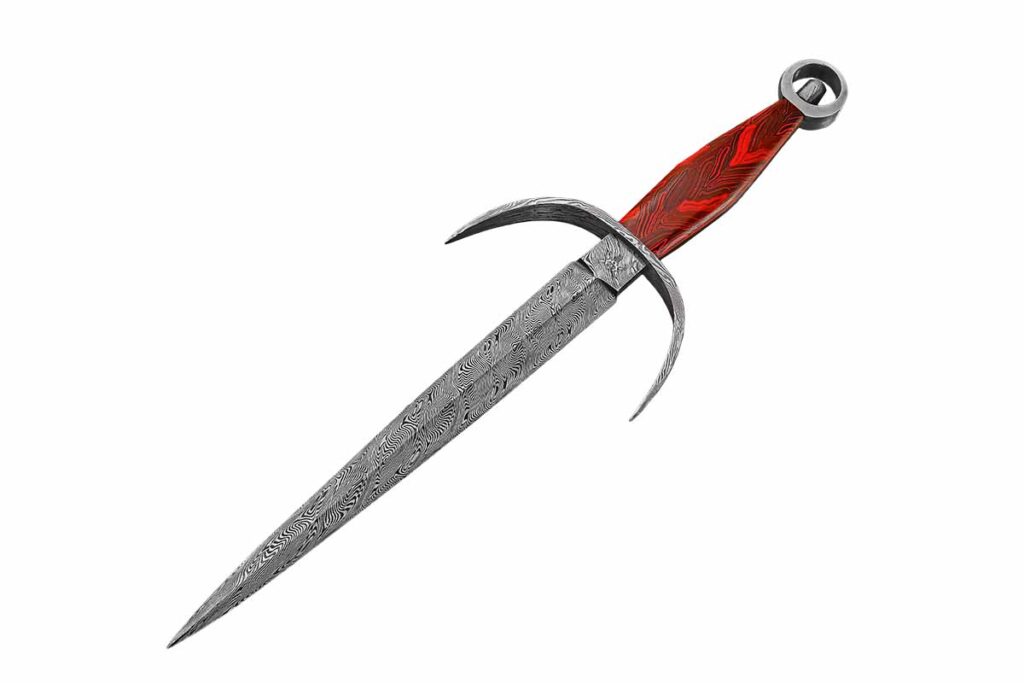
A dramatically upswept guard and 11.5-inch blade, both of twist damascus, and a handle of “damascus pattern” G-10 carry the load for the Death Watch Dagger by James Bishop of Sausage Man Forge. Grind: Flat double edge. Overall length: 19.2 inches. (Rod Hoare image)
Mike Tyre: Quillon Dagger
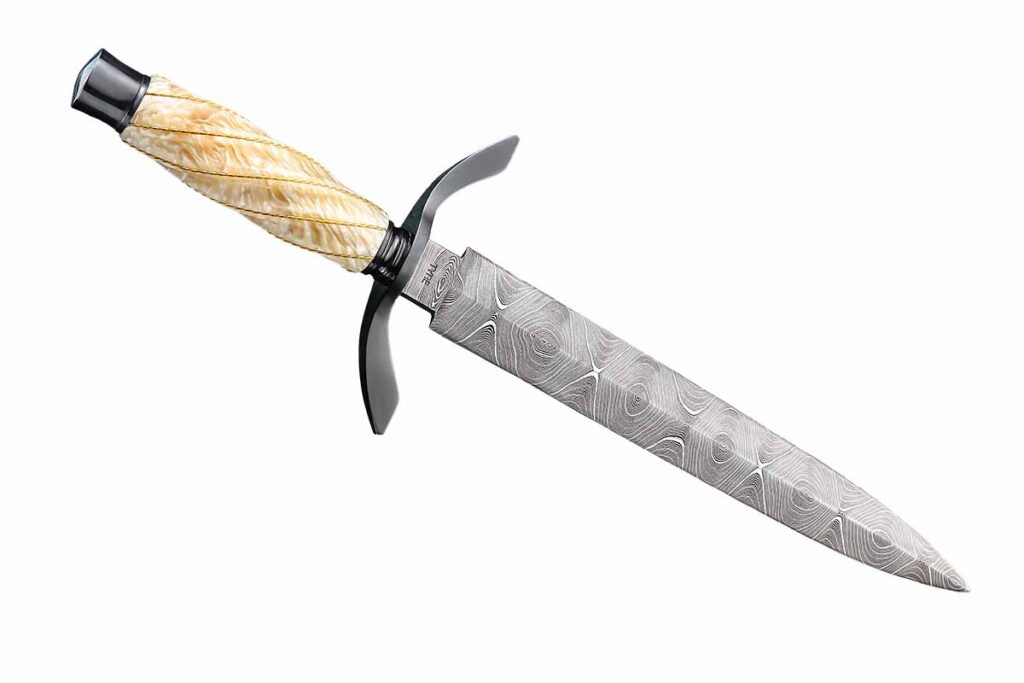
ABS journeyman smith Mike Tyre’s quillon dagger boasts a 10.5-inch blade of double-flat-ground damascus in O1 and L6 tool steels, and a fluted musk ox handle with 12k-gold wire inlays. The knife features takedown construction and a guard of gun-blued mild steel. Overall length: 15.5 inches. Mike’s price for a similar knife: $4,800. (SharpByCoop image)
Andrea Lisch: Blackwood Handle
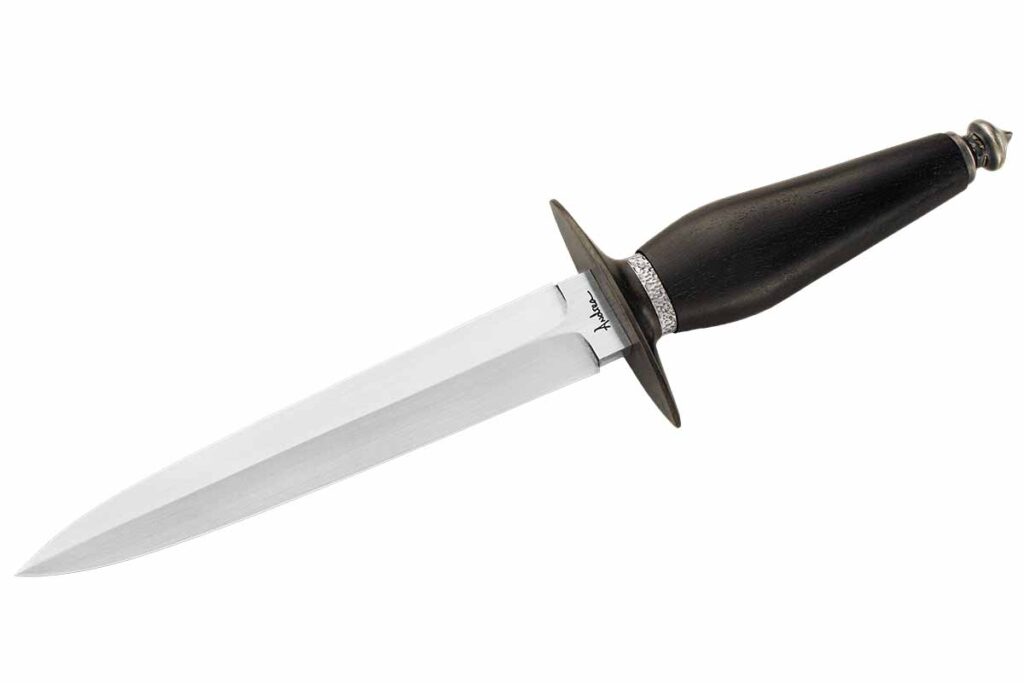
A 7.5-inch blade of 5160 carbon steel, a blackwood handle with stippled stainless steel spacers, and an O1 tool steel guard complete a dagger by Andrea Lisch. It is one of five test knives that earned her the rank of ABS journeyman smith during BLADE Show 2023. (Jocelyn Frasier image)
Roger Green: Will & Finck-Style Push Dagger
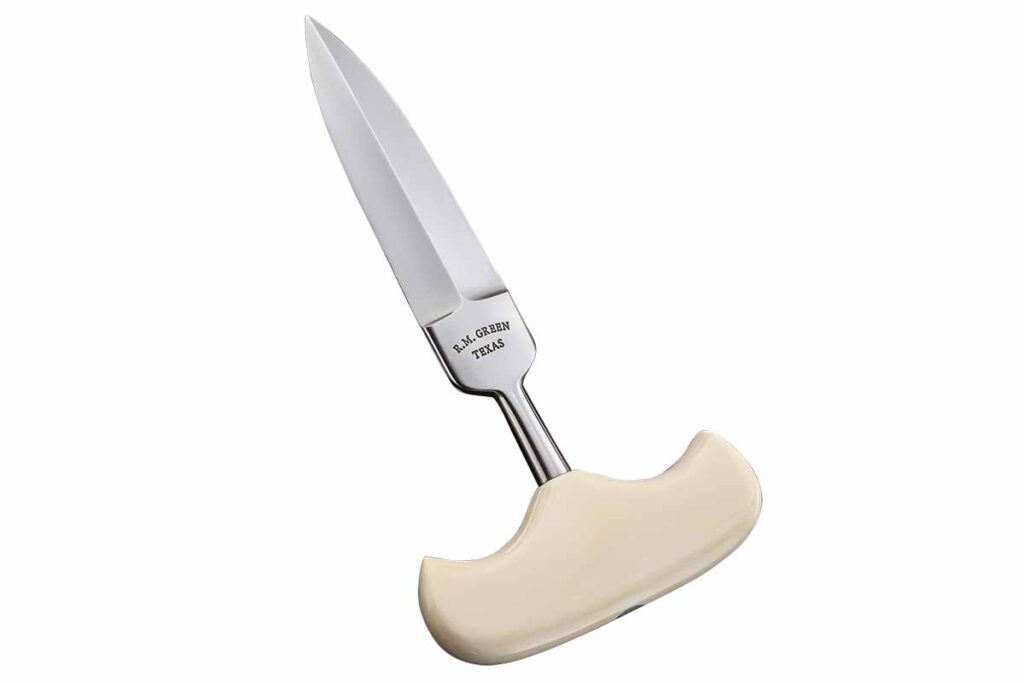
Based on a 19th-century Will & Finck-style push dagger, Roger Green’s repro has a 6.75-inch blade of hollow-ground 440C stainless steel and an ivorite handle. The sheath (not shown) is nickel silver with a Will & Finck 1872 patented belt clasp. Roger’s price for a similar knife and sheath: $3,500. (SharpByCoop image)
John Horrigan: Art Dagger
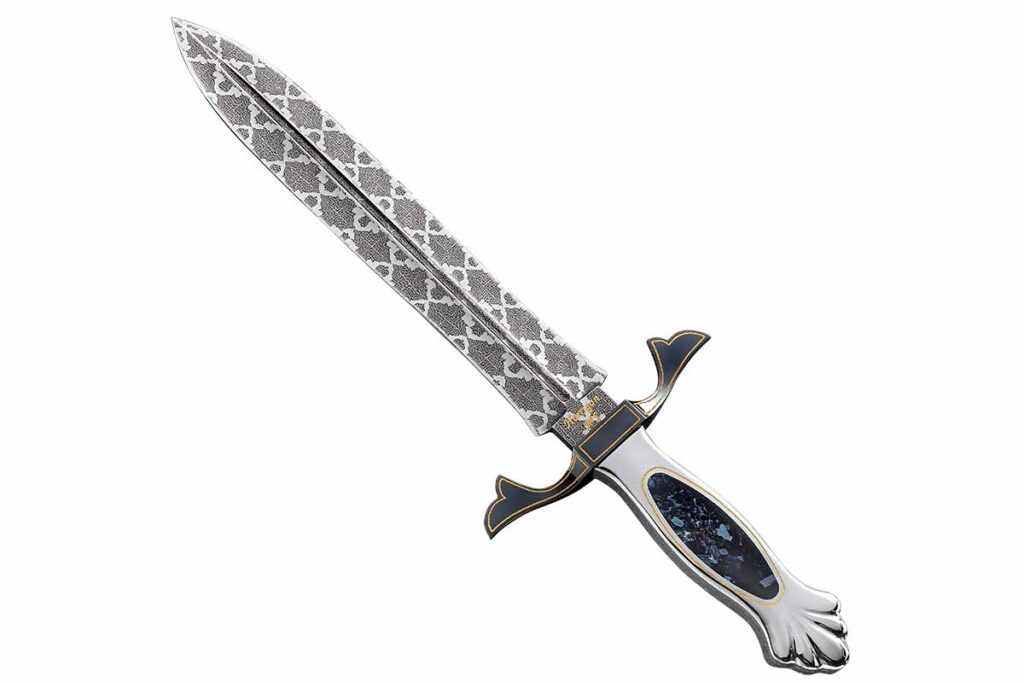
A 10-inch blade in hollow-ground quilt-pattern damascus, a 416 stainless steel handle with petersite inlay, and a guard of hot-blued 1045 carbon steel top off ABS master smith John Horrigan’s art dagger. Overall length: 14.5 inches. John’s price for a similar knife: $10,200. (SharpByCoop image)
Tony Docherty: Skeleton-Style Dagger
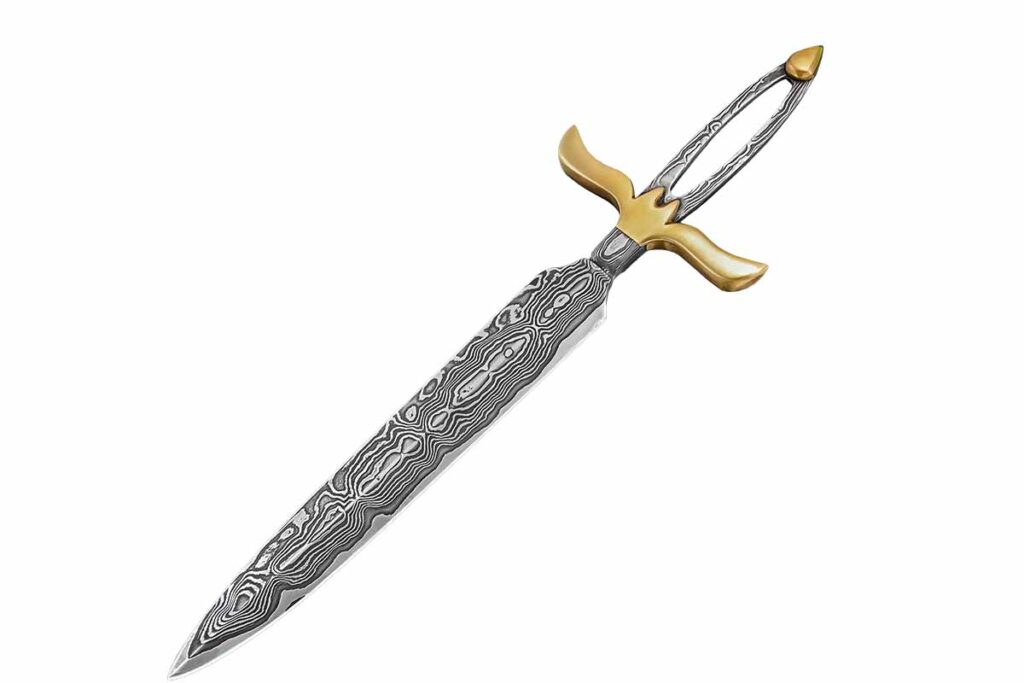
Tony Docherty’s skeleton-style custom dagger sports a 9.25-inch damascus blade, a damascus handle and a brass guard and pommel. Blade grind: Double bevel. Overall length: 14.7 inches. (Rod Hoare image)
A larger riff off its popular EDC option, GiantMouse’s Biblio XL is proportioned to tackle more.
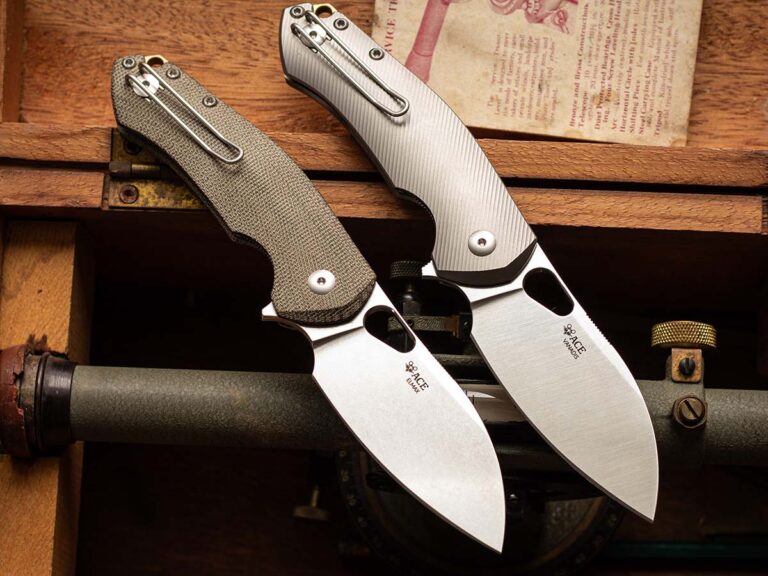
Is bigger better? GiantMouse is betting so with its first release of 2024. As it’s easy to surmise, the ACE Biblio XL is the big brother of the ACE Bibilio the company released a few years back, but not enlarged to asinine proportions.
My gander at the knife, it certainly hasn’t been up-proportioned to the point it isn’t a viable EDC option—especially for those who appreciate a larger blade. Yet, the modified Wharncliff’s larger dimensions have the potential to provide more utility for certain users. In my mind, the Biblio XL has a bit more advantage over the smaller original as a work knife or even in outdoor applications.
So exactly, how much bigger is the new variation than the original Biblio? Not much—a mere fraction of an inch. But the nearly half-inch GiantMouse has added gives the XL a blade length of 3.2 inches, plenty of cutting edge to tackle a fair range of jobs. As for the overall tale of the tape on the knife, its overall length is 7.6-inches open, 4.4-inches closed and 3.9 ounces in weight. As mentioned, definitely not an option that will weigh you down, nor feel like you’re toting a rock in your pocket.
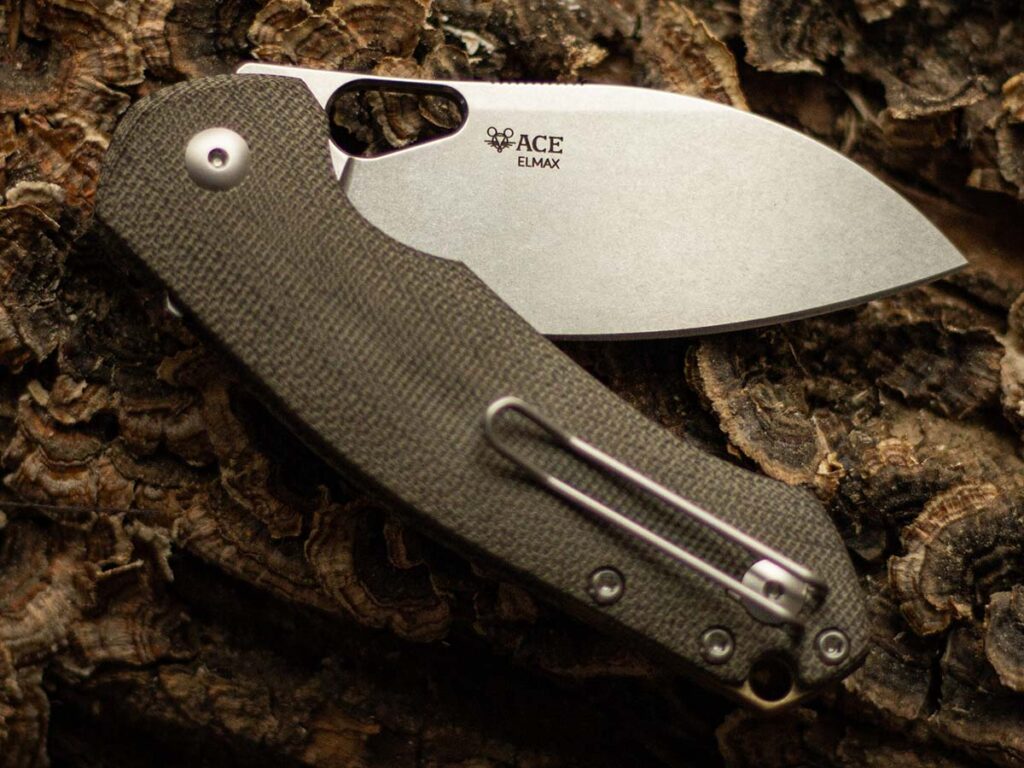
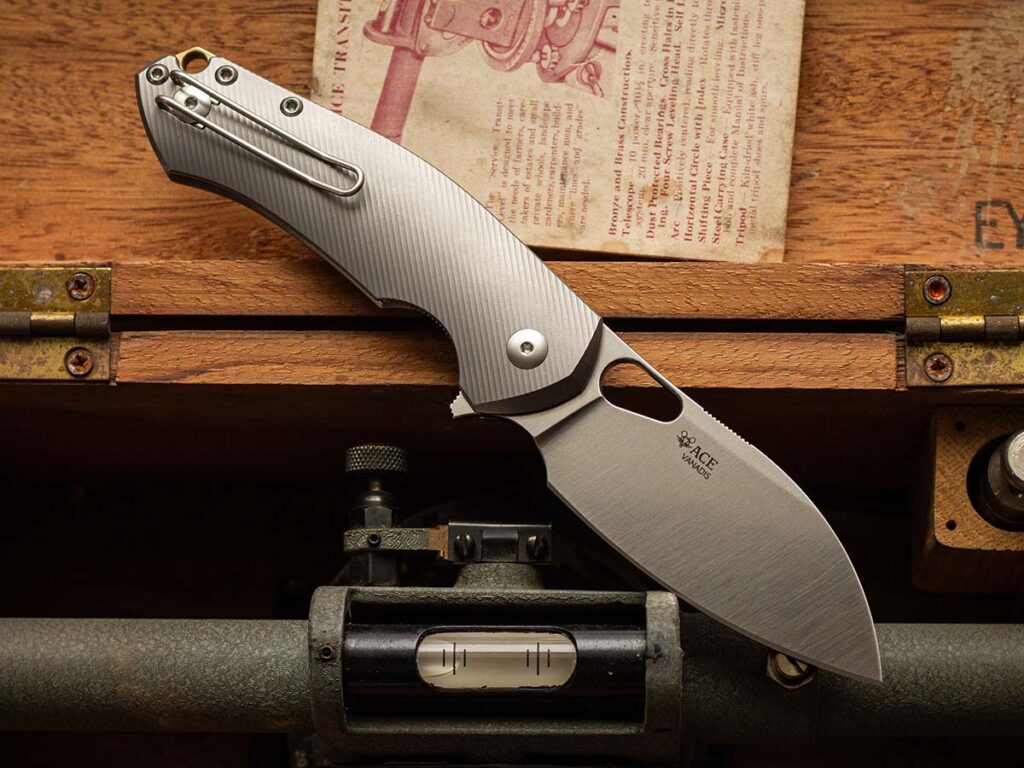
The blade of the Italian-made knife comes in two steel options. On the Micarta-handed version, Elmax is the order of the day. On the titanium-handled model, Vanadis 4 is used. Both are high chromium-molybdenum-vanadium alloys, with good attributes for top-shelf EDC knives. As to the profile, the Wharncliffe has a bell to it, giving it better-slicing abilities than a knife that stuck to the traditional formula of this style of blade. Adding to this capability is a full flat grind.
Interestingly, GiantMouse integrates a fairly substantial choil into the Bibilio XL’s design, enough to use it as a leverage point on finer work. Additionally, the is understated jimping on the spin—just before the thumbhole—perhaps just enough to add more purchase when utilized, but not so much as to catch on clothing coming out of your pocket. As for action, a ball bearings pivot mechanism deploys the Bibilio’s blade quickly and very smoothly. Aiding in the opening are both a nicely textured kicker, as well as a thumb hold near the spine.
Finally the handle. As mentioned, there are two options—micarta and titanium—both well textured and proportioned to the hand. GiantMouse includes a wire pocket clip, situated for tip-up carry, but reversible making it friendly for righties and lefties. As for cost, the Micarta ACE Biblio comes in at $225, while the titanium model demands a premium of $285.
Carter’s training at the elbow of a Japanese master smith shows in his shop.
Ever since I was a young boy I have been fascinated with blades,” ABS master smith Murray Carter writes. “Why some blades would cut and others would not was a mystery to me that I felt compelled to solve.
“A chance encounter at age 15 with a karate instructor began my love affair with Japan. A trip to Japan, when I was 18 years old, led to an unexpected encounter with an amazing man, Sensei Yasuyuki Sakemoto, who I would come to learn was the 16th-generation Yoshimoto bladesmith and whose family custom forged samurai swords for some of Japan’s most influential feudal lords. My relationship with Sensei Sakemoto led to a unique six-year apprenticeship, and upon its completion, I was asked to continue on in the 420-year-old family bladesmithing tradition as the 17th-generation Yoshimoto bladesmith.”
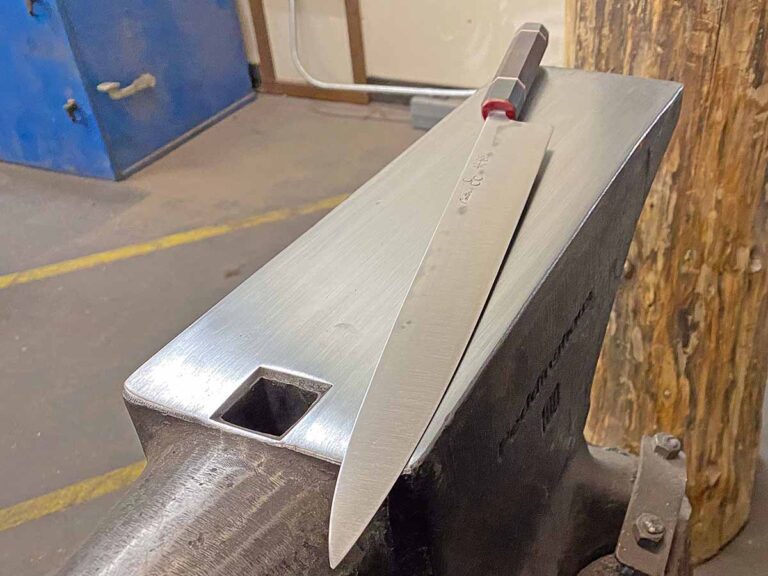
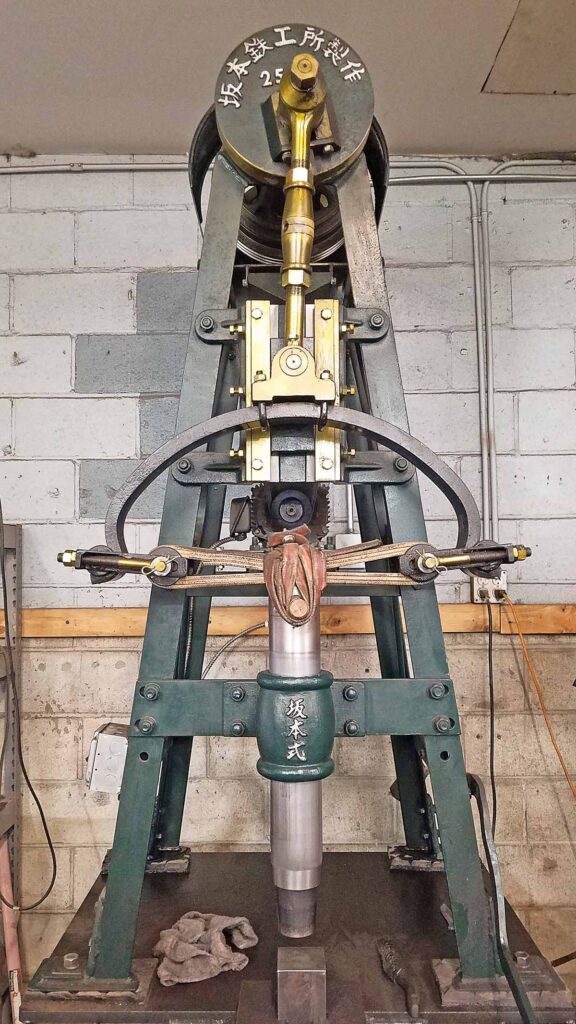
Murray’s forging hammer is a 25-kilogram version of a Sakamoto-Shiki Japanese spring hammer. Japanese laminated steel is heated in a solid fuel forge and forged under the spring hammer with 800 to 1,000 individual hammer blows to achieve a blade that is very close to its final shape and thickness, and with extreme grain refinement.
Murray was off to the races. “I worked as a village bladesmith for 12 more years, constantly availing myself to other industry experts to glean what I could, and spent many long hours in the forge putting my newfound skills and knowledge to practice. I introduced my handforged Japanese kitchen knives to the Western market in June 1997 and achieved the ABS master smith rating in June 2001. In 2005, I moved to Oregon and have been busy plying my trade ever since.”
His shop is steeped in Japanese knifemaking history and his equipment reflects it. He begins with his forging hammer. “The Sakamoto-Shiki Japanese Spring Hammer is a 25-kilogram version,” Murray notes. “This particular hammer is the last-ever spring hammer to be manufactured by Sakamoto Ironworks in Tosayamadacho on the island of Shikoku, Japan. Blades are forged both hot and cold under this spring hammer. The 25-kilogram ram strikes the steel with enough kinetic energy to actually heat up the steel as it is being forged. One of our spring hammers has forged over 40,000 blades to date without breakage or malfunction.”
Next up is his rotating waterstone. “Keeping with traditional Japanese bladesmithing methods, handforged blades are quenched fully thick and then blade geometry is ground by hand on the rotating Japanese waterstone,” he explains. “When purchasing stones from Japan was no longer possible, Radiac Abrasives, Inc., from Salem, Illinois, stepped up and fabricated this stone for us.”
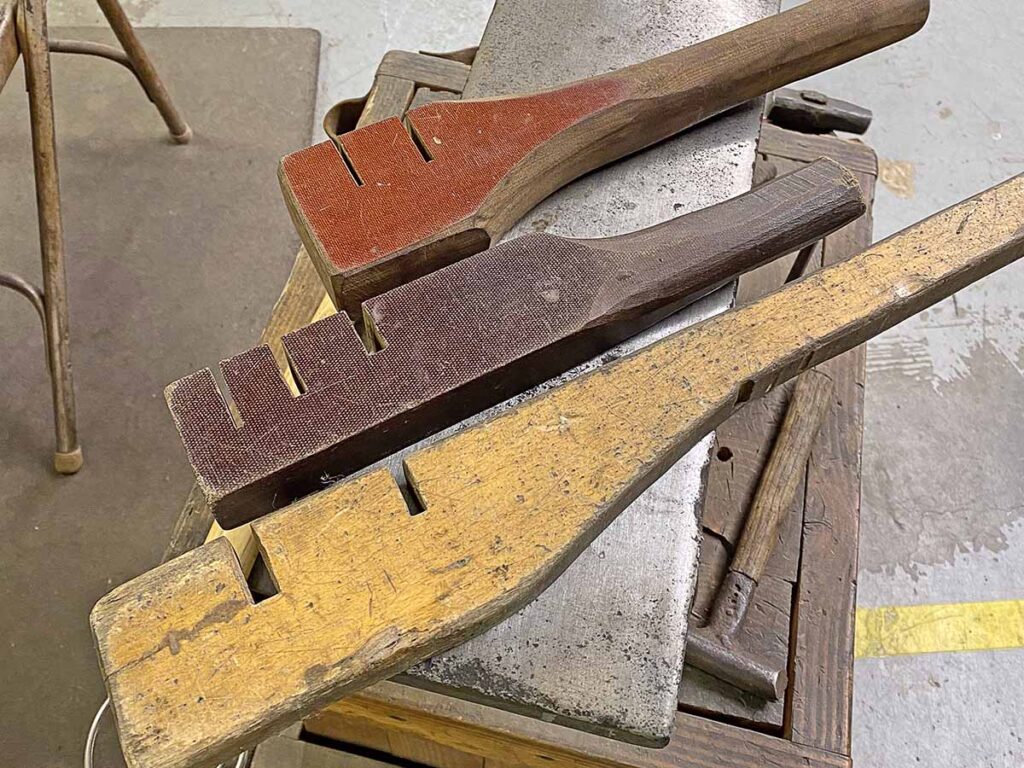
The mage-bou custom made ‘bending stick’ with slots of varying thicknesses is used to straighten hardened laminated blades. It can be made from most any hard material, including oak or Micarta®.
Murray’s forging hammer bears little resemblance to American fare. “The Japanese tagane hammer is made by brazing a carbide bit into a regular hammer,” he writes. “This is a specialized tool skillfully used to straighten bent homogenous steel knives after hardening. It is hammered into the concave side of an unwanted curve in a blade, and the carbide bit penetrates the surface of the metal and moves a tiny bit of steel in either direction, perpendicular to the length of the bit. Handforged saw blades before the days of disposable saw blades used this straightening technique heavily.”
For further blade straightening Carter uses a simple yet effective tool. “The mage-bou custom made ‘bending stick’ with slots of varying thicknesses is used to straighten hardened laminated blades,” he observes. “The bent blade is forced true via the lever and fulcrum effect. Care must be taken not to snap a stiffer blade by applying too much force.”
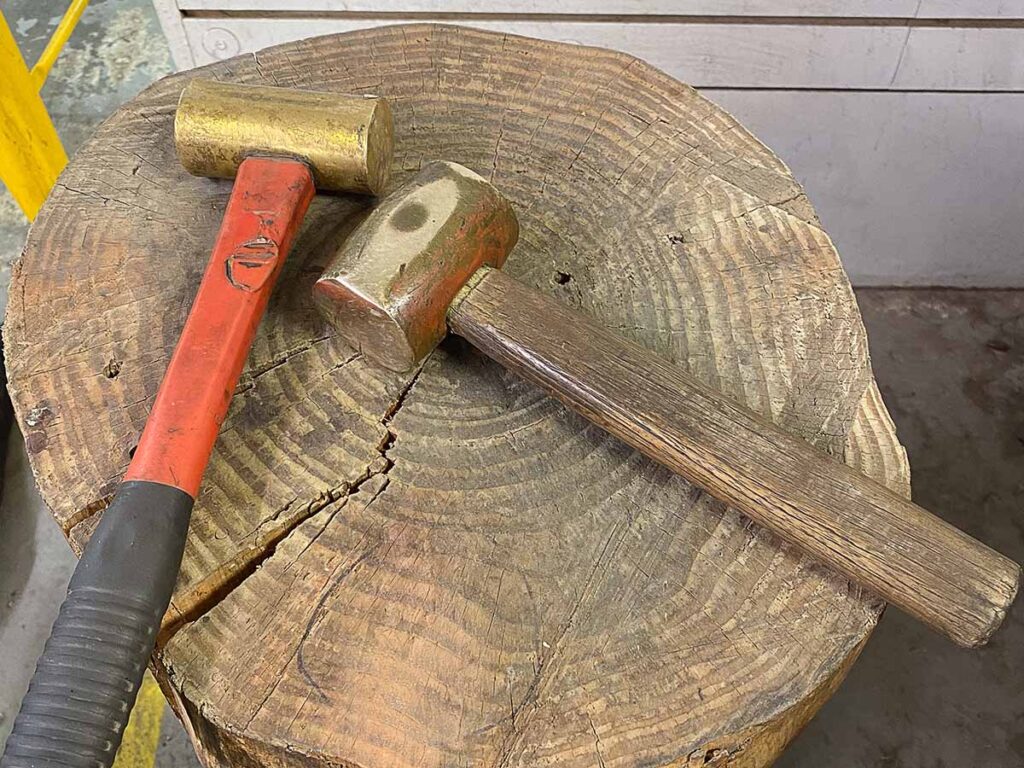
The brass hammer and wood stump are used to fine tune the straightening of blades after heat treatment. The convex side of a curve is placed face-up on the stump and judiciously hammered with the brass hammer.
Sometimes it just takes experience and a good eye in lieu of hi-tech. “The brass hammer and wood stump are used to fine tune the straightening of blades after heat treatment,” Murray notes. “It’s probably the most-used workstation at Carter Cutlery. The convex side of a curve is placed face-up on the stump and judiciously hammered with the brass hammer. Examining by eye the effects on the blade after each single hammer blow is the most effective way to do it.”
A week after BLADE Magazine Cutlery Hall-Of-Fame® member Bob Loveless died at age 81 on Sept. 2, 2010, Los Angeles Times reporter Valerie J. Nelson wrote a lengthy story on the man who sold his first knife to the Abercrombie & Fitch sporting outfitter for $14 more than 55 years earlier.
Nelson wrote that Loveless “made some of the world’s most coveted sporting cutlery by refining knife design to high art.” These succinct words convey a glimpse of the influence this giant in the cutlery industry wielded during his lifetime. In this 50th anniversary year for BLADE®, his legacy stands tall among those who have dedicated their lives in building the knife industry to what it is today.
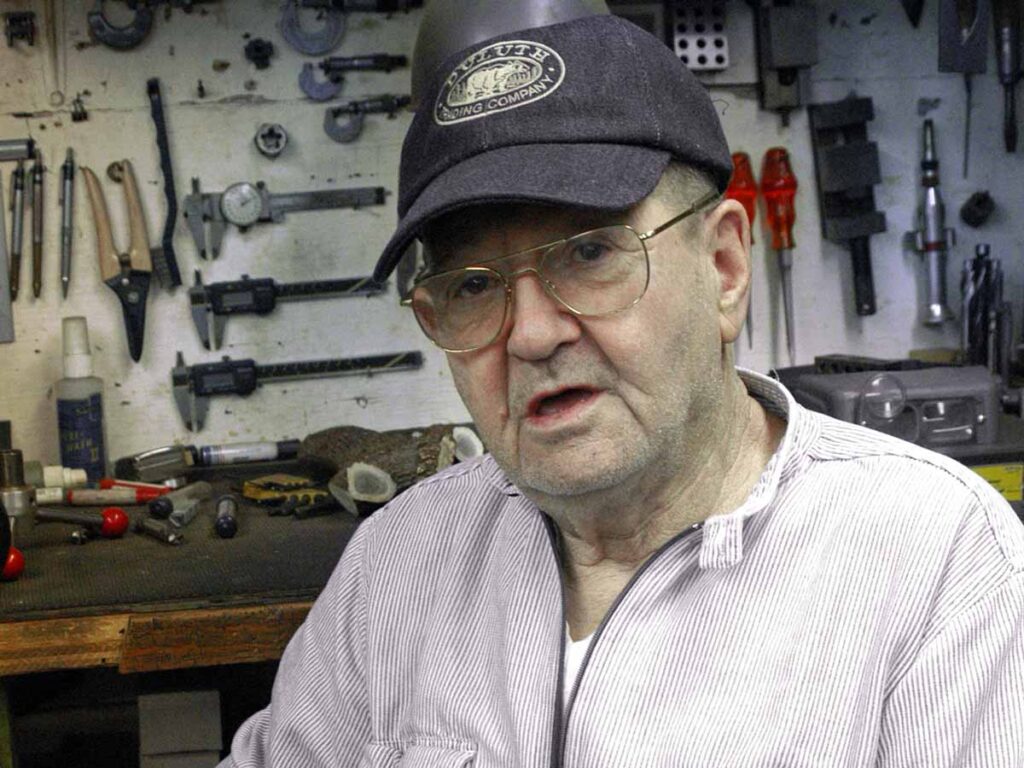
Bob Loveless in his shop in October 2006. (image courtesy of Aaron Merritt, grandson of Jim Merritt)
Truth is, there’s scarcely an aspect, nook or cranny of the knife business that Robert Waldorf Loveless did not touch during his lifetime. He was forthright, sometimes gruff and always prone to speak his mind. During an interview for BLADE, he once asked this writer what the tapping noise was that he heard in the background. When I responded that it was the keys clicking as I was taking notes while we talked, he bluntly asked, “Can’t you remember anything? Why can’t you just listen?”
Loveless’ Defining Designs
No matter. Loveless was articulate, extremely intelligent and deep down passionate about art in knives. Cutlery Hall-Of-Famer Bruce Voyles knew Loveless and respected him for what he was.
“The thing about Loveless is he made a knife with eye appeal,” Bruce observed. “It was different, and a lot of people don’t understand why, but it was [his use of the] natural French curve. It was the design appeal.”
True enough, Loveless was a master of design. He had actually studied briefly at the Institute of Design in Chicago in the 1950s, and was a student of the Bauhaus Movement, a cultural and artistic design wave that peaked in the mid-1930s, something of a North Star, a muse if you will. Its dictum: Form Follows Function.
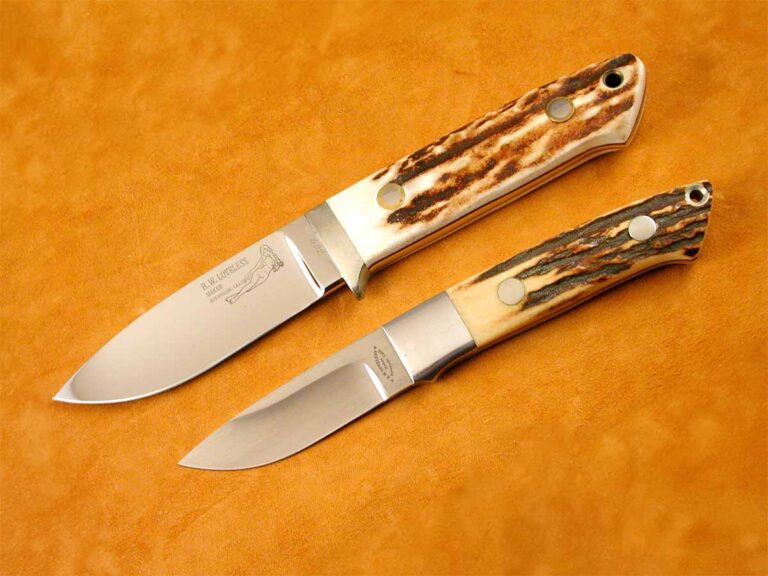
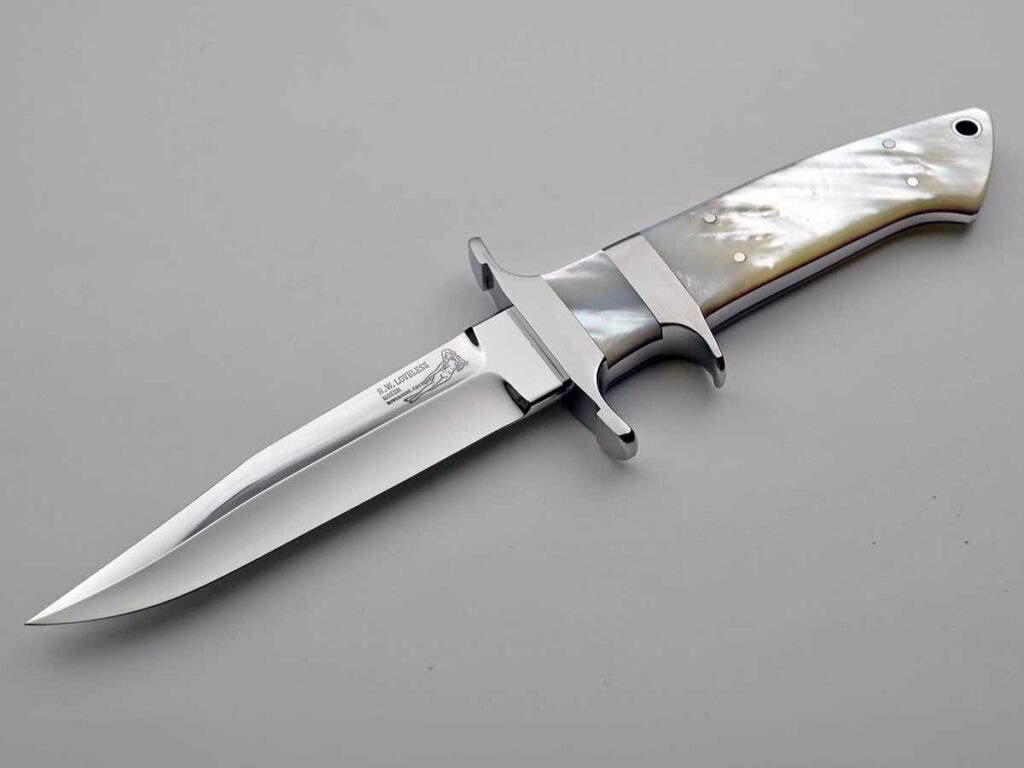
Another of Loveless’s favorite designs is the sub-hilt, radiant in one of Bob’s Baby Bear fighters with mother-of-pearl scales, Naked Lady logo and Riverside, California, stamp. (Exquisiteknives.com image)
Longtime Loveless authority John Denton told reporter Nelson, “He is pretty much the Picasso of the knife world and the father of 20th century knifemaking. His design is what made him famous.”
Dave Ellis, proprietor of Exquisiteknives.com, agrees.
“Going back to the 1950s, Loveless has been instrumental in perfecting some of the more common traits found in contemporary knives,” he related. “The dropped hunter is probably Bob’s most emulated design, although the Archer chute, sub-hilt fighter and more show that Bob did not rest on his laurels. When a smaller, carry-sized fighter was called for, Loveless came up with the New York Special.”
Denton recalled the Loveless willingness to revive and reintroduce design and construction concepts that caught hold in modern times and energized new frontiers of imagination and artistry.
“He was not the first to use the tapered tang,” John explained, “but he found out about it from an old knife made in the 1850s that was given to him by Billy DuPont of the DuPont family. Loveless brought it back into the modern world with the tapered tang taking the weight out of the knife. Bob said, ‘It has to look so good you want to pick it up and feel so good you don’t want to put it down.’”
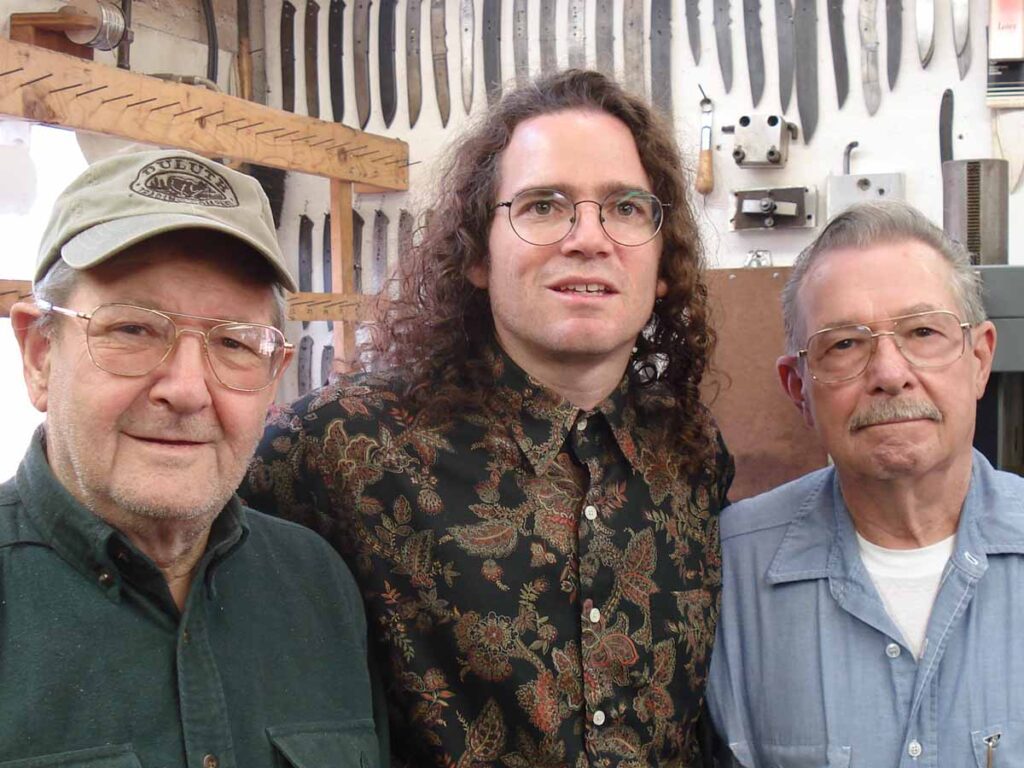
From left, Bob Loveless, John Denton and Jim Merritt in the Loveless shop in Riverside, California.
According to Denton, Loveless also brought the brass wrap handle, hidden pin, two-tone pins and half tang into play.
Design achievement crowns Bob’s career, but there was so much more to him—so much that attempting to compile a summary of his contributions would require more space than this publication might allot in another half-century.
Voyles commented, “I always liked him because he could sum up a complex subject in a sentence. He and I visited one time and I would throw out topic after topic, and he would snap back a quick response. When you left him you knew you left somebody that was phenomenally intelligent on a variety of topics, but that doesn’t mean he had social graces.”
One of Bruce’s favorite Loveless memories was Bob’s rationale during the controversy that raged within the Knifemakers’ Guild as to what truly defined a handmade knife. Loveless liked Jack Daniel’s, so Voyles and Cutlery Hall-Of-Famer Dan Delavan bought a 1.75-liter bottle of Gentleman Jack whiskey (Single Barrel wasn’t available at the time) and presented it to Loveless at his home in Riverside, California.
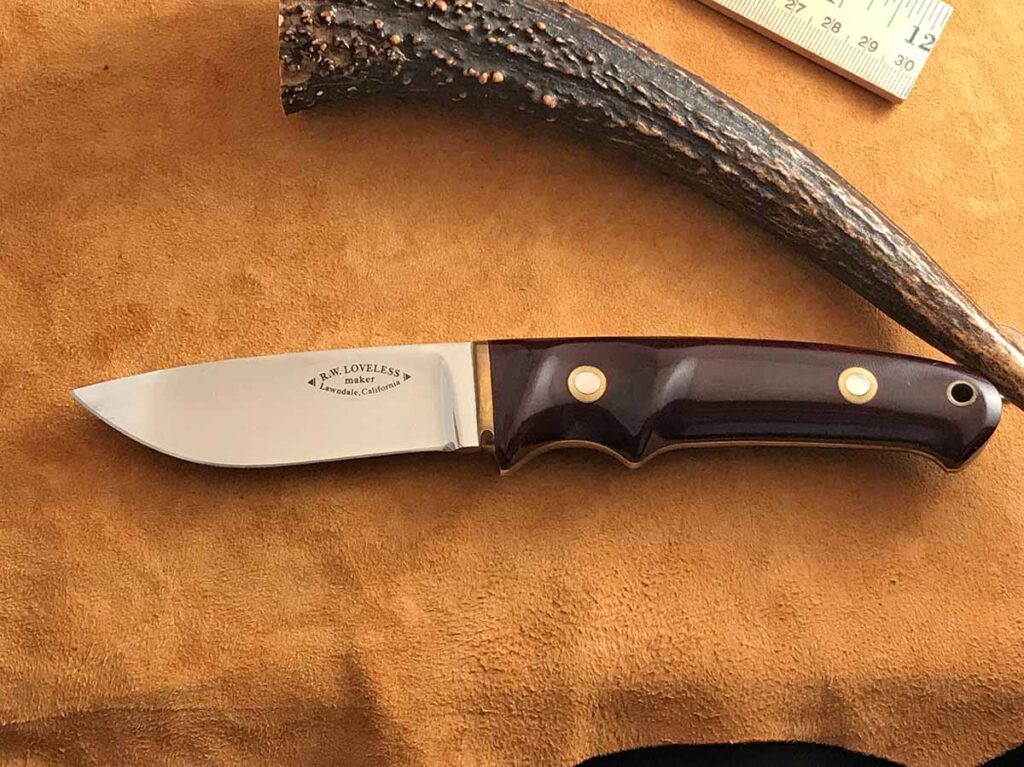
In an arrangement between Loveless and Schrade’s Uncle Henry Baer facilitated by A.G. Russell, Loveless sent this actual prototype to Schrade to copy and make the Schrade Loveless collaboration in the early 1970s. It has no guard, an “improved handle,” and a more pronounced belly than most of the Loveless dropped hunters of later years. The handle is burgundy Micarta®. As John Denton observed, the knife “has a magical feel from the ol’ man.” (Denton image)
“I said to him, ‘I hope you will accept this gift in the spirit in which it is intended,’” Bruce smiled. “He laughed and put the bottle on his shelf. Then we sat down and asked him what he believed to be the definition of a handmade knife. We videotaped his answer. He said, ‘I wish I had a machine that I could dump handle material, steel and pins into, and then a knife would come out the other end, boxed and ready to send to somebody. So, make your knives any way you want to. The marketplace will sort you out soon enough.’”
Simple, straightforward and wise.
Bob’s Impact On The Industry
Loveless played a pivotal role in the genesis of knifemakers’ organizations. He was a founding member of the Knifemakers’ Guild and a pioneer with the California Knifemaker’s Association. He was a staunch supporter of knife shows, bringing people to the events just with his mere presence. According to Ellis, Bob regularly attended the Guild Show, BLADE Show, Solvang Show, California Custom Knife Show and Phil Lobred’s Art Knife Invitational
Loveless also brought along younger knifemakers, working with them and offering advice. A few include Jim Merritt, D.F. Kressler, Yoshihito Aida, Cutlery Hall-Of-Famer D’ Holder and Steve Johnson. Bob’s style and artistic interpretation live on in part with the work of these incredible craftsmen.
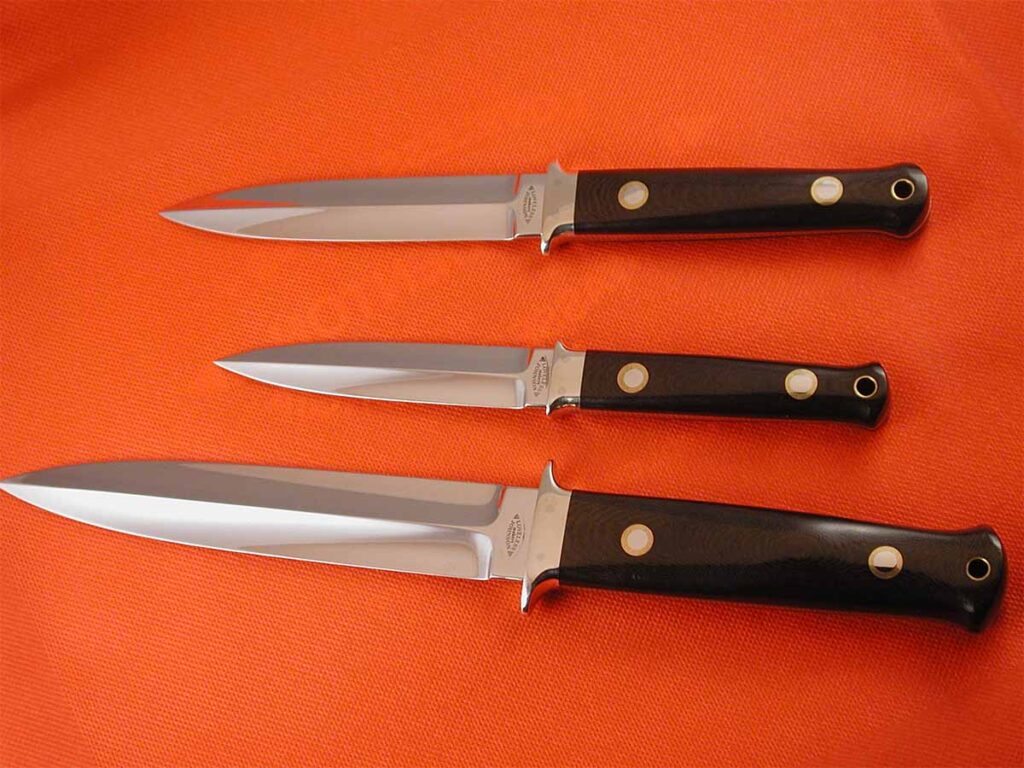
Steve Johnson worked in the Loveless shop in the early ’70s and remembers Bob fondly. “He was a true friend to those who were genuine and sincere with him,” Steve noted. Of this rare set of Loveless-Johnson daggers John Denton wrote simply, “Three really great knives.” (Denton image)
“Many a maker is in debt to Bob Loveless for the support, counsel, corrections and guidance that he gave,” Johnson said. “He was a true friend to those who were genuine and sincere with him, and the relationship that they had with him. Bob, as we know, was outspoken and quick to correct what he felt was not right or smart, which led to some loving him and others not, a bit like Ed Henry—love or hate—but both were so very good to me personally!”
Materials Maven
Loveless was an innovator in the aspect of materials as well, including 154CM stainless steel and the introduction of ATS-34 from Japan, while also popularizing Micarta® as a handle material.
Ellis commented, “Loveless pioneered the use of many of the common steels used today, especially 154CM. The shop was able to purchase such quantities that Bob could pretty much order what he wanted. The favorite handle material of the Loveless shop was green Micarta.”
Johnson remembered, “There was a stack of 154CM steel lying in the driveway at 4319 W 187th Street [the address of the Loveless shop] the day I first walked in. Bob mentioned that he was excited to get some blades done and heat treated right off. Green canvas Micarta was set in stone as the best handle material in Bob’s view. It’s still right up there on top and is used by many a maker. It’s because of Bob’s legacy that this happens.”
Global Influence
A lasting dimension of the Loveless legacy was his bridge to Japan, as well as his overtures in the European markets.
“Bob was deified to the extent that every Japanese knifemaker included his designs among their offerings,” Ellis explained. “Bob was an icon in Japan, and to this day many of the top makers in Asia have Loveless designs in their repertoires.”
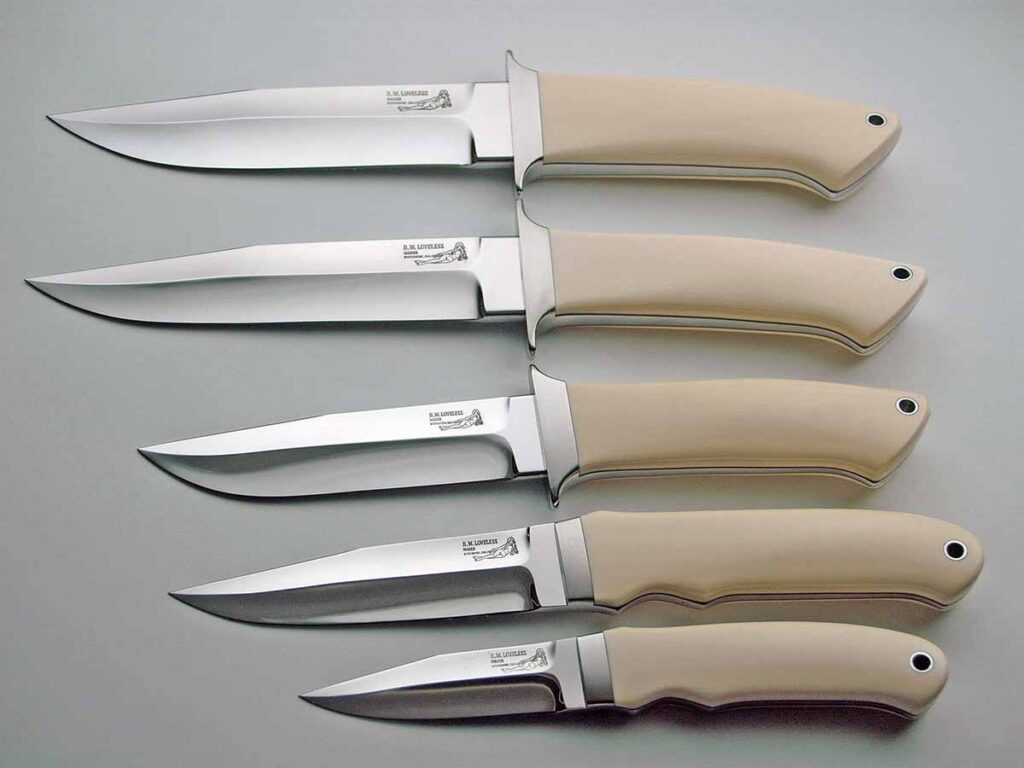
Five Loveless fixed blades sport the no bolt/no pin look in ivory handles. (Exquisiteknives.com image)
Voyles commented, “Bob went over there and showed the Japanese how to make good knives. I went to Japan in 1981 or ’82, and in every factory I went to there was a picture of Bob Loveless and the factory owner. The thing was that Bob’s wife, Yoshiko, was Japanese, so he didn’t have a problem with the language barrier, and he went to Japan to show them how to make knives that appeal to Americans.”
Loveless used his connections to make things happen, and Voyles credits him with the evolution of the folding knife among Japanese manufacturers, as well as a surge in the Japanese collector market.
“Bob didn’t make folders and the Japanese wanted folders,” Bruce recalled. “He had worked on a design with Jess Horn, and Bob put Jess and Japanese collectors in touch with each other. Horn also had a series of folders that he patterned after the old Remington Bullets. When Japanese collectors discovered that, their market for vintage Remingtons went straight through the roof. Loveless sowed the seeds in the 1990s for the collectibility of vintage knives in Japan.”
Collecting Loveless
Today, a Loveless knife is a collectible phenomenon in its own right. Name the year, name the mark on the blade, name the style and the materials, it will sell for astonishing dollars. Denton has noted some models made in the 1970s that sold for $400 then and have reached the rarefied air of $100,000 or more in recent years. The power of Loveless pricing simply takes your breath away.
Bruce is quick to add that Loveless was professionally unselfish. “If you wanted to make a style of his knife in your factory, that was OK,” Bruce noted. “Just ask him.”
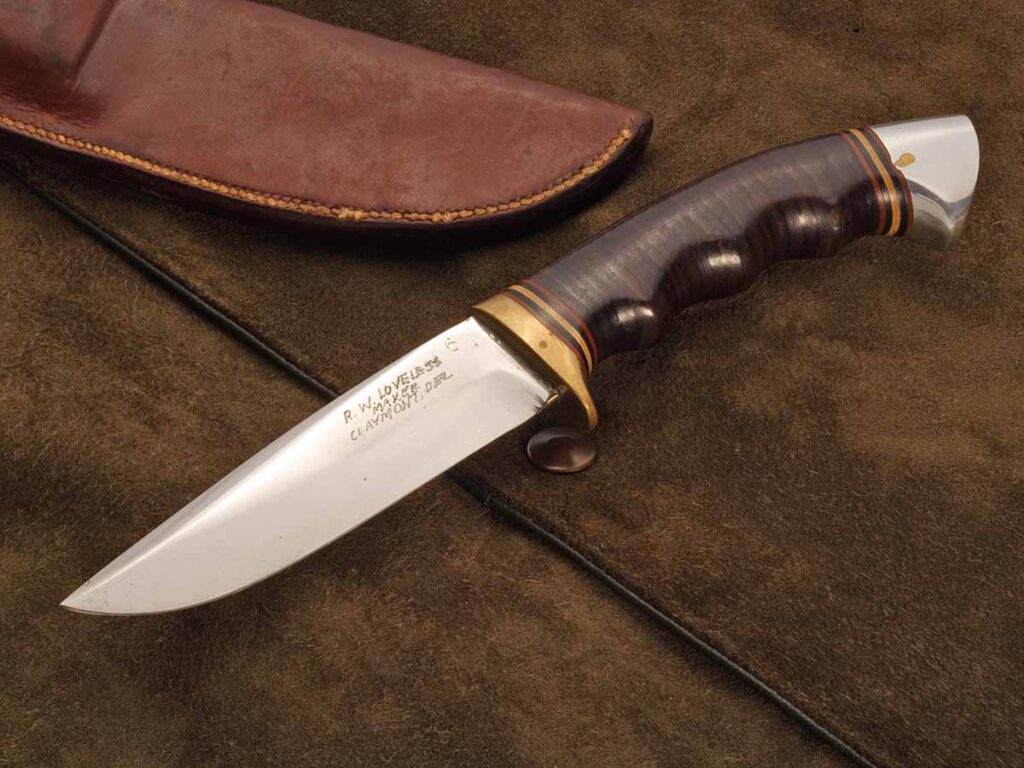
Circa 1955, Loveless sold his first knife to Abercrombie & Fitch for $14 (adjusted for inflation, almost $160 in today’s money). Loveless made this early model for A&F in his shop in Claymont, Delaware.
The pervasive Loveless influence stretched far and wide, from the custom knife shop to the factory.
“His designs for and collaborations with Schrade, Gerber, Lone Wolf and others, and the factory knife market in general, were significant,” Ellis recalled. “Early on the astute factories were taken by Loveless designs and made limited editions in dropped hunters and others. These days factory collaborations are quite common, and you can thank Bob Loveless if you want to give credit where it is due.”
When Sports Illustrated called Loveless for an interview in 1980 and the magazine published his words in the same edition that featured tennis superstar Bjorn Borg on the cover, the impact on the entire knife universe was transcendent. When asked why so many people considered his knives “better” than those of others, he mused, “A knife is an extension of your experience. And I’ve had more experiences than most people. There’s more character running in my veins.”
For those who knew Bob, just the knowing was an unforgettable experience. His contributions to his present and to the futures of others in the knife industry remains incalculable. And so, the longevity of a man does not reside in his years on Earth, but in the perpetual remembrance of his ideas, his workmanship and his innovative perspective on the world.
Therefore, it can be said that when Loveless left us he did not go gentle into that good night. He did not fade away. He didn’t drop the mic. He handed it to those with the foresight and the intestinal fortitude for the days to come. Now, what do we say and do? Loveless might grouse. He might gripe. But he just might also manage a grin.
A clutch player in the knifemaker’s shop, the tire hammer gives more control than other D.I.Y. power hammers.
Like a variable-speed hand drill, your backyard power hammer should be able to run slowly, at full speed or in between, depending on the task. The simplest way to guarantee it does this is to use a slipping clutch.
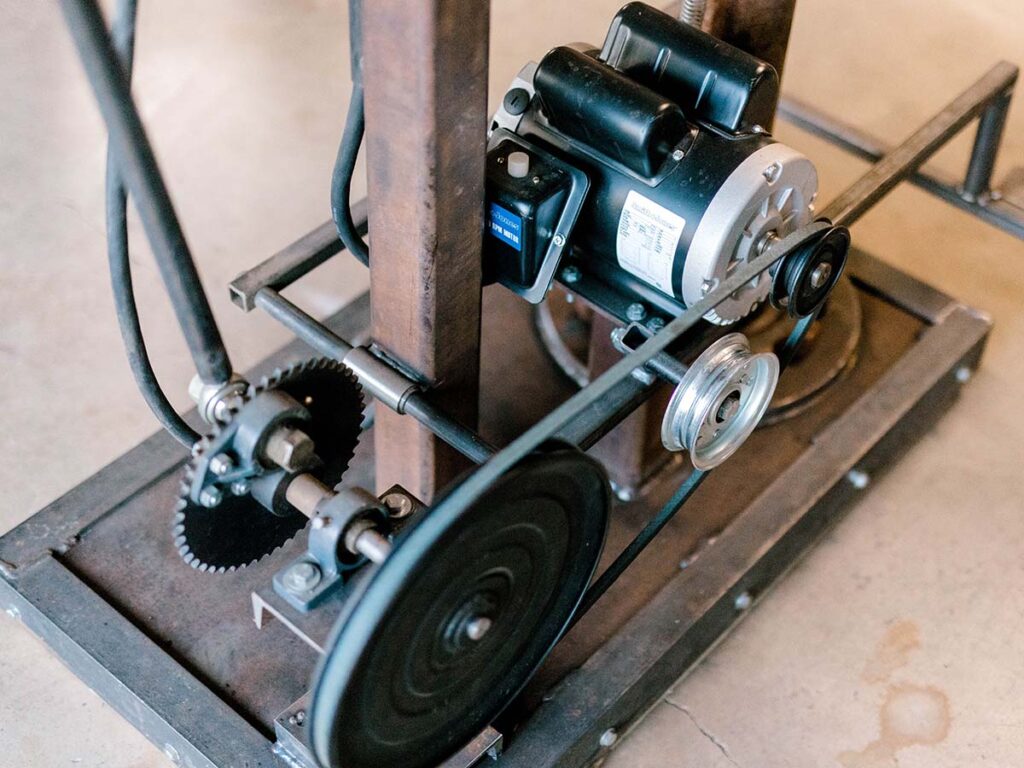
There are two main designs of slipping clutch. One uses a slack belt, a flywheel and pulleys. The drive pulley rotates within a slack belt. The foot pedal linkage pushes an idler wheel into the slack belt, increasing the belt tension to the point that the belt begins to turn the pulley on the flywheel.
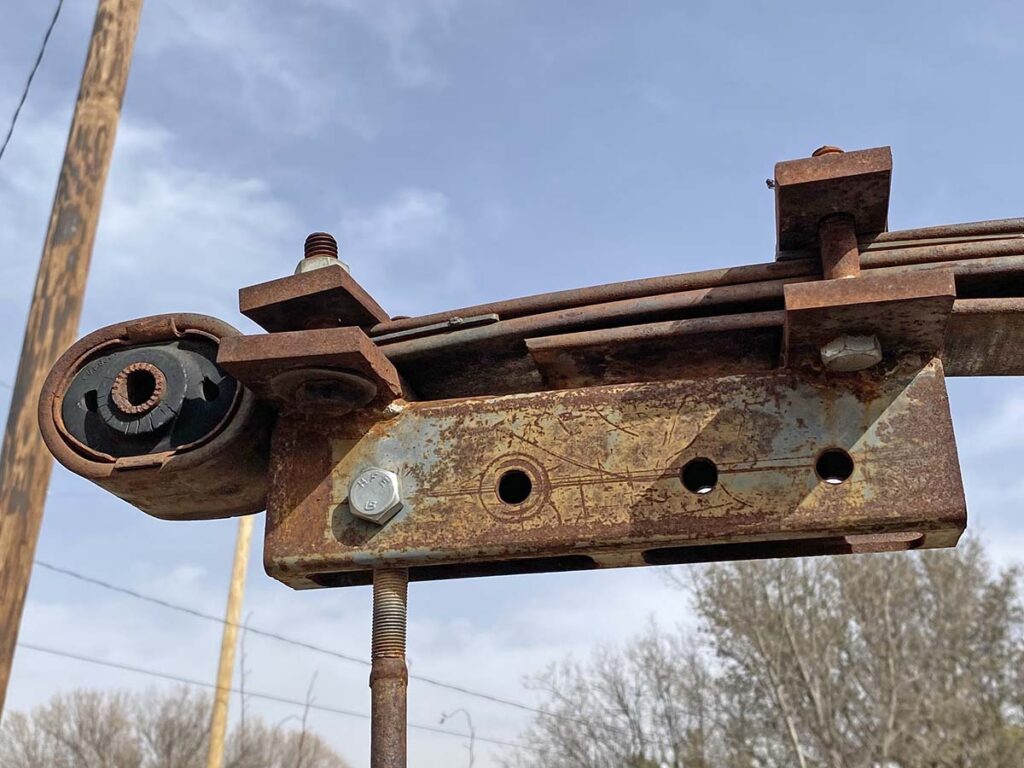
The author modified the spring-arm-to-pitman attachment to make it adjustable. Depending on which attachment point is used, the leverage of the stroke changes.
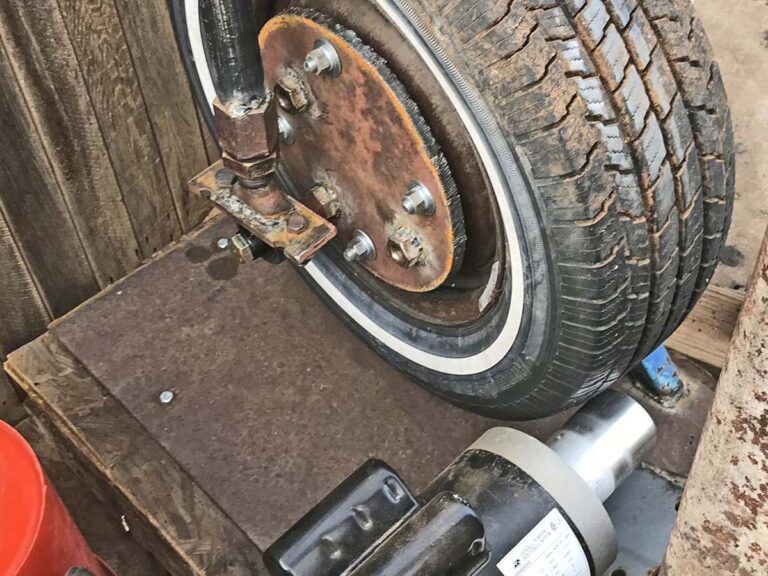
Another design uses a tire clutch, where the foot pedal linkage pushes a drive wheel into an automobile tire, with the hub of the tire serving as the flywheel. The most common “tire hammer” design uses a similar clutch but turned the other way and connected to a linkage. Your available parts will dictate your design.
Why A Clutch
A function of the clutch is to reduce the RPM of the motor speed to get the hammer rate of beats per minute (BPM) into a safe and useful range. You want the hammer rate to generally end up between 150 and 250 BPM, though many variables change with each hammer. In general, a heavier tup (aka hammer head assembly) requires a slower BPM, whereas a lighter hammer can have a higher BPM. You do not want your hammer running faster than you can control it, nor so fast that the inherent forces tear it apart. My hammer uses a 24-inch tire and a 3-inch drive wheel for an 8:1 reduction of a 1750 RPM motor, yielding a calculated 218 BPM at full speed. Your hammer will run differently depending on your motor RPM, your drive and driven wheel diameters, and the hammer’s overall design. I rarely run my hammer full speed during general forging work, and the tire clutch gives good speed control. Full speed works acceptably well for drawing out damascus billets or breaking down large stock.
My tire clutch has an integral flywheel bolted to the hub. On the flywheel I welded several different nuts for attaching the pitman arm (for more on the pitman arm, see part three last issue). Each nut is a different distance from the center of the hub. This allows me to vary the length of the stroke, in my case between 6.5, 7 and 7.5 inches, based on where I connect the arm to the flywheel. Coupled with an adjustable-length pitman arm, this setup allows a degree of tuning to get the hammer hitting in a way that transfers the power directly to the workpiece with efficiency, yet in a way that doesn’t place undue stress on the hammer itself.
Choosing A Motor For Your Tire Hammer
As for motors, the size may vary a bit depending on the overall tup weight of your hammer. For most homebuilt hammer sizes, a 1 or 1.5 HP motor is plenty. My 40-pound hammer uses a 1.5 HP motor running on 110v and does not trip a standard 15-amp breaker, suggesting that 1.5 HP is more than plenty for a 40-pound head. Whether the motor runs on 110v or 220v will depend on your shop setup and what you have available, but you’d be best served either way with a motor that runs in the 1700 RPM range, not one that runs in the 3400 RPM range. There’s no need to go three phase or variable speed unless you’re already set up for either.
Doug Davis’ homemade hammer uses a series of pulleys and an idler. When you step on the treadle, the idler tightens the belt and engages the hammer.
You will need an on/off switch for your motor. To run the hammer, turn the motor on, then use the foot pedal linkage to engage the clutch.
Sourcing Dies
Most power hammers have a set of dies in between the anvil and the hammer shaft. Dies may be built in a variety of shapes and sizes, depending on how you want your hammer to move the metal. Two basic die designs are flat and crowned. Flat dies move the metal somewhat equally in all four directions, while crowned dies will draw out the length of your workpiece perpendicular to the crown on the dies. Some smiths design their hammers to accommodate various top or bottom tools, or spring swages as well.
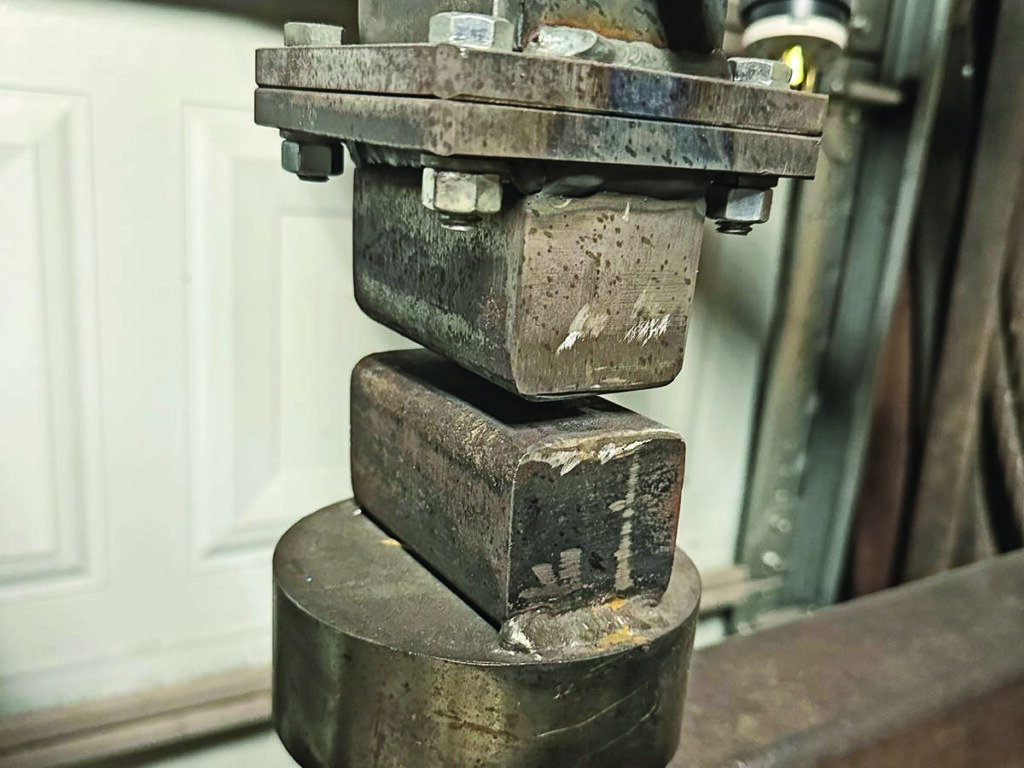
The die attachment on Doug Davis’ power hammer is more robust on the ram-to-die connection, but time will tell how the bottom-die direct-weld works out. (Erik Greiner image)
On my personal hammer, the dies are built out of 1.5-inch square 4140 steel bar stock, heat treated and ground essentially flat, with slightly radiused corners. Some hammers are set up with dies that are interchangeable but mine is not. Full disclosure: My die attachment is one point of weakness in my design. I ultimately welded my bottom die plate straight to the anvil, and I’ve had to reinforce the top die connection and re-weld it several times. Perhaps a more skilled welder could have done better!
Creative Necessity
I can’t emphasize enough the creativity necessary to build a functioning power hammer from scrap. It’s one thing to watch a YouTube video and think, “It must be nice to have a power hammer.” It’s another thing entirely to watch the same video and try to discern how the rocker arm connects to the center post, or how the tire clutch axle is set up.
At the time of my hammer build, there was an online gallery hosted in Czechoslovakia that had hundreds of pictures of various homebuilt and factory built hammers. I couldn’t have built mine without those examples. I don’t speak Czech but the pictures tell the story well.
The author gets to test one of his favorite classic knife styles.
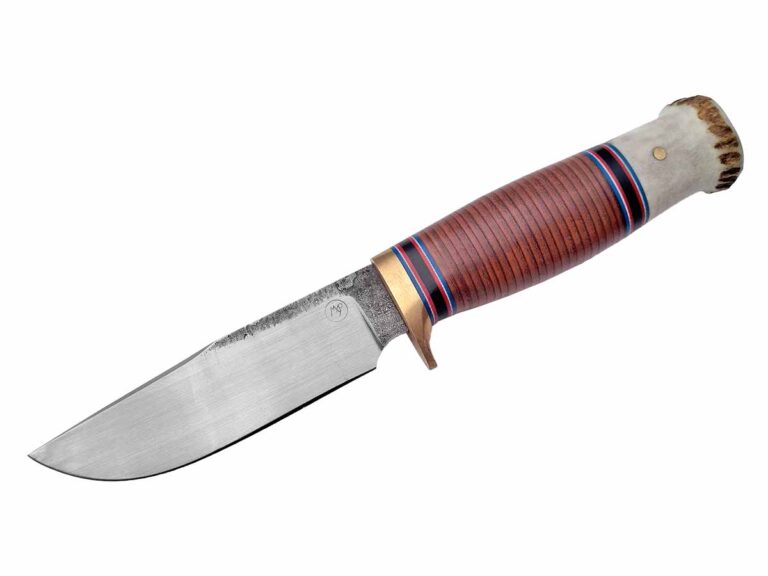
I have always been a fan of clip-point utility hunters such as those by Michael Presnell, especially the feel of the handle. The leather washers provide a non-slip grip, and in colder climates such a handle has a warm feel to it. Combine that with a very sharp blade and you are ready for most chores in the outdoors. How sharp is it? We shall see.
Utility Hunter Light-Duty Tasks
As always, I start with a paper slice using 20-pound bond stationery. The paper cut produces a fast assessment of sharpness. The knife sliced very fast and smooth—it even managed to get a piece of my skin in the process. It was a very sharp starting point.
Next: heavier double-walled cardboard. The clip point blade made short work of the medium. I used smooth, aggressive push cuts with the flat-ground blade. It sliced as fast as I could get my fingers out of the way.
It was on to some old, dried-out 8-ounce leather. The blade made very loud crunching noises as it cut the material. The positive grip of the handle made control very easy. The knife was extremely aggressive cutting leather. I selected a narrower piece of leather to do some skiving. The blade sliced and diced the material as fast as I could move it. It’s gratifying to hear the crunching noises, a sign of outstanding sharpness.
Utility Hunter Medium-Duty Cutting
I whittled some firesticks out of pine. The utility/hunter gave some nice fine curlicues. Control was positive and I was able to vary the depth of the cut quickly. It really excelled at the fine curlicues. I also noticed that the edge along the guard face was sharp. A quick touch up with 400-grit sandpaper knocked the edge right off.
Half-inch sisal rope was next. With a loud crunching sound the utility/hunter started cutting. After 200 noisy crunch cuts my wrist was slowing down, so it was time to stop. The edge was still sharp but I was done. The handle was very comfortable on the pressure cuts, with no hot spots on my hand.
To add an extra test medium, I grabbed an old serpentine belt for a dozen cuts. It didn’t phase the edge at all. I could hear it cutting through the belt’s cores. Still, there was no damage to the edge. Very well done, Michael.
Heavy Cutting
The last test was to assess the heat treat by whacking the edge into a white tail deer antler. After 30 whacks the edge was still in perfect shape. To prove it, I returned to the 20-pound bond paper. The knife sliced just like it did at the beginning of the test. Great heat treatment, Michael.
The knife was up for a batonning into a hackberry log. I used a dead-blow hammer to pound the blade’s spine. I split a few pieces and checked for damage. The edge was still in perfect shape and the handle and guard remained tight. The leather handle absorbed all the shock of batonning through the hackberry.
Final Cut
This is a high-performance knife that is very comfortable to use. It is a great companion for the field.I softened the edge on the front of the guard. It was a tad sharp for my sidewinder grip.
Presnell Utility Hunter Specs Maker: Michael Presnell Blade length: 4.25” Blade material: Forged 52100 carbon steel Blade grind: Flat Blade pattern: Clip point Blade @ thickest: 5/32” Handle: G-10 spacers, stacked leather washers, stag buttcap Guard: Brass Weight: 6 ozs. Overall length: 85/8” Sheath: 6-oz. leather pouch belt model Weight w/sheath: 8.5 ozs. Maker’s price for a similar knife: $330