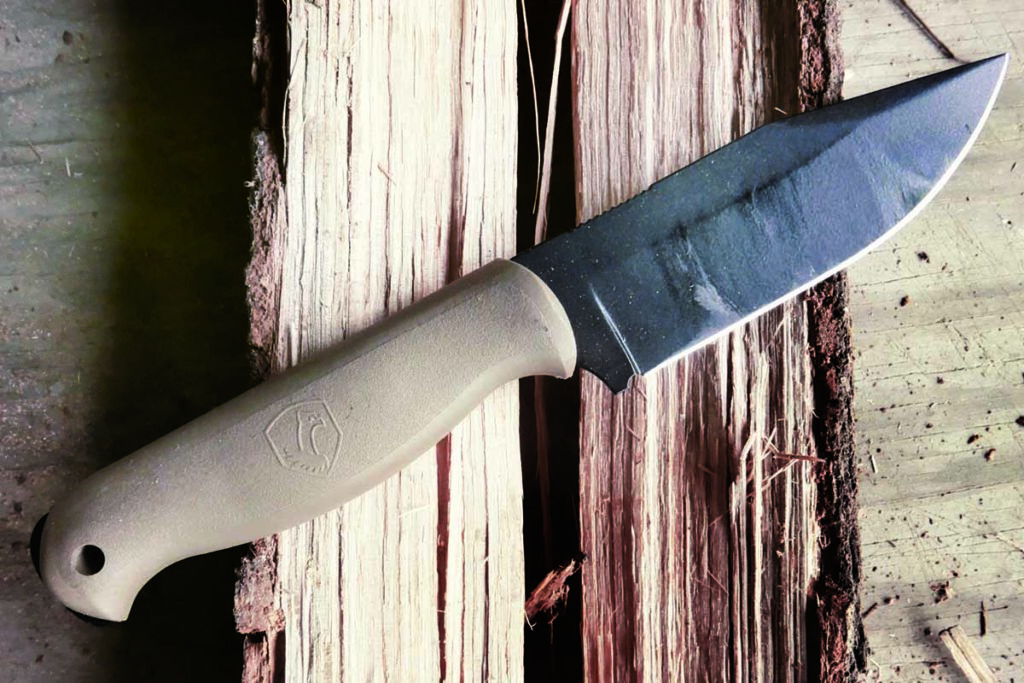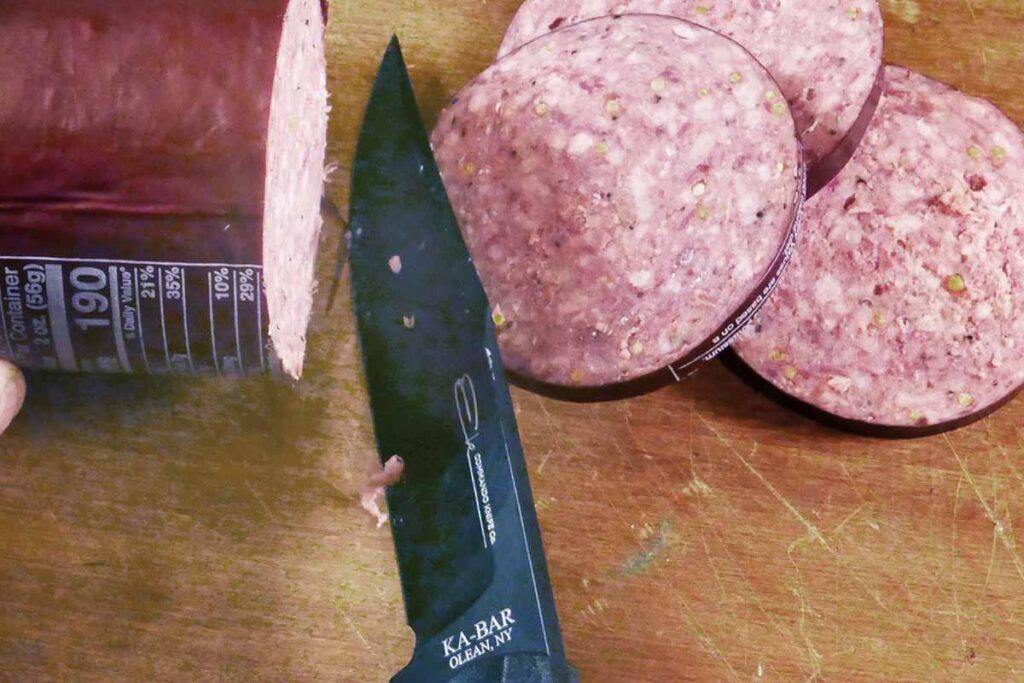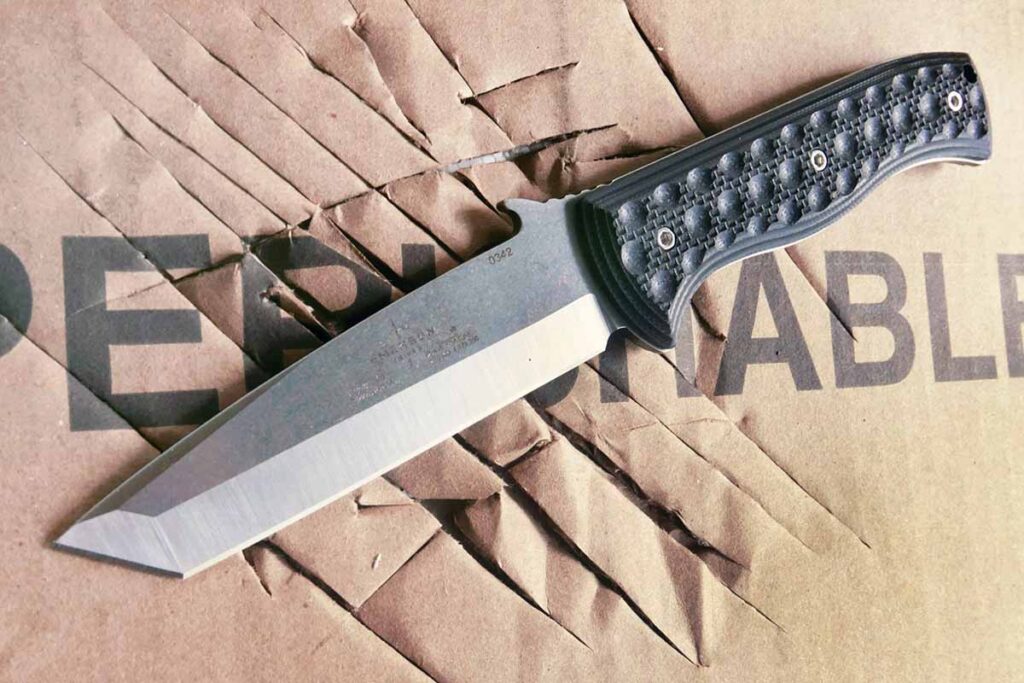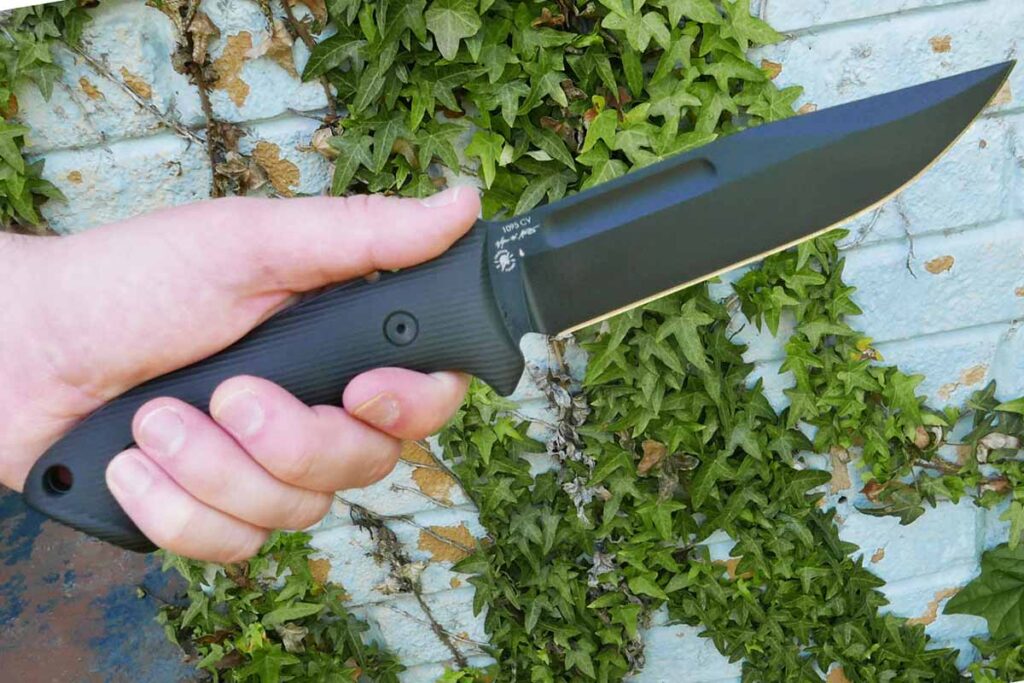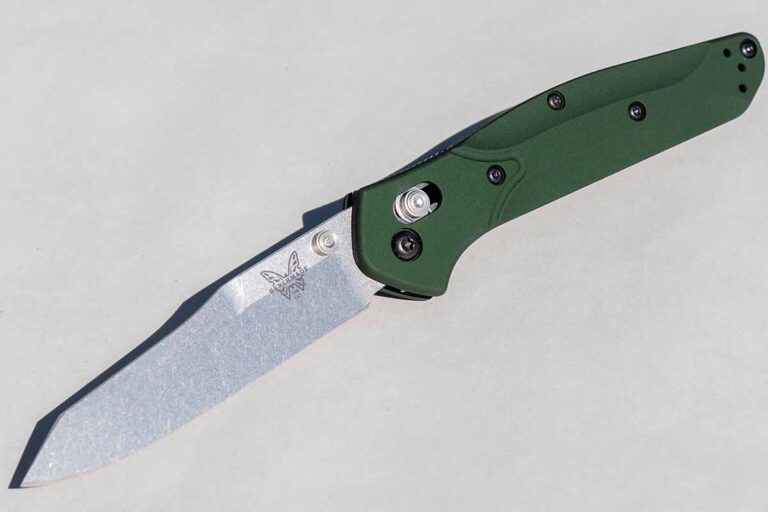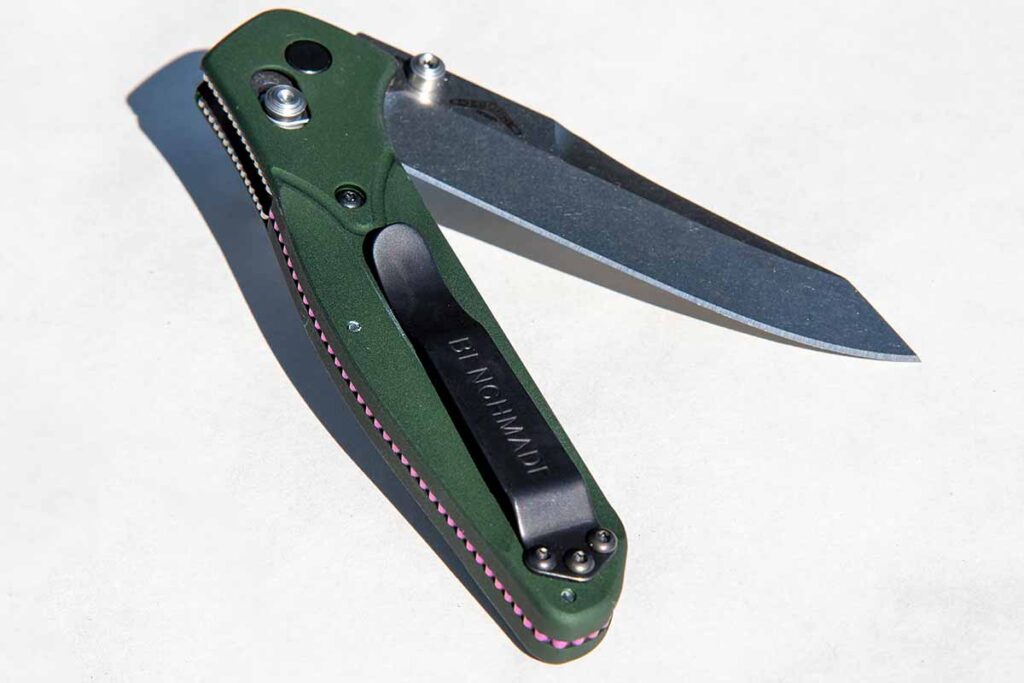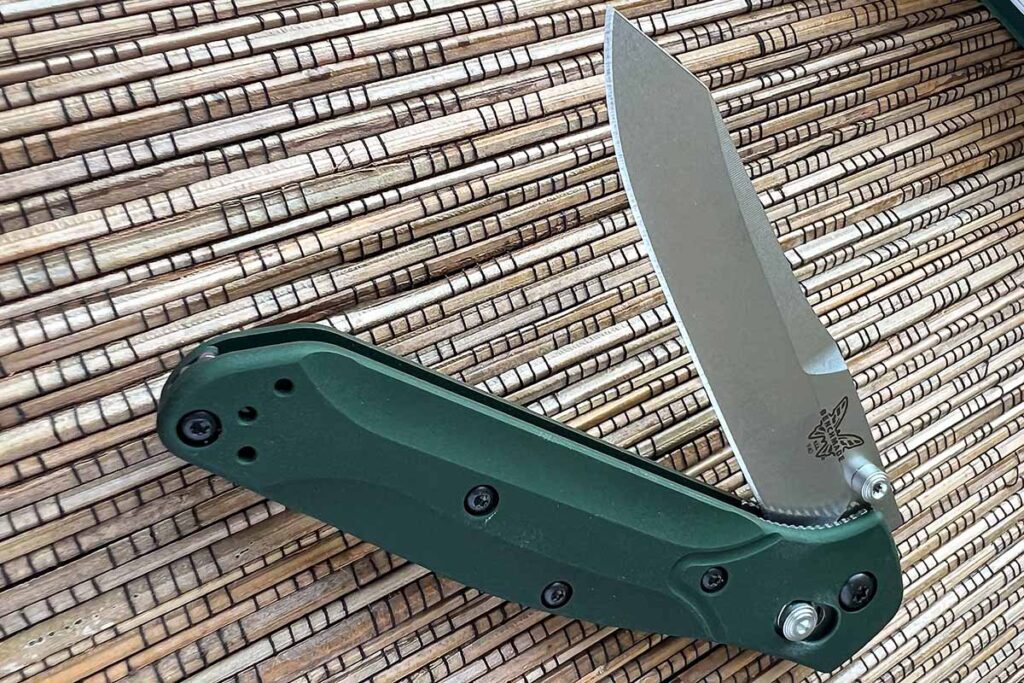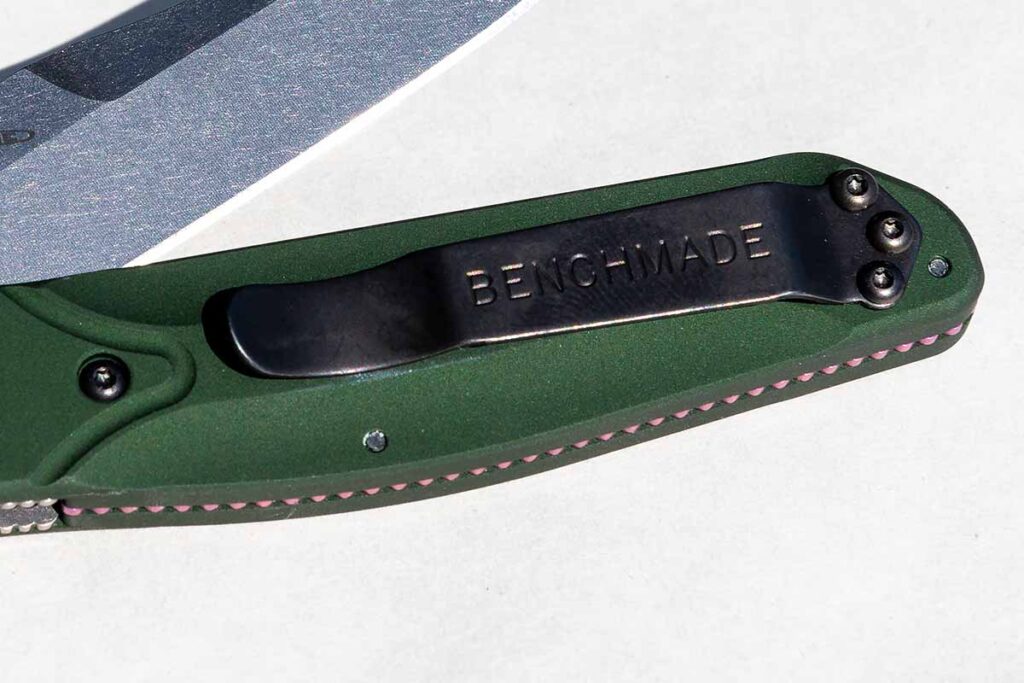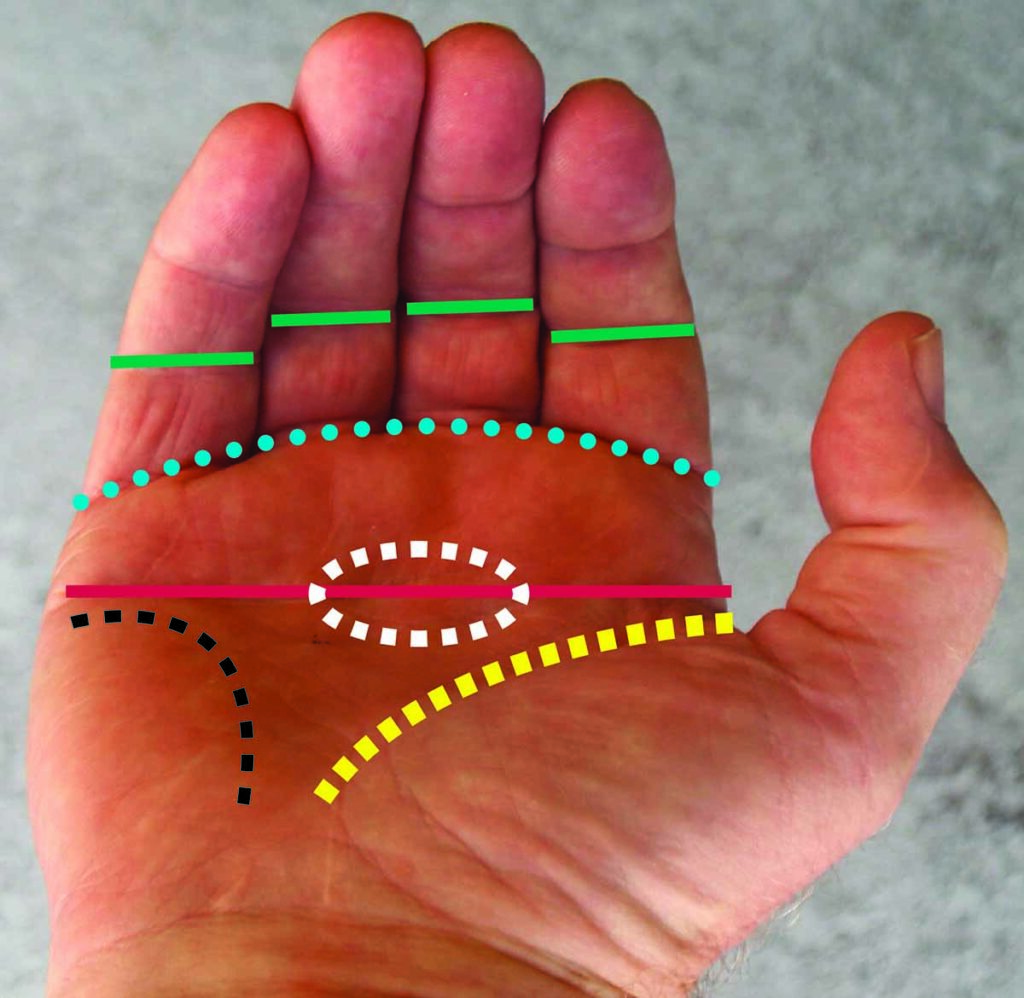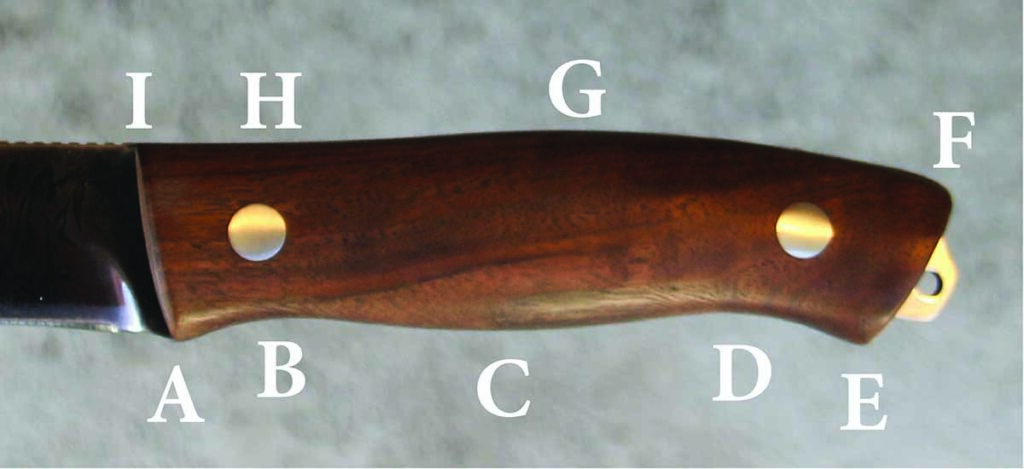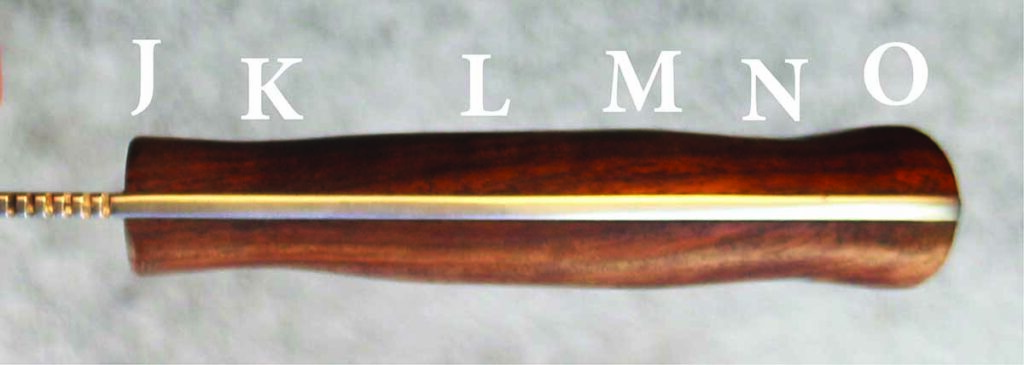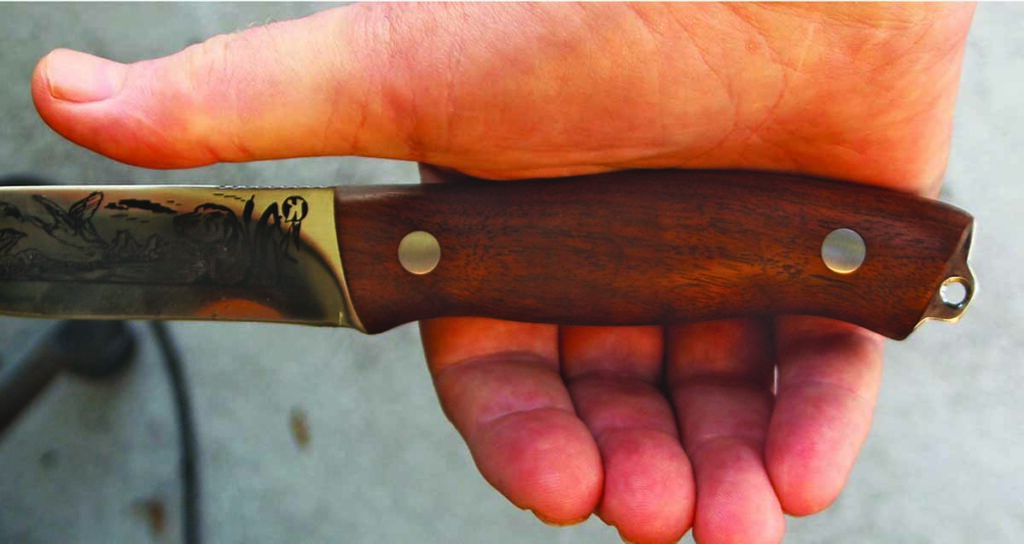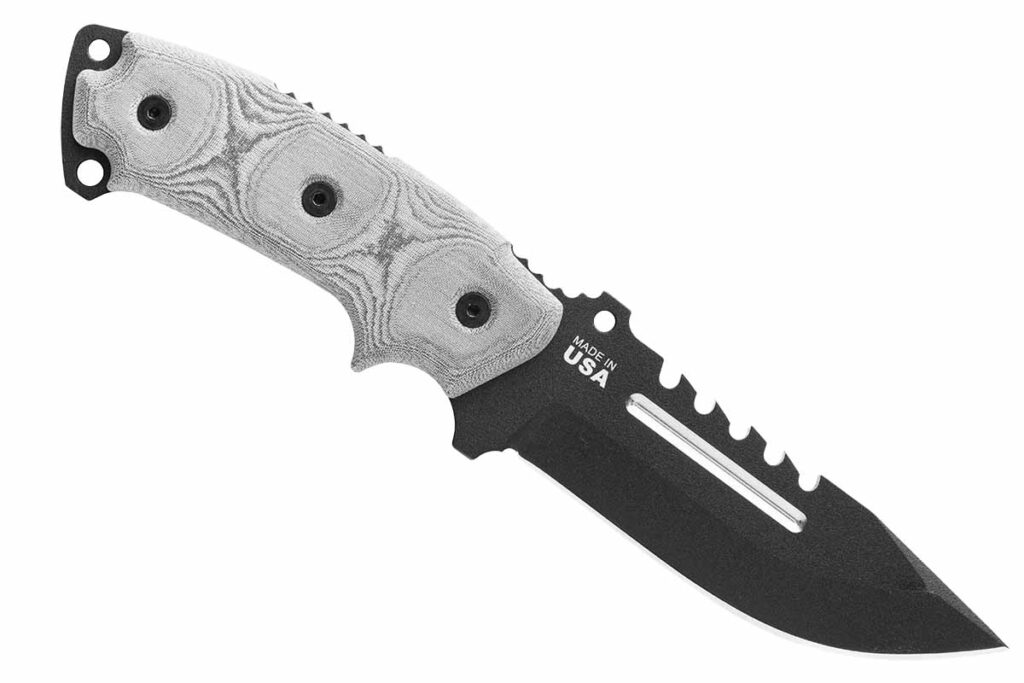
The Basilisk is a lightweight fixed blade that cuts well above its weight class.
I’m really liking the wider blade of the Basilisk* by Damned Designs. The full flat grind combined with the blade’s ample width makes for almost perfect edge geometry—a thin edge for slicing with enough meat behind it for added strength. The thinner blade stops any binding while slicing thicker material like cardboard.
The fold-over Kydex sheath is first class.
The G-10 slabs have enough texture for a good grip. The Basilisk is a solid EDC knife. It uses Sandvik 14C28N stainless for blade material, a great using steel.
But how well does it cut?
Basilisk Sharpness Test
A baseline edge check using 20-pound bond copy paper went fast. The blade was very sharp from the factory. I’m glad I have calluses on my fingers as the Basilisk nicked them twice because I was slow getting them out of the way.
Light Cutting Duty
Single-walled cardboard was the second test medium. The blade sliced very smoothly and was aggressive its entire length. The cut strips laid straight due to the flat grind, so no binding on this one. I slowed the slicing down to save my fingers and all went well.
The thin edge and flat grind produced excellent curlicues for a firestick.
Eight-ounce leather was next. The Basilisk was very aggressive cutting animal skin. I could hear it slice its way through. The handle shape made it easy to control each cut’s width while also being comfortable. I also did some skiving. The Basilisk skived very quickly and evenly. Man, this knife is sharp!
Heavy Duty Cutting
Time for making some firesticks by whittling curlicues. The thin flat grind produced excellent wood curls. The thickness of the curlicues was eminently controllable. However, when I went in for deep cuts the edges of the G-10 handle were a bit hard on my hand.
A total of 225 crunching cuts made mincemeat of the half-inch sisal rope.
Next up: half-inch sisal rope. The Basilisk made 100 crunching cuts before I had to don a glove to cover a hot spot. The knife dished out another 125 crunching cuts before I stopped. The edge showed no signs of slowing down. Total: 225 crunching cuts.
Toughness Tests
I batonned the Basilisk through some aged hackberry, a tough wood when dried. I whacked the rear, middle and tip of the blade spine for four complete splits. It worked excellent, with no damage to the edge or knife overall other than some wood smears on the stonewashed finish.
The thin edge and flat grind produced excellent curlicues for a firestick.
To really push the edge/heat treatment, I grabbed an old whitetail deer antler. After 30 hard whacks on it I checked the edge for chipping. There was none to be found. Heat treat is on the money for sure. Excellent job.
Edge Retention
Time to check the final edge with the 20-pound bond paper. The Basilisk still sliced smoothly even though the paper was getting damp from it raining all day. There were a few tears in the paper from the dampness.
Suggest Changes To The Basilisk
I would soften the handle edges a bit more.
After 30 hard whacks on the deer antler, the author checked the edge for any chipping. There was none to be found. The heat treat is on the money.
Final Cut
The Basilisk is a very nice knife, excellent for EDC or camp. It’s definitely a top pick on my list.
Fire-starter knives make sparks when you need them most.
Bushcraft skills have grown immensely in popularity in the past few years. It could be the slew of TV shows promoting survival situations or just perhaps an interest in self-sufficiency. What is true is that the knife industry is playing catch-up to the bushcrafting market, and many new products pop up that have features dedicated to keeping you alive and warm in the woods.
Fire Starting Knives
Recent years have seen an influx of knife features deemed ideal for use with another essential tool—the ferro rod striker. Ferro rods are made of ferrocerium, an alloy consisting of several base metals and magnesium. Magnesium is highly reactive and generates showers of sparks as it is scraped against steel. Think of it as a more modern version of flint. Ideally, the ferro rod is struck against a sharp, acute surface. Many people use the blade’s edge for this, though this is not recommended as dull spots can emerge quickly.
As time passed, people began sharpening the blade spines to 90 degrees, making a hard, sharp angle that is not on the cutting edge. Still, others find this feature annoying, as it is fully possible to injure your hand on a squared spine. I know because I’ve done it.
As a remedy, people started cutting in little semi-circular cutouts into the spine that still retain a square shoulder, thus allowing for safer handling when striking. Both a fully sharpened spine and the sharpened cutout are valid features; it depends on what style you prefer.
Strike the rod against the sharp corner of the blade spine to create sparks and ignite the tinder. (Mary Lou Ayres image)
The smaller cutout is really just a striking feature but the fully sharpened spine can be used for a number of other ends, most notably an easy and effective means of peeling carrots, potatoes and other root vegetables for the camp kitchen. Many top fire-making knives have sharp-angled spines and cutouts ideal for striking.
Bowdrill Divits
Some bushcraft knives have bow drill divots in the grips. No less than 10 knives I’ve tested in the past year have the feature and I’ve yet to master its use.
A bow drill is a very primitive means of starting a fire with friction. It takes about forever and even then is not a guaranteed success. In terms of time management and the amount of calories used in a survival situation, I really don’t think it is worthwhile, though it’s nice that the feature is there.
The bow drill is basically a stick you press down on while at the same time you spin it with a bow (a stick with string wrapped around it) to create an ember. The idea behind a knife with a divot on the handle is it allows you to make kindling and all the tools you need to make a basic fire. You can use the knife to make the string (plant fiber), the drilling board (piece of dry wood) and bow/drill (stick).
All three knives were tested side-by-side in equal conditions to see how well they performed in making a fire. All succeeded.
BLADE® Editor Steve Shackleford asked me to test the knives in this capacity as long as it didn’t detract from the other standard knife testing. “Skip it if it’s too much,” he stated. “I don’t want to wear you out.” However, in the spirit of making the story as detailed as possible inside the 1,500-word limit, I tried the TOPS and White River knives with the handle divots to see if I could, in fact, start a fire using the bow drill.
I was unsuccessful with both but did end up getting a fire going with a cheap bow drill kit from Amazon. No matter how you slice it, using a bow drill is just a huge pain in the keister and I’d rather stick a standard lighter in every pocket of my gear and an extra one in my boot than have to resign myself to using a bow drill.
A large reason why I really didn’t like using the divot features was that they really require you to keep the knife in the sheath. Otherwise, you’re just sitting there putting pressure on a knife with the edge floating out in space. It is easy to get into a trance while using a bow drill, and I found myself not paying attention at several points—not a safe situation.
Holding the knives in their sheaths is not very comfortable as they are hard Kydex. There was no real comfortable way to put pressure on the drill while gripping the sheath. Eventually, I gave up and decided if I ever did have to use a bow drill, I’d just find another piece of wood and carve a divot with the knife instead.
White River Knife & Tool FC-PKO
The White River FC-PKO is an end-stage tool in that it can readily start fires, the author noted, but lacks the strength and blade thickness to take down anything more than sticks.
White River Knife & Tool makes excellent knives. In fact, they are some of the most well-laid out and functional I’ve tested in my time with BLADE®. I have used the company’s larger FC7 as my main deer hunting knife in camp and have, between myself and my friends, packed out no less than 50 deer with it. I was happy to review the smaller FC-PKO, sort of a little brother to the FC7.
The FC-PKO is a modified puukko style with a Scandi grind and a ring pommel. The Kydex sheath is low profile. My initial impressions were that the knife is small, thin and razor sharp. I immediately thought it would be a perfect knife for pheasant or duck. I found it a champion at cutting tinder and kindling, but not up to larger work. The knife is an end-stage tool in that it can readily start fires, but lacks the strength and blade thickness to take down anything more than sticks. You’ll need a larger tool to actually prepare the wood prior to using the FC-PKO.
As far as fire-making ability, it is a solid performer. The knife has a small notch on the spine that ignites the ferro rod easily. The edge can trim extremely fine curls of tinder. Where I ran into problems was the ring pommel. I have large hands and long fingers, so this may not be an issue to everyone, but I found my pinky largely just floating in space. I couldn’t get comfortable with the ring. That said, it is overall a great knife that will ultimately see years of service on my belt.
White River Knife & Tool FC-PKO Specs Knife Type: Modified puukko Blade Length: 3.7” Blade Steel: CPM S35VN stainless Blade Grind: Scandi Blade at Thickest: .125” Handle Material: Micarta® w/orange liners and bow-drill divot Weight: 4.6 ozs. Overall Length: 8.1” Sheath: Black Kydex w/striker loop Striker: Included, basic rubber grip Country of Origin: U.S.A. MSRP: $200
TOPS Knives Fieldcraft
The author described the Fieldcraft as “a beast of a knife that weighs nearly a pound and is built like a tank.”
The TOPS Knives Fieldcraft by Brothers of Bushcraft is a beast of a knife that weighs nearly a pound and is built like a tank. The edge is razor sharp despite the steep grind and can split medium-size firewood easily. The handle is thick and robust and you can really get a grip on it. I find large knives like this almost too much for regular use, but this one fits into the niche of being large enough for constant use and not too big to be a burden.
The knife has a striker cut in the pommel as opposed to the blade spine. That said, you can order it with a sharpened spine if you wish. I wanted to test the base model to get an idea of what the average owner would experience. If I want to add a sharp spine, I can do so on my grinder or have TOPS do it. The pommel striker is not easy to get used to—you have to find a safe direction to point the blade, which can be difficult. That said, you can leave it in the sheath for this part—just be careful not to launch it out while striking. The cutout is effective once you get used to it.
TOPS Knives Fieldcraft Specs Knife Type: Full-size bushcrafter Blade Length: 4.75” Blade Steel: 154CM stainless Blade Grind: Modified Scandi Blade at Thickest: .19” Handle Material: Tan canvas Micarta® w/red liners and bow-drill divot Weight: 14 ozs. Overall Length: 10” Sheath: Black Kydex w/striker loop Striker: Included, basic aluminum grip Knife to Know: There are numerous other Fieldcraft models available in different materials and colors Country of Origin: U.S.A. MSRP: $295
Casström No. 10 Swedish Forest Knife
According to the author, the Casström “has everything I like and nothing I didn’t—not too big, not too small and pleasant to look at.”
The classic-looking Casström No. 10 Swedish Forest Knife is reminiscent of such Scandinavian knives as the puukko. It is not a traditional puukko but rather a somewhat modern take on the longstanding Nordic tradition of general-use fixed blades. Many American knives in the bushcraft world have a somewhat gritty, tactical feel and a somewhat industrial appearance. The No. 10 is not terribly exciting in looks but hides its function under a gentle exterior. It was my favorite knife in the review, which may surprise you. It has everything I like and nothing I didn’t—not too big, not too small and pleasant to look at.


The knife has a smooth grip—be careful if you’re not wearing gloves, it can get a tad slippery—and a plain, graceful blade. The angle of the spine is sharpened but not so aggressively that it would risk injury. It is not a particularly thick blade but can handle some medium-to-small splitting work if you’re careful, and makes kindling and scrapes tinder well. The knife strikes easily anywhere on the spine and offers a great deal of control. Of note, the sheath is leather and has a ferro rod with a matching green/black Micarta® grip. As a set the knife and rod look very nice together. The rod was also the easiest to hold onto thanks to it having the largest grip area.
Casström No. 10 Swedish Forest Knife Specs Knife Type: General-purpose Scandi Blade Length: 3.75” Blade Steel: Sandvik 14C28N stainless Blade Grind: Full flat Blade at Thickest: .13” Handle Material: Green/black Micarta® w/black liners Weight: 5.75 ozs. Overall Length: 8.6” Sheath: Black leather w/striker loop Striker: Included, matching green/black Micarta handle Knife to Know: According to the author, the knife has the most user-friendly sheath of the test bunch Country of Origin: Sweden MSRP: Approximately $200
Fire Starter Knife Final Cut
Starting a fire can be a challenge, especially in adverse conditions. Considering just how cheap common lighters and survival matches are, knives like the ones in this article should probably not be your primary means of starting a fire in an emergency. These knives are capable tools that provide a level of redundancy to your kit in some very good, non-obtrusive ways. The base-level skills needed to start a fire can be obtained with each of these knives with relative ease, but you will still need to make sure to have the skills necessary to maintain a fire in the wilderness.
Always be sure that you are not making a bad situation worse with fire, and make sure you’re not using a knife under less-than-ideal conditions. If you have a lighter or matches, use them first, especially in the dark.
With a simple finger flick or even in promo art, today’s flipper knives fly.
Early flipper folders were used in conjunction with assisted-opening mechanisms as a means for initiating movement, allowing the spring or torsion assists to open the blades the rest of the way. A few years later, folder pivots incorporated ball bearings, nearly negating the need for assisted-opening mechanisms on flippers.
This reduced friction simplified folder construction and provided glassy smooth blade rotation. Although a few companies still offer assisted-opening flipper folders, most production versions rely on ball bearings.
Flipper Folders: Function Flows From Form
A flipper tab and ball bearings don’t necessarily equate a folder with quick action and secure deployment. A flipper mechanism will not work properly without a well-designed detent.
Imperative is the detent’s power to secure and hold the blade shut. When placing pressure on the flipper tab with an index finger, the user should be able to feel the grab of the detent. With more pressure on the flipper, the inertia of the blade overrides the pressure of the detent, and kinetic energy swings the blade into the fully open and locked position.
An imprecise detent results in either sloppy action or a flipper mechanism that requires too much pressure against the narrow tab. Optimally, with pressure on the flipper tab, the detent holds its load for a second before letting the blade go with enough energy to snap it open.
Finding Fun In The Fidget Factor
It’s the flipper action that is so satisfying. It imbues a “fidget factor” that causes knife users to snap open their folders while watching TV, talking on the phone, lying in bed or practicing any number of mundane daily routines.
The latest flipper folders not only offer pleasing aesthetics but stay true to the ideals of their predecessors. With premium materials, designs that make use a pleasure and looks that astound, they epitomize some of the coolest knives around.
Best Flipper Knives
Kershaw Inception
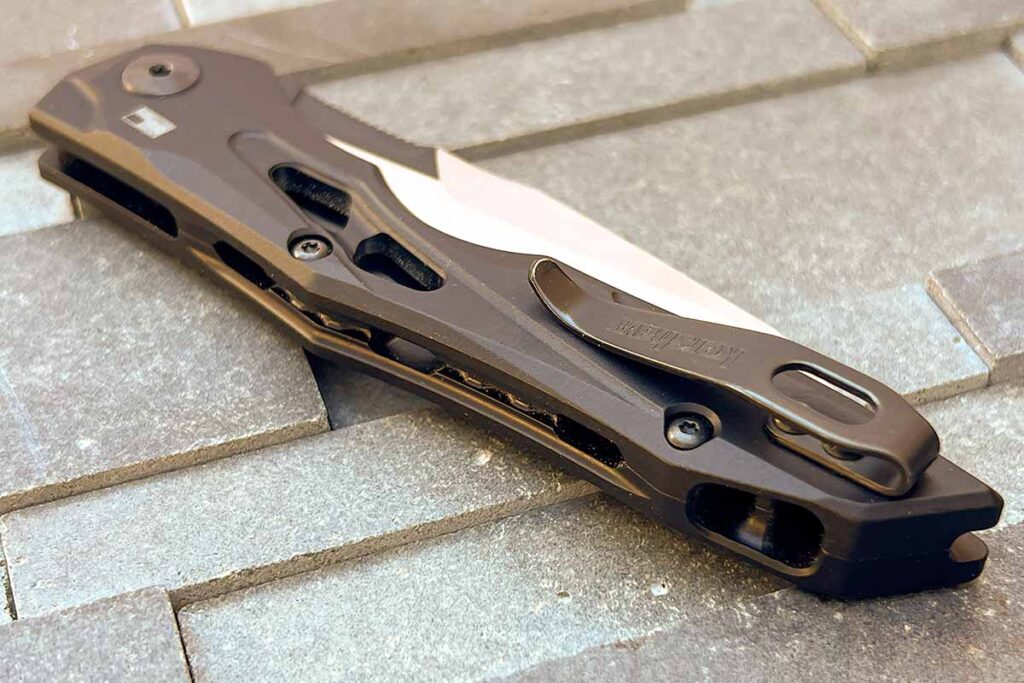
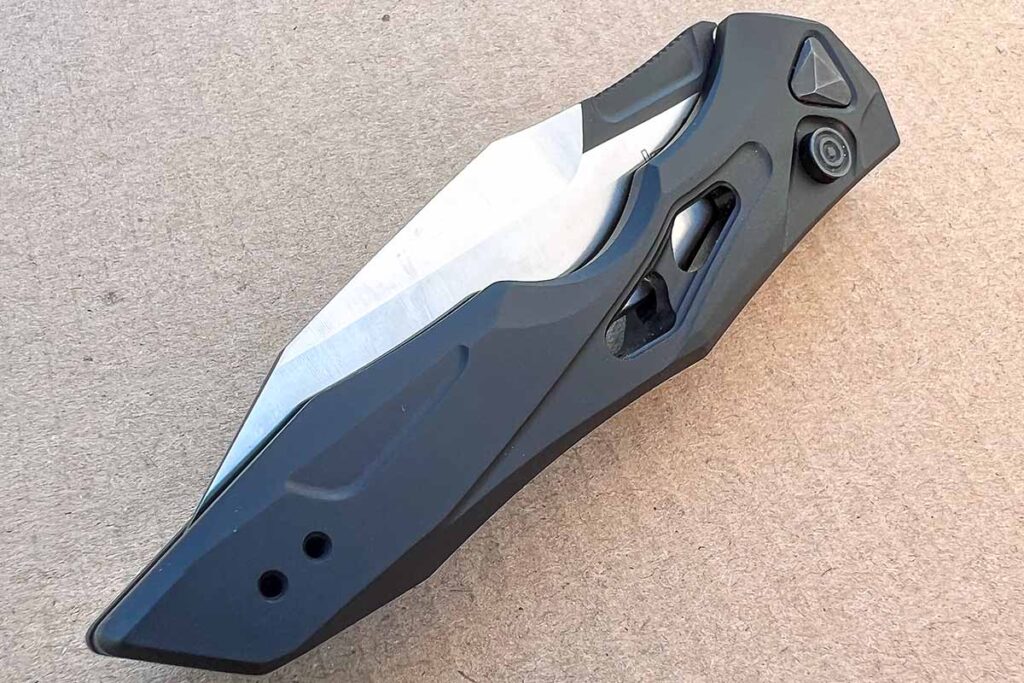
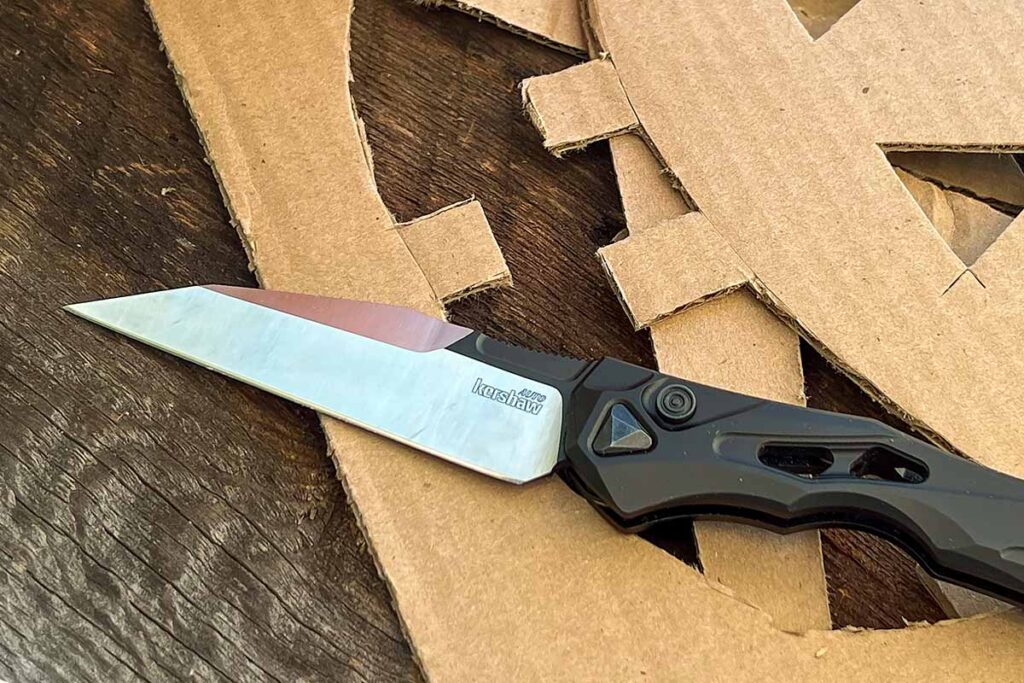
The stonewashed blade of the Kershaw Inception pivots on KVT ball bearings. The custom pivot collar adds a touch of class.
At Kershaw, the Inception is looking good with performance to match. “I love the clean, stylish look,” related Kershaw Marketing Manager Dominic Aiello, “but the satisfyingly smooth action is what really makes the Inception a top-notch manual everyday carry.”
The flipper tab was not designed with the intention of acting as a single guard, Aiello says, but rather in combination with the textured handle overlays to help prevent the user’s hand from slipping. Along with that, the D2 tool steel blade .11-inch at the thickest provides enough heft to balance durability and ease of slicing. The clip is reversible and deep carry with flush screws that won’t snag in the pocket or impede quick deployment.
Kershaw Inception Specs Company: Kershaw Blade Length: 3.25 inches Blade Material: D2 tool steel Handle Material: G-10 Lock: Linerlock Weight: 3.1 ounces Pocket Clip: Ambidextrous/reversible, deep carry, tip up Closed Length: 4 inches Country Of Origin: China MSRP: $99.99
Medford Knife & Tool USMC Fighter Flipper
The CPM S35VN stainless blade of the Medford Fighter Flipper is 3/16-inch thick at the thickest and has a Rockwell hardness of 58 HRC.
The USMC Fighter Flipper from Medford Knife & Tool boasts an iconic name and incorporates titanium along with other highly durable components. “Where to start?” commented Medford representative Geoff Oprandy. “First, the USMC Fighter Flipper has superior design, engineering and aesthetics. When Greg Medford was inspired to make this knife, it didn’t take long for initial sketches to appear. He wanted a worthy companion piece for our top-selling Fixed Fighter, which has been a category king for quite some time.”
Oprandy describes the USMC Fighter Flipper as “a unique mixture of titanium components with the best CPM S35VN blade steel. This is a big, manly knife that’s as comfortable working as it is cruising around in your pocket. There is so much going on with it that it’s hard to take in, from the retro milling on the handles, drop-point blade, and integral Ti pommel to the bearing pressed into the one-of-a-kind pocket clip. The tab is designed to be a tad longer and has a unique radius with a knurled feature. For being a large knife [it provides] great purchase, and the flipper tab combined with the finger-indexing groove enable a great grip. The knife runs on phosphor-bronze washers custom made to meet our specs.”
According to Geoff, the knife has a special connection with the United States Marines Corps. As designer Greg Medford related, “When you hold it in your hand, almost 250 years of Marines speak to your soul.”
The design is intended to feel at home with users who prefer the “connection” made with a large folder, Oprandy says. “When people position the knife correctly and begin to use it,” he stated, “the energy transfer seems balanced, natural and confidence inspiring.”
USMC Fighter Flipper Specs Company: Medford Knife & Tool Designer: Greg Medford Blade Length: 4.25 inches Blade Steel: CPM S35VN stainless Handle Material: Titanium Pivot Action: Phosphor-bronze washers Weight: 9.8 ounces Pocket Clip: Titanium; standard carry Closed Length: 5.25 inches Country Of Origin: U.S.A. MSRP: $840 and up
Rick Hinderer Knives Full Track Spearpoint “Nuked”
The Full Track Spearpoint “Nuked” has a removable tool seated in the spine for disassembly/assembly of the knife. The scale on the show side is removable to store spare washers and spacers.
Sam Santa Rita, general manager of Rick Hinderer Knives, says the Full Track Spearpoint “Nuked” is a bigger version of the company’s “very popular Half Track model. It is one of our larger folders at 3.75 inches and has titanium handles with G-10 inserts. The Full Track features a removable tool seated in the spine of the folder that is capable of complete disassembly of the knife.” The folder also utilizes a G-10 insert cover on its show side that hides a pocket for the storage of steel inserts and washers for the Rick Hinderer Knives Tri-Way Pivot System. This allows the user to easily swap from bearings to washers or vice versa depending on the situation.
“Its size and durability coupled with the ease of maintenance and ‘customizability’ makes the knife a perfect hard-use folder capable in any environment,” Sam added. The Full Track is available in stainless blade steel options of CPM S35VN, CPM 20CV and M390. Another blade steel option will be released later this year.
The Full Track flipper tab doubles as a single guard, while the blade pivots on caged thrust bearings. Meanwhile, the Tri-Way Pivot System allows for the aforementioned use of Teflon™ and phosphor-bronze washers as well, which come standard with the knife.
Full Track Spearpoint “Nuked” Specs Company: Rick Hinderer Knives Designer: Rick Hinderer Blade Length: 3.75 inches Blade Steel: CPM 20CV stainless Handle Material: G-10 Lock: Framelock Pocket Clip: Yes Weight: 6.9 ounces Closed Length: 5.125 inches Country Of Origin: U.S.A. MSRP: $820
Spyderco Sliverax
The Sliverax is the first factory folder to combine Spyderco’s Compression Lock® with a flipper-style opener. Blade thickness and grind: .138 inch at the thickest and full flat.
The Sliverax is a bit of a departure for Spyderco. “It’s a flipper design, which is not common among Spydercos,” explained Joyce Laituri, company marketing manager. “The designer, Paul Alexander, is a different type of cutlery designer we have worked with in the past. He holds a doctorate in industrial design and mechanical engineering, and is a leading researcher for a company in the automotive industry.”
The Sliverax brings a shape with seamless flow and a slightly negative blade angle to enhance leverage, placing the point on the knife’s centerline for utility and control. “The negative angle also shortens the opening arc combined with the round hole and flipper mechanism for a full spectrum of positive, high-speed one-hand-opening options,” Joyce commented.
“The flipper tab doubles as a guard,” she continued, “and it’s easy to see and feel when the knife is held. There is a large, deep finger choil already, and the flipper mechanism in the open position extends the choil, creating a comfortable and deep guard for the index finger, or pinky if held in a reverse grip.”
Laituri describes the opening experience with the Sliverax as “slick as a Slip & Slide.” The mechanism features a phosphor-bronze bushing with ball bearings and a nested liner for structural strength. The CPM S30V stainless blade is exceptional in its combination of toughness, wear resistance and corrosion resistance as well, while the ergonomics of the handle are derived directly from its innovative shape, super-thin choil and expansion at the butt to fill the hand.
Spyderco Sliverax Specs Company: Spyderco Designer: Paul Alexander Blade Length: 3.48 inches Blade Steel: CPM S30V stainless Handle Material: Carbon fiber/G-10 laminate Lock: Compression Lock® Weight: 3.3 ounces Pocket Clip: Deep pocket, wire, ambidextrous, tip up Closed Length: 4.52 inches Country Of Origin: Taiwan MSRP: $306
Editor’s Note: Mike Haskew and Dexter Ewing contributed to this post.
Ben Seward’s breacher SWAT Axe salutes officer’s 21 years of police service
When ABS journeyman smith Ben Seward went to make his first axe, he didn’t settle for something easy—he went the whole hog on a special breaching model as a retirement gift for a 21-year law enforcement veteran.
Sgt. Magnus Gervol retired from the Whatcom County, Washington Sheriffs Office after a career that included 15 years on the SWAT team and 14 years as a sniper.
Members of the Sheriffs Office contacted Ben, who forged the axe from the barrel of a Remington 700 SPS tactical sniper rifle. The idea was to make a tactical axe with a beard and a tomahawk spike. The handle is Ozark white oak. Ben’s dad, David, who specializes in sheaths, made the leather sheath.
Ben forge welded the rifle barrel into a bar and layered it up with other carbon steels. He forged the two flats of the head roughly into a triangle and pieced in the bit for the cutting edge. All of the head, including the edge and spike, is forged of the same damascus.
SWAT Axe Specs Maker: Ben Seward Head Size: 7.75” Bit Size: 3.5” Head/Bit Material: Damascus forged from the barrel of a sniper rifle and 1080 carbon and 15N20 nickel-alloy steels; includes a rough-forged finish Handle: Ozark white oak Handel Length : 14” Maker’s Price For A Similar Breaching Axe (excluding the steel from the sniper rifle): $1,500
Stepping away from standard issues, combat veterans recount the off-beat military knives they used day-to-day during their service.
Since BLADE® Magazine went to press for the first time 50 years ago, there have been wars and rumors of wars. Even in peacetime, the U.S. military has stood ready in defense of freedom around the world.
When service men and women have deployed into harm’s way through the years, their knives of choice have been by their side, sheathed or strapped, buckled or pocketed, or carried in a duffle bag. From Vietnam to Iraq and Afghanistan, service personnel have taken their chosen tools abroad and put them to use for a variety of chores.
Kim Breed
Fer de Lance from Pacific Cutlery
Ka-Bar-type fighting/utility fixed blade
Swiss Army knife with tweezers
Cold Steel SRK
Randall Models 1 and 14
BLADE field editor/knifemaker Kim Breed spent nearly two decades in the Army, serving with the 10th and then 5th Special Forces Groups. His experience in the Gulf War included a mixed bag of available knives for anything that was needed.
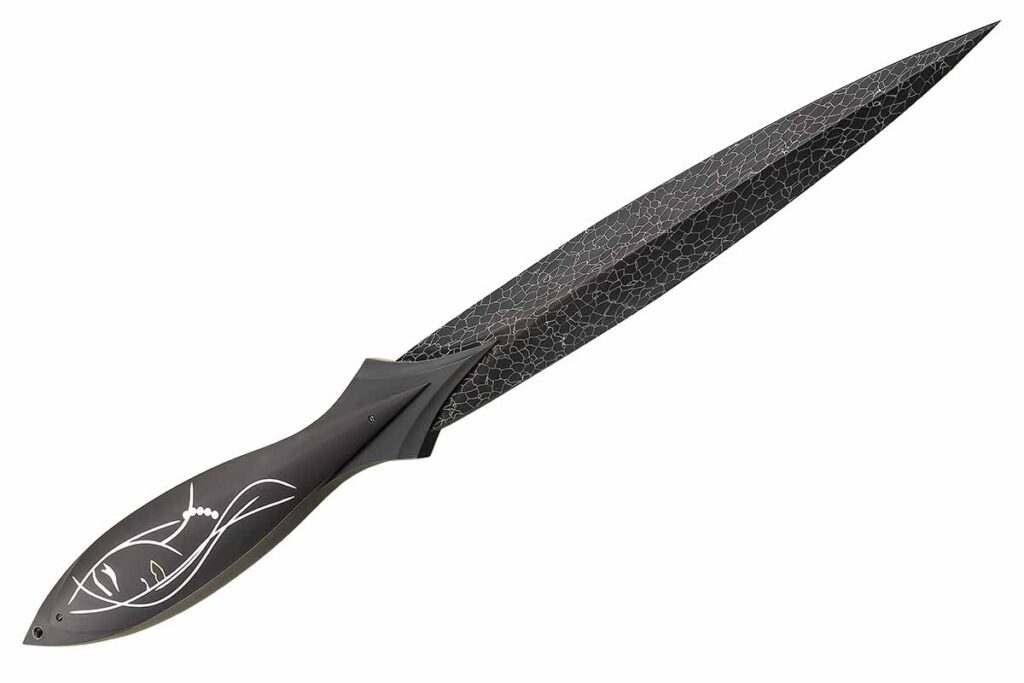
BLADE® field editor/knifemaker Kim Breed said his experience with military knives in the Gulf War included a mixed bag, including the Fer de Lance designed by David Steele for the now-defunct Pacific Cutlery. Pacific Cutlery was owned and operated by BLADE Magazine Cutlery Hall-Of-Fame® member Les de Asis, who went on to found Benchmade Knife Co. (image of Fer de Lance courtesy of Arizona Custom Knives)
“I carried the Fer de Lance designed by David Steel and produced by Pacific Cutlery,” he said. “It’s a double-edged fighter and I carried it almost my whole career. It’s light in the hand and has a big enough blade to do the job. Two edges meant I had one sharp for heavy duty and the other for finer stuff. Plus, the locals would freak out when I brought out a double-edged knife. It was good psychological warfare.”
Along with the Fer de Lance strapped to his back, Breed also had a Swiss Army knife at his side and an Arkansas toothpick.
An unexpected military knife: Kim Breed indicated Swiss Army knives were especially handy in Somalia for removing stickers and thorns with the tweezers.
“It wasn’t the real big Arkansas toothpick,” he remembered. “It was a smaller dagger with an aluminum handle. A lot of guys would buy the Ka-Bar because it was a good knife—but it was also cheap. When we got bored, we would throw knives, betting for a cigarette, chocolate bar or pound cake. The Ka-Bar might break but the aluminum-handle dagger wouldn’t.”
Speaking of the Ka-Bar*, it is among the top five knives of Breed’s Gulf War assessment, along with the Cold Steel SRK, Swiss Army knife, Randall Models 1 and 14 and the Buck 110. Each earned a bit of praise from the veteran.
The Buck 110 folder was widely available at the local PX and had good blade steel and easy carry for assorted cutting jobs.
The Ka-Bar has stood the test of time, and its generational tie to earlier combat deployments of family members from World War II forward may have been an influence, but for the most part, there was value, performance and availability to spare with the iconic fixed blade.
“It was in all the PXs,” Kim added. “You could get one for $12 and it worked pretty good, but if you broke one now and then you could have two or three around.”
Kim Breed said the Cold Steel SRK was a favorite among the troops, citing its molded Kraton handle in particular for praise.
Breed says the SRK was a favorite with its molded Kraton handle, while the Swiss Army was especially handy in Somalia for removing stickers and thorns with the tweezers. The Randalls were another legacy play. They were expensive knives but the troops’ fathers and grandfathers had carried them, so they were passed along to the sons and grandsons. The Buck 110 folder was also available at the local PX and had good blade steel and was easy to carry.
Jack Stottlemire
Ka-Bar-type fighting/utility fixed blade
Benchmade Stryker
Air Force/jet pilot survival knife
Custom Bob Horrigan
Randall Models 1 and 14
Knifemaker Jack Stottlemire served with the United States Marine Corps and the Army for a total of 27 years, with 14 combat deployments. He saw action in Operation Just Cause in Panama, Desert Shield and Desert Storm, the air war in Bosnia, Kosovo, Afghanistan and Iraq. The Marine service was first and he saw all his combat duty with the Army, retiring as a sergeant major with Special Operations. Like Breed, he stresses that knives were used for camp chores, prying, slicing and such.
Randalls were expensive but fathers and grandfathers had carried them, so they were passed along to the sons and grandsons. Developed in the mid-1950s, the Randall Model 14 Attack gained fame as a military knife during the Vietnam War. (Dan Clinton image)
“Using a knife in combat to stab somebody is pretty much bull,” he declared. “I don’t know anybody that used a knife for that in all my years. But if you’re in a helicopter crash and you need to cut strings or get somebody else out of the wreckage, that’s more realistic.”
Again, the Ka-Bar makes an appearance in the top five knives from his experiences, particularly in the desert environment. Stottlemire’s top five knives of the Iraq and Afghanistan wars include a custom Bob Horrigan** piece with a green Micarta® handle and a 5.5-inch blade of 440C stainless steel. “Bob and I were in the same squadron together and he was a real hero,” Jack offered.
Les George said he’s “pretty sure” his Ka-Bar saw action in the Vietnam War, the Korean War and possibly even World War II. The last time the knife was in combat operations was when George saw active duty in the Iraq War in 2005. (Les George’s knife and image)
“The Ka-Bar is everywhere and I carried mine from the time I was in the Marines, and still have it 40 years later,” he continued. “I remember getting them for $25 or $35 and using them to pry and hammer and to open MREs [Meals Ready to Eat] and ammo boxes. That’s what we used them for 99 percent of the time.”
The famed Randall had stayed around as well, again identified as a legacy knife handed down from one generation to another. As for folders, Jack’s units were issued the Benchmade Stryker. “It was common to have a lot of Benchmade autos and one-hand flippers, and there were Gerbers in the same category,” he commented. “I always carried my auto on my vest front for easy access in case I needed to cut a bandage or something like that.
Air Force survival knife
“Then we also had the Air Force survival knife. It was a jump master knife that looked like a little Ka-Bar with a stacked leather handle and a short bowie blade. A lot of guys carried more than one knife. They usually had a folder stuffed in their vest or pocket and a fixed blade on their chest next to their magazine pouches. That was for easy access. It’s hard to get to your stuff unless it’s on the vest, especially when you’re in a vehicle or helicopter.”
Les George
Custom EOD knife (self-made)
M11 EOD knives by Lan-Cay
Gerber multi-tools/Leatherman Wave
Benchmade Stryker and AFO
CRKT M16
Knifemaker Les George served with the U.S. Marines in explosive ordnance disposal (EOD) and carried a knife specifically for EOD use. “I actually made my own EOD knife in Iraq,” he remarked. “It was the first in a series that would become the M12 EOD knife that is currently listed as an option for USMC EOD units to purchase and use.”
As for folder military knives, Jack Stottlemire’s units were issued the Benchmade Stryker, an Allen Elishewitz design that debuted in the late 1990s.
Among the other knives that Les saw regularly in Iraq were the M11 EOD knives by Lan-Cay, Gerber multi-tools, Benchmade Stryker and AFO, and the Columbia River Knife & Tool M-16.
“The CRKTs were available at the PX and the other knives were issued to the Marines by unit,” George recalled. “Obviously, the Ontario bayonet was common for that reason. I had my large fixed blade that I used to probe for and dig up IEDs [improvised explosive devices] and UXOs [unexploded ordnance]. It was a brute force tool, the very epitome of a sharpened pry bar. I had a small Benchmade fixed blade that I had bolted to my pistol holster. I used it to cut tape or prepare demolition charges, and all the cutting utility I needed was done with that knife. I also carried a Leatherman Wave multi-tool. I liked the Wave over the issued Gerber because it closed up smaller, and I could access the blade without opening the tool.”
Thanks to their versatility and affordability, multi-tools have been popular with the troops since Leatherman Tool Group introduced its original multi-tool in 1982. Les George carried the Leatherman Wave because it closed up smaller and he could access the blade without opening the tool. The Wave+ is a Wave descendant.
Les chose his knives based on the situations he might find himself in during deployments. “The big and small fixed blades had their niche, while the multi-tool was available as a catchall. With the kind of war that I saw, there was not much thought of knives used outside of tools, and for me cost was not a factor. I would have spent about whatever the price to get the knives I wanted.”
Top 5 Knives From The Vietnam War
Ka-Bar-type fighting/utility fixed blade
SOG fixed blade
M7 bayonet
Air Force/jet pilot survival knife
MIL-K
After studying the Vietnam War era and the knives that were most often found during that period in Southeast Asia, Frank Trzaska has come up with his top five from that timeframe. His list includes—you guessed it—the Ka-Bar, which sits at the top. “The U.S. Fighting/Utility knife, the Mark 2, the Ka-Bar, call it whatever you will, but to me it is America’s fighting knife—adopted in 1942 and still serving our troops to this day,” he smiled.
M7 Bayonet was a common ‘Nam era military knife.
Others topping Frank’s list include the original SOG, which he calls “a very hard-to-find knife made in limited numbers for the super-secret Studies and Observation Group [SOG], Green Berets that went out into the field to locate the enemy—Recon.”
Frank has also found the M7 bayonet, designed to fit the M16 rifle, to have been in regular use. “It was another piece in succession that was originally adapted from the M3 trench knife of World War II fame,” he noted. “The M3, M4, M5, M6 and M7 all used the same blade profile.”
MIL-K was a handy addition to a soldier’s kit.
The Jet Pilot Survival knife, aka Air Force survival knife, and a small all-metal pocketknife called the MIL-K were frequently seen with troops in Vietnam, Frank noted. “The Jet Pilot Survival knife was an iconic knife of the Vietnam era, and it was shown in photographs everywhere,” he related. “Although the name was ‘Jet Pilot,’ it was seen on ground pounders just as often. The MIL-K was the perfect all-purpose pocketknife that, as an extra, is dated so you can collect all the years and at a somewhat low price.”
Trzaska has spoken with troops all over the world, and the multi-tool has surged to the forefront among military personnel deployed these days, but he also quickly adds that the Ka-Bar is still a favorite. Given the salaries of enlisted men, he speculates that cost was always a factor in the purchase of a Vietnam-era knife.
Final Cut
Times change but for soldiers through the last half century/publication life of BLADE, knife uses have stayed the same in many ways. “Almost everyone in Vietnam carried two knives, a pocketknife and a fixed blade, and if you count the bayonet, it would be three,” Frank observed. “They were used mostly for opening meals, mail and boxes. A pocketknife was handy but a fixed blade on your harness was meant for fighting. Along with your bayonet, they were weapons of last resort.”
From the more expensive models to everyday carry in the field, military personnel in Vietnam had their pick. “The Randalls were the knives everybody wanted,” Trzaska said, “but few had them. They became a status symbol of a professional. Young guys also liked big knives until they had to carry all that extra weight and never use them. Then the small knife was the king. Most knives of the era were common steel and would rust easily. Stainless steel was a big plus and found its way into knife production over time.”
Through the years, BLADE has published many accounts of knives in the hands of military personnel deployed around the globe. Since the early 1970s, these stories have brought valuable information to readers regarding performance, personality and collectability. That trend will continue into the future.
*As Frank Trzaska notes, no matter whether you call it the USMC fighting/utility knife, Mark 2, Ka-Bar or what have you, the fixed blade with the leather-washer handle and clip-point blade made by several different companies that first appeared in 1942 and did yeoman’s duty throughout World War II remains a U.S. military icon.
**Robert “Bob” Horrigan, a member of U.S. Army Special Operations Command, was killed in action in Iraq on June 17, 2005. His twin brother is award-winning ABS master smith John Horrigan.
Rough as a mountain ridge and ready as razor-sharp edge, nothing beats stag handles—especially on these custom stunners.
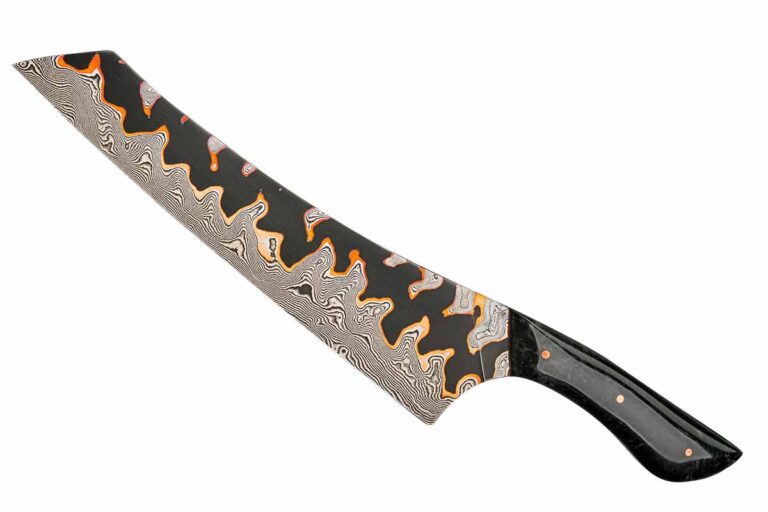
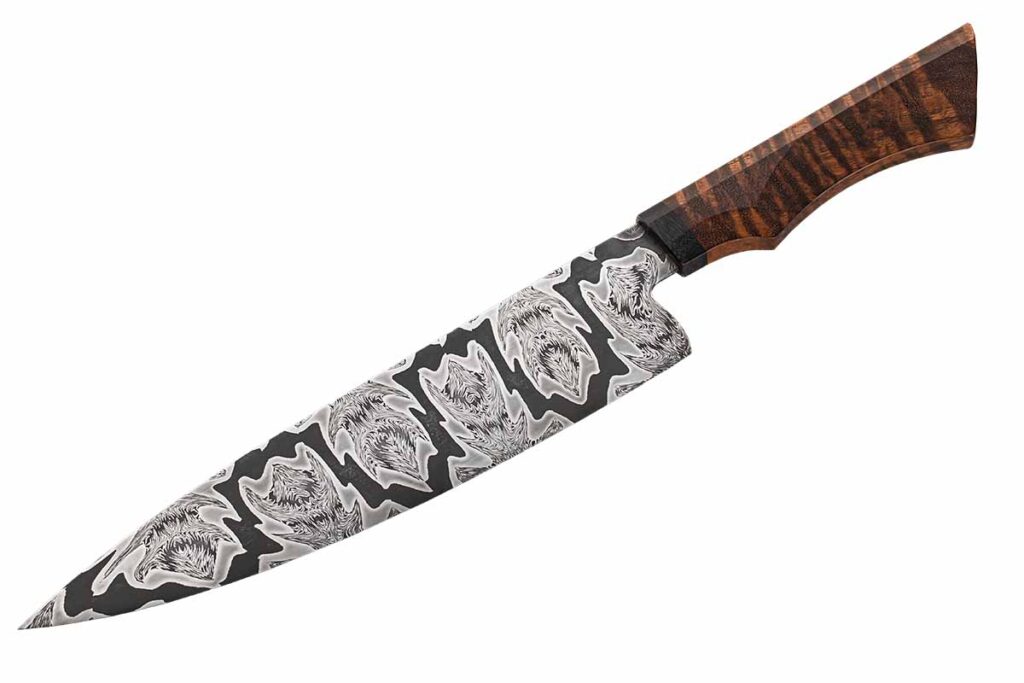
Stag is to knives what red is to rover, rock is to roll and John is to Wayne. It’s the total package in looks, feel and tradition. Sambar, axis, popcorn or whatever the type or style, when it comes to knife handles, stag has it all.
Jeremy Yelle: Takedown pocket bowie
You can almost see and smell the popcorn popping on the popcorn stag of Jeremy Yelle’s takedown pocket bowie. The guard and fittings are 416 stainless steel fire-etched and textured black. Blade and overall lengths: 4.5 and 9 1/8 inches. (Joyce Frasier image edit)
Liam Walle: Full-tang fighter
ABS apprentice smith Liam Walle opts for deer antler scales with copper pins for his full-tang fighter. The 5.7-inch harpoon blade is 2,340 layers of feather damascus in 1084 carbon and 15N20 nickel alloy steels. Overall length: 10.4 inches. (Jocelyn Frasier image edit)
Cowboy Szymanski: Bowie
Axis stag and ebony spacers comprise the handle of a bowie by Cowboy Szymanski. Blade steel is an accordion twist damascus of 1095 carbon and 15N20 nickel-alloy steels. The bolster is raindrop pattern damascus. Overall length: 11.75 inches. (SharpByCoop image)
Lin Rhea: D-guard bowie
A stag handle and a blade of ladder-pattern damascus in 1084 carbon and 15N20 nickel alloy steels help complete ABS master smith Lin Rhea’s D-guard bowie. The sheath (not pictured) is by Cody Rowe. (SharpByCoop image)
Erik McCright’: Camp knife
The dark Sambar stag—not to mention the fancy ferrule connection between handle and blade—of Erik McCright’s camp knife screams 19th-century Sheffield. The 8.75-inch blade is 52100 ball-bearing steel with a forced patina. (Jocelyn Frasier image edit)
David R. Davis: Slipjoint
David R. Davis chose Sambar stag and pattern-welded blade steel from Alabama Damascus for his stockman. Blade lengths: 3, 2.25 and 2.5 inches. Blade grinds: flat. Closed length: 4.25 inches. His price for a similar knife: $1,100. (SharpByCoop image)
Adam Millé: Classic hunter
Crown stag and vintage Micarta® complete the handle of Adam Millé’s classic hunter. The bolster is copper. The 6-inch harpoon blade is W2 tool steel. Overall length: 11.25 inches. The handmade leather sheath (not shown) has python snakeskin inlay. (SharpByCoop image)
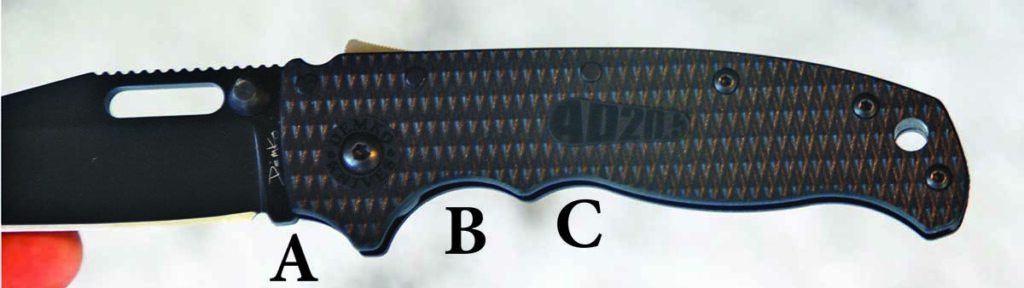
Priced right and darkly attractive, the Spartan Poros offers a work-a-day option.
It’s been a big year for the folder end of Spartan Blade’s catalog. In June, the North Carolina manufacturer took home Manufacturing Quality accolades from the 2023 BLADE Show Knife of the Year awards. For the record, it was an artistically executed Harsey Folder that earned the company the honor. Now, the company has further expanded this end of its offerings with a wicked-looking flipper, home-cooked by one of Spartan’s founding fathers.
Shake hands with the Spartan Poros, a full-sized option with plenty of versatility baked into the package. The piece was designed by company co-founder Curtis Iovito, who has several standalone designs spotting the firm’s lineup, including Alala, Formido and Zelos, among others. The Poros appears to share a lot of the same lines and design points of auto Zelos, particularly in handle ergonomics. Though, the new knife has much more (pardon the pun) Spartan aesthetics than its predecessor, casting it into a much more work-a-day role.
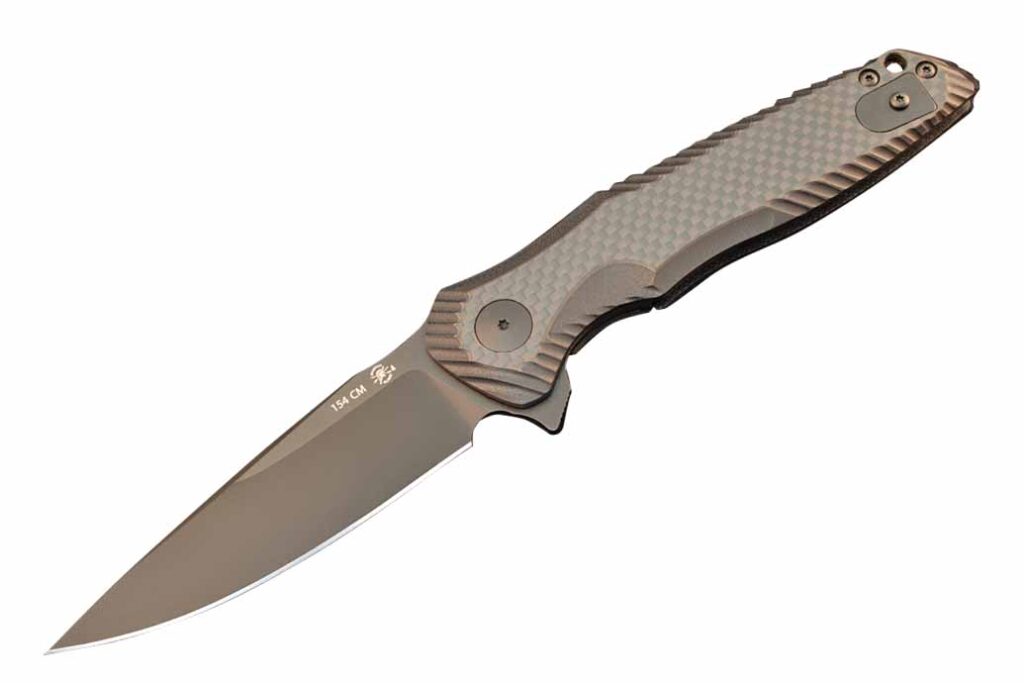
As to the tale of the tape, the drop-point knife sports a 3.75-inch blade that boasts an understated swedge running nearly its entire length. This adds a bit of character to the otherwise very liner overall blade design. Spartan uses 154CM stainless steel for the blade (58-60 HRC), applies a flat grind and finishes it with Black Titanium Nitride Coating (TiN) for added protection and dark good looks. The knife is a flipper-only affair, with a relative demure kicker that gets the blade into the action. IKBS bearings make it fast opening and give the knife a bit of snap when deploying.
Spartan offers a trio of handle options, each nicely complimenting the blade—black or OD green G-10 or black carbon fiber-G-10 composite. In both cases, the handle adds to the overall sleek looks of the Poros. The liner lock’s aggressively textures the scale but keeps comfort in mind significantly chamfering the edges of the handle so its fairly sharp design wouldn’t tend to bite or create hot spots. Spartan tops it off with a reversible loop over clip with its signature Spartan arrow. Note, the company supplies a steel tab to fill the recess opposite to the side the clip is installed to maintain the overall continuity of the handle.
At 5.4 ounces, the Poros certainly won’t weigh down its carrier. And classified as “Field Grade” by Spartan, the knife comes in at the lower end of the company’s price range. In this case, Spartan lists it at $180 for the G-10 models and $190 for the carbon fiber-G-10 composite model.
Spartan Poros Specs
Designer: Curtis Iovito Blade Length: 3.75” Blade Thickness: 0.125” Overall Length: 9.0” Blade Steel: 154CM Stainless Steel Blade Hardness: 58-60 HRC Blade Style: Folding-Drop Point-Flat ground Blade Finish: Black Titanium Nitride Coating (TiN) Frame: Liner lock with black or OG Gree G10 scales, black carbon fiber-G-10 composite scales Weight: 0.330 LBS MSRP: $180 G-10 scales; $190 carbon-fiber-G-10 scales