Home Blog Page 77

Military Knives: Soldiers’ EDC From The Past 50 Years

Stepping away from standard issues, combat veterans recount the off-beat military knives they used day-to-day during their service.

Since BLADE® Magazine went to press for the first time 50 years ago, there have been wars and rumors of wars. Even in peacetime, the U.S. military has stood ready in defense of freedom around the world.

When service men and women have deployed into harm’s way through the years, their knives of choice have been by their side, sheathed or strapped, buckled or pocketed, or carried in a duffle bag. From Vietnam to Iraq and Afghanistan, service personnel have taken their chosen tools abroad and put them to use for a variety of chores.

Kim Breed

  • Fer de Lance from Pacific Cutlery
  • Ka-Bar-type fighting/utility fixed blade
  • Swiss Army knife with tweezers
  • Cold Steel SRK
  • Randall Models 1 and 14

BLADE field editor/knifemaker Kim Breed spent nearly two decades in the Army, serving with the 10th and then 5th Special Forces Groups. His experience in the Gulf War included a mixed bag of available knives for anything that was needed.
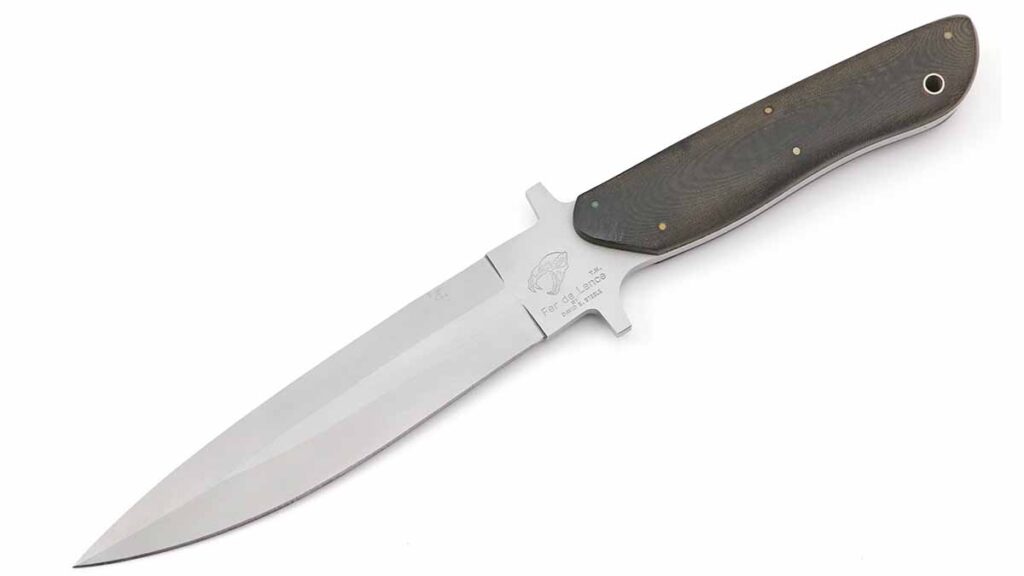
Military Knives: Pacific Cutlery Fer de lance
BLADE® field editor/knifemaker Kim Breed said his experience with military knives in the Gulf War included a mixed bag, including the Fer de Lance designed by David Steele for the now-defunct Pacific Cutlery. Pacific Cutlery was owned and operated by BLADE Magazine Cutlery Hall-Of-Fame® member Les de Asis, who went on to found Benchmade Knife Co. (image of Fer de Lance courtesy of Arizona Custom Knives)

“I carried the Fer de Lance designed by David Steel and produced by Pacific Cutlery,” he said. “It’s a double-edged fighter and I carried it almost my whole career. It’s light in the hand and has a big enough blade to do the job. Two edges meant I had one sharp for heavy duty and the other for finer stuff. Plus, the locals would freak out when I brought out a double-edged knife. It was good psychological warfare.”

Along with the Fer de Lance strapped to his back, Breed also had a Swiss Army knife at his side and an Arkansas toothpick.
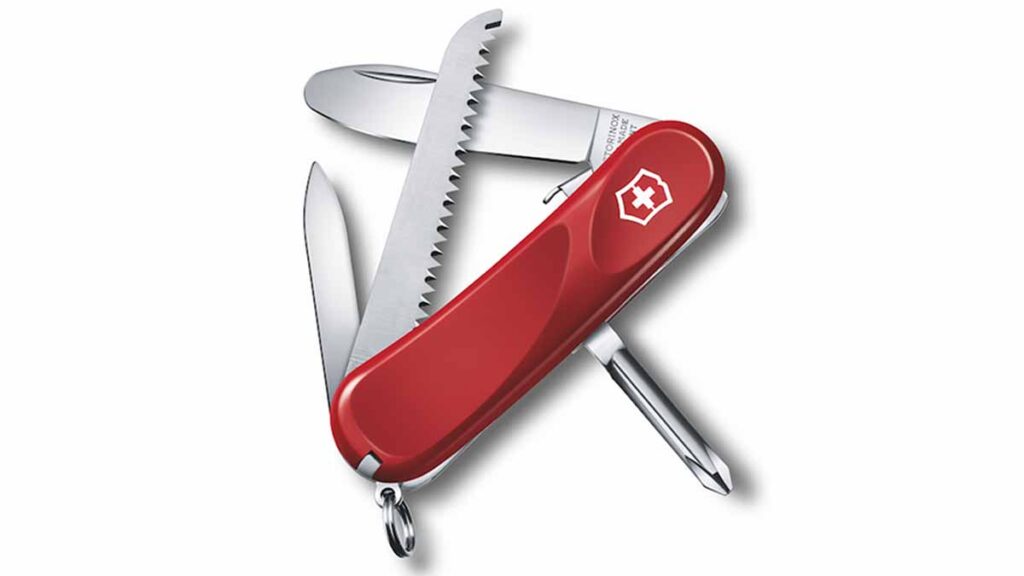
Military Knife: Swiss Army Knife
An unexpected military knife: Kim Breed indicated Swiss Army knives were especially handy in Somalia for removing stickers and thorns with the tweezers.

“It wasn’t the real big Arkansas toothpick,” he remembered. “It was a smaller dagger with an aluminum handle. A lot of guys would buy the Ka-Bar because it was a good knife—but it was also cheap. When we got bored, we would throw knives, betting for a cigarette, chocolate bar or pound cake. The Ka-Bar might break but the aluminum-handle dagger wouldn’t.”

Speaking of the Ka-Bar*, it is among the top five knives of Breed’s Gulf War assessment, along with the Cold Steel SRK, Swiss Army knife, Randall Models 1 and 14 and the Buck 110. Each earned a bit of praise from the veteran.
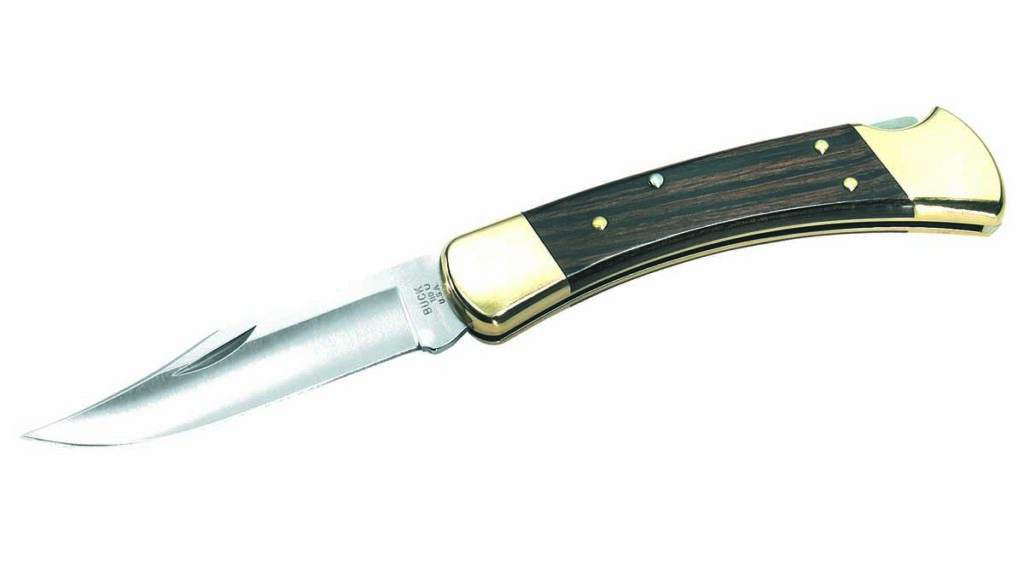
Military Knife: Buck 110
The Buck 110 folder was widely available at the local PX and had good blade steel and easy carry for assorted cutting jobs.

The Ka-Bar has stood the test of time, and its generational tie to earlier combat deployments of family members from World War II forward may have been an influence, but for the most part, there was value, performance and availability to spare with the iconic fixed blade.

“It was in all the PXs,” Kim added. “You could get one for $12 and it worked pretty good, but if you broke one now and then you could have two or three around.”
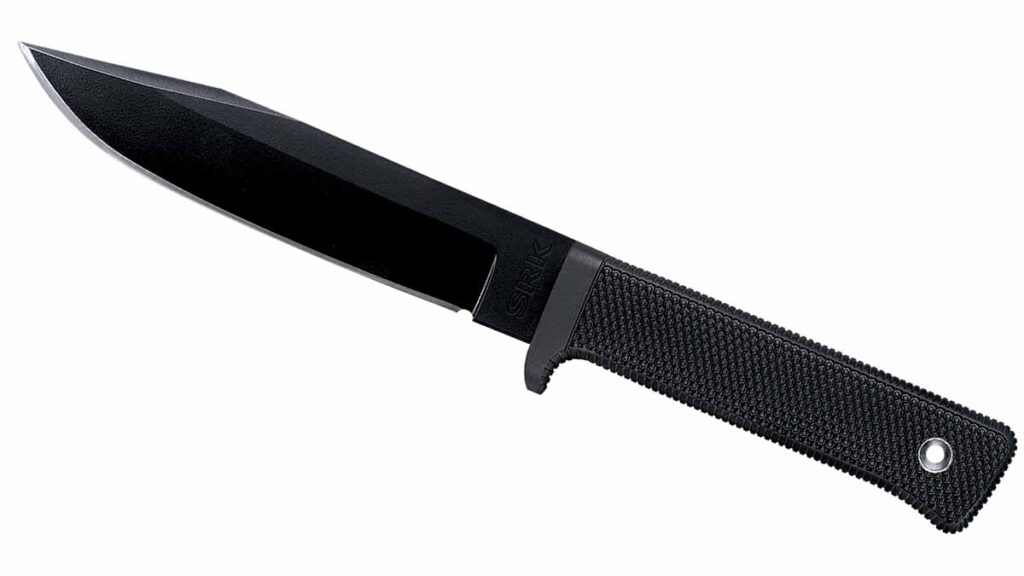
Cold Steel SRK
Kim Breed said the Cold Steel SRK was a favorite among the troops, citing its molded Kraton handle in particular for praise.

Breed says the SRK was a favorite with its molded Kraton handle, while the Swiss Army was especially handy in Somalia for removing stickers and thorns with the tweezers. The Randalls were another legacy play. They were expensive knives but the troops’ fathers and grandfathers had carried them, so they were passed along to the sons and grandsons. The Buck 110 folder was also available at the local PX and had good blade steel and was easy to carry.

Jack Stottlemire

  • Ka-Bar-type fighting/utility fixed blade
  • Benchmade Stryker
  • Air Force/jet pilot survival knife
  • Custom Bob Horrigan
  • Randall Models 1 and 14

Knifemaker Jack Stottlemire served with the United States Marine Corps and the Army for a total of 27 years, with 14 combat deployments. He saw action in Operation Just Cause in Panama, Desert Shield and Desert Storm, the air war in Bosnia, Kosovo, Afghanistan and Iraq. The Marine service was first and he saw all his combat duty with the Army, retiring as a sergeant major with Special Operations. Like Breed, he stresses that knives were used for camp chores, prying, slicing and such.
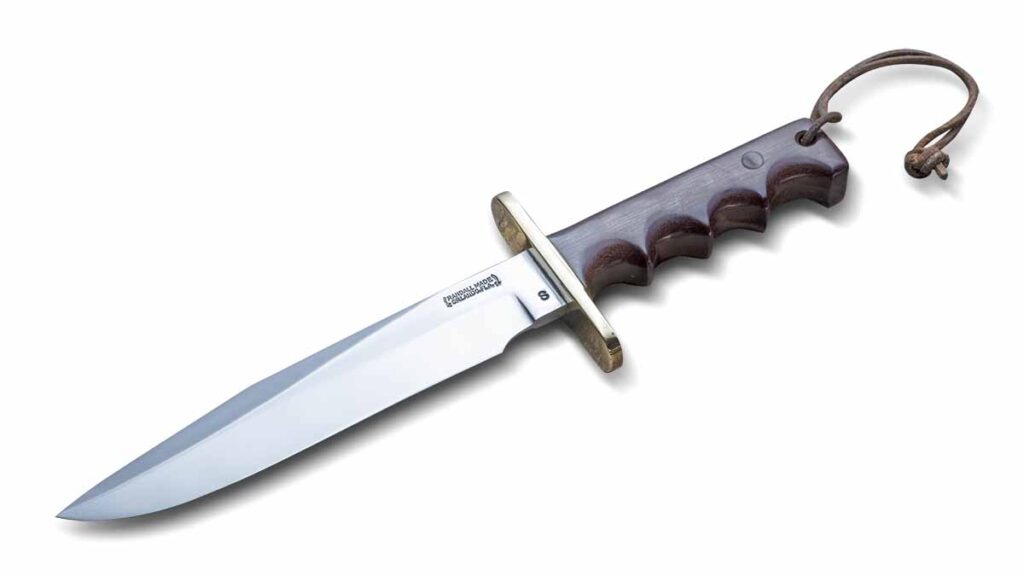
Military Knives: Randalls
Randalls were expensive but fathers and grandfathers had carried them, so they were passed along to the sons and grandsons. Developed in the mid-1950s, the Randall Model 14 Attack gained fame as a military knife during the Vietnam War. (Dan Clinton image)

“Using a knife in combat to stab somebody is pretty much bull,” he declared. “I don’t know anybody that used a knife for that in all my years. But if you’re in a helicopter crash and you need to cut strings or get somebody else out of the wreckage, that’s more realistic.”

Again, the Ka-Bar makes an appearance in the top five knives from his experiences, particularly in the desert environment. Stottlemire’s top five knives of the Iraq and Afghanistan wars include a custom Bob Horrigan** piece with a green Micarta® handle and a 5.5-inch blade of 440C stainless steel. “Bob and I were in the same squadron together and he was a real hero,” Jack offered.
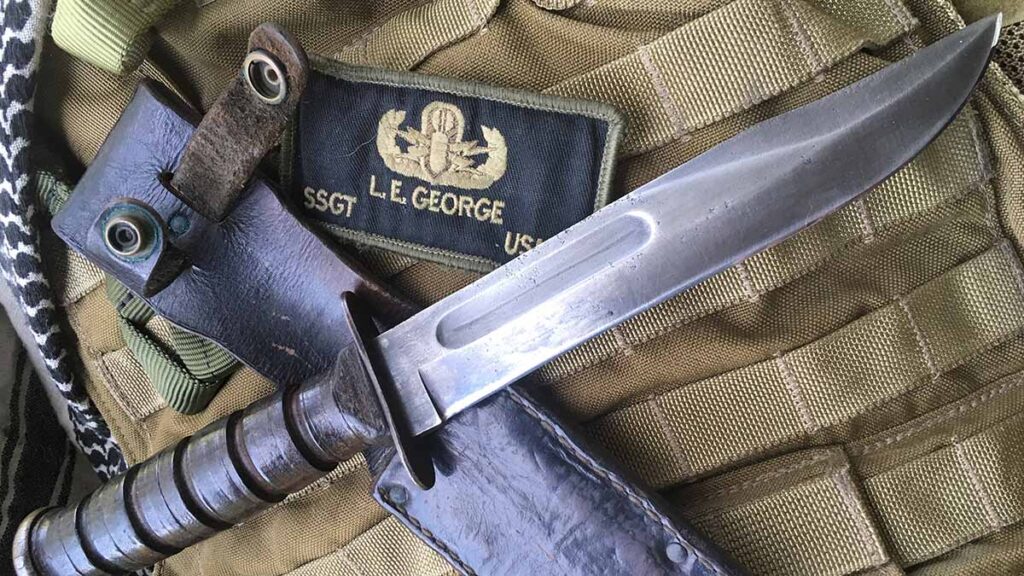
Military Knives: KaBar
Les George said he’s “pretty sure” his Ka-Bar saw action in the Vietnam War, the Korean War and possibly even World War II. The last time the knife was in combat operations was when George saw active duty in the Iraq War in 2005. (Les George’s knife and image)

“The Ka-Bar is everywhere and I carried mine from the time I was in the Marines, and still have it 40 years later,” he continued. “I remember getting them for $25 or $35 and using them to pry and hammer and to open MREs [Meals Ready to Eat] and ammo boxes. That’s what we used them for 99 percent of the time.”

The famed Randall had stayed around as well, again identified as a legacy knife handed down from one generation to another. As for folders, Jack’s units were issued the Benchmade Stryker. “It was common to have a lot of Benchmade autos and one-hand flippers, and there were Gerbers in the same category,” he commented. “I always carried my auto on my vest front for easy access in case I needed to cut a bandage or something like that.
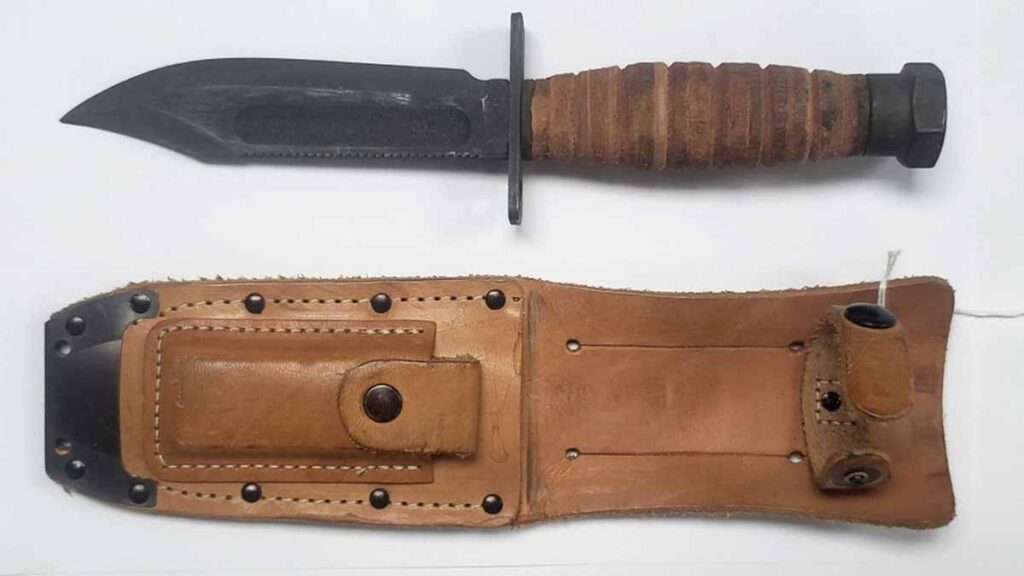
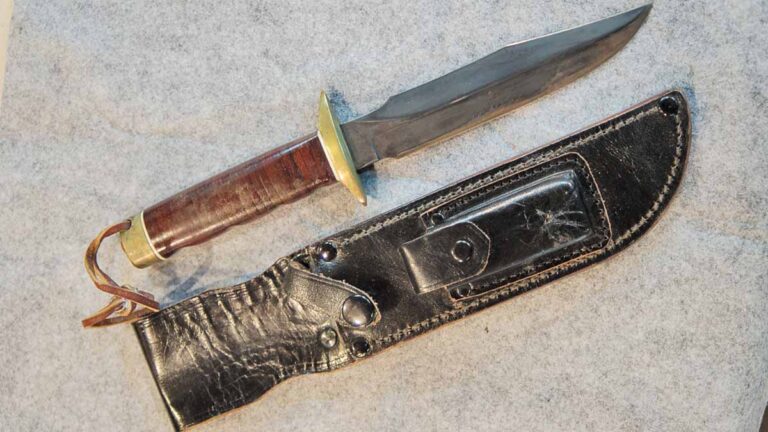
Jet Pilot Survival Knife
Air Force survival knife

“Then we also had the Air Force survival knife. It was a jump master knife that looked like a little Ka-Bar with a stacked leather handle and a short bowie blade. A lot of guys carried more than one knife. They usually had a folder stuffed in their vest or pocket and a fixed blade on their chest next to their magazine pouches. That was for easy access. It’s hard to get to your stuff unless it’s on the vest, especially when you’re in a vehicle or helicopter.”

Les George

  • Custom EOD knife (self-made)
  • M11 EOD knives by Lan-Cay
  • Gerber multi-tools/Leatherman Wave
  • Benchmade Stryker and AFO
  • CRKT M16

Knifemaker Les George served with the U.S. Marines in explosive ordnance disposal (EOD) and carried a knife specifically for EOD use. “I actually made my own EOD knife in Iraq,” he remarked. “It was the first in a series that would become the M12 EOD knife that is currently listed as an option for USMC EOD units to purchase and use.”
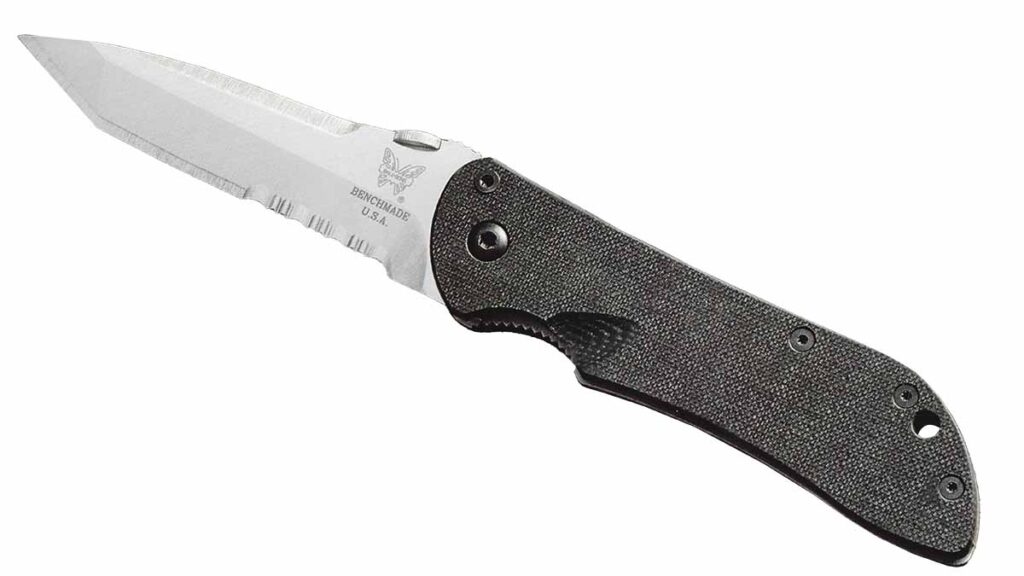
Benchmade Stryker
As for folder military knives, Jack Stottlemire’s units were issued the Benchmade Stryker, an Allen Elishewitz design that debuted in the late 1990s.

Among the other knives that Les saw regularly in Iraq were the M11 EOD knives by Lan-Cay, Gerber multi-tools, Benchmade Stryker and AFO, and the Columbia River Knife & Tool M-16.

“The CRKTs were available at the PX and the other knives were issued to the Marines by unit,” George recalled. “Obviously, the Ontario bayonet was common for that reason. I had my large fixed blade that I used to probe for and dig up IEDs [improvised explosive devices] and UXOs [unexploded ordnance]. It was a brute force tool, the very epitome of a sharpened pry bar. I had a small Benchmade fixed blade that I had bolted to my pistol holster. I used it to cut tape or prepare demolition charges, and all the cutting utility I needed was done with that knife. I also carried a Leatherman Wave multi-tool. I liked the Wave over the issued Gerber because it closed up smaller, and I could access the blade without opening the tool.”
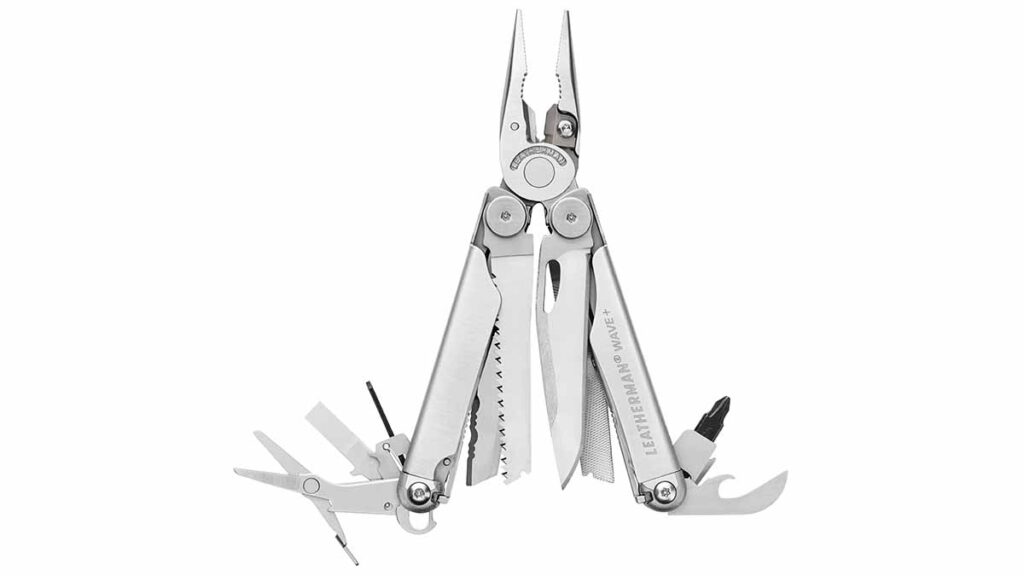
Military Knives Wave Plus Fanned
Thanks to their versatility and affordability, multi-tools have been popular with the troops since Leatherman Tool Group introduced its original multi-tool in 1982. Les George carried the Leatherman Wave because it closed up smaller and he could access the blade without opening the tool. The Wave+ is a Wave descendant.

Les chose his knives based on the situations he might find himself in during deployments. “The big and small fixed blades had their niche, while the multi-tool was available as a catchall. With the kind of war that I saw, there was not much thought of knives used outside of tools, and for me cost was not a factor. I would have spent about whatever the price to get the knives I wanted.”

Top 5 Knives From The Vietnam War

  • Ka-Bar-type fighting/utility fixed blade
  • SOG fixed blade
  • M7 bayonet
  • Air Force/jet pilot survival knife
  • MIL-K

After studying the Vietnam War era and the knives that were most often found during that period in Southeast Asia, Frank Trzaska has come up with his top five from that timeframe. His list includes—you guessed it—the Ka-Bar, which sits at the top. “The U.S. Fighting/Utility knife, the Mark 2, the Ka-Bar, call it whatever you will, but to me it is America’s fighting knife—adopted in 1942 and still serving our troops to this day,” he smiled.
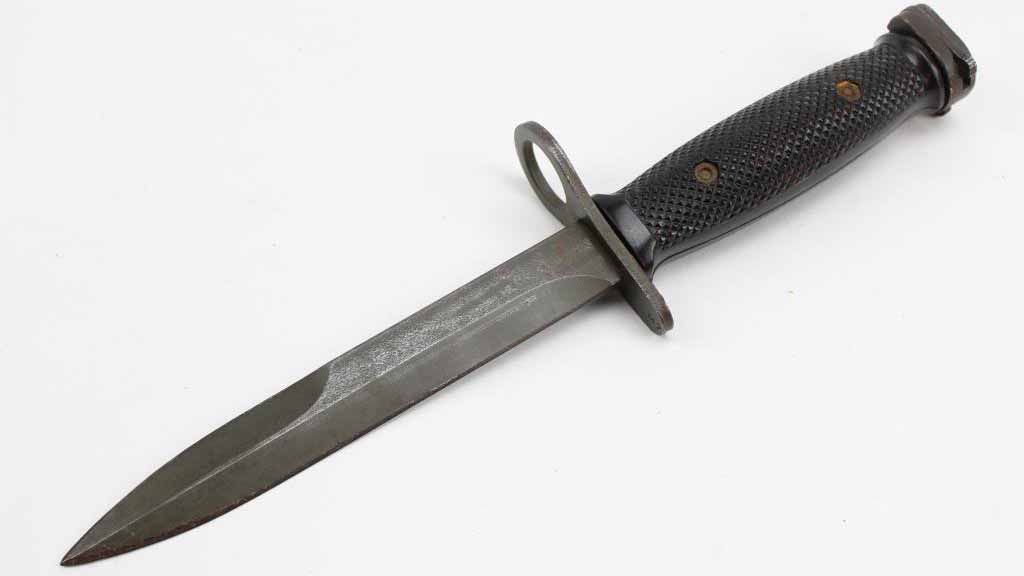
M7
M7 Bayonet was a common ‘Nam era military knife.

Others topping Frank’s list include the original SOG, which he calls “a very hard-to-find knife made in limited numbers for the super-secret Studies and Observation Group [SOG], Green Berets that went out into the field to locate the enemy—Recon.”

Frank has also found the M7 bayonet, designed to fit the M16 rifle, to have been in regular use. “It was another piece in succession that was originally adapted from the M3 trench knife of World War II fame,” he noted. “The M3, M4, M5, M6 and M7 all used the same blade profile.”
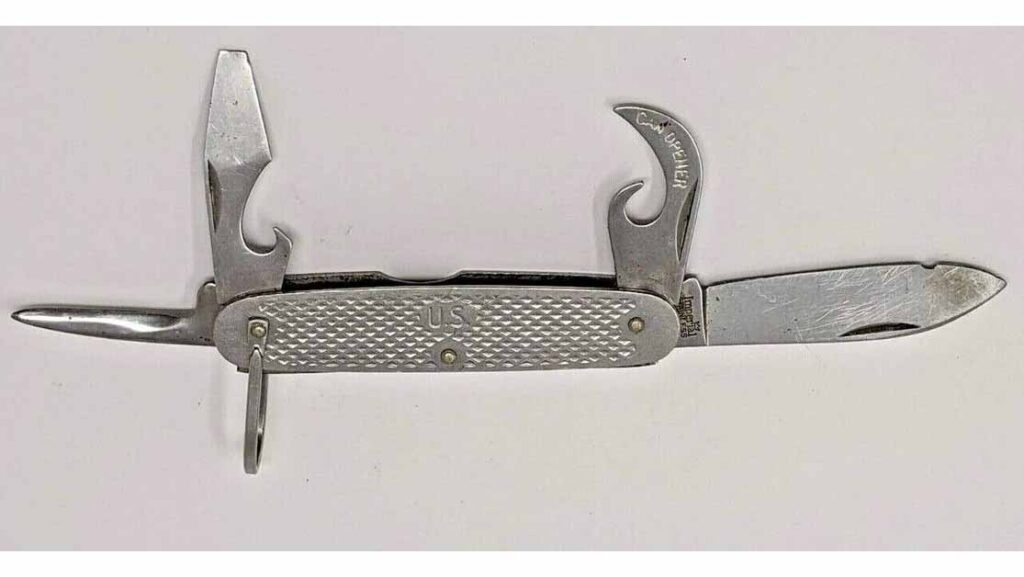
Military Knife: MIL-K
MIL-K was a handy addition to a soldier’s kit.

The Jet Pilot Survival knife, aka Air Force survival knife, and a small all-metal pocketknife called the MIL-K were frequently seen with troops in Vietnam, Frank noted. “The Jet Pilot Survival knife was an iconic knife of the Vietnam era, and it was shown in photographs everywhere,” he related. “Although the name was ‘Jet Pilot,’ it was seen on ground pounders just as often. The MIL-K was the perfect all-purpose pocketknife that, as an extra, is dated so you can collect all the years and at a somewhat low price.”

Trzaska has spoken with troops all over the world, and the multi-tool has surged to the forefront among military personnel deployed these days, but he also quickly adds that the Ka-Bar is still a favorite. Given the salaries of enlisted men, he speculates that cost was always a factor in the purchase of a Vietnam-era knife.

Final Cut

Times change but for soldiers through the last half century/publication life of BLADE, knife uses have stayed the same in many ways. “Almost everyone in Vietnam carried two knives, a pocketknife and a fixed blade, and if you count the bayonet, it would be three,” Frank observed. “They were used mostly for opening meals, mail and boxes. A pocketknife was handy but a fixed blade on your harness was meant for fighting. Along with your bayonet, they were weapons of last resort.”

From the more expensive models to everyday carry in the field, military personnel in Vietnam had their pick. “The Randalls were the knives everybody wanted,” Trzaska said, “but few had them. They became a status symbol of a professional. Young guys also liked big knives until they had to carry all that extra weight and never use them. Then the small knife was the king. Most knives of the era were common steel and would rust easily. Stainless steel was a big plus and found its way into knife production over time.”

Through the years, BLADE has published many accounts of knives in the hands of military personnel deployed around the globe. Since the early 1970s, these stories have brought valuable information to readers regarding performance, personality and collectability. That trend will continue into the future.


*As Frank Trzaska notes, no matter whether you call it the USMC fighting/utility knife, Mark 2, Ka-Bar or what have you, the fixed blade with the leather-washer handle and clip-point blade made by several different companies that first appeared in 1942 and did yeoman’s duty throughout World War II remains a U.S. military icon.

**Robert “Bob” Horrigan, a member of U.S. Army Special Operations Command, was killed in action in Iraq on June 17, 2005. His twin brother is award-winning ABS master smith John Horrigan.

Read More:

Stag Handle: Custom Knives That Are Bad To The Bone

Rough as a mountain ridge and ready as razor-sharp edge, nothing beats stag handles—especially on these custom stunners.

Stag is to knives what red is to rover, rock is to roll and John is to Wayne. It’s the total package in looks, feel and tradition. Sambar, axis, popcorn or whatever the type or style, when it comes to knife handles, stag has it all.


Stage Handle Yelle
Jeremy Yelle: Takedown pocket bowie

You can almost see and smell the popcorn popping on the popcorn stag of Jeremy Yelle’s takedown pocket bowie. The guard and fittings are 416 stainless steel fire-etched and textured black. Blade and overall lengths: 4.5 and 9 1/8 inches. (Joyce Frasier image edit)


Stage Handle Walle
Liam Walle: Full-tang fighter

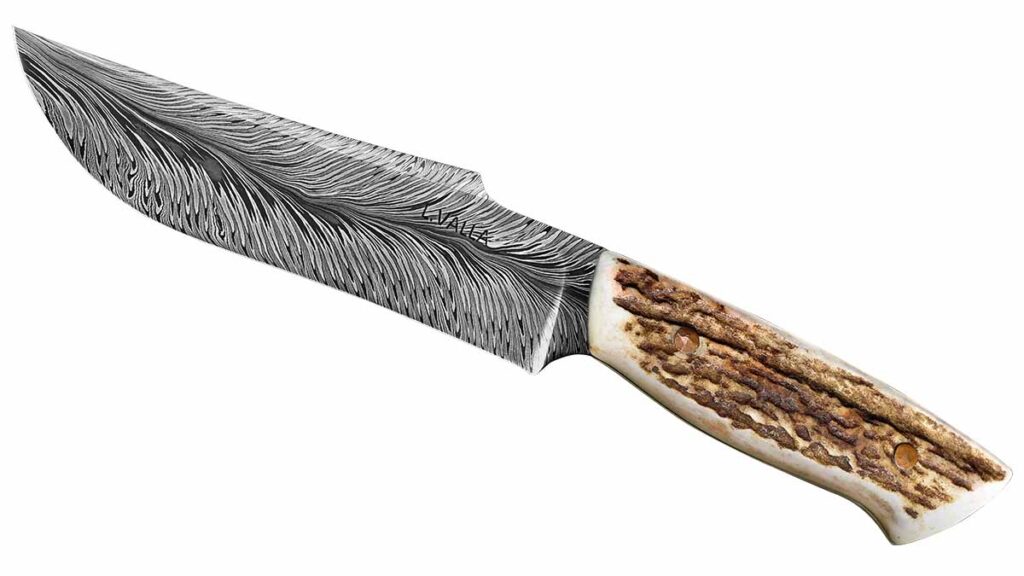
ABS apprentice smith Liam Walle opts for deer antler scales with copper pins for his full-tang fighter. The 5.7-inch harpoon blade is 2,340 layers of feather damascus in 1084 carbon and 15N20 nickel alloy steels. Overall length: 10.4 inches. (Jocelyn Frasier image edit)


Stage Handle Szymanski
Cowboy Szymanski: Bowie

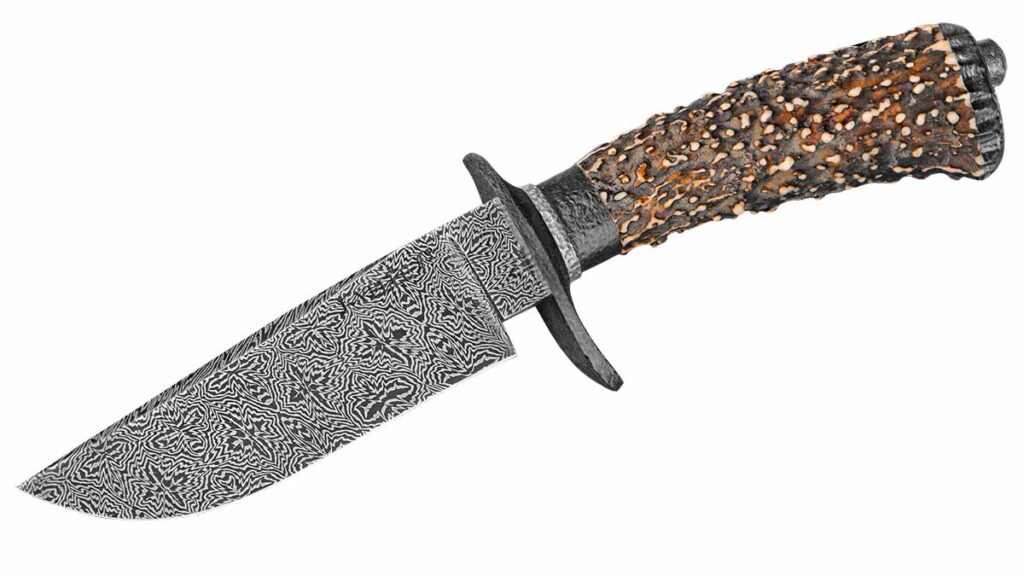
Axis stag and ebony spacers comprise the handle of a bowie by Cowboy Szymanski. Blade steel is an accordion twist damascus of 1095 carbon and 15N20 nickel-alloy steels. The bolster is raindrop pattern damascus. Overall length: 11.75 inches. (SharpByCoop image)


Stage Handle Rhea
Lin Rhea: D-guard bowie

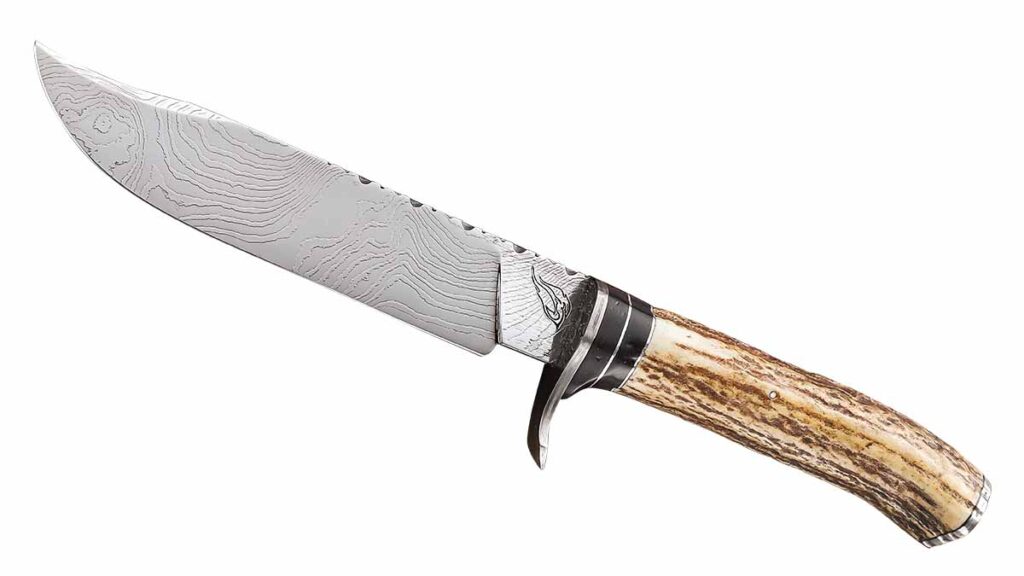
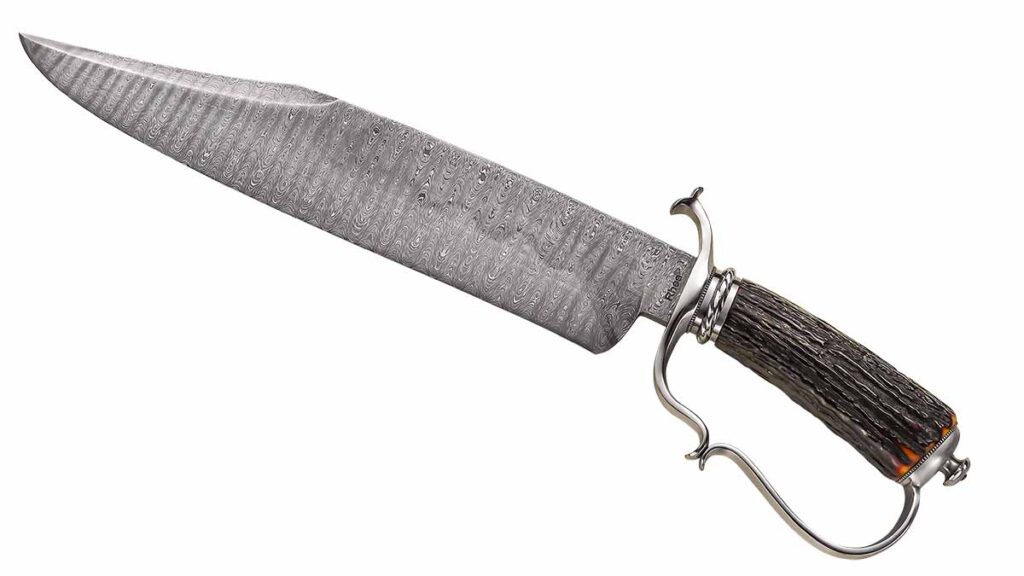
A stag handle and a blade of ladder-pattern damascus in 1084 carbon and 15N20 nickel alloy steels help complete ABS master smith Lin Rhea’s D-guard bowie. The sheath (not pictured) is by Cody Rowe. (SharpByCoop image)


Stage Handle McCright
Erik McCright’: Camp knife

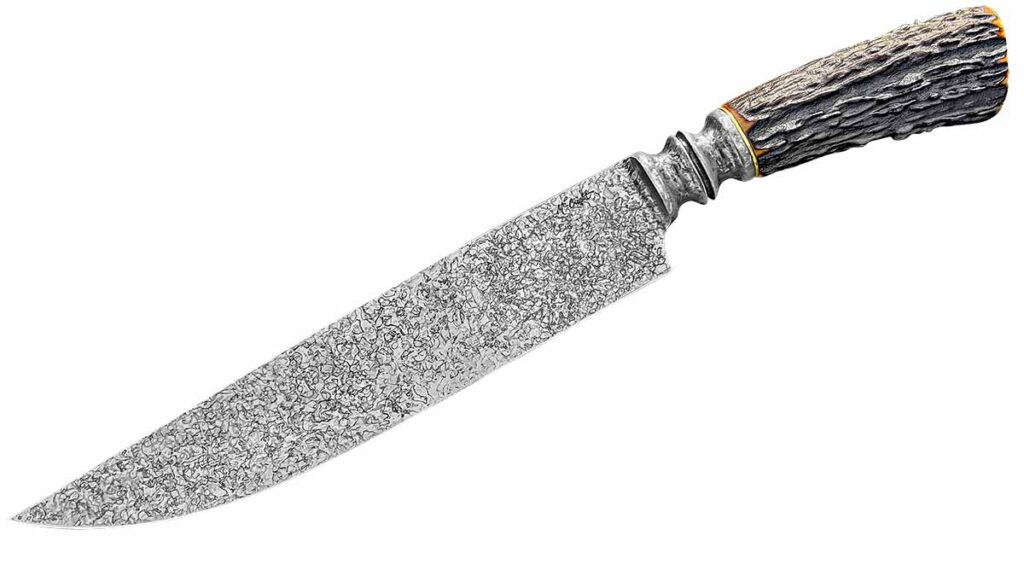
The dark Sambar stag—not to mention the fancy ferrule connection between handle and blade—of Erik McCright’s camp knife screams 19th-century Sheffield. The 8.75-inch blade is 52100 ball-bearing steel with a forced patina. (Jocelyn Frasier image edit)


Stag Handle DavisD
David R. Davis: Slipjoint

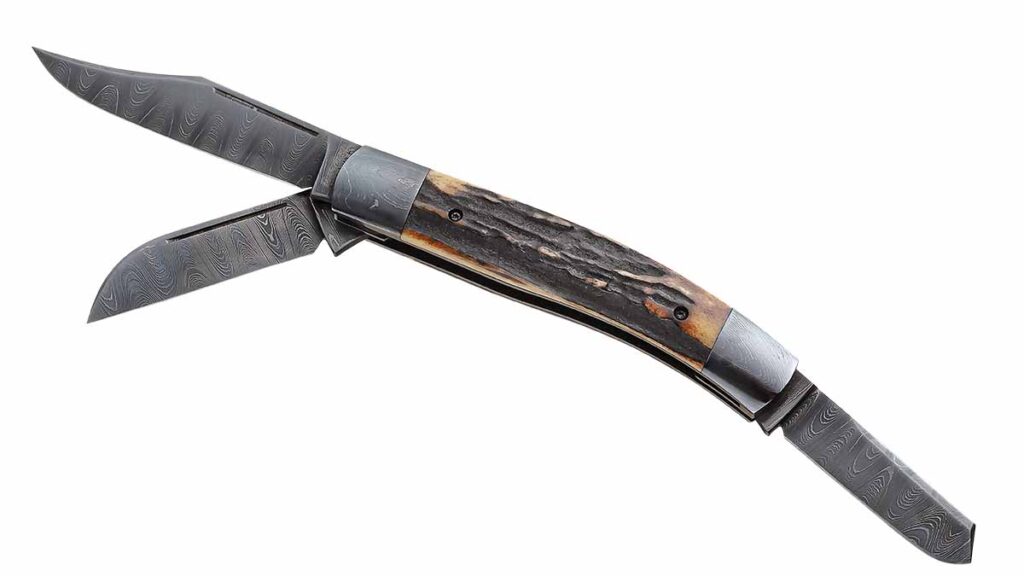
David R. Davis chose Sambar stag and pattern-welded blade steel from Alabama Damascus for his stockman. Blade lengths: 3, 2.25 and 2.5 inches. Blade grinds: flat. Closed length: 4.25 inches. His price for a similar knife: $1,100. (SharpByCoop image)


Stage Handle Mille
Adam Millé: Classic hunter

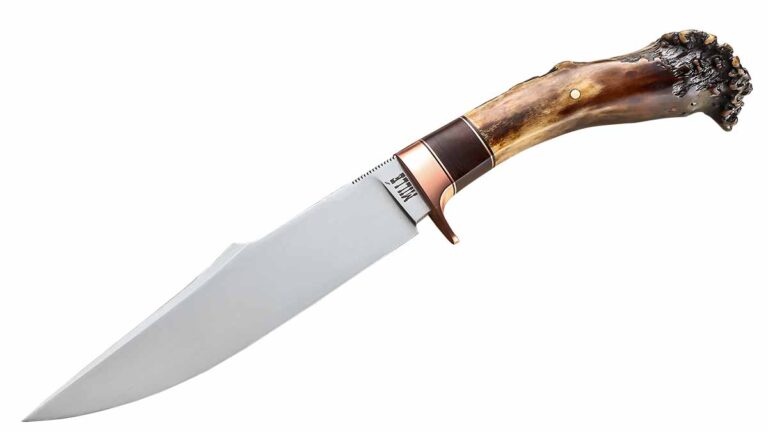
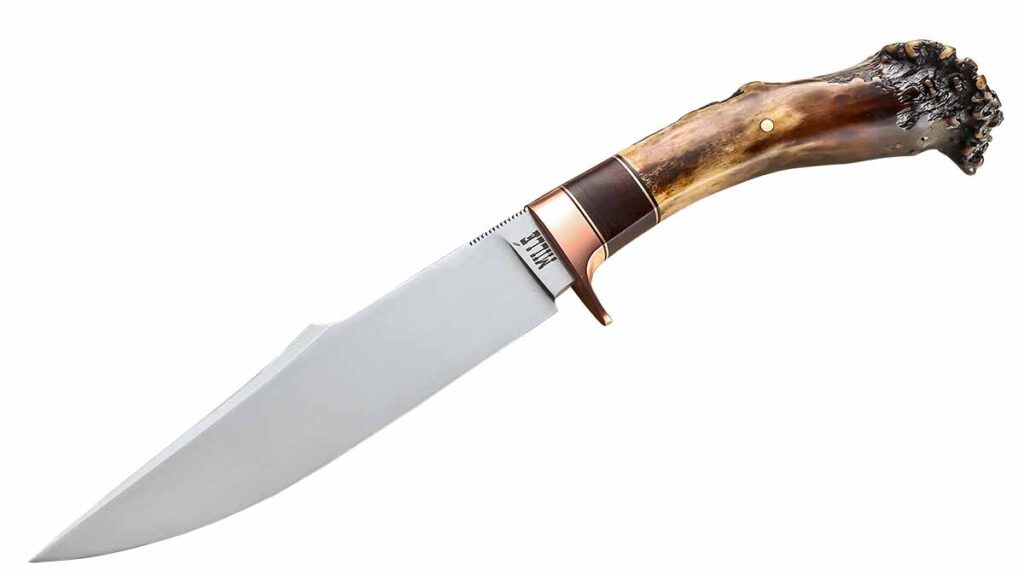
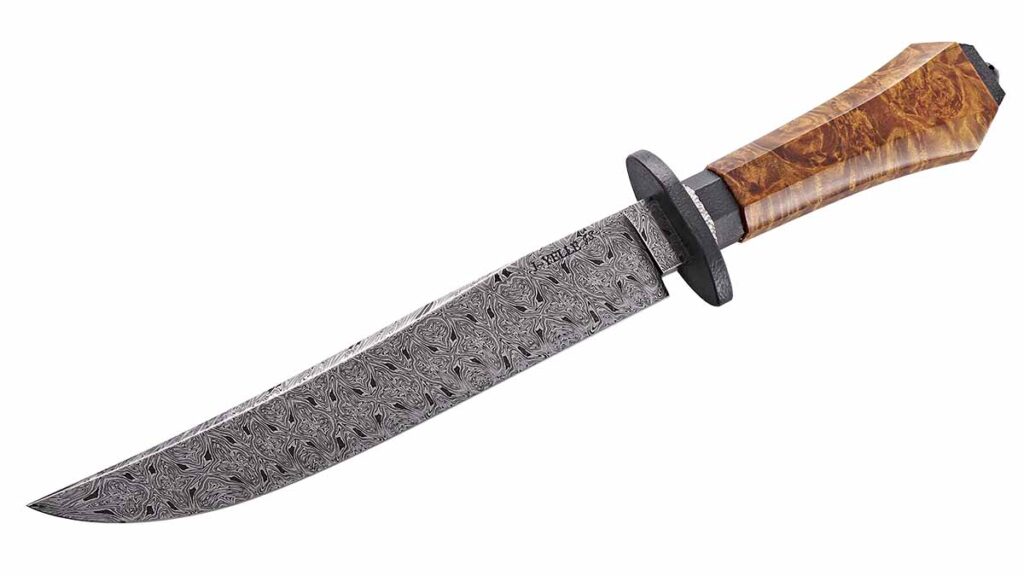
Crown stag and vintage Micarta® complete the handle of Adam Millé’s classic hunter. The bolster is copper. The 6-inch harpoon blade is W2 tool steel. Overall length: 11.25 inches. The handmade leather sheath (not shown) has python snakeskin inlay. (SharpByCoop image)


More On Custom Knives:

Spartan Poros: Sleek And Economic Flipper

Priced right and darkly attractive, the Spartan Poros offers a work-a-day option.

It’s been a big year for the folder end of Spartan Blade’s catalog. In June, the North Carolina manufacturer took home Manufacturing Quality accolades from the 2023 BLADE Show Knife of the Year awards. For the record, it was an artistically executed Harsey Folder that earned the company the honor. Now, the company has further expanded this end of its offerings with a wicked-looking flipper, home-cooked by one of Spartan’s founding fathers.

Shake hands with the Spartan Poros, a full-sized option with plenty of versatility baked into the package. The piece was designed by company co-founder Curtis Iovito, who has several standalone designs spotting the firm’s lineup, including Alala, Formido and Zelos, among others. The Poros appears to share a lot of the same lines and design points of auto Zelos, particularly in handle ergonomics. Though, the new knife has much more (pardon the pun) Spartan aesthetics than its predecessor, casting it into a much more work-a-day role.

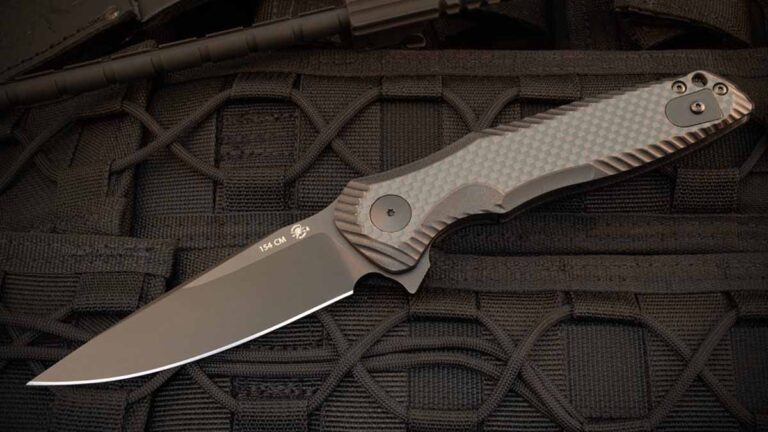
As to the tale of the tape, the drop-point knife sports a 3.75-inch blade that boasts an understated swedge running nearly its entire length. This adds a bit of character to the otherwise very liner overall blade design. Spartan uses 154CM stainless steel for the blade (58-60 HRC), applies a flat grind and finishes it with Black Titanium Nitride Coating (TiN) for added protection and dark good looks. The knife is a flipper-only affair, with a relative demure kicker that gets the blade into the action. IKBS bearings make it fast opening and give the knife a bit of snap when deploying.
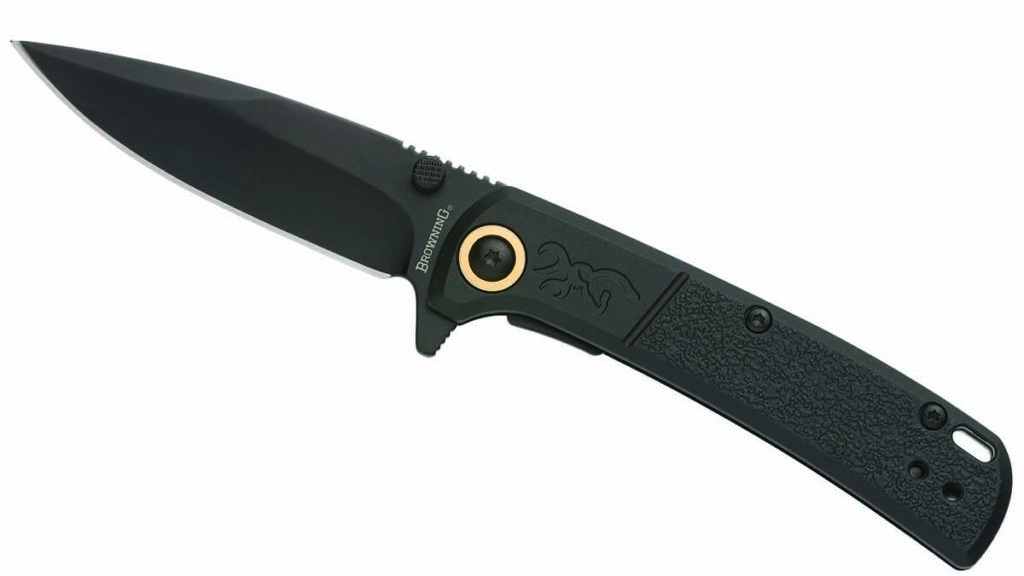
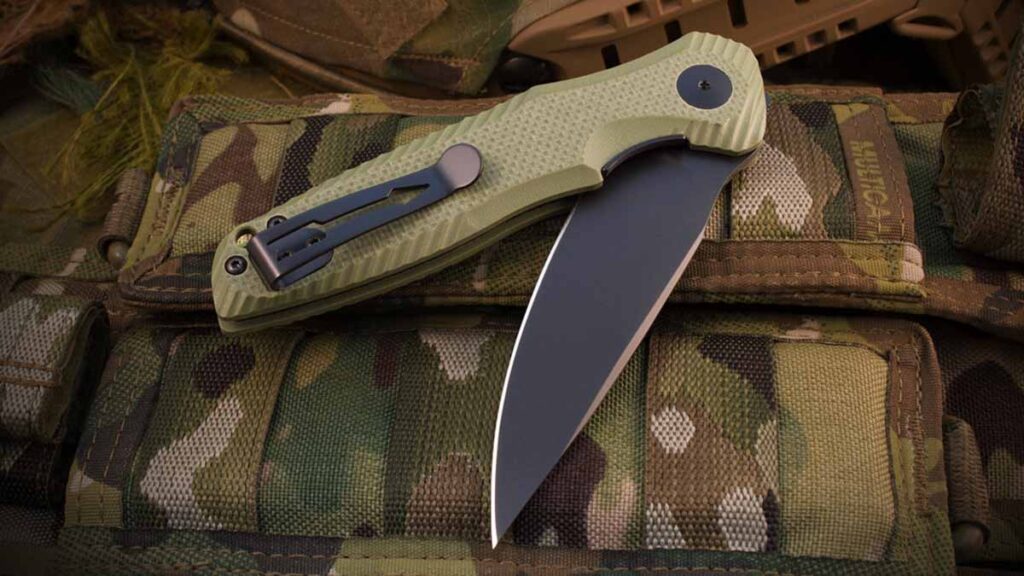
Spartan Poros OD Green G-10

Spartan offers a trio of handle options, each nicely complimenting the blade—black or OD green G-10 or black carbon fiber-G-10 composite. In both cases, the handle adds to the overall sleek looks of the Poros. The liner lock’s aggressively textures the scale but keeps comfort in mind significantly chamfering the edges of the handle so its fairly sharp design wouldn’t tend to bite or create hot spots. Spartan tops it off with a reversible loop over clip with its signature Spartan arrow. Note, the company supplies a steel tab to fill the recess opposite to the side the clip is installed to maintain the overall continuity of the handle.

At 5.4 ounces, the Poros certainly won’t weigh down its carrier. And classified as “Field Grade” by Spartan, the knife comes in at the lower end of the company’s price range. In this case, Spartan lists it at $180 for the G-10 models and $190 for the carbon fiber-G-10 composite model.
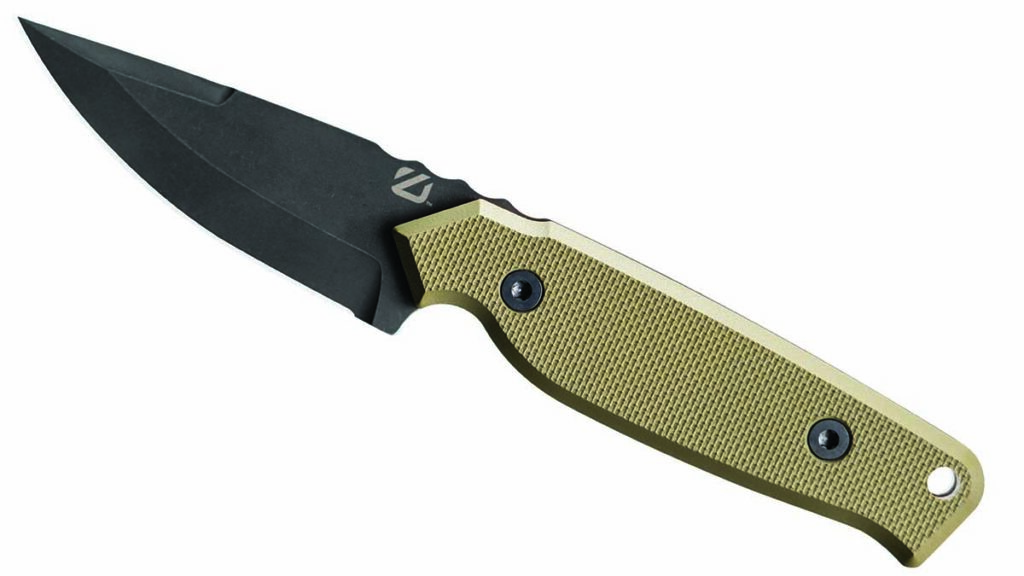
Spartan Poros Specs

Designer: Curtis Iovito
Blade Length: 3.75”
Blade Thickness: 0.125”
Overall Length: 9.0”
Blade Steel: 154CM Stainless Steel
Blade Hardness:  58-60 HRC
Blade Style: Folding-Drop Point-Flat ground
Blade Finish: Black Titanium Nitride Coating (TiN)
Frame: Liner lock with black or OG Gree G10 scales, black carbon fiber-G-10 composite scales
Weight: 0.330 LBS
MSRP: $180 G-10 scales; $190 carbon-fiber-G-10 scales

Read More On Folders:

ABS Auction: What Crossed The Block In Atlanta

Top custom makers from around the world showcase rarefied knives at the annual ABS auction.

Each year when the BLADE Show rolls into Atlanta, the American Bladesmith Society (ABS) holds its auction of selected knives forged by ABS master and journeyman smiths. Here is a gander at the knives that crossed the block at the exclusive auction! ABS master smith and instructor Brion Tomberlin serves as a director and secretary of the society, and he handles the ABS auction from start to finish.
“I choose the smiths, mainly from the recent journeyman and master smiths who have gotten their stamps that year,” he explained, “and I also ask other master smiths and journeyman smiths, basically whoever I can get to say yes! The proceeds go to the general fund of the ABS.”

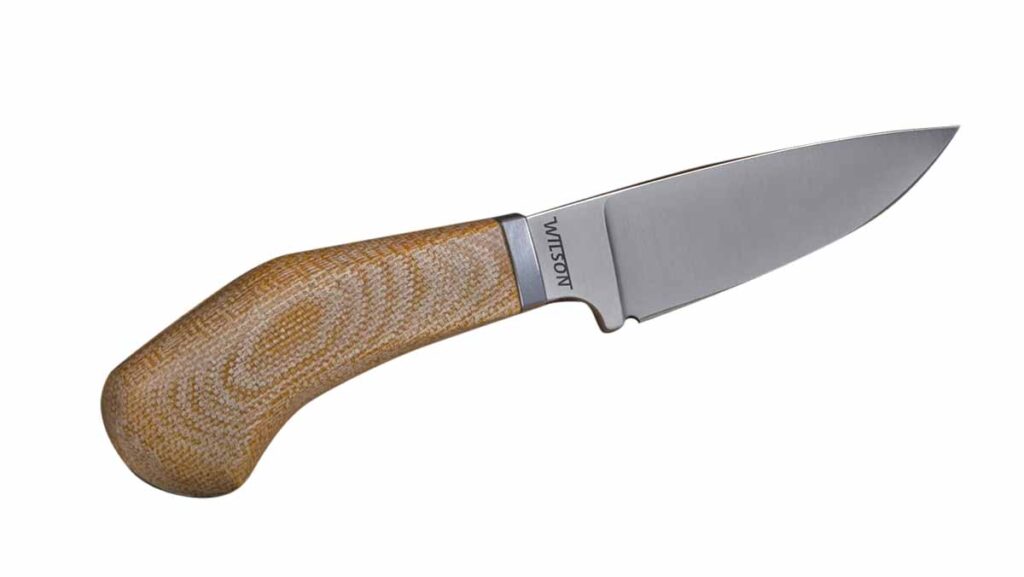
Support for the ongoing educational activities and programs of the ABS is vital to the health and future of the craft. Participants are honored to be involved and have their handiwork sold at auction by ABS director Robert Wilson. For years, Wilson has served as the event’s auctioneer, and Tomberlin said he likes to go with experience. For this year’s auction, several outstanding knives, both by American and international bladesmiths, will be available.

International ABS Journeyman Smith Knife—Jeremy Yelle: Gentleman’s Bowie

ABS Yelle Jeremy

Jeremy Yelle, a 22-year-old bladesmith from Sherbrooke, Quebec, Canada, is excited to be involved and to offer one of two international journeyman smith knife entries. “I truly love the ABS and what it does,” he said, “and I felt like giving it my first-ever journeyman smith piece was the honorable thing to do.

“I personally love the antique and classic look of older knives, which is why I chose to make a coffin-handle bowie. The handle is a coffin shape, which happens to be a partial takedown. It has several lineup pins, my textured and fire etched 416 stainless steel fittings and a 416 textured spacer.”

Jeremy has been making knives for about five years, and his mosaic damascus blade was inspired by the process he learned from ABS master smith David Lisch. The handle of Jeremy’s gentleman’s bowie is particularly noteworthy with Canadian maple burl from Maritime Knife Supply that he stabilized and dyed. The knife is completed by a protective case.

International ABS Journeyman Smith Knife
Maker: Jeremy Yelle
Knife name: Gentleman’s Bowie
Blade length: 8.625 inches
Blade material: Mosaic damascus of 15N20 nickel alloy and 1084 carbon steels
Handle material: Canadian maple burl
Overall length: 13.5 inches

International ABS Journeyman Smith Knife—Pablo Lanaspa: Bisaurin

ABS Ubeira Pablo Lanaspa

The second international journeyman smith knife entry is from Pablo Lanaspa Ubeira from the small town of Berdun in the north of Spain. “I am very grateful to the ABS for bringing me the opportunity to make this knife,” he said. “Special thanks to Brion for his kindness and ability to help in every circumstance.”

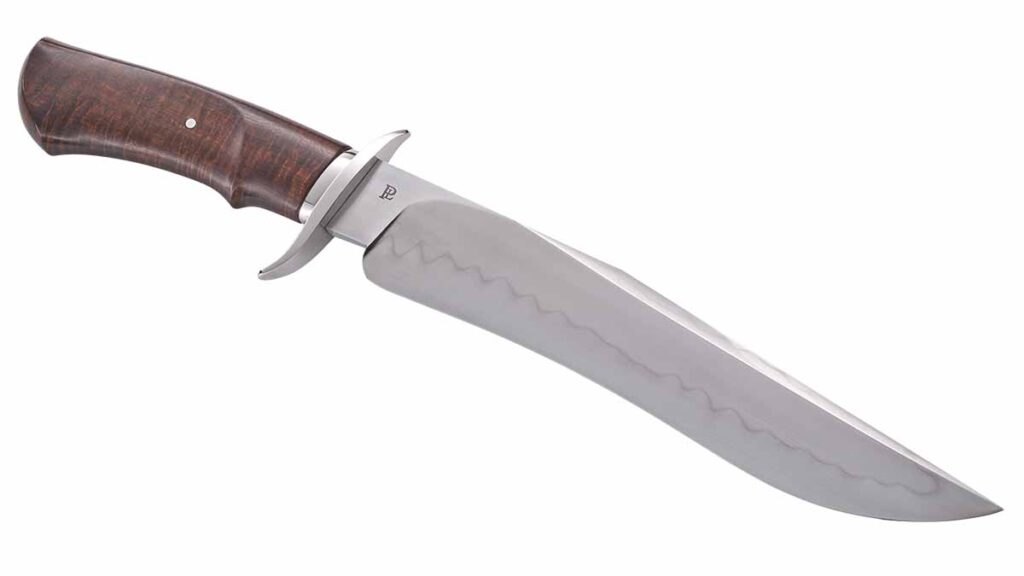
Ubeira has been making knives since 2008, and this piece, a bowie-inspired design, comes with a zippered case. “I was already a collector and then started to make my own blades from recycled steel when I made a rudimentary coal forge and a small belt grinder,” he said of his earlier days. His knife features a blade with a hamon that is clay differentiated and hardened. The blade is also slightly recurved with a full sharpened edge on the back, while the wood used for the handle, Australian ringed gidgee, is a gift from Belgian ABS master smith Sam Lurquin.

International ABS Journeyman Smith Knife
Maker: Pablo Lanaspa Ubeira
Knife name: Bisaurin
Blade length: 12 inches
Blade material: W2 steel with hamon
Handle material: Australian ringed gidgee wood
Overall length: 17 inches

U.S. ABS Journeyman Smith Knife—Joshua States: Stylized Quillon Dagger

ABS States Joshua

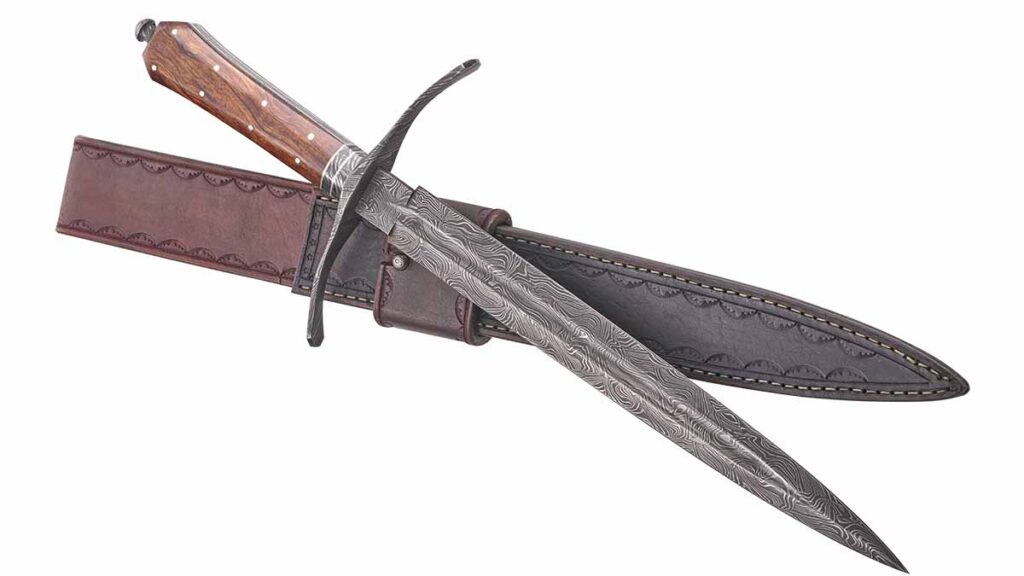
Can you think of a better name for a maker of a United States journeyman smith knife than Joshua States? Of New River, Arizona, Joshua fashioned his U.S. JS model as a stylized version of a quillon dagger. “The coffin-frame handle is a complex build, and the blade is flat ground on the bevels with a central fuller,” he explained. “I took my first class with Tim Hancock, and that was a game changer. Previous to that I had spent about a year trying to do things without any training or reference material.”

According to States, his JS knife was originally undertaken as a commission. “A customer had seen a similar dagger I had made in 2014 and wanted a copy of that knife,” he recalled. “Unfortunately, he passed away soon after I had made the blade, and I hadn’t started making any of the other parts. So, I was now free to redesign the handle/guard/finial.”

Joshua also made the leather sheath with minor decorative tooling and a multi-color dye job. The leather is 5/16-inch thick in a heavy oak tanned sole bend.

U.S. ABS Journeyman Smith Knife
Maker: Joshua States
Knife pattern: Stylized quillon dagger
Blade length: 11 inches
Blade material: Pattern-welded 1095 carbon and 15N20 nickel-alloy steels, and nickel
Handle material: Pattern-welded frame/desert ironwood scales
Overall length: 16.3 inches
Sheath: Hand-tooled-and-stitched leather

U.S. ABS Master Smith Folder—Bill Burke: Lanny’s Clip

ABS Burke

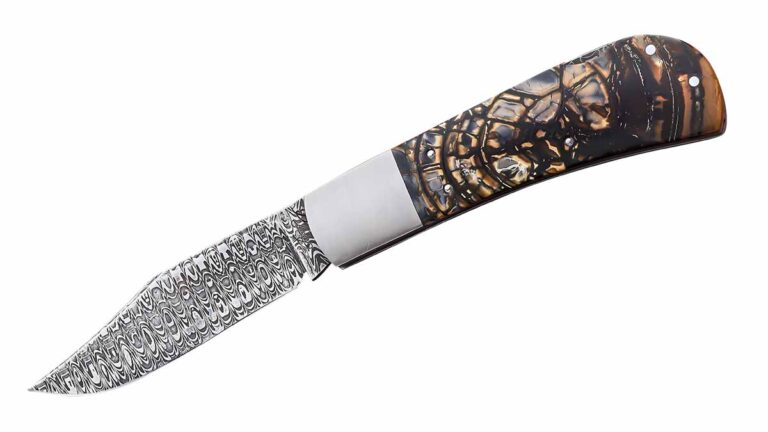
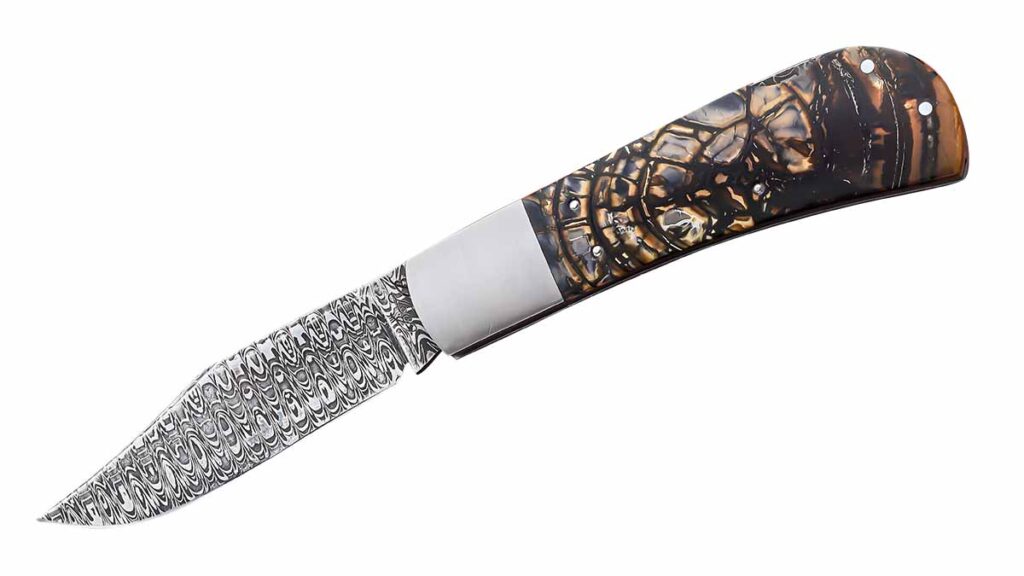
One of two U.S. master smith knives to be auctioned is a folder from Bill Burke of the Boise, Idaho, area. A custom knifemaker for 25 years, Bill pays homage to the late Tony Bose, BLADE Magazine Cutlery Hall-Of-Fame® slipjoint making wizard, with a Lanny’s Clip pocketknife in a shark’s tooth damascus blade and mammoth ivory scales. “A lockbar and spacer of damascus are included,” Bill said, “with integral liners and bolsters.” The liners are fileworked and the knife comes with a zippered case.

U.S. ABS Master Smith Folder
Maker: Bill Burke
Knife name: Lanny’s Clip
Blade length: 3.25 inches
Blade material: Shark’s tooth damascus of 15N20 nickel-alloy and 1080 carbon steels
Handle material: Mammoth ivory
Lock mechanism: Lockback
Closed length: 4.1875 inches

U.S. Master Smith Knife—Nick Rossi: Hybrid European Chef

ABS Rossi Nick

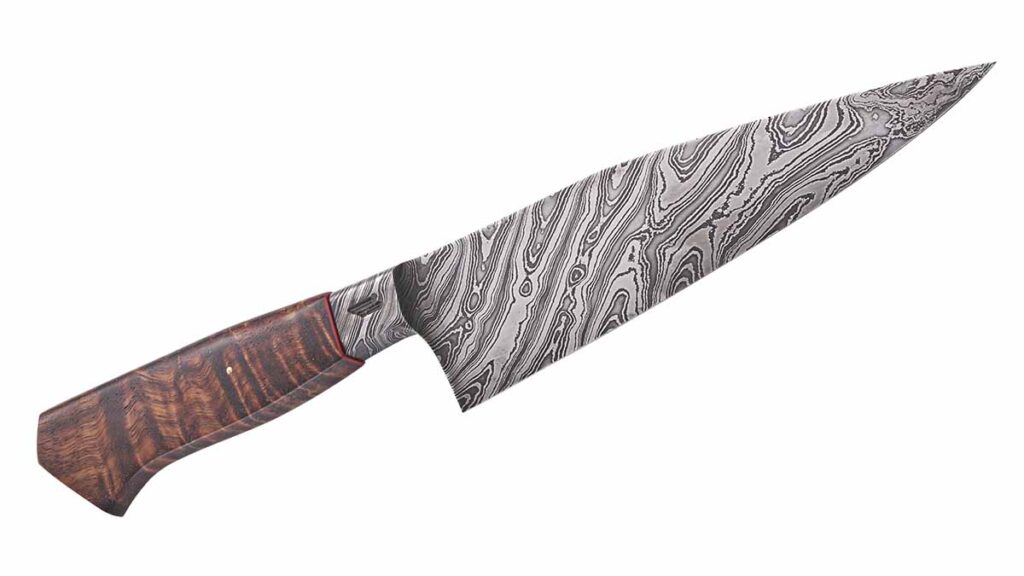
Nick Rossi of Vassalboro, Maine, contributed an integral European hybrid chef’s knife with a 50-layer twist damascus blade and curly koa handle as the second U.S. master smith knife. Both blade and handle are fashioned in the 25-year-veteran smith’s signature styles. The blade is flat ground with a subtle convex edge, and the handle features a bronze domed pin and a G-10 spacer. “This is my favorite type of knife to make,” he said. “It features an integral bolster, which makes it stronger and gives it better balance. It was inspired by European chef’s knives with a little Japanese flavor.” The knife comes complete with a padded case.

U.S. Master Smith Knife
Maker: Nick Rossi
Knife name: Hybrid European Chef
Blade length: 7.5 inches
Blade material: A twist damascus of 1084 carbon and 15N20 nickel-alloy steels
Handle material: Curly koa
Overall length: 12 inches

T.O.M.B. Knife—Steve Culver: Fighter

ABS Culver Steve

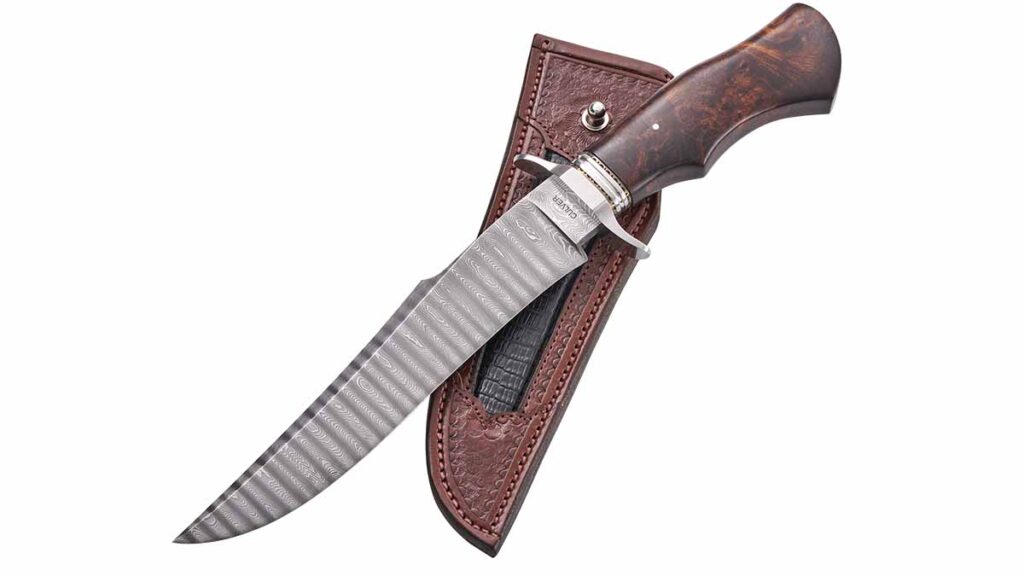
This year’s T.O.M.B. (The Order of the Mystic Brotherhood) Knife is by ABS master smith Steve Culver of Meriden, Kansas. Culver has been an active knifemaker for 36 years, and his fighter was inspired by “all the cool recurve bowies that I’ve seen others make.”

In fact, the knife is Steve’s first venture into the recurve blade style. The blade is 220-layer ladder-pattern damascus, while the handle is Arizona desert ironwood with guard and spacer materials of anodized titanium and stainless steel. Steve also made the lined sheath, which sports lizard skin inlay.

T.O.M.B. Knife
Maker: Steve Culver
Knife pattern: Fighter
Blade length: 8 inches
Blade material: Ladder-pattern damascus of 15N20 nickel-alloy and 1084 carbon steels
Handle material: Desert ironwood
Overall length: 13.125 inches
Sheath: Lined and features lizard-skin inlay

More On Custom Knives:

BLADE Show Factory Knife Debuts 2023

Eyeball a few factory knives that will debut at the BLADE Show.

For the knife event where more cutlery companies introduce more of their new knives, the BLADE Show takes a backseat to none—which figures since the BLADE Show is the sharpest shindig of them all.

On this and the accompanying pages are samples of some of the factory knives that either debuted at the BLADE Show or had their consumer show introductions there.*

We didn’t have room for all the debut knives of every exhibiting company, so do some legwork and you’ll probably find new/debut knives you like even better than these.

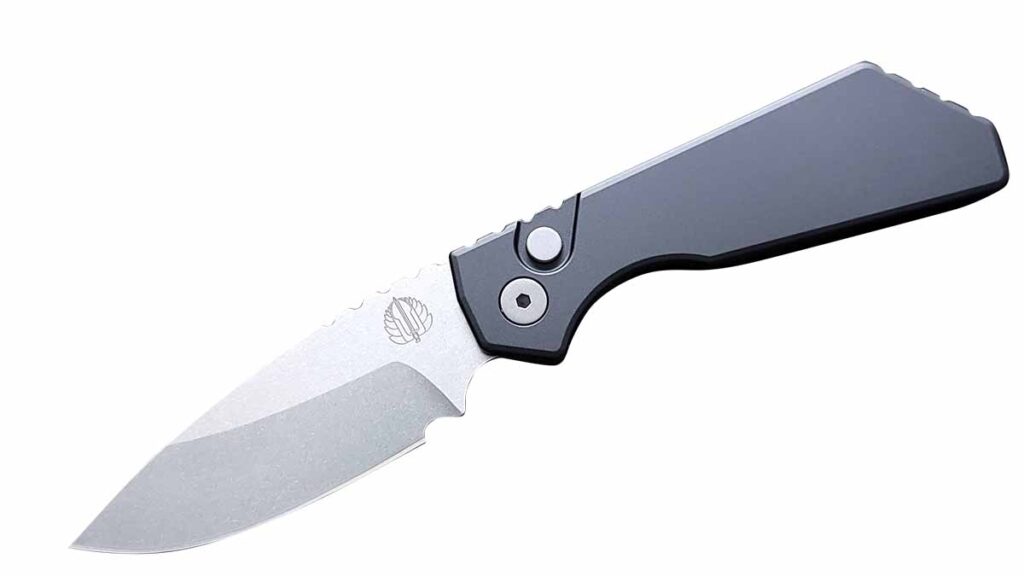
STRIDER PT+ AUTO/PRO-TECH

Strider

Knife type: EDC folder/automatic 
Blade length: 3.14”
Blade material: MAGNACUT stainless steel
Blade grind: Flat
Handle material: Lightweight anodized aluminum
Lock/opening mechanism: Push-button auto 
Pocket clip: DLC-coated mini deep carry
Special Features: Strider’s signature design and compact form have been updated to a slightly larger size; the spring has been upgraded to snap the blade open with authority
Weight: 3.21 ozs.
Closed length: 3.96”
Country of origin: USA
MSRP: $300
AVAILABLE FOR SALE TO THE PUBLIC: NOW; through the year additional colors and variations will be available (image by Derek Lawrence)

SHADOW/KETUO

Ketug

Knife type: Flipper folder
Blade length: 3.78”
Blade material: Bohler M390 stainless steel
Blade grind: Flat
Handle material: 6Al4V titanium
Lock mechanism: Flipper Lock
Pocket clip: 6Al4V titanium
Weight: 5.29 ozs.
Closed length: 4.96’”
Country of origin: China
MSRP: $380-$420
AVAILABLE FOR SALE TO THE PUBLIC: June

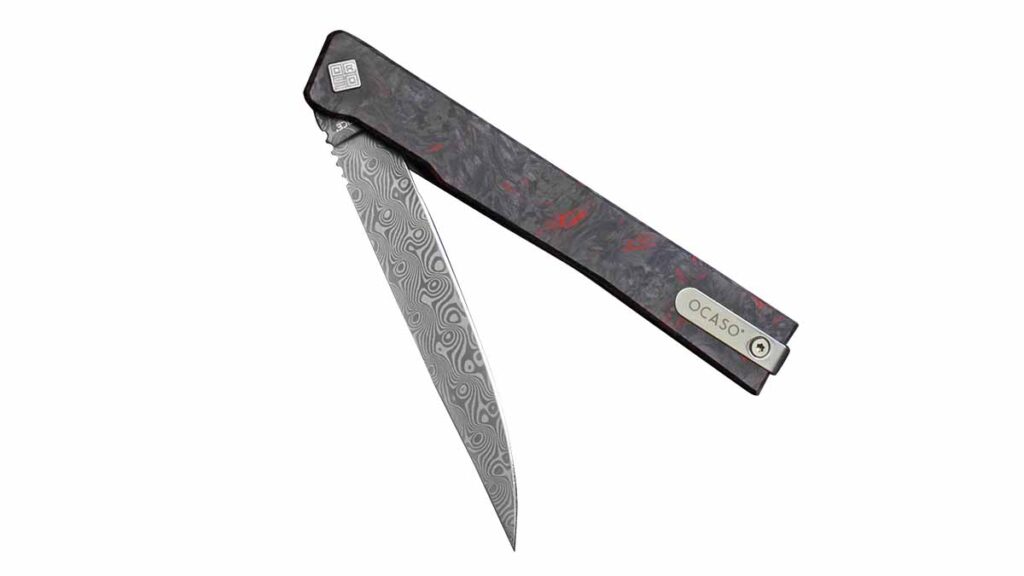
GENTLEMAN’S FOLDER/OCASO

Ocaso

Knife pattern: Gentleman’s folder
Designer: Andrew Demko
Blade length: 3.5”
Blade material: Choice of CPM S35VN stainless steel or German damascus
Blade grind: Full flat
Handle material: Carbon fiber, titanium or fat carbon
Lock/opening mechanism: Flipper w/linerlock or framelock
Pocket clip: Ambidextrous stainless steel in a Demko signature fold-over deep-carry design
Action: Stainless-steel caged bearings
Weight: 1.7 ozs. (carbon fiber) or 2.5 ozs. (titanium)
Closed length: 4.26”
Country of origin: Taiwan or Italy
MSRP: $209.99-$399.99
AVAILABLE FOR SALE TO THE PUBLIC: NOW

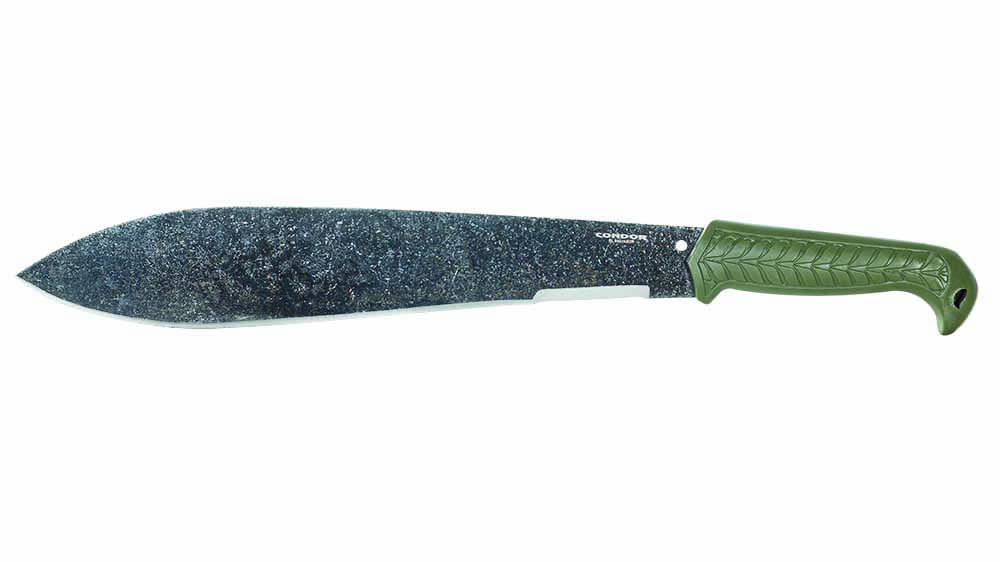
TERRACHETTE/CONDOR TOOL & KNIFE

Condor

Knife type: Bushcraft machete
Blade length: 14.6”
Blade material: 1075 carbon steel
Blade grind: Convex
Handle material: High/impact polypropylene
Special features: Near the handle the edge is designed for more controlled carving; extended pommel
Weight: 25.4 ozs.
Overall length: 20.72”
Country of origin: El Salvador
MSRP: $69.69
AVAILABLE FOR SALE TO THE PUBLIC: Most everywhere by BLADE Show

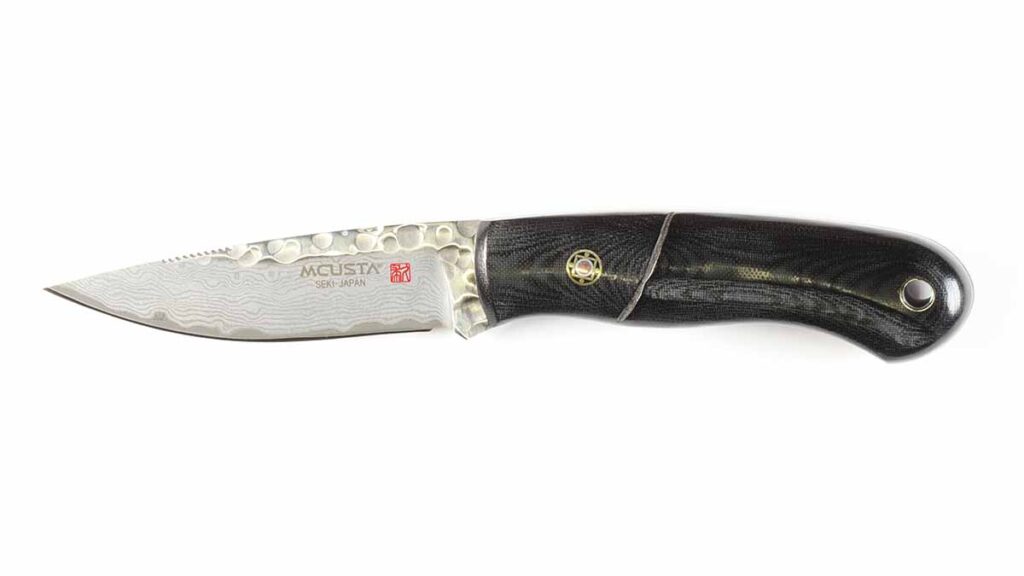
RIE COLLABORATION SPORT 100/MCUSTA

Mcusta

Designer: Mike Irie
Knife pattern: Hunter
Blade length: 3”
Blade material: VG-10-core damascus
Blade grind: Hollow
Handle material: Micarta®
Special features: Tsuchime-finished blade
Weight: 3.4 ozs.
Overall length: 6.5”
Country of origin: Japan
MSRP: $300
Available for sale to the public: Summer ’23

WILLY/LIONSTEEL

Willy

Model type: Fixed-blade EDC
Blade length: 2.55”
Blade material: M390 stainless steel
Blade grind: V flat
Handle material: Choice of canvas Micarta®, woods, carbon fiber
Special features: Titanium guard
Weight: 2.04 ozs.
Country of origin: Italy
MSRP: $201.70 (at press time rate of exchange)
Available for sale to the public: June

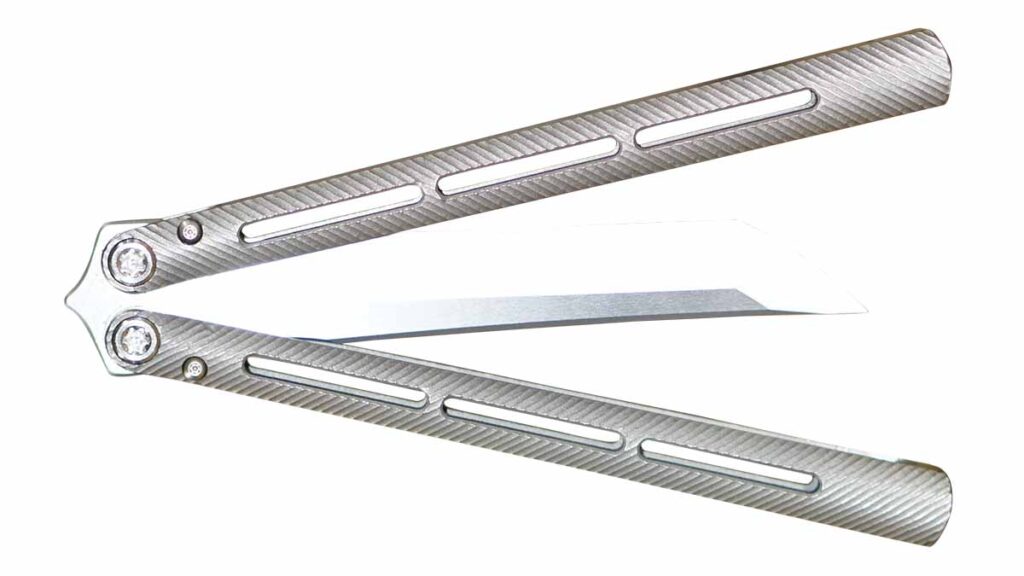
VICEROY/MEDFORD KNIFE & TOOL

Viceroy

Knife pattern: Balisong          
Blade length: 4.5”
Blade material: CPM S45VN stainless steel
Blade patterns:  Choice of drop point, tanto, dagger, seax and wharncliffe
Handle material: Titanium
Handle lock: Latchless
Pocket clip: None
Special features: Integral solid channel, zen pin, custom bushings, rounded handles, Chaplin groove, machined handle texture, hand-ground blades
Weight: 4.3 ozs.
Closed length: 5.7”
Country of origin: USA
MSRP: $750
AVAILABLE FOR SALE TO THE PUBLIC: At BLADE Show ’23

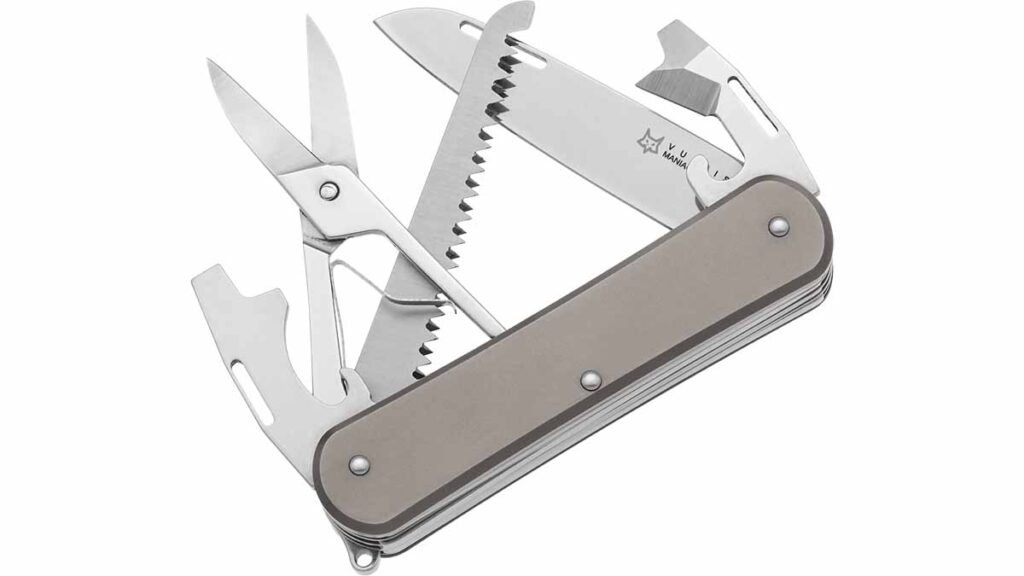
VULPIS/FOX

Fox

Model type: Multi-purpose multi-blade
Main blade length: 5.31”
Blade material: M390 stainless steel
Blade grind: Flat
Handle material: Bead-blasted titanium w/lanyard hole
Lock/opening mechanism: Slip joint
Special features: Bottle opener, can opener, flat-head screwdriver, hacksaw and scissors
Weight: 2.25 ozs.
Closed length: 2.94”
Country of origin: Italy
MSRP: $119
AVAILABLE FOR SALE TO THE PUBLIC: May

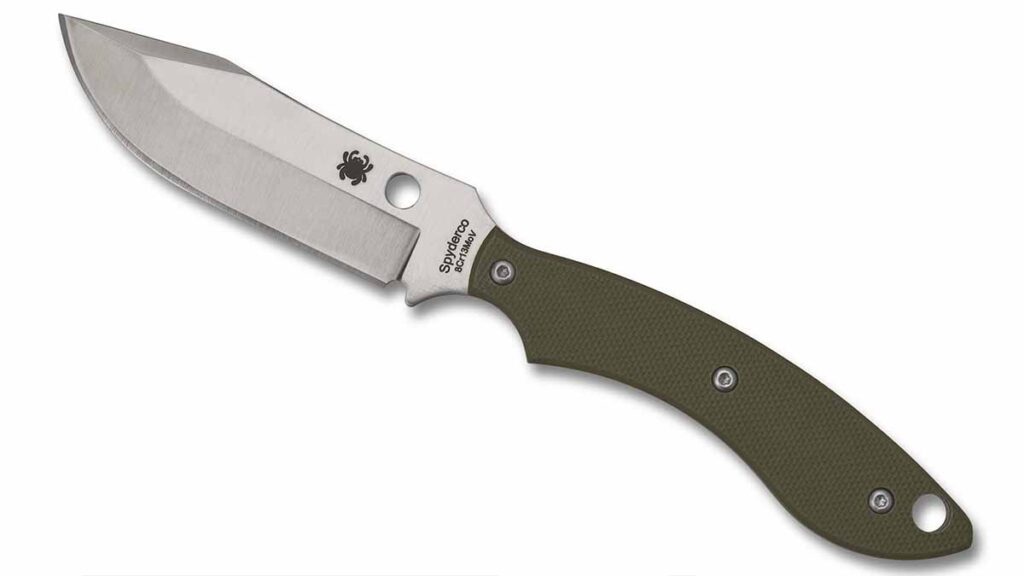
STOK BOWIE/SPYDERCO

Spyderco

Model type: Fixed blade
Blade length: 2.95”
Blade material: 8Cr13MoV stainless steel
Blade grind: Saber
Handle material: OD green G-10
Knife to know: Designed as an urban EDC fixed blade
Weight: 2.1 ozs.
Overall length: 6.45”
Sheath: Boltaron® w/G-Clip™ attachment for adjustable belt and inside-the-waistband carry
Country of origin: China
MSRP: $100.
AVAILABLE FOR SALE TO THE PUBLIC: NOW

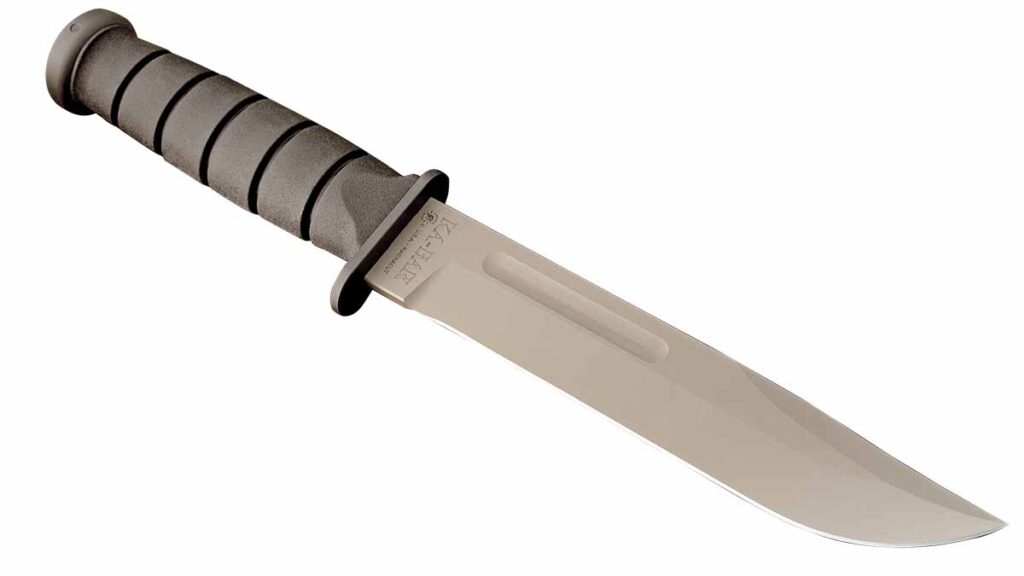
SPARTAN-KA-BAR/SPARTAN BLADES

Kabar

Designer: KA-BAR Knives
Overall length: 12”
Blade length: 7”
Blade at thickest: .165”
Blade material: CPM MagnaCut stainless
Rockwell hardness: 60-62 HRC
Blade pattern: Clip point
Blade grind: Flat saber
Blade finish: Choice of PVD-tungsten DLC (flat black) or ZrN (flat dark earth)
Handle Material: Kraton G®
Buttcap/guard: 301 stainless steel w/PVD-tungsten DLC (flat black) coat
Weight: 10.78 ozs.
Sheath: Leather
Country of origin: USA
MSRP: Starts at $325
Available for sale to the public: NOW

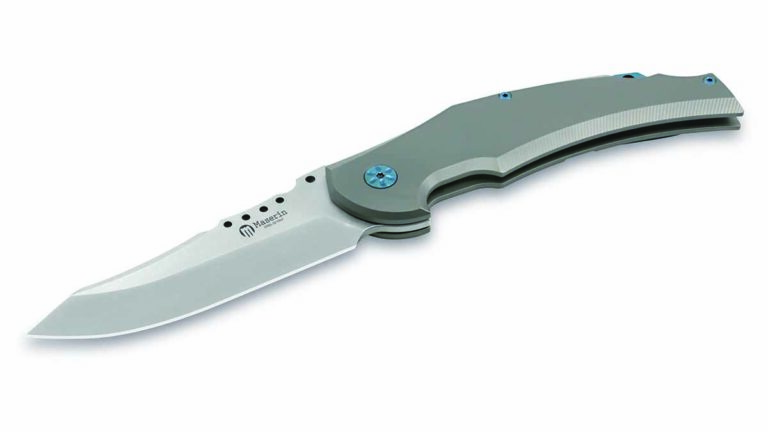
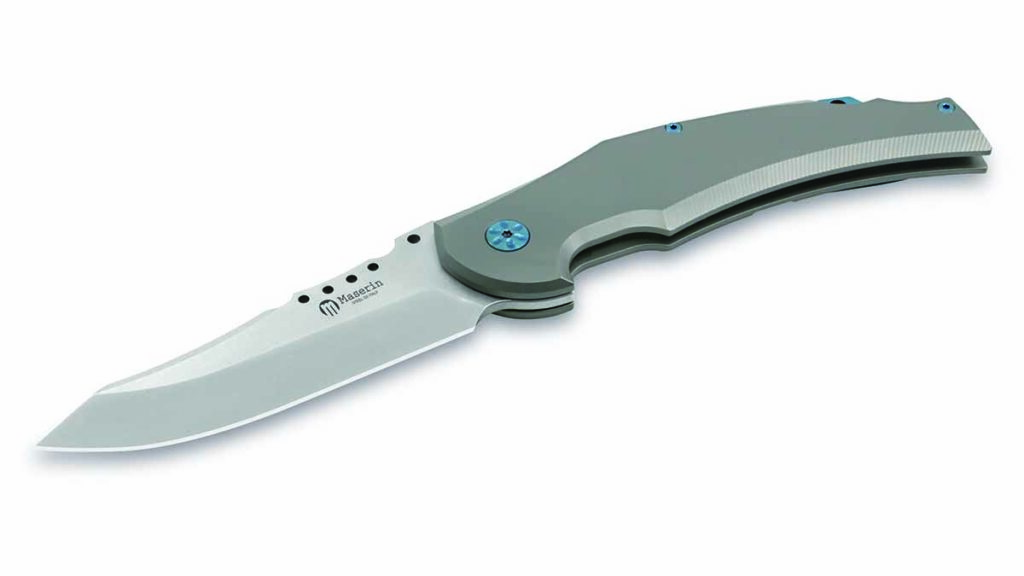
ENERGY/MASERIN

Masrin

Model type: EDC flipper folder
Blade length: 4.133”
Blade material: D2 tool steel
Blade grind: Flat
Handle material: Titanium
Pocket clip: Titanium
Weight: 5.926 ozs.
Closed length: 5.23”
Country of origin: Italy
MSRP: $328
Available for sale to the public: May

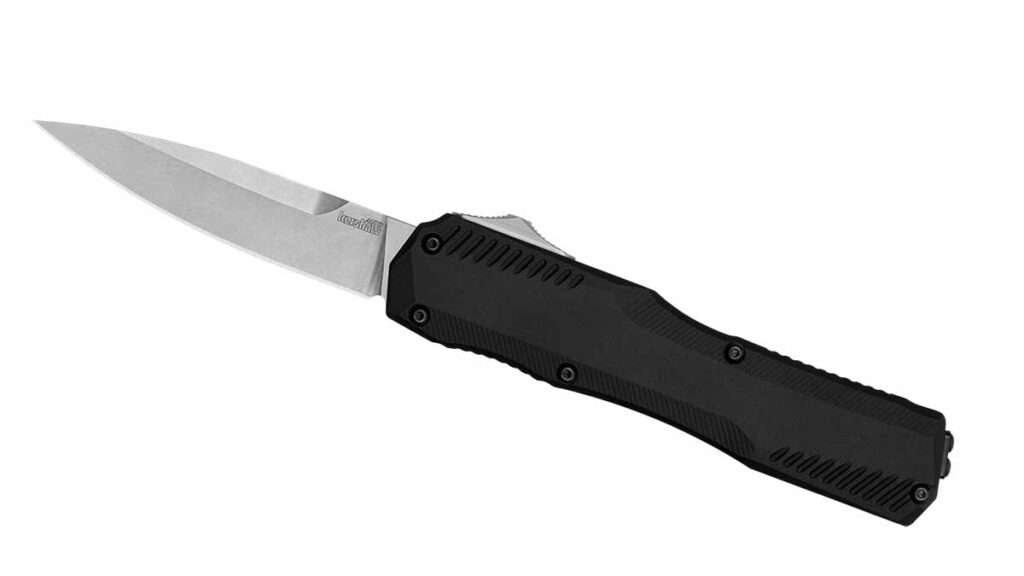
LIVEWIRE/KERSHAW

Kershaw

Model type: Out-the-front auto
Blade length: 3.3”
Blade material: CPM 20CV stainless steel
Blade grind: Flat
Handle material: Aluminum
Pocket clip: Reversible deep-carry, steel
Special features: Lightweight button
Weight: 3 ozs.
Closed length: 4.8”
Country of origin: USA
MSRP: $380
AVAILABLE FOR SALE TO THE PUBLIC: NOW

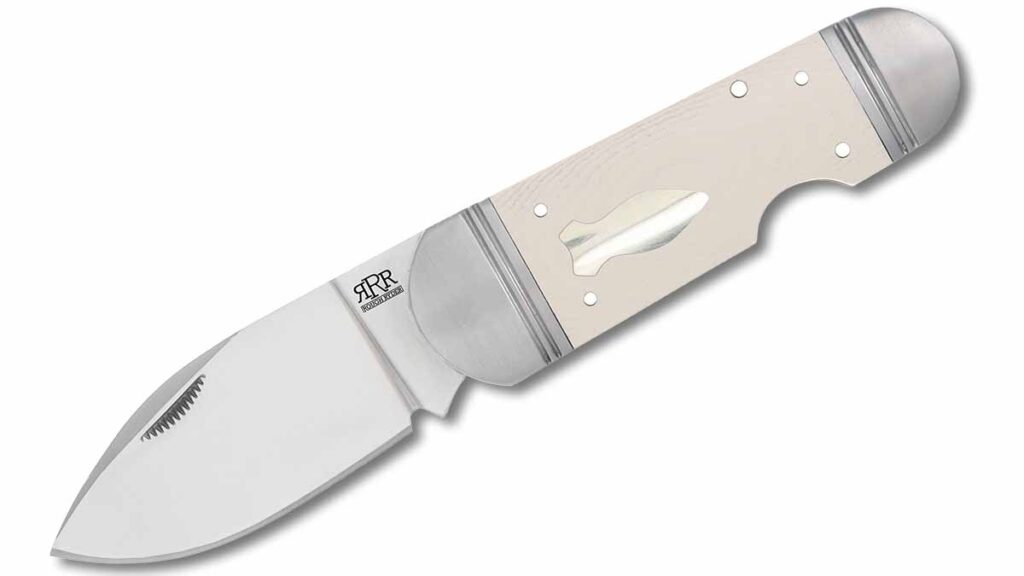
GHOSTFISH/ROUGH RYDER RESERVE

Rough Ryder

Designer: Brian Wilhoite
Model type: EZ-Open sunfish
Blade length: 2 7/8”
Blade material: D2 tool steel
Handle material: White Micarta®
Lock/opening mechanism: Slip joint w/half stop
Weight: 5.5 ozs.
Closed length: 3 7/8”
Country of origin: China
MSRP: $84.95
AVAILABLE FOR SALE TO THE PUBLIC: Late fall

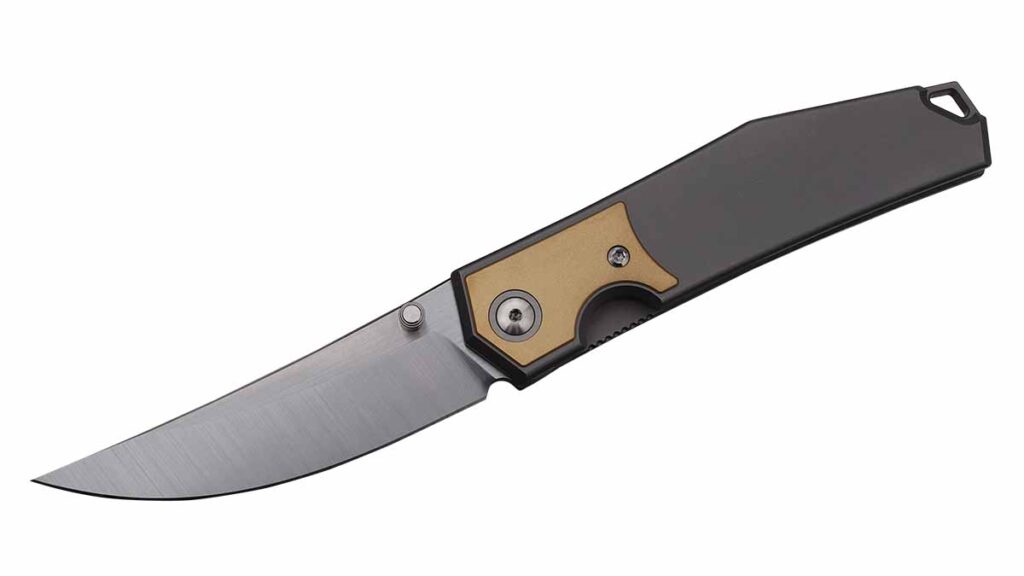
GMX/GIANTMOUSE

GiantMouse

Model type: EDC /outdoor folder
Blade length: 3.25”
Blade material: CPM S90V stainless steel
Blade grind: High flat saber
Handle material: Titanium w/brass inlaid bolster
Lock: Framelock
Pocket clip: 3D-machined titanium
Special features: Integral titanium handle
Weight: 3.8 ozs.
Closed length: 4.3”
Country of origin: China; manufactured by Reate
MSRP: $445
AVAILABLE FOR SALE TO THE PUBLIC: NOW

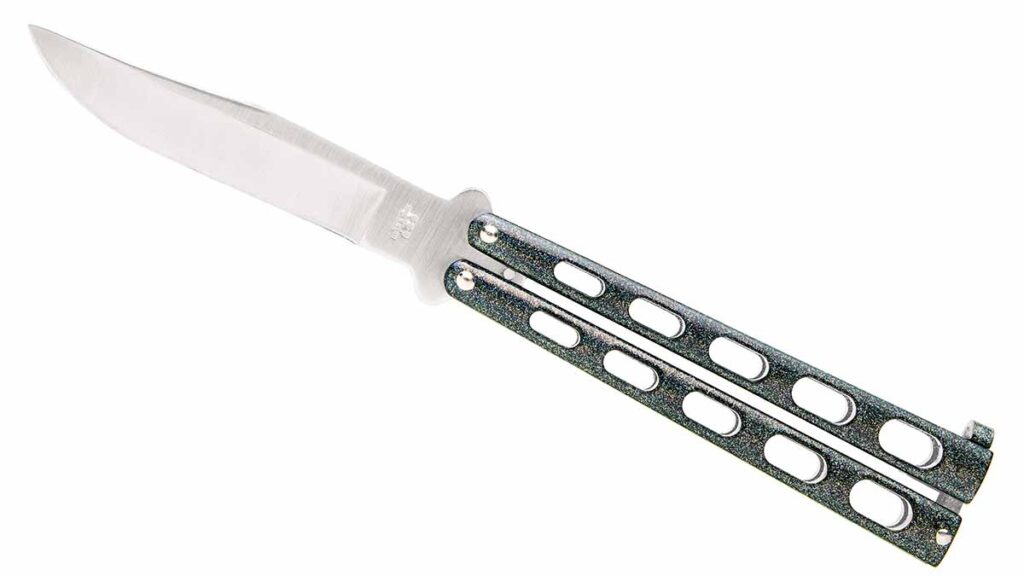
5” GALAXY BUTTERFLY/BEAR & SON

Bear and Sons

Model type: EDC balisong
Blade length: 3 5/8”
Blade material: 440 stainless steel
Blade grind: Hollow
Handle material: Zinc w/Galaxy finish
Lock: Latch
Weight: 5 ozs.
Closed length: 5”
Country of origin: USA
MSRP: $68.99
AVAILABLE FOR SALE TO THE PUBLIC: NOW

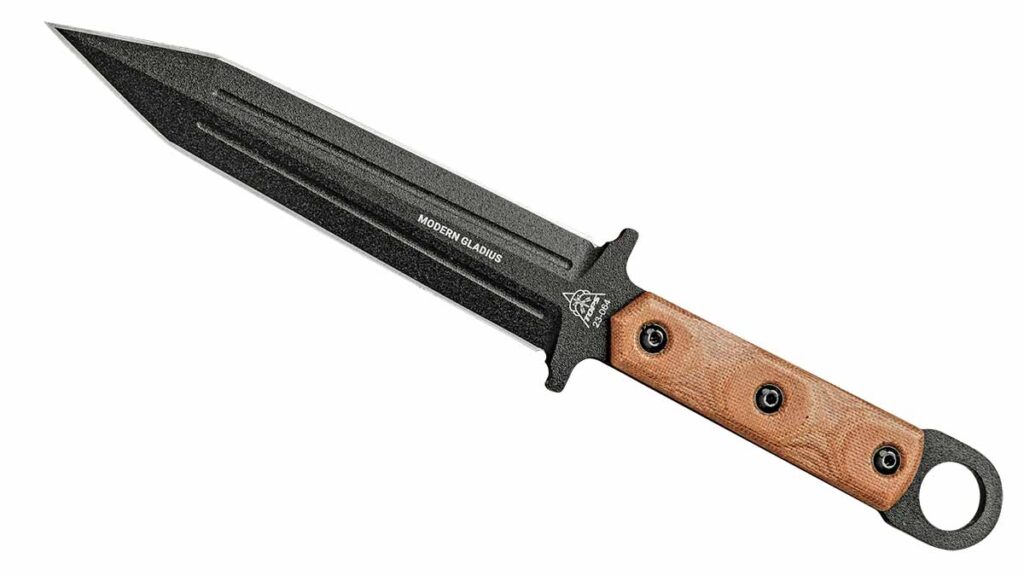
MODERN GLADIUS/TOPS KNIVES

Tops Gladus

Knife type: Tactical  
Blade length: 6.5”
Blade material: 1095 high carbon steel
Blade grind: Dagger/flat
Handle material: Tan canvas Micarta®
Knife to know: Blade has a double edge
Weight: 8.3 ozs.
Overall length: 11.5”
Country of origin: USA
MSRP: TBD
AVAILABLE FOR SALE TO THE PUBLIC: TBD

YUUKI/LATAMA x VICTORIAM

Yuuki

Model type: EDC flipper folder
Blade length: 3.5”
Blade material: CPM 20CV stainless steel
Blade grind: Kissaki-unokubi-zukuri compound; hollow belly and convex tip
Handle material: Grade 5 titanium
Lock: Button lock
Pocket clip: Titanium
Weight: 4.59 ozs.
Closed length: 4 5/8”
Country of origin: China
MSRP: $200 (estimated)
Available for sale to the public: May

BUCKMARK SLIM/BROWNING

Buckmaster

Knife type: Flipper folder
Blade length: 2.75”
Blade material: D2 tool steel
Rockwell hardness: 56-60 HRC
Blade pattern: Drop point
Opening mechanism: Assisted
Pivot action: Ball bearings
Handle: Polymer
Bolster: Stainless steel
Pocket clip: Adjustable
Lock: Linerlock
Closed length: 3.75”
Country of origin: China
MSRP: $29.99
Available for sale to the public: NOW

LULBEGRUD/OUTLIER

Outlier

Designer: Craig Caudill 
Category: EDC/outdoors/self-defense
Blade Length: 3.68”
Blade material: 52100 carbon steel
Blade at thickest: 1/8”
Blade finish: Parkerized and tumbled
Blade pattern: Drop point
Blade grind: Flat
Edge sharpening angle: 18 degrees
Handle: Coarse-textured, layered G-10
Weight: 6.84 ozs.
Sheath: .08”-thick thermoplastic 
Overall length: 8.62”
Sheathed weight: 8.26 ozs.
Country of origin: USA
MSRP: Approximately $200
AVAILABLE FOR SALE TO THE PUBLIC: At BLADE Show ’23

*Some of the knives shown for the first time at the show won’t be available for sale to the general public until later in the year. Check each individual knife’s spec box for details.

Check Out More Buyer’s Guides:

Best Clip-Point Knife: Picking The Sharpest Of This Classic Profile

Clip-point blades are one of the most common profiles you will see throughout custom and production knives. You likely know the style, the familiar drop-off of the blade spine to a curved or linear transition that terminates at the blade tip.

The earliest noted clip-point blade style dates back to the Macedonian era. Flint-knapped stone blades in a clip-point shape were discovered from this time period. Today, clip points are found across a lot of knife genres from tactical to EDC to pocket knives to fixed blades.

Pros Of Clip Points

Due to its highly streamlined and optimized blade tip, the clip point has excellent puncturing capabilities. There is more of a true point that helps to penetrate thicker materials with ease. It is more aerodynamic than a drop point and even a spear point. Think of an arrowhead and how it penetrates, and you will get the idea. Clip points are also favored among the tactical crowd because of this characteristic.

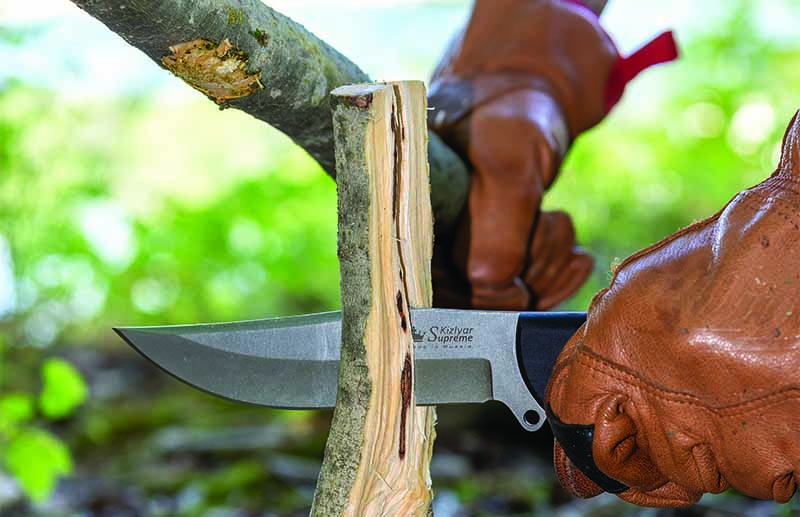
The 5.4-inch clip-point blade of the Kizlyar Supreme Caspian provides plenty of sharpened real estate to process camp tasks. Overall length: 10 inches.

The defined point also makes great scoring cuts because placing pressure on the blade tip results in the tip cutting through aggressively on the first cut. So, this blade shape is also one that is favored among those who use their knives for the trades, where having a good knife is imperative to the work at hand.

Cons Of The Clip Point

Conversely, the blade tip being tapered also results in a blade design that has a weaker tip. You cannot have everything, I guess! With a smaller clip-point blade like those found on pocket knives, refrain from any sort of prying with the tip because it will bend or break off entirely.

Clip-Point Styles

It’s interesting to note that there are different variants of the clip point blade. Two of the most recognizable are the California clip point and Turkish clip point.

California: Exhibits a long taper, which originates almost to the blade tang and gradually and progressively tapers down to the blade tip.

Turkish: It has a long taper as well (but not as dramatic as the California style) but also incorporates a little bit of a blade belly as well. The Turkish clip looks very stylish and eye-catching when done right.

You’ll see other variants like a saber ground clip point with a pronounced swedge, and even some fixed fighters with sharpened clip sections for added bite and powerful penetration.

Jack-Of-All-Trades

For general-purpose use, nothing beats a clip point for its versatility. You cannot go wrong by selecting a knife with this blade shape. Chances are high that if you are reading this, you already own a few knives that have a clip-point shape. If you don’t have any yet, here’s a rundown of 10 clip point blades knives that you should be on the lookout for and add one (or more) to your collection.

Among The Best Clip-Point Fixed Blade Knives Available Now

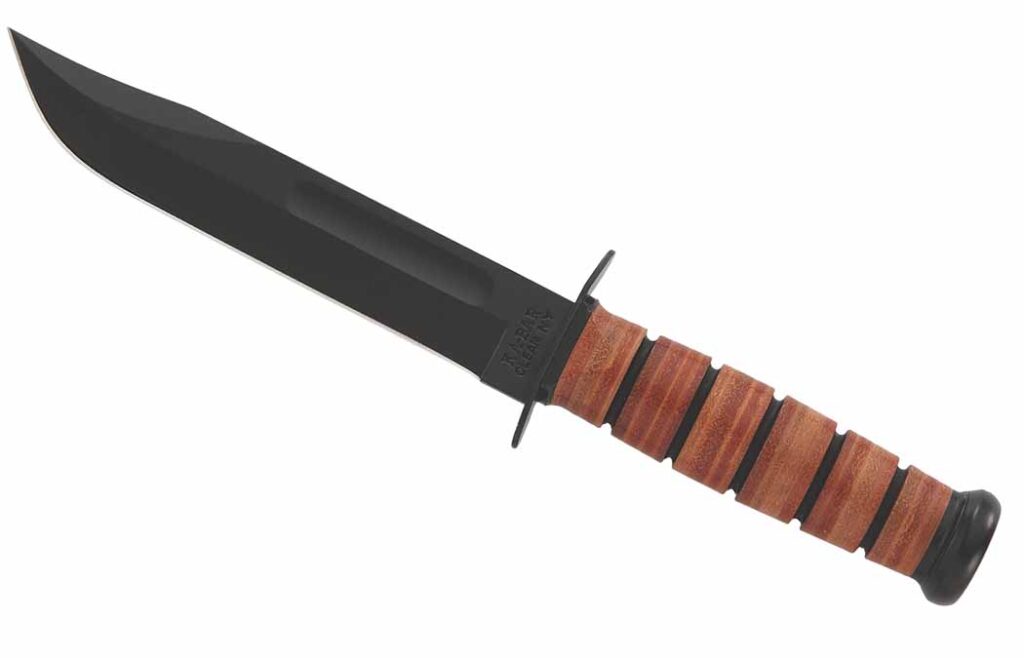
Kabar USMC Fighting Knife

Kabar USMC Fighting Knife

This iconic fixed blade has seen action on battlefields the world over. This knife first saw action during WWII and it still is going to this day.

The 7-inch long blade is made from 1095 carbon steel, making it easy to maintain in the field. It’s fuller adds style and strength to the blade. The iconic stacked leather washer handle is both handsome as well as very practical with its deep grooves that enhance grip and the flat metal pommel which is useful for light hammering and crushing tasks. The double guard prevents your hand from sliding up on the blade. As a bonus, each USMC Fighting Knife comes with a leather sheath.

MSRP: $135 Origin: USA

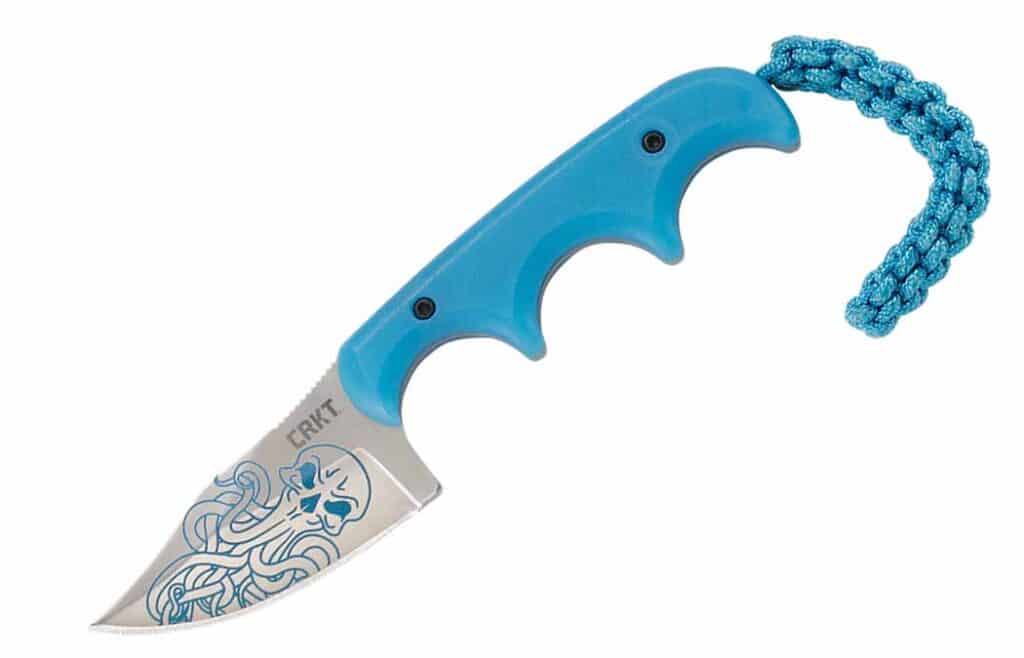
CRKT Minimalist Bowie

CRKT Minimalist Bowie

Designed by custom knifemaker Alan Folts, the Minimalist Bowie is one of Folts’ best-selling custom knives. It is available to the masses in the form of the CRKT version which sports a 2.1-inch long Bowie-style clip-point blade, made from 5Cr15MoV stainless steel.

Its prominent swedge adds style with function, permitting the blade easily penetrate most materials. The deep finger grooved handle has resin-infused fiber scales for light weight and strength. The entire knife is super comfortable to hold and it feels like the knife melts in your hand and remains very secure.
It’s a small fixed blade without the bulk.

MSRP: $45 Origin: China

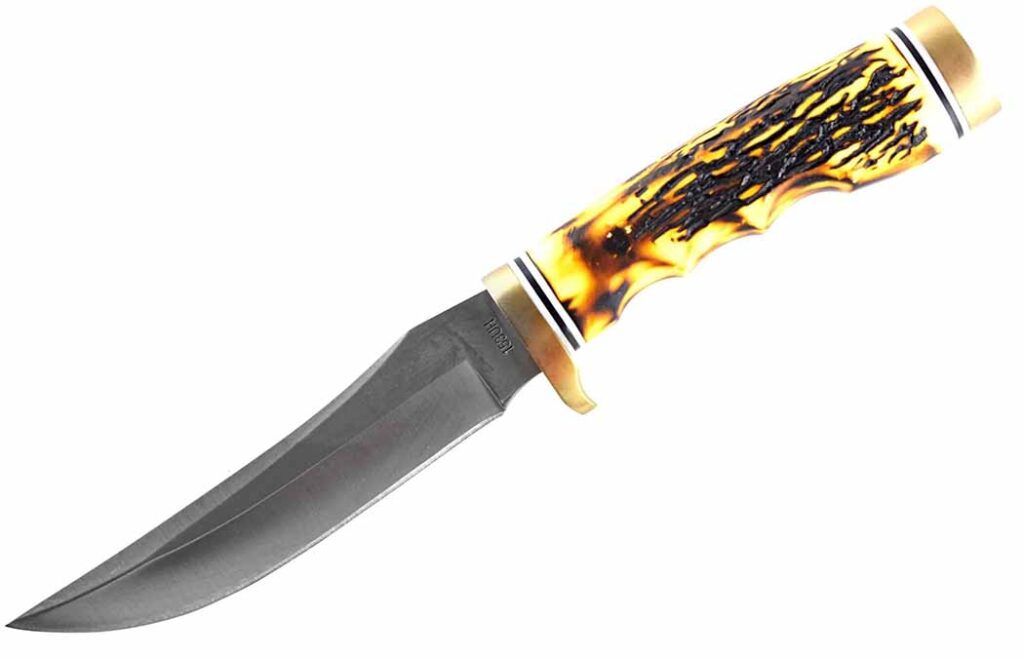
Schrade Uncle Henry Golden Spike

Schrade Uncle Henry Golden Spike

This one is an older design still manufactured today.

Its 5-inch 7Cr17MoV stainless steel clip point blade is a good example of what we call a California clip point, with its long taper to the blade tip. The handle is faux stag in Delrin, with finger grooves for security and control.

It is capped off at both ends with a brass guard and pommel to offset the overall appearance. This knife will fit the fill of an outdoor knife perfectly and not blow the budget. Each Golden Spike comes shipped with a leather sheath for easy portability.

MSRP: $46 Origin: China.

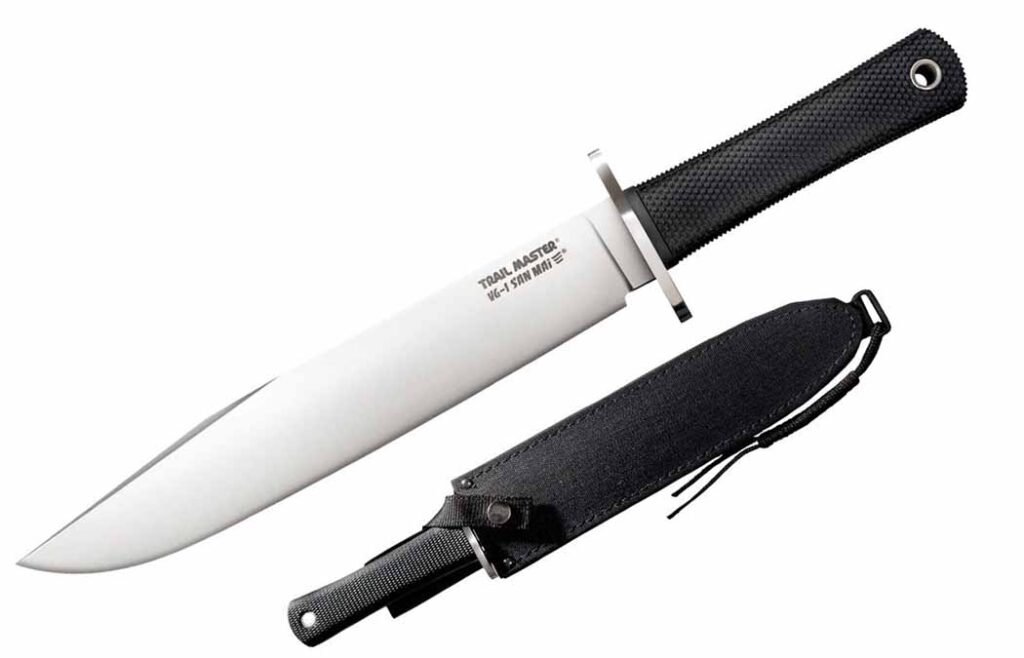
Cold Steel Trailmaster Bowie

Cold Steel Trailmaster Bowie Clip-Point Knife

This knife commands attention with its sheer size and heavy-duty build.

The Trailmaster Bowie is one of Cold Steel’s most recognizable fixed blades. The impressive 9 ½ inch long clip point blade is made of CPM 3V tool steel for toughness and edge holding. The unsharpened swedge gives the knife its attitude, and a full flat grind allows the Trailmaster to be an effective slicer and chopper as well.

The textured Kray-Ex rubber handle helps the Trailmaster remain in your grip and a double guard up front keeps your hand in place during use. The Trailmaster is adept at chopping and other hard-use outdoor tasks for the campsite.

It is the knife to have with you and instills user confidence when tackling tough cutting and chopping chores.

MSRP: $540 Origin: Taiwan

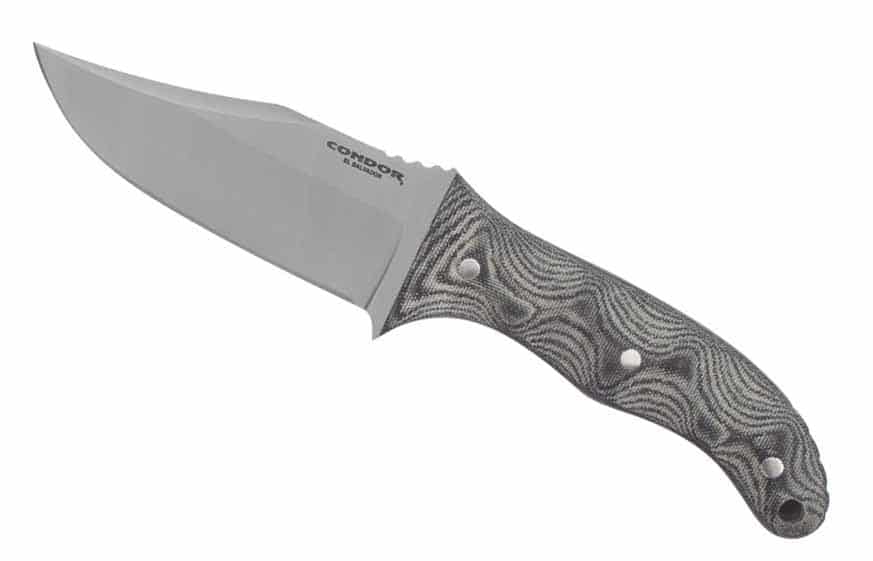
Condor Tool & Knife Little Bowie

Condor Tool & Knife Little Bowie Clip-Point Knife

Little knife…big attitude! That’s exactly what you get with the Condor Tool & Knife Little Bowie.

The 4.6-inch long blade makes it compact enough to carry comfortably on the belt. Overall length is just over 9.5 inches, making this knife about as long as some of the higher-end tactical folders when open. 1075 carbon steel was selected for the blade, making this knife both tough and easy to maintain. The bead-blasted finish adds a subdued finish for low reflectivity.

The ergonomic-shaped handle has black Micarta scales for a comfortable, all-weather grip. If you like Bowie fixed blades but don’t want to carry a full-size Bowie on the belt, the Condor Little Bowie fits the bill nicely. Each knife is shipped with a sewn leather belt sheath to keep the knife close at hand.

MSRP: $123 Origin: El Salvador.

Among The Best Clip-Point Folders Available Now

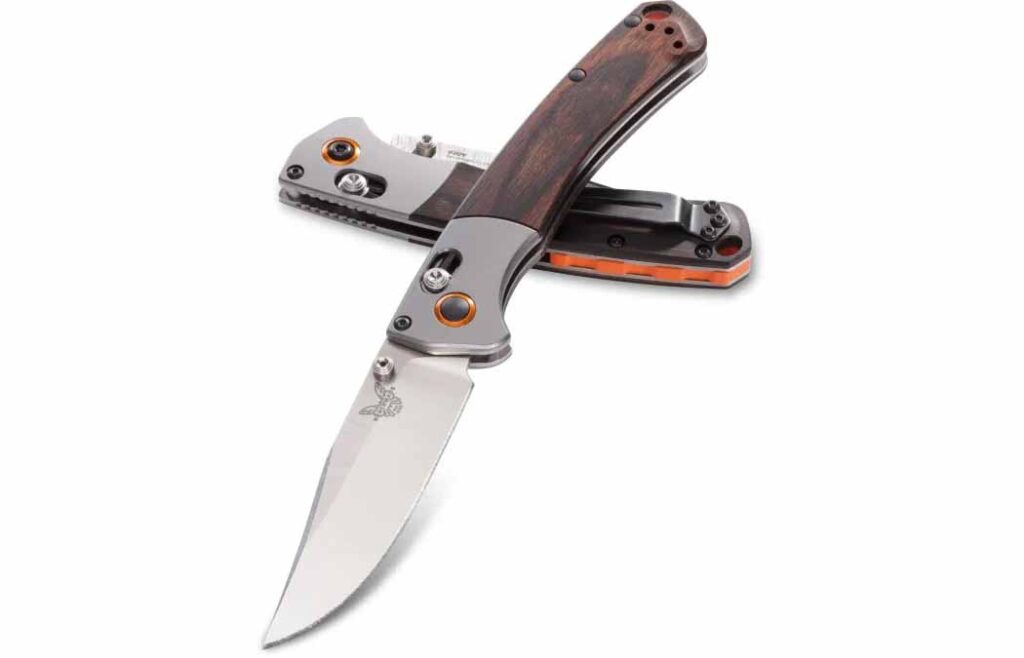
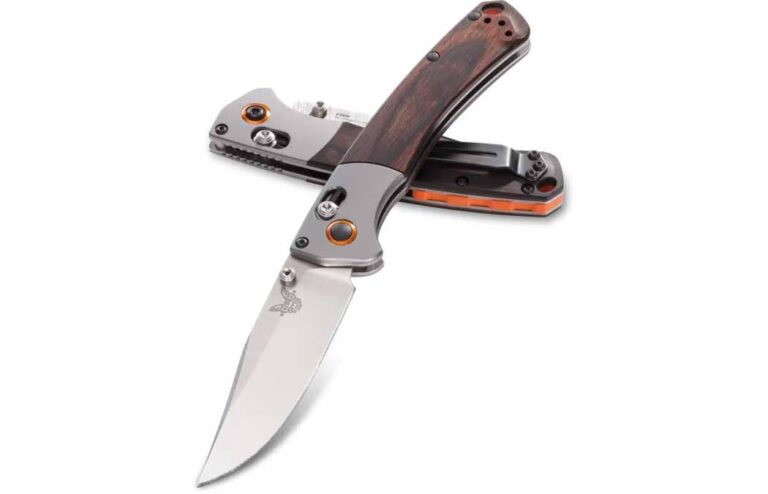
Benchmade Crooked River

Benchmade Crooked River Clip-Point Knife

The flagship of their outdoor folding knife line, the Benchmade Crooked River is built tough for the outdoors, with a 4-inch clip point S30V stainless steel blade, anodized aluminum bolsters, and Dymondwood handle scales. The handle has a slight contour to it, making it lay in your grip that much easier.

The knife also features Benchmade’s own Axis Lock crossbar lock system for a safe and secure lockup. The Axis Lock is a Benchmade innovation that allows the blade to rotate smoothly and locks up tight, with very little blade play.

At over 9 inches overall, the Crooked River is a formidable folder that is ready to help tackle your field dressing or camp utility tasks. A steel pocket clip allows for easy carry. A Mini Crooked River is also available, scaling down the Crooked River model to a 3.4-inch blade length, and making it more EDC-friendly.

MSRP: $380 Origin: USA

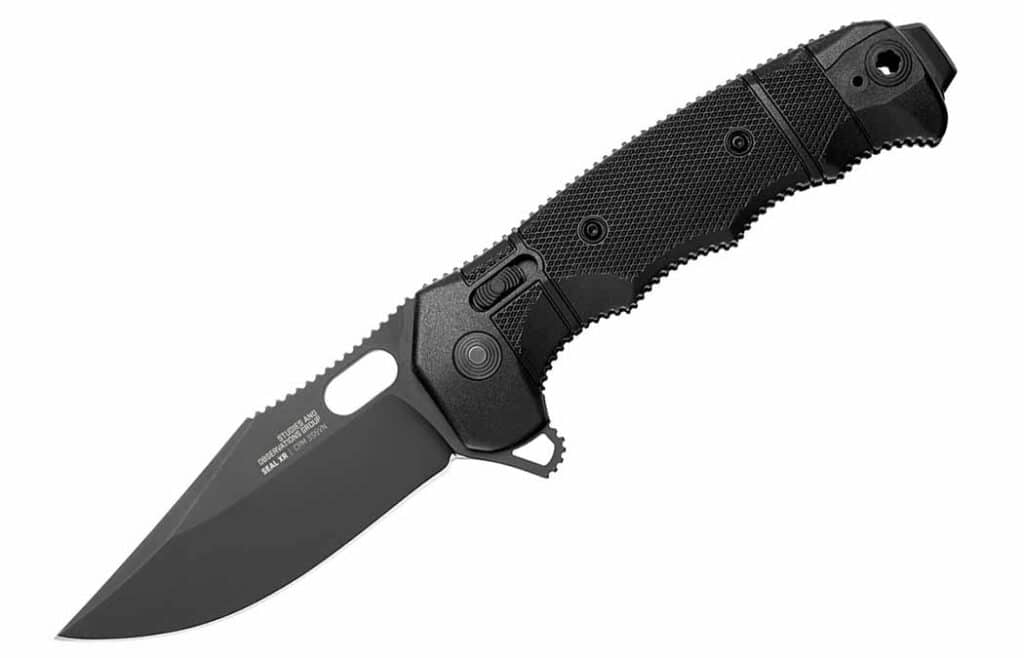
SOG SEAL XR

SOG SEAL XR

You want big and brawny? You got it with the SOG SEAL XR! Its 3.9-inch long Bowie style clip point blade is flat ground from premium CPM S45VN high-performance stainless steel. A blade hole and a flipper tab are present to offer two distinct methods of one-handed opening. The handle design is very similar to that of the SOG SEAL fixed blade. The build of the handle is definitely robust and heavy-duty, there’s weight to this knife that you notice when you pick it up.

Weighing in at a healthy 8.2 ounces, the handle has two steel liners, a steel handle spacer with an integrated extension that can be used as a blunt strike tool, and grooved, textured, and traction notches all around. The handle design is made to keep your hand in place. There is an integrated lower hand guard that prevents your hand from sliding forward. The blade lock is SOG’s own XR crossbar lock that offers true ambidextrous operation.

A beefy, wide steel pocket clip rounds out the SOG SEAL XR package. The clip won’t be sprung for sure, even with rough carry. This is by far an EDC folder due to the size and weight but if you need a knife for rough use and outdoor use, the SOG SEAL XR is it.

MSRP: $224.95 Origin: USA

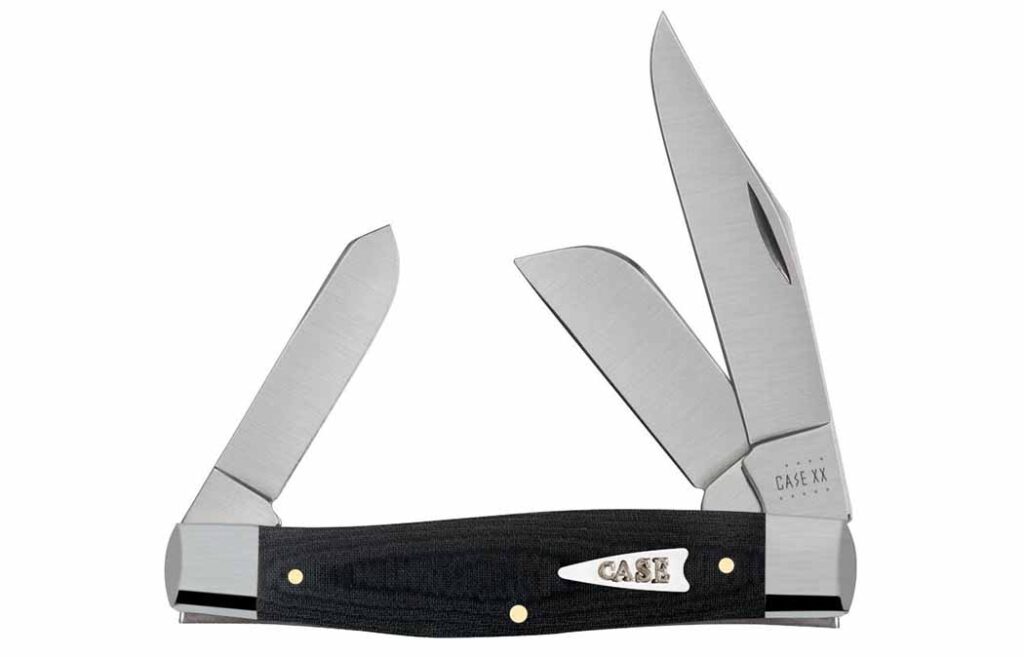
Case Large Stockman 10375

Case Large Stockman 10375

Clip points are found on many different patterns of multi-blade slipjoint knives, such as this Case Large Stockman pattern, model 10375. The main blade is a 3.3-inch long clip point, and two smaller blades – a 2.3-inch long sheepsfoot blade as well as a 2.2-inch spey blade. The blades are ground from Case’s proprietary Tru-Sharp surgical steel, and the handles are of black and green canvas micarta phenolic synthetic for long-lasting durability.

The beauty of knives like these is they are handy to have with you at all times as they sit in the pocket perfectly and they are low profile enough that using them in public won’t raise any eyebrows. These knives are used by everyone from farmers, ranchers, plumbers, electricians, carpenters, warehouse workers, and countless individuals who just want a good solid pocketknife. The main blade does well with opening packages, mail, cutting tape, stripping wire, cutting up cardboard, and any sort of utility or mundane cutting task that tend to pop up in daily life.

The clip point blade is ground fairly thin so it has really good performance characteristics and easily cuts whatever you need to. The Tru Sharp stainless sharpens up quickly and holds an edge fairly well. The stockman pattern is very handy due to the three distinct blade shapes, it’s the perfect pattern to have if you use a pocketknife frequently.

MSRP: $96 (Micarta Handle) Origin: USA

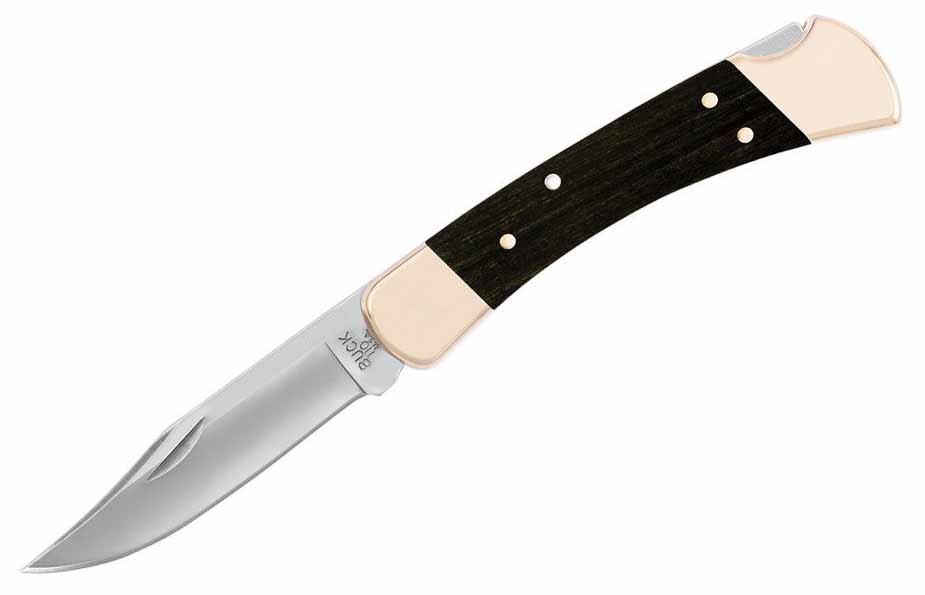
Buck 110 Folding Hunter

Buck 110 Folding Hunter Clip-Point Knife

This knife perhaps is the signature clip-point bladed folder. Its design was innovative back in 1963 when it was released, and its quality and build have withstood the test of time.

Even today, the 110 Folding Hunter is still made and enjoyed by many. The 3.75-inch long blade is of a Bowie shape and is hollow ground from 420HC stainless steel. The handle is of a robust build, with double brass bolsters and a Crelicam ebony, stabilized hardwood handle. The handle definitely has weight to it, and it’s this exact heavy-duty build that has allowed the 110 Folding Hunter to withstand hard use over time, and still hold up beautifully. The lockback design secures the blade in the open position with a satisfying audible click.

The clip-point blade is ideal for field dressing as well as general cutting tasks. The 110 Folding Hunter originally was designed for hunters as an alternative to a fixed-blade hunting knife. But the knife also found favor with those who are in agriculture, the military, law enforcement, and countless knife enthusiasts as well. For all intents and purposes, it was the predecessor to what we know now as the modern tactical folder.

Still produced to this day in the Buck Knives product line, the 110 Folding Hunter has a few variants including a lightweight budget version, a pro-grade modern version with high-end blade steel and handle material, an automatic opening version, as well as countless collector variants available through the years from Buck as well as select Buck Knives retailers as exclusives.

MSRP: $88 (original 110) Origin: USA

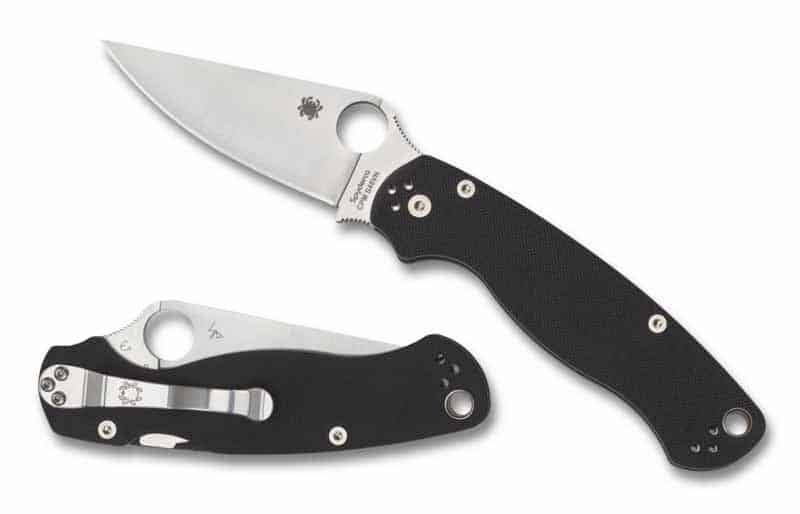
Spyderco C81GP2 Paramilitary 2

Spyderco C81GP2 Paramilitary 2

Spyderco’s Paramilitary 2 folder – better known simply as the Para2 – is a downsized version of the company’s popular C36 Military folder.

The Para2 offers the same cutting prowess of the full-size Military model with its full flat grind clip-point blade but in a more compact, pocket-friendlier form factor. The Para2’s blade measures 3.4 inches long and is ground out of premium CPM S45VN blade steel that is known for its enhanced edge-holding capabilities. The handle is textured black G-10 and mimics the ergonomics found on the C36 folder that make this one of the most comfortable and handy midsize folding knives on the market.

With an overall length of 8.2 inches, the Para2 is still large enough to tackle sizable cutting tasks. The blade is secured open by Spyderco’s own Compression Lock system, which permits easy one-hand opening and closing. It also allows the blade to have such smooth, silky-like action. The Para2 is a slender knife and carries well in the pocket.

The large blade hole allows for easy one-hand opening with either hand, even while wearing work gloves.

Performance-wise, this is one of the best in high-end folders as the flat grind clip-point blade sails through thick and tough materials easily. Spyderco engineers its blades to be some of the most efficient cutting tools on that market by paying attention to blade shape and blade grinds and optimizing both to create a cutting tool that is unmatched in both performance and value.

MSRP: $265 Orgin: USA.

Check Out More Buyer’s Guides:

Kwajalein: American Public School Where Knifemaking Is Part Of The Curriculum

0

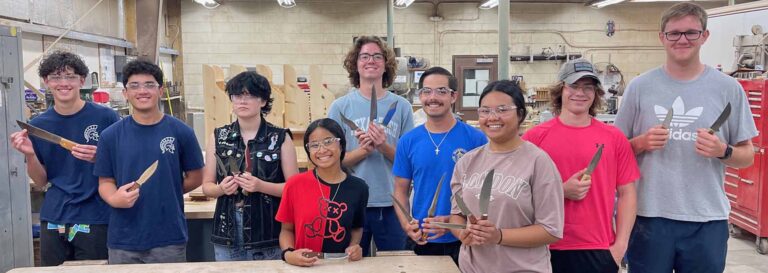
A South Pacific tradition, Dr. Douglas Hepler instructs a knifemaking course at Kwajalein Junior-Senior High.

Kwajalein Junior-Senior High may be the only American high school that has knifemaking as an official part of the school curriculum—and it just celebrated its latest graduating class of knifemakers.

The school is on the U.S Army Kwajalein Atoll, Ronald Reagan Ballistic Missile Test Center, in the Republic of the Marshall Islands in the South Pacific Ocean. Kwajalein Island is the site of a titanic three-day battle that cost almost 400 American and over 4,000 Japanese lives during World War II. Today, though, instead of artillery fire and other explosions on the idyllic coral atoll, the sound of belt grinders and buffers can be heard.

Taught by Dr. Douglas Hepler, a retired Navy chief petty officer, students in grades nine through 12 shape blades from 1080 carbon or 440C stainless steel. According to Doug, “The kids do everything: layout; cutting out and grinding the profiles; drilling the rivet holes; stamping desired logos; grinding the edges; heat treating and plate-quenching; doing the oven temper and freezer cryo-treatment at home; the final polish; adding and completing the handles; and sharpening. They do it all. 

Douglas Halper
Douglas Halper

“We have Burr King and Grizzly belt grinders, Baldor buffers and a Paragon oven. We use local woods—coconut palm, kamani, hao, noni, etc.—for handles. We also use whalebone whenever we find a dead carcass washed up on the beach. We buy all our rivets, steel, 2×72 grinding belts and polishing items from Jantz Supply, and have for years. I buy all my personal knifemaking supplies from them as well. You can’t beat the price and top-notch service. They are a great company.”

Concluded Doug: “I am very proud of my students. They have taken what I can teach them and have become better cutlers than I will ever be—and I think that’s awesome.”

More On Knifemaking Classes:

Advertisement

Must Read Articles

Read this before you make a knife

Knifemaking 101 – Read This Before You Make a Knife

  by Wayne Goddard My experience has taught me that there's nothing like digging in and getting started. I've often said the hardest part of the...
how to forge damascus steel

How to Forge Damascus

Advertisement
Advertisement