Home Blog Page 76

Spectacular Custom EDC Knives Unveiled

Feel the burn of the hottest makers’ hottest Custom EDC Knives—both folded and fixed.

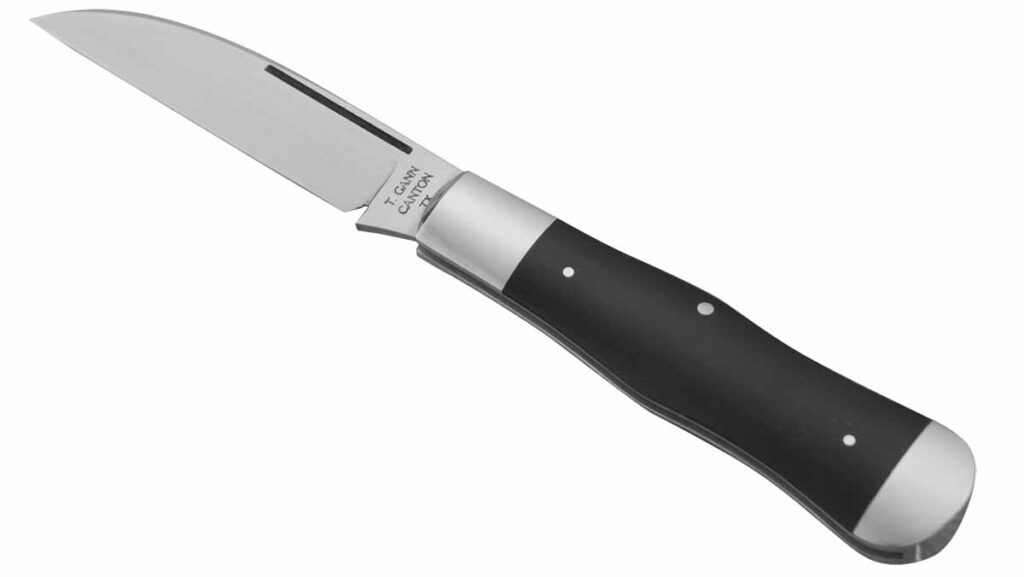
Tommy Gann: Coke Bottle Slip Joint
Custom EDC Gann

As Daniel O’Malley of BladeGallery.com noted, “ABS master smith Tommy Gann makes an exceptional knife. The 52100 carbon steel wharncliffe blade of his Coke Bottle Slip Joint has a handrubbed satin finish, smooth, consistent action, a firm half stop and easily opens with a light pull.” Blade and closed lengths: 2.9 and 3.9”. Bolsters: 416 stainless steel. BladeGallery.com’s price: $550. (BladeGallery.com image)


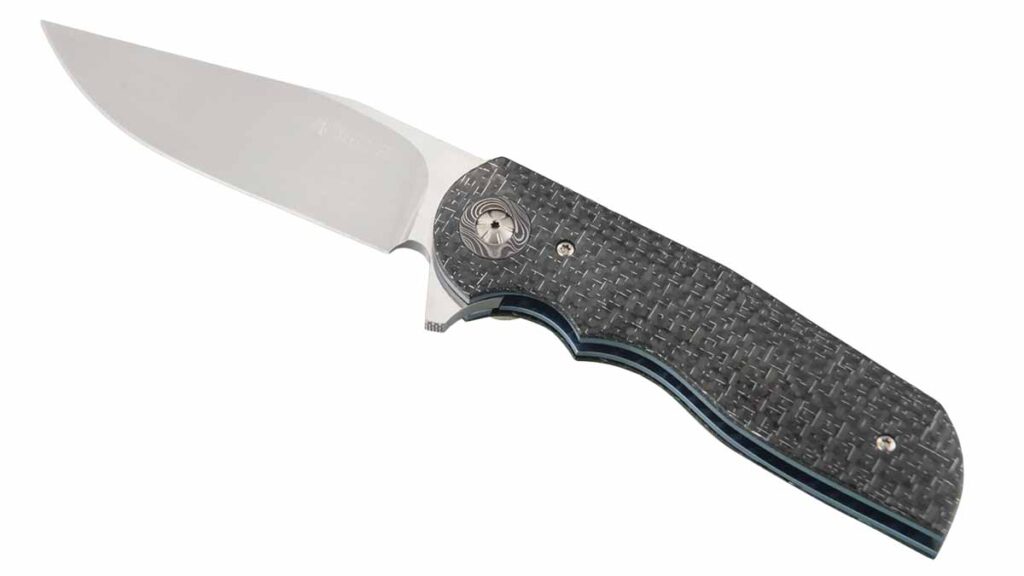
Willem Steenkamp: Raider Flipper Folder
Custom EDC Steenkamp

The 3.5-inch blade of hollow-ground CTS XHP stainless steel on Willem Steenkamp’s Raider flipper folder pivots on an Ikoma Korth Bearing System. Handle: Silver-strike carbon fiber. Pivot collar: stainless damascus. Pocket clip: 3D-machined titanium anodized blue, configured for right-side, blade-tip-up carry. Lock: linerlock. Weight: 3.2 ozs. Closed length: 3.83”. BladeGallery.com’s price: $680. (BladeGallery.com image)


David Breniere: Mini Inglorious Slip Joint
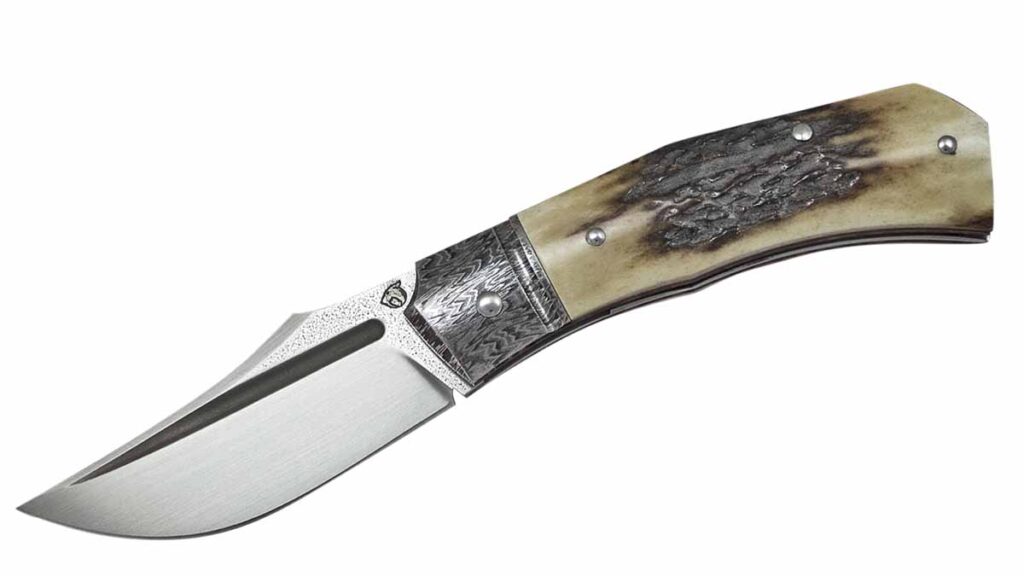
Custom EDC Breniere

“The Mini Inglorious slip joint by David Breniere offers a handrubbed Elmax stainless steel blade with David’s W’s pattern damascus bolster and Sambar stag scales,” stated Dave Stark of Steel Addiction Custom Knives. “The knife just melts into the hand. Truly topper fit and finish.” Blade and closed lengths: 2 7/8 and 3.25”. Weight: 3.2 ozs. Retail price: $2,000. (Steel Addiction Custom Knives image)


Brian Efros: Elder Tactical Folder
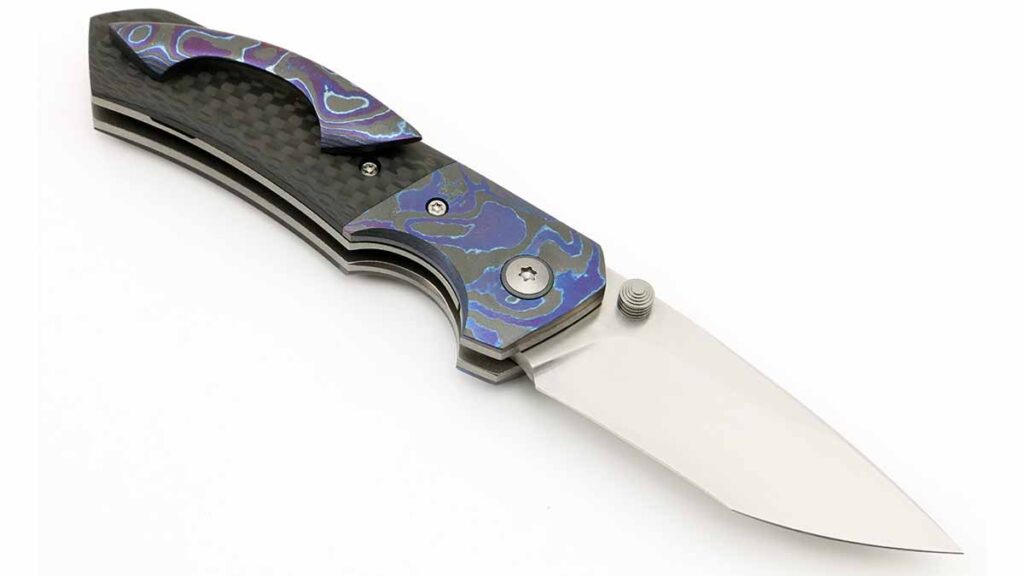
Custom EDC Efros

The Elder tactical folder by Brian Efros has a drop-point recurve blade with dual bead-blasted thumb studs. Blade length and steel: 3” and CTS XHP stainless. Handle: carbon fiber with Chad Nichols Dark-Ti damascus bolsters and backspacer, and zirconium pivot collars. The Dark-Ti pocket clip provides blade-tip-up carry. Lock: linerlock. According to Arizona Custom Knives (AZCK), the Elder has “very nice action, detent and blade seating.” Weight: 5.2 ozs. Closed length: 4.25”. AZCK’s price: $3,295. (AZCK image)


Jacek Hnatow: Bushcraft 1
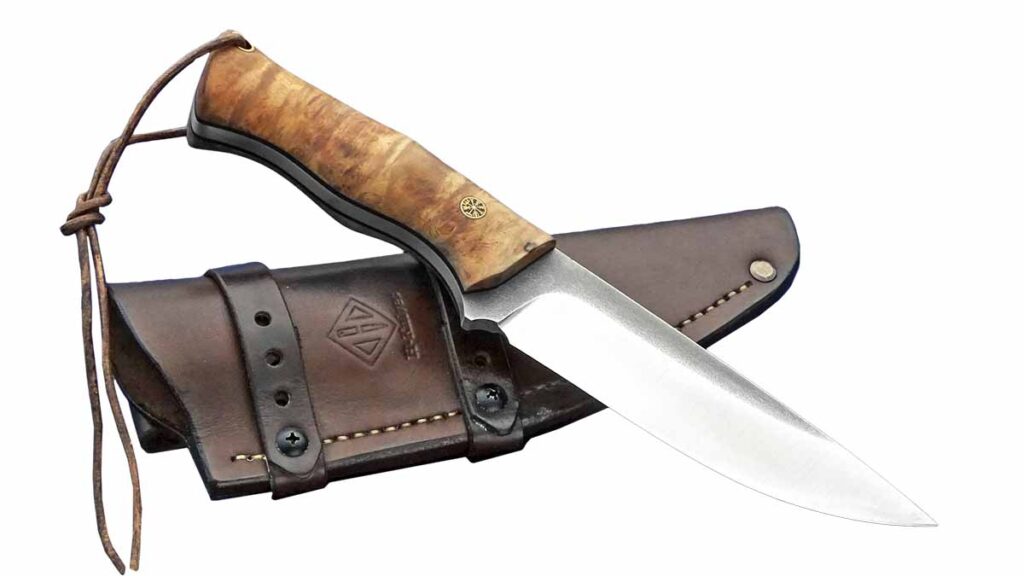
Custom EDC Hnatow

The Bushcraft 1 by Jacek Hnatow boasts full-tang construction and excellent balance and handle ergonomics. “Though designed for bushcraft, the knife makes an outstanding all-around utility tool,” observed Les Robertson of Robertson’s Custom Cutlery. Blade length, style and steel: 5.5”, drop point and Bohler N690 stainless. Handle width and material: 3.75” and textured black G-10. Overall length: 14.5”. Sheath: custom made of leather by the maker. Maker’s price for a similar knife and sheath: $325. (ImpressByDesign image)


Bill Koenig: Arius Flipper Folder
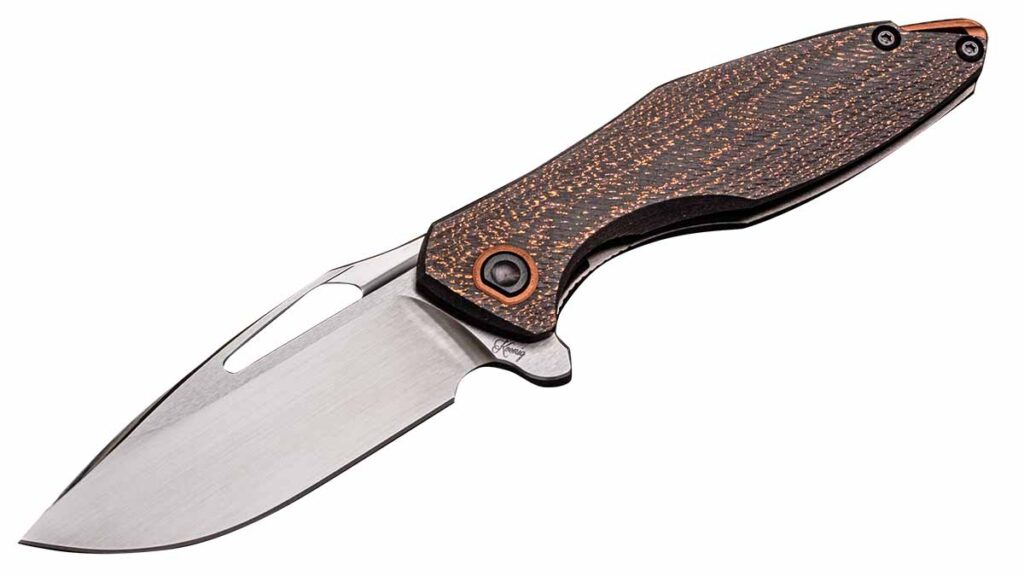
Custom EDC Koenig

Bill Koenig’s Custom Arius flipper folder has a 3.5-inch blade of CPM 20CV stainless steel with a handrubbed satin finish and mirror-washed accents. The handle on the custom EDC knife is copper-dust carbon fiber on the front side and titanium with C-pattern milling on the framelock side. Hardware and screws: zirconium. Pocket clip: handrubbed titanium configured to carry the knife blade tip up. Closed length: 5”. Maker’s price for a similar knife: $3,510. Recon 1 sold price: $6,500. (Recon 1 image)


Piotr Gosciniak: Breaker Tanto
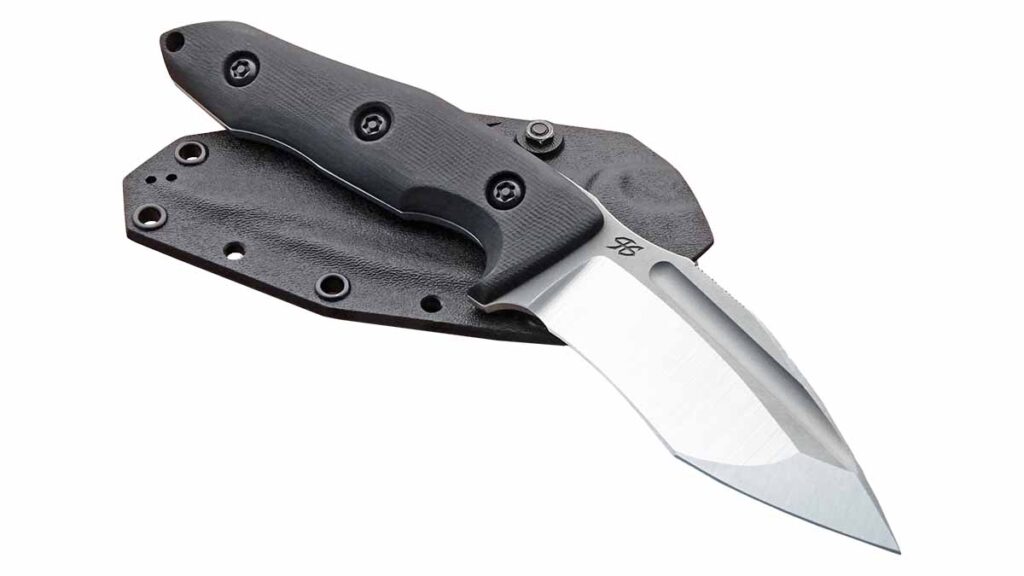
Custom EDC Gosciniak

Of Piotr Gosciniak’s Breaker Les Robertson writes, “The compound grind provides the penetration of a tanto-style blade and slicing ability of a recurve blade. The texture of the black Micarta® handle gives additional grip, particularly in a wet environment.” Blade length, steel and finish: 4.7”, Elmax stainless and satin. Overall length: 10”. Sheath: custom made of Kydex® by the maker. Maker’s price for a similar knife and sheath: $415. (ImpressByDesign image)


Sean Kendrick: Ruiner Tactical Folder
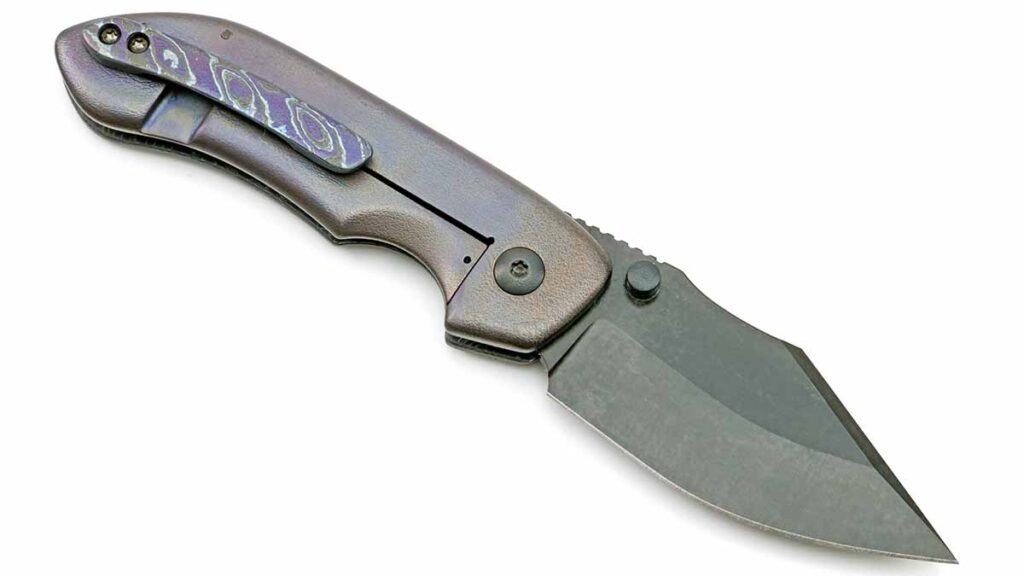
Custom EDC Kendrick

Sean Kendrick’s Ruiner is a framelock tactical folder with a 3.125-inch black blade of an “unknown material,” zirconium thumb studs and a notched thumb rest. Handle: dark Timascus™ front scale, backspacer and blade-tip-up pocket clip, and an orange-peel-finished and anodized titanium lockside. Pivot: zirconium. Weight: 6.1 ozs. Closed length: 4.5”. Sean names Mike Franklin of Hawg Knives as one of his top mentors. AZCK’s price: $5,995. (AZCK image)


Tashi Bharucha: Onion LegacyFliper Folder
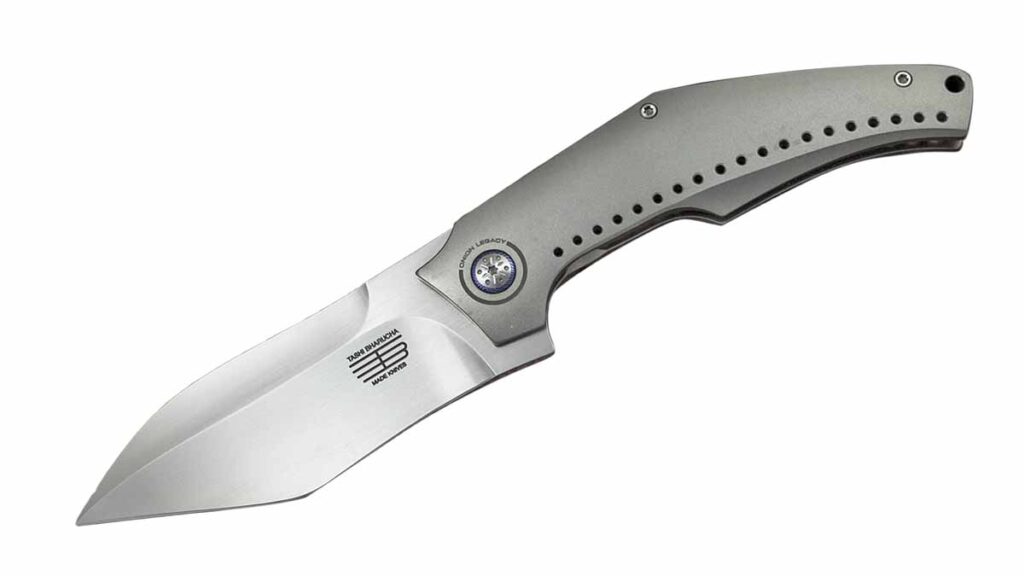
Custom EDC Legacy

“The Legacy project is Tashi Bharucha’s way of paying homage to the icons of the knife world that have influenced him,” Dave Stark observed. “The Onion Legacy, his tribute to Ken Onion, was limited to nine pieces featuring a handrubbed RWL-34 stainless steel blade running on caged bearings. The frames are stonewashed and bead-blasted titanium with laser etching, accented by a custom-heat-colored Mokuti clip and pivot rings.” Weight and blade and closed lengths: 6.2 ozs., 4 and 4.75”. Retail price: $1,875. (Steel Addiction Custom Knives image)


Matthew Christensen: Full Dress Dreadeye
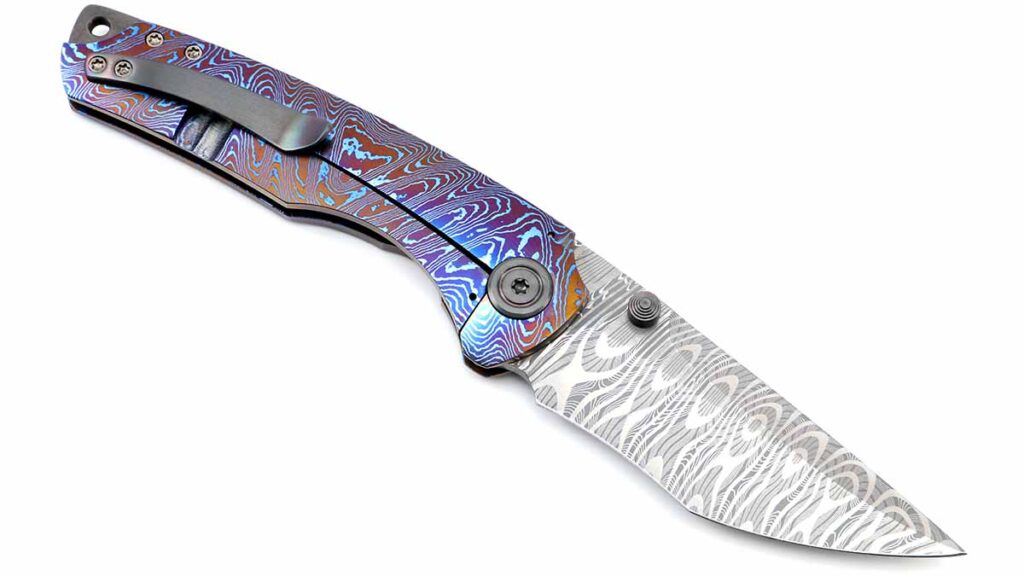
Custom EDC Christensen

The Full Dress Dreadeye by Matthew Christensen sports a 3.375-inch high-satin-finished blade of Mike Norris Fire Clone damascus and dual zirconium thumb studs. Handle: Zirblast-finished Ant Farm Mokuti scales, and zirconium pivot collars, backspacer and blade-tip-up pocket clip. Weight: 4.9 ozs. Closed length: 4.625”. One of Matthew’s leading mentors is Dave Curtiss of Curtiss Knives. AZCK’s price: $3,595. (AZCK image)


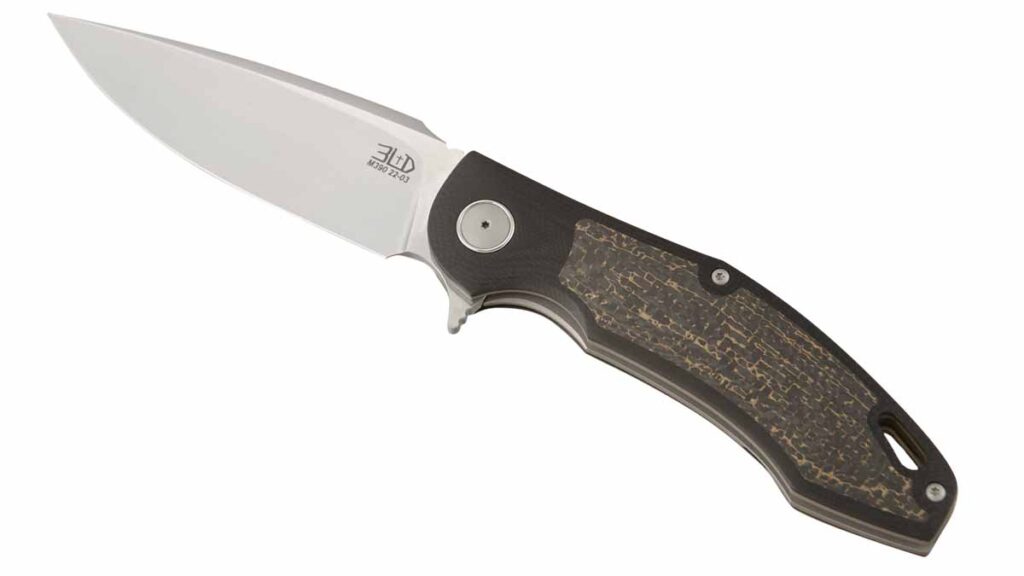
Riann Manser: H4 Flipper Folder
Custom EDC Manser

South African Riann Manser’s H4 custom EDC knife has a 3.7-inch blade of satin-finished M390 stainless steel that runs on caged bearings. “It is perfectly centered, has silky-smooth action” and opens easily via a flipper tab, Daniel O’Malley noted. Handle: black G-10 with gold snakeskin FatCarbon inlaid into each side. Backspacer: black G-10. Liners: bead-blasted Gr6 titanium. Lock: linerlock. Pocket clip: bead-blasted titanium, configured for right-side, blade-tip-up carry. Closed length: 4.8”. BladeGallery.com’s price: $695. (BladeGallery.com image)


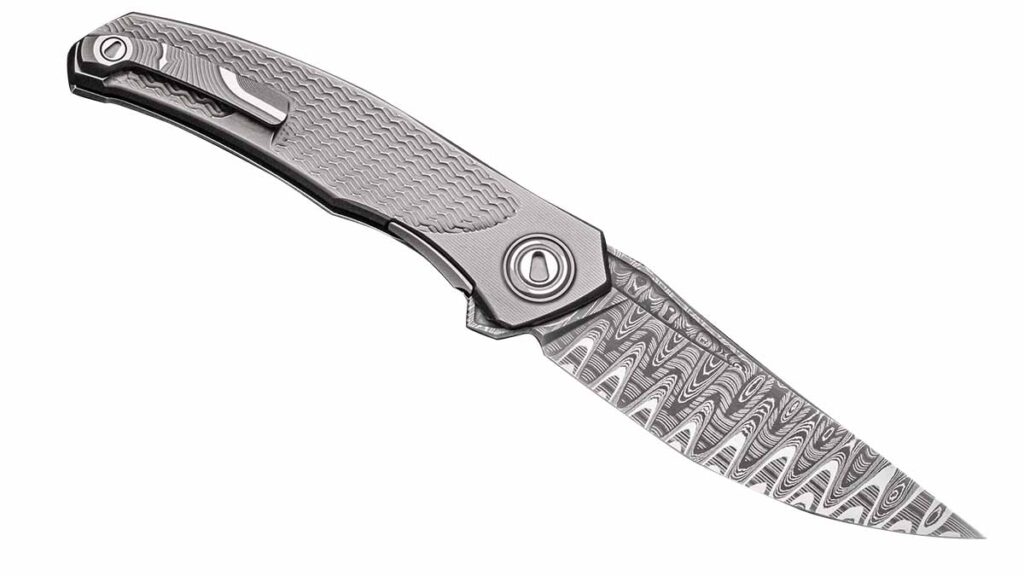
Sergey Shirogorov: Mini Quantum Flipper Folder
Custom EDC Shirogrov

The Mini Quantum flipper folder by Sergey Shirogorov is highlighted by a rotating titanium pocket clip that carries the knife blade tip up. Blade length and steel: 3.5” and Mike Norris damascus. Handle: titanium. Closed length: 4.5”. Maker’s price: varies depending on what the knife brings at the various auctions where it is sold. Recon 1’s price: $10,000. (Recon 1 image)


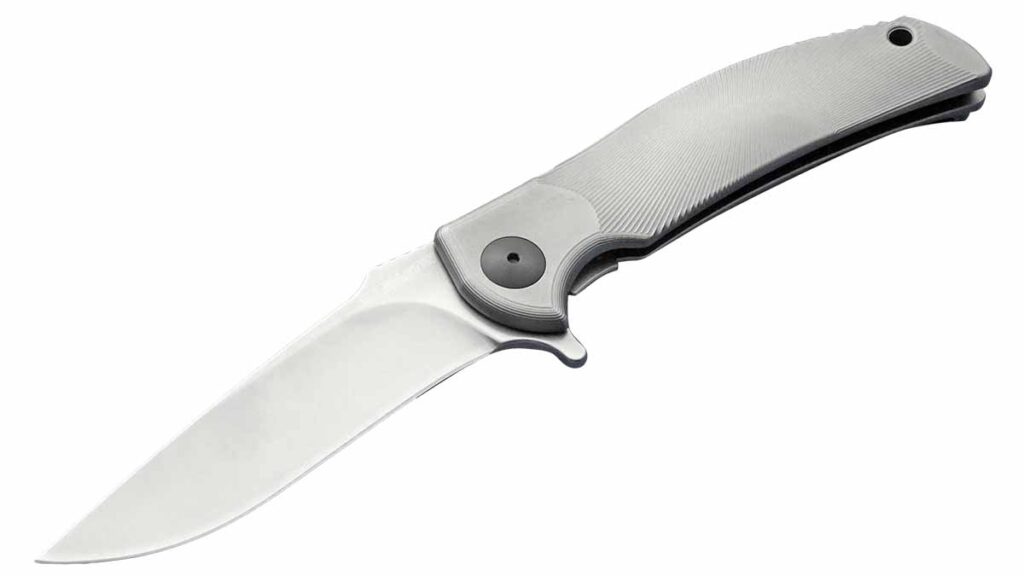
RJ Martin: Q36 Flipper Folder
Custom EDC Martin

Custom knife purveyor Les Robertson has been buying Q36s since RJ Martin started making them. According to Les, “RJ never ceases to amaze me how he incrementally improves this knife: serrated thumb ramp, extremely lightweight, hypersonic flipper opener and bank-vault lockup.” Blade length and steel: 4” and MagnaCut stainless. Frame: grooved titanium. Closed length: 4 7/8”. RJ’s price for a similar knife: $3,200. (ImpressByDesign image)


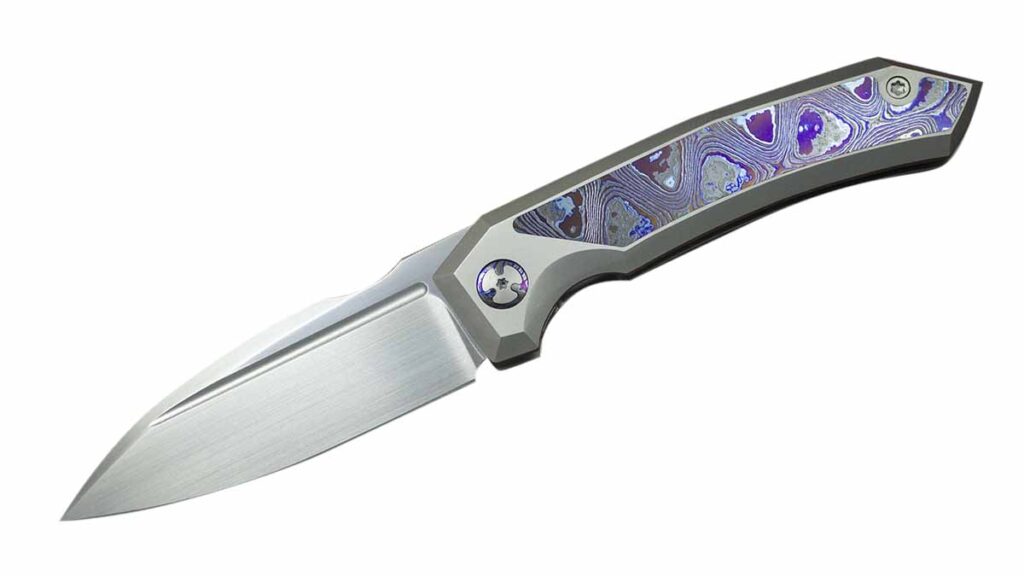
Thomas Gony: Speartac Front Flipper
Custom EDC Gony

Frenchman Thomas Gony’s Speartac front flipper has a 3 3/8-inch blade of handrubbed RWL-34 stainless steel. The titanium handle features Zircuti inlays, pivot rings and pocket clip (blade tip up). Weight: 4.8 ozs. Closed length: 4.5”. Retail: $2,600. According to Dave Stark, there is such a huge demand for Gony’s work that Thomas can no longer take custom orders. (Steel Addiction Custom Knives image)


Dmitry Sinkevich: Skiving Tanto
Custom EDC Sinkevich

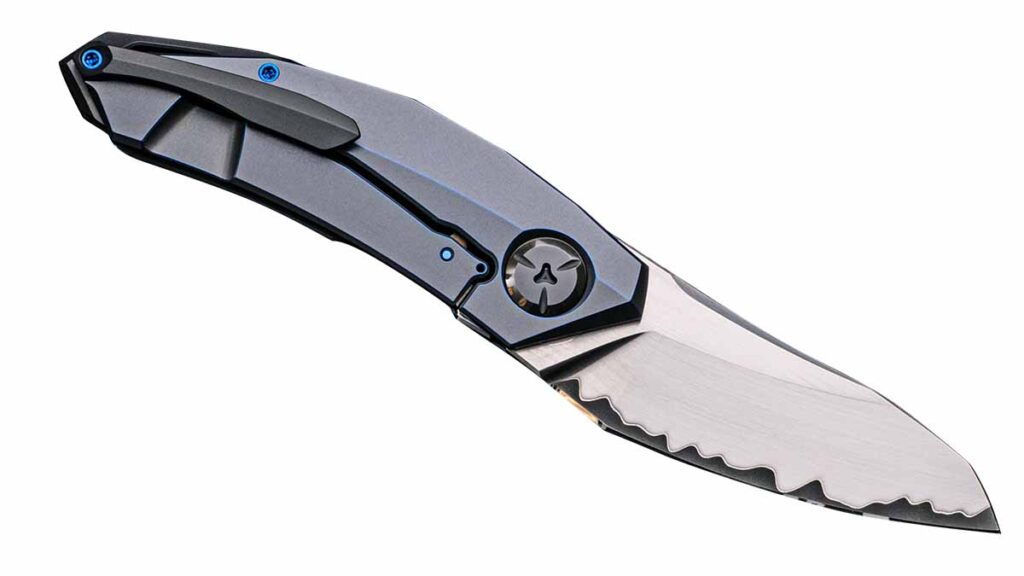
A 3.125-inch tanto blade of K110-core san-mai and a titanium handle help complete the Skiving Tanto prototype by Dmitry Sinkevich. The pivot and blade-tip-up pocket clip are zirconium on this custom EDC knife, and the body screws are titanium. Closed length: 4”. Maker’s price: varies depending on what the knife brings at the various auctions where it is sold. Recon 1’s price: $10,000. (Recon 1 image)

Check Out More Buyer’s Guides:

Finding The Best Spearpoint Blade Knife

There’s a reason why spearpoint blade knives are common as bluegrass.

Spearpoint blades are very common blade shape that is used primarily with folding knives but also found on some varieties of fixed blades. This blade shape can either be long and slender or short and on the fat side. 

What defines a spearpoint blade is the upsweep that forms the belly of the cutting edge and the equidistant spine that meet at the centerline of the blade’s width. Much as its name suggests, the profile mimics the shape of a spear.

Spearpoint Blade Uses

The spearpoint blade is a handy profile, as it’s very adaptable to any cutting task at hand. There’s enough blade belly present to do slicing work and enough of a point to do scoring and piercing tasks.  

Common Spearpoint Blade Knives

Along with the standard single grind spearpoint blade shape, there are a couple of variants of such that you might also be familiar with as well.

Dagger: The dagger is a popular option in fixed-blade tactical knives and are commonly spearpoint blades. The big difference between it and the more common spearpoints, daggers have a double grind. These begin at the centerline of the blade and taper down to the cutting edge, forming two cutting edges instead of just one.

The dagger’s design lends it to penetrating tasks, as well as giving it a certain sexiness due to its symmetry. However, laws are very restrictive when it comes to dagger blades. Additionally, the dagger is not well suited for working tasks due to the relative fragileness of the blade shape thanks to its grinds.

Pen Blade: These are commonly found as a smaller secondary blade on many multi-blade slip joint folding pocketknives. The pen blade is good for just general, mundane cutting tasks like opening mail and packages, or light-duty scraping.  

Pedestrian as the role may seem, these spearpoints see a lot of action in day-to-day tasks. It’s safe to say, the world’s fingernails would likely prove much dirtier without this little workhorse.

Spearpoint Blade Knife Buyer’s Guide

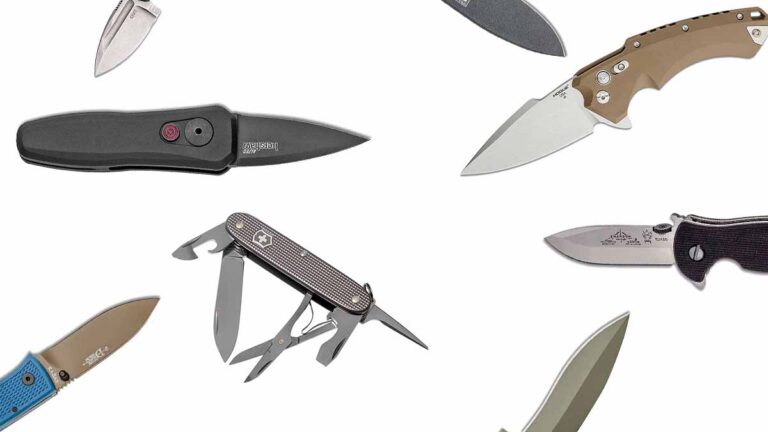
We’ve gone through the effort to compile a listing of some of the more popular spearpoint knives on the market. These knives have the spearpoint shape as the primary blade. But please keep in mind that there are more than just these, as the profile is among the most popular in use today. Furthermore, keep an eye open and be sure to do your research carefully to select the best knife to fit both your needs and budget.  

FIXED BLADES

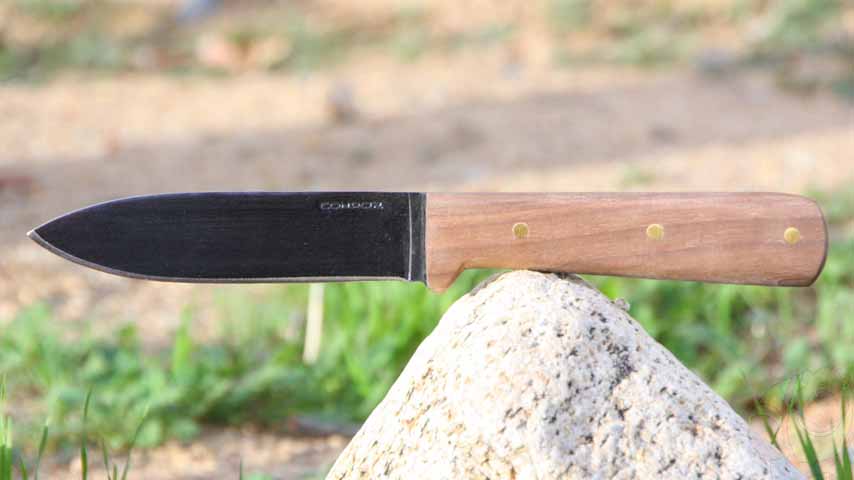
Condor Tool & Knife CTK247 Kephart

Spear Point Blade Condor Kephart

Designed by noted survival expert Joe Flowers, the Kephart is a good general-use survival knife that is ready to tackle the chores on your camping or hiking trip. The 4 ½-inch long blade is made of 1075 carbon steel for low cost and easy resharpening out in the field and sports a flat grind for cutting efficiency. The handle is made of walnut and features a rounded profile for easy use. Condor uses rivets in the tang to prevent the handle from loosening even under very hard use. Made in El Salvador, the Kephart comes with a sewn leather belt sheath to round out the package.  

MSRP: $72, Made In El Salvador

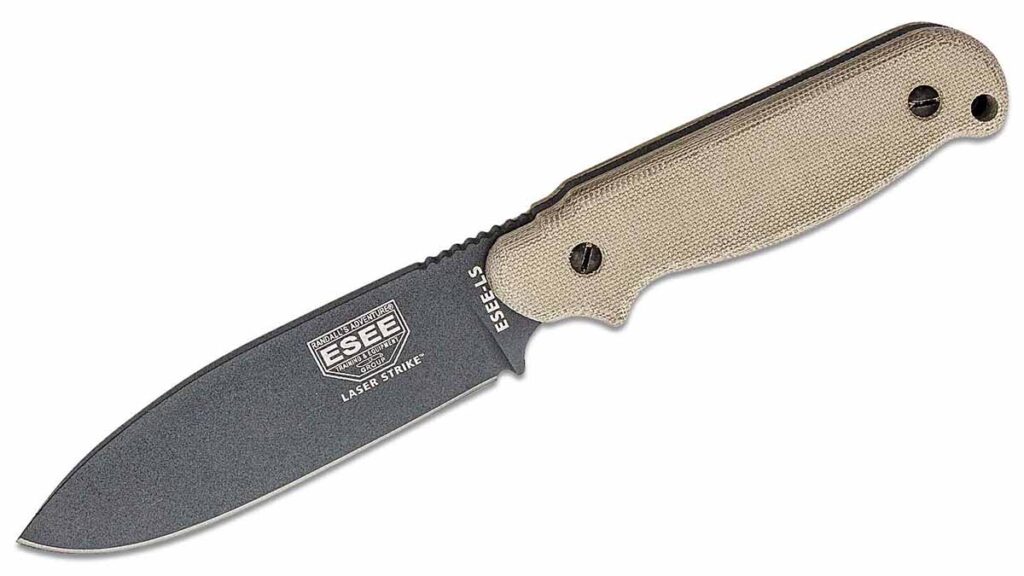
ESEE KNIVES LASER STRIKE 

Spear Point Esse Laser Strike

The Laser Strike has a 5-inch blade ground from 1095 carbon steel and sports an ultra-tough black epoxy coating. The coating is a nice extra, protecting the steel from the elements, as well as furnishing a nice low profile with no reflective appearance. A series of traction notches are cut into the blade spine at the thumb rest area, providing a nonslip resting place for your thumb or index finger for extra pressure and more control or power. The handle scales are green canvas micarta, which does an excellent job of being a dimensionally stable and providing a great grip quality. A thoughtful feature, a finger choil at the tang for when you need to choke up on the blade for extra control. Each Laser Strike comes with a form-fitting Kydex belt sheath for easy portability in all conditions.

MSRP: $200, Made In The USA

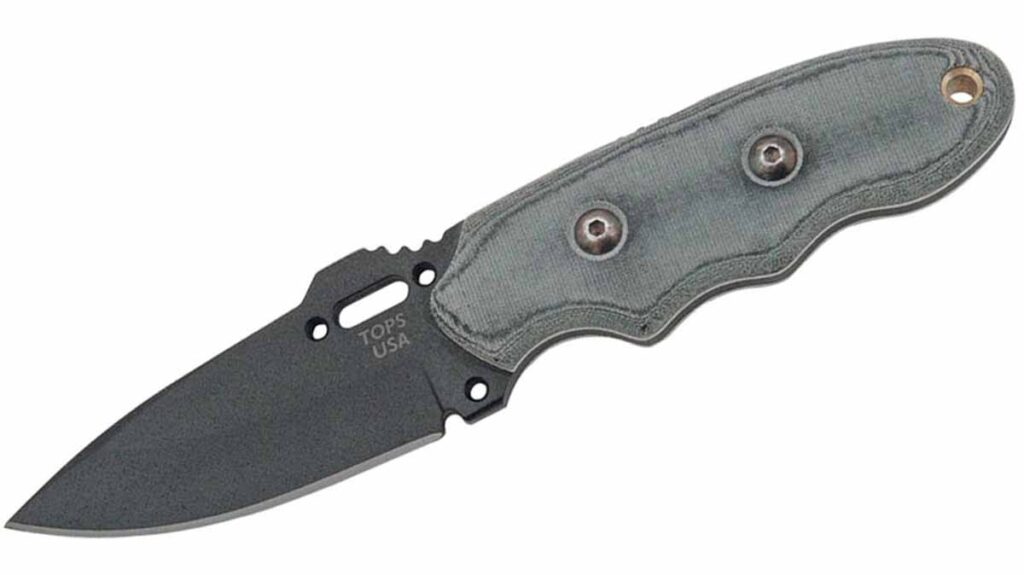
TOPS KNIVES COVERT ANTITERRORISM (CAT)

Spear Point Blade Tops CAT

With its skeletonized structure, the TOPS Covert Antiterrorism (CAT) is an easy-to-carry, medium-sized, heavy-use fixed blade. Its 3 ¼-inch blade is made from 1095 carbon steel and boasts a flat grind. A pronounced thumb rest allows for more pressure and control while not allowing any slippage at all. The skeletonized handle is outfitted with multiple finger grooves that help seat your hand securely. Multiple oblong cutouts reduce the overall weight further. With an overall length of 7 ¼ inches, the CAT is carried via a multi-carry Kydex sheath so you have the knife with you at all times. This knife here can withstand some hard use for its size.

MSRP: $130, Made In The USA

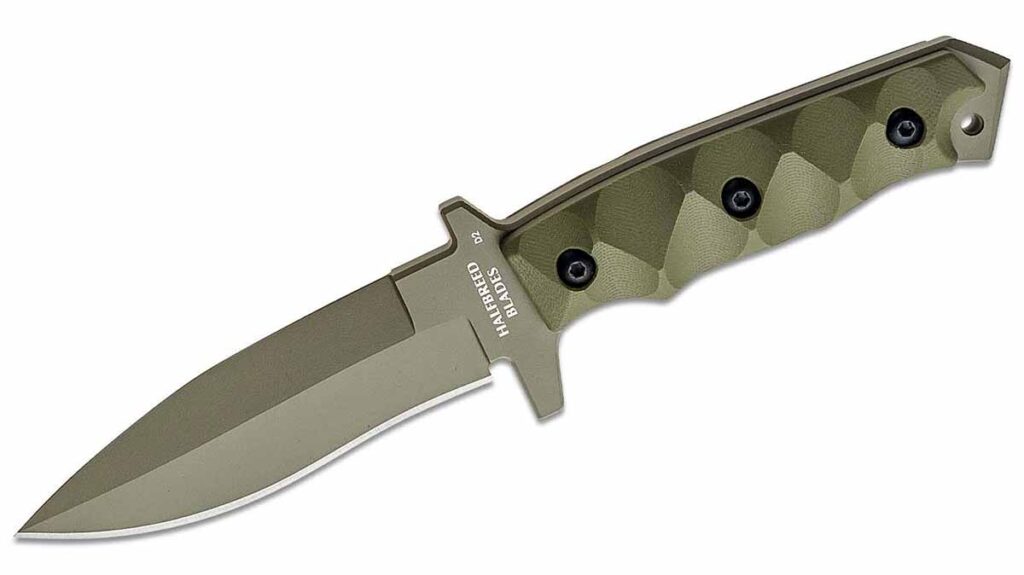
HALFBREED BLADES MEDIUM CLEARANCE 

Spear Point HALFBREED BLADES MEDIUM CLEARANCE

Australia’s Halfbreed Blades offers up its Medium Clearance MCK-01 model as both a tool and a backup weapon. The blade is beautifully constructed out of Austrian-origin Bohler K110 tool steel that is similar in performance to D2. The blade appears to be a double edge, but in reality, it is only a single, however, it has a more aggressive dagger grind to it. At 4 ½-inches long, the blade is a good size for carry as well as getting your cutting tasks done in short order. 

A pronounced guard keeps your hand from sliding up onto the blade. To protect the blade from the elements, a flat dark earth Teflon coating is applied. As a bonus, this also allows easy clean up. The handle is G-10 and sports a milled texturing pattern which works well with both bare and gloves hands. The extended blade tang at the rear of the handle can be used as a glass breaker as well as a blunt strike option as well. The MCK-01 comes with a Kydex sheath that is both belt and MOLLE-compatible attachment.

MSRP: $240, Made In Australia

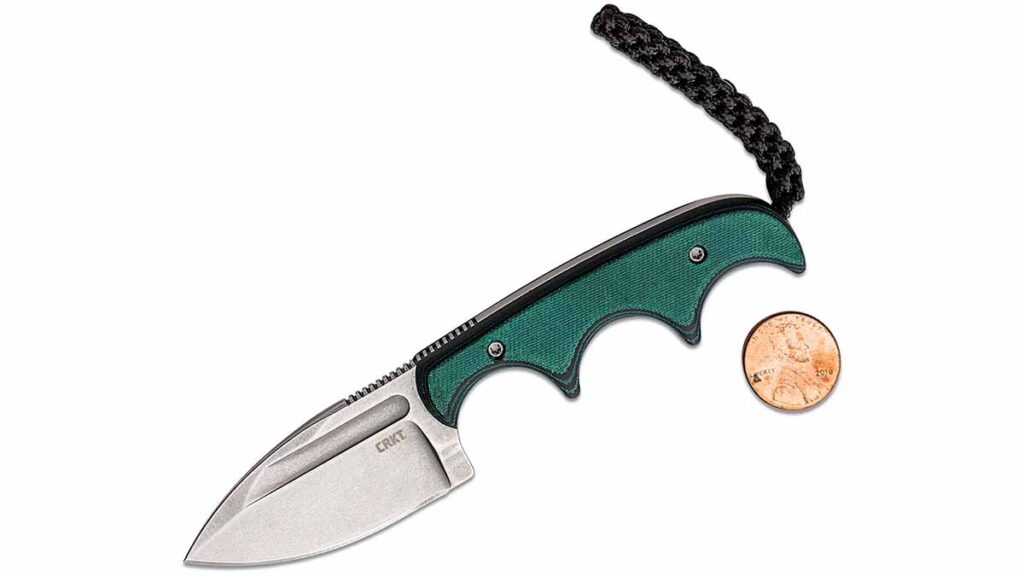
CRKT MINIMALIST SPEARPOINT

Spear Point CRKT MINIMALIST SPEARPOINT

An extension of CRKT’s wildly popular Minimalist fixed blades, the spearpoint iteration is the more general use profile of the line. Starting with the 2.1-inch blade, it is ground from 8Cr13MoV stainless steel for enhanced edge retention. As an added visual touch, there is a fuller (blood groove) cut into the blade. Typically, this is something found on larger knives. The handle sports a series of deep finger grooves that help to seat the Minimalist Spearpoint in your hand safely. The handle material is “resin-infused fiber” which sounds a lot like micarta and even feels similar. Whatever it is, it does a great job of providing traction. Each Minimalist comes with a molded ABS plastic sheath for ease of carry. The sheath can be worn either on the belt or set up for neck knife carry with the included ball chain necklace. So the carry options here are really good!

MSRP: $50, Made In China

FOLDING KNIVES

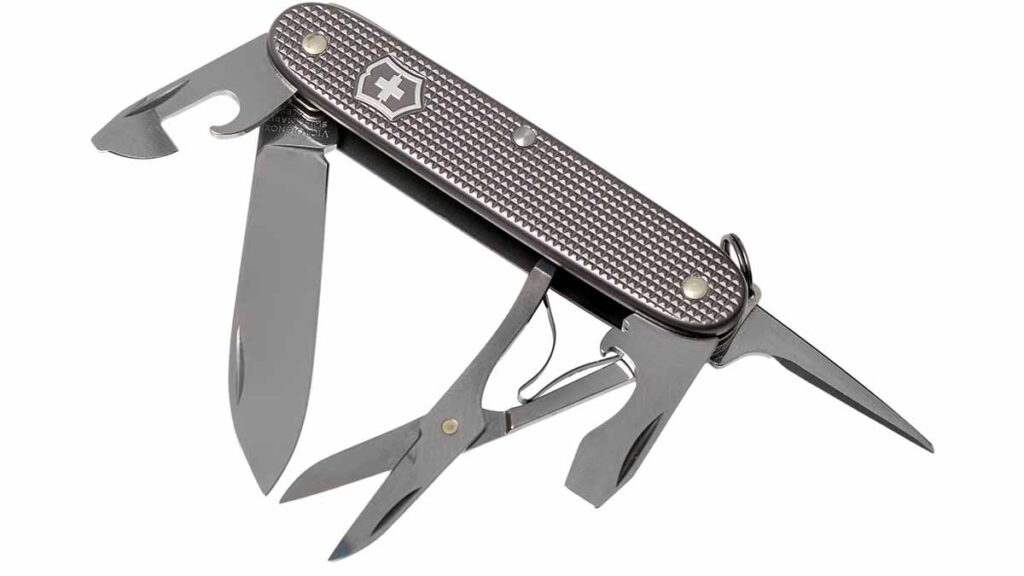
VICTORINOX PIONEER X

Spear Point Blade VICTORINOX PIONEER X

Everybody loves a Swiss Army Knife! The Victorinox brand has a zillion configurations and sizes of this popular multiblade multitool knife. It has a universal appeal that extends way beyond the knife enthusiast. The Pioneer X model is a popular model amongst the Alox (aluminum handle) options. Essentially, the company took its long-standing Pioneer Alox and inserted a pair of scissors, hence the “X”. The Pioneer X has a 2 ½-inch long spearpoint stainless blade, an awl, a combination flathead screwdriver and bottle cap opener, a can opener, and the aforementioned scissors. The checkered textured Alox handle is available in standard silver Alox, and colored versions may be purchased at various Victorinox dealers as exclusives to those outfits. One of the reasons why Alox models prove poplar is they feel very solid and the checkered aluminum has a nice hand traction.

The overall quality of manufacture for the Pioneer X is perfect. The blades and tools have a nice polished finish which not only looks good but also makes them easier to clean up. The spearpoint blade on this one is a real cutter. The full flat grind tapers the cross section down to a precise thin edge. One thing about all Swiss Army Knives is that they are easily sharpened. The scissors are simply the best small scissors I have used on any pocketknife. This is just a very handy pocketknife and you will find that it will go with you wherever you go, quite easily. Boasting an excellent price, it is not only quite handy but affordable as well. Plus, you can guaranteed every Victorinox comes perfect from the factory. Don’t be afraid to purchase sight unseen with confidence.  

MSRP: $69, Made In Switzerland

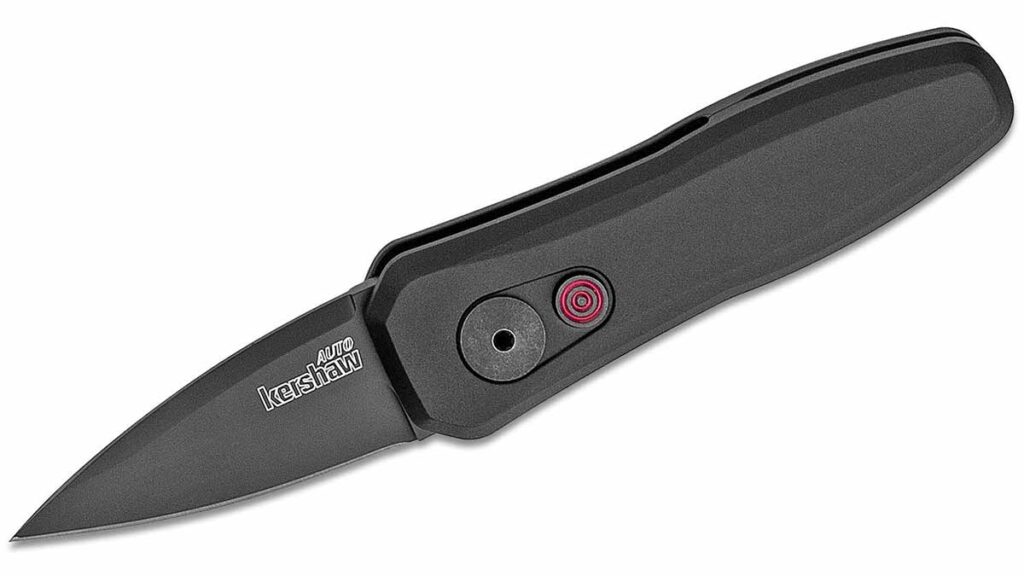
KERSHAW KNIVES LAUNCH 4

Spear Point KERSHAW KNIVES LAUNCH 4

Kershaw Knives’ highly successful Launch series of USA-made automatic opening knives have been a great success. The cutting-edge automatics are made with premium materials, but come in at a comfortable price. The 7500BLK Launch 4 is the smallest of the line, with a California-friendly 1.9-inch blade. CPM154 stainless steel is used for the blade, offering enhanced edge retention and corrosion resistance. It is the particle steel equivalent of 154CM, which is used widely in the cutlery industry and lower-tier premium steel. The blade sports a DLC black coating for the ultimate in corrosion resistance and low reflectivity. The handle is machined from T6 6061 aluminum alloy for light weight and strength. It is anodized black and features matching black hardware. A steel pocket clip carries the Launch 4 in the tip-up configuration in the pocket. With an overall length of a bit over 5 inches, this compact cutter carries easily and also doubles as a money clip. Pressing on the lock button causes the blade to rocket out of the handle, snapping open with authority. The same button serves as the blade’s lock release from the open position. The Launch 4 is a fun little automatic opener that proves a great value.  

MSRP: $165, Made In The USA

KABAR DOZIER FOLDING HUNTER

Spear Point blade KABAR DOZIER FOLDING HUNTER

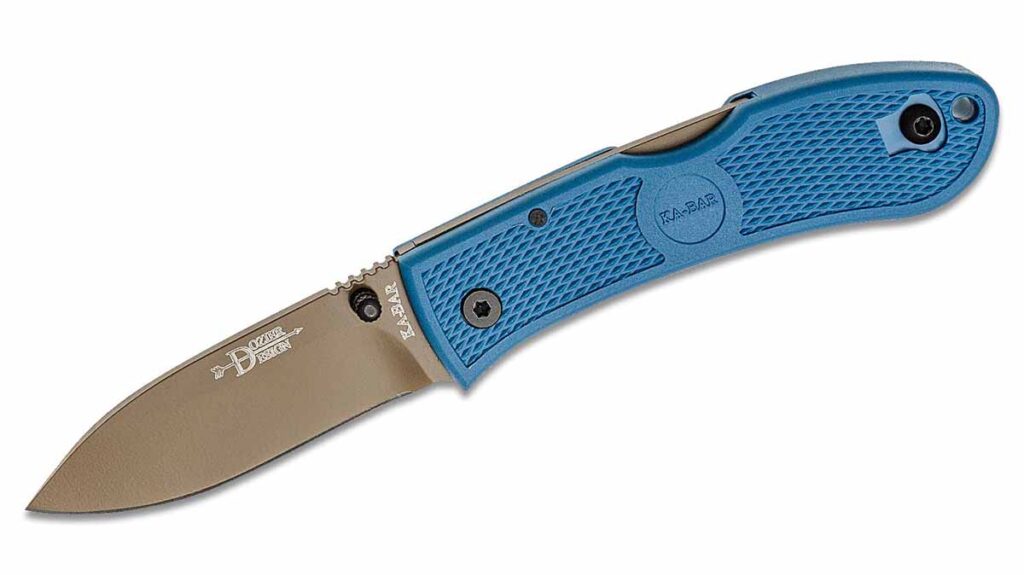
Bob Dozier is a respected name in the knife industry. He is an accomplished custom knifemaker whose creations are aimed at the outdoor market with hunters and campers in mind. He has partnered with Kabar Knives to produce his Folding Hunter design. The 3-inch blade is ground from AUS-8 stainless steel and features a hollow grind. A single thumb stud allows you to deploy the blade quickly and easily. The handle is molded from lightweight Zytel to keep the overall weight of the knife to a minimum (2.2 oz) for comfortable carry.  A pocket clip carries the Folding Hunter tip up and can be swapped to the opposite side of the handle for lefties. Don’t let the name fool you, this knife excels at daily carry, for those who relish the bang-for-the-buck factor. Made in Taiwan, it is one of the best values for a custom-designed folding hunter. The Kabar Bob Dozier Folding Hunter comes in an array of handle colors to suit your preference.  

MSRP: $35, Made In Taiwan

EMERSON KNIVES MINI SHEEPDOG 

Spear Point EMERSON KNIVES MINI SHEEPDOG

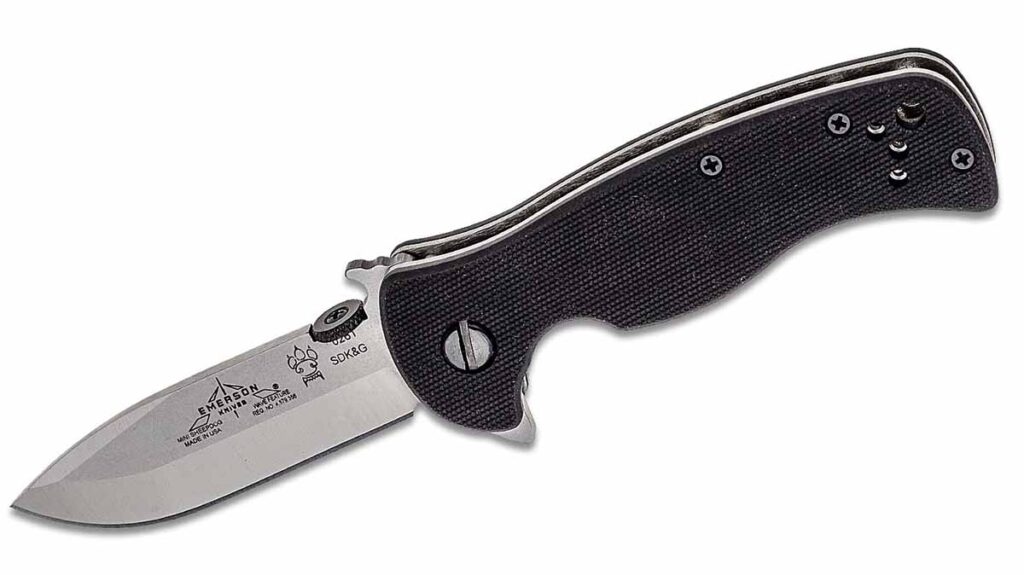
The Mini Sheepdog is a downsized version of Emerson Knives’ Sheepdog flipper folder. Featuring a 3-inch long spearpoint blade, its 154CM stainless steel is the material of choice for going the distance with work tasks. The blade incorporates three methods of opening: a thumb disk, Emerson’s Wave Remote Pocket Opener, and a flipper. The blade has two options for finishes—satin-finished or black-coated. The blade rides on bearings for the ultimate smoothness in blade action. The handle is ergonomically shaped to seat the hand comfortably. The expanded sections on the front and back of the handle help prevent forward and rearward sliding. Textured black G-10 composite provides a non-slip grip.  There is a pocket clip that carries the Mini Sheepdog in the tip-up configuration in the pocket. Emerson Knives is a trusted leader in the production of tactical knives.  

MSRP: $240, Made In The USA

HOGUE X5 

Spear Point Blade HOGUE X5

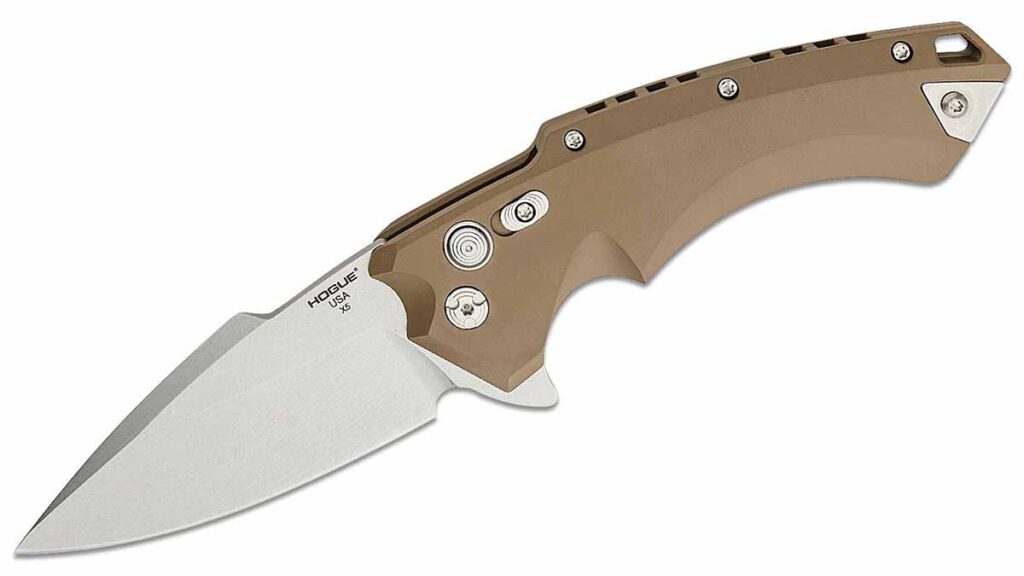
Designed by custom knifemaker Allen Elishewitz, the X5 represents the latest in tactical folder technology. It does so by offering a flipper opening, button lock in a premium handle and excellent blade materials. The X5 is offered in two blade styles and two sizes within. There is a modified Wharncliffe and a spearpoint, in both 3 ½-inch and 4-inch blade lengths. CPM154 stainless steel is the material of choice for the blade, offering enhanced edge retention. The spearpoint features a harpoon-style swedge, adding an aggressive stylistic note to the appearance. And the high flat grind of the blade bevels make the X5 spearpoint a cutting machine. The handle is highly ergonomic, incorporating chamfers, a prominent finger groove, and an integrated handle spacer for ultimate strength. The X5 comes in your choice of several hard anodized handle finishes: black, OD green, blue, and tan. Certain models also feature textured G-10 inlay for grip enhancement and a styling note. A button lock secures the blade solidly in the open position and also is easy to release and close the blade one-handed. Each X5 comes with a steel deep carry pocket clip—tip up—and an extra clip for lefties.

MSRP: $210, Made In The USA.  

Check Out More Buyer’s Guides:

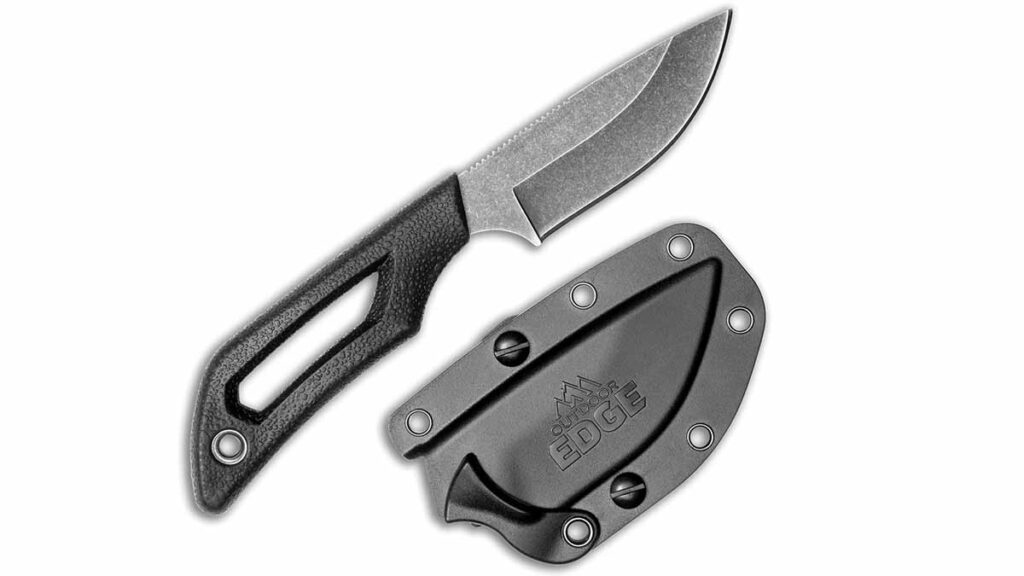
Outdoor Edge Pivot: Light, Nimble And Affordable

Oh, the Outdoor Edge Pivot is a budget option, but not one without its charms.

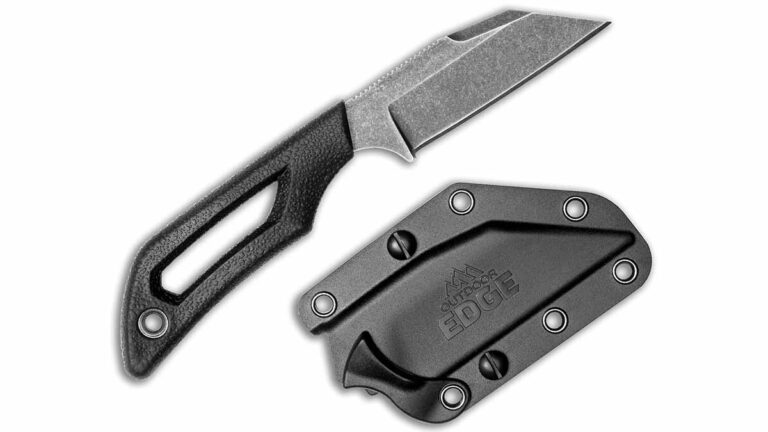
Traditionally outdoor focused—hence the name—Outdoor Edge has crept into other knife niches. Perhaps it’s a directive from the powers on high at Revo Brand Group (think Real Avid), who acquired the knife company in 2022. Or perhaps it’s because you can only make so many gut hooks and replaceable-blade caping knives. In either case, the company has come out with some intriguing EDC designs that are definitely budget options, but ones that get the job done.

Its most recent unveiling is the lightweight, skeletonized handled Pivot. For most knife enthusiasts, it’s difficult not to like what Outdoor Edge has offered up in the redesign of the company’s Le Hawk and Le Duck knives —particularly its price. A cool $30 ($29.99) puts the fixed blade on your beltline, giving you an edged tool you can treat like a rented mule and not shed any tears if a rough task delivers a coup de gras. Everybody needs one of those to pry away at rusty latches and strip spools of copper wire.

Pivot’s Steel

Outdoor Edge Pivot drop point

Constructed from 8Cr13Mov stainless steel, the knife was likely birthed in China—it’s one of the country’s budget stainless options. While inexpensive, the steel generally acquits itself well in wear and corrosion resistance but maybe doesn’t earn top honors in hardness (57 HRC) and edge retention. Though, 8Cr13Mov is known to be pretty forgiving in sharpening, so its edge is quickly regained. Outdoor Edge gives the Pivot’s blade an extra barrier to environmental factors with what it calls its Blackstone Coating, which also gives the knife a dark appeal.

Blade Profiles

The company offers two blade styles on the model, a drop-point and Wharncliffe both virtually the same length. The drop-point measures in at 2.5 inches, and the Wharncliffe is another .1-inch longer. In either case, married to a roughly 4-inch handle, the blade should prove fairly nimble and quite deft at most everyday tasks around the home, ranch or worksite. As mentioned, the handle is skeletonized, which cuts the Pivot’s weight down to a svelte 3.2 ounces. And Outdoor Edge applies a rubberized coat to it, giving the knife a fairly positive grip even if wet.

Where Exactly Does It Pivot?

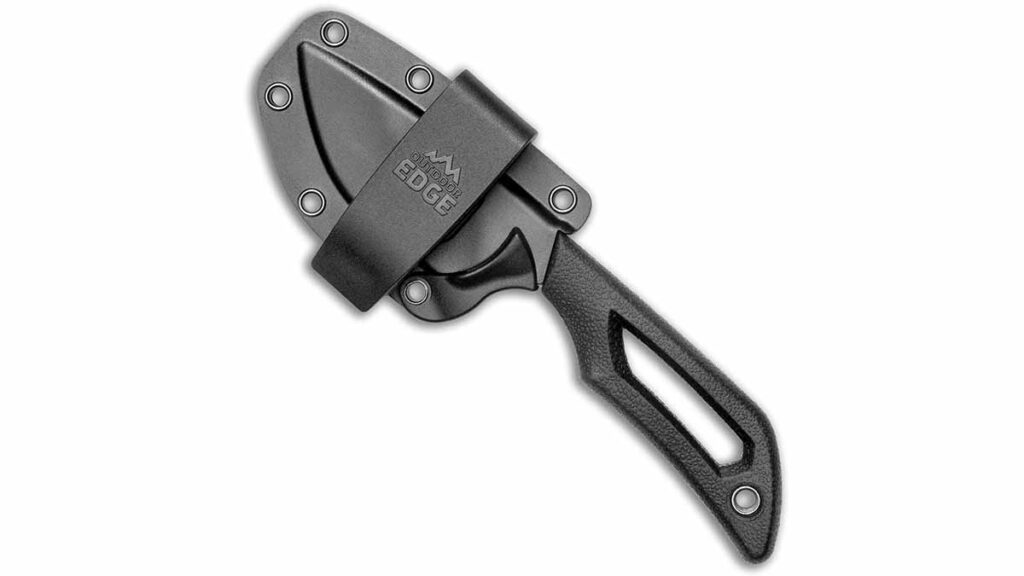
Outdoor Edge Pivot sheath

Now we get to the name of the knife—the Pivot—which seem much more apt for a folder than a fixed blade. But there’s a method in Outdoor Edge’s madness, with it referring to the carrying system. The polypropylene sheath comes with a quick-release locking latch and a removable 360-degree rotating clip (there’s the pivot point) for easy attachment to a belt or MOLLE webbing. It’s a nice system, allowing the user to adjust the cant to their carry style, putting the blade at quick access no matter where it’s carried.

Most would agree the Outdoor Edge Pivot isn’t the Superman of EDC knives, nor the one somebody pulls out for bragging rights. But for a blade to use and abuse on your day’s dirtiest jobs, well it pretty well fits the bill.

More On Fixed Blades:

Damned Designs Basilisk Review: Wide And Wicked

The Basilisk is a lightweight fixed blade that cuts well above its weight class.

I’m really liking the wider blade of the Basilisk* by Damned Designs. The full flat grind combined with the blade’s ample width makes for almost perfect edge geometry—a thin edge for slicing with enough meat behind it for added strength. The thinner blade stops any binding while slicing thicker material like cardboard.

Basilisk in sheath
The fold-over Kydex sheath is first class.

The G-10 slabs have enough texture for a good grip. The Basilisk is a solid EDC knife. It uses Sandvik 14C28N stainless for blade material, a great using steel.

But how well does it cut?

Basilisk Sharpness Test

A baseline edge check using 20-pound bond copy paper went fast. The blade was very sharp from the factory. I’m glad I have calluses on my fingers as the Basilisk nicked them twice because I was slow getting them out of the way.

Light Cutting Duty

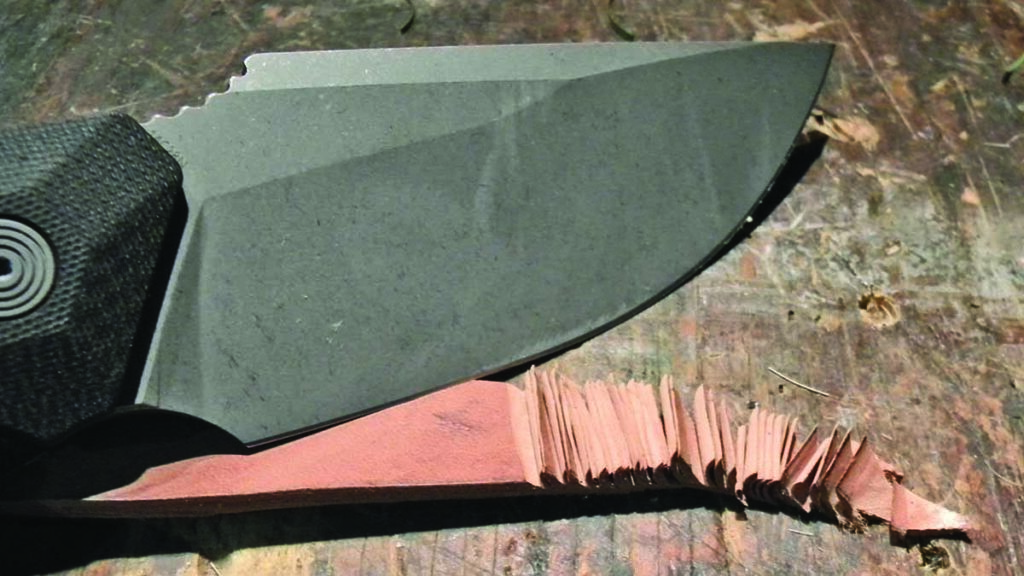
Single-walled cardboard was the second test medium. The blade sliced very smoothly and was aggressive its entire length. The cut strips laid straight due to the flat grind, so no binding on this one. I slowed the slicing down to save my fingers and all went well.

Damned Design Basilisk cutting leather
The thin edge and flat grind produced excellent curlicues for a firestick.

Eight-ounce leather was next. The Basilisk was very aggressive cutting animal skin. I could hear it slice its way through. The handle shape made it easy to control each cut’s width while also being comfortable. I also did some skiving. The Basilisk skived very quickly and evenly. Man, this knife is sharp!

Heavy Duty Cutting

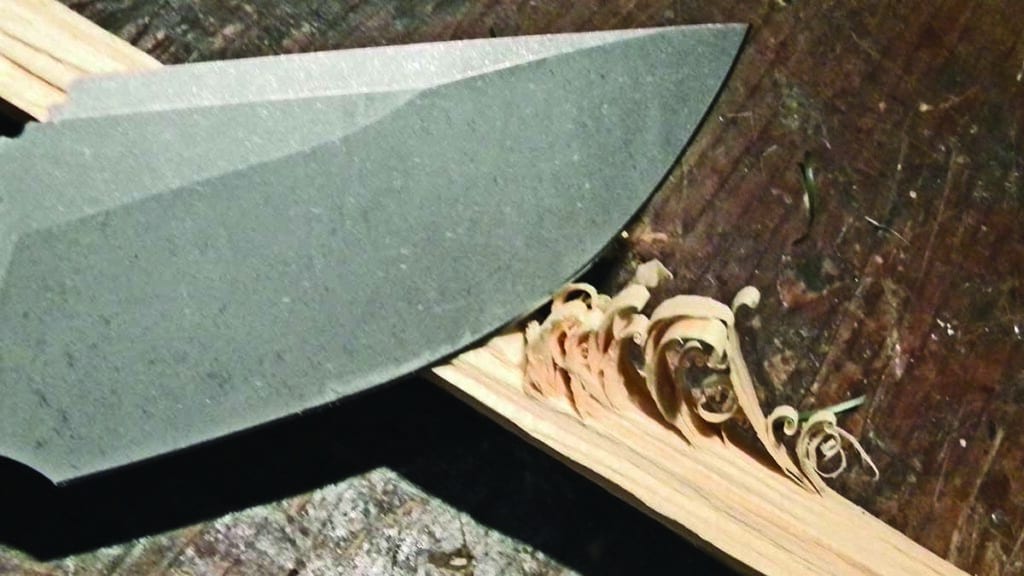
Time for making some firesticks by whittling curlicues. The thin flat grind produced excellent wood curls. The thickness of the curlicues was eminently controllable. However, when I went in for deep cuts the edges of the G-10 handle were a bit hard on my hand.

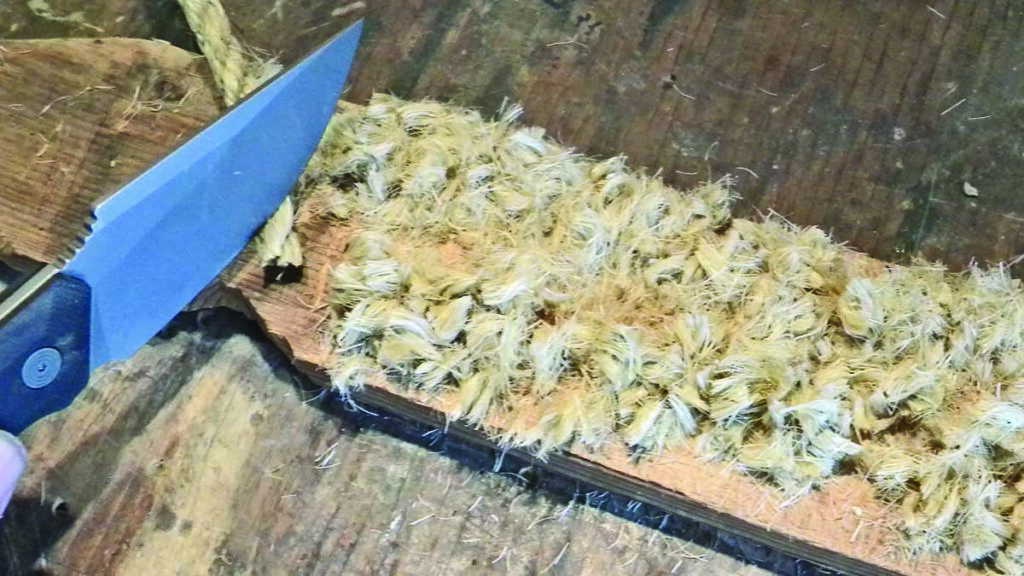
Damned Design Basilisk vs rope
A total of 225 crunching cuts made mincemeat of the half-inch sisal rope.

Next up: half-inch sisal rope. The Basilisk made 100 crunching cuts before I had to don a glove to cover a hot spot. The knife dished out another 125 crunching cuts before I stopped. The edge showed no signs of slowing down. Total: 225 crunching cuts.

Toughness Tests

I batonned the Basilisk through some aged hackberry, a tough wood when dried. I whacked the rear, middle and tip of the blade spine for four complete splits. It worked excellent, with no damage to the edge or knife overall other than some wood smears on the stonewashed finish.

Basilisk vs wood
The thin edge and flat grind produced excellent curlicues for a firestick.

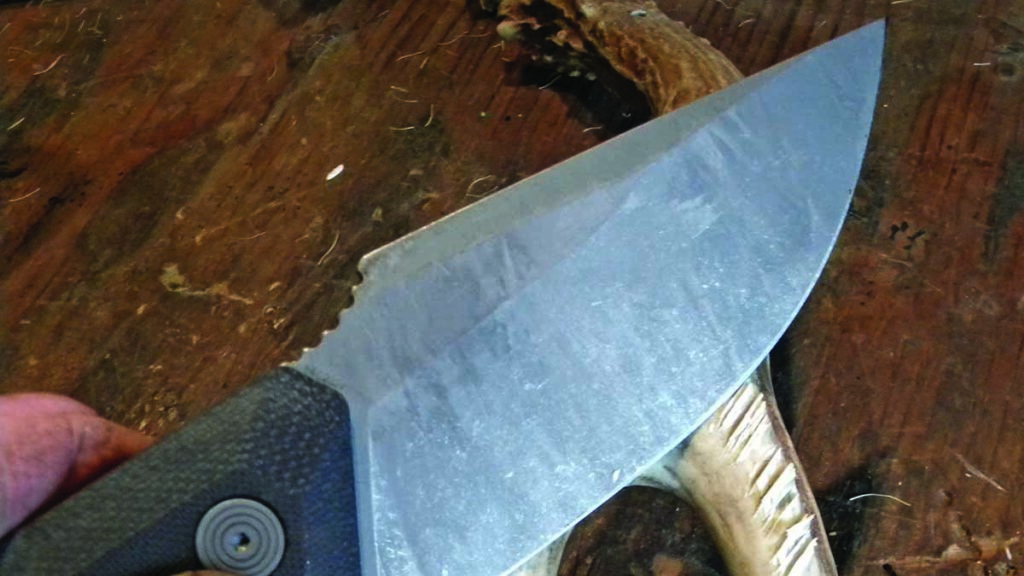
To really push the edge/heat treatment, I grabbed an old whitetail deer antler. After 30 hard whacks on it I checked the edge for chipping. There was none to be found. Heat treat is on the money for sure. Excellent job.

Edge Retention

Time to check the final edge with the 20-pound bond paper. The Basilisk still sliced smoothly even though the paper was getting damp from it raining all day. There were a few tears in the paper from the dampness.

Suggest Changes To The Basilisk

I would soften the handle edges a bit more.

Basilisk chopping antlers
After 30 hard whacks on the deer antler, the author checked the edge for any chipping. There was none to be found. The heat treat is on the money.

Final Cut

The Basilisk is a very nice knife, excellent for EDC or camp. It’s definitely a top pick on my list.

Damned Designs Basilisk Specs

Knife Type: Fixed blade
Blade Length: 4.25”
Blade Steel: Sandvik 14C28N stainless
Blade Width at Widest: 1.75”
Blade Finish: Stonewashed
Handle: G-10
Handle at Thickest: .5”
Weight: 7.25 ozs.
Overall Length: 8.75”
Sheath: Kydex fold-over
Weight w/Sheath: 11 ozs.
MSRP: $75

*The basilisk is a legendary serpent king that killed those who looked into its eyes.

Read More Knife Reviews:

Fire Starter Knife: Blades Designed To Spark A Flame

Fire-starter knives make sparks when you need them most.

Bushcraft skills have grown immensely in popularity in the past few years. It could be the slew of TV shows promoting survival situations or just perhaps an interest in self-sufficiency. What is true is that the knife industry is playing catch-up to the bushcrafting market, and many new products pop up that have features dedicated to keeping you alive and warm in the woods.

Fire Starting Knives

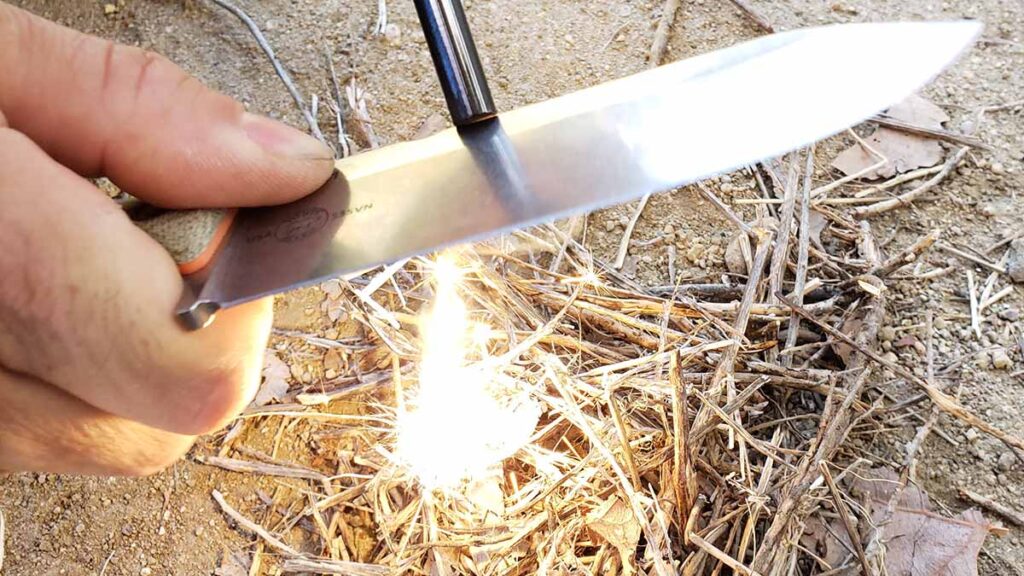
Recent years have seen an influx of knife features deemed ideal for use with another essential tool—the ferro rod striker. Ferro rods are made of ferrocerium, an alloy consisting of several base metals and magnesium. Magnesium is highly reactive and generates showers of sparks as it is scraped against steel. Think of it as a more modern version of flint. Ideally, the ferro rod is struck against a sharp, acute surface. Many people use the blade’s edge for this, though this is not recommended as dull spots can emerge quickly.

As time passed, people began sharpening the blade spines to 90 degrees, making a hard, sharp angle that is not on the cutting edge. Still, others find this feature annoying, as it is fully possible to injure your hand on a squared spine. I know because I’ve done it.

As a remedy, people started cutting in little semi-circular cutouts into the spine that still retain a square shoulder, thus allowing for safer handling when striking. Both a fully sharpened spine and the sharpened cutout are valid features; it depends on what style you prefer.

Striking the rod
Strike the rod against the sharp corner of the blade spine to create sparks and ignite the tinder. (Mary Lou Ayres image)

The smaller cutout is really just a striking feature but the fully sharpened spine can be used for a number of other ends, most notably an easy and effective means of peeling carrots, potatoes and other root vegetables for the camp kitchen. Many top fire-making knives have sharp-angled spines and cutouts ideal for striking.

Bowdrill Divits

Some bushcraft knives have bow drill divots in the grips. No less than 10 knives I’ve tested in the past year have the feature and I’ve yet to master its use.

A bow drill is a very primitive means of starting a fire with friction. It takes about forever and even then is not a guaranteed success. In terms of time management and the amount of calories used in a survival situation, I really don’t think it is worthwhile, though it’s nice that the feature is there.

The bow drill is basically a stick you press down on while at the same time you spin it with a bow (a stick with string wrapped around it) to create an ember. The idea behind a knife with a divot on the handle is it allows you to make kindling and all the tools you need to make a basic fire. You can use the knife to make the string (plant fiber), the drilling board (piece of dry wood) and bow/drill (stick).

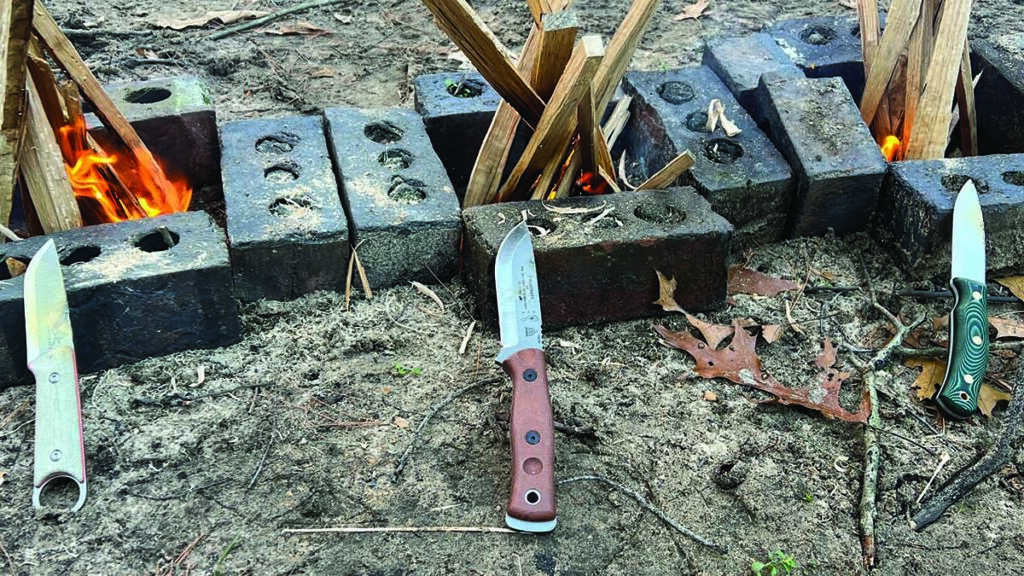
Knives with fires started
All three knives were tested side-by-side in equal conditions to see how well they performed in making a fire. All succeeded.

BLADE® Editor Steve Shackleford asked me to test the knives in this capacity as long as it didn’t detract from the other standard knife testing. “Skip it if it’s too much,” he stated. “I don’t want to wear you out.” However, in the spirit of making the story as detailed as possible inside the 1,500-word limit, I tried the TOPS and White River knives with the handle divots to see if I could, in fact, start a fire using the bow drill.

I was unsuccessful with both but did end up getting a fire going with a cheap bow drill kit from Amazon. No matter how you slice it, using a bow drill is just a huge pain in the keister and I’d rather stick a standard lighter in every pocket of my gear and an extra one in my boot than have to resign myself to using a bow drill.

A large reason why I really didn’t like using the divot features was that they really require you to keep the knife in the sheath. Otherwise, you’re just sitting there putting pressure on a knife with the edge floating out in space. It is easy to get into a trance while using a bow drill, and I found myself not paying attention at several points—not a safe situation.

Holding the knives in their sheaths is not very comfortable as they are hard Kydex. There was no real comfortable way to put pressure on the drill while gripping the sheath. Eventually, I gave up and decided if I ever did have to use a bow drill, I’d just find another piece of wood and carve a divot with the knife instead.

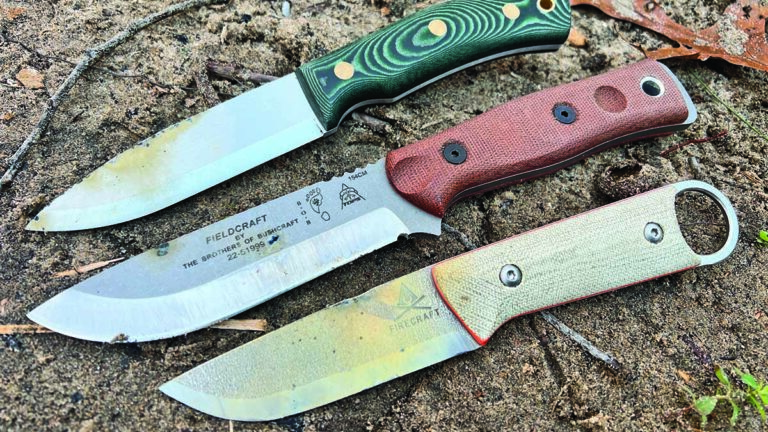
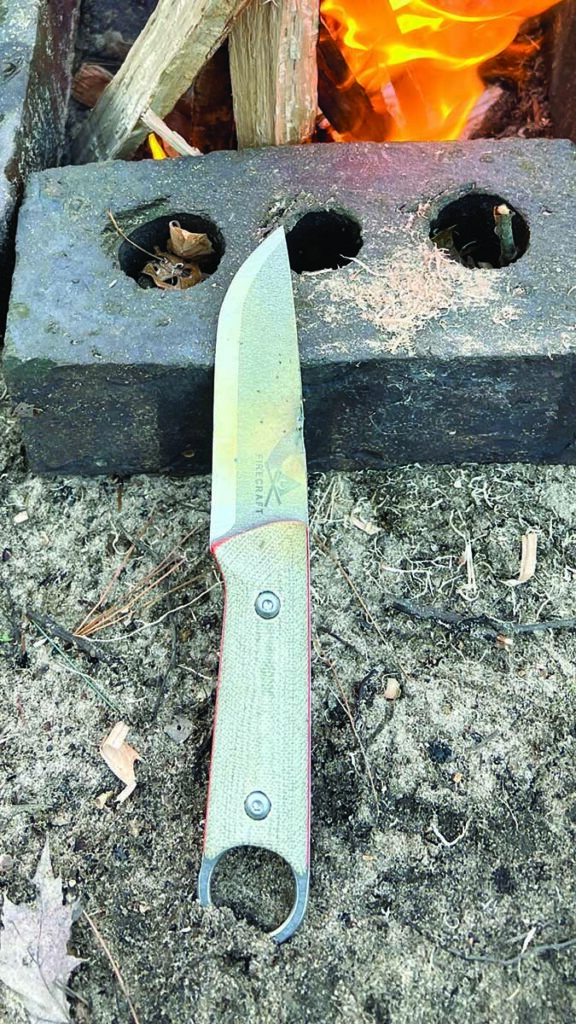
White River Knife & Tool FC-PKO

White River FC-PKO
The White River FC-PKO is an end-stage tool in that it can readily start fires, the author noted, but lacks the strength and blade thickness to take down anything more than sticks.

White River Knife & Tool makes excellent knives. In fact, they are some of the most well-laid out and functional I’ve tested in my time with BLADE®. I have used the company’s larger FC7 as my main deer hunting knife in camp and have, between myself and my friends, packed out no less than 50 deer with it. I was happy to review the smaller FC-PKO, sort of a little brother to the FC7.

The FC-PKO is a modified puukko style with a Scandi grind and a ring pommel. The Kydex sheath is low profile. My initial impressions were that the knife is small, thin and razor sharp. I immediately thought it would be a perfect knife for pheasant or duck. I found it a champion at cutting tinder and kindling, but not up to larger work. The knife is an end-stage tool in that it can readily start fires, but lacks the strength and blade thickness to take down anything more than sticks. You’ll need a larger tool to actually prepare the wood prior to using the FC-PKO.

As far as fire-making ability, it is a solid performer. The knife has a small notch on the spine that ignites the ferro rod easily. The edge can trim extremely fine curls of tinder. Where I ran into problems was the ring pommel. I have large hands and long fingers, so this may not be an issue to everyone, but I found my pinky largely just floating in space. I couldn’t get comfortable with the ring. That said, it is overall a great knife that will ultimately see years of service on my belt.

White River Knife & Tool FC-PKO Specs
Knife Type: Modified puukko
Blade Length: 3.7”
Blade Steel: CPM S35VN stainless
Blade Grind: Scandi
Blade at Thickest: .125”
Handle Material: Micarta® w/orange liners and bow-drill divot
Weight: 4.6 ozs.
Overall Length: 8.1”
Sheath: Black Kydex w/striker loop
Striker: Included, basic rubber grip
Country of Origin: U.S.A.
MSRP: $200

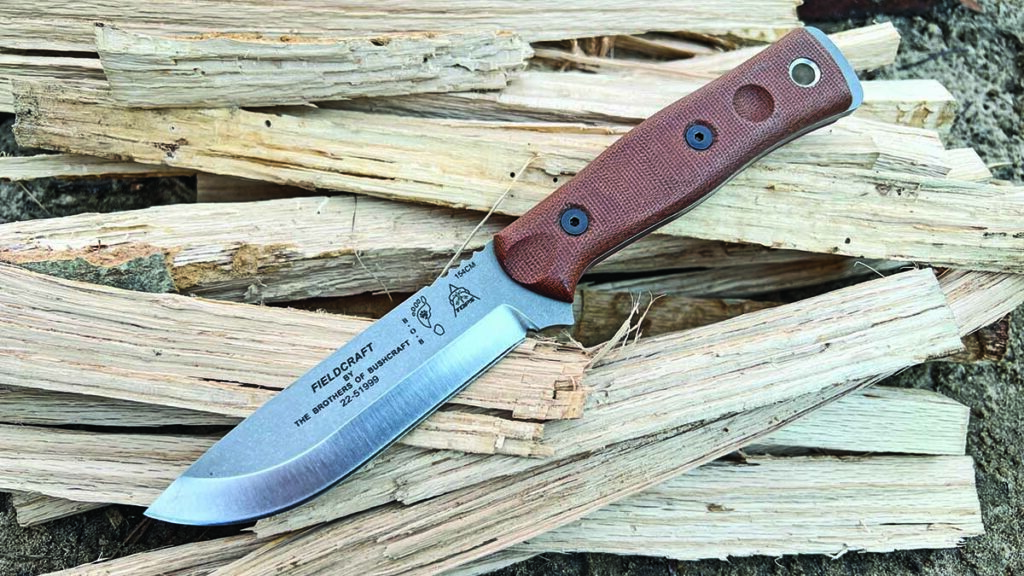
TOPS Knives Fieldcraft

TOPS Fieldcraft
The author described the Fieldcraft as “a beast of a knife that weighs nearly a pound and is built like a tank.”

The TOPS Knives Fieldcraft by Brothers of Bushcraft is a beast of a knife that weighs nearly a pound and is built like a tank. The edge is razor sharp despite the steep grind and can split medium-size firewood easily. The handle is thick and robust and you can really get a grip on it. I find large knives like this almost too much for regular use, but this one fits into the niche of being large enough for constant use and not too big to be a burden.

The knife has a striker cut in the pommel as opposed to the blade spine. That said, you can order it with a sharpened spine if you wish. I wanted to test the base model to get an idea of what the average owner would experience. If I want to add a sharp spine, I can do so on my grinder or have TOPS do it. The pommel striker is not easy to get used to—you have to find a safe direction to point the blade, which can be difficult. That said, you can leave it in the sheath for this part—just be careful not to launch it out while striking. The cutout is effective once you get used to it.

TOPS Knives Fieldcraft Specs
Knife Type: Full-size bushcrafter
Blade Length: 4.75”
Blade Steel: 154CM stainless
Blade Grind: Modified Scandi
Blade at Thickest: .19”
Handle Material: Tan canvas Micarta® w/red liners and bow-drill divot
Weight: 14 ozs.
Overall Length: 10”
Sheath: Black Kydex w/striker loop
Striker: Included, basic aluminum grip
Knife to Know: There are numerous other Fieldcraft models available in different materials and colors
Country of Origin: U.S.A.
MSRP: $295

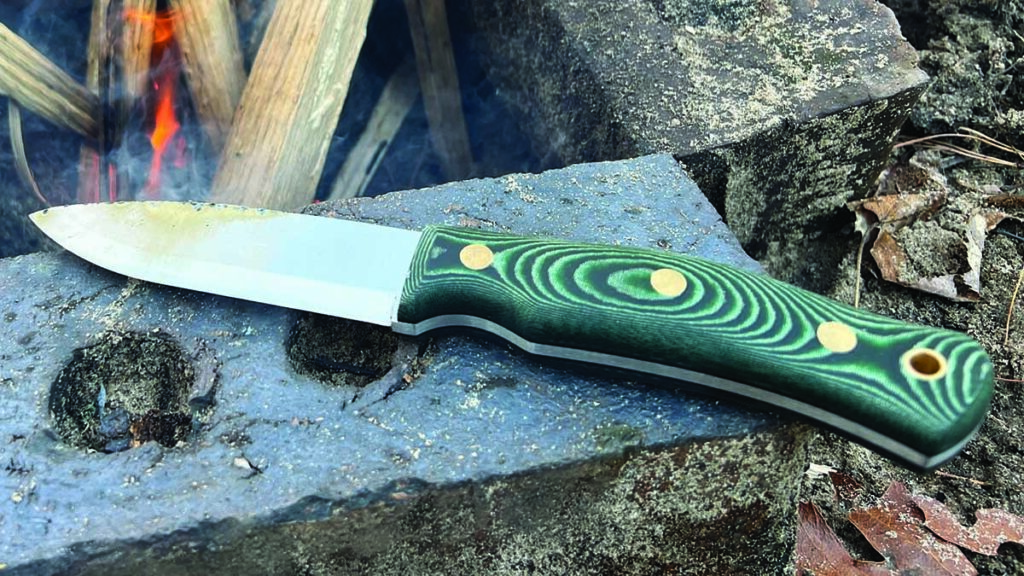
Casström No. 10 Swedish Forest Knife

Casstrom fire starter knife
According to the author, the Casström “has everything I like and nothing I didn’t—not too big, not too small and pleasant to look at.”

The classic-looking Casström No. 10 Swedish Forest Knife is reminiscent of such Scandinavian knives as the puukko. It is not a traditional puukko but rather a somewhat modern take on the longstanding Nordic tradition of general-use fixed blades. Many American knives in the bushcraft world have a somewhat gritty, tactical feel and a somewhat industrial appearance. The No. 10 is not terribly exciting in looks but hides its function under a gentle exterior. It was my favorite knife in the review, which may surprise you. It has everything I like and nothing I didn’t—not too big, not too small and pleasant to look at.

The knife has a smooth grip—be careful if you’re not wearing gloves, it can get a tad slippery—and a plain, graceful blade. The angle of the spine is sharpened but not so aggressively that it would risk injury. It is not a particularly thick blade but can handle some medium-to-small splitting work if you’re careful, and makes kindling and scrapes tinder well. The knife strikes easily anywhere on the spine and offers a great deal of control. Of note, the sheath is leather and has a ferro rod with a matching green/black Micarta® grip. As a set the knife and rod look very nice together. The rod was also the easiest to hold onto thanks to it having the largest grip area.

Casström No. 10 Swedish Forest Knife Specs
Knife Type: General-purpose Scandi
Blade Length: 3.75”
Blade Steel: Sandvik 14C28N stainless
Blade Grind: Full flat
Blade at Thickest: .13”
Handle Material: Green/black Micarta® w/black liners
Weight: 5.75 ozs.
Overall Length: 8.6”
Sheath: Black leather w/striker loop
Striker: Included, matching green/black Micarta handle
Knife to Know: According to the author, the knife has the most user-friendly sheath of the test bunch
Country of Origin: Sweden
MSRP: Approximately $200

Fire Starter Knife Final Cut

Starting a fire can be a challenge, especially in adverse conditions. Considering just how cheap common lighters and survival matches are, knives like the ones in this article should probably not be your primary means of starting a fire in an emergency. These knives are capable tools that provide a level of redundancy to your kit in some very good, non-obtrusive ways. The base-level skills needed to start a fire can be obtained with each of these knives with relative ease, but you will still need to make sure to have the skills necessary to maintain a fire in the wilderness.

Always be sure that you are not making a bad situation worse with fire, and make sure you’re not using a knife under less-than-ideal conditions. If you have a lighter or matches, use them first, especially in the dark.

More Wilderness Knives:

Best Flipper Knife: Blades That Win The Fidget Factor (2023)

With a simple finger flick or even in promo art, today’s flipper knives fly.

Early flipper folders were used in conjunction with assisted-opening mechanisms as a means for initiating movement, allowing the spring or torsion assists to open the blades the rest of the way. A few years later, folder pivots incorporated ball bearings, nearly negating the need for assisted-opening mechanisms on flippers.

This reduced friction simplified folder construction and provided glassy smooth blade rotation. Although a few companies still offer assisted-opening flipper folders, most production versions rely on ball bearings.

Flipper Folders: Function Flows From Form

A flipper tab and ball bearings don’t necessarily equate a folder with quick action and secure deployment. A flipper mechanism will not work properly without a well-designed detent.

Imperative is the detent’s power to secure and hold the blade shut. When placing pressure on the flipper tab with an index finger, the user should be able to feel the grab of the detent. With more pressure on the flipper, the inertia of the blade overrides the pressure of the detent, and kinetic energy swings the blade into the fully open and locked position.

An imprecise detent results in either sloppy action or a flipper mechanism that requires too much pressure against the narrow tab. Optimally, with pressure on the flipper tab, the detent holds its load for a second before letting the blade go with enough energy to snap it open.

Finding Fun In The Fidget Factor

It’s the flipper action that is so satisfying. It imbues a “fidget factor” that causes knife users to snap open their folders while watching TV, talking on the phone, lying in bed or practicing any number of mundane daily routines.

The latest flipper folders not only offer pleasing aesthetics but stay true to the ideals of their predecessors. With premium materials, designs that make use a pleasure and looks that astound, they epitomize some of the coolest knives around.

Best Flipper Knives

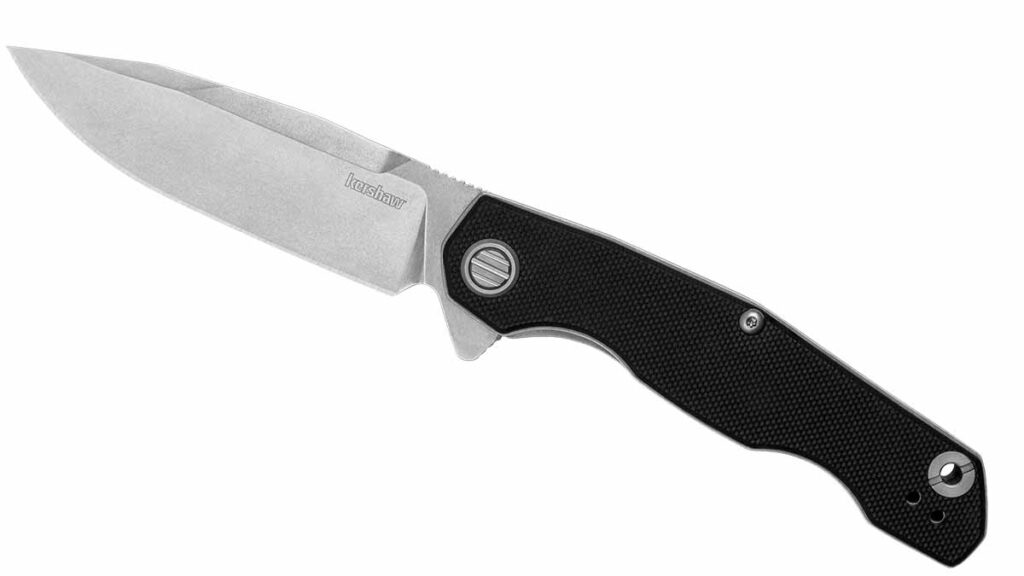
Kershaw Inception

Flipper Knife Kershaw Inception
The stonewashed blade of the Kershaw Inception pivots on KVT ball bearings. The custom pivot collar adds a touch of class.

At Kershaw, the Inception is looking good with performance to match. “I love the clean, stylish look,” related Kershaw Marketing Manager Dominic Aiello, “but the satisfyingly smooth action is what really makes the Inception a top-notch manual everyday carry.”

The flipper tab was not designed with the intention of acting as a single guard, Aiello says, but rather in combination with the textured handle overlays to help prevent the user’s hand from slipping. Along with that, the D2 tool steel blade .11-inch at the thickest provides enough heft to balance durability and ease of slicing. The clip is reversible and deep carry with flush screws that won’t snag in the pocket or impede quick deployment.

Kershaw Inception Specs
Company: Kershaw
Blade Length: 3.25 inches
Blade Material: D2 tool steel
Handle Material: G-10
Lock: Linerlock
Weight: 3.1 ounces
Pocket Clip: Ambidextrous/reversible, deep carry, tip up
Closed Length: 4 inches
Country Of Origin: China
MSRP: $99.99

Medford Knife & Tool USMC Fighter Flipper

Flipper Knife Medfor USMC
The CPM S35VN stainless blade of the Medford Fighter Flipper is 3/16-inch thick at the thickest and has a Rockwell hardness of 58 HRC.

The USMC Fighter Flipper from Medford Knife & Tool boasts an iconic name and incorporates titanium along with other highly durable components.
“Where to start?” commented Medford representative Geoff Oprandy. “First, the USMC Fighter Flipper has superior design, engineering and aesthetics. When Greg Medford was inspired to make this knife, it didn’t take long for initial sketches to appear. He wanted a worthy companion piece for our top-selling Fixed Fighter, which has been a category king for quite some time.”

Oprandy describes the USMC Fighter Flipper as “a unique mixture of titanium components with the best CPM S35VN blade steel. This is a big, manly knife that’s as comfortable working as it is cruising around in your pocket. There is so much going on with it that it’s hard to take in, from the retro milling on the handles, drop-point blade, and integral Ti pommel to the bearing pressed into the one-of-a-kind pocket clip. The tab is designed to be a tad longer and has a unique radius with a knurled feature. For being a large knife [it provides] great purchase, and the flipper tab combined with the finger-indexing groove enable a great grip. The knife runs on phosphor-bronze washers custom made to meet our specs.”

According to Geoff, the knife has a special connection with the United States Marines Corps. As designer Greg Medford related, “When you hold it in your hand, almost 250 years of Marines speak to your soul.”

The design is intended to feel at home with users who prefer the “connection” made with a large folder, Oprandy says. “When people position the knife correctly and begin to use it,” he stated, “the energy transfer seems balanced, natural and confidence inspiring.”

USMC Fighter Flipper Specs
Company: Medford Knife & Tool
Designer: Greg Medford
Blade Length: 4.25 inches
Blade Steel: CPM S35VN stainless
Handle Material: Titanium
Pivot Action: Phosphor-bronze washers
Weight: 9.8 ounces
Pocket Clip: Titanium; standard carry
Closed Length: 5.25 inches
Country Of Origin: U.S.A.
MSRP: $840 and up

Rick Hinderer Knives Full Track Spearpoint “Nuked”

Flipper Knife Rick Hinderer Knives Full Track
The Full Track Spearpoint “Nuked” has a removable tool seated in the spine for disassembly/assembly of the knife. The scale on the show side is removable to store spare washers and spacers.

Sam Santa Rita, general manager of Rick Hinderer Knives, says the Full Track Spearpoint “Nuked” is a bigger version of the company’s “very popular Half Track model. It is one of our larger folders at 3.75 inches and has titanium handles with G-10 inserts. The Full Track features a removable tool seated in the spine of the folder that is capable of complete disassembly of the knife.” The folder also utilizes a G-10 insert cover on its show side that hides a pocket for the storage of steel inserts and washers for the Rick Hinderer Knives Tri-Way Pivot System. This allows the user to easily swap from bearings to washers or vice versa depending on the situation.

“Its size and durability coupled with the ease of maintenance and ‘customizability’ makes the knife a perfect hard-use folder capable in any environment,” Sam added. The Full Track is available in stainless blade steel options of CPM S35VN, CPM 20CV and M390. Another blade steel option will be released later this year.

The Full Track flipper tab doubles as a single guard, while the blade pivots on caged thrust bearings. Meanwhile, the Tri-Way Pivot System allows for the aforementioned use of Teflon™ and phosphor-bronze washers as well, which come standard with the knife.

Full Track Spearpoint “Nuked” Specs
Company: Rick Hinderer Knives
Designer: Rick Hinderer
Blade Length: 3.75 inches
Blade Steel: CPM 20CV stainless
Handle Material: G-10
Lock: Framelock
Pocket Clip: Yes
Weight: 6.9 ounces
Closed Length: 5.125 inches
Country Of Origin: U.S.A.
MSRP: $820

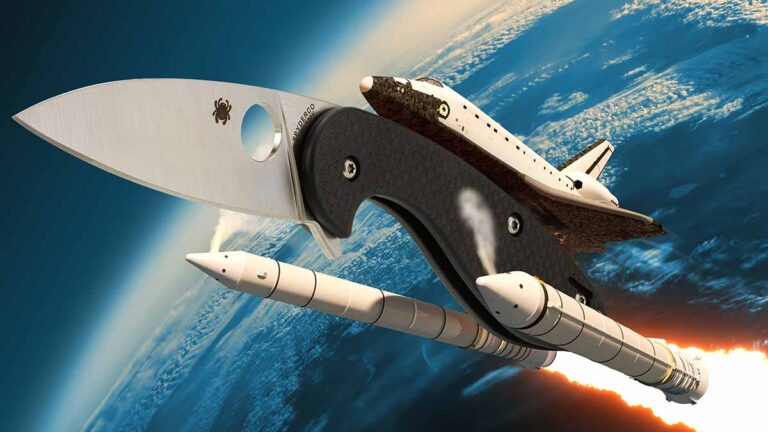
Spyderco Sliverax

Flipper Knife Spyderco SLIVERAX
The Sliverax is the first factory folder to combine Spyderco’s Compression Lock® with a flipper-style opener. Blade thickness and grind: .138 inch at the thickest and full flat.

The Sliverax is a bit of a departure for Spyderco. “It’s a flipper design, which is not common among Spydercos,” explained Joyce Laituri, company marketing manager. “The designer, Paul Alexander, is a different type of cutlery designer we have worked with in the past. He holds a doctorate in industrial design and mechanical engineering, and is a leading researcher for a company in the automotive industry.”

The Sliverax brings a shape with seamless flow and a slightly negative blade angle to enhance leverage, placing the point on the knife’s centerline for utility and control. “The negative angle also shortens the opening arc combined with the round hole and flipper mechanism for a full spectrum of positive, high-speed one-hand-opening options,” Joyce commented.

“The flipper tab doubles as a guard,” she continued, “and it’s easy to see and feel when the knife is held. There is a large, deep finger choil already, and the flipper mechanism in the open position extends the choil, creating a comfortable and deep guard for the index finger, or pinky if held in a reverse grip.”

Laituri describes the opening experience with the Sliverax as “slick as a Slip & Slide.” The mechanism features a phosphor-bronze bushing with ball bearings and a nested liner for structural strength. The CPM S30V stainless blade is exceptional in its combination of toughness, wear resistance and corrosion resistance as well, while the ergonomics of the handle are derived directly from its innovative shape, super-thin choil and expansion at the butt to fill the hand.

Spyderco Sliverax Specs
Company: Spyderco
Designer: Paul Alexander
Blade Length: 3.48 inches
Blade Steel: CPM S30V stainless
Handle Material: Carbon fiber/G-10 laminate
Lock: Compression Lock®
Weight: 3.3 ounces
Pocket Clip: Deep pocket, wire, ambidextrous, tip up
Closed Length: 4.52 inches
Country Of Origin: Taiwan
MSRP: $306

Editor’s Note: Mike Haskew and Dexter Ewing contributed to this post.

Check Out More Buyer’s Guides:

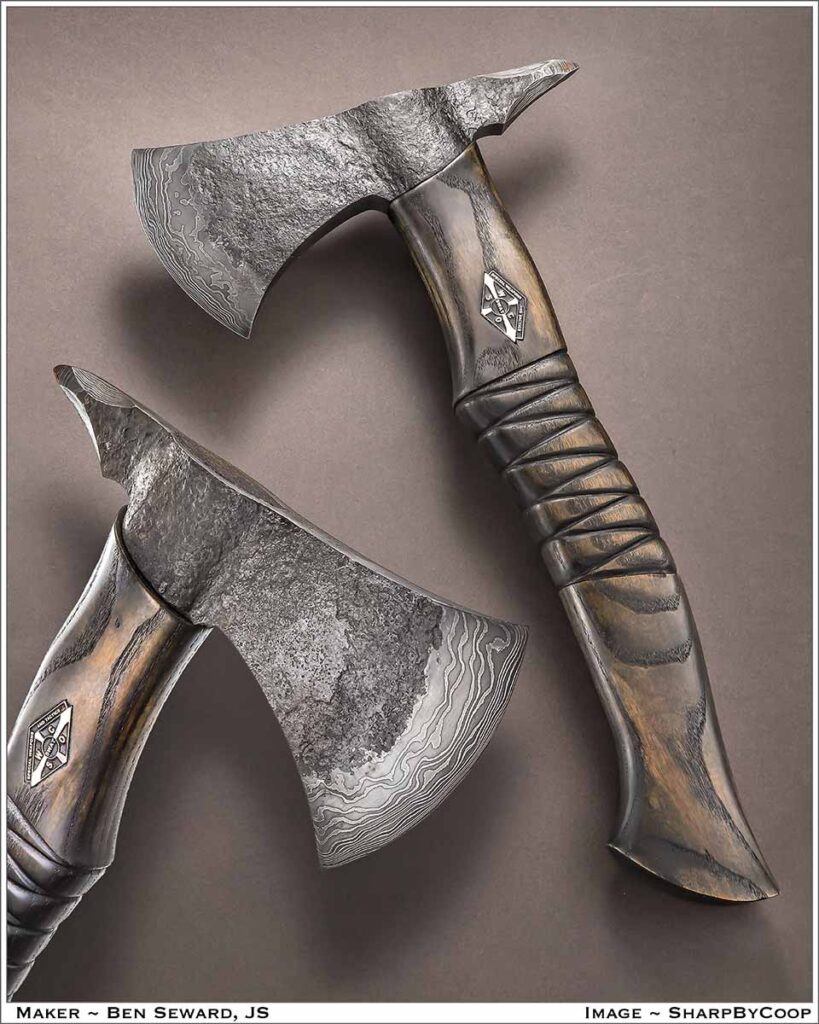
Wicked Breacher: Ben Seward’s SWAT Axe

Ben Seward’s breacher SWAT Axe salutes officer’s 21 years of police service

When ABS journeyman smith Ben Seward went to make his first axe, he didn’t settle for something easy—he went the whole hog on a special breaching model as a retirement gift for a 21-year law enforcement veteran.

Sgt. Magnus Gervol retired from the Whatcom County, Washington Sheriffs Office after a career that included 15 years on the SWAT team and 14 years as a sniper.

Ben Seward Swat Ax profile

Members of the Sheriffs Office contacted Ben, who forged the axe from the barrel of a Remington 700 SPS tactical sniper rifle. The idea was to make a tactical axe with a beard and a tomahawk spike. The handle is Ozark white oak. Ben’s dad, David, who specializes in sheaths, made the leather sheath.

Ben forge welded the rifle barrel into a bar and layered it up with other carbon steels. He forged the two flats of the head roughly into a triangle and pieced in the bit for the cutting edge. All of the head, including the edge and spike, is forged of the same damascus.

SWAT Axe Specs
Maker: Ben Seward
Head Size: 7.75”
Bit Size: 3.5”
Head/Bit Material: Damascus forged from the barrel of a sniper rifle and 1080 carbon and 15N20 nickel-alloy steels; includes a rough-forged finish
Handle: Ozark white oak
Handel Length : 14”
Maker’s Price For A Similar Breaching Axe (excluding the steel from the sniper rifle): $1,500

Check Out More Cool Custom Knives:

Advertisement

Must Read Articles

Read this before you make a knife

Knifemaking 101 – Read This Before You Make a Knife

  by Wayne Goddard My experience has taught me that there's nothing like digging in and getting started. I've often said the hardest part of the...
how to forge damascus steel

How to Forge Damascus

Advertisement
Advertisement