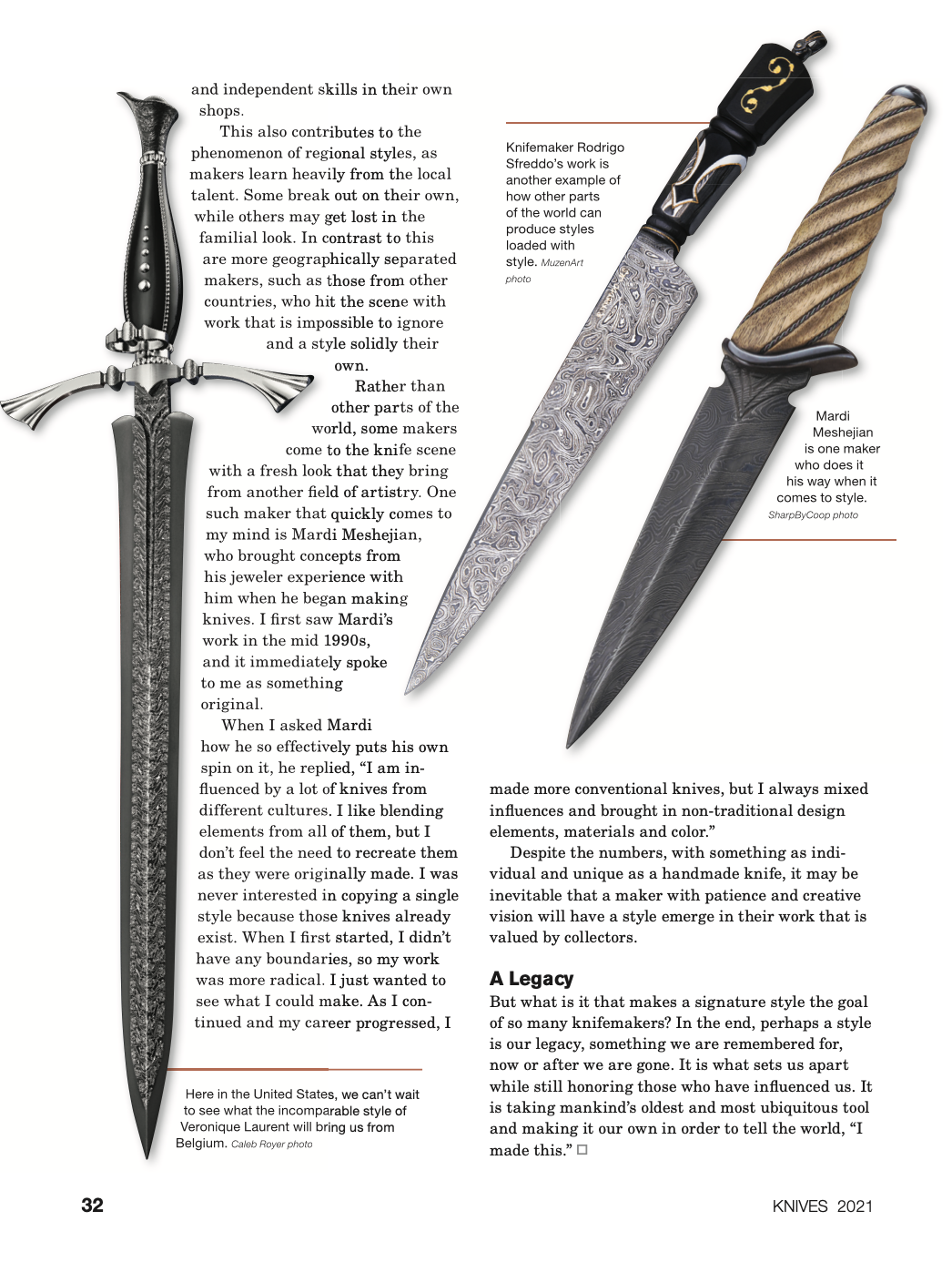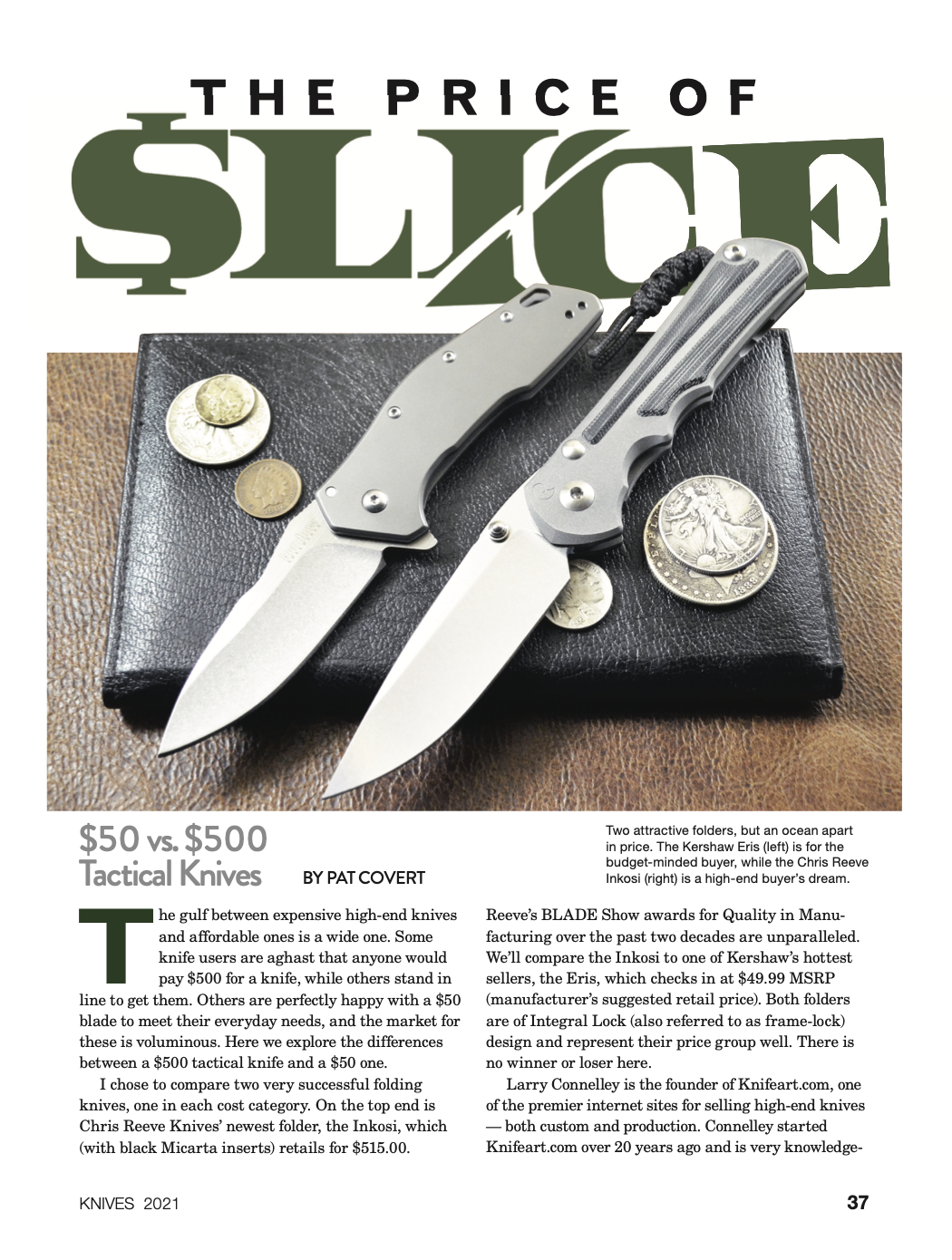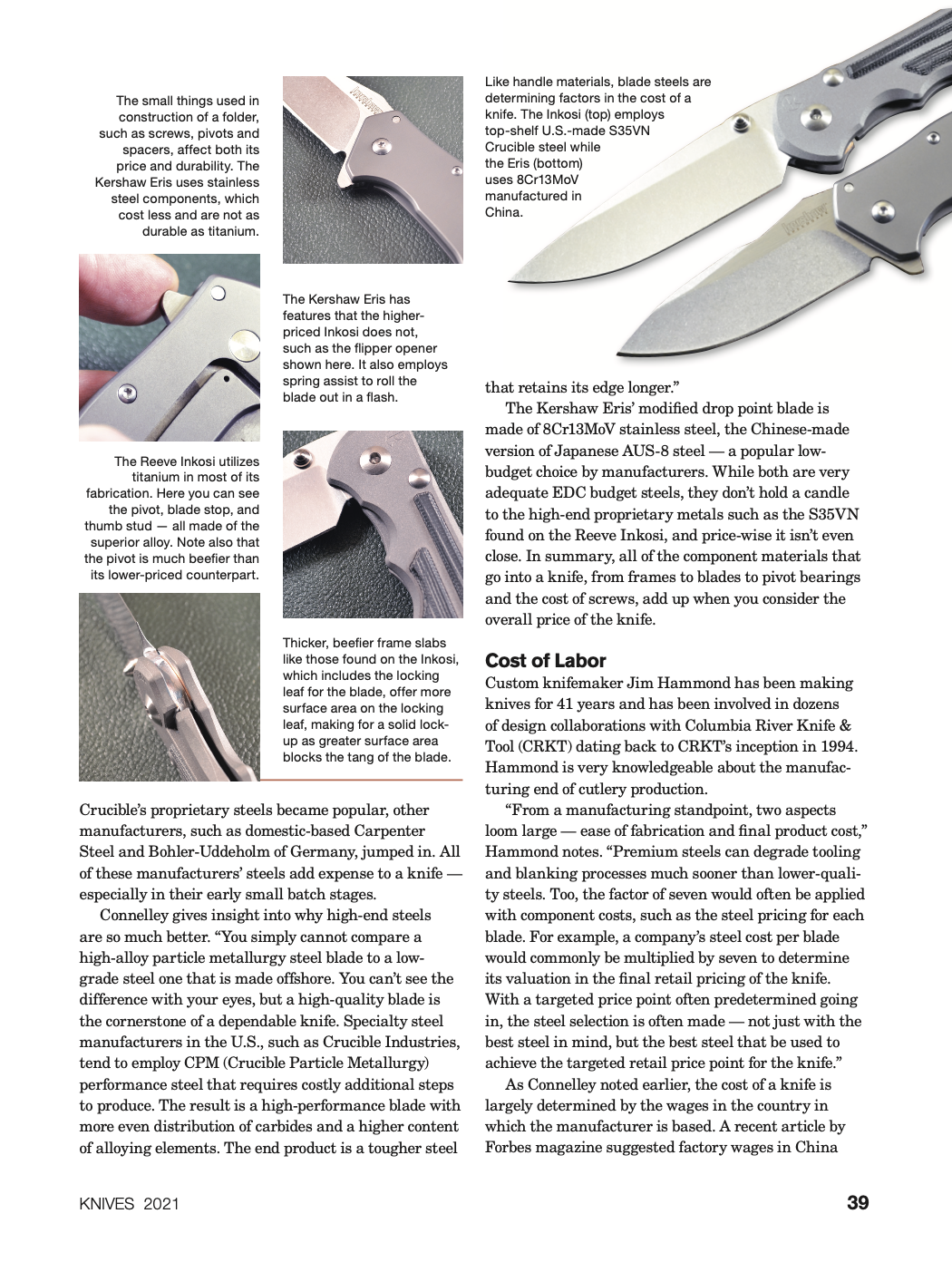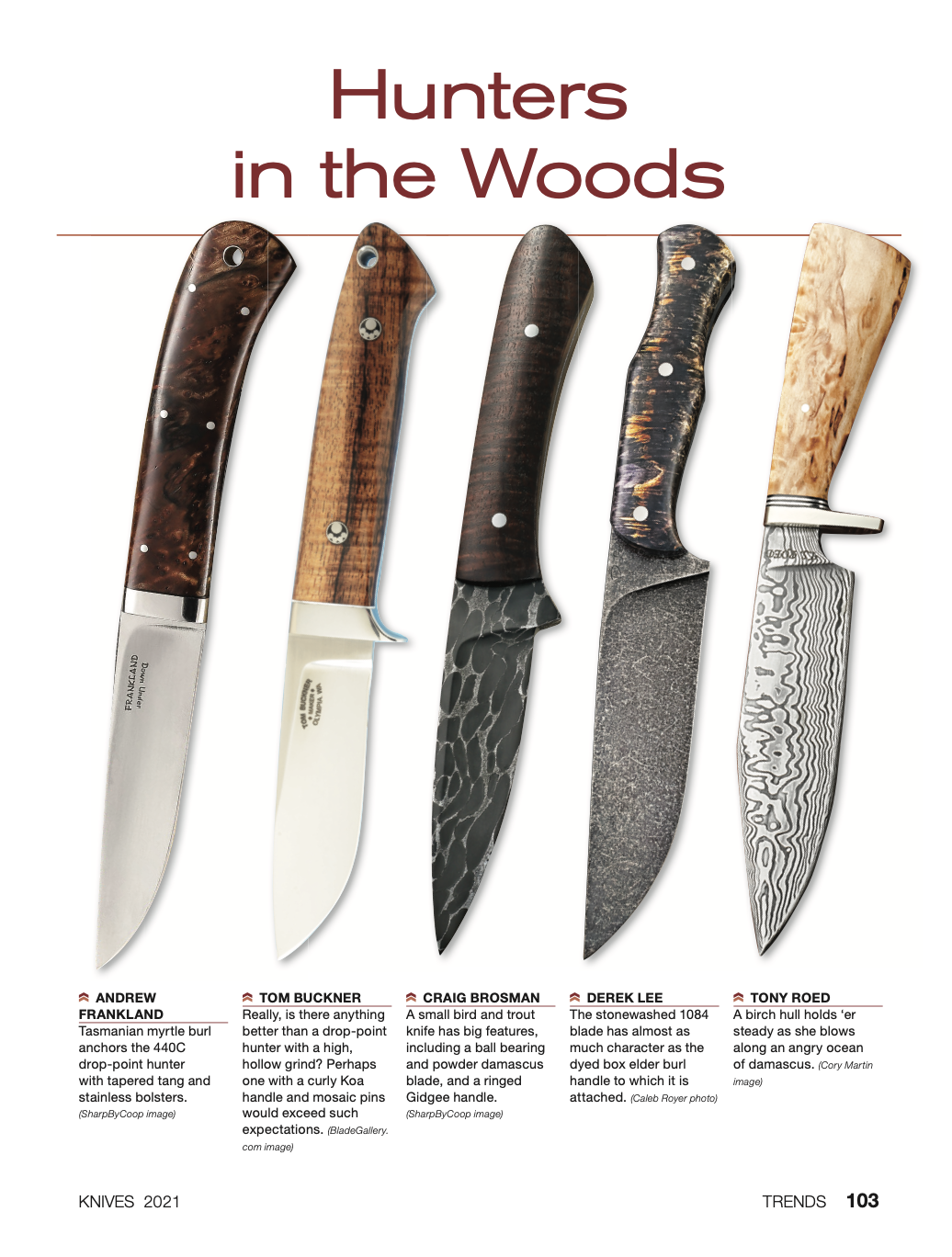

Knife Fuller: What Does It Add To A Blade?

1

They’re role is more than making a knife look groovy.

At first, it’s an item of curiosity. The fuller, the symmetrical groove that runs along the partial or full length of a knife or sword blade, might function simply as an aesthetic touch. It could have some utilitarian purpose. Or maybe it’s a bit of both.

Makers of knives and swords have included the fuller with their work for centuries, and today it remains a focal point in the process. Its presence is often prominent but its purpose is at best somewhat obscure. Why, then, is it common among the work of accomplished makers?

“The primary purpose of the fuller is to lighten a blade without compromising strength,” explained award-winning custom knifemaker and swordsmith Vince Evans. “Many cultures incorporate a decorative aspect into the fullers on their blades. Italians are well known for segmented fullers. You also see segmented fullers on Chinese swords, as well as some German hunting swords.”

Evans took home the custom awards of Best of Show for his Italian Cinquedea and Best Sword for his Italian Schiavona—the former at last year’s Solvang Custom Knife Show and the latter at BLADE Show 2024. He also won Best Sword for his Roman spatha and Best Fixed Blade for another of his cinquedeas at BLADE Show 2022. All four feature multiple fullers. Vince sees the fuller as operational on more than one level, from practical to pretty.

Thomas Taylor’s kukri sports a 12-inch fullered blade of W2 tool steel with a compound bevel grind and heart-shaped Spanish notch. Handle: buckeye burl. Overall length: 17 inches. The sheath is cowhide and water buffalo. Taylor’s price for a similar knife and sheath: $550. (SharpByCoop knife image)

“Even in the Bronze Age you see multiple fullers,” Evans continued. “Sometimes they are very narrow. Multiple fullers can give more rigidity to a blade but with reduced weight, and a wide blade lends itself to multiple fullers. Typically, fullers are on both sides of the blade, although not always. There are examples of 2nd-century Germanic swords that have fullers on only one side or have different numbers of fullers on each side. Their purpose may be partially aesthetic.”

Evans uses a fullering tool to press the groove into the hot steel when working with a larger blade. On smaller blades he usually grinds the fullers into the steel after the blade has been shaped and beveled. Other techniques involve the use of round or flat tools to scrape the groove in, depending on the blade style.

Much of Vince’s work is an homage to history, and the fuller finds its place there for sure.

“Since my work is primarily historical in nature, I use fullers where they were seen on originals,” he remarked. “A fuller may be used on any blade that you want to lighten without losing strength.”

Varied Methods Of Creating Fullers

Seth Lopez outfitted each side of the 9.38-inch recurve blade of his BLADE Show 2024 Best Fighter winner with a stylized fuller. The blade is a damascus of 1080 carbon and 15N20 nickel alloy steels and the grind is a combo convex/hollow clip. The handle is African blackwood with 416 stainless steel domed pins. Overall length: 14.5 inches. (SharpByCoop knife image)

Seth Lopez is an accomplished master of the fuller and took home the custom award for Best Fighter at BLADE Show 2024. His take on the fuller lies in function, helping the blade to perform as optimally as possible.

“In a sword, the fuller will provide rigidity through surface area while also taking out a lot of weight,” he remarked. “In smaller knives, I like the way they look, and they help take out some weight. Fullers can be on one or both sides of the blade. Many single fuller blades are ground only on one side, so the fuller on the opposing flat side relieves that area. Many culinary knives and sushi knives are made this way.”

According to Lopez, fullers can be achieved via several methods. Traditionally forged blades may have them scraped in, while they can be milled, ground or filed in as well. Seth’s method is dictated by the size and shape of the blade he intends to create. The application from a practical standpoint is seen easily in the sword or chef’s knife, while in smaller knives he says fullers add “some completeness and flow to the overall design.”

When custom maker Thomas Taylor includes a fuller, his methods are varied.

The 3.4-inch fullered blade of Eyal Landesman’s folding dagger is RWL-34 stainless steel with a hand-rubbed finish. The handle is zirconium with mosaic paua shell inlay. Closed length: 4.75 inches. (SharpByCoop image)

“There are dies available for a press, and a fuller can be pressed in or hammered in,” he related. “Most bladesmiths will grind the fuller in before grinding the bevels in. After the initial grinds are done, fullers and bevels, then the heat treating and tempering are done. Then the long, tedious process of hand sanding begins.”

Taylor agrees that strength and weight reduction are primary purposes for the fuller.

“I think when you get to smaller blades under five inches, that it’s really for looks at that point. Yes, it does take some weight off, but it’s very little and any added strength is not noticeable in use. However, a tapered fuller can really dress up a knife, and the shape of the blade can be very pleasing to the eye. I believe that fullers should be on both sides of the blade and of the same depth and length. This, in turn, gives an even balance and slice. In my opinion, if a knife has a fuller on one side of the blade it would cause more drag on one side versus the other and would cause an arc in the slice.”

When knifemaker Eyal Landesman uses the fuller, it expands the aesthetic appeal of his blades.

Robert Wayman goes the cleaver fuller route on the damascus go-mai/damascus nickel core/damascus clad blade of his Kitchen Chopper. The handle is crosscut carbon fiber, G-10, stainless steel, malachite, ancient brain coral and amboyna burl. Overall length: 14 inches. His price for a similar model: $1,850. (SharpByCoop image)

“My work is mainly making folding art knives,” he commented, “so my experience with fullers is always on the small scale. I mainly use them for aesthetic reasons as I love to mix traditional classic design with a modern touch.

“The fuller on a pocketknife has both utilitarian and aesthetic purposes,” Eyal continued. “From the practical standpoint, the fuller can help with weight reduction as it removes material from the blade without compromising strength. This can be a plus for making lighter-weight everyday-carry pocketknives and even enhances the knife’s rigidity under stress, like an I-beam. Aesthetically, my main reason for using them is that they add a distinct, sleek look to the blade, as well as for the historical appeal that I draw inspiration from.”

Landesman says that the single fuller is rather uncommon in blade construction, and when it is used the reasons are generally aesthetic or to facilitate a specialized design. Fullers on both sides help with balance, structural integrity, symmetry and reliable performance.

“Fullers are most appropriate for swords and larger knives, such as daggers where weight reduction and structural integrity are important to performance by making them easier to handle and therefore more maneuverable,” Eyal added. “While they can add aesthetic value, the functional benefits are mainly seen in blades used in combat or heavy-duty use. Fullers are less essential for smaller, precision-focused knives such as scalpels.”

There’s no machine work—including the tapered blade fuller—just all hand filing and sanding on the Hauteclere by Wolfgang Loerchner. Blade length and steel: 13 inches and 440C stainless. The handle is 440C, carved gold, black-lip mother-of-pearl and Bertie Rietveld damascus. Overall length: 19 inches. (SharpByCoop image)

His fuller process is straight forward.

“After I cut the blade profile, I then harden it,” he explained. “Once it has been through heat treatment, I then hard mill the fuller into the blade before grinding it.”

Blood Groove, I-Beam

Accompanying the positive elements of the fuller are a couple of interesting observations related to its function. The I-beam phenomenon as noted by Landesman is described by some as providing additional strength or rigidity, and by others as allowing flexibility while lightening the overall weight of the knife or sword. Its principle has long been utilized for steel beams in the construction industry.

“The I-beam effect does lighten the blade and can help in flexibility, but I don’t know that it will make the blade stronger,” Evans observed.

Ryan Breuer abbreviates the fuller on the clip-point/false-edged blade of 80CrV2 carbon steel for his recurve fighter. Guard and ferrule: blued damascus. Handle: ironwood. (SharpByCoop image)

Added Landesman, “I agree that the main job of the fuller is to lighten the blade and increase its strength through the ‘I-beam’ principle used in construction. However, its main job is to look good.”

Blood groove is often associated with the fuller, and while there is plenty of speculation as to the origin of the term, practical evaluation doesn’t lend itself to validating that purpose.

“I think the term came with the use of the fuller in bayonets,” Evans said. “I don’t believe this is an accurate name for the fuller or its purpose.”

Lopez commented, “With many aspects of weapon history there is a lot of speculation on why certain features existed on different blades. Many of these speculations are made up, and it’s my understanding that there is no ‘blood groove’ function to a fuller on any blade.”

Billy Salyers covered almost the complete blade length with the fuller of his Best Sword winner from the 2024 Texas Select Custom Cutlery Event. The blade is a Rohans Mane damascus of 1095 carbon and 15N20 nickel alloy steels and the handle is African blackwood. Overall length: 35 inches. Billy’s price for a similar sword and scabbard: $7,500. (SharpByCoop image)

Perhaps in the hunting application there is some remnant of actual usefulness in the role.

“Some call the fuller a ‘blood groove,’” Taylor said, “thinking that it gives the blood a way out of the entry point of the carcass and makes it easier to remove the blade. This may help in these areas some but it is not the intended reason for the fuller.”

The consensus is summed up well by Landesman, who related, “The ‘blood groove’ term stems from the theory that it was designed to allow blood to flow out of a wound, supposedly preventing a vacuum from forming and thus making it easier to withdraw the blade in battle. In my opinion this is probably not an accurate representation of the fuller’s purpose, which has much more to do with its utilitarian and structural benefits, unconnected to blood or wound dynamics.”

There it is. Practical, pretty and adding a touch of class, the fuller brings along a bit of historical conjecture, completing a package that delights in many ways.

More On Knife Making:

A.G. Russell’s Knife Event 2010

0

A.G. Russell’s Knife Event 2010

Mcnees Custom Knives Chopper Proto

0

Created on August 21, 2010 using FlipShare.

BLADE Show 2023: What To Expect In Atlanta

BLADE Show 2023 is just around the corner. Here’s what to look out for at the “World’s Greatest Knife Show!”

If the third time really is the charm, then BLADE Show 2023 is smack dab in the middle of charm’s way.

Why? Because it’s the third BLADE Show after the one that was cancelled in 2020 as a result of the pandemic, and most all travel restrictions instituted even as late as last year’s BLADE Show have been lifted. That means a full return of international knife exhibitors and fans in addition to all those domestic are expected to make the 42nd annual rendition of the world’s most important knife event the biggest and best ever.

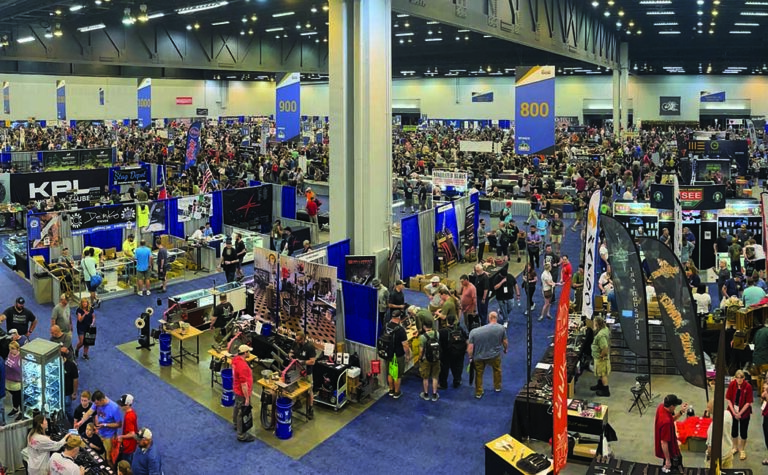
Sponsored by Smoky Mountain Knife Works, the BLADE Show is where more knives—new, old, custom, factory, etc.—are exhibited, bought and sold than at any other knife event. Almost 930 exhibitors* from every continent but Antarctica were scheduled to exhibit at press time, all bringing their latest and greatest knives and other edged tools, accessories, knifemaking supplies and more. Factory and custom knives, sharpeners, knife collections, knife purveyors and other cutlery entities too numerous to mention will showcase their wares as the world knife community makes the yearly pilgrimage to the Cobb Galleria Centre.

BLADE Show Overview

WHAT: BLADE Show
WHERE: Cobb Galleria Centre, Atlanta
WHEN: June 2-4
DAYS and TIMES:

  • Friday, 11 a.m.-6 p.m. (early bird ticket holders can enter at 10 a.m.)
  • Saturday, 9 a.m.-6 p.m.
  • Sunday, 9 a.m.-2 p.m.

Get Your BLADE Show Tickets

The latest, hottest custom knives, factory knife debuts, the educational knife instruction class schedule of BLADE University and action-packed free demos are among the sharp goodies awaiting hordes of show patrons. The BLADE Magazine 2023 Knife-Of-The-Year® Awards, the custom knife judging competition and the knife collection display judging competition are others. The ABS Knife Auction, formal inductions of the latest members of the BLADE Magazine Cutlery Hall Of Fame®, and some of the best knives the ABS and the Knifemakers’ Guild and unaffiliated makers in general have to offer are still others.

And don’t forget The Pit, the after-hours meeting place in and around the sunken bar of the host hotel, the Renaissance Atlanta Waverly, where show patrons and exhibitors will congregate into the wee hours beginning the night before the show through the end of the weekend to compare knives, swap lies and otherwise celebrate the year’s most momentous cutlery weekend.

BLADE University

Avail yourself of the latest knifemaking techniques and other trending sharp subjects during the 10th Annual BLADE University show Friday and Saturday.

Ed Flowler seminar
BLADE® field editor Ed Fowler will present the seminar “Seeking Safety In Knife Design” show Saturday at 1 p.m. in Room 107.

Sponsored by Work Sharp Sharpeners, BLADE University has the most extensive schedule of knife, knifemaking and other instruction held at any knife show. Among the highlight classes for 2023 are “CRKT Presents Q&A with Michael Walker” featuring the industry renowned creator of the linerlock; “Designing Kitchen Knives” and “How To Run A Successful Knifemaking Business” with chef’s knife maestro Bob Kramer; “Exploring the Performance of Pattern-Welded Steel,” with damascus forging legend Devin “Hoss” Thomas and his son, internet steel guru Larrin Thomas; and many more.

BLADE University Schedule

FRIDAY

  • 8-9:30 a.m. Fundamentals of Grinding, The Courtyard. AmeriBrade and guest makers cover grinds, technique and different equipment.
  • 10-11 a.m. Exploring the Performance of Pattern-Welded Steel, Room 103. Devin and Larrin Thomas review their experiments on the strength, toughness and edge retention of damascus steel.
  • 10:30 a.m.-12 p.m. Designing Kitchen Knives, Room 104. ABS master smith Bob Kramer discusses considerations to ponder when designing kitchen knives.
  • 1-2 p.m. CRKT Presents Q&A with Michael Walker, Room 104. BLADE Magazine Cutlery Hall-Of-Fame® member Michael Walker answers questions on the linerlock he developed in 1981, the evolution of the many other locking systems he designed post-linerlock and more.
  • 1:30-2:30 p.m. Dancing with the Devil: Algorithms, SEO and Ecommerce, Room 103. Ben Petersen explains how to sell knives online and build your brand while navigating Google, Amazon and Meta.
  • 2-3 p.m. What’s Hot in Knife Steels, Room 103. Join representatives from Mike Norris Damascus, Nichols Damascus and Vegas Forge as they discuss today’s hottest steels and why those steels are so much in demand.
  • 3-4 p.m. Forging Ancient Materials and Why It’s Important Today, Room 107. Award-winning knifemaker Ilya Alekseyev and friends explore how and why practicing forging methods used by the craftsmen of old translates into modern materials.
  • 3:30-4:30 p.m. Hands-On Knife Sharpening, Room 113. Bring your knife or a borrowed one and learn the progression of shaping a bevel, sharpening and edge maintenance from the team at Work Sharp Sharpeners.
  • 4:30-5:30 p.m. Unlearning Bad Habits: My Unique Path to JS, Room 107. Matt Stagmer focuses on makers that have been in the craft for many years, and how becoming an ABS journeyman smith differs from someone learning those standards from day one.

SATURDAY

  • 8:30-9:30 a.m. Decorative Custom Knife Filework, Room 113. Knifemaker Kyle Daily of KHDaily Knives shows you his preferred files and the equipment he uses to make his five most popular filework patterns.
  • 8:45-9:45 a.m. How To Forge a Hunting Knife, The Courtyard. Using his propane forge, ABS master smith Timothy Potier demonstrates how to forge a full-tang drop-point hunter.
  • 9:30-11 a.m. How To Run a Successful Knifemaking Business, Room 104. ABS master smith Bob Kramer shares his 35 years of experience running a successful knifemaking business.
  • 9:45-10:45 a.m. Reproducing Traditional Pocketknives, Room 107. Tim Robertson covers patterning traditional slipjoints from original factory knives in detail, including methods of disassembly, correct scribing techniques and proper hole layout.
  • 11 a.m.-12 p.m. 3D Printing for Canister Patterns, Room 113. ABS master smith Steve Schwarzer and Ron Hardman show you how to use this game-changing advancement to forge patterns on a budget that were previously unthinkable.
  • 2-3 p.m. Let the Pros Critique Your Knife, Room 104. Award-winning knifemakers Lucas Burnley, Luke Swenson and Devin Thomas, and ABS master smiths David Lisch and Mike Quesenberry examine your knife, tell you what’s good about it, what’s not and how to make it better.
  • 2:15-3:15 p.m. Hands-On Knife Sharpening, Room 113. Bring your knife or a borrowed one and learn the progression of shaping a bevel, sharpening and edge maintenance from the team at Work Sharp Sharpeners.
  • 2:30-3:30 p.m. Writing for a Knife Publication, Room 107. Author/ABS apprentice smith Jason Fry and a panel of industry insiders share the tips and tricks it takes to get into the knife writing game.
  • 4-5 p.m. Folder Design, Room 104. David Carver of Carver Knife Co. teaches techniques on making a folding knife that works well, looks good and feels great in the hand/pocket.

Enroll In BLADE University Classe Now!

World Cutting Title

The BLADE Show World Championship Cutting Competitions will be conducted by BladeSports International (BSI) and held in The Courtyard, the parking lot of the host hotel, the Renaissance Atlanta Waverly, Saturday at 4:30 p.m.

At press time, contestants in both men’s and women’s divisions were scheduled to compete. Last year, James Clifton won the men’s division and Terri Lynn the women’s.

Knives Of The Year

The BLADE Magazine 2023 Knife-Of-The-Year® Awards will be announced and presented during the BLADE Magazine Awards ceremony Saturday night in The Pit.

The entries are limited to BLADE Show factory booth exhibitors, and will be on display show Friday and Saturday under glass in a special locked cabinet in the lobby. The winners will be announced on BLADE’s here after the awards presentation, and a list will be posted outside the show entrance Sunday morning.

The award categories are: Overall; American-Made; Imported; Most Innovative American Design; Most Innovative Imported Design; Best Buy Of the Year; Investor/Collector; Collaboration; Manufacturing Quality; Accessory; Kitchen; Publisher’s; and Industry Achievement.

Custom Knife Judging

Leading industry authorities will pick the best custom knives by BLADE Show exhibitors in the annual knife judging competition, with the winners announced during the BLADE Magazine Awards ceremony Saturday night in The Pit.

Rhea knife
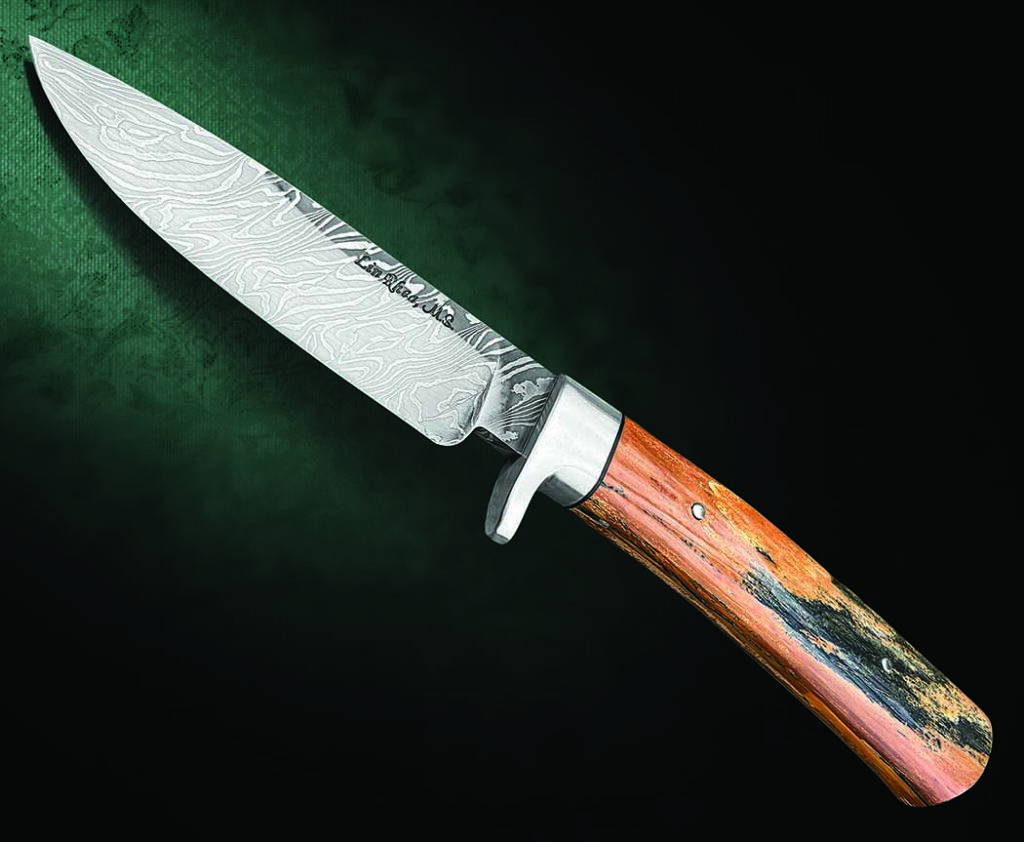
ABS master smith Lin Rhea will exhibit such forged wonders as his damascus hunter in mammoth ivory. (Jocelyn Frasier image edit)

The categories: Hugh Bartrug Best Of Show; Best Fixed Blade; Best Damascus; Best Kitchen Knife; Yvon Vachon Best Miniature; Best Art Knife; Best Fighter; Best Bowie; Best Handle Design; Best Tactical Folder; Best Utility Hunter; Best Folder; Most Innovative Design; Best Knife Collaboration; Best Sword; Best New Maker; Best Of The Rest; and a new BLADE Show category: Best M.A.C.K. (Machine Assisted Custom Knife).

The competition is open to the show’s custom knife exhibitors only. The winners will be announced on BLADE’s blademag.com website after the awards ceremony, and a list will be posted outside the show entrance Sunday morning.

Seminars & Demos

Seminars and demonstrations will be held in classrooms inside the Cobb Galleria or in The Courtyard, or under The Courtyard’s BLADE University tent. Admission is free to BLADE Show ticket holders.

Among the highlights will be “Knowledge Destroys Fear” presented by Ernest Emerson, CEO of Emerson Knives, Inc. Ernest will share the secrets of how Navy SEALs, Special Forces, Rangers and U.S. Marines conquer fear and thrive and prevail in the face of extreme life-threatening danger. Another highlight will be “Seeking Safety in Knife Design” with BLADE® field editor Ed Fowler. Ed will outline how to use knives efficiently and safely and what to look for in knives that cut effectively, do so without causing hot spots, and otherwise aren’t accidents waiting to happen in and of themselves.

Cutlery Hall Of Fame®

The BLADE Magazine Cutlery Hall Of Fame® will formally induct three new members at 8 a.m. show Saturday in the Kennesaw Room of the Renaissance Atlanta Waverly Hotel. (At press time, the new members had not been determined.) Tickets are required ahead of time for the ceremony, which includes a breakfast. Seating is limited. For ticket information, email [email protected].

Knife Colletions

Outstanding knife collections will be on display, with the best recognized via a judging competition. Last year’s winners: Larry Oden, Best of Show for “Buck Factory Production Knives of the 1960s.” Judges awards went to Gene Merritt for his “Yellowhorse” display of David Yellowhorse knives and Bruce Cannon for “Paul Bos: Alloys’ Greatest Ally.” Natalie Lindsey won the Youth Award for “Tinkerbell and Friends Put the Magic in BCCI and Buck Knives.”

Bali Championship

Top balisong flippers will vie for the title of “Grand Master” in the 7th Annual Battle for Bali-Champion sponsored and conducted by Blade HQ.

Bali awards
The 7th Annual Battle for Bali Champion conducted by Blade HQ will be Saturday in The Courtyard. Last year’s top finishers, from left: James Hill (3rd place), Leighton Gravely (first) and Moiz Khalil (second).

The top three finishers will receive prizes and all participants will get swag bags. The competition will be limited to 48 contestants.

BLADE Show ticket holders are invited to watch the competition in The Courtyard under the BLADE University Tent on show Saturday from noon to 2 p.m. Competitors will start flipping knives at 12:30 p.m.

BLADE Show Seminars And Events

SATURDAY

  • 8 a.m.: BLADE Magazine Cutlery-Hall-Of-Fame inductions, Kennesaw Room, Renaissance Atlanta Waverly Hotel: Buy Cutlery Hall Of Fame Tickets
  • 10-to-11:45 a.m.: ABS Knife Auction, Room 103
  • Noon-to-1 p.m.: Knowledge Destroys Fear—Ernest Emerson, Room 104
  • Noon-to-2 p.m.: 7th Annual Battle for Bali-Champion—Blade HQ, The Courtyard (the actual competition starts at 12:30 p.m.)
  • 1-to-2 p.m.: Seeking Safety in Knife Design—BLADE® field editor Ed Fowler, Room 107
  • 12-to-3 p.m.: Buck Collectors Club, Room 103
  • 4:30 p.m.: BLADE Show World Championship Cutting Competitions, conducted by BladeSports International in The Courtyard

Editor’s note: Microtech Knives and Heretic Knives are the presenting sponsors for BLADE Show 2023. RoseCraft Blades is The Pit sponsor. Work Sharp Sharpeners sponsors BLADE University. The other sponsors are Hogue Knives; Reate Knives; Nottingham Tactical; QSP Knife; Zac Brown’s Southern Grind; WE Knife; Glow Rhino; Columbia River Knife & Tool; and Artisan Cutlery.

Read More About The Blade Show:

Puukko Knives: Top Blades Of The Finn Folk

0

Today’s puukkos are knives you can trust in the great outdoors.

It’s a crisp, early winter morning. You wake and need to start a fire to get breakfast underway. As you exit your hut, your warm breath clouds the air. While you gather wood, you gaze out over your reindeer herd.

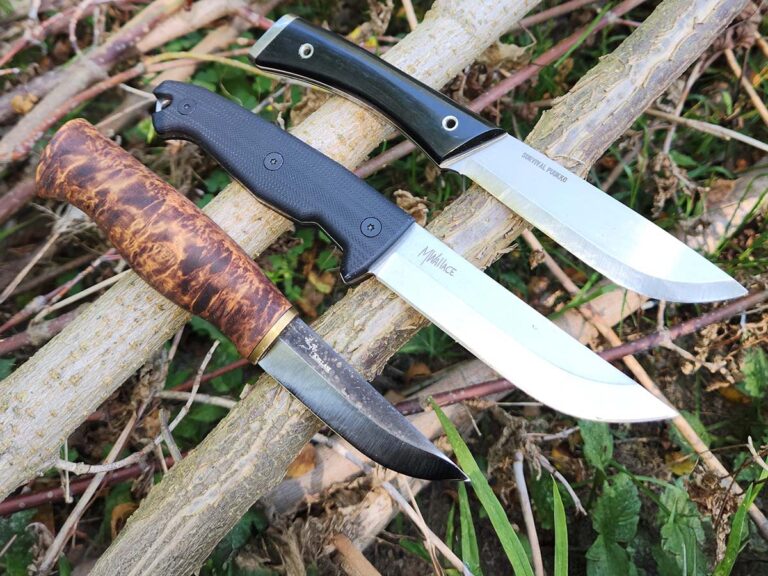
At least this story would be yours if you were a Sami, a traditional reindeer herder of Finland’s Lapland region. And a traditional Sami tool is the Finnish puukko-style knife, three versions of which are our test subjects this time.

Puukko Specs Comparison

Kellam HawkAPOC Wallace Large PuukkoCondor Tool & Knife Survival Puukko
Overall length (inches)7.5″9.25″8.5″
Blade length (inches)3″4.25″3.9″
Blade materialCarbon steel7Cr15MoV stainless1095 carbon
Handle materialQuilted birch burlG-10Black paper Micarta®
SheathLeatherLeatherKydex
MSRP$106.88$123.53$79
FinlandChinaEl Salvador

Condor Tool & Knife Survival Puukko

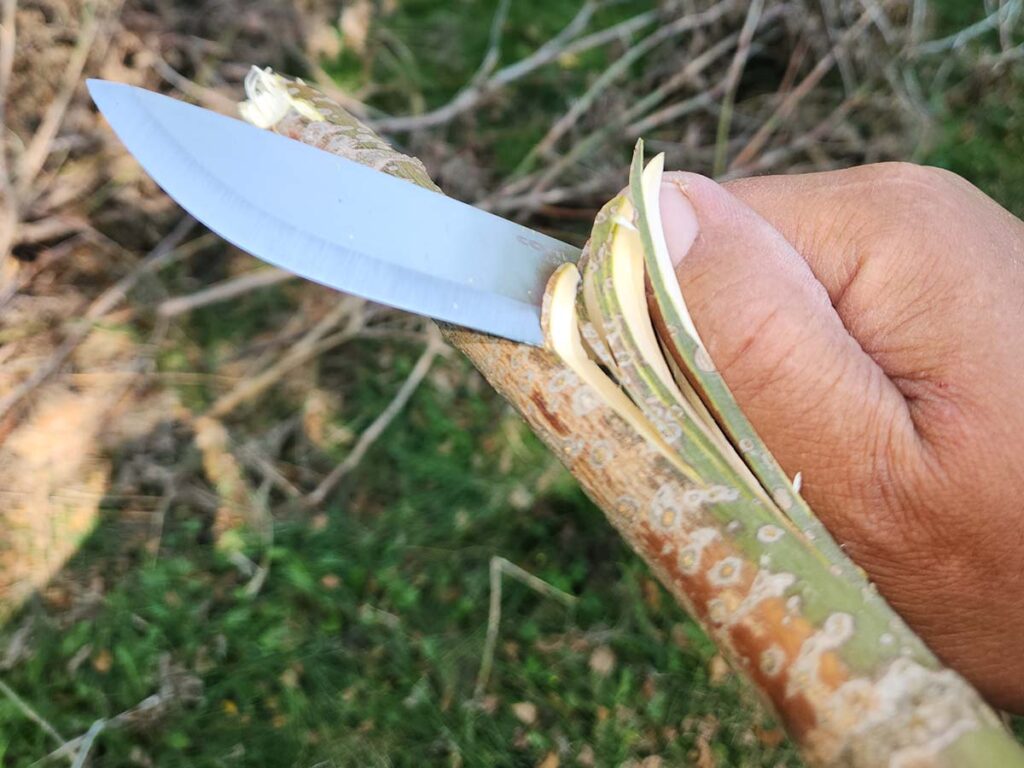
The Condor is a capable cutter but the stout grind tends to make creating thin slivers difficult.

Though called a puukko, the blade profile of the Condor Tool & Knife Survival Puukko follows more the pattern of a leuku, a bigger Scandinavian chopper. The grind is a stout Scandi and it arrived work ready right out of the box. While it cut very well, I would have liked to see it come with a bit more of a traditional higher grind.

An interesting feature is that the steel pommel is attached to the tang. I would say that would come from a Mors Kochanski* influence as he promoted such a design aspect as a striker plate. The blade is 1095 carbon steel, which will hold an edge well when heat treated properly. The scales are polished black paper Micarta® accented with white liners.

The Condor’s pommel is connected to the tang, which allows you to use the pommel as a striking plate. The white liners set off the black paper Micarta® scales. “Some say they don’t care if a knife is pretty just as long as it works,” the author observed. “Well, if it works it doesn't hurt if it’s pretty, too.”
The Condor’s pommel is connected to the tang, which allows you to use the pommel as a striking plate. The white liners set off the black paper Micarta® scales. “Some say they don’t care if a knife is pretty just as long as it works,” the author observed. “Well, if it works it doesn’t hurt if it’s pretty, too.”

I found the handle a bit small for my bear paw hands. The grip’s inward curved profile tends to bunch my fingers together. Add a smallish handle and it started crowding my grip, causing discomfort. (Keep in mind, my hand is over 4.5 inches wide.) Two stainless steel pins affix the scales to the tang, with the lanyard hole a bit too small for a paracord. The full leather pouch sheath is well made.

Designed by Joe Flowers, the Survival Puukko is a good, serviceable cutting tool. It is a clean knife design with tight fit and finish. One thing: before you buy it, be sure it fits your hand.

APOC Wallace Large Puukko

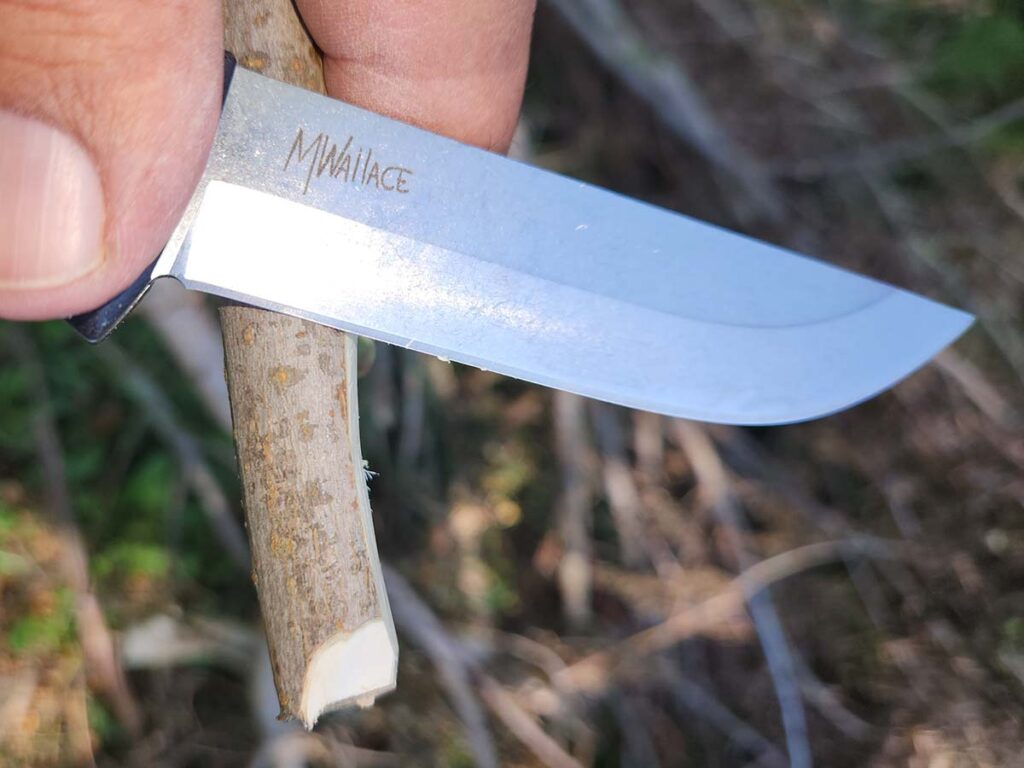
From this point, you can see the secondary bevel on the APOC. It’s not a Scandi grind but is still a good cutter.

Right out of the gate, I must say you get a lot for the price with the APOC Wallace Large Puukko. I would have expected a higher MSRP on this package. Having said that, let me roll out the high points.

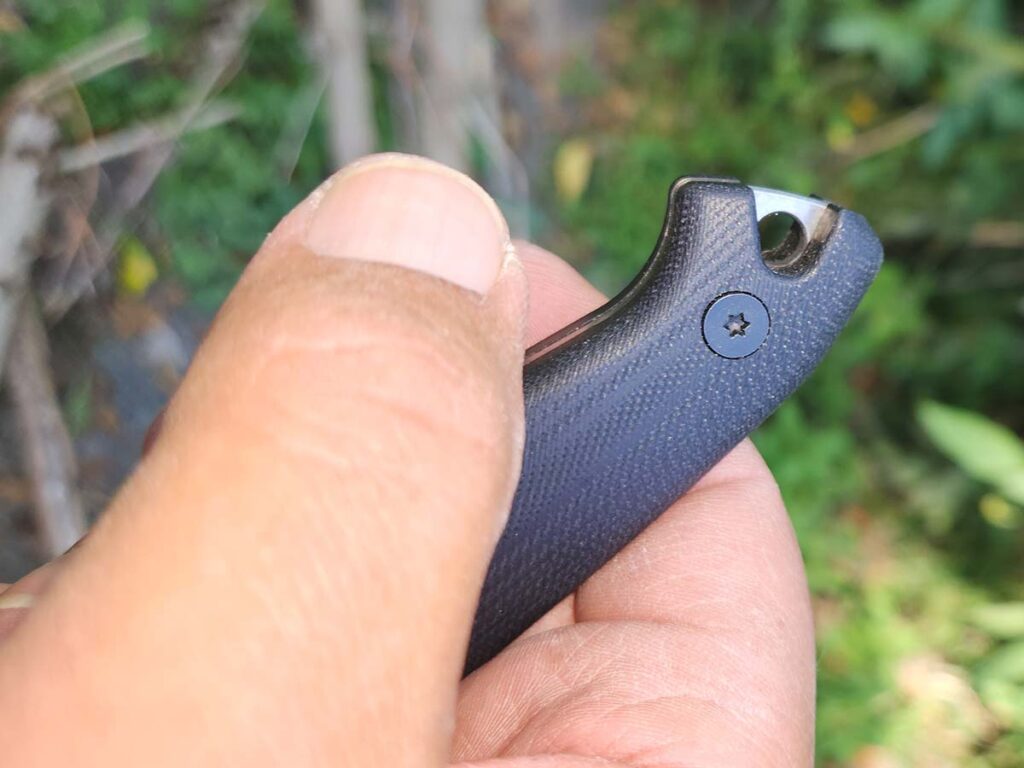
Designed by Mike Wallace, the knife is a good size for bushcraft. Handle ergonomics aren’t amazing but are pretty darn good. The textured black scales are trim so it’s a nice, nimble cutter. As profiles go, it is a dead-on use of the puukko. On the grind end of things, it is not a Scandi. The blade actually has a secondary bevel. However, since it has a high grind it remains an effective cutter.

The tang of the APOC is exposed at the lanyard hole, which allows the lanyard to nest into the handle material and stay out from underneath your grip.

The sheath is molded Kydex and then some, including a fire steel and a striking plate on the side. In testing the striking plate I found the belt clip gets in the way, and I could get sparks just fine using the blade spine. You have the choice of horizontal or vertical carry with the G-style belt clip.

If I had to pick a downside, I would go with the belt clip. For a bushcraft knife, you want more mobility and accommodation from your sheath if you’re wearing a backpack, getting in and out of a canoe or kayak, even something as simple as bending over. In the vertical position, I find the knife rides too high. To make carrying it easier I would add a belt loop or even a dangler, allowing the knife to ride lower.

As a cutting tool, it works and works well. I would have no problem putting the Wallace Large Puukko on my side for a walk into the woods.

Kellam Hawk Puukko

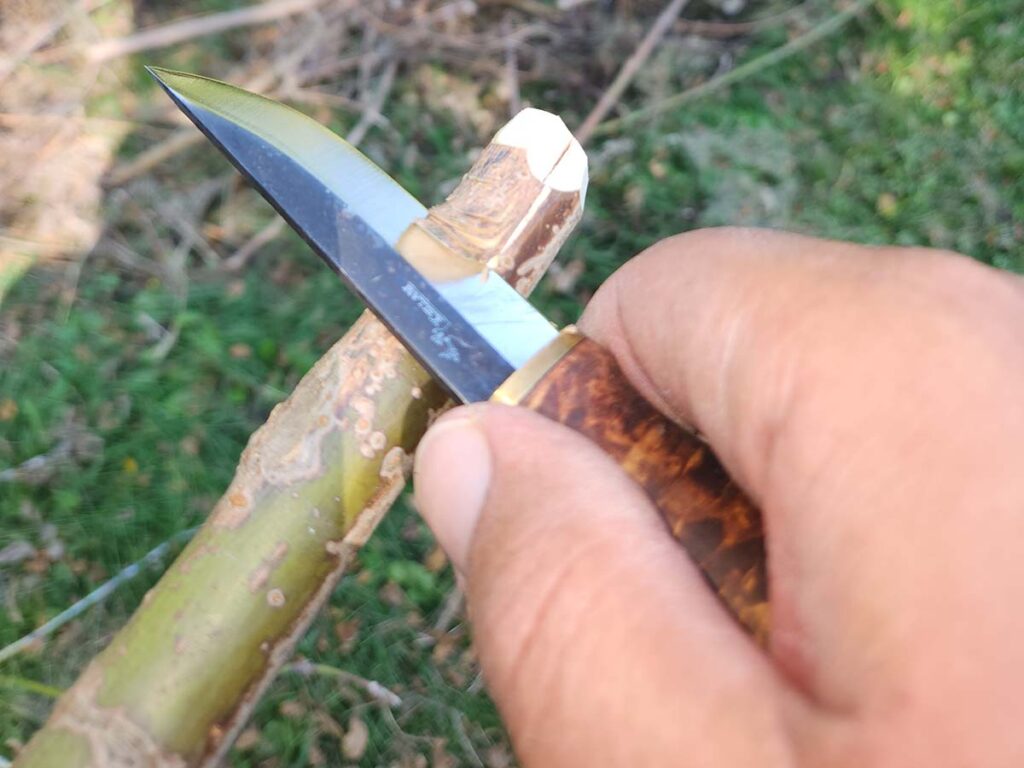
The high grind on the Kellam allows for great control, letting you hog off lots of material or make fine slivers.

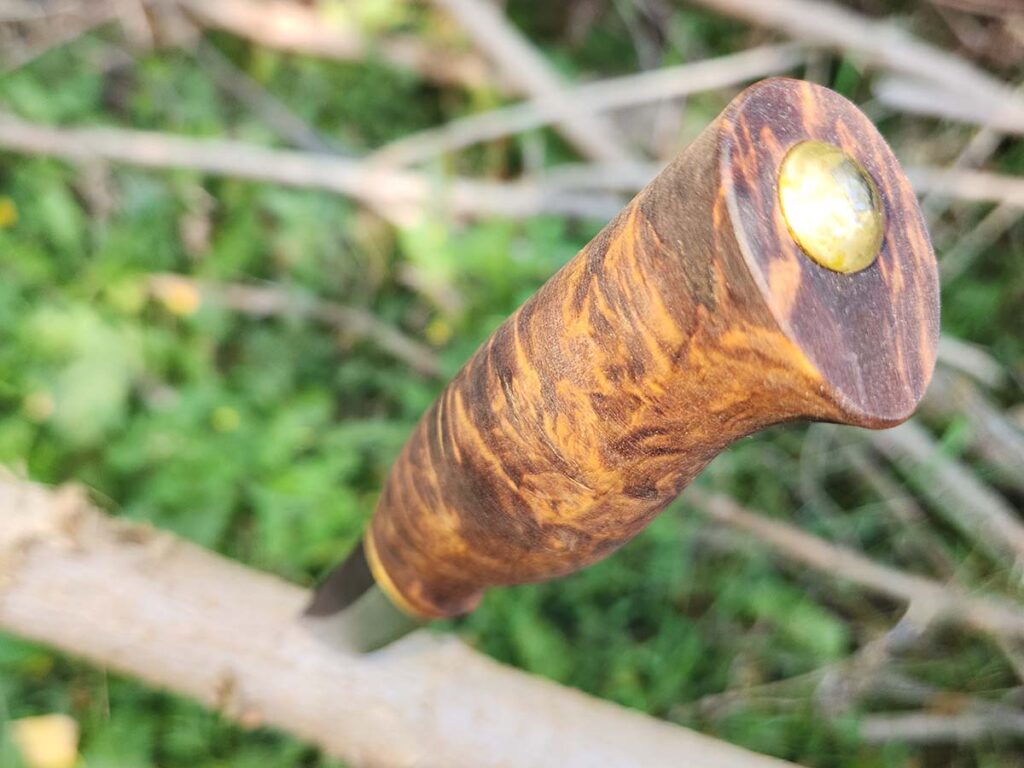
The Kellam Hawk is a perfect example of the traditional puukko design. A full leather pouch sheath with dangler loop makes it easy to carry. Scales are a quilted birch burl that has a dark stain to it. The handle is not polished, which leaves a nice textured matte finish that adds to the knife’s value. Because the Hawk is a stick-tang design, Kellam could shape the handle to perfection, and it did. As I write these words, I can’t resist just holding the knife for the feel of the handle. Then again, stick and hidden tangs are advantageous in that they are constructions that make it easier to fully sculpt a handle.

The blade is a carbon steel with a forged finish on the flats and a Scandi grind. Performance wise it is a capable cutter. Scandi edges excel at cutting wood but can have issues with other tasks. Cleaning an animal is one. If you bump a piece of bone with a Scandi edge, chances are the edge will chip.

A look along the contour of the Kellam’s grip shows how smoothly a handle’s lines can flow when using a hidden tang.

Light and quick, the Hawk will help you craft many things around the camp, making your time in the woods easier. Over my 23 years of writing reviews for knife magazines, I have never met a Kellam I didn’t like.

*An international bushcraft legend, Mors Kochanski (1940-2019) was an outdoor educator and survival instructor for almost half a century and is recognized by many as the godfather of modern bushcraft.

Check Out More Outdoor Knives:

The World’s Greatest Knife Book is Here

0

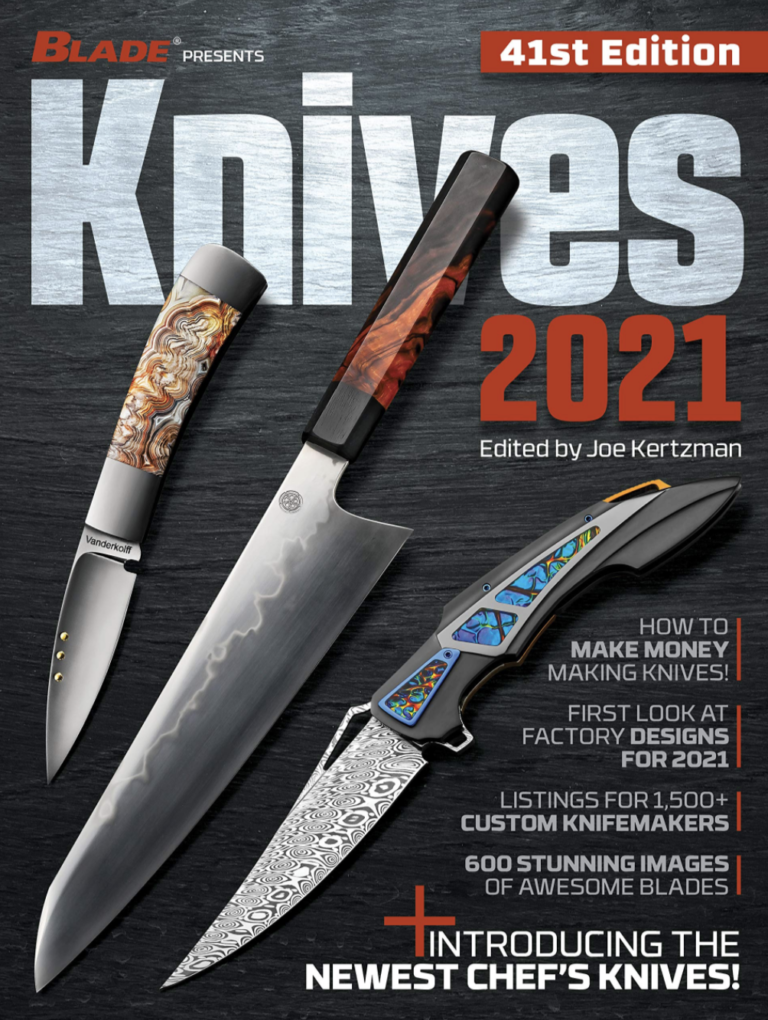
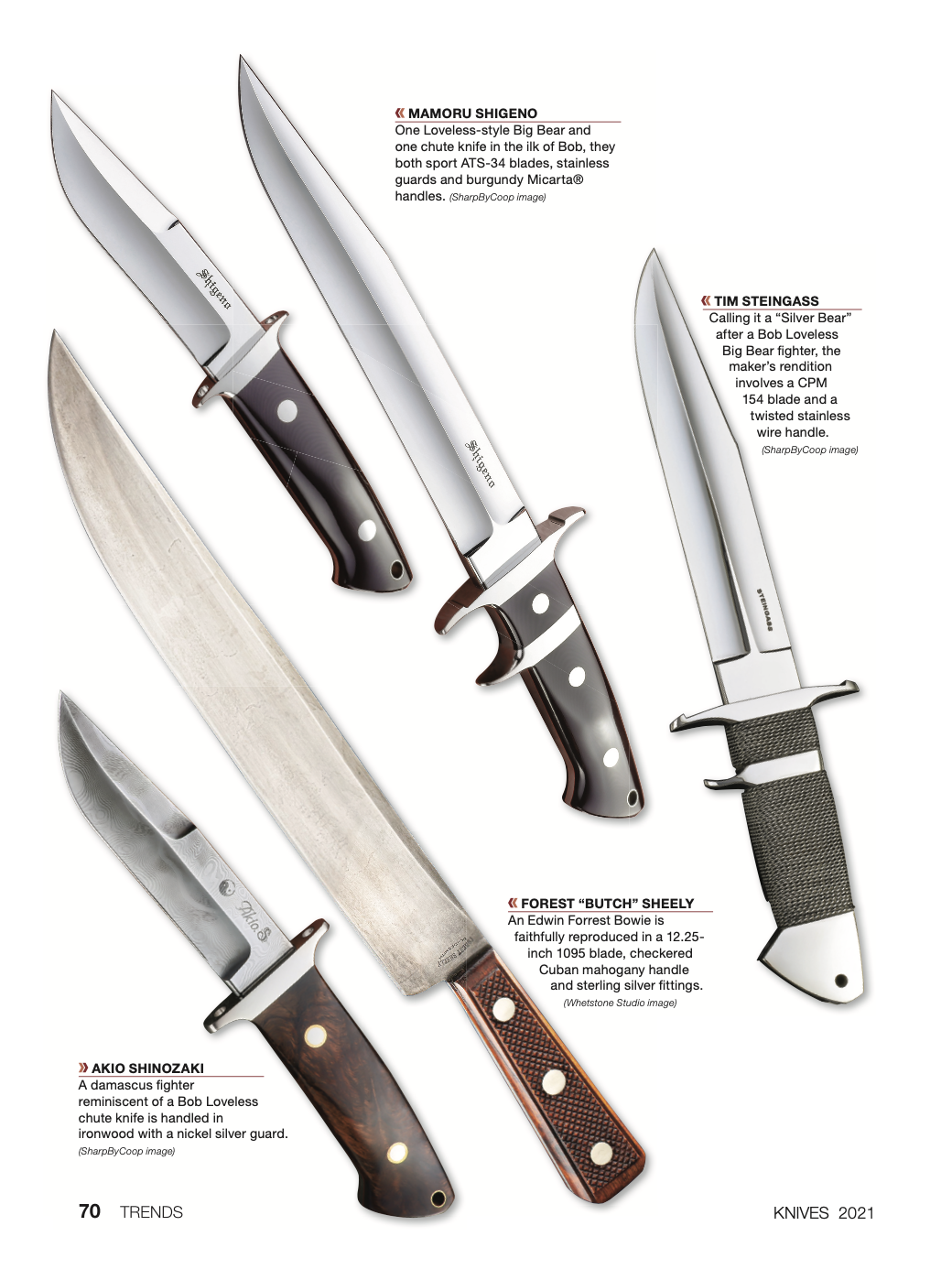
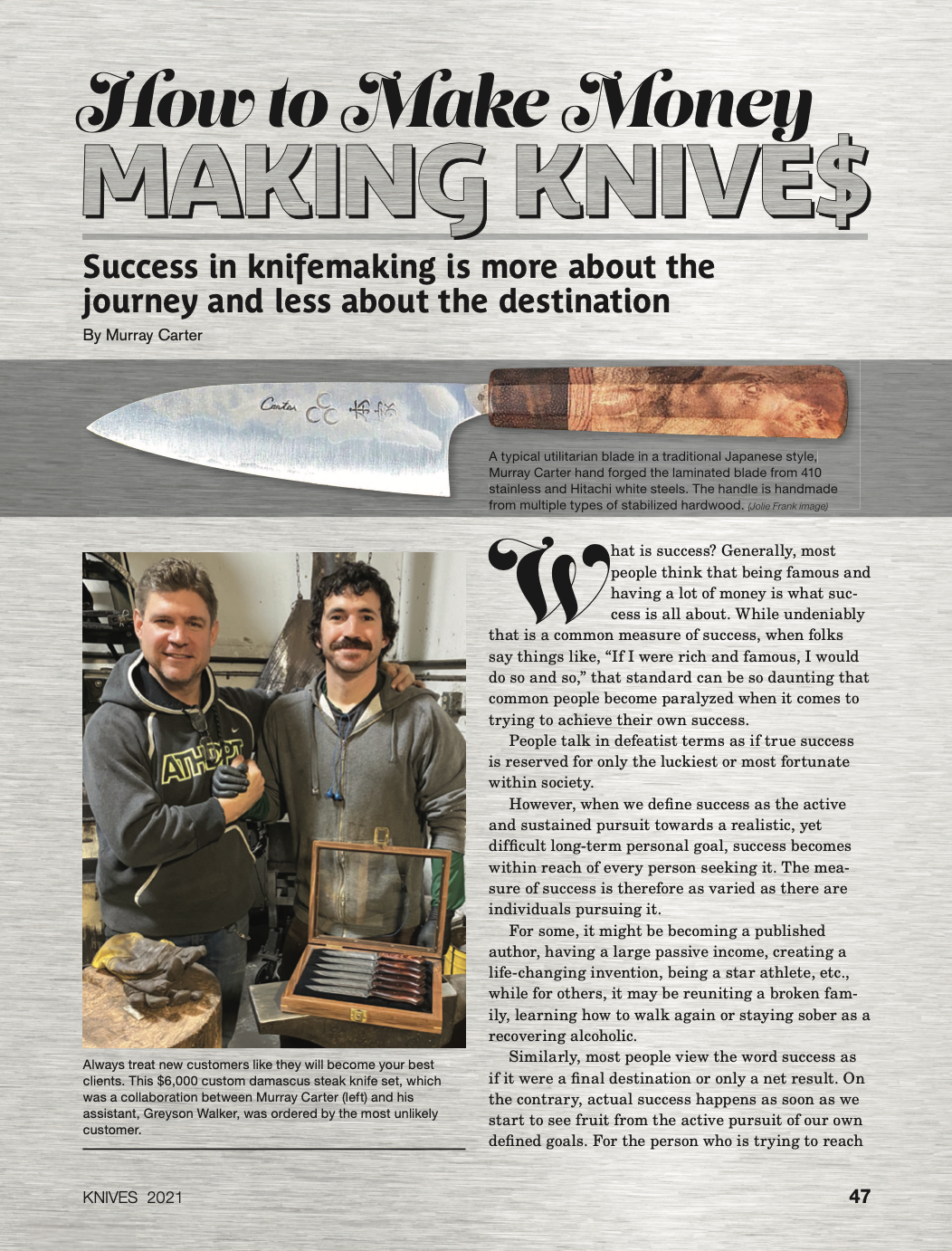
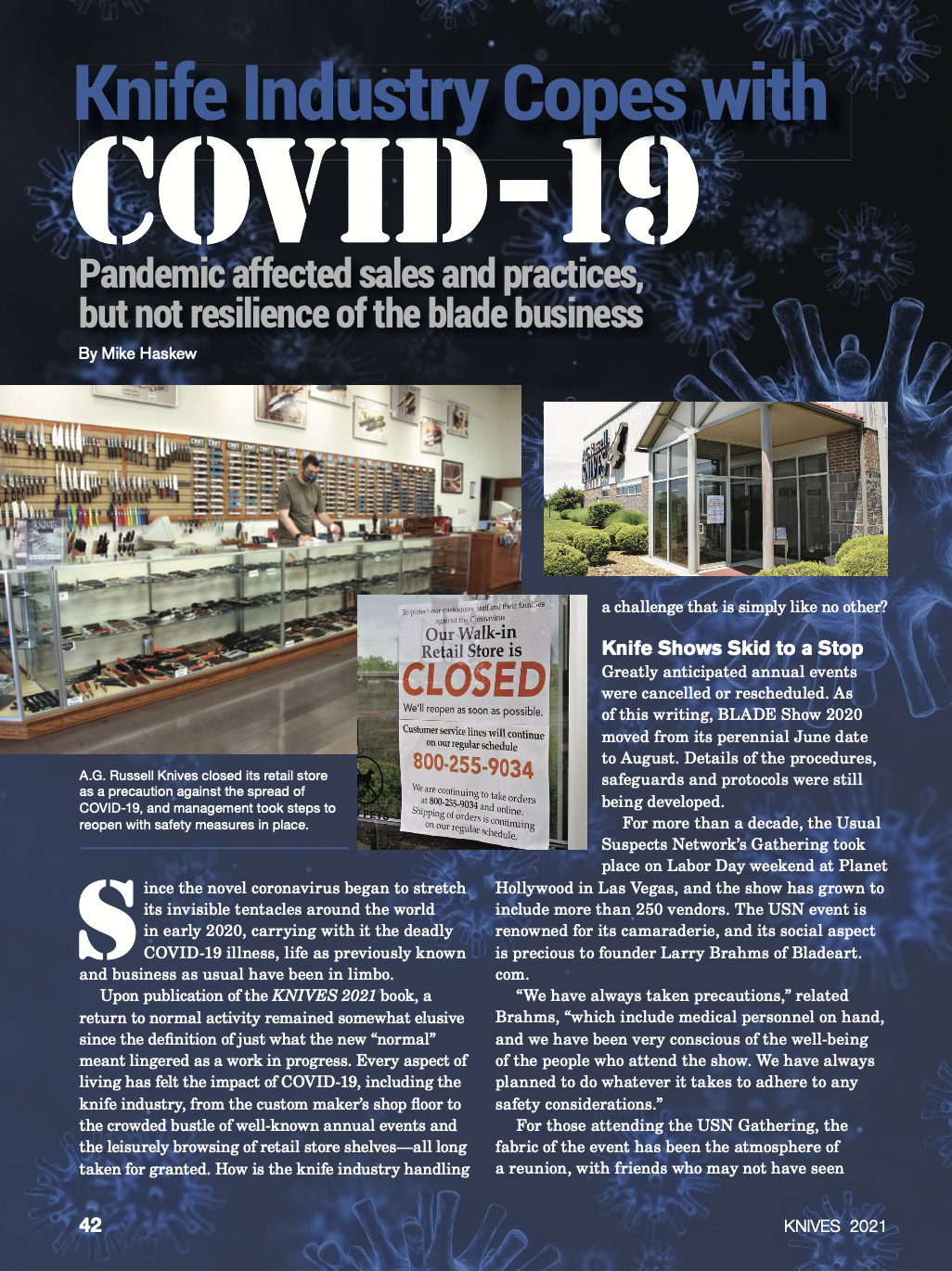
KNIVES 2021, presented by BLADE Magazine showcases blades of every class and style with more than 600 spectacular full-color images, from customs to factory knives.
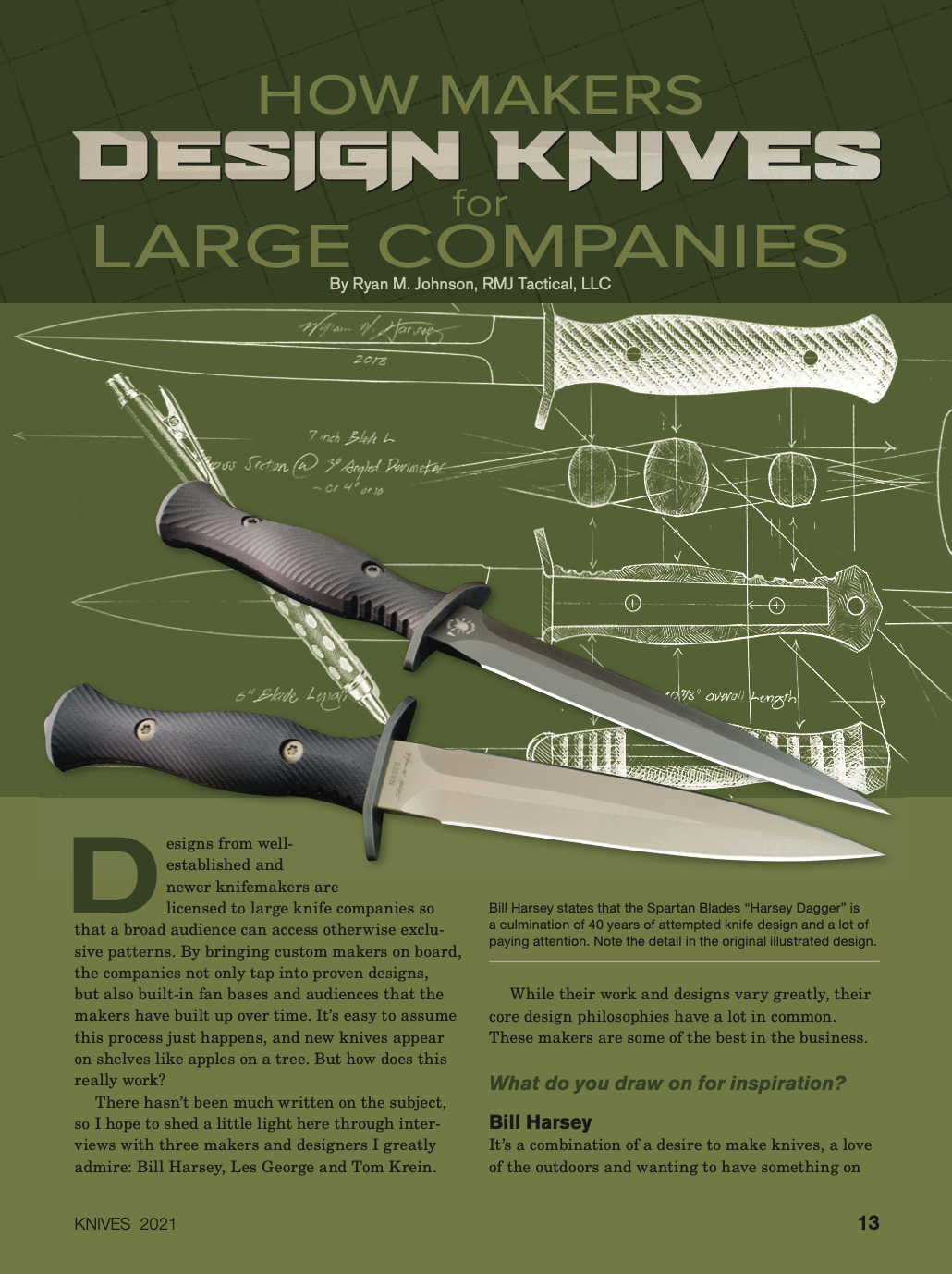
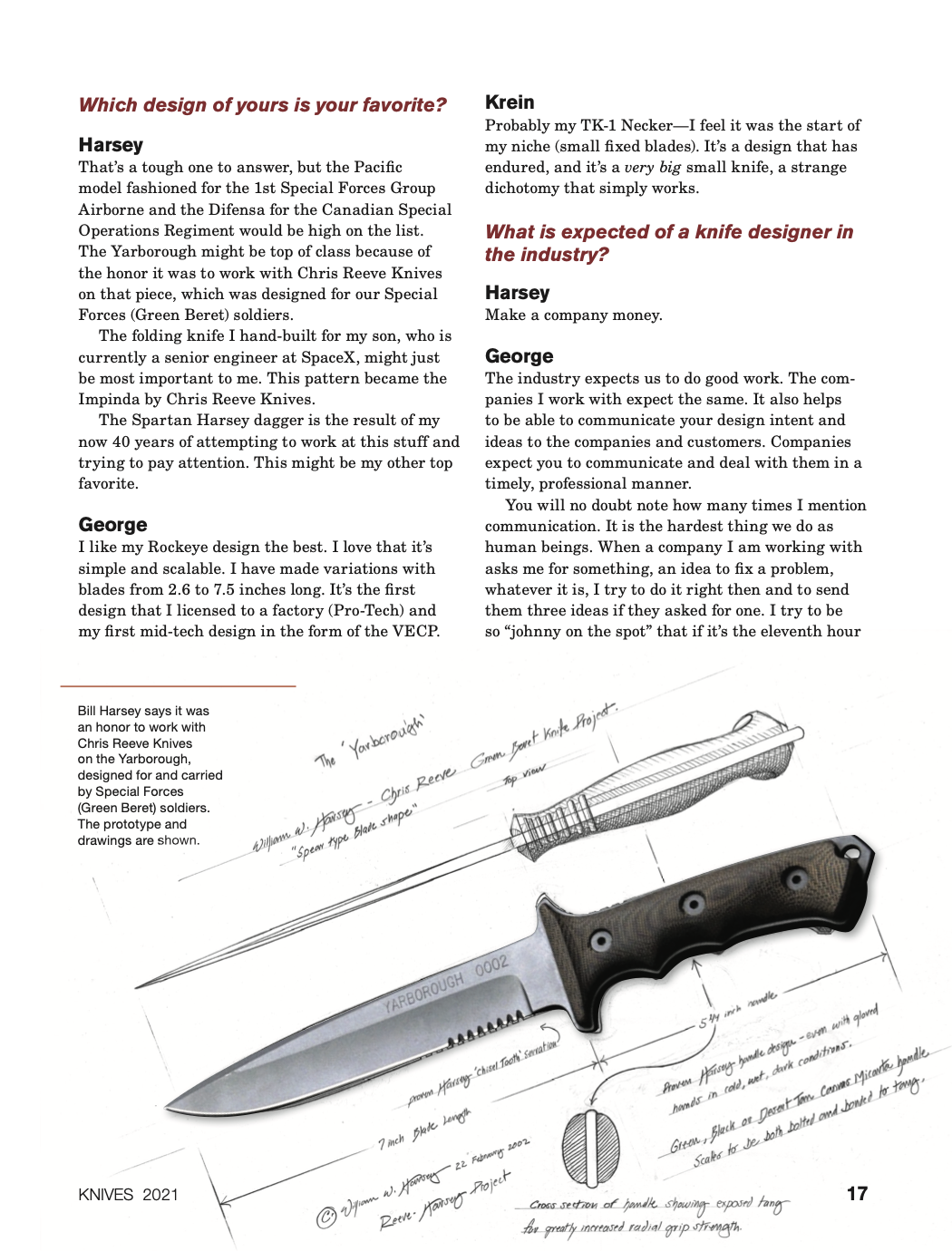
  • Enthralling articles about balisongs, making money making knives, urban EDCs, tactical knives, knife designers and more.
  • The latest trends of flippers, daggers, chef knives, fighters and more.
  • A comprehensive Custom Knifemaker Directory includes contact information, websites, specialties, materials, price ranges, tools, tang stamps and comments. 
  • Learn More + Shop Here

KNIVES 2021 Sneak Peak:

Advertisement

Must Read Articles

Read this before you make a knife

Knifemaking 101 – Read This Before You Make a Knife

  by Wayne Goddard My experience has taught me that there's nothing like digging in and getting started. I've often said the hardest part of the...
how to forge damascus steel

How to Forge Damascus

Advertisement
Advertisement