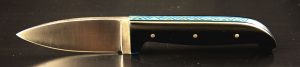
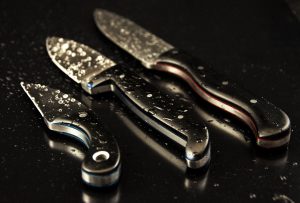
Smyth Knives’ Flat-Grind Utility Knife is made using O1 tool steel, black G10 scales, and blue liners. The blade is 3 inches, and the knife is 7.5 inches overall.
Irishman Paddy Smyth of Smyth Knives in County Roscommon, Ireland, sells 90 percent of his knives through his website to customers in the USA. The other 10 percent are purchased through The Quiet Cailin Studios in Cong, County Mayo, where “The Quiet Man,” starring John Wayne and Maureen O’Hara, was filmed. Some even incorporate ancient bog oak.
Irish Eyes Will Smile Over Smyth Knives
But it was another movie that sparked a love of knives in Paddy growing up. He watched wide-eyed as the work of Gil Hibben’s was deftly wielded in “Rambo III.” It is “my favorite knife of all time, so I have huge respect for [Hibben’s] work,” Paddy commented. He had a week-long visit last year from Jeff Knox, who trained with Hibben in the US. “He has been a great help to me also with advice and sourcing materials as its hugely difficult to get materials in Ireland,” Paddy added.
Paddy Smyth lives in County Roscommon in Ireland and undoubtedly with a name like Smyth has knifemaking in his blood.
He also mentioned that Walter Sorrells’ YouTube channel has been helpful and inspirational.
However, Paddy is a self-taught knifemaker and much of his learning has been by trial and error over the years. “I continue to learn,” he noted. He was trained as a chef and butcher and always had a keen interest in hunting, so he was intrigued by what made a high-quality knife. “So, I basically decided to have a go at knifemaking and caught the knifemaking bug,” he said.
Paddy concentrates on compact pocket and neck knives, bushcrafting and hunting/skinning knives. He makes specialty chef knives to order to client specifications. His favorite steels are O1 an Niolox stainless. He appreciates the consistent finish and heat treat he gets using these steels.
He likes three grinds: Scandi for his bushcrafting blades because it’s easy to maintain an edge; and flat and hollow, according to customer preference, because they both work well for his hunting and skinning blades. For bushcrafters, he chops and batons wood to test for toughness, and then fine-carves paper to verify sharpness. Cutting heavy cardboard with its abrasive quality helps him get a feel for how long his blades will stay sharp. He does ensure his flat- and hollow-ground blades can handle the detailed work of skinning and boning.
The Claw by Smyth Knives, left, is 5.25 inches long, with a 2.2-inch cutting blade. It’s perfect for close skinning/boning/gutting with complete one-finger control.
“My favorite handle material is ancient Irish bog oak, which can be up to 10,000 years old. It finishes really well and has beautiful character and history,” Paddy explained. “It’s very difficult to work with as it’s so hard it’s almost fossilized. And it’s becoming harder to find good pieces. It’s very hard on machinery and tools, but the work is worth the finished product.”
There are no knife shows currently in Ireland, so Paddy sells his work online at www.smythknives.com. Prices range from 90 to 500 Euros plus shipping with discounts for repeat customers. Also, check out the boutique artisan gallery in County Mayo where Smyth Knives are also sold on Facebook. Smyth Knives on Facebook and @smythknives on Instagram are chock full of additional photos and videos. You can call Paddy at 00353 87 6281252.
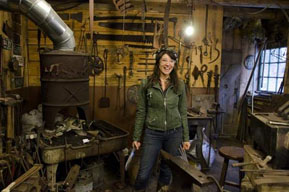
All Smyth Knives are completely handmade and heat-treated in house. Leatherwork is specific to each knife, so no two creations are the same. Paddy is a retail manager for an oil company based in the west of Ireland. He lives in Roscommontown with his wife, Edel, and their three boys, Shane, Darragh and Cian.
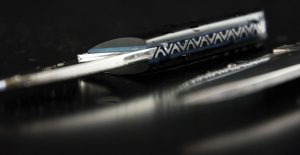
The ornate file work on the spine of this knife by Paddy Smyth in County Roscommon, Ireland, is reminiscent of a Celtic pattern.
“When I started making knives, I realized I had found something incredibly natural to me, as if I was meant to do this or was maybe in my blood, as my family name is Smyth,” Paddy noted. “I’m completely at peace when I’m in the workshop.”
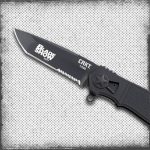
The CRKT Homefront is the 2017 BLADE Show knife. Be sure to get yours now.
CRKT and Ken Onion took home the Most Innovative Imported Design award at the 2016 BLADE Show for the groundbreaking Homefront. Now the Homefront is the official knife of the 2017 BLADE Show. This is a limited run of 300, so hurry! And at $70 you’ll be saving almost 30 percent.
Handmade Kitchen Knives Reimagine What A Kitchen Knife Can Be
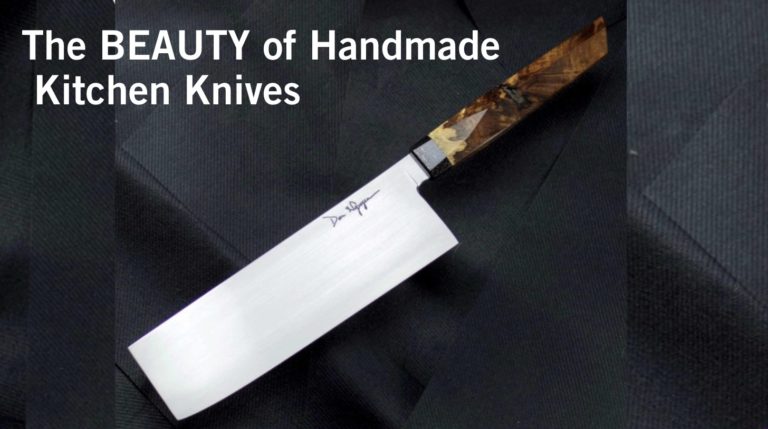
Don Nguyen didn’t know what he wanted from life when he was in college. An evening cooking at a friend’s apartment changed him forever. He was frustrated using his friend’s subpar, dull knives and wanted something better.
“It was that weird moment sharpening at a friend’s place where I said ‘I’m tired of this,’” Nguyen recalled. “I watched a bunch of YouTube videos, and those videos led me from sharpening to seeing Japanese makers make knives. I didn’t know what I wanted to do in life at that point so I was like OK, I want to do this. I dove in from there.”
Dive in he did, and now Nguyen has been making handmade kitchen knives, also commonly called custom kitchen knives, since 2017. He’s one of many makers entering the growing kitchen knife space and finding success.
Custom Kitchen Knife Advantage
Of course, the biggest difference between factory makers and custom makers is scale. A company like Wusthof can turn around hundreds of new knives every month. By contrast, Nguyen and his assistant complete a knife every one to two weeks. This allows for more delicate work when it comes to the actual knifemaking and makes getting different steels much easier.
Large Carbon Gyuto. Steel: 52100. Price: $3700
“Right now we’re probably averaging one knife every two weeks depending on the complexity, but we’re working on multiple knives at once so it’s hard to dictate how long a single knife takes,” Nguyen said. “I have an assistant and he helps me work on a bunch of stuff. We’re juggling projects all the time.
“I don’t have a lot of steel that I need to go through, and the steel choices I tend to use aren’t exotic steels. I go with 52100 for the most part for carbon steel knives. When I go with stainless I go with AEB-L or RWL-34. Those are fairly accessible. They’re usually in stock.”
Why Buy A Handmade Kitchen Knife?
When you talk to him, Nguyen’s passion is clear, and even with that passion, a big question remains: why should someone spend money on handmade kitchen knives instead of buying from a well-known factory maker?
He spoke honestly about how handmade kitchen knives won’t be for everyone, but for those who want them, they want only the best.
“Custom knives are made for a specific type of person,” Nguyen said. “They need to have food as their hobby. If they don’t like cooking all that much, they aren’t the intended audience for that. But if you love food, you follow it, buy books, read up on chefs, then you get into custom knives. Then you get knives in the [top] percentile of performance that are unique, made by someone you admire.”
Steel Sharpens Steel
As more makers enter the market, finding out ways to make your knives that are little bit better than your competitors has become the key to knifemaking. So much so that, according to Nguyen, many makers are working on what the knife does after it cuts the food.
“There’s a lot of interesting trends in knifemaking and the pursuit of the last 1 percent in performance,” Nguyen said. “A lot of makers now are working on food release. Being able to cut the food and having it pop off the [blade] without any effort at all. That’s a huge difference between a knife you buy off the shelf and a custom-made knife.”
Nguyen is one of the highly-skilled makers producing handmade kitchen knives. The below makers are also making exciting knives.
Best Handmade Kitchen Knife Makers
Mert Tansu
Nine-inch Damasteel gyuto in Heimskringla pattern. Price: $1,100
A former executive chef, Mert Tansu has been making remarkable kitchen knives in his native Australia for several years, learning to forge san-mai and damascus, and officially hung up his chef’s coat in 2018 to focus solely on making knives.
His current knives are made in the Japanese tradition and fetch a tidy price, but the craftsmanship is clear from the moment you lay eyes on the blade.
Located in Washington state, Maumasi apprenticed under Bob Kramer, who we’ll talk about shortly, and makes multiple types of knives. He’s made many a wild damascus piece as well, and is a magician at working the steel to create exciting patterns.
“I think he’s one of the best makers out right now,” Nguyen said of Maumasi. “I talk with him all the time about business strategy, techniques, everything we’re going through.”
Bob Kramer
Meiji 10″ Chef’s Knives by Zwilling J.A. Henckels. Price: $379.99
He worked as a professional chef for a decade before asking himself “why can’t I and other chefs keep our knives sharp?”
That question led him down the path to becoming one of the most accomplished makers of custom kitchen knives in the country. Kramer earned the title of ABS master smith in 1998, and since then he’s been “devoted … to the single-minded pursuit of crafting the perfect kitchen knife.”
His Kramer Knives not only turns out top-tier blades, but now features a small team to help keep the company strong and growing for decades to come. Additionally, his company has licensing agreements with a handful of major knife companies including Zwilling J.A. Henckels.
Andreas Kalani
The Dahlia. Price: $175
Andreas Kalani spent nearly a decade teaching himself the craft of knifemaking. He took his lumps and learned from his mistakes. Those years of trial and error have paid off as Kalani is now an accomplished knifemaker.
He makes beautiful Japanese-style knives as well as other kitchen utensils. Kalani even makes hunting knives and tools for skinning and processing your hunt. It all started with a dream for Kalani, and it has paid off handsomely thus far.
Will Brigham
Pattern-welded Sepharim Knife
Knives from Will Brigham are just as much art as they are kitchen tools. He specializes in pattern-welded damascus and mokume-gane knives. His sells his knives through his company, The Artificery, and he’s pushing hard to make the most distinctive damascus designs and highest-quality blades.
“Will Brigham is making crazy stainless steel damascus,” Nguyen said. “I think he’s kind of the pioneer of modern stainless steel damascus.”
Custom hawks and axes combine history, fantasy and imagination
From Danes to dragons, draft horses and drawing smoke, the axe and the hawk have become avenues of artistic expression for some of the most innovative artisans of sharp blades. Long a trusted and dependable companion on the trail, in the bush, around the camp and in the military, axes and hawks are utilitarian and versatile, both in form for their intended purposes and as striking examples of imagination, innovation and aesthetic appreciation.
Utilizing the best in materials and employing their long study of the axe and the hawk, several makers have produced notable works in recent years, among them Peter Pruyn, Tom Ward, Dave Armour and Bill Burke. Each has his own approach to the craft and adds perspective in producing works of incredible beauty.
“My motivation was to try something new,” related Armour, a knifemaker for about 12 years, fashioning hawks and axes for six years and turning his attention to full-time blade work only seven months ago. “In addition, a small, easy-to-carry axe can be a great complement to a hunting or other working knife. I call my style ‘sufficiently evil and deliberately casual.’ I take the function side of things—like heat treating and edge geometry—very seriously, but treat the rest of knifemaking as a chance to play and have some fun.”
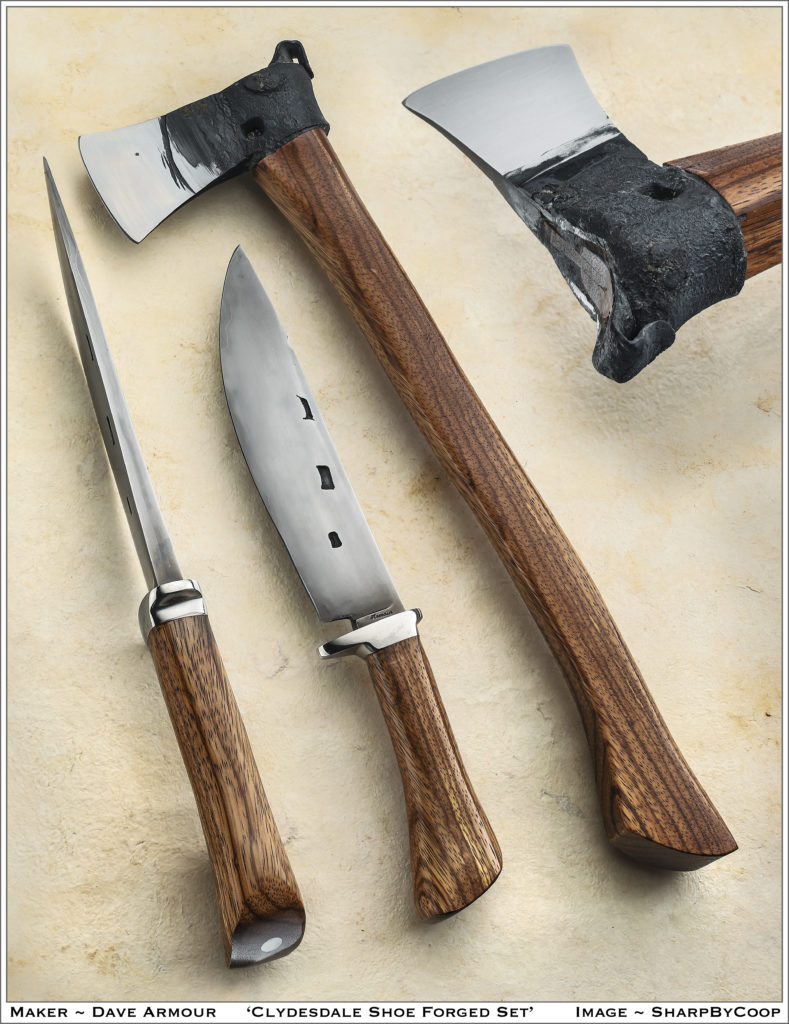
With his Clydesdale Set, which includes both a 12.5-inch knife and a 17-inch axe, Dave Armour (inset) lets his ingenuity gallop through. The set is made with a single Clydesdale horseshoe that he obtained through his wife’s employment, involving a tour of Warm Springs Ranch in Missouri, home of the world famous Budweiser Clydesdales. (SharpByCoop axe image)
With his Clydesdale Set, which includes both a 12.5-inch knife and a 17-inch axe, Armour’s ingenuity gallops through. The set is made with a single Clydesdale horseshoe that he obtained through his wife’s employment, involving a tour of Warm Springs Ranch in Missouri, home of the world famous Budweiser Clydesdales.
“I used the sides of the shoe for the outer layers of the knife blade and the bottom for the body of the axe,” Dave said. “I wanted something rustic without looking primitive. So, I made choices like leaving the shoe nail holes unfilled and using a simple hardwood for the handles. I used W2 for the knife core steel and 80CrV2 for the axe bit. Anytime you’re using a unique material, it is stressful. If I messed this up, it wasn’t like I could just scrounge another Clydesdale shoe lying around somewhere.”
Armour, who plies his craft in Auburn, Illinois, uses the term “foundwood” for his handle material. Though he isn’t completely sure, he said he believes it is sassafras, liberated from the bottom of a box of cast-off exotic pieces in a local lumberyard.
The finished Clydesdale Set consists of the beautifully forged san-mai blades, foundwood handles, and a stainless steel bolster/guard. The blade measures 7.5 inches while the edged surface on the axe is 2.25 inches. Dave stated he would produce a similar set for $750 or the axe alone for $300—and he would enjoy the journey “tailoring my technique to the piece.”
MAGIC DRAGON
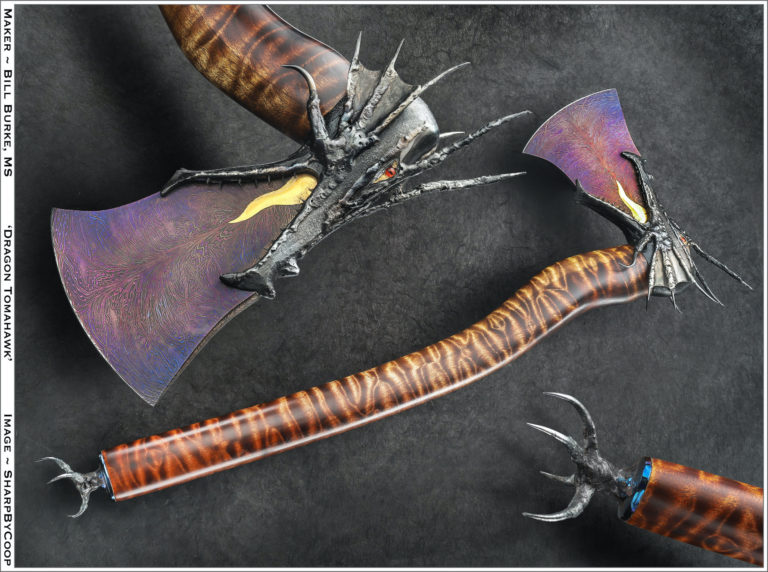
Forging knives since 1998, Burke received his ABS journeyman smith stamp at the 2003 BLADE Show. “I returned home, quit my job, and have been a full-time maker ever since,” he grinned. His Dragon Tomahawk is nothing short of breathtaking, and he acknowledges that the project was an investment of energy in his Boise, Idaho, shop. “This piece took three months of six- to eight-hour days, seven days a week for me to complete,” he noted. “I have a second piece flying around in my head now.”
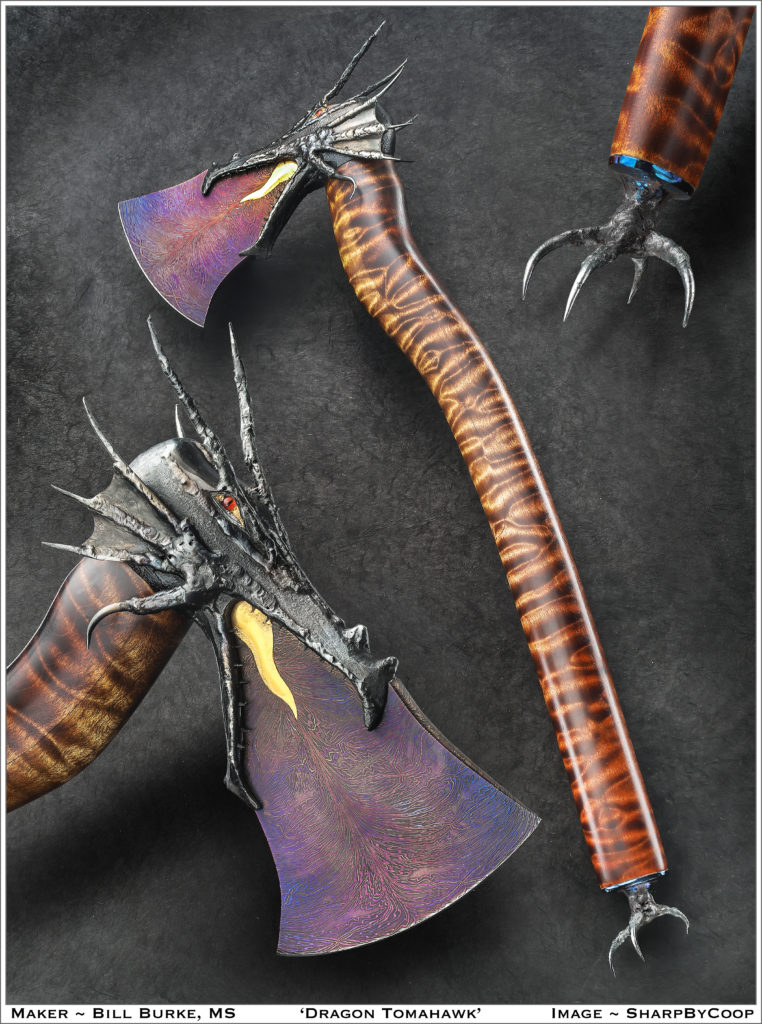
The Dragon Tomahawk is 20.5 inches overall, with a 4-inch cutting surface of damascus and a curly maple handle. The head is wrought iron and 1018 mild steel forged into a “W’s” pattern, and the blade steel is 1080, 15N20 and 201 series nickel forged together to create Bill’s Dragon’s Breath pattern. (SharpByCoop image)
The second will be a show-stopper if it compares to the 20.5-inch masterpiece that sports a 4-inch cutting surface of damascus and handle of stout curly maple. “The head is wrought iron and 1018 mild steel forged into the ‘W’s’ pattern,” he commented. “The blade is 1080, 15N20 and 201 series nickel forged together to create my Dragon’s Breath pattern. The handle was first drawn and cut/carved from a piece of red fir, and then, after a few refinements, the pattern was drawn on the piece of maple and the handle made from that.”
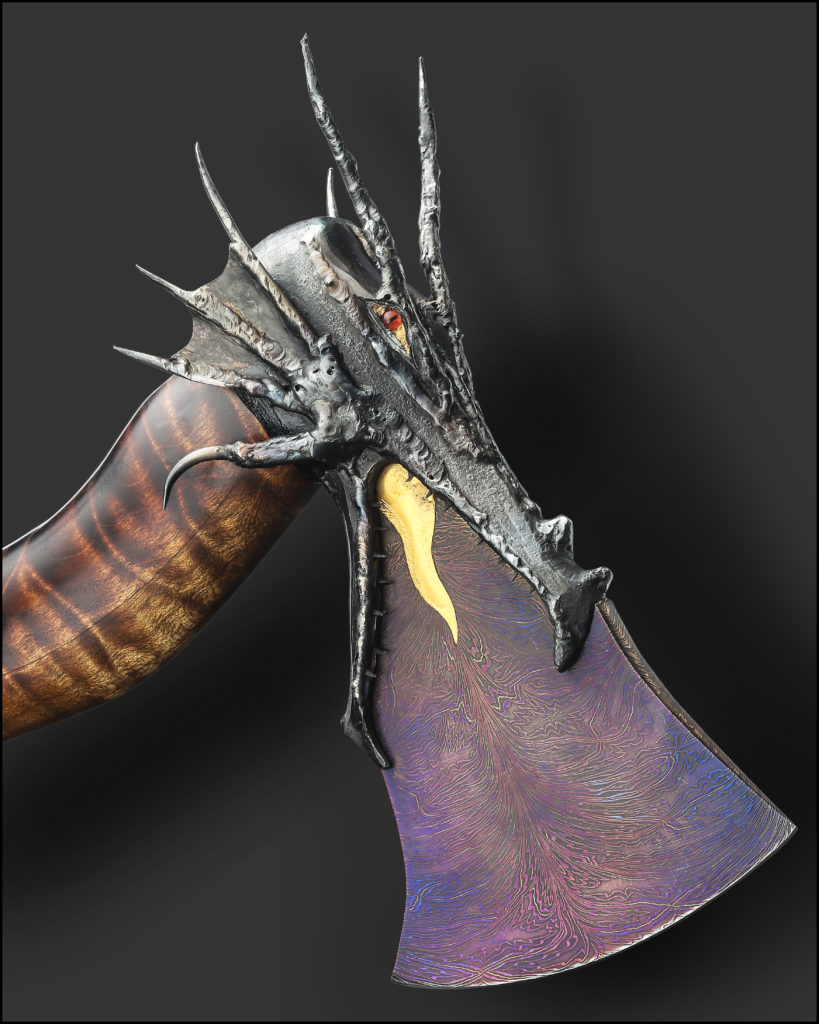
Bill Burke lightly fire-etched the head of his Dragon Tomahawk, along with heat coloring the blade in niter salts to achieve a purple/blue-and-red coloration before it was welded to the dragon’s head. The teeth were raised from the steel of the head, and the tongue, inlaid into the blade, gleams in 24k gold. (SharpByCoop image)
Bill has been noted for his quality damascus, and with this piece took inspiration from the work of ABS master smith Joe Szilaski. “All my knives and hawks are forged by me in my shop,” Bill said. “I normally just get an idea of what I want to make and start forging. From almost the first moment that I made the Dragon’s Breath pattern, I knew I wanted to make a dragon-headed tomahawk, breathing fire down the blade of the hawk.”
The dazzling result includes a lightly fire-etched head “because dragons are born in fire and should look that way,” along with heat coloring the blade in niter salts to achieve a purple/blue-and-red coloration before it was welded to the dragon’s head. The teeth were raised from the steel of the head, and the tongue, inlaid into the blade, gleams in 24k gold. Bill indicated he would produce a similar piece for about $17,000, depending on embellishments.
NO PIPE DREAM
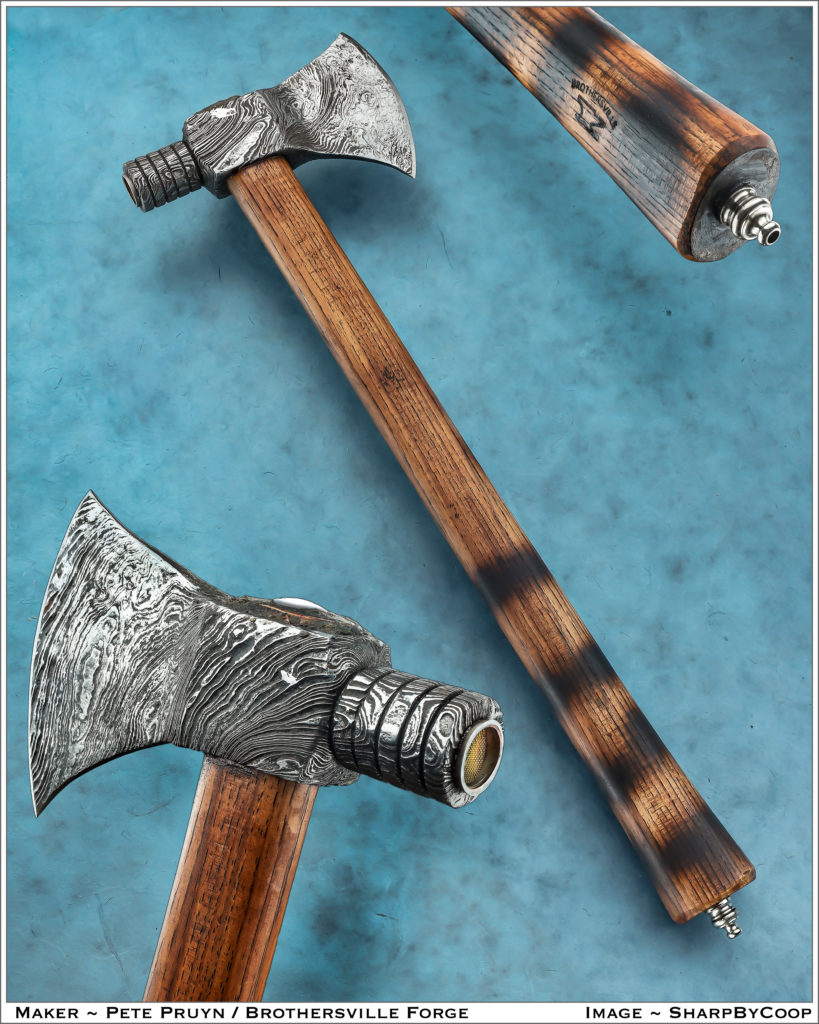
One of the most intriguing works by Peter Pruyn is his 15-inch Pipe Axe with ash handle, 4-inch blade and a bowl of hammered twist damascus. He forged the steel from layers of 1070, 15N20 and nickel. (SharpByCoop axe image)
Peter Pruyn was self-taught for quite a while after taking up knifemaking when he lost a valued knife he had carried for years. He later learned the stock removal method from Gene Martin and also attended an ABS bladesmithing class. “That definitely made me a more diverse maker, and it opened me up to forging different types of edged weapons and tools,” he said. From there, he worked with ABS master smith Red St. Cyr, who taught him to forge a tomahawk from a ball-peen hammer.
Through 14 years making knives—12 of those full time—Peter developed an interest in Viking blades, and he has sold a number of pieces on BladeGallery.com. One of his most intriguing works is his 15-inch Pipe Axe with ash handle and 4-inch blade and bowl of hammered twist damascus. He forged the steel from layers of 1070, 15N20 and nickel.
“I was forging an axe for the BLADE Show about seven or eight years ago when I had the idea of making it into a pipe axe, which is similar to a pipe tomahawk,” Peter remembered. “It really only has a larger blade.”
While working on the Pipe Axe, Peter greeted a friend who had come to his shop to work on the electrical setup. “He spotted the head when I removed it from the etchant,” Pruyn recalled, “and immediately claimed it. I was trying something different on this particular one. I did a very long etching process, and it gave a very deep, rough texture and an antiquated look to the steel. I did the Viking rings on the handle, but I also wanted to put some rings on the pipe bowl to give it a better look.”
The effect was certainly achieved, and Peter successfully tested it using cigar tobacco. “It worked quite well,” he concluded. He said a similar model would run $700.
HALVDAN SWUNG ME
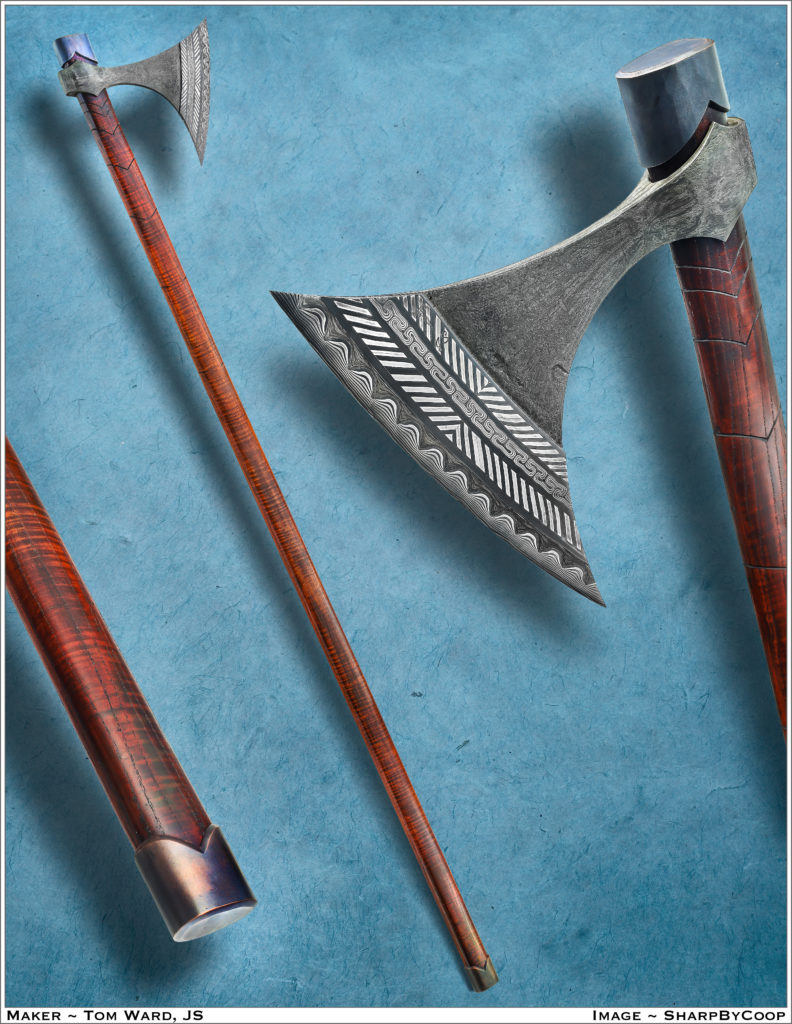
Christened “Halvdan Swung Me,” the Dane Axe by Tom Ward is based on Viking lore and representative of the weapons Viking mercenaries may have wielded in the service of the emperor of Constantinople, today known as Istanbul. His list price for a similar axe: $3,200. (SharpByCoop axe image)
After recently relocating his enterprise, along with his wife’s furniture business, from Carbondale, Illinois, to Istanbul, Turkey, Tom Ward looks forward to future custom orders. Among these may well be a request for a piece similar to his hefty Dane Axe.
When in design school in Boston, Tom took an elective course on forging damascus and bladesmithing taught by ABS master smith J.D. Smith (see May and June issues of BLADE®). “I really fell in love with the process and the idea of making high-quality objects to last someone’s entire life or longer,” he related. “I also loved the history of it and what you could learn through those venues. J.D. was my mentor for about four years before I left school and Boston. My work was fairly independent until 2017, when I started my degree at Southern Illinois University and spent three years researching damascus steel with Richard Smith in Carbondale.”
One of the most significant results of Ward’s career in steel, the Dane Axe, christened “Halvdan Swung Me,” is based on Viking lore and representative of the weapons Viking mercenaries may have wielded in the service of the emperor of Constantinople, today known as Istanbul.
“The phrase ‘Halvdan was here’ is carved into the bannister of the balcony of the Hagia Sophia in Istanbul,” Ward remarked. “So, he was the inspiration for the piece and the name. The shape is not exactly like any Dane axe but serves the same idea with an angled broad blade and beard, and a thin cross section as most war axes had. The angle of the blade is to deliver a deeper chopping or swinging cut, and it is the same cutting concept as the curve of a saber. The forward point is also hypothesized for stabbing, and the beard for hooking legs and shields.”
Damascus legend Daryl Meier sold the wrought iron, salvaged from a bridge that was torn down in Illinois, for inclusion in the Dane Axe steel combination, and encouraged Tom’s pursuit of pattern welding. The Dane Axe haft, fashioned from sturdy hickory and ash laminate, extends beyond 5 feet.
“The pattern welding on the blade is sort of an East meets West thing,” Tom commented, “with traditional wolf’s tooth from northern Europe and the Persian chain patterns, as well as the Byzantine tendency for geometric patterns with the chevrons.”
These exceptional craftsmen are among many who have explored the addition of hawks and axes to their repertoire. They set the bar high and bring additional interest to another creative frontier.
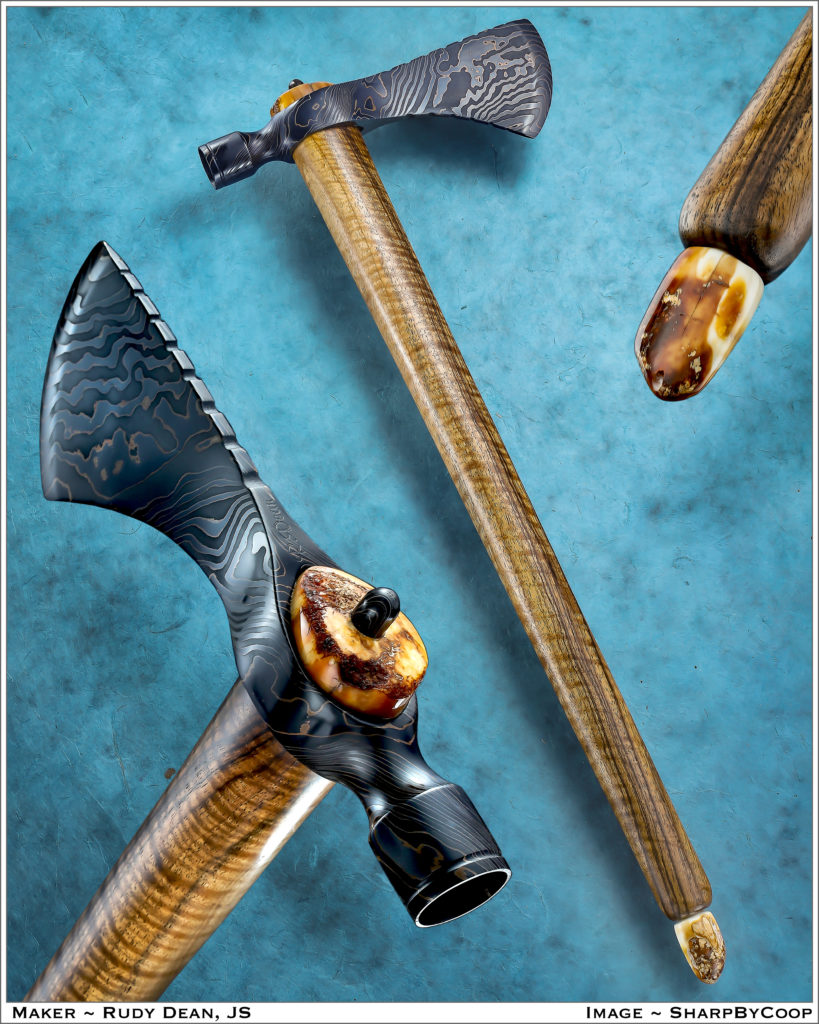
Above: Rudy Dean’s pipe hawk features a 4.5-inch blade of twist damascus and a handle of curly English walnut. The smoke hole plug is damascus and the mouthpiece and eye cap are ancient walrus ivory. (SharpByCoop image)
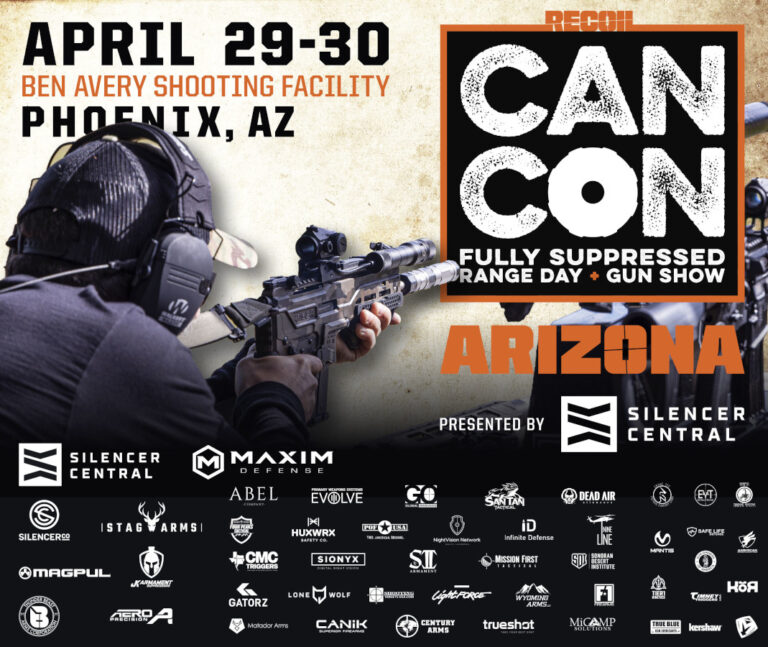
CANCON comes to the West! Join RECOIL at the Ben Avery Shooting Center in Phoenix, Arizona April 29th and 30th, with VIP access starting on the 28th!
CANCON presented by Silencer Central, is a fully suppressed range day event with dozens of vendors, hundreds of guns and suppressors, and tons of fun.
Check out the CANCON 2022 Recap to see what you missed last year, and don’t miss out this year!
CANCON West will feature an even BIGGER range day with MORE suppressors, more guns, more vendors, and an even bigger night shoot. Over 100 firearms from over 25 manufacturers!
$50 single-day tickets get you in for ALL DAY plus ammo is provided!
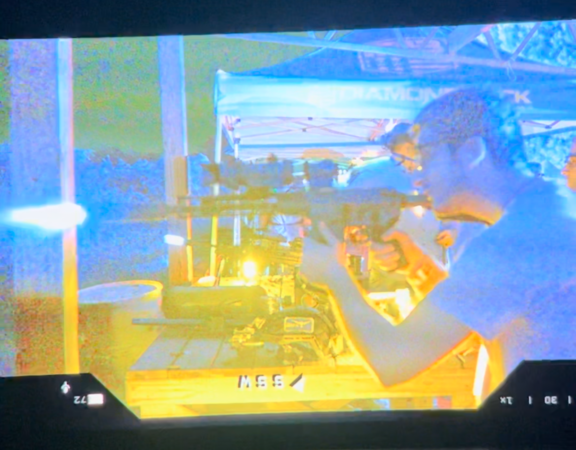
Want the VIP experience? VIP tickets are $700 and allow access for Saturday and Sunday, plus early access on Friday, plus a catered dinner & the Night Vision Network’s Night Shoot on Friday night.
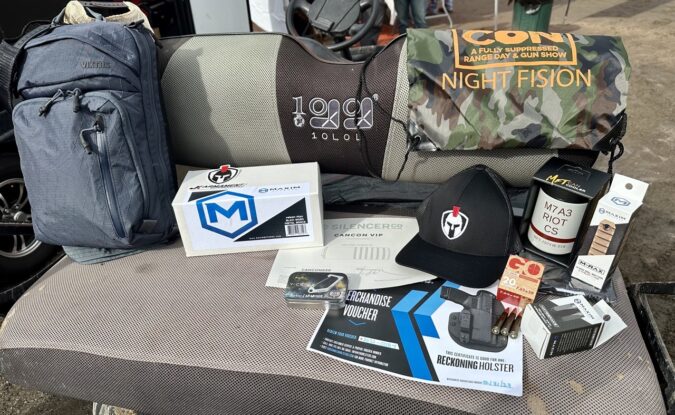
PLUS, VIPs get a VIP bag worth A Lot! Filled with awesome gear that you’ll actually use. We can’t spoil the surprise of what is in 2023’s VIP bag, but here is a look at what was in CANCON’s 2022 VIP bag!
CANCON 2022 VIP Bag Valued At Over $1475
Viktos XL Slingbag
Blue Force Gear Sling
Otis Ripcord Cleaning Cord
Caldwell DeadShot Shooting Bags
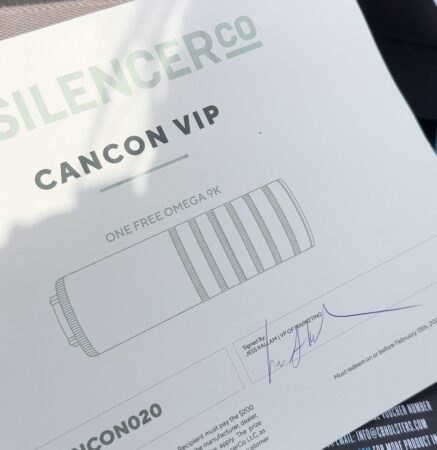
SilencerCo Silencer
Subscription to Recoil/Offgrid
Mission First Tactical Extreme Duty Magazines 556
Mission First Tactical Coozie
Maxim Defense Hate Brake
Maxim Defense Arm Brace Stock
Primary Weapon Systems Gift Certificate
JK Armamant Stickers and Hats
Coming to CANCON but not a VIP? Take a chance at winning a VIP bag! All CANCON attendees can enter to win a VIP Bag, all you have to do is:
Post a video or photo from the event tagging @CanconEvent and using the #CanconGiveaway.
BRING THE FAMILY!
CANCON is a family-friendly event with eye and ear protection for everyone.
All ammo is provided, you just bring the trigger finger!
Food and drink will be available for purchase on-site.
Expect to see DAILY giveaways at CANCON, walk with industry experts, shop for your favorite accessories and gear, and check out some special demonstrations and seminars!
From kitchen to camp and beyond, these puppies will perform.
Christmas may have passed and all your presents have been unwrapped, but that doesn’t mean you can’t start building out your wish list for the coming year. We’re here to help with a slew of new knives—and non-knives—that are certain to tantalize and tempt. From production options full of pomp and customs cutting one-of-a-kind profiles, there’s something for knife lover.
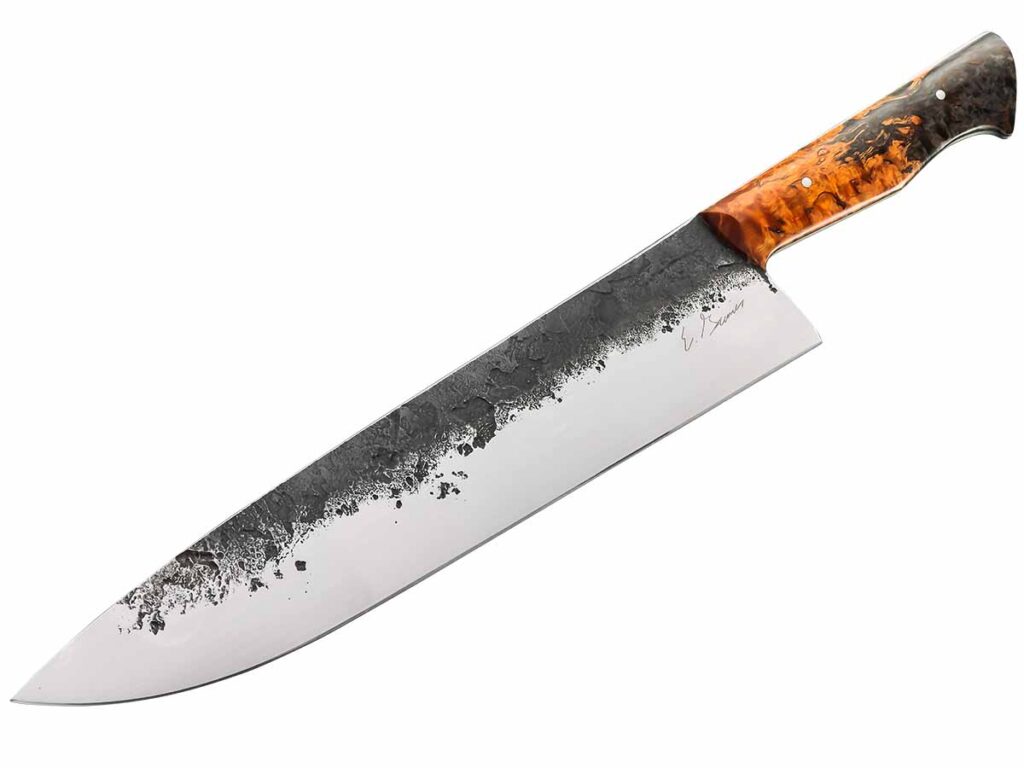
Greiner Chef’s Knife
Blade length: 10” Blade material: 80CrV2 carbon steel w/forged finish Blade grind: Flat Handle material: Double-stabilized karelian birch Overall length: 14.5” Maker’s price for a similar knife: $600 Maker: Erik Greiner, greinerblades.com (SharpByCoop image)
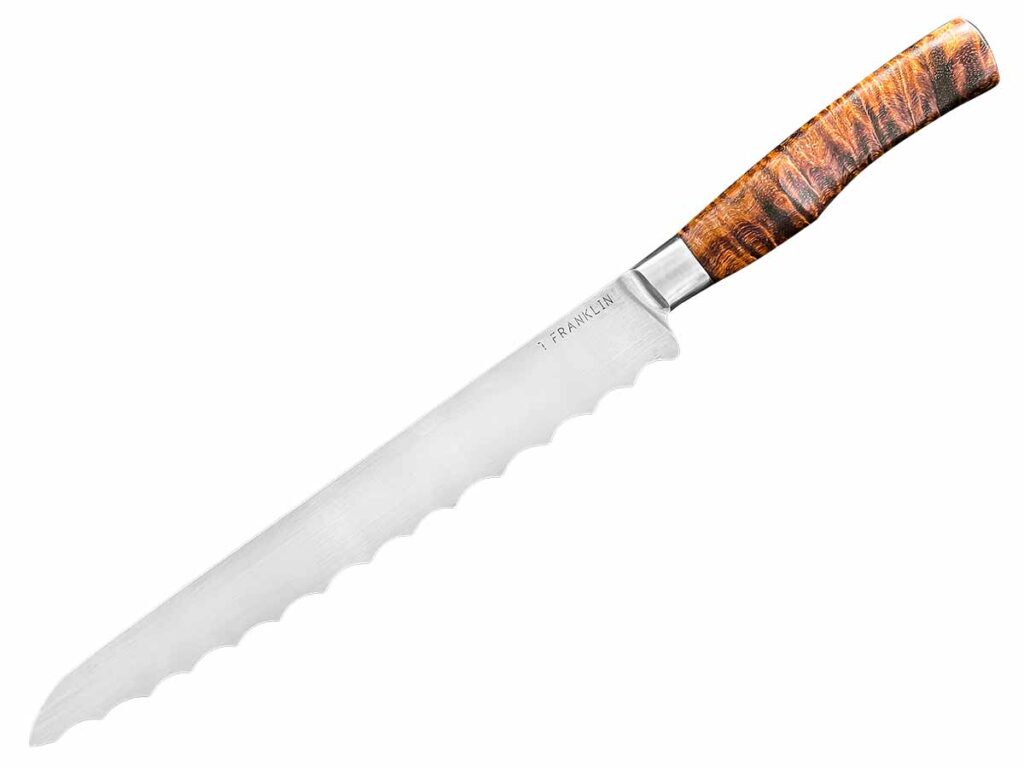
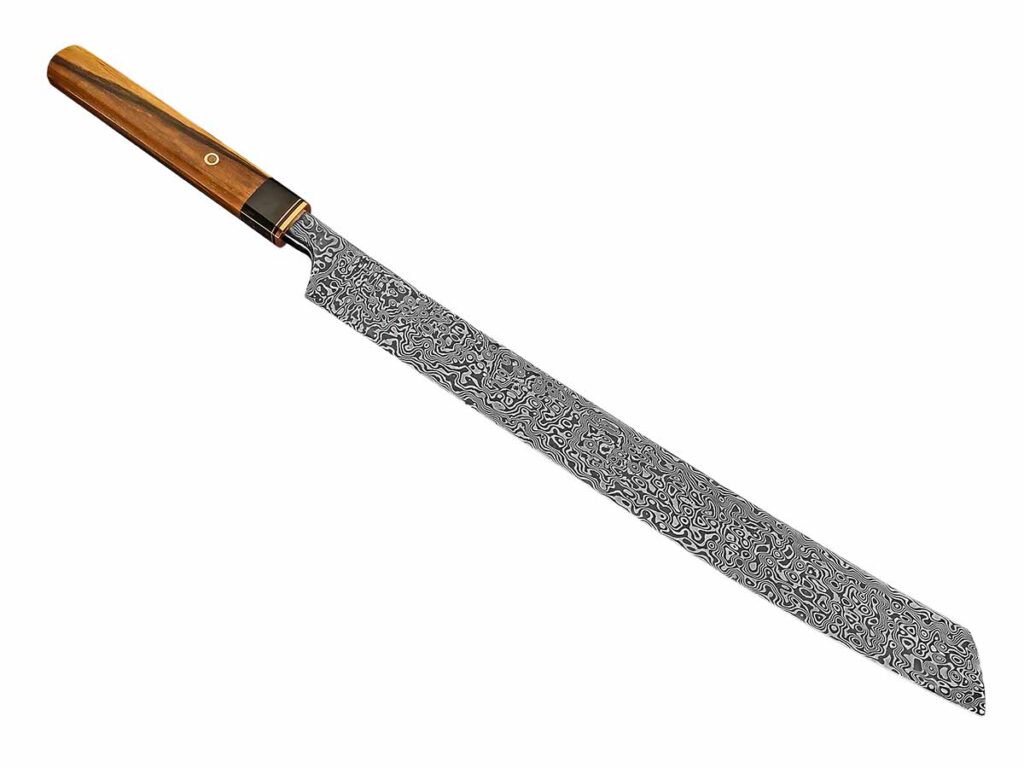
Franklin Bread Knife
Blade length: 9.25” Blade material: 52100 carbon steel Handle material: Hawaiian koa Overall length: 14” Maker’s price for a similar knife: $575 Knife to know: Also comes in a set of three that includes chef’s and paring knives w/a price of $1,750 for the entire set; Thomas Franklin is an ABS apprentice smith Maker: Thomas Franklin (Jfrasierphotography.com)
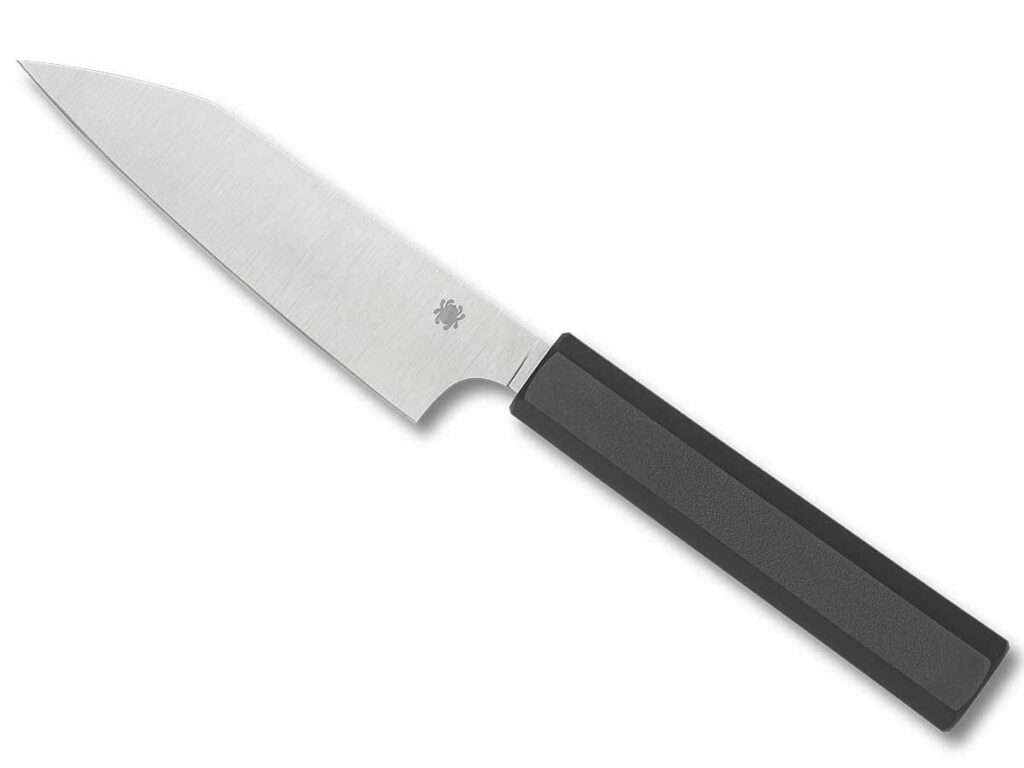
Spyderco Petty
Designer: ABS master smith Murray Carter Blade length: 4.64” Blade steel: CTS BD1N stainless Blade grind: Full-flat Blade @ thickest: .068” Handle design: Wa style (octagonal) Handle material: Black polypropylene Weight: 1.8 ozs. Overall length: 8.87” Knife to know: The Petty is part of Spyderco’s Minarai Series; meaning “to look and learn,” minarai is the Japanese way of describing the role of an apprentice Country of origin: Japan Company: Spyderco, spyderco.com
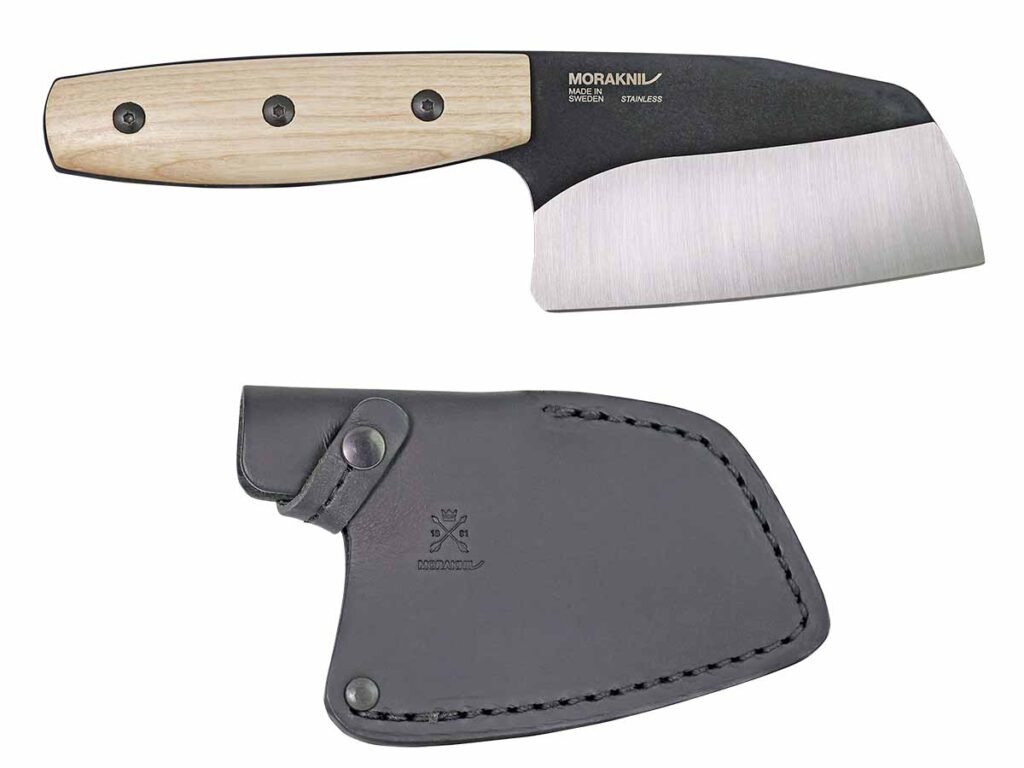
Morakniv Rombo
Model: Camp chef’s knife Blade length: 3.86” Blade steel: Swedish stainless Blade grind: Flat Blade @ thickest: .09” Blade finish: Two-tone Handle material: Wood Weight: 5.5 ozs. Overall length: 8” Country of origin: Sweden Knife to know: Designed for right-hand use MSRP: $230 (at press time rate of exchange) Company: Morakniv, industrialrev.com
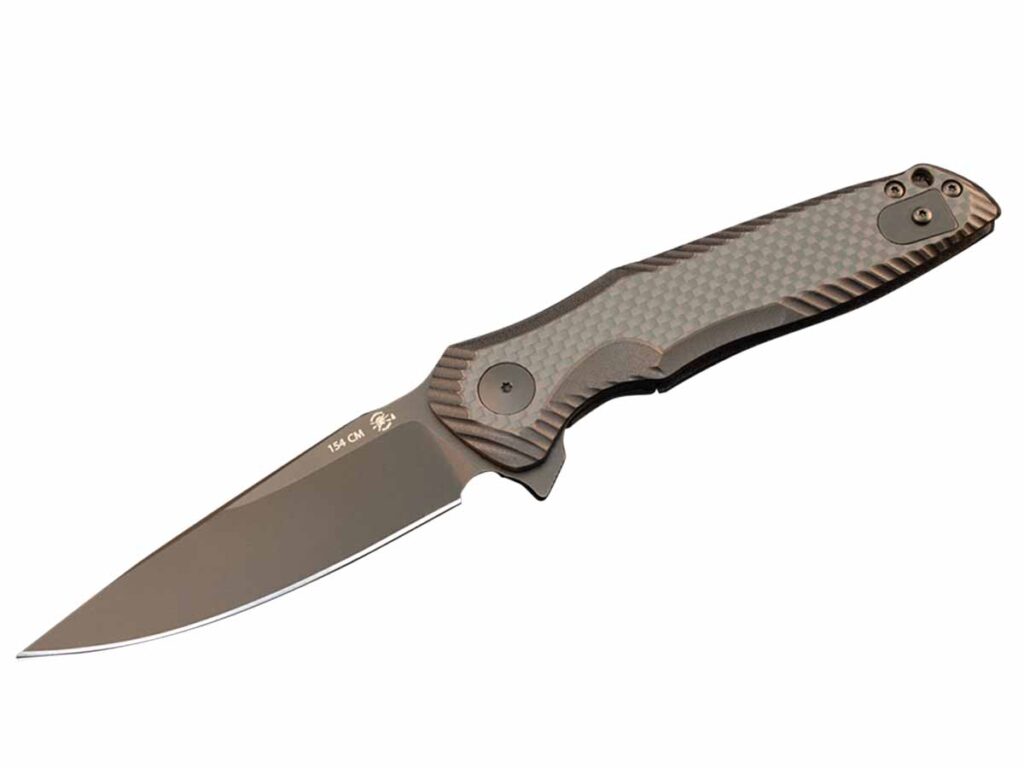
Spartan Blades Poros
Designer: Curtis Iovito Knife type: Flipper folder Blade length: 3.75” Blade steel: 154CM stainless Rockwell hardness: 58-60 HRC Blade grind: Flat Blade @ thickest: .125” Blade finish: Black titanium nitride coating Blade pattern: Drop point Pivot action: Ikoma Korth Bearing System (IKBS) Handle material: Carbon fiber/G-10 composite Lock: Linerlock Pocket clip: Deep carry Hardware & liner: Stainless steel w/black electro-deposit powder coating Weight: 5.3 ozs. Closed length: 4.25” Country of origin: USA MSRP: $190 Company: Spartan Blades, spartanbladesusa.com
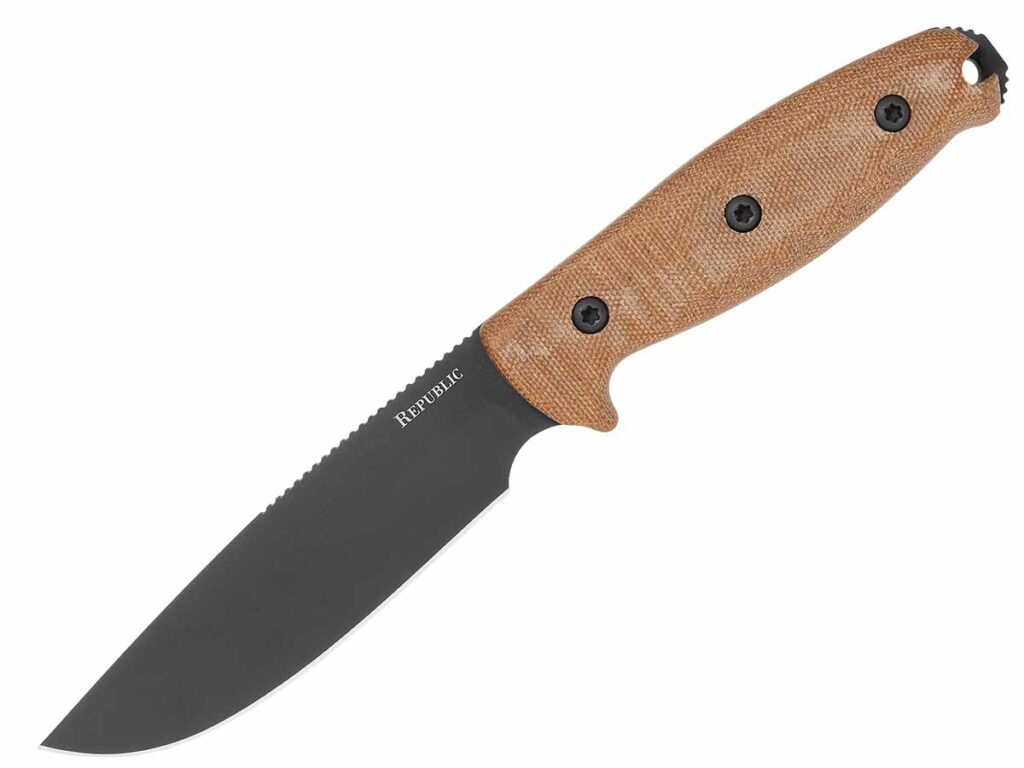
Cold Steel The Republic
Knife type: Bushcraft fixed blade Blade length: 5” Blade steel: CPM S35VN stainless Rockwell hardness: 58-60 HRC Blade @ thickest: .1535” Blade finish: Corrosion resistant/no-glare Ionbond Blade pattern: Drop point Handle material: Micarta® w/single integral guard and lanyard hole Knife to know: Handle is removable for customization based on situation/undertaking; spine gimping for extra control Weight: 8.4 ozs. Overall length: 10” Sheath: Leather pouch MSRP: $269.99 Country of origin: USA Company: Cold Steel, coldsteel.com
WE Knife Zonda
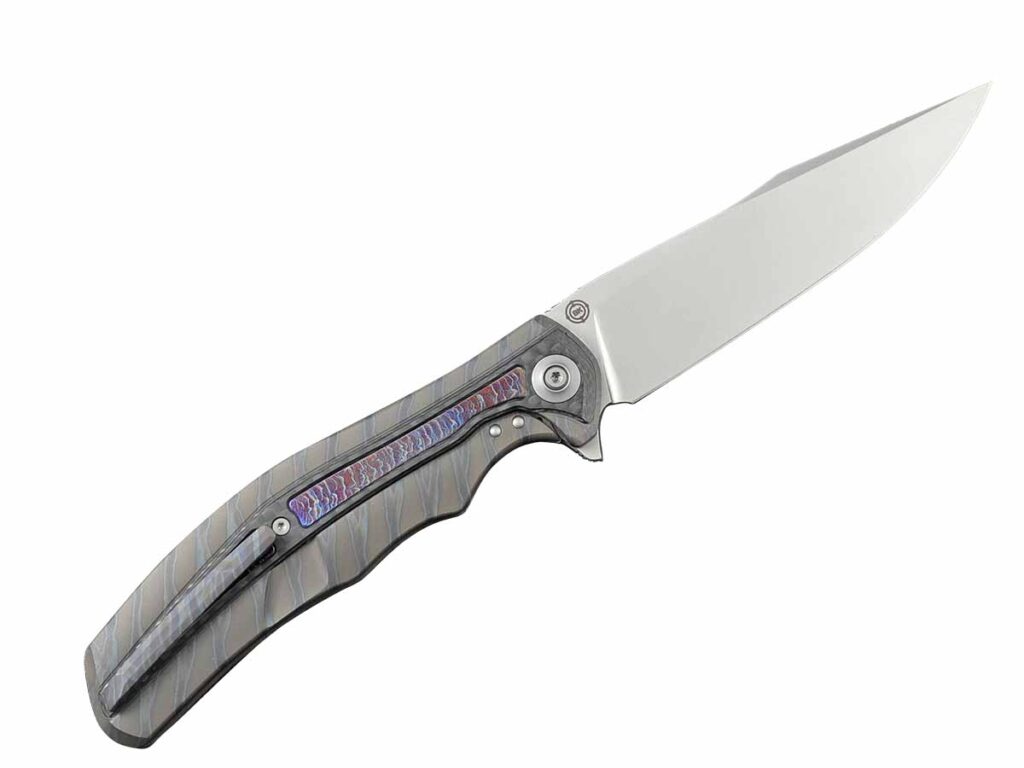
Pattern: Flipper folder Blade length: 4.04” Blade steel: CPM 20CV stainless Blade finish: Stonewashed Blade @ thickest: .13” Handle material: Black titanium w/flamed titanium inlay Pocket clip: Right-hand, blade-tip-up carry Lock: Framelock Closed length: 4.85” Country of origin: China MSRP: $480 Company: WE Knife, weknife.com
Halfbreed Blades MILF-03PS
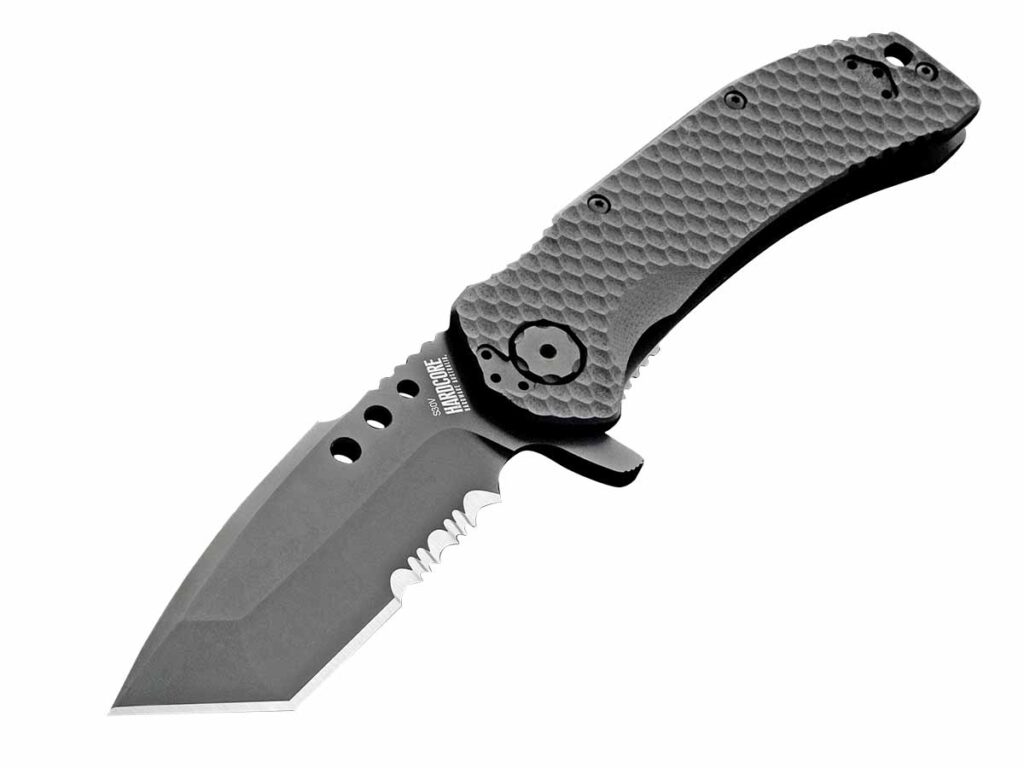
Blade length: 3.54” Blade steel: CPM S30V stainless Rockwell hardness: 59-60 HRC Blade grind: Hollow Blade @ thickest: .19” Blade finish: PVD coat Blade pattern: Tanto Handle material: G-10 Washers: Phosphor bronze Weight: 7.34 ozs. Closed length: 5.51” Handle @ thickest: .59” Country of origin: Australian and Taiwanese make MSRP: $280 Company: Halfbreed Blades, halfbreedblades.com.au
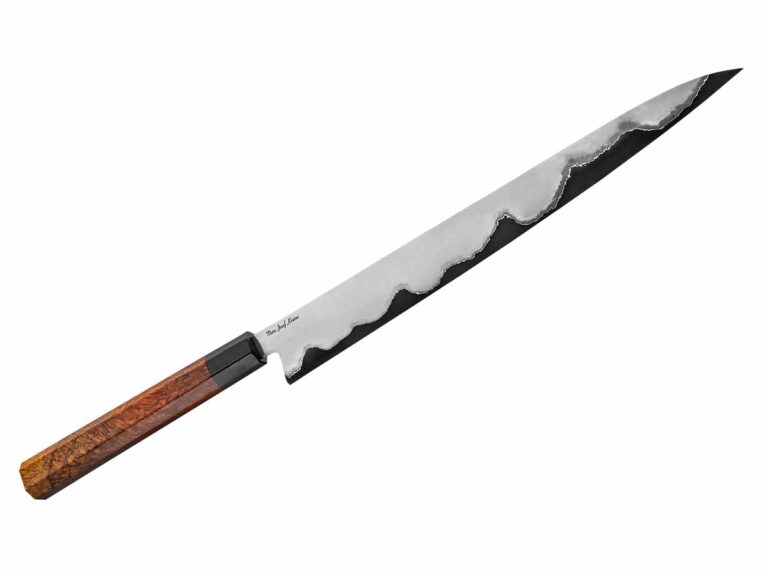
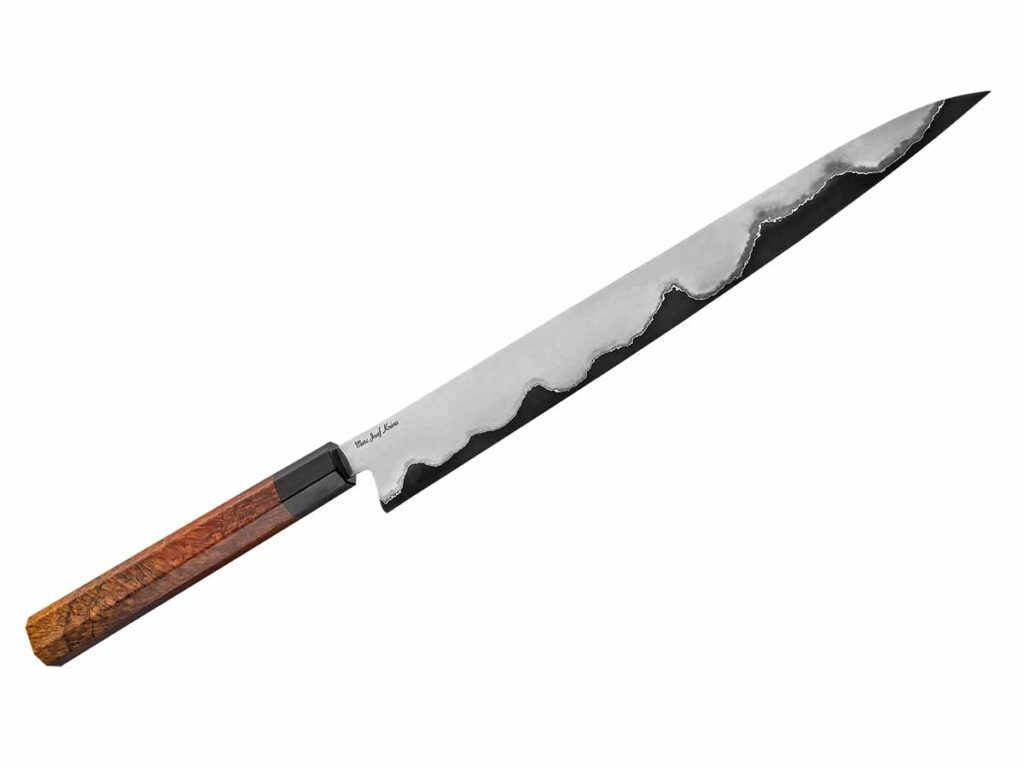
Pattern: Slicer Blade length: 11.8” Blade material: San-mai construction of 410 stainless steel, nickel and 52100 carbon steel forged by Brook Turner Rockwell hardness: 62 HRC Blade grind: Flat/convex Blade thickness @ ricasso: .118” Blade @ widest: 1.496” Handle material: Coolabah burl Bolster/guard: African blackwood Overall length: 18.5” Maker: Marc Stewart, Mark Josef Knives, marcjosefknives.com.au (Rod Hoare image)
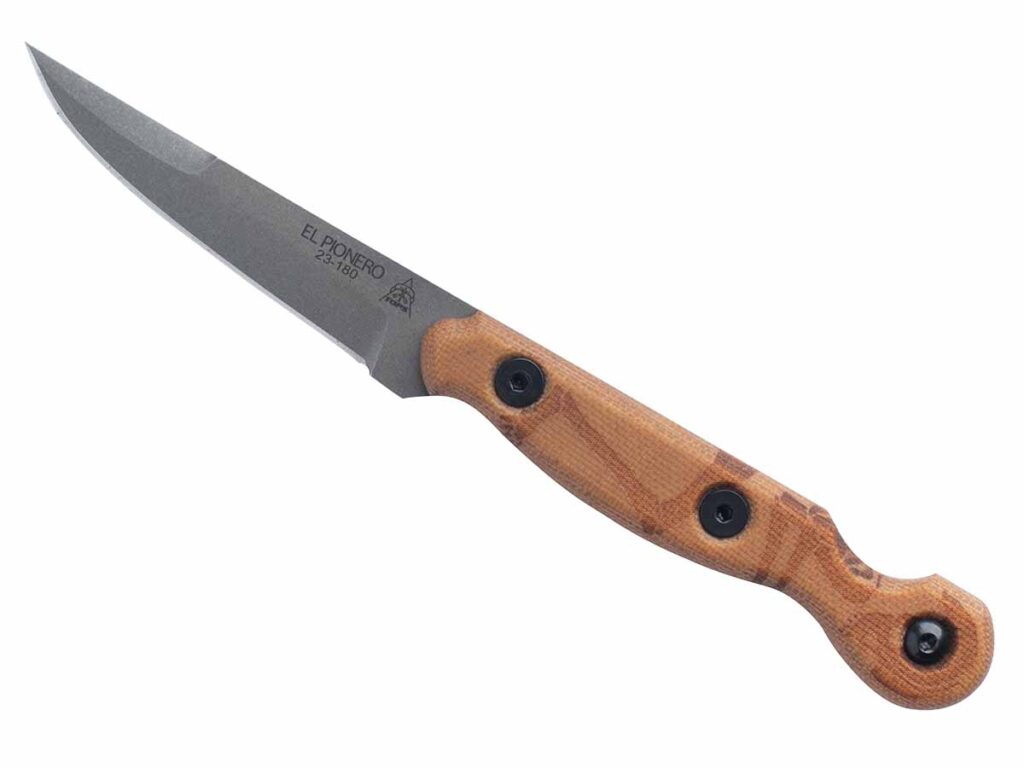
TOPS Knives El Pionero
Designer: Ed Calderon Blade length: 3.38” Blade material: 1095 carbon steel Blade @ thickest: .09” Blade finish: Tumble Handle material: Tan canvas Micarta® w/finger divot that aids in blade orientation, etc. Weight: 2.9 ozs. Overall length: 7.63” Sheath: Black Kydex Weight w/sheath: 4.1 ozs. Knife to know: The El Pionero is a “paring knife-esque design”; Ed Calderon (edsmanifesto.com) worked as a counter-narcotics officer in Mexico and more recently as a trainer and “guru in the tactical space” Country of origin: USA MSRP: $220 Company: TOPS Knives, topsknives.com
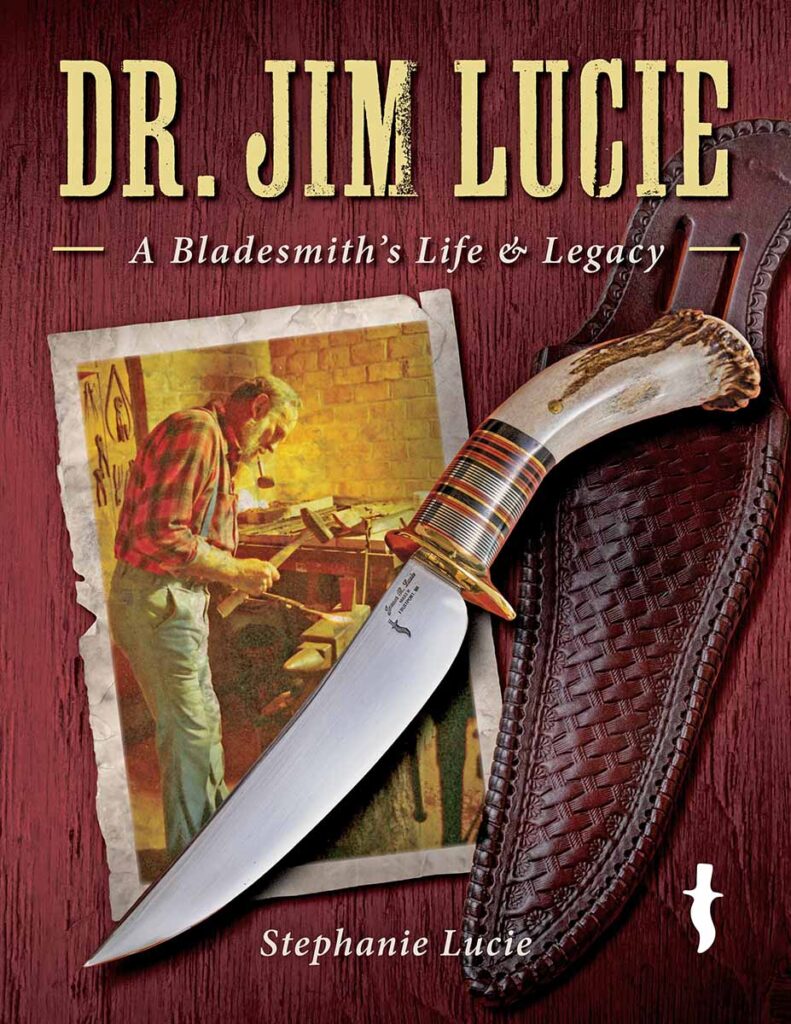
Dr. Jim Lucie: A Bladesmith’s Life & Legacy
What it’s about: ABS journeyman smith Dr. Jim Lucie had a unique background: he served as the personal physician for, and learned about knifemaking from, the man recognized as the grandfather of custom knives—BLADE Magazine Cutlery Hall-Of-Fame® member William Scagel. The author, Stephanie Lucie, is Lucie’s youngest of four daughters. She paints a picture of her father like no other, from childhood to adulthood, his bladesmithing mentors and friends, the many stories written about him and much more. Format: 9.25 x 12.5-inch hardback, limited to 1,500 copies in the first edition, over 300 color photos, including more than 200 knives Lucie made, and over 100 pictures of his life and accomplishments. MSRP: $120 Contact:jimluciebook.com