BLADE Show

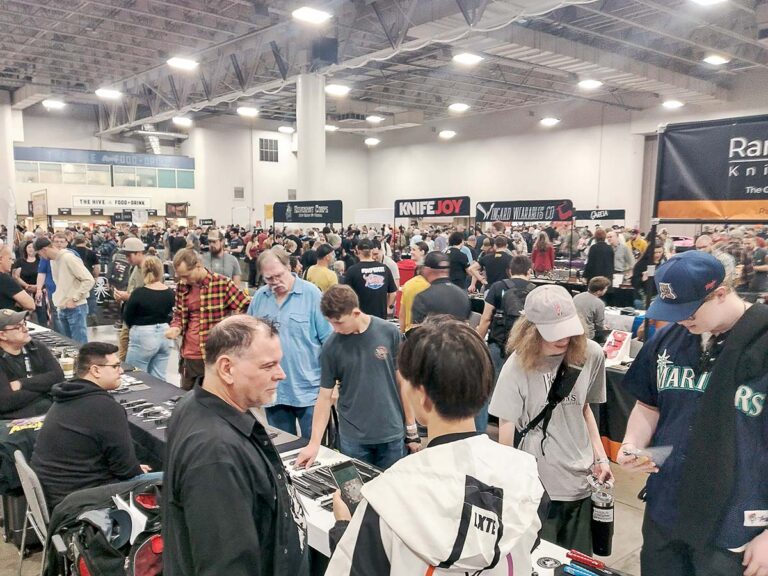
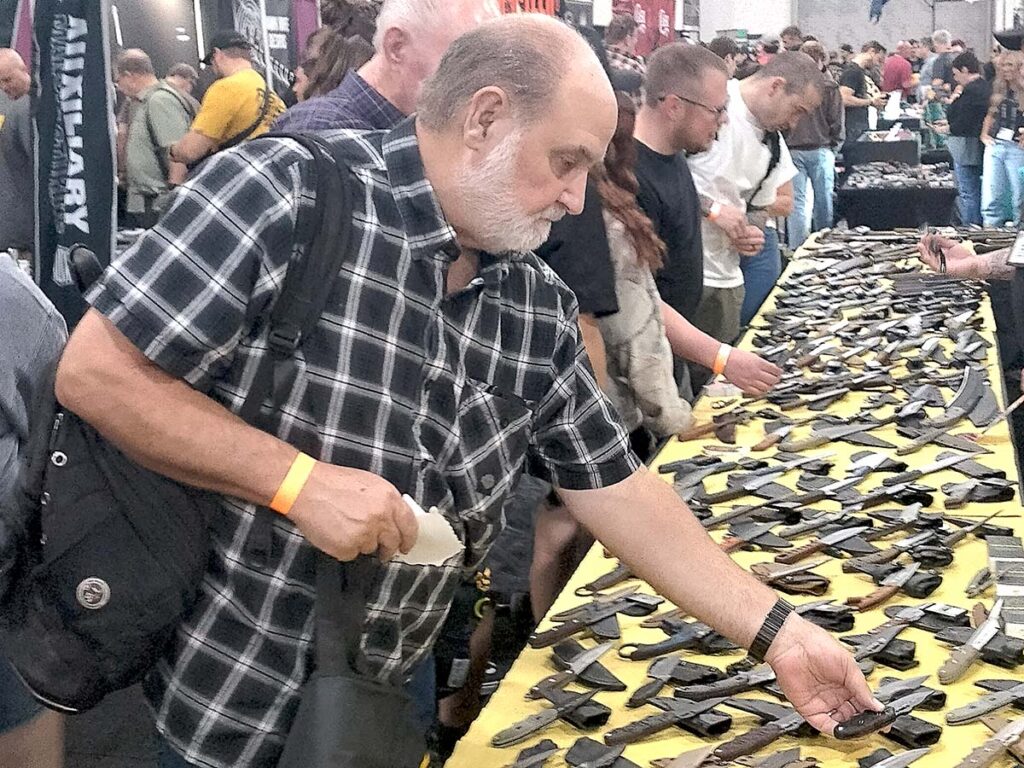
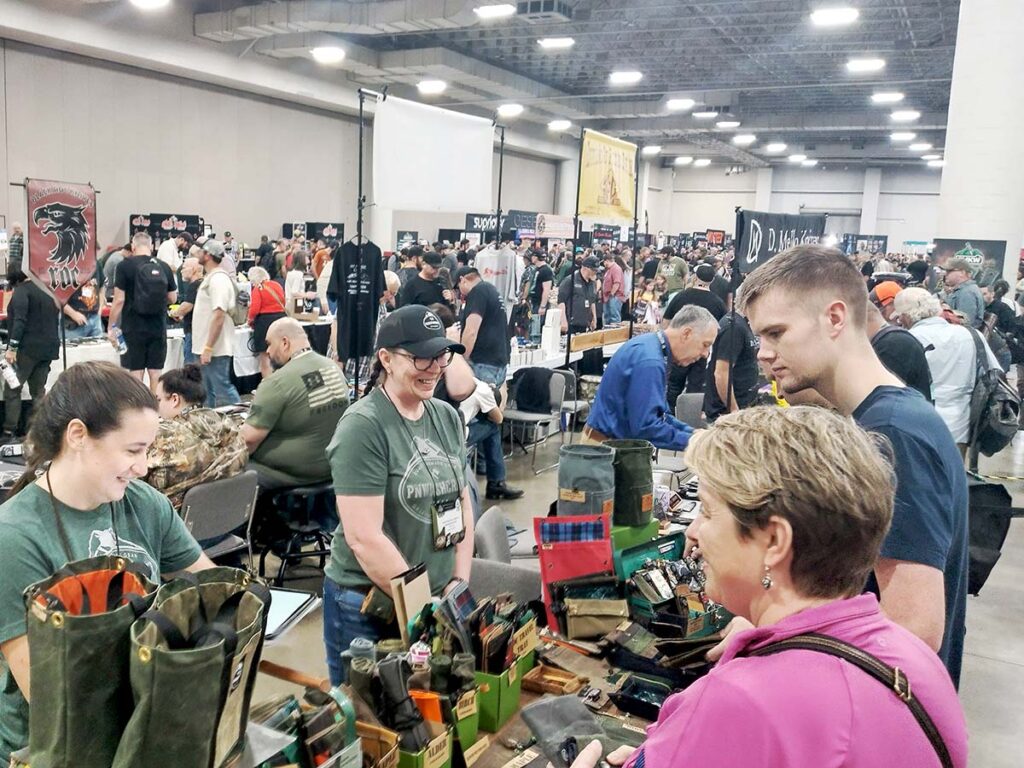
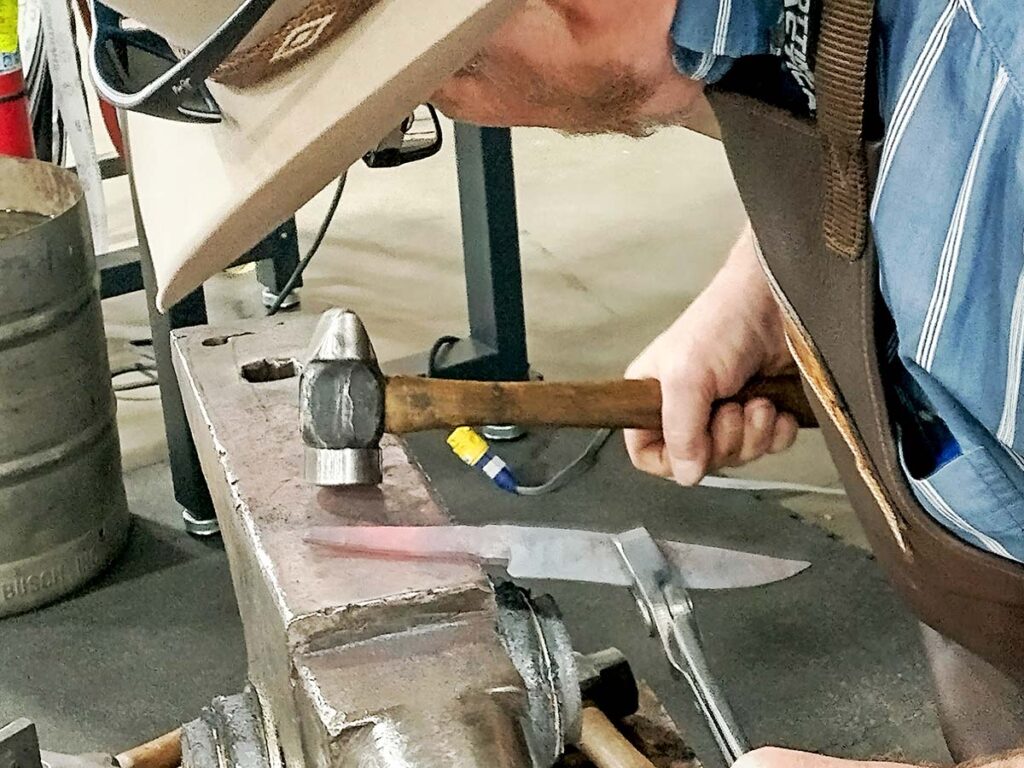
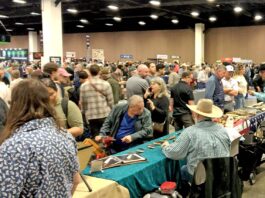
Hosted in Atlanta, Georgia in May or June every year, the BLADE Show truly is the World’s Largest Knife Show. It features the most diverse array of knives from manufacturers, knifemakers, collectors, dealers and purveyors, all under one roof. The BLADE Show plays host to the Blade Magazine Knife-Of-The-Year® Awards, the Blade Magazine Cutlery Hall of Fame© induction ceremony, seminars, demonstrations and much more.

Visit BladeShow.com for tickets, travel information, exhibitor registration and sponsorship opportunities.

BLADE Magazine Cutlery Hall of Fame®: Largest Class Ever Full Of Iconic Names

Living and past greats highlight huge roster of inductees.

The BLADE Magazine Cutlery Hall of Fame® enjoyed its most prolific induction ceremony ever when it welcomed eight new members during BLADE Show 2025.

The total includes four living inductees—Harvey Dean, Rick Dunkerley and Daniel Winkler and Karen Shook—and four deceased ones: Stanley Fujisaka, Dr. James R. Lucie, Alfred Pendray and Jim Schmidt.

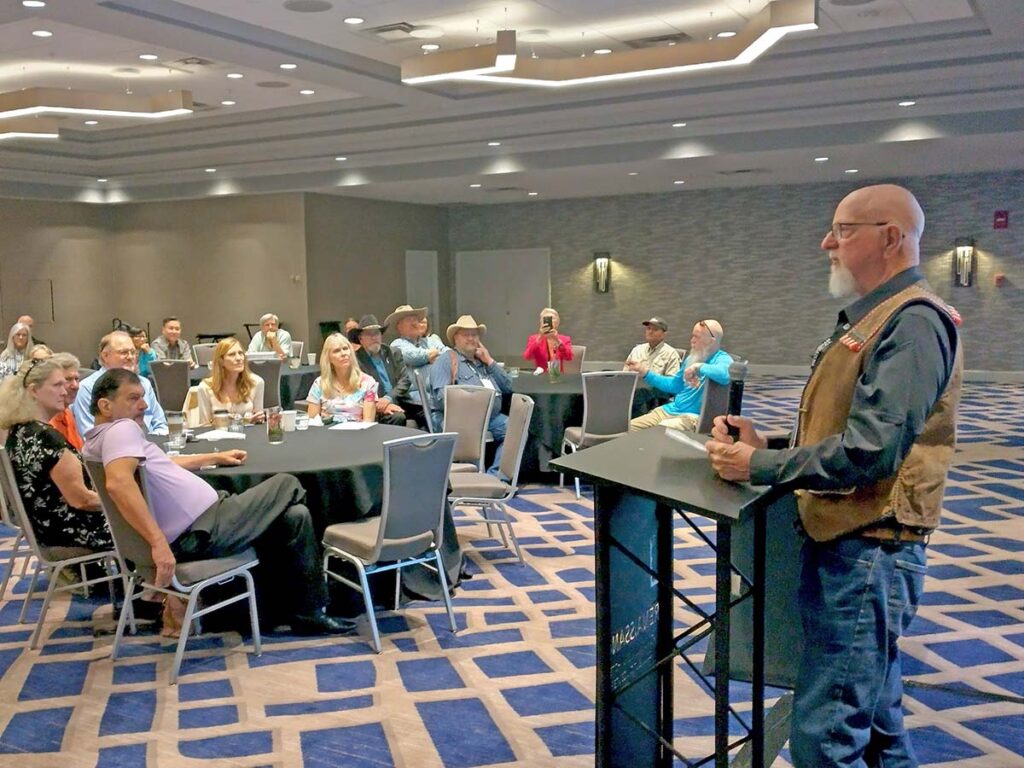
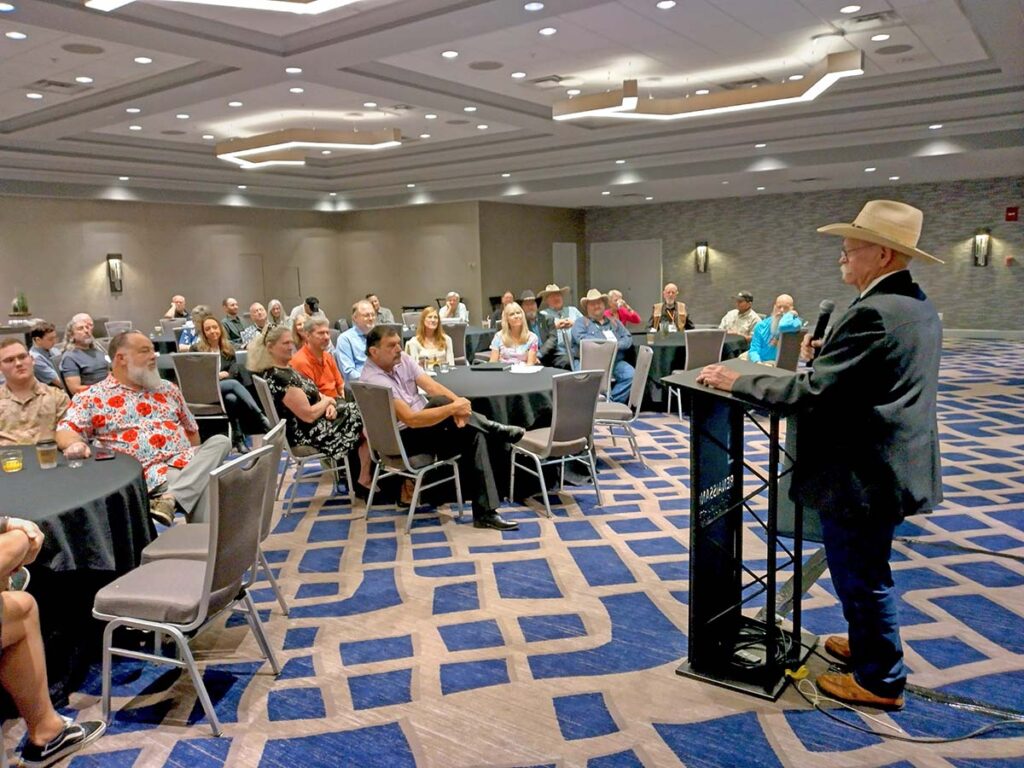
Induction speeches were provided by an array of Cutlery Hall of Famers—newly minted inductee Rick Dunkerley, Ken Onion and Steve Schwarzer; friends of three of the inductees, military veteran Kevin Holland and Josh Smith, founder of Montana Knife Co.; and Stephanie Lucie, daughter of inductee Jim Lucie.

Emotions understandably ran high, as did more than a few tears. It was a ceremony to remember.

Jim Schmidt
Cutlery Hall-of-Famer Steve Schwarzer enjoyed the honor of inducting two of his mentors: Jim Schmidt and Alfred Pendray.

As wrote Dellana, one of Jim Schmidt’s stellar students that also included Barry Davis, Cutlery Hall-of-Famer Steve Schwarzer, Larry Fuegen and more, Jim was “larger than life, truly a giant among men.” Added Schwarzer, Schmidt’s inductor, “Jim was like the father of filework. All of that filework in the business came out of him.” Schmidt made the first goblin folders, a unique style his students such as Dellana, Schwarzer, Fuegen and others emulated. “He was always willing to teach,” Schwarzer said. “His generosity with his time and knowledge was legendary … He was there at the rise of modern custom knifemaking and is one of the reasons the movement has risen to the heights that it has … He brought tool-and-die work to knifemaking and was an incredible artist.”

In the 1970s, along with Jimmy Fikes and Cutlery Hall-of-Famer Don Fogg, Jim was instrumental in forming the New England Bladesmith Society and organizing the Ashokan Bladesmithing Seminar. He was one of the earliest ABS members and ABS master smiths, a member of the ABS Hall of Fame, a constant member of the Art Knife Invitational (AKI), winner of the Knifemakers’ Guild’s Red Watson Award and the Beretta Award for Outstanding Achievement, and more. He was the ultimate teacher, his profession for most of his life. An outstanding book on Schmidt is James Schmidt: The Great Master, by Mike Haskew. As the book noted, Jim “welcomed those who were earnestly interested in improving their bladesmithing and knifemaking skills into his shop … and shared with them the light of precious knowledge that he realized should be readily and freely given rather than hidden.”

Alfred Pendray

“Alfred Pendray was a legend in the forging business,” Schwarzer began. “He was the pioneer in wootz research. I worked alongside him and 99 percent of the rediscovery of that material was by Alfred Pendray. Once he got his mind set on something he wouldn’t quit; he did it scientifically and that legacy will live on for a long time. He was just good to people—he was really good to people.”

Pendray taught and influenced many bladesmiths. “I learned so much from him,” noted Charley Ochs, “not only about knives and metallurgy, but also about life and social interaction as a person.” Alfred is co-author—along with Dr. John Verhoeven, former metallurgical engineering professor at Iowa State University—of articles in eight scientific journals, four bladesmith publications and BLADE® on the nature of “genuine damascus,” or wootz steel. Pendray holds patent number 5,185,044 on a “method of making damascus blades.”

He joined the Guild in 1982 and became an ABS master smith in 1983. He spoke at the Symposium on Damascus Steel at New York University in 1984, the International Conference on Damascus Steel in Germany in 1985, and at the same conference and the Imperial College in London, England, in 1992. He won the ABS Bill Moran Knife of The Year in 1991 and was elected to the Guild board of directors in 1992. He received the ABS W.W. Scagel Award in 1998 and is a past recipient of the Guild’s Red Watson Award. He served as Guild president from 1998-2004 and is a member of the ABS Hall of Fame.

Rick Dunkerley
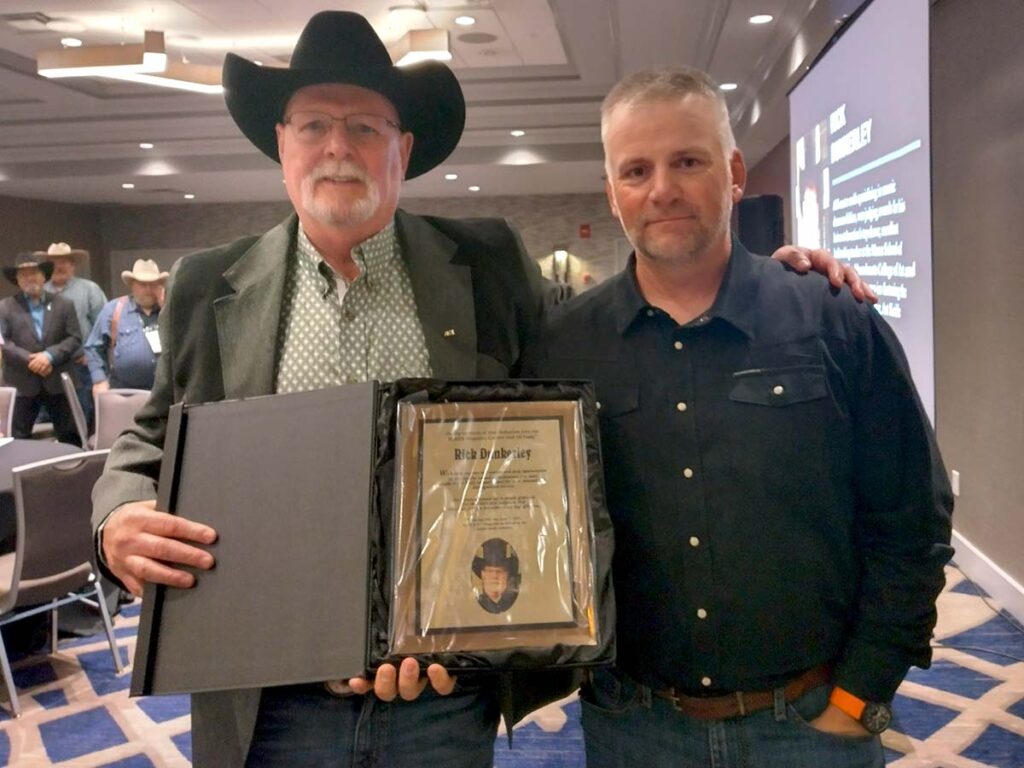
Teacher Rick Dunkerley (left) was inducted by one of his prize pupils, Josh Smith (right).

Rick Dunkerley made his first knife in 1983 and started forging in 1992. He founded the Montana Knifemakers Association in 1993, organizing the state’s first modern custom knife show. He became an ABS journeyman smith and hosted his first hammer-in in 1995 and became an ABS master smith in 1997. He’s taught bladesmithing internationally, in the process earning the Maestro Rating by the Italian Knifemakers Guild in 2006. In 2015 he was inducted into the AKI and later served on the AKI advisory panel. He’s served on the ABS board of directors for nine years and was just re-elected for another term.

According to Rick’s inductor/former student, Josh Smith, founder of Montana Knife Co., “What makes Rick special is his relentless desire to give back and teach … He hosted hammer-ins featuring instructors like Al Dippold, Hank Knickmeier, Rob Hudson, [Cutlery Hall-of-Famers] Wayne Goddard and Don Fogg and other greats. It was through these hammer-ins that the Montana Mafia was born. With Rick as the ringleader, this group went on to shape the landscape in bladesmithing and damascus to this day. It’s because of Rick and others in this era [including Shane Taylor, Wade Colter and more] that pattern-welded steel and the patterns to create it took giant leaps into the future … There’s no doubt the incredible makers we have today are standing on the shoulders of these giants.” Added an emotional Josh, who started learning how to forge under Rick’s tutelage at 11, “That was 33 years ago and I’ve been able to be in this community and build what I’ve built all because he let a kid into his shop. I love him for that.”

Stanley Fujisaka

Stanley Fujisaka made beautiful linerlock folders and fixed blades and was a beloved mentor to Hawaiian and other makers, including Scott Matsuoka, Les George, Cutlery Hall-Of-Famer Ken Onion and many more. Fujisaka played a key role in encouraging Onion to patent his SpeedSafe assisted-opening mechanism, a mechanism that resurrected Kershaw and revolutionized folding knives. However, in his speech inducting Stanley, Onion said it was the “little” things that set the new inductee apart.

“Stan didn’t invent a new category of knives, he didn’t have some crazy invention. What he had was admiration and respect and love for every one of you guys in this room,” Ken noted. “Every time I went to a show I’d come back to his shop and he’d tell me these stories of Schwarzer, of Ruple, of everybody, and they were legends to me, and he was a really great orator about that, a really great story teller, which is really why I got enough courage to come to a [knife] show. You guys were all magical to him.

Stan was one of those guys if you bought a knife from him he would write down your name, your wife’s name, your kid’s name, where you lived, your address, everything, and he would send you coffee, Hawaiian candies, a handwritten card thanking you. He would struggle to look through his book if he saw you walking toward his table so he wouldn’t forget your name. He was the truest form of gentleman, and I think that’s more of what I learned from him. It was not just knifemaking, it was how to … respect everybody, how to conduct myself in an honorable way, and nobody did that better than Stan.”

Dr. James R. Lucie
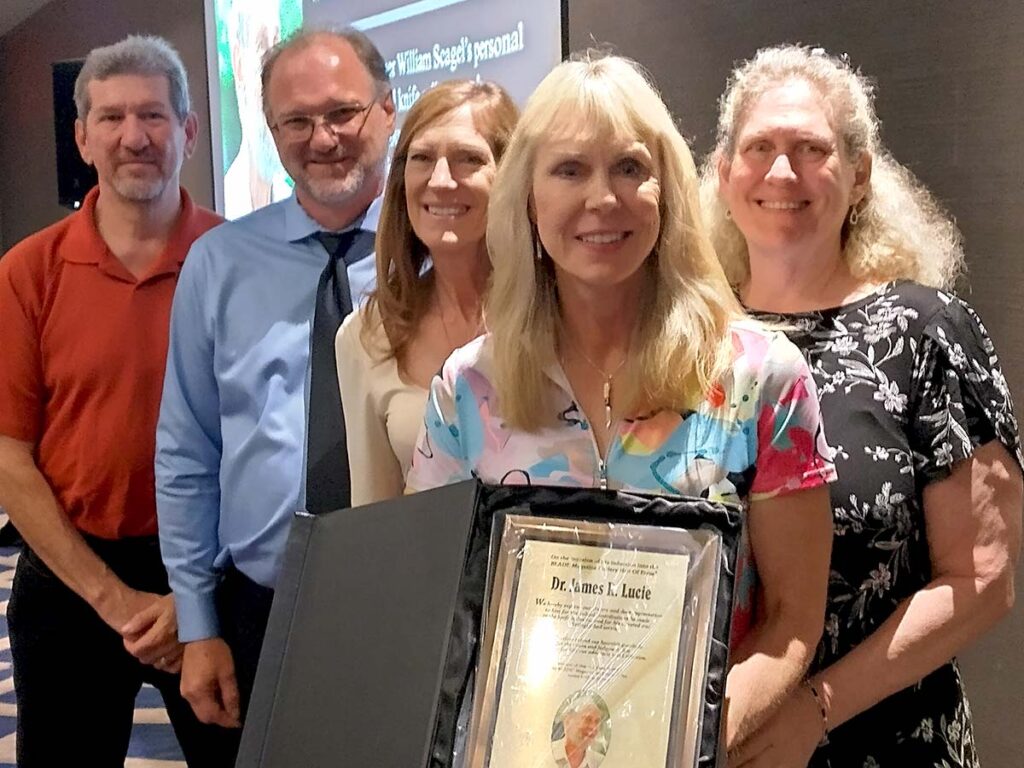
Stephanie Lucie inducted her father, Dr. Jim Lucie, with family and friends as special guests. From left: the inductee’s nephew, Chris Lucie; ABS master smith Kevin Cashen; and the inductee’s daughters, Robin Lucie, Stephanie Lucie and Pam Lafrance.

Dr. James R. “Jim” Lucie was the personal physician of Cutlery Hall-of-Famer William Scagel and signed Scagel’s death certificate in 1963. In her speech inducting her father, Stephanie Lucie said Jim researched Scagel’s life and collected his work for over 30 years, culminating in Dr. Lucie’s seminal book, Scagel Handmade. After retiring from medicine at 65, Jim dedicated his life to making Scagel reproductions. “He recreated Bill’s designs as closely as possible—unless he saw a way to improve them,” Stephanie said. “Ever the physician, he even X-rayed Bill’s knives so he could ‘see what the old boy was up to,’ as he liked to say … His goal was to become an ABS journeyman smith, which he achieved at the age of 71.”

A highlight of his career was making a knife for Willie Nelson and presenting it to him after a concert. It was featured on the cover of BLADE®. In 2001, the ABS created the Dr. Jim Lucie Award, making Jim its first recipient. He hosted a hammer-in at his house that over 500 people attended, and he freely shared Scagel’s techniques at many bladesmithing events. “He helped many beginning knifemakers, just as others had helped him,” Stephanie said. “When it came time to move from Michigan to Texas, instead of selling his knifemaking equipment, he donated much of it to the ABS—enough for each U.S. ABS school.”

In a speech Jim said, “Nowhere does there exist a finer or more helpful cadre of people than the knifemakers and bladesmiths of today. I have not yet found anyone [among them] who was not ready and willing to help impart knowledge or answer questions. I have always believed that we must give something to the society from which we took, and these people are doing it in grand style.”

Daniel Winkler And Karen Shook
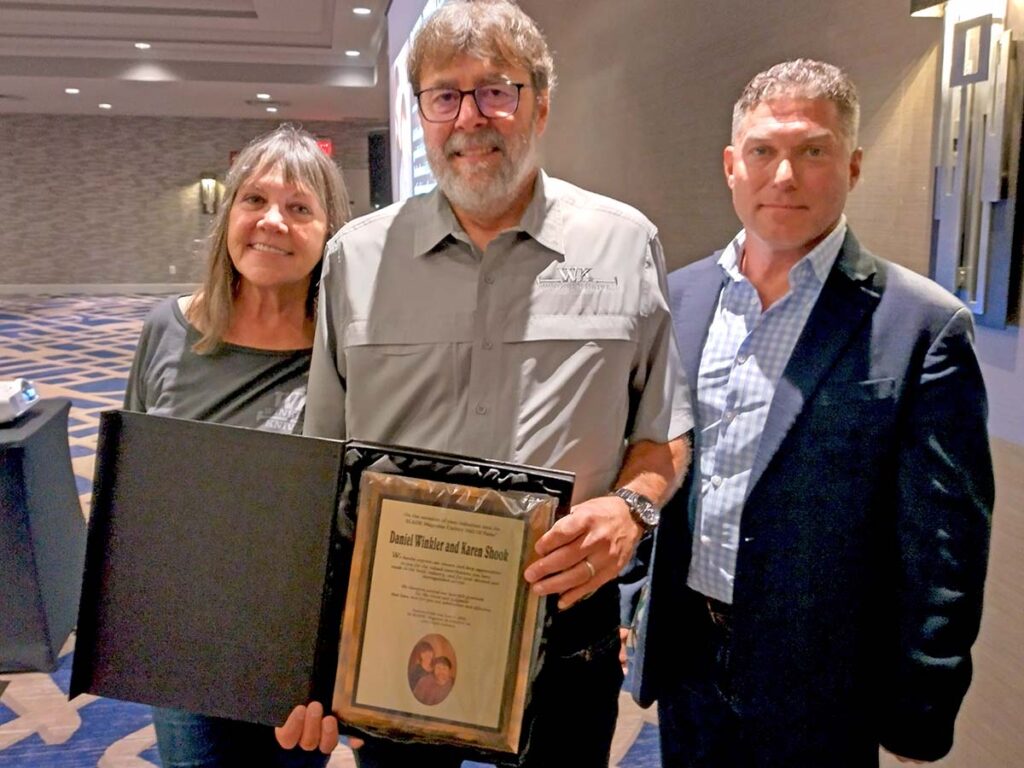
From left, Karen Shook and Daniel Winkler accept their plaque after Kevin Holland (right) delivered their induction speech.

In the late 1980s, Daniel Winkler started handforging period-correct frontier knives and Karen Shook made period-correct sheaths to match. In 1992 the showcasing of Daniel’s period pieces in the hit movie Last of the Mohicans made the pair custom knife stars. The film captured the attention of Kevin Holland, who would go on to serve in both the Naval Special Warfare Development Group/aka SEALs and Army Special Missions Unit. He asked Winkler to make a hatchet for him in 1993, and Daniel complied with a model Kevin carried for the balance of his Navy hitch.

After his discharge and still with hatchet, Kevin was working as a North Carolina game warden when 9/11 happened. He joined the National Guard and worked his way into the Army Special Missions Unit. One day his team leader espied the Winkler hatchet on Kevin’s belt and asked if he could get more. Kevin contacted Daniel, who subsequently filled an order for 15 or so. Then Kevin’s old SEAL unit saw the hatchets and Daniel made them some, too. It wasn’t long before Daniel and Karen had reached a crossroads—make period pieces for collectors, or hatchets and knives for special ops warriors. They eventually agreed that making tools for our nation’s warriors was far more important than anything else they could do.

As Kevin noted in his speech inducting the new Hall-of-Famers, “… they had a higher call … making tools that meant life or death to men in combat. They saw how important that was. They put these tools in the hands of our military and law enforcement, who carry them all over the world now.” Added Daniel, “We’ve been very fortunate to be a part of it, and I couldn’t have done it without Karen.”

Harvey Dean
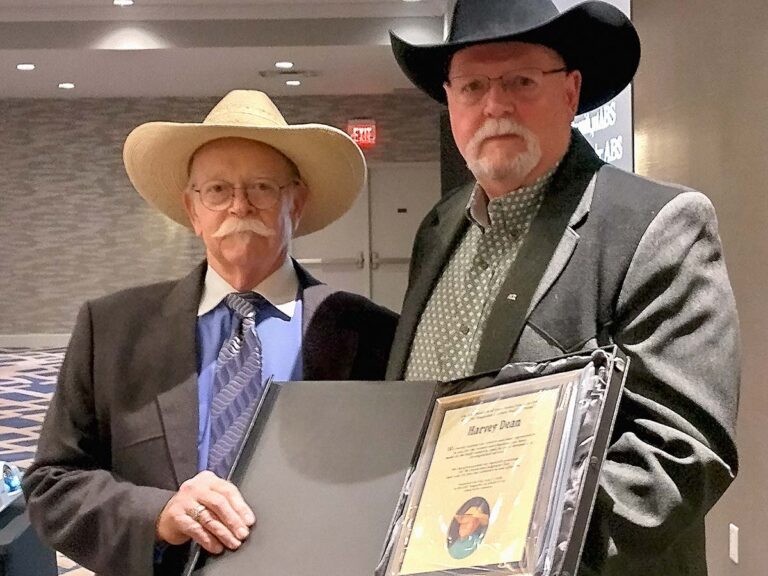
Harvey Dean enjoys the moment.

As inductor Rick Dunkerley outlined, Harvey Dean made his first knife in 1979—the same year Harvey and Deborah were married. “Harvey said this is the kind of wife I have. She let me sand that first knife on the kitchen table. Harvey has a good backup system there,” Rick smiled. Harvey started making knives full time in 1992 and became the 42nd ABS master smith the same year. He joined the ABS board of directors in 2004, was voted into the AKI in 2007 and served as chairman of the ABS from 2015 to 2019, and continues to serve on the board today. He was inducted into the ABS Hall of Fame in 2016.

Harvey’s taught an impressive number of students all over the USA, including conducting two hammer-ins a year with Johnny Stout for 25 years. “The amount of teaching going on there was pretty incredible,” Rick observed. “Harvey’s won countless awards. If it has to do with a bowie knife, Harvey won it … Harvey does it all. He brings bowie knives to the AKI, he brings slip joints, he’s the consummate knifemaker. He can make whatever he wants and makes it at the highest level. There just aren’t a lot of makers who can do that. And as much as he’s given back, he’s a better man, a better family man, a better father, a better husband than he is a knifemaker.”

In accepting, Harvey said, “In the Bible, Book of Romans, the Apostle Paul says a man should not think more highly of himself than he should, and I’ve tried to live my life and career like that, so it’s hard for me to get it in my head that I deserve this—but I’ll take it.”
See More Award Winners:

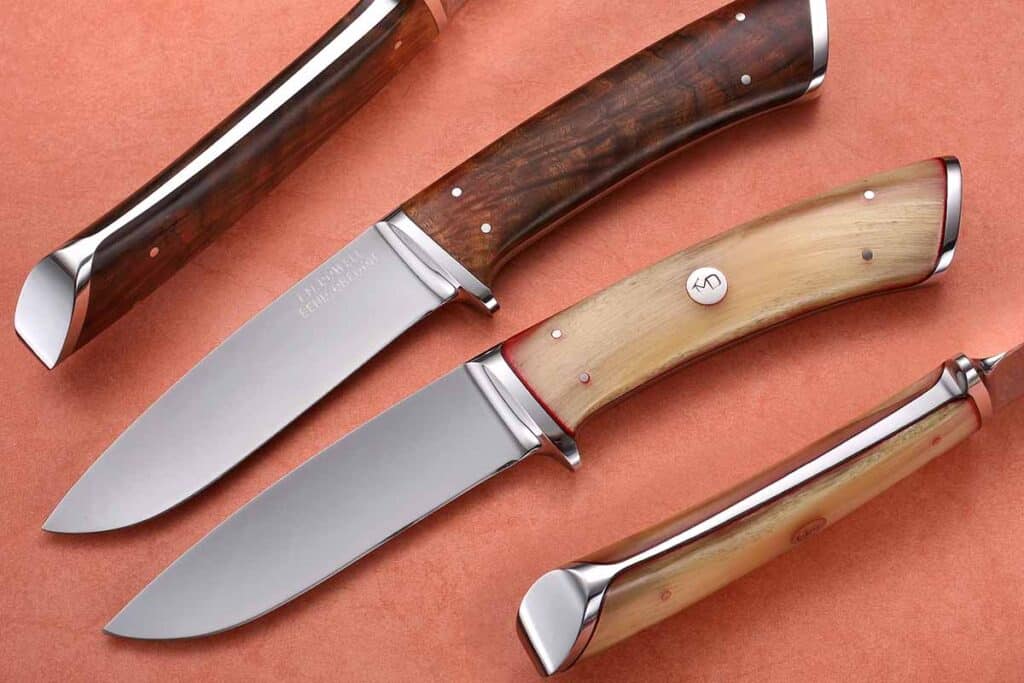
Cutlery Hall of Fame 2024: Dowell, Harsey And Fogg Enshired In Atlanta

Cutlery Hall of Fame enshrines three icons of cut in Atlanta.

The BLADE Magazine Cutlery Hall of Fame® brought three groundbreakers of the world of knives into the fold June 7 with the formal inductions of premier knifemakers Ted Dowell and Bill Harsey and ABS master smith Don Fogg.

About 75 patrons were on hand for the breakfast/induction ceremony held in the Kennesaw Room of the Renaissance Atlanta Waverly Hotel the Saturday morning of BLADE Show 2024. For the first time in recent memory for the Hall-of-Fame ceremony, none of the inductees were on hand. Fogg and Harsey were unable to attend for health reasons, while Dowell passed away in 2012.

However, somehow it didn’t seem to matter so much as friends, family and acquaintances of the inductees and others took up the slack to produce a memorable induction event. Present to formally induct the new Cutlery Hall of Famers were Jeff Dowell (his father, Ted); Anne and Tim Reeve of Chris Reeve Knives and Curtis Iovito of Spartan Blades (Harsey); and Cutlery Hall-of-Famer Steve Schwarzer (Fogg).

T.M. “Ted” Dowell

Ted Dowell examines his handiwork
Ted Dowell examines his handiwork in his backyard knife shop. (image courtesy of Jeff Dowell)

As a founding member of The Knifemakers’ Guild, Ted Dowell played a key role in helping to organize the Guild, the grandaddy of all modern knifemaker organizations, in 1970. Along with fellow Cutlery Hall-Of-Famer Bob Loveless, he wrote the Guild’s original bylaws.

A veteran of the United States Navy, Ted resigned his position as a full-time mathematics professor in 1974 to go full time making knives. As Guild president in 1975, overcoming opposition from some in the Guild’s ranks, he coordinated the organization’s first custom-knives-only-no-guns show. He also helped Cutlery Hall-Of-Famer Phil Lobred establish the Art Knife Invitational in the early 1980s. Lobred credited Dowell with making the first modern integral knife, a design Ted introduced in 1972 in his basic hunters and which eventually evolved into some of the most ornate of integral art knives. Integral knives became a category of their own and remain popular to this day.

As Jeff noted, his father was passionate about the Guild and “all the foundations that set the pace and the tone for a lot of us that sit here today and reaped those rewards.” Jeff said much of the credit for his father’s success was due to the support of Mrs. Betty Dowell, who, while unable to attend the induction ceremony, was there vicariously through her son.

“Mom had her 93rd birthday a couple of days ago,” Jeff said to cheers and applause from those in attendance, “and she’s doing pretty well for 93. She still lives in the house that she and Dad bought in 1962 in Bend, Oregon, and the shop is still in the backyard. It’s not as completely outfitted as much as it was when he was working but a lot of the core stuff is still there. I go out there and tinker around quite often, and his presence is still very much there.”

Phil Lobred credited Ted Dowell with making the first modern integral knife
Phil Lobred credited Ted Dowell with making the first modern integral knife, a design Ted introduced in 1972 in his basic hunters and which eventually evolved into some of the most ornate of integral art knives. (SharpByCoop image)

Jeff and his brother, Scott, worked in the shop making sheaths for their father’s knives before tragedy struck in 1975 when Scott was killed in a car accident. He was only 19. “That was a tough day,” Jeff recalled, “and it took both my dad and mom a while to recover.” Jeff soon assumed the sheath-making duties and Ted and Betty soldiered on with life, with Betty taking more of a lead role than ever.

“My mom was galvanized and determined to have a family to take care of and a household to run,” Jeff said, “and she ran every bit of the business. [Dad made the knives] but everything else she did. She attended to every detail of the business. She had two kids to take care of and she had a grieving husband and a knifemaker and a business to support, and she did so for another 40 years.”

Meanwhile, Ted continued to establish a reputation as one of the finest makers of custom knives. “During that time Dad produced some great hunting knives and was best known for his integral designs and Funny Folders and those types of things,” Jeff remembered. “It was really Phil Lobred that pushed him and got him into art knives, and Dad produced some absolutely stunning art knives over the years.” Many of those images are on the impressive tmdknives.com website for which Jeff provides updates when warranted.

Still, Jeff said, his mother loomed large in every knife her husband made. “I don’t know that Dad could have made all those knives if not for her,” he noted. “She was that influential and resolute in seeing this through. I was fortunate enough to be a big part in working in the shop before heading off to college, and I visited quite often during that time to see some of the great knives Dad was doing. They both felt he deserved to be in the Hall of Fame and it’s wonderful that he finally is.

“I thank everybody here who voted him in and the other inductees as well. It’s a great honor.”

William “Bill” Harsey, Jr.

Bill Harsey
Bill Harsey (Ronald S. Smith image)

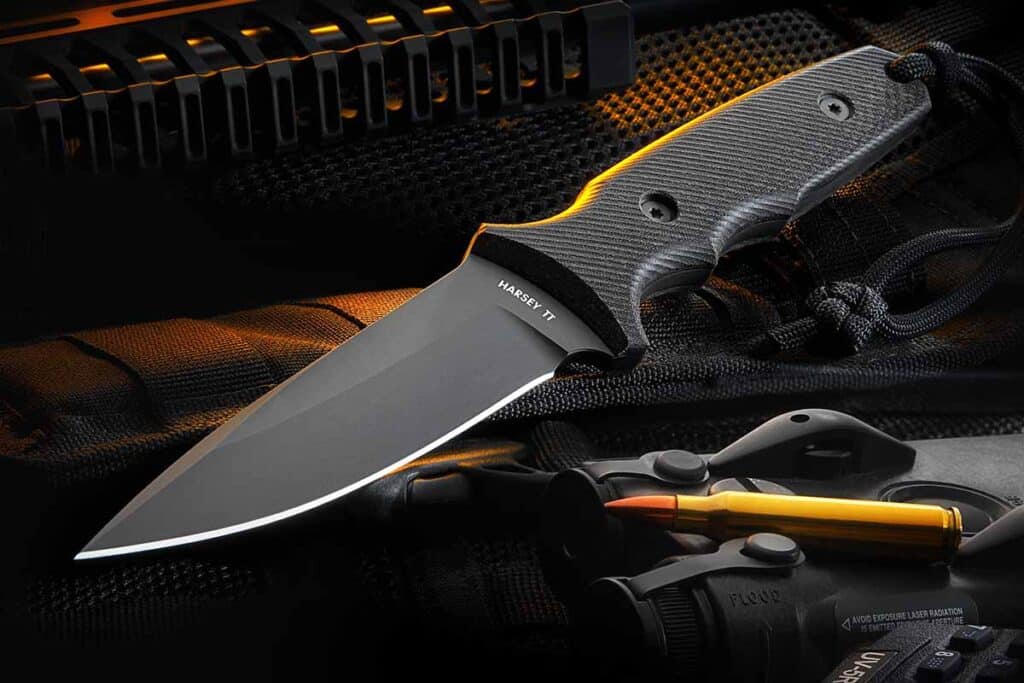
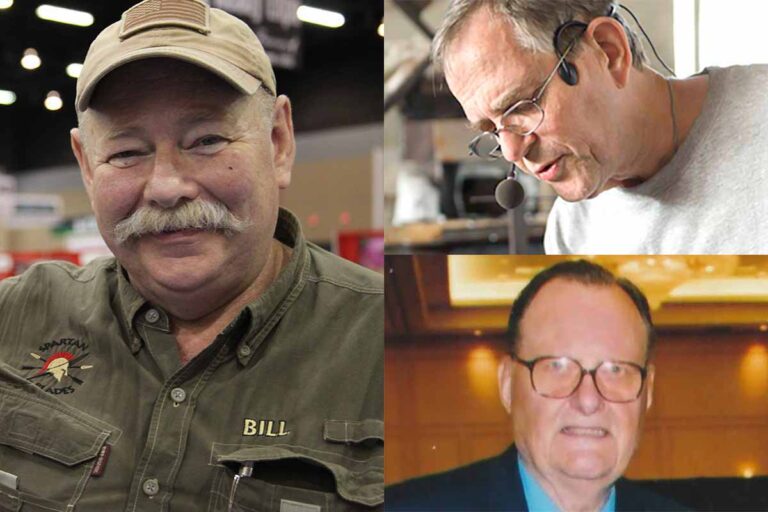
Bill Harsey has made and designed knives for 38 years, during which time he has been one of the most prolific and recognizable names in the industry, working behind the scenes and designing for Al Mar Knives, Beretta, Chris Reeve Knives, CRKT, Gerber, Ruger and Spartan Blades. He worked and consulted with and designed for Cutlery Hall-Of-Famer Col. Rex Applegate, including the British SAS Collaboration Knife. Bill designed the U.S. Army Special Forces Green Beret Knife, aka The Yarborough, for Chris Reeve Knives, a serialized version of which was presented to each graduate of the Special Forces Qualification Course. He also designed the official knife of the Canadian Special Forces and the U.S. Navy SEAL Silver Trident knife, and worked on the Neil Roberts knife project.

A fourth-generation lumberjack, Bill was born into a family of lumberjacks that, as Anne Reeve put it, was kind of a working ranch. “His grandparents taught him the importance of a knife,” Anne read from notes Bill had prepared beforehand. “His grandfather taught him very much, including how to hand sharpen tools for work.”

As Anne noted, Special Forces soldiers guided Bill’s knife work from the beginning. Bill met and was advised by Cutlery Hall-of-Famer Al Mar, and they worked together on knife projects for many years. “Bill credited Al Mar with teaching him to recognize good design,” Anne noted. It was Mar, a Green Beret in his own right, who introduced Bill to Col. Applegate, and the two struck up a working relationship that lasted 14 years. Among the fruits of that relationship was the Applegate-Fairbairn combat knife for which, Cutlery Hall-of-Famer Bob Terzuola noted, Harsey did the prototypes and grinding of the blades.

Curtis Iovito explained how and why Bill fulfilled the requirements (see sidebar) for Hall-of-Fame membership. “In an industry where trust is paramount, Bill exemplifies honesty, character and integrity,” Curtis said, citing how Spartan Blades and Harsey consummated their numerous collaboration agreements. “Every deal we’ve done with Bill Harsey has been sealed with a handshake,” he said as Anne Reeve nodded in agreement. “People are just supposed to do things right,” Curtis observed. “Bill set a standard for ethical conduct in the knife industry.”

Bill Harsey has designed knives for many companies, including the Tactical Trout for Spartan Blades
Bill Harsey has designed knives for many companies, including the Tactical Trout for Spartan Blades. Bill’s Clandestina design for Spartan is the BLADE Magazine 2024 Overall Knife Of The Year® (page 12).

Demand in one’s area of expertise is almost always a sure sign of success, and the demand for Harsey’s design skill is high—not only domestically but internationally as well.

“He is an ambassador of American knives. His collaborations have transcended awards as demonstrated by the Special Ops community seeking his work throughout the world,” Curtis observed of the new inductee. “Through his contributions he has elevated the status of American knifemaking but also positive relationships around the world. [Spartan Blades] is located near Fort Bragg and I’ve had people from the Italian Special Forces, German Special Forces, GSG 9, and a plethora of others visiting Fort Bragg to call our shop and ask for Bill.

“Finally, I believe Bill is more than worthy because of his dedication to the craft. He sets the example for everyone else to follow and that reaches far beyond the U.S. border, which I find really cool, and in the relationships he builds. His legacy is one that’s shaped our industry and continues to inspire future generations of knifemakers.”

Donald L. Fogg

Don Fogg
Don Fogg (Eric Eggly/PointSeven image)

A United States Marine Corps veteran of the Vietnam War, Don Fogg long has shared his vast knowledge of steel and making knives and swords. He helped further the art of Samurai and Viking sword making and developed the W’s damascus pattern. He shared the drawings of his best gas forge and his gas heat treat oven for swords. He built one of the first 20-ton hydraulic forging presses for making damascus. Today the press is as popular as a power hammer. He also was instrumental in starting the American Bladesmith Society-sanctioned bladesmithing school in Auburn, Maine. In 2005, he won the BLADE Magazine Industry Achievement Award. In 2006, he was inducted into the ABS Hall of Fame.

Steve Schwarzer said Don is like the “original Yoda of bladesmithing” and is “a genius in the knife business.” The new inductee has been a guiding light of bladesmithing instruction, including teaching classes at the Bill Moran School of Bladesmithing, damascus and swordsmithing at the J.C. Campbell Folk School, and at Montgomery College, to name but a few. He has written many stories on bladesmithing that have been published in magazines and books worldwide. Steve said Don was one of the first to spread bladesmithing information on the Internet, including hosting an international chat group that flourished for years teaching and spreading the good word of the forged blade.

Like Harsey did for Anne Reeve, Don wrote a timeline of his career to help guide Schwarzer’s induction speech. Don’s “knifemaking adventure” started in 1976 when he met and befriended Jimmie Fikes, a master blacksmith who “really knew his stuff.” Don soon met Jim Schmidt and they gathered at Fikes’ shop to forge weld a damascus billet. “It became apparent if we were really going to grow we were going to have to expand the market and the number of people making blades,” Don wrote. Added Steve, “And that’s what Don did. He was one of the few knifemakers early on that approached it as a business.”

The Ashokan seminar in New York in 1980 was a pivotal moment that brought together the few leading smiths of the day, including Don, from all over the country. The hammer-in was a way of teaching and sharing knowledge that each smith had learned individually, exploding the growth of bladesmithing. “There’d been a lot of discussion about creating standards for the craft and a ratings system was developed,” Don wrote. Cutlery Hall-of-Famer Bill Moran, who together with Bill Bagwell, Don Hastings and Cutlery Hall-of-Famer B. R. Hughes formed the American Bladesmith Society in 1976, announced the first ABS master smith ratings at the 1982 New York Custom Knife Show. Fogg was one of those ABS master smiths.

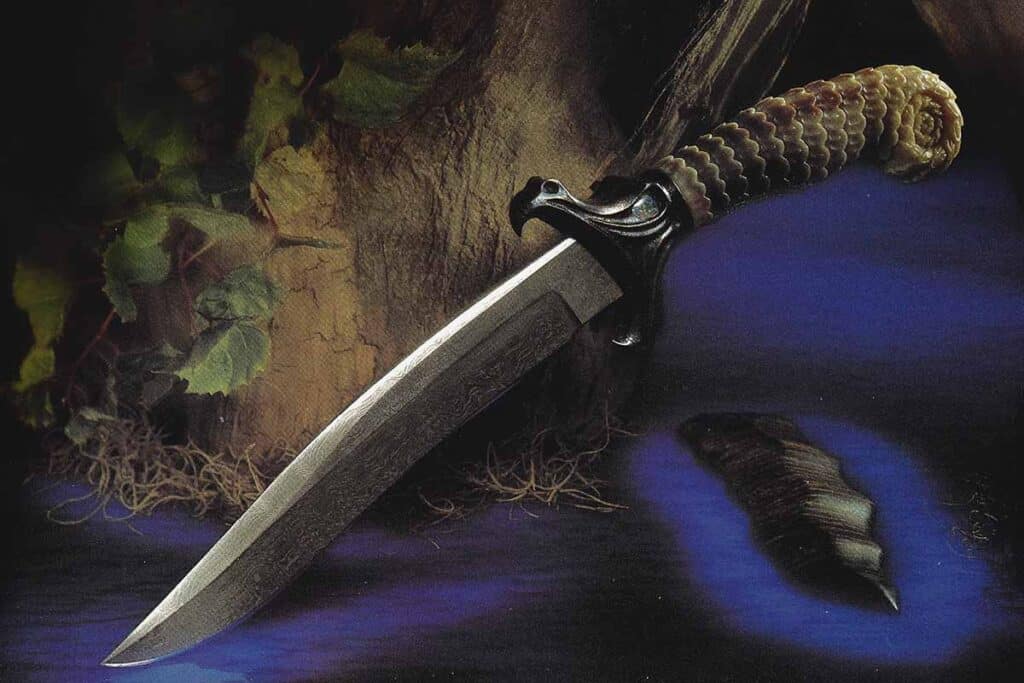
Kemal's pivotal knife was a dragon-handle damascus model
Together with Murad Sayen, Don Fogg comprised the knifemaking team known as Kemal. Their pivotal knife was a dragon-handle damascus model that appeared in BLADE® and Cutlery Hall-of-Famer Jim Weyer’s Points of Interest, Book IV. (Weyer International image)

Don’s main interest was steelwork, which soon exceeded his ability to make handles. Enter Murad Sayen, with the two forming the knifemaking team of Kemal. Don learned so much from Murad it opened his eyes creatively and he learned a whole new line of form, texture and contrast, which in turn changed his approach to making steel. One of their knives was pictured in the highly influential Esquire Magazine, which helped bring the beauty of art knives to the world outside the knife industry.

Don moved to Alabama, where he befriended Cutlery Hall-of-Famer Jim Batson. Fogg became a regular at Batson’s hammer-ins, sharing knowledge and also meeting bladesmith Chuck Patrick. Don and Chuck taught swordsmithing and worked together for years. In the interim Don dropped out of the ABS and lost his MS rating, but had grown and was “representing bladesmithing to the world.” With Batson’s encouragement he retook the MS test and passed it again.

“I feel privileged to have been at the beginning of what was to become a global rebirth of this ancient craft,” Don wrote. “I used to joke I have a well-developed set of archaic skills, but in truth I was so fortunate to have found my community and one that challenged me for my entire life and educated me in so many ways.”

Hall-of-Fame Requirements

To be inducted into the BLADE Magazine Cutlery Hall of Fame®, prospective members must have practiced all of the following during their careers:

  • Demonstrated extraordinary service to the knife industry;
  • Displayed honesty, character and integrity;
  • Advanced the industry by the creativity and originality of their works or contributions;
  • As ambassadors or outstanding contributors, have furthered the positive impact of the knife industry on the world at large, and;
  • In summary, have demonstrated a worthiness to be a member of this prestigious group.

See Other Hall Of Fame Members:

Factory Award Winners At BLADE Show West

Five Different Factory Makers Picked Up Awards At Salt Lake City With WE Knife Stealing The Show

Factory makers brought out their best for the BLADE Show West knife competition, and they did not disappoint. Five factories took home wins with the big winner being WE Knife, which won two categories and the Best Of Show award.

All images are SharpByCoop Images

Best Factory EDC: WE Knife Shakan

Best Factory Tactical: Bastinelli Knives Grumpy Dual Carry System

Best Factory Hunting Knife: TOPS Knives Muley Kit

Best Non-Knife: Stroup Knives Pry Tool

Best Of The Rest: UP Knife D2 & D3

Best Factory Folder/Factory Best Of Show: We Knife x Peter Carey Nitro Mini

Read More

BLADE Show: Who’ll Be the 50th Hall-Of-Fame Inductee?

Who will be the 50th inductee into the BLADE Magazine (www.blademag.com) Cutlery Hall Of Fame at this week’s BLADE Show & Living Ready Expo (www.bladeshow.com)? Find out when the world’s biggest and most important knife show begins Thursday, May 31, and runs through Sunday, June 2, at the Cobb Galleria Centre in Atlanta.

While there, check out the latest in the finest custom and factory knives, the greatest knifemakers and knife companies, the legends of the industry, the most comprehensive seminar slate of any knife event, and much more.

Last year knifemaker Harold “Kit” Carson was a most popular 49th inductee into the Cutlery Hall Of Fame, and a who’s who of the knife industry attended the BLADE Magazine Awards Banquet the Saturday night of the show to celebrate the occasion. The 50th inductee will be announced at the BLADE Magazine Awards Banquet show Saturday night this year, too (tickets required).

The induction process began in February when living members of the Cutlery Hall Of Fame were contacted to submit a maximum of two nominations each for this year’s induction. Once those nomination submissions were made, a final ballot was compiled for the members to vote for their choices. Each member could vote for up to two nominees, with their first choice receiving two points and their second choice one point. The person with the most points is this year’s inductee.

Who will it be? Attend the BLADE Show & Living Ready Expo to find out. The inductee’s name will be included in a special news release that also will announce the BLADE Magazine Knife-Of-The-Year® awards and will be sent out via electronic media after Saturday night’s banquet.

The 2013 BLADE Show will announce the 50th inductee into the BLADE Magazine Cutlery Hall Of Fame. (Mike Carter photo)
The 50th inductee into the BLADE Magazine Cutlery Hall Of Fame© will join fellow inductees such as Gil Hibben (above) in the Hall during the BLADE Show & Living Ready Expo this week. (Mike Carter photo)

BLADE Show & Bladesmithing For Kids

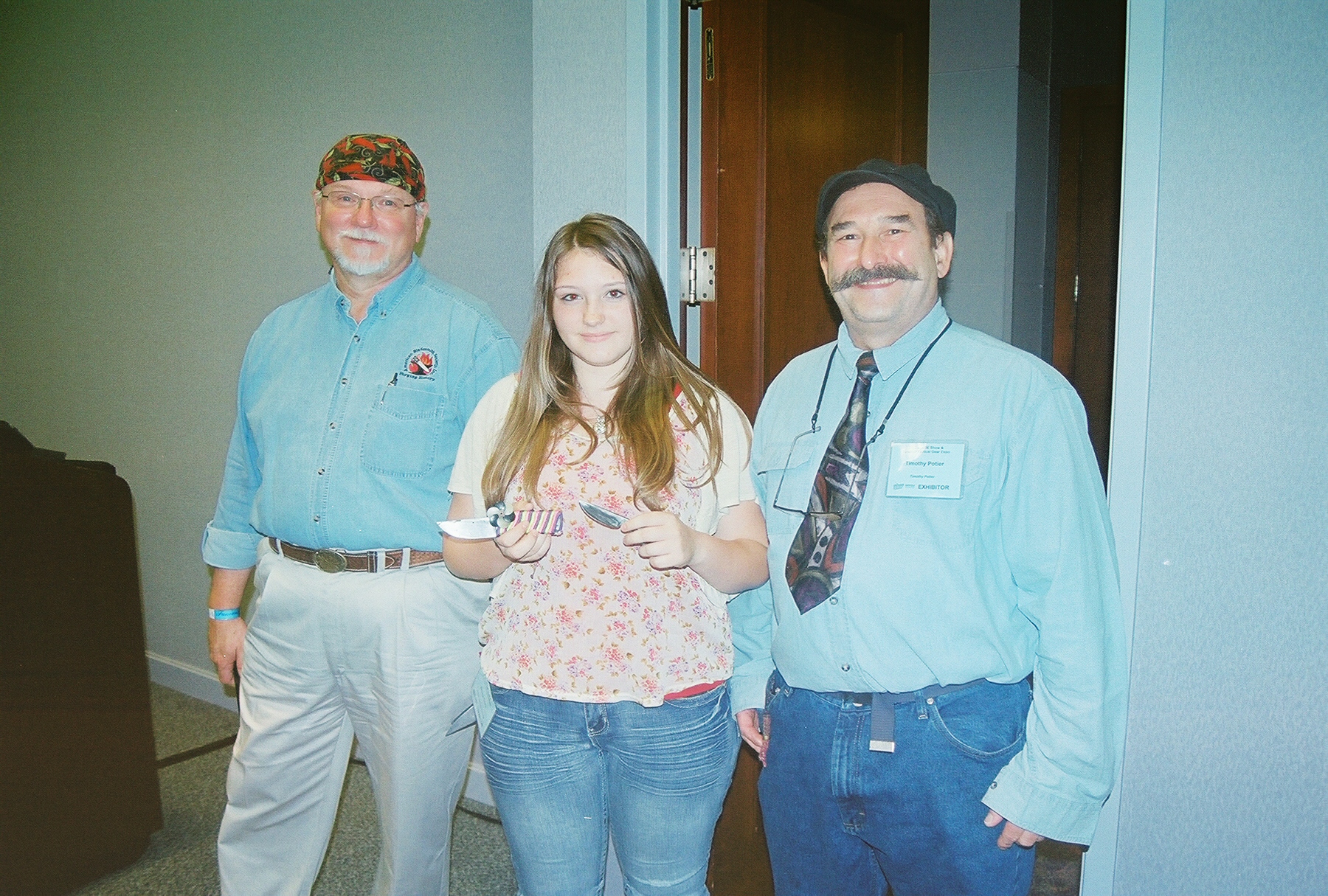
From left: Wes Byrd, Selena Giles and Tim Potier enjoy last year's bladesmithing for kids seminar at the BLADE Show.
Wes Byrd (left) and Tim Potier (right) flank young bladesmithing aspirant Selena Giles at the 2012 BLADE Show seminar on bladesmithing for kids.


Let some of the world’s top bladesmiths teach your children about the craft in the American Bladesmith Society’s “Bladesmithing For Kids” seminar at the BLADE Show (www.bladeshow.com) & Living Ready Expo May 31-June 2 at the Cobb Galleria Centre in Atlanta.


Join American Bladesmith Society (ABS) master smiths Joe Keeslar and Tim Potier and ABS journeyman smiths Wes Byrd and Larry “The Hammer” Harley of Lords Of War TV fame as they explain the ancient art of bladesmithing. The seminar will be show Saturday at 11:30 a.m. in Room 109.

All four men have extensive experience teaching children about bladesmithing, and all four are great at relating the craft to youngsters in language kids can understand.

Founded in 1976 by Blade Magazine Cutlery Hall-Of-Fame© members Bill Moran and B.R. Hughes, as well as Don Hastings and Bill Bagwell, the ABS is the world’s oldest and pre-eminent organization of bladesmiths—that is, those who forge the blade steel for their knives by hand or with power hammers. The ABS holds its annual meeting at the BLADE Show, where it selects new master and journeyman smiths, announces its annual awards, elects officers to its board of directors, holds a knife auction and much more.

The ABS also has a long history of instructing children on bladesmithing. It has conducted a number of special kids’ bladesmithing events at such venues as the BLADE Show & Living Ready Expo and also at Smoky Mountain Knife Works (SMKW) in Sevierville, Tennessee. In fact, the ABS Youth Hammer-In will be held just a few weeks after the BLADE Show & Living Ready Expo, June 28-30, at SMKW (visit www.americanbladesmith.com for more information). Mr. Harley has conducted children’s bladesmithing seminars at his forge in Bristol, Tennessee, as well.


2025 BLADE Show West Recap: Flying High In The Rocky Mountains

BLADE Show West ’25 leaves them smiling in Salt Lake City.

What a difference a year makes—and most involved with BLADE Show West October 10-11 in the Salt Palace Convention Center in Salt Lake City probably would be the first to agree.

While BLADE Show West ’24 didn’t exactly bomb, neither was it one of the best. Among the reasons for what some fairly or unfairly portrayed as an average event was the uncertainty surrounding the presidential election and how it would affect consumer spending, and the proximity of the show dates to the beginning of hunting season, among others. Whatever the excuses last year, no excuses were needed for the ’25 show as it met with approval from a large segment of exhibitors.

One of those exhibitors was BLADE Magazine Cutlery Hall-of-Fame member Bill Ruple. He was very pleased—and not just because he won Best Slipjoint in the custom judging.

“I thought the show was really good!” he exclaimed. “Attendance seemed a little higher than last year, but I think sales were much higher. I took six knives and sold them all on Friday. All the [South Texas] Slipjoint Cartel guys sold out.”

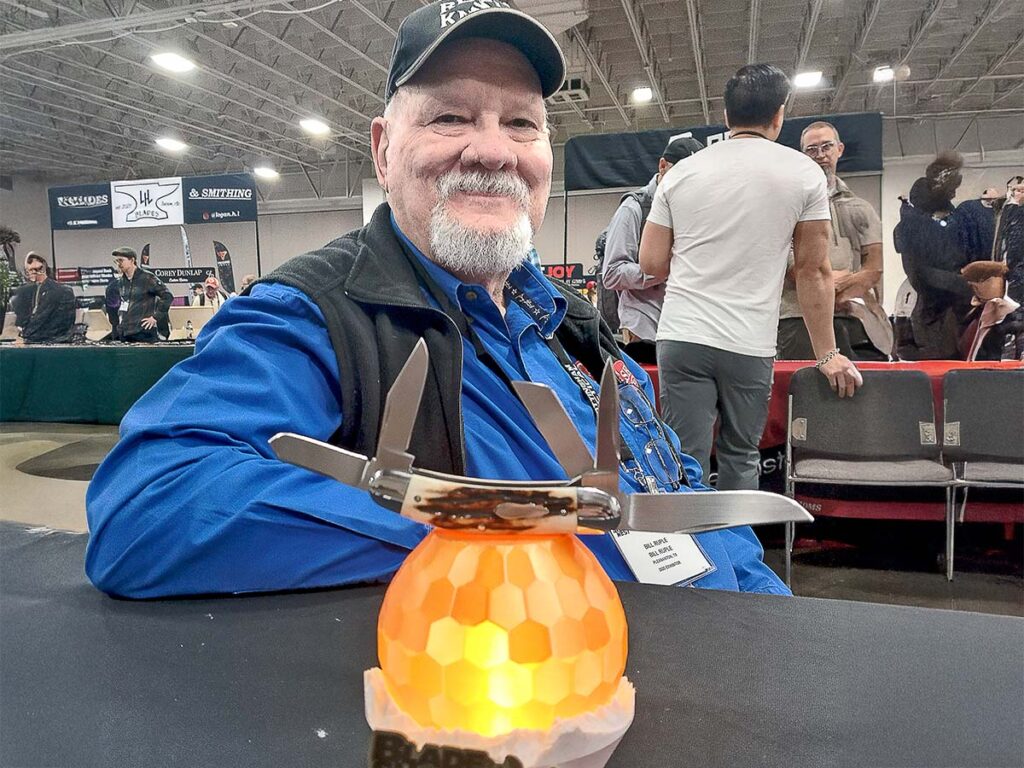
BLADE Magazine Cutlery Hall-of-Fame® member Bill Ruple won Best Slipjoint for his five-blade stockman (see page 60). Bill’s winning knife sits atop one of the trophies made especially for the show by Princeton Wong.

Counting Bill, those included Tanner Couch, Toby Hill and Luke Swenson.

Though there were the usual number of exceptions, exhibitor sales seemed up almost across the board, both custom and factory.

“It was a really good show for us with increased sales,” Jonathan McNees noted of his McNees Knives production knife company. “We brought about 100 knives and sold about 25 to 30 percent to customers and the rest to dealers.”

Custom maker Jared Oeser brought 11 knives and sold them all.

Lots of folks handled lots of knives at the TOPS Knives booth.

“I had a mix of FCFS [first come, first served], lotto and auction knives,” he observed. “I was busy pretty much the whole time. I judge it based on whether I can get away from my table, and I never had a chance to leave.”

It was the first-ever BLADE Show West in Salt Lake City for Cutlery Hall-of-Famers Daniel Winkler and Karen Shook, and they sold every production knife they brought.

“About half to individuals and half to dealers. We were well stocked,” Daniel wrote. “There were good sales and traffic. It seemed to be more of a user clientele than the collectors at the BLADE Show, which is good for us. Our focus is users rather than collectors.”

Maker Princeton Wong—who made the cool custom and factory award trophies for the judging competition winners—brought 12 knives and sold out. John Cammenga of White River Knife & Tool also sold out—about 90 percent to attendees and 10 percent to dealers. Maker Frank Edwards brought six knives and sold four. ABS Master Smith Shane Taylor brought six and sold only one, but was happy because it was the most expensive of the six. Zach Thull of Dauntless Manufacturing said his company sold about 30 knives and Eddie Johnson of CobraTec enjoyed another banner sales show.

Old friends Mick Strider of Strider Knives (left) and BLADE Magazine Cutlery Hall-of-Fame member Paul Bos (right) got caught up at the show.

“We always bring an overabundance of knives to the BLADE Shows, trying to ensure the customer’s experience is satisfying,” Johnson observed. “We sold 30 percent more knives this year over last year.” 

As for customer experiences, Eddie’s favorite show moment consisted of a most satisfying one.

“[It was] when the son came to the table several times with his dad,” Eddie related. “The son was enamored with a particular model that was a little more expensive than our others. His mother was being ‘Mrs. No.’ After the father and son touched every knife we had displayed, dad looked at son and told him to go ahead. The genuine joy and appreciation were evident in the son’s facial expression and body language. Then hearing, ‘Thank you, I love you, Dad,’ was the best experience I had and witnessed.”

Fast Start

The show got off to a fast start Friday, no doubt sparked by many who thought the best knives might go quick—which in a number of cases they did. While opinions varied on which day and time were busiest, most seemed to think attendance was up markedly over last year.

Knife accessories moved fast.

“It was way better than last year for sure,” Edwards noted. “It seemed like from opening till 3 p.m. both days were pretty busy.”

McNees indicated his booth had the most sales on Friday morning, but probably more traffic on Saturday morning. According to Ruple, attendance was about the same on both days. Taylor stated that while traffic was impressive and has been every year at BLADE Show West in Salt Lake City, Friday morning to mid-day was the busiest. Wong remarked that the opening times, the initial rush from early bird and general admission, were most hectic for him.

“Friday appeared to carry more steady foot traffic,” he stated, “with more people stopping by the table than Saturday.” Johnson indicated the inclement weather may have affected the crowd a little on Saturday, though overall attendance was definitely better than the previous year.

“For us, Friday was the busiest, fairly steady beginning an hour after the show opened until the later afternoon. Saturday had small flurries of activity followed by slow times. It seemed like a better Friday than last year and a slower Saturday than last year,” Cammenga assessed. “We definitely saw more return customers than in the last few years. We assume that’s from being in the same place a few years in a row.”

ABS Master Smith James Rodebaugh puts the finishing touches on a rough-forged hidden-tang knife at the indoor forge of Lonnie Jensen’s Mountain Shadow Forge.

“The show seemed like the busiest of the Salt Lake shows,” Oeser commented. “There were surprisingly a lot of locals coming through on Saturday and the line outside was down the street.”

When asked to rank the attendance on a 1-to-10 scale, with 10 the busiest, Jared qualified his answer.

“Of my limited time at shows the attendance at this one was about a 6, but I feel like shows and the knife market right now are not high,” he opined. “For current show standards I would adjust it to an 8 or 9.”

All the exhibitors but one quoted for the story said they would be back next year, which may be the best sign of a successful show of all.

Only Time?

Frank Edwards displayed his heavily engraved damascus automatic dagger.

Enthusiasts came, they saw knives, they talked knives and, perhaps most important of all, spent time catching up and talking with each other at an event that may be the only time they see each other all year. But then that’s the way it is with a lot of knife shows, including the year’s last event in the BLADE Show triad of shows—BLADE Show West. Speaking of, plan now to attend next year’s sharp gala, Oct. 9-10, once again at the Salt Palace Convention Center in Salt Lake.

More On The Blade Shows:

3 Days To The BLADE Show: The Legends of Knives

In three days, the world of knives will be condensed into the planet’s most important knife event: the 31st Annual BLADE Show (www.blademag.com) June 8-10 at the Cobb Galleria Centre in Atlanta. In addition to mankind’s finest cutlery, the legends of the knife industry will descend on the show, and this will be your chance to meet them up close and personal.

    Such Blade Magazine Cutlery Hall-Of-Fame© members as Gil Hibben (table 5J and shown in his shop above working on one of his Paul Ehlers fantasy knife designs [Mike Carter photo]); A.G. Russell (booth 96); B.R. Hughes (the ABS section); Bruce Voyles (table 1V); Houston Price (table 23M and/or the ABS section); Bill Adams (table 7V); Ron Lake (booth 43); Sal Glesser (booth 20); D’Alton Holder (table 1M); and Ken Onion (booth 28) will be on hand to talk with you about your favorite subject, and show you their best examples of same. Other Hall-Of-Fame members that may or may not be attending are Pete Gerber, Chuck Buck (booth 12) and Ken Warner. Paul Bos will not be attending but said he will next year if all goes according to plan.

    In addition to these living legends will be most of the world’s top custom knifemakers, knife manufacturers, sheath makers, sharpener companies, knifemaking supplies, materials and equipment, swords, tomahawks, knife collections, knife seminars, and any and all knife accessory companies and other companies with knife-related items.

    And you too, of course.

For more on the latest knives, knife legislation, knifemaking instruction, knife trends, knifemakers, what knives to buy and where and much more, subscribe to BLADE Magazine, the World’s No. 1 Knife Publication.

Advertisement

Must Read Articles

Read this before you make a knife

Knifemaking 101 – Read This Before You Make a Knife

  by Wayne Goddard My experience has taught me that there's nothing like digging in and getting started. I've often said the hardest part of the...
how to forge damascus steel

How to Forge Damascus

Advertisement
Advertisement