BLADE Show

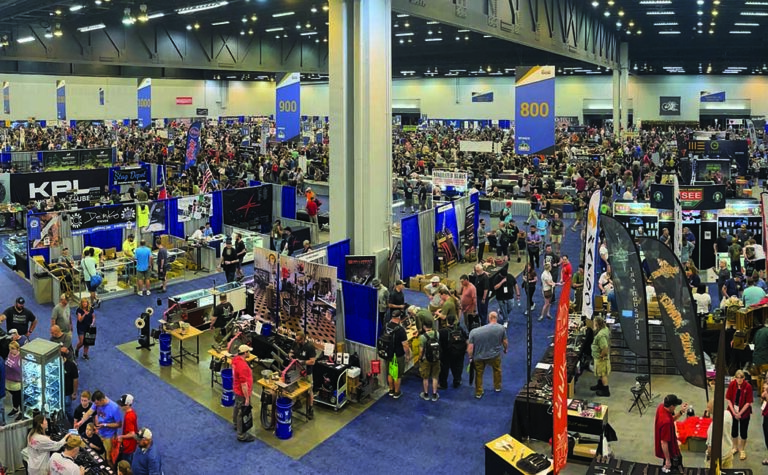
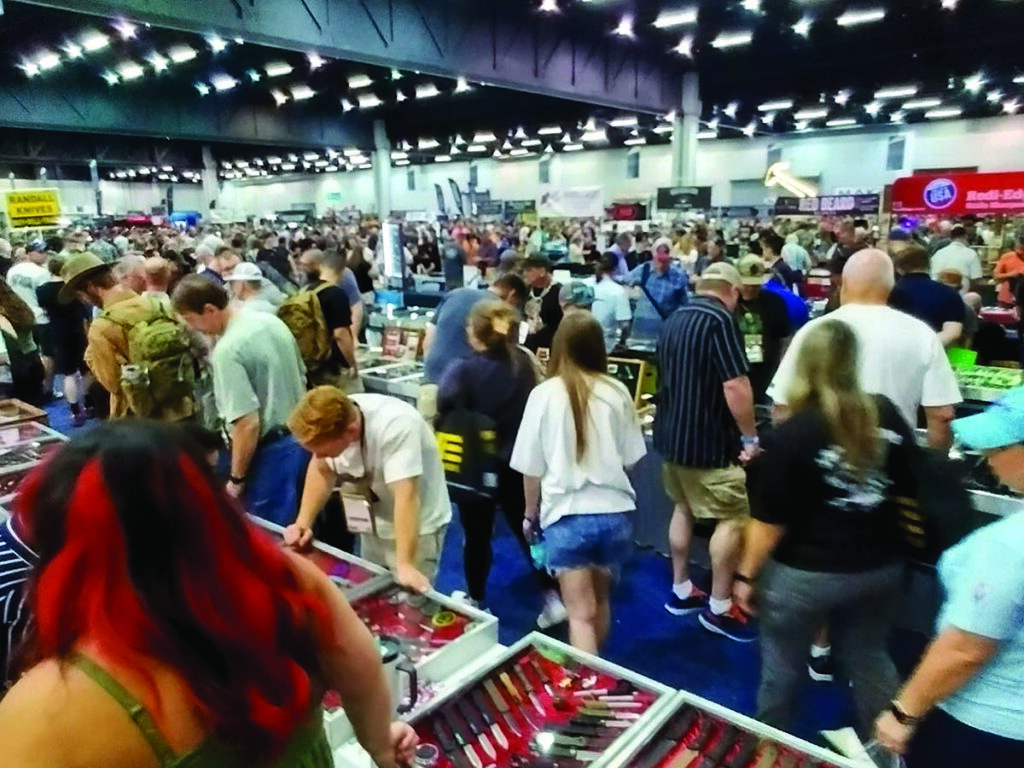
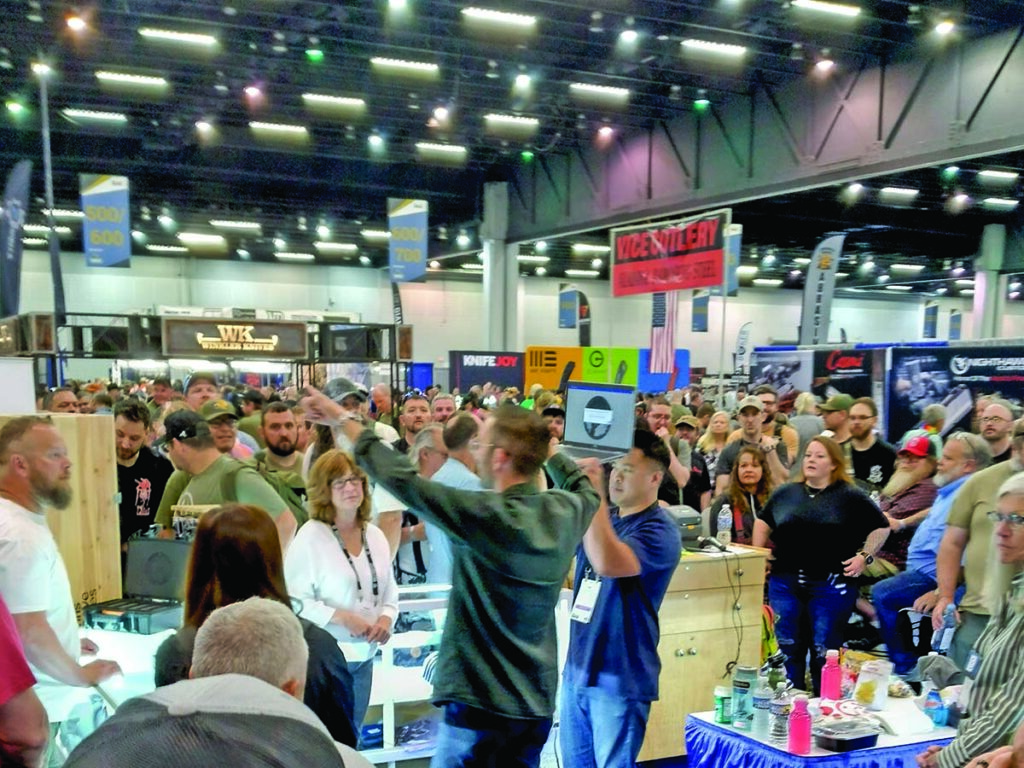
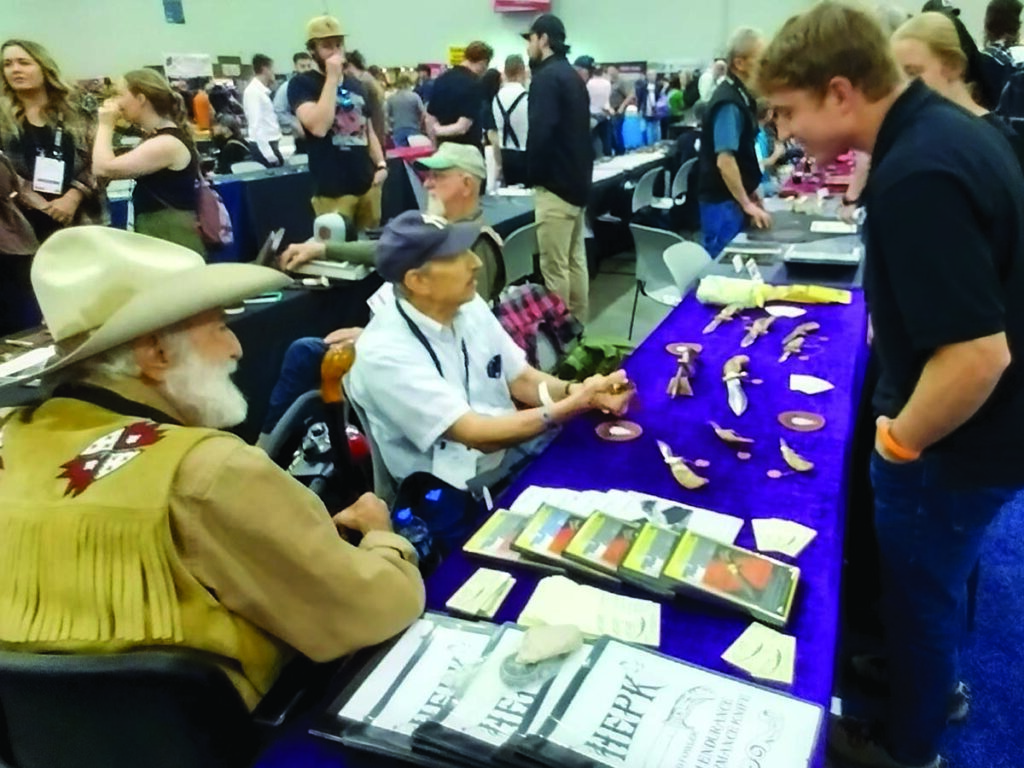
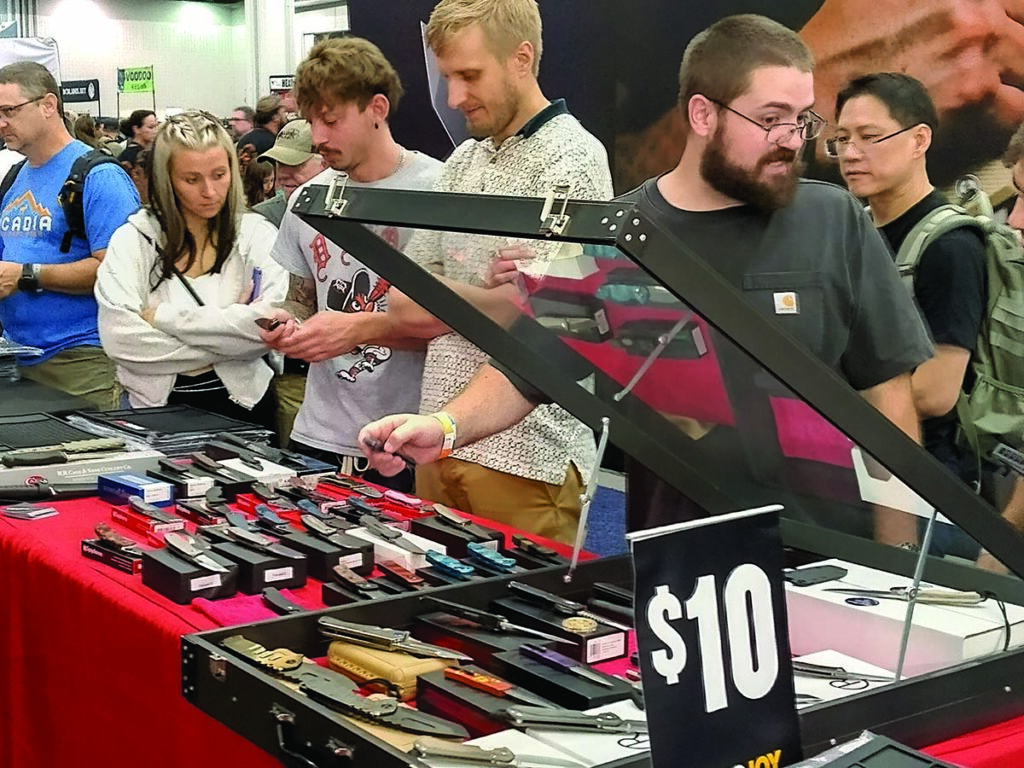
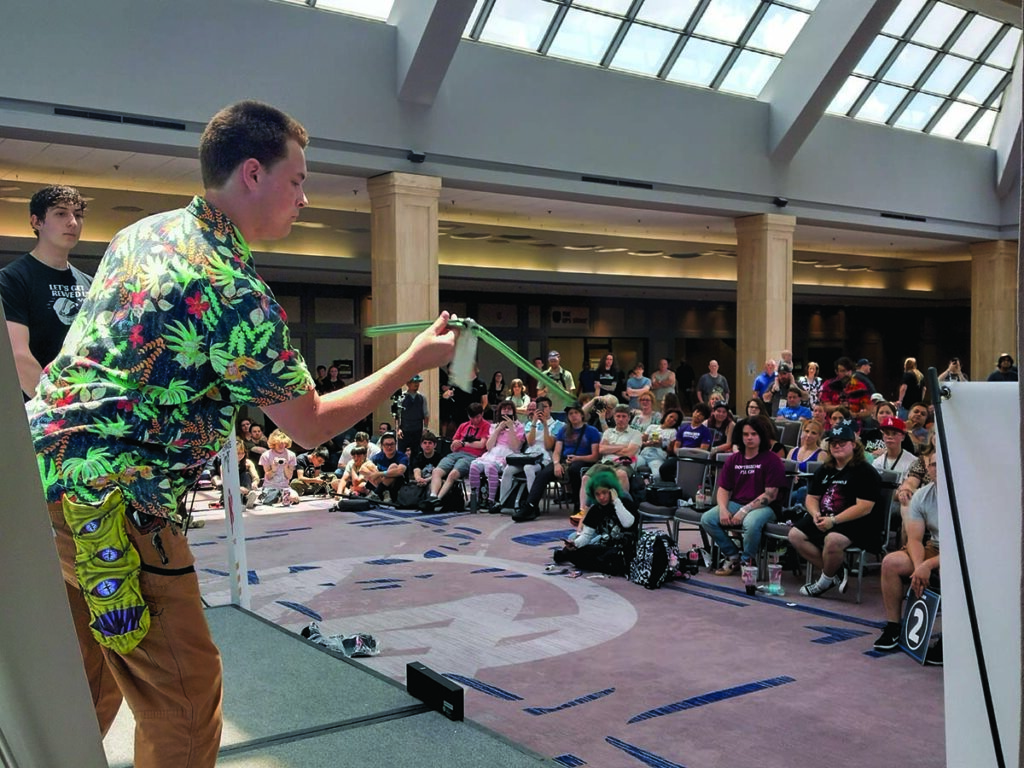
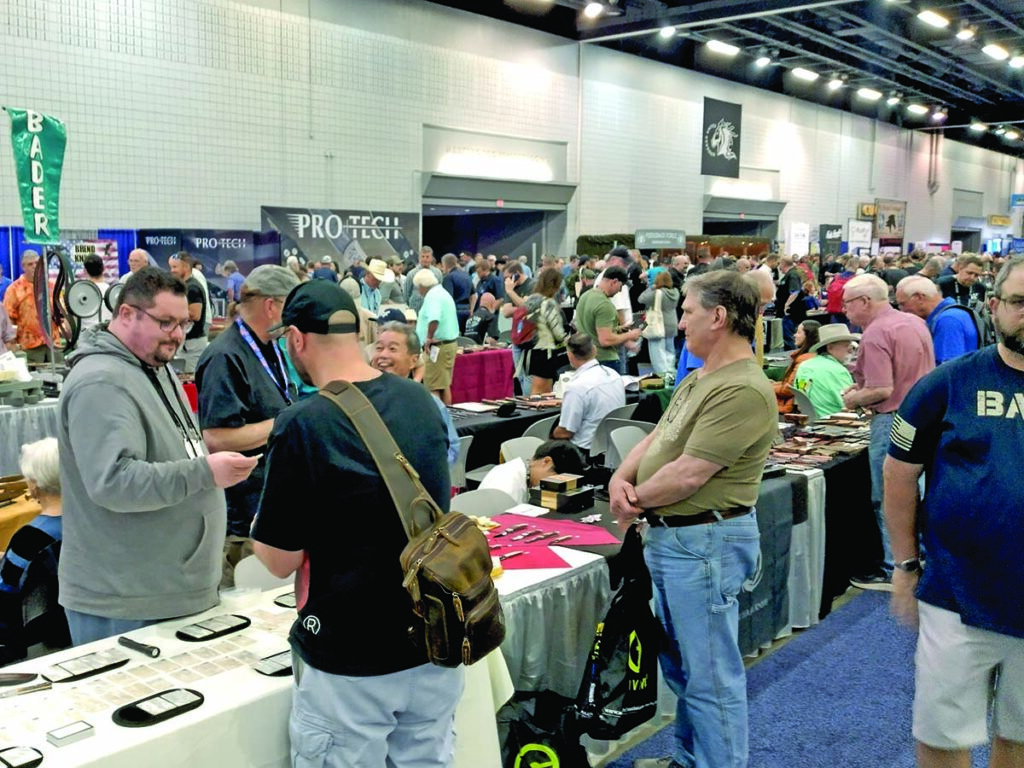
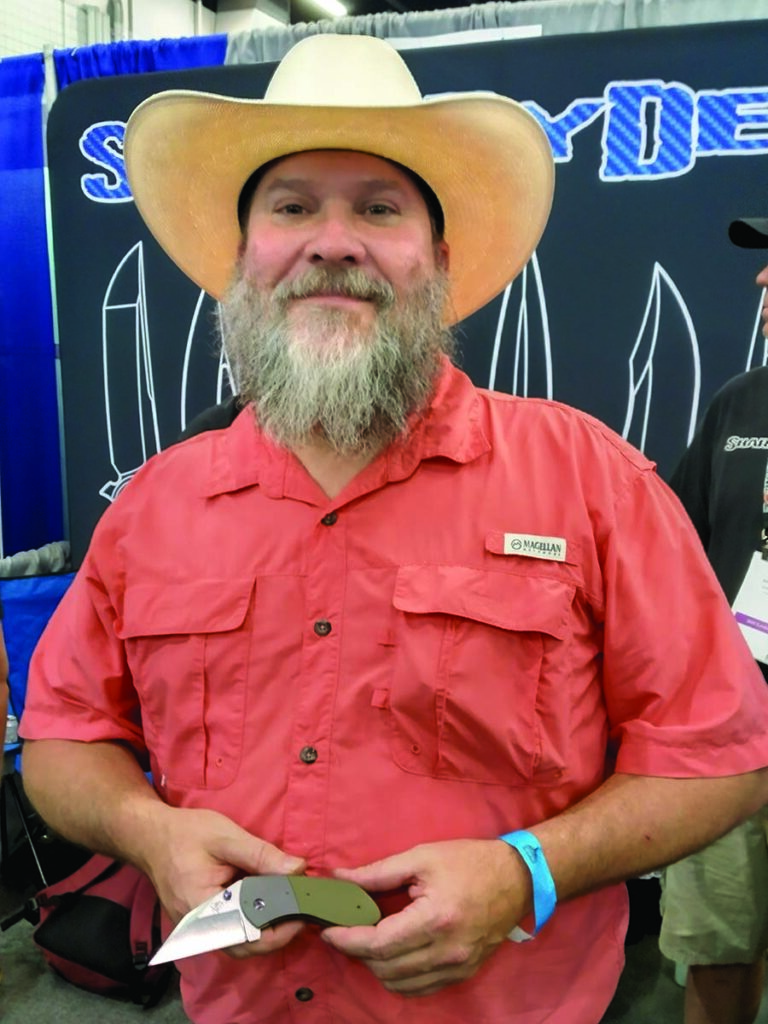
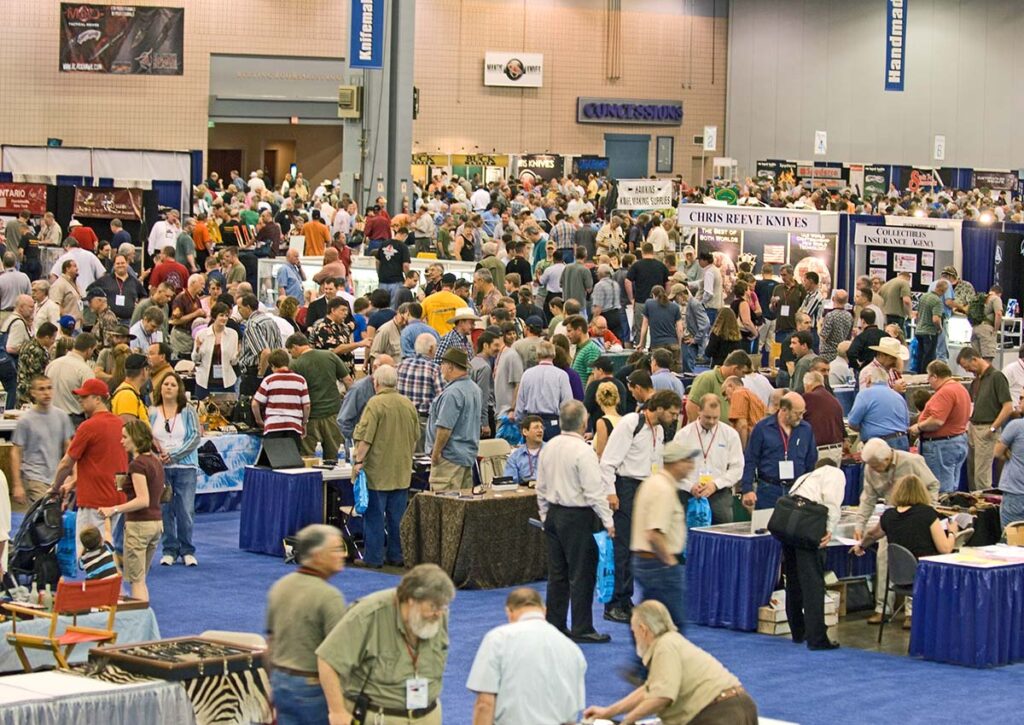
Hosted in Atlanta, Georgia in May or June every year, the BLADE Show truly is the World’s Largest Knife Show. It features the most diverse array of knives from manufacturers, knifemakers, collectors, dealers and purveyors, all under one roof. The BLADE Show plays host to the Blade Magazine Knife-Of-The-Year® Awards, the Blade Magazine Cutlery Hall of Fame© induction ceremony, seminars, demonstrations and much more.

Visit BladeShow.com for tickets, travel information, exhibitor registration and sponsorship opportunities.

BLADE Show Do’s & Don’ts

Follow these simple rules and you’re sure to have a great show.

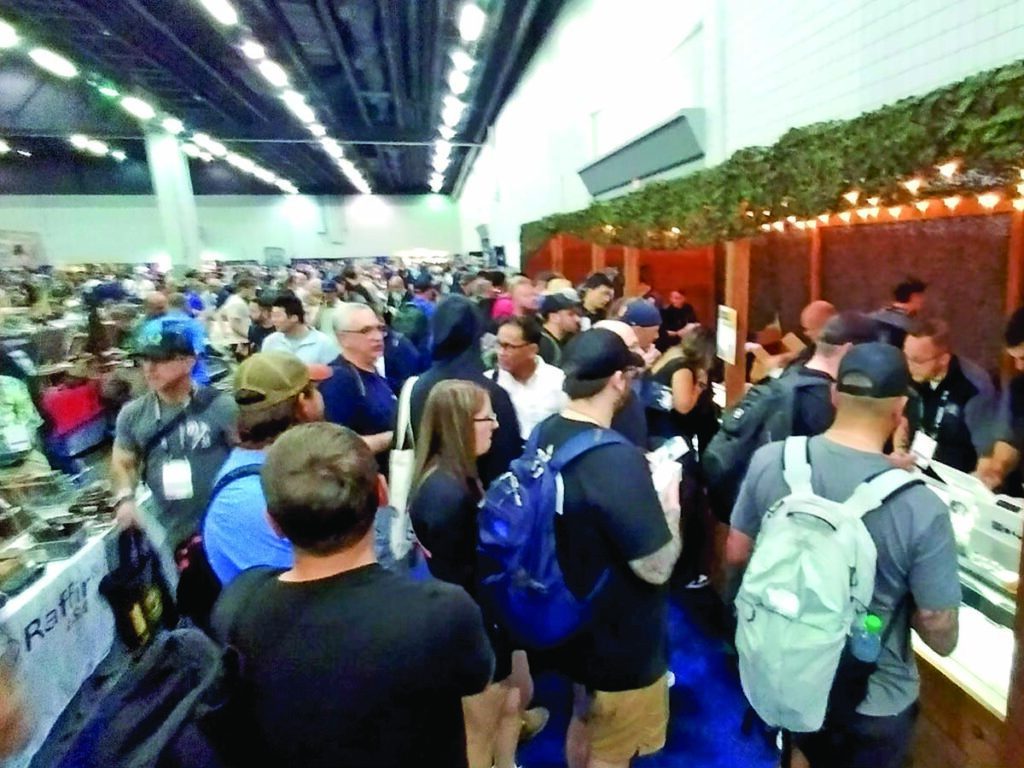
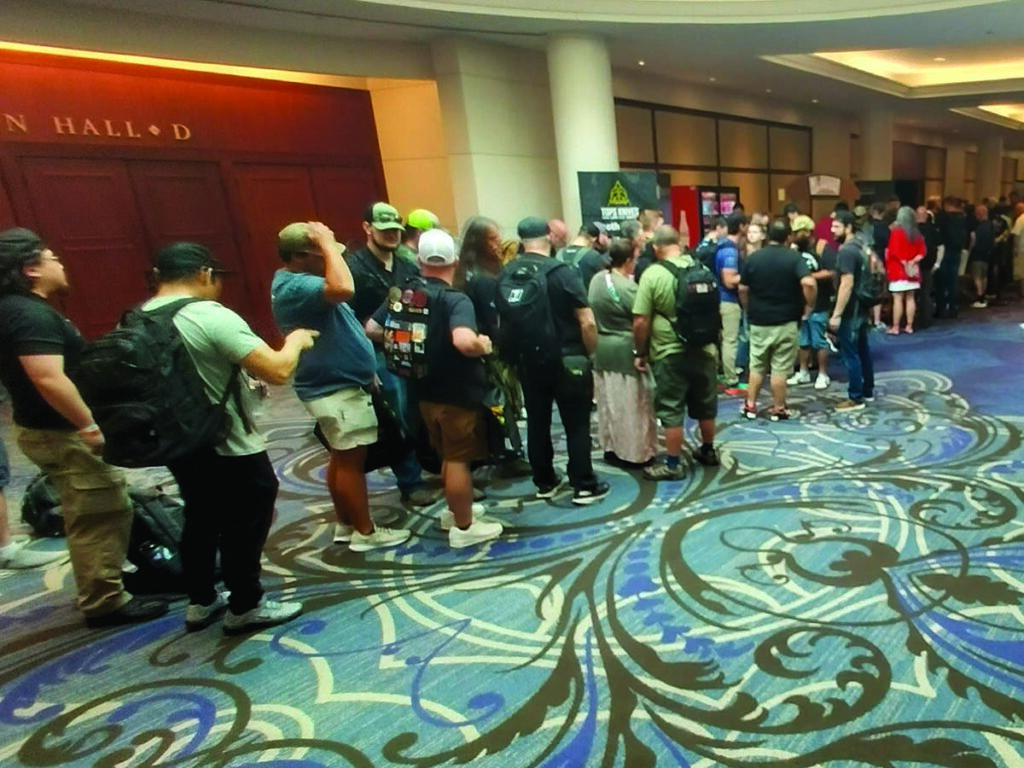
If you’re among the throng of thousands going to the BLADE Show June 7-9 at the Cobb Galleria Centre in Atlanta, here are a few tips on how to make the world’s largest, most important knife event work for you:

What To Wear

If in doubt “go dark”—any one or more of black shirt, blue jeans or black hat. While tactical doesn’t rule the way it once did, black remains the color of choice among many knife fans. Whatever color you choose, wear loose-fitting, comfortable clothes. If you want to overdo it, clip a knife to every pocket.

Comfortable shoes that provide full support against walking on concrete all weekend are an absolute must. Some bring two pair of such shoes. Bring a small backpack for snacks, a small plastic water bottle, etc. If you go outside for the BLADE University classes or free seminars, a ballcap helps protect against a June Georgia sun that has fried thousands of BLADE Show patron scalps over the years.

Party Proof Yourself

If you join the revelry and revel too much in The Pit (page 24), the lobby bar of the host Renaissance Atlanta Waverly Hotel, take some kind of headache relief before bedtime to reduce the dreaded post-Pit hangover. And, if you stay in the Waverly, bring some earplugs. The Pit can get raucous even into the wee hours and the noise can carry up to the hotel rooms, including the top floor.

Show Etiquette

  • Try to avoid walking fast and making sudden stops and U-turns in the exhibitor halls. Thousands of knife fans like you are moving, too, often closer to each other than they should. Any abrupt moves can result in collisions, so take it slow and easy. You’ll see more knives that way, too.
  • Never ask a maker how long it took him/her to make a specific knife. It’s natural to be amazed at some of the fabulous works of art and to be curious about how long it took to make one, but many makers bristle at the question. It’s not as important to know why they resent the query so much as the fact that they do, so don’t ask.
  • Don’t interrupt a maker/customer conversation. Patiently wait your turn or come back later when the maker is free to talk.
  • Ask the maker before you pick up a knife. If it’s a folder, it doesn’t hurt to ask permission to open it. The maker may want to open it for you. If a multi-blade folder, don’t open it so two or more blades are open at once. This puts undue pressure on one or more of the backsprings. It’s also a good way to cut yourself if you’re not careful. If you’re wanting to see what kind of clearance there is between opening/closing blades, ask the maker to demonstrate it for you. And when you finish examining the knife, return it the way it was handed to you—carefully, whether open or closed.
  • While it may seem courteous to wipe the blades off before returning knives to the makers, don’t. Let the makers do it instead. They are fully equipped to do so and are going to check the knife for any spots you may miss anyhow. That doesn’t mean you shouldn’t bring a chamois for your own purposes. However, if there’s any wiping down of their knives to be done, let the makers do it.
  • Don’t use a loupe/magnifying glass to examine a custom knife. It’s a good way to make the maker mad. There are going to be imperfections on custom knives—if not, they’re probably not custom—so some minute imperfections are to be expected.
  • After you finish talking to the maker and are ready to leave, even if you intend to return to his/her table, don’t say, “I’ll be back.” Chances are you won’t. It also implies you’ll be back to buy a knife when you may have no intention whatsoever of doing so. Don’t be an “I’ll Be Backer!”
  • One thing to be sure to do: have fun. If you’re going, see you there!

Check Out BLADE Custom Award Winners:

Video: Knife Rights Awards Breakfast 2012

0

The Knife Rights Awards Breakfast took place during the 2012 BLADE Show in Atlanta. Georgia State Senator William “Bill” Heath received the 2012 Freedom’s
Edge™ Award, and FOX News host SE Cupp spoke about knife rights.


Get the latest knife rights news by signing up for a subscription to BLADE magazine.

De Asis, Batson Join Cutlery Hall

Watson into BLADE Magazine Cutlery Hall Of Fame
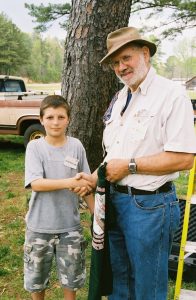
Jim Batson and a young bladesmithing student take a break at a past Batson Bladesmithing Symposium.

Les de Asis and Jim Batson are the newest members of the BLADE Magazine Cutlery Hall Of Fame©.

Both will be formally inducted into the Cutlery Hall Of Fame the Saturday night, June 3, of the BLADE Show at the Cobb Galleria Centre in Atlanta during the BLADE Magazine Awards Reception (tickets required). The BLADE Show will be June 2-4.

According to a fellow Cutlery Hall Of Famer, de Asis has been a major pillar in the knife industry for more than 35 years. He founded Bali-Song, Inc., which later became Benchmade Knife Co. From a fledgling business in a garage to a major force in the cutlery industry, Benchmade is among the top knife manufacturers in the world. Les was a major influence in the renaissance of the butterfly genre of knives, which continues to enjoy a large following of knife fans. He was a founder of the American Knife & Tool Institute (AKTI), one of the earliest and most successful of the organizations protecting the rights of knife enthusiasts and the knife industry, and remains a driving force in the organization. He raised the bar significantly on the quality and function of automatic knives for military, law enforcement, first responders and general use, and Benchmade remains a leading manufacturer of autos today. The AXIS™ Lock designed by William McHenry and Jason Williams and introduced into production by Les helped maintain the revolution in locks for folding knives that persists today.

BLADE Magazine Cutlery Hall Of Fame welcomes Les de Asis.
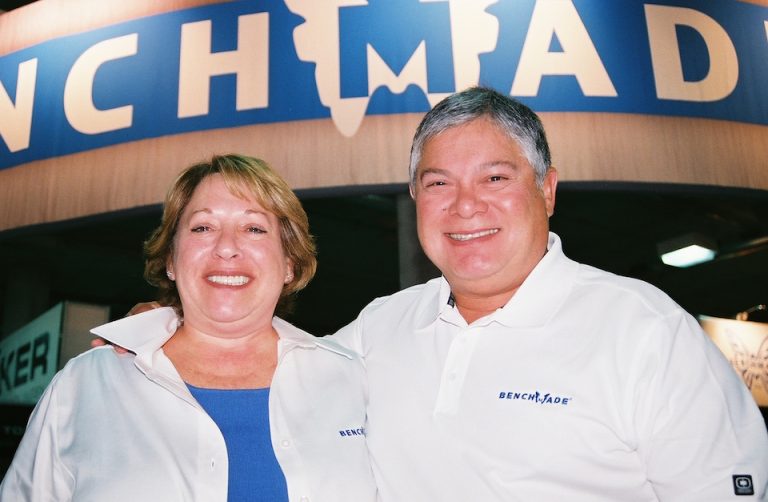
Les de Asis—here with Roberta de Asis—has been inducted into the BLADE Magazine Cutlery Hall Of Fame©.

James L. “Jim” Batson is one of the world’s most noted bladesmiths and authorities on both bladesmithing and Cutlery Hall-Of-Famer James Bowie and bowie knives. The Batson Bladesmithing Symposium near Bessemer, Alabama, is one of the world’s most respected and best attended annual hammer-ins, attracting bladesmiths, knifemakers and knife enthusiasts from around the world, and has been doing so for almost 30 years now. Through his symposium and his many nationwide seminars teaching the art of bladesmithing, Batson is a standard bearer of the American Bladesmith Society’s stated goal of educating any and all on how to best make knives of forged steel. He has scoured the countryside in Texas, Arkansas and the Southeast, and combed through the archives of dozens of libraries and city and town halls in search of information on bowie knives and the life and times of James Bowie. He also has written extensively on both subjects.

Batson is an award-winning master smith in the American Bladesmith Society (ABS) and two-time ABS chairman. He led the ABS through some of its most successful times in recent years and shows no signs of slowing down. In the February 2014 BLADE®, he was ranked No. 9 among the top 13 knifemakers from 1989-2000. “Jim is a great bladesmith, a great leader, a great historian, a great bowie authority, a great writer and a retired rocket scientist,” wrote one Cutlery Hall Of Famer. “I challenge anyone to match that record!”

Photo Gallery: BLADE Show 2025 in Pictures

0

We captured in film the knives, knife people and lots of fun that marked another great show.

Nothing beats the BLADE Show.

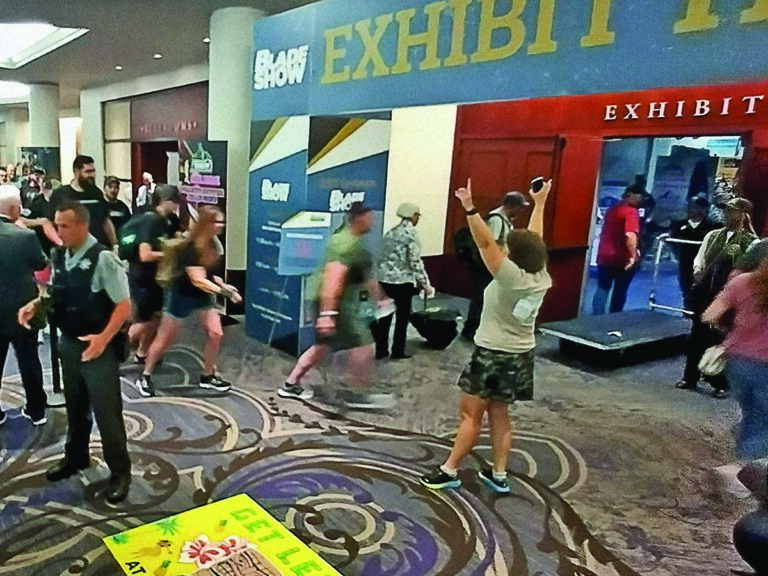
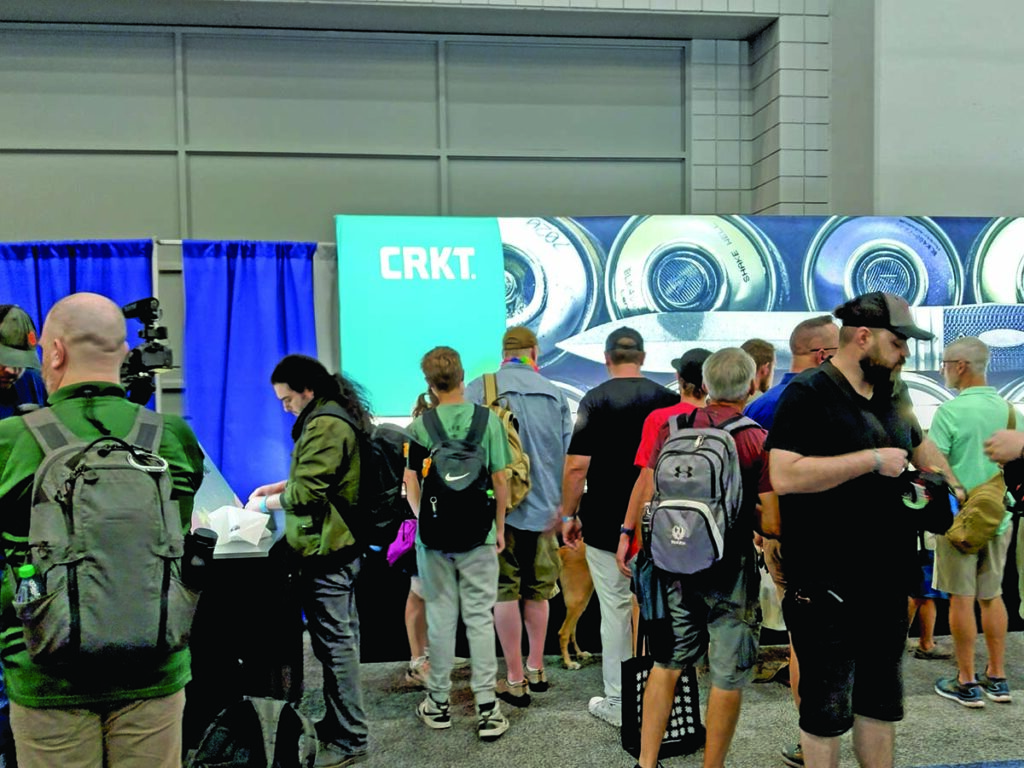
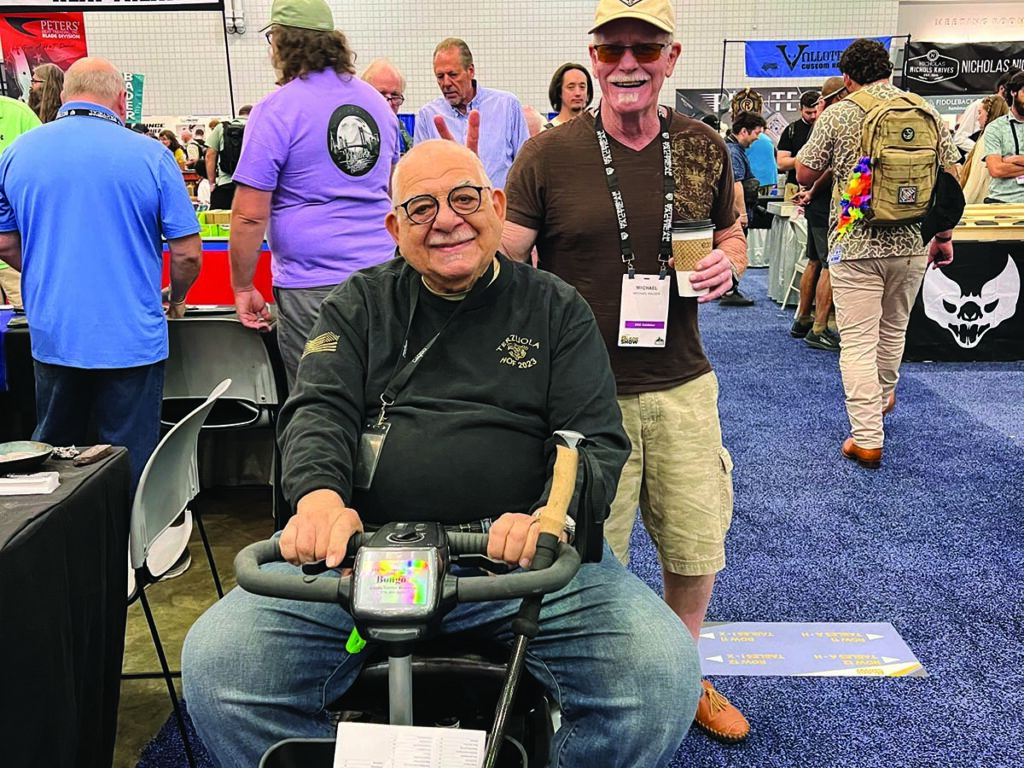
Nearly 1,000 vendors, countless knives and throngs of attendees crowded the Cobb Galleria from June 6–8 for the world’s largest knife shindig. That’s a lot of action—and plenty to take in over the course of three days. But armed with our trusty candid cameras, we at BLADE Magazine gave it our best shot.

Roving the main hall, “baller” room and convention center corridors, we captured glimpses of the knife event no words can fully describe. Take a moment to relive—or get your first look at—BLADE Show 2025 through the lens of those who were there.

Editor’s Note: Click on any photo to launch an enlarged gallery.

More On BLADE Show 2025

2024 ABS Auction: Bidding Looks To Be Forge Hot

0

Four outstanding smiths will have gems coming across the block.

The annual auction of American Bladesmith Society knives to support the continuing programs of the ABS is a highlight of the BLADE Show, and 2024 will be another memorable year when the hammer comes down at the Cobb Galleria Centre in Atlanta.

Once again, ABS master smith Brion Tomberlin is handling the logistics of the pre-auction process. He has brought together a roster of four outstanding ABS bladesmiths for this year’s event, and his appreciation of the ABS and what it means is reflected in his recent years of dedication to the auction.

“The ABS means so much to everyone involved and to the legacy and future of bladesmithing,” Brion commented. “It has developed so many bladesmiths through the years and helped to carry on the traditions and methods that have been used for generations. At the same time, it has brought along a younger group that will help keep interest in the forge alive and prospering.”

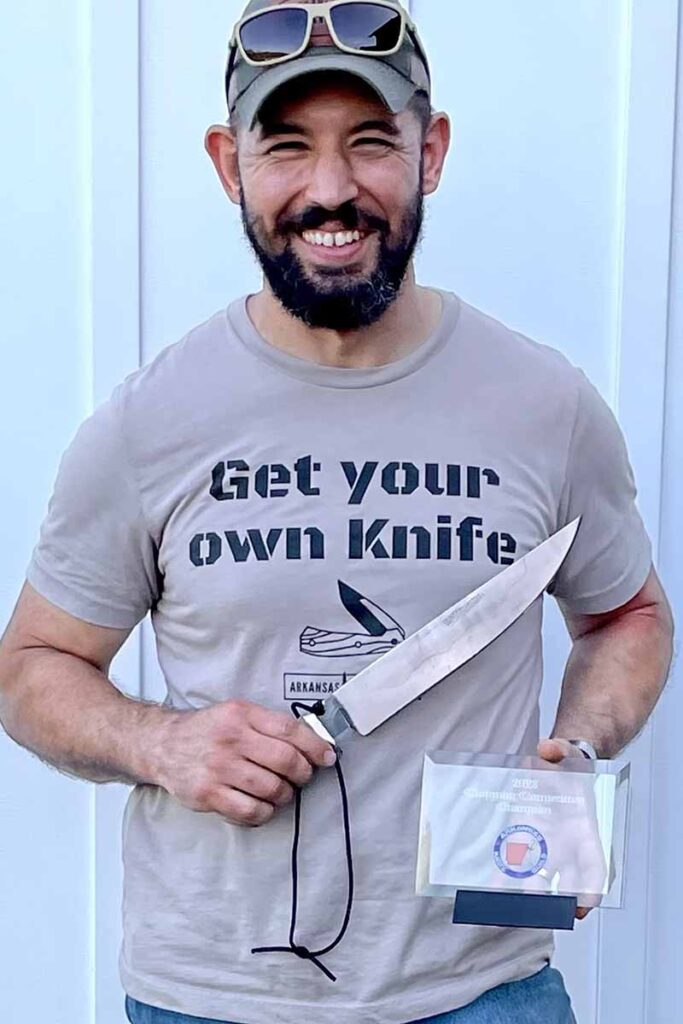
Jonathan Caruso holds the trophy
Jonathan Caruso holds the trophy and the knife he used to win the Arkansas Knife Guild Chopping Competition in Pickles Gap, Arkansas, in 2023.

Long Clip-Point

Jonathan Caruso of Conway, Arkansas, has been an ABS member for nine years now and earned his ABS journeyman smith rating at BLADE Show ’22. He will provide a long clip-point hunter with a single guard for the auction and to showcase his talent. “I chose this style of knife for the purpose of use,” he commented. “Although the knife was designed to be eye-catching, all my knives are created to be used for the tasks they were created for, which in this case is a functional hunting knife.”

Caruso adds that his goal with his ABS contribution knife is to deliver form and function with “a nice appeal, much like an evening gown or a cocktail dress.” He has added the flair and visual appeal of a hamon—essentially the line of demarcation where the hardened cutting edge and the softer spine converge on the blade—using a technique he learned from ABS master smith Jim Crowell. “It’s a process dubbed a ‘flame-painted hamon,’” Jonathan explained. “Instead of using the traditional clay method to create the hamon, I use an oxyacetylene torch to heat the cutting edge before hardening. I chose this method because I wanted to incorporate what I’ve learned from a very well-known master smith who has taught me a wealth of knowledge about bladesmithing and the history of the ABS.”

Caruso’s clip-point hunter features a 6-inch blade of W2 tool steel, sculpted guard of 416 stainless steel with vulcanized red and black spacers, and a handle of stabilized black walnut from Knife & Gun Finishing Supplies. Overall length: 11 inches.

“I chose the W2 to get a more definitive differentially heat-treated appeal,” Jonathan noted, “and the black walnut handle because it draws the eyes in to look at its stunning details. I feel like the handle material was waiting for such a knife and such an occasion as the ABS auction to be used. The black walnut handle material was purchased from Iron Dungeon Forge at BLADE Show Texas in 2023. I finally made it over to their table late on the afternoon of the first day and couldn’t believe that this beautiful piece hadn’t been bought yet.”

ABS master smith Steve Dunn

Chairman’s Trapper

Current ABS chairman Steve Dunn has been a member of the Society since 1990, two years after he began making knives as a hobby. He became an ABS master smith in 1994 and has taught at the ABS schools regularly. He joined the organization’s board of directors in 2003 and has been a committed servant of the ABS for 34 years.

“Each year the ABS has an auction at the BLADE Show to raise money for our schools for education of the forged blade,” he remarked. “I was asked to make the master smith folder this year, and I chose to make a traditional slipjoint. The reason I chose the slipjoint is that most everyone carries some kind of pocketknife—mostly slipjoints, I would think.”

Dunn’s contribution to this year’s ABS auction is a single-blade trapper with a 3-inch blade of twisted W’s pattern damascus. The damascus is a combination of 1075 carbon and 15N20 nickel-alloy steels. The bolster sports American-style scrollwork with 24k-gold inlay. The scales are sambar stag. Closed length: 3.75 inches. “The reason I chose this blade steel is that the two components contrast well together and for the edge-holding ability they offer,” Steve said.

Dagger Hamon

For James Rodebaugh, who joined the ABS in 1999 and received the Society’s master smith designation in 2004, the ABS is a worthy recipient of the contributions from its members to the auction each year. “Number one, the ABS is largely responsible for the high level of bladesmithing in the world today and the award winners that are recognized at the BLADE Shows in Texas and Atlanta. The ABS is always well represented when the winners are named in these shows, overwhelmingly so.”

Rodebaugh became a member of the ABS board of directors in 2014, and he sees the organization as continuing to build a future for the art of bladesmithing. Meanwhile, he is pleased to help out with the auction. “The ABS has given a lot to the knifemaking world,” he observed, “and this is my way of giving back in general.”

For the auction, James has chosen a dagger with an 8-inch blade of W2 tool steel that’s about an inch across at its widest point. The frame handle construction will feature domed silver pins and Tasmanian blackwood. James expects the overall length to be between 12 and 13 inches. An added feature is the clayed hamon.

“I don’t see many people doing a dagger with a hamon,” Rodebaugh opined, “and that used to be one of my signature things until I got away from it. I was originally going to go with damascus, but we see a lot of that, and with the finishing aspect of the work it is harder to do a properly finished carbon steel blade with a hamon than it is to etch a piece of damascus. Plus, I just like the look of the hamon. Also, the W2 steel shows a lot of action on the hamon, and it has a fairly short time and temperature curve so that the edge will harden and the thicker portion will stay soft, which gives you definition and activity on the hamon.”

Coffin Bowie

coffin bowie
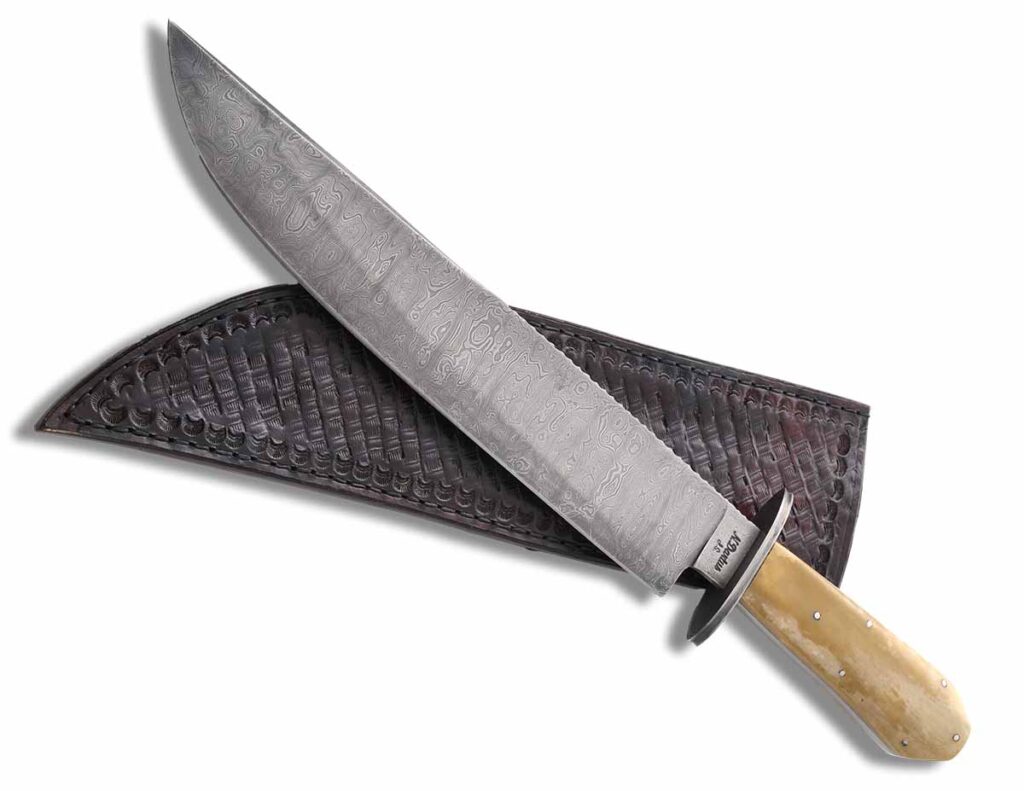
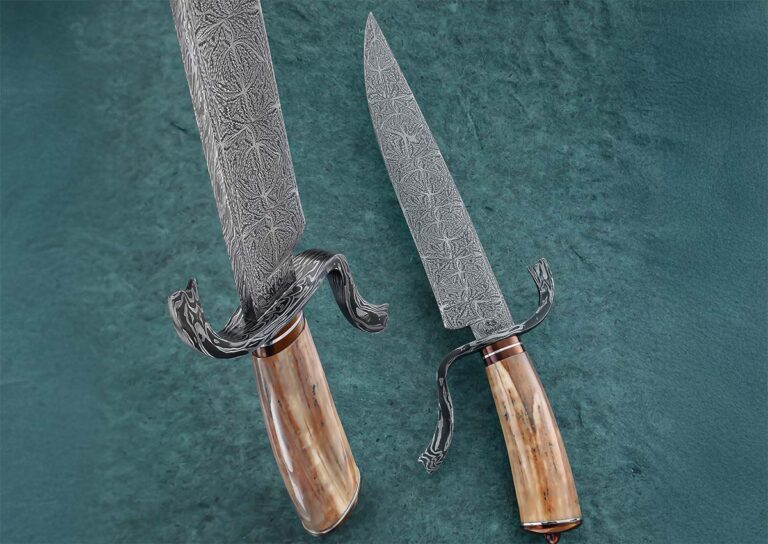
As French ABS journeyman smith Nicolas Dartus noted, “For me, the coffin bowie is a typical American knife, and I love it.” His rendition for the ABS Auction offers 320-layers of damascus, a giraffe bone handle and a leather sheath. (Eric Eggly/PointSeven knife image)

ABS journeyman smith Nicolas Dartus began forging in his shop in eastern France in 2014, joined the ABS in 2016, and received the Society’s journeyman designation at BLADE Show ’19. He is working toward his master smith goal today, and he says that it is an honor to have one of his knives included in the prestigious ABS auction.

“For the auction, I’m making a coffin bowie,” Nicolas said. “For me, the coffin bowie is a typical American knife and I love it. Of course, my eye is a French eye, and I don’t have an American interpretation for this creation, but it is my vision! I think individuals have their own styles of knives. Of course, the ABS is an American society, but its members come from all over the world with different cultures and design ideas.”

Nicolas plans to make the knife with a blade of 320-layer damascus forged from 1075 carbon and 15N20 nickel-alloy steels. The handle will be giraffe bone and the piece will be accompanied by a leather sheath. “I’ll make the knife the traditional way,” he offered. “For me, working with the ABS is a great adventure.”

When these wonderful examples of modern bladesmithing come up for sale, the bidding is liable to be as heated as any forge. Those who go home with one of these beauties will not only have the satisfaction of ownership, but also in knowing they have directly assisted the ABS, providing support for the society’s ongoing mission of excellence.

Check Out Previous Custom Award Winners:

7 Join BLADE Magazine Cutlery Hall of Fame®

New inductees span the world of custom and factory knives.

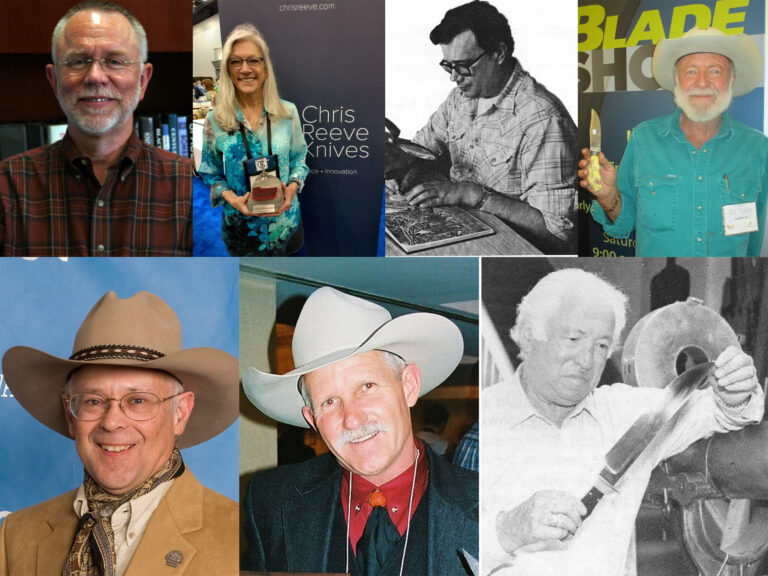
A notable assortment of those who for many years enhanced or continue to enhance the overall improvement of the knife industry highlights the 2026 class of inductees into the BLADE Magazine Cutlery Hall of Fame®.

The new honorees include three living and four deceased members. Among the former are CRKT co-founder Rod Bremer and Anne Reeve, owner/president of Chris Reeve Knives, on the factory side, and American Bladesmith Society master smith Larry Fuegen from the custom realm.

The posthumous inductees are bladesmith/writer Ed Fowler, custom knife purveyor Nate Posner, knifemaker/knifemaking supplier Bob Engnath and ABS master smith Tim Hancock.

All will be formally inducted in a special ceremony during the BLADE Magazine Cutlery Hall-of-Fame Breakfast the Saturday morning of the BLADE Show, June 6, in the Renaissance Waverly, the host hotel adjoining the Cobb Convention Center in Atlanta. For ticket information email [email protected].

Rod Bremer

Rod Bremer

Along with partner Paul Gillespie, Rod Bremer started Columbia River Knife & Tool (CRKT) in 1994. The concept was to bring world-class-quality knives to the U.S. market in the designs of custom knifemakers—as of today, CRKT has used the designs of over 50 such makers—and innovation at a price that virtually all consumers can afford.

According to a nominator, Rod’s integrity qualifies him for the Hall of Fame, a good example being that “CRKT pays the makers/designers royalties for as long as the knife sells. To this day, Rod is still paying royalties to the estates of Ed Halligan, Jon Graham, Cutlery Hall-of-Famer Kit Carson and several others.” Added the nominator, “CRKT started the Forged by War program to help veterans and their charities. So far the program has donated over $500,000 to the charities of the veteran’s choice.”

Under Rod’s leadership, CRKT has won a number of BLADE Magazine Knife-of-The-Year® Awards. In the process, he helped enhance Southeast Asia knife manufacturing by teaching and demanding that the Taiwanese factories produce the highest-quality knives possible.
He has bolstered pro-knife initiatives through his work as an American Knife & Tool (AKTI) Board of Regents member, working on issues that benefit the knife industry. His resume includes: 1) Election to the AKTI Board of Regents (2009); 2) Playing an active role in the monumental defeat of U.S. Customs’ attempt to classify all one-hand knives as switchblades (2009); 3) Recipient of Knife Rights’ inaugural Freedom’s Guardian Award for his role in upholding knife rights industry wide (2011); 4) Elected AKTI vice president (2011); 5) Organized and hosted AKTI anti-counterfeiting round table and presented related seminars for BLADE University at BLADE Show 2013; and 6) Elected (2014) AKTI president, a position he held through 2016.

Anne Reeve

Anne Reeve

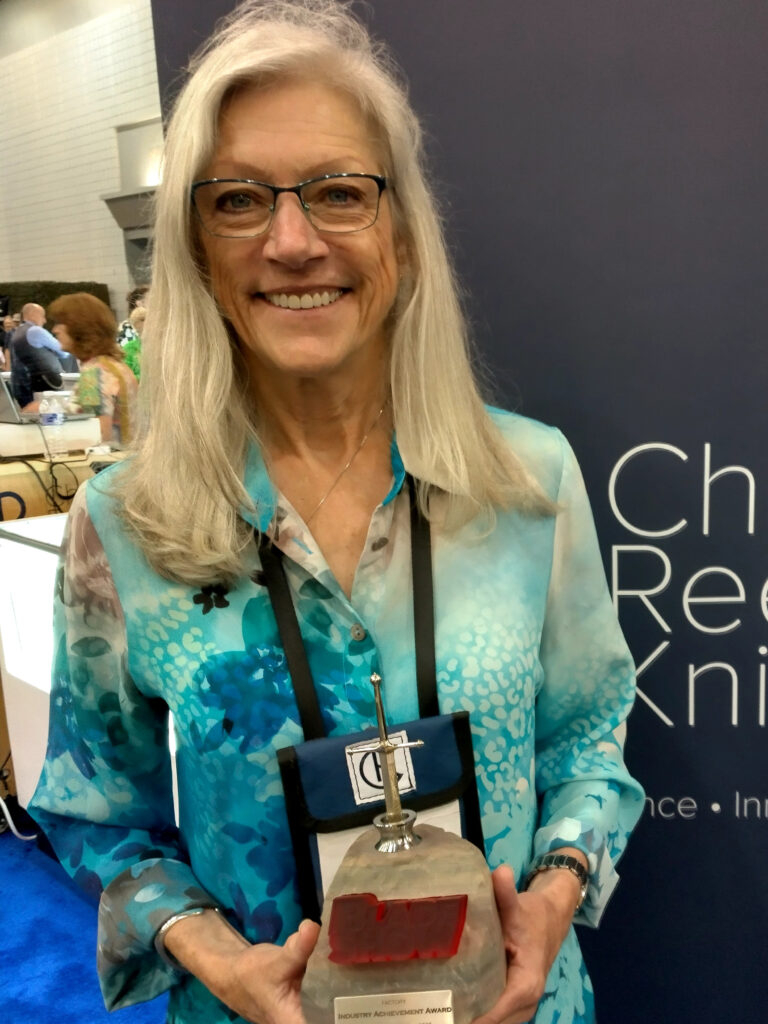
According to a nominator, in 1986 Anne Reeve joined the then-fledgling Chris Reeve Knives and quickly became an integral part of the company. Her partner, both in life and business, Cutlery Hall-Of-Famer Chris Reeve, was the craftsman, and a great one at that. While Chris’s forte was knife design, Anne’s strengths were administration and bookkeeping. Anne spent many of the following years lending a hand where she could, helping to build a company known for quality and excellence.

For most of the early years, Chris Reeve Knives was just Anne and Chris plus a handful of employees, which meant Anne wore many hats. As the company grew, Anne stepped more into working behind the scenes in administration and customer service. Her years of answering the phone and meeting customers, partnered with her determination to ‘do the right thing,’ laid the groundwork for the knife manufacturer’s international reputation for excellence. Today, the company has around 150 dealers worldwide.

On the knife legislation front, Anne showed support for both the American Knife & Tool Institute and Knife Rights with encouragement, donations of knives and cash, and attending and sponsoring related functions. She has been treasurer of the Idaho Knife Association since 2018 and is an active member of the organizing committee for the IKA’s annual show.

After a nearly 30-year partnership, Chris retired, and Anne took a massive leap of faith and bought Chris’s share of the company. With the help of their son, Tim, and a team of young, talented and enthusiastic leaders, Anne has trailblazed Chris Reeve Knives into new territory. As the nominator concluded, “Investment in equipment and employees has resulted in revenue more than doubling under her leadership, the quantity of knives produced each month continues to increase, the quality of those knives is better than ever, and demand continues to significantly outpace production. Her determination to keep the integrity of Chris Reeve Knives, coupled with the highest quality products and customer service, has set a standard in the knife industry.” Helping cap it off, Anne won the BLADE Magazine 2025 Industry Achievement Award for her many contributions to the craft and cutlery community.

Bob Engnath

Bob Engnath

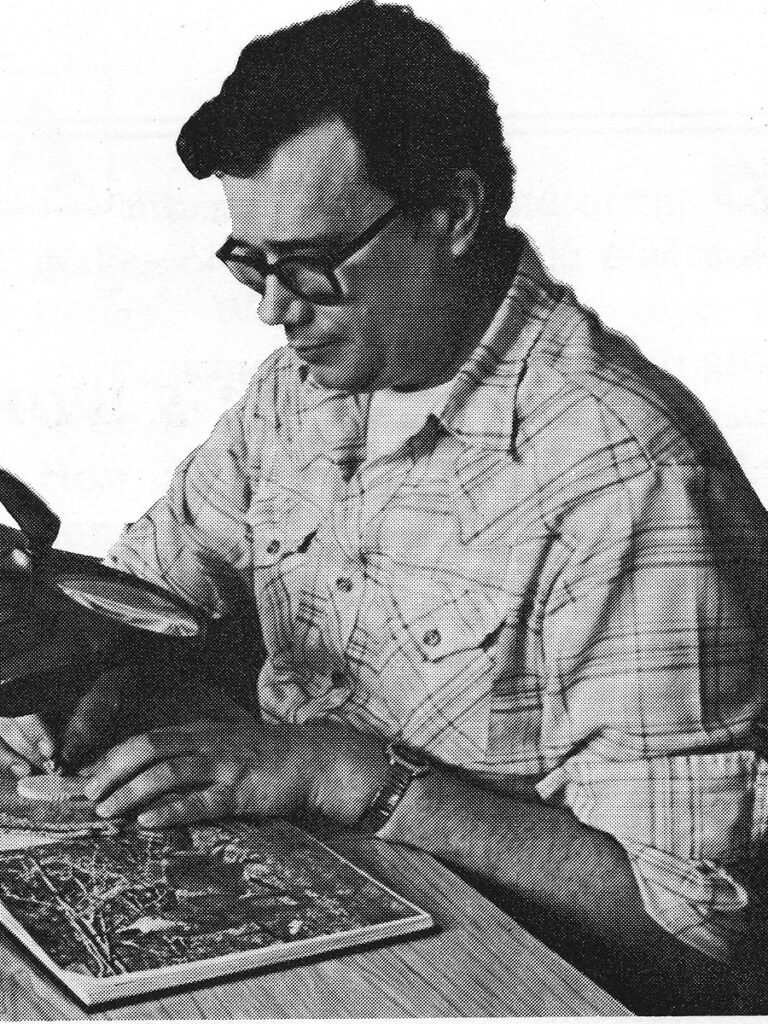
Bob Engnath built his first knife in 1972 and went full-time in ’79, making kit blades, tantos, swords and assorted knives in carbon steel. His base of operations was Blades ‘N’ Stuff, a retail shop he ran in Glendale, California, that offered tools, supplies and materials for knifemakers, bladesmiths and swordsmiths.

He produced several editions of a comprehensive publication he also called Blades ‘n’ Stuff, a 70-or-so-page 8-by-11-inch “Catalog and Instruction Manual featuring Handcrafted Blades by Bob Engnath and Knifemakers’ Supplies.” Sold for $5, it contained copious amounts of knowledge and instruction for anyone who wanted to make a knife or sword, including line art of his many patterns, knifemaking how-to’s with diagrams, tips and do’s and don’ts, and tons of sage advice on various steels, heat treating, knifemaking machines and materials, finishing, how to forge damascus, shop safety and other invaluable information. In addition to his catalogs, Bob also wrote the books The Scrimshaw Connection and The Second Scrimshaw Connection.

Engnath was a dedicated blade grinder and considered by many the best grinder of the time, providing blanks his customers could finish on their own. He gave many makers their start and dispensed an untold amount of knifemaking knowledge to anyone interested enough to listen, usually free of charge. According to one source, “Bob was a mentor to countless new makers through his knife kits, leaving a lasting legacy in the knife community.”

Summed up another source, Bob “was an excellent role model for any man in the knife business. He never said a bad word about anyone, took the knife business where it had not been before, his ethics were outstanding, his word was ironclad. I’d rather have had a handshake with Bob Engnath than a lawyered-up contract with any other knife name you care to mention. He was a hero and an example to a lot of people.”

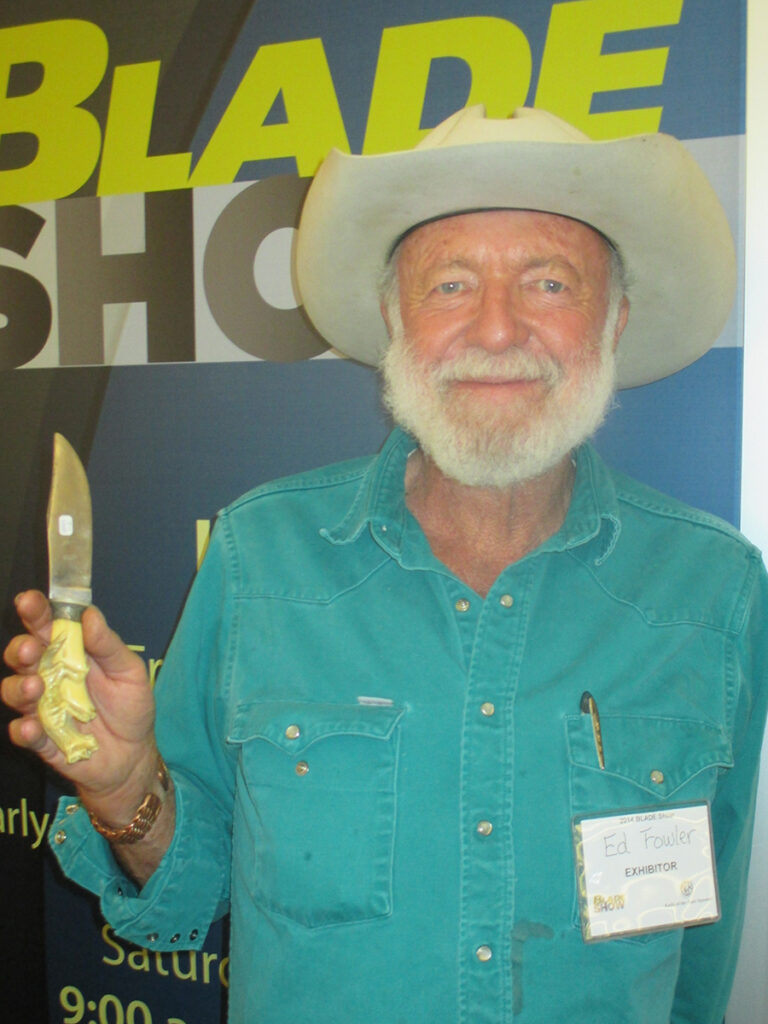
Ed Fowler

Ed Fowler

Selling his first knife in 1962, Ed Fowler epitomized “the philosophy of the cutlery fabricator,” noted one nominator. Though not the first to use 52100 carbon steel for knife blades, Ed helped popularize it as it became a go-to material among today’s bladesmiths. He long performed and encouraged the multiple quenching of blades during heat treatment.

He wrote the monthly column “Knife Talk” for BLADE® for well over a quarter century. In BLADE’s reader surveys, along with Cutlery Hall-of-Famer Wayne Goddard, Ed completed the top one-two team of most popular BLADE writers year-in and year-out. Ed compiled his “Knife Talk” columns into two books: Knife Talk I: The Art & Science of Knife Making and Knife Talk II: The High Performance Blade. He conducted demos for many years on a variety of subjects at the BLADE Show, plus a class at BLADE University.

Formerly an ABS master smith, he went on to create the High Endurance Performance Knife Association, an organization dedicated to a greater understanding of the knives its members make, the steels they use, the process necessary for the knives to reach their maximum performance potential, and to share this understanding with any and all who seek it. He taught knifemaking to many, including more than a few who have gone on to become ABS journeyman and master smiths, including Audra Draper, Wade Colter, Shane Taylor, Bill Burke and Cutlery Hall-of-Famer Rick Dunkerley among the latter.

Wrote one nominator, Ed was “very passionate about what a knife should do. He indulged anyone who wanted to share time or debate ‘the concept of cut,’ as he called it.” Ed would pit his high-performance 52100 knives against all comers in what he called “real world tests,” cutting and doing things with the knives many consider abusive, until the knives failed. Ed continued using this testing regimen, observing that though you may never have to use a knife in such a manner, “What if you had to and the only tool you had at your disposal was your knife? Wouldn’t you take comfort in knowing that if ever push came to shove, you had a knife you could stake your life on?”

Larry Fuegen

Larry Fuegen

Larry Fuegen started forging knives in 1975. According to a sitting Hall of Famer, from that time on all of Larry’s knives were sole authorship. He became a full-time knifemaker in 1987 and earned his American Bladesmith Society master smith rating in 1989.

“Since I’ve known Larry he has been a unique person who made unique knives,” the Hall of Famer wrote. “He started making friction folders after meeting Cutlery Hall-of-Famer Jim Schmidt at an ABS hammer-in. Years later Larry took those folders to a whole new level. For years he did gargoyle-type carvings on them and later started doing other renditions, like his folder featuring the Spanish explorer Hernan Cortes wearing a gold helmet and Larry’s carved face of his idea of what Cortes looked like. Besides these great folders he made many ornate bowies, daggers and hunters that had carving, texturing and engraving done in a way to set his work apart from anyone else.

“For me what stood out most were his push daggers. I believe if you Googled push daggers a picture of Larry Fuegen would come up. He not only crafted knives, he also did his own leatherwork, which was top quality. He also made some of the best bits and spurs anywhere. In addition to his quality work he designed and built the tools he needed to produce his knives, leatherwork, and bits and spurs.”

He was voted into the Art Knife Invitational in 1999 and every year thereafter until 2022. Circa 2008 another of his ornately done friction folders, entitled Alaric, King of the Visigoths, went on permanent display at the Smithsonian American Art Museum’s Luce Foundation. He has been featured in many magazine articles and books, among the latter including Greatest Living Knifemakers by Cutlery Hall-of-Famer Steve Shackleford.

Larry passed his knowledge on, teaching at numerous hammer-ins and seminars around the country. He is very knowledgeable and is willing to share with anyone. He is the personification of the traits required for induction into the Cutlery Hall of Fame.

Tim Hancock

Tim Hancock

Teaching others how to make “the total knife” played a huge role in defining Tim Hancock. “He taught and demonstrated at many hammer-ins in the areas of embellishment, design, blade forging, grinding, heat treating and sheath making,” ABS master smith Larry Fuegen observed. “He wanted to share his methods and thoughts with others. He also gave private lessons in his shop to many aspiring makers. The influence of his recognizable style can be seen in the work of many makers. Just as [Cutlery Hall-of-Famers] Bill Moran and Bob Loveless influenced many with their designs, so did Tim with his work.”

Added knifemaker Michael Vagnino, “I suppose the most important thing I learned from Tim was integrity. The knife you make is in fact a part of you. How it turns out is more about how honest you were when making it. When Tim told me that, it really made me pause. From that moment on, I viewed making knives in a new light.”

Tim earned his ABS master smith rating in 1993 and won an impressive number of honors for his knives, including the 2010 W.F. Moran Award. He was known for his award-winning period bowies, including though not limited to dog-bone bowies. Dr. David Darom dedicated an entire hardback book, Tim Hancock: The Western Bladesmith, to highlighting Tim’s knives and knifemaking career, even his penchant for forging silver-mounted bits and spurs and other Western gear. From 2001-2015 Tim was a member of the Art Knife Invitational, an organization of the world’s 25 greatest knifemakers spearheaded by Cutlery Hall-of-Famer Phil Lobred.

Nate Posner

Nate Posner

Nate Posner started the San Francisco Gun Exchange in 1948 and built it into what he called the “Firearms Center of the West.” It had most everything firearm related but it was his displays of custom and factory knives that pertain here.

Along with Cutlery Hall-of-Famers A.G. Russell and Dan Delavan and also Bob Gaddis and Dave Harvey of Nordic Knives, Posner was among the first custom knife purveyors. He was known for telling his customers that to get the best price, instead of buying custom knives from middlemen such as him they should buy directly from the maker. Of course, if the customers wanted the handmade knife in question immediately, they often had to buy it from one of the few purveyors such as Nate to avoid spending what might be years on a waiting list. However, it was being up front that put Nate in good stead not only with his knife customers but the Guild, too—for both buying/selling the makers’ knives and treating what often were the makers’ customers/prospective customers in a professional manner.

At one time he had over 350 custom knives on display, with at least that many others in stock. Circa 1975 he ordered knives from dozens of makers, most active or past Guild members. Eventually he culled his list to about 25 or 30, including one of his favorites, D. E. Henry. Others included Tommy Lee, Jess Horn, Herman Schneider, Corbet Sigman, the-then-team of Scott Sawby and Steve Mullin, and future Cutlery Hall-of-Famers Frank Centofante, Jimmy Lile, Bob Loveless, George Herron, Bo Randall and more.

Thanks to the high store profile he gave custom knives and their makers to knife and gun buyers alike, Nate was one of the most important custom knife promoters of his or any era. As a result, the honor the Guild gives annually to an individual who provides “Outstanding Service in the Promotion of Handcrafted Cutlery” is called the Nate Posner Award.

See More Award Winners:

Reflecting On Attending 40 BLADE Shows

BLADE Show ’25 is the author’s 40th BLADE Show—and counting

In the spring of 1985, my fellow U.S. Army lieutenant and knife collector Fletcher Crews told me about the BLADE Show. Having never heard of it, I asked him what it was.  His response: “It’s like a gun show but with knives.”

Later in May of that year we took our wives on a road trip from Clarksville, Tennessee, to the Holiday Inn and Convention Center in Knoxville, Tennessee, the show’s former time of year and venue. We allowed ourselves four hours to cover the show. (Don’t get ahead of me; we didn’t know what we were in for.) You have undoubtedly seen TV commercials telling you about someplace in Florida that is the “happiest place on earth.” Those who say this have never been to the BLADE Show!

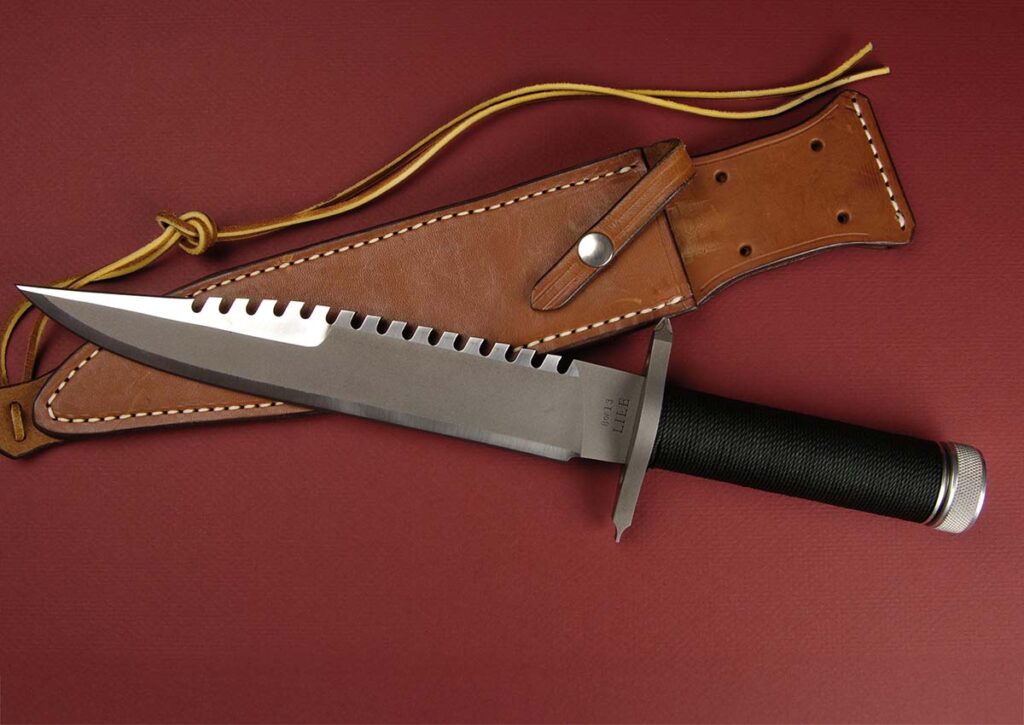
The highlight of the show for me was meeting BLADE Magazine Cutlery Hall-of-Fame® member Jimmy Lile and seeing and handling the Sly II knife he made for the original Rambo movie, First Blood. For those of you who were not fortunate enough to meet Jimmy, he was everything you hear. He was outgoing and friendly, making you feel like he had known you for years. He only made being able to see the knife in person that much better. After all, this is the knife that started me on a path I am still on today.

The BLADE Show has been the Happiest Place on Earth for decades—including here in 2007—and will be this coming June 6-8, too. (Eric Eggly/PointSeven image)

Heading back to Clarksville, I realized that planning had already started for the 1986 BLADE Show. As it turned out, I would make a life-altering decision shortly after returning home. Several weeks later, my wife Kathy and I were having dinner with Fletcher and his wife Karla. 

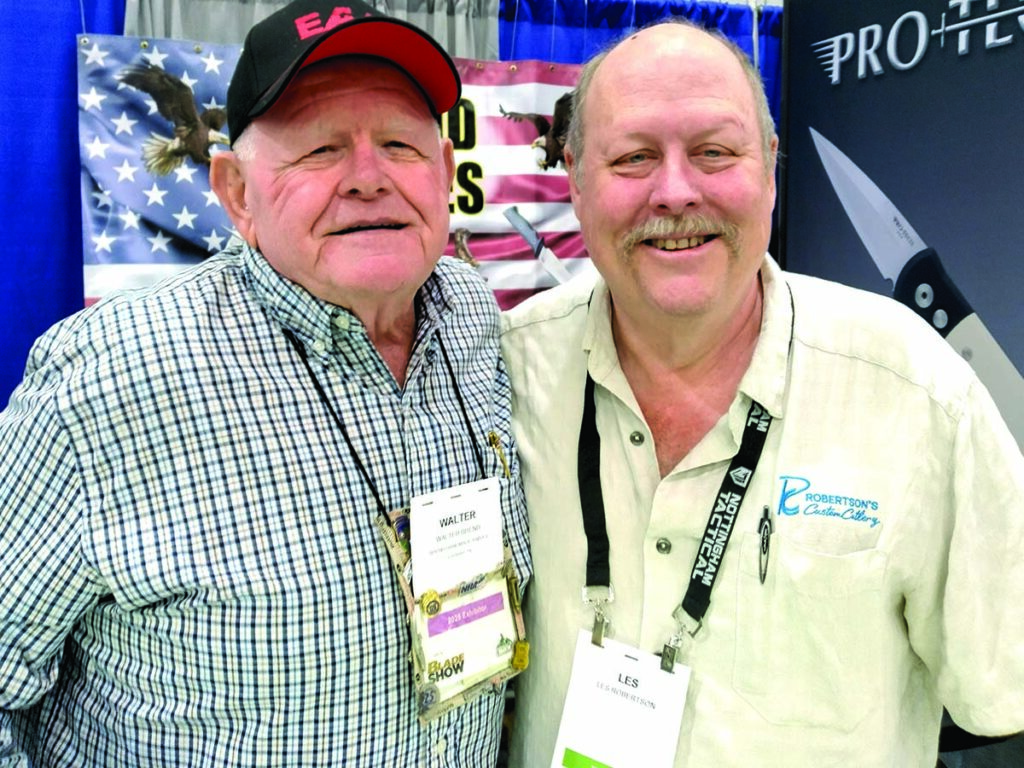
Karla said, “If you did this as a business, you could go to more shows and write off your expenses.” Jerry Seinfeld famously said on his TV show, “You don’t even know what a write-off is.” That was true of me then but I still liked the sound of it.  The following week, I went to a CPA and filled out the paperwork to form Robertson’s Custom Cutlery. I realized I had made a tactical error by only allowing four hours for the show. In 1986, I corrected that. I was, in fact, third in line to get in. 

The doors opened and hundreds of people rushed into the room, all taking different paths to the hundreds of tables. I went to the first table closest to me and within 15 minutes was out of money. It was at this show that I learned my next vital lesson. As I walked among the rest of the tables and booths, I realized I had set a land speed record for buyer’s remorse. The essential lesson I learned was to have a plan.

Armed with my recently acquired KNIVES ’86, the plan began to take shape. The book has photos and an equally important index of makers’ contact information in the back. It started me on my path to creating what would become my Robertson’s Maker Market Matrix. In the early days, I used the Matrix exclusively to figure out what specific knives I wanted to buy. 

The Sly II, aka the original Jimmy Lile First Blood knife, is the knife that got the author started on his career of buying and selling custom knives 41 years ago. The 9-inch sawtooth blade is bead-blasted D2 tool steel. The hollow handle is cord wrapped with an aircraft-grade aluminum buttcap. Overall length: 14 inches. The leather sheath is custom made. The author’s collector value for one of the originals: $4,000-$6,000.
Using KNIVES ’86 and the information within helped me identify what I wanted and implement my purchase plan. Early in 1987, I started to contact knifemakers, asking them what they were bringing to the show or if they could deliver the particular knife I wanted there. The plan was in place and it was implemented to perfection. I received all five knives I had ordered. With the pressure off, I was allowed to move through the Holiday Inn and Convention Center show hall and really enjoy everything the BLADE Show had to offer.

Gil And Bruce

The 1987 show was memorable for more than just the five knives I bought. I was introduced to legendary Cutlery Hall-of-Famer Gil Hibben, who invited me and others to dinner. He was a gracious host with fascinating stories to tell. At that same show, fellow custom knife purveyor Bob Neal (miss you, buddy) introduced me to Cutlery Hall-of-Famer Bruce Voyles, who owned both the BLADE Show and BLADE, and edited the magazine, too. Bruce couldn’t have been nicer. What impressed me most was his encyclopedic knowledge of older factory slipjoints, multi-blade folders and antique bowies. 

In 1992, Bruce gave me another of my favorite memories of the BLADE Show—he asked me to judge the custom knife competition. I’ve judged at more shows than I can remember, but there is nothing like seeing all those knives from some of the best makers in the world all in one room. Bruce introduced me to current BLADE editor, Cutlery Hall-of-Famer Steve Shackleford, who, during a conversation at the 2006 BLADE Show, asked me if I would like to write an article for BLADE. Nineteen years later he continues to ask me to write for BLADE. Bruce and Steve were also instrumental in having me—sometimes with Bob Neal—conduct seminars for both custom knife collectors and makers at several BLADE shows.

At the 1988 BLADE Show, I set up for the first time. With the exception of the show in 1990, I had a table at each BLADE Show until 2011. Having a table at the BLADE Show was an incredible learning experience. It taught me that there is always more to learn about custom knives. Also at the show, custom knifemaker Dave Broadwell and I collaborated and came up with the final design for the MLR Sub-Hilt Fighter. Since then, Dave has made well over 100 MLRs for me in different configurations.

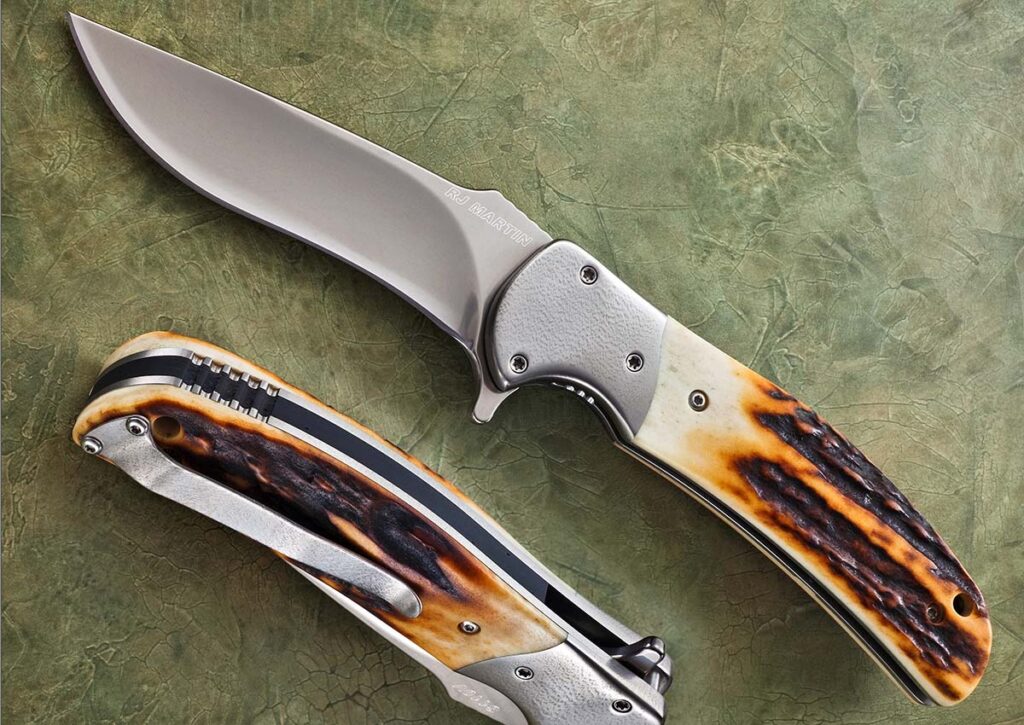
At the 1997 BLADE Show, the author talked to RJ Martin about making a few folders for him. RJ went home and came up with a knife he called the Q30. He later modified it and the result would become his signature model, the Q36, an iteration of which appears here. He went on to win the Best Tactical Folder award at the BLADE Show four years in a row. Today, RJ’s order books are closed. (SharpByCoop image)

At a mid-’90s Knifemakers’ Guild Show, I met a talented maker who at the time was making what I considered the finest Japanese tacticals in the world. However, at the 1997 BLADE Show we talked about him making me a few folders. He went home and came up with a knife he called the Q30. He later modified it and the result would become his signature model, the Q36. He went on to win the Best Tactical Folder award at the BLADE Show four years in a row. His name: RJ Martin.

At the 2015 BLADE Show I met Steve Randall and his wife, Alison. Steve reminded me a lot of the exceptional maker John White. Steve’s knives were clean, incredibly well made and fairly priced. Today, table 3R is always my first stop to check out his knives.

For me, there are many people I talk to throughout the year but I only get to see them once a year at the BLADE Show, and that makes the show even more special to me. Two of those fellow knife nuts are Jack Alsop and Alan Snow.

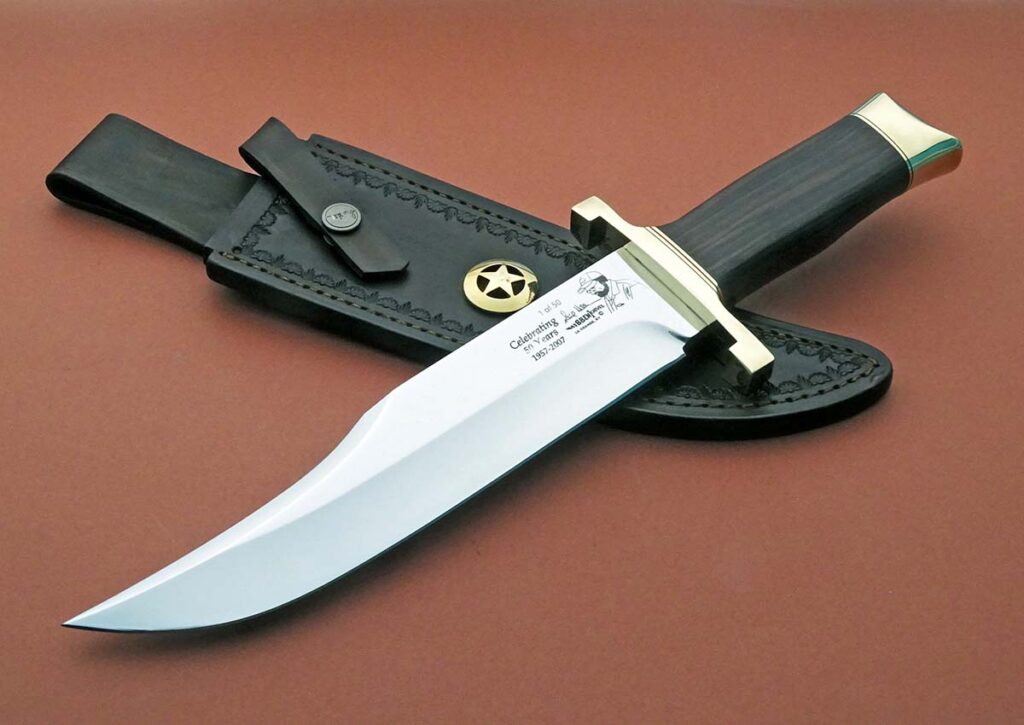
At the 1987 BLADE Show the author met Gil Hibben, who promptly invited the author and others to dinner. Hibben’s 50th Anniversary Bowie features mirror-polished 440C stainless steel and macassar ebony. The guard and pommel are brass. Blade and overall lengths: 9.5 and 14.25 inches. Hibben’s price for a similar knife: $1,900. (Robertson’s Custom Cutlery image)

What I appreciate most about the BLADE Show, aside from the knives, is the camaraderie of the people there. They are literally from all over the world. They are willing to share their knowledge that, for many, has taken a lifetime to acquire. Like I said previously, forget that place in Florida. The BLADE Show is the happiest place on earth. See you there!

More On The Blade Shows:

Advertisement

Must Read Articles

Read this before you make a knife

Knifemaking 101 – Read This Before You Make a Knife

  by Wayne Goddard My experience has taught me that there's nothing like digging in and getting started. I've often said the hardest part of the...
how to forge damascus steel

How to Forge Damascus

Advertisement
Advertisement