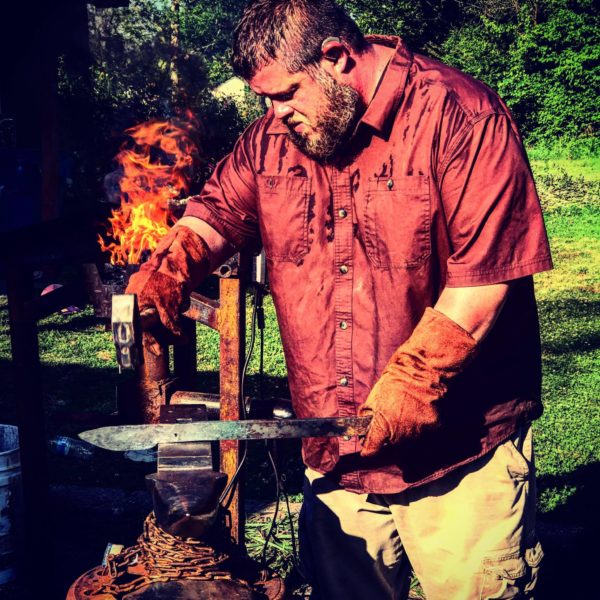
Larry Roberts used the L.T. Wright Knives’ Genesis to survive as a participant on the History channel’s “Alone.”
Larry Roberts, runner-up in the second season of the History channel’s wilderness survival show “Alone,” lasted 64 days in the harsh environs of Vancouver Island with one knife: the Genesis made by L.T. Wright Knives. L.T. Wright knew Roberts as a customer and because he wrote articles for the company’s Self Reliance Illustrated magazine. What he didn’t know, because “Alone” participants are not allowed to discuss the show, was which knife Roberts used on the show. When Roberts was allowed to talk about his experiences, he raved to Wright about how much he appreciated the Genesis. Wright suggested they team up, and a winning partnership was born.
On Dec. 16, LTWK introduced its Larry Roberts Signature Edition Genesis to the public. Fans of the “Alone” star and members of the LTWK Pout House club were eligible for pre-release access for 24 hours prior to the general release.
The premise of the reality show is that a group of outdoorsmen and women are deposited in a remote locale—alone—and whoever can survive the longest, wins—$500,000 to be exact. They are positioned so that natural obstacles prevent them from encountering each other. There is no crew; the participants film themselves and are resupplied with batteries and camera chips. They must build shelters, find enough to eat without expending too many calories, stave off hypothermia and marauding animals, and maintain their sanity.
So, how exactly did Roberts use his knife? The list is extensive. He built small game traps and a fish trap. He used it batonning, feather-sticking, harvesting spruce sap and cedar bark, gutting and filleting fish, processing mice and prying shellfish off of rocks. He used it to make a spoon, a spatula and a fork. He harvested mushrooms with his Genesis, cut cordage and used the sharp 90-degree spine of the knife to strike his ferrocerium rod to start fires. He used the knife to make a spear and tent stakes, and even for first-aid and hygiene tasks, such as removing a splinter or cleaning his fingernails.
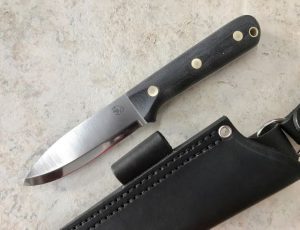
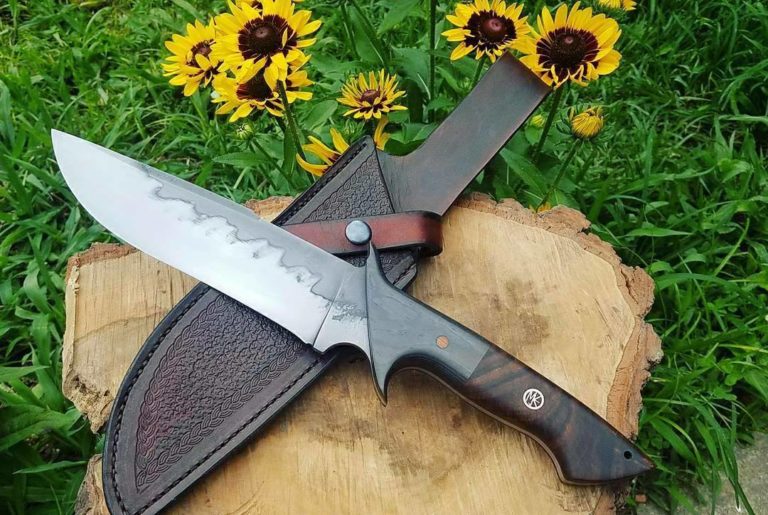
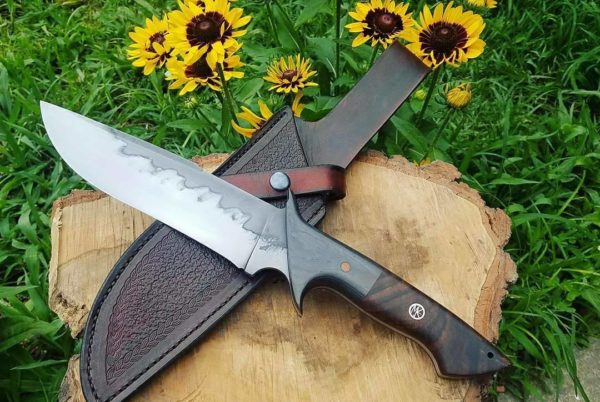
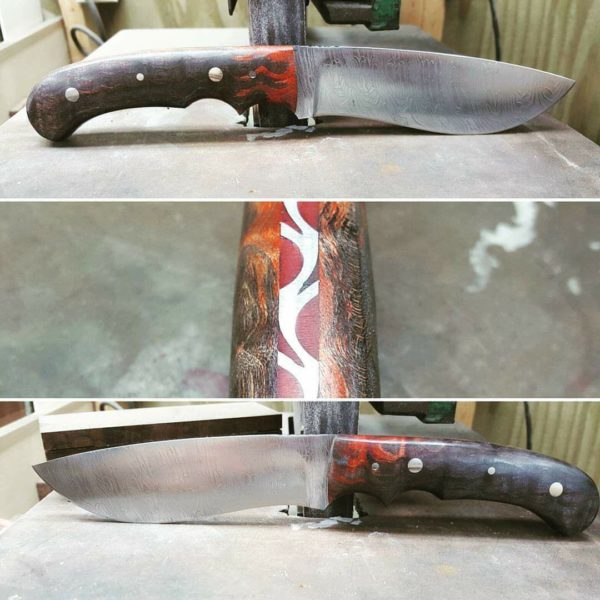
The Larry Roberts version of the LTWK Genesis has a broomstick handle and sharpened spine to assist in firebuilding.
The knife measures 9 inches overall. The 4.25-inch blade has a Scandinavian grind, and the chiseled edge is ideal for bushcrafting skills like making kindling, tent stakes and stripping bark, L.T. Wright explained. It used to be, he continued, that outdoor knives were overbuilt to account for hard use in the field, but now that the education and skill level of outdoorsmen has advanced, often through watching and practicing skills learned just on YouTube, thinner-edged knives are sought after by outdoorsmen and survivalists. Roberts, too, praised the knife’s ability to bite deeply into wood.
The Genesis offers a 1/8-inch-thick spear-point blade made of A2 tool steel, following a Kephart design overall. The knives are tested to 57 to 59 HRC on the Rockwell hardness scale, so they are tough but hold an edge, Wright said. The A2 steel, in the opinion of both Wright and Roberts, outperforms O1 and 1095 for edge retention, and corrosion and stain resistance. For his time on the island, Roberts only stropped his knife on his leather belt to remove micro-oxidation from humidity and moisture. He never had to resharpen it at all.
The Roberts version of the Genesis has a broomstick handle because Roberts found the thicker handle easier to hold and control. It also has thumb scallops and a sharpened spine for striking a fire steel against. LTWK made the black Micarta handle with white liners because Roberts likes the black-and-white contrast. The blade is stamped with Roberts’ rendition of his Vancouver Island nemesis: a mouse. “It became an obstacle for me to overcome,” he said of the creature he battled during the show.
The MSRP of the Larry Roberts Signature Edition Genesis is $225 and includes a true 8-ounce black leather sheath with a dangler and 3/8-inch ferro rod loop. Wright prefers to purchase 10-ounce double-died leather from Spen Stelzer, the owner of JRE Industries in Illinois, and have it split to 8 ounces so there are no discrepancies. “We can control consistency better that way,” he explained.
Roberts wanted the largest ferrocerium rod he was allowed to have during the show, so he went with a ½-inch rod and wasn’t able to use the loop that comes with the Genesis sheath. Roberts did use the dangler, however. He explained that it allowed the knife to hang where his hand fell naturally for easy access—just like a gunslinger in a western—and yet carry out of the way of a backpack or any other gear.
Wright grew up playing Tarzan and Rambo in the woods as a boy, and, of course, the tactical use of knives and their implementation in hunting and bushcraft interested him all along. But he wanted to make a living making knives, so he listened to what people told him they wanted. “If you go to a show and come home with all the knives you brought, you’re not going to be in business long,” he said. Like the survivalist industry itself, as the education and skill levels of users advance, so too must the sophistication of the knives. Wright listened.
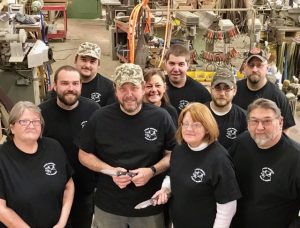
L.T. Wright (front row, second from left) was surprised and happy to find out his Genesis was the knife Larry Roberts used on the “Alone” series.
At first he made knives as L.T. Wright then as Blind Horse Knives and he’s back as L.T. Wright Knives. Wright learned to make knives from R.W. Wilson, who made the tomahawks for the 1972 movie “Jeremiah Johnson,” a cult favorite among outdoorsmen. “He’s probably sold off all of those,” Wright said, “but I do have a prototype of a tomahawk he made for the Texas Rangers.”
So, it is fitting that Wright should partner up with a man who carried his knife in a reality-based outdoorsman show for the small screen. Roberts grew up in Oregon, spending as much time outside as he could, bait-fishing for steelheads in the Rogue River and bow hunting. His first knife was probably a 3-inch lockback Buck pocketknife, he said. He married his high-school sweetheart, and they had a son and a daughter, now grown and on their own.
Roberts attended the Pathfinder School, LLC Survival Classes offered in Jackson, Ohio, through Self Reliance Outfitters. An instructor at the top-rated school, Dave Canterbury, had been on Discovery Chanel’s “Dual Survival” show, and Roberts had heard about “Alone” from a season one participant named Josh Chavez. Roberts had been looking for a challenge, a real-world way to apply the skills he’d learned. “This was it,” he said, and applied online.
You can be a superb outdoorsman, Roberts pointed out, but if you can’t express yourself in front of a camera, you won’t be selected for the show. Although more shy in real life, Roberts is a natural in front of the camera. He sent along hours of footage of himself conducting survival skills. He made the cut, and a total of 20 finalists attended a boot camp in New York. They were tested on their comfort level in the outdoors in a city park. They underwent both medical and psychological testing, and were trained extensively on how to operate the cameras they would be using to film themselves for the show.
Even though Roberts eventually had to “tap out” because he could not get enough food to compensate for the calories he expended, his life has changed from being on “Alone.” He teaches now for Pathfinder and privately on his own farm. He attended the Primitive Living Skills Conference, Rabbitstick, in September in Idaho and will be attending Winter Count, Feb. 12-18 in Maricopa, Arizona.
Roberts can’t say enough good things about the LTWK Genesis. It’s everything he ever wanted in a knife, in every way. Similarly, he can’t say enough good things about L.T. and his crew at LTWK. It was on the island, at night, when Roberts began designing a tattoo he wanted to get. It incorporated everything that was important to him during the “Alone” challenge. You can read about his experiences on the show and how the tattoo both gave him something to think about and something to look forward to getting in “Star of History Channel’s ‘Alone’ Talks Survival and Tattoos,” an interview by Kirstie Kovats in Inked magazine.
Of course, the mouse figures prominently in the design, as does the knife.
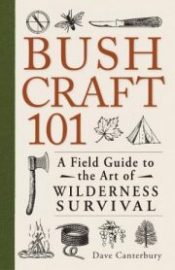
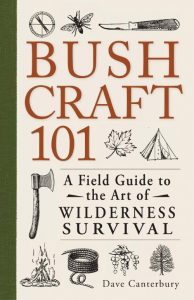
Dave Canterbury, instructor at top-rated wilderness survival Pathfinder School in Ohio, explains the 5 Cs of survivability in his “Bushcraft 101.”
Not sure where to start with your quest to master wilderness survival skills? Dave Canterbury, the primitive arts instructor at Pathfinder School in Ohio mentioned above, has written a book that’ll help you get back to basics, enjoy the outdoors and understand the essentials of wilderness survival.
Survival instructor, author and TV star Creek Stewart cross-carries a Whiskey Knives Corvid.
When Matthew Stewart was 5, his grandfather gave him a nickname that would chart the course of his life. “I was always playing in the creek,” said Creek Stewart, survival instructor, author and star of The Weather Channel’s now-cancelled “Fat Guys In The Woods.” No matter the time or weather, the boy was at the creek—happy. Not much has changed, except the budding outdoorsman of yore has now built an empire on his comfortable, family-friendly style of survival instruction. All things Creek also includes the soundly crafted, old-timey line of Whiskey Knives, which in addition to being ideally designed for bushcraft and easy on the wallet, also offers some scaled-down versions of classic styles that hands of all sizes can control. You can read all about Whiskey Knives and how they are made in an upcoming issue of BLADE magazine. If you’re not a subscriber, sign up so you don’t miss it.
Creek is “everywhere” and there are good reasons for that, not least being that he is genuinely warm and friendly. “I like working with people,” he said. Creek was a Boy Scout and an Eagle Scout. The first E in the CRE///K logo is representative of a scratch from an eagle’s talons. He continues to be a devotee of the Boy Scouts of America and a counselor for the Wilderness Survival merit badge. He lives the Be Prepared Boy Scout motto, and opted for Not If But When as his own tagline. Yes, scouts are being taught all kinds of skills, explained Creek, “but they’re also building character and learning life lessons.” He listed perseverance, teamwork, manners, camaraderie—all things the Boy Scouts instilled in him.
At Butler University in Indianapolis, Creek first perused a pharmacy major, but the misdirection, the urban setting and a campus crow that thought it was an alarm clock brought him to an awakening. You can read about his adventures trying to snare the bird on his website at The Crow, but in summary, the crow reawakened Creek’s inner woodsman. He decided he wanted to teach wilderness survival skills and set about making it happen.
He settled on a business major, a plan that would serve him well. During his sophomore year, he wrote and illustrated a wilderness survival field manual that collected his knowledge at the time. He had the book printed and spiral-bound, and offered free classes at Boy Scout troops to peddle it. He sold books, but he longed for a way to bring his customers to him rather than traveling to them. He asked his parents if he could teach a class in the woods on the family farm. Although still unnerved by his switch in major, they agreed. He sent out press releases and 15 people showed up. He’s been teaching ever since, part-time for many years but never quitting on his dream.
Creek’s business schooling helped him hone his marketing strategy. His many brands include, in addition to Whiskey Knives, Willow Haven Outdoor Survival School where he teaches one-day and weekend getaway survival courses on his 20-acre property, complete with lodge, in Anderson, Indiana. He also is lead instructor for the Escape The Woods challenge, which takes place at various locales around the country. The Not If But When Survival Store, which his parents now run, offers a collection of widely available survival items. And, Apocabox is a bimonthly subscription; six times a year members receive a box of survival tools and gear, hand-picked by Creek. It also includes a challenge that you can practice in the calm and comfort of a non-crisis. For instance, the December box included instructions on making snowshoes from your Christmas tree.
Creek’s overview of Whiskey Knives includes a revelation: his first knife.
Creek also saw that writing was going to be essential to reaching the right people—namely men and women of all ages and abilities. (While other survival instructors might emphasize immersing you in a survival scenario while you’re still learning, Creek feels that people absorb more and retain it longer, if they’re warm, dry and fed.)
His best-selling book is “Build the Perfect Bug Out Bag,” but he offers one on putting together a bug-out vehicle, two on survival skills and an intriguing one on the survival skills used in “The Hunger Games.” But Creek has also written two fiction books. “Stuck” is a short story about a Boy Scout dropout who through a series of bad decisions finds himself in a crisis situation—quicksand!—that he can only survive by using what he learned in scouting. “Rugosa” is a young-adult romance, due out this month. The novel has been in the works for six years. “I’m really sticking my neck out on this one.” Creek is anxious to see if his fans “get” it. “I’m a survivalist, but I’m also a person,” Creek said. (Check back for an upcoming review.)
Some people learn about Creek via completely different avenues. They may read some of his guest posts on The Art of Manliness blog and other websites. “I’ve known Brett (McKay, founder of AoM) a long time. I’m so proud to be a part of that,” Creek said. The Art of Manliness celebrates men stepping boldly into their roles as men, husbands and fathers, and includes articles on everything from health and style to relationships and how to survive in the wild. Creek has also been a guest on television shows such as TODAY, Inside Edition and Fox & Friends. He’s been featured in magazines like Men’s Fitness, Backpacker and Outdoor Life. And he was the star of The Weather Channel’s hit show, “Fat Guys in the Woods.”
When IBM purchased the digital portion of The Weather Channel in 2015, many programs were slashed, and “Fat Guys in the Woods” was just one of them. The show provided Creek with the ideal outlet for his wildlife survival instructing and was an inspiration to viewers who wanted to spend more time in the outdoors or jumpstart a healthier lifestyle. Three sedentary buddies would spend a week with Creek, learning survival basics. The last 24 hours would be spent alone, each man building his own shelter and fire. Creek would award one of them with a knife-sheath set. One would stand out as needing encouragement, or being there for the right reasons or excelling in a certain skill. “He gave it everything he got—a job well done,” as Creek put it.
That kit was an Ontario Knife Company’s Black Bird SK-5 wilderness survival knife with a sheath designed by Paul Scheiter of Hedgehog Leatherworks. It was the sheath that had Creek thinking about how to fine-tune the products he offered going forward. “I love my parents, and every day I get to spend with them (at Not If But When) is a blessing,” Creek said. He’s also happy to provide a place where people can find all the products he recommends in one place. But what he really likes is working with small American businesses that reflect simple, well-made, traditional craftsmanship. “I like things that have a story.”
That quest for mom-and-pop entrepreneurship and throwback workmanship with a story behind it, is what led to one of Creeks proudest collaborations: Whiskey Knives made by Reptile Toolworks in Kentucky. To read more about this partnership and exactly how Whiskey Knives are constructed, be sure to subscribe to subscribe to BLADE magazine.
BLADE Magazine is all about the blade: what it’s made out of, how its made, to what specifications and even who makes it. Be sure to keep your issues coming as the months tick down to BLADE Show, June 2-4 in Atlanta, Georgia. At $21.98 you’ll save 70 percent off the newsstand rate. Other options include digital, Canadian print and International print subscriptions.
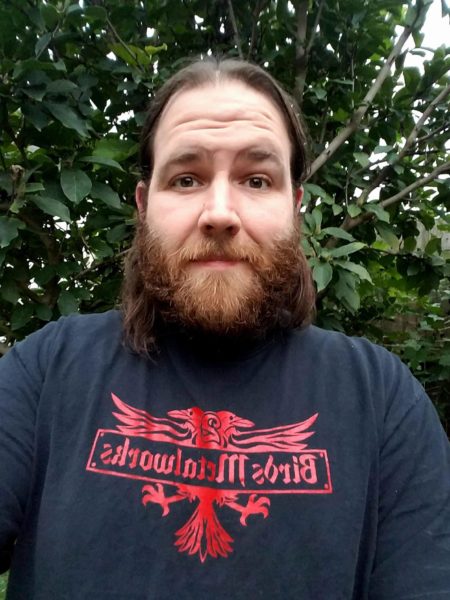
In a recent Facebook post, Mike Jeffries of 2 Birds Metal Works asked fellow knifemakers if they had a website, if it was worth the time and money to set up and maintain and how they approached it. He often throws out marketing-related topics for discussion. If you’ve followed any of those threads, you’ve already picked up some digital marketing tips from fellow makers. So, with Mike’s permission, our first in a series of Marketing For Knifemakers articles will delve into some of the feedback he received, assess some statistics and provide examples of custom knifemaker websites. Obviously, if you are an uber-successful full-time knifemaker, you can stop reading, unless you want to reach a still wider audience. This article, though, is aimed at those on the cusp of going larger or full-time with their craft. So, knifemakers: Do you need a website?
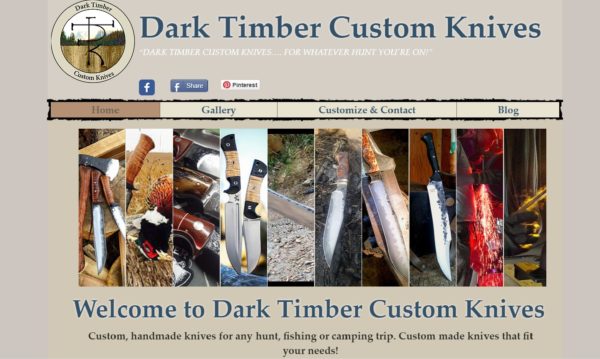
Experiment. Do a search for “custom knifemaker.” The first one to come up is Dark Timber Custom Knives, run by Peter Kohler. Why? A blog, and most of the photos are labeled. There needs to be content that bots can search through.
We’ll save whether you should go the do-it-yourself route or hire a pro for another time. We simply want to determine if a website is worth your time, money and effort at this point in your knifemaking career.
What Are Your Knifemaking Goals?
Are You A Hobbyist Or Part-Timer?
There is no shame in continuing to improve your craftsmanship, loving the journey and decidedly not going forward with a website. Continue to learn with each knife, sell a few to keep yourself in supplies and follow along with the community to stay up on industry news. Facebook (FB) and Instagram (IG) are all you really need.
Is Knifemaking Your Calling?
If you’re “arrived,” you already have a website and you can stop reading, unless you want a few tips on maximizing your customer base. If you’re striving to reach higher rungs on the artisan ladder, focus on bettering each knife, learning from mentors and obtaining your journeyman smith rating if you forge. You can either start a website or wait. Once you think, and your peers confirm, that you’ve hit your knifemaking stride, though, you will definitely need a website. You will also need to tailor that site to reach the public you set out to attract.
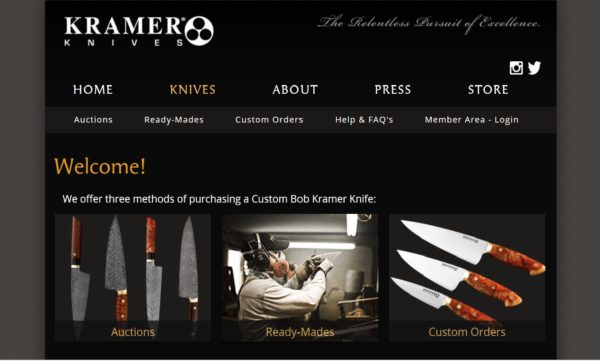
Bob Kramer of Kramer Knives maintains a website that reflects his appreciation of metallurgy and how it contribute to his “effortless art.” A website is an “experience” that should reflect the maker’s philosophy, style, story. Kramer’s does all that, which is why he come up third in a search for “custom knifemaker,” right after Arizona Custom Knives.
Are You Actively Growing Your Business?
You’re comfortable with your style and level of craft. You’re 100 percent committed to knifemaking as a full-time trade. You’re making money at it. You may be maxed out, or you may go through times of feast and famine. You, perhaps more urgently than other custom knifemakers, could benefit from a website sooner rather than later.
Whom Do You Want To Reach?
Honestly assess your style of knives and ask yourself who would be interested in your work? That can be a distasteful question when you solely want to focus on your art, but it’s not just about selling knives. It’s about tapping into the community that will be assessing and judging your pieces.
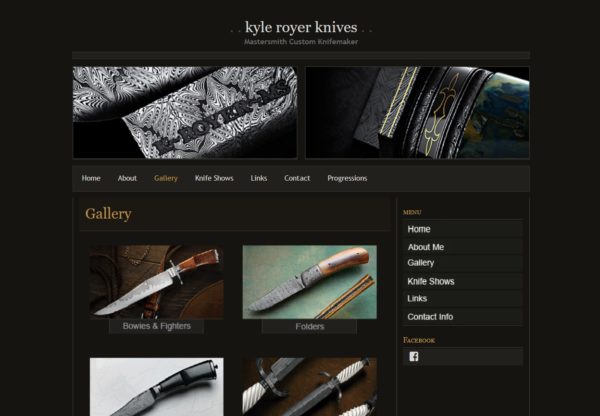
Kyle Royer Knives‘ website is full of professional photos by Caleb Royer and every single one of them includes full specs. Kyle is an American Bladesmith Society master smith. He was 23 when he wrote his About page. He’s 27 now. Is it perfectly grammatically correct? No. Is it genuine and true to him and his knifemaking journey? You bet. Your knives need to be perfect, not your writing. Write as you would speak.
The Collector
If your folders are carried in a velvet pouch or arranged on a display shelf, a website, of course, is essential. You already know this. You’re spending the majority of your time in your shop or socializing with your clientele in the normal course of living your life. However, “owning” your name may not be enough in a waning high-end knife market. Is your site attracting the gentleman who wants something to go with his watch, the art collector who may be looking for a new-to-him art to explore, or neither. We’ll be exploring more about best practices for your site in an upcoming Marketing For Knifemaker’s article.
The Brotherhood
If you’re making tactical knives for the military, for law enforcement or for civilian self-defense, then you need a website, period. This category also includes trainers and balisongs for combatives instructors and practitioners.
Dawson Knives comes up fifth in a “custom knifemaker” online search. This site is both exquisite art and an homage to the military. However, it’s high ranking is due in no small part to its depth. Check out its active blog, The Daily Grind.
The Outdoorsman
If you’re making knives and tools for bushcrafting, camping, hunting, fishing or survival, you, too, need a website. Obviously, there is crossover in these categories. Your Rambo-esk survival knife may be totally tacticool, so you’ll want to appeal to The Brotherhood as well as The Outdoorsman.
The Everyman
The everyman carries a knife for everyday chores, or keeps one in her purse, or has a few in a kitchen “junk” drawer. You absolutely need a website to reach this person.
The Cook
How can you convince people who cook that you can make a knife that will perform as well as an expensive classic, but in a color other than black? Answer: a website.
How Do People Find You?
Word Of Mouth
There’s still 30 percent of the adult US population (250 million) that is not online. That’s where you stake your name on the quality of your product and never let it out your door if you’re not 100 percent sure of it.
You also learn to ask. You ask your happy customers to write reviews for you. You ask your less-than-happy customer to honestly share his disappointment and how you went above and beyond to not only make it right, but make it better than all right. You ask fans to tell their friends about you. You ask them to share your posts.
Article Appearance
Print publishing is indeed on the decline, but digital publishing is coming into its own. Articles in which your work is included can give you a boost in search engine optimization because it’s packaged with over 300 words and includes links, images and video—all things that help rank that article, and thereby your knife images, higher.
Social Media
If you’re on the cusp of growing larger, you undoubtedly have social media well underway. We’ll be doing articles on each platform and how you can best maximize it to get your type of knives in front of a broader audience.
Online Search
This is where we want to focus. In order to meet new customers where they are, you must put yourself in their shoes. Sit down at the computer and think like a non-knifemaker. That can be a challenge. By focusing on Facebook and Instagram, knifemakers are talking to each other and customers who already know them. There is so much overlap that the circle of influence has shrunk to solely each other and fans. Fellow knifemakers are the best source of cheerleading, constructive guidance and fellowship, but they can’t help you reach those outside the knife industry.
Mike Jeffries of 2 Birds Metal Works in Louisville, Kentucky, will often throw out marketing questions for knifemakers on Facebook. Some of the feedback he receives is invaluable, though you should always verify current marketing practices because things change quickly in the digital marketplace.
Make a list of the things that people might type into a search engine to find you. Enlist a non-knifemaker’s input if necessary. Let’s use 2 Birds Metal Works as an example. Mike makes knives to handle your cutting needs “from kitchen to camp.” So, his aim will be to attract the The Outdoorsman and The Cook. Except for current customers and fellow makers, people know neither “Mike Jeffries” nor “2 Birds Metal Works,” so what might they enter to stumble upon Mike’s work.
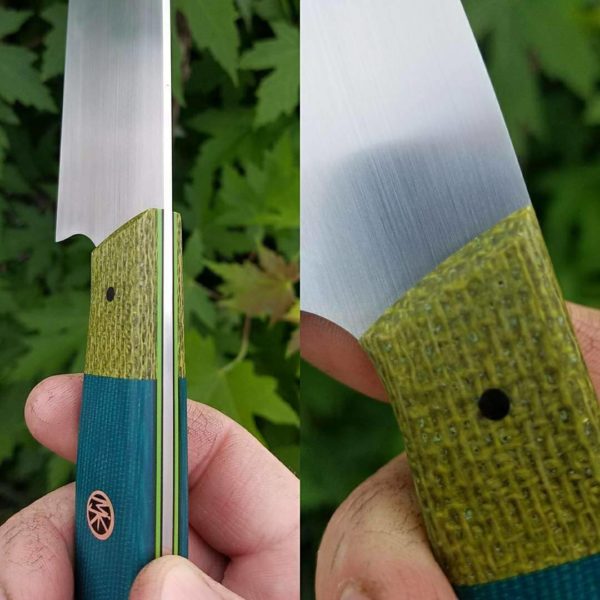
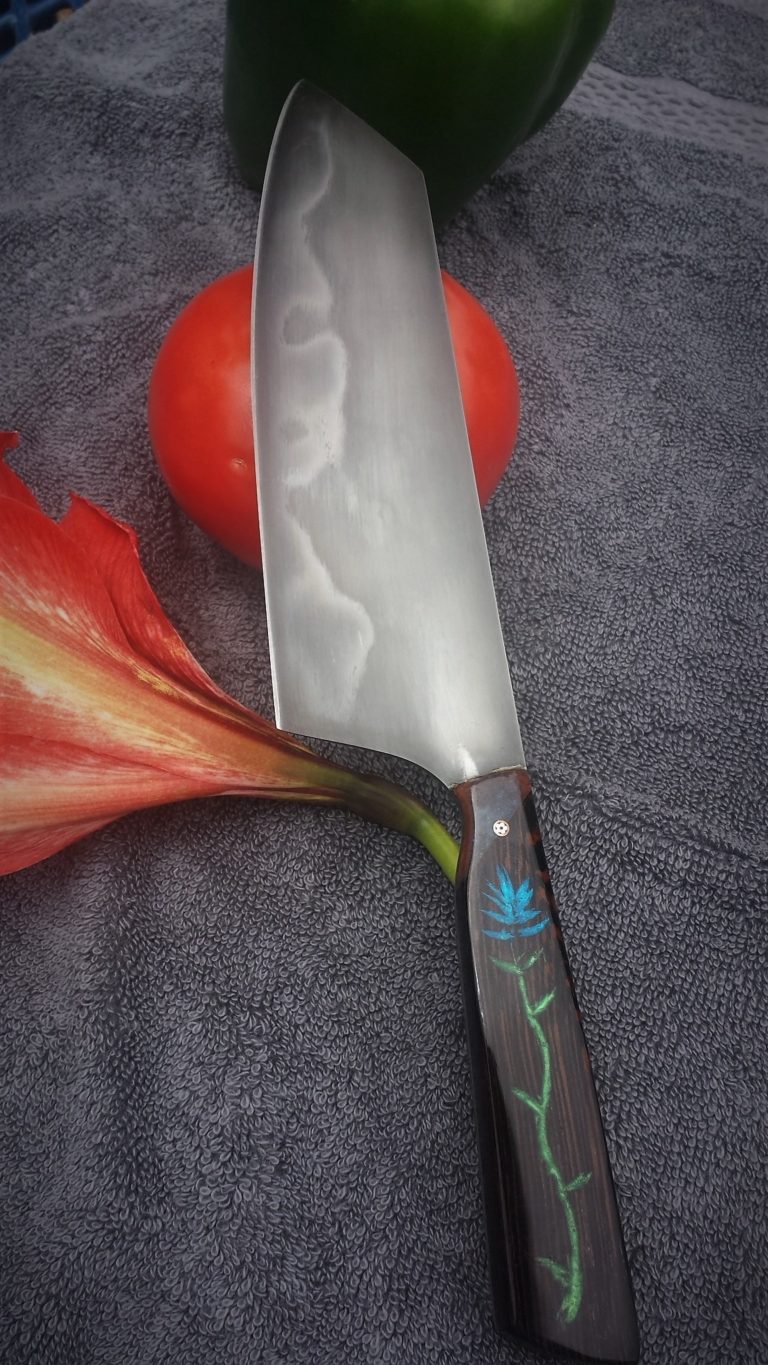
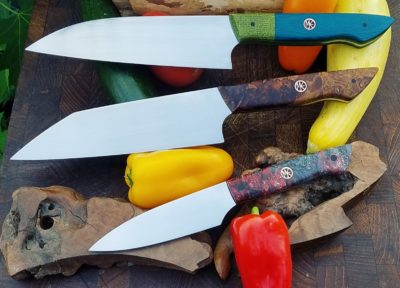
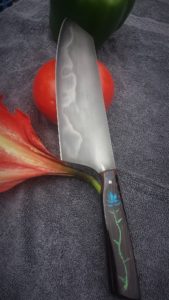
Mike Jeffries’ chef knife has a 7-inch AEB-L stainless blade with a Vintage Blue Westinghouse Micarta handle with Shadetree Emerald Burlap bolsters. The signature pins are made of copper. The overall length is just under 12 inches. Maker’s list price: $300-$380. Contact Mike Jeffries, 2 Birds Metal Works, [email protected], 502-592-4240, on Facebook at 2 Birds Metal Works & Mike Jeffries Knives.
As clumsy as that sounds, that’s what you want to have happen. Mike offers a chef knife with a teal blue and lime green handle. Let’s say a woman is searching for a housewarming gift for her sister, whose favorite color combination is teal and lime. She types in “teal and lime gift.” That’s it. Nothing about knives in the equation. If Mike has written a full caption to go with an image of his knife on his website along with the suggestion that it makes a nice gift, he has just increased the chances of his site coming up in a search. If he also describes in a blog post how he made this knife and covers his reasoning behind his color choices as well as all his other creative decisions, he’s gone even farther to ensure his site has a chance of coming up on a vague search like in our example.
Is it foolproof? Of course not, but you’re honestly playing the search engine optimization game with images and descriptions and blog posts. If you do that for each type of knife you make, over time, it will pay off in higher rankings for a variety of searches.
Isn’t Social Media All A Maker Truly Needs?
In A Word, NO!
Digital marketers had predicted that websites would give way to social media and email would die at the hand of Messenger. That’s not how it’s turned out.
The only way your Facebook profile will come up in a online search is if someone actually searches for your name or company name. You’re trying to reach people who have never heard of you and don’t even think of knives as an option for, say, gift-giving. You could argue that you would never want your art falling into the hands of someone who can’t appreciate what a custom knifemaker does. OK, but what if by getting a knife into their hands by whatever means, you create an impassioned fan, who then tells her friends how brilliant the colors were, how perfectly the knife worked, how great it felt…
Content Is Still King
Words still matter in this hashtag world. “Content” refers to anything used to fill an article, social media page or website. It can be writings, visuals in still or video form, and links, but in order for visuals and links to have weight, they must have words associated with them. And you need a place to park your content where it’s forever accessible, and not lost on some never-ending feed. (Saving posts helps you, but not your potential customer.)
How can this be? Isn’t Facebook pushing video? You bet. It’s trying to be You Tube, which is owned by Google, and although FB has a more engaged audience, more people visit You Tube in a month than visit FB. Efforts are probably underway to extract video content so transcriptions can be combed by search engine robots. But even that won’t help if a maker is just silently showing all sides of a knife. We’ll talk more about video and how best to harness it in another Marketing For Knifemakers article.
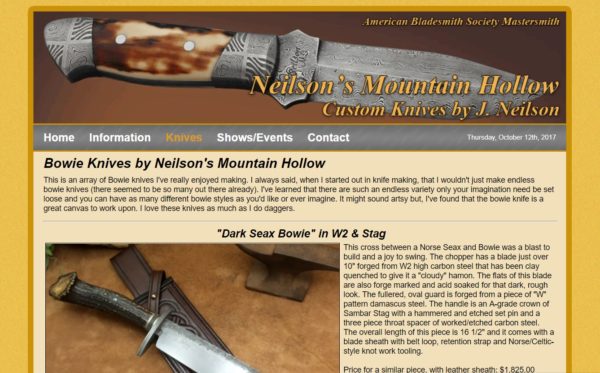
J. Neilson, American Bladesmith Society master smith and “Forged In Fire” judge, has a website that makes exceptional use of photo description. Knives on the Neilson’s Mountain Hollow site not only get a list of specs, but a full description of inspiration, construction or something else memorable about the build.
So back to words. Every day the Google bots do their thing, combing articles, photo titles and captions, video titles and descriptions, links and meta data fields, to rank websites according to relevancy. Ever wonder why video is embedded in an article, or why slide shows come with accompanying written commentary? Words, dude, words. The term “blog” may be passe, but blogs still matter—greatly. You are reading one. We call it an “article,” but it’s still an article under my name and the Mightier Than The Sword banner. Every single example of a website that comes up high under a search for “custom knifemaker” includes either a blog or highly descriptive photos captions. J. Neilson’s blog ranks high in a search for “custom knifemaker” not because it’s filled with “Forge In Fire” references, but because of his depth of description on each of many, many knives.
Battling Anti-Knife Bias
As many of you are fully aware, there is definitely bias at Facebook and it’s against weaponry. Selling of guns and knives is not allowed, so don’t put prices on your marketplace items. Even though they encourage you to boost your post, if you ever try to, you’ll be informed that what you’re selling goes against FB policy. So, what’s a custom knifemaker to do? Play the game, organically and on your own terms—with a website. Your post to Facebook lasts about 5 hours; your blog post/article has a 2-year lifespan.
What does “organic” mean, anyway? It refers to building content naturally and not paying for ads to boost results. It’s about “articles” or “blog posts” on your website, photos, video and links that all work together to speak on a specific subject. The words are compiled naturally, and not “stacked” repeatedly in an unnatural cadence.
Normally, Mike Jeffries focuses on “kitchen to camp” knives, but he decided to try an old-school American Bladesmith Society-style knife, but with a full tang. The Cowboy Fighter even caught the eye of Jason Knight and Murray Carter when they stopped at the 2 Birds Metal Works table at BLADE Show 2017. A blog post would be the perfect place to tell this knife’s story and what it meant to Mike on his knifemaking journey. The 7 3/4-inch blade is made of W2 steel with hamon. The handle is walnut burl with unidirectional carbon fiber bolsters. Overall length is 13.5 inches. Maker’s list price: $750 with leather sheath by Two Drunken Celts Custom Leather. Contact Mike Jeffries, 2 Birds Metal Works, [email protected], 502-592-4240, on Facebook at 2 Birds Metal Works & Mike Jeffries Knives.
Let’s say you have a blog on your WordPress website. You should aim for a minimum of 300 words per post to optimize search engine optimization (SEO). You explain what you’re working on that week. You mention blade lengths, because people use blade lengths as part of their search criteria if they’re in a state that limits them. You mention steel, your process, the handle material, including color, price, what comes with it, how it is shipped, and how people can put in an order for one. You give shouts out to your suppliers and mentors or supporters on the project then share it to Facebook.
You will still be speaking to your established audience while increasing your chances of being picked up in a generic search. Pretend you are talking to people who know nothing of custom knifemaking, because you are. Take the opportunity to educate as you go, minimizing abbreviations and lingo. You’re broadening and educating your clientele with each post. You write, “Everyday (one-word adjective) carry, abbreviated as EDC, refers to something you carry every day (two-word noun).” See how I did that? (Laugh here.) At the end of the week, you write another post sharing how you did. You include pictures of your works-in-progress, rather than “WIPs,” and a finished example. You share your successes and challenges.
Instead of saying “click here” for a link, link to the applicable words. Never forget the “web” part of the worldwide web. Link to others when appropriate, but do not link to everything. You don’t want to pull your potential customer away too frequently. Pick and choose wisely, and be sure to set the link so it opens in another window so they can easily return to your site. All of this helps to rank you higher in searches. It’s more time-consuming than FB or IG, but can be done less frequently, and over time, garners stronger returns on time spent.
5. Who Controls Your Website Experience?
Guess what? You don’t get put in a time-out on your own website. You control your content and exactly how it looks and reads. You can build a photo gallery of finished work that includes a written description with all specs and includes the prices—imagine, no Facebook jail! You can have an About page that gives your journey as a person and as a knifemaker. It doesn’t have to be long, but it should be at least 300 words and include images from benchmarks in your life. People are buying a part of something you’ve poured your heart and soul into; they want to know who you are.
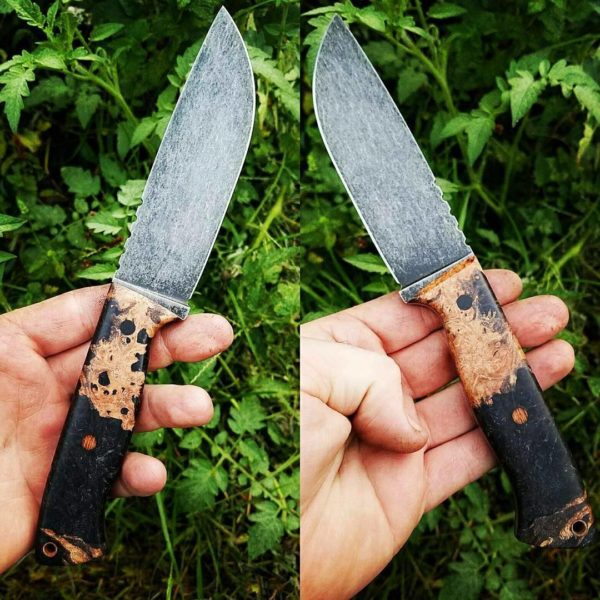
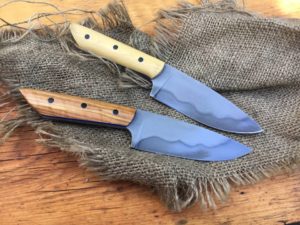
This is a good time to mention that you can’t take too many great photos of your finished work, but bad photos hamstring your marketing, period. Mike Jeffries takes some nice photos, but not enough of them to have samples of everything he’s made. His Campcrafter model is his flagship camping knife. It has a 5-inch blade of 80CrV2 high-carbon steel. Overall length is just over 10 inches. This one has a black and burl handle. Maker’s list price: $250-$325. Contact Mike Jeffries, 2 Birds Metal Works, [email protected], 502-592-4240, on Facebook at 2 Birds Metal Works & Mike Jeffries Knives.
You can include platforms to sell directly from your website. You can and should drive traffic to your social media sites and include your website on your social media profiles, but you are in charge of your website content, for better or worse. Best of all, you can include at the very least, a newsfeed, but hopefully you’re seeing the benefit of a blog, so you can share industry new that your customers might benefit from, including your own promotions, giveaways and waffles (sorry, a website won’t change state laws). A blog within your site gives you a platform from which to explain thing about your craft, offer your opinion, talk about your life as a knifemaker, projects you have in mind, specials you’re running, shop tours you’re hosting, hammer-ins you’re organizing. It’s a place where you can put in words what you normally say in a video.
“But I hate writing. That’s too much of a time-suck.” Agreed. Perhaps you know someone who likes it. You can offer them short money to do weekly posts for you. “Arrgh, a money-suck.” Try to look at it as an investment in growing your business. I see plenty of knifemakers who can’t even Share a post. Their buddies do in 2 seconds what they couldn’t figure out in two weeks—that’s an actual quote from one of them. Trade your buddy a knife for an equal value of his digital expertise.
What Does Your Knifemaking Destination Look Like?
Ranking higher in online searches is a long-term endeavor. It takes consistently delivered content over the course of an extended period of time. Google is no more friendly to weapons than Facebook, but all knifemakers are playing under the same set of rules and the ones with websites and blogs are being rewarded.
Make a list of all the terms you want to “own.” Start building content around those terms, and your website will populate itself into relevancy. Remember, it sometimes happens in life that the most gifted are not always the ones who obtain success with their given talent. It is the ones who can take their art and persistently and accurately market it, who will garner both recognition and thereby profitability.
At the same time, if you’re constantly sucked into the money and time trap of marketing, there will be no knives to market. Use your time at the forge and the grinder to think. Start a notebook of both your big vision and the baby steps necessary to get there. Then enlist the help of people who truly get who you are and what your knives are about, so that you are free to make more knives.
A Digital Subscription To BLADE Is The Answer
You can read your digital issues of BLADE Magazine anywhere you have your phone, tablet or computer, and there’s no need to find storage for all your old issues.
If piling-up issues of magazines seems like a waste to you… If you feel like you don’t have time to read a magazine… If you like the stories we offer in BLADE, but want a more economical option, then a digital subscription is the answer. An annual subscription to BLADE is $17.98, $4 off the print price.
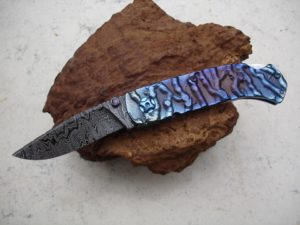
1. This everyday carry folding knife by Tim Lambkin is lightweight at 3.2 ounces. It measures 4 inches closed and is 3/8 inch thick. Tim welded the pattern, did the filework inside and out and flame-anodized the titanium scales to add the wow factor. The screws are the types used in hip replacements, anodized for color! The thumb stud is mother of pearl. Makers List Price: $900-$1000 Contact http://chopsknives.com, [email protected],903-926-7447. (Ericka Lambkin image)
Has a card, flowers and brunch become the routine for Mother’s Day? Maybe you’ve tried getting creative with gift-giving but it wasn’t well received, so you’re sticking with what works. Dull! Where’s your sense of adventure? What about giving the mothers in your life something sharp and pretty? Just like her! Let’s look at 20 custom knives moms want for Mother’s Day, or any day for that matter.
Isn’t that like giving a vacuum cleaner or an iron?
Yes and no. We’re not talking boxed sets of table cutlery or mass-produced blades, regardless of their quality and usefulness. We’re talking 100-percent hand-crafted custom knives. If you decide on a chef knife, for example, it could be construed as encouraging cooking, but the knife will be so beautiful, so smoothly made, so significant in her hand, she’ll overlook the “get cooking” aspect and start searching for things to julienne. You may find her looking for ways to display her knife not only as an easily accessible tool, but as a work of art. It’s not going to be tossed carelessly into a drawer, that’s for sure.
Hmmm. I’m not so sure.
Ok. What about knives for self-defense? Or engraved knives in pearlesence or vivid colors that mom will want to hold, admire and show off? Knives for shaving? The cowgirl in your life could use a custom livestock castration knife.
Excuse me!
Just look. These 20 custom knives will be well received by all types of mothers. Trust me. Now these knives take time to make, so if you see something you like, contact the maker and if he or she doesn’t have one ready, put in an order for a birthday or the holidays. It’ll be worth the wait. I promise.
Neck Knives
Neck knives are compact blades that are drawn in a downward motion from a sheath on a necklace-length lanyard or looped onto a bra like a gun holster. Moms can use this for self-defense or as an everyday carry knife. Various blade styles are frequently offered.
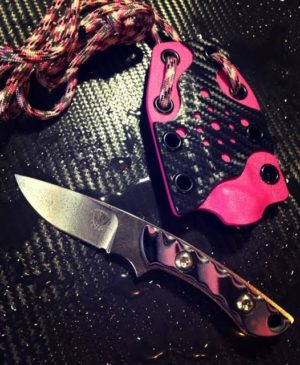
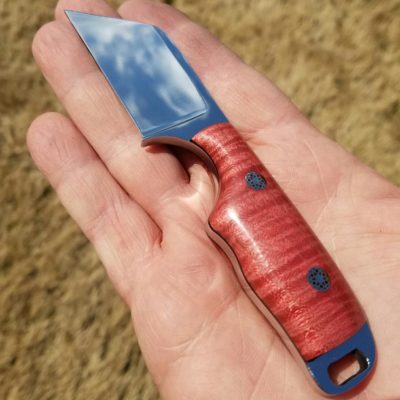
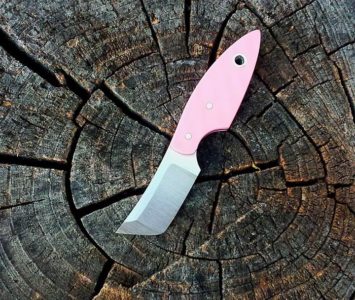
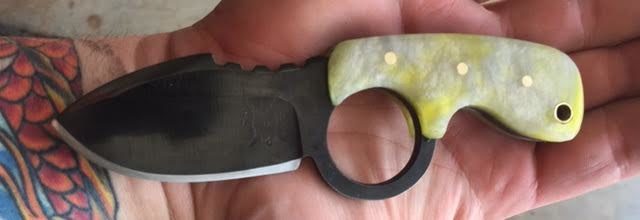
2. This necker by James Huse has a 2 1/8-inch drop-point-style blade made of A2 tool steel. Overall length is 5 1/8 inches. The handle is pink and black G10 with matching Kydex sheath. You release the knife with light thumb pressure and a downward draw. Maker’s List Price: $165. Contact www.huseknives.com, [email protected] or message to Huse Knives on Facebook, @huse_knives on Instagram.3. Pete Sloan’s neck knife is made from 440C stainless steel with a cleaver-Wharncliffe blade design. The handle was crafted using stabilized pink curly maple. Maker’s List Price: $150. Contact www.sloancustomknives.com, [email protected], 731-225-9209 or message on Facebook at Sloan Custom Knives.4. This neck knife by Travis Fleming has a trailing-point tanto blade design made from Nitro-V, an AEBL steel by New Jersey Steel Baron. A pink sheath completes the set. Makers List Price: $160. Contact [email protected] or message at Fleming’s Fabrications on Facebook.5. Denny Furey makes these three-finger Quick Defense Knives with an index finger ring for sure pistol-grip draw from under a top or from between buttons on a blouse. The 2.5-inch blade is made of high carbon 1095 with a blued and polished finish. The handle is made out of Voodoo Resins with brass pins and lanyard tube. Makers List Price: $160, includes sheath. Contact [email protected], 405-642-2198 or message on Facebook at Furey’s Urban Combat Knives.
Pretty Knives
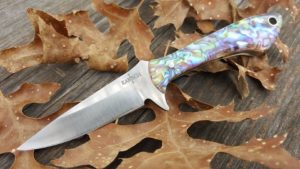
Sometimes it’s all about the eye candy. Holding something pretty, showing it off, is a luxury mom is unlikely to allow herself either in time or cost. But, hey, beautiful knives can also cut a piece of string or open a box, and every time she studies the engraving, the jewel- and pearl-like finishes, the intricate designs in the pattern-welded steel, she’ll be reminded of how much she is treasured.
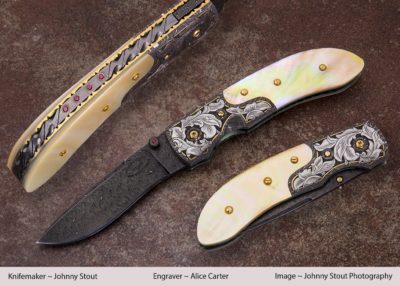
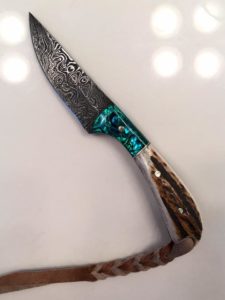
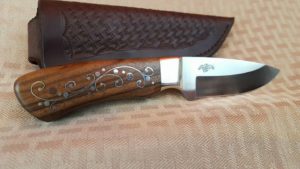
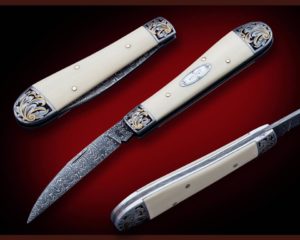
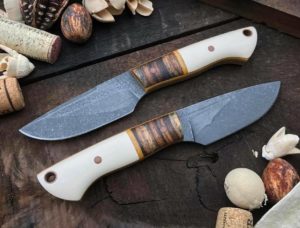
6. This Johnny Stout LeGrande Fine Folder has a 2 1/2-inch pattern-welded blade, gold lip mother of pearl handle scales, engraving by Alice Carter and a precious rubies inset in the backspacer and in the thumb stud. Closed, the knife measures 3 3/8 inches. Makers List Price: $3200. Contact http://stoutknives.com, [email protected] or 830-606-4067.7. Karen Jones made the 3-inch blade on this Work Pony out of raindrop-patterned steel. The bolsters are green abalone, the spacers are brass and the scales are elk antler. The 7-inch knife is “made to be used and abused in real life. Pretty is as pretty does,” Karen added. Makers List Price: $250-$275. Contact [email protected], 682-777-1193 or message at ThunderHorse Blades on Facebook.8. This Devin Bliss Bobcat has a 3.75-inch blade made of 1095 steel, walnut handle with mosaic pins and silver wire inlay and a nickel silver bolster. Its overall length is 8 inches. Makers List Price: $560. Contact [email protected], 903-736-3052 or message at DB Custom Knives on Facebook.9. Ben Kabisch made this for an emergency room nurse who works the night shift. She wanted something “cute, light and concealable.” The blade was made from 1084 carbon steel and the scales are an acrylic abalone. The blade is 3.5 inches and the overall length is 7.5 inches. Makers List Price: $175 Contact 940-733-6404 or message on Facebook at Ben Kabisch.10. This Raymon Earl Hunt Swayback Jack has a 2 3/4-inch Wharncliff-style blade, hand-finished and with a swedge. The handle scales are pre-ban elephant ivory with gold pins and stainless bolster. The inlaid engraving is by Bruce Christiansen. Maker’s list price: $1800 with sheath or purse pouch. Contact 214-507-0896, [email protected], or visit www.3hsknives.com.
Kitchen Knives
Whether the kitchen is in an urban apartment or at a campfire in the woods, chef knives that make food preparation more enjoyable, either by their ergonomics or their beauty, preferably both, are welcome gifts at Mother’s Day or on any holiday. This category also includes skinner/meat processing knives for the huntress in the family.
11. Mike Jeffries’ set of chefs knives includes two in AEB-L stainless steel, one in vintage Westinghouse Blue Micarta (rare stuff) with green Shadetree Burlap bolsters and the other in spalted maple burl. The paring knife is made of 52100 high carbon steel with dyed boxelder burl. Makers List Price: $900/set. Contact [email protected], 502-592-4240, on Facebook at 2Birds Metalworks and on Instagram @2birdsmetalworks.12. Nichole Lindstrand’s Modoc model knives are made from 15N20 steel with a drop-point blade, ideal for skinning and processing game. Overall they measure 7.25 inches with a cutting edge of just under 3.5 inches. The handles on these two are made of olivewood and Bone Micarta with blue G10 liners and carbon fiber pins. The makers list price is $165. Contact [email protected], 530-515-6082 or message on Facebook at Lindstrand Custom Knives.13. These 7 1/2-inch kitchen/camp knives by Carson Riley Marquis are made with 1095 steel with a differential heat treatment, acid etched/stonewashed finish and hammered-texture flats with flat grinds. The handles are dyed and stabilized zebra wood bolsters with Ivory Paper Micarta laid atop and divided by Natural Linen Micarta. Pins and lanyard tube are also Natural Linen Micarta. These are right-sized for meat processing and food prep. Makers List Price: $195 each with leather sheath. Contact http://crmarquisknives.bigcartel.com, 903-316-2824 or on Instagram @C.R.Marquis.Knives.14. This Thai-inspired kitchen knife by Todd Stracener is similar to a Japanese bunka. The 6 1/2-inch blade is made of 1095 steel and the handle is made of wenge wood with a resin inlay, The knife is 11 1/2 inches overall. $250. Contact on Instagram @thezeep or message on Facebook at Stracener Knives.
Everyday Carry Knives
Everyday carry, or EDC, knives are ones that you carry on your person or in your purse for both self-defense and general common use. They can be of the fixed-blade variety that you keep in a leather, Kydex or other molded-plastic sheath. Or they can be of the folding type and come with a clip that you can use on your pocket or inside a skirt or pant waistband. EDC makers strive for thin, small and light. They’re often tactical looking, but mom-friendly models come in everything from natural tones to bold and subtle colors.
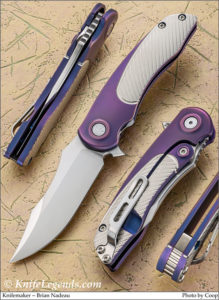
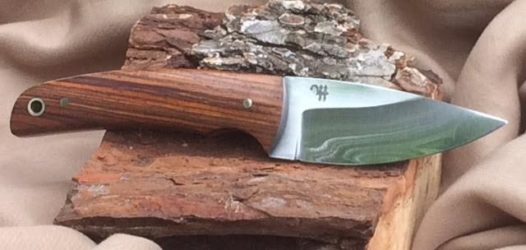
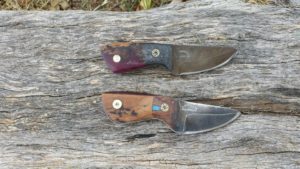
15. Brian Nadeau’s Cyclone Bowie Flipper has a 3.5-inch blade made of CPM S35VN steel. The pivot is constructed with a stainless ball thrust bearing with AEB-L lock. It has a textured, anodized-titanium frame and aggressive gimping for a secure grip in any weather. The pocket clip is 410 stainless steel. Makers list price: $995. Contact www.knifelegends.com, www.sharpbydesign.com or [email protected].16. Shane Hill made this knife for a woman who wanted to have a knife in her car with her. The 3-inch drop-point hollow-ground blade is 1095 steel; the handle is make of cocobolo wood. Overall length of just short of 8 inches. Makers list price: $165. Contact [email protected] or message Hill Knife Works on Facebook.17. These Mini Me knives by Charles Hawkins have 2-inch hollow-ground blades made of pattern-welded steel from Alabama Damascus Steel. The top one has an Alumilite resin and wood handle with carbon fiber bolsters. The bottom one has a terminate wood with box elder handle with Alumilite resin bolsters. Although these knives are technically skinners, at 4 1/2 inches overall and with a clip-on sheath, something tells me they’re more likely to be used as an everyday carry. Maker’s list price: $100-$125 each. Contact www.hawkcustomknives.com, 325-947-7875.
The Right Knife For The Job
To do the job right, you need the right tool. You wouldn’t use a router to mix cake batter, right? (I can tell you’ve thought about it though.) You wouldn’t use a flat brush to curl your bangs, right? OK, maybe. A girl’s gotta do what a girl’s gotta do. Well, it’s the same with knives. Aside from a survival situation, you wouldn’t bushcraft with a paring knife or filet a fish with a tomahawk. Here are just a few of many specialized knives that might be perfect for a mom in your life.
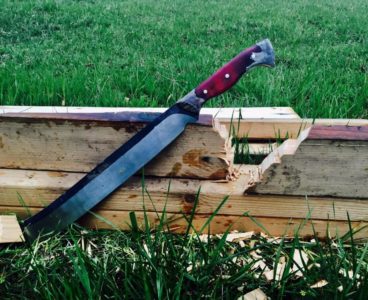
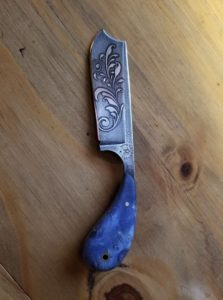
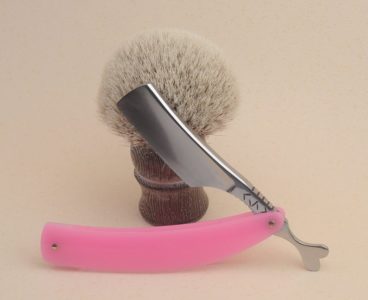
18. Eland Green made this GOLIATH chopper from 5160 tool steel and left the flats black after the heat treatment. The handle is a wood-resin combination. This is a worker for the gardening mom or for chores around a camp, farm or ranch. Makers list price: $600. Call [email protected], 940-736-8333 or message on Facebook at Lost Wood Knives.19. Becky McFall Rodriquez made this teardrop-handled livestock castration knife from a Travis Payne idea. Its 3-inch blade is acid-etched O1 tool steel. The handle is fashioned from blue-dyed box elder burl. The knife is 6-inches overall. When a lady’s doing dirty work, she should have a pretty tool. Makers list price $220-$250. Contact [email protected] or message on Facebook at Rafter M Custom Knives.20. Wet shaving is making a comeback, mainly for men, but also for women. Bruno van Dooren makes a 7/8-plus-inch wide round-point blade from O2 carbon steel with a half hollow grind. The length of the cutting edge is just under 2.5 inches. This shorter edge makes the razor more maneuverable for female shaving. The point is rounded to prevent accidentally poking through the skin. The scales are Kirinite Starlight Pink with Kirinite Glow in the Dark spacers. The pins and washer are brass. Makers list price is $325; pattern-welded or wootz steel versions are higher. Contact [email protected], www.snailforge.be or message on Facebook at Snailforge.
Bonus
Inside the heart of that special mom there lurks both a queen and a warrior princess, a diplomat and an avenger. She’s a lady with a hard edge and a soft inner core. She may be just the one to wield the Tactigal.
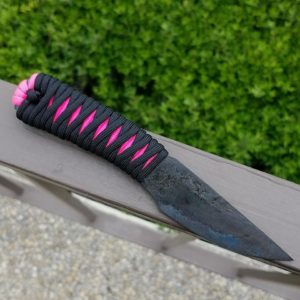
Bonus: Tobin Nieto forged his Tactigal out of 1084 steel to an overall length of 8.75 inches. The blade is a 3.25-inch drop-point style. The pink underlay is 550 paracord while the black cord has had the inner strands removed to allow for a flat Mongolian-style cross wrap. Maker’s list price: $175 with sheath. Contact Stonehaven Knife Works on Facebook or on Instagram @stonehavenknifeworks.
The CRKT Homefront is the Official Knife of the 2017 BLADE Show. This is a highly collectable item and the run is limited to 300. At $70 you can save $29.99 off the $99.99 price, if you order now. The field-strip technology allows you to disassemble without tools. The Ken Onion design won Most Innovative Imported Design award at the 2016 BLADE Show. Here’s where to order your Official 2017 BLADE Show CRKT Homefront Knife.
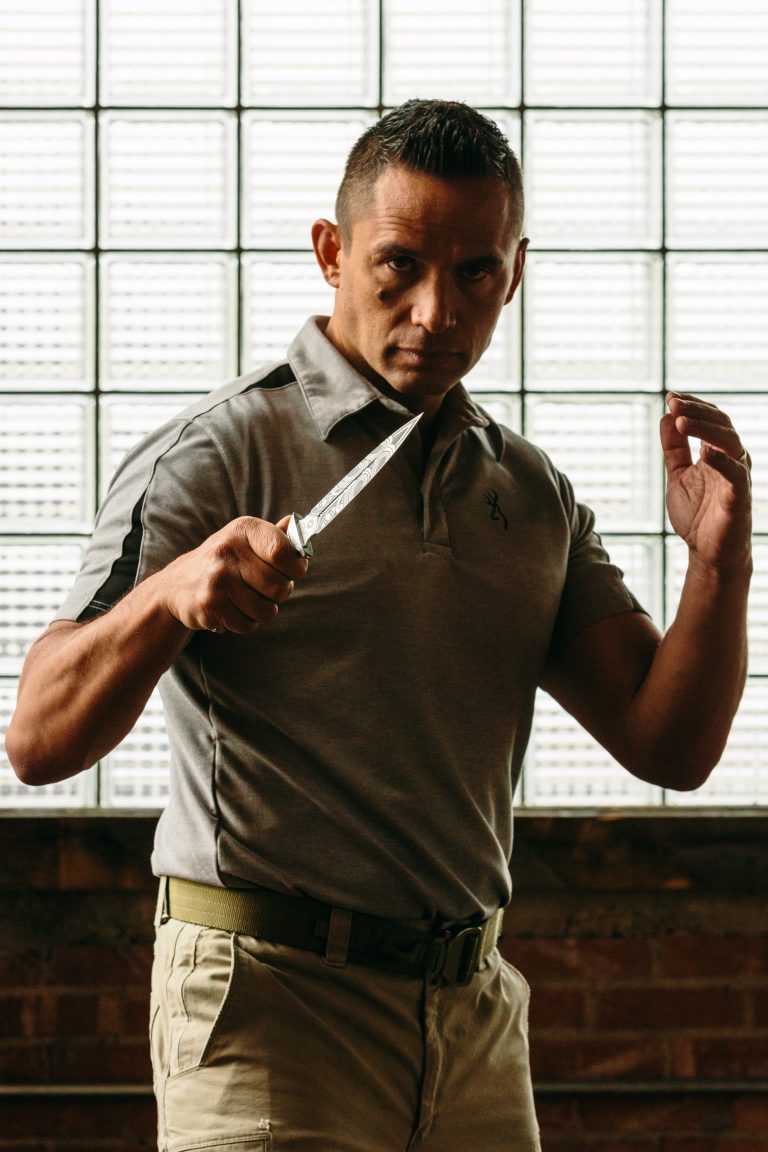
Together with Browning, tactical knife fighting instructor Jared Wihongi has released a signature knife line.
Jared Wihongi’s life and career is built on the warrior spirit of his Maori ancestors. He has practiced martial arts since he was a 10-year-old living in New Zealand, and the Filipino style of knife fighting, since he was 20, some 20-plus years ago. He also has his own signature line of edged weapons through Browning, knives that he hopes inspires “the warrior spirit that lives in each of us.”
Jared has reached the tuhon or master level of Pekiti Tirsia Kali and instructs police officers and elite military operatives in what he calls close quarter force integration tactics, or CQ-FIT. He applies the circular arm movements, the footwork, angling and distance control of Pekiti Tirsia Kali, using empty hands, sticks, knives and even guns, to reality-based training so that police officers are better able to subdue threats, or a special forces member is able to eliminate enemies in close-quarter combat.
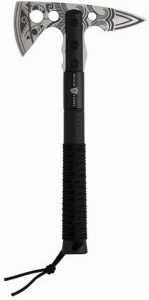
One of Jared’s most interesting-to-watch training sessions involves using a tomahawk in close-quarter fighting. Essentially, the circling motions, overhand and underhand, forward and backhand, are coordinated for attacking your opponent while simultaneously avoiding his advances. The tactical tomahawk in the Wihongi Signature Series is a true straight-handled tomahawk. The blade is made from ¼-inch 420 stainless steel, and the spike end includes a semi-sharpened blade. Three lightening holes are drilled into the blade, maintaining the integrity of the head while removing material to lighten the weapon, making it easier to wield in a fight—or to be fast as lightning.
The Jared Wihongi Signature Series Tomahawk includes acid-etched motifs from the Maori warrior culture.
The forked tang is secured with three flush-mounted screws but is also reinforced by a wide metal ring surrounding the handle. The Wihongi Signature Series Tomahawk carries Browning’s Black Label tactical line logo, along with the familiar Buckmark. The handle is wrapped in paracord, a lighter weight than 550 to eliminating bulkiness, Jared explained.
What is most notable about the weapon is the Maori tribal motif acid-etched into the steel. The warrior culture often carved facial features into woodentaiaha, or fighting staffs. These weapons would include eyes and ornate details that culminated in the familiar out-stuck tongue. Having these designs in a tattoo or engraved on a weapon meant that the warrior was carrying the strength and courage of his ancestors with him into battle.
Jared’s mother hailed from the Lone Star State, but being Mormon she decided to move to Utah. Jared’s father, living in New Zealand, attended a private school run by the Church of Jesus Christ of Latter-Day Saints. He excelled and was granted a scholarship to attend a university, also in Utah. The rest is history. By the time Jared was 1, the couple had returned to New Zealand, raising a brood of six.
Although native New Zealanders only make up 15 percent of the country’s population, the Wihongis lived in a small town that was predominantly Maori. Having grown up the late 1950s when there was little opportunity for Maori youths other than to become farmers, Jared’s father put great importance on education and became a school principal. Two of his sons followed in his footsteps, but Jared and another brother became police officers, with Jared going on to become a SWAT operator for 14 years and counting. He now teaches knife-fighting skills to SWAT teams and elite special forces in the U.S. and allied countries. “I’m an educator too,” Jared said, just in the warrior arts and lifestyle.
Jared Wihongi reviews his tomahawk fighting tactics.
Jared’s father died at a young age and when Jared was 17, the family moved back to the Salt Lake City area. Mormons are expected to go on a two-year mission before attending college. Jared served in the Philippines, which is where he began training in the Filipino knife-fighting arts. He attended college in Hawaii, where he worked as a bouncer, often having to apply his skills in a real-world application. He then returned to the Salt Lake City area and has advanced exponentially in his martial arts practice and his real-world curriculum, which incorporates both the warrior spirit of his Maori ancestors and the premier knife-fighting skills of the Filipinos.
He recommends that anyone who wants to be able to defend themselves against a knife attack seek out a Pekiti Tirsia Kali instructor who offers real-world-scenario training. “Take a sample class,” Jared suggested. “You’ll be able to tell.” Learning to defend yourself against a knife attack is part of learning how to wield a knife in close proximity. Amazingly, this can be done with a tomahawk by choking up on your grip to right under the head. Don’t worry, practice is conducted with training knives. “But you have to make contact to understand knife fighting,” Jared explained
“When I presented this line to the sales force, I asked Jared to lead a haka dance,” said Diane Carver, knife and light product manager at Browning. The feedback she received was intense. Some had never seen the Maori warrior dance that has now been made popular by the New Zealand rugby team and others on social media. Some were inspired to see it live. “I’m so excited about this line,” Diane said.
Jared Wihongi introduces his signature knife line−and leads a haka.
If you’d like to read more about Jared and the four styles of knives in the Jared Wihongi Signature Series by Browning, be sure to pick up the July issue of BLADE® magazine or subscribe.
If you’ve ever wanted to try making your own tomahawk, this digital download will provide answers to your questions.
This digital download is an economical way to learn how to select and forge your tomahawk billet, how to drill and fill the eye hole, how to fit the haft to the head and grind it to rough shape. At only $4.99 this volume by BLADE field editor and ABS master smith Joe Szilaski is a fun and needed addition to your weapon-making library.
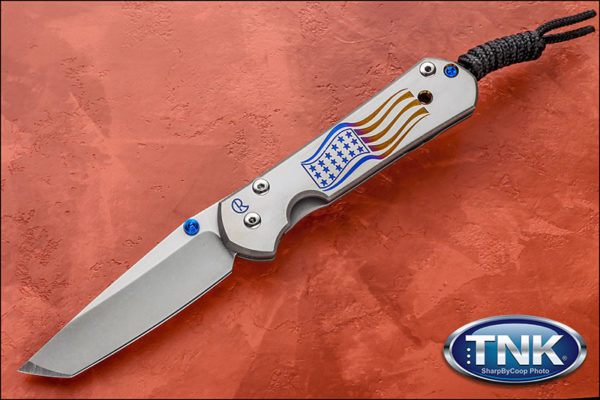
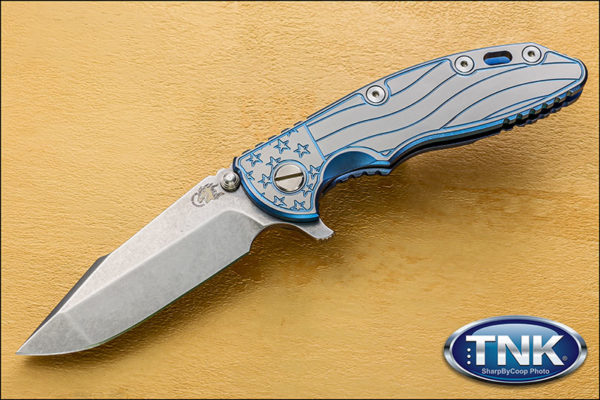
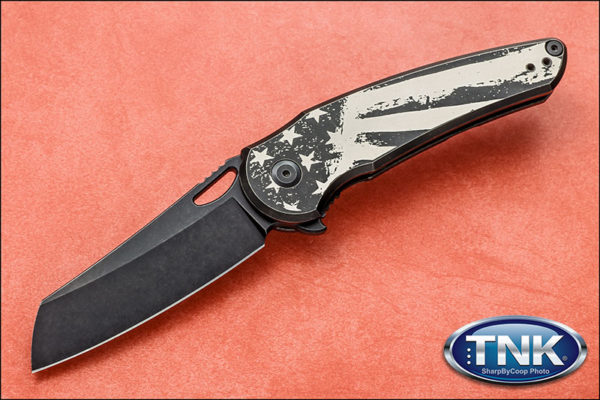
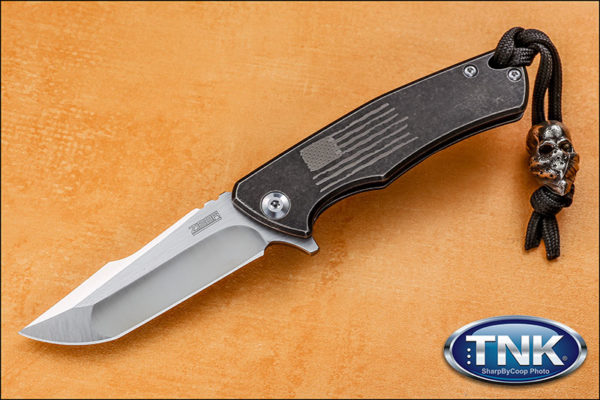
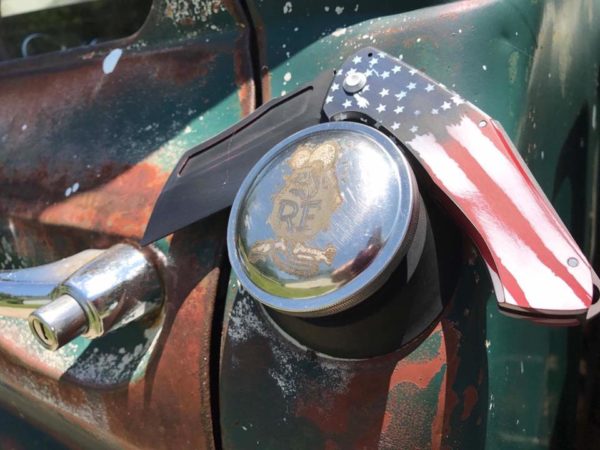
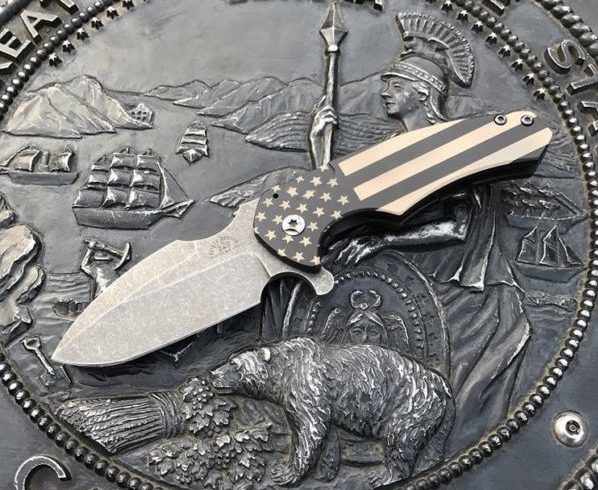
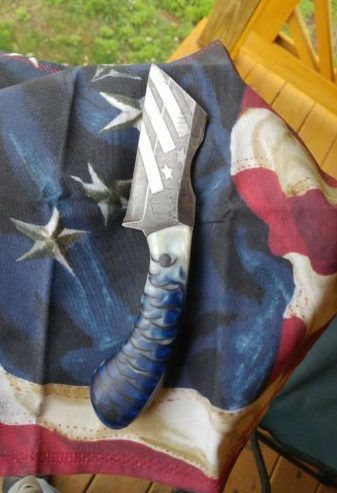
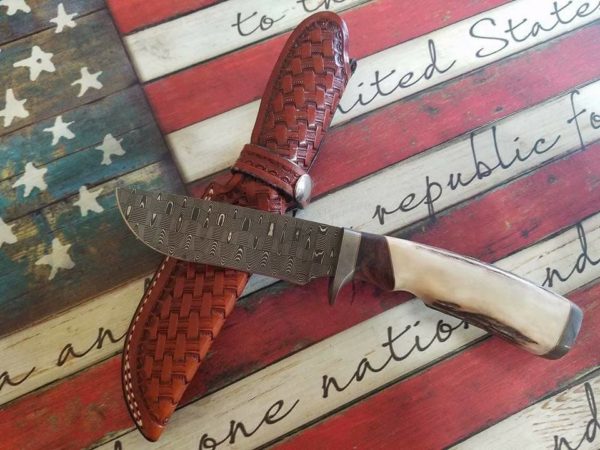
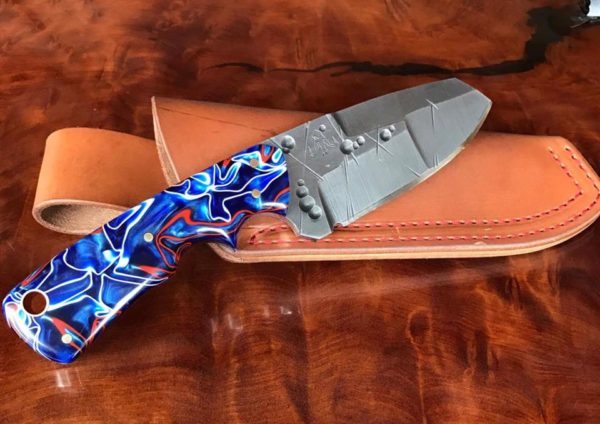
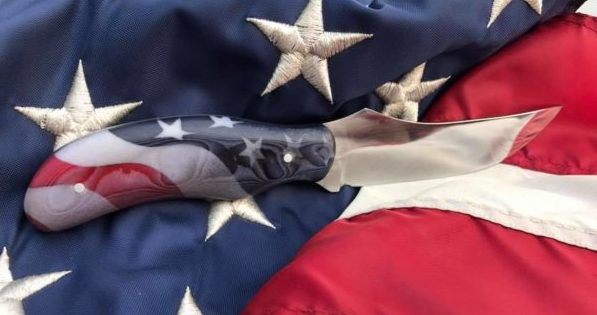
You need a knife. Everyone needs a knife. You know those plastic zip ties that you can’t get the scissor blade under that are lashing down the new grill spatula? Yeah, those. You need a knife for that. You know how it aggravates your sense of order when you’re forced to tear into the plastic shrink-wrapped to your case of water bottles? A nice slit down the center keeps the bottles upright without any unsightly stretches or ragged openings. You know how you try to open impossible-to-open snack bags with your teeth, because who carries scissors, and the seem causes a vertical tear? Yeah, that. You need a knife for that. But what we all need right now are some star-spangled, flag-waving knives that cut great!
6 Selections From True North Knives’ Freedom Collection
We’ll start with six selections from the Freedom Collection assembled by True North Knives. Often these models are available with different options, and of course they’re made right here in the USA. Maker warranties cover defects, but not abuse, so remember, it’s a knife, not a hammer or a pry bar.
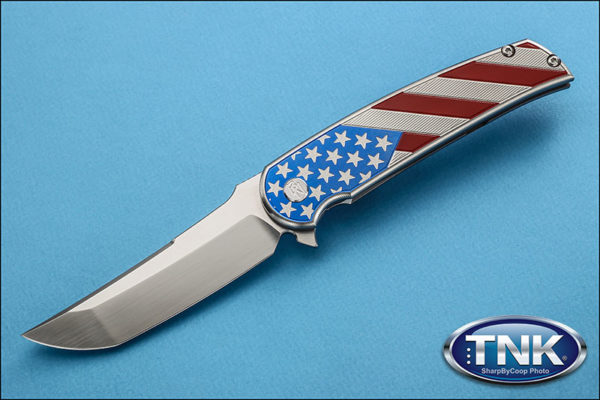
Brian Fellhoelter’s Freedom Frikkie has a 1 3/4-inch blade of stone-washed CPM 154 steel. The frame is stone-washed titanium. Overall length is 4 1/8-inch, overall weight, 1.27 ounces. Maker’s list price: $180. Contact: www.truenorthknives.com.Three-time recipient of the BLADE Show Knife of the Year Custom Best Folder, Brain Nadeau adds the Freedom Hurricane Flipper to True North Knives’ Freedom Collection. 9 1/8 inches overall, it has a 4-inch blade made of hand-rubbed CPM S35VN. The handle is titanium. Maker’s list price: $1250. Contact: True North Knives.Chris Reeve’s contribution to the True North Knives Freedom Collection is the Flag 21 version of the Sebenza 21. The 3-inch blade is made with CPM S35VN stainless steel in a tanto design. The polished titanium frame sports an anodized flag pattern. Makers list price: $425. Contact: True North Knives.Rich Hinderer’s XM-18 Flipper is another knife in the True North Knives’ Freedom Collection. The CPM 20CV blade is done in Hinderer’s Harpoon Spanto design and measures 3.5 inches. The frame is titanium and measures 8.25 inches. Maker’s list price: $650. Contact: True North Knives.True North Knives’ Freedom Collection includes Jake Hoback’s Freedom OSF (Open Source Folder). The 3.5-inch blade is made out of CPM S35VN stainless steel in a modified sheepfoot design. Overall length is 8.75 inches, overall weight, 6.4 ounces. Frame is titanium. Maker’s list price: $550. Contact: True North Knives.We round out the True North Knive’s Freedom Collection with Michael Zieba’s S1 Mini. The 2 5/8-inch blade is made with M390 super stainless steel. Overall it measures 6 inches and weights 2.288 ounces. The frame is titanium. Maker’s list price: $395. Contact: True North Knives.
21 Patriotic Cutters From Custom Makers Across The USA
These custom cutters may take longer to receive, but that’s because they’re all made one at a time in the shops of hard-grinding knifemakers who sometimes have day jobs. They’re worth the wait and will have you hitting every note of “The Star Spangled Banner” when you see how they cut.
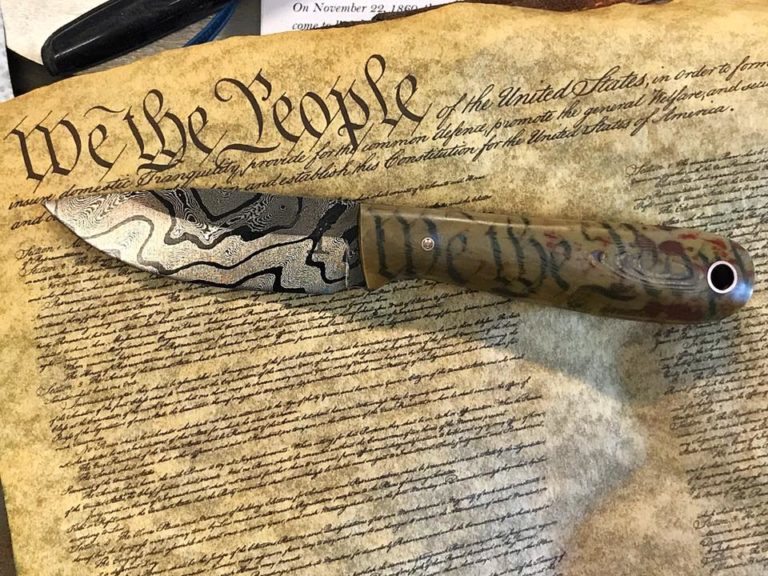
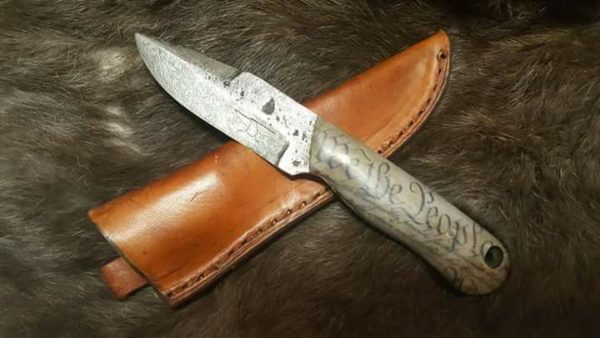
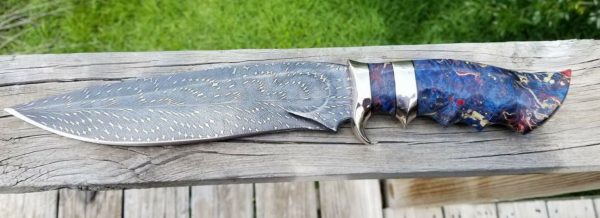
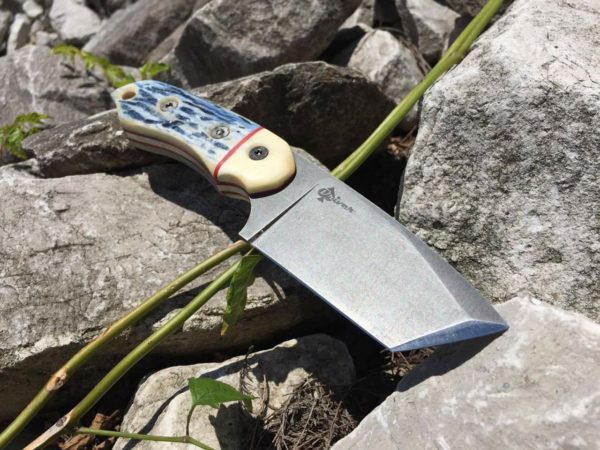
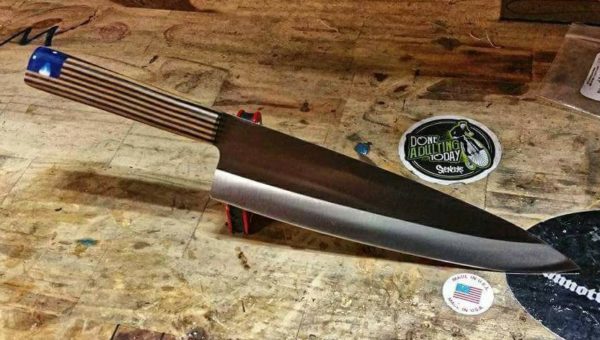
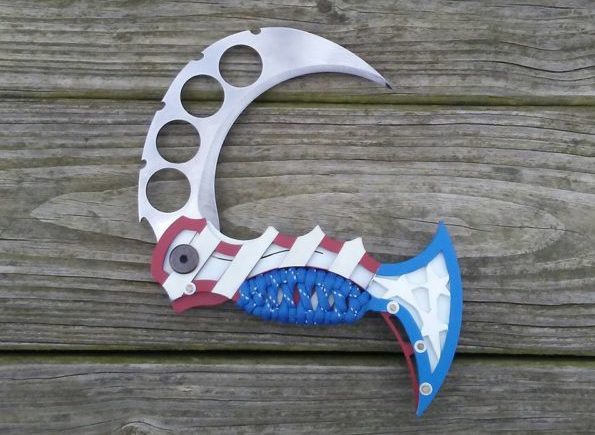
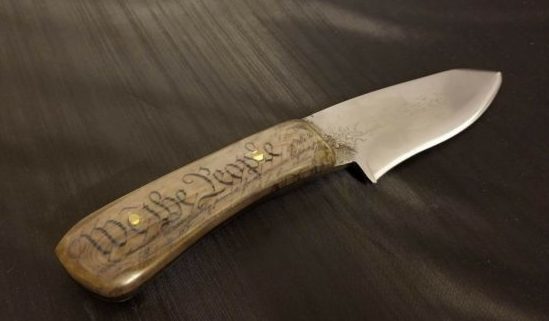
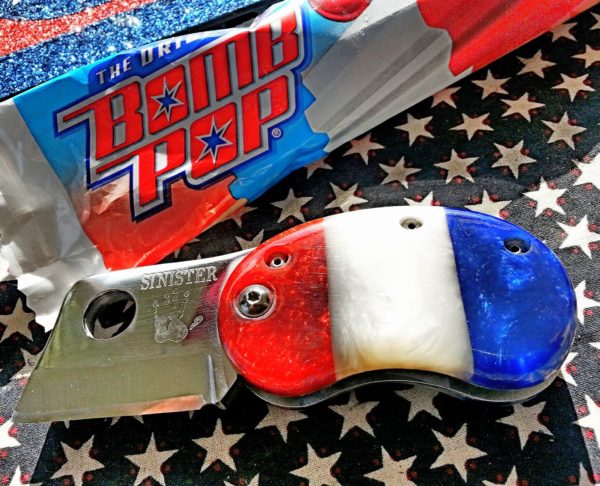
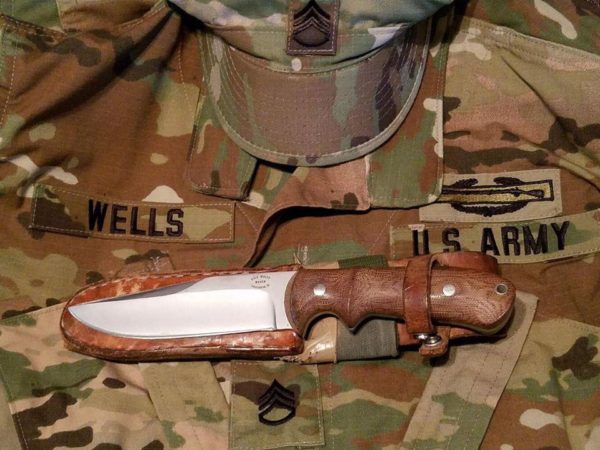
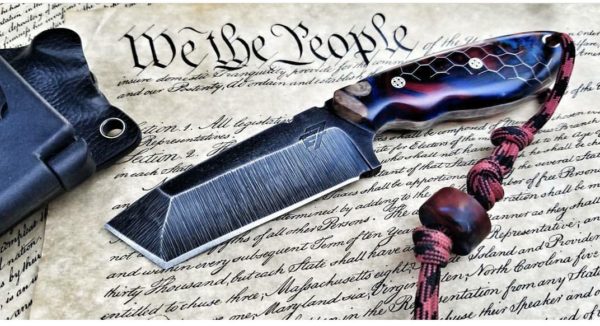
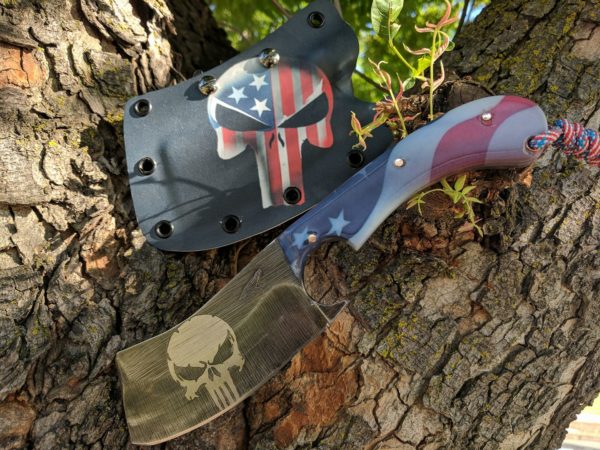
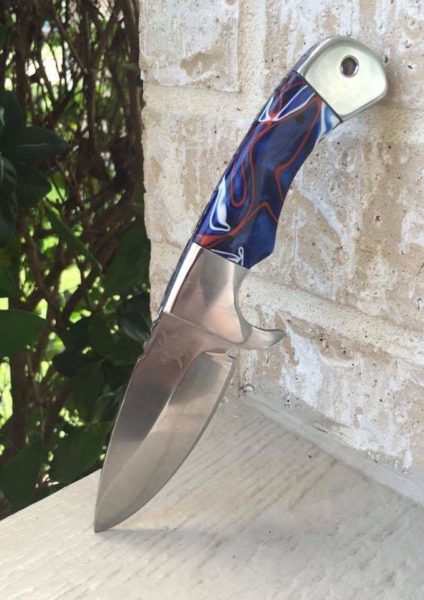
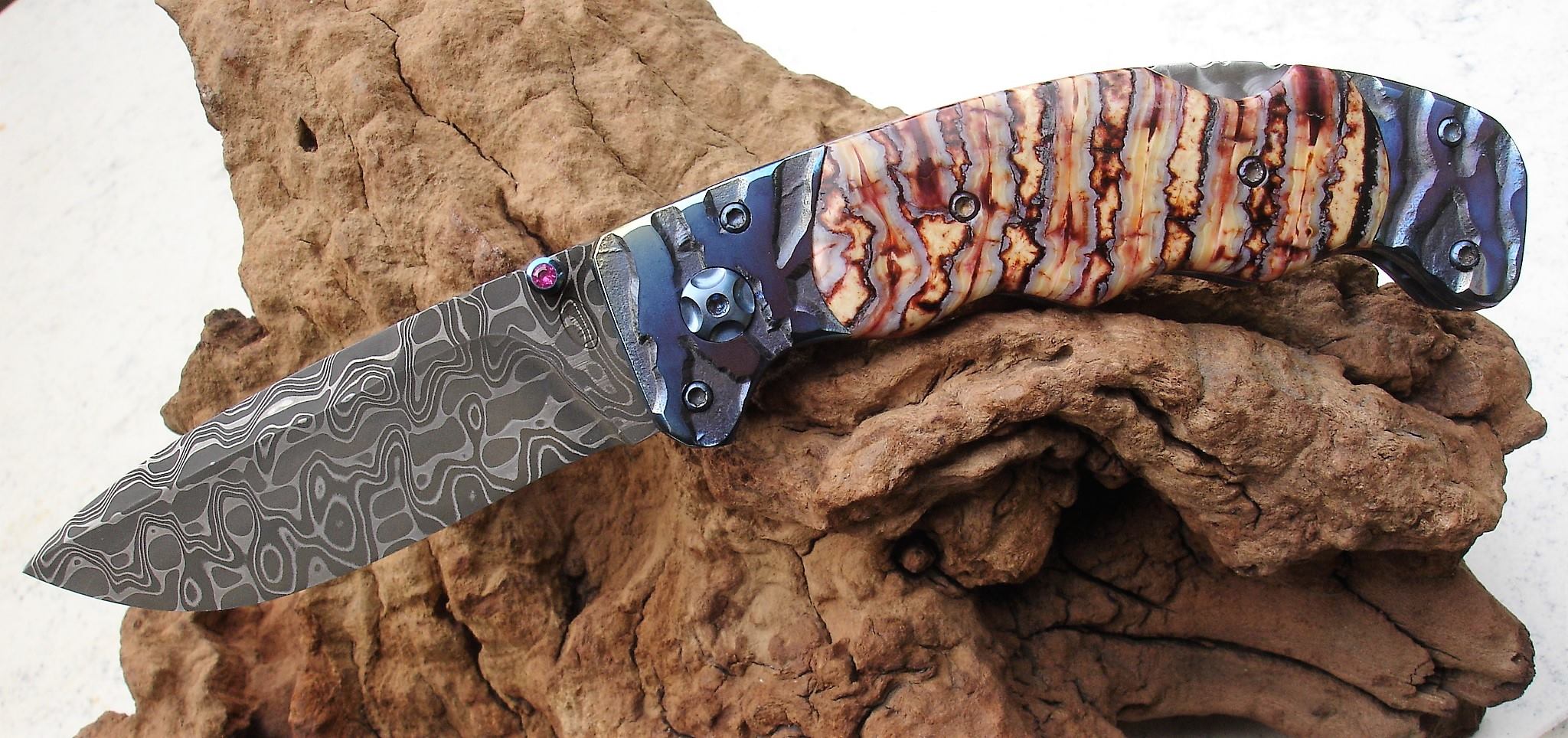
The Warnaught by Eric Luther has a S35VN blade, full titanium frames, clip and backspacer, and ceramic detent and bearings. The custom Cerakote is by Warlock Custom. Maker’s list price: $700. Contact: [email protected] or join Eric Luther Knives on Facebook.Brent Chumbley of Triple Deuces Knives made this Regulator with a 3-inch blade made of Bohler N690 steel. The titantium framelock handle’s custom Cerakote job is by Chad Waldow. Overall length is 7 1/4 inches. Maker’s list price: $510. Contact Brent Chumbley on Facebook at Triple Deuces Knives and on Instagram at triple_deuces_knives.The Beaver Tooth by Matthew Nolan of Angry Beaver Knives, has a Scandi V-ground 3 1/2-inch blade made out of W2 steel and acid etched with a flag design. The handle is a Rob Carper Innovations patriot red pine cone in white and blue resin. Maker’s list price: $275 with Kydex sheath, $325 with leather. Contact: Matthew A. Nolan, [email protected], 518-791-2551 or on Facebook at Angry Beaver Knives.Cody Wheeler of Mill Creek Knives calls this his Steel Bridge Camp model. The steel is a Nicholson American file with CARVex “We the people” scales by VP5. The 3-inch blade has a flat grind. Maker’s list price: $225. Contact Cody Wheeler at [email protected], on Facebook at Mill Creek Knives and on Instgram @millcreek_knives.Spencer Aplin of STA Custom Knives made the 9-inch blade for this American Glory out of star feather-pattern steel from HHH Damascus and Knives. The fittings are nickel silver and the handle material is stabilized and double-dyed California buckeye burl. Maker’s list price: $2000. Contact Spencer Aplin at www.stacustomknives.com.The Driver Defense Toxin has a 3.5-inch tanto blade made out of S35VN. The knife is 7.5 inches overall with jigged and dyed blue bone scales with bone bolster and red G10 liner and spacer. Maker’s list price: $250. Contact Dustin Driver at Driver Defense on Facebook.This 13-inch chef knife by Jack Keith of Dunnottar Forge Knifeworks has an partially flat-ground 8-inch blade made out of CPM 154 that is finished with a hollow grind and satin finish. The handle is stacked maple and walnut veneer with a cast blue acrylic with white stars. Maker’s list price: $350. Contact Jack Keith at www.dunnottarforge.com.The Karma by Jase White at Kastaway Custom Living was inspired by a real-world self-defense situation. The knuckles are in the CPM S30V blade rather than the handle, which is made of 1095 carbon steel. Maker’s list price: $50. Contact: Jase White at 423-453-9793, [email protected] or message at Kastaway Custom Living on Facebook.Rich Richardson made this for a retired navy commander. The blade is a mix of Devin Thomas Damascus steel in basket weave pattern and steel from the battleship USS Texas. (Authentication was provided.) Overall length is 9 inches. Handle is stag with a mesquite spacer. Maker’s list price: $800. Contact Rich Richardson at [email protected] or message him on Facebook.Jason Karl Glover of Mammoth Creek Knives made this 5 1/2-inch cleaver with triple grinds out of 1095 steel. The handle is Kirinite Patriot scales. Overall length is 11 inches. Maker’s list price: $375. Contact Jason Karl Glover at [email protected], call 801-540-7023 or message him on Facebook at Mammoth Creek Knives.JD Edwards hand-forged and hammer-finished this pair of fighters in 1095 carbon steel. The knives are 16 inches overall with an 11-inch cutting edge. The handle is made of bubinga wood and fitted with brass pins. The knives were commissioned by a family member of two brothers who are combat veterans of Iraq and Afghanistan. Maker’s list price: $250 each. Contact: JD Edwards at [email protected] or message him on Facebook at JD Edwards.Bobby Toerck made this trailing-point skinner with a 4.5-inch 1095 carbon steel blade, polished to a mirror finish. The overall length is 9 1/2 inches. The scales are fashioned with Wavy American Flag by Robert Belcher of Mental Co. Maker’s list price: $350. Contact Bobby Toerck at 903-812-1173 or message him on Facebook at T4 Custom Knives.Tom, short for Thomas, Jefferson of No Surrender Holsters made this sheath with a slide-out beverage opener on the backside to accompany “Forged In Fire” winner James Huse’s BBQ knife below. Contact Tom Jefferson on Facebook at No Surrender Holsters.James Huse, “Forged In Fire” champion made this knife using patterned steel from Alabama Damascus Steel. The blade is 9.5 inches, 14.5 overall. The handle is made from Patriot Kirinite. Maker’s list price: $700. Contact James Huse on Facebook at Huse Knives.Adam Rose of The Bearded Blade made this 4-inch blade from 1075 steel for a veteran who recently returned from Afghanistan. The handle is made from We the People CARVex scales. Overall length is 9 inches. Maker’s list price: $150. Contact Adam at [email protected], on Facebook at The Bearded Blade or on Instagram @thebeardedblade.Clay Smith of Sinister Knives calls this model the Battle Bean. The everyday carry is a friction folder knife/ bottle opener, perfect as a BBQ buddy! The 2-inch hollow-ground blade is made with W2 steel. The hardware and pivot pin are stainless and the liner and backspacer are aluminum. The handle scales are by Voodoo Resins. Maker’s list price: $150. Contact: Clay Smith at Sinister Knives on Facebook @bud809 on Instagram or email him at [email protected].Dale White of White Made Knives in Sweetwater, Texas, made this 10-inch knife for a soldier. Both the staff sergeant and the knife did two tours in Iraq. The blade is hollow-ground made out of 440C steel. The handle is sand-blasted canvas Micarta. Maker’s list price: $350. Contact Dale White at [email protected] or on Facebook at White Made Knives.John Waltz of Edge7 Custom Knives made this everyday carry tanto out of CPM3V. The hollow-ground blade is 3 inches and the knife is 7 inches overall. The scales are from J Hue Customs. Maker’s list price: $275. Contact John Waltz through www.edge7customknives.com.Jr. Madan of Patriot Horde Knives calls this model DaCleava. The 4-inch blade is made out of 1095 steel with a flat grind. Overall length is 9 inches. The handle is fashioned with CARVex Wavy Flag scales, fitted with brass pins and lanyard tube. Maker’s list price: $250 with Kydex sheath. Contact Jr Maden or Patriot Horde Knives on Facebook.Denny Furey of Furey’s Urban Combat Knives Unlimited uses high carbon 1095 steel to make the Americana. The knife is 7.5 inches overall with a 3.25-inch blade with mild hamon. There is file work on the spine, and the bolster and pommels are 410 stainless steel. The handle is fashioned from Patriot Kirinite scales. Maker’s list price: $300 shipped with Kydex sheath with hardware and embossed makers mark. Contact Denny Fury at [email protected], 405-642-2198 or at Furey’s Urban Combat Knives – Unlimited on Facebook.Tim Lambkin of Chops Knives hand makes everything on The Patriot Folding Lockback. The overall length is 8 1/8 inches. The 3 1/4-inch blade is made with pattern-welded stainless steel by Chad Nichols. The handle scales are mammoth tooth with anodized titanium bolsters and pommels. Filework everywhere, inside and out, is done by Tim. Maker’s list price: $1950. Contact Tim Lambkin at [email protected] or on Facebook at Tim Lambkin (Chops Knives).Shane Barefoot of Barefoot Custom Knives offers the Competition Chopper model in 3/4 size. Overall length is 13 inches. The flat-ground blade is made with 52100 steel. The handle is made with blue-and-red-dyed maple burl. Barefoot Custom Knives big-vine filework is filled with red resin. Maker’s list price: $450. Contact Shane Barefoot at 864-444-7410 or visit www.barefootcustomknives.com.
Every day is Memorial Day for the family of Master Sergeant Robert Mark Horrigan. The weeks leading up to the holiday and through June 17, though, mark an intensified period of mourning for Robert’s identical twin brother and American Bladesmith Society master smith John Horrigan of Elite Knives. Robert was a member of C Squadron, 1st Special Forces Operational Detachment, Delta Force, JSOC and June 17, 2005, was the date he was killed in action in Al Qa’im, Iraq. Gentlemanly, soft-spoken, John says, “Excuse my language, but I’m an asshole for about two weeks” leading up to Memorial Day. And with that, you know that no matter how courteous, no matter how elite the warrior pedigree of either man, John knows exactly how hard it is for Gold Star* families and fellow veterans, and he’s willing to get in the dirt and help.
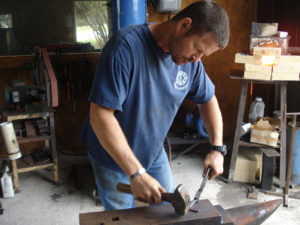
John Horrigan owns Elite Knives and works out of his home shop in Burnet, Texas. His knifemaking began in earnest after returning from his service as a U.S. Army Ranger in 3rd Battalion, 75th Regiment.
The Horrigan twins learned to hunt and fish growing up on a farm in Limestone, Maine, which is in Aroostook County, so far north it might as well be in New Brunswick, Canada. When the boys were 10, knowing jobs would be scarce, the family moved to Florida. The humidity exacerbated their father’s emphysema and tuberculosis, however, so two years later thy moved to Austin, Texas. John and Robert enlisted together and advanced to become U.S. Army Rangers, serving in 3rd Battalion, 75 Ranger Regiment. After three years, John left the military—for love. He had met Donna when he was 17 and she was almost 15. He has now been married to his high school sweetheart for 29 years. They have a daughter and a son, with one grandchild and another on the way. “I just knew the military life was not for her,” John said.
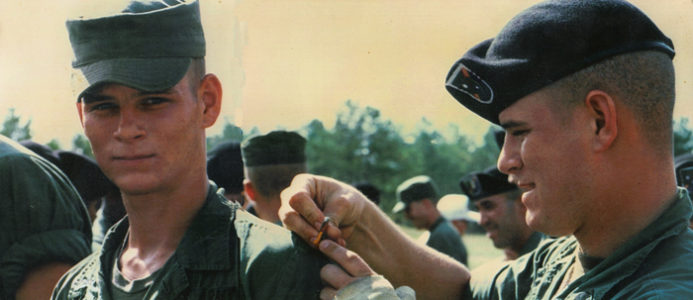
Then-U.S. Army Ranger Robert Horrigan pins the Ranger Tab on his twin brother John Horrigan’s shoulder at a graduation ceremony on Fort Benning, Georgia.
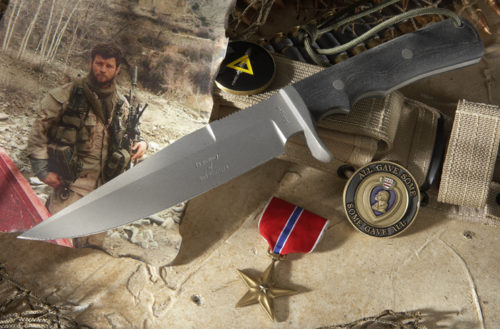
John performed security for the U.S. Department of the Treasury for a short while and then became a deputy with the Travis County Sheriffs Office as well as a fireman. In 1983 John made his first knife. After his brother’s death, he made a commemorative knife for Bob’s unit and another for President George W. Bush. He makes everything from swords, daggers and the occasional tomahawk to camp knives, hunters and bowies. John also continues to make his brother’s design, the Bob Horrigan Military Fighter. You can read more about the brothers and their knives in an article by Kevin Jones that ran in the December 2010 issue of BLADE Magazine entitled, “Twin Brothers, Makers and Heroes.”
The Bob Horrigan Military Fighter has a 6 1/2-inch blade made out of 440C stainless. The guard and handle bolts are made of 303 stainless. The handle is fashioned with Black Linen Micarta. Overall length: 11 1/4 inches. Maker’s list price: $550. This design is also available with a double guard at 13 inches overall at the same price, or in pattern-welded steel with ironwood handles at a maker’s list price of $720.
While love and love of knives determined the course of one brother’s life, the warrior spirit could not be quenched in the other. Over the course of his 19 ½-year career, which culminated in Special Forces, Robert, who his brothers-in arms called Bob, deployed five times to Iraq and three times to Afghanistan. “Badass” and “real deal” can be overused, but not with Bob Horrigan. Delta operator George E. Hand IV wrote two eulogies of Bob for SOFREP News that get to the heart of the quintennial gentleman warrior: “Delta’s Robert Horrigan: A Better Man Than I” and “Delta Forces’ Own Robert Horrigan: Dwarfed By The Presence of Giants.”
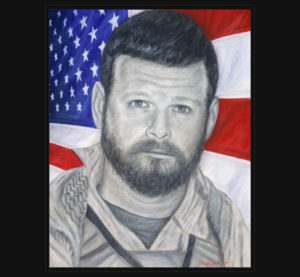
Robert M. Horrigan left the service when his twin brother, John, did but reenlisted, moving into Special Forces after his time in Ranger Regiment. He was killed in action in Iraq, June 17, 2005, in Al Qa’im, Iraq.This portrait of MSG Robert M. Horrigan was done by Phil Taylor for the non-profit The American Fallen Soldiers Project. It was present to the Horrigan family in accordance with the 501(c)(3)’s mission of bringing comfort and healing to Gold Star* families. You can watch the video about this particular portrait at the bottom of this post.
Bob did not have to go on his last mission. He was closing in on retirement. He had plans. He was going home to his wife and daughter and he was going to make knives with his brother. Five years before, John had introduced Bob to knifemaking, and he liked it. While living in base housing on Fort Bragg Bob would run an extension cord outside to work on his creations. “I’m not sure they would have been happy about if they knew,” John says, a warmth in his voice. Like John, Bob loved the artistry of knifemaking, but he only had time for making combat knives.
In addition to medals depicted here by ribbons, Robert Horrigan was posthumously promoted to Master Sergeant and awarded the Legion of Merit Medal, the Bronze Star Medal with Valor Device and the Purple Heart. In addition to his mother, Mary; twin brother, John; and sister Lisa Shine, he is survived by his wife, Denise; his daughter, Courtney; and another brother, Daniel. He is buried in Section 60, Site 9131 at Arlington National Cemetery.
John continues to live out this dichotomy. “I could make a lot more money making fighters,” he said. After banging out 40 of them, though, he longs to delve into the art of the craft. Then, when he’s deep into a showpiece and it seems like it will never be finished, he begins to long for the refreshing simplicity of hammering away on combat knives. “I flip flop,” he says. “I used to have six or seven pieces, 80 percent done” for BLADE Show. He laughs about what he refers to as his attention deficit hyperactivity disorder. Now he works on two at a time and finishes them before he moves on to the next one. After the show he enjoys being able to relax and resume his own pace.
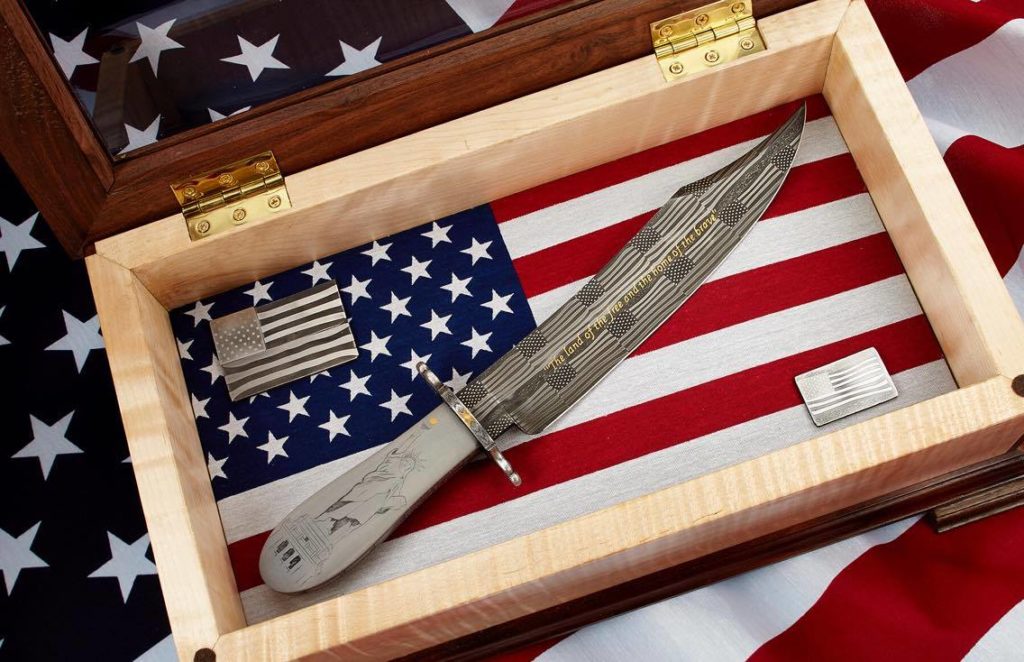
When he needs a break from combat knives, maker John Horrigan switches to crafting high-end pieces of art. This bowie is made in American flag mosaic-pattern steel. Although you can’t see it, “In God We Trust” is engraved along the spine. The handle scales are 416 stainless steel engraves with the Statue of Liberty. The quote on the blade is done in 24-carat gold. Contact: Elite Knives
So although Robert didn’t have to go on that last mission, he wanted to be with his unit. And with that decision, the dream the twins shared of living out their days together with their families and making knifes ended—hard, on the other side of a breached door. The objective was to sneak in, target Abu al-Zarqawi, the al-Qaida leader in Iraq, and get out. The problem was that by the time the mission was underway, the enemy knew the Americans were coming. Bob Horrigan was the number-one man. He got inside the room and was immediately engaged in an intense firefight. The number-two man, Master Sergeant Michael L. McNulty—also a twin—was shot down on the threshold. While teammates extracted Mike from the doorway, Bob took hits to his femoral artery and head. Both men held on while their brethren simultaneously continued the battle, plugged their wounds and extracted them to a secondary airfield approximately 1000 meters away because a closer one was under attack. Both men were alive when they were put on the aircraft and when they landed at the medical facility. Heart massage was performed on Bob. But, as John explained, when you’ve been hit that many times, when you’ve lost that much blood, no matter how much they hold on, it’s only a matter of time before they succumb.
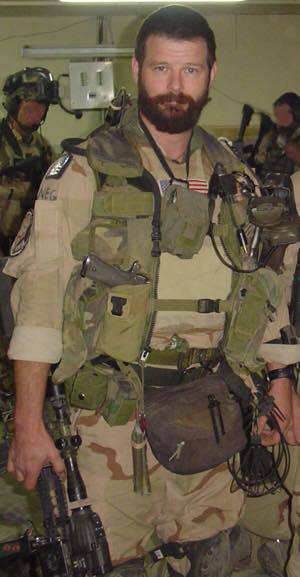
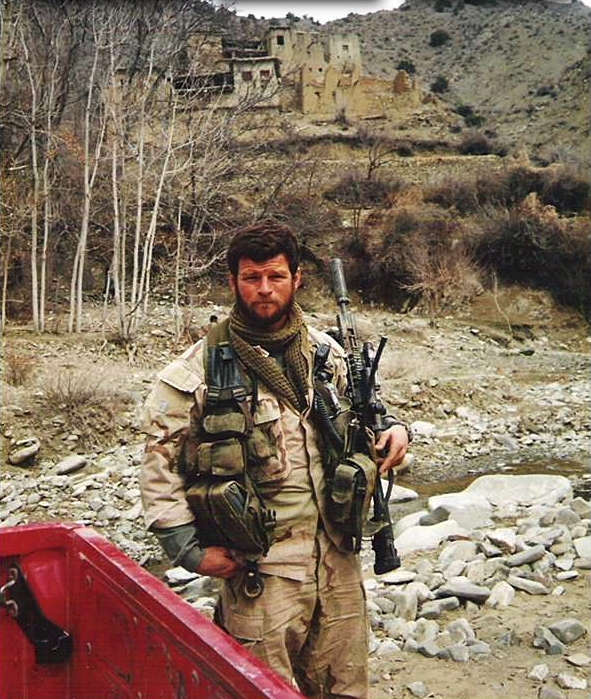
John 15:13 reads this way in the New King James version of the Bible: “Greater love has no one than this, than to lay down one’s life for his friends.” John Horrigan will tell you that his twin brother, Robert, did just that for his brothers-in-arms. Jesus did the same for us. This photo of Robert was taken taken March 19, 2002, east of the Shahi-Kot Valley on the route to Khost during the post-Operation Anaconda chase.
The part about both men being twins, was only the first of endless seeming coincidences. Robert’s wife kept his remains in an urn at home for a few years before he was interred, but John also wanted to visit the grave of the man who had died with his brother. He made the trip to Arlington National Cemetery, and when asked who he was looking for, gave McNulty’s name. There were three men also standing at the information desk. “Who did you say you were looking for?” one of them asked John. John repeated the name. He tried to introduce himself. Being an identical twin, the men already knew who John was. They were from his brother’s unit, and they too had come to visit McNulty’s grave.
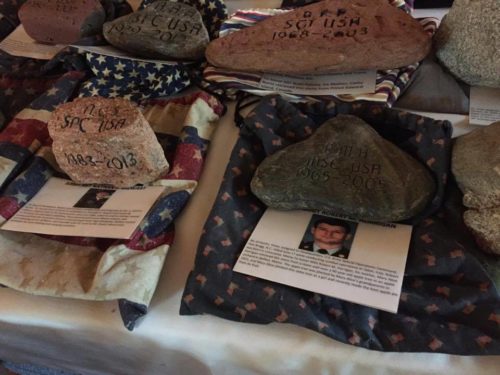
Another time the Horrigans had planned a family trip back to Maine. Many people were involved and Donna was looking at a particular house to rent. It was expensive so John suggested checking Craigslist. She found the same house listed for less. As the process continued, the twin’s sister, Lisa, began to suspect a scam. John wasn’t sure at first, especially since he was so used to dealing with wire transfers through the course of selling his knives internationally. He was busy in Boston and directed his sister to handle it. On the way to Maine, John thought, ‘Maybe it is a scam,’ and called the Ellsworth Police Department. A detective, Dotty Small, confirmed that it was indeed a scam. John called Lisa who was standing on the porch of the house, which already had tenants living in it. John told her what he had learned. In an event to commemorate Maine’s heroes called The Summit Project, Detective Dotty Small had hiked Baxter Mountain carrying a stone with the initials of a fallen warrior on it: M.R.H.
“Maine is good to its veterans,” John Horrigan said. According to The Summit Project nearly 1 in 7 Mainers are veterans or approximately 15 percent of the state’s population, one of the highest rates of any state in the nation. The Summit Project honors fallen heroes and brings awareness to the challenges of grieving families. The Bangor Daily News covered the event in 2014. The article was entitled “Feeling the weight: Hikers carry tribute stones for Maine heroes to Baxter mountaintop.”
One night at the firehouse, John had a dream. In it, Robert came to him and told him to look up Al Qa’im. “I’m thinking, ‘I’ll never remember that,’” John said. Al Qa’im was a center for insurgency near the Syrian border, and the town in which Bob was killed. It means ‘I have risen.’” John pauses. “Another translation is ‘I have ascended.’”
It is like this all the time, Bob seemingly orchestrating serendipitous exchanges for his family and especially his twin. “I lost half of me,” John said. It took me a year and a half to get beyond wanting to blow my head off,” he admitted. “God really had to hit me with a sledge hammer…It’s not about you anymore. It’s about Me.”
John and Robert’s mother was a novice nun. After five years in the convent, she knew she wanted to have children so she left. The Horrigan children were given a Catholic upbringing. “In the Army, you drift away,” John said. About two years before he died, Robert told John that he was coming back to God. John accepted the news in his easygoing manner, but perhaps didn’t think as much of it as he does now in hindsight.
“All this macho ‘I can handle it.’ Well, obviously, you can’t. You have to talk to someone,” John said. “There has to be a support network, and having God can help.” John is quiet for a moment. “Bob was a sniper,” he reveals. Bob told John that he’d killed 50 to 60 enemy combatants. “He did not have PTSD, that I know of,” he emphasized. Bob told John that he was OK, because he was “alright with God.” The Old Testament is filled with killing, John said. “Evil exists in this world and you have to exterminate it. It’s like when you have an infestation of bugs. You have to kill every one or they’ll come back. When you’re fighting an ideology where (the enemy is) hiding behind women and children, it’s like a cancer of the highest magnitude” that must be eradicated.
“Memorial Day is not a happy time,” John said. He acknowledges the day by telling people about his brother and the tragedy of leaving a hurting wife, 12-year-old daughter, mother, siblings and especially a twin with whom he did everything. But perhaps because of the leadership ingrained in him as a Ranger, John understands that he cannot be consumed by the grief of his own loss. God channels his pain in a way that reaches people just like him, veterans and family members who are wracked with unbearable grief. John recently lost a firefighting co-worker to suicide. It left him shocked because the man was always so cheerful “Everyone has demons. Call me. We’ll fight them together.”
Knifemaker John Horrigan Remembers Fallen Twin Brother Robert Horrigan
*Gold Star families are those that have lost a service member in combat. You will see the vertical red-rimmed banners most commonly on vehicles. Each blue star represents a family member serving in the military, while a gold star represents a fallen service member.
In addition to a review of Robert Horrigan’s Military Fighter from Elite Knives, you’ll also get a rundown on Old West-style push daggers in the October 2011 issue of BLADE.
So what does fellow Special Forces member Kim Breed think of Elite Knives’ Bob Horrigan’s Military Fighter? Read his review right away in this downloadable version of the October 2011 issue of BLADE for $5.95.