Was “Forged In Fire” a Scapegoat For The Cohoes Fire?

John Gomes, the 51-year-old Cohoes, New York, resident and alleged “amateur knifemaker” who started a fire that damaged 32 buildings and displaced approximately 20 people, will not appear in court today as scheduled. He was charged with felony reckless endangerment and misdemeanor arson on Friday, Dec. 1 while the 200 block of Remsen Street smoldered, threatening to reignite. Gomes’ case has been waived to Albany County Court to be presented to a grand jury. In a report by the Times Union of Albany, New York—which has followed the story closely—Gomes lawyer has stated that his client is a hard-working plumber, the father of two children and this was a tragic accident, not a crime. Reaction from knifemakers on social media was swift and nearly unanimous: Gomes’ did not do his research, about forges or metal working, and his claim of trying to replicate something he saw on “Forged In Fire” was a deflection from his own lack of forethought. One maker from Upstate New York theorized that it could have been simply a trash fire to avoid disposal charges, but that claiming to be working steel was a better story than a flagrant violation of the law. Was Forged In Fire a scapegoat for the Cohoes fire?
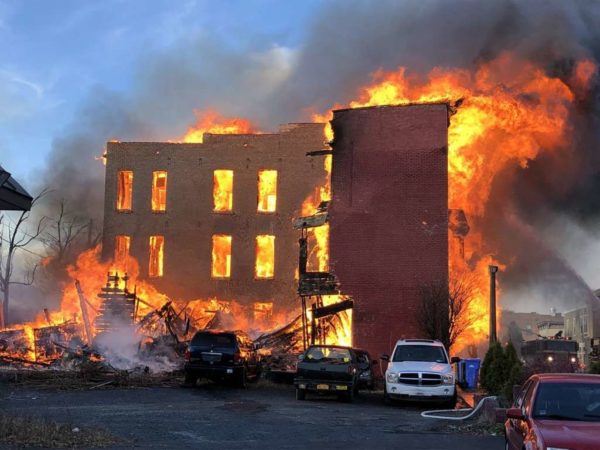
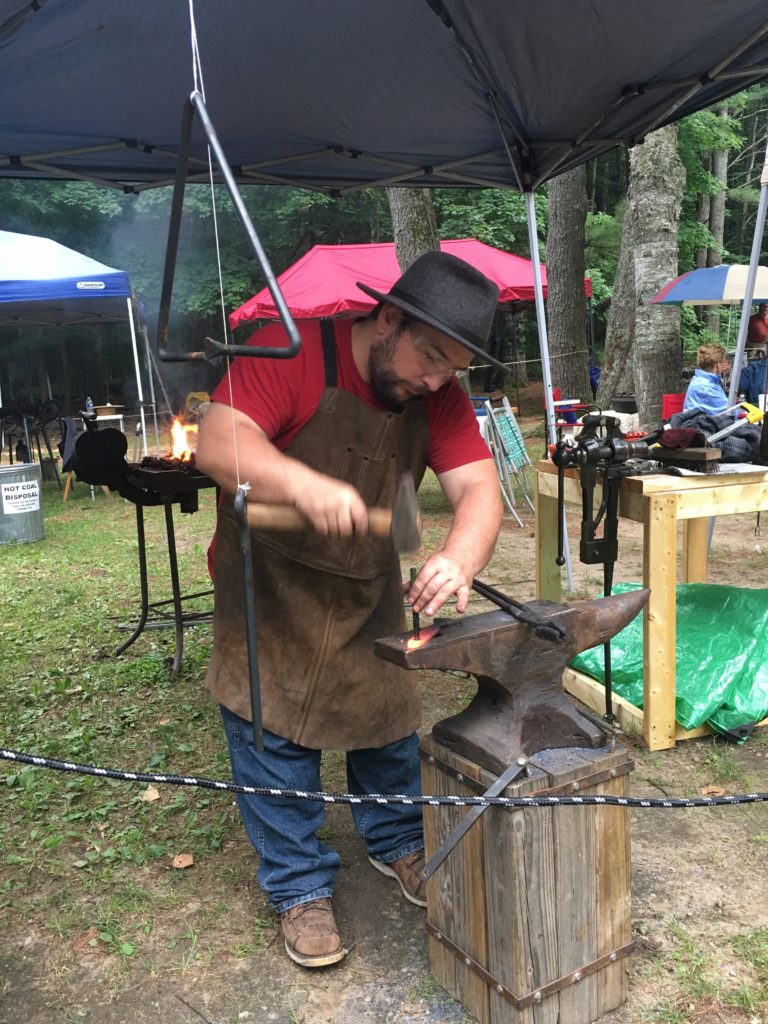
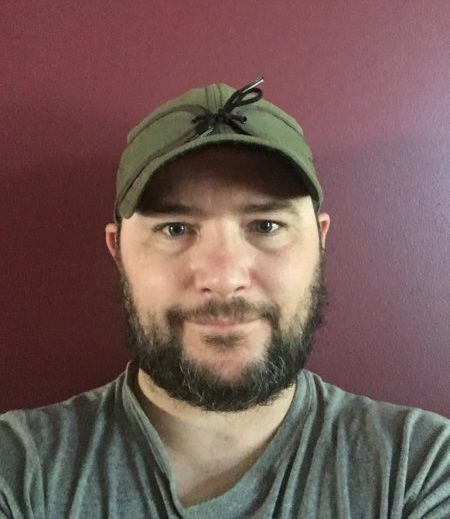
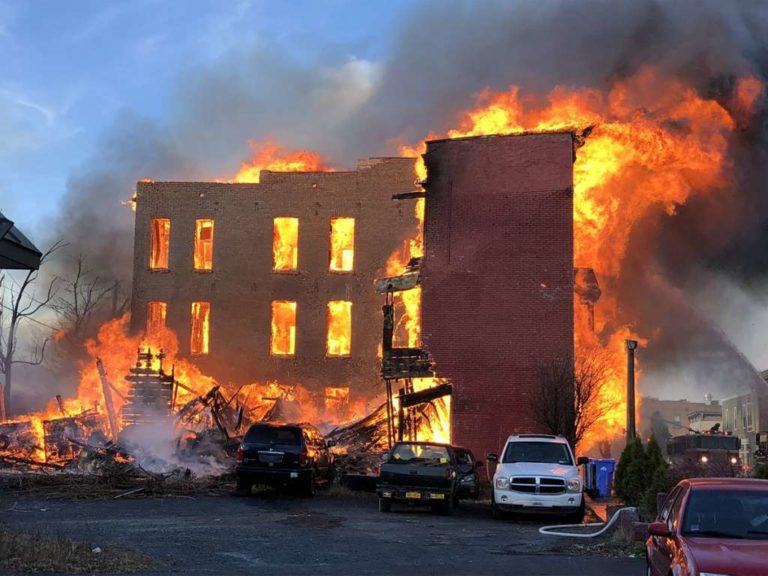
John Gomes claimed to be an amateur bladesmith. The fire he started in an open barrel behind his house started a fire that damaged 30 buildings.
John Gomes, a resident of Cohoes, New York, started a fire in an open barrel in his back yard. Reports say he was attempting to bend a knife, as he had seen done on “Forged In Fire.” But was “Forged In Fire” a scapegoat? (Times Union photo)

On Friday, December 1, knifemakers awoke to the cringeworthy news that Gomes had started an open barrel fire in his back yard to “bend” metal as he had seen done on “Forged In Fire.” It was a relief that nobody was killed in the fire. One fireman was treated for dehydration and heat-related issues and the fire chief received a burn from a flying ember, but other than that nobody was injured. By last count, 32 buildings were damaged by fire, smoke or water, resulting in millions of dollars’ worth of property damage. Approximately 20 to 25 people were displaced, but Red Cross representatives were on sight to meet the immediate needs of both emergency response personnel and to provide shelter, food and clothing to those whose houses had burned. Cohoes is a quiet commuter city about 18 miles north of Albany. The houses in the affected area are wooden and within inches of each other. The 30-mile-an-hour winds on November 30, made it challenging for the firefighters to stay ahead of the blaze.

Cohoes is an old mill town that is no stranger to fires. In 1978 a man and his seven children were killed in a fire suspected of being set by the sole survivor, the wife and mother. After new evidence surfaced in 2010 Virginia Grotto did sign a confession, but then claimed she was badgered to do so. Another Cohoes fire in 1988, destroyed nine buildings, including three businesses. That fire also affected Remsen Street. The cause remains a mystery with some neighbors claiming at the time it was a Hells Angels motorcycle gang act of revenge against someone living in the apartment building where the fire started and others claiming to have seen two boys playing with matches. All other causes were ruled out. In both cases, Cohoes rebuilt. One added note to the most recent fire was that this area of Cohoes was enjoying a resurgence. Both the current mayor and interviewed business owners commented on the city’s resilience and they would rebuild. A florist was able to resume work the next day despite building damage, and a pharmacy owner lost a storage garage that contained chair lifts that had been ordered for Christmas, backup inventory and old medical records, but his store was open for business.
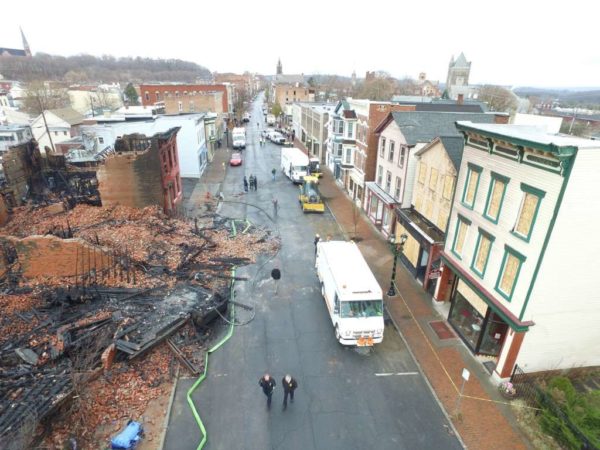
Cohoes, N.Y. is no stranger to fires, but the one on Thursday, which was started in an open barrel, was the worst.
The 30-mph winds made getting ahead of the fire a challenge. In the end 32 buildings were damaged and approximately 20 people displaced. (Times Union photo)

John Gomes’ son defended his father on social media, claiming that he never meant to burn down his own house or anyone else’s. Commenters offered words of encouragement for the boy and prayers for his family. On knifemaker Groups on Facebook like Forged In Fire TV Show Discussion Group!!!! and my own Erin at BLADE, it was unanimous that “Forged In Fire” was not to blame. There were jokes about the blade not making the cut, or the reverse, it being able to wipe out a city block. There was mention that “Forged In Fire” now does include a warning that forging is dangerous and not to be attempted without careful consideration of safety measures. Of course, one popular comment on Facebook was simply a picture of a fire extinguisher.

John Gomes never meant for the barrel fire to engulf a city block, but it did.
John Gomes, according to statements made by his lawyer to the media, never intended for his open barrel fire to cause damage to his own house or anyone else’s. He’s been charged with felony reckless endangerment and misdemeanor arson. (Times Union photo)

Concern was expressed, though, by more than one commenter on more than one thread that “Forged In Fire” seems to play up the fireball created during quenching. It is a television show and the quenching drama makes for good entertainment. However, the “Forged In Fire” set is actually fireproof. It is vented to prevent asphyxiation, but not in the way a home forger might vent his forge. This is why it is often unbearably hot on the set, causing heat exhaustion in some participants. And, of course, there are crewmembers standing by with extinguishers, ready to cut the electricity or provide medical attention as needed. There have been instances in the final round when participants are at their home forges of fireballs being too close to propane tanks and the like. Although show representatives expressed sadness over the fire in Cohoes, they reserved comment, according to Times Union reports.

One of the most intriguing comments was posted by a resident bladesmith of Upstate New York. “I think he was burning trash, which is illegal in most municipalities in New York State, so he would not have to pay for disposal,” theorized F. Page Steinhardt, of Sunshadow Design and “Forged In Fire” winner. He added, “In an open burn barrel, which is illegal in most municipalities in New York State in a 30-mile-per-hour wind, which is a dumb idea, and ‘Forged In Fire’ was a convenient scapegoat.” Page reiterated that he didn’t know for sure the exact motivation for the fire, and perhaps we will never know exactly what happened. “But that is just my opinion from reading the stories and living in Upstate New York,” he concluded.

Matthew Parkinson of Dragon’s Breath Forge in Connecticut and another “Forged In Fire” winner brought up another good point. “FIF isn’t responsible for someone who can’t think ahead. I mean, they show giant fireballs all the time, so it isn’t like you could even claim they make it look safe.” Matt also offered guidance to those just starting out. “As far as new smiths, take a class. Find a good school and take a class. It will be the best money you ever spend.”

A Digital Subscription To BLADE Is The Answer
Save $4 off the print price of a annual subscription to BLADE Magazine with a digital subscription.
You can read your digital issues of BLADE Magazine anywhere you have your phone, tablet or computer, and there’s no need to find storage for all your old issues.

If piling-up issues of magazines seems like a waste to you… If you feel like you don’t have time to read a magazine… If you like the stories we offer in BLADE, but want a more economical option, then a digital subscription is the answer. An annual subscription to BLADE is $17.98, $4 off the print price
 

Factory Friday: Contingency By Winkler Knives II

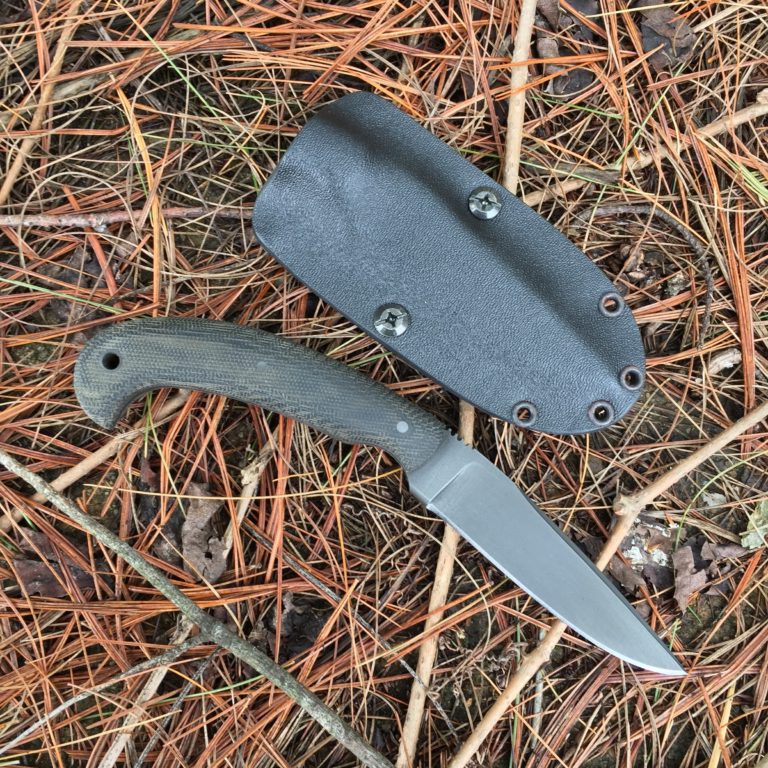
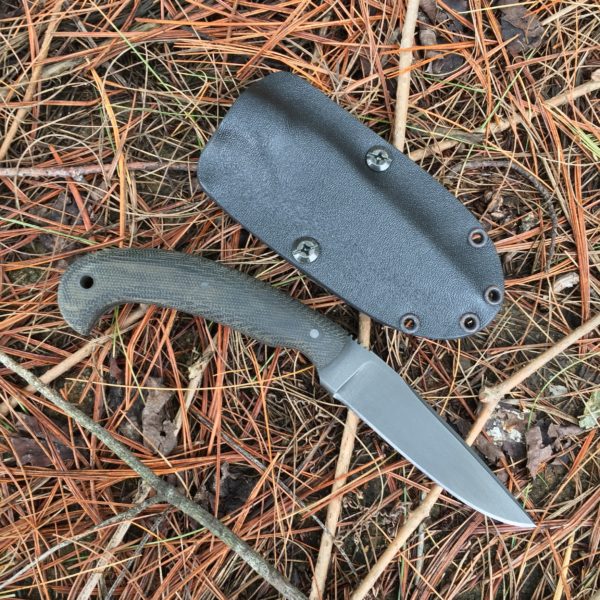
Winkler II Knives' Contingency offers a variety of handle options.
Contingency by Winkler II Knives is well designed for concealed carry. The sheath system offers a variety of carry options and the curved handle easily accommodates positive or 90-degree reverse grip. Contacts for Winkler II Knives are listed at the bottom of this article.

Contingency by Winkler Knives II is a concealable personal protection knife with a sheath system that allows for inside- or outside-the-waistband carry. (You’ll want to order a left-hand-draw sheath for right-hand IWB draw.) The 3 1/2-inch blade on Contingency is made of 80CrV2 steel and has thumb-grip gimping. The knife has a tapered, skeletonized tang and measures 7.625 inches overall.

The curved-handle design is well-suited for easy draw and positive grip or 90-degree reverse-grip positioning. It comes in your choice of walnut, maple or Black, Tan or Green Micarta. Rubber is available but is not recommended for concealed carry. The MSRP is $300. You can also order yours with sculpting, $15; sculpted WASP (air injection), $30; or sculpted multi-camo, $30.

Daniel Winkler’s Early Frontiersman Style

Daniel Winkler, along with wife and leather craftswoman, Karen Shook, started Winkler II Knives in 2016. Daniel’s ever-present love of early American history intensified when he started using black-powder weaponry to extend his hunting season. He added to his 18-century woodsman outfit by making powder horns and other accessories, and in 1975 he made his first knife. He was a member of The American Mountain Men and other historically strict reenactment groups, and began selling knives at gatherings, called rendezvous. The money he made allowed him to upgrade his car-wheel forge to a hand-cranked model. By 1988 he was making knives full time.

Daniel Winkler, Kevin Holland and W.R. Case & Sons Cutlery Co. have collaborated on Skinner, which Holland, a Navy Seal designed.
Daniel Winkler, co-owner of Winkler Knives II with his wife, Karen Shook, is based in Blowing Rock, North Carolina.

When he’d been at it for nearly two decades, he spent a few years entering cutting competitions. He says those experiences taught him more than he had learned in all the other years combined. Not only did he improve his knife-handling skills, he came to understand what made a knife perform in a wide variety of tests. Cutting competitions are timed events that involve a number of stations at which the maker and his knife must cut, say, a hanging rope, an upright straw, a row of water bottles, a cardboard tube, a pool noodle and then chop through a piece of lumber. The blade either cuts or it doesn’t.

Now he establishes the use of the knife before anything else, because no single knife can do all things well. He is honest about how knifemaking is always changing, sometimes advancing, sometimes failing.

In 1992 Daniel had the opportunity to make the knives and tomahawks used in the movie “The Last of the Mohicans.” His pieces also made appearances in 2012’s “Zero Dark Thirty.” It was his work on “Mohicans,” however, that would send him on the path to making knives and combat axes for today’s Special Operations personnel, while continuing to serve the hunter-outdoorsman community.

Contact Daniel Winkler, Winkler Knives II, P.O. Box 2166, Blowing Rock, NC 28605; 828-295-9156; [email protected]; www.winklerknives.com and on Facebook at Winkler Knives.

A Digital Subscription To BLADE Is The Answer

Save $4 off the print price of a annual subscription to BLADE Magazine with a digital subscription.
You can read your digital issues of BLADE Magazine anywhere you have your phone, tablet or computer, and there’s no need to find storage for all your old issues.

Save $4 off the print price of a annual subscription to BLADE Magazine with a digital subscription. If piling up issues of magazine seems like a waste for you… If you feel like you don’t have time to read a magazine… If you like the stories we offer in BLADE, but want a more economical option, then a digital subscription is the answer. An annual digital subscription to BLADE is $17.98.


Woman Carries Knife Made With Her Rib

Travis Payne decided on a spey design for this rib-handled everyday carry.
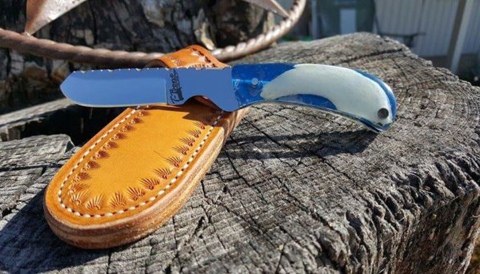
Travis Payne of T-Bone’s Custom Creations was hesitant at first, but when Kelly Pilcher asked, he made a knife with her rib. The overall length on this spey knife is 6.75 with a 2.5-inch cutting edge.

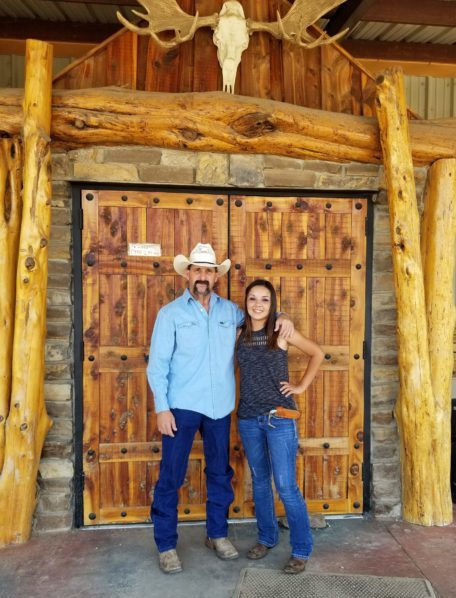
Kelly Pilcher of Collinsville, Texas, was 20 years old when doctors told her that hope of regaining feeling in her right side lay in having her first rib removed. She put the surgery off for as long as she could, but at 22 opted to go under the knife to alleviate her thoracic outlet syndrome. During surgery preparations Kelly asked, “‘What happens to body parts that come out of people?’” She was told that they were disposed of properly, but that if she wanted to take her rib home with her, she could. It was hers. She was adamant that she wanted to keep it. When she awoke from surgery, her dad was there and he had an idea of what to do with the bone. Shane Pilcher works at the New Gainesville Livestock Auction barn and when someone had mentioned making a knife with the rib, they knew just who to ask. Travis Payne, of T-Bones Custom Creations in Telephone, Texas, makes castration knives so all the cattlemen knew he could fashion a knife made from her rib. “Let’s do it!” Kelly remembers saying.

Travis Payne is known for this casration knives.
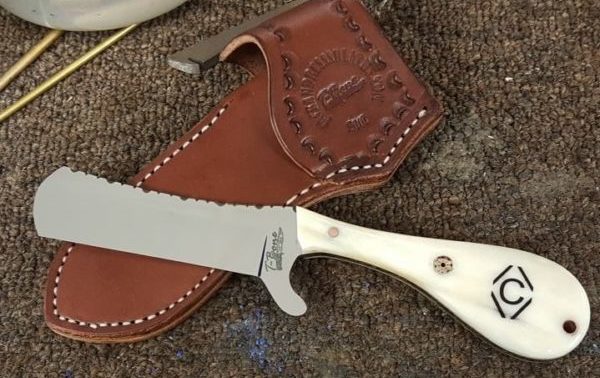
Travis Payne is renowned for his castration knife design. It is often copied by manufacturers using low-grade steel. Look for the T-Bone’s makers mark to ensure you’re getting the real thing.

TOS is a condition in which the surrounding soft tissue constricts nerves and blood vessels between the collar bone and first rib. Normally it is something diagnosed in people in their 40s to 60s, more commonly women, or perhaps mail carriers who consistently carry a heavy bag on their shoulder. Kelly was diagnosed when she was 14. It is believed in her case that years of catching slow-pitch softball as well as playing volleyball may have constituted the kind of overuse usually only seen in older patients.

By 17 Kelly had undergone a year of physical therapy. Although the therapy improved the symptoms of her TOS, it did not eliminate them. She went for an additional course of physical therapy a couple of years later, but the results were not as good. Her condition continued to worsen. “It’s different in each person,” she explained. She endured numbness that started in her arm, but then advanced to her whole side. Although she learned how to teach her body to move when numb, she was left with few options if she wanted to become fully functioning again. She decided to have her rib removed.

Shane Pilcher and his daughter Kelly McGuire are both happy that Kelly decided to keep her rib and have it made into a knife.
Shane Pilcher wasn’t sure about his daughter Kelly’s plan to keep her rib, but the cattlemen at the livestock sale barn convinced him that a knife might be the perfect solution. “I don’t leave home without it,” Kelly said of the knife Travis Payne fashioned from her first rib.

Shane had been at the livestock sale barn and was expressing some hesitation about Kelly’s decision to keep her rib. Someone pointed out that knives are made with animal bone and antler all the time, why not a human bone? “‘And doesn’t T-Bone make a knife?’” Travis said, recreating how the conversation may have gone at the barn. Since 1993 when Travis was still in high school he’d been making knives. His father and brother work the ranch where he lives in Telephone, Texas, but he makes knives full time. He is renowned for a style of castration knife that is frequently copied, most annoyingly by manufacturers using cheap steel. Since Travis’ father-in-law frequents the same sale barn where Shane works and the barn owner had purchased several of Travis’ knives and many of the cattlemen owned his knives, he was the first knifemaker that came to mind. Shane warmed to this idea and presented it to Kelly in the recovery room.

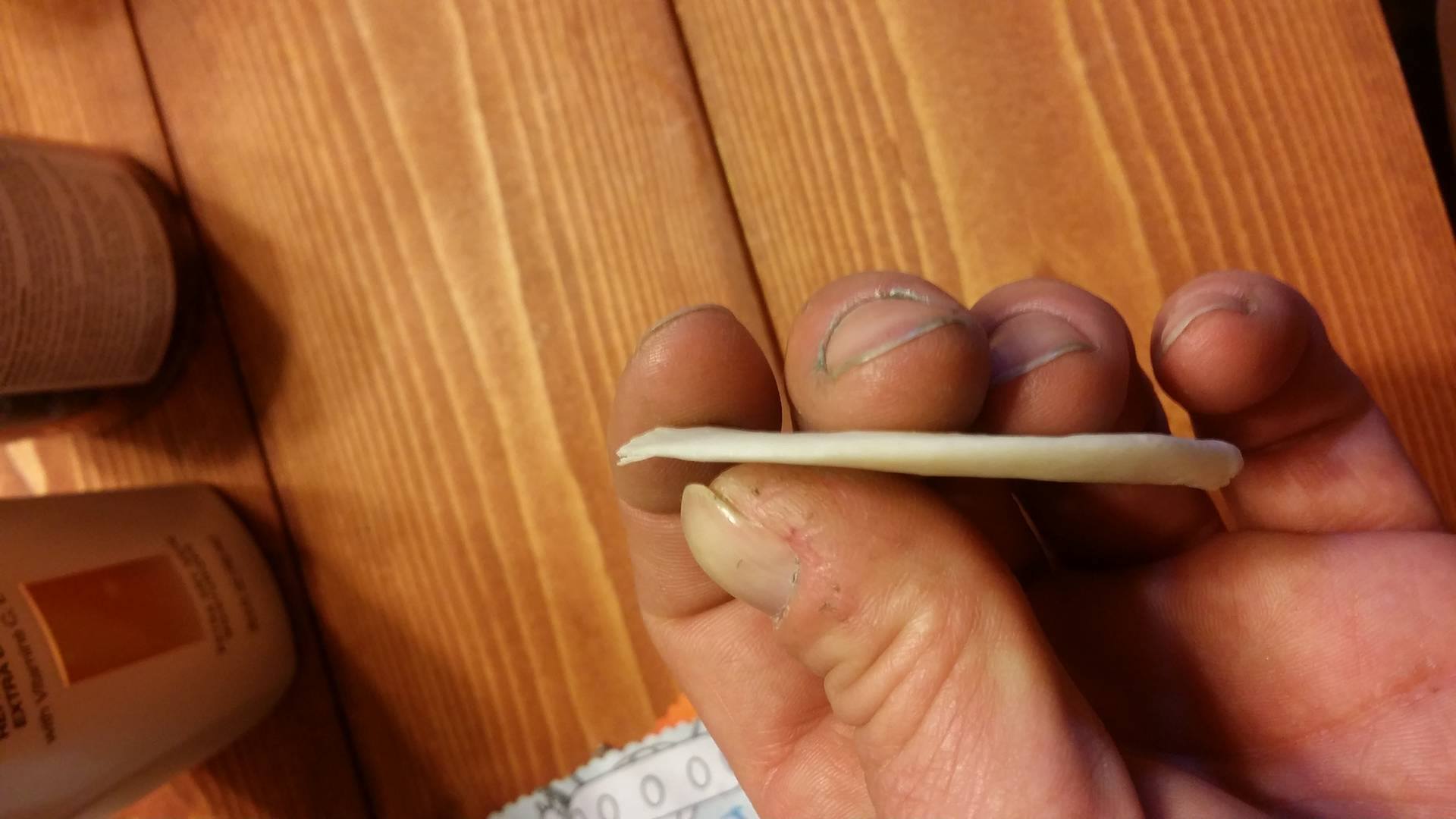
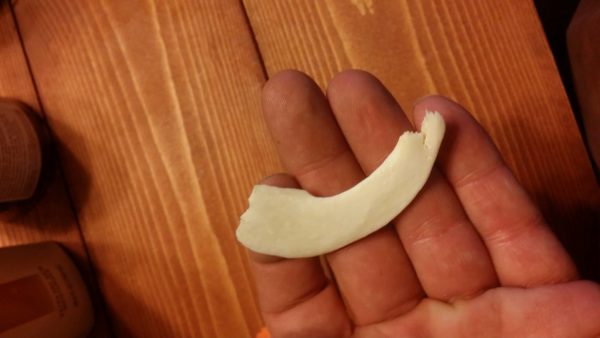
Kelly's McGuire's first rib was only 1/8-inch wide at its widest point.
Travis Payne was nervous about slicing Kelly McGuire’s removed rib. What if it broke?

Like everyone involved in the project—except Kelly—Travis was hesitant, but he agreed to make the knife. He decided on his 3100T everyday carry model, a spey in cowboy parlance, usually the second blade on an old-school slipjoint trapper. Only this would be a fixed version. “It came to me in a hospital specimen jar,” Travis said, taking a drag on his cigarette and waiting for the laughter. “With the meat still on it.”

He approached the project like he would any deer skull. “Only I knew I wasn’t going to be using my wife’s cook pot,” Travis said, laughing. He bought a throw-away pot and boiled the bone to get off any connective tissue. Although bleaching a bone works, it also can break the bone down. Travis soaked the 3-inch bone in hydrogen peroxide for a week. The same whitening was achieved without compromising the strength of the bone. Then he let it dry for several months, providing a convenient delaying excuse. The bone was very thin, only an 1/8-inch at its widest point. Travis feared breaking it.

Travis Payne thought long and hard about slicing such a thin rib bone.
Once the rib was clean and dry, knifemaker Travis Payne was able to see its true size. It would need to be cast in resin if it was going to be used as a knife handle.

“I had to regroup and talk to Kelly,” he said. She remembers the call. He explained to her that the bone was too small and thin to make a handle out of, but that he could arrange for it to be cast in resin. Only he would need to slice it down the middle to have bone on each side of the handle. He could break it in the process. “I told him to go for it,” Kelly said.

“Anyone who knows me, will tell you that I procrastinate,” Travis said. He continued to analyze the problem. Meanwhile, he needed to find someone who would cast a human rib. Travis figured if anyone would do it, it would be Robert Belcher of Mental Co. Robert eschews phones and social contact, but his resins like Plantstone are innovative. “‘No, but hell no. I can’t be touching that,’” Travis recalled him saying. Travis moved on and got similar responses, but at least there was no point cutting the rib if he didn’t have someone lined up. Finally, he took the rib to a show and unwrapped it for Pat Ankrom, of Ankrom Exotics in Centerville, Iowa, specializing in natural and cast scale materials. “Pat was like, ‘I’m leery, but I also think it’s kind of cool,’” Travis said. The men discussed the casting, and Pat agreed to do the job. Pat did not want something to happen to the bone in the process of packing up from the show, so Travis said he would mail the rib to him.

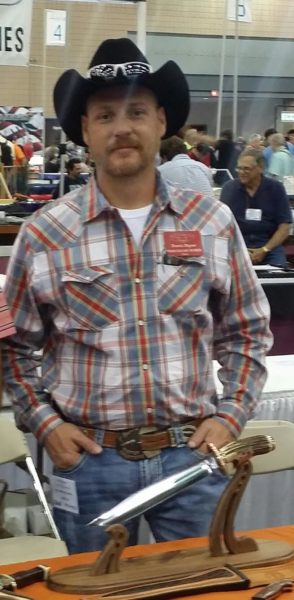
Travis Payne owns T-Bone's Custom Creations out of Telephone, Texas.
Travis Payne, 41, started making knives in high school before everyone had access to the Internet. He’s been a knifemaker for 20 years.

Now Travis had no choice but to cut the bone, but it was a nerve-wracking proposition. Travis wasn’t about to charge a young woman who didn’t have a lot of money and who had a debilitating condition more than the $200 he normally charged for such a knife, but in hindsight the cost to attempt something like this again would be closer to $500, Travis said. Kelly, of course, was excited to both see the knife and to have her rib back in her possession, so periodically she’d call for a status update. Finally, Travis got his courage up and sat down with a jeweler’s saw. “Even with a jeweler’s saw it was a tedious process,” he said. The whole project was “intense,” he said, laughing.

The two halves were packaged up and shipped to Pat, an exercise in trust in itself. Meanwhile, the blade awaited. It was made out of PSF27, a powered version of D2 that allowed for a true mirror finish. The lack of a point on a spey design means it’s ideal for active cattlemen, ensuring nobody stabs themselves or punctures a sheath. It has a hollow grind, and a finger groove for more controlled cutting. The file work on the spine increases a sure grip in what can be wet or messy work.

The bone was cast in clear resin so you could see it, but so that you couldn’t see the full tang Travis consulted with Kelly about colors. She was open to a turquoise or blue. Travis added a blue liner, which casts the clear with a blue tone. The knife was then sent to Jack Andress, who made a sheath in a yellow leather, complimenting the blue perfectly.

How’d it come out? “I love it,” Kelly declared. Shane and Kelly came together to pick up the knife from Travis. Kelly said that she’d had that rib her whole life and she saw no reason why she shouldn’t have it with her for the rest of her life. She carries it everywhere, either on her person or in her vehicle. Although she does use it, she tries not to. Her surgery was a success, and feeling has mostly returned. There is no cure for the many variations of TOS and symptoms can return, however, Kelly’s pluck and resolve are ever-present. “I can’t complain,” she said.

Which Knife Designs Work?

"101 Knife Designs" is available through ShopBLADE.
Do you want some fresh inspiration for your knife designs? The best inspiration is to look at the designs that have lasted and learn why.

“101 Knife Designs” gives you 101 scaled patterns that you can use to design your own knives. Learn how to compare patterns and understand how some designs survive the test of time. If you’ve enjoyed Murray Carter’s other writings, you will be sure to enjoy this one. On sale now for $19.53.

Factory Friday: Creek Stewart To Release New Tanto

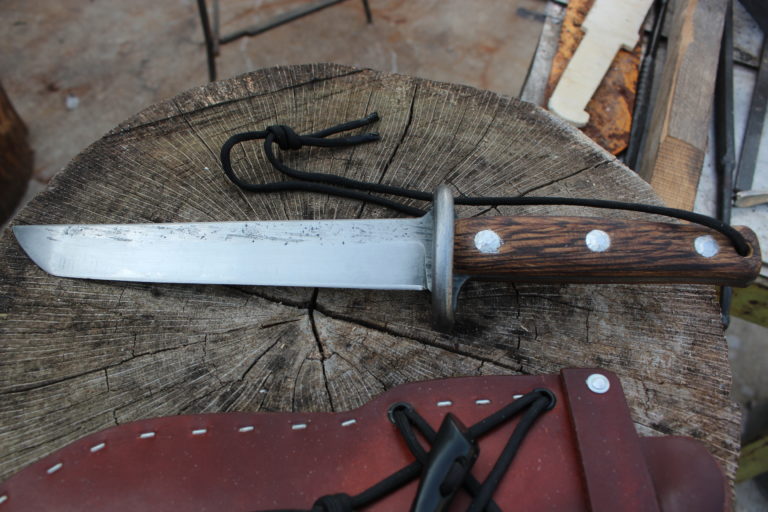
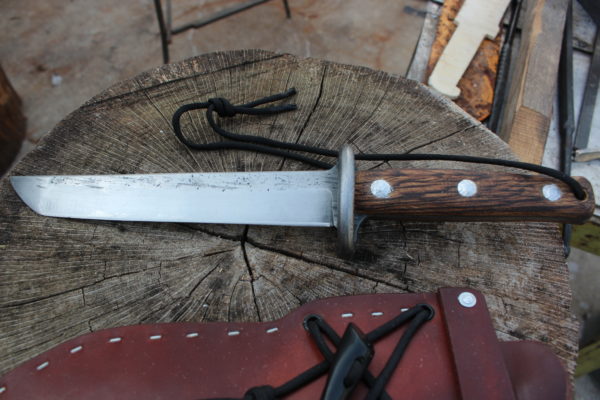
Survival instructor and host of The Weather Channel’s new series “SOS, How To Survive,” Creek Stewart is releasing a new addition to his line of Whiskey Knives. The 7.75-inch-bladed tanto in A36 carbon steel is designed by Hank Gevedon of Reptile Toolworks with continual input from Creek.
 
Outdoor survival instructor Creek Stewart will be adding a tanto with a ghost guard to his family of Whiskey Knives.
Creek Stewart of “Fat Guys In The Woods” fame is hosting a new Weather Channel series: SOS, How To Survive. He is also adding The Rising Sun to his line of Whiskey Knives.

Creek runs Willow Haven Outdoor in Anderson, Indiana, where he teaches survival skills, provides some survival supplies and especially enjoys partnering with American artisans to offer items of high quality craftsmanship at affordable prices. His Apocabox is a subscription-based collection of survival items that arrives at your door every two months. He also offers a monthly survival skill program. Creek was the star of “Fat Men In the Woods,” and is again working with The Weather Channel on the new series. He is the author of an young adult survivalist romance titled “Rugosa.” A follow-up to that is also in the works.

 
In “SOS, How To Survive,” Creek and other survival experts analyze a series of real-life survival situations. They discuss what happened, what was done correctly by the survivors or what went wrong. The show started Sunday, August 20 and is ongoing. Throughout Creek offers tips that can be used in survival situations.
 

Creek Stewart Hosts The Weather Channel’s New SOS Series


Survival scenarios are no joke!

Posted by The Weather Channel Originals on Thursday, August 10, 2017


Small-Batch Production Of The Rising Sun Begins

Meanwhile back in Mount Vernon, Kentucky, Hank and his crew are gearing up to roll small batches of The Rising Sun into production by early 2018. Like all Whiskey Knives, The Rising Sun marries the early American frontier spirit and looks with the precision of Asia’s strong cutlery tradition. All of the knives are asymmetrically ground (so remember to only sharpen one side and just strop the other). The A36 carbon steel allows for a hard outer edge that is sharp and holds an edge with a tough inner core that is flexible and stands up to the rigors of hard outdoor use.
 
Creek Stewart helps design his line-up of Whiskey Knives, including the new Rising Sun.
The Rising Sun from Whiskey Knives has a “ghost” guard that rides up the sheath, creating a striking visual when carried.

The handles are made from upcycled white oak whiskey barrel staves, which have already gone through a processing and aging. Fitting rivets are aluminum, and Whiskey Knives come with a 9-ounce belly leather sheath, stapled and dipped in paraffin wax. The Rising Sun’s sheath slides up through the knife’s ghost guard for an attractive-looking carry. MSRP: $189.


Contact Creek Stewart, Willow Haven Outdoor, 2867 N. 200 E., Anderson, IN 46012, www.creekstewart.com/whiskey-knives, on Facebook at Creek Stewart and on Instagram at @creekstewart.

A Digital Subscription To BLADE Is The Answer

Save $4 off the print price of a annual subscription to BLADE Magazine with a digital subscription.
You can read your digital issues of BLADE Magazine anywhere you have your phone, tablet or computer, and there’s no need to find storage for all your old issues.

If piling-up issues of magazines seems like a waste to you… If you feel like you don’t have time to read a magazine… If you like the stories we offer in BLADE, but want a more economical option, then a digital subscription is the answer. An annual subscription to BLADE is $17.98, $4 off the print price.


Of Blue Mohawks, Butterfly Knives and Buddies

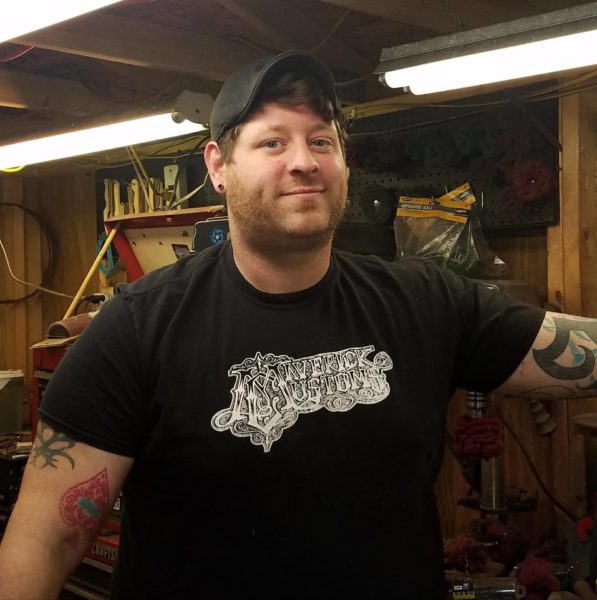
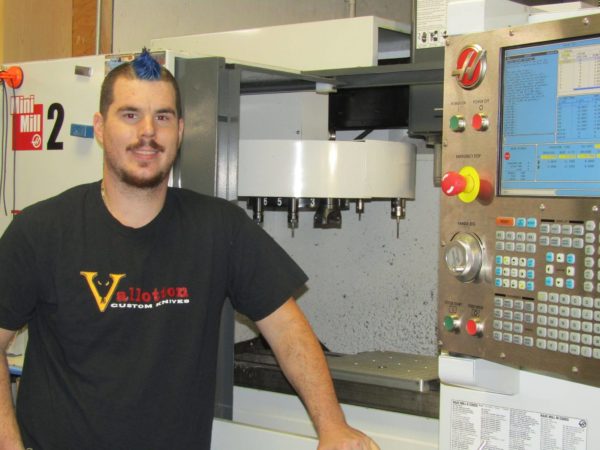
If you could apply a motto to VMX Knives it would be: Let’s have some fun. At least that’s the impression you get after talking with co-owners James Robert Buckley of Maverick Customs and Kyle Vallotton of three-generation-strong Vallotton Custom Knives. Rob and Kyle became friends online. For BLADE Show 2017, Kyle—sporting a new do—invited Rob, whom he calls Buckley, to share space at the Vallotton table. But due to a confluence of issues, Kyle, who is known for his butterfly art knives, had no balisongs at the table this year. Rob, a machinist and welder before getting into knifemaking, asked Kyle if he’d look at a design he’d come up with for a balisong. Kyle liked it. The men agreed to make the knife together, Kyle bringing his expertise in the art-balisong industry to the newcomer and Rob offering to show Kyle what he knew about machining steel. It wasn’t long before a work flow was ironed out and the VMX-1 was brought from paper to reality, a baby born of blue mohawks, butterfly knives and buddies.

Rob Buckley was a machinist and welder before he got into knifemaking full-time.
James Robert Buckley is the owner of Maverick Customs out of Horse Cave, Kentucky. He is also the co-owner with Kyle Vallotton of VMX Knives.

Rob Buckley grew up in Glasgow, Kentucky, about 45 minutes northeast of Bowling Green. While in high school and working at a family-owned cabinetry shop, he came to a realization: “I hated wood,” he said, laughing. But he took college-level courses in welding and machining. “It got me,” he said of metalwork. At 17 he entered the Army, wanting combat medic, but settling for infantry. He sustained injuries that would require surgery before continuing his training, so he accepted the proffered medical discharge. Returning home, he landed a machining job in Dickson, Tennessee, where his parents were living at the time. After those few months as a manual machinist and welder, he moved back to Glasgow to work as a certified welder. Six months later he took a position at a magazine printing plant, staying for 10 years. He left for a computer numeric controlled (CNC) machinist position, but he found operating the computer-programmed mills and lathes not as satisfying as hands-on metalworking. Three years ago he began making tools, then later knives, full time.

Kyle Vallotton specializes in art balisongs at Vallotton Custom Knives.
Kyle Vallotton hit BLADE Show 2017 with a blue mohawk. He is a third-generation knifemaker and the fifth person in his family to be making knives under Vallotton Custom Knives. He is also co-owner of VMX Knives with James Robert Buckley of Maverick Customs.

Kyle Valloton marks the third generation and fifth family member to be making knives under Vallotton Custom Knives. He began in the shop when he was 10 years old. He took some time off to test jobs away from the family business, such as telephone sales representative, but by the time he was 23, he knew he wanted to make knives for a living. He grew up in Umpqua, about an hour and a half south of Eugene. His grandfather Butch was an innovator in the tactical folder and automatic knifemaking world. The Vallottons hold 15 patentable developments with seven still-running royalty contracts. Vallotton innovations appear in numerous production knives, from Gerber to Spyderco.

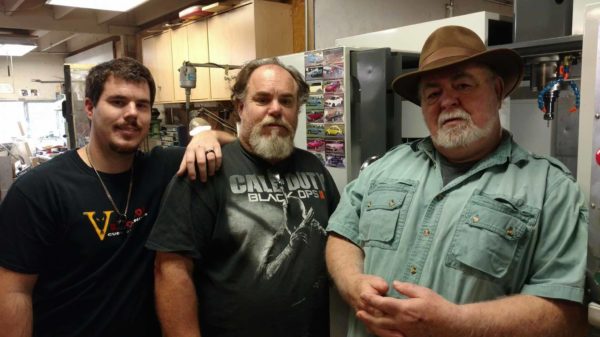
Kyle, Rainy and Butch Vallotton have been making knives for close to four decades.
Kyle Vallotton, left, specializes in high-end balisongs, tapping into both the artistry of his dad, Rainy, and the innovations of his grandpa, Butch, right.

Kyle’s dad, Rainy, made his mark in the high-end art-knife market, and Kyle’s specialty is the butterfly knife. He taps into both his grandfather’s exactitude in specifications and his father’s artistic flare. Kyle’s demeanor exudes good-natured enthusiasm and a sense of fun without being reckless. He contemplated attending BLADE Show 2017 sporting a blue mohawk, but wasn’t sure how it would go over. Finally, he decided to do it. “Let’s have some fun,” he said. “Everyone loved it.”

The first VMX-1s will ship mid-November, 2017.
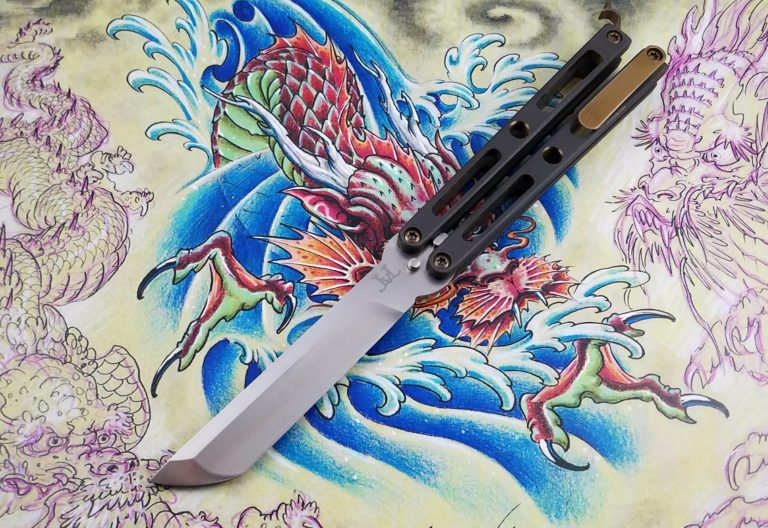
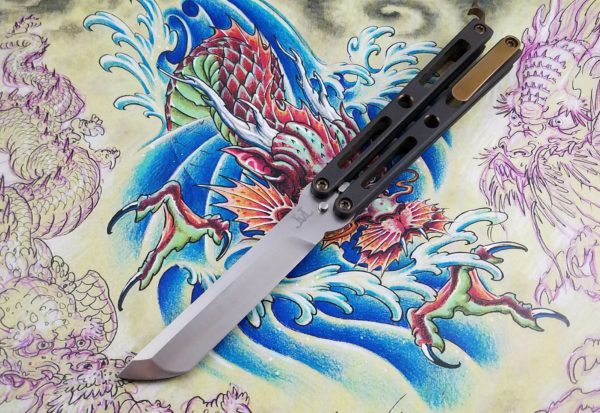
The VMX-1 prototype was made of BG42, but the production model has a 4-inch blade of CPM 154 steel. The prototype handle is black titanium, but custom-colored anodized titanium handles are available. Artwork by Zach Burcham of West Main St. Tattoos in Glasgow, Kentucky.

The balisong segment of the knife community is a microcosm of the knife industry itself. There are those who use the knives in the practice of Filipino-style martial arts; those who use the knives in a mesmerizing display of twirling and tricks, resplendent with the individual’s unique style; and those who collect the knives created as works of art. In addition, because many states have laws preventing the sale of balisongs—only trainers can be used by residents of those states. Kyle mentioned that he follows Knife Rights‘ work to overhaul outdated knife regulations in numerous states.

Rob jokes that he knows just enough about flipping balisongs to cut himself. In fact, VMX Knives will sell you its butterfly knife without an edge if you prefer. At any time, you are welcome to send it back if you decide you want to go with a live blade.

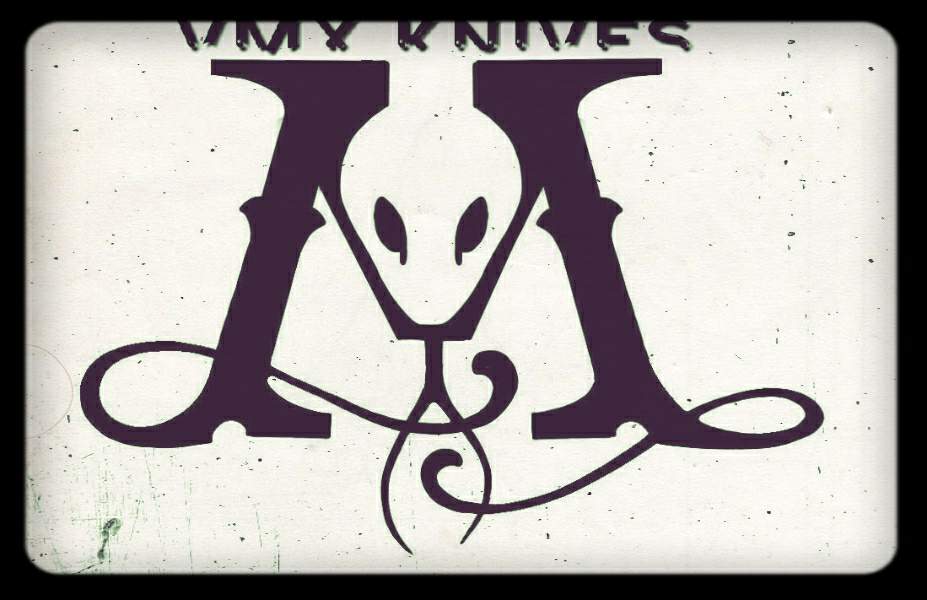
Zach Burcham of West St Tattoos in Glasgow, Kentucky, designed the VMX Knives logo.
Zach Burcham, owner of West Main St. Tattoos in Glasgow, Kentucky, designed the logo for Maverick Customs and was brought in again to combine the M from Maverick Custom’s logo as well as a V for Vallotton Custom Knives to create the VMX Knives logo. Like the VMX-1 balisong itself, the logo uses old-school lettering with a modern twist.

Rob got his tattoo artist, Zach Burcham of West Main St Tattoos, who designed the M logo for Maverick Customs—named after Rob’s son—to come up with a logo that incorporated a V for Vallotton with the M for Maverick, and the VMX Knives logo was born. It is representative of the gold-leafing in signs of yore in the style of David Smith, for example, but with a modern twist, which is exactly how this team approaches their design.

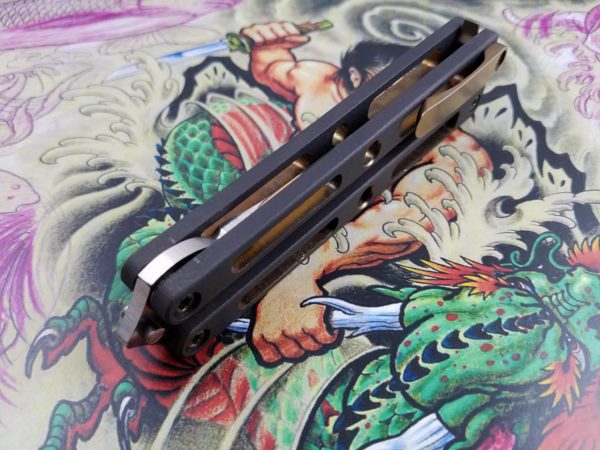
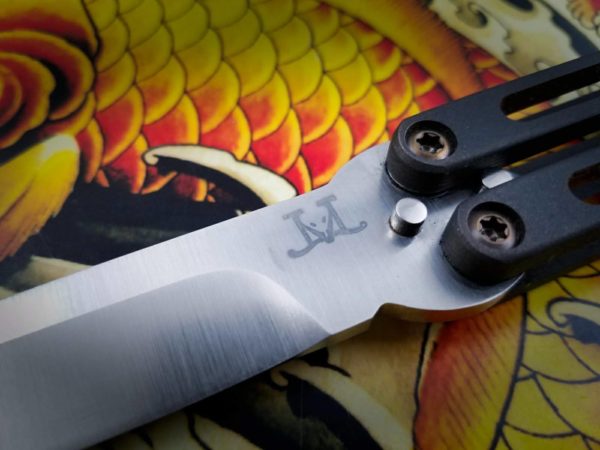
The VMX-1 utilizes a floating latch system designed by Kyle Vallotton.
The VMX-1 has phosphor bronze washers, titanium screws and standoffs, and a floating latch system designed by Kyle Vallotton. It measure 5.25 inches closed, 9.25 open. Artwork by Zach Burcham, West Main St. Tattoos in Glasgow, Kentucky.

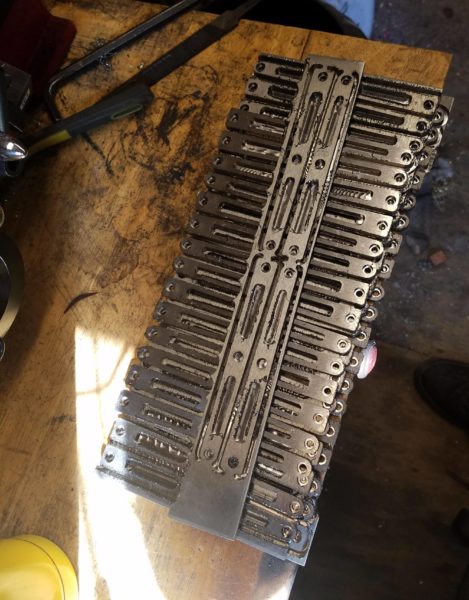
Right now, whichever of the two are ordering supplies in the course of their personal knifemaking businesses purchases whatever VMX needs. They split those expenses 50-50, watching the price of titanium as it fluctuates. At present, Kyle machines the profiles and handles then sends them to Rob, who likens what he receives to model car parts connected to their frames by plastic tabs. “From the sheet I surface everything flat, chamfer holes and shape the tops by hand,” he explained. He also applies any final finish, such as anodizing, and machines some internal parts. Currently, the blades go back to Kyle for hand-grinding, hollow on the belly and convex on the point. Soon unused equipment at the Vallottons’ will be heading Rob’s way so he can also do the grinding. Once all the components reach Rob’s shop, they’re ready for clean-up, assembly, packaging and shipping.


Blade HQ will have some VMX-1 balisongs or you can order directly from VMX Knives.
VMX Knives has built a high-end balisong that Kyle Vallotton hopes will change the way flippers think of flippers. You will find some offered for sale at Blade HQ or you can custom order yours by contacting Rob Buckley at Maverick Customs via methods listed at the bottom of this article. Tattoo art by Zach Burcham at West Main St. Tattoos in Glasgow, Kentucky.

“They are the strongest folding knives,” Rob said of balisongs. “There’s no locking failure; the pin stops it from closing.” No matter how tight tolerances are, owners will often loosen up butterfly knives for better flipping. “So it’s like a chain-link fence,” Rob said. He and Kyle are striving for a knife that is as tight as a bushings-and-washers construction can be while still allowing for smooth flipping action. In the future, they hope to offer a bearings model, as well as a limited-run high-end model.

Rob Buckley of Maverick Customs finishes the rough parts that come machined from Kyle Vallotton.
Even though Rob Buckley is in Kentucky and Kyle Vallotton is in Oregon, the men have worked out a division of labor that maximizes the strengths of each. Rob receives the parts on sheets. From there, they undergo numerous processes before they are ready to be finished, assembled and shipped.

The balisong community is an entity all to itself within the knife industry. Both Rob and Kyle acknowledge the achievements of others who started where they are now, while simultaneously carving out their own space in the market. Bladerunners Systems, which goes by BRS, started out as “flippers making flippers for flippers,” Kyle explained.

“I met the BRS boys before they became BRS,” he noted. “They are a bunch of balisong enthusiasts and great guys doing a great job.” In Kyle’s opinion BRS excels at using overlay materials that look cool and grab the attention of the crowd. “They are a big production company making a decent knife.”

“They make a great product,” Rob agreed, adding that butterfly knives made by Bali-Song Inc. (1979-1983), which became Pacific Cutlery Corp. (1983-1987), which became Benchmade (1988 to present) are well made as well. In fact, he owns a Benchmade Balisong 53 Mangus and a Spyderco Spyderfly.

VMX Knives is set to release its first round of VMX-1 balisongs in mid-November, 2017. They received 15 preorders, enough to get the project off the ground.

Kyle explained the partnership’s goals with the VMX-1. “What I have been doing and am now doing with VMX is simplifying and changing the norm,” he commented. “We are a small company making a very high-quality knife for the same price, and it’s custom-to-order.” Kyle wants to change the way flippers think about flippers. “I want to push boundaries and change things for the better. It’s what I wanted to do when I started making balis.”

It is obvious from their banter, that Rob and Kyle enjoy ribbing each other and genuinely respect what each brings to the project. The online acquaintances who developed a friendship and started a business together have also seemingly adopted each other’s families. Only Rob does not flip balisongs in front of his impressionable son, he admitted with a laugh.

Contact James Robert (Rob) Buckley, VMX Knives, 111 Corner Ave., Horse Cave, KY 42749; 270-576-4392. You can view the work of Rob on Facebook at Maverick Customs and Kyle’s work along with the work of other Vallottons at Vallotton Custom Knives.

A Digital Subscription To BLADE Is The Answer

Save $4 off the print price of a annual subscription to BLADE Magazine with a digital subscription.
You can read your digital issues of BLADE Magazine anywhere you have your phone, tablet or computer, and there’s no need to find storage for all your old issues.

If piling-up issues of magazines seems like a waste to you… If you feel like you don’t have time to read a magazine… If you like the stories we offer in BLADE, but want a more economical option, then a digital subscription is the answer. An annual subscription to BLADE is $17.98, $4 off the print price.


Midweek Maker Forged-Style: David McConnell

David McConnell is a stamping press repairman who hopes to convert to full-time bladesmithing soon. His first knife, was a cheap Wal-Mart special. Over the years he got frustrated with the lack of quality in such knives and began thinking about making his own. He knew he could make a better knife for himself, and he did. Only his buddy loved it so much that he bought it from him, David said, laughing.

North Woods Forge offers old-school styles of knives and tools.
David McConnell of North Woods Forge in Michigan. He forges, preferring a primitive style, using natural materials..

The self-taught bladesmith has been making knives for 11 now, including tomahawks and axes. “I like to make hunting knives and more traditional stuff,” David noted.

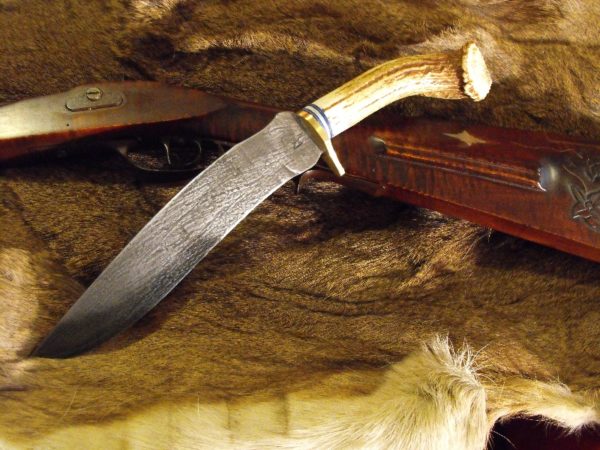
David McConnell of North Woods Forge used dyed and stabilize curly maple to make this bowie.
David McConnell made this bowie with an 8-inch blade of 1075 steel. The handle is blue-dyed and stabilized curly maple. Blue curly maple bowie. Guard is nickel silver. Overall length is 14 1/4 inches. Contacts listed at the bottom of this article.

He is an avid grouse and deer hunter, as well as and ice and fly fisherman. He lives in Kalkaska, Michigan, with his wife and 15-year-old son.

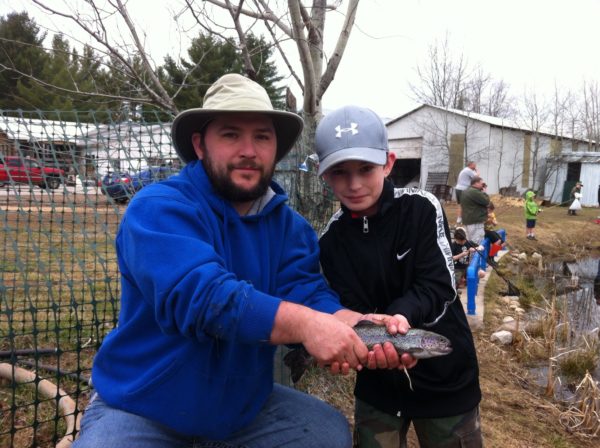
David McConnell of North Woods Forge helped his son Parker catch a trout at the National Trout Festival in Kalkaska, Michigan.
David McConnell started teaching his son Parker McConnell to fish early in life. The National Trout Festival, now in its 81st year, is held in April in Kalkaska, Michigan. Parker got this trout in the kid’s pond.
  • Best-selling knife patterns: 3 ½- to 4-inch-bladed bird-and-trout, 4- to 7-inch-bladed straight-back hunter, classic bowie
  • Favorite blade steels: W2 for hamon, toughness, ease of forging and grinding; 1075 for ease of forging and heat-treating
  • Blade grinds: flat ground, sometimes with appleseed edge
  • How he tests his knives: “If it can cut a nail and have no deformation or chipping and still stay shaving-sharp, I would have to say that’s a pretty good blade,” David commented.
  • Favorite handle materials: bone, wood, antler. “I just like the feel and warmth you get from natural materials.”
  • Price range: $85-$600
  • Knife shows he attends: local gun-and-knife shows and blacksmithing events
  • Member of: American Bladesmith Society
  • Forums he participates in: ABS
  • His website: www.northwoodsforge.com
David McConnell of North Woods Forge only forges his knives; he does not do stock-removal.
This 15-inch bowie has a 8 7/8-inch blade, flat-ground, appleseed-edged and forged from 1084 cable-patterned steel. The handle is made from axis deer crown antler with a brass guard and blue and white fiber spacers. Maker’s list price: $375.
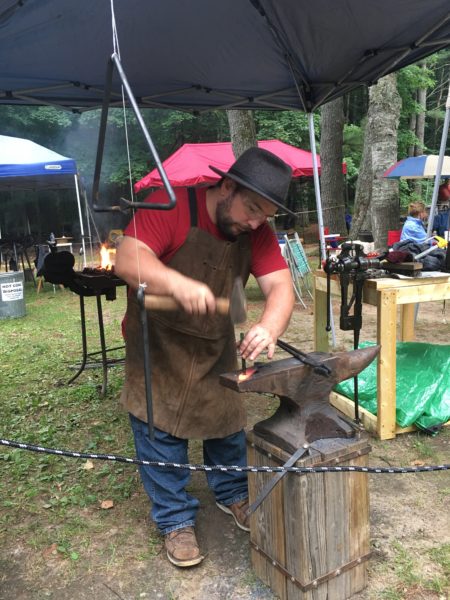
Black Iron Days takes place every August in Grayling, Michigan. David McConnell goes each year to help with bladesmithing demonstrations.
Bladesmith David McConnell puts on a forging demonstration at Black Iron Days at Hartwick Pines State Park in Grayling, Michigan. Every August blacksmiths from all over Michigan and a few from Ohio host demonstrations for the public for the whole weekend.
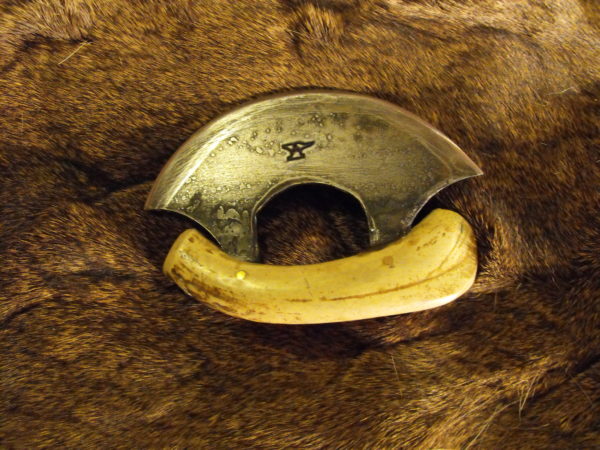
This ulu was forged by David McConnell of North Woods Forge.
North Woods Forge’s ulu has a 4 1/2-inch blade forged from 1095 steel. The handle is made from whitetail antler. David McConnell loves making primitive pieces and being an avid deer hunter, he often opts for antler material.

Contact David McConnell at 989-858-6344[email protected] or on Facebook at North Woods Forge.

A Digital Subscription To BLADE® Is The Answer

Save $4 off the print price of a annual subscription to BLADE Magazine with a digital subscription.
You can read your digital issues of BLADE Magazine anywhere you have your phone, tablet or computer, and there’s no need to find storage for all your old issues.

If piling-up issues of magazines seems like a waste to you… If you feel like you don’t have time to read a magazine… If you like the stories we offer in BLADE, but want a more economical option, then a digital subscription is the answer. An annual subscription to BLADE is $17.98, $4 off the print price.


Maker Continues Laplander Culture with Sami Knives

Roman Kislitsyn makes knives in Sami style. Sami people are native reindeer herders of northern Scandinavia.
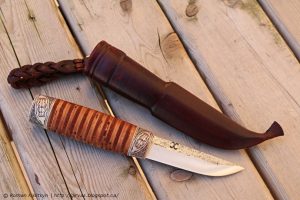
This Roman Kislitsyn sheath is made in North Sami style with a pronounced hook, which interferes less when sitting. The 4-inch blade is made by Pasi Hurttila in 80CrV2 steel. The handle is reindeer antler and birch root burl.

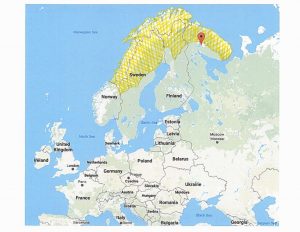
Roman Kislitsyn grew up in Apatity in the Murmansk region of northwestern Russia. Close to Norway, parts of the area also include the lands of the Sami people (in the past referred to as Lapps or Laplanders) which traverse the Kola Peninsula of Russia, and the northern and coastal regions of Finland, Sweden and Norway. Roman and others in his family are geologists so he spent much of his childhood with outdoorsmen, hunters, fishermen and those expert at surviving in the Russian wilderness. Always an admirer of Finnish and Swedish knives, Roman was most drawn to the beauty of the knives made by the Sami, the native reindeer herders of Scandinavia.

Russian Roman Kislitsyn makes knives in the style of native Scandinavians.
Roman Kislitsyn makes Sami-style knives.

Roman’s exposure to knives and survival equipment, combined with a love of crafting things with his hands, led to his first attempt at knifemaking when he was 15 or 16. “It had a blade made of high-speed steel from a piece of mechanical saw, wooden handle made of birch burl, and simple leather sheath, but I was very proud of myself,” Roman related. He made a few more knives, left to attend university and life intervened. A few years ago, he returned to knifemaking and cannot stop.

The traditional Sami lifestyle depends on reindeer herding, hunting and fishing. Roman explained that the design of their knives developed over the course of hundreds of years. They also mastered their own style of decorating things made of reindeer antler. “I like to use Sami-style decoration on my knives too. Even though I’m not Sami, but this makes me feel my connection to the land where I grew up,” Roman stated.

Native Scandinavians roamed the areas in yellow, approximated on this map.
Sami lands, in yellow, historically reached farther south, encompassing Roman’s home region, marked in orange.

Roman makes two types of knives, either Sami style or Finnish puukkos with Sami-style carvings. He does not make his own blades. Some Sami blacksmiths existed, but using blades made by other makers was, and still is, a common practice.

Roman works with high-carbon steel blades made by his friend Alessio Salsi in Belgium. Lately, he’s also being trying laminated and pattern-welded steels. Since Roman makes Scandinavian knives, the grinds are all Scandi. He used to employ blades made by Pasi Hurttila from Finland before Pasi stopped making knives. Roman also used blades made by Randal Graham in Nova Scotia. Randal took a hiatus from knifemaking but has now returned, and Roman hopes to resume collaborating with him.

Roman Kislitsyn designed this knife with a stacked birch bard handle for feel and warmth..
Roman Kislitsyn put a stacked birch bark handle on this 3.2-inch Pasi-Hurttila-made 80CrV2 blade. Carvings on the antler are in Sami-style. Bark handles are popular for Finnish puukkos; they never get slippery or cold, even below freezing.

Roman is self-taught, learning everything about knifemaking and carving through the Internet, forums and social media. With the exception of light use of a hand-drill and a Dremel, Roman uses only hand tools. “No grinders, sanders, band saws, nothing. Only files and rasps, only hardcore!” he explains. Roman’s goal is to make “functional art,” as one of his customers put it, and not a knife that just sits on a shelf. His favorite handle materials are reindeer antler in combination with birch burl and-or bark, which are all traditional materials in Sami-style knives. Maker’s list price starts at $450 US.
Roman left Russia in 2002 and now lives in Nova Scotia, but you can converse with him through forums like British Blades, Canadianknifemaker.ca and the Russian forum zadi.ru. His website and blog are at Girvas. “Girvas is a name of a lake in same region where I’m from,” Roman added. It is the Russian pronounciation of the Sami word hirvas, meaning “reindeer stag.” You can visit Roman on Facebook at Roman Kislitsyn or on Instagram @roman.kislitsyn. You can e-mail him at [email protected].

 Get Your 2017 BLADE® Show Knife

Ken Onion and CRKT collaborated on the innovative Homefront knife.
The CRKT Homefront is the 2017 BLADE Show knife, and won last year’s Most Innovated Imported Design.

The CRKT Homefront is a Ken Onion-designed knife that won Most Innovative Imported Design at last year’s BLADE Show. The field-strip technology allows for easy cleaning anywhere, without tools. Get yours now for $70 and you’ll save 30% off this true collector’s item.


Advertisement

Must Read Articles

Read this before you make a knife

Knifemaking 101 – Read This Before You Make a Knife

  by Wayne Goddard My experience has taught me that there's nothing like digging in and getting started. I've often said the hardest part of the...


how to forge damascus steel

How to Forge Damascus

Advertisement
Advertisement