
The BLADE Blogs

The blogs of the BLADE editors, Steve Shackleford and Erin Healy.

Custom Pocket Clips: Sal’s Pals

Zieba's rose gold clips
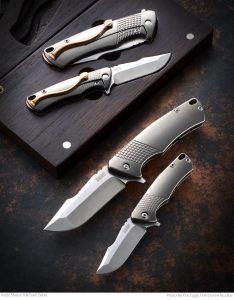
The serpentine titanium clips on Michael Zieba’s folders are finished in rose gold. (PointSeven image)
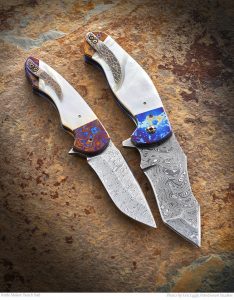
Butch Ball's damascus trailing point clips.
Damascus trailing-point clips adorn Butch Ball’s pearl folders. (PointSeven image)


C15 with pocket clip
Spyderco’s first factory/custom collaboration, the C15 designed by Bob Terzuola, sported a pocket clip.
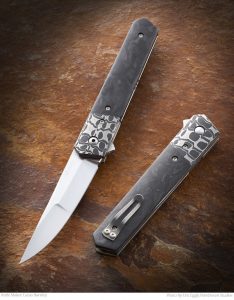
short skeletonized clip
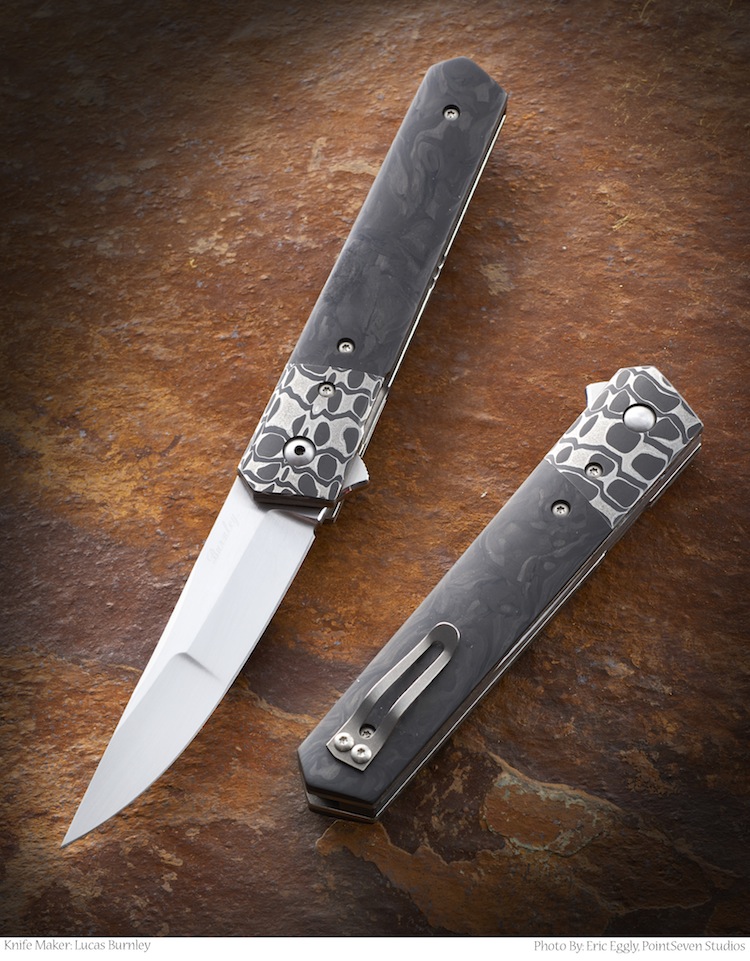
A short, skeletonized clip distinguishes Lucas Burnley’s Asian folder. (PointSeven image)

Custom knifemakers seem to introduce most knife innovations, which are then emulated by factory knife companies. Not so with custom pocket clips. BLADE Magazine Cutlery Hall-Of-Fame© member Sal Glesser popularized knives with pocket clips in his Spyderco production line, and custom knifemakers took their cue from him. As a result, today’s custom pocket clips might well be called “Sal’s Pals.”
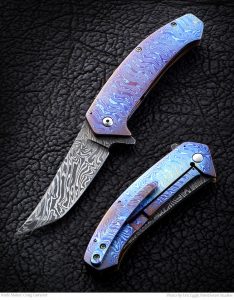
mokuti pocket clip
Craig Camerer employs mokuti for the long, curved clip on his folder. (PointSeven image)

Celebrating its 40th anniversary this year, Spyderco offered its first knife with a pocket clip—and also the company’s trademarked blade opening hole—in 1981 when it introduced the Worker model. Spyderco also popularized serrations on sporting folding knives.

The fact that custom knifemakers adopted the pocket clip, as did factory knife companies everywhere, should come as no surprise. For one thing, the clip’s abilities to attach a closed folding knife to the lip of your pocket rather than having the knife bang around in the bottom of it with car keys, coins, etc., and to make it much easier to retrieve are eminently practical. In addition, Spyderco has offered many factory/custom collaborations—knives designed by custom knifemakers and then reproduced by a company, in this case Spyderco. The first of these was in the early 1990s—the C15 designed by Bob Terzuola, which, of course, also had the blade hole and a pocket clip.

Today’s custom versions of the pocket clip run the gamut, including long ones, short ones, tall ones, round, anodized ones, rose gold ones and more.

For instance, Michael Zieba won Best New Maker at the 2016 BLADE Show for his S2 standard and mini models with serpentine titanium pocket clips finished in rose gold.
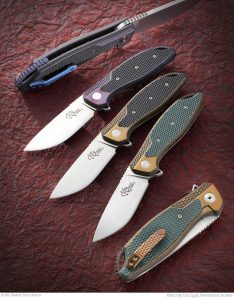
Short, cross-hatched clip
Ken Onion’s folders have a short, cross-hatched pocket clip. (PointSeven image)

On the other end of the scale is Lucas Burnley’s Asian-style folder with a very short skeletonized clip, while Butch Ball offers trailing-point damascus clips on his pearl-handle folders. Craig Camerer presents a long, curved clip in mokuti on his damascus folding knife, while Cutlery Hall-Of-Fame member Ken Onion opts for a short, cross-hatched clip on one style of his folders.

These are but a few of today’s custom knifemakers who took their cue from Sal Glesser and his utilitarian pocket clip. Hey, if you’re going to emulate someone, emulate the best.


Don’t Miss Knives 2017, the World’s Greatest Knife Book
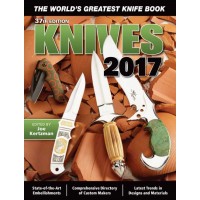
Best price best knife book about knivesThe best knives in the world can only be found in the greatest knife book on the planet. Put your order in for Knives 2017 and look forward to gorgeous full-color photos of custom knives, in-depth articles and profiles of the hottest knives from the best ‘makers.

Order Knives 2017 from ShopBlade.com for the best price anywhere.
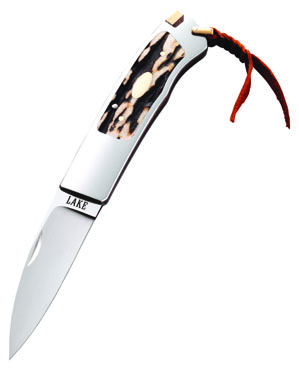
Knives for Charity

There’s never been a shortage of charitable acts within the knife industry. For as long as there have been knifemakers, there have been knives given to those in need, including soldiers, farmhands, friends and neighbors, or blades donated for auction to raise money for good causes. A Google search for “knives for charity” turns up too many knifemakers and knives to mention here, partly for fear of leaving someone out.RONlake.indd

The American Knife & Tool Institute has announced that it plans to hold a “1st Annual Giving Back Event,” featuring knives donated by Ron Lake (one of Ron’s past knives shown), D’Alton Holder and others, at the 2016 BLADE Show. AKTI’s 1st Annual Giving Back Event will take place Friday, June 3, 2016, from 6-9 p.m. at the Renaissance Waverly Hotel—host hotel of the 2016 BLADE Show. No room, meeting room or ballroom has been announced as of this time.

As advertised in an AKTI press release, “We invite you to participate in AKTI’s 1st Annual Giving Back Event! Some of the finest custom knifemakers are contributing their handmade knives to Give Back to help the knife community and their favorite charities. This will be a fun evening with live and silent auctions supporting organizations that make a difference. 50 percent of proceeds will go directly to a charity of choice. 50 percent will support AKTI’s many efforts to keep knives in our lives.

How can you give back? Please stop by AKTI’s booth #18 to get more details.

Georgia Knife Preemption Bill Passes House—EMAIL & CALL THE GOVERNOR NOW!

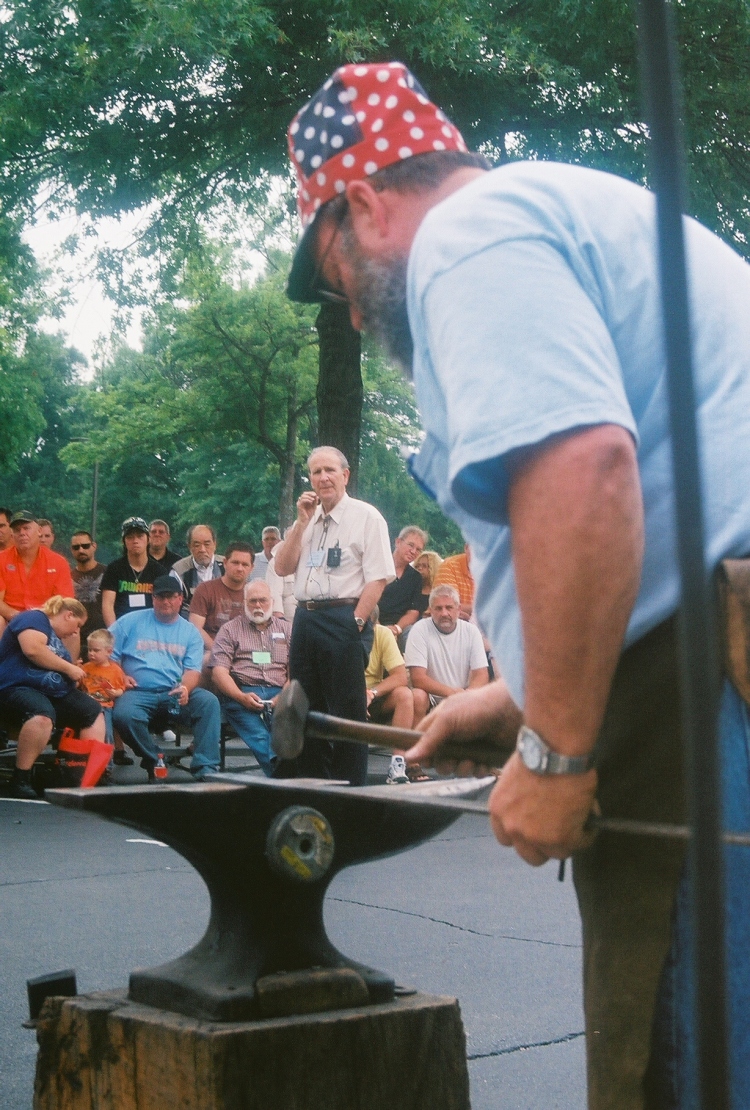
Call or e-mail Georgia Gov. Nathan Deal today to encourage him to sign the Georgia Knife Preemption Bill passed by the state house and senate so you will not have to worry about inconsistent knife laws in Georgia when traveling to and from the BLADE Show (www.bladeshow.com). While at the show, which will be June 8-10 at the Cobb Galleria just outside Atlanta, check out the ABS forging demo featuring ABS master smith Jay Hendrickson (standing, background) and ABS bladesmith Tim Carr (forging a blade to shape at the anvil).

Thanks to your calls and emails, the Georgia House of Representatives passed SB432, Knife Preemption Bill 124-46, Knife Rights (KR) reported. “Our heartfelt thanks to Senator Bill Heath and Representative David Knight for shepherding this bill through the legislature,” the KR release stated.

     However, it’s not quite over yet. Now the bill moves to Gov. Nathan Deal’s desk for his signature. Without his signature, the bill won’t become law.  Please use this form to contact Gov. Deal’s office and politely request that he sign SB432 (see instructions below):

     http://gov.georgia.gov/00/gov/contact_us/0,2657,165937316_166563415,00.html 

     Then, please also call Gov. Deal at: 404-656-1776

     When you fill out the online form, DO NOT indicate you are representing an organization or group (unless you actually are an officer or representative acting in that capacity).

     Under “Please choose a category:” select “Legislation-State

     You can click the box “no response is needed” unless you need a form email response.

     In the message box, a sample message appears below.  You can personalize this message if you are so inclined. It does make a difference:

Dear Governor Deal,

    I am writing to respectfully request that you please sign SB432, which makes Georgia’s knife laws consistent throughout the state. Georgia is very important to knife collectors and manufacturers worldwide because it is home to the BLADE Show, the largest knife show and knife event in the world. The show represents millions of dollars and hundreds of jobs for Georgia. SB432 will ensure that BLADE Show attendees will not have to worry about inconsistent knife laws in Georgia when traveling to and from the BLADE Show.


    For more click on www.KnifeRights.org.

For more on the latest knives, knife legislation, knifemaking instruction, knife trends, knifemakers, what knives to buy and where and much more, subscribe to BLADE Magazine, the World’s No. 1 Knife Publication. For subscription information click on http://www.shopblade.com/product/blade-magazine-one-year-subscripti…?r+ssfb033012#BL1SU.

Maker Continues Laplander Culture with Sami Knives

Roman Kislitsyn makes knives in Sami style. Sami people are native reindeer herders of northern Scandinavia.
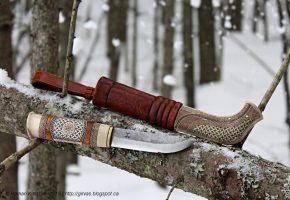
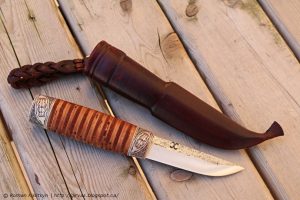
This Roman Kislitsyn sheath is made in North Sami style with a pronounced hook, which interferes less when sitting. The 4-inch blade is made by Pasi Hurttila in 80CrV2 steel. The handle is reindeer antler and birch root burl.

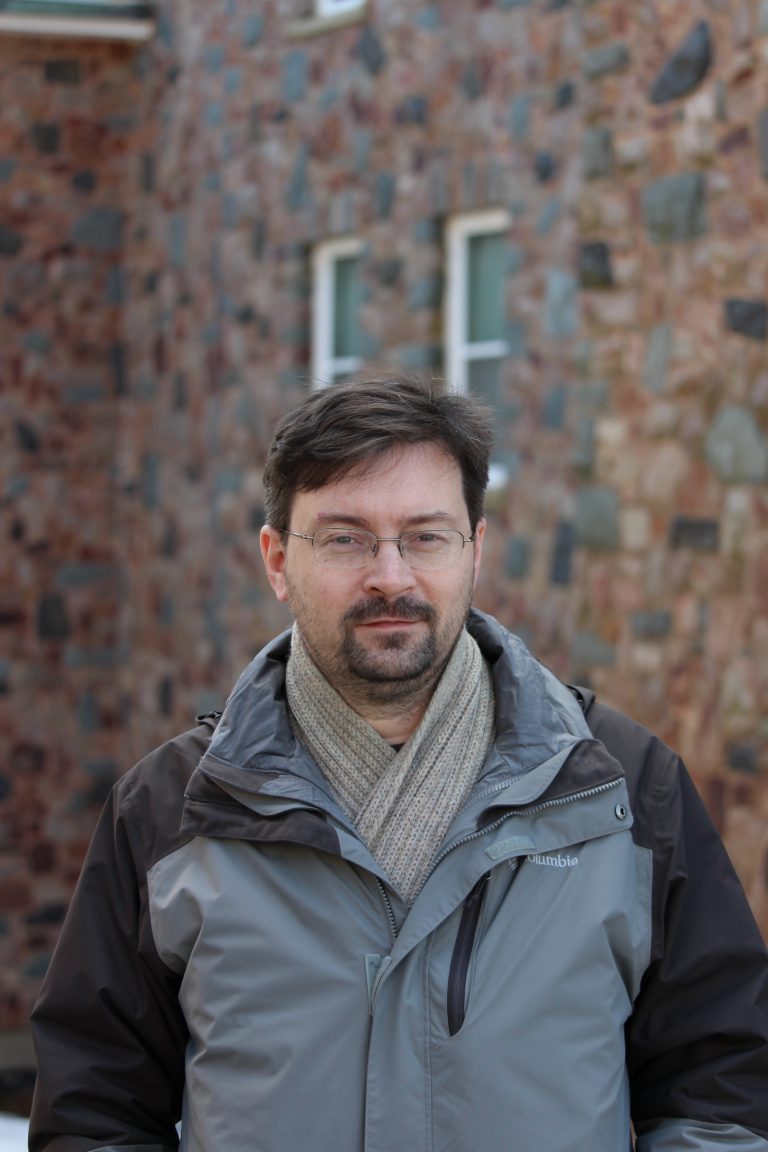
Roman Kislitsyn grew up in Apatity in the Murmansk region of northwestern Russia. Close to Norway, parts of the area also include the lands of the Sami people (in the past referred to as Lapps or Laplanders) which traverse the Kola Peninsula of Russia, and the northern and coastal regions of Finland, Sweden and Norway. Roman and others in his family are geologists so he spent much of his childhood with outdoorsmen, hunters, fishermen and those expert at surviving in the Russian wilderness. Always an admirer of Finnish and Swedish knives, Roman was most drawn to the beauty of the knives made by the Sami, the native reindeer herders of Scandinavia.

Russian Roman Kislitsyn makes knives in the style of native Scandinavians.
Roman Kislitsyn makes Sami-style knives.

Roman’s exposure to knives and survival equipment, combined with a love of crafting things with his hands, led to his first attempt at knifemaking when he was 15 or 16. “It had a blade made of high-speed steel from a piece of mechanical saw, wooden handle made of birch burl, and simple leather sheath, but I was very proud of myself,” Roman related. He made a few more knives, left to attend university and life intervened. A few years ago, he returned to knifemaking and cannot stop.

The traditional Sami lifestyle depends on reindeer herding, hunting and fishing. Roman explained that the design of their knives developed over the course of hundreds of years. They also mastered their own style of decorating things made of reindeer antler. “I like to use Sami-style decoration on my knives too. Even though I’m not Sami, but this makes me feel my connection to the land where I grew up,” Roman stated.

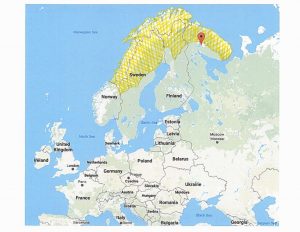
Native Scandinavians roamed the areas in yellow, approximated on this map.
Sami lands, in yellow, historically reached farther south, encompassing Roman’s home region, marked in orange.

Roman makes two types of knives, either Sami style or Finnish puukkos with Sami-style carvings. He does not make his own blades. Some Sami blacksmiths existed, but using blades made by other makers was, and still is, a common practice.

Roman works with high-carbon steel blades made by his friend Alessio Salsi in Belgium. Lately, he’s also being trying laminated and pattern-welded steels. Since Roman makes Scandinavian knives, the grinds are all Scandi. He used to employ blades made by Pasi Hurttila from Finland before Pasi stopped making knives. Roman also used blades made by Randal Graham in Nova Scotia. Randal took a hiatus from knifemaking but has now returned, and Roman hopes to resume collaborating with him.

Roman Kislitsyn designed this knife with a stacked birch bard handle for feel and warmth..
Roman Kislitsyn put a stacked birch bark handle on this 3.2-inch Pasi-Hurttila-made 80CrV2 blade. Carvings on the antler are in Sami-style. Bark handles are popular for Finnish puukkos; they never get slippery or cold, even below freezing.

Roman is self-taught, learning everything about knifemaking and carving through the Internet, forums and social media. With the exception of light use of a hand-drill and a Dremel, Roman uses only hand tools. “No grinders, sanders, band saws, nothing. Only files and rasps, only hardcore!” he explains. Roman’s goal is to make “functional art,” as one of his customers put it, and not a knife that just sits on a shelf. His favorite handle materials are reindeer antler in combination with birch burl and-or bark, which are all traditional materials in Sami-style knives. Maker’s list price starts at $450 US.

Roman left Russia in 2002 and now lives in Nova Scotia, but you can converse with him through forums like British Blades, Canadianknifemaker.ca and the Russian forum zadi.ru. His website and blog are at Girvas. “Girvas is a name of a lake in same region where I’m from,” Roman added. It is the Russian pronounciation of the Sami word hirvas, meaning “reindeer stag.” You can visit Roman on Facebook at Roman Kislitsyn or on Instagram @roman.kislitsyn. You can e-mail him at [email protected].

 Get Your 2017 BLADE® Show Knife

Ken Onion and CRKT collaborated on the innovative Homefront knife.
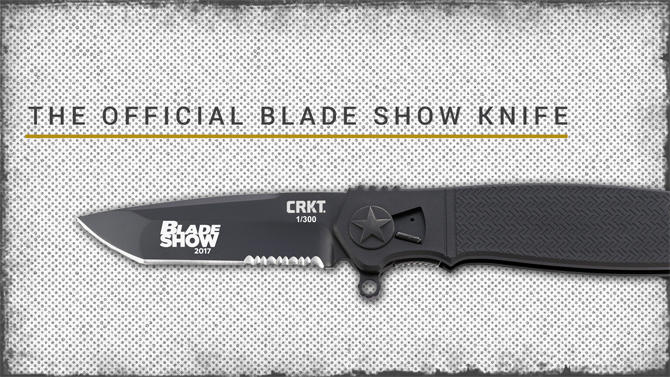
The CRKT Homefront is the 2017 BLADE Show knife, and won last year’s Most Innovated Imported Design.

The CRKT Homefront is a Ken Onion-designed knife that won Most Innovative Imported Design at last year’s BLADE Show. The field-strip technology allows for easy cleaning anywhere, without tools. Get yours now for $70 and you’ll save 30% off this true collector’s item.


Boy With Form of Autism Killed After Threatening Police With Knife

Police in Calumet City were defending their actions Wednesday after officers shot and killed a 15-year-old boy, who has a form of autism, after he threatened them with a knife.

     Stephon Watts’ family said he suffered from Asperger’s Syndrome — a high-functioning form of autism — and attention deficit disorder.

     According to the story at http://chicago.cbslocal.com/2012/02/01/boy-15-shot-dead-by-police-in-calumet-city/, some witnesses claimed the boy was only holding a butter knife. Police would only describe it as a “kitchen knife.”

     Calumet City Police Chief Edward Gilmore said the boy cut a police officer through his shirt sleeve with a “kitchen knife.”

     “I think they did everything they possibly could to avoid this,” Gilmore said. “It’s unfortunate that we had to get to this situation.”

     The boy’s mother, Danelene Powell-Watts, was screaming, livid, and inconsolable after her son was killed. She was furious that officers used deadly force against her son this time rather than subduing him with a stun gun.

     “They shot my son,” she yelled at officers as she was blocked from entering the Calumet City police station. “Every last one of you know my son has autism.”

     Gilmore said police had been called to the home 10 times since 2010 to deal with the boy. Stephon’s father reportedly called police again Wednesday morning after the teen had become aggressive.

    “We tried to do everything we could to keep him from being a victim, as he was an offender. He chose to be an offender,” Gilmore said.

    The chief said police were called to the home to get Stephon under control, as they had been before. But that didn’t work, he said.

    “When he slashed the officer’s arm, the officer felt his life was in jeopardy and he had nothing else to do, but to defend himself,” Gilmore said.

     Stephon’s family said police have used a stun gun on him in the past.

    “They didn’t have to murder him. This is nothing but murder and they shoot to kill,” Powell-Watts said. “He had a butter knife and … my husband said that he lunged at the police officer.”

     Stephon’s uncle said police had subdued his nephew with stun guns before.

     “They didn’t have to shoot him. They could have tasered the child. He’s only 15 years old,” Wayne Watts said. “They could have tased him, like they did him before, took him to the hospital and he would have been fine and that’s what I want to know. Why couldn’t they do that to him so that he could still be breathing with us right now?”

     Gilmore said a stun gun wasn’t used because the lead officer did not have a stun gun.

     Five officers responded to the Watts home after Stephon’s father called police, according to Gilmore. Two entered the house, heading to the basement where they found Stephon. One of those two officers did have a stun gun with him.

     “Unfortunately today, when he slashed the officer’s arm, the officer felt his life was in jeopardy and he had nothing else to do, but defend himself,” Gilmore said.

     The boy’s family said police should have used a stun gun and spared his life, especially since they’d been to the home before and knew what to expect.

     Both officers have been placed on paid administrative leave.

     Gilmore said a year ago, all of the officers in the department went through a three-day autism awareness program to learn how to handle calls involving people with autism.

     Dr. Louis Kraus, professor and section chief of child and adolescent psychiatry at Rush University Medical Center, questioned whether deadly force was really necessary.

     “With everything that they’ve done before, they should have known before going in what they were dealing with. And, you know, the goal really should have been to have gotten this child to a hospital,” Kraus said.

     He said people with autism can frequently become aggressive, but not because they are trying to hurt someone.

     “What we know is that, when they get anxious – probably more commonly than the typical person when they get anxious – they might lash out; not with the intention of doing harm, but simply because of how frightened they are,” Kraus said.

     Calumet City Alderman Brian Wilson had questions about the shooting as well. “I think less deadly means could have been used,” Wilson said.

     Meanwhile, Illinois State Police are investigating the shooting.

For more on the latest knives, knife news, knife legislation, knifemaking instruction, knife trends, knifemakers, what knives to buy and where and much more, subscribe to BLADE® Magazine, the World’s No. 1 Knife Publication. For subscription information click on http://www.shopblade.com/product/blade-magazine-one-year-subscripti…?r+ssfb020612BL1SU

Knife Of The Day XIV: Durvyn Howard


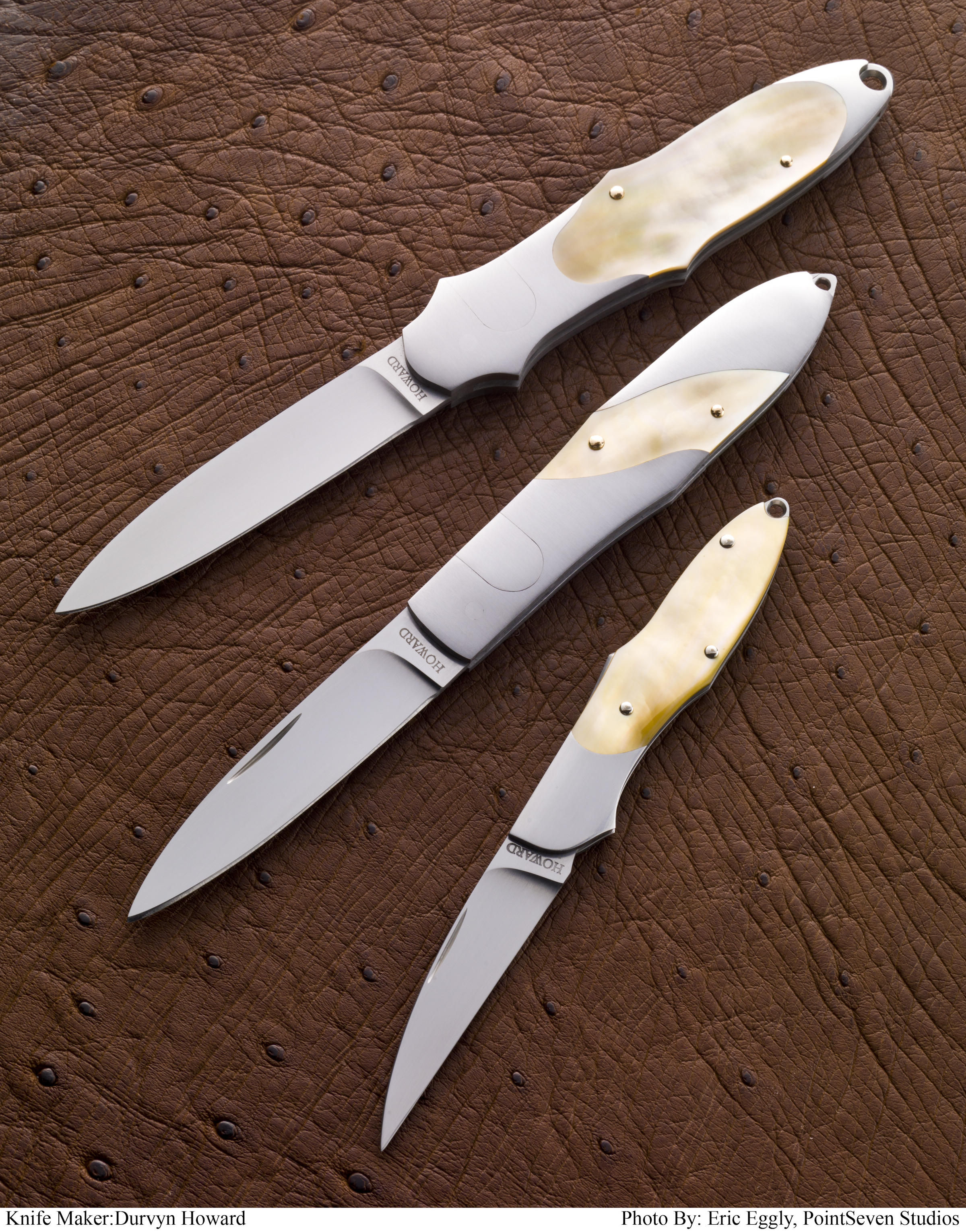
Our Knife Of The Day—make that KNIVES of the day—are these sexy little beauties by Durvyn Howard in gold-lip mother-of-pearl. For more information on these knives, contact purveyor David Hodge of Miami Nice Knife at [email protected]. Howard’s contact info: 4220 McLain St. S., Hokes Bluff, AL 35903 256-492-5720, cell 256-504-1853.


For more on the latest knives, knife legislation, knifemaking instruction, knife trends, knifemakers, what knives to buy and where, and much more, subscribe to BLADE® Magazine, the World’s No. 1 Knife Publication. For subscription information click on http://www.shopblade.com/product/blade-magazine-one-year-subscripti…?r+ssfb120112#BL1SU

National Fraud Week: Fight Fake Knives

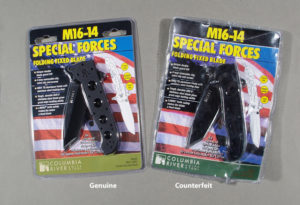
Counterfeit knives
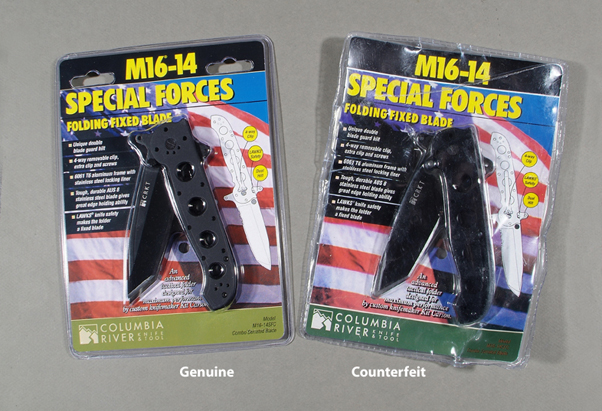
True counterfeit knives are those that not only copy the original in terms of every one of the knife’s features and markings, but also in every detail of the knife’s packaging as well, such as here on the CRKT M16-14. The authentic one is at left, the counterfeit at right.
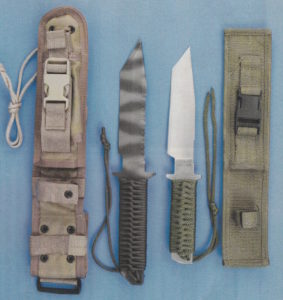
Counterfeit knives
Counterfeiters marked their counterfeit (right) of an authentic Strider fixed blade (left) “Strider,” but from there it becomes obvious the counterfeit is not legitimate. Note the counterfeit’s incorrect dimensions, inaccurate blade grind, finish and length of clip, miniscule sawteeth and sharp corners where they should not be, as well as the shoddy workmanship of the green sheath.
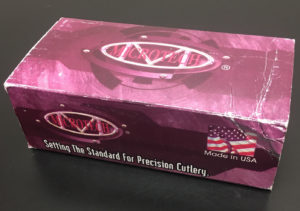
counterfeit knives
The Microtech knife box above with a pinkish hue is a counterfeit. The authentic box at left is outfitted with a unique serialized barcode and also a “claw” watermark to help identify the authentic packaging.
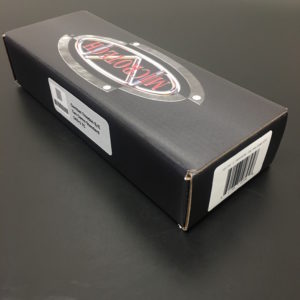
Counterfeit knives
The authentic Microtech packaging is black and has the unique serialized bar code.
counterfeit knives
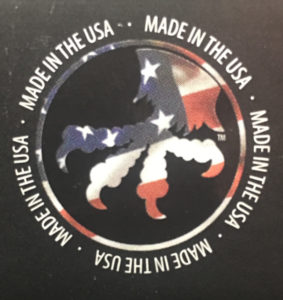
Another indication of authenticity on the Microtech product box is the special Stars ‘n Stripes “claw” watermark.

Fake knives—better known as counterfeit knives—are a worldwide problem that needs everyone concerned to pay attention, and National Fraud Awareness Week Nov. 12-18 is a good time to sit up and take notice.

Factory knife companies are especially prone to having their knives counterfeited by nefarious operations, the latter usually based overseas. The American Knife & Tool Institute has a dedicated program tailored to fight the plague of fake knives, and other cutlery companies such as BrowningCRKT, Cold Steel, Chris Reeve Knives, Knifeart and others have websites that address the scourge.

What can you do? Visit the above sites and others and familiarize yourself with the situation concerning counterfeits of those companies’ knives. While some custom knives are victims of counterfeits as well, it’s largely the factory guys that are targeted simply because their knives are recognized by many and sold on a much larger scale than custom knives, and can earn the counterfeiters much more illicit money as a result.

One thing to keep in mind is exactly what is meant here by counterfeit knife. We are not talking about design features, designs, etc., that are “knocked off” without the original maker/designer’s OK or approval. That is another matter entirely. There are some instances of where knockoffs are done and the parties involved eventually wind up in court to settle the issue. If the matter cannot be resolved otherwise, the original designer ultimately may have to prove that the design feature, design, etc., is his or hers exclusively, it has not appeared on another knife before, etc. As you can imagine, since knives have been around since the dawn of humanity, such a thing many times can be very difficult to prove. However, again, knockoffs are not the issue here.

The issue here is a counterfeit knife in which the counterfeiter has copied everything in question about the knife, from the knife’s exact features, blade stamp and even the product box in which the knife is packaged. The product box even will illegally sport the knife and company’s name, the company’s address, etc. Then, when the unsuspecting buyer purchases the fake knives and sends them to the company about a warranty issue, the company in question has the unsavory duty of telling the buyer that he or she has been duped by counterfeits, and the company cannot honor the warranty. The buyer is then stuck with worthless fake knives.

Some of the counterfeits are easy to identify because they are shoddily done. Others, however, are not as easy to spot. It’s a growing problem, one that knife companies and knife enthusiasts everywhere—including you—must continue to deal with and be vigilant about. For more information look for Daniel Jackson’s story on counterfeit knives in the January 2018 BLADE®, on newsstands Dec. 26.

Advertisement

Must Read Articles

Read this before you make a knife

Knifemaking 101 – Read This Before You Make a Knife

  by Wayne Goddard My experience has taught me that there's nothing like digging in and getting started. I've often said the hardest part of the...
how to forge damascus steel

How to Forge Damascus

Advertisement
Advertisement