
The BLADE Blogs

The blogs of the BLADE editors, Steve Shackleford and Erin Healy.

Knife Test: Four Al Mar Knives

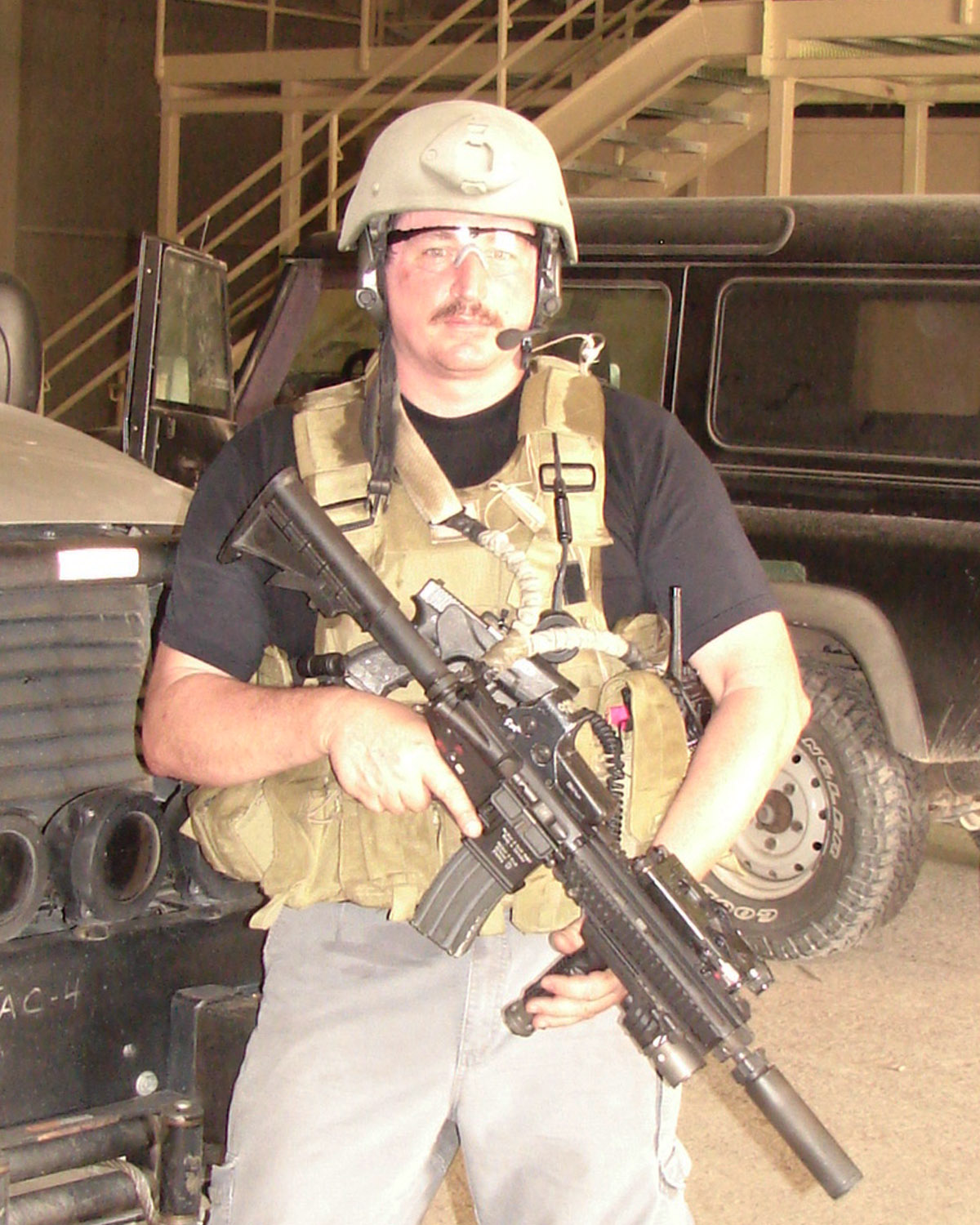
To review Al Mar Knives, you must start with the man, Blade Magazine Cutlery Hall-Of-Fame© member Al Mar. A former paratrooper, Special Forces (SF) soldier, and a brilliant artist and knife designer—including serving as head of knife design for Gerber—Al started his company in 1979. With his military experience, formal education in design and natural artistic talent, he had all the tools to excel in the factory knife industry, and did just that.

Al’s knives were exquisitely tactile—they just felt good in your hand. Their performance set a new standard for factory made knives. His folders were handsome, graceful front locks that balanced beautifully and were incredibly strong considering their light construction. They were made for knife users and in many ways were the first tactical folders. (Editor’s note: On page 102 of the February 2003 BLADE®, one of those tasked with rating the top 10 tactical folders of the previous decade said Mar was the grandfather of the tactical folder craze.) I was an early adopter of Al’s knives, as were many in the covert community who relied on knives professionally. As the saying went, “Al Mar knives were unseen in all the best places.”

Al passed away in 1992 while still a relatively young man. His company, Al Mar Knives (AMK), continues to offer his original designs—in my view still unsurpassed today—and new designs true to the spirit of the originals.

Shawn Carlson and I reviewed four folders from the company’s current production. Shawn is a former professional butcher and lifelong outdoorsman. We used the knives to cut rope, cardboard and denim, whittle wood, baton through heavy logs, make a hobo stove, reduce a large pork shoulder to chops and roasts, and otherwise employed all the knives for general daily tasks. We used the knives as they came from their boxes and did not sharpen them during a week of continuous work.

EAGLE ULTRALIGHT TALON

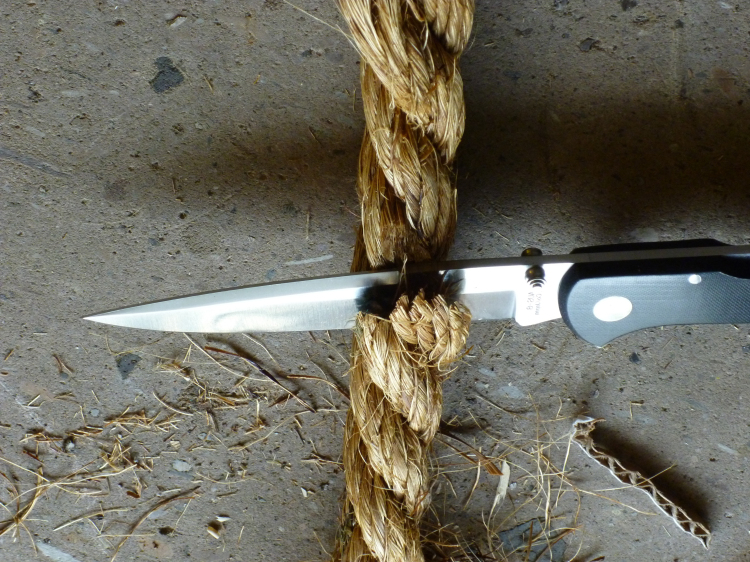
The Eagle Ultralight Talon (pictured cutting rope above) is a lineal descendant of the original Eagle. The latter folder prompted me to contact Al, which led to long discussions on the changing role of folders in the modern world, and the need in the covert community for a folder that was a “wolf in gentleman’s clothing.” The Eagles were my go-to folders for over two decades and never let me down.

The Eagle Ultralight Talon incorporates such design features as a pocket clip and thumb studs. Its Micarta® scales and bolster-less design combine to make it light as the proverbial feather. The blade geometry varies from the flat grind of the original but surrenders nothing in performance.

The Talon sliced through the thickly muscled pork shoulder like a light saber, and crunched through 1-inch hemp with an easy push cut. It slashed through an old pair of jeans as if the heavy denim were cheesecloth. We whittled fuzz sticks, split kindling and sharpened a couple of ash limbs to make fish spears. The fine point and agile blade proved a capable tool for work on wood. Slim, elegant, comfortable in the hand, the Eagle Talon is a gentleman’s knife that does wolf’s work. The primary recommendation I can offer is to continue production.

SHRIKE

The Shrike was Shawn’s first choice for preparing chops for the grill. “This blade shape begs to cut meat,” he stressed. “The angle and curve of the edge and the slightly curved handle lends itself to deep breaking and slashing cuts, and offers nearly zero resistance through the large muscle structure of the pork shoulder. The Shrike was more than capable at splitting kindling, cutting rope and whittling tasks, but this blade geometry and edge curve excels at meat cutting.”

The handle is textured Micarta for a sure grip with slippery hands, and in extended work is slightly more comfortable than the Talon’s thin grip. A modern design by ABS master smith Kirk Rexroat, the Shrike includes a heavy-duty locking liner, flat grind, thumb studs, pocket clip and open construction. I was very impressed with how well the Shrike performed overall, and how well it incorporated a totally new design into a venerable lineup. Its striking barracuda profile presents a handsome and imposing appearance when the knife is open.

MINI SERE 2000

The Mini SERE 2000 is a smaller version of the classic SERE. In the early ’80s, Al worked with Col. James “Nick” Rowe to create the first purpose-designed survival, escape, rescue and evasion folder, the SERE. Col. Rowe was and is famous in the SF community, a hero who survived five years of captivity in Vietnam and escaped his captors. Years later he became commanding officer of the SERE training school. When he met Al, Col. Rowe defined a need for a new kind of knife, smaller and more portable than a fixed blade but stronger than any other folder. The SERE became that knife.

The Mini SERE 2000 incorporates a locking liner, thumb studs, a textured, digi-camo Micarta handle and a pocket clip. Its smaller dimensions and lighter weight make it more convenient to carry than the original SERE, while giving up little in performance.

Like the Talon and Shrike, it sliced through the large pork shoulder muscle like it was designed especially for the job. Punching holes and slicing through a light steel can to make a hobo stove was easy with the SERE. Sporting a strong, sure grip and a stiff, razor-sharp blade and point, it made short work of wood, including being batonned through a 6-inch log. There was a trade-off in that the 3-inch blade limited us to edge cuts. To make contact with the baton on the other side of the split log, we had to adjust our technique—pivoting the blade by rocking the handle up and down—until we had enough room to use the baton again.

The SERE handled every task with relative aplomb. I would prefer the SERE over the other four knives we reviewed if I needed to build a temporary shelter or use it for other SERE functions. The SERE’s handle was the most comfortable of all the knives in the review, and one of the most comfortable I have used anywhere.

However, the hand guard got in the way during batonning and doing sheer cuts, an important task for any survival knife. The guard looks attractive but has no useful function. If it were my daily carry knife, I would file the guard off. The SERE is a strong, capable performer with a reserve of strength greater than the others in the lineup, a worthy descendant of the original SERE.

SLB

The SLB (Stout Little Backup) is a handy folder that is lightweight and miniscule. A handsome design, it has a short, stubby blade, smooth black Micarta handle, a locking liner, thumb studs and spring clip. We did not try batonning this little guy. We cut rope and denim, whittled small wood and sliced cardboard. We also used it to cut through the pork shoulder, which it did easily.

The only drawback was due to the short blade. Cutting through the pork shoulder and the loin required more cuts than the longer blades. Other than this obvious limitation, the SLB stands with its teammates.

FINAL THOUGHTS

The only change I would recommend for the entire lineup would be the design of the thumb studs. They protrude too far. They could be replaced with angled milled ones that are shorter and fatter, thus providing equally secure blade opening and eliminating the one design feature that, especially in the case of the Eagle, detracts from the folders’ otherwise sleek lines.

After a week’s hard use, all the knives’ blades retained a working edge, and fit was as tight as when they came from the box. Al Mar set a standard for design and execution that raised the bar for the industry. The current offerings of Al Mar Knives maintain that standard.—by James Morgan Ayres

Al Mar Knives

attn: Gary Fadden, Dept. Blademag.com

POB 2295

Tualatin, OR 97062

503-670-9080

www.almarknives.com

Specialties: Utility/tactical folders and fixed blades, kitchen knives and more

Blade Steels: AUS-8, VG-10, VG-10 cobalt and CPM-S30V (sporting knives); laminated VG-2 and VG-10 cobalt center with 16 layers per side of 420J (kitchen knives)

Blade Finishes: Ceramic black coating available on some models

Handle Materials: Brown canvas, black, black linen and white Micarta®, G-10, stainless steel, Prylon, black Pakkawood, abalone, black-lip and white mother-of-pearl, cocobolo, honey jigged bone and stag

Lock Mechanisms: Front locks and locking liners

Pocket Clips: Reversible models available on some models

Sheaths: Black leather

MSRPs: $45.99-$599.99
How Knives Can Save Babies

     The recent tragic death of the 11-month-old infant who onlookers were unable to free from a burning car because no one had a knife to cut the baby free from a jammed seat belt is heartbreaking. First and foremost, a young life was snuffed out in a most painful, terrifying way. My thoughts and prayers go out to the child’s parents and family, as well as those on the scene who were unable to save the infant. The incident will continue to haunt all concerned for many lifetimes.

     The lack of a knife carried by any of the bystanders to cut the seat belt and free the baby was a contributing factor in the infant’s death. The fact it happened in Los Angeles with its strict anti-knife ordinances is even more detestable, where anti-knifers continue to succeed in their crusade against knives. Anti-knife laws indirectly—some might say directly—kept the child from being rescued, and no doubt will prevent others from being saved in future catastrophes as well. (For more, see “For the Want of a Knife” in the “Forum” at http://knifeshowcase.blademag.com.)

     Ordinances designed to keep people from carrying knives and, as a result, from saving the lives of others in emergency situations must be repealed. Of course, organizations like the American Knife & Tool Institute and Knife Rights and elected officials such as New Hampshire Rep. Jenn Coffey are the standard bearers in focusing on the repeal of anti-knife legislation. By joining and supporting them and speaking out on your own, writing your legislators and local newspapers, voicing your concerns on social media like Facebook, Twitter, etc., you can do your part, too. And be sure to voice your concerns in non-knife venues. You are “preaching to the choir” if you do it in pro-knife venues. It is the non-knife ones that need to hear the message.

     In a heartrending way, the infant’s horrific death in a burning automobile magnifies the folly of anti-knife laws. In fact, thousands upon thousands more fatalities occur in car accidents than because of knives.

     In place of anti-knife ordinances that exaggerate the problem, why not institute pro-knife ordinances that not only protect your right to carry knives, but also address the slaughter that occurs on our nation’s highways by enabling you to respond to emergencies such as the one in L.A.? Moreover, why not require the manufacturers of automobile baby seats to equip each of the seats with a seat-belt cutter conveniently placed for a parent or onlooker to use to cut the baby’s seat belt in an emergency? And while we are at it, why not require automobile and truck manufacturers to stock each and every vehicle with a seat-belt cutter?

     Ideally, said manufacturers would take the lead and include seat-belt cutters with their products. Not only would it be a public service, the manufacturers would add value to their baby seats and vehicles. However, in today’s cost-cutting atmosphere, most manufacturers probably will not act without some kind of legislative push.

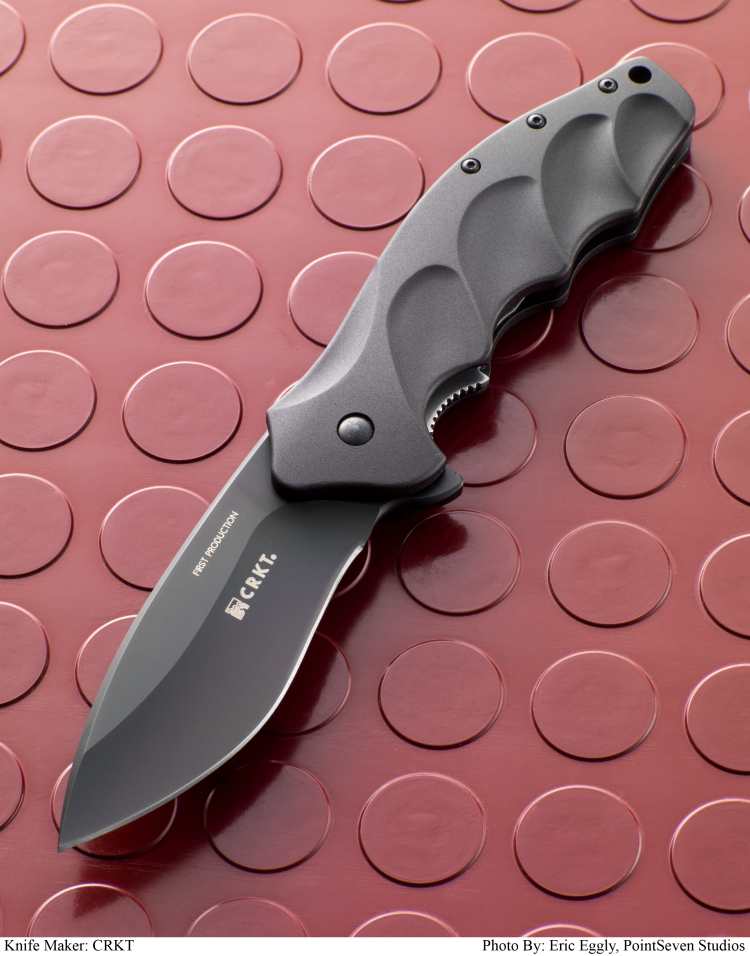
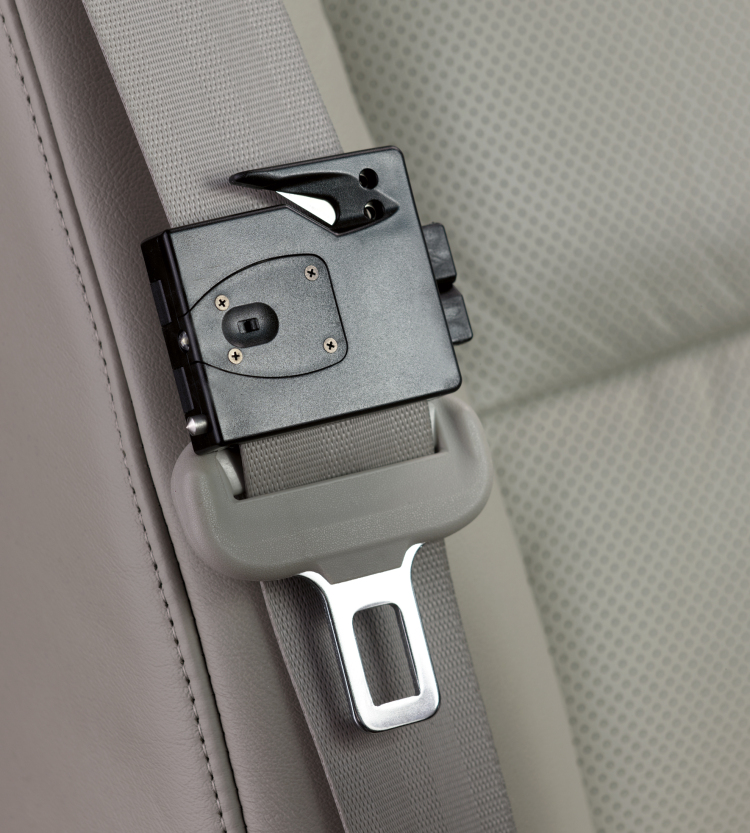
     A number of knife companies have seat-belt cutters with the edges recessed for safety. Columbia River Knife & Tool offers one—the model also has a window breaker and flashlight—that attaches to a seat belt and is thus immediately accessible in an emergency situation. Seat-belt cutters can be the next best thing to carrying a knife, and are probably better and definitely safer when it comes to cutting a person from a jammed seat belt.

     Repealing anti-knife legislation and promoting a seat-belt-cutter law would save the lives of innocents like the baby in L.A.—and, ironically, given the proper circumstances, maybe even the politically correct idiots who refuse to carry knives themselves.


To read similar stories and all about the latest knives, knife news, knife shows, knifemakers, knife manufacturers and much more, subscribe to BLADE® by clicking on http://www.shopblade.com/product/blade-magazine-one-year-subscription-us/?r+ssfb91211#BL1SU


CAPTION

Columbia River Knife & Tool’s Exitool is a seat-belt cutter, flashlight and window breaker that attaches to a seat belt—where you need it, when you need it. (CRKT photo)


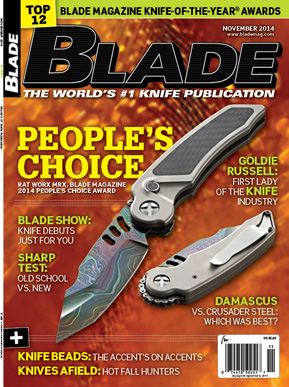
YOUR Knife-Of-The-Year® Award

01_1114BladeCoverUS

For only the second time in BLADE Show history, a Knife-Of-The-Year® Award will be chosen by knife enthusiasts just like you. Log on to www.blademag.com/2015-peoples-choice and vote for your favorite knife, as submitted by knife companies and knifemakers that will be at the BLADE Show. The knife with the most votes will win the People’s Choice Knife-Of-The-Year Award, to be presented June 6 at the 2015 BLADE Show in Atlanta.

Show your support, have fun, and tell your friends! Voting is open now!

Knifemaker Kit Carson Passes Away

Knifemaker Kit Carson is dead.
Kit Carson passed away Friday, Sept. 5. He was 63.

Kit Carson of Vine Grove, Kentucky, long-time knifemaker, Army veteran and member of the BLADE Magazine Cutlery Hall Of Fame©, passed away Friday, Sept. 5. He was 63.

Instrumental in popularizing the flipper style of folding knife, Kit made a wide range of tactical and utility folders, the best known of which are the M16, M4 and M21. Reproduced by Columbia River Knife & Tool in a wide range of iterations, the M16 has been one of the company’s best-selling and most successful knives for many years.

As revered as he was for his knives, Kit was more respected for his willingness to teach any and all how to make them. When knives and knifemaking exploded on the Internet circa the late 1990s and early 2000s, his mentoring benefited perhaps as many new and upcoming potential makers as anyone before or since.

A voting member of the Knifemakers’ Guild, Kit spent 20 years in the Army, retiring as a master sergeant in 1993. He grew up in North Georgia, interested in all things mechanical from the start. He began making knives in 1972, the same year he was drafted into the Army. It was during his last 10 years in the service that knifemaking became an extremely interesting and challenging hobby for him. While he and his wife Betty supported their children, Kit would scrounge any place he could in government housing to grind a blade shape or handle, or try to figure out how a lock mechanism worked.

“We did not have the Internet, all the books or the specialty tools,” he said of those times in his prepared induction speech into the Cutlery Hall Of Fame at the 2012 BLADE Show. “Many of us still today do every piece by hand, filing, sanding,  honing blades, slowly creating knives, spending hundreds of hours at knife and BLADE Shows establishing our names in the industry and, most importantly, making lifelong friends.”

A celebration of his life with military honors will be at 2 p.m. Wednesday, Sept. 10, at the chapel of Coffey & Chism Funeral Home in Vine Grove. Visitation begins after noon Wednesday. At the request of family, everyone is asked to wear casual clothing and bright colors in honor of Kit’s life. Donations can be made to the National Parkinson’s Foundation at www.parkinson.org.

Blade Magazine 2012 Imported Knife Of The Year®

Designed by Blade Magazine Cutlery Hall-Of-Fame© member Ken Onion for Columbia River Knife & Tool, the Foresight is the Blade Magazine 2012 Imported Knife Of The Year®. A recurve edge, a magnificently contoured handle for enhanced purchase and the Ikoma Korth Bearing System for ultra-smooth action help make this puppy a pocket keeper. It is also one of the 2012 Knives Of The Year that ShopBlade offered in an exclusive limited edition of 100 with Onion’s signature on the blade. Those exclusives sold out in a hurry.

•Knife: Foresight

Company: Columbia River Knife & Tool

•Designer: Blade Magazine Cutlery Hall-Of-Fame© member Ken Onion

•Pattern: Tactical folder

•Blade steel: AUS 8 stainless

•Heat treat: 58-59 HRC

•Blade length: 3.5”

•Blade pattern: Drop point

•Blade grind: High hollow

•Blade finish: Black titanium nitride

•Handle material: Cold-forged aluminum

•Closed length: 5.17”

•Operating/locking mechanism: Flipper with locking liner

•What to look for: IKBS ball-bearing pivot system provides a smooth, fast opening

•Weight: 6.3 ozs.

•MSRP: $140

•Available: Now

    The Blade Magazine Knife-Of-The-Year® Awards are voted on each year at the BLADE Show (www.bladeshow.com) by the show’s exhibiting booth holders, plus a panel of five special judges, the latter whose votes count double. The 2013 BLADE Show will be held May 31-June 2, once again at the Cobb Galleria Centre in Atlanta, Georgia.

For the latest knives, knife trends, knifemakers, what knives to buy and where, knife legislation, knifemaking instruction, and much more, subscribe to BLADE® Magazine, the World’s No. 1 Knife Publication. Click on http://www.shopblade.com/blade-magazine-one-year-subscription-us/?lid=blss092012

Design and Make a Combat Knife

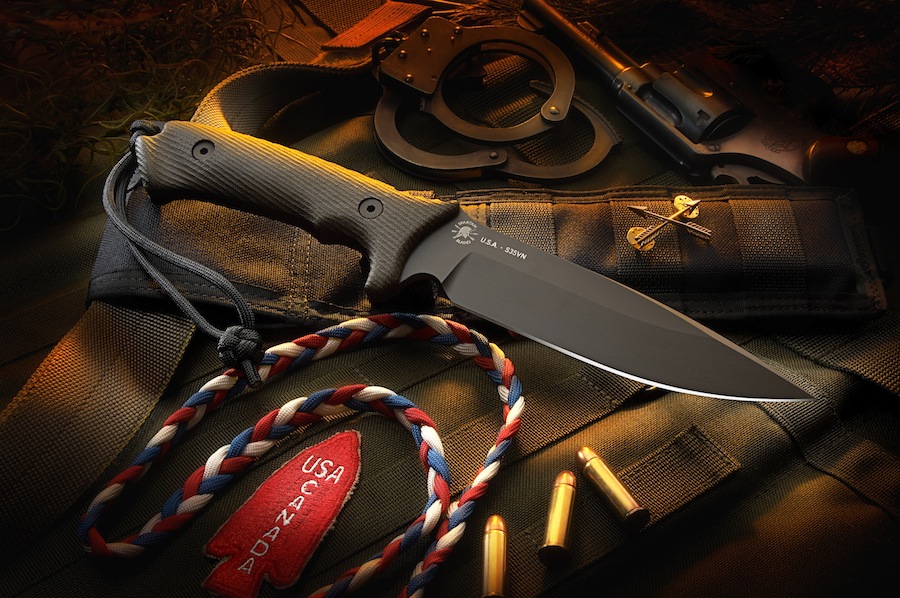
Spartan Blades Difensa
Learn how to design and make a combat from Curtis Iovito and Bill Harsey at BLADE U.

Learn how to design and make a combat knife from two who have been there/done that—Curtis Iovito of Spartan Blades and award-winning custom knifemaker William W. “Bill” Harsey—at the 2nd Annual BLADE University.

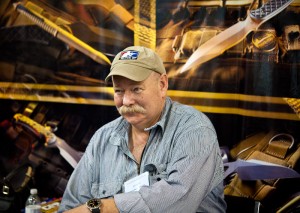
Award-winning knifemaker Bill Harsey.
Bill Harsey’s designs have won numerous BLADE Magazine Knife-Of-The-Year® Awards.

Held the day before (June 4) through show Saturday (June 6) of the 2015 BLADE Show June 5-7 at the Cobb Galleria Centre in Atlanta, BLADE University assembles the world’s leading knife professionals to instruct you on most anything that has to do with the subject of cut.

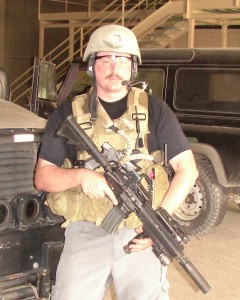
Along with Mark Carey co-owner and co-founder of Spartan Blades, Iovito is a retired U.S. Army Ranger who saw action during Operation Just Cause in Panama and numerous sensitive deployments and missions throughout Asia and the Middle East. It was while in 1st Special Forces Group (Airborne) that Curtis got into making custom knives for his teammates. After finishing up his 20-year career he hooked up with Carey—himself a 21-year man with U.S. Army Special Forces with many deployments in Asia—to start Spartan Blades.

Harsey is well-known throughout the custom and factory knife industries for his custom knives and custom and factory knife designs. He collaborated with BLADE Magazine Cutlery Hall-Of-Fame© member Col. Rex Applegate to design Gerber’s award-winning Applegate-Fairbairn line; with Chief James “Peaches” Watson to design Gerber’s Watson/Harsey Silver Trident, and with Chris Reeve and Matt Larsen to design Gerber’s LHR Combat Knife; and one of Harsey’s most significant efforts—the Yarborough Knife, aka the Green Beret Knife for Chris Reeve Knives—named after Lt. Gen. William P. Yarborough, who is credited as being the “father of modern Special Forces.”

Curtis Iovito, co-founder and co-owner of Spartan Blades.
Retired U.S. Army Special Forces and co-owner and co-founder of Spartan Blades, Curtis Iovito will help you learn how to design and make a combat knife.

A number of Harsey’s designs, including the Green Beret Knife, have won BLADE Magazine Knife-Of-The-Year® awards. Spartan Blades also has won BLADE Magazine Knife-Of-The-Year® Awards with its knives.

Today Harsey is one of several custom makers who design knives for Spartan Blades, a list that includes BLADE® Magazine field editor and retired 5th Special Forces Master Sergeant Kim Breed and also ABS master smith John Horrigan. Among Harsey’s design efforts for Spartan is the Difensa combat fixed blade.

In “Designing and Making a Combat Knife,” Iovito and Harsey will take you through the process, including:

•The terms “combat” and “tactical” as they relate to knife use;

•Understanding task-specific uses of a combat knife;

•Combat knife geometry;

•Carry options for a combat knife, vehicle and on foot;

•Design features that make up a combat knife;

•Blade geometry, and;

•Materials that lend themselves to improving a combat knife.

For more information on Iovito and Harsey’s class, BLADE University and the BLADE Show, visit BLADE Show or e-mail [email protected].


Recommended for You:

Tactical Knifemaking.Making Tactical Fixed Blades DVD

Learn both basic and advanced knife making techniques with expert instruction from Allen Alishewitz in Tactical Fixed Blades. Allen demonstrates how to craft a double-edged tactical fixed blade knife from start to finish, and creates two knives in order to fully illustrate the knife building process. You’ll learn:

– Profiling and Drilling the Knife
– Tang Tapering on a Grinder
– Tang Tapering on a Mill
– And more!

Order here


Knifemaker Phil Boguszewski Passes Away

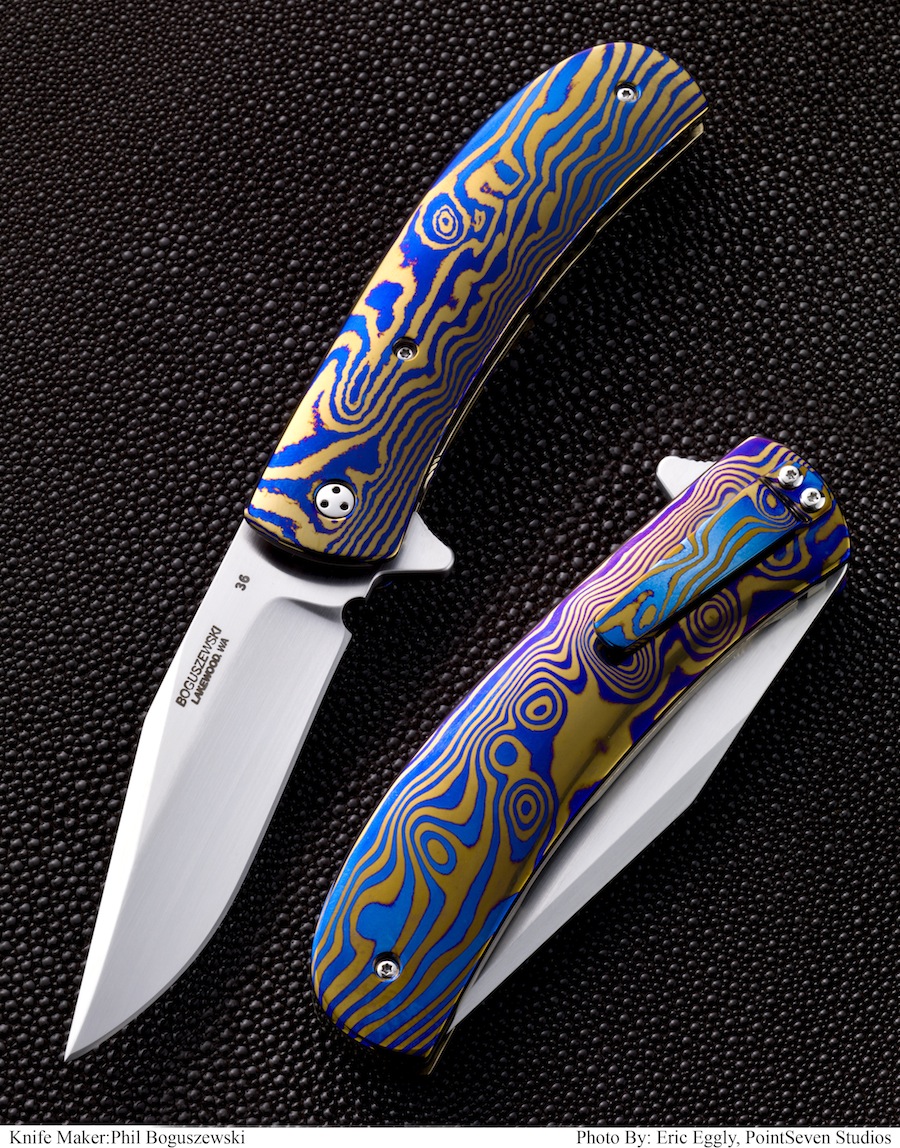
Long-time knifemaker Phil Boguszewski, one of the world’s leading crafters of cool, smooth-operating custom folders, has passed away.

A resident of Lakewood, Washington, Boguszewski was known for such folders as his “Spike” and, later, the “Cobra.” In the July 2013 BLADE® Magazine, a panel of veteran industry observers chose the Cobra as the top custom knife for the years 2001-2012.

A full-time knifemaker, Boguszewski sold his first knife in 1979. According to “Phil Boguszewski: Folding Knife Specialist” in the May/June 1988 issue of BLADE, the first 40 knives he made were all folders. He specialized in utility folding knives, including those in the latest materials, filework and slick mechanisms. He joined the Knifemakers’ Guild as a probationary member in 1984 and became a voting member in 1986.

Author of some of the world's smoothest flipper folders, knifemaker Phil Boguszewski has passed away. (Point Seven photo)
Knifemaker Phil Boguszewski, crafter of the some of the world’s best flipper folders, has passed away. (Point Seven photo)

His folders were highly sought after and sold for anywhere from $550 to $3,000 each—and he rarely if ever had trouble selling them. He was a regular at such exclusive knife shows as the Tactical Invitational and others.

“Phil was an amazing, innovating man,” began Larry Brahms of BladeArt.com. “I guess he is best known for the incredible smoothness and fluidity of his flipper folders, specifically the Cobra, a smoothness that really set the standard for what has become a mainstay in a knifemaker’s stable.

“He really is a legend in his own right and our community will miss him.”

Of Boguszewski’s Cobra, purveyor Les Robertson of Robertson’s Custom Cutlery noted, “With its recurve blade, handle that fits like a glove and that signature smooth opening, it is always a sought-after knife. Phil set the standard for all other makers wanting to build a knife with a flipper opener.” Added Neil Ostroff of True North Knives, “The Cobra excels for its durability as Phil’s best-selling knife.”

For the latest on the hottest knives, knifemakers and more, stay tuned to www.blademag.com.


Advertisement

Must Read Articles

Read this before you make a knife

Knifemaking 101 – Read This Before You Make a Knife

  by Wayne Goddard My experience has taught me that there's nothing like digging in and getting started. I've often said the hardest part of the...
how to forge damascus steel

How to Forge Damascus

Advertisement
Advertisement