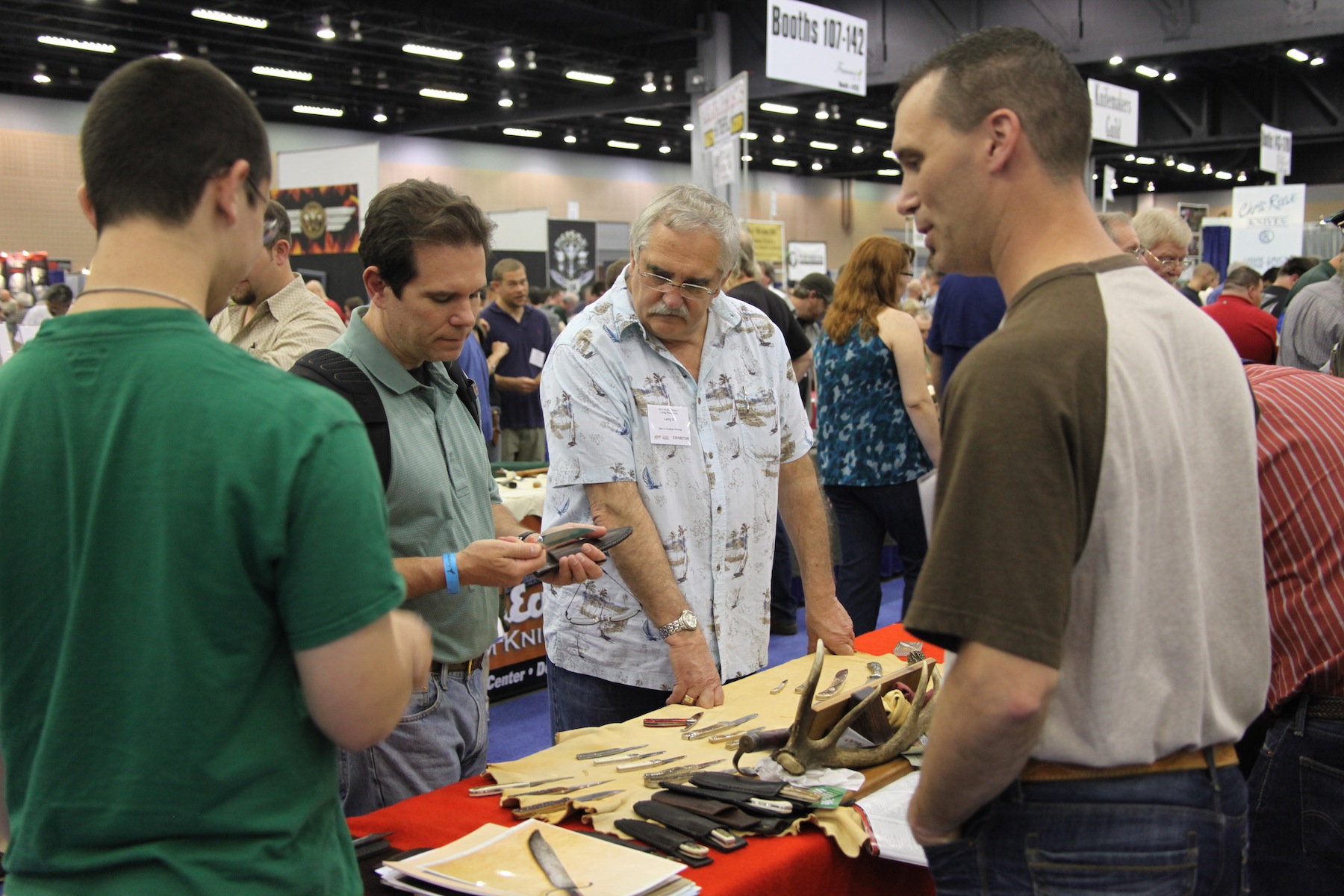
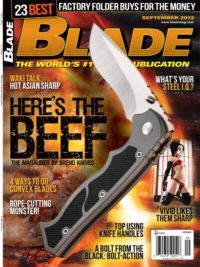
DO attend as many knife shows as possible—such as here at the BLADE Show (www.bladeshow.com)—to handle knives and meet the makers.
The do’s and don’ts of knives are many. Knowing them will make your knife experience much more rewarding and satisfying. Here are but a few:
DO use a sharpener to touch up the edge of your knife after each use or at the end of each day of use.
DON’T use your knife as a pry bar (unless it has a pry tip and is designed for such use).
DO rinse off and dry your non-stainless carbon steel knife after each extended use or at the end of day of each use (it’s probably not a bad idea to do the same no matter what the blade material is).
DON’T store your knife in a leather sheath for extended periods.
DO cut away from other people/your body when cutting rope, cardboard boxes open, etc.
DON’T show off flipping your folding knife open and closed at knife shows in crowds of people or around any area crowded with people, for that matter.
DO ask a maker’s permission to pick up a knife from his table at a knife show.
DON’T open more than one blade at a time on a multi-blade folder (it puts unnecessary pressure on the backsprings; besides, it’s a good way to get accidentally cut).
DO carry a knife whenever possible where it is legal to do so (and when the knife meets local legal requirements).
DON’T pull out a loupe/magnifying glass to closely inspect a new custom or handmade knife at a knife show (it’s just not considered good form; besides, unless you’re legally blind, if you can’t see what’s right or wrong with a knife with the naked eye, then it’s not worth worrying about).
DO attend as many knife shows as you can and view knives up close and personal and meet the makers who build them.
DON’T interrupt a conversation between a maker and someone he or she is talking to at his or her table at a knife show. It’s rude.
DO read as much as you can about knives, their history and their makers.
DON’T take everything you read about knives as gospel. Always look for at least one additional opinion on the subject.
One final DO is to check out these knife dealsBLADE‘s lined up for you at ShopBlade.com.
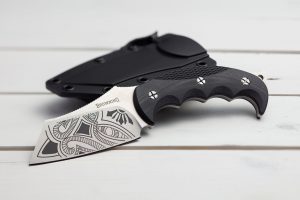
Browning’s line of Jared Wihongi Signature knives is as fierce as its SWAT operator namesake.
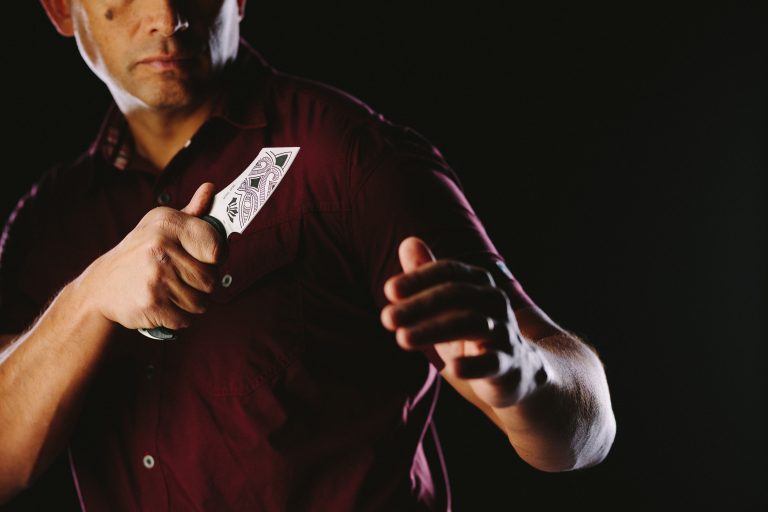
Jared Wihongi is a native New Zealander who began training in martial arts at an early age. As a young man he had the chance to live in the Philippines and study an edged-weapon style of fighting called Pekiti Tirsia Kali. Jared has spent 14 years as a law-enforcement special weapons and tactics operator. He also instructs other SWAT team members as well as elite military operatives in edge-weapon skills. He has advised Browning on its Black Label tactical family of knives and now has his own signature line, strikingly designed with Maori-inspired blade etchings. Be sure to subscribe to BLADE magazine to read about the Jared Wihongi Signature line of combat knives in the August issue, on sale May 16, 2017. To learn more about Jared Wihongi’s upbringing and training, read “Browning Launches Wihongi Line of Maori-Inspired Knives.”
The Jared Wihongi Signature Fixed has a canoe-shaped handle that is ergonomically correct in both a forward and overhand grip. The etchings are borrowed from Maori tattoo patterns.
To meet Jared Wihongi and hear him discuss his style and philosophy of knife fighting, here are some well-done videos by Funker Tactical. In the first, Jared discusses how the foot movements used in Filipino knife fighting can aid in an empty-hand or firearm scenario. In the second, Jared addresses how the skills developed through the practice of Pekiti Tirsia Kali are relevant to the reality on today’s street or battlefield. And in the last video, Jared talks about why you should train wearing what you wear in your work or your everyday life. Law enforcement and military especially need to practice wearing their equipment so they understand how their range of motion, breathing and other functions are affected by the added weight.
In “Fighting Folders” Michael D. Janich instructs viewers on the myths surrounding folding knives and how to employ them in a self-defense situation.
Micheal D. Janich covers how to use empty-hand skills, quick one-hand deployment techniques and knife-fighting tactics so you can lean on your folder as part of your self-defense kit. This DVD is well worth the $39.95 when you consider you can watch it repeatedly in the comfort of your home, practicing its demonstrated skills until you’re ready to take your training to the next level.
It’s my pleasure to share with website visitors some research I conducted on knives that will debut at the BLADE Show in Atlanta, May 31-June 1. These are models some of the largest knife manufacturers in the world plan to debut at the show, so consider this a “sneak peek,” if you will.
The BLADE Show has fast become one of two main venues companies use to introduce knives, entire knife lines, accessories, and for new outfits and divisions themselves to be launched.
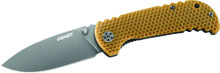
Coast Products FX350
Unlike the SHOT Show, the BLADE Show is a consumer and trade event ideal for debuting new models to a targeted, educated knife-loving audience as diverse as the show offereings. It’s the place to be for all industry pros, dealers, collectors, purveyors, users and enthusiasts.
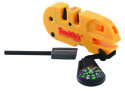
Smith’s Abrasives Pocket Pal X2 Sharpener and Survival Tool
As Russ Cowen, marketing manager for the sporting goods and hardware division of Smith’s Abrasives, says, “The BLADE Show will expose this product to knife enthusiasts and media outlets that will, in turn, communicate the message to the consumer base. There is no faster way to create buzz about a new product than exposing it to BLADE Show exhibitors and attendees, who happen to be the most passionate and verbal people in the industry.
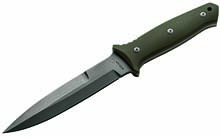
Boker Plus 02BO610
“BLADE Show attendees like to talk about knives, other cutting tools and accessories,” he adds. “They’re also creators, inventors and marketers, so when they see something they classify as neat or innovative, they naturally want to talk about it.”
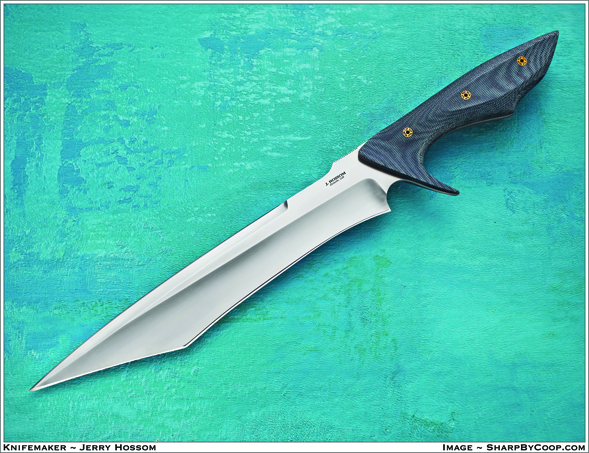
Unusual? Yes, it would be no stretch to say that Jerry Hossom’s “Vengeance Tanto” takes an unbeaten path from pointy tip to pointed pommel. But all along the way it’s so groovalicious! Check out the handle half, or third, in this case. Integrated into the design of the black-canvas-Micarta® grip there’s a place for the palm, all the fingers, and a sweet guard that angles just a little back toward the butt. The knife is featured in the “Fiery Fighters” chapter of the Knives 2013 book, but it is actually tough to categorize.
And oh, yeah, the blade. Let’s see, the CPM-3V blade is high-hollow ground, ends in what could be the world’s most modified tanto tip, has a swedge along the spine, and a line stretching horizontally along he length of the blade where the hollow grind ends, the flat starts, and the swedge eventually meets. Don’t forget the finger notches just North of the handle, on the spine of the blade, for extra traction. Mosaic pins round off the piece.
It’s an “Editor’s Favorite from the Knives 2013 Book,” by the way. SharpByCoop.com is credited for the photo.
“I was born a tinkerer,” Dwayne Horvath of Aku-Strike Knives of Pittstown, New Jersey, related. He was always taking things apart, from his father’s reel-to-reel video recorder to his car. By his own admission he was not great at school, but it was during those moments looking out the window, daydreaming, when ideas came to him—lots of ideas. It carried over into his car-racing days, his career as a successful fix-it man and now in retirement as a full-time inventor who daydreamed a trainer knife.
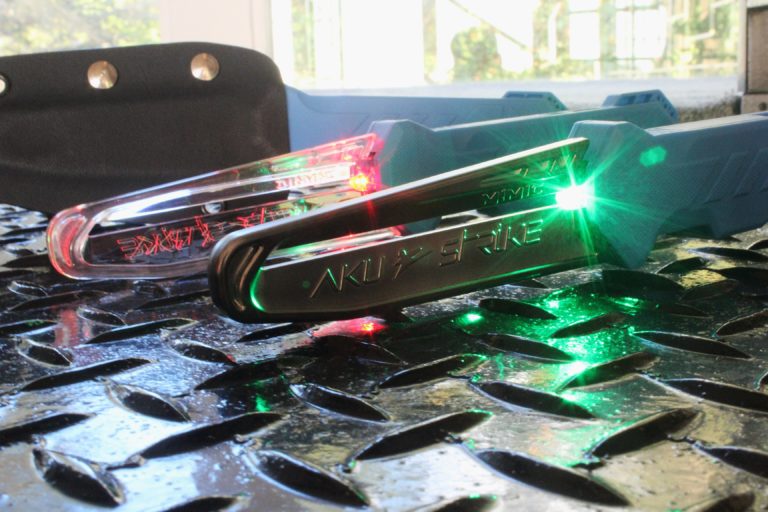
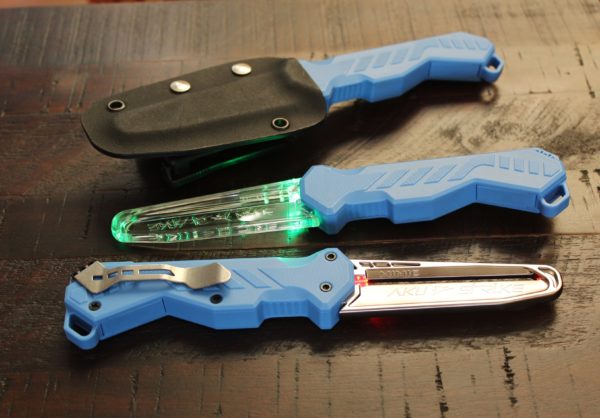
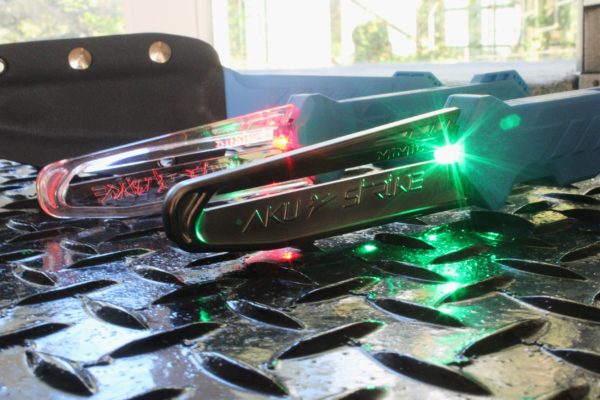
The Aku-Strike Mimic T-16 confirms contact with a red or green LED light and different tones for daytime use when lights are not as visible. Available in nickel or clear. MSRP: $41.95-$43.95. Contacts for Aku-Strike Knives appear at the bottom of this article.
The Aku-Strike Mimic T-16 came to Dwayne in a vision driving home one night from a training session at Alex Wilkie’s Martial Arts Academy in Bridgewater, New Jersey. “It was not a thought before it was a vision. The vision was possibly stirred by an emotion or feeling from training that night,” Dwayne explained.
Dwayne knew about the Shocknife, which is indeed useful for inducing fear in combatives training, but it’s is not something you want to learn on or use every day. Chalking the edges of training knives indeed leaves a mark to inform you and your training partner of a strike, but it’s messy and may not fully wash out of some shirts. There was a real need for another alternative.
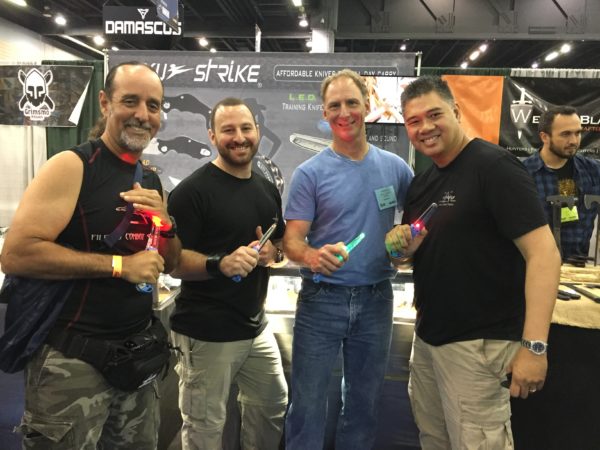
Carlos Pipo Lopez and Samuel Yaron Brill, on the left, and Ray Dionaldo, on the right, all of FCS (Filippino Combat Systems) Kali, give Dwayne Horvath’s (second from right) Aku-Strike Mimic 16-T, an LED training knife with tones, resounding thumbs-up.
“I noticed some students going through the motions of training with the knife and wondered if they realize how deadly a knife can be. I then asked myself, ‘How could I be more aware of being cut and the danger of the blade and also convey to my partner that he is in danger or is being cut? We need something to alert us when contact is made, or what I coin, ‘confirmation of contact,’ while training,” Dwayne explained.
When you take away shock and chalk, you have light or sound left. “Now how do I make this work?” Dwayne asked himself. He had some knowledge of patents. He knew that if he designed something simple, he could get a broad patent. That would in turn mean he would need to minimize parts and keep the construction of the training knife simple. That is a challenge with all the patents out there. He knew he needed at least one switch to turn it on. Any more and he might be infringing on someone else’s design.
Then Dwayne asked himself, “What would be the best way to make the blade send a signal to the electronics? I started drawing and one hour later I figured out the basics. Of course, there were many thoughts and designs in between,” he added.
With the Aku-Strike in the sheath, the battery tray angle also serves to register your fingers to hook the handle for a quick draw. This is one feature that attracted Ray Dionaldo, of FCS Kali, as the feel was similar to his quick-draw knife. The knife also has a secure feel when your hands sweat. Contacts for Aku-Strike Knives are listed at the bottom of this article.
Dwayne was on his last chance with the U.S. Patent and Trademark Office. After reading many patents and going through a few attorneys, he got the patent worded appropriately. He then contacted an attorney who secured a patent. Two months later, Dwayne received the kind of broad patent he had hoped for. Then he got an additional patent.
The Aku-Strike Mimic T-16 has received endorsements from law enforcement agencies whose members must be thoroughly trained for whatever they might find on their beats, including an aggressor with a knife. Martial artists like Ray Dionaldo of FCS (Filipino Combat Systems) Kali, Doug Marcaida of “Forged in Fire” fame and Funker Tactical, the home of all kinds of fighting videos, have all given the Aku-Strike their nod of approval. Even, Setcan, the company that invented the Shocknife, has endorsed the Aku-Strike. The two training knives are not really competitors since one can be used on a more regular basis, while the other can be used periodically to maximize the intensity of a particular training session.
Dwayne had originally envisioned an aluminum blade. “I took it to an Airsoft range. Kids were swinging for the fences. OK, not safe with aluminum for teens, plus you know it hurts—that’s a given,” Dwayne commented. He moved on to polycarbonite. “The polycarbonite had limitations with flex and strength, but overall it was a win, and much more forgiving,” he emphasized. “As a matter of fact, it hurt much less than many rubber trainers and, of course, aluminum.”
Dwayne’s goal was to appeal to a wider, younger demographic that was just starting out with their combatives training to hardcore adult players of Airsoft and paintball. He also wanted to reach law enforcement and martial arts professionals. He finds the inventing to be easier than the marketing. But without that creativity, there would be nothing to market. Dwayne received the kind of encouragement and validation he needed throughout his life, later when his business was a success, but also earlier around the race tracks of New Jersey.
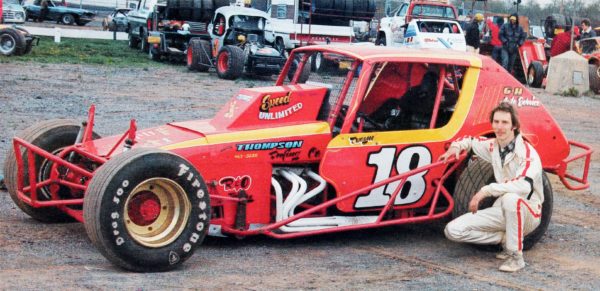
Dwayne Horvath of Aku-Strike Knives spent his formative years on the dirt-track speedways of New Jersey. He was given the encouragement and leeway to tinker, to daydream and now in his retirement he has invented a training knife that gives instantaneous pressure-based feedback through LED light and tone during combatives training. (Photo by Bob Snyder)
“At an early age, I loved racing and would go to Flemington Speedway, a local dirt track…It was a family event every weekend, consisting of fast cars sliding around the dirt track and a bucket of fried chicken,” Dwayne recalled.
“One night my favorite driver crashed real bad, destroying the starter’s stand,” Dwayne felt terrible and wanted to help. He got his father’s permission, and Howie Cronce took Dwayne to his house and let him help. “After school I would ride my bike about 10 miles to his shop, work to the wee hours.” Dwayne would eventually fall asleep and Howie would wake him, put his bike in the back of his pickup and take him home.
“In high school I wasn’t the sharpest tool in the shed. I usually wanted to look out the window and daydream, but I did rebuild a teacher’s engine on his Studebaker and built go-carts from scratch.
“In my racing days, I had what some would call some crazy ideas (probably from daydreaming) about the workings of a car suspension,” he explained. He needed to learn more, but from where? In those days, access to the Internet wasn’t readily available. He decided to sneak into the library at a technical college and hit the books and microfiche to research the effects of tire-slip angles and G-force on race cars.
“I then saved money to buy a G-meter to put in our dirt car, which had never been done before. When uploaded to a laptop, this would show all the forces of breaking, acceleration and cornering in real time so we could see what and when things were happening.” Then adjustments could be made to the shocks, springs and geometry on the car. “I was invited to the Penski shop to study the new shocks we used and got to know Ray Evernham before he teamed up with Jeff Gordon and Hendrick Motorsports.”
And it’s been like that ever since. If grades were given out in daydreaming, Wayne would score an A-plus.
You can read your digital issues of BLADE Magazine anywhere you have your phone, tablet or computer, and there’s no need to find storage for all your old issues.
If piling-up issues of magazines seems like a waste to you… If you feel like you don’t have time to read a magazine… If you like the stories we offer in BLADE, but want a more economical option, then a digital subscription is the answer. An annual subscription to BLADE is $17.98, $4 off the print price.
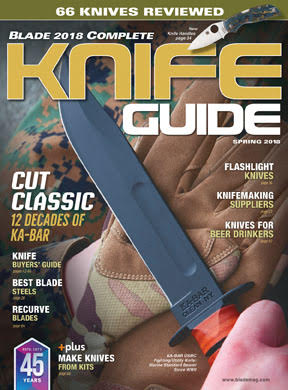
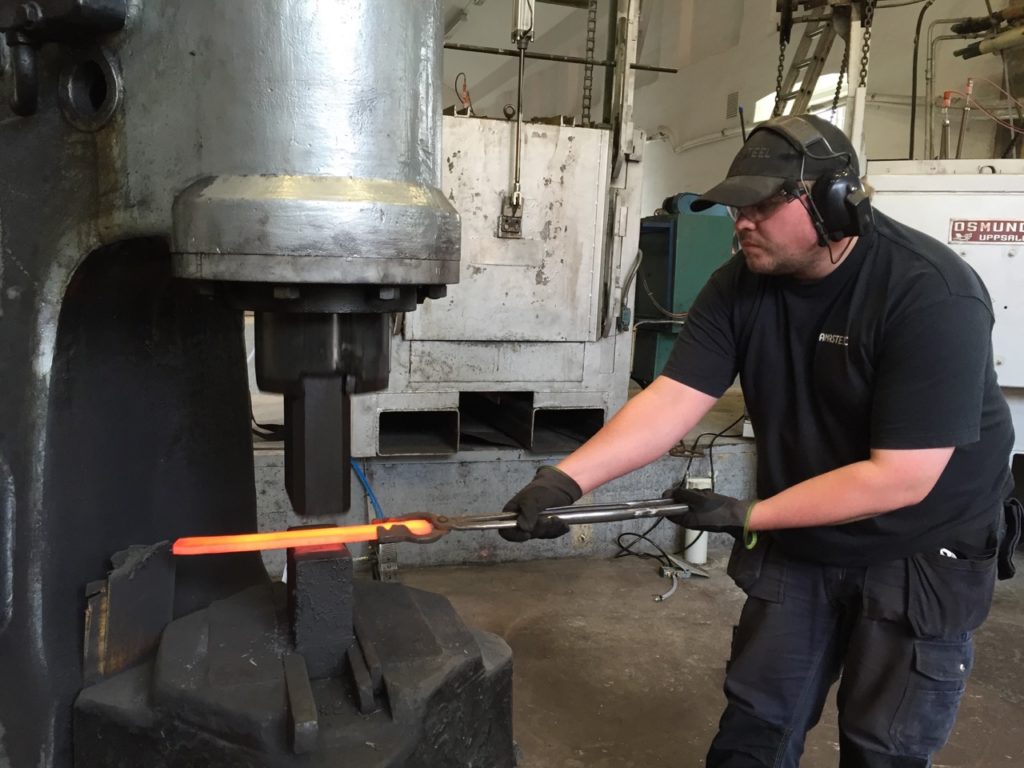
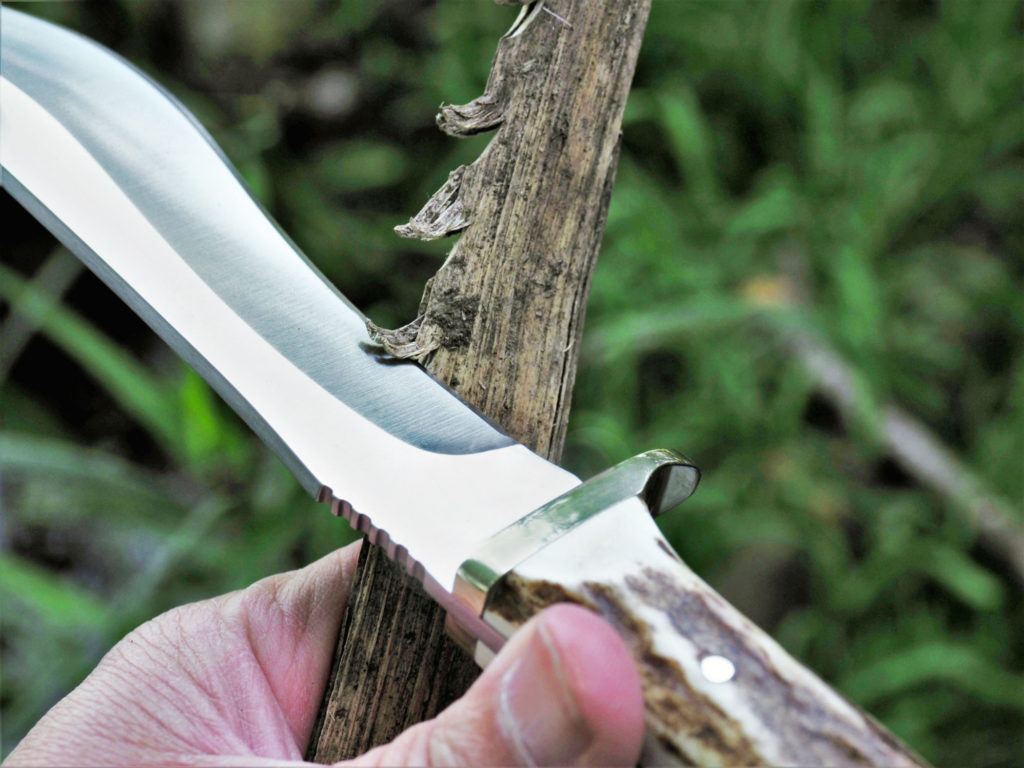
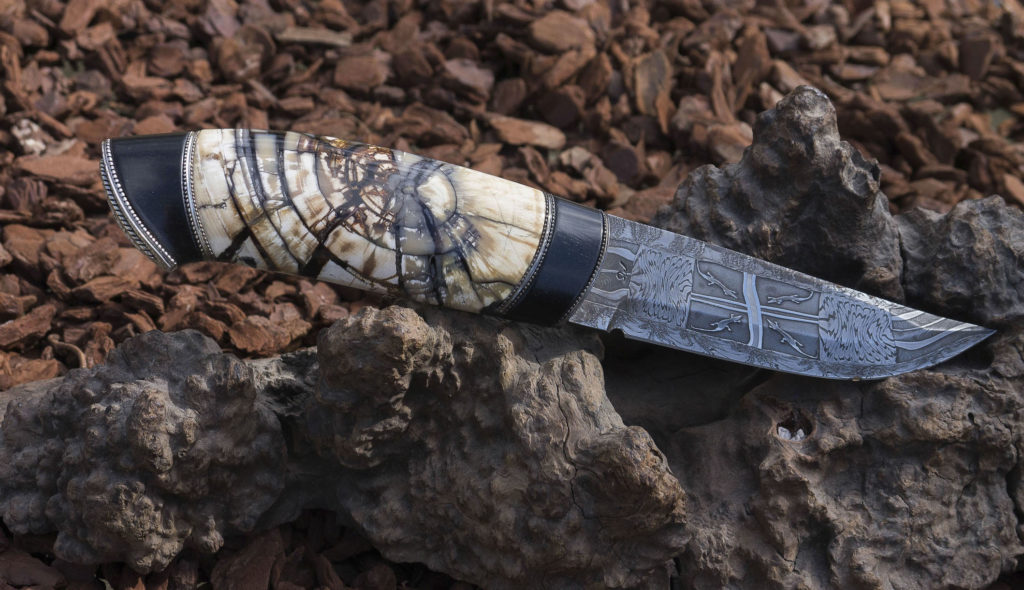
Forging some of the best blade steels is something with which Damasteel of Soderfors, Sweden, is well acquainted.The best blade steels combined with the best blade shapes can cut wonders. Puma’s SGB Buffalo Hunter comes in a recurve blade of 1.4116 stainless steel.Raffir fossil mammoth ivory comprises the handle of Danish knifemaker Tommy Astrup’s mosaic damascus fixed blade.The best blade steels, latest handle materials and more of what it takes to make the hottest knife are in the new BLADE 2018 Complete Knife Guide, on newsstands now!
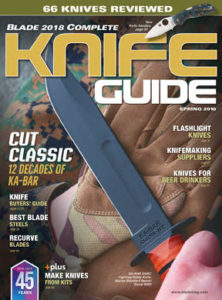
The best blade steels, latest handle materials, blade shapes, knifemaking suppliers and most everything else it takes to make a knife the sharpest it can be populate the BLADE 2018 Complete Knife Guide, on newsstands now!
What’s the best knife steel for one application can be a disaster for another. However, there exists a happy medium where a maker and an end-user get as many general bennies from the steel as possible. Dave Rhea examines the phenomenon in detail and considers some of today’s best cutting materials in his story, “Keys To The Best Blade Steels.”
Based in Hadsten, Denmark, Raffir offers an array of the most beautiful and durable synthetics yet in its range of fossil, wood and other materials. In Raffir Mammoth Tooth in particular, the cracks and abrasions that handle companies have to fill and re-fill during finishing operations with standard mammoth tooth are reduced by 80 to 90 percent. The material is most pleasing to the eye as well. Get a handle on the latest gripping stuff in “Most Beautiful Synthetics Ever?” by yours truly and Mike Haskew’s “What’s Your Handle?”
The “S”-shaped recurve blade has the rear of the cutting edge, or belly, curving inward toward the spine in a continuous curve from the point. Though most recurves have similar looks, subtle design differences mean that each knife has a distinct feel and performance. David W. Jung outlines some of the leading performers of the genre in “The Inside Edge.”
There is a wealth of knifemaking suppliers providing just what the knife doctor ordered, whether it be the best in handle materials, steels, specialized forging equipment, or the tools that make the sparks fly. Daniel Jackson reacquaints you with some of the best of the lot in “Go-To Guys of Sharp.”
There’s much more in the Complete Knife Guide, including the most comprehensive listing of factory knife companies and other professionals in the industry, a sneak peek at the coolest knife debuts for 2018, the brightest flashlight knives, three fun-to-build knife kits, the latest in beer knives and much more.
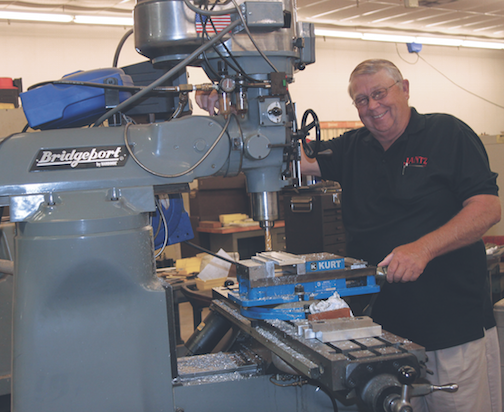
Ken Jantz of Jantz Supply works on a prototype for a new hollow-grinding fixture in the Jantz Shop in Davis, Oklahoma.
June 9, 2011: New Hampshire Governor John Lynchhas signed into law theKnife Rights backed Knife Law Preemption Bill, HB 544. New Hampshire becomes the third state in the nation to enact Knife Law Preemption.
Congratulations to NH Rep. Jenn Coffey who sponsored this bill and who worked tirelessly with her colleagues, local advocates and our lobbyist to ensure the bill passed unanimously in both houses of the New Hampshire legislature. Rep. Coffey’s efforts enacted a strong preemption law which will protect knife owners from senseless local ordinances well into the future.
Rep. Coffey won Knife Rights’ Freedom’s Edge award last year for her successful effort to repeal New Hampshire’s prohibitions on switchblades, dirks, daggers and stilettos.
Knife Rights’ National Knife Law Preemption Campaign started successfully last year in Arizona. Earlier this year Utah enacted knife law preemption. Preemption prevents the creation of, or eliminates, a patchwork of ordinances and rules which serve to confuse or entrap those traveling within or through the state. A person traveling in a state without preemption laws could be charged with a violation of local law when they have no intention of violating the law. Preemption ensures citizens only have to know and abide by state law.
Preemption allows Knife Rights to focus its legislative efforts at the state level where it can more easily succeed in improving the legal environment for knife owners or opposing efforts to impose further restrictions on knives.