The BLADE Blogs

The blogs of the BLADE editors, Steve Shackleford and Erin Healy.

The Ford of Knife Grinders?

Burr King 960-272
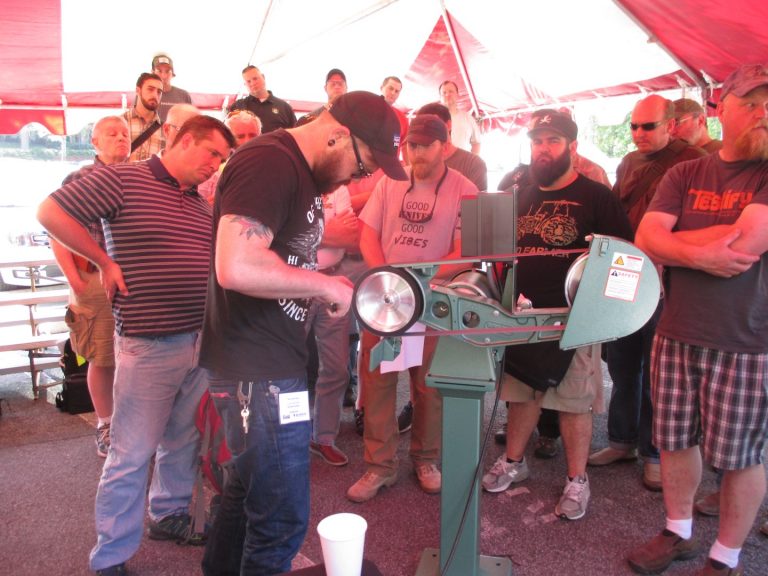
Knifemaker Lucas Burnley shows students how it’s done on a Burr King 960-272 belt grinder under the Burr King-sponsored tent during the 3rd Annual BLADE University at this year’s BLADE Show.

When it comes to the go-to machine for knifemakers, the Burr King 960-272 2×72 may be the Ford of knife grinders.

“The 960-272 has been in production for 40 years. It’s a knifemaker’s grinder. It started with Bob Loveless,” noted Burr King’s James Krier during the grinding classes conducted by Tom Krein and Lucas Burnley in the 3rd Annual BLADE University at the 2016 BLADE Show. “It’s kind of interesting to have a machine over 20 years old that you can still get parts for.” Add the fact that Burr King is celebrating its 65th anniversary this year and you have a source for parts that’s been here for the long haul. “The knifemaker doesn’t have to worry about the company who made it [Burr King in this instance] going out of business,” Krier added.

In sales and marketing for Burr King for 10 years now, Krier said a number of companies that make grinders have passed by the boards in recent years. Not so with Burr King.

“I was talking to a guy about how many grinding companies there had been in the past 20 years and he was saying there were about 25 he could think of that are just out of business, that were up for about two years and then were gone,” Krier said. “That’s why pros who do it for a living will buy something they can actually get parts for 20 years later. It’s gonna be there when they need it.”

The 960-272 is cast aluminum construction. “Every machine is going to be the same. It’s not like it’s a fabricated design or this machine is different from that machine,” Krier continued. “If someone buys a machine and they have one that’s 10 years old and buy another one today, the parts are interchangeable. It’s like having a Ford you can get parts for.” Like old Fords, it’s tough as nails, too. “That’s thing’s bulletproof and ready to go,” Krier assessed.

Burr King makes about 15 different belt grinders, including those for factory knife companies, but the 960-272 remains the bell cow of the lot.


Learn How to Grind Knives

Knifemaking guide to grinding blade edgesThe BLADE staff put together this guide to grinding knives as a way to help new knifemakers jump into these essential skills. Download it now and start reading right away.

Save

Save

Save

Save

Save

Save

Save

Save

Change The Types Of Knives You Collect?

Read this before deciding whether to change the types of knives you collect. (Written by Mike Haskew and excerpted from the March 2013 issue of BLADE®).

You may face a crossroads, a time of decision involving the realization that interests, tastes and possibly buying power change. In such situations, you may decide to begin collecting a different genre of knives, departing from what you have collected. If and when that time comes, evaluating your situation and making informed decisions is crucial.Hale_120608
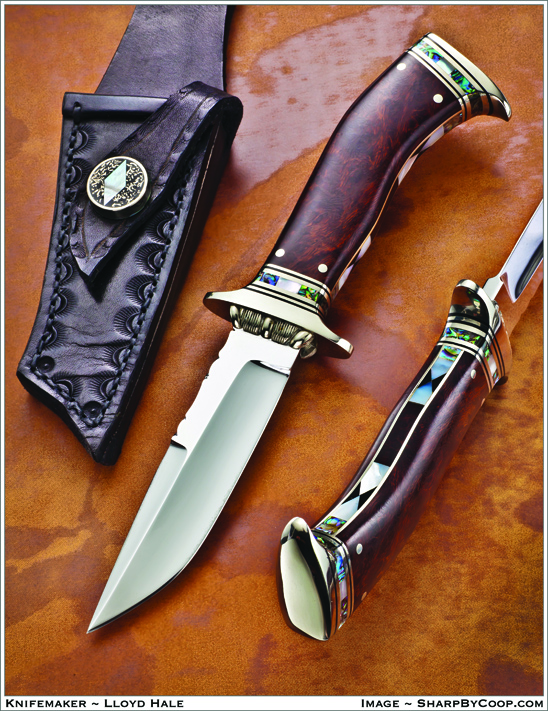
Well-made vintage knives by legendary makers can be very attractive to collect. Lloyd Hale does the honors here in a chute knife sporting an ironwood handle with pearl and abalone inlay. (SharpByCoop.com photo)

Some basic questions loom large, from deciding what to collect to getting the best education on what is available, selling or retaining an existing collection, and, if the choice is to sell, then maximizing the revenue generated.

First, the decision to make a change deserves due consideration. “You should have a very good reason for it,” remarked Peter Gill, who has been collecting knives for 15 years, “no whims.”

While some are into knife collecting for profit, it is always prudent to collect what you like. After all, you may own it for a lifetime. 08BL0313
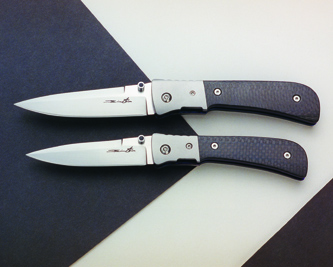
“I believe a collector who is going to start collecting another type of knife should buy and collect what he’s attracted to,” reasoned Ken Potolicchio, who bought his first handmade tactical folder, a large Tighe Pan by Brian Tighe, in the fall of 2001. “In other words, buy something you would like to own, handle or even use. Research the new type of knife to be collected and be comfortable with the effort and costs to start a new or additional collection.

“If you’re going to start collecting another type of knife, buy and collect what you’re attracted to,” reasoned Ken Potolicchio, who bought his first handmade tactical folder, a large Tighe Pan (above) by Brian Tighe, in the fall of 2001. “In other words, buy something you would like to own, handle or even use.” (Brian Tighe photo) 

“Ask yourself why you want to collect the new type of knife,” Ken continued. “Is it simply to make money, to carry and use the new knives, or is it in the pursuit of desirable knives of a new type? What if you change your mind? You need to be very sure, especially if the sale of your current collection is a factor.

“As to resources, I would recommend reading the magazines and contacting purveyors you may have dealt with, trust and have a relationship with, or that deal in the type of knives you’re planning to collect. Direct contact with the makers of the knives to be collected is a good idea. I’ve found that most are willing to talk about all aspects of their knives.”

Though you may be financially capable of retaining your current collection, you may have to liquidate your existing holdings to be able to afford to collect something new. Opinions vary on the best way to sell, and some experts tend to think that holding on to what you have already collected is the best of all options.ed's dad's wwII Ek
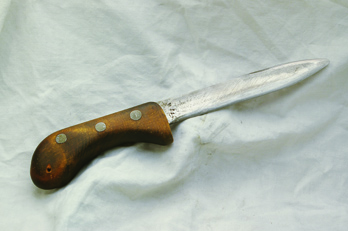
“Don’t buy knives that are damaged or of poor condition unless they are very old and rare, such as [antique] bowies, Civil-War-era knives, and rare military knives,” Marvin Clyncke commented. Ed Fowler’s dad carried this World War II-era Ek Model 3 during World War II. (Fowler photo)  

“If you decide to shift gears and like another kind of knife, you might consider the following,” advised Pete Cohan, a serious collector since the early 1960s. “Trade the knives you have for those you now wish you had, but be sure you know who you are trading with and be firm when it comes down to the final details. You could try to sell your old collection to somebody you know, but don’t let anyone talk you out of a few pieces. You may be left with the rest and can’t hardly give them away.”

If you are an informed collector, you have a solid sense of what your collection is worth and what you will take for it. Unless such a solid base is in place, the hazards of selling or trading are substantial. Tactics also will vary depending on your motivation—simply to recover your initial investment or to make as much profit as possible to plow into the acquisition of your newfound favorite knives.

Though selling your knives as a collection may move the transition process forward more rapidly than selling in ones or twos, there is a trade-off. Marvin Clyncke’s father worked for Western Cutlery in the late 1930s, and Marvin has been a collector for more than half a century.

“If you want to sell your existing collection, you should sell on eBay, as you reach the whole world there,” he recommended. “Selling as a collection is not a good idea unless you have a specific buyer who is willing to pay a good price. Selling as a collection, you are essentially eliminating a lot of folks who may have some of the same knives and don’t want to buy a whole collection just to get a few that they need. Also, the price of the whole collection could eliminate many buyers, especially if the collection is large. Selling individually definitely would realize top dollar for each piece.”

Cardinal Rules

• Collect what you like or even use;

• Chasing trends is a fool’s errand;

• Collecting knives that are hot now means paying top dollar now as well;

• Know which knives are collectible in specific geographic locations of the country;

• Inexpensive, low-end knives will never appreciate to any degree;

• Well-made, fine-condition knives should not lose you any money;

• Don’t buy damaged/poor condition knives unless they are very old and collectible, such as antique bowies and rare military knives.

A FOOL’S ERRAND

In the continuing debate of present vs. future value, collectors heading down a new road are regularly challenged with a values proposition. Collecting what is hot today by no means ensures an appreciation in price down the road, while collecting something that is under the radar now provides no assurances on an increase either.

“A collector should only collect what pleases him or her,” reiterated Gill. “Chasing trends is a fool’s errand.”

Cohan advised, “What is hot now and what will be hot in the future is the classic question asked by every stock market trader. The question and its answer in the case of pocketknives or knives in general is further complicated by such things as the geographic location of the collector. What is hot on the West Coast and what is hot in the South are often very different. This can provide opportunity as well as risk for the collector who is starting in another direction. It is still, in my opinion, better to collect knives that you like for whatever reason. The collectibility of knives and their ‘rarity’ at some future date remains an elusive projection.”IMG_1207 Pic 19
Potolicchio leans toward the long view and collecting for the future rather than some notion of today’s “hot” commodity. He provides an illustration of future value with a firearm that he bought some years ago. “I gave my son a Ruger 10/22 rifle that currently [fetches] about $275, and I have the original receipt for the rifle when I bought it new for $38.50,” he laughed.

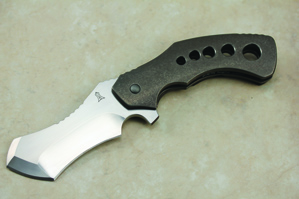
What’s hot in the West and South are often very different, Pete Cohan observed. This can provide opportunity as well as risk if you’re starting over. For instance, at the G4 Show in Las Vegas, tactical folders such as those by Jeremy Marsh (including the one at top just above photographed by Mike Searson) turned heads. In the South, antique pocketknives such as those by New York Knife Co. (immediately above) remain collectible. 

According to Clyncke, collecting knives that are hot now means paying top dollar now as well. Whether such knives will even hold their value or simply become yesterday’s fad is anybody’s guess. He does, however, see the thrill and allure of collecting something reasonably priced today that may in fact appreciate in the days to come.

“It is a guessing game,” Marvin warns, “but quality is everything. Cheap-made, low-end knives will never appreciate to any degree. Well-made, fine-condition knives will surely not lose you any money. Again, research is a big help.”

Sources To Use

• Read knife publications and websites you trust;

• Contact purveyors with whom you have dealt, trust and deal in the types of knives in question;

• Have direct contact with the makers of the knives in question;

• Let as many people as possible know what new collectible you want;

• Ask your friends to be on the lookout for examples.
Knives2013

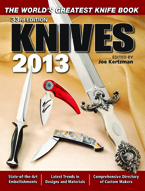
One of the best ways to research what is best to collect is to read publications you trust, such as the new KNIVES 2013

Experienced collectors may already have a feel for the do’s and don’ts of collecting a new style of knife. However, it pays to remember lessons learned and to benefit from the experiences of others.

“Don’t buy knives that are damaged or of poor condition unless they are very old and rare, such as [antique] bowies, Civil-War-era knives, and rare military knives,” Clyncke commented. “Junkers are a dime a dozen and will sell for a dime a dozen in 10 years. I would let as many folks know as possible what you’re looking for. Never tell them what you will pay, just what type of knives you want. If you tell them what you will pay and they’re surprised at the price, they may just keep the knives as an investment. Some good ones may pop up right away. It never hurts to have friends looking for you.”

Potolicchio added that research is a key element before the final decision to switch the type of knife being collected. Without investing enough time to understand the market for the new type of knife, you may never find your comfort zone, particularly if you have liquidated your existing collection in the process.

For Cohan, the collecting transition should be something of a soul-searching process. He advises considering several aspects of embarking on a new frontier in collecting.

“How available are the knives that you now fancy, and are they of recent vintage?” he asks. “Are they still in production or are they a ‘short run,’ which may or may not permit a wide distribution of the knives, directly affecting their collectibility? If the knives are antique, where will they be found and can they be found without undue cost? What are the prices typically asked for these knives in collectible condition? Are you going to collect only the mint or near mint/excellent examples, and can you afford to pay premium prices for this type of knife?”

Questions YOU NEED ANSWERED

• Do you have a very good reason for starting over?

• Are you comfortable with the effort and costs it will take to build a new collection?

• Do you want to make money or collect, carry or use the knives?

• What knives should you collect, and how do you best research them?

• How available are they and are they of recent vintage?

• Are they still in production or limited in distribution, both of which influence collectibility?

• If antiques, where can they be found and can they be found without undue cost?

• What are the prices typically asked for the knives in collectible condition?

• Are you going to collect only mint or near-mint examples, and can you afford to pay premium prices for them?

HAVE/EXECUTE A PLAN

Early in the collecting transition process, there may actually be more questions than answers. Nonetheless, if you plan appropriately and execute the plan, you continue to find your passion for knives rewarding, whatever type you seek.


8 Hot Knives For The Fall

Boker 145th Anniversary Knife

Image 1 of 8

Tailor-made for a three-piece suit, jeans or purse, the Boker 145th Anniversary Knife salutes the Solingen, Germany, manufacturer's landmark birthday. The 2-inch blade is high-polished stainless steel with a laser-engraved 145th anniversary logo. The handle is Grenadill wood with the classic Boker Tree Brand logo shield, and the bolsters and liners are nickel silver. Closed length: 2 inches. The lockback pocketknife carries an MSRP of $149.

Check out the photo gallery of eight new, hot knives for fall 2014. See any keepers?


T7354

Now that you’ve seen what’s new, turn back the clock with BLADE‘s digital collection of annual KNIVES books. Get every KNIVES book from 2004 to 2015 in one PDF download for just $79.99.

Click here to get the best knife books in one spot.

James Black Descendant Gets a Bowie

While there is still no definitive proof that James Black made a knife for Jim Bowie, one thing is certain: a descendant of Black’s received a “recreation of a James Black knife” during the Natchez Antique Bowie Knife Show last month.


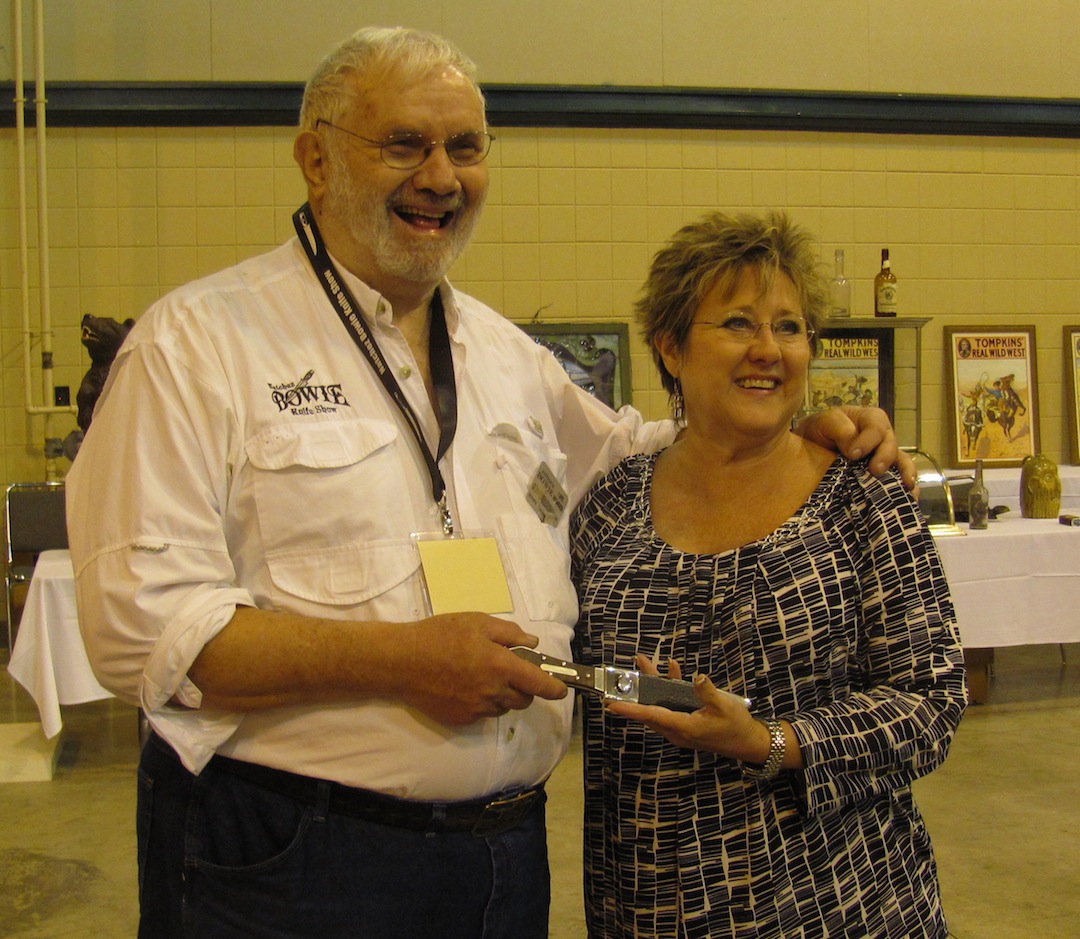
Celia Johnson accepts Jim Batson's recreation of a "James Black bowie" from Batson.
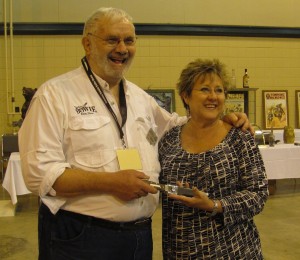
Jim Batson presents a “recreation of a James Black bowie” to Celia Johnson.

ABS master smith James L. “Jim” Batson made the reproduction of the knife and presented it to Mrs. Celia Johnson, who claims to be a descendant of Black. She says she is descended from Gradison DeRorysten Black, the son of James Black. Celia and her husband, Jerry, traveled from Baytown, Texas, to accept the silver-mounted knife and sheath fashioned by Batson and based on what is believed to be a Black knife in the Historic Arkansas Museum in Little Rock, Arkansas. The Johnsons stayed at the Dunleift Hall, owned by Mike Worley, during the show. Worley sponsored the show, which was held in Natchez, Mississippi.


The Johnsons brought a scrapbook full of old family pictures and a handwritten list of ancestors and originally showed it to Batson during the American Bladesmith Society’s 2012 All-Forged Knife Expo in San Antonio, Texas (see page 44, July 2012 BLADE® www.blademag.com). Batson is one of the world’s foremost authorities on Jim Bowie and James Black. He has conducted extensive research on Bowie and bowie knives, written any number of stories on the subject for BLADE, a book on Bowie’s famous Sandbar Fight, coordinated Bowie Symposiums at the BLADE Show (www.bladeshow.com), and much more. He also coordinates the Batson Bladesmithing Symposium each spring in McCalla, Alabama, and is a past multi-term chairman of the ABS.


Batson pored over the Johnsons’ documents and pictures at the 2012 San Antonio show. Among the topics of their discussion was the famous 19th-century daguerreotype that reportedly shows James Black and Judge Jacob Buzzard, the physical resemblance of the man some believe is Black in the daguerreotype to that of some of Celia’s ancestors, and Black family history in general.


For the latest on knives, knife news and more, stay honed at www.blademag.com (www.blademag.com).


Hot Knife Grips—But Not Too Hot To Handle

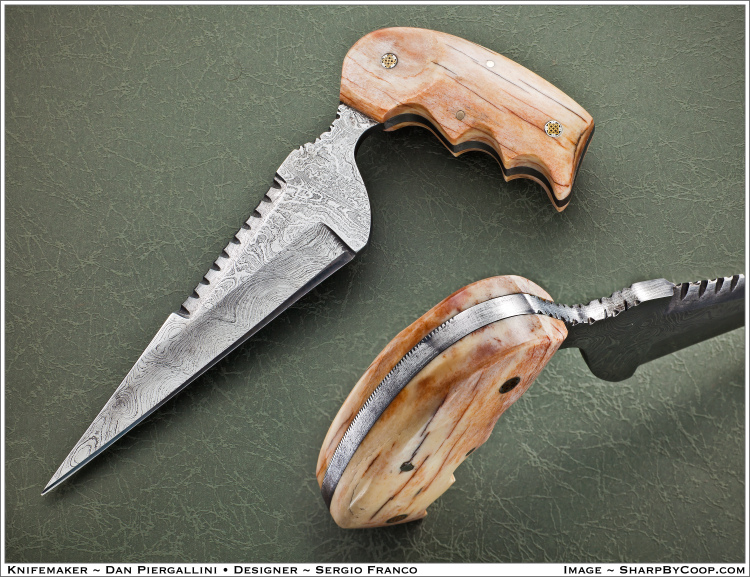
Sandy McClure of Giraffebone.com says giraffe bone remains hot because it is available, can be dyed several rich colors and can look like ancient ivory, as here on Dan Piergallini’s push dagger. (SharpByCoop.com photo)

Preference, use, and supply and demand help determine the most popular grip materials

by Stephen Garger

Getting a clear idea of what is hot in materials for knife handles can be difficult. Aside from obvious factors such as personal taste or intended use, there are considerations of supply and demand and national/international economics.

    “Typically, in our business, whatever is ‘hottest’ has more than one answer,” observes Kristi Culpepper of Culpepper & Co. “People may be looking for what’s hardest to get and consider that material hot because of its rarity.” Shannon Edgington of Knife & Gun Finishing Supplies (K&G) has a similar take.

    “Stabilized woods are hot and look great, with box elder burl the most successful dyeing wood,” she says. Aside from the woods, Edgington noted that water buffalo “is being jigged to look like impala and stag.” Meanwhile, giraffe bone continues to get heavy use as a handle material.

    “It’s pretty hot because it’s available, and you can get it in natural dyed colors, and it can also look like ivory,” says Sandy McClure of Giraffebone.com, which deals primarily in African materials. “There is plenty of giraffe bone because lions are still killing giraffes through a [natural] culling process,” she notes.

    A different perspective accompanies trends in synthetic handles. Chris Hartman, co-president of Masecraft Supply Co., says G10 laminates and canvas paper and linen Micarta® remain hot. “The materials are impact resistant, waterproof and highly suitable for individual makers and manufacturing without worry of warping, twisting, shrinking or cracking,” he notes. “In addition, the substances are readily available and cost effective, thus far better suited than natural materials for the high-tolerance needs of today’s manufacturers.” Mike Sheffield of Sheffield Knifemakers Supply shares Hartman’s assessment.

    “Working/tactical knifemakers and manufacturers are buying Micartas and G10s because they are easier to machine, get in sheets and cut out handles,” he says. “Micarta and G10 also tend to hold up better than natural products.” 

    Hartman indicates the Masecraft line of paua, abalone and awabi shell and acrylic laminated veneer sheets is finally beginning to take off. “These are great new products as they look genuine, use a combination of actual shell and acrylic, and are less than a third of the cost of solid-shell-laminated sheets. It’s like working with acrylic with all the natural beauty of real shell,” he notes. “Two years ago we started to develop some of these materials. It always seems to take about two years from prototype to actually showing up on production knives.”

    Sheffield says his company has been applying CNC machining to grips. “I’ve been making handles for a couple of manufacturers and producing an end product out of Micarta or G10 to their specifications,” he states. “I scan their template/design and produce a handle for them on a short-run basis.” For example, using a regular blank Sheffield has been selling for years, he can produce a pattern you would expect to see on bone, a process that accounts for the jigged-bone appearance seen on some Micarta and G10 handles. 

    According to Hartman, composites also have grown in popularity.  “[The supply of composites is] steadier than that of natural products, and the materials themselves are more stable and cost effective for individual makers and manufacturers,” he says. “In addition, some of the best composite materials are made in the USA, and are far better suited for today’s high-tolerance manufacturing needs, with good durability.” 


New Resources

The natural material side of the handle market is also dynamic, with suppliers always on the lookout for new and interesting resources.

    “We currently have a supply of bison bone and jaws [dating back to] the Pleistocene Era that have been underground and exposed to ground minerals, so they have the coloring and look of mammoth ivory,” Culpepper reports. “We also have a stock of whale bone that should be coming into the custom market on some knives, some traditional jigged patterns in hot new colors for 2012 like Sunset and Bamboo, and several new jigged patterns.” She points out that a number of companies that specialize in tactical knives are updating their more traditional lines with limited-edition dyed and jigged bone, mother-of-pearl inlays and other natural materials. Meanwhile, Edgington says K&G’s resin wood shows promise for handles. “It has gone through a lot of testing and has been found to be similar to Micarta, and is used in various patterns for kitchen knives and cutting boards,” she notes.  

    Hartman says red carbon fiber did not make the cut. “It was simply too expensive to produce with not enough demand to support the cost,” he says. “We developed a new product which uses black carbon fiber with red G10 layering, creating a hybrid available in several colors including blue, yellow and soon a carbon fiber with a green layer.” The material has the advantage of being “about a third less expensive than the old red carbon fiber,” Hartman notes.  Sheffield also has a material that is a red-and-black carbon fiber alternating with G10.


Scarcity and Shortages

I asked whether sambar stag, ironwood and mother-of-pearl remain scarce, and if there will be any shortages in other natural materials.

    “Natural materials have such a demand all over the world that the U.S. is no longer first on the list when it comes to purchasing them,” Culpepper says. “Mother-of-pearl and stag both are commodities in China because of uses in all their industries, from furniture and jewelry [mother-of-pearl] to medicine [stag].”  Hartman concurs, opining that eventually sambar stag and ironwood either will disappear or the price will become so outrageous that only a few will be able to afford them—though for now both are available in pretty good supply.

    “Actually, I believe it will be the cost of bone, horn and exotic woods you will see continuously rise over the next several years,” Hartman notes. “Eventually, these supplies will be wiped out or the labor force that’s willing to cut and supply them will have moved on to better jobs. Sources of these products in China are already gone due to economics, and prices from India are on the rise with supplies decreasing.” Though these things are happening now, it is difficult to provide an accurate time frame in which the changes will be felt in a meaningful way.

    “Business has been very slow related to the economy since knifemakers are not buying unless they’re selling something,” McClure observes. “They’re not stockpiling anything but are using what they have.” Sheffield notes there is a lot more competition and Edgington says she does not carry the stock as in years past. “We don’t want to come across as price gouging and will absorb a lot to keep the prices down for the customer,” she sighs, “but the price to us keeps going up on the nice stuff.” Hartman agrees, concluding on a positive note, “The knife and gun industries seems to be much more stable than other similar markets in this economy.”

For more on the latest knives, knife legislation, knifemaking instruction, knife trends, knifemakers, what knives to buy and where and much more, subscribe to BLADE® Magazine, the World’s No. 1 Knife Publication. For subscription information click on http://www.shopblade.com/product/blade-magazine-one-year-subscripti…?r+ssfb021112#BL1SU

BLADE Show: You, Your EDC and the Police

The BLADE Show (www.bladeshow.com) is the place to learn all about knives—including what to say when you are stopped by law enforcement for carrying one.

BLADE seminar: Know what to say and not say to law enforcement when carrying a knife.
In a special BLADE Show seminar, learn how to deal with law enforcement when you are stopped for carrying a knife.

Have you ever been stopped for carrying a knife? What did you say to the officer? Did he ask you why you carried a knife? What was your response? Did he ask to search you? What was your response?

If none of these things have happened to you, that’s a good thing. But what if they do? What would you do?

Chris Conte is a legislative counsel for the National Rifle Association’s Institute for Legislative Action. He will conduct the seminar “You, Your EDC and The Police” during the BLADE Show & Living Ready Expo May 31-June 2 at the Cobb Galleria Centre in Atlanta. The seminar will be show Saturday at 4 p.m. in Room 109.

According to a spokesperson close to Mr. Conte, “Proper communication and understanding of the culture and expectations of both law enforcement and the law-abiding citizen with a knife is crucial to avoiding unnecessary conflict. During interactions with civilians, law enforcement frequently view knives as the most commonly possessed ‘weapon’ and individuals as ‘armed,’ posing a threat to their personal safety and others.

“Law-abiding citizens, believing their knife is an essential, valuable tool, need to know how to behave and respond to law enforcement to avoid legal problems and what to do to protect their liberties. Mr. Conte will present an overview of the legal and practical dynamics of how such encounters can go well or go poorly based on case law, and based on his work as a certified law enforcement instructor in encounters with civilians carrying handguns.”

All BLADE Show ticket holders are admitted free to the show’s seminars. Seating is limited, so be sure to get there early.

Bent, Shot Whiskey Knives Keep Chopping

The June issue of BLADE® magazine features a story about wilderness survivalist Creek Stewart and his line of Whiskey Knives, made by Hank Gevedon and crew at Reptile Toolworks in Mt. Vernon, Kentucky. Whiskey Knives are carefully tested, but Hank likes to destroy a few from time to time to spot-check their quality. He starts by bending a Whiskey Corvid model to show that the hard outer layer of the A36 carbon steel will crack when bent in half, but that the knife will stay intact because of the tough inner core. Then he gets to shooting them. Besides, Hank’s just entertaining to listen to.

A Bent Whiskey Corvid Knife Still Chops and Slices

Hank Shoots A Whiskey Corvid  with an 8mm Mauser FMJ

So what does all that mean to the knife owner? Well, you won’t want to bend your knife in a vise or shoot it at the range, but the following review of the destructive testing explains how the makuri method of construction can produce a sharp, yet tough knife, ideal for hard-use bushcrafting needs.

What Does Destructive Testing Reveal About Whiskey Knives?

Sure They’re Sharp, But How Sharp?

Know How to Sharpen Your Knives

Knife sharpening is a lost art; learn how to keep your knives and tools sharp.
A collection of knives is only as good as it is sharp. Understand how to sharpen all styles of grinds, along with other tips on caring for your collection.

The blades on Whiskey Knives are asymmetrical hollow-ground, meaning that you only need to sharpen one side, the one with the Creek logo on it. The other side just requires a touch-up. Reptile Toolworks puts instructions in the crate with each Whiskey Knife it sends out, but what about your other knives? “Sharpen A Knife, And Care For Your Collection” by BLADE editors covers all aspects of sharpening, demystifying the process and ensuring you have the knowledge to keep your knives sharp at home and in the field.

Advertisement

Must Read Articles

Read this before you make a knife

Knifemaking 101 – Read This Before You Make a Knife

  by Wayne Goddard My experience has taught me that there's nothing like digging in and getting started. I've often said the hardest part of the...
how to forge damascus steel

How to Forge Damascus

Advertisement
Advertisement