
The BLADE Blogs

The blogs of the BLADE editors, Steve Shackleford and Erin Healy.

Schools of Sharper Learning

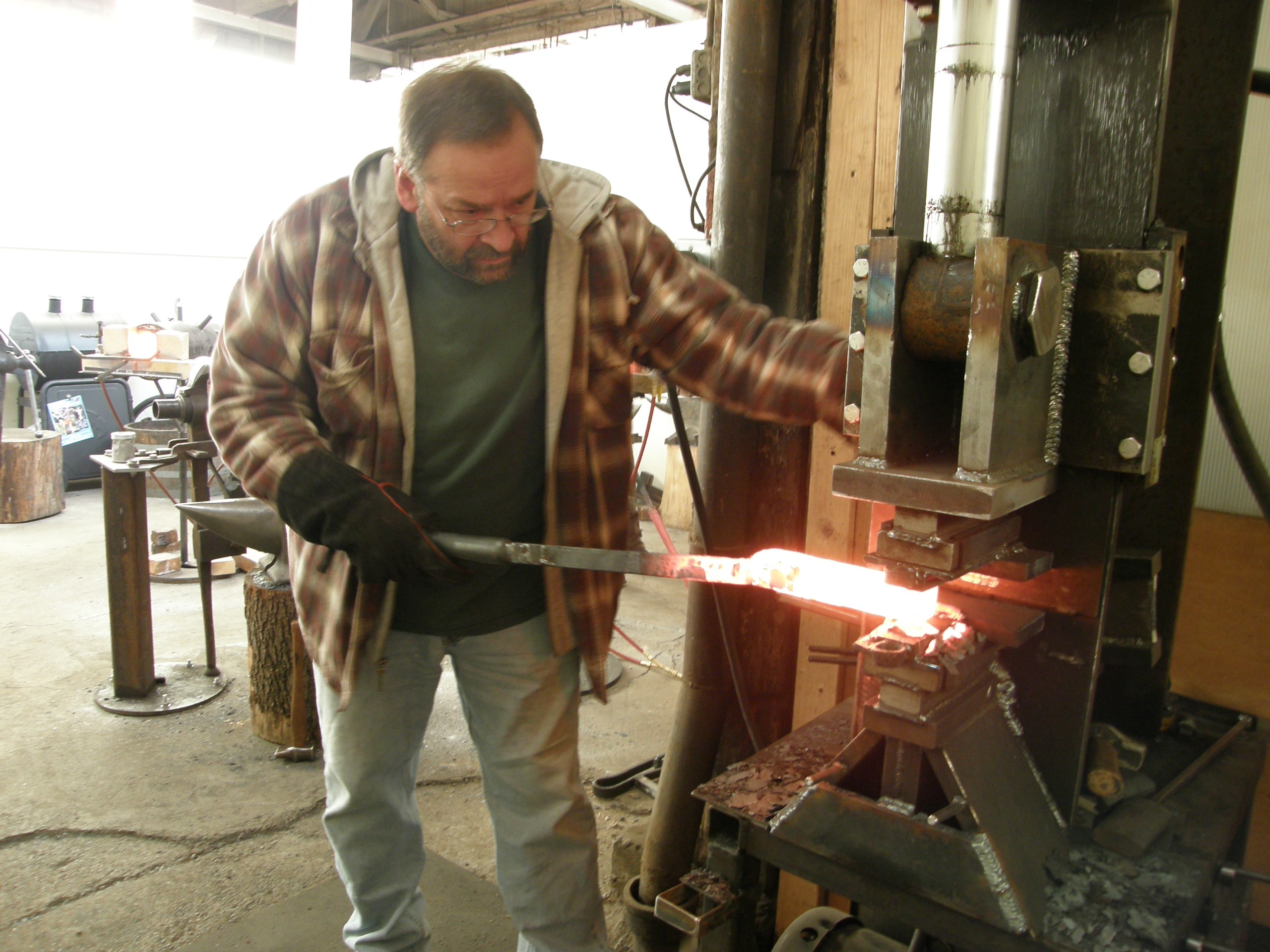
You can forge, grind, heat treat and finish a kukri at Dave Lisch’s Studio 4 Forging Facility in Seattle, Washington. (photo courtesy of Dave Lisch)

Talk to anyone in the know in the factory knife industry and he or she will tell you most of the hottest knife styles, materials, mechanisms and more seen on today’s production knives originated in the custom segment of the knife industry. In fact, with the growing amount of knifemaking learning centers and symposiums nationwide, an ever-increasing number of contemporary makers who set the trends in custom and factory knives are cutting their teeth in the schools of sharper learning. Consequently, no matter the hottest knife trends, chances are many of them come from the minds of those who teach and/or learn at today’s top knifemaking venues.

Those venues range from California to New England and many points in-between, and chances are one is near you. What’s more, each seems to offer something different, not only in subjects taught but in its overall philosophy and approach to knifemaking in general.

At the Branson Hammer-In & Knife Show in Branson, Missouri, knifemaker Gary Mulkey leaves the type of demonstration up to the demonstrator “so as to make it as enjoyable for all as possible. My goals in sponsoring this event are twofold: to provide a fun weekend for the knifemakers and to introduce new people to the world of custom knives.”

The Ashokan Seminar in Ashokan, New York, has been around as long or longer than any of them, started by the New England Bladesmith’s Guild in the early 1980s as a “non-sanctioned shadow organization.” “The sole purpose of the group is the education and improvement of the craft of knifemaking,” noted bladesmith and BLADE® contributor Tim Zowada. “With that goal in mind, the seminar is the only function of the group. There is no membership. There are no dues, nor newsletter. This lack of structure eliminates politics within the group. All the demonstrators and staff donate their time. This is a seminar covering all facets of knifemaking, taught by those with a strong desire to teach and share.”

     BLADE field editor/ABS master smith Joe Szilaski’s approach at his Knife & Tomahawk Learning Center is tailored for each individual student. “My philosophy has been you will learn more if you work on the style of knife that interests you most,” he stated, “and as with most things in life, there is more than one way to skin a cat. A technique that works for one person may not work for another. I have almost 50 years experience in metalworking and am able to demonstrate several different techniques that will help the student find what method works best for him.”

Whether you want to make a knife from start to finish, focus on one or more specific techniques or knife patterns, forge steel, grind blades, inlay wire in knife handles, test knives to the brink of destruction or what have you, today’s learning centers have it. Meanwhile, some of them also conduct knife shows and auctions where you can buy and sell knives, equipment, materials and related items, and cutting competitions where you can watch the knives in action—all the while talking and trading ideas with top makers, the legends and the brightest young minds of knifemaking.

A number of the schools are located in picturesque and/or notable settings—the Moran School of Bladesmithing in historic Old Washington, Arkansas, the Batson Bladesmithing Symposium at the Tannehill Ironworks in McCalla, Alabama, and the Big Sky Country Conference near Glacier National Park in Frenchtown, Montana, to name but three—with lots of good food, local attractions, camping and/or comfortable accommodations, and good times to be had by all.

Things you should bring to each venue (if not already provided) include a notepad, pens/pencils and/or recording device, casual and work clothes, gloves, goggles, earplugs and a dust mask.

In alphabetical order, the centers of instruction are (please note in instances where dates and schedules have not been firmed up yet, past courses and instructors are listed to give you a taste of what to expect in the coming year):


Ashokan Seminar, New England Bladesmith’s Guild, Sept. 14-16, The Ashokan Seminar, Ashokan, New York

•Schedule varies (beginner to advanced level); past demonstrators include Phil Baldwin, Rick Barrett, Kevin Cashen, Delbert Ealy, Don Fogg, Rick Furrer, Jim Kelso, Dan Maragni, R.J. Martin, Jerry Rados, Jim Siska, Tim Zowada and others, all of whom donate their time “with a strong desire to teach and share”

•Casual clothing recommended; safety glasses required for demos; work clothes suggested for participating in open forge time

•Cost: $265 includes room and board (“The food is fabulous!”)

•Tim Neu (registration), Dept. BKG12, 511 Beaverkill Rd., Olivebridge, NY 12461 [email protected], or Tim Zowada (general questions) 231-348-5416 www.ashokanknifeseminar.com


Batson Bladesmithing Symposium, Knife Show, auction and cutting competition, spring, Tannehill Ironworks, McCalla, Alabama

•Past courses: Basic bladesmithing, damascus, handles and guards, folder construction, sheath making, scrimshaw and much more taught by Kevin Cashen, Wade Colter, Jim Crowell, Alex Daniels, Christoph Deringer, Rick Dunkerley, Ken Durham, Vince Evans, Jerry Fisk, Don Fogg, Rick Furrer, Wayne Goddard, Jay Hendrickson, B.R. Hughes, Joe Keeslar, Chris Marks, Charles Ochs, Mel Pardue, Al Pendray, Tim Potier, Steve Schwarzer, Devin Thomas and others; supplies, materials, knifemaking equipment and more

•Cost: Contact Jim Batson for more information

•Jim Batson, 256-971-6860 or 912-383-6776, [email protected]


Big Sky Country Conference, July 14-15, Josh Smith’s Knife Shop, Frenchtown, Montana

•Past instructors (mid-level to highly advanced classes; everyone welcome, especially collectors;): Harvey Dean, Rick Dunkerley, Larry Fuegen, Tim Hancock, Richard Rogers, Bill Ruple, Jurgen Steinau, Owen Wood, John Young and more

•Notepad and recording devices; everything else is available there

•Cost: $185 per person, $225 per couple; includes lunch and dinner Saturday; collectors encouraged to attend the Big Sky Country Knife Show Friday before the conference; the show includes 12 top makers specially selected to attend (contact Josh for an invitation)

•Josh Smith, 406-626-5775 [email protected], www.joshsmithknives.com


Branson Hammer-In & Knife Show and cutting competition, Sept. 29-30, The Shepherd of the Hills Farm, Branson, Missouri

•52-table knife show ($100 exhibitor table fee) runs concurrently with hammer-in both days; cutting competition on Saturday

•2011 demonstrators/courses (beginner to advanced level) included: Jim Crowell, bladesmithing hunters; Kyle Royer, bladesmithing bowies; Jerry Lairson, fitting guards; Brion Tomberlin, heat treating and ABS JS blade testing; Linda Ferguson, scrimshaw; Jason Burton, grinding a hunter blade; Bill Lyons, filework; and more

•Cost: Attendance free to the public

•Gary Mulkey, 417-348-0123, [email protected]


California Hammer-in (ABS), Oct. 19-21, College of the Sequoias, Visalia, California

•Past courses/instructors (everyone welcome): Basic forging, heat treating, grinding and  finishing, and handles and guards to advanced forging of complex mosaic damascus patterns and folding knife construction; also, wire inlay, filework, sheathmaking, forge design and construction, the making of wootz and tamahagane, and more; instructors Bill Burke, Jon Christensen, Rick Dunkerley, Tom Ferry, Don Fogg, Joe Keeslar, Bob Kramer, Greg Neely, Michael Vagnino, Owen Wood and others

•Bring safety glasses, ear protection and long pants, and notepads pens/pencils

•Cost: $55

•Michael Vagnino, 559-827-7802, [email protected], americanbladesmith.com


Great Smoky Mountain Bladesmithing Symposium & Knife Show, March 9-11, Haywood Community College, Clyde, North Carolina

•Bill Wiggins, 828-226-2551, [email protected]


Guadalupe Forge Hammer-In & Knifemakers Rendezvous (includes a show-and-tell knife show), February and September, New Braunfels, Texas

•Past courses (everyone welcome): basic blade forging, advanced blade and damascus forging, mosaic damascus, grinding, handles and guards, mortise-tang construction, slip joints, locking liners, lockbacks, basic machining, surface grinders and pantograph mill, leather and metal sheaths, engraving basics, filework, choosing quality handle materials and more. Also Stout’s one-on-one basic, advanced and folder classes, and a tentative one on autos

•Basic tool-room attire

•Cost: $200 (noon meals included)

•Johnny Stout, 830-606-4067, [email protected] or  Harvey Dean, 512-446-3111


Haywood Community College (ABS), February through December, Clyde, North Carolina; campus is a designated arboretum with many “natural” classrooms in the Appalachian Mountains of Western North Carolina

•2012 demonstrators/courses: Brute de Forge, Joe Keeslar; intro to bladesmithing (2 separate courses), Greg Neely (week 1) and Jim Batson (week 2), and  Bill Wiggins (night classes); handles and guards, Jim Rodebaugh; damascus (2 separate courses), Tim Potier and Steve Dunn; and spring and fall hammer-ins

•Cost: Ranges from $65 (hammer-ins) up to $850 for each course

•Howard Tew, 828-627-4667, [email protected], www.americanbladesmith.com


Heartland Hammer-In, Oct. 6-7, Washburn Institute of Technology, Topeka, Kansas

•Steve Culver, 785-484-0146, [email protected]


Joseph Szilaski Knife & Tomahawk Learning Center, classes year round (mostly weekends) in Joe’s 4,400-square-foot shop

•Course schedule (everyone welcome; 6 students per class): blade forging, grinding (2 days; Jim Siska assisting); hawks (5 days); locking-liner folders (4 days); also, 2-day courses in bladesmithing, grinding, handles and guards (Siska assisting), carving ivory, steel and bone, engraving and inlay, and more

•Wear good shoes and long pants w/no cuffs or nylon; hearing and eye protection (though goggles, masks, gloves and ear plugs are provided)

•Cost: Most classes $200 per day (includes materials, supplies and meals)

•Joe and Lori Szilaski, Dept. BKG12, 52 Woods Dr., Pine Plains, NY 12567 518-398-0309, [email protected], www.szilaski.com


Mid-America Hammer-In, Aug. 24-26, Miami County Fairgrounds, Troy, Ohio

•Butch Sheely 419-832-5801 [email protected]


New England School of Metalwork (ABS), December 2011 through November 2012, Auburn, Maine

•Course schedule (contact Dereck Glaser for levels of expertise required): basic bladesmithing and American-style tanto, Nick Rossi; simple sheathmaking; basic damascus knifemaking, Christoph Deringer; intro to Japanese sword forging, Howard Clark; damascus, J.D. Smith; intro to bladesmithing (2 separate courses; each one includes dorm and kitchen use), Jim Crowell (1 week each) and instructor to be determined; handles and guards; Brute De Forge, Joe Keeslar; summer hammer-in; and more

•Cost: Ranges from $55 (hammer-in) up to $1,000 for each course

•Dereck Glaser, 207-777-3375, [email protected], www.newenglandschoolofmetalwork.com


Studio 4 Forging, dates to be announced, Seattle, Washington

•2012 demonstrators/courses: Mike Vagnino, lockback folders, 3 days; Jason Knight, kukri knife class, 3 days; David Lisch, shop rat knife, 1 day; David Lisch, in-depth damascus, 5 days; Tom Ferry, locking-liner folder class, 3 days; also, a wide range of bladesmithing classes throughout the year

•“Come get something hot and make something cool!”

•Cost: Ranges from $150 to $1,000 for each course

•David Lisch, [email protected], DavidLisch.com


Texarkana College Moran School of Bladesmithing (ABS), February through October, Washington, Arkansas (venue is a replica of a one-room school house and a stable/barn)

•2012 demonstrators/courses: intro to bladesmithing (4 separate courses) by Greg Neely and Dickie Robinson, Gordon Graham, Kevin Cashen and Mike Williams, and Jim Crowell and Tim Potier; handles and guards (4 separate courses) by Dan Petersen, Roger Massey, Mike Ruth Sr., and Joe Keeslar; damascus (2 separate courses), J.R. Cook and Steve Dunn; slip joints, Wes Davis; and spring and fall hammer-ins (both at Piney Woods; contact B.R. Hughes, 903-838-0134, [email protected])

•Cost: Ranges from $55 (hammer-ins) up to $850 for each course

•Debbie Bricker, 903-832-5565 ext. 3266, [email protected], www.americanbladesmith.com


Willow Bow Ranch Seminars, instruction offered pretty much year round, Riverton, Wyoming

•Courses (no experience necessary): Each student forges, heat treats and grinds a high-performance blade of 52100 or 5160 steel and tests it for cutting and toughness, with close to a week necessary to complete one blade; etching; advanced seminars on handles and guards and sheaths available on request; Ed Fowler and Chris Amos, instructors (both one-on-two and one-on-one instruction available when possible)

•Wear cotton shirts and pants; bring glove/gloves, shop apron if you use one, safety glasses, earplugs and your favorite hammer

•Cost: Contact Ed Fowler for more information

•Ed Fowler, 307-856-9815


Youth Hammer-In (ABS), June (dates to be announced), Smoky Mountain Knife Works, Sevierville, Tennessee

•Contact Houston Price, 865-397-0053, [email protected]


For more on the latest knives, knifemaking instruction, knife trends, knifemakers, what knives to buy and where and much more, subscribe to BLADE® Magazine, the World’s No. 1 Knife Publication. For subscription information click on http://www.shopblade.com/product/blade-magazine-one-year-subscription-us/?r+ssfb060112#BL1SU
 

Knifemaker Jack W. Crain Passes Away

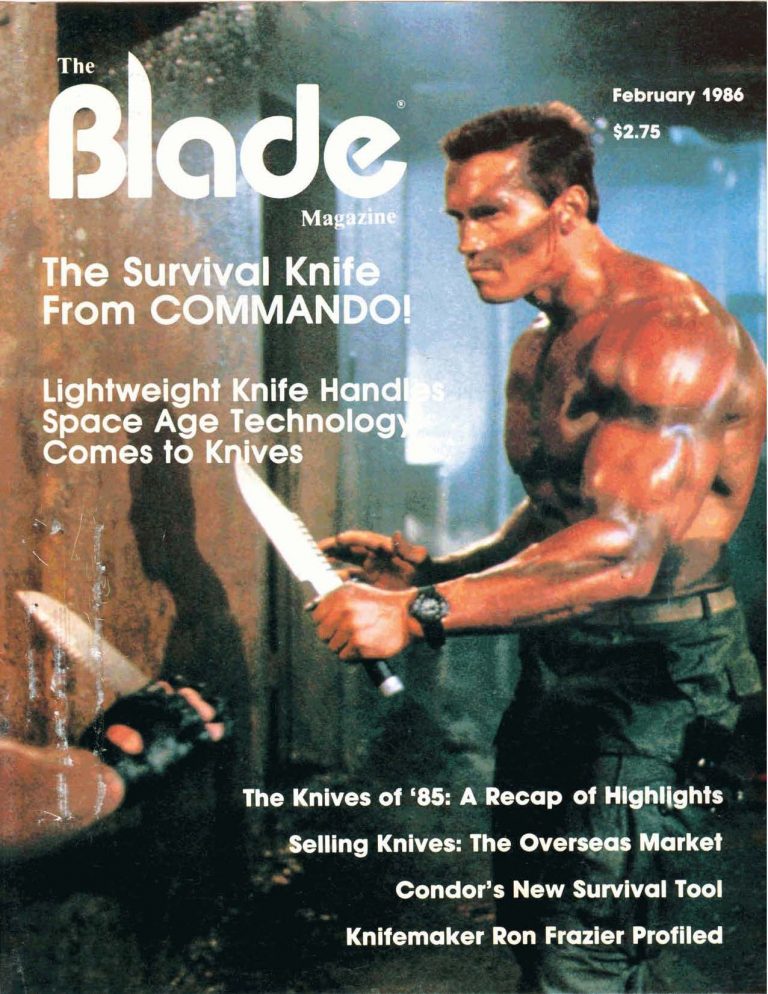
Crain/Schwarzenegger
Knifemaker Jack W. Crain designed and made the LS-1 knife used by Arnold Schwarzenegger in the 1980s action flick, Commando.

Knifemaker Jack W. Crain, designer and maker of knives for such action movies as Predator, Commando and others, passed away Sept. 7. He was 70.

Arriving hot on the heels of the Rambo knife phenomenon started by BLADE Magazine Cutlery Hall-Of-Fame© member Jimmy Lile in the early 1980s, Crain also made a hollow-handle survival model with sawteeth on the back a la the Rambo knife. Called the LS-1, the knife appeared in 1985’s Commando. It was the first of several knives Crain would make for the movies, television and books. LS-1 was short for Life Support System 1, a knife Crain originally introduced in 1982. He later made a successor called the LS-2. He also made two other knives for Arnold Schwarzenegger’s character of Matrix in Commando, the Scorpion and Commando. It was the first of two ’80s Schwarzenegger action films for which Crain designed and made knives. The second, Predator, is considered a cult classic. Crain made the knife not only for Schwarzenegger’s character, Dutch, in Predator, but also a big bowie for the character of Billy played by Sonny Landham.

Crain is listed as either weapons master, knife designer and/or manufacturer in such movies as Die Hard, Road House, Die Hard 2, Predator 2, Demolition Man and Executive Decision, among others. He also designed knives for all 22 episodes of the 1988-89 TV series, War of the Worlds.

Of Weatherford, Texas, Crain was one of a generation of knifemakers inspired by 1952’s movie about Jim Bowie and his knife, The Iron Mistress. Since Crain preferred making bowies, he said in a 1985 story in BLADE® Magazine that he assumed the movie influenced him as well. He sold his first knife in 1969 and a decade later became a full-time maker and joined The Knifemakers’ Guild. Initially he forged his blades but later adopted the stock-removal method of knifemaking.

He is survived by his wife, Jane Fritts Crain, sisters, a daughter, niece, great niece and numerous extended family and friends.

‘Alone’ survivalist Larry Roberts praises LTWK’s Genesis

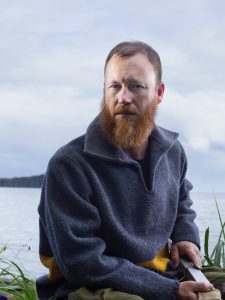
Larry Roberts appeared on the second season of "Alone" and held out 64 days in the Vancouver Island wilderness.
Larry Roberts used the L.T. Wright Knives’ Genesis to survive as a participant on the History channel’s “Alone.”

Larry Roberts, runner-up in the second season of the History channel’s wilderness survival show “Alone,” lasted 64 days in the harsh environs of Vancouver Island with one knife: the Genesis made by L.T. Wright Knives. L.T. Wright knew Roberts as a customer and because he wrote articles for the company’s Self Reliance Illustrated magazine. What he didn’t know, because “Alone” participants are not allowed to discuss the show, was which knife Roberts used on the show. When Roberts was allowed to talk about his experiences, he raved to Wright about how much he appreciated the Genesis. Wright suggested they team up, and a winning partnership was born.

On Dec. 16, LTWK introduced its Larry Roberts Signature Edition Genesis to the public. Fans of the “Alone” star and members of the LTWK Pout House club were eligible for pre-release access for 24 hours prior to the general release.

The premise of the reality show is that a group of outdoorsmen and women are deposited in a remote locale—alone—and whoever can survive the longest, wins—$500,000 to be exact. They are positioned so that natural obstacles prevent them from encountering each other. There is no crew; the participants film themselves and are resupplied with batteries and camera chips. They must build shelters, find enough to eat without expending too many calories, stave off hypothermia and marauding animals, and maintain their sanity.

So, how exactly did Roberts use his knife? The list is extensive. He built small game traps and a fish trap. He used it batonning, feather-sticking, harvesting spruce sap and cedar bark, gutting and filleting fish, processing mice and prying shellfish off of rocks. He used it to make a spoon, a spatula and a fork. He harvested mushrooms with his Genesis, cut cordage and used the sharp 90-degree spine of the knife to strike his ferrocerium rod to start fires. He used the knife to make a spear and tent stakes, and even for first-aid and hygiene tasks, such as removing a splinter or cleaning his fingernails.

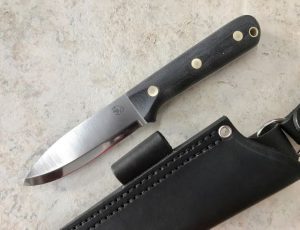
The LTWK Larry Roberts Signature Genesis comes with a true 8-oz. leather sheath with dangle and farro rod loop.
The Larry Roberts version of the LTWK Genesis has a broomstick handle and sharpened spine to assist in firebuilding.

The knife measures 9 inches overall. The 4.25-inch blade has a Scandinavian grind, and the chiseled edge is ideal for bushcrafting skills like making kindling, tent stakes and stripping bark, L.T. Wright explained. It used to be, he continued, that outdoor knives were overbuilt to account for hard use in the field, but now that the education and skill level of outdoorsmen has advanced, often through watching and practicing skills learned just on YouTube, thinner-edged knives are sought after by outdoorsmen and survivalists. Roberts, too, praised the knife’s ability to bite deeply into wood.

The Genesis offers a 1/8-inch-thick spear-point blade made of A2 tool steel, following a Kephart design overall. The knives are tested to 57 to 59 HRC on the Rockwell hardness scale, so they are tough but hold an edge, Wright said. The A2 steel, in the opinion of both Wright and Roberts, outperforms O1 and 1095 for edge retention, and corrosion and stain resistance. For his time on the island, Roberts only stropped his knife on his leather belt to remove micro-oxidation from humidity and moisture. He never had to resharpen it at all.

The Roberts version of the Genesis has a broomstick handle because Roberts found the thicker handle easier to hold and control. It also has thumb scallops and a sharpened spine for striking a fire steel against. LTWK made the black Micarta handle with white liners because Roberts likes the black-and-white contrast. The blade is stamped with Roberts’ rendition of his Vancouver Island nemesis: a mouse. “It became an obstacle for me to overcome,” he said of the creature he battled during the show.

The MSRP of the Larry Roberts Signature Edition Genesis is $225 and includes a true 8-ounce black leather sheath with a dangler and 3/8-inch ferro rod loop. Wright prefers to purchase 10-ounce double-died leather from Spen Stelzer, the owner of JRE Industries in Illinois, and have it split to 8 ounces so there are no discrepancies. “We can control consistency better that way,” he explained.

Roberts wanted the largest ferrocerium rod he was allowed to have during the show, so he went with a ½-inch rod and wasn’t able to use the loop that comes with the Genesis sheath. Roberts did use the dangler, however. He explained that it allowed the knife to hang where his hand fell naturally for easy access—just like a gunslinger in a western—and yet carry out of the way of a backpack or any other gear.

Wright grew up playing Tarzan and Rambo in the woods as a boy, and, of course, the tactical use of knives and their implementation in hunting and bushcraft interested him all along. But he wanted to make a living making knives, so he listened to what people told him they wanted. “If you go to a show and come home with all the knives you brought, you’re not going to be in business long,” he said. Like the survivalist industry itself, as the education and skill levels of users advance, so too must the sophistication of the knives. Wright listened.

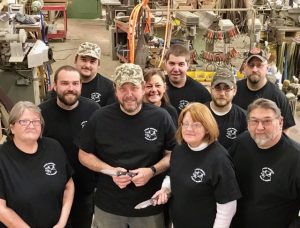
The crew at L.T.Wright Knives specialize in knives that are favored in bushcrafting.
L.T. Wright (front row, second from left) was surprised and happy to find out his Genesis was the knife Larry Roberts used on the “Alone” series.

At first he made knives as L.T. Wright then as Blind Horse Knives and he’s back as L.T. Wright Knives. Wright learned to make knives from R.W. Wilson, who made the tomahawks for the 1972 movie “Jeremiah Johnson,” a cult favorite among outdoorsmen. “He’s probably sold off all of those,” Wright said, “but I do have a prototype of a tomahawk he made for the Texas Rangers.”

So, it is fitting that Wright should partner up with a man who carried his knife in a reality-based outdoorsman show for the small screen. Roberts grew up in Oregon, spending as much time outside as he could, bait-fishing for steelheads in the Rogue River and bow hunting. His first knife was probably a 3-inch lockback Buck pocketknife, he said. He married his high-school sweetheart, and they had a son and a daughter, now grown and on their own.

Roberts attended the Pathfinder School, LLC Survival Classes offered in Jackson, Ohio, through Self Reliance Outfitters. An instructor at the top-rated school, Dave Canterbury, had been on Discovery Chanel’s “Dual Survival” show, and Roberts had heard about “Alone” from a season one participant named Josh Chavez. Roberts had been looking for a challenge, a real-world way to apply the skills he’d learned. “This was it,” he said, and applied online.

You can be a superb outdoorsman, Roberts pointed out, but if you can’t express yourself in front of a camera, you won’t be selected for the show. Although more shy in real life, Roberts is a natural in front of the camera. He sent along hours of footage of himself conducting survival skills. He made the cut, and a total of 20 finalists attended a boot camp in New York. They were tested on their comfort level in the outdoors in a city park. They underwent both medical and psychological testing, and were trained extensively on how to operate the cameras they would be using to film themselves for the show.

Even though Roberts eventually had to “tap out” because he could not get enough food to compensate for the calories he expended, his life has changed from being on “Alone.” He teaches now for Pathfinder and privately on his own farm. He attended the Primitive Living Skills Conference, Rabbitstick, in September in Idaho and will be attending Winter Count, Feb. 12-18 in Maricopa, Arizona.

Roberts can’t say enough good things about the LTWK Genesis. It’s everything he ever wanted in a knife, in every way. Similarly, he can’t say enough good things about L.T. and his crew at LTWK. It was on the island, at night, when Roberts began designing a tattoo he wanted to get. It incorporated everything that was important to him during the “Alone” challenge. You can read about his experiences on the show and how the tattoo both gave him something to think about and something to look forward to getting in “Star of History Channel’s ‘Alone’ Talks Survival and Tattoos,” an interview by Kirstie Kovats in Inked magazine.

Of course, the mouse figures prominently in the design, as does the knife.

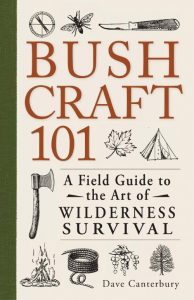
‘Bushcraft 101’ teaches the fundamentals of survivability

"Bushcraft 101" is a solid place to start your wilderness survival education, and can be a continued resources as you advance in your skill level.
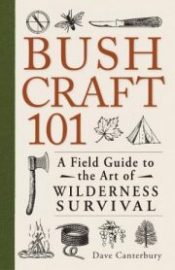
Dave Canterbury, instructor at top-rated wilderness survival Pathfinder School in Ohio, explains the 5 Cs of survivability in his “Bushcraft 101.”

Not sure where to start with your quest to master wilderness survival skills? Dave Canterbury, the primitive arts instructor at Pathfinder School in Ohio mentioned above, has written a book that’ll help you get back to basics, enjoy the outdoors and understand the essentials of wilderness survival.

Save

Survivalist Creek’s Life Led Naturally to Whiskey Knives

All Whiskey Knives come with multiple sheaths that configure to however you like to carry, or you can upgrade to what you see here.
Survival instructor, author and TV star Creek Stewart cross-carries a Whiskey Knives Corvid.

When Matthew Stewart was 5, his grandfather gave him a nickname that would chart the course of his life. “I was always playing in the creek,” said Creek Stewart, survival instructor, author and star of The Weather Channel’s now-cancelled “Fat Guys In The Woods.” No matter the time or weather, the boy was at the creek—happy. Not much has changed, except the budding outdoorsman of yore has now built an empire on his comfortable, family-friendly style of survival instruction. All things Creek also includes the soundly crafted, old-timey line of Whiskey Knives, which in addition to being ideally designed for bushcraft and easy on the wallet, also offers some scaled-down versions of classic styles that hands of all sizes can control. You can read all about Whiskey Knives and how they are made in an upcoming issue of BLADE magazine. If you’re not a subscriber, sign up so you don’t miss it.

Creek is “everywhere” and there are good reasons for that, not least being that he is genuinely warm and friendly. “I like working with people,” he said. Creek was a Boy Scout and an Eagle Scout. The first E in the CRE///K logo is representative of a scratch from an eagle’s talons. He continues to be a devotee of the Boy Scouts of America and a counselor for the Wilderness Survival merit badge. He lives the Be Prepared Boy Scout motto, and opted for Not If But When as his own tagline. Yes, scouts are being taught all kinds of skills, explained Creek, “but they’re also building character and learning life lessons.” He listed perseverance, teamwork, manners, camaraderie—all things the Boy Scouts instilled in him.

At Butler University in Indianapolis, Creek first perused a pharmacy major, but the misdirection, the urban setting and a campus crow that thought it was an alarm clock brought him to an awakening. You can read about his adventures trying to snare the bird on his website at The Crow, but in summary, the crow reawakened Creek’s inner woodsman. He decided he wanted to teach wilderness survival skills and set about making it happen.

He settled on a business major, a plan that would serve him well. During his sophomore year, he wrote and illustrated a wilderness survival field manual that collected his knowledge at the time. He had the book printed and spiral-bound, and offered free classes at Boy Scout troops to peddle it. He sold books, but he longed for a way to bring his customers to him rather than traveling to them. He asked his parents if he could teach a class in the woods on the family farm. Although still unnerved by his switch in major, they agreed. He sent out press releases and 15 people showed up. He’s been teaching ever since, part-time for many years but never quitting on his dream.

Creek’s business schooling helped him hone his marketing strategy. His many brands include, in addition to Whiskey Knives, Willow Haven Outdoor Survival School where he teaches one-day and weekend getaway survival courses on his 20-acre property, complete with lodge, in Anderson, Indiana. He also is lead instructor for the Escape The Woods challenge, which takes place at various locales around the country. The Not If But When Survival Store, which his parents now run, offers a collection of widely available survival items. And, Apocabox is a bimonthly subscription; six times a year members receive a box of survival tools and gear, hand-picked by Creek. It also includes a challenge that you can practice in the calm and comfort of a non-crisis. For instance, the December box included instructions on making snowshoes from your Christmas tree.

Creek’s overview of Whiskey Knives includes a revelation: his first knife.

Creek also saw that writing was going to be essential to reaching the right people—namely men and women of all ages and abilities. (While other survival instructors might emphasize immersing you in a survival scenario while you’re still learning, Creek feels that people absorb more and retain it longer, if they’re warm, dry and fed.)

His best-selling book is “Build the Perfect Bug Out Bag,” but he offers one on putting together a bug-out vehicle, two on survival skills and an intriguing one on the survival skills used in “The Hunger Games.” But Creek has also written two fiction books. “Stuck” is a short story about a Boy Scout dropout who through a series of bad decisions finds himself in a crisis situation—quicksand!—that he can only survive by using what he learned in scouting. “Rugosa” is a young-adult romance, due out this month. The novel has been in the works for six years. “I’m really sticking my neck out on this one.” Creek is anxious to see if his fans “get” it. “I’m a survivalist, but I’m also a person,” Creek said. (Check back for an upcoming review.)

Some people learn about Creek via completely different avenues. They may read some of his guest posts on The Art of Manliness blog and other websites. “I’ve known Brett (McKay, founder of AoM) a long time. I’m so proud to be a part of that,” Creek said. The Art of Manliness celebrates men stepping boldly into their roles as men, husbands and fathers, and includes articles on everything from health and style to relationships and how to survive in the wild. Creek has also been a guest on television shows such as TODAY, Inside Edition and Fox & Friends. He’s been featured in magazines like Men’s Fitness, Backpacker and Outdoor Life. And he was the star of The Weather Channel’s hit show, “Fat Guys in the Woods.”

When IBM purchased the digital portion of The Weather Channel in 2015, many programs were slashed, and “Fat Guys in the Woods” was just one of them. The show provided Creek with the ideal outlet for his wildlife survival instructing and was an inspiration to viewers who wanted to spend more time in the outdoors or jumpstart a healthier lifestyle. Three sedentary buddies would spend a week with Creek, learning survival basics. The last 24 hours would be spent alone, each man building his own shelter and fire. Creek would award one of them with a knife-sheath set. One would stand out as needing encouragement, or being there for the right reasons or excelling in a certain skill. “He gave it everything he got—a job well done,” as Creek put it.

That kit was an Ontario Knife Company’s Black Bird SK-5 wilderness survival knife with a sheath designed by Paul Scheiter of Hedgehog Leatherworks. It was the sheath that had Creek thinking about how to fine-tune the products he offered going forward. “I love my parents, and every day I get to spend with them (at Not If But When) is a blessing,” Creek said. He’s also happy to provide a place where people can find all the products he recommends in one place. But what he really likes is working with small American businesses that reflect simple, well-made, traditional craftsmanship. “I like things that have a story.”

That quest for mom-and-pop entrepreneurship and throwback workmanship with a story behind it, is what led to one of Creeks proudest collaborations: Whiskey Knives made by Reptile Toolworks in Kentucky. To read more about this partnership and exactly how Whiskey Knives are constructed, be sure to subscribe to subscribe to BLADE magazine.

bl1su-70Don’t Let Your BLADE Subscription Lapse

BLADE Magazine is all about the blade: what it’s made out of, how its made, to what specifications and even who makes it. Be sure to keep your issues coming as the months tick down to BLADE Show, June 2-4 in Atlanta, Georgia. At $21.98 you’ll save 70 percent off the newsstand rate. Other options include digital, Canadian print and International print subscriptions.

Watch for “Forged In Fire” on History Channel

According to a History Channel press release out of New York on April 27, 2015, a new blade forging competition series will air on the popular network this summer. As the press release states, “The most talented bladesmiths in the world will test their mettle in FORGED IN FIRE, a cutting-edge competition series coming to HISTORY this summer. Hosted by weapons expert Wil Willis, a former Army Ranger and decorated Air Force para-rescue specialist, the series will feature world-class bladesmiths recreating many of history’s most iconic edged weapons, from the Japanese katana to the medieval broadsword to ancient throwing blades like the Chakram. Production has started in Brooklyn, New York.j-well dog bone walnut-brass

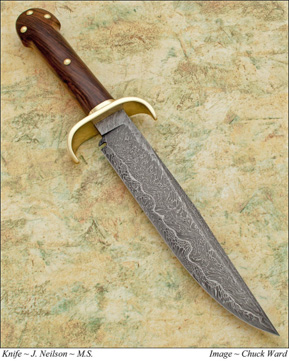
At left is J. Neilson’s “J-Well” bowie/fighter in English walnut and damascus. (Chuck Ward image)

“In each episode, four master bladesmiths will put their skills and reputations on the line, trying to avoid elimination while using traditional and state-of-the-art tools and machinery to turn raw metal into authentic working versions of classic bladed weapons of yesteryear.” Click here to read the rest.

Joining Willis will be a judging panel of renowned experts: knifemaker J. Neilson, a Pennsylvania-based ABS master smith who first shared this story with me, and who has been making knives and edged weapons for more than 20 years; Doug Marcaida, a New York-based hand-to-hand combat specialist who has studied and mastered fighting styles and techniques around the world; and David Baker, a California-based authority known for replicating period-accurate weapons, from submachine guns to samurai swords, for both museums and films. Again, for the rest of the story, click here.

Click here for more on forging.

Marketing For Knifemakers: Do You Need A Website?

In a recent Facebook post, Mike Jeffries of 2 Birds Metal Works asked fellow knifemakers if they had a website, if it was worth the time and money to set up and maintain and how they approached it. He often throws out marketing-related topics for discussion. If you’ve followed any of those threads, you’ve already picked up some digital marketing tips from fellow makers. So, with Mike’s permission, our first in a series of Marketing For Knifemakers articles will delve into some of the feedback he received, assess some statistics and provide examples of custom knifemaker websites. Obviously, if you are an uber-successful full-time knifemaker, you can stop reading, unless you want to reach a still wider audience. This article, though, is aimed at those on the cusp of going larger or full-time with their craft. So, knifemakers: Do you need a website?

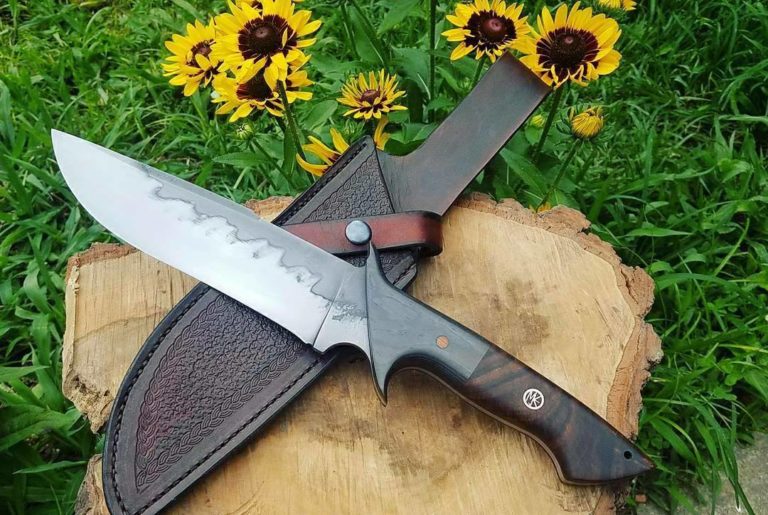
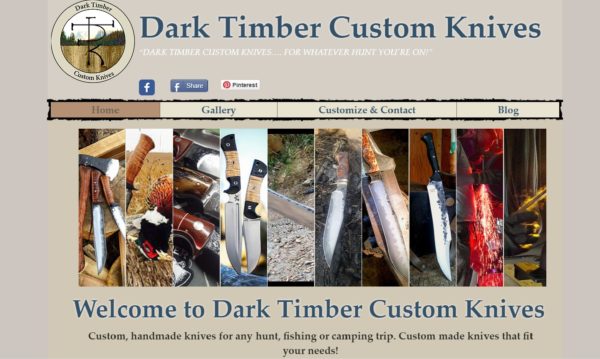
Dark Timber Custom Knives maintains a well-run website.
Experiment. Do a search for “custom knifemaker.” The first one to come up is Dark Timber Custom Knives, run by Peter Kohler. Why? A blog, and most of the photos are labeled. There needs to be content that bots can search through.

We’ll save whether you should go the do-it-yourself route or hire a pro for another time. We simply want to determine if a website is worth your time, money and effort at this point in your knifemaking career.

  1. What Are Your Knifemaking Goals?

Are You A Hobbyist Or Part-Timer?

There is no shame in continuing to improve your craftsmanship, loving the journey and decidedly not going forward with a website. Continue to learn with each knife, sell a few to keep yourself in supplies and follow along with the community to stay up on industry news. Facebook (FB) and Instagram (IG) are all you really need.

Is Knifemaking Your Calling?

If you’re “arrived,” you already have a website and you can stop reading, unless you want a few tips on maximizing your customer base. If you’re striving to reach higher rungs on the artisan ladder, focus on bettering each knife, learning from mentors and obtaining your journeyman smith rating if you forge. You can either start a website or wait. Once you think, and your peers confirm, that you’ve hit your knifemaking stride, though, you will definitely need a website. You will also need to tailor that site to reach the public you set out to attract.

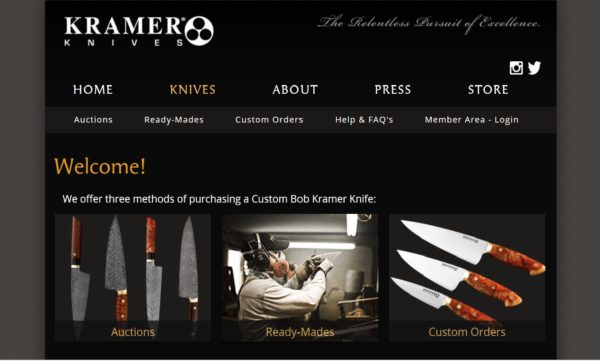
Bob Kramer comes up third in a search for custom knifemaker, right behind Arizona Custom Knives.
Bob Kramer of Kramer Knives maintains a website that reflects his appreciation of metallurgy and how it contribute to his “effortless art.” A website is an “experience” that should reflect the maker’s philosophy, style, story. Kramer’s does all that, which is why he come up third in a search for “custom knifemaker,” right after Arizona Custom Knives.

Are You Actively Growing Your Business?

You’re comfortable with your style and level of craft. You’re 100 percent committed to knifemaking as a full-time trade. You’re making money at it. You may be maxed out, or you may go through times of feast and famine. You, perhaps more urgently than other custom knifemakers, could benefit from a website sooner rather than later.

  1. Whom Do You Want To Reach?

Honestly assess your style of knives and ask yourself who would be interested in your work? That can be a distasteful question when you solely want to focus on your art, but it’s not just about selling knives. It’s about tapping into the community that will be assessing and judging your pieces.

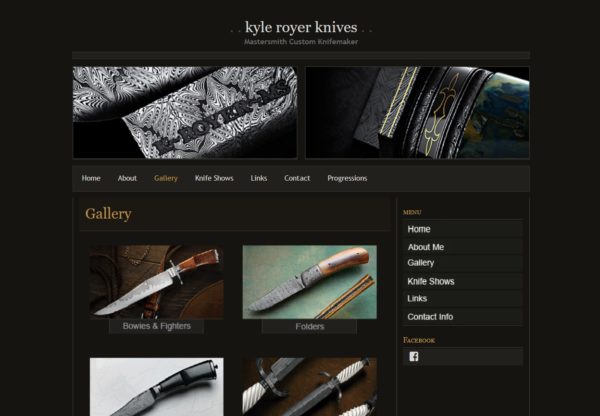
Kyle Royer uses exquisite photos to tell his knifemaking journey on his website.
Kyle Royer Knives‘ website is full of professional photos by Caleb Royer and every single one of them includes full specs. Kyle is an American Bladesmith Society master smith. He was 23 when he wrote his About page. He’s 27 now. Is it perfectly grammatically correct? No. Is it genuine and true to him and his knifemaking journey? You bet. Your knives need to be perfect, not your writing. Write as you would speak.

The Collector

If your folders are carried in a velvet pouch or arranged on a display shelf, a website, of course, is essential. You already know this. You’re spending the majority of your time in your shop or socializing with your clientele in the normal course of living your life. However, “owning” your name may not be enough in a waning high-end knife market. Is your site attracting the gentleman who wants something to go with his watch, the art collector who may be looking for a new-to-him art to explore, or neither. We’ll be exploring more about best practices for your site in an upcoming Marketing For Knifemaker’s article.

The Brotherhood

If you’re making tactical knives for the military, for law enforcement or for civilian self-defense, then you need a website, period. This category also includes trainers and balisongs for combatives instructors and practitioners.

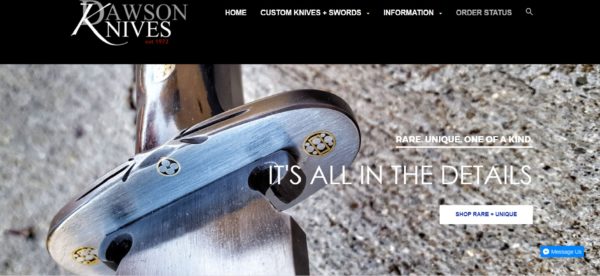
Blogs are not obsolete. Dawson Knives has a well-maintained blog and a website experience that is part exquisite art, part military homage.
Dawson Knives comes up fifth in a “custom knifemaker” online search. This site is both exquisite art and an homage to the military. However, it’s high ranking is due in no small part to its depth. Check out its active blog, The Daily Grind.

The Outdoorsman

If you’re making knives and tools for bushcrafting, camping, hunting, fishing or survival, you, too, need a website. Obviously, there is crossover in these categories. Your Rambo-esk survival knife may be totally tacticool, so you’ll want to appeal to The Brotherhood as well as The Outdoorsman.

The Everyman

The everyman carries a knife for everyday chores, or keeps one in her purse, or has a few in a kitchen “junk” drawer. You absolutely need a website to reach this person.

The Cook

How can you convince people who cook that you can make a knife that will perform as well as an expensive classic, but in a color other than black? Answer: a website.

  1. How Do People Find You?

Word Of Mouth

There’s still 30 percent of the adult US population (250 million) that is not online. That’s where you stake your name on the quality of your product and never let it out your door if you’re not 100 percent sure of it.

You also learn to ask. You ask your happy customers to write reviews for you. You ask your less-than-happy customer to honestly share his disappointment and how you went above and beyond to not only make it right, but make it better than all right. You ask fans to tell their friends about you. You ask them to share your posts.

Article Appearance

Print publishing is indeed on the decline, but digital publishing is coming into its own. Articles in which your work is included can give you a boost in search engine optimization because it’s packaged with over 300 words and includes links, images and video—all things that help rank that article, and thereby your knife images, higher.

Social Media

If you’re on the cusp of growing larger, you undoubtedly have social media well underway. We’ll be doing articles on each platform and how you can best maximize it to get your type of knives in front of a broader audience.

Online Search

This is where we want to focus. In order to meet new customers where they are, you must put yourself in their shoes. Sit down at the computer and think like a non-knifemaker. That can be a challenge. By focusing on Facebook and Instagram, knifemakers are talking to each other and customers who already know them. There is so much overlap that the circle of influence has shrunk to solely each other and fans. Fellow knifemakers are the best source of cheerleading, constructive guidance and fellowship, but they can’t help you reach those outside the knife industry.

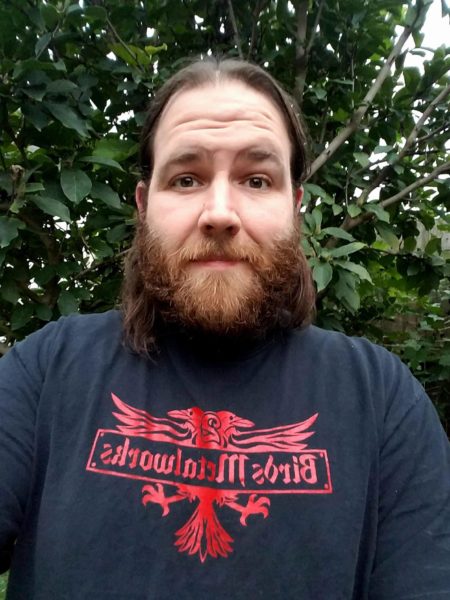
Mike Jeffries owns 2 Birds Metal Works in Louisville, Kentucky.
Mike Jeffries of 2 Birds Metal Works in Louisville, Kentucky, will often throw out marketing questions for knifemakers on Facebook. Some of the feedback he receives is invaluable, though you should always verify current marketing practices because things change quickly in the digital marketplace.

Make a list of the things that people might type into a search engine to find you. Enlist a non-knifemaker’s input if necessary. Let’s use 2 Birds Metal Works as an example. Mike makes knives to handle your cutting needs “from kitchen to camp.” So, his aim will be to attract the The Outdoorsman and The Cook. Except for current customers and fellow makers, people know neither “Mike Jeffries” nor “2 Birds Metal Works,” so what might they enter to stumble upon Mike’s work.

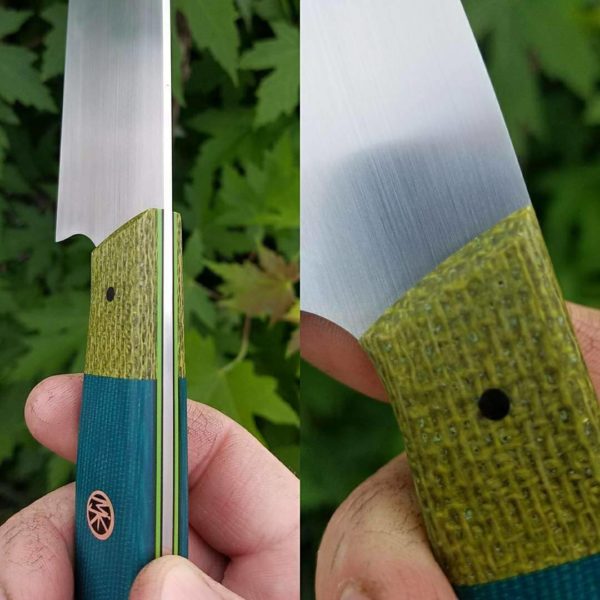
The maker's list price on this Mike Jeffries' chef knife is 300-$380, depending on options.
Mike Jeffries’ chef knife has a 7-inch AEB-L stainless blade with a Vintage Blue Westinghouse Micarta handle with Shadetree Emerald Burlap bolsters. The signature pins are made of copper. The overall length is just under 12 inches. Maker’s list price: $300-$380. Contact Mike Jeffries, 2 Birds Metal Works, [email protected], 502-592-4240, on Facebook at 2 Birds Metal Works & Mike Jeffries Knives.

As clumsy as that sounds, that’s what you want to have happen. Mike offers a chef knife with a teal blue and lime green handle. Let’s say a woman is searching for a housewarming gift for her sister, whose favorite color combination is teal and lime. She types in “teal and lime gift.” That’s it. Nothing about knives in the equation. If Mike has written a full caption to go with an image of his knife on his website along with the suggestion that it makes a nice gift, he has just increased the chances of his site coming up in a search. If he also describes in a blog post how he made this knife and covers his reasoning behind his color choices as well as all his other creative decisions, he’s gone even farther to ensure his site has a chance of coming up on a vague search like in our example.

Is it foolproof? Of course not, but you’re honestly playing the search engine optimization game with images and descriptions and blog posts. If you do that for each type of knife you make, over time, it will pay off in higher rankings for a variety of searches.

  1. Isn’t Social Media All A Maker Truly Needs?

In A Word, NO!

Digital marketers had predicted that websites would give way to social media and email would die at the hand of Messenger. That’s not how it’s turned out.

The only way your Facebook profile will come up in a online search is if someone actually searches for your name or company name. You’re trying to reach people who have never heard of you and don’t even think of knives as an option for, say, gift-giving. You could argue that you would never want your art falling into the hands of someone who can’t appreciate what a custom knifemaker does. OK, but what if by getting a knife into their hands by whatever means, you create an impassioned fan, who then tells her friends how brilliant the colors were, how perfectly the knife worked, how great it felt…

Content Is Still King

Words still matter in this hashtag world. “Content” refers to anything used to fill an article, social media page or website. It can be writings, visuals in still or video form, and links, but in order for visuals and links to have weight, they must have words associated with them. And you need a place to park your content where it’s forever accessible, and not lost on some never-ending feed. (Saving posts helps you, but not your potential customer.)

How can this be? Isn’t Facebook pushing video? You bet. It’s trying to be You Tube, which is owned by Google, and although FB has a more engaged audience, more people visit You Tube in a month than visit FB. Efforts are probably underway to extract video content so transcriptions can be combed by search engine robots. But even that won’t help if a maker is just silently showing all sides of a knife. We’ll talk more about video and how best to harness it in another Marketing For Knifemakers article.

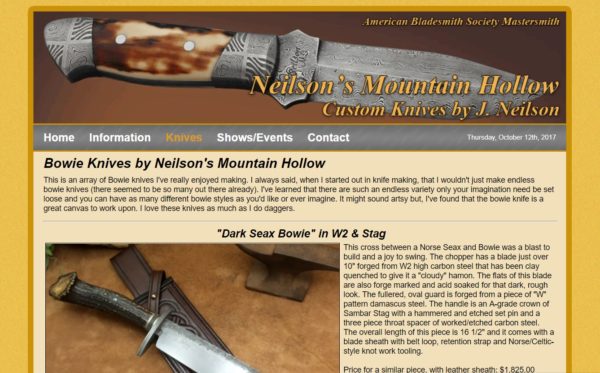
J. Neilson's website makes good use of photo descriptions.
J. Neilson, American Bladesmith Society master smith and “Forged In Fire” judge, has a website that makes exceptional use of photo description. Knives on the Neilson’s Mountain Hollow site not only get a list of specs, but a full description of inspiration, construction or something else memorable about the build.

So back to words. Every day the Google bots do their thing, combing articles, photo titles and captions, video titles and descriptions, links and meta data fields, to rank websites according to relevancy. Ever wonder why video is embedded in an article, or why slide shows come with accompanying written commentary? Words, dude, words. The term “blog” may be passe, but blogs still matter—greatly. You are reading one. We call it an “article,” but it’s still an article under my name and the Mightier Than The Sword banner. Every single example of a website that comes up high under a search for “custom knifemaker” includes either a blog or highly descriptive photos captions. J. Neilson’s blog ranks high in a search for “custom knifemaker” not because it’s filled with “Forge In Fire” references, but because of his depth of description on each of many, many knives.

Battling Anti-Knife Bias

As many of you are fully aware, there is definitely bias at Facebook and it’s against weaponry. Selling of guns and knives is not allowed, so don’t put prices on your marketplace items. Even though they encourage you to boost your post, if you ever try to, you’ll be informed that what you’re selling goes against FB policy. So, what’s a custom knifemaker to do? Play the game, organically and on your own terms—with a website. Your post to Facebook lasts about 5 hours; your blog post/article has a 2-year lifespan.

What does “organic” mean, anyway? It refers to building content naturally and not paying for ads to boost results. It’s about “articles” or “blog posts” on your website, photos, video and links that all work together to speak on a specific subject. The words are compiled naturally, and not “stacked” repeatedly in an unnatural cadence.

Mike Jeffries of 2 Birds Metal Works ventured into a cowboy fighter that was well received at BLADE Show 2017.
Normally, Mike Jeffries focuses on “kitchen to camp” knives, but he decided to try an old-school American Bladesmith Society-style knife, but with a full tang. The Cowboy Fighter even caught the eye of Jason Knight and Murray Carter when they stopped at the 2 Birds Metal Works table at BLADE Show 2017. A blog post would be the perfect place to tell this knife’s story and what it meant to Mike on his knifemaking journey. The 7 3/4-inch blade is made of W2 steel with hamon. The handle is walnut burl with unidirectional carbon fiber bolsters. Overall length is 13.5 inches. Maker’s list price: $750 with leather sheath by Two Drunken Celts Custom Leather. Contact Mike Jeffries, 2 Birds Metal Works, [email protected], 502-592-4240, on Facebook at 2 Birds Metal Works & Mike Jeffries Knives.

Let’s say you have a blog on your WordPress website. You should aim for a minimum of 300 words per post to optimize search engine optimization (SEO). You explain what you’re working on that week. You mention blade lengths, because people use blade lengths as part of their search criteria if they’re in a state that limits them. You mention steel, your process, the handle material, including color, price, what comes with it, how it is shipped, and how people can put in an order for one. You give shouts out to your suppliers and mentors or supporters on the project then share it to Facebook.

You will still be speaking to your established audience while increasing your chances of being picked up in a generic search. Pretend you are talking to people who know nothing of custom knifemaking, because you are. Take the opportunity to educate as you go, minimizing abbreviations and lingo. You’re broadening and educating your clientele with each post. You write, “Everyday (one-word adjective) carry, abbreviated as EDC, refers to something you carry every day (two-word noun).” See how I did that? (Laugh here.) At the end of the week, you write another post sharing how you did. You include pictures of your works-in-progress, rather than “WIPs,” and a finished example. You share your successes and challenges.

Instead of saying “click here” for a link, link to the applicable words. Never forget the “web” part of the worldwide web. Link to others when appropriate, but do not link to everything. You don’t want to pull your potential customer away too frequently. Pick and choose wisely, and be sure to set the link so it opens in another window so they can easily return to your site. All of this helps to rank you higher in searches. It’s more time-consuming than FB or IG, but can be done less frequently, and over time, garners stronger returns on time spent.

5. Who Controls Your Website Experience?

Guess what? You don’t get put in a time-out on your own website. You control your content and exactly how it looks and reads. You can build a photo gallery of finished work that includes a written description with all specs and includes the prices—imagine, no Facebook jail! You can have an About page that gives your journey as a person and as a knifemaker. It doesn’t have to be long, but it should be at least 300 words and include images from benchmarks in your life. People are buying a part of something you’ve poured your heart and soul into; they want to know who you are.

One of Mike Jeffries best-selling knives is his Campcrafter.
This is a good time to mention that you can’t take too many great photos of your finished work, but bad photos hamstring your marketing, period. Mike Jeffries takes some nice photos, but not enough of them to have samples of everything he’s made. His Campcrafter model is his flagship camping knife. It has a 5-inch blade of 80CrV2 high-carbon steel. Overall length is just over 10 inches. This one has a black and burl handle. Maker’s list price: $250-$325. Contact Mike Jeffries, 2 Birds Metal Works, [email protected], 502-592-4240, on Facebook at 2 Birds Metal Works & Mike Jeffries Knives.

You can include platforms to sell directly from your website. You can and should drive traffic to your social media sites and include your website on your social media profiles, but you are in charge of your website content, for better or worse. Best of all, you can include at the very least, a newsfeed, but hopefully you’re seeing the benefit of a blog, so you can share industry new that your customers might benefit from, including your own promotions, giveaways and waffles (sorry, a website won’t change state laws). A blog within your site gives you a platform from which to explain thing about your craft, offer your opinion, talk about your life as a knifemaker, projects you have in mind, specials you’re running, shop tours you’re hosting, hammer-ins you’re organizing. It’s a place where you can put in words what you normally say in a video.

“But I hate writing. That’s too much of a time-suck.” Agreed. Perhaps you know someone who likes it. You can offer them short money to do weekly posts for you. “Arrgh, a money-suck.” Try to look at it as an investment in growing your business. I see plenty of knifemakers who can’t even Share a post. Their buddies do in 2 seconds what they couldn’t figure out in two weeks—that’s an actual quote from one of them. Trade your buddy a knife for an equal value of his digital expertise.

  1. What Does Your Knifemaking Destination Look Like?

Ranking higher in online searches is a long-term endeavor. It takes consistently delivered content over the course of an extended period of time. Google is no more friendly to weapons than Facebook, but all knifemakers are playing under the same set of rules and the ones with websites and blogs are being rewarded.

Make a list of all the terms you want to “own.” Start building content around those terms, and your website will populate itself into relevancy. Remember, it sometimes happens in life that the most gifted are not always the ones who obtain success with their given talent. It is the ones who can take their art and persistently and accurately market it, who will garner both recognition and thereby profitability.

At the same time, if you’re constantly sucked into the money and time trap of marketing, there will be no knives to market. Use your time at the forge and the grinder to think. Start a notebook of both your big vision and the baby steps necessary to get there. Then enlist the help of people who truly get who you are and what your knives are about, so that you are free to make more knives.

A Digital Subscription To BLADE Is The Answer

Save $4 off the print price of a annual subscription to BLADE Magazine with a digital subscription.
You can read your digital issues of BLADE Magazine anywhere you have your phone, tablet or computer, and there’s no need to find storage for all your old issues.

If piling-up issues of magazines seems like a waste to you… If you feel like you don’t have time to read a magazine… If you like the stories we offer in BLADE, but want a more economical option, then a digital subscription is the answer. An annual subscription to BLADE is $17.98, $4 off the print price.

Proper Knife Fit and Finish Defined

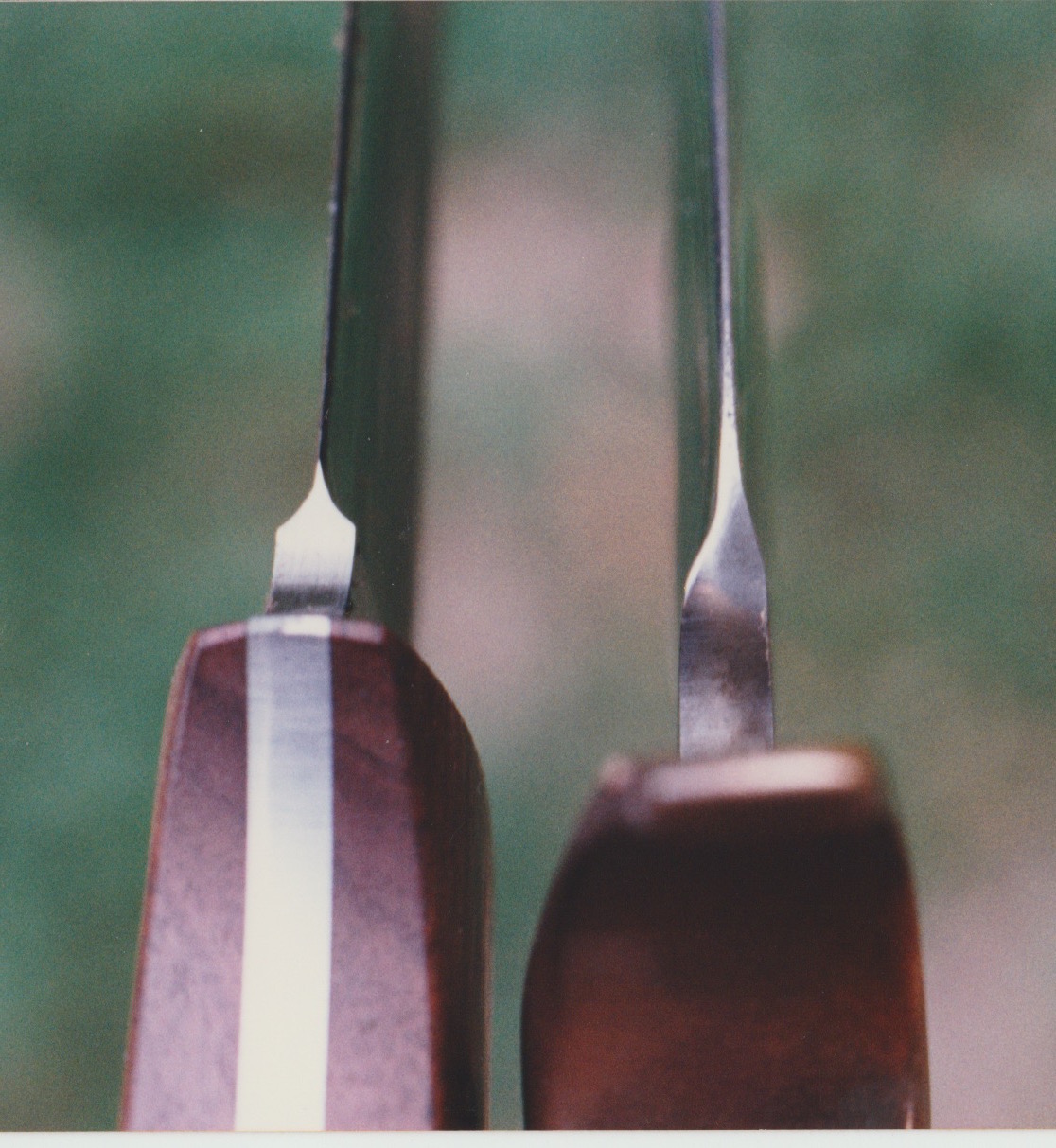
good and bad plunge cuts
Plunge cuts should reflect each other in terms of symmetry on each side of the knife blade. The plunge cuts at left do so and the ones at right do not. (B.R. Hughes image)
Satin-finish symmetry
Note the symmetry of the satin finish flowing from the plunge cut to the tip of the blade on John W. Smith’s SD-2 tactical knife. (SharpByCoop.com image)
blade centered in handle
The blade should be centered in the handle when the knife is closed, as on Brian Nadeau’s folder. (SharpByCoop.com image)
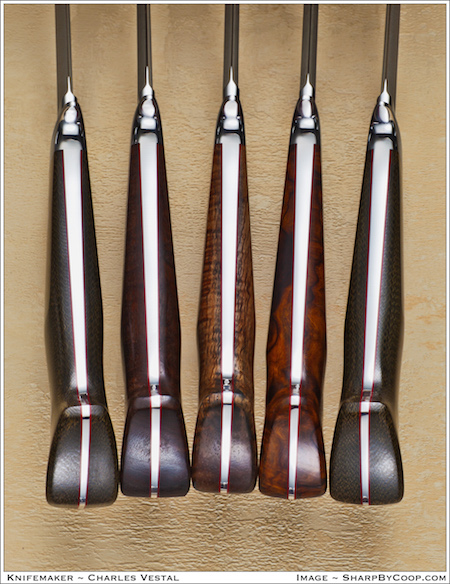
correspondence of shapes and sizes
There should be a correspondence in shape, size and lines between both sides of the knife’s blade and handle, as on these fighters made by Charles Vestal for members of the Custom Knife Collectors Association. (SharpByCoop.com photo)

Fit and finish is a term used to identify the earmarks of a quality made knife. In a nutshell, fit and finish is an arrangement of balanced proportions and symmetry in the entire piece.

With the dividing line being the knife’s spine, there should be a correspondence in shape, size and lines between both sides of the blade and handle. The blade tip must be centered, as should the grind as it moves along the blade toward the ricasso. The blade must have no warping, nor should it exhibit bends where there should be none. The entire run of the blade’s bevel lines, whether primary or secondary, must be even and straight. There should be no flaws, imperfections, wrinkles, creases or cracks in the blade’s surface, nor, in the case of a forged blade, can there be any bad welds. The blade’s finish, whether bead blast, satin, mirror polish, stonewash or what have you, must be consistent throughout the area of the blade to which it is applied.

There should be no gaps between the handle material and the bolster, nor the blade and the guard. The handle sides must have equal thickness and be contoured evenly and smoothly. All materials should be rich and vibrant. For example, if ironwood, it must have nice striations instead of just being a blank piece of wood.

In addition to the above, if the knife is a folder there should be no gaps or differences in elevation between the backspring and the blade when the knife is open. There must be smooth opening and closing of the blade, and the blade should snap both open and closed—known as “walk and talk” among old-time pocketknife collectors. The blade must exhibit little to no vertical or horizontal wiggle, ride dead center in the handle when the knife is closed, and, if a multi-blade, the blades should not rub against each other upon opening and closing.

HOW to LOOK for PROPER FIT and FINISH

guard and blade fit
There should be no gaps in the knife’s joints, such as between the guard and blade. Mark Knapp’s fixed hunter exhibits a nice guard-blade fit. (SharpByCoop.com photo)

•A loupe/magnifier is unnecessary. Average eyesight is fine. Check the knife in standard light conditions;

•Rotate the knife slowly and study it from all angles;

•Examine folders with them in both the open and closed positions. Feel how smoothly the blade opens, closes and locks into place;

•Remember, no knife is perfect. Each one will have at least one minor imperfection. Learning to recognize the differences between such a knife and one with poor fit and finish requires attending knife shows and handling and studying as many knives—with each individual maker’s permission, of course—as you can.

Finally, while checking for proper fit and finish is a great way to identify a well-made knife, the fact that a knife has proper fit and finish does not necessarily mean that it will cut, feel right in your hand or even be all that attractive to you. The latter three are things you must be determine for yourself.

Advertisement

Must Read Articles

Read this before you make a knife

Knifemaking 101 – Read This Before You Make a Knife

  by Wayne Goddard My experience has taught me that there's nothing like digging in and getting started. I've often said the hardest part of the...
how to forge damascus steel

How to Forge Damascus

Advertisement
Advertisement