The BLADE Blogs

The blogs of theĀ BLADE editors, Steve Shackleford and Erin Healy.

Is a World Ivory Ban in the Offing?

A CITES meeting that could determine whether there will be a world ivory ban begins Sept. 24 in Johannesburg, South Africa.

The 17th annual meeting of the CITES Conference of Parties is set to run through Oct. 5 and will include individuals and organizations around the globe who are for or against a world ivory ban, as well as a ban on ancient and other ivories. CITES stands for “Convention on International Trade in Endangered Species of Wild Fauna and Flora,” and is “an international agreement among governments … to ensure international trade in specimens of wild animals and plants does not threaten their survival.”

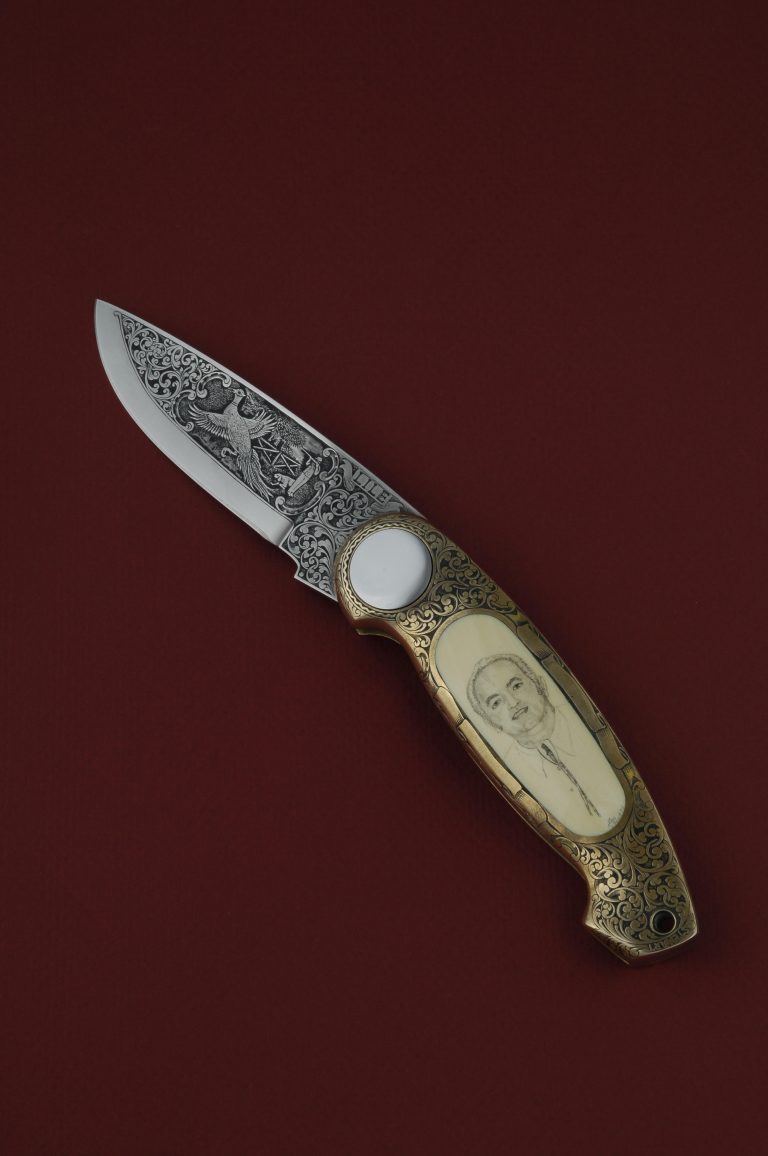
Lile ivory folder
A world ivory ban would make such classic knives as this circa 1970s folder by BLADE® Magazine Cutlery Hall-Of-Fame© member Jimmy Lile illegal. (Jack Lucarelli image)

Elephant Protection Association officials indicate they expect animal rights groups to push for terminating “sustainable use” as a means of conserving any listed or endangered wildlife, which includes elephants and the trade of ivory. For U.S. owners of legal elephant ivory, this could at the very least mean losing the narrow “De Minimis Exception” in the recent Federal Domestic Ivory Ban instituted in July. Though it allows an extremely low amount of per-person trade in elephant ivory, the De Minimis Exception does allow some of it.

Non-governmental organizations (NGOs) fighting for a worldwide elephant ivory ban want CITES to list all African elephants on Appendix I. If the NGOs are successful, it will lead to even more pressure on the U.S. Fish and Wildlife Service (FWS) to list all elephants as endangered, too. According to the Elephant Protection Association, the FWS has indicated that if CITES puts elephants on the endangered list, FWS would abolish the De Minimis Exception. But that’s not all.

The Elephant Protection Association’s Rob Mitchell reports that the petition to declare elephants endangered is already under review. “I don’t know low long before they will reach a final determination, but it won’t surprise me one bit if they try to time it to coincide with [the Sept. 24-Oct. 5 meeting],” he notes. In fact, “FWS could make the determination even if CITES does not list all elephants on Appendix I.”

For more information, stay tuned to www.elephantprotection.org. (Editor’s note: The Elephant Protection Association is building a new website. You also can stay updated on elephant ivory news by watching videos from The Conservation Imperative on the Association’s Facebook page.)


Save

Washington State House Judiciary Committee Votes To Allow Assisted Openers

Washington State—On January 25, Knife Rights’ Director of Legislative Affairs, Todd Rathner, gave testimony at the state capitol in Olympia, Washington, in support of two similar pro-knife bills. Senate Bill 6179 and House Bill 2347 would clarify the definition of a switchblade so as to not include assisted-opening knives that are currently adversely interpreted as being illegal in the state. These bills also make it legal to manufacture spring-assisted and switchblade knives in the state of Washington. In addition, they would expand the existing law enforcement exemption for possession of “spring blade knives” (switchblades) toĀ members of the military and full-time first responders.

Ā 

Knife Rights worked with Washington knife manufacturers Fox USA, Blade-Tech and SOG to make necessary changes to ensure the bills would accomplish their aims. Although testimony was cut short because there was no opposition and a packed agenda, Todd was also able to get on the record in both houses stating Knife Rights’ strong support for these measures.

Ā 

Initially, HB 2347 was drafted with a provision that would allow Concealed Pistol License (CPL) holders to carry switchblades, while the Senate bill did not include this provision. We are disappointed that this provision did not survive the hearing. Unfortunately, it was made clear that if it was retained, the bill would not pass out of committee. Ultimately, HB 2347 was amended in executive session to strike the provision allowing CPL holders to possess automatic knives. Ā 

Ā 

On Monday, January 30th, the amended version of HB 2347 passed the Washington State House Judiciary Committee with aĀ unanimousĀ vote.Ā Now it moves to the Rules Committee.Ā Meanwhile SB 6179 has been scheduled for SenateĀ JudiciaryĀ CommitteeĀ ExecutiveĀ Session for today, where it is expected to be amended in like manner and likely pass out of the committee. Ā 

Ā 

While Knife Rights does not believe there should be any distinction between citizens and government employees when it comes to possessing life-saving tools, we also understand political reality. We will be working with Washington state residents and officials to change this in the future when the political landscape is more favorable to such a rational move forward.

Ā 

Meanwhile, the current bills are a huge step forward for Washington knife owners who might be subject to prosecution for assisted-opening knives and for knife manufacturers located in the state. Passage of either of these bills would create skilled, well-paid jobs, generate tax revenue for the state and increase the number of knives that say “Made in America.”

If you live, work or travel in Washington state, please contact BOTH your Senator and Representative in Olympia and ask them to support SB 1234 and HB 2347, respectively. Ā 

Buck Knives to sponsor young Post Falls fisherman in the Junior Bassmaster World Championship Tournament

Ethan Peterson, 13-year-old Junior Bassmaster State Tournament and Western Divisional Championship winner, now has the support of Buck Knives to help him get to the Junior Bassmaster World Championship tournament in Shreveport, Louisiana this October.

Peterson fishes for the North Idaho Junior Bass Anglers, and he will tell you his favorite activity is fishing. He’s in 8th grade at Woodland Middle School in Post Falls, Idaho where his teachers support his tournaments whenever possible. In 2008 he won 2nd place at the FLW State Championship tournament and during the following summer he qualified for state to fish in the Junior Bassmaster State Championship. He took 1st place in the 11-14 age group at this tournament. After the State Championship, Peterson then won the Western Divisional Championship tournament at Lake Martinez, AZ.

Peterson is excited for the opportunity to fish in the World Championship tournament where the grand prize is a Triton bass boat and a $5,000 scholarship. ā€œMy goal is to someday earn a bass fishing scholarship to help pay my way through college. I spend every minute I can on the water practicing for what I like to do best,ā€ he said.

Buck Knives is proud to support Peterson and hopes he wins the Junior World Championship. He was presented a check from Buck Knives to help with the expenses related to traveling to Louisiana in October for the tournament. ā€œI received Ethan’s letter asking for support and was excited for the chance to help him,ā€ said Chuck Buck, Chairman/Owner of Buck Knives. ā€œEthan is an upstanding young gentleman who is goal driven with the talents to achieve his goals. I wish him the best of luck at the World Championships and hope he continues to build upon his bass fishing career,ā€ said Buck.

In 2009 Buck Knives became an official sponsor of Bill Lowen, a professional angler on the Bassmaster Elite Series. Lowen recently surprised Peterson with a phone call and encouraged him for the upcoming World Championship. Lowen finished the 2010 Elite Series in 20th place and has qualified for the 2011 Bassmaster Classic also in Louisiana.

Peterson and his parents are grateful to all their sponsors and supporters and are excited to have Buck Knives be part of their team.

First Family of Swedish Steel

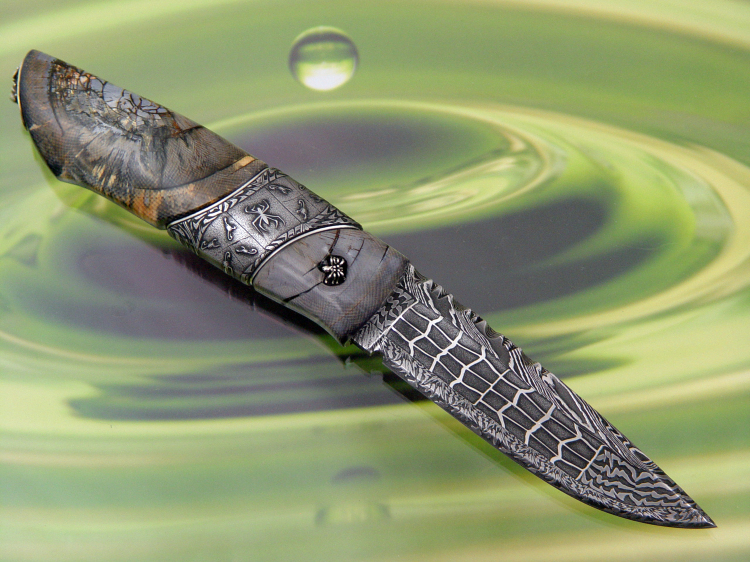
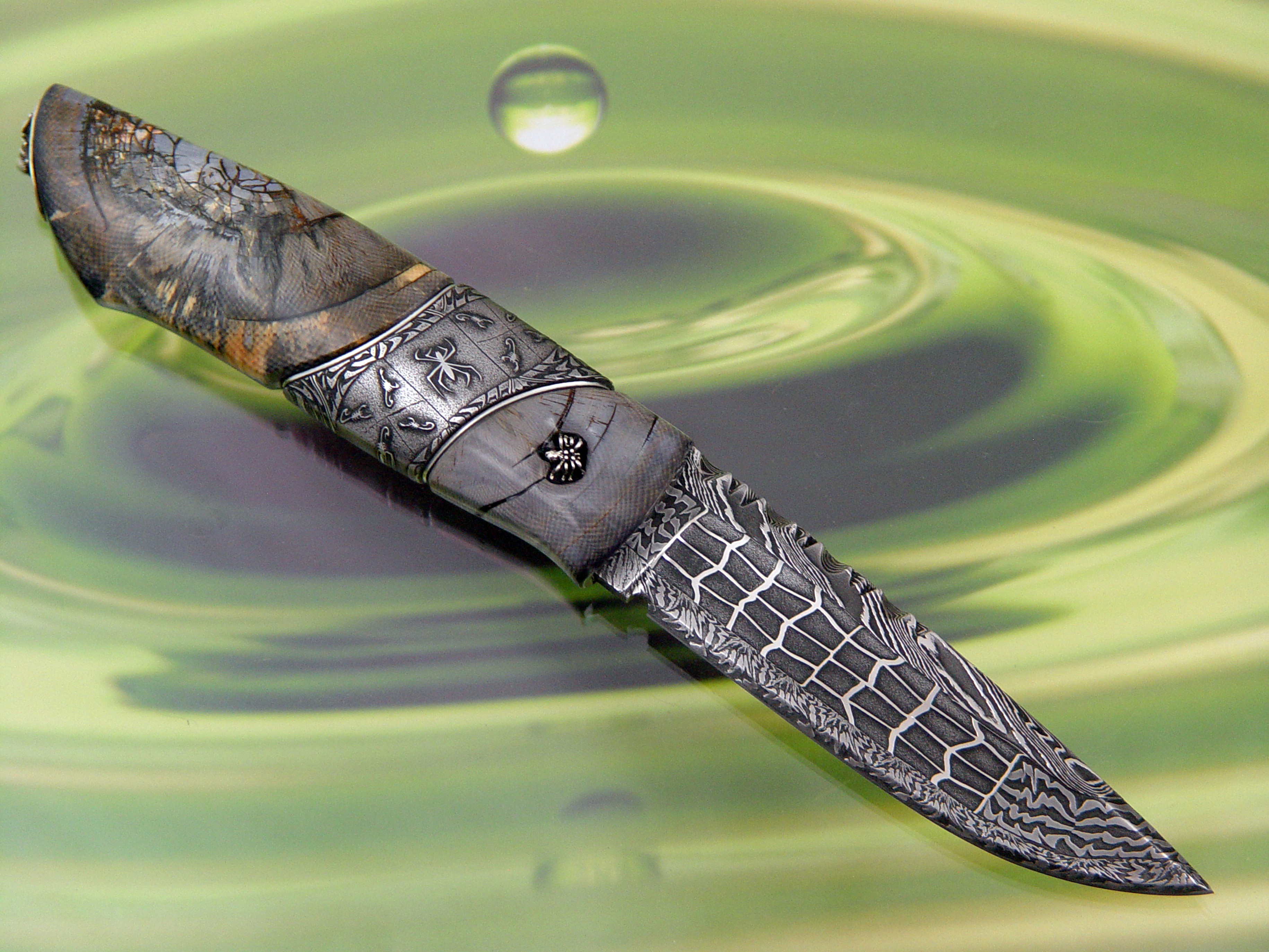
ā€œMammoth Spiderā€ by Thomas Lofgren features a blade of a net-pattern mosaic damascus forged by Mattias Styrefors, a mammoth ivory and mosaic damascus handle, and sterling silver detail. (Lofgren photo)

Ā 

Thomas and Claes Lofgren

Ā 

Among the noteworthy Swedish knifemakers who have burst on the international cutlery scene in recent years, one of the names that stands out is Lofgren—father Thomas and son Claes.

Ā Ā Ā  It is the family’s favorite sport, fishing, which brought Thomas to handmade cutlery. An annual family rite is to spend 10 days fishing—and fishing only—in the Lofoten Islands of Northern Norway. The waters are fish rich and it is not uncommon to pull out one in the 18-to-24 pound range. When you catch them you have to fillet them, which calls for a pretty good knife. Hence, Thomas began making such knives about 20 years ago. The first one cut reasonably well but was so ugly he felt obligated to make another one, and he has not quit making them since. He learned a few things from a book on knifemaking but the real trigger for improvement was an encounter with Roland Stromberg, an experienced maker. Roland taught him how to sew a nice sheath and from there showed him how to improve the general quality of his work.

    Having a technical background, Claes started getting interested in the craft in 2000, which made knifemaking just that much more important to Thomas. Since then there have been many elements of progress, emulation and sharing between father and son in the knife field. Now they are both part-time makers. Claes also works for an industrial company, and Thomas was instrumental in coordinating the 2005 and 2008 Sävsjö International Knife Expo. Thomas also found time recently to write the book, Making a Sheath for a Nordic Style Knife. It includes 150 of his own photos and sold 2,600 copies in its Swedish version, was translated into French and is now being published in German and Russian. Meanwhile, He exhibits at many shows in Sweden, other European cities (Paris, Helsinki, Solingen, Nontron), and in the USA. 

Ā Ā Ā  His knife motto is ā€œWhat stops growing will soon be dead.ā€ Consequently, Thomas is always trying to improve, learning new techniques—Claes’s contributions are important in this regard—looking for new materials, and experimenting with fresh combinations of shapes and colors. ā€œI like challenges, to walk on thin ice, even if I am not a very good swimmer,ā€ he quipped.

    All his knives are distinctive. Even on models of similar design, he introduces many different decorations of handle and sheath, and combinations of colors and materials. In the past few years he turned toward even more high-quality materials. He is using less wood and more mammoth and walrus ivory, hippopotamus or warthog tooth, giraffe bone, etc. If he uses wood, it is often stabilized and colored. Once in a while he will embellish his knives with gold and silver, or a small precious or semi-precious stone. He prefers mosaic damascus for his blades, especially that of Conny Persson or Johan Gustafsson, or sophisticated damascus by Mattias Styrefors and André Andersson. His knives have won a number of awards in judging competitions at Swedish and American knife shows.

Ā 

LIKE FATHER …

Claes’s background includes welding, most notably operating a robotic welding machine for three years. As the company he worked for expanded, a part-time position for supervising the planning of materials supply was created. Claes applied for the post and got it.

Ā Ā Ā  For years he knew his father made knives, but Claes was not interested. However, in 2001 he watched his father and Johan Gustafsson board an airliner for the Knife Expo near Los Angeles (Pasadena), and ā€œfelt envious when Dad took off.ā€ Wanting to experience the USA and California—and, of course, ā€œCalifornia girlsā€ā€”Claes saw making knives as one way to pay for the trip. His knowledge of metalworking and materials, plus the teaching of the basics by his father, resulted in very quick progress. Five months after making his first knife alone, he entered it in a judging competition at the Ludvika Show in Sweden and won in his chosen category. It was an enormous boost. By February 2002, he already had enough pieces ready to accompany his father to the Knife Expo. Since then it has become a sort of tradition for father and son to attend the Knife Expo and Ludvika Knife Week, as well as several other European shows.

Ā Ā Ā  Claes’s knives share several points of similarity with his father’s. Both makers prefer mammoth bark ivory (the ā€œbarkā€ is the outside crust of the tusk), the same steel suppliers, quality sheaths in the Nordic style, and the same way of naming knife models. Nonetheless, not all the similarities are the result of Thomas’s influence. It is often Claes’s ideas and imagination that inspire his father.

Ā Ā Ā  There are also some differences between the two. ā€œThomas’s knives are well made and imaginative, but with a more traditional approach. He has a feel for elegant and functional knives,ā€ Samuel Karlsson stated. ā€œClaes’s knives are more daring; his designs are more adventurous and extreme.ā€

Ā Ā Ā  Being younger and with more of a technical background, Claes probably experiments more than Thomas. ā€œThe worst thing that can happen is that it goes wrong and I have to start all over again,ā€ the younger Lofgren observed. ā€œIt can cost some material but I think it’s worth a try. I find it exciting to cross the line to find new approaches.ā€

Ā Ā Ā  I would be remiss if I did not mention that Anna, Claes’s younger sister, also is a very good maker and has won prizes in judging competitions at Swedish knife shows. For the moment her knifemaking career is on hold as she works with her partner on restoring a farm they bought and caring for a 2-year-old boy. Meanwhile, Claes’s partner, Monika Bengtsson, also is making her first knives. ā€œI think that I can retire now, before they all become too good for me!ā€ Thomas laughed. ā€œThe only person not making knives in the family is my wife, Ann-Charlotte. But I can tell you that she bought two small blades ā€¦ā€

Ā Ā Ā  Father and son makers are not uncommon, and father and daughter are less frequent. But if you add son, daughter, partner of the son and maybe one of these days the mother, a real first family of Swedish steel is in the making.—by Francis Anglade

Thomas and Claes Lofgren

+4670 834 9229 (Claes)

+46381 135 73 and +4670 69 77 405 (Thomas)

[email protected]

www.lofgrenknives.com

Specialties: Both make one-of-a-kind knives in similar styles and materials

Blade Steels: Mosaic damascus forged by Conny Persson, Johan Gustafsson, Joe Olson and Henry Hilden, and damascus forged by Mattias Styrefors and AndrƩ Andersson

Handle Materials: Mammoth (including bark) and walrus ivory, hippo and warthog tusk, giraffe bone and woods (the latter often stabilized and colored)

Embellishment: Occasionally gold and silver, and precious and semi-precious stone inlays; some engraving by Jonny Walker Nilsson

Sheaths: Nordic style

Author! Author!: Thomas wrote the book, Making a Sheath for a Nordic Style Knife, which sold 2,600 copies in the Swedish version and has been translated into French, German and Russian

If you’re looking to make your own mosiac damascus, look no further than the Forging Mosaic Damascus Knives download from BLADE. You’ll learn the foundation of this fascinating process to be able to build your own great designs.

Ā 

Click here to get the download for just $4.99.

Pre-Order “First 25 Years Of BLADE” Before Price Goes Up

Wow, what an incredible amount of information, photos and features on one disc. You are now able to pre-order the First 25 Years Of BLADE Collection.

This is your chance to complete your collection of BLADE Magazines–to own every issue from 1973 through 1997 (the first quarter century of BLADE and 165 issues in all) on one completely searchable PDF, viewable on your computer. BLADE and F&W Media are offering the disc at an exclusive discounted rate of $47.99, which equates to 29 cents per issue. This price absolutely will go up after the pre-order period is over.

Use the “Bookmarks” feature to navigate to whatever story, feature, index, ad, regular column or individual knife you wish to see, read about and admire. Such is the beauty of accessing all issues in living color on your computer screen.

Click here to pre-order now.

Knife Law Update: Ivory Victory!

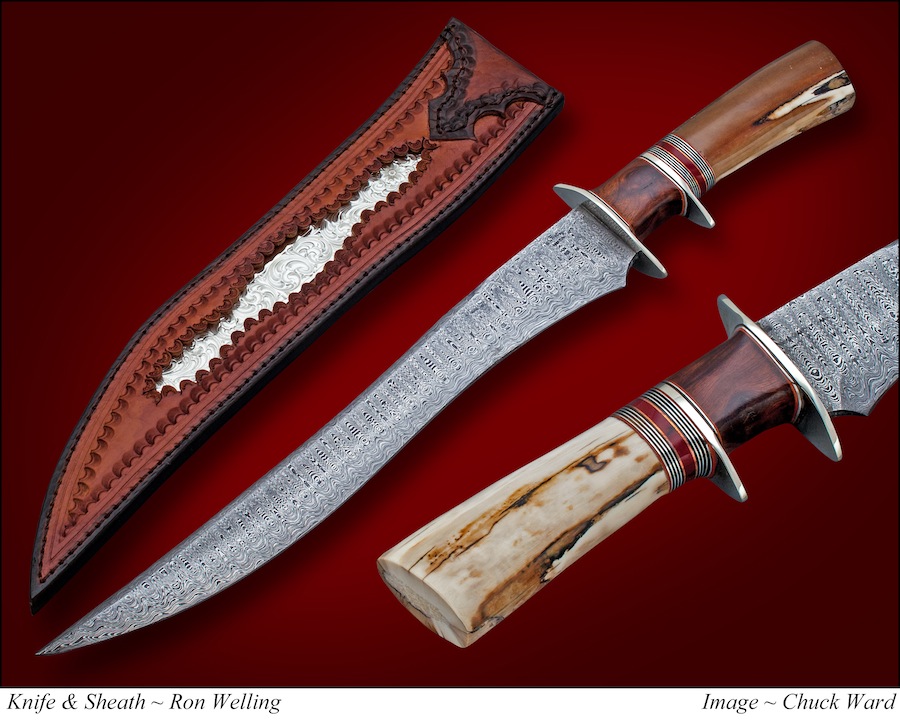
Ron Welling mammoth ivory bowie.
A measure that would have banned the sale of such beautiful mammoth ivory knives as this one by Ron Welling failed to pass muster in Washington state. (Chuck Ward photo)

Knife and ivory legislation that affects your right to own, carry and sell knives at both the federal and state levels has been heating up lately, including a victory for proponents of the sale of legal elephant and mammoth ivory in the state of Washington.

Washington’s proposed bans were overcome by a combined effort that included Knife Rights, the NRA and the Legal Ivory Rights Coalition, Mike Vellekamp of Fox Knives USA and Tim Wegner of Blade-Tech.

According to Knife Rights’ Doug Ritter, the proposed bans would not have saved a single living elephant while “taking hundreds of millions of dollars from millions of honest, law-abiding Americans. It makes no sense to unfairly penalize Americans for the illegal and immoral activities that continue to threaten elephants, and which these proposed ivory bans do nothing to ameliorate.”

Meanwhile, among the new or pending measures at the state and federal level are:

•Knife law preemption bills in Indiana, Kentucky, Mississippi, Nevada, Oklahoma, South Carolina, Texas and Vermont, measures that ensure consistent enforcement of state laws everywhere in each applicable state, and a special federal knife preemption law that would protect transporting knives from state to state in certain instances;

•Laws affecting switchblades and other specific knife styles/patterns in Illinois, Maine, Nevada, New York and Oklahoma;

•New ivory bans in Florida, Illinois, Vermont, New York and Hawaii, with ivory bans pending in Connecticut, Maryland, Iowa, Oklahoma and California, and the African Elephant Conservation and Legal Ivory Possession Act on the federal level, and;

•In one of the world’s leading anti-knife nut capitals, New York Sen. Tony Avella of Queens proposed a ludicrous ban on machetes after several recent local attacks involving the utilitarian tools.

U.S. Senators Mike Enzi (R-WY) and Ron Wyden (D-OR) introduced the federal Knife Owners’ Protection Act (KOPA) this past Wednesday. KOPA would allow legal interstate travel of those transporting knives, provided the knives are transported to and from states where the law allows possession of said knives, and the knives are transported in closed containers. For more information, visit AKTI.org.

Oklahoma bills for knife preemption and to repeal the switchblade ban cleared major hurdles recently when both were passed by the Oklahoma House Public Safety Committee. Both measures head to the state House before going to the Senate. For more information on them and other state knife laws—including the ridiculous anti-machete bill in New York—visit kniferights.org.

At least two of the new state ivory laws—in Florida and Illinois—ban not only the sale of ivory but also the sale of mammoth ivory and/or make no exemptions for the sale of mammoth ivory. Meanwhile, the new punitive measure in New York would increase the criminal and civil penalties in its already existing laws banning the sale of ivory from living animals and mammoth ivory. On the up side, Hawaii has tabled its proposed ivory bans, though that scheduling “could change at any time.” For more information, visit elephantprotection.org.

For more information on how to protect your right to own and sale knives and or ivory/mammoth ivory knives, visit AKTI.org, Kniferights.org and elephantprotection.org.


The latest issue of BLADE is on newsstands now!Recommended:

Stay abreast of the latest developments on this and many more knife rights issues with a subscription to BLADE.

Knives Of Summer: Make Mine a Machete

Vines, shrubs, leaves, bushes, etc., overgrowing your campsite or just your yard? Check out the Gerber Gator Machete.

    It sports a 15-inch blade and a 15-inch sawback for extra-tough cutting jobs. A rubber grip is designed for control and a nylon sheath is included. Overall length: 25.7 inches. ShopBlade’s price: $19.99.

    For more information click on http://www.shopblade.com/gerber-gator-machete-w-sheath-y6980/?r+ssfb070212

Advertisement

Must Read Articles

Read this before you make a knife

Knifemaking 101 – Read This Before You Make a Knife

  by Wayne Goddard My experience has taught me that there's nothing like digging in and getting started. I've often said the hardest part of the...
how to forge damascus steel

How to Forge Damascus

Advertisement
Advertisement