



Master Smith Jim Crowell has just posted ” Creating a Temper Line or Hamon” on the ABS Forum Click here to read this step by step article.
5 Ways To Get Your Knives Featured In BLADE
Here are 5 ways to get your knives featured in BLADE, either in print or online. Our goal is to include as many different types of knives and as many different knifemakers and manufactures as we can in each issue and online. We try not to double up on any individual or company, though sometimes it’s unavoidable. That means that we’re always looking for makers who haven’t been featured before. There are some restrictions, but those will be covered under each category.
First, please Like and Follow BLADE Magazine on Facebook and Follow BLADE Magazine on Twitter and @blade_magazine on Instagram. That way you can see online stories when they’re posted, which may prompt other story ideas.
3 essentials for all 5 publishing options
- Our Enthusiasm
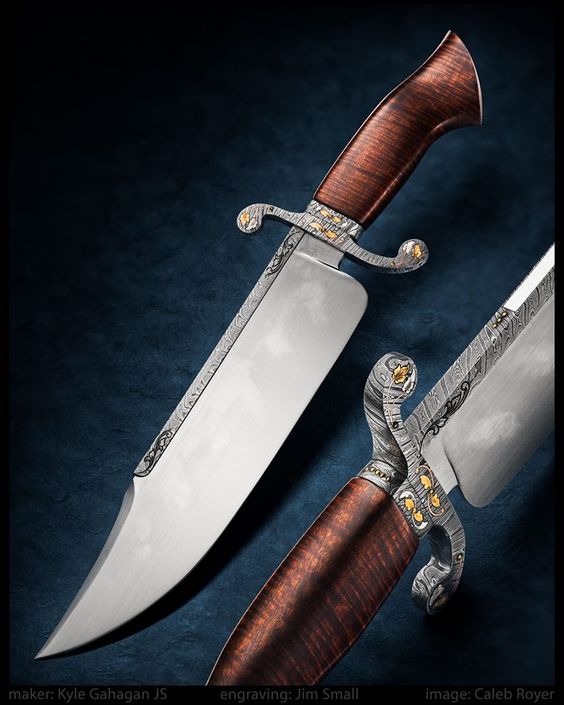
We have to like your knife. But wait! We like ALL kinds of knives: cooking, everyday carry, bushcraft, hunting, tactical. We like fixed blades and folders of every deployment and locking mechanism. We like art knives that we’d be proud to put on our shelves. We like all shapes and sizes of knives, of every conceivable blade design and grind. We welcome smiths, stock-removal makers, manufacturers, collectors. Whether you’re just reaching your artistic stride or you’ve been involved in the knife industry for decades, you’re part of the BLADE community. So, don’t be shy. Chances are, we’ll thoroughly appreciate your knife or your perspective on the industry. The only way we’ll be able to see your knife, however, is if you show it to us in a well-done photograph.
- Your Enthusiasm
How hard are you willing to work to make your knife look its best in a photo? Or, are you willing and able to hire a professional to take photos so that you can concentrate on knifemaking? The answer to either of those questions will be the measure of your enthusiasm. Other pieces of information will be required, but those details seem easier to acquire than photographs that do justice to your knife.
- High-Quality Images
Poor-quality photos will definitely dampen our enthusiasm to publish them, no matter how beautiful your knife is. If the photo is out of focus, low resolution, poorly composed, lacking in contrast, flat or poorly lit, we’ll ask you to get better photos. As challenging as it will seem, it ensures that a poor image doesn’t run side by side with a stellar one, making your knife look lesser than it really is. You can read more about what we expect by reading “6 Things BLADE Looks For In a Knife Photo.”
Let’s say you have terrific photos, then what?
5 ways to get your knives featured in BLADE
- ‘What’s New’
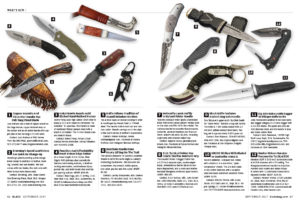
The “What’s New” section of BLADE magazine highlights 12 new knives each issue, six from manufacturers, six from custom knifemakers. And, guess what? If you’ve never been in “What’s New” before, everything you’ve made is “new” in that not all of our readers have seen your work before. If you’ve already been in “What’s New,” perhaps there is something new you’ve been trying out: a different design or grind, or you usually make fixed knives and now you’re moving into folders, or you’re using a different engraver. After being in “What’s New,” you must wait at least 12 months before you can be eligible again, and makers who haven’t been in before will take precedence. Just to reiterate, our goal is to get as many different knives into BLADE as possible. We will occasionally include a tomahawk, sharpener or other knife accessory, but mostly the section features factory and custom knives.
Requirements: High-Resolution Image, Short Description
All that’s needed for “What’s New” is a high-resolution, print-quality image of your knife. Bottom line: 300 dpi or higher, 8-10 inches on the longest side, be that vertical or horizontal, and .jpg format. Now, for “What’s New” we use “cutaways,” or just the knife devoid of its background. This means that you don’t need to worry about creating an artistic vignette or still life with your knife. You do have to worry about getting the best picture you can get. For more on what makes an acceptable photo, read “6 Things BLADE Looks For In A Knife Photo.”
You will also need to supply a list of specs and a few sentences describing the item’s usage. Be sure to note if there’s anything new-to-you about it. They say there are no new stories, just different ways of telling them, and that could also be said of knives. True innovation does happen, and of course, we’re eager to hear about that. However, a maker might be working on new things all the time in his or her shop and that counts!
- ‘Knifemaker Showcase’
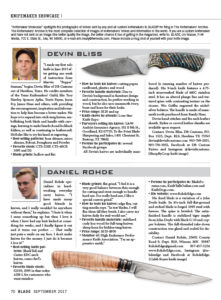
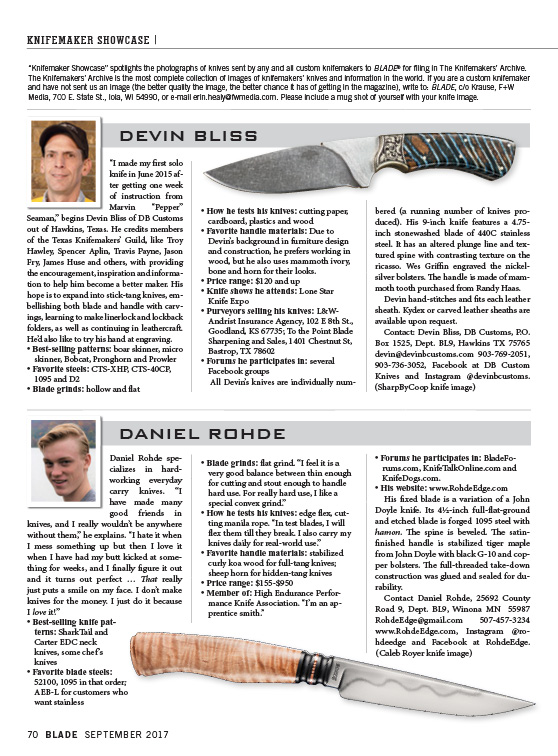
“Knifemaker Showcase” features six custom knifemakers each month all with a half-page layout that includes a mugshot, cutaway knife image and bulleted interview. The goal here is find out more about you, your start in knifemaking, your influences and your preferred materials, designs and ways of connecting with your customers. You’ll need to answer a questionnaire, explaining why you make the choices you do when crafting a knife. You can type out your answers, or if you’re not into typing, we can interview you over the phone once you’ve had a chance to think about your answers. After you’ve been in “Knifemaker Showcase,” you must wait at least 12 months before you’re eligible to be in it again, and makers who’ve never been featured before will take precedence. That way we can shine the spotlight on as many different makers as possible.
Requirements: High-Resolution Knife Image, Mugshot, Completed Questionnaire
Again, our designers use cutaway images of knifes in this section, so a clean backdrop is best. You want to make sure your contrast is good and that nothing, including shadow, fabric, grass, encroaches on the edges of the knife. To learn more about the differences between a good photo and a bad one, read “6 Things BLADE Looks For In A Knife Photo.”
A mugshot is a portrait of you. It can be taken outside or in your shop, but the background will be mostly eliminated since we’ll be cropping in on your face. Don’t wear sunglasses. This is a chance for readers to meet you face-to-face, so to speak. If you’re wearing a hat, just make sure your face is not cast in shadow. Even though it will run small, your photo still needs to be print-quality. Keep in mind that if you submit a family portrait, for example, we will need to crop in on just you, so the size and resolution will need to be higher to account for that.
You’ll need to answer all the questions on the questionnaire unless something doesn’t apply to you. Too much information is better than too little.
- BLADEmag.com
The blogs on our website allow us to take as much or as little space as is required to tell a story. Here is where we have the freedom to explore all kinds of stories related to the industry. BLADEmag.com stories can be about manufacturers, distributors, collectors or knifemakers; they can cover everything from how you made a cast spruce cone handle to how you’ve used knives in your family or on the job, whether it’s skinning deer, cross-chopping herbs in a restaurant kitchen or employing various grips in edged-weapon martial arts. The story can be about one particular knife or a collection. The source can be a multinational corporation with operations on more than one continent or a lone individual in his or her shop. BLADEmag.com strives to be a resource for all things knife, so histories and how-tos are of particular interest.
We welcome guest bloggers, provided the topic you’re writing about is not self-promotional. What this means is that you cannot write about your own knives or services. Pay is non-existent, but bragging rights are impressive. You will need to be able to write well, or be open to guidance and editing. You will need to provide a paragraph-long biography and a mugshot to run with your story, as well as illustrative images.
Requirements: A Good Story, Good Images
The thing about a story, whether it’s a topic you suggest for us to explore or one you’d like to try your hand at writing, is that it needs to have a story—a beginning, middle and end, an angle, a hook. If you as someone in the knife industry find it interesting then, chances are, others will as well. Even though BLADEmag.com will always focus on the knife, we also know that it is the people behind the knife that makes the story compelling to read. The whys are always interesting to include, as well as trying to describe how a material or process contributes to the feel or wow-factor of a knife.
Images can be of web quality, but still need to be well composed. For more about how to take high-quality photos, read “6 Things BLADE looks For In A Knife Photo.”
- BLADE Magazine
Although knifemaker profiles are reserved for Knifemaker Showcase in print and BLADEmag.com stories online, other ideas for BLADE magazine are always welcome. The final decision for a feature article within the pages of BLADE rests with the editor. Oftentimes in the course of conducting an interview with a manufacturer or knifemaker for “What’s New,” “Knifemaker Showcase” or BLADEmag.com, we find other stories to write about in print.
Requirements: Exceptional Print-Quality Images, Extensive Interview
To get a story into print, images must be top-notch. Focus, contrast, lighting, composition, depth of field all matter. Resolution must be high; size must be large. To fully understand what this means, read “6 Things BLADE Looks For In A Knife Photo.”
- Social Media
Make sure to follow us on tag us in your social media photos so we see them and use #BladeMagazine
Requirements: Images, Specifications, Intended Usage, Contact Information
Ready? Email Us
Email your photos with specs, information, and details to [email protected]. Remember that the photo must be Did I mention photos? Before you get in touch, give “6 Things BLADE Looks For In A Knife Photo” a read.
Viking “Ulfberht” Sword Stars on Nova Tonight
Watch Nova on PBS tonight as Ric Furrer takes you through the creation of the legendary Viking sword known as the “Ulfberht.”
Specializing in the forging/making of steel via the ancient methods, Furrer has conducted seminars and demonstrations on how to make steel from sand at a number of venues, including the Batson Bladesmithing Symposium at the Tannehill Ironworks in McCalla, Alabama.
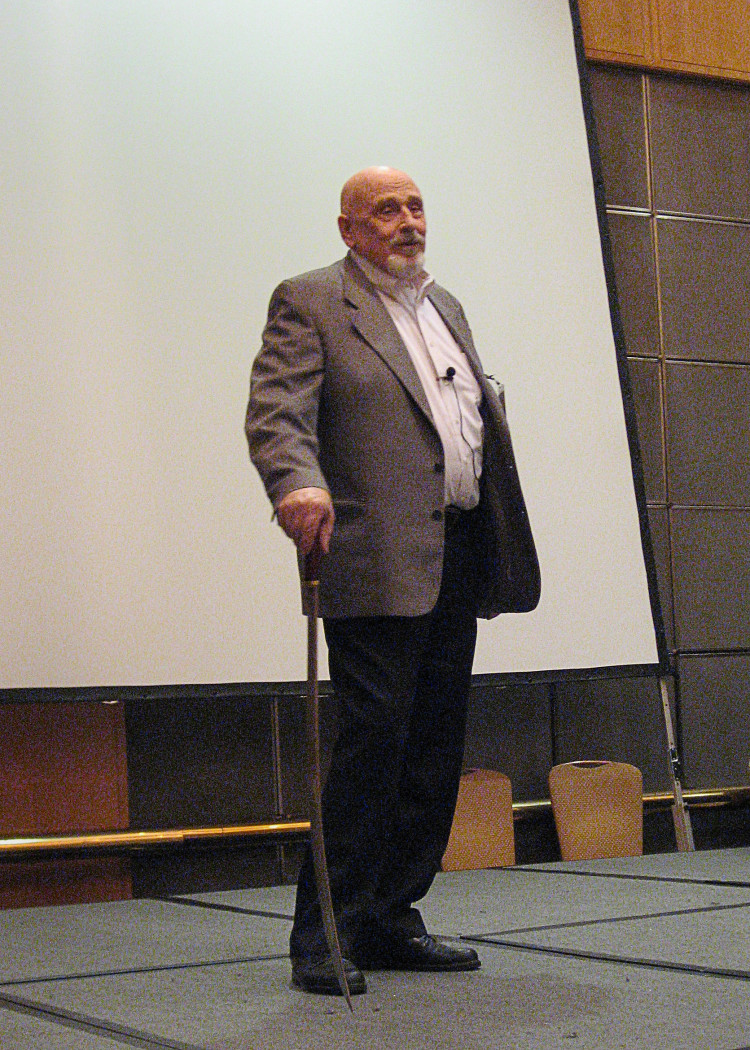
Little is known for sure about the legendary Ulfberht sword. Believed to have been made somewhere around the 10th century, the Ulfberht is described thus by the late Hank Reinhardt (pictured above in a photograph by Patrick Gibbs at a past DragonCon event) in his The Book of Swords:
“Sometime early in the 10th century, the ability to produce a large enough bloom of steel to make a full sword was developed … [The resulting] steel swords also had a slightly different shape [than their predecessors]. Instead of the edges being parallel, there was a defined slope to the point. The point was still rounded but the slope put weight closer to the hand, thereby making them somewhat quicker on the stroke and on the return. These new swords all had the name ‘Ulfberht’ engraved on the blades. It’s fun to speculate how this sword was developed and who this person was.”
For more on tonight’s program, click on http://www.pbs.org/wgbh/nova/ancient/secrets-viking-sword.html
For more on the latest in everything that cuts, subscribe to BLADE®. For subscription info, click on http://www.shopblade.com/blade-magazine-one-year-subscription-us?lid=SSfbbl101012
6 Things BLADE Looks For In A Knife Photo
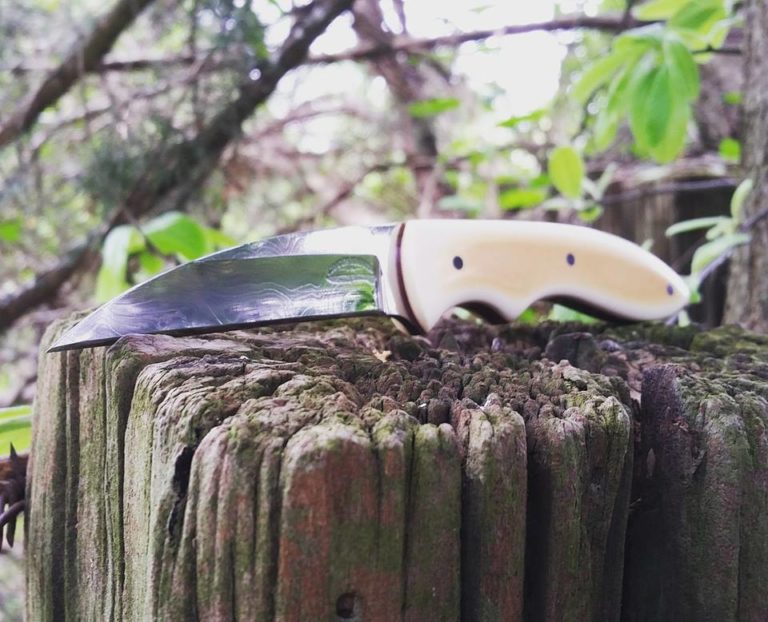
Taking great photographs of knives is no easy task—unless you’re a professional, in which case you can stop reading. Essentially, you’re taking a highly detailed shot of something that fills the entire frame, not something small like a bee in the center of a background of blurred petals, but a long, thin item that needs to be in focus from point to butt. But there’s so much more. Every line must be fully revealed and a depth established to convey thickness or thinness. I know close to zero about the mechanics of the art. There are plenty of videos and online courses out there that’ll give you the science of the “study of light.” They can speak to you of aperture, ISO and shutter speed in infinite combinations. All I know is a good photo when I see one, and how I have tried to improve my own photography. Here are the 6 things BLADE looks for in a knife photo. It’ll be up to you to make it happen. Why? Because there are “5 Ways To Get Your Knives Featured In BLADE” and you want to be ready.
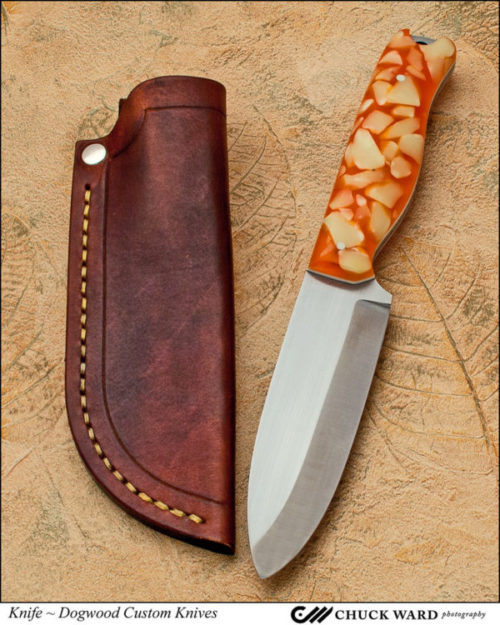
Hire A Professional
Knife manufacturers, like good real estate agents, know that great photos will close a sale. They understand that the investment in a professional photographer pays off. When BLADE asks for a photo of their latest release, for example, some even allow high-resolution downloads right from the consumer website without having to go through a media relations person. That can be a time-saver at deadline. I’ve even experienced a large company resubmitting photos with even better ones. There’s nothing that says a one-man-show can’t learn from that level of perfectionism. It’s the same effort you put into crafting your knives.
Hiring a professional photographer will cost you some money, and it’s worth every penny. But like all professionals, some are more versed in what we’re trying to accomplish than others. A portraitist, wedding photographer or photojournalist may or may not be able to give you the results you’re looking for. You want to make sure you chose someone who can show you a portfolio of knives, guns, tools or similar items that looks…well…perfect.
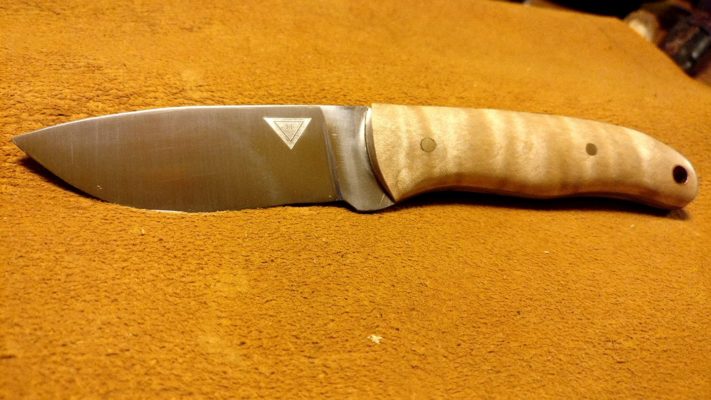
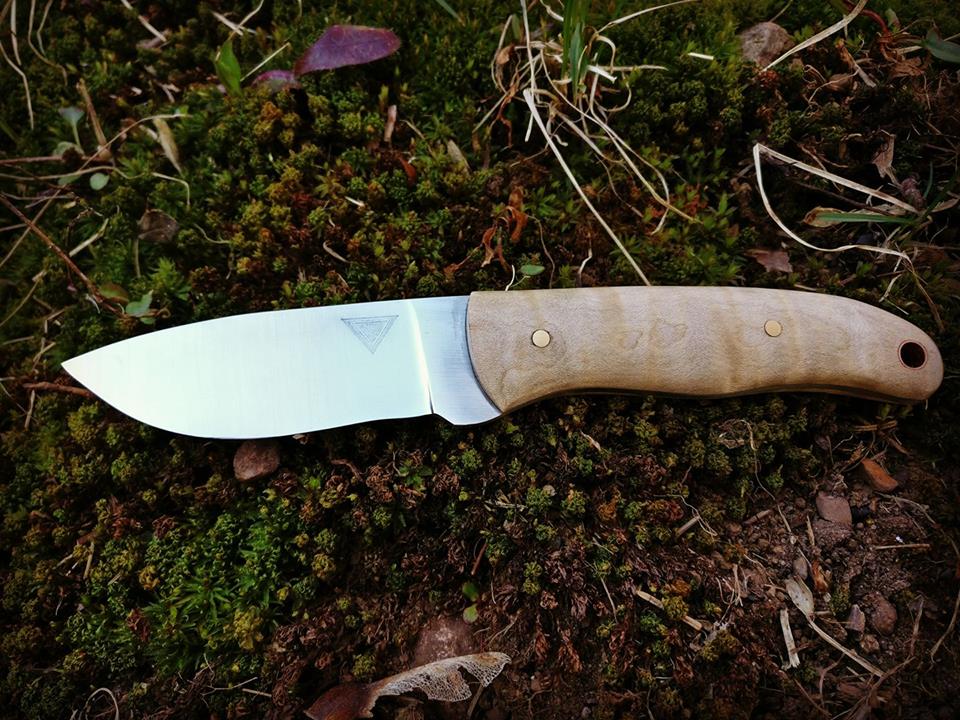
You will want two kinds of photos. Photos for your website and social media will create an emotion, an atmosphere. Instagram is full of examples of survival, bushcrafting and hunting knives being photographed outdoors and tactical knives being shot in gritty workshops or light-painted in darkness. Makers create everyday carry still lifes with folders, wallets and watches. Typical? Sure, but each one tells a story that has been told a thousand times before in a slightly different way. Nobody reads just one novel, and nobody looks at just one knife photo. They are all beautiful in their own way. The other kind of photos you will need are those of just the knife itself on a simple background, what is often referred to as glamour or beauty shot.
The question you have to ask yourself is: Are you willing to put as much study and effort into your photography as you are your knifemaking? Answer honestly. There’s no shame in shelling out cash for stunning work. Fill your website with those choice images and have them on hand for BLADE, and then you can practice your own photography skills for social media. Even on social media, though, take the time to post only your best images. Plenty of knife-related Facebook Groups out there are looking for banner photography and have to reject knifes they’d like to showcase because the image is, say, out of focus.
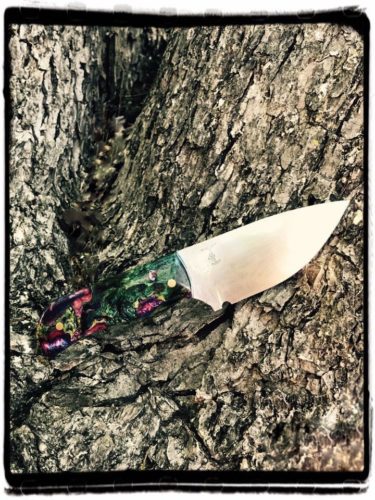
Do-It-Yourself
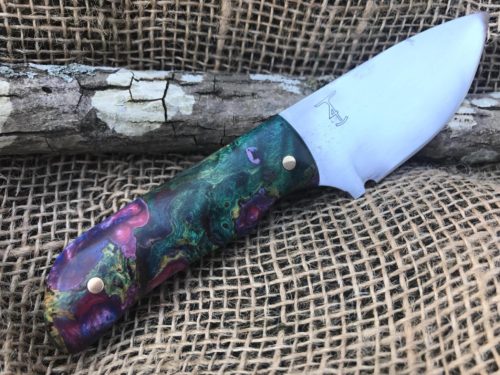
Let’s say you can’t justify the expenditure at this point in your knifemaking journey. Or, more likely, by the very nature of your interest in crafting, you’re determined to take quality photos of your knives yourself. You think, How hard can it be? Very. It can be very challenging to produce the kind of photos needed for a glossy magazine.
“Real” Camera Vs. Camera Phone
You can take the cost of a few sessions with a photographer and buy yourself a decent camera, for starters. Keep in mind, however, that lenses that come with a camera are usually not very good. Be prepared to buy a decent mid-range lens at a minimum.
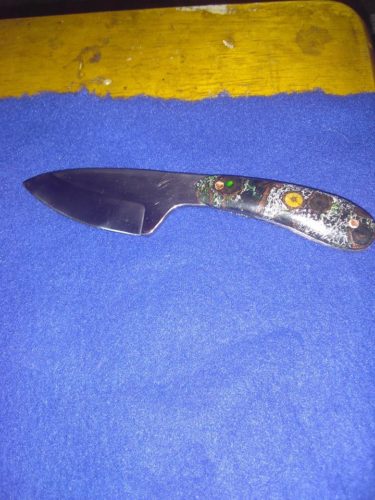
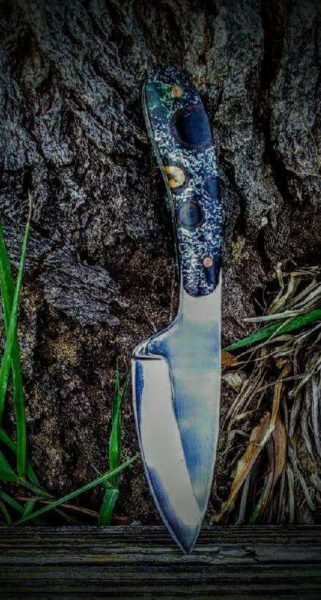
Then again, there are some excellent photos being taken with newer camera phones. Do NOT attempt this with an older model. You will only frustrate us both because they do not allow for high enough resolution of the images. Be sure if you submit a photo from your phone that you email it at its largest size. If there are settings on your phone that need to be changed to allow for taking photos at higher resolution, then you’ll need to set those accordingly. Those settings will apply only to photos you take going forward; you cannot retroactively apply them to photos already taken. Whether you use your phone or a “real” camera, the same fundamentals of photography apply.
Tip: If you smoke or if you have your phone in your shop, there could be resin or dust on your lens. You’ll want to clean that—gently—before you begin.
Be sure to take great photos of all your work before they are sold, and to back them up, either in the cloud, through an online backup service or on a thumb-drive.
6 Things BLADE Looks For In A Knife Photo
- Focus
The entire knife must be in focus, from point to butt. Are there some artsy shots of crystal clear blades and blurred handles or vice versa? Sure, but that’s not what we’re looking for in print. Online, we’re more open to considering some of those shots, provided we have some conventional full-focus shots to accompany the story as well.
If you are taking what we call a “using” shot where you’re photographing the knife in use for an online story or if we are working on a story together for print, be aware of where your camera is focusing. I have seen crystal clear shots of a leaves on the ground while the knife and the hand it’s in are both blurry. Focus is probably the single most important aspect of a good photo.
- Contrast
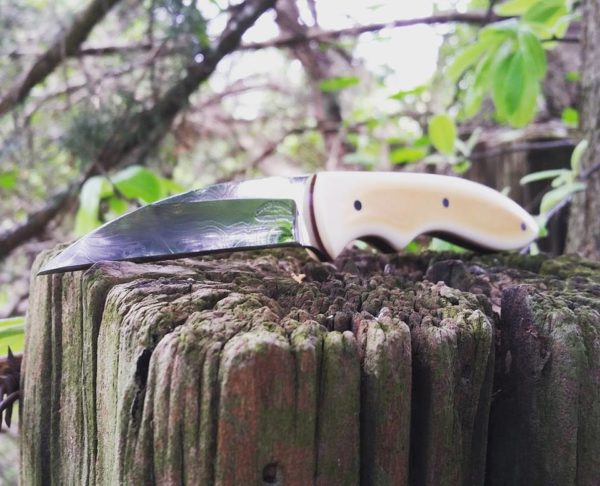
Be aware of the color of your background. A grey knife on gray pavement, a black knife on a blackened tree stump, camouflage your knife. It’s like a silver or gray car against gray pavement on a gray winter day—you can’t see it. No contrast. This applies to multicolored handles against multicolored backgrounds as well.
- Composition
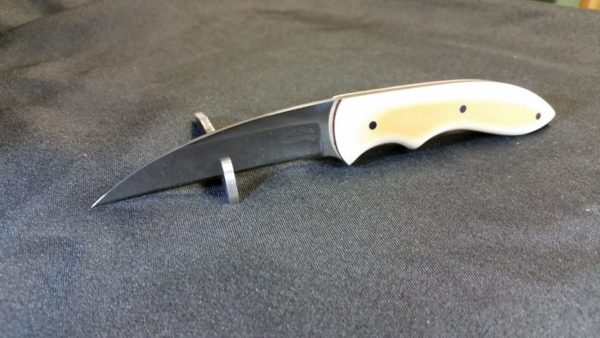
For two of BLADE’s sections, “What’s New” and “Knifemaker Showcase,” only cutaway images of the knife are used. (See the “5 Ways To Get Your Knives Featured In BLADE.”) This means that you don’t need to worry about the background at all. In fact, white paper is fine, but watch for any shadows. It’s fine to have a slight shadow, provided the lines of the knife are clearly visible. If the edge or spine of your knife bleeds into the shadow to the point where you can’t tell where the knife starts and the shadow ends, that’ll need to be reshot. Our designers need to able to see those lines.
Mood images are fine for both a feature in print and for online stories. Feel free to get as creative as you want, but ensure that the knife is the main attraction. Photographing knives is one of those times when the rule of thirds really isn’t applicable. The knife is the main attraction and we’re not going for proportional sharing with a background. If the image you’re submitting for consideration is for a section of the magazine that uses cutaways and there’s moss or grass, fabric or fur encroaching on the blade itself, that’ll impede the designers in their work.
Make sure no part of the knife is cut off, and don’t crowd the point or butt. If you place the knife in a stand and that stand encroaches on the knife, it can’t be used for a cutaway, but it could possibly still be used for an online story or in print.
- Depth and Angles
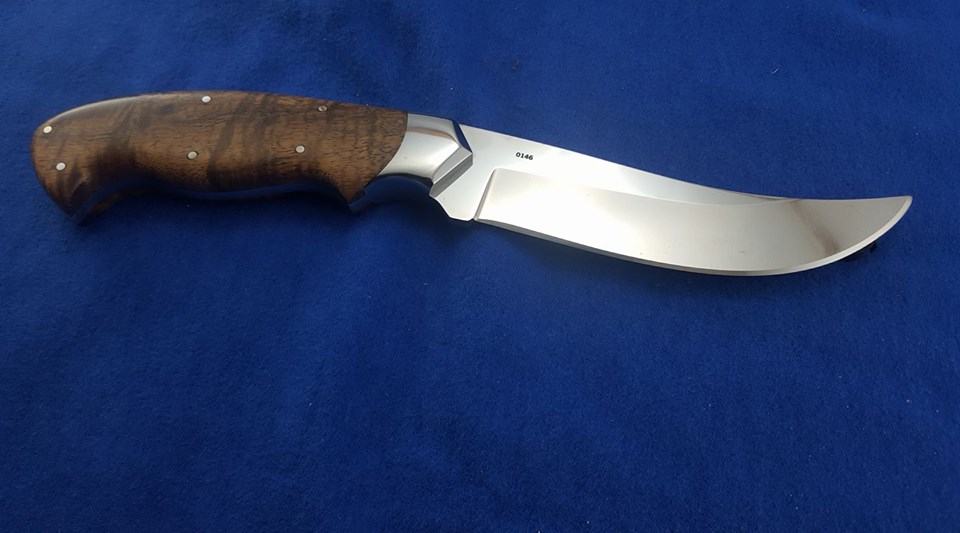
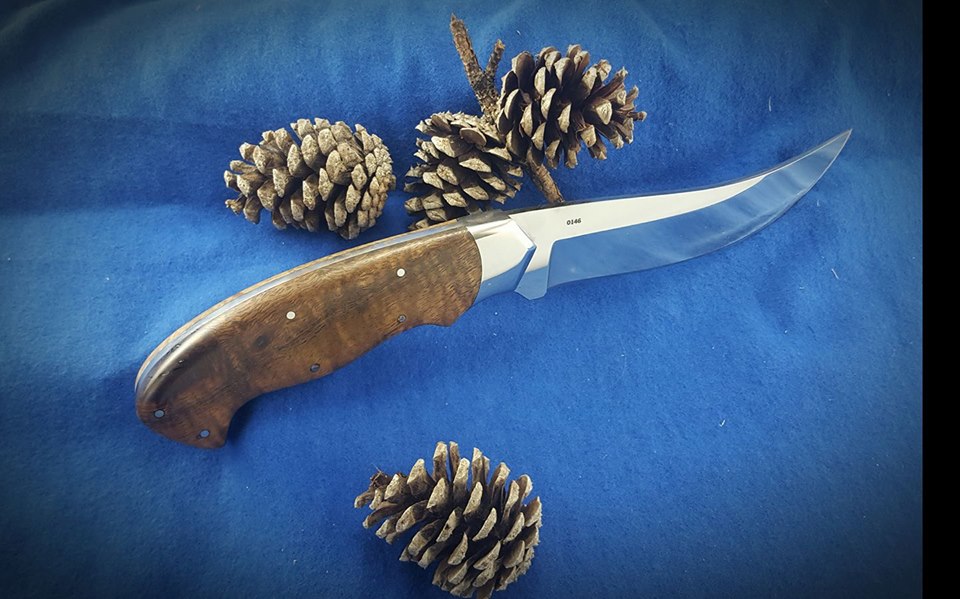
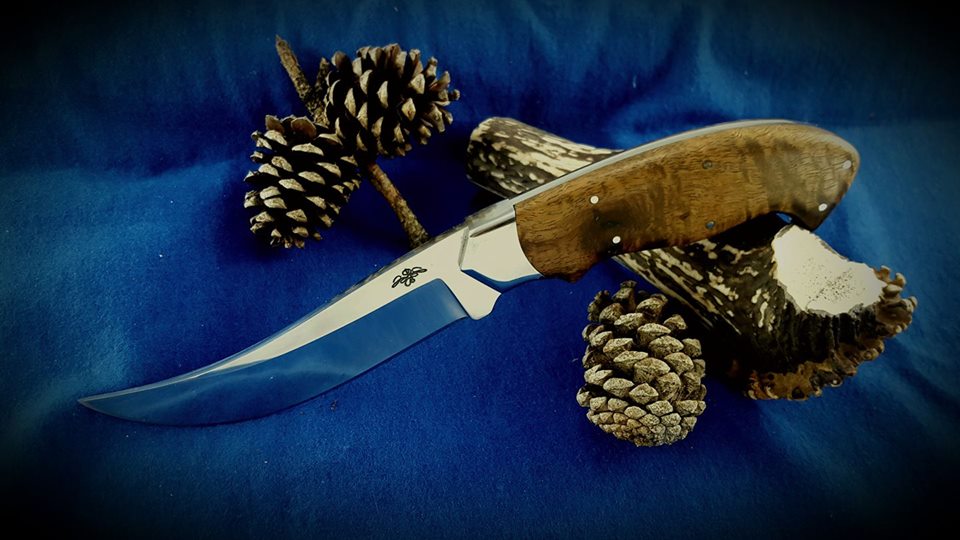
In layman’s terms, you need to ensure your knives don’t look flat. You’re trying to capture something that’s three-dimensional in a two-dimensional medium. This is where some knives can look disproportionate because you’re focusing on the handle and the blade is in the fuzzy background, so to speak. A shallow depth of field is fine as long as your knife is standing out crisply from point to butt.
Finding the right angle will also help prevent your knife from looking flat. Prop up your knife somehow. Even just leaning it against a pebble allows you to move and capture the thickness or thinness of the piece. Laying it on your hand can work as long as your flesh doesn’t obstruct any of the knife’s lines.
Tip: Take dozens of photos from many different angles and distances and pick the best one of the bunch. If you don’t nail it, don’t compromise, don’t settle, get back there and take dozens more. Pros will take hundreds of impressions to deliver 30. Seriously. Take more shots. No, more. Get a ladder and shoot down, circle your quarry and shoot multiple shots from each hour of the clock, and get down and shoot at eye level. Shoot at morning, noon and night, but mostly late afternoon, to see how different types of sunlight affect your knife images. It’s what the pros did when they were starting out. Now, after years of experience, they can judge the sun’s angle and know how to get what they need.
- Lighting
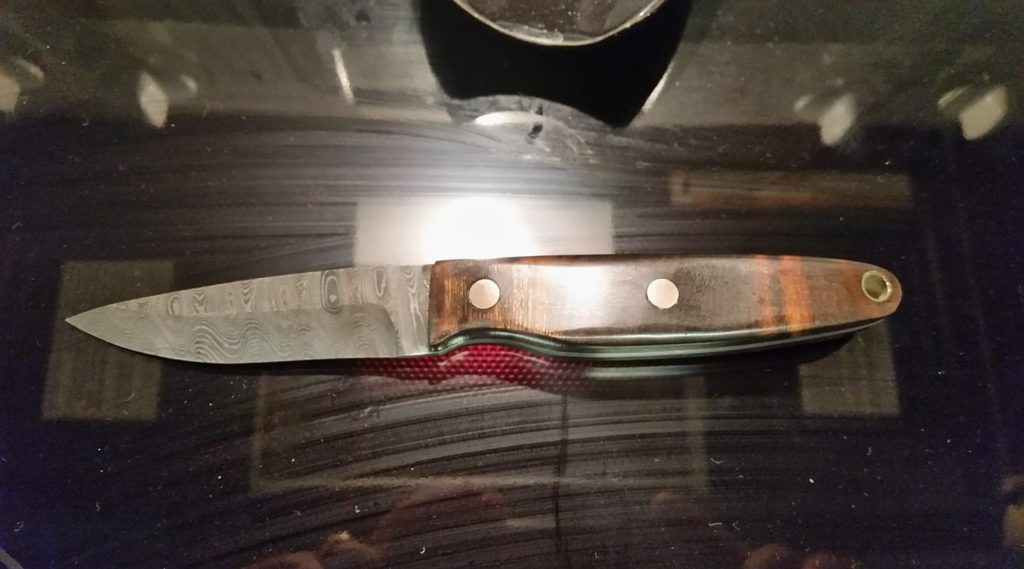
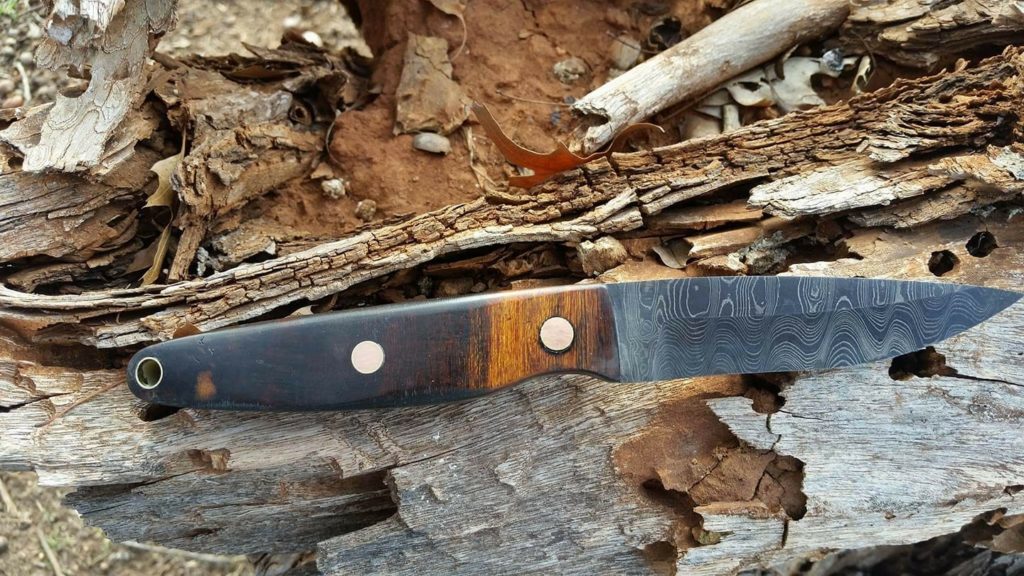
Natural light is easiest for the amateur to master. A cloudy day is good to reduce blade glare but sometimes it will dull colors. Try a sunny day, but shoot in the shade. Avoid glare on either the handle or the blade whether you’re shooting indoors or out. You also don’t want dappled light coming through the leaves of a tree to interfere with the hamon, for example, so try to find a solid overhang. You also don’t want reflection to make your blade look different than it is in reality.
Indoor lighting is infinitely more challenging. Low light, fluorescent light, light-painting in a dark room—they all have the potential to become “noisy,” grainy, soft. I will leave it to the articles and videos you’re going to pour over to explain why, but trust me, it’s not easy. Sometimes, in light-painting for example, the pins might absorb all the light and they take over the picture. Or the handle’s too dark, or the handle’s visible, but the blade looks dull. Changing the countless variables on this project will help you get the right shot out of your many attempts. It can help to take notes so you know what you’ve tried and whether or not it worked.
Avoid using the flash inside your camera. It will only give you an overlit image that makes your work look flat. An external flash, shot off a wall or ceiling or even a white T-shirt, or an extra light diffused with a white paper bag, may help, but now your knifemaking shop has turned into a spaceship and you’re behind in your orders.
- Specs
Images need to be 300 dpi for print with the photo at least 8 inches on the longest side, preferably 10. The image size should be at the very least 600 KB. It’s not that we’ll run it that large, but we need to have the option to do so, especially if we’re doing a cutaway and the knife doesn’t fill the frame.
We prefer .jpg format, and that you attach the image file rather than dragging it into the email. Sometimes that can make a difference in resolution quality, though it admittedly shouldn’t. Also, for similar reasons, submit originals and not versions scraped from Facebook or other social media platform, even for online stories.
Remember, it’s all about the knife here at BLADE. Oh, and makers and manufacturers, too. But without a fantastic photo of a knife as a starting point, how are we ever going to get to know you better?
Photos may be submitted for consideration in private message to “Erin at BLADE” on Facebook or via email to [email protected]. To learn more about how your photos could be published through BLADE, read “5 Ways To Get Your Knives Featured In BLADE.”
‘101 Knife Designs’ Will Inspire Even Seasoned Knifemakers
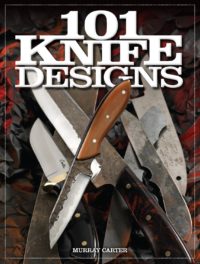
Knifemakers of all skill levels will enjoy comparing knife designs in this book by Murray Carter. The photographs by Hiro Soga are exquisite! There is even a discussion on the theory of knife design to help you better understand your craft. Save 35 percent off the cover cost of $29.99 for a total of $19.99.
Novelist Carries BLADE Show Knife
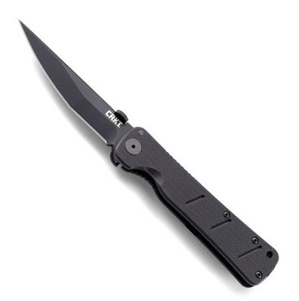
A known author of thriller novels, Brad Thor was recently interviewed by everydaycarry.com on what knife and gear he carries on a daily basis. Thor is an American novelist, whose works include several New York Times Best Sellers. He’s just finished his newest book, Code of Conduct, and took some time to share his everyday carry inspired by his many military- and spy-themed thrillers.
Thor enthusiastically related that he carries a CRKT Otanashi noh Ken folder, designed by James Williams, which happened to be a 2015 BLADE Show limited-edition knife (sold out). As Thor noted about the Otanashi noh Ken during the interview, “Simply put, one of the most badass folding knives on the planet. Tons of SpecOps members carry James Williams’ blades. Based on centuries-old Samurai designs, nothing on the market beats it. I carry it because men whose lives depend on their tools, also carry it.”
Thor said that he also carries a Kobold Phantom Chronograph, a Gerber Shard keychain tool, a Fisher Spacer Pen and a Field Notes Pitch Black Edition (both for taking notes–he is an author!), a Streamlight PT1L, Leatherman-style PS multi-tool, an Apple iPhone 6 and a Magpul Field Case iPhone 6 cover.
Complete Your Collection Of BLADE Magazines
Next month will be your chance to complete your collection of BLADE Magazines–to own every issue from 1973 through 1997 (the first quarter century of BLADE and 165 issues in all) on one completely searchable DVD. BLADE and F&W Media will be offering the DVD the third week of October for $59.99, which equates to 36 cents per issue.
Use the “Bookmarks” feature on the DVD to navigate to whatever story, feature, index, ad, regular column or individual knife you wish to see, read about and admire. Such is the beauty of accessing all issues in living color on your computer screen.
Check www.shopblade.com over the next few weeks to reserve your copy.
Here Are The Top 5 U.S. Military Knives
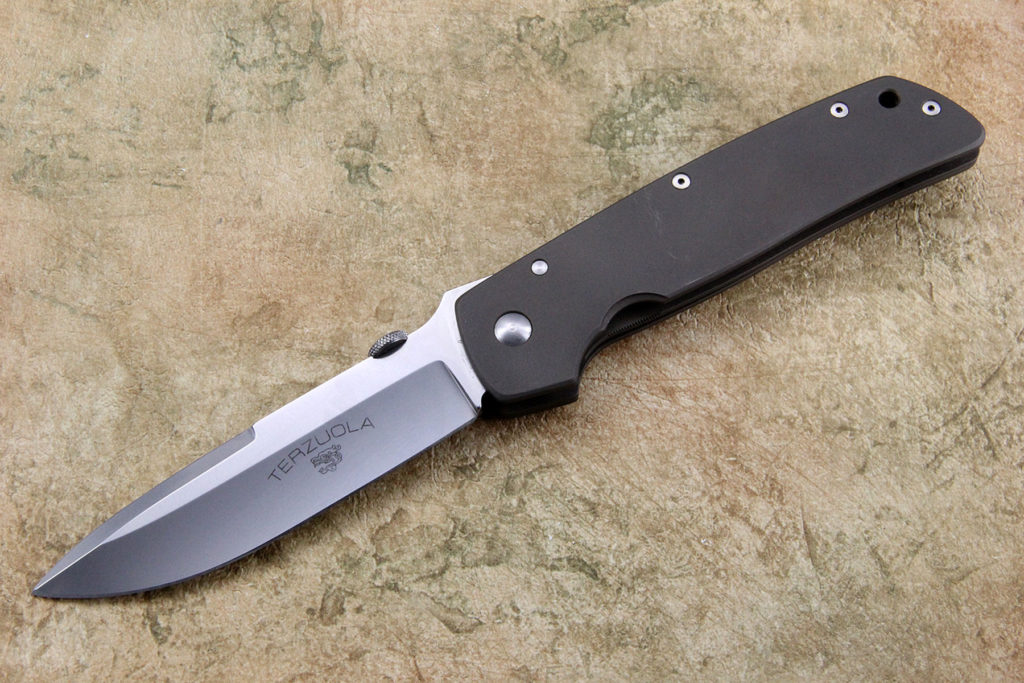

What are the top 5 U.S. military knives of all time? What’s it like to be married to the military, each other and knives all at the same time? Can the modern knife age be divided into two eras—before and after tactical folders? The latest issue of BLADE®, our special annual military issue, answers these questions and more, and is on newsstands and/or available in the digital edition now!
The top 5 U.S. military knives of all time–wow, that covers a lot of ground, don’t you think? BLADE polled such military veterans as USMC Staff Sgt. R. Lee “The Gunny” Ermey, Special Forces MSG/BLADE field editor Kim Breed, Navy EOD Chief Petty Officer Rob Cude, Special Forces/Green Beret Mark Carey, USMC Sgt. Les George and others to determine the elite knife grouping. Find out the results on page 42.
Army SFC Michael “Rod” Rodriguez (retired) of the 7th Special Forces Group and SFC Kelly Rodriguez and also CW3 Jeremy Valdez (retired) and Sgt. Rachel Valdez (retired) are respective husband-and-wife teams who saw action in Iraq and Afghanistan, and now design knives for CRKT in the company’s “Forged By War” series. Read how these military heroes served their country above and beyond the call and their connection to knives—including Rod, who forges knives and had his portrait painted by President George W. Bush for Bush’s book, Portraits of Courage: A Commander In Chief’s Tribute To America’s Warriors—and more in Erin Healy’s story, “On-Point With Love & War.”
Ever since tactical folders became the hottest knives of all in the 1990s, knife observers have predicted time and again that the folders had peaked and/or were on their way out. Now, about a quarter of a century later, tactical folders maintain their lofty position as being among the most popular knives anywhere. Get the complete story on the longest-lasting knife trend going in Mike Haskew’s “The Renaissance Knife.”
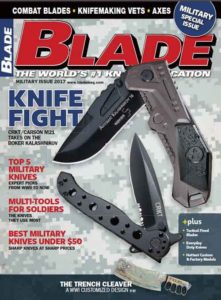
There’s much more in the latest issue but you’re going to have to buy it to find out what all that entails. Get your copy on newsstands or the digital edition, or subscribe to the domestic, Canadian or international print editions, or to the digital edition now!
Must Read Articles

Knifemaking 101 – Read This Before You Make a Knife
by Wayne Goddard
My experience has taught me that there's nothing like digging in and getting started. I've often said the hardest part of the...




